
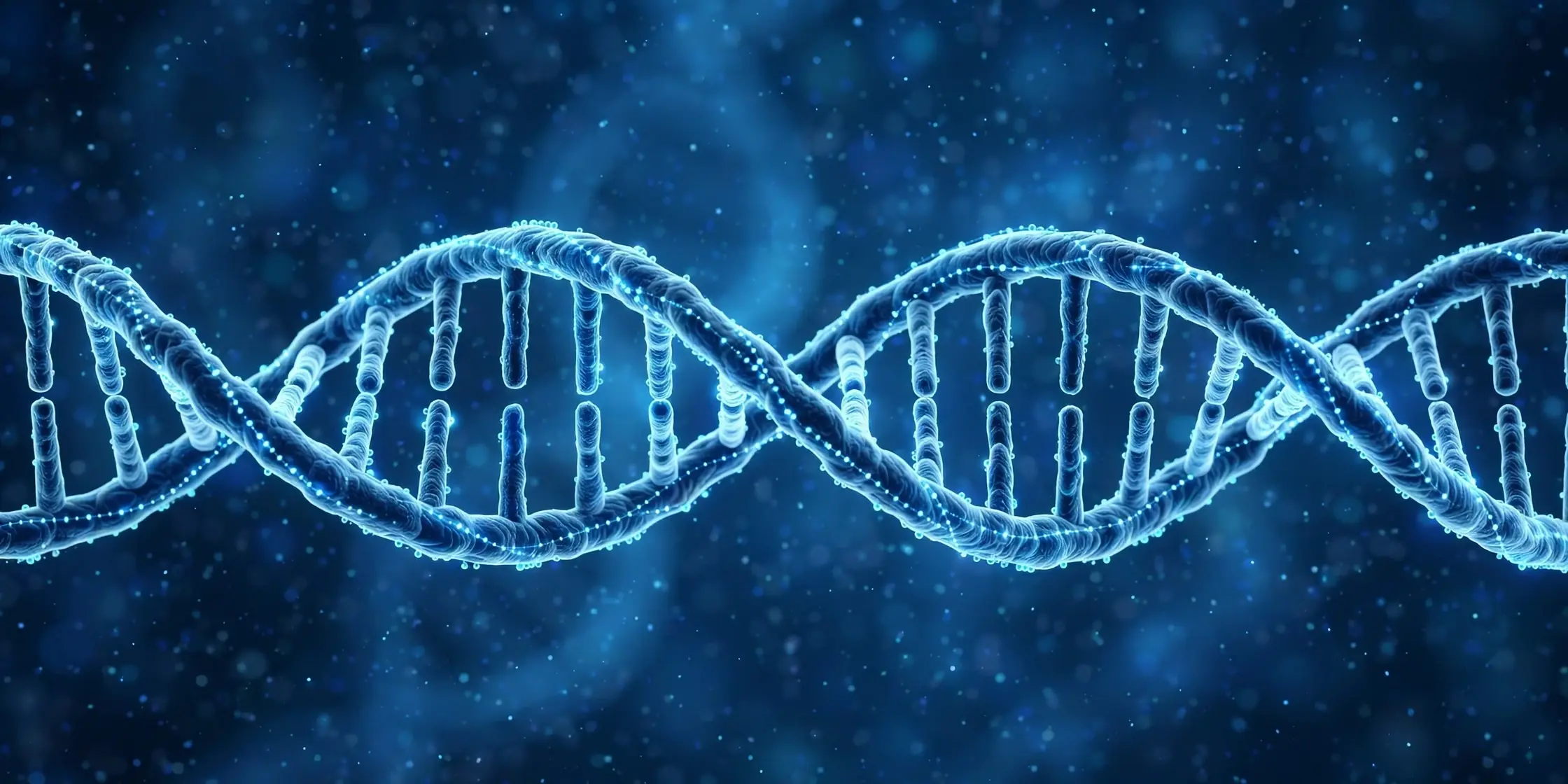
1. The Map of You: A Genome in a Headline
On June 26, 2000, the White House announced that scientists had finished a working draft of the human genome — the first survey of all three billion letters of human DNA. It was a map, not yet a finished book, and it took a decade of work by more than a thousand researchers across six nations to produce.
Picture the scene. It is a Monday morning in Washington, and the East Room of the White House is packed with cameras, reporters, and scientists in suits that look slightly uncomfortable. President Bill Clinton steps to the podium. Beside him stand two men who, only a few years earlier, had been bitter rivals: Francis Collins, the soft-spoken physician-geneticist who led the public Human Genome Project, and Craig Venter, the brash entrepreneur whose private company, Celera Genomics, had raced the public project to the finish line. On a video screen, British Prime Minister Tony Blair joins from London, because the work had been an international effort from the start.
Clinton knew the moment needed words big enough to match it. He called the human genome "the most important, most wondrous map ever produced by humankind." Then he said something that has been quoted ever since:
"Today, we are learning the language in which God created life. We are gaining ever more awe for the complexity, the beauty, and the wonder of God's most divine and sacred gift. With this profound new knowledge, humankind is on the verge of gaining immense, new power to heal."
The line was not quite Clinton's own. Collins, a devout Christian who had spent years thinking about how science and faith fit together, had worked with Clinton's speechwriter on the passage and strongly endorsed including it. It worked because it captured what everyone in the room felt: that humanity had just been handed the first glimpse of its own instruction book, a text written in a four-letter alphabet that every person on Earth carries in nearly every cell of their body.
I still remember the first time the scale of that announcement sank in for me. I was standing in a school biology classroom, staring at a poster of human chromosomes — those striped, X-shaped blobs arranged in neat pairs — when my teacher said, almost casually, that the poster was a map of me. Not a map of a country or a city. A map of me. Every freckle, every quirk of my immune system, every reason my eyes are the color they are — all of it traced back to instructions written in that alphabet. I looked at the poster for a long time that day. It felt less like a chart and more like a mirror.
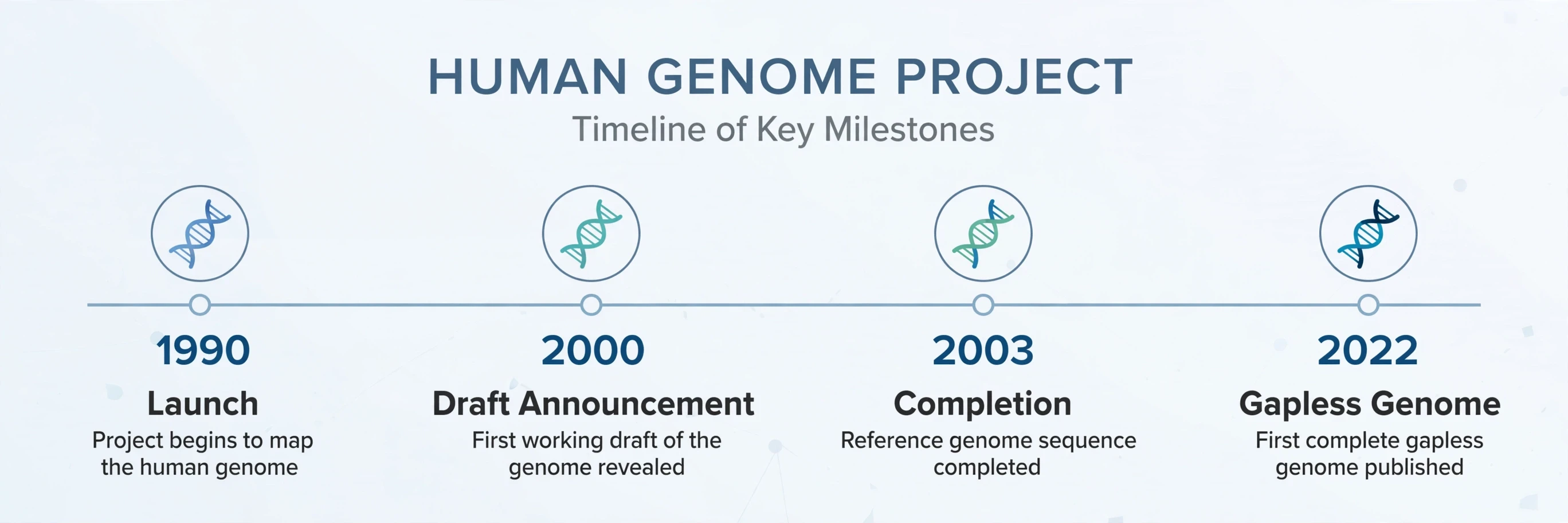
What exactly had been announced that morning? Not a finished genome. The working draft covered about 97 percent of the human genome, and roughly 85 percent of it had been assembled into readable sequence. There were gaps, errors, and unfinished stretches — the shape of the whole thing visible at last, with details still to fill in. The full, finished sequence would not arrive until April 2003, when the project formally declared its work complete, two years ahead of schedule.
The project itself had begun in 1990, launched by the National Institutes of Health and the Department of Energy with a bold goal: read every letter of human DNA, find every gene, and make the whole thing public. Many scientists thought the goal was reckless — reading three billion letters with the technology of 1990 was like copying a library by hand, one letter at a time, in the dark. The project cost about 2.7 billion dollars over thirteen years (under its original 3-billion-dollar estimate), and it built the machines, the methods, and the databases that made modern genomics possible.
The rivalry between the public project and Celera had made the race dramatic, even ugly at times. Collins and Venter had argued in public about speed, about credit, and about whether the human genome should belong to everyone or be partly owned. In the end, both sides crossed the line together, and the White House ceremony was designed to show exactly that: a public effort and a private company, standing side by side, announcing a shared result. The sequence itself was placed in public databases, free for any scientist on Earth to use.
Why did it matter so much? Because until that day, human genetics had been studied one gene at a time, like trying to understand a novel by reading a single sentence. The draft human genome gave scientists the whole book at once. Doctors could finally ask which spelling differences in DNA raise the risk of heart disease or diabetes. Researchers could compare our genome with the genomes of other animals and see, letter by letter, what makes us human and what we share with every other living thing. None of that was possible the day before.
That is what this article is about. The human genome is not an abstract idea locked in a laboratory. It is the text that built you, letter by letter, before you were born. Over the next sections, we will look at what it is, how big it really is, and how scientists found it.
2. What Is the Human Genome?
The human genome is the complete set of DNA instructions for building and running a human being: about 3.3 billion chemical letters, organized into 46 chromosomes in nearly every cell, containing roughly 20,000 genes that code for proteins plus vast stretches of DNA that regulate, protect, and organize those genes.
Start with the letters. DNA is a long molecule built from four chemical units called bases, abbreviated A, T, C, and G — adenine, thymine, cytosine, and guanine. Think of them as the four letters of a very small alphabet. A single human cell holds a DNA text written only in those four letters, with no spaces, no punctuation, and no chapter breaks. The order of the letters is everything: change one letter in the wrong place, and a protein can come out misshapen; keep the order right, and the text builds a working human.
The letters pair up in a strict way. A always pairs with T, and C always pairs with G, like two columns of a ladder where each rung connects a matching pair. A pair of matched letters is called a base pair, and scientists measure DNA in base pairs the way a carpenter measures wood in feet. When you read that the human genome is 3.3 billion base pairs long, that means the text has about 3.3 billion rungs on its ladder.
The genome, the chromosome, and the gene
Three words get mixed up constantly, so here is the difference in plain terms. The genome is the whole library: every letter of DNA a person carries. A chromosome is one volume in that library: a single, very long DNA molecule, wrapped and folded with proteins into a compact package. A gene is a single recipe inside a volume: a stretch of DNA that carries the instructions for making one useful product, usually a protein.
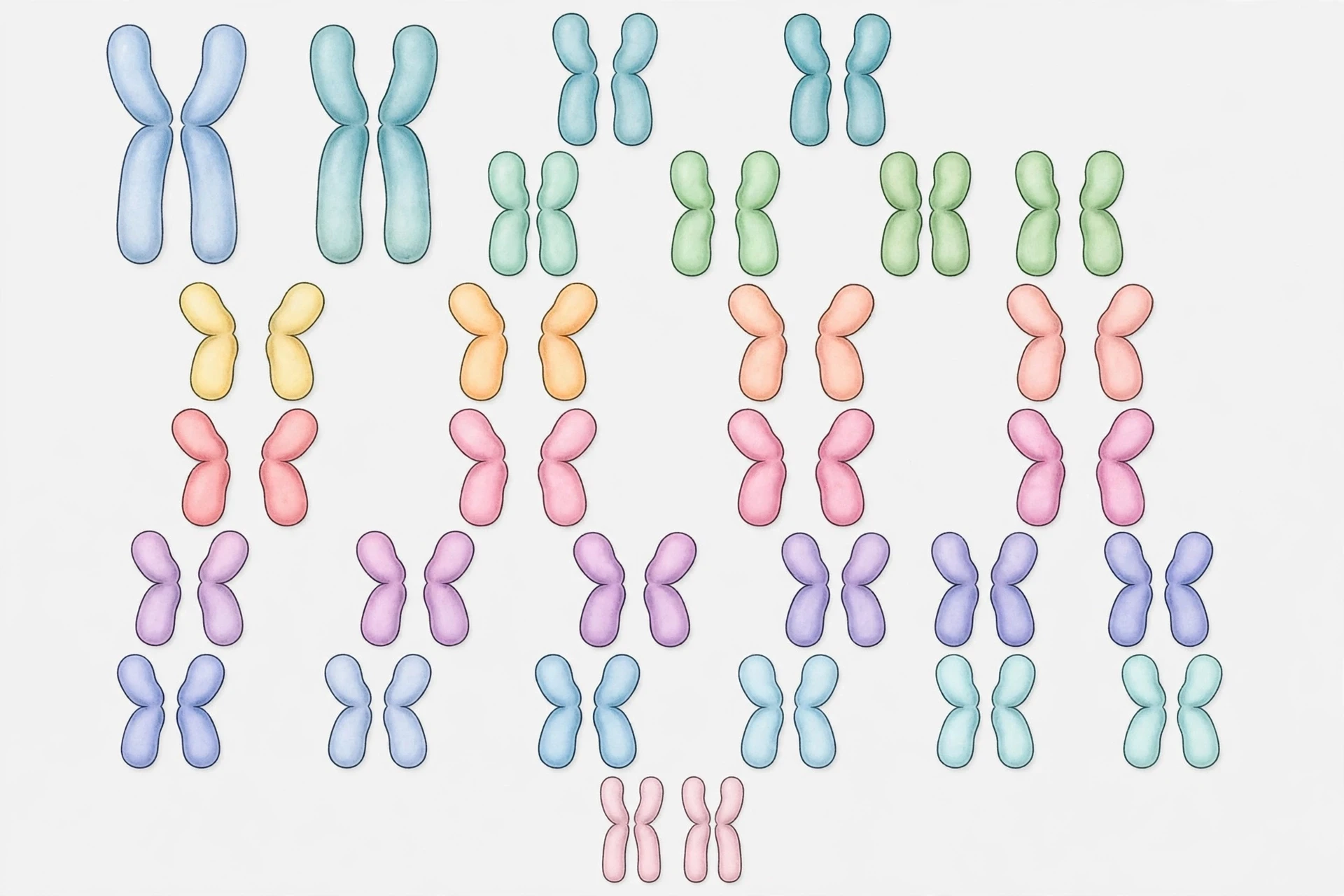
The book analogy helps. If the human genome is the complete works of a human being, then the chromosomes are its 23 chapters — except that you own two copies of the set, one from your mother and one from your father, which is why most of your cells hold 46 chromosomes in 23 pairs. The genes are the individual stories inside the chapters: recipes for hemoglobin, for insulin, for the collagen that holds your skin together. Some chapters are thick and some are thin: chromosome 1, the largest, carries the most genes, while chromosome 21, the smallest, carries only a few hundred.
Here is the surprise that stunned scientists when the human genome was first read. Humans have only about 20,000 protein-coding genes — roughly the same number as a tiny roundworm, and fewer than some plants. For decades, researchers had guessed the number might be 100,000 or more. The real count showed that complexity does not come from having more genes. It comes from using the same genes in clever combinations, switching them on and off in different cells at different times, and splicing their messages into many versions.
If genes are the recipes, what is the rest of the text doing? Only about 1.5 percent of the genome codes directly for proteins. The other 98.5 percent was once dismissed as "junk DNA," a label scientists now regret. Much of that DNA contains switches that control when genes turn on and off. Some of it protects the ends of chromosomes. Some of it is ancient viral DNA, left behind by infections our ancestors survived millions of years ago and now permanently pasted into our own instruction book. The human genome is not a tidy cookbook; it is a working document full of notes, crossed-out passages, and old material kept for reasons we are still figuring out.
Almost every cell in your body carries the full genome in its nucleus, the small compartment at the cell's center. Red blood cells are the exception: they throw away their nucleus as they mature, and with it their DNA. There is also a tiny second genome, a small loop of DNA inside the mitochondria, the cell's energy factories, inherited almost entirely from your mother. It holds just 37 genes, a footnote next to the main text, but a useful one: scientists use it to trace maternal ancestry back thousands of years.
To go deeper into how DNA itself is built and copied, see the companion article on DNA. For how genes are passed from parents to children and how they switch on and off, see the companion article on Genetics.
3. How Big Is the Human Genome, Really?
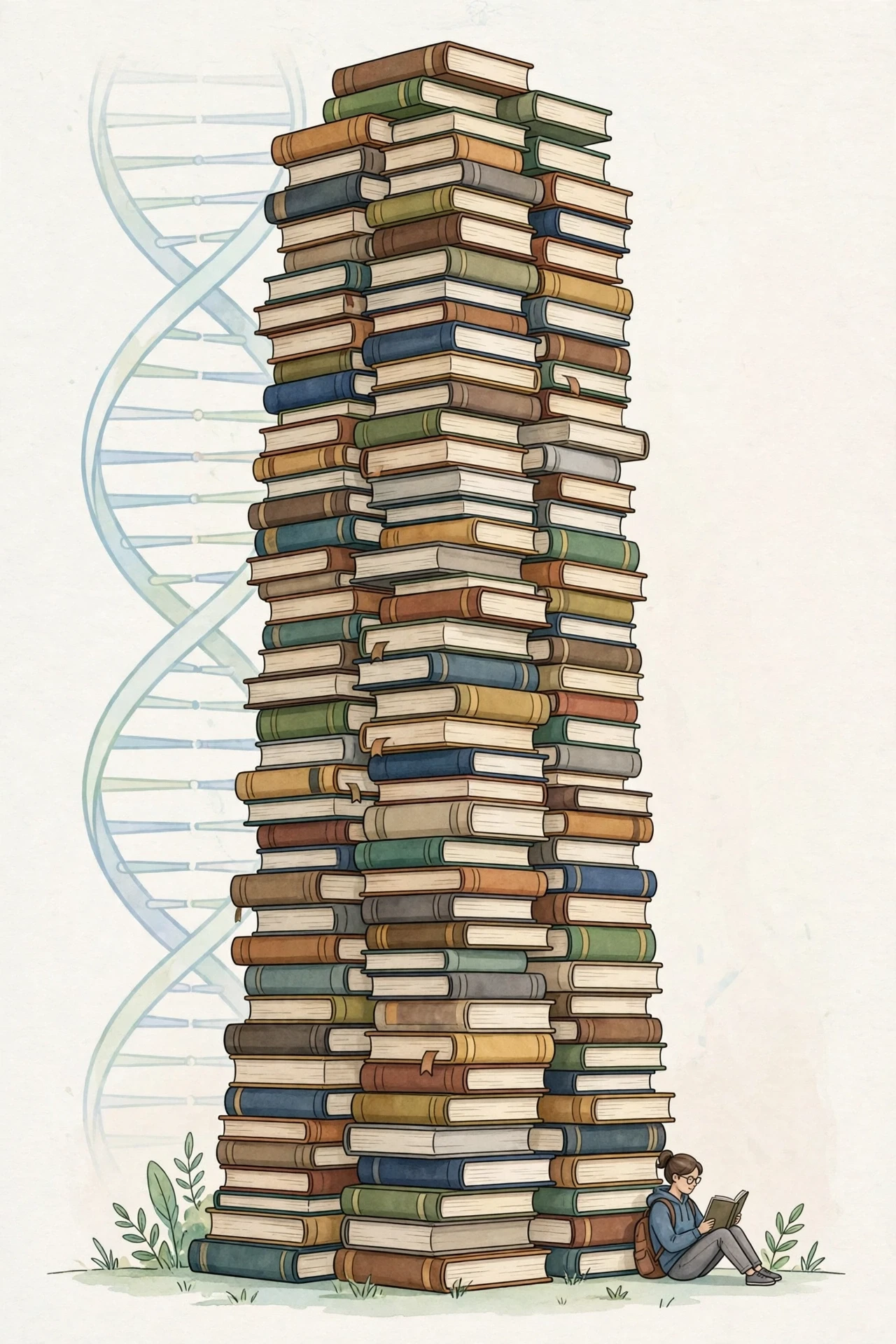
The human genome holds about 3.3 billion base pairs of DNA in each set of chromosomes — enough text to fill roughly 200 volumes the size of a large phone book, and enough letters that reading them aloud, one per second without stopping, would take more than a hundred years.
Three billion is a number the mind slides off. We use the word "billion" for national budgets and distant galaxies, and it stops meaning anything. So let us pin it down with things you can picture.
First, the books. If you printed out the letters of one person's genome — A, T, C, G, line after line, page after page — you would need about 200 volumes, each one a thousand pages thick, each page packed with letters. Stack those volumes on a shelf, and they would run for meters. Now remember that this entire library is folded into the nucleus of a single cell, a compartment so small that dozens of cells fit across the width of a grain of sand. Your body contains tens of trillions of cells, and nearly every one holds its own copy of the library.
Second, the reading time. Reading the human genome aloud at ten letters a second, without a single break for sleep or food, would take about ten and a half years. At one letter a second, it would take about 105 years. Nobody reads DNA that way — machines do it — but the number tells you why sequencing the genome was a thirteen-year project and not an afternoon's work.
Third, the length. Uncoil the DNA from a single cell, stretch it out straight, and it measures about two meters long — two meters of molecular thread, packed into a nucleus about six micrometers wide. The packing is so tight and so organized that every gene sits within reach, the way a single book sits on a shelf you know well. Laid end to end, all the DNA in all the cells of your body would stretch to the Sun and back many times over.
The size becomes even more interesting when you compare species. A bigger genome does not mean a more complex animal. That puzzle has a name — the C-value paradox — and the table below shows it in action. A human and a mouse carry genomes of similar size, and a tiny fruit fly gets by with a genome about twenty times smaller than ours while still building eyes, wings, and a brain. Even a single-celled yeast, a creature you need a microscope to see, carries about 12 million letters of DNA and thousands of genes.
Organism | Scientific name | Genome size (base pairs) | Protein-coding genes (approx.) |
|---|---|---|---|
Human | Homo sapiens | About 3.3 billion | About 20,000 |
Chimpanzee | Pan troglodytes | About 3.3 billion | About 22,000–23,500 |
Mouse | Mus musculus | About 2.8 billion | About 22,000 |
Fruit fly | Drosophila melanogaster | About 180 million | About 14,000 |
Budding yeast | Saccharomyces cerevisiae | About 12 million | About 6,600 |
Bacterium (E. coli) | Escherichia coli | About 4.6 million | About 4,300 |
A bacterium runs its whole life — eating, dividing, sensing its surroundings — on 4.6 million letters and about 4,300 genes. A yeast cell, with a nucleus and a far more complicated inner life, needs only about three times as much DNA. Humans need about seven hundred times as much as the bacterium. But the jump from yeast to human is not mostly about new genes. It is about regulation: more switches, more control regions, more ways to use the same genetic tools in different combinations.
The chimpanzee row carries its own quiet shock. Our closest living relative has a genome almost exactly the same size as ours, with a similar number of genes. The differences between a human and a chimpanzee — language, art, cities, spaceflight — come from a small fraction of the text: differences in how genes are regulated, in genes that changed quickly in our lineage, and in stretches of DNA whose jobs we are still working out. Size, in other words, is only the beginning of the story. What matters is what the text says, and when each part of it gets read.
For a fuller picture of how traits pass from one generation to the next and how genes are switched on and off, see the companion article on Genetics.
4. From Peas to the Double Helix
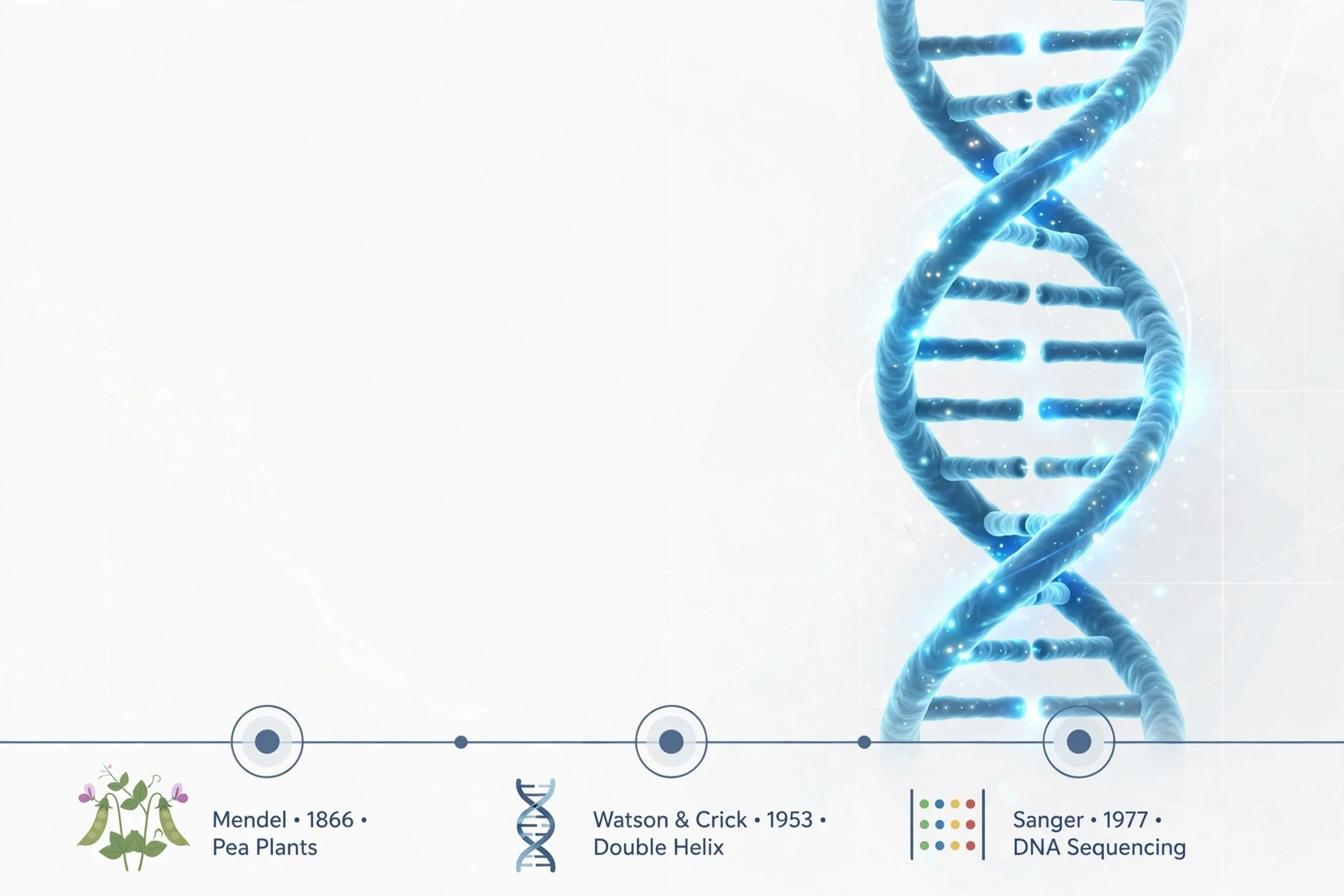
The human genome was read in 2003, but the road to it began in 1866, when an Augustinian monk published a paper about pea plants. Between Mendel's peas and the double helix in 1953, scientists learned that traits are inherited as discrete units and that DNA is the molecule that carries them.
A monk, a garden, and 29,000 pea plants
Gregor Mendel was not a famous scientist. He was a monk at St. Thomas's Abbey in Brno, in what is now the Czech Republic, and his laboratory was a monastery garden. Between 1856 and 1863, he crossed pea plants with different traits — tall and short, smooth seeds and wrinkled seeds, purple flowers and white flowers — and counted the offspring. In all, he studied around 29,000 plants.
What he found was strange and beautiful. Traits did not blend the way most people expected. Cross a tall plant with a short one, and you do not get medium plants. You get tall plants, and then, in the next generation, short plants reappear in a neat ratio of about three tall to one short. Mendel realized that inheritance works in discrete units, passed down intact from each parent — some dominant, others hidden for a generation before reappearing. He called them "factors." We call them genes.
Mendel presented his work in 1865 and published it in 1866 as "Experiments on Plant Hybridization." Almost nobody noticed. His paper sat unread for more than three decades while biology moved on without it, and he died in 1884 with no idea he had founded a science. It was rediscovered only around 1900, when three botanists working independently found the same ratios — and then found Mendel's paper waiting for them.
The molecule nobody wanted
By the early twentieth century, scientists knew that the units of inheritance lived on chromosomes, the thread-like structures inside the nucleus. But which molecule carried the information? For years, most researchers bet on proteins, built from twenty different amino acids and seemingly rich enough to hold complex instructions. DNA, built from only four bases, looked too simple to do the job.
That bet collapsed in the 1940s and early 1950s. In 1944, Oswald Avery and his colleagues showed that DNA, not protein, transformed one strain of bacteria into another, and in 1952 Alfred Hershey and Martha Chase confirmed with viruses that DNA was the genetic material. The question then became urgent and specific: what does DNA look like?
The answer came from X-ray crystallography, a technique that bounces X-rays off a molecule and reads the pattern of the scattered rays. At King's College London, Rosalind Franklin and her graduate student Raymond Gosling were producing the best X-ray images of DNA anyone had ever made. In May 1952, Gosling took one image that became famous: Photograph 51. It showed a stark black X, the unmistakable signature of a helix. Franklin, a careful and skeptical scientist, was working through the mathematics of what the image meant, and her own analysis was converging on the same answer.
Across town in Cambridge, James Watson and Francis Crick were trying to build a model of DNA. They had the chemical clues — including Erwin Chargaff's finding that A always equals T and C always equals G in DNA — but they were stuck on the shape. In early 1953, Maurice Wilkins, Franklin's colleague at King's, showed Watson Photograph 51 without Franklin's knowledge or permission. Watson saw the X and grasped at once what it meant. Within weeks, Watson and Crick had built their model: two strands wound around each other in a double helix, the bases pairing A to T and C to G on the inside, like rungs of a twisted ladder.
Their paper appeared in Nature on April 25, 1953. It was barely more than a page long — about 900 words, and its most famous sentence was almost an afterthought: "It has not escaped our notice that the specific pairing we have postulated immediately suggests a possible copying mechanism for the genetic material." In plain words, the double helix explained heredity: unzip the two strands, and each one serves as a template for building a new partner. That is how a cell copies its genome before dividing, and how parents pass their DNA to their children.
Franklin's role was treated unfairly for decades. She was not a technician who happened to take a photograph; she was an expert crystallographer whose data and analysis were central to the answer. Watson and Crick's paper acknowledged her data in a single sentence, and she received little public credit in her lifetime. She died of ovarian cancer in 1958, at thirty-seven. Four years later, Watson, Crick, and Wilkins received the Nobel Prize — one Franklin could never receive, since the prize is not awarded after death. The double helix was a triumph built on Franklin's evidence, and the science is weaker when her name is left out.
Learning to read the letters
Knowing the shape of DNA was one thing. Reading its letters was another. The double helix had been solved in 1953, but for another two decades nobody could read a DNA sequence longer than a few dozen letters.
That changed in 1977. Frederick Sanger, working at Cambridge, published a method called chain-termination sequencing, now known simply as Sanger sequencing. The trick was to copy a DNA strand and deliberately stop the copying at each letter, producing fragments of every possible length; sort those fragments by size, and you can read the sequence off like a ladder. In 1977 Sanger's laboratory published the complete sequence of bacteriophage phiX174 — about 5,400 letters, the first complete DNA genome ever read (the first genome of any kind, the RNA phage MS2, had been completed the year before). It was a tiny text, but it proved the idea — if you could read about 5,400 letters, you could, with better machines and more time, read three billion.
Sanger's method powered the Human Genome Project from its start in 1990 to its finish in 2003, reading the human genome in overlapping fragments and letting computers stitch them together. Newer machines read DNA far faster today, and the cost of sequencing a genome has fallen from billions to hundreds. But every modern sequencer still descends from that 1977 breakthrough, and from a monk's pea plants, and from a photograph taken in a London basement in 1952.
5. The Human Genome Project: Biology's Moonshot
Between 1990 and 2003, an international team of scientists read all three billion letters of the human genome for the first time. The Human Genome Project cost about 2.7 billion dollars, finished more than two years early, and turned biology from a craft of single genes into a science of whole genomes.
When the idea first surfaced in the mid-1980s, plenty of serious scientists thought it was a fantasy. Reading three billion letters one by one sounded less like a research plan and more like a dare: at one letter per second, reading the genome aloud would take about 105 years, without a single pause for sleep. The machines of the day could read only a few hundred letters at a time, and each read cost real money.
I remember the morning the draft was announced, in June 2000, because the news did something science news almost never does: it stopped ordinary conversation. A teacher wheeled a television into our classroom, and there were two men who clearly did not like each other standing side by side in the White House, shaking hands over a string of letters. I did not understand the science that day. I understood that something enormous had just happened.
The Plan Nobody Believed
The project formally began in 1990, run jointly by the United States Department of Energy and the National Institutes of Health. James Watson, who had co-discovered the double helix in 1953, led it first; Francis Collins took over in 1993. The work was spread across 20 sequencing centers in six countries, with the Wellcome Sanger Centre in Britain carrying a large share. The original plan gave the team 15 years, until 2005, and an estimated budget of about 3 billion dollars.
The early years were slow map-making work, building chromosome maps and cutting the genome into manageable pieces. By the late 1990s, the machines were improving fast, and the pace of reading picked up sharply.
The Race That Sped Everything Up
Then, in May 1998, the plan was blown open. J. Craig Venter, a scientist with a taste for speed and risk, told Francis Collins at Washington Dulles Airport that he was starting a private company, Celera Genomics, to sequence the human genome himself. Venter planned to use a shortcut called whole-genome shotgun sequencing: shatter the genome into millions of random fragments, read them all, and let computers reassemble the puzzle. He said he could finish in two or three years for 150 to 200 million dollars, with paying customers getting the data first.
The public project answered by moving faster. Funders poured in extra money, the Wellcome Trust raised its support for the Sanger Centre, and the consortium set a new goal: a working draft by 2001. In March 2000, President Bill Clinton and Prime Minister Tony Blair issued a joint statement that the human genome sequence should be freely available to all, a principle that still shapes genomics today.
On June 26, 2000, the two sides stood together at the White House and announced that both had completed working drafts of the human genome. President Clinton called it a milestone for all humankind:
"Without a doubt, this is the most important, most wondrous map ever produced by humankind."
The drafts were published in February 2001, the public consortium's in Nature and Celera's in Science. Neither was finished; both were full of gaps, like a first map with blank patches marked "unexplored." But the letters were mostly there, and anyone with an internet connection could look at them.
The Finish Line, Two Years Early
The consortium spent the next two years closing gaps and checking every letter again. On April 14, 2003, the National Human Genome Research Institute announced the project complete, more than two years ahead of schedule. The finished sequence covered about 99 percent of the gene-containing regions, at an accuracy of 99.99 percent, roughly one error in every 10,000 letters. The final cost came to about 2.7 billion dollars in 1991 dollars, under the original estimate.
That 2003 sequence became the reference genome, the yardstick against which every human genome sequenced since has been measured. When doctors hunt for a disease-causing variant today, they compare against the map this project drew.
The Last Eight Percent
Yet the 2003 announcement came with a quiet footnote: about 8 percent of the genome was still missing. The unread stretches were the hardest parts, the centromeres that hold chromosomes together, the telomeres that cap chromosome ends, and the short arms of five chromosomes packed with near-identical repeats. Short reads could not tell one copy of a repeat from another, so those regions stayed blank.
The blanks lasted nearly twenty years. Then the Telomere-to-Telomere Consortium, using long-read machines that could span whole repeats in a single read, filled them in. In 2022, Nurk and colleagues published the first complete, gapless sequence of a human genome — all chromosomes except Y — in Science, a 3.055 billion-letter assembly called T2T-CHM13. It added nearly 200 million letters of new sequence and 99 predicted protein-coding genes the old reference had never seen. The team had worked from a cell line carrying a single copy of each chromosome, which made the assembly puzzle far simpler to solve.
6. How Do You Read 3 Billion Letters?
Reading a genome means working out the exact order of its three billion A, T, C, and G letters. No machine reads the whole strand at once. Instead, every method chops DNA into fragments, reads those fragments, and lets a computer stitch the overlaps back together.
The four letters are covered in our guide to DNA structure and replication.
Reading by Hand: Sanger Sequencing
The first practical way to read DNA was invented by Frederick Sanger in 1977, and it is still the gold standard for accuracy. The trick is elegant: a copying enzyme builds a new DNA strand from a template, but every so often it is fed a doctored building block that stops the copy dead. The result is a set of fragments of every possible length, each ending in a known letter. Sort those fragments by size, read the last letter of each, and you have the sequence.
Each Sanger read covers about 500 to 1,000 letters, and it is very accurate. That is why the Human Genome Project used it, and also why the project took thirteen years: Sanger sequencing reads one fragment at a time. For small jobs, like checking a single gene, it is still the method scientists reach for first.
Reading in Parallel: Next-Generation Sequencing
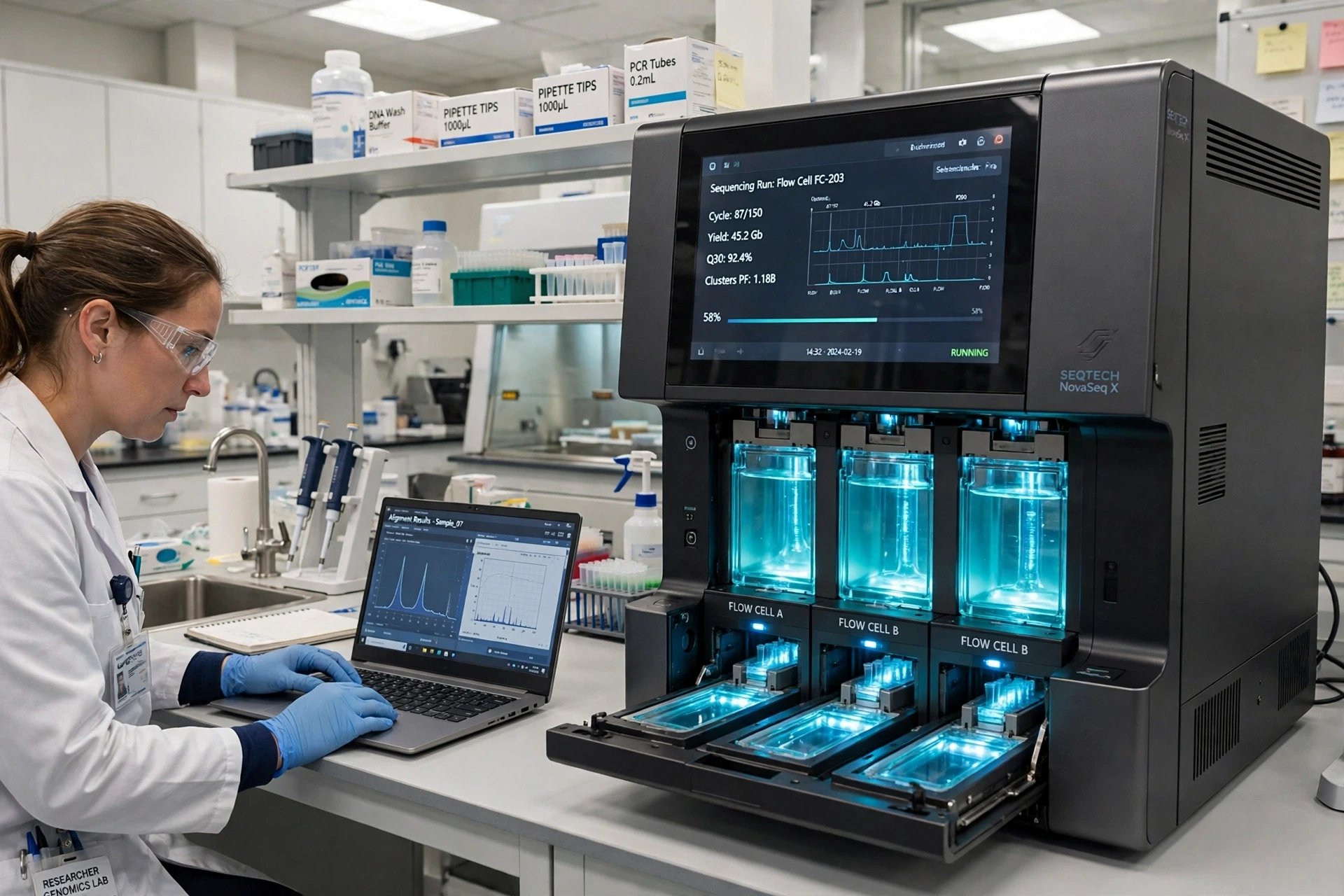
The revolution arrived in the mid-2000s, when machines learned to read millions of fragments at once. A next-generation sequencer runs millions of tiny reactions side by side on a glass slide, each fragment copied letter by letter, each added letter flashing a color a camera records. A single run can produce billions of letters in a day.
The catch is read length. These short-read machines typically read only 75 to 150 letters per fragment, like shredding a book into confetti and reassembling it from scraps a few words long. It works because the fragments overlap and each letter is usually read about 30 times over, a depth called 30-fold coverage. When the same passage repeats many times in the human genome, though, short reads cannot tell which copy a fragment came from, and the assembly stalls.
Reading Long Stretches: Nanopore and Long Reads
Long-read sequencing solves the repeat problem by reading much longer fragments. Pacific Biosciences watches a single copying enzyme work in real time, reading the colors as each letter is added. Oxford Nanopore takes a stranger route: it threads a single DNA strand through a tiny protein pore and measures the tiny changes in electric current as each letter passes through, and software turns the wobble into letters.
A long read can stretch for tens of thousands of letters, and the longest have passed a million. That length is what finally closed the gaps in the human genome in 2022, because a read spanning an entire repeat knows exactly where it belongs. Nanopore devices have another party trick: the smallest, the MinION, is about the size of a stapler and plugs into a laptop, so sequencing can happen in a field station, a clinic, or even on the International Space Station.
Method | Read length | Throughput | Best for | Main drawback |
|---|---|---|---|---|
Sanger sequencing | 500 to 1,000 letters | One fragment at a time | Small, precise jobs | Slow and costly at genome scale |
Short-read (next-generation) sequencing | 75 to 150 letters | Millions of fragments in parallel | Whole genomes, small variants | Short reads struggle with repeats |
Long-read sequencing | Tens of thousands of letters | Millions of long fragments | Repeats, structural variants, finishing genomes | Raw reads carried more errors |
Putting the Pieces Together
Whichever machine does the reading, the final step is assembly, and it is pure computation. Imagine a million shredded sentences with no page numbers. Software compares every fragment against every other, finds matching overlaps, and builds longer stretches called contigs. When a reference genome exists, as it does for humans, the job is easier: each fragment can be matched against the known map, like placing puzzle pieces onto a picture on the box. That approach, called resequencing, is how most human genomes are read today.
Assembly also has to cope with the fact that you carry two copies of the human genome, one from each parent, differing at millions of positions. The software must decide which differences are real variants and which are machine errors. That is why depth matters: reading each letter 30 times means a real variant shows up again and again, while a random error appears once and vanishes.
The Falling Price Tag
No number in genomics falls faster than the cost of reading a genome. The National Human Genome Research Institute tracked it for two decades: in September 2001, sequencing a human-sized genome cost about 95 million dollars. The arrival of next-generation machines in 2007 and 2008 bent the curve downward so steeply that it outpaced even the famous doubling of computer power. The Institute's last published figure, from May 2022, was about 525 dollars. Machine makers now advertise genomes for a few hundred dollars, though those figures usually count only the chemical reagents.
The drop matters because it changed who gets sequenced. A genome that cost about 95 million dollars was a national project. A genome that costs a few hundred dollars is a clinical test and, increasingly, a routine part of medicine.
7. Genes: The 1.5 Percent That Builds Proteins
Only about 1.5 percent of the human genome codes for proteins, and it is organized into roughly 19,400 protein-coding genes. Each gene is a stretch of DNA that carries the instructions for one or more proteins, with switches at its start and spacers in between.
That small percentage surprises people. We are complicated creatures, and it feels as if our instruction manual should be mostly recipes. It is not. Most of the manual is something else entirely, as the next section shows.
The Anatomy of a Gene
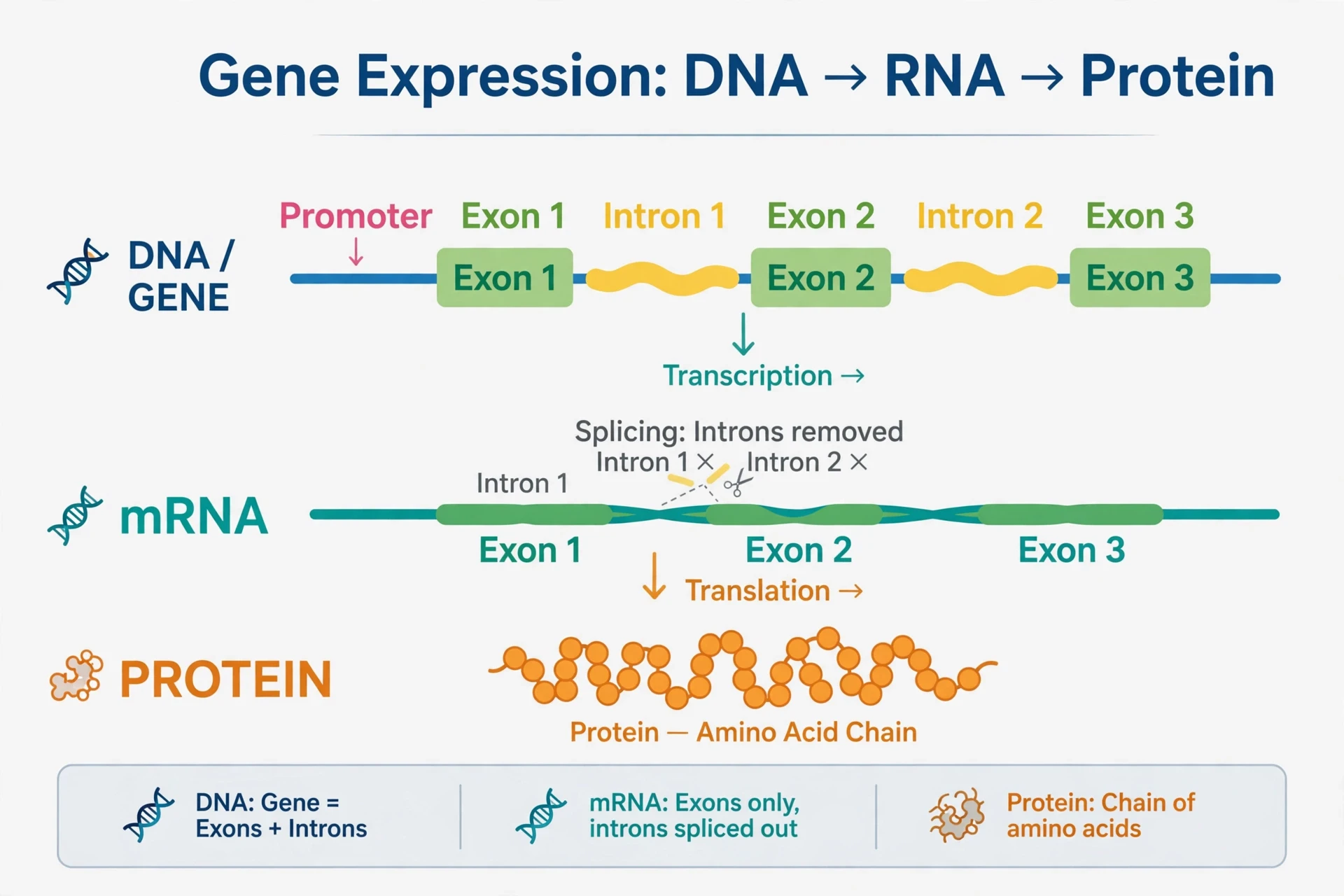
A gene is not one solid block of code. It is a stretch of DNA with several distinct parts, each with a job. At the front sits the promoter, a short sequence that acts as a docking bay where the cell's reading machinery, RNA polymerase, lands to begin copying the gene. A promoter is a start signal, not code itself; it says "begin here."
Next come the parts that are actually copied: a mix of exons and introns. Exons are the coding segments, the parts that end up in the final message. Introns are the spacers in between, long stretches copied and then cut out before the protein is built. A typical human gene has several exons separated by introns often far longer than the exons themselves. The largest human gene, DMD, which makes the muscle protein dystrophin, sprawls across about 2.4 million letters and contains 79 exons separated by 78 introns, which make up most of its length.
At the ends of the copied message sit the untranslated regions, the 5' UTR at the start and the 3' UTR at the end. They are copied into RNA but never translated into protein, acting like handling instructions on a package, telling the cell how long the message should last and how much protein to make from it.
How Many Genes Do We Have?
Before the human genome was sequenced, the guesses were wild. Textbooks in the 1990s commonly said humans had about 100,000 genes, a round number that sounded right for a creature as complicated as us. The reasoning was simple and wrong: more complexity must mean more genes.
The draft genome in 2001 cut that number by two-thirds in a single stroke, landing near 30,000 to 40,000 genes. The count kept falling as annotation improved and supposed genes turned out to be fragments, duplicates, or non-coding RNA. The latest GENCODE catalog, release 50 from June 2026, counts 19,442 protein-coding genes, and every serious count now lands near 19,000 to 20,000. A roundworm has about 20,000 genes. So does a mouse. The difference between us and a worm is not how many genes we carry. It is how we use them.
From Gene to Protein
A gene makes a protein in two main steps. First, transcription: RNA polymerase reads the DNA and builds a messenger RNA copy. The raw transcript includes the introns, so a molecular machine called the spliceosome cuts them out and stitches the exons together. Then comes translation: a ribosome reads the messenger RNA three letters at a time, each three-letter codon calling for one amino acid, and the chain folds into a protein.
Mutations can break this chain at any step. A single-letter change in the HBB gene, which makes part of hemoglobin, produces sickle cell disease, and a damaged copy of TP53, a gene that normally stops damaged cells from dividing, is found in about half of all human cancers. Genes are instructions, and a typo can change the machine.
One Gene, Many Proteins
Here is the trick that lets 19,442 genes run a human body: most genes can be read more than one way. In alternative splicing, the spliceosome chooses different combinations of exons, so a single gene produces several different messenger RNAs, and each one can make a different version of the protein. The versions, called isoforms, may work in different tissues, at different ages, or in opposite ways.
Alternative splicing is nearly universal. A landmark 2008 study that sequenced RNA from ten human tissues and five cell lines found that 92 to 94 percent of human genes are alternatively spliced. Some genes are modest, producing two or three isoforms. Others are extravagant: the human gene KCNMA1, which makes a potassium channel in nerve and muscle cells, can generate more than 500 different messenger RNAs. The count of genes is only the beginning. What matters is the number of messages those genes can produce, and that number is vastly larger than 19,442.
The old idea of "one gene, one protein" had to go. A gene is a set of parts and assembly instructions, and the cell builds different machines from the same parts depending on what the body needs.
8. The Other 98.5 Percent: What "Junk DNA" Really Does
If genes are the recipes, the other 98.5 percent of the human genome is the kitchen: the switches, timers, and filing cabinets that decide which recipe gets cooked, in which cell, and how much. Some of it is ancient viral wreckage. And a surprising share of it turns out to be doing a job.
My school textbook had a name for all of it: junk DNA. The phrase sounded final, like a verdict. The non-coding genome was leftover material, evolutionary clutter. Years later I learned the label came from a real place: for a long time, nobody could say what most of it did. But "we don't know what it does" and "it does nothing" are very different claims.
Switches, Not Junk
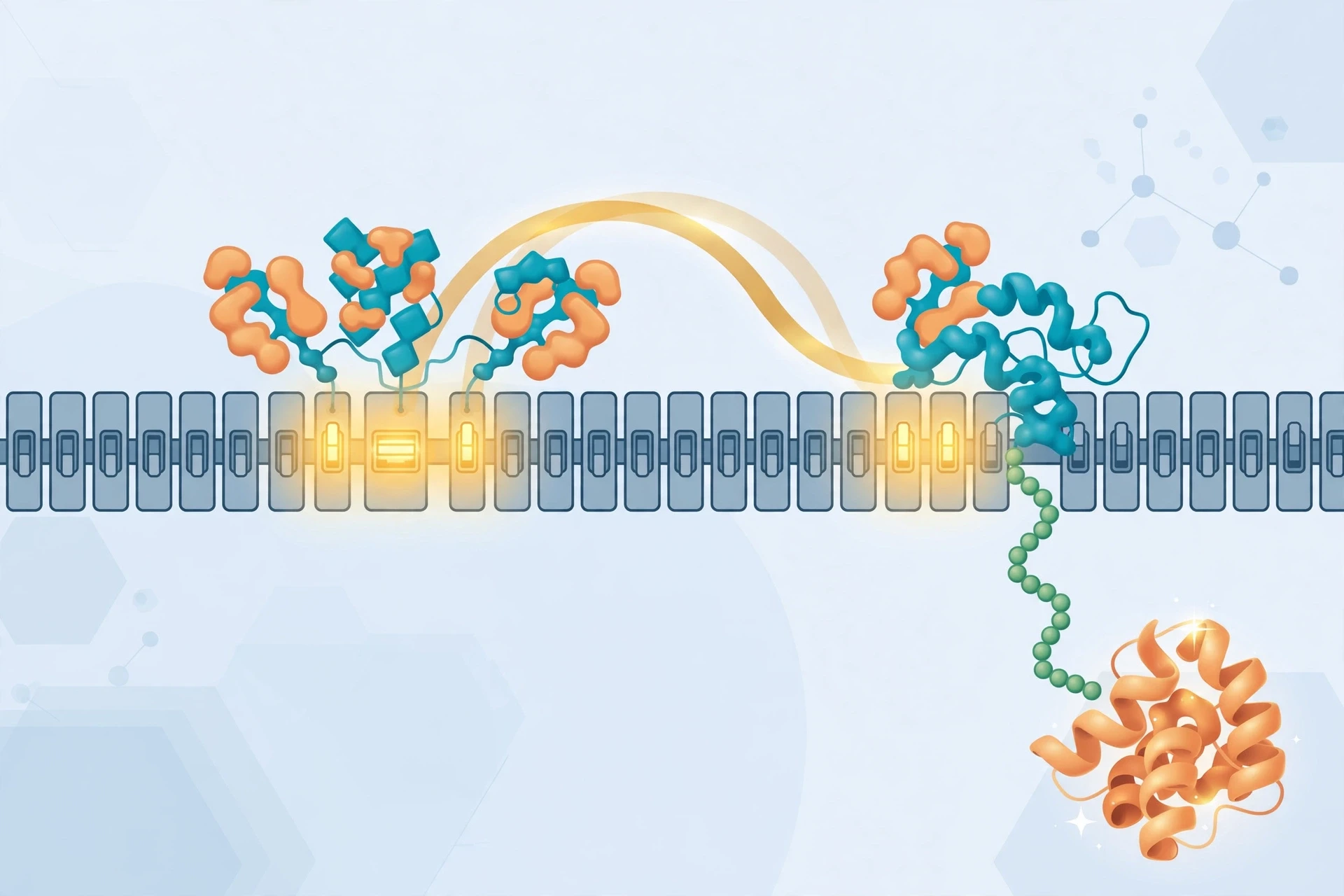
A gene needs more than a recipe. It needs instructions about when to run, and that is the job of regulatory DNA. The promoter, right at the gene's start, is one switch. But genes are also controlled by enhancers, short sequences that boost a gene's activity, and silencers, which damp it down. Together these elements decide whether a gene is on in a liver cell and off in a skin cell, on a little or on a lot.
Chemical marks on DNA and its packaging add another layer of control, switching genes on and off without changing the letters themselves, as explained in our guide to epigenetics. The letters are the text; the switches and marks are the stage directions.
Enhancers: Remote Controls
Enhancers are the strangest switches of all, because they do not need to sit next to the gene they control. An enhancer can sit hundreds of thousands of letters away and still switch its target on. It works by looping: the DNA strand bends so the enhancer and the gene's promoter touch, and proteins bridging the two start the copying machinery.
This long-distance control explains some famous medical puzzles. A mutation in an enhancer can cause disease even though the gene itself is perfectly intact, because the gene is never switched on at the right time or place. One well-studied case involves the limb enhancer for the SHH gene, which controls finger and toe development; damage to that distant switch can cause extra digits.
The Repeat Majority
The largest share of the non-coding genome is repetitive DNA, sequences copied over and over again. About 45 percent of the human genome comes from transposable elements, sometimes called jumping genes: sequences that could once copy themselves and paste the copy somewhere new. The best known are LINE-1 elements, about 17 percent of the genome, and Alu elements, short repeats present in roughly a million copies. A few LINE-1 copies are still active today, and a new insertion can occasionally disrupt a gene.
These sequences arrived as genomic parasites, many descended from ancient viruses that infected our ancestors and stayed. But evolution is a recycler: over millions of years, some transposons were domesticated into useful parts. Using the latest ENCODE data, researchers found that about a quarter of the genome's candidate regulatory elements are derived from transposable elements. The parasites became switches. Other repeats serve as structure: centromeres are built from repeated DNA, and telomeres are a simple six-letter sequence repeated thousands of times.
The genome also carries tens of thousands of genes for non-coding RNAs, molecules that regulate other genes rather than building proteins. GENCODE lists more than 35,000 long non-coding RNA genes, and microRNAs fine-tune how much protein each messenger RNA produces.
The ENCODE Argument
In September 2012, the ENCODE project, a large effort to map every functional element in the human genome, announced its headline result: about 80 percent of the genome showed some kind of biochemical activity. Somewhere, in some cell type, four-fifths of our DNA was doing something. The press ran with it. Junk DNA was dead, the headlines said, and the textbooks would have to be rewritten.
The backlash was swift. Evolutionary biologists pointed out that ENCODE had used a very broad definition of "functional": any reproducible biochemical activity counted. But activity is not the same as purpose. A machine that idles is active, but it is not doing useful work. The critics argued that the real test of function is whether evolution preserves a sequence. By that test, a 2014 Oxford study estimated that only about 8.2 percent of the human genome is under strong evolutionary constraint.
Both numbers can be true at once, because they measure different things. ENCODE measured what the human genome does; the evolutionary test measures what the human genome cannot afford to lose. The honest picture sits between them: a modest slice is essential, a larger slice does useful regulatory work, and a large share is genuinely quiet. The argument was never really about the data. It was about the word "functional," which means different things to a biochemist and an evolutionary biologist.
What "Junk" Really Means
So is most of the genome junk? The answer depends on what you mean by junk. Some of the non-coding genome is indeed broken material: dead transposons, decayed viral insertions, and pseudogenes, former genes that lost their function. That material is not useless; it is raw material. Evolution builds new switches and new genes from old parts.
The deeper lesson is about humility. In 2000, scientists could read the human genome but could not say what most of it did. Twenty-five years later, the switches are mapped and the repeats catalogued. The 98.5 percent is not a desert. It is a control system, a scrapyard, a fossil record, and a parts bin. The recipes were only the beginning. The rest of the book tells the cell when to cook.
9. How Different Are We? Variation Between People
Any two people share about 99.9 percent of their DNA when only single-letter changes are counted, and the remaining differences still add up to roughly 3 million single-letter variants between strangers. Most of those differences are harmless, a few shape health and appearance, and the richest variety of all sits in Africa, where our species began.
Pick any two people on Earth and line up their genomes side by side. Letter after letter, the text matches: the same genes in the same order on the same chromosomes. Then, every thousand letters or so, a single letter differs. Those tiny swaps, repeated millions of times across 3 billion letters, are most of what makes each of us genetically distinct.
Scientists call a one-letter swap a single nucleotide polymorphism, or SNP, pronounced "snip." SNPs are the most common kind of human variation, and they power ancestry tests, disease studies, and forensic DNA work. But they are not the only kind. Short stretches can be inserted or deleted, whole chunks can be copied so a person carries two or three copies of a gene instead of one, and a segment can flip around and face the other way. These larger changes are called structural variants.
One correction to a figure you have probably seen a hundred times: 99.9 percent counts only single-letter differences. Include insertions, deletions, and copied or flipped chunks as well, and any two people are roughly 99.5–99.6 percent identical, depending on what is counted. Both numbers are honest; they answer different questions. Either way, a fraction of a percent of 3 billion letters still means millions of differences.
How many variants does one person carry?
A typical genome carries roughly 4 to 5 million variant sites when compared with the reference genome, the standard sequence scientists use as a yardstick. That number comes from large efforts such as the 1000 Genomes Project, which in its 2010 pilot phase catalogued about 15 million SNPs, 1 million short insertions and deletions, and 20,000 structural variants — the completed project, published in 2015, catalogued more than 88 million variants from 2,504 people in 26 populations — and found that each person carries a large share of them. People with recent African ancestry tend to carry more variants, around 5 million, while people whose ancestors left Africa long ago tend to carry closer to 4 million.
Most of those millions of variants sit outside genes. Each person also carries roughly 340 to 400 predicted loss-of-function variants, affecting about 250 to 300 genes, and 50 to 100 variants previously linked to inherited disorders, according to the 1000 Genomes Project findings published in Nature (later work suggests fewer are truly gene-inactivating). That sounds alarming until you remember the other copy: we carry two copies of most genes, so a broken copy often goes unnoticed because the working copy picks up the slack.
A Neanderthal in the family tree
Some of our variants did not even originate in our own species. Between about 50,500 and 43,500 years ago, as modern humans spread out of Africa into Eurasia, they met Neanderthals, a close cousin species that had lived in Europe and western Asia for hundreds of thousands of years. The two groups had children together.
Today, most people whose ancestry lies outside Africa carry between 1 and 2 percent Neanderthal DNA, scattered in small fragments across the human genome. That figure comes from ancient-genome studies, including a 2024 analysis in Science that dated the mixing to a period lasting roughly 7,000 years, with an average date of about 47,000 years ago. Different people carry different fragments, so pooling the fragments carried by different living non-Africans, researchers have already recovered about a fifth of the Neanderthal genome (Vernot & Akey, Science 2014), even though no single person holds more than a small slice. Some fragments influence skin, hair, and the immune system; others were less helpful and were gradually weeded out by natural selection. People with recent African ancestry generally carry much less Neanderthal DNA, because their ancestors did not take part in that Eurasian mixing. Our family tree is not a straight line. It is a braid.
Where diversity is greatest
If you wanted to find the most genetic diversity on Earth, you would go to Africa. African populations hold the greatest genomic diversity in the world: roughly 5 million variant sites per genome, compared with about 4.1 to 4.2 million in people of East Asian, European, or South Asian ancestry.
The reason is time. Modern humans originated in Africa roughly 300,000 years ago, and we lived there far longer than anywhere else. When small groups eventually left Africa, they carried only a sample of the diversity back home, and each further migration carried a smaller sample still — a serial founder effect, so diversity thins with distance from Africa. Two people from different African populations can differ from each other more than a European differs from an Asian. The deepest divisions in our species are inside Africa, not between continents.
10. The Genome in the Clinic
A doctor can now read parts of your genome the way a mechanic reads a fault code, and for a growing list of conditions that reading changes what happens next. Single-gene disorders, cancer-risk genes, and drug-response genes already guide real decisions, though most common diseases still refuse to be predicted from DNA alone.
When one gene is the whole story
Cystic fibrosis is the classic example, and one of the most common serious single-gene disorders in people of European ancestry. It is caused by changes in a single gene, CFTR, on chromosome 7, which makes a channel that moves chloride and water across cell surfaces. When the channel fails, mucus in the lungs and pancreas turns thick and sticky. The disease occurs in about 1 in 2,500 to 3,500 white newborns in the United States, and is less common in other groups — about 1 in 17,000 African Americans and 1 in 31,000 Asian Americans, according to MedlinePlus Genetics.
Cystic fibrosis is recessive: a child needs two faulty copies, one from each parent, to develop the disease. Two healthy carriers have a 1-in-4 chance with each pregnancy of having an affected child, and about 1 in 25 people of European ancestry carries a faulty CFTR copy without knowing it. Carrier testing lets couples learn that risk in advance, and newborn screening — now routine in all 50 US states — catches affected babies in the first days of life.
Sickle cell disease tells a similar story with a different geography. It is caused by a single-letter change in the HBB gene, which makes part of haemoglobin, the protein that carries oxygen in red blood cells. The change makes haemoglobin clump into stiff fibres, bending red cells into crescents that jam small blood vessels, causing pain crises, anaemia, strokes, and organ damage. About 100,000 people in the United States live with sickle cell disease, most of them Black or African American, and it occurs in roughly 1 in 365 Black births. Like cystic fibrosis, it is recessive, and carriers are usually healthy. The same variant protects carriers against severe malaria, which is why it became common in parts of Africa where malaria kills.
Huntington's disease breaks the pattern in a way that makes it the hardest test in the clinic. It is dominant, not recessive: one faulty copy is enough. It is caused by an expanded repeat — the three letters CAG repeated too many times — inside the HTT gene on chromosome 4. Healthy people usually carry 35 or fewer repeats; people with 36 to 39 repeats may or may not develop the disease, and people with 40 or more repeats almost always develop it if they live long enough, usually with symptoms beginning between ages 30 and 50. About 3 to 7 per 100,000 people of European descent (roughly 1 in 15,000 to 1 in 30,000) live with Huntington's disease, and there is still no cure. A person with an affected parent has a 50 percent chance of carrying the expansion. The genome can answer the question. Only the person can decide whether to ask it.
BRCA1, BRCA2, and risk that is not destiny
If single-gene disorders are the human genome speaking clearly, BRCA1 and BRCA2 are the genome speaking loudly but not plainly. These two genes help repair damaged DNA, and a harmful inherited change in either one raises the risk of breast and ovarian cancer. About 1 in 400 people carries a harmful change in one of these genes; among Ashkenazi Jews, the figure is far higher, around 1 in 40. The numbers below come from the National Cancer Institute:
Cancer | BRCA1 carriers | BRCA2 carriers | General population |
|---|---|---|---|
Female breast cancer, lifetime | More than 60 percent | More than 60 percent | About 13 percent |
Ovarian cancer, lifetime | 39 to 58 percent | 13 to 29 percent | About 1.1 percent |
Male breast cancer, by age 70 | 0.2 to 1.2 percent | 1.8 to 7.1 percent | About 0.1 percent |
Pharmacogenomics: the right drug at the right dose
Pharmacogenomics — how genes affect drug response — asks a narrower question: not whether you will get sick, but how your body will handle the medicine. Clopidogrel, a blood thinner given after a heart attack or a stent, is the textbook case. It is a prodrug: the pill itself does nothing until a liver enzyme called CYP2C19 converts it into its active form. People who carry loss-of-function variants in CYP2C19 make less of the active drug and face a higher risk of another heart attack or stroke. The US Food and Drug Administration lists this interaction in its Table of Pharmacogenetic Associations, and its label carries a boxed warning advising doctors to consider a different blood thinner for poor metabolisers.
Codeine works the other way around. It is activated by a liver enzyme called CYP2D6. Most people convert a modest amount of codeine into morphine and get pain relief. Ultra-rapid metabolisers — people with extra working copies of CYP2D6 — convert it too fast, and can reach dangerous morphine levels on an ordinary dose. Children have died this way, which is why codeine is now contraindicated in children under 12. Poor metabolisers have the opposite problem: they make almost no morphine and get almost no relief. Across the FDA's two pharmacogenetic tables, FDA-reviewed information is available for more than 300 drug–gene pairs with some level of evidence, though most listed associations have not been evaluated in terms of the impact of genetic testing on clinical outcomes.
Polygenic risk scores and their limits
Most common diseases — heart disease, type 2 diabetes, asthma, depression — are not caused by one gene. They are caused by hundreds or thousands of variants, each adding a grain of risk, plus diet, exercise, smoking, stress, and luck. A polygenic risk score adds up those grains into a single number. Someone in the top 5 percent for coronary artery disease might carry two or three times the average risk.
That sounds useful, and sometimes it is: a high score can prompt earlier cholesterol checks. But a score is a ranking, not a prediction — most people with a high score never develop the disease, and most people who develop it do not have a high score. Scores trained mostly on European genomes also perform worse in other ancestries. DNA can tilt the odds. It cannot deal the hand.
11. Reading Your Own Genome
A spit tube bought online can reveal facts about your ancestry and a few about your health, but it cannot tell you who you are or what will happen to you. The results are probabilities from a slice of your genome, and the rules on its use are thinner than people expect.
I ordered my first direct-to-consumer DNA test on a whim, late one evening, after a friend showed me a map of his ancestry lighting up across three continents. The kit arrived in a small box: a tube, a funnel, a prepaid envelope, and instructions that boiled down to spit, seal, and wait. Six weeks later, an email arrived with a link, and I sat at my kitchen table clicking through pie charts and percentages as if they were a horoscope written by a laboratory. One health result — a slightly raised risk for a common condition — sat on the screen for a long time while I tried to decide how worried to be. That evening taught me more about consumer genetics than any paper I have read since, because I felt, first-hand, how easily a probability turns into a story in your head.
Direct-to-consumer testing reads a sample of your genome, not all of it. Most companies use a genotyping chip that checks a few hundred thousand SNP positions — the spots where people commonly differ — rather than sequencing all 3 billion letters. From those spots, they infer ancestry by comparing your variants with reference panels, and they estimate some health risks from variants research has linked to disease. The ancestry part is generally the stronger half: the broad picture — which continents your recent ancestors came from — is usually right, though the exact percentages are much less certain. Results can shift when a company updates its database. Your DNA did not change. The comparison group did.
What the results can and cannot tell you
The health reports are where expectations most often outrun reality. A consumer test can flag a handful of well-studied variants — the three BRCA1 and BRCA2 founder variants common in Ashkenazi Jews, for example, or the APOE variant linked to Alzheimer's risk. What it usually cannot do is rule those conditions out. The National Cancer Institute notes that consumer tests miss most harmful BRCA1 and BRCA2 variants, because they check only a few specific ones out of thousands. A "no variants found" result from a spit kit is not the same as a negative result from a clinical test, which sequences the whole genes.
A consumer test can tell you about your recent ancestry, in broad strokes, and about a small set of specific variants. It can sometimes connect you with genetic relatives through shared stretches of DNA. It cannot tell you your future. It cannot diagnose a disease, or rule one out. It cannot measure most of your disease risk, because most risk comes from variants the chip never reads, and from everything outside the human genome — diet, smoking, infections, accidents, and chance.
Privacy and data ownership
Once you mail that tube, your DNA data lives on company servers, and the rules governing it are a patchwork. Most companies allow you to download your raw data, delete your account, and opt out of research. But policies change, companies are bought and sold, and data breaches happen. In 2023, a breach at 23andMe exposed the data of 6.9 million users. The company said raw genotype data files were not accessed; the exposed data were ancestry, profile, and relationship details. Genetic data, unlike a password, cannot be changed if it leaks. Your genome is the one password you can never reset.
Ownership is murkier than the marketing suggests. The company typically holds a licence to store, analyse, and, with your consent, use your de-identified data for research, and research partnerships with drug companies are a major revenue stream. De-identification helps, but DNA is inherently identifying: a genome is a fingerprint that no anonymisation can fully scrub. Police have used consumer DNA databases, sometimes through a relative's uploaded data, to identify suspects in cold cases.
GINA and its limits
Many people hesitate to get tested because they fear the results will be used against them — by an employer, or by an insurer. In the United States, the Genetic Information Nondiscrimination Act, known as GINA, was signed into law in 2008. It bars health insurers from using genetic information to decide eligibility, premiums, or coverage, and it bars employers with 15 or more employees from using genetic information in hiring, firing, promotion, or pay decisions.
The shield has gaps, and they are large. GINA does not cover life insurance, disability insurance, or long-term care insurance. In most states, those insurers can legally ask about genetic test results and use them when deciding whether to offer a policy and at what price. GINA does not cover employers with fewer than 15 employees, or the military, the Veterans Health Administration, the Indian Health Service, or federal employee health plans, which operate under separate rules. And it does not cover a disease that has already appeared — once a condition is diagnosed, it is a medical condition, not just genetic information, and different rules apply.
12. Editing the Genome: From Reading to Rewriting
For the first time, doctors can rewrite a faulty stretch of DNA inside a living patient and watch the disease fade. The first approved CRISPR therapy arrived in late 2023, and it works by editing a patient's own blood stem cells outside the body. That success draws a sharp line between treating one person and changing every generation after them.
Casgevy: the first CRISPR medicine
The first CRISPR therapy to reach patients is called Casgevy, also known by its generic name, exagamglogene autotemcel, or exa-cel. It treats sickle cell disease and transfusion-dependent beta thalassemia, two blood disorders caused by faulty haemoglobin genes.
On 16 November 2023, the UK's Medicines and Healthcare products Regulatory Agency became the first regulator in the world to authorise a CRISPR therapy, granting conditional marketing authorisation for Casgevy in patients aged 12 and older. Three weeks later, on 8 December 2023, the US Food and Drug Administration approved it for sickle cell disease in patients aged 12 and older with recurrent vaso-occlusive crises, calling it the first FDA-approved therapy using CRISPR/Cas9 technology. On 16 January 2024, the FDA extended the approval to transfusion-dependent beta thalassemia. The European Medicines Agency followed in 2024. In July 2026, the FDA expanded both indications to children aged 2 and older, and in October 2026 the MHRA extended its UK authorisation to children aged 5 and older.
Casgevy does not fix the faulty haemoglobin gene directly. The patient's own blood stem cells are collected, and CRISPR disables a switch — an enhancer of the BCL11A gene — that normally turns off foetal haemoglobin after birth. With the switch disabled, the edited stem cells keep making foetal haemoglobin, which works well and does not sickle. The edited cells are then returned to the patient after chemotherapy clears space in the bone marrow. In the trials, most patients with sickle cell disease stayed free of vaso-occlusive crises for at least a year, and most with beta thalassemia no longer needed regular transfusions.
The treatment is a one-time infusion, but the US list price was set at about 2.2 million dollars per patient, making Casgevy one of the most expensive medicines ever sold. A cure that almost no one can afford is a different kind of failure. By the end of 2025, only 69 patients worldwide had received an infusion. For a fuller account of how CRISPR works, see our article on CRISPR gene editing.
Somatic editing versus germline editing
Every approved gene therapy so far, Casgevy included, is somatic. Somatic editing changes the DNA of some cells in one person's body — blood stem cells, for example. The change stays with that person; it is not passed to their children, because the reproductive cells, the eggs and sperm, are untouched.
Germline editing is the opposite. It changes the DNA of an embryo, an egg, or a sperm, so the change is copied into every cell of the resulting child — and into that child's children, and theirs. A mistake would be a family's problem, for generations, with no way to undo it. That permanence is why germline editing is treated so differently from somatic editing, even though the laboratory technique is essentially the same.
No country explicitly permits heritable germline editing for reproduction. A global survey of 106 countries found that 75 of the 96 with relevant policies prohibit using an edited embryo to start a pregnancy, and none explicitly allows it. The United States blocks it through funding rules and a ban on the FDA reviewing applications for it. The practical result is the same almost everywhere: you may edit the cells of a consenting patient, but not the genome of a future child.
The world learned why that line matters in 2018, when a Chinese scientist, He Jiankui, announced that he had used CRISPR to edit the CCR5 gene in twin embryos, which were then implanted and brought to term. The editing was unnecessary — the stated goal, resistance to HIV, could already be achieved by established fertility methods — and He was later sentenced to three years in prison.
The ethics ahead
The ethical questions start with safety. CRISPR is precise, but not perfect. Off-target cuts happen, and a cut that damages a tumour-suppressor gene could, in theory, cause cancer years later. Long-term follow-up of the first edited patients is still short — a few years, not decades — and regulators have required 15-year follow-up studies.
Access is the second question, and Casgevy makes it concrete. A treatment priced at about 2.2 million dollars per patient will reach some patients and not others, and the dividing line will track wealth, insurance, and geography. Sickle cell disease falls hardest on Black communities in the United States and on people in sub-Saharan Africa, where the treatment is least available. A cure that works in Boston but not in Lagos is a scientific triumph and a moral problem at the same time.
The genome is not a script we must obey, and it is not a machine we can rebuild at will. It is a record of where we came from, a guide to how our bodies work, and — now — a text we can begin to edit. The care we take with that power will say as much about us as the letters themselves.
13. The Genome and Our Evolution
Humans and chimpanzees share about 98.8 percent of their DNA in the stretches that can be lined up letter by letter, yet that small remaining difference holds roughly 35 million single-letter changes, and a handful of fast-changing regions helped shape our brains, our hands, and our speech.
The first time I stood in front of a chimpanzee skeleton in a natural history museum, I did what most visitors do. I looked at its long arms and heavy brow beside the human skeleton next to it, then read the small sign underneath. The bones said "different species." The sign said "close cousins." Both were telling the truth.
That number comes from lining up the two genomes and comparing the parts that match up cleanly. The American Museum of Natural History puts it plainly: humans and chimps share a surprising 98.8 percent of their DNA, and the 1.2 percent that differs still adds up to about 35 million single-letter differences across three billion letters (AMNH). Two random humans match each other by about 99.9 percent at the level of single letters, as noted in section 9. The gap is small as a percentage and enormous as a count, which is why a percentage alone can mislead.
The two species split from a shared ancestor some six to seven million years ago. One visible difference is the chromosome count: chimpanzees have 48 chromosomes, while humans have 46, because two ancestral ape chromosomes fused end to end to form our chromosome 2, leaving a stretch of telomere sequence in the middle where it does not belong.
But the differences that matter most are not the big structural ones. They are the small changes in the switches that control when and where genes turn on. Humans and chimps carry nearly the same set of genes, yet those genes are used in different amounts, at different times, and in different parts of the brain. The recipe book is nearly identical. The cooking schedule is different.
That is where human-accelerated regions come in. In 2006, Katherine Pollard and her colleagues scanned the human genome for stretches of DNA that had barely changed across vertebrate evolution for hundreds of millions of years, then suddenly changed fast on the human branch. They found 49 such regions, now called HARs, and 96 percent of them sit outside protein-coding genes, in the regulatory regions that control other genes (Pollard et al., Nature 2006). The most dramatic, HAR1, is only 118 letters long, yet it picked up 18 changes in the human lineage, in an RNA gene active in the developing cortex between the seventh and nineteenth weeks of gestation.
HAR2 tells a different story. It works as an enhancer, a switch that turns a nearby gene on in the developing limb. In mice carrying the human version, the switch fires in a pattern not seen in chimps or rhesus monkeys. What HAR2 shows is that evolution did not need to invent new genes to reshape us. It only needed to retune the old ones.
Then there is FOXP2, the first gene ever linked to human speech. In one large family, a single faulty copy left half its members struggling to form words and to follow grammar, even though their intelligence was otherwise normal. The human version differs from the chimpanzee version at just two amino acids, and Enard and colleagues argued those changes showed the signature of natural selection — though later analyses have questioned that sweep signal (Enard et al., Nature 2002). Neanderthals carried the same two changes, which pushes their origin back to before our lineage split from theirs. It is a master switch controlling hundreds of other genes, not a simple "language gene", and versions of it exist in mice, bats, and songbirds.
We are not a new design drawn from scratch. We are a remixed ape, with the same genes, the same basic body plan, and regulatory changes that stretched childhood, enlarged the cortex, freed the thumb, and wired the brain for speech. The story of human evolution is written in those edits, and natural selection did the editing, one small change at a time.
14. What Your Genome Cannot Tell You
Your genome is a starting hand, not a finished life. It sets odds and opens doors, but food, stress, chance, and the chemical marks laid on your DNA decide which of those doors you actually walk through, and no test can tell you in advance.
A few years ago I met identical twin brothers at a school science fair, and I could not tell them apart until one laughed. One had a scar on his chin from a bicycle crash. The other wore glasses. One loved spicy food, and the other would not touch it. Their DNA was the same. Their lives were not. It is the simplest proof that genes are not destiny.
We say someone "has the gene for" height, or intelligence, or diabetes, as if a gene were a light switch with two settings. Most traits do not work that way. Height alone is shaped by hundreds of genes, most adding well under a millimetre each, plus childhood nutrition, illness, sleep, and plain luck. A gene variant can raise the odds of a disease from one in a hundred to three in a hundred. That is a real effect, and still a long way from a verdict.
Chance plays a bigger role than most people expect. Your genome loads the dice. It does not choose how they land.
Then there is the layer above the DNA itself. Epigenetics is the set of chemical marks, such as methyl groups attached to DNA and tags on the histone proteins that DNA wraps around, that turn genes up or down without changing a single letter of the sequence. These marks respond to diet, stress, smoking, infection, and age, and they are part of why identical twins drift apart over a lifetime.
The clearest evidence came from a study of 80 identical twins, aged three to 74, published in 2005. Young twin pairs had nearly identical patterns of DNA methylation and histone acetylation. Older pairs did not. In about 35 percent of the pairs the differences were large, growing with age, time spent living apart, and different medical histories (Fraga et al., PNAS 2005). The twins started life with the same script. Life edited the stage directions.
Gene-environment interaction is the same idea at a larger scale. A variant that raises the risk of lung cancer matters far more to a smoker than to someone who never smoked. The gene has not changed in a generation. The environment has. Two people with the same risk variant can live very different lives, and a genetic test result is a piece of information, not a fortune.
None of this means genes do not matter. A single faulty copy of the BRCA1 gene can raise a woman's lifetime risk of breast cancer several-fold, and knowing that can save her life. A child born with two faulty copies of the CFTR gene will develop cystic fibrosis. But those are the exceptions, the rare cases where one gene carries most of the weight. For the common conditions that fill hospitals, heart disease, diabetes, depression, asthma, dozens or hundreds of genes each contribute a little, and so does the environment.
So what can your genome tell you? It can tell you about risk, about ancestry, about rare conditions that run in families, and about which medicines your body is likely to handle well. What it cannot tell you is who you will become. That answer is still being written, by your choices, your surroundings, and the quiet chemical conversation between your genes and your life. For a closer look, see our articles on epigenetics and nature vs nurture.
15. The Genome's Next Chapter
In 2023, scientists replaced the idea of a single reference genome with a pangenome built from 47 diverse people, adding more than 100 million letters of DNA that the old reference had missed, because one genome can never stand in for all of humanity.
For twenty years, nearly every human genome was read by comparing it to the same reference, a composite stitched together from a small number of donors. When a scientist in Lagos or Lima had their genome sequenced, it was measured against a standard built from a small group of people who did not include them. Stretches of DNA that did not match were hard to place, easy to misread, and sometimes simply thrown away.
The fix arrived on 10 May 2023, when the Human Pangenome Reference Consortium published the first draft of a human pangenome in Nature. Instead of one linear sequence, the team assembled 47 phased, diploid genomes from genetically diverse individuals, 94 separate haplotypes in total, and wove them into a single map (Liao et al., Nature 2023). The National Institutes of Health described it as a transit map, with different lines for each genome that overlap where sequences agree and branch apart where they differ (NIH).
The gains were immediate. The pangenome added more than 100 million base pairs missing from the standard reference, uncovered over 1,100 gene duplications the old map had missed, and cut errors in finding small variants by 34 percent. The consortium's goal is to grow the map to 350 genomes, so that the reference reflects the species instead of a sample of it.
Why does this matter outside a sequencing centre? A reference genome is the ruler against which every clinical genome is measured. When the ruler is wrong, diagnoses are missed: a variant that looks disease-causing against one reference may be a common, harmless variant in another population. An honest ruler means fewer missed diagnoses and fewer false alarms, especially for people whose ancestry was barely represented in the old reference.
The pangenome was only possible because sequencing got cheap. The National Human Genome Research Institute tracked the cost of reading a human-sized genome from about ninety-five million dollars in 2001 to about five hundred and twenty-five dollars in 2022 (NHGRI). The first complete gapless human genome, published by the Telomere-to-Telomere consortium in April 2022, filled in the last 8 percent the Human Genome Project had left unfinished, and the complete Y chromosome followed in 2023 (Rhie et al., Nature 2023).
Cheap sequencing is now feeding population-scale science. The UK Biobank has released whole-genome data from half a million participants — when released in November 2023, the largest single set of its kind — and the US All of Us programme has since passed it, with more than 535,000 genomes in its June 2026 release. The All of Us Research Program is working toward more than one million participants (UK Biobank).
What comes next is less about reading more letters and more about reading them fairly. The pangenome will grow, long-read sequencing will resolve the tangled regions that short reads still fumble, and turning a list of variants into advice a doctor can use will move from research papers into clinics, one careful study at a time.
16. Six Misconceptions About the Human Genome
1. "We have 100,000 genes"
Before the Human Genome Project finished, many scientists guessed humans had around 100,000 genes. The finished sequence cut that to 20,000 to 25,000, and the first complete gapless genome in 2022 counted 19,969 predicted protein-coding genes. Complexity does not come from gene count. It comes from how genes are switched on and off and spliced into different messages.
2. "Junk DNA is useless"
The nickname "junk DNA" was coined for the stretches of the human genome that do not code for proteins, which is most of it: protein-coding genes cover less than 2 percent of our DNA. But the ENCODE project showed in 2012 that about 80 percent of the genome shows at least one kind of biochemical activity in some cell type, such as being copied into RNA or binding gene-controlling proteins (ENCODE Project Consortium, Nature 2012). Biochemical activity is not proof that every stretch matters, and scientists still argue about how much of it is truly functional. What is settled is that the non-coding genome holds the switches and timers that run the whole system.
3. "One gene makes one trait"
This idea comes from schoolbook examples such as pea colour and cystic fibrosis, where one gene does carry most of the effect. Most traits are nothing like that: height, intelligence, blood pressure, and the risk of common diseases are each shaped by hundreds or thousands of genes, plus the environment. A single gene can also do many jobs. FOXP2 helps build brain circuits, controls other genes, and shows up in the lungs and gut as well. The genome is a network, and pulling one thread tugs on many others.
4. "Your genome is your destiny"
A genome is a set of odds, not a verdict. Identical twins share their DNA and still end up different. Risk variants shift probabilities, and lifestyle, chance, and epigenetic marks shift them back. Even the strongest single-gene risks are not certainties: many people who carry a high-risk BRCA1 variant never develop cancer. Destiny is a story. The genome is a starting point.
5. "The genome is finished and fully understood"
The Human Genome Project declared its work complete in April 2003, yet about 8 percent of the human genome stayed unread until the Telomere-to-Telomere consortium closed those gaps in 2022. Reading the letters is only half the job. Scientists still do not know what most variants do, how most genes are regulated in each of the body's hundreds of cell types, or why the same variant harms one person and leaves another untouched. The sequence is finished. The understanding is not.
6. "Humans are 99% chimpanzee, so we are almost chimps"
The 98.8 percent figure counts single-letter matches in the parts of the two genomes that can be lined up. It leaves out the insertions, deletions, duplications, and rearrangements that cannot be aligned at all. It also says nothing about how genes are used: the same genes, switched on at different times and in different amounts, build a different brain. We share a recent ancestor with chimpanzees, and we are 100 percent human, not 99 percent chimp.
17. Why the Genome Matters — and What We Still Do Not Know
The genome gave medicine a parts list, gave evolution a clock, and gave every person a record of their ancestry written in their own cells, yet most of the variants in that record still have no known meaning, and the rules that turn DNA into a living person remain half-read.
Think about what has changed. A doctor can now order a test that reads a child's entire genome and finds the single misspelled gene behind a rare disease that once took years to diagnose. A cancer patient can receive a drug matched to the mutations in their own tumour rather than to the average patient. None of that was possible before the human genome was read.
The questions left open are just as large. Most of the millions of variants that differ between any two people have no known effect, and the rare ones are the hardest to study because so few people carry them. Gene regulation is still a puzzle: we know the human genome has switches, but we do not have a complete map of which switch controls which gene in which cell at which moment of life. The repetitive and non-coding regions that took the longest to sequence are still the least understood, and they are where many disease-linked variants turn up.
There is also a question the human genome alone cannot answer: where the first genome came from at all. The chemistry of early Earth, the first self-copying molecules, and the long road from those molecules to cells are stories told by geology and chemistry as much as by genetics, and you can follow that trail in our article on the origin of life.
The genome is not a finished book. It is a library we have only just entered, with most shelves still uncatalogued. The next chapters will be written by better maps, by more diverse genomes, and by the slow work of connecting each variant to a real effect in a real person. What began as a race to read three billion letters has become learning to read them well enough to help the people who carry them.
Frequently Asked Questions
What is the human genome?
The human genome is the complete set of DNA in a human cell, about three billion letters of A, T, C, and G, organized into 23 pairs of chromosomes plus a small circle of DNA in the mitochondria. It holds roughly 20,000 protein-coding genes plus the switches that control them.
What was the Human Genome Project?
The Human Genome Project was an international effort, launched in October 1990 and completed in April 2003, to read the sequence of the human genome and map its genes (NHGRI). Its draft sequence appeared in 2001. About 8 percent stayed unread until the Telomere-to-Telomere consortium closed those gaps in 2022.
How many genes do humans have?
Humans have about 20,000 protein-coding genes. The first complete gapless genome counted 19,969 predicted protein-coding genes in 2022, far fewer than the 100,000 once expected. The genome also holds tens of thousands of RNA genes, plus thousands of pseudogenes, so the total gene count depends on what you count.
What is junk DNA?
"Junk DNA" is an old nickname for the parts of the genome that do not code for proteins, which is more than 98 percent of it. The name is misleading. Much of that DNA contains switches that control genes and RNA genes with real jobs. The ENCODE project found biochemical activity across about 80 percent of the genome, though scientists still debate how much of that activity is truly functional.
How much DNA do humans share with chimpanzees?
Humans and chimpanzees share about 98.8 percent of their DNA in the regions that can be lined up letter by letter. The remaining 1.2 percent still means roughly 35 million single-letter differences, plus insertions, deletions, and rearrangements that the percentage leaves out.
Can I read my own genome?
Yes. Direct-to-consumer tests can read parts of your genome, usually a selection of markers, for ancestry and some health traits, while clinical whole-genome sequencing reads nearly all three billion letters and is ordered through a doctor. Costs have fallen from about ninety-five million dollars in 2001 to a few hundred dollars in recent years, but reading the letters is easy compared with interpreting what they mean, so results are best discussed with a genetic counsellor.
Is the human genome fully sequenced?
Yes. Every chromosome has now been read from end to end. The Telomere-to-Telomere consortium published the first gapless human genome in April 2022, covering 3.055 billion base pairs, and the complete Y chromosome followed in August 2023. The 2023 pangenome added variation from 47 diverse people.
Sources
NIH — Human Pangenome Boosts Accuracy and Reflects Diversity
Liao et al. — A Draft Human Pangenome Reference, Nature 2023
Nurk et al. — The Complete Sequence of a Human Genome, Science 2022
American Museum of Natural History — Comparing Chimp, Bonobo and Human DNA
Fraga et al. — Epigenetic Differences Arise During the Lifetime of Monozygotic Twins, PNAS 2005
UK Biobank — World's Largest Genetic Project Opens the Door to New Era for Treatments and Cures