

Introduction
The baby was three days old when my grandmother held her up to the window light and announced, with total confidence, that the child had her great-grandfather's chin. Everyone laughed. The baby was three days old; she barely had a chin. Yet by the time that little girl was five, the family resemblance was plain to anyone who looked: the same chin, the same dark curl at the temple, the same way of squinting when she laughed. Something in her genetics had travelled from a man none of us had ever met, across four generations, and written itself onto a child's face. That something is what genetics studies — the instructions, the copying, and the reading of those instructions that make living things resemble their parents and yet never quite repeat them.
Genetics is the science of heredity: how traits pass from one generation to the next, how the information is stored and read inside cells, and how small changes in that information can reshape a life. It begins with a molecule, DNA, built from four chemical letters, and it ends — if it ever ends — with questions about who we are, why families share both faces and illnesses, and how much of our future is written before we are born. This guide follows that whole arc. We will start in a monastery garden in the 1860s, where a monk counting peas uncovered the laws of inheritance without ever seeing a gene. We will walk through the patterns by which traits travel in families, the machinery that turns a gene into a working protein, the accidents called mutations that rewrite the instructions, and the switches — epigenetics — that decide which instructions get read at all. Along the way we will meet the people whose mistakes and stubborn curiosity built the field, and we will look at what genetics can do for medicine today, from carrier screening to CRISPR, and what it cannot do, which matters just as much.
You do not need a biology degree to follow this. You need only the curiosity that made my grandmother study a newborn's chin — and a willingness to see that the answer to "who do I look like, and why?" is one of the deepest stories in science.
1. What Genetics Is — and What a Gene Actually Does
1.1 The instruction book in every cell
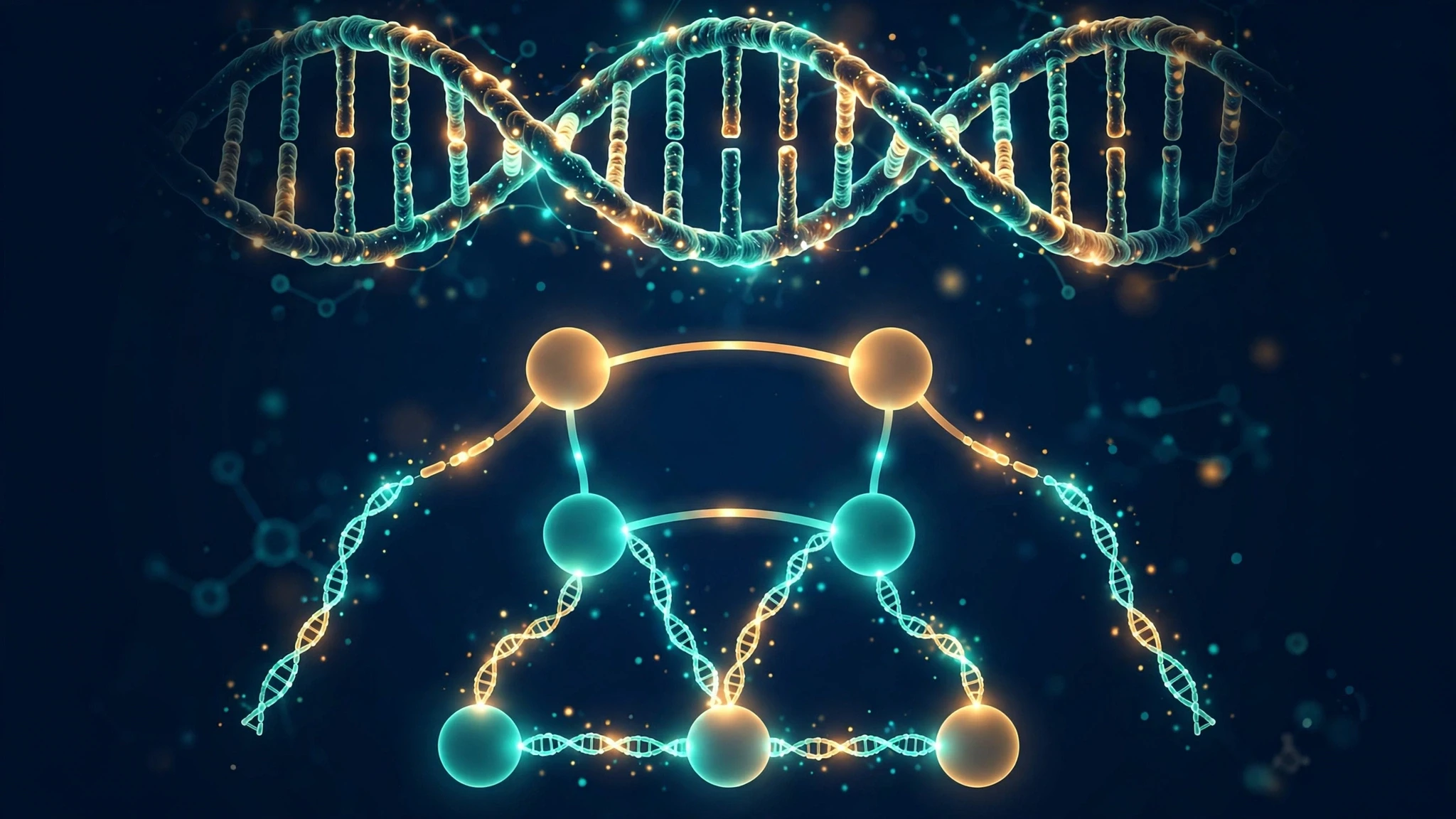
Every cell in your body — skin, liver, brain, bone — carries the same instruction book. That book is your genome: about 3 billion pairs of chemical letters, A, T, C, and G, arranged along 46 chromosomes in almost every cell. A gene is a stretch of that book that means something: a recipe for a protein, or for a functional RNA molecule that does a job without ever becoming a protein. Humans have roughly 20,000 protein-coding genes, a number that surprised everyone when the Human Genome Project finished its first draft in 2003. We expected a hundred thousand. We turned out to have barely more genes than a roundworm. The complexity of a human being does not come from having more genes. It comes from how those genes are used — switched on and off in different combinations, in different cells, at different times.
If you have not yet read Sciory's guide to the molecule itself, start there: DNA: Structure, Replication, and Role in Heredity explains the double helix, how it copies itself, and how its four letters spell out proteins. Genetics picks up where that story leaves off. DNA is the text. Genetics is the study of how the text is inherited, read, edited by accident, and sometimes misread.
1.2 Genotype, phenotype, and the space between them
Two words carry most of the weight in genetics, and keeping them straight saves a lot of confusion. Your genotype is the set of gene versions you carry — the letters as written. Your phenotype is what shows up: your height, your blood type, whether you can taste a bitter chemical called PTC, whether your hair curls. The genotype is the recipe; the phenotype is the dish. And like any dish, the result depends on more than the recipe. The oven matters. The cook matters. In genetics, the "oven" is the environment — nutrition, sunlight, infections, the womb you developed in — and the "cook" is the rest of your genome, thousands of other genes interacting with the one you are watching.
I learned this the blunt way in my early teaching years, when I showed a class a photograph of identical twins and asked whether they were genetically identical. "Yes," the class said, confident. Then I showed them the same twins at sixty: one had spent decades working outdoors in the sun, the other in an office; one smoked, the other did not. Their faces had drifted apart. Same genotype, different phenotypes, because a lifetime of environments had read the same book differently. That gap between genotype and phenotype is where most of the interesting questions in genetics live.
1.3 Alleles: the versions that make us different
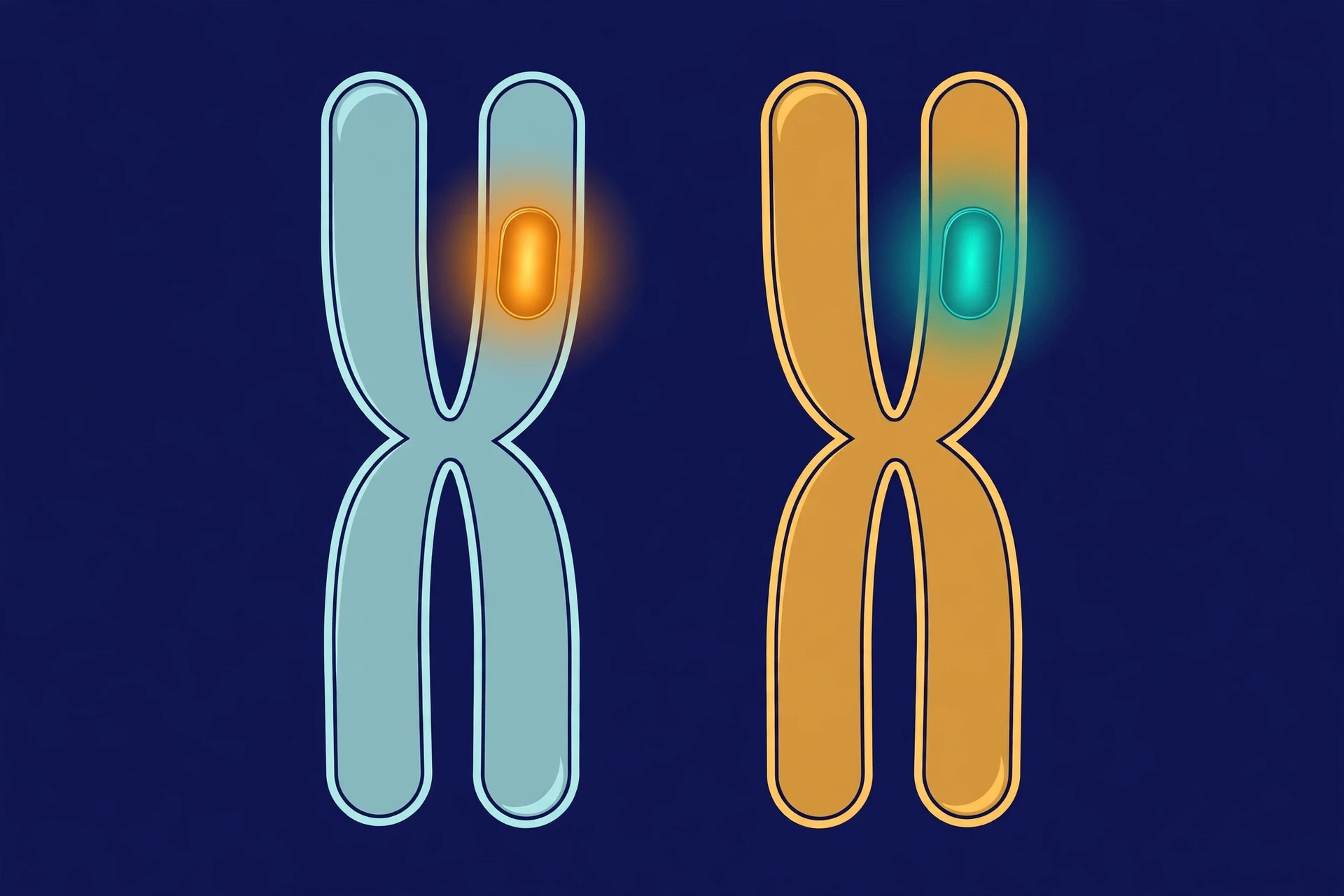
At any given place on a chromosome — a locus — different people can carry different versions of the same gene. These versions are called alleles. You inherit two copies of most genes, one from each parent, and the pair you carry may be identical (homozygous) or different (heterozygous). Alleles arise because DNA copying is not perfect, and because, over millions of years, small changes have accumulated and survived. Eye colour, blood type, the shape of your earlobe, and your risk of certain conditions all come down, in part, to which alleles you happened to receive.
A useful everyday picture is a cookbook shelf. Every household owns the same cookbook — the human genome — but each copy has small handwritten notes in the margins. One family's copy says "add extra salt" in the soup recipe; another says "half the sugar" in the cake. The recipes are the same genes. The notes are the alleles. Dinner still works, but it tastes a little different in every house.
2. Mendel and the Laws of Inheritance
2.1 A monk, a garden, and 29,000 pea plants
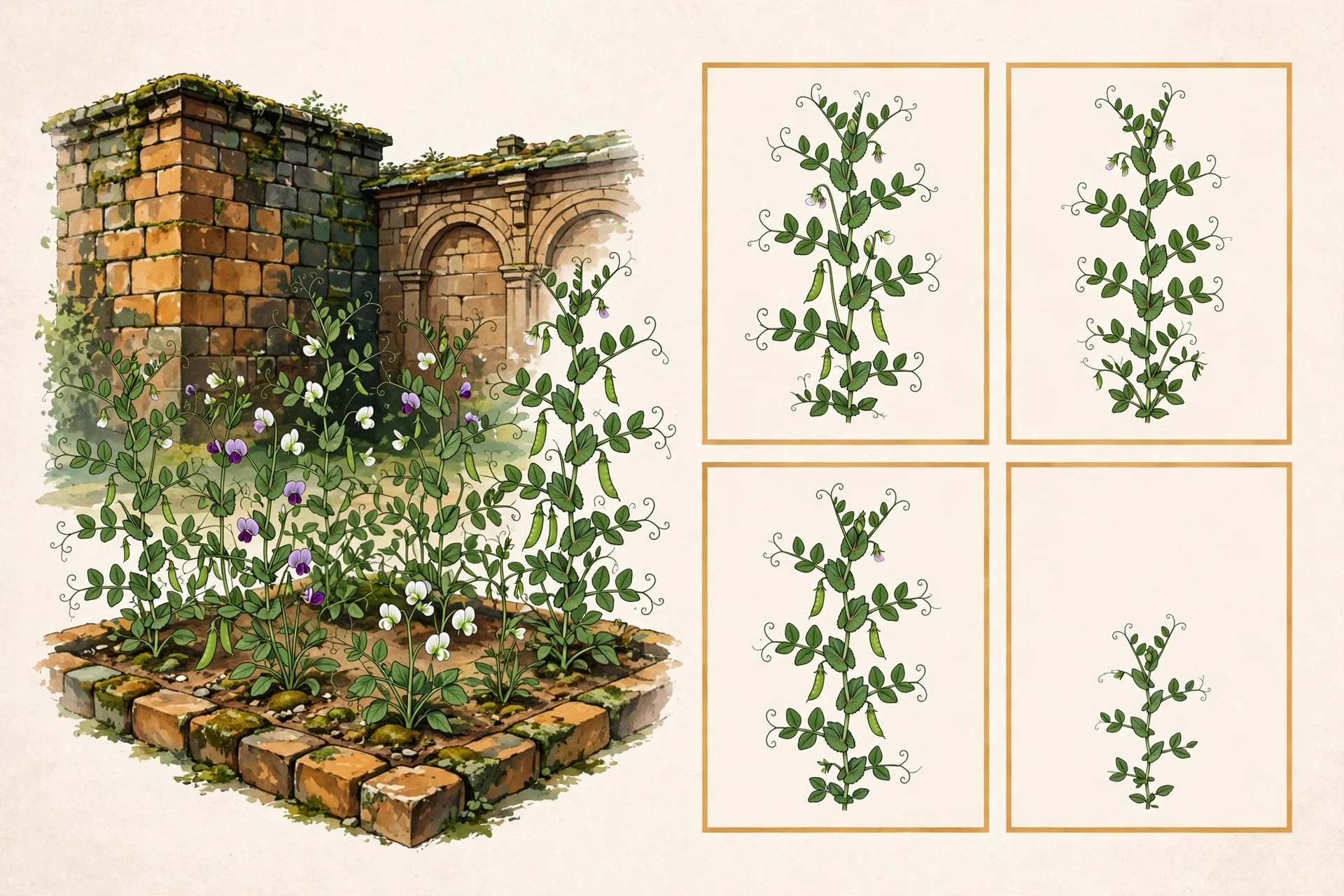
The science of genetics began not in a laboratory but in a monastery garden in Brno, in what is now the Czech Republic, where Gregor Mendel, an Augustinian monk with a gift for counting, spent eight years crossing garden peas. Between 1856 and 1863 he grew and examined roughly 29,000 plants, tracking seven traits: seed shape, seed colour, flower colour, pod shape, pod colour, flower position, and plant height. He chose peas for a practical reason — they self-fertilise, so he could control every cross — and he did something nobody before him had thought to do with heredity: he counted. He did not just note that tall plants sometimes had short children. He counted how many, and the ratios came out clean: three tall to one short, again and again.
Mendel published his results in 1866 in the proceedings of a local natural history society. Almost nobody read it. He died in 1884, unknown as a scientist, and his work was only rediscovered in 1900, when three different researchers independently found the same patterns and then found Mendel's paper. It is one of the great "what if" stories in science: the laws of inheritance sat unread for 34 years while biology stumbled along without them.
2.2 The law of segregation: one copy from each parent
Mendel's first law, the law of segregation, says that each parent carries two copies of each hereditary factor, and passes only one — chosen at random — to each child. We now know why: the two copies sit on paired chromosomes, and meiosis, the cell division that makes eggs and sperm, separates the pairs so each gamete gets one copy. When egg and sperm meet, the pair is restored. This is the physical reason a child can inherit a trait neither parent shows: both parents can silently carry a recessive allele and each pass it on, and the child, receiving two copies, shows the trait. OpenStax's account of the laws of inheritance lays out this chain — genotype, phenotype, and the segregation of chromosomes in meiosis — in the clearest textbook form I know: OpenStax Concepts of Biology — Laws of Inheritance.
2.3 The law of independent assortment — and where it breaks
Mendel's second law, the law of independent assortment, says that the inheritance of one trait does not affect the inheritance of another: the gene for seed shape and the gene for flower colour are shuffled independently. That is true when the genes sit on different chromosomes, or far apart on the same one. But Mendel got lucky. He happened to choose seven traits whose genes lie on different chromosomes, or far enough apart that they behave independently. Genes that sit close together on the same chromosome tend to travel together — they are linked — and that exception, discovered later in fruit flies by Thomas Hunt Morgan's laboratory, turned out to be a gift. By measuring how often linked genes are separated during meiosis, geneticists learned to map where genes sit on chromosomes, the first genetic maps ever made.
2.4 Punnett squares: the arithmetic of inheritance
The Punnett square, named after the British geneticist Reginald Punnett, is the simplest tool in genetics: a grid that lists every allele combination two parents can produce, and the probability of each. Cross two heterozygous carriers of a recessive trait — each parent carries one working copy and one altered copy — and the square gives the classic result: a 1-in-4 chance of a child with two altered copies, a 2-in-4 chance of a carrier child, and a 1-in-4 chance of a child with two working copies. Probabilities, not certainties. I have sat with families who heard "one in four" and believed it meant the fourth child would be affected and the first three safe. It does not. Each child is a fresh roll of the same dice. That misunderstanding is one of the first things a genetic counsellor has to undo, and it is worth undoing here too.
3. Beyond Mendel: When Inheritance Gets Complicated
3.1 Dominant, recessive — and the shades between
Mendel's peas were unusually tidy: one allele dominated, the other hid completely. Human traits are rarely so polite. In incomplete dominance, the heterozygote lands in the middle — cross a red snapdragon with a white one and the offspring are pink, not red. In codominance, both alleles show up at once: a person with one A blood-type allele and one B allele has AB blood, with both A and B markers on their red cells. Neither allele wins; both are read. Blood type is the textbook example, and it is also a practical one — it is why blood transfusions must be matched, and why a child can have a blood type neither parent has.
3.2 Many genes, one trait
Most of the traits we notice about each other — height, skin colour, intelligence, the risk of heart disease — are polygenic: dozens or hundreds of genes each contribute a small effect, and the environment adds its own push. Height is the classic case. More than 12,000 gene variants shape height, most adding or subtracting only a fraction of a millimetre, and nutrition during childhood shifts the whole distribution. That is why children are usually near their parents' height but not exactly at it, and why average height has risen in many countries over the last century as nutrition improved, far faster than genes could change. Anyone who tells you a single gene "determines" height, or intelligence, or personality, is selling a story the data does not support. The data says: many small effects, plus environment, plus chance.
3.3 Linked genes, sex chromosomes, and why sons and daughters differ
Humans have 22 pairs of autosomes and one pair of sex chromosomes: XX in most females, XY in most males. Genes on the X chromosome follow their own rules, because males have only one X and therefore only one copy of every X-linked gene. A recessive allele on the X that would hide in a female — masked by her second, working copy — shows up plainly in a male. That is why red-green colour blindness and haemophilia are far more common in men than in women: the allele is not more common in men, it is simply unmasked. It is also why a father cannot pass an X-linked trait to his son — a son gets his father's Y, not his X — a fact that shows up clearly in family pedigrees and that genetic counsellors use every day.
4. How Traits Travel Through Families
4.1 The five classic patterns
MedlinePlus Genetics, the U.S. National Library of Medicine's patient-friendly genetics resource, lists the patterns in which single-gene conditions are inherited, and the list is worth learning because it turns family history into something you can actually reason about: MedlinePlus Genetics — Inheritance Patterns. In autosomal dominant inheritance, one altered copy is enough — Huntington's disease and Marfan syndrome are examples — and an affected person usually has an affected parent. In autosomal recessive inheritance, both copies must be altered — cystic fibrosis and sickle cell disease are examples — and parents are usually healthy carriers. X-linked dominant and X-linked recessive patterns follow the X chromosome rules from section 3.3. Y-linked traits pass only from father to son. Mitochondrial inheritance passes only through mothers, because only the egg contributes mitochondria to the embryo — a detail that matters for conditions such as Leber hereditary optic neuropathy. And codominant inheritance, as with ABO blood groups, expresses both alleles at once.
Pattern | What it takes to be affected | Who can pass it on | Example |
|---|---|---|---|
Autosomal dominant | One altered copy | Either parent | Huntington's disease, Marfan syndrome |
Autosomal recessive | Two altered copies | Both parents, usually healthy carriers | Cystic fibrosis, sickle cell disease |
X-linked recessive | One altered copy in males; two in females | Mothers to sons, most often | Haemophilia, red-green colour blindness |
X-linked dominant | One altered copy | Either parent, no father-to-son transmission | Fragile X syndrome |
Y-linked | Altered gene on the Y chromosome | Father to son only | Some cases of Y chromosome infertility |
Mitochondrial | Altered mitochondrial DNA | Mothers only | Leber hereditary optic neuropathy |
4.2 Pedigrees: reading a family like a map
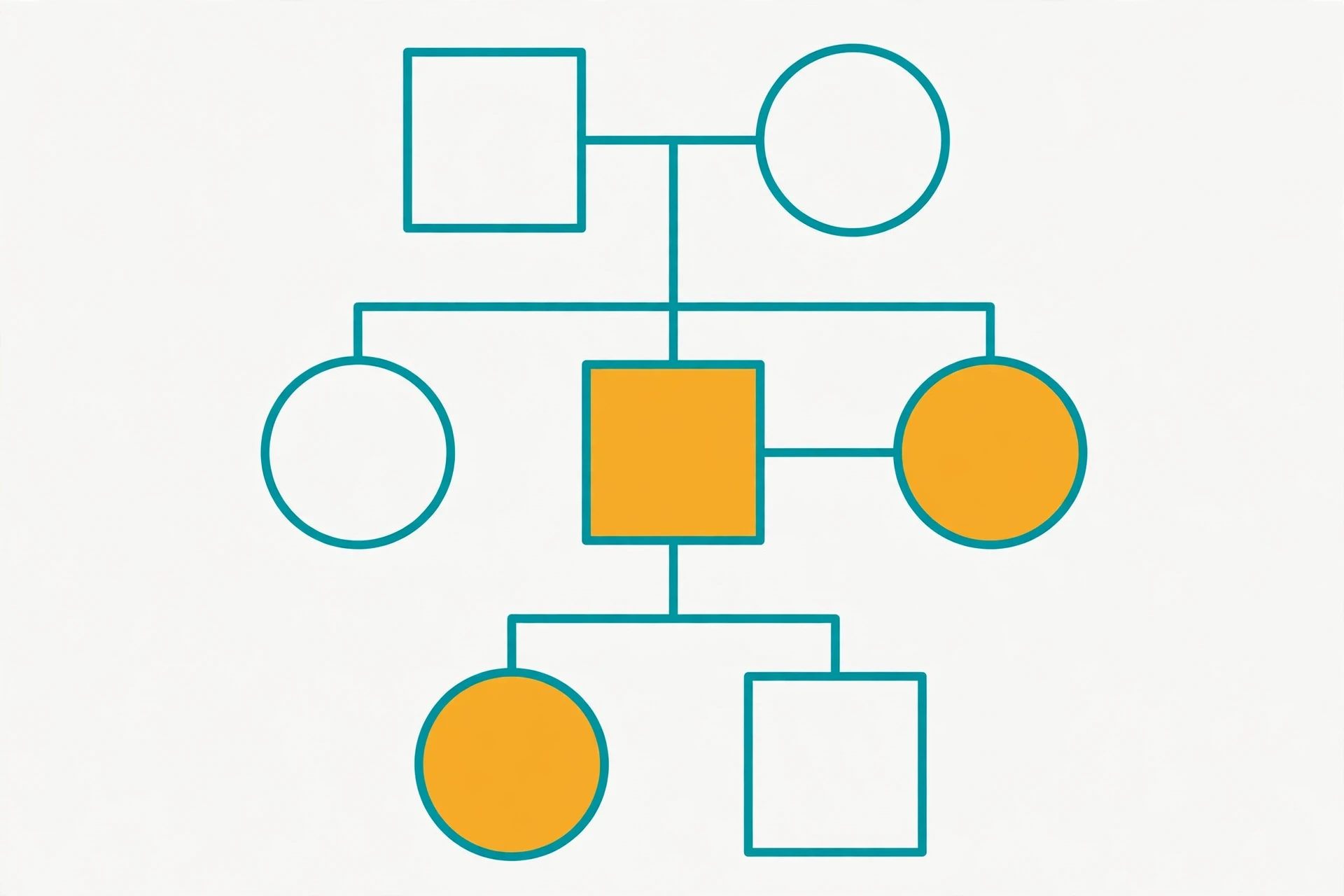
A pedigree is a family tree drawn in the language of genetics: squares for males, circles for females, filled symbols for affected people, and lines showing who is related to whom. Genetic counsellors read pedigrees the way a detective reads a map, looking for the pattern — does the condition appear in every generation, or skip them? Does it strike mostly males? Does it pass through unaffected carriers? I once watched a counsellor sketch a pedigree for a family worried about cystic fibrosis, and the moment the pattern clicked — two healthy parents, one affected child, healthy siblings who might be carriers — the room visibly relaxed. Not because the news was good, but because it was finally legible. Uncertainty is frightening; a pattern, even a hard one, can be faced.
4.3 Penetrance and expressivity: why the same gene does not always do the same thing
Here is a fact that surprises most people: carrying a disease-causing allele does not always mean developing the condition. Penetrance is the proportion of people with the allele who actually show the trait. Some alleles are fully penetrant — everyone who carries them is affected. Others are incompletely penetrant, and whether they show up depends on other genes, environment, and chance. Expressivity is different: among people who do show the trait, how strongly does it show? Two people with the same Marfan syndrome allele can look quite different — one tall with long fingers and a serious heart problem, the other barely affected. Same gene, different outcomes. This is one reason genetics can tell you about risk and almost never tells you your fate. A genetic test result is a probability, not a verdict, and any service that presents it as a verdict is overselling.
"A genetic test result is a probability, not a verdict. The gene loads the dice; it does not choose the roll."
5. From Gene to Trait: How Gene Expression Works
5.1 The central dogma: DNA to RNA to protein
If inheritance is the copying of the instruction book, gene expression is the reading of it. The central dogma, first stated by Francis Crick in 1958, runs DNA → RNA → protein. First, transcription: an enzyme called RNA polymerase reads a gene and builds a messenger RNA (mRNA) copy. Then translation: a ribosome reads the mRNA in three-letter words called codons, and each codon calls for one amino acid, building a protein chain that folds into a working molecule. A protein might be an enzyme that digests your food, haemoglobin that carries oxygen in your blood, or collagen that holds your skin together. Your body makes tens of thousands of different proteins, and nearly all of them trace back to this two-step reading process. The details of DNA structure and replication behind it are covered in Sciory's DNA: Structure, Replication, and Role in Heredity.
5.2 Switches, dimmers, and the lac operon
Here is the part most people miss: nearly every cell in your body contains the same genes, yet a liver cell and a brain cell behave completely differently. The difference is not which genes they own, but which genes they express. Gene expression is controlled at every step — whether a gene is transcribed at all, how much mRNA is made, how long the mRNA survives, how efficiently it is translated, and how long the protein lasts. Think of each gene as a lamp with a switch and a dimmer. Some lamps are on in every room (housekeeping genes). Some are on only in one room, at one time of day.
The first control system ever worked out was the lac operon in the bacterium E. coli, decoded by François Jacob and Jacques Monod in the early 1960s — work that won them a Nobel Prize. When lactose is absent, a repressor protein sits on the DNA and blocks the genes that digest lactose. When lactose appears, it pulls the repressor off, and the genes switch on. Bacteria do not waste energy making enzymes they do not need, and the same logic, vastly elaborated, runs your body. In humans, control is layered: transcription factors bind near genes and recruit or block RNA polymerase; enhancers are DNA stretches that can boost a gene from far away; small RNA molecules can silence messages after they are made. A single human gene can have dozens of control regions, and a single transcription factor can control hundreds of genes.
5.3 Why the same genome builds a whole body
Development is gene expression choreographed over time. In a growing embryo, a small set of master control genes — the Hox genes — tell cells where they are: this end becomes the head, that end the tail, this segment grows a leg. A famous experiment in fruit flies showed that moving one Hox gene's expression could grow a leg where an antenna should be. The genes themselves did not change; where and when they were switched on did. That is the deep lesson of gene expression: the genome is not a blueprint drawn once, but a score played differently by every cell, every day of your life. And the brain, where gene expression is at its most elaborate — thousands of genes switching in precise patterns as circuits form and learn — is a story in its own right, told in Sciory's Human Brain Anatomy and Functions.
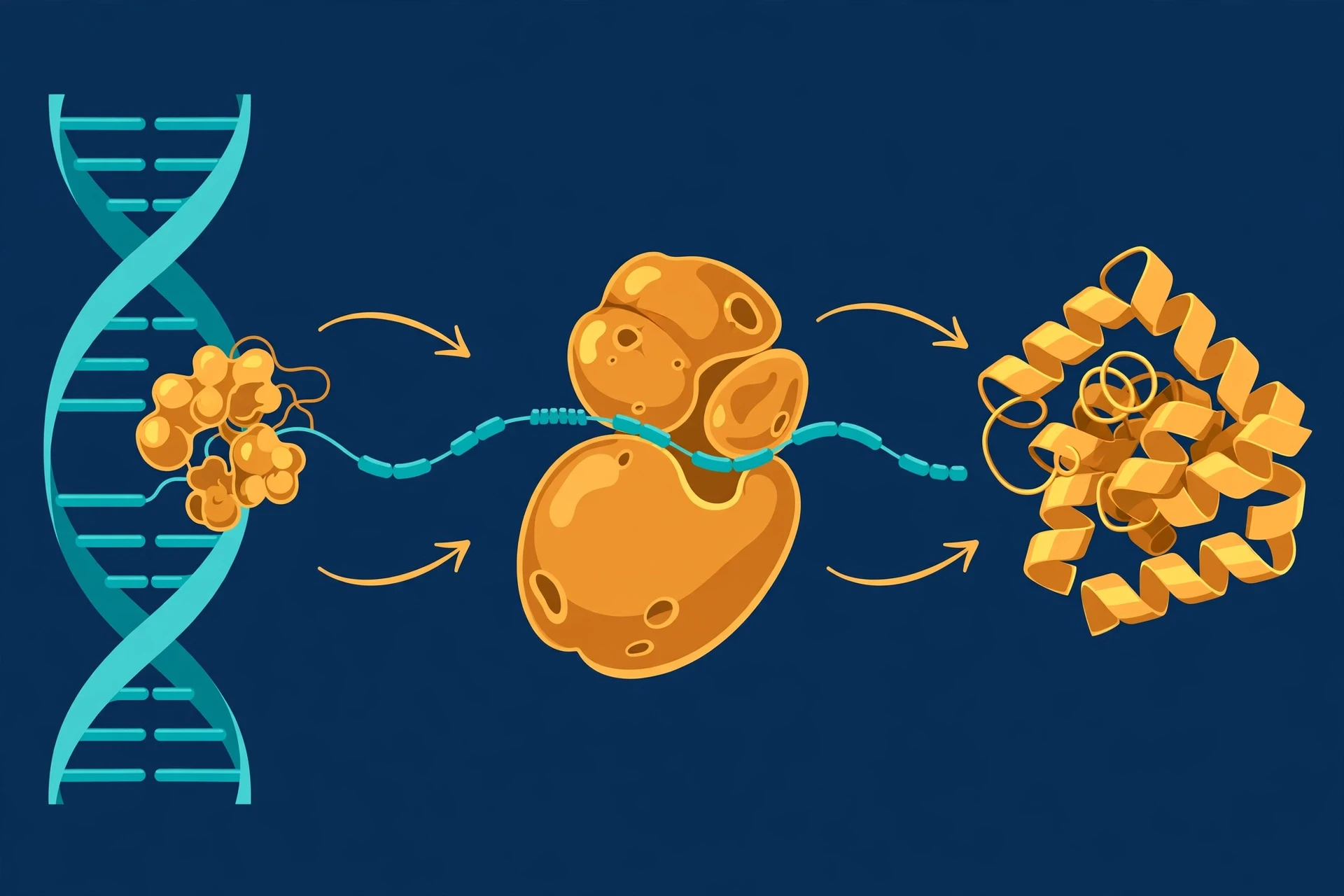
5.4 When expression goes wrong
Most genetic conditions are not caused by a missing gene, but by a gene expressed at the wrong time, in the wrong place, or in the wrong amount. In some cancers, a gene that should be quiet in adult cells — a growth signal from embryonic development — gets switched back on and will not switch off. In other conditions, a working gene is silenced by a control region that should have stayed open. This is why modern genetics spends as much time studying the switches as the genes themselves. The Human Genome Project gave us the list of genes. The projects that followed — ENCODE, which mapped the control regions of the genome, and GTEx, which measured gene expression across dozens of human tissues — are giving us the instruction manual for the switches. That manual is still being written, and it is where much of the next decade's medicine will come from.
"The genome is not a blueprint drawn once. It is a score, played differently by every cell, every day of your life."
6. Mutations: When the Instructions Change
6.1 What a mutation is
A mutation is a change in the DNA sequence — a letter swapped, added, deleted, or rearranged. The National Human Genome Research Institute defines it plainly in its genetics glossary, and that definition is the one to keep: a mutation is any heritable change in DNA, from a single base to a large segment of a chromosome: NHGRI Genetics Glossary — Mutation. Mutations are the raw material of evolution — without them, there would be no variation for natural selection to act on, a connection explored in Sciory's Darwin's Theory of Evolution: Evidence Explained. They are also the cause of many genetic conditions. The same process, viewed from two angles: variation is the engine of evolution, and occasionally the engine misfires.
6.2 The main types, and what each one does
MedlinePlus Genetics describes the possible kinds of gene variants in detail, and the classification is worth learning because the type of change predicts the kind of damage: MedlinePlus Genetics — What Kinds of Gene Variants Are Possible?. A substitution swaps one letter for another. If the new codon still calls for the same amino acid, the change is silent — the protein is unchanged. If it calls for a different amino acid, it is missense — the protein may work, work badly, or not work at all. If it creates a stop signal, it is nonsense — the protein is cut short, usually useless. An insertion adds letters; a deletion removes them. Add or remove a number of letters that is not a multiple of three, and every codon downstream shifts — a frameshift — which usually wrecks the protein entirely. Larger changes include duplications (a stretch copied twice), inversions (a stretch flipped backwards), and repeat expansions (a short sequence repeated too many times, the cause of Huntington's disease, where a CAG repeat grows longer with each generation and the disease starts earlier — a phenomenon called anticipation).
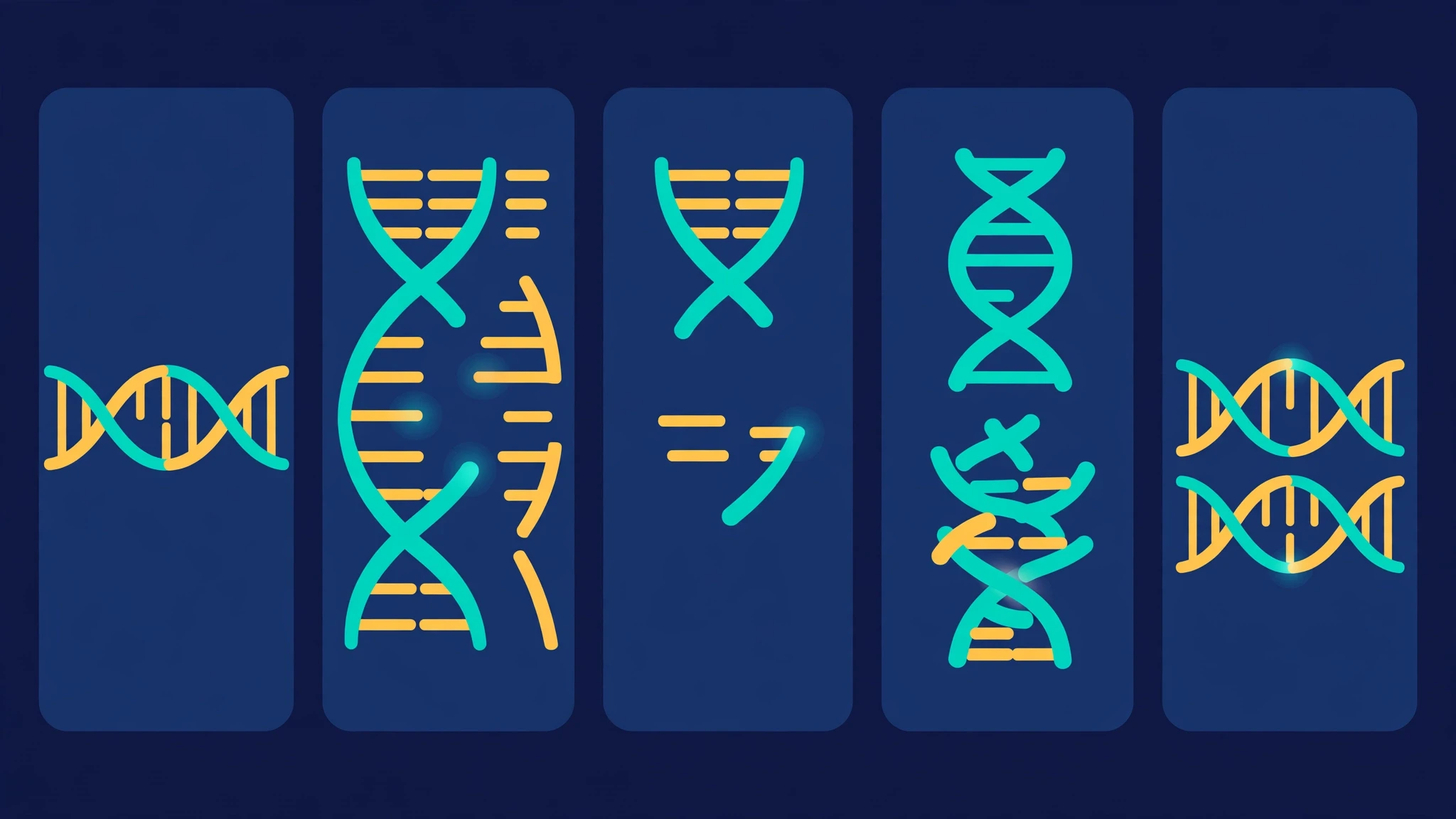
6.3 Where mutations come from
Some mutations are inherited — present in the egg or sperm, and therefore in every cell of the child. These are germline mutations. Others are acquired during life: a skin cell's DNA damaged by ultraviolet light, a lung cell's by tobacco smoke, or simply a copying error. DNA polymerase, the enzyme that copies DNA, makes roughly one mistake per 100 million letters — an astonishing accuracy — and repair enzymes fix most of the rest. But across 3 billion letters copied trillions of times in a lifetime, some errors slip through. Every one of us carries dozens of new mutations that neither parent had, and a handful of mutations in the cells of our bodies that our children will never inherit, because they are not in the germline. The distinction matters: somatic mutations can cause cancer in the person who has them; only germline mutations can be passed on.
6.4 One letter, one disease: sickle cell
The most famous single-letter mutation in medicine sits in the gene for beta-globin, a part of haemoglobin. Change one letter — an A to a T — and the amino acid glutamic acid becomes valine. The haemoglobin molecules then stick together under low oxygen, and red blood cells collapse into stiff sickle shapes that block blood vessels and break apart. Two copies of the allele cause sickle cell disease. One copy causes sickle cell trait, usually harmless — and, in regions where malaria is common, protective, because the parasite that causes malaria struggles to grow in trait carriers' red cells. That protection is why the allele is common in parts of Africa, the Mediterranean, and South Asia despite the harm it causes in double dose. It is evolution's bargain written in a single letter: a cost paid by some so that others survive malaria. I have never found a better example of why "good gene" and "bad gene" are the wrong words. Genes are not good or bad. They are bets placed by evolution in a particular environment, and the environment can change the odds.
6.5 Mutations and cancer
Cancer is, at its core, a disease of mutations accumulating in a single cell lineage. Two kinds of genes matter most. Proto-oncogenes are growth switches; mutate one so it sticks in the "on" position, and the cell divides when it should not. Tumour suppressor genes are brakes; lose both copies, and the cell loses its ability to stop. It takes several hits — usually five or more mutations in different genes — for a normal cell to become cancerous, which is why cancer is mostly a disease of age: mutations accumulate over decades. This is also why most cancers are not inherited. The mutations happen in body cells during life. A minority are inherited — a faulty BRCA1 or BRCA2 gene, for example, raises the risk of breast and ovarian cancer — and those families need screening and counselling, not guesswork. The immune system, which hunts down many abnormal cells before they become tumours, is part of this story too, as described in Sciory's How the Human Immune System Works.
7. Chromosomes: When Whole Chapters Go Wrong
7.1 Numbers that must add up
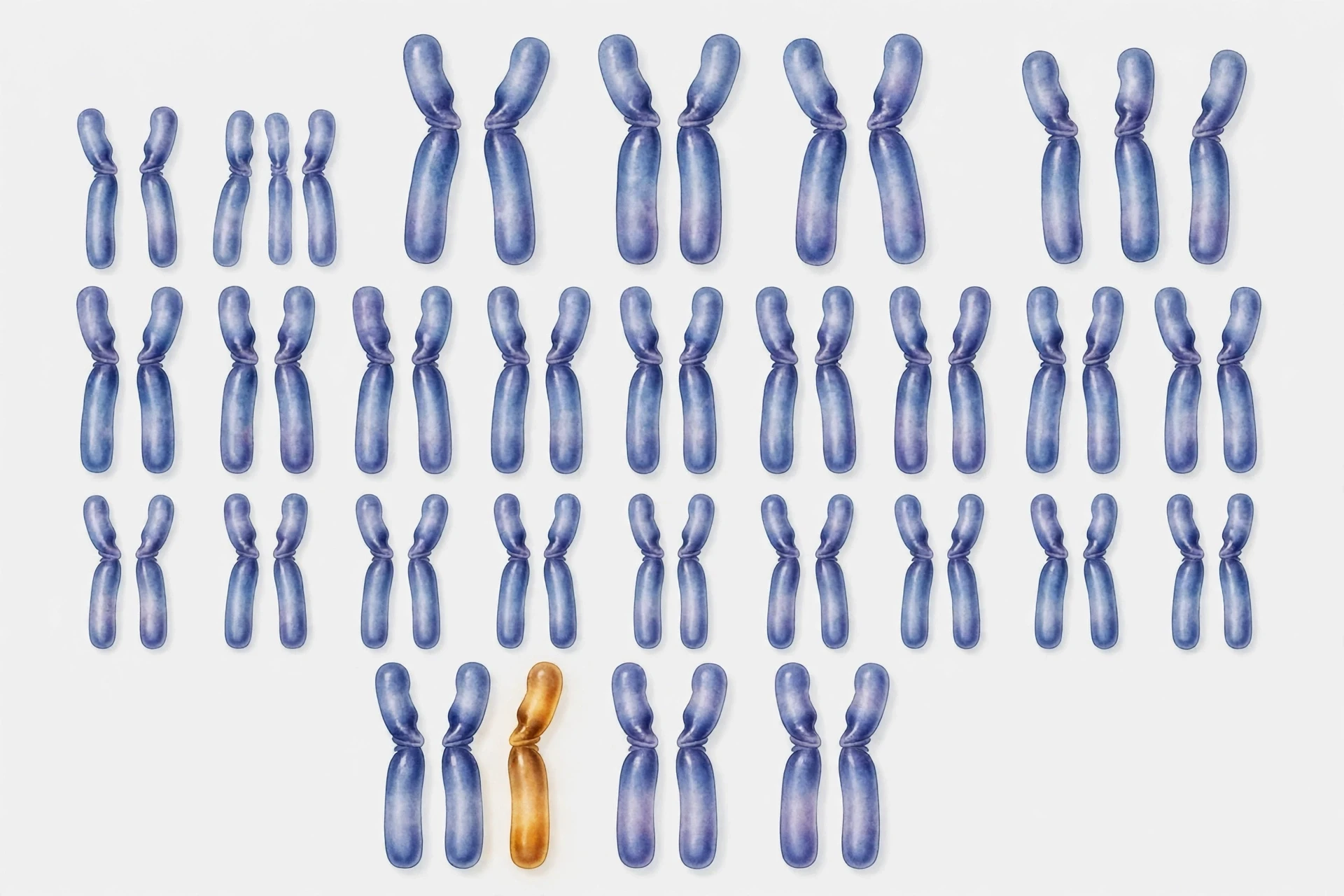
Humans normally have 46 chromosomes: 23 from each parent. A change in number — aneuploidy — is the most common cause of miscarriage and the cause of several well-known conditions. Down syndrome is trisomy 21: three copies of chromosome 21 instead of two. It occurs in about 1 in 700 births, and the risk rises with maternal age, because the machinery that separates chromosomes during egg formation becomes more error-prone over decades. Edwards syndrome (trisomy 18) and Patau syndrome (trisomy 13) are rarer and more severe. Turner syndrome — a single X chromosome — and Klinefelter syndrome — XXY — show that the sex chromosomes tolerate number changes better than the autosomes do, though both come with their own health considerations. These are not "mistakes" in any moral sense. They are mechanical errors in a process that runs trillions of times, and the fact that it works correctly almost every time is the real marvel.
7.2 Structural changes: deletions, duplications, translocations
Chromosomes can also break and rejoin wrongly. A deletion removes a chunk; a duplication adds one; a translocation moves a chunk to another chromosome. A famous example is the Philadelphia chromosome, a translocation between chromosomes 9 and 22 that fuses two genes and drives chronic myeloid leukaemia — and, happily, one of the first cancers to be treated with a drug designed for the exact genetic change, imatinib, which blocks the fused protein. That drug turned a fatal leukaemia into a manageable condition for many patients, and it is the model for what targeted genetic medicine hopes to do everywhere: find the exact change, and aim at it.
8. Epigenetics: The Marks on the Book
8.1 Beyond the letters
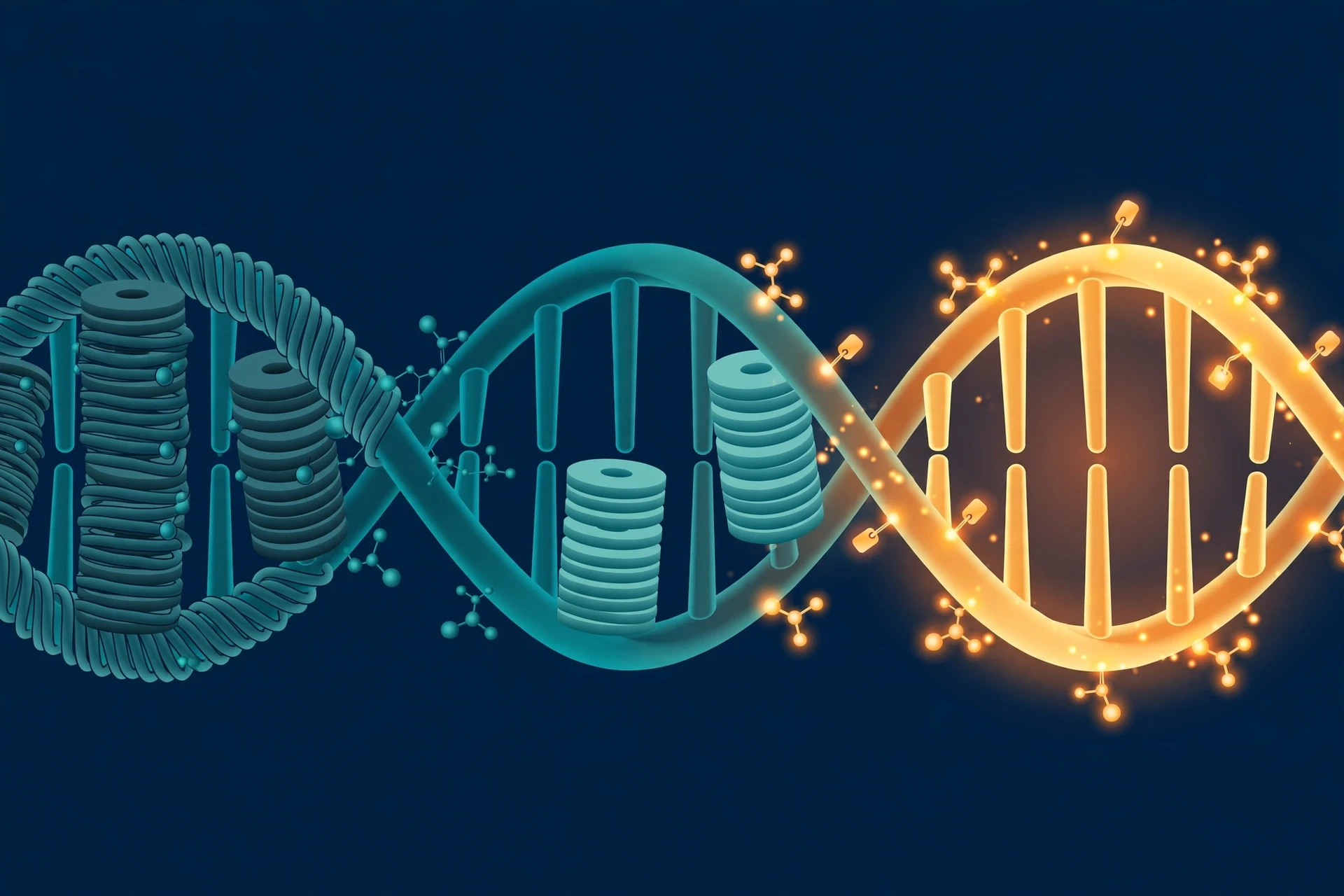
If the genome is the text, epigenetics is the set of marks written on the text: chemical tags, mostly methyl groups attached to DNA and modifications to the histone proteins DNA wraps around, that decide whether a gene can be read at all. These marks do not change the letters. They change the access. A gene wrapped tightly around its histones is silent; the same gene, loosened, is read. Epigenetic marks explain one of the oldest puzzles in genetics: how a single fertilised egg, with one genome, produces hundreds of cell types. The genome stays the same. The marks change.
8.2 Imprinting: genes that remember which parent they came from
Most genes are read from both copies, but a small number — about 100 in humans — are imprinted: only the copy from one parent is expressed, and the other is silenced by epigenetic marks. Prader-Willi syndrome and Angelman syndrome are both caused by problems in the same region of chromosome 15; which condition a child develops depends on whether the missing or silenced copy was the father's or the mother's. Same region, two different conditions, decided by parental origin. It is one of the strangest and most elegant facts in genetics, and it was discovered not by sequencing but by careful observation of families.
8.3 Can experience change the marks?
This is where epigenetics meets the headlines, and where the headlines often run ahead of the evidence. It is well established that environment affects epigenetic marks within a person's lifetime: smoking changes methylation patterns in lung cells, diet and stress leave measurable marks, and identical twins accumulate different epigenetic patterns as they age — part of why they drift apart. What is far less established is whether those acquired marks are passed to children in any meaningful way in humans. In plants and worms, transgenerational epigenetic inheritance is real. In mammals, most epigenetic marks are wiped clean twice — once in the germline and once just after fertilisation — and the evidence for marks surviving that wiping in humans is thin and contested. The honest summary is this: your choices affect your own gene expression, and they affect your children's environment in every way that matters — nutrition, health, stability. Whether they also rewrite your children's epigenome is, for now, an open question, and anyone selling certainty on it is selling something the data does not yet support.
8.4 Identical twins, different lives
I keep coming back to twins, because they are nature's cleanest experiment. Identical twins share a genome, yet they develop different fingerprints, different immune repertoires, and often different health. Some of that is chance — the random shuffling of immune genes, the random inactivation of one X chromosome in each cell of a female embryo. Some of it is epigenetics: the marks diverge from birth onward, and by old age, identical twins can differ substantially in methylation across their genomes. The lesson is not that genes do not matter. It is that genes are the starting hand, not the whole game.
9. Genetics in Medicine and Everyday Life
9.1 Testing, screening, and counselling
Genetic testing has moved, in a generation, from rare and expensive to routine. Carrier screening can tell prospective parents whether they both carry a recessive allele for cystic fibrosis or sickle cell disease. Prenatal testing can detect chromosomal conditions before birth. Newborn screening, done in most countries within days of birth, catches conditions such as phenylketonuria (PKU) early enough that a special diet can prevent serious harm — one of the great quiet victories of public health genetics. But testing without counselling is a half-finished job. A result is a probability wrapped in jargon, and what a family needs is a person who can explain what it does and does not mean, what the options are, and what the limits of the test are. If you are ever offered a genetic test, the most important question is not what the test costs, but who will explain the result to you.
9.2 Gene therapy and CRISPR: editing the text
For decades, the dream was to fix a faulty gene rather than merely treat its symptoms. That dream is now, cautiously, arriving. Gene therapy for sickle cell disease — taking a patient's own blood stem cells, editing them outside the body, and returning them — was approved in several countries in 2023, and early results have been strong. CRISPR-Cas9, adapted from a bacterial defence system against viruses, lets scientists cut DNA at a chosen spot and rewrite it. It is precise by the standards of any earlier tool, and still imprecise enough that off-target cuts remain a real concern. The science is moving fast; the ethics are moving deliberately, and that is as it should be. Editing the cells of one patient is medicine. Editing the germline — changes that would be inherited by future generations — is a different matter entirely, and most countries have drawn a firm line against it. The technology will improve. The line will need to be re-drawn, carefully, in public, more than once.
9.3 Pharmacogenomics: the right drug for your genes
The same drug, at the same dose, can work brilliantly in one person and barely at all in another, or cause side effects in one and none in another. Much of that variation is genetic: the enzymes that break down drugs in the liver come in different versions, and some people are fast metabolisers, some slow. Pharmacogenomics uses that information to choose drugs and doses — already routine for some cancer drugs and blood thinners, and expanding every year. It will not replace clinical judgment. It will make clinical judgment better informed, which is what good medicine has always wanted from science.
9.4 Genetics beyond the clinic
Genetics is not only about disease. Farmers have used it, knowingly or not, for ten thousand years, selecting the plants and animals whose traits they wanted — modern crop breeding and marker-assisted selection are the same practice with the mechanism understood. Forensic genetics identifies people from traces of DNA with a precision that has freed the wrongly convicted and caught the guilty. Conservation genetics, tracking the genetic diversity of endangered species, tells us which populations can still recover and which are too inbred to survive without help — a question that sits at the heart of Sciory's Biodiversity: Definition, Importance, and Ecological Roles. And ancestry testing, for all its limits, has reconnected families and rewritten personal histories. Each of these uses carries the same caution as medicine: the science is powerful, and the interpretation is where the care is needed.
10. Common Misconceptions About Genetics — Corrected
Most people absorb their genetics from headlines, family stories, and school diagrams that were simplified for a reason. Simplification is fine until it hardens into a wrong belief. Here are the ones I correct most often.
"We share 99.9% of our DNA, so we are all basically identical." True in the letter, misleading in the meaning. That 0.1% difference is about 3 million letters, and those letters are where the variation lives. A book that is 99.9% identical to another book can still tell a completely different story in the changed passages.
"One gene, one trait." Almost never true for the traits people care about. Height, intelligence, disease risk, personality — all polygenic, all shaped by environment. The single-gene traits are the exception, not the rule.
"Dominant means common, recessive means rare." No. Dominant describes how an allele behaves in a heterozygote, not how common it is. Polydactyly — extra fingers — is dominant and rare. Blue eyes are recessive and common in some populations.
"A genetic condition means it is inherited." Not always. Many conditions are caused by new mutations that appear in the child and were present in neither parent, and most cancers are caused by mutations acquired during life.
"Your genes determine your fate." They do not. They set probabilities and ranges. For almost every trait, environment, chance, and choice move the outcome within — and sometimes beyond — the range the genes suggest. The twins in section 8 are the proof.
"Genetic testing will tell me exactly what will happen to me." It will not. It tells you about risk, and risk is a number, not a destiny. A test that claims certainty about a complex trait is overselling.
"Mutations are always harmful." Most are neutral. Some are harmful. A few are helpful — the sickle cell trait's protection against malaria, the lactase persistence allele that lets many adults digest milk, are the famous cases. Without mutations, there would be no evolution at all.
Conclusion
Genetics began with a monk counting peas and arrived, in a century and a half, at the ability to read a person's entire genome in a day and edit a single letter of it. The arc is extraordinary, but the core ideas have not changed since Mendel's garden: information is copied, passed on, and read; the reading is regulated; the copying sometimes errs; and the errors are the raw material of both disease and evolution. What has changed is our power — and with it, our responsibility.
The most useful thing genetics can give an ordinary reader is not a test result but a way of thinking: in probabilities rather than certainties, in patterns rather than anecdotes, in the long view rather than the single family story. Your genome is not a verdict on your life. It is a starting hand, dealt by two people who loved each other, or at least met, and shuffled by a process older than humanity. How you play it — what you eat, how you live, what care you seek, what you pass on — is still, in large part, up to you. And that, after all the science, is the most human conclusion of all.
Frequently Asked Questions
What is genetics?
Genetics is the science of heredity — how traits pass from parents to children, how genes are stored in DNA and read out as proteins, and how changes in genes affect living things. It covers inheritance patterns, mutations, and gene expression.
What is the difference between a gene and an allele?
A gene is a stretch of DNA that codes for a product, usually a protein. An allele is one version of that gene. You inherit two alleles of most genes, one from each parent, and they may be the same or different.
How do dominant and recessive traits work?
A dominant allele shows its effect even when only one copy is present; a recessive allele shows its effect only when two copies are present. In a heterozygote, the dominant allele masks the recessive one, but the recessive allele is still there and can be passed on.
What is a Punnett square used for?
A Punnett square is a grid that lists all the allele combinations two parents can produce, and the probability of each. It predicts the odds of each genotype and phenotype in their children — probabilities, not certainties, for any single child.
What causes a mutation?
Mutations are caused by copying errors during DNA replication, by damage from radiation or chemicals, and by errors in DNA repair. Some are inherited from a parent; others are acquired during life in individual body cells.
Are all mutations harmful?
No. Most mutations are neutral and have no noticeable effect. Some are harmful and cause disease. A few are beneficial, such as the sickle cell trait's protection against malaria in carriers, or the allele that allows adults to digest milk.
What is gene expression?
Gene expression is the process by which a gene's instructions are used to make a product — first by transcribing DNA into messenger RNA, then by translating that RNA into a protein. Which genes are expressed, and how strongly, differs between cell types and over time.
What is epigenetics?
Epigenetics is the study of chemical marks on DNA and its packaging that control whether a gene can be read, without changing the DNA letters themselves. These marks help explain how one genome produces hundreds of different cell types.
Can genetic testing tell me what diseases I will get?
No. For most conditions, genetic testing gives a risk estimate, not a certainty. A few single-gene conditions are highly predictive, but most common diseases involve many genes plus environment, so a test result is a probability, not a verdict.
How is CRISPR different from older gene therapy?
CRISPR-Cas9 is a tool that cuts DNA at a chosen spot so it can be rewritten, which makes editing far more precise than earlier methods that inserted a new gene at a random location. It is already used in approved treatments for sickle cell disease, and research is expanding to other conditions.
Sources / Further Reading
MedlinePlus Genetics — What are the different ways a genetic condition can be inherited?: https://medlineplus.gov/genetics/understanding/inheritance/inheritancepatterns/
MedlinePlus Genetics — What kinds of gene variants are possible?: https://medlineplus.gov/genetics/understanding/mutationsanddisorders/possiblemutations/
OpenStax Concepts of Biology — 8.2 Laws of Inheritance: https://openstax.org/books/concepts-biology/pages/8-2-laws-of-inheritance
National Human Genome Research Institute — Genetics Glossary, Mutation: https://www.genome.gov/genetics-glossary/Mutation