

Introduction
The first time I tried to count life in a single square metre, I failed in the best possible way. I was standing in a damp meadow before sunrise with a wooden frame, a notebook, and a simple task: list everything alive inside the square. I wrote down the grasses I could name, a clover, two kinds of beetle, and a spider that refused to sit still for identification. Then I lifted a stone and found a whole city underneath — woodlice, a centipede, springtails so small they looked like dust that moved. By the time the sun cleared the hedge, my list had run past forty entries and I had barely scratched the soil. That square metre, smaller than a doormat, held more kinds of life than I could name in a morning. That is biodiversity: not a single number, and not a faraway rainforest idea, but the sheer variety of life, everywhere, at every scale, including the ground under your feet.
Biodiversity is the variety of life on Earth — the genes inside a single species, the species themselves, and the ecosystems they form together. It is the reason a forest can survive a drought, the reason your food exists, and the reason a coral reef can rebuild after a storm. It is also, by every measure we have, in trouble. This guide explains what biodiversity actually is, how scientists measure it, the jobs it does for us and for the planet, what is driving its loss, and what protecting it looks like in practice.
1. What Is Biodiversity? A Definition That Keeps Growing
1.1 The word itself
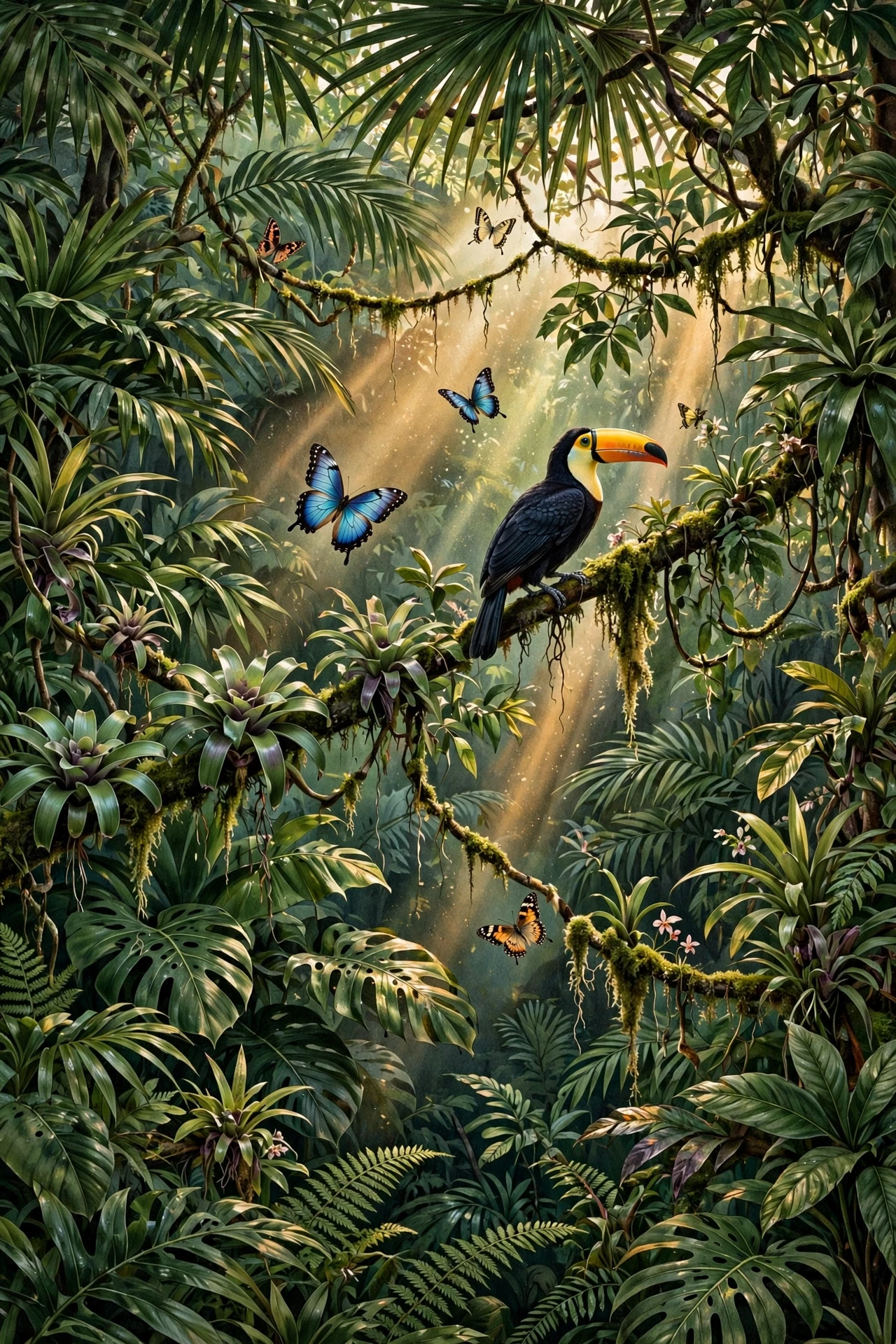
The word biodiversity is young. It was coined in the 1980s as a shorthand for "biological diversity", and it caught on because scientists needed one word for a very big idea. In 1992, the United Nations Convention on Biological Diversity gave the word its formal definition: the variability among living organisms from all sources, including land, sea, and other aquatic ecosystems, and the ecological complexes they are part of. That definition covers diversity within species, between species, and of ecosystems. The Convention on Biological Diversity remains the main international agreement on the subject, signed by nearly every country on Earth.
The definition matters because it stops us from making a common mistake: counting species and calling the total "biodiversity". Species count is only one layer. Two forests can hold the same number of species and still differ wildly in their genetic variety, their age structure, and the ways their species interact. Biodiversity is the whole pattern, not the headcount.
1.2 E. O. Wilson and the living library
The biologist E. O. Wilson, who did more than anyone to carry the word into public life, liked to call each species a book in a library, and extinction the burning of a book before anyone had read it. I first read that image as a student and thought it was poetic exaggeration. Then I spent a summer working in a herbarium, pressing plants collected a century earlier, and I understood what he meant. One drawer held a plant collected in 1912 from a valley that is now a reservoir. The plant itself is gone from that valley. The pressed specimen is the only record that it was ever there, and that it flowered in May, and that a particular bee visited it. When a species disappears, we lose more than a name on a list. We lose a whole set of relationships — what it ate, what ate it, what it pollinated, what it sheltered — and most of those relationships were never written down.
Wilson's library image also explains why biodiversity is hard to measure. We do not know how many books the library holds. Scientists have formally described roughly 2 million species, and estimates of the true total run far higher — commonly in the range of 8 to 9 million species, with some estimates much larger, mostly because of insects, fungi, and microbes we have not yet found. Those numbers are estimates, and different methods give different answers. The honest statement is this: we have named a small fraction of life, and we are losing some of it before we even meet it.
1.3 Why a definition is not a dictionary exercise
A good definition does work. This one tells us where to look. If biodiversity has three levels — genes, species, ecosystems — then protecting it means protecting all three. A zoo that saves the last ten individuals of a species has saved the species, but if those ten animals are close relatives, much of the genetic diversity is already gone. A plantation of a single tree species may be green from a satellite, but it is not a forest in the ecological sense. The definition keeps us honest about what counts.
2. The Three Levels of Biodiversity
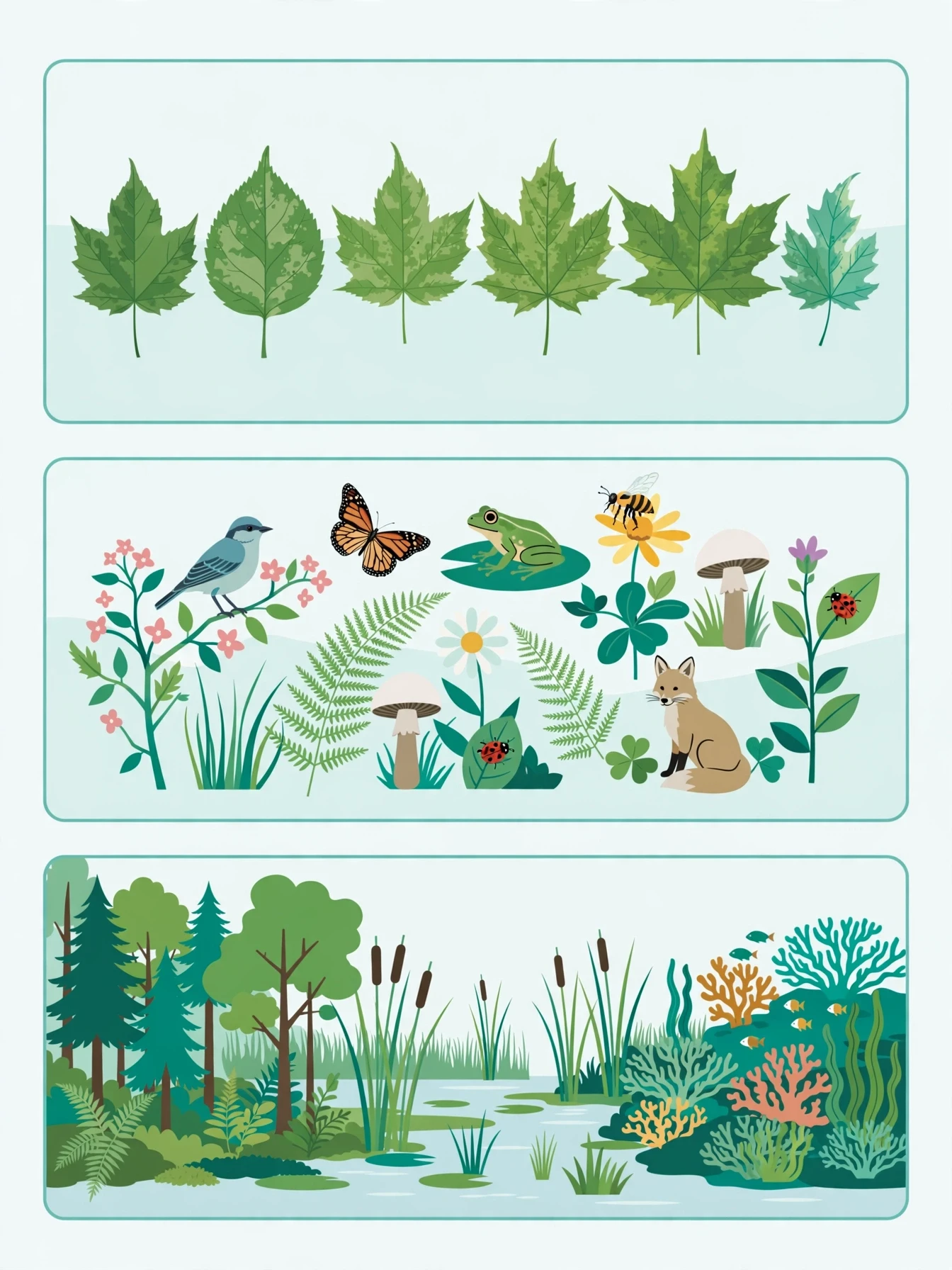
Biodiversity is usually described in three nested levels. Think of them as zoom settings on the same picture: genes, species, ecosystems. Each level matters, and damage at one level ripples into the others.
2.1 Genetic diversity: variety inside a species
Genetic diversity is the variety of genes within a single species — the differences between individuals. It is what makes one oak tree survive a dry summer while its neighbour wilts, and what lets a population of fish adapt when a river warms by a degree. A population with wide genetic variety has options. A population with narrow variety has few.
I learned this from a mistake. Years ago, I helped plant a small orchard of a single apple variety, chosen because the fruit was superb. The trees grew beautifully for two seasons, then a fungal disease arrived, and nearly every tree fell ill at once. They had the same genes, so they had the same weakness. A neighbouring orchard, planted with a messy mix of old varieties, lost a few trees and kept the rest. The lesson was written into the landscape: genetic diversity is insurance, and you only notice its value when something goes wrong. The same principle runs through wild populations. Sciory's DNA: Structure, Replication, and Role in Heredity explains how that variety is stored and passed on, gene by gene, generation by generation.
2.2 Species diversity: how many, and how evenly spread
Species diversity is the level most people picture first. It has two parts: richness, the number of species in a place, and evenness, how the individuals are spread among them. A meadow with ten species and a hundred individuals of each is more evenly diverse than a meadow with ten species where ninety-nine percent of the individuals belong to one grass. Richness tells you how many kinds are present. Evenness tells you whether any one kind dominates.
Tropical rainforests are the classic example of high species diversity: a single hectare can hold hundreds of tree species, more than the whole of many temperate countries. Coral reefs are the marine equivalent — less than one percent of the ocean floor, yet home to roughly a quarter of all marine species, by the most widely repeated estimates. But diversity is not only a tropical story. A temperate rocky shore, a prairie, a peat bog — each holds species found nowhere else, and each is diverse in its own way.
2.3 Ecosystem diversity: the variety of living communities
Ecosystem diversity is the variety of habitats and ecological communities themselves — forests, grasslands, wetlands, deserts, rivers, reefs, tundra. Each ecosystem is a different arrangement of climate, soil, water, and life, and each supports species that could not live elsewhere. Lose an ecosystem and you lose all the species that depended on it, including the ones nobody has described yet.
Ecosystems also differ in how they work. A mangrove forest stores carbon, shelters young fish, and breaks storm waves. A grassland stores carbon underground in deep roots and survives fire by regrowing. A desert looks empty until you learn to see the life that waits years for rain. The variety of ecosystems is itself a kind of insurance for the planet: when one system falters, others keep running.
3. How Do Scientists Measure Biodiversity?
3.1 Counting, sampling, and the problem of the unseen
Counting every living thing in a place is impossible, so ecologists sample. They lay out quadrats, like the square metre I stood in, count what is inside, and repeat the count across a site. They set traps for insects, listen for birds at dawn, pull nets through streams, and take soil samples to sequence the DNA of microbes they will never see. Each method catches a different slice of life, and each misses something. The art is in combining them and being honest about the gaps.
Modern tools have changed the job. Environmental DNA — traces of DNA shed into water, soil, or air — lets researchers detect species from a bottle of stream water, including fish that no one saw. Satellites watch forests change from orbit and flag where habitat is disappearing fastest. NASA's Earth Observatory has documented how researchers combine satellite data with field records to find the places where rare species are most likely to survive, work that is especially valuable in remote tropical regions where ground surveys alone would take lifetimes. The NASA Earth Observatory story on new tools for conservation describes this clearly, including work on Madagascar, one of the world's biodiversity hotspots.
3.2 Hotspots: where diversity is concentrated — and threatened
In the late 1980s, the ecologist Norman Myers pointed out an uncomfortable pattern: much of the planet's species diversity is packed into a small number of places, and those places are under heavy pressure. He called them biodiversity hotspots — regions with exceptional numbers of endemic species (species found nowhere else) that have already lost most of their original habitat. The idea stuck, and today 36 hotspots are widely recognised. Together they cover only a small fraction of the Earth's land surface, yet they hold a large share of its plant and land vertebrate species.
Madagascar is the textbook example. Isolated from mainland Africa for tens of millions of years, it evolved plants and animals found nowhere else — most of its mammals, most of its birds, and the great majority of its plants are endemic. The NASA account of conservation work there notes that the world's 25 original hotspots covered only about 1.4 percent of the planet's land area, yet held 44 percent of all plant species and 35 percent of all land vertebrate species. Those are the numbers that make a hotspot a priority: lose a hotspot, and you lose species that exist nowhere else on Earth.
3.3 Indices, and why one number never tells the story
Ecologists use indices to compare places: the Shannon index weighs both richness and evenness; Simpson's index leans toward the most common species; simple richness just counts. Each index answers a slightly different question, and none of them captures everything. A forest can score high on richness and still be losing its largest animals. A lake can look diverse on paper while its food web is quietly collapsing. Numbers are tools, not verdicts. The best assessments use several measures at once, and they pair the numbers with field knowledge — what is actually happening on the ground.
Level | What varies | Example | Why it matters |
|---|---|---|---|
Genetic diversity | Genes within a species | Different apple varieties resisting disease differently | Adaptation, disease resistance, survival under change |
Species diversity | Number and evenness of species | Hundreds of tree species in one hectare of rainforest | Stable food webs, pollination, nutrient cycling |
Ecosystem diversity | Types of habitats and communities | Mangroves, grasslands, reefs, deserts | Different services, refuges, insurance for the planet |
4. Why Biodiversity Matters: Ecosystem Services
4.1 What "ecosystem services" means
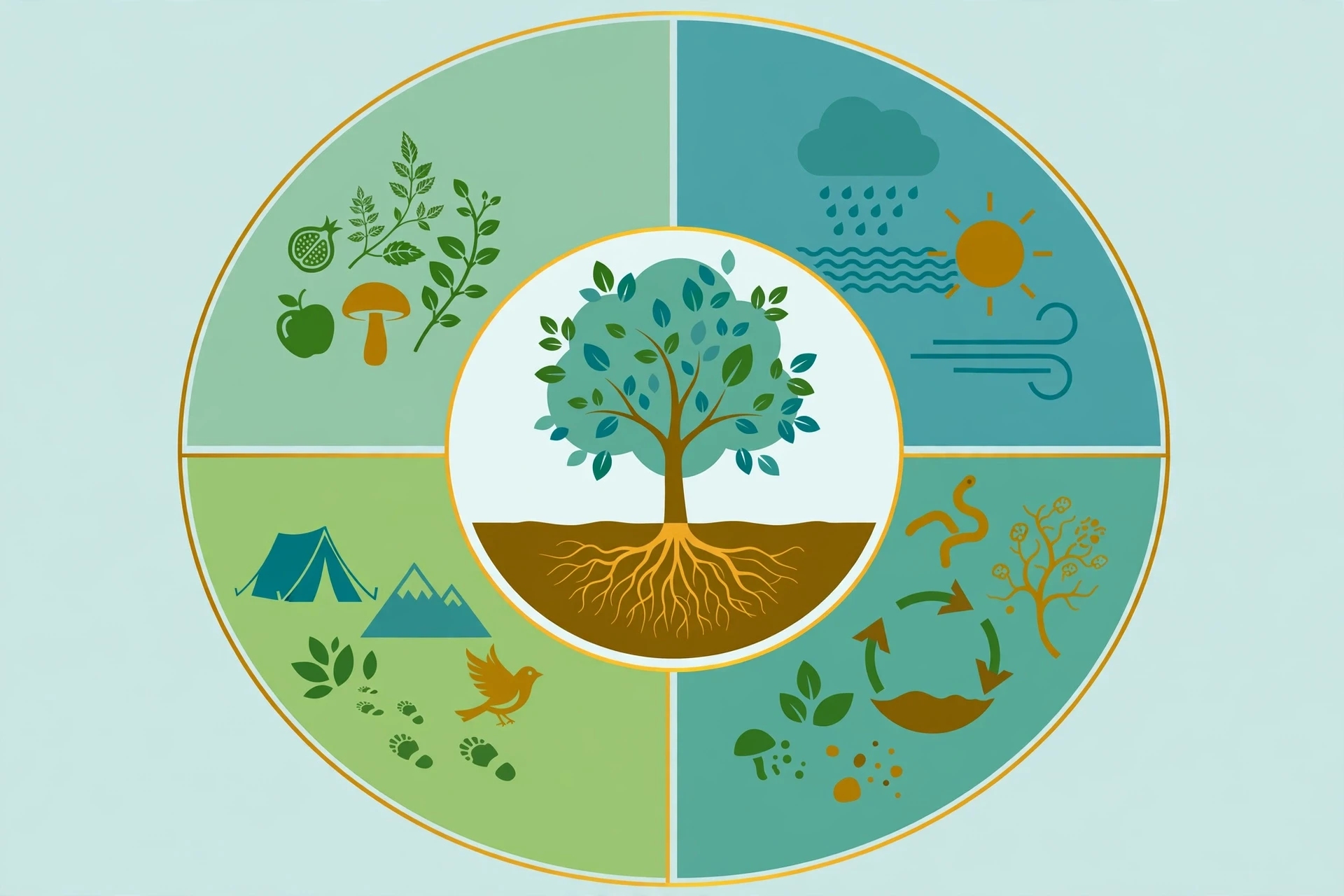
Ecosystem services are the benefits people get from nature, usually grouped into four kinds: provisioning (food, water, timber, medicine), regulating (climate, floods, disease, pollination), supporting (soil formation, nutrient cycling, photosynthesis), and cultural (recreation, beauty, spiritual value, knowledge). The phrase is deliberately economic-sounding, because it was invented to make a point that ecologists had been making for decades without being heard: nature is not a luxury. It is infrastructure.
Put a price on it and the point sharpens. Attempts to value ecosystem services globally run into the trillions of dollars a year — figures so large they are hard to picture, and so uncertain that ecologists argue about them constantly. The exact number matters less than the direction: the services are vast, they are mostly free, and they are mostly unpriced in markets, which is exactly why they are so easy to destroy. Nobody sends you a bill for the rain a forest makes, or for the bees that pollinate your food, until both are gone.
4.2 Food: diversity on the plate, diversity in the field
Nearly everything we eat traces back to biodiversity, and the narrowing of that base is one of the quieter stories of modern farming. Humans have eaten thousands of plant species over history, yet today a small handful of crops — rice, wheat, maize, potatoes, soy — supply most of the world's calories. That concentration is efficient, and it is fragile. When a single variety dominates, a single pest or a single bad season can take it down.
The insurance lives in the wild relatives and the old varieties. Wild wheat growing in the hills of the Middle East carries genes for drought tolerance that breeders have used to strengthen modern crops. Wild rice in Asia carries resistance to pests that devastated cultivated fields. Seed banks around the world now store hundreds of thousands of crop varieties and their wild relatives, a kind of backup library for the food system. It is the same logic as the apple orchard: variety is the buffer, and the buffer only gets appreciated when it is needed.
Animals tell the same story from the other side. Pollinators — bees, butterflies, moths, flies, birds, bats — pollinate a large share of the world's food crops. Roughly three-quarters of the leading food crops depend, at least in part, on animal pollination, by the most widely cited estimates. Lose the pollinators and the shelves do not empty overnight, but yields fall, prices rise, and the poorest eaters feel it first. The World Wildlife Fund's overview of biodiversity puts the human stakes plainly: biodiversity grows the food we eat, purifies the water we drink and the air we breathe, and provides the resources we rely on for medicine, fuel, and shelter.
4.3 Medicine from the wild
About half of modern medicines trace their origins, directly or indirectly, to natural compounds — from plants, fungi, and marine organisms. Aspirin comes from willow bark chemistry. The cancer drug Taxol came from the bark of the Pacific yew, a tree that was once considered a weed by loggers. The malaria drug artemisinin came from sweet wormwood, a plant used in traditional Chinese medicine for centuries. Each of those discoveries depended on a species existing, and on someone knowing enough about it to look.
The pipeline has not dried up. Coral reefs, deep-sea vents, and tropical forests are still yielding compounds that no chemist would have designed from scratch. Every species that goes extinct before it is studied is a medicine that will never be found. That is not a sentimental claim. It is a practical one, and it is the reason drug researchers are among the most vocal defenders of habitat protection.
4.4 Climate, water, and clean air
Forests and oceans store carbon — the living carbon of trees, soils, peatlands, and mangroves, and the dissolved carbon of the sea. When a forest is cut and burned, that stored carbon returns to the atmosphere. When a wetland is drained, centuries of stored carbon can be released in a few years. Protecting biodiverse ecosystems is, in that sense, climate policy that happens to have leaves on it.
Water follows the same logic. Wetlands filter pollutants, forests slow rainfall and release it gradually, and healthy soils absorb floodwater that would otherwise rush into towns. A city that paves over its surrounding wetlands often discovers, a decade later, that it has also paved over its flood protection. The water cycle and the life in it are one system, and Sciory's The Water Cycle: Processes, Impacts & Importance describes how that system moves water around the planet.
5. Ecological Roles: How Species Earn Their Keep
5.1 Food webs: the wiring of an ecosystem
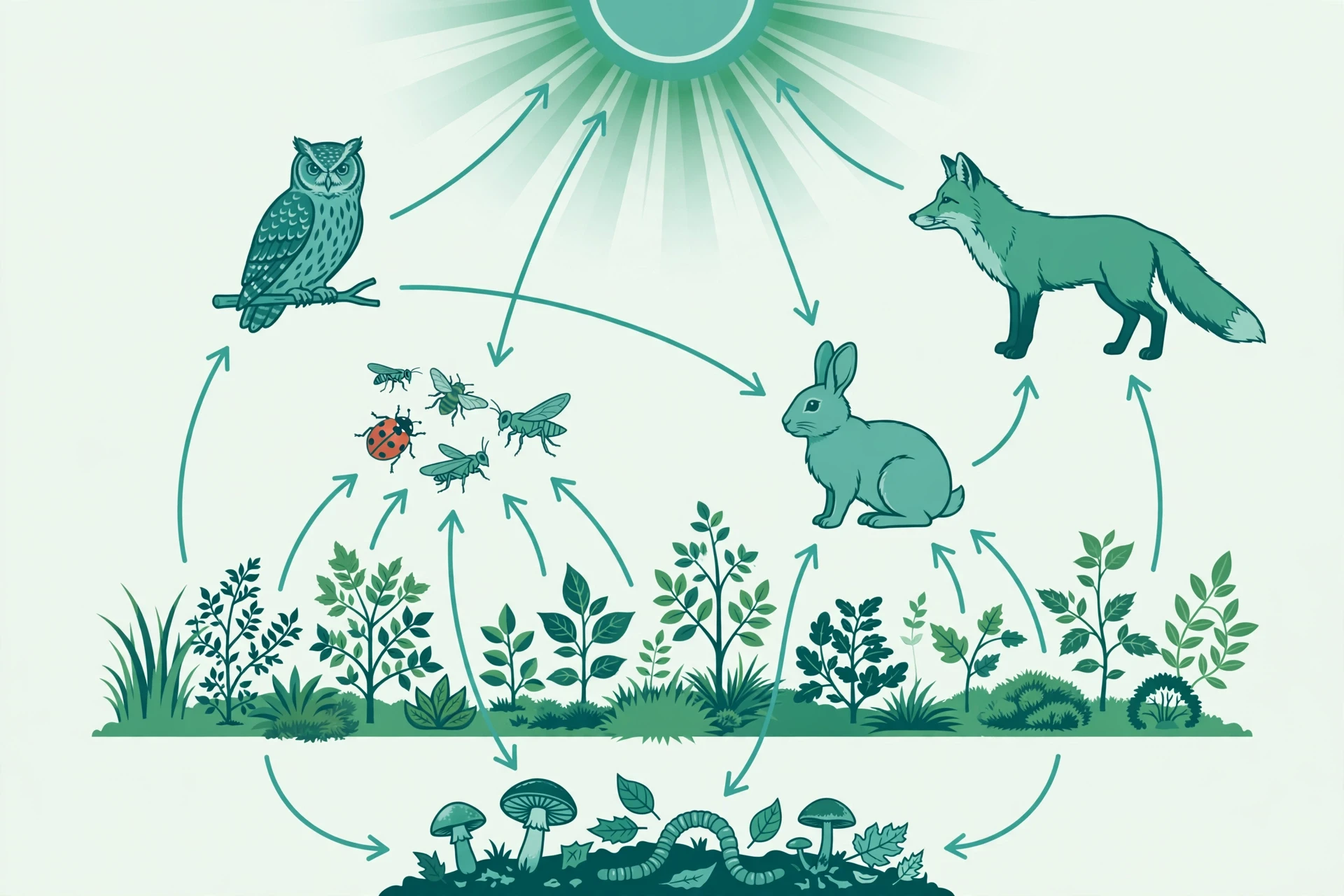
A food web is the map of who eats whom, and it is more honest than the old idea of a food chain. Real ecosystems do not run in straight lines. A fox eats rabbits, mice, and berries. A rabbit eats many plants. A plant is eaten by many insects. The result is a web, and the web's strength is its redundancy: if one link breaks, others can carry the load. Remove too many links, and the web starts to tear.
I once watched a pond food web unravel in a single summer. A local pond I had visited for years had frogs, dragonflies, water beetles, and a small population of fish. One hot, dry summer the water level fell, the fish died, and within weeks the dragonflies vanished too — not because the heat killed them directly, but because the food web they depended on had thinned to a thread. The pond recovered the following year, but the lesson stayed: the roles species play are not decorative. They are the wiring, and the wiring holds the system together.
5.2 Keystone species and trophic cascades
Some species punch far above their weight. Ecologists call them keystone species, after the stone that holds an arch together: remove it, and the structure collapses. Sea otters are the classic case. Otters eat sea urchins. Without otters, urchins multiply, graze kelp forests down to bare rock, and the fish, birds, and shellfish that depended on the kelp disappear. Put otters back, and the kelp returns.
The most famous retelling of this idea is Yellowstone's wolves. Wolves were returned to Yellowstone in the 1990s after decades of absence. Elk, freed from predation, had been overgrazing riverside willows and aspens. With wolves back, elk changed where and how they fed, the riverside vegetation recovered, and beavers, birds, and fish followed. The story is often told too simply — wolves did not single-handedly "fix" Yellowstone, and ecologists still debate the details — but the core pattern is real and widely documented: predators shape ecosystems from the top down, not just by eating prey but by changing prey behaviour. The debate itself is a useful reminder: in ecology, the first simple story is rarely the whole story.
5.3 Pollinators: the unpaid workforce
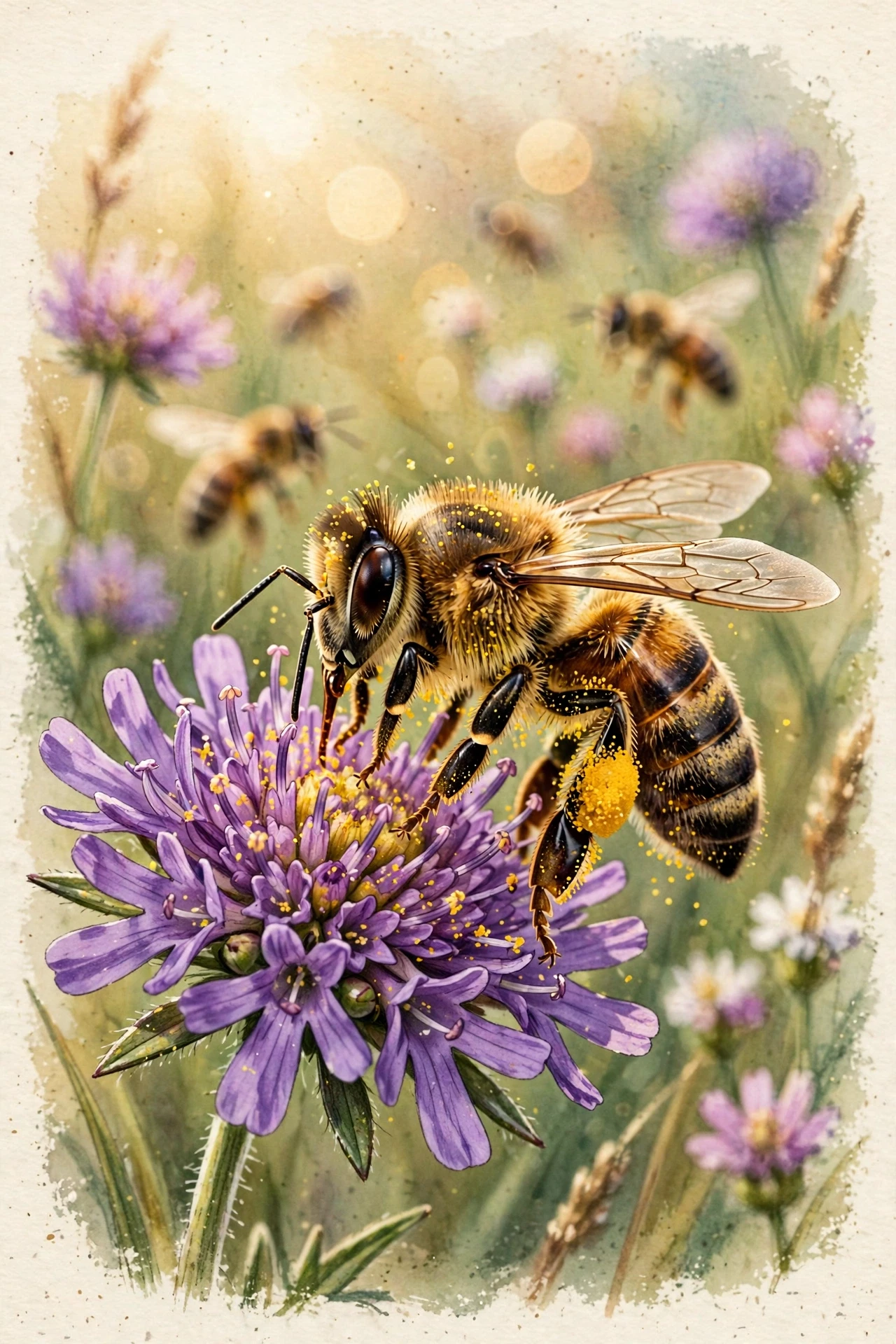
Pollinators deserve a section of their own, because their job is so large and so easy to overlook. A bee visiting a flower is not doing the flower a favour. It is doing a job: carrying pollen from one flower to another, which lets the plant set seed and fruit. Roughly a third of the food we eat depends on pollinators in some form, and the figure is higher for many fruits, vegetables, and nuts. Wild bees — thousands of species, most of them solitary, nesting in the ground or in hollow stems — do a large share of this work, often more effectively than managed honeybees.
Pollinator decline has many causes: habitat loss, pesticides, disease, and climate change shifting flowering times out of step with pollinator activity. A flower that opens a week before its bees emerge goes unpollinated. The fix is mostly unglamorous: leave wildflower strips, cut hedges less often, use fewer pesticides, and let a corner of a garden go wild. Small patches of habitat add up. A city full of balconies with flowers is, from a bee's point of view, a meadow with gaps.
5.4 Decomposers: the clean-up crew that runs the world
Decomposers are the least glamorous and most indispensable workers in any ecosystem. Fungi, bacteria, worms, and detritus-eating insects break dead leaves, fallen trees, and dead animals back into nutrients that living plants can use. Without them, the world would be buried in its own dead matter within years, and the nutrient cycle would grind to a halt.
A walk through an old forest after rain is a walk through decomposition in action: mushrooms pushing through leaf litter, woodlice under bark, earthworms turning soil. A single teaspoon of healthy soil can hold more microbes than there are people on Earth — an estimate that sounds like an exaggeration until you learn how small and how numerous soil microbes are. The gut microbiome inside us runs on a similar principle: a diverse community of microbes doing jobs we cannot do alone. Sciory's Gut-Brain Connection: How It Relates to Mood explores that inner ecosystem and its links to health.
6. Biodiversity in Different Ecosystems
6.1 Coral reefs: the rainforests of the sea
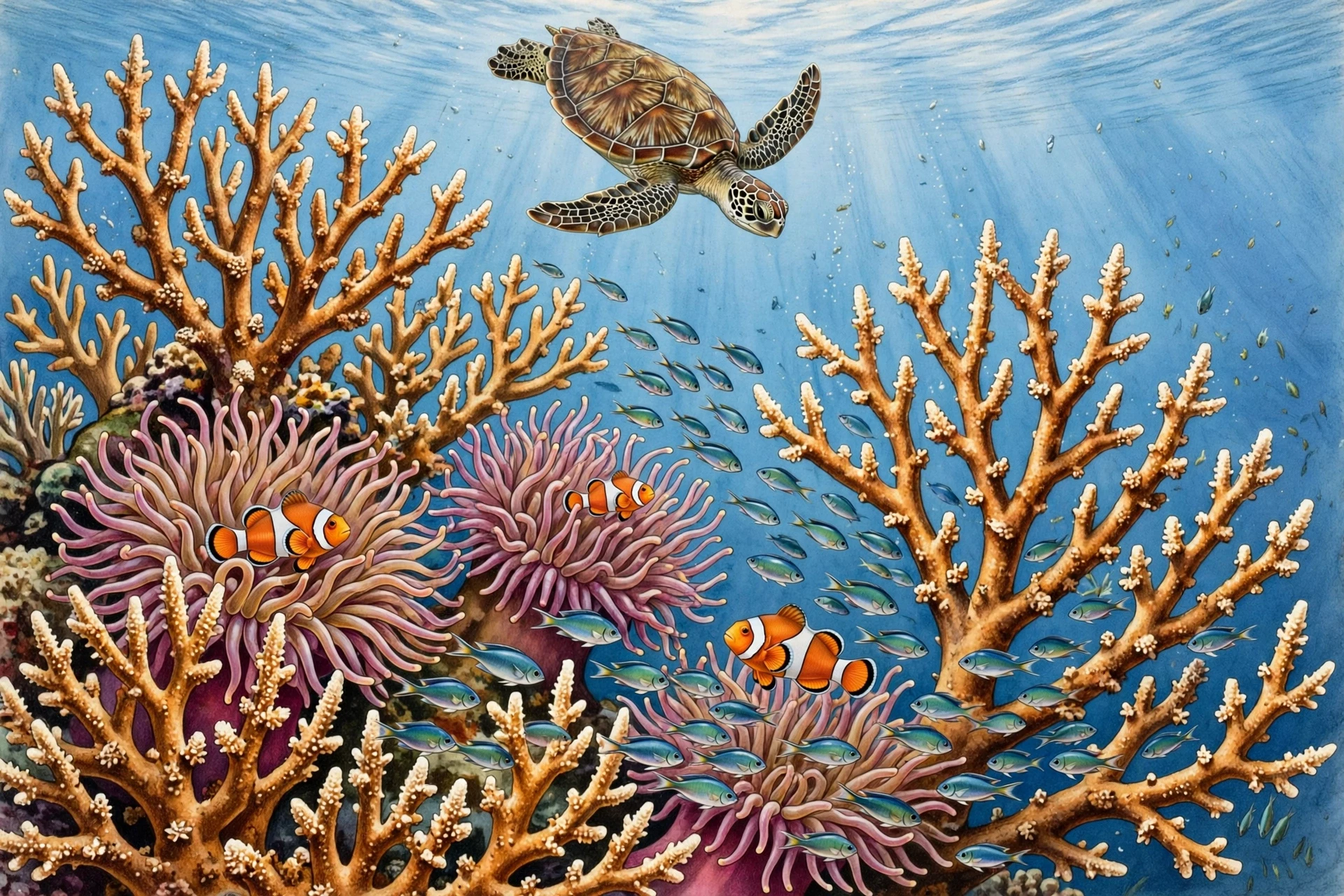
Coral reefs cover less than one percent of the ocean floor, yet they support roughly a quarter of all marine species. The reef itself is built by tiny animals — coral polyps — that secrete limestone skeletons, and by the algae living inside them, which photosynthesise and share food with their hosts. That partnership, between animal and alga, is the engine of the reef. When the water warms too much, the algae are expelled, the coral turns white — bleaching — and if the heat lasts, the coral dies.
I snorkelled over a reef once in the years after a bleaching event, and the contrast is hard to forget. One section was alive with colour and motion: parrotfish grazing, clownfish in anemones, a turtle passing overhead. Fifty metres away, the reef was grey and silent, its structure intact but its inhabitants gone. The skeleton was still there. The ecosystem was not. Reefs can recover from bleaching if conditions improve and if they are protected from overfishing and pollution, but recovery takes years, and repeated bleaching leaves less and less to recover.
6.2 Forests: layers of life
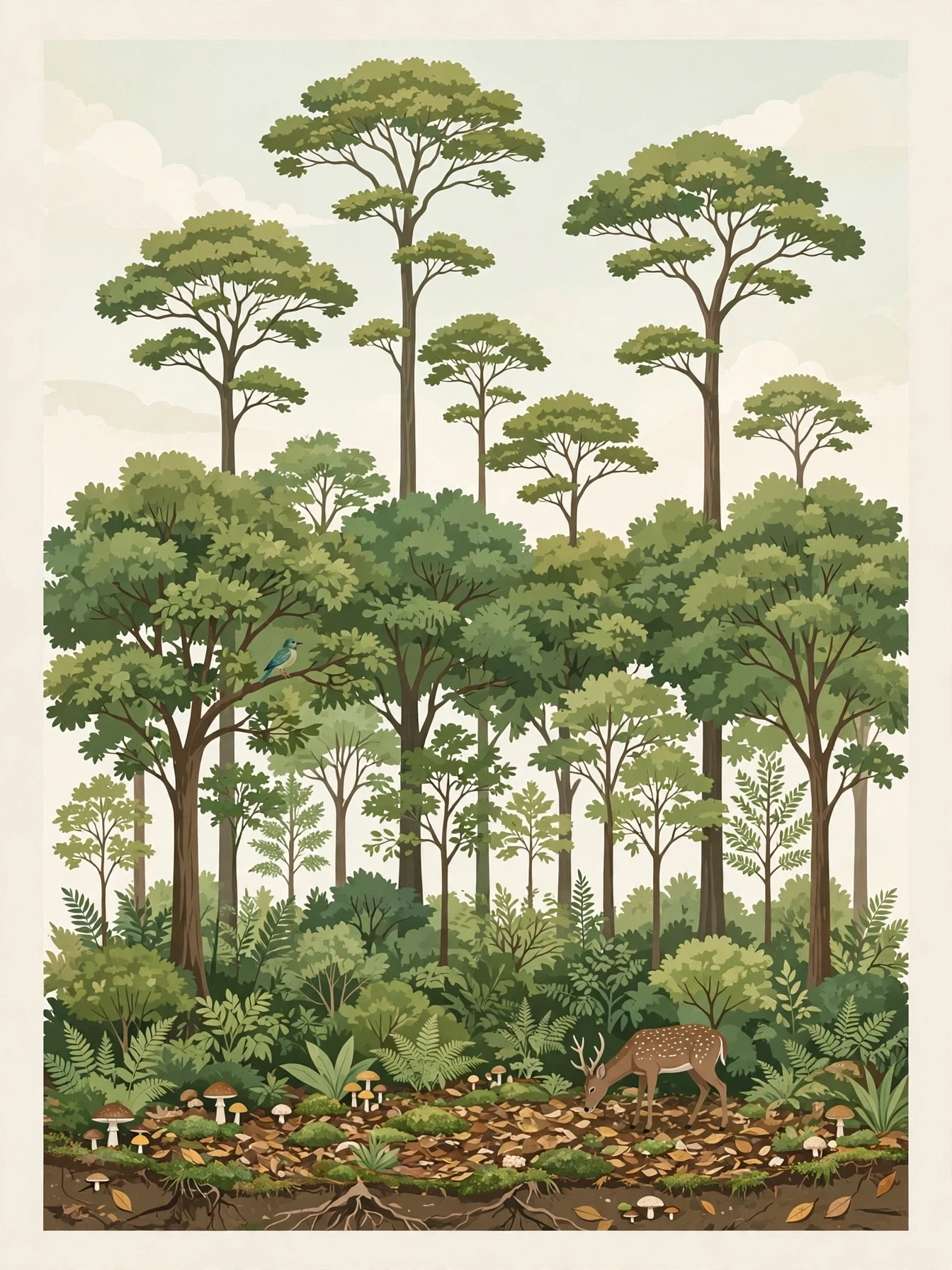
A forest is not a collection of trees. It is a stack of habitats. The canopy catches the sun and holds birds, monkeys, orchids, and insects that never touch the ground. The understory, in shade, holds plants adapted to low light. The forest floor holds fungi, ferns, and the decomposers. A single large tree can host hundreds of species of insects, birds, and epiphytes — plants that grow on other plants without harming them.
Tropical rainforests hold the most species per area, but temperate and boreal forests matter too, for different reasons. Boreal forests — the great ring of conifers around the northern hemisphere — store enormous amounts of carbon in their trees and soils. Temperate forests, where many readers live, are the ones most of us actually walk in, and they are also among the most fragmented by roads, farms, and towns.
6.3 Wetlands, grasslands, and the places we overlook
Wetlands — marshes, swamps, peat bogs, mangroves — are among the most productive ecosystems on Earth and among the most drained. They filter water, store carbon, and shelter fish nurseries and migratory birds. A mangrove forest protects a coastline from storm surge better than a sea wall, and it does so while feeding people. Grasslands, meanwhile, store most of their carbon underground in roots and soil, which is why ploughing a grassland releases so much of it. Deserts, often written off as empty, hold species adapted to extremes — plants that flower once in a decade, animals that get their water from seeds — and those adaptations are themselves a form of biodiversity worth studying.
Every ecosystem we dismiss as empty is a library we have not learned to read yet. The desert, the bog, the deep sea — each holds answers to questions we have not thought to ask.
6.4 The deep sea and other frontiers
The deep sea is the largest habitat on the planet and the least explored. Hydrothermal vents on the ocean floor support communities that run on chemistry rather than sunlight — bacteria that oxidise sulphur, and animals that farm those bacteria. New species are described from deep-sea expeditions almost every time a submersible goes down. The same is true of the soil beneath our feet and the canopy above it. The frontiers of biodiversity are not only in remote rainforests. They are above us, below us, and inside us.
7. Biodiversity and People: Food, Medicine, and Health
7.1 The economy runs on living things
Fisheries, forestry, agriculture, tourism — whole economies rest on biodiversity. Wild fish stocks feed hundreds of millions of people. Forests supply timber, and also the water and soil that farms depend on. Nature tourism, from whale watching to birding, brings income to communities that protect wildlife instead of extracting it. When those living assets are depleted, the income goes with them, and the communities that depended on them are left with the costs.
This is also why the loss of biodiversity is not only an environmental story. It is an economic one, and a justice one. The people who depend most directly on wild nature — small-scale fishers, forest communities, Indigenous peoples — are usually the ones who did least to cause its decline, and the first to feel it. Indigenous territories, by several lines of evidence, hold a large share of the world's remaining biodiversity, and Indigenous stewardship is increasingly recognised as one of the most effective forms of conservation on the planet.
7.2 Health: the diversity inside us and around us
Human health and biodiversity are linked in ways that were barely discussed a generation ago. Diverse natural environments expose children to a wider range of microbes, and a growing body of research links that exposure to lower rates of allergy and autoimmune conditions — the idea sometimes called the biodiversity hypothesis. The evidence is still developing, and researchers are careful not to overstate it, but the direction is consistent: a world scrubbed of microbial diversity is not obviously a healthier world.
The same logic runs in reverse. When ecosystems are disturbed — forests fragmented, wildlife crowded into smaller spaces — the chances of diseases spilling from animals into people can rise. The links are complex, and no single factor explains them, but the pattern is one more reason that keeping ecosystems intact is a health measure, not just a nature measure. Sciory's Human Brain Anatomy and Functions: A Complete Guide describes the organ that all of this ultimately serves — the brain that reads, remembers, and decides what to protect.
7.3 Culture, beauty, and the value that cannot be priced
Some values resist pricing. A dawn chorus, a mountain meadow in flower, the first fireflies of summer — these are part of why people care about nature, and they are part of what conservation protects. Cultures around the world have built stories, calendars, and ceremonies around the living world, from the salmon runs of the Pacific Northwest to the cherry blossom season in Japan. Lose the species, and the stories lose their referents. Biodiversity is, among other things, the raw material of human meaning.
8. What Is Driving Biodiversity Loss?
8.1 The five main drivers
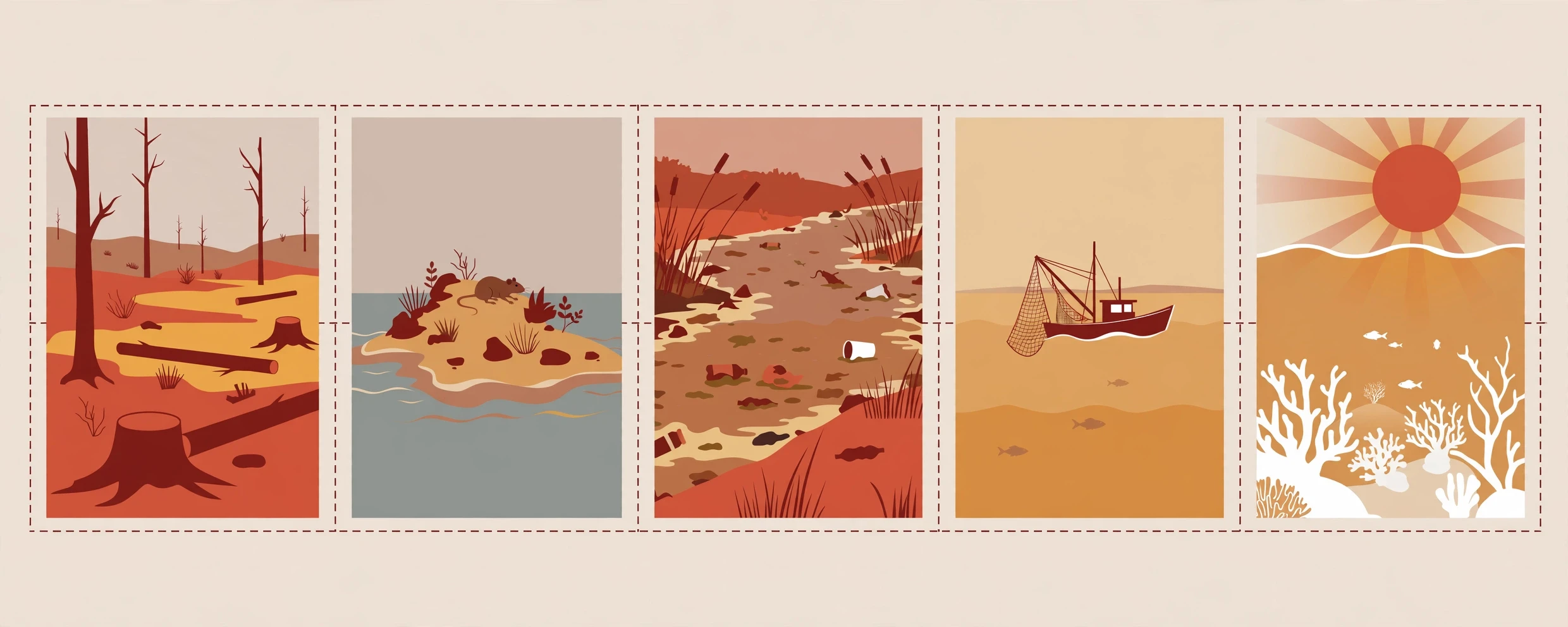
Scientists group the causes of biodiversity loss into five main drivers, often remembered by the acronym HIPPO: habitat loss, invasive species, pollution, population growth and overexploitation, and climate change (the second "O" in some versions stands for overexploitation). The 2019 Global Assessment by the Intergovernmental Science-Policy Platform on Biodiversity and Ecosystem Services (IPBES) — the most comprehensive assessment of nature ever undertaken — concluded that nature is declining at a rate unseen in human history, and that the direct drivers are land- and sea-use change, direct exploitation of organisms, climate change, pollution, and invasive alien species. The IPBES Global Assessment is the reference point for that conclusion, and its summary for policymakers remains the best single place to read it.
Habitat loss leads the list. Forests cleared for farms, wetlands drained for building, grasslands ploughed, rivers dammed — each conversion removes the habitat that species need, and what remains is often fragmented into patches too small or too isolated to support viable populations. A forest split by a highway is not the same forest: edge effects bring in light, wind, and predators, and many forest species will not cross the gap.
8.2 The numbers, hedged honestly
How fast is the loss? The numbers most often quoted come with wide uncertainty, and honest writing should say so. The IPBES assessment estimated that around 1 million animal and plant species are now threatened with extinction — the highest number in human history, according to that assessment, and the figure the WWF overview of biodiversity also reports. WWF's Living Planet Report, as described on the same page, found an average decline of 73 percent in monitored populations of mammals, birds, fish, reptiles, and amphibians since 1970. That 73 percent is a population index, not a count of extinct species — it means the average monitored population is less than a third of its 1970 size. The distinction matters, and sloppy reporting of it is one of the commonest errors in writing about biodiversity.
The IUCN Red List, the world's most comprehensive source on extinction risk, has assessed more than 175,900 species, and its work shows the same direction: the risk is rising across groups, and the main causes are the ones listed above. The IUCN's biodiversity pages carry the current figures, including more than 16,000 Key Biodiversity Areas identified worldwide. Conservation works — the IUCN notes that extinction risk trends would have been at least 20 percent worse without conservation action — but the scale of the loss still outruns the scale of the response.
8.3 Invasive species and the quiet takeover
Invasive species are a driver that rarely makes headlines, yet they are a leading cause of extinctions on islands in particular. A rat arriving on an island that evolved without mammalian predators can devastate ground-nesting birds in a few years. A water plant introduced for an ornamental pond can choke a lake. A fungus carried on imported timber can kill a whole genus of trees — as chestnut blight did to the American chestnut, once one of the most common trees in eastern North American forests, now reduced to root sprouts that rarely reach maturity.
Climate change multiplies the other drivers. Species move as temperatures shift, but they cannot always move fast enough, or far enough, when the landscape in between is farmland or city. A mountain species can climb to cooler air only until it runs out of mountain. A coral can tolerate warmer water only until bleaching becomes annual. The interaction matters more than any single driver: habitat loss plus climate change plus pollution is worse than the sum of the three.
Driver | What happens | Example |
|---|---|---|
Habitat loss | Habitats are cleared, drained, or fragmented | Forest cleared for farmland; wetlands drained |
Overexploitation | Species are taken faster than they can recover | Overfishing; unsustainable hunting and logging |
Invasive species | Introduced species outcompete or prey on natives | Rats on islands; chestnut blight |
Pollution | Chemicals, plastics, and nutrients damage habitats | Fertiliser runoff; plastic in oceans |
Climate change | Temperatures and rainfall shift faster than species can adapt | Coral bleaching; species moving poleward |
9. Protecting Biodiversity: What Actually Works
9.1 Protected areas, and why size and connection matter
Protected areas — national parks, reserves, marine protected areas — are the backbone of conservation, and they work best when they are large, well managed, and connected to one another. A small, isolated reserve can protect a forest, but if animals cannot move between reserves, populations become inbred and vulnerable. Wildlife corridors, buffer zones, and networks of protected areas turn isolated islands of habitat into a connected landscape.
The global target now being pursued under the Convention on Biological Diversity is to protect 30 percent of land and sea by 2030 — the "30 by 30" goal, agreed at the 2022 UN biodiversity conference in Montreal. Whether that target is met, and how well the protected areas are actually managed, will matter more than the number itself. A protected area on paper that is logged, fished, or mined in practice protects nothing.
9.2 Restoration: bringing ecosystems back
Restoration is conservation in reverse: instead of protecting what remains, it rebuilds what was lost. Wetlands are re-flooded, rivers are un-dammed, forests are replanted — and, crucially, the conditions that let nature do the rebuilding are restored. The most successful restoration projects often do less planting and more removing of obstacles: taking out a dam lets a river reshape its own channel; stopping grazing lets a grassland reseed itself.
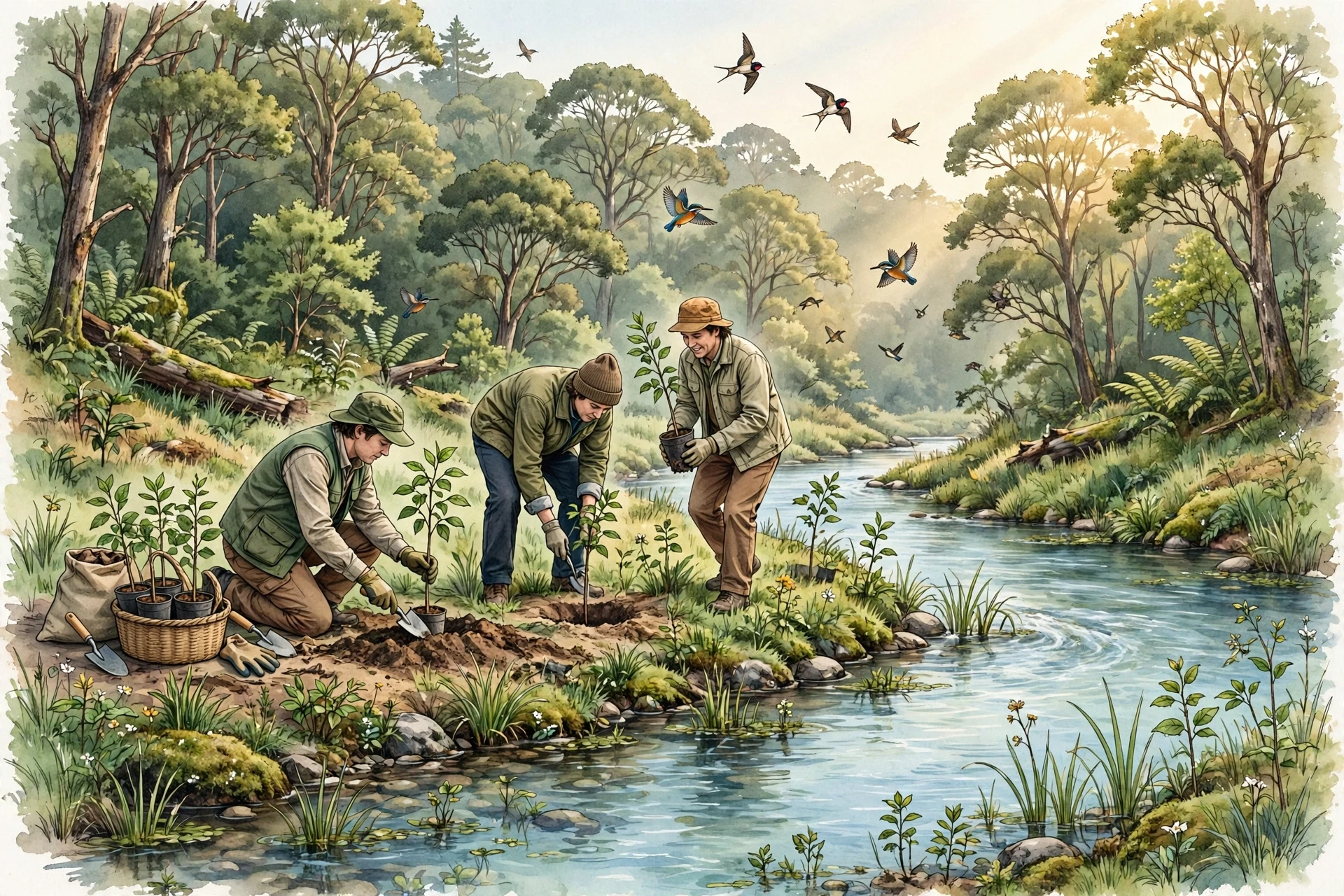
One of my favourite restoration stories comes from a small river I visited twice, ten years apart. The first time, it ran straight and brown between bare banks, its bed silted, its fish gone. A local group had removed a weir, planted trees along the banks, and fenced out livestock. The second time, the river meandered, the water ran clear, and kingfishers worked the pools. Nobody had restocked the fish. The river had done that itself, once the conditions were right. Restoration, at its best, is less about engineering nature than about getting out of its way.
9.3 What individuals and communities can do
Large-scale change needs policy, but the everyday list is real and it adds up. Plant native species instead of lawns. Leave dead wood in a corner of a garden — it is habitat, not mess. Reduce pesticide use. Support sustainable seafood and timber. Vote for, and fund, habitat protection. Visit protected areas and pay the entrance fee: the money often funds the rangers who keep them intact. And perhaps most usefully, learn the names of ten wild species where you live. People protect what they can name, and naming is the first step toward noticing — and noticing is the first step toward caring.
The story of biodiversity is also, at its root, an evolutionary story. The variety we see today is the product of billions of years of mutation, selection, and drift, and of the environments that shaped them. Sciory's Darwin's Theory of Evolution: Evidence Explained lays out how that process works, and why the variety it produces is both the record of the past and the raw material of the future. Photosynthesis, the process that feeds nearly all life, is the engine that powers the whole system — Sciory's Photosynthesis Explained: Process & Equation covers how it works.
10. Common Misconceptions About Biodiversity — Corrected
"Biodiversity is just the number of species." Species count is one layer. Genetic diversity and ecosystem diversity matter just as much, and a place can be rich in species and poor in both.
"Biodiversity only matters in rainforests." Rainforests are the most diverse places per area, but every ecosystem — desert, bog, grassland, city park — holds species found nowhere else, and services no other ecosystem provides.
"Extinction is natural, so it does not matter." Extinction is natural, but the current rate is far above the background rate, and the causes are human. The fact that species have always gone extinct does not make this one any less serious.
"Protecting nature hurts the economy." The opposite is closer to the truth: the economy runs on ecosystem services, and losing them costs far more than protecting them. Conservation done well supports livelihoods, tourism, and fisheries.
"One species more or less makes no difference." In a food web, the importance of a species is not proportional to its size or abundance. The loss of a keystone species, a pollinator, or a decomposer can ripple through the whole system.
"Conservation is only about saving cute animals." Charismatic animals draw attention, but conservation protects the whole web — the fungi, the insects, the microbes, and the habitats they need. The cute animals are the poster; the web is the point.
10.1 Open questions researchers still debate
Honest science leaves room for what is not settled. Researchers still debate how many species exist on Earth, how much of the extinction risk is driven by climate change versus habitat loss in different regions, and how quickly ecosystems can recover once the pressure is removed. The value of ecosystem services is debated too — not whether they are large, but how to measure them without reducing nature to a price tag. These debates are not a weakness of the science. They are how the science works, and they are the reason the best conservation plans are built to be revised as new evidence arrives.
Conclusion: A Library Worth Keeping
Biodiversity is the variety of life — in genes, in species, and in ecosystems — and it is also the set of relationships between them. It feeds us, heals us, cleans our water, steadies our climate, and gives us beauty we cannot price. It is the product of billions of years of evolution, and it is being unravelled in decades.
The square metre I stood in that morning held more life than I could name, and the same is true of the planet. We have named perhaps a quarter of its species. We are losing some of the rest before we meet them. The good news, and it is real, is that conservation works when it is done properly — protected areas, connected habitats, restored rivers, and communities that benefit from keeping nature intact. The IUCN's finding that extinction risk would be at least a fifth worse without conservation is not a slogan. It is evidence that the work matters.
The question is not whether biodiversity is worth protecting. The question is whether we will protect it while there is still enough of it left to save. The answer is being written now, in the forests that are cut or kept, in the rivers that are dammed or freed, and in the square metres of ground we choose to leave wild.
Frequently Asked Questions
What is biodiversity?
Biodiversity is the variety of life on Earth at three levels: genetic diversity within species, species diversity (how many species there are and how evenly they are spread), and ecosystem diversity (the variety of habitats and ecological communities). The term was formally defined by the UN Convention on Biological Diversity in 1992.
What are the three levels of biodiversity?
The three levels are genetic diversity (variety of genes within a species), species diversity (the number and evenness of species in a place), and ecosystem diversity (the variety of habitats and communities, such as forests, wetlands, reefs, and grasslands). Each level matters, and damage at one level ripples into the others.
Why is biodiversity important?
Biodiversity matters because it provides ecosystem services we depend on: food, clean water, medicine, pollination, climate regulation, flood protection, and soil formation. Diverse ecosystems are also more resilient — better able to survive drought, disease, and other shocks — than simple ones.
What are ecosystem services?
Ecosystem services are the benefits people get from nature, grouped into four kinds: provisioning (food, water, timber, medicine), regulating (climate, floods, disease, pollination), supporting (soil formation, nutrient cycling, photosynthesis), and cultural (recreation, beauty, spiritual value, knowledge).
What is a biodiversity hotspot?
A biodiversity hotspot is a region with an exceptional number of endemic species — species found nowhere else — that has already lost most of its original habitat. The concept, introduced by Norman Myers, now covers 36 regions that hold a large share of the world's plant and land vertebrate species on a small fraction of its land.
How many species are there on Earth?
Scientists have formally described roughly 2 million species. Estimates of the true total vary widely, commonly in the range of 8 to 9 million species, with some estimates much larger — mostly because insects, fungi, and microbes remain largely undescribed. The honest answer is that we do not know, and the estimates depend on the method used.
What is causing biodiversity loss?
The main drivers are habitat loss, overexploitation, invasive species, pollution, and climate change. The IPBES 2019 Global Assessment identified land- and sea-use change and direct exploitation as the leading drivers, with climate change, pollution, and invasive species close behind. They rarely act alone — they reinforce one another.
How many species are threatened with extinction?
The IPBES 2019 Global Assessment estimated that around 1 million animal and plant species are now threatened with extinction — the highest number in human history, according to that assessment. The IUCN Red List, which has assessed more than 175,900 species, shows extinction risk rising across groups.
What is the 30 by 30 target?
The 30 by 30 target is the global goal, agreed under the Convention on Biological Diversity in 2022, to protect 30 percent of the world's land and sea by 2030. How well the protected areas are managed matters as much as the area they cover.
What can I do to help protect biodiversity?
Plant native species, leave wild corners in gardens, reduce pesticide use, support sustainable seafood and timber, visit and fund protected areas, and learn the names of wild species where you live. Large-scale change needs policy, but everyday actions add up — and people protect what they can name.