

There is a flight of stairs in my building that I used to avoid. Not because it was long — three floors, nothing heroic — but because by the second landing my thighs were burning and my breathing had turned ragged. Then one spring I started running, slowly and badly, three mornings a week. A few months later I took the stairs without thinking, reached the third floor, and realised halfway down the corridor that I had not noticed the climb at all. Nothing about the stairs had changed. My body had. That quiet swap — the same effort, a different body — is how exercise changes the body, and it happens in far more places than the muscles you can see.
Most people think of exercise as something that happens to the outside of the body: bigger arms, a flatter stomach, a faster mile. The outside is the smallest part of how exercise changes the body. The real story is deeper and stranger. A single run sends chemical messengers from your muscles to your liver, your fat, your bones and your brain. Weeks of training rebuild your heart into a larger, more efficient pump. Months of it grow new blood vessels, new mitochondria, and — in one famous study — measurably more brain tissue. The body does not simply get better at the exercise you do. It reorganises itself around it. That reorganisation, system by system, is what this article follows — it is how exercise changes the body, in full.
This article follows that reorganisation, system by system, with the numbers checked against the latest research and the limits stated plainly wherever they exist. It explains what happens in the first minutes of a workout, how muscles actually grow, why your resting heart rate falls, what VO2 max really measures, how muscle talks to the brain through molecules called myokines, what exercise does for mood and sleep, where it helps the immune system and where it does not, and how much of it you actually need. It also takes on the myths — the soreness, the sweat, the "no pain, no gain" — because half of understanding exercise is unlearning what the posters told you.
1. What Happens in Your Body When You Exercise?
1.1 The first minutes: a body switching gears
The moment you start moving hard, your body runs a coordinated gear change. Your brain signals the adrenal glands, adrenaline and noradrenaline flood the blood, and your heart rate climbs. Blood is pulled away from the gut and skin and sent toward the working muscles, which can receive twenty times more blood flow than at rest. Your breathing deepens and quickens. Your liver releases stored glucose into the blood. Your muscles start burning that glucose, and fat, for fuel.
All of this is reversible and fast. Stop moving, and within minutes your heart rate is falling, your breathing is slowing, and the blood flow is returning to normal. But something else is already happening underneath the obvious changes: your muscle fibres are sensing the mechanical strain, your cells are registering the energy demand, and chemical signals are being switched on that will keep working for hours after you stop. The workout is the trigger. The adaptation is the response, and it arrives later. That gap between signal and response is the first thing to understand about how exercise changes the body.
1.2 The first weeks: soreness, hunger, and better sleep
The first weeks of a new exercise habit are the noisiest. Muscles ache a day or two after an unfamiliar workout — delayed onset muscle soreness, or DOMS — because the fibres have suffered microscopic damage, especially during the lowering phase of a movement, when muscles lengthen under load. The soreness peaks around 24 to 72 hours and fades as the fibres repair themselves stronger than before. It is uncomfortable, and it is also a sign that the repair machinery is working.
Other changes arrive quietly. Many people notice they sleep more deeply within the first week or two. Appetite shifts — some people get hungrier, some find their appetite settles. Mood often lifts after a single session, a small, real effect that has been measured in trial after trial. None of this is imagination. The body is already adapting; it is just adapting in places you cannot see in the mirror yet.
I learned this the slow way, the first time I tried to get fit as an adult. I expected the changes to show up as visible muscle, and when they did not appear in the first month, I assumed nothing was happening. What I had missed was the invisible ledger: my resting heart rate had dropped by eight beats a minute, I was falling asleep faster, and the stairs had stopped hurting. The mirror is the last place exercise shows up, not the first. Those invisible changes are the first evidence of how exercise changes the body — in sleep, appetite, and mood, long before the mirror catches up.
1.3 The long game: adaptation, not damage
The principle behind everything in this article has a plain name: specific adaptation to imposed demands. The body adapts to exactly what you ask of it, and to nothing else. Ask it to lift heavy things repeatedly, and it builds stronger muscles. Ask it to run for an hour, and it builds a better oxygen-delivery system. Ask it to do nothing, and it quietly dismantles the machinery it no longer needs — muscle, bone, and fitness all fade without use. That dismantling is the reverse of how exercise changes the body: remove the signal, and the body removes the adaptation.
That last part is the part people underestimate. The body is expensive to maintain, and it is ruthlessly economical. A muscle that is never loaded is a cost with no benefit, so the body lets it shrink. A heart that never has to work hard stays small. Bone that never feels heavy strain thins out. Exercise is not an optional extra layered on top of a finished body. It is one of the signals the body uses to decide what kind of body to maintain. That is how exercise changes the body over months and years: not by adding something foreign, but by telling the body, over and over, what it needs to be good at.
2. Your Muscles: How Exercise Builds Them
2.1 Three triggers, one result
Muscle growth has a simple accounting rule at its core: a muscle gets bigger when it builds new protein faster than it breaks old protein down. Resistance training tips that balance toward building, and it does so through three triggers that overlap. The first and most important is mechanical tension — the sheer force of a muscle contracting against resistance. The second is metabolic stress — the burn and the pump of metabolites building up inside a working muscle. The third is muscle damage — the microscopic tears that come with unfamiliar or heavy work, especially the lowering phase.
Of the three, tension does the heavy lifting. You can chase the burn with light weights and many repetitions, and you can certainly get sore, but the strongest growth signal comes from force itself: heavy loads, controlled movements, and progressively more weight over time. The other two triggers amplify the signal. They do not replace it. Tension is the main answer to the question of how exercise changes the body in muscle, and the other two triggers exist to support it.
2.2 mTORC1: the growth switch
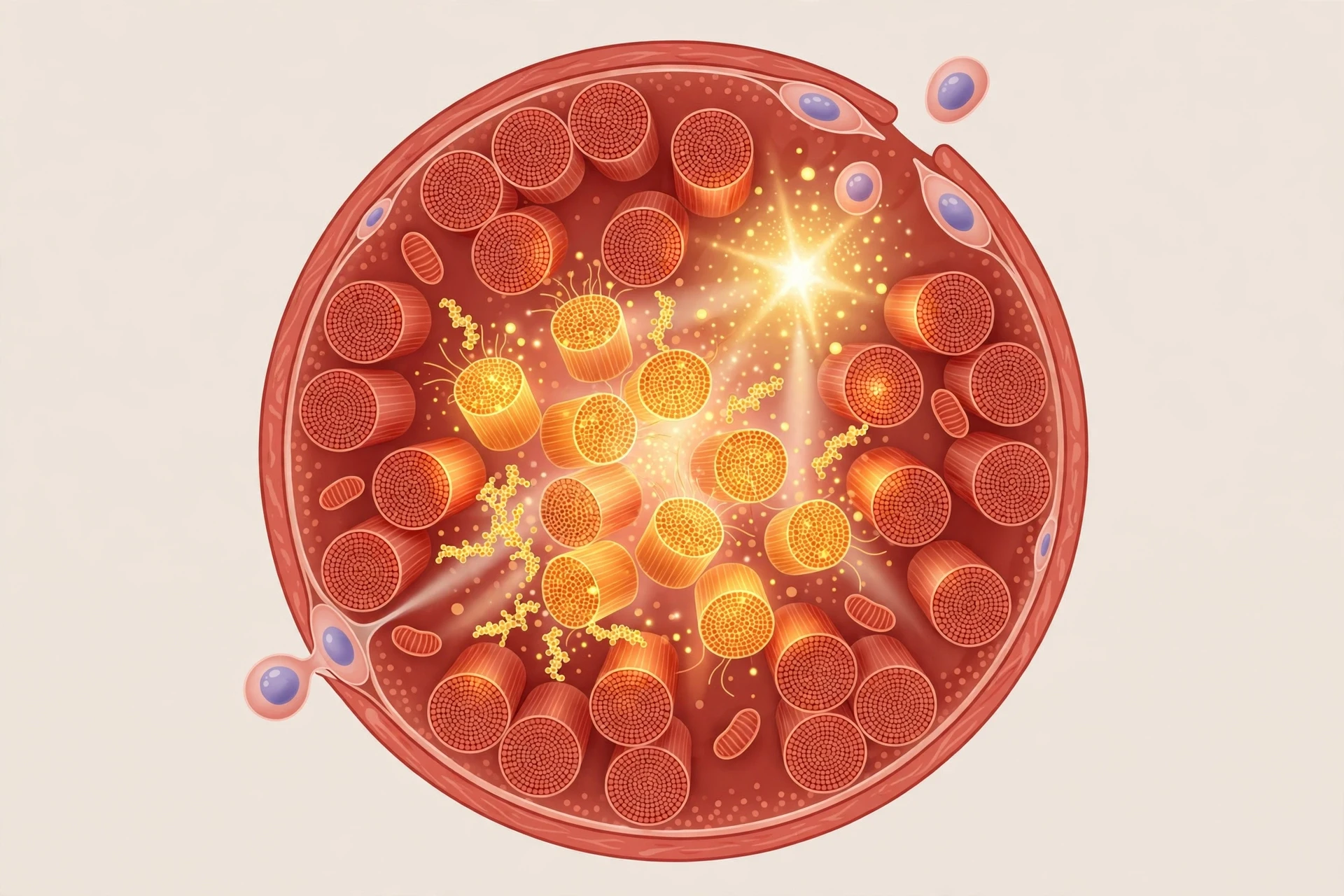
Inside a muscle fibre, the tension signal is picked up by mechanosensors — proteins embedded in the cell membrane and the scaffolding around it that convert a physical stretch into a chemical message. That message converges on a protein complex called mTORC1, the central switch for muscle growth. When mTORC1 is activated, it turns on the machinery that builds new protein: it activates a target called p70S6K, it releases the brakes on protein translation, and over weeks it drives the building of new ribosomes, the factories that make protein in the first place.
The chain is elegant in its directness. Tension activates a small protein called Rheb, Rheb switches on mTORC1 at the surface of the lysosome, and mTORC1 tells the cell to build. Food matters here too — amino acids, especially leucine, feed into the same switch through a separate route — which is why protein after training helps, though the training itself is the main signal. Without the tension, the switch stays mostly off, no matter how much protein you eat. That chain, from tension to mTORC1 to new protein, is the core mechanism of how exercise changes the body at the level of a single fibre.
2.3 Satellite cells: the reserve army
A muscle fibre is unusual among cells: it has many nuclei, sometimes hundreds, spread along its length. Each nucleus can only manage a certain volume of cell around it, so a fibre that wants to grow much bigger needs more nuclei. That is where satellite cells come in. They are muscle stem cells, sitting quietly between the fibre and its surrounding sheath, waiting for a signal. Heavy loading and the small damage that comes with it wake them up. They divide, and some of their daughters fuse into the fibre, donating their nuclei. This process — myonuclear addition — raises the fibre's ceiling for protein production, which is how short-term growth becomes lasting size.
Here is the part that surprised me when I first read the research: the nuclei donated by satellite cells appear to stick around. Even if the muscle later shrinks from disuse, the extra nuclei may persist, which could be one reason people who trained when they were younger regain muscle faster when they return to it years later. The evidence in humans is still developing, and the "muscle memory" story is more complicated than the gym version, but the nuclei themselves are real, and they are a reminder that training leaves traces in the body long after the pump fades. Those extra nuclei are a lasting record of how exercise changes the body, written into the muscle itself.
2.4 Fast fibres, slow fibres, and what training changes
Not all muscle fibres are the same. Slow-twitch fibres (type I) are built for endurance: they burn fuel with oxygen, resist fatigue, and power a long run or a day on your feet. Fast-twitch fibres (type II) are built for power: they contract harder and faster, but tire quickly, and they are the fibres that grow most in response to heavy lifting. Most people have a mix, set partly by genetics, and training shifts the balance within limits — endurance training makes fibres more oxidative, resistance training makes the fast ones bigger.
The practical point is simple: the body you build depends on the signal you send. That dependence is the simplest summary of how exercise changes the body in muscle. Lift heavy, and the fast fibres grow. Run far, and the slow fibres become better at burning oxygen. Do both, and you get some of each, with a small trade-off — very high volumes of endurance work can blunt some strength gains, though for most people the overlap is a benefit, not a problem. That is how exercise changes the body at the level of the individual fibre: the same tissue, remodelled in different directions by different demands.
2.5 Soreness is not the signal
The most persistent myth in the gym is that a workout only counts if you can barely walk the next day. It is wrong, and understanding why clears up a lot. Soreness comes from damage, mostly from movements your body is not used to, and damage is only one of the three growth triggers — and the weakest of them. As your body adapts to a movement, the same workout produces less soreness while still producing growth, because the tension signal is still there. Experienced lifters rarely get very sore, and they keep growing.
The same logic applies to the "pump", the swollen feeling in a muscle during a workout. It feels like growth, and it is partly the metabolic stress trigger at work, but the pump itself is temporary fluid, not new muscle. Both soreness and the pump are side effects of training, not measures of it. The measures that matter are simpler: are you lifting more, running further, or recovering faster than last month? If the answer is yes, the body is adapting, whether or not it hurts. Progress, not pain, is the honest measure of how exercise changes the body.
3. Your Heart: A Pump That Remodels Itself
3.1 The bus conductors of London
The science of exercise and the heart began, improbably, on a London bus. In 1953, a physician named Jerry Morris published a study comparing two groups of men who did the same job in the same city but moved through their days very differently: the drivers of London's double-decker buses, who sat all day, and the conductors, who climbed up and down the stairs collecting fares, "11 days a fortnight, 50 weeks a year, often for decades". The conductors had half or less the rate of heart attacks and sudden cardiac death of the drivers. Postmen, who walked their rounds, showed the same protection compared with desk-bound clerks.
Morris had found the first hard evidence that moving more protects the heart, and he had found it without a laboratory — just by watching who climbed stairs and who sat. It is still one of the most elegant studies in medicine, and it is where the modern understanding of exercise and heart disease begins. Everything since has filled in the mechanism behind what Morris saw from the top deck of a bus. His conductors were the first demonstration of how exercise changes the body in a way that could be counted in lives, not just in fitness.
3.2 Stroke volume: a bigger pump
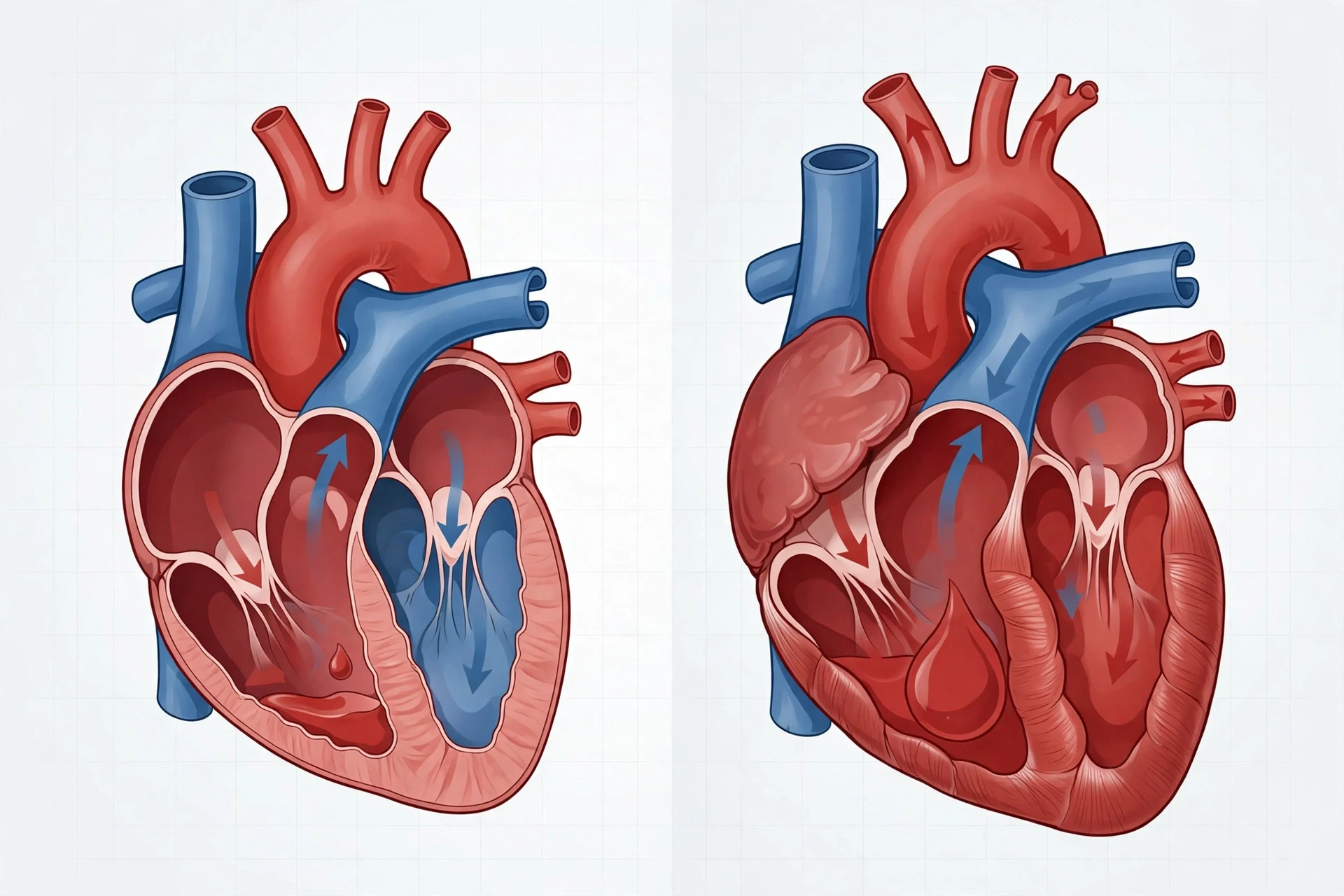
The heart adapts to endurance training the way a muscle adapts to lifting: it gets bigger and stronger. Specifically, the left ventricle — the chamber that pumps blood to the whole body — grows in volume. In a year-long study of previously sedentary adults, Arbab-Zadeh and colleagues found that the left ventricle remodelled progressively with endurance training: it first thickened, and only after about six months did it begin to grow larger in volume. A bigger chamber holds more blood, so each beat pushes more blood out. That amount per beat is called stroke volume, and it is the single most important adaptation in the trained heart.
The consequence shows up at rest. A trained heart can deliver the same amount of blood with fewer beats, so resting heart rate falls. Well-trained endurance athletes often have resting heart rates in the 40s, and some lower still, where an untrained adult sits closer to 60 to 80 beats a minute. This is not a sign of a weak heart. It is the opposite: a stronger pump doing the same job with less effort. How the Human Heart Works explains the anatomy behind this in detail, and the training story here is the same heart, remodelled by demand. A bigger stroke volume is the clearest single example of how exercise changes the body: the same output, delivered with less effort.
3.3 Resting heart rate falls; output stays the same
There is a neat piece of arithmetic at the centre of this. Cardiac output — the total blood pumped per minute — is heart rate multiplied by stroke volume. At rest, a trained person and an untrained person have roughly the same cardiac output, around five litres a minute. The trained person reaches it with a slower rate and a bigger stroke; the untrained person reaches it with a faster rate and a smaller stroke. Same output, different machinery.
During exercise the difference explodes. An untrained person's cardiac output might rise to fifteen or twenty litres a minute at full effort. A trained athlete can push it past thirty. That extra capacity is what lets them sustain hard work: more blood to the muscles, more oxygen delivered, more waste carried away. It is also why resting heart rate is such a useful, honest number. It is not a vanity metric. It is a window into how much pump you have in reserve. That reserve is one of the most practical measures of how exercise changes the body over months of training.
3.4 Blood pressure, blood volume, and the pipes
The heart is only half the cardiovascular story. Training also changes the blood and the vessels. Blood volume rises with endurance training — the body makes more plasma, and over time more red blood cells — which is part of why stroke volume can grow. Blood pressure at rest falls: meta-analyses of training trials find aerobic exercise lowers resting systolic pressure by a few millimetres of mercury on average, with larger drops in people who start out hypertensive. The vessels themselves become more responsive, widening more easily when muscles demand blood, in part because the inner lining of the arteries, the endothelium, produces more nitric oxide, a molecule that relaxes vessel walls.
None of this is dramatic on any single day. It accumulates, quietly, over months — the same slow arithmetic as the resting heart rate. A few points of blood pressure, a few extra beats of reserve, a slightly larger chamber. Added together across a lifetime, they are a large part of why active people have less heart disease. Morris saw the outcome in 1953. The mechanism took another half-century to map. Every part of that mechanism — the vessels, the blood, the pressure — is a piece of how exercise changes the body through the heart.
4. VO2 Max: How Exercise Changes the Body, Measured in Oxygen
4.1 What VO2 max actually measures
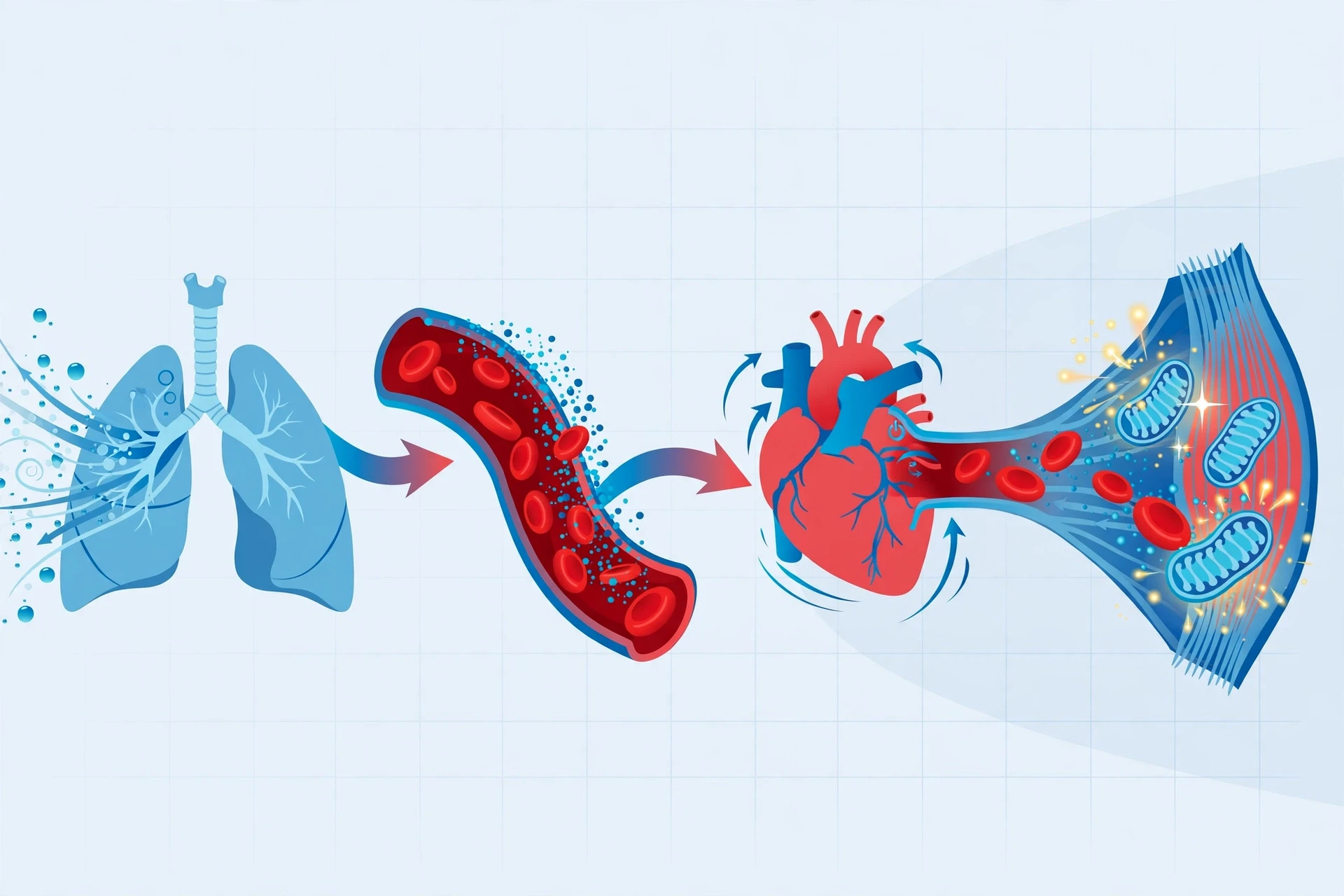
If the heart is the pump, VO2 max is the measure of the whole system it serves. The term stands for maximal oxygen uptake: the highest rate at which your body can take in oxygen and use it during intense exercise, measured in millilitres of oxygen per kilogram of body weight per minute. It is not a measure of speed, or willpower, or how much fat you burn. It is a measure of the entire oxygen chain working at full capacity: lungs moving air, heart pumping blood, vessels delivering it, and muscles extracting oxygen from it.
Physiologists describe that chain with an equation, the Fick equation: VO2 max equals cardiac output (heart rate multiplied by stroke volume) multiplied by the difference in oxygen content between the blood going out to the muscles and the blood coming back. Training improves both sides of that multiplication. The heart's stroke volume rises, so more blood moves. And the muscles get better at pulling oxygen out of the blood, because they grow more capillaries and more mitochondria. When VO2 max rises, it means the whole chain got better, not just one link. That is why the number is such a useful summary of how exercise changes the body: it captures the entire oxygen chain in a single figure.
4.2 What the numbers mean
The range of human VO2 max is enormous. A sedentary adult typically scores somewhere around 25 to 40 millilitres per kilogram per minute. A reasonably active adult in their thirties might score above 45 for a man or above 38 for a woman. Elite endurance athletes exceed 70, and the highest ever recorded are in the 90s. Age matters — VO2 max declines with age even in active people — and so does sex, body size, and genetics. There is a ceiling each person is born with, and training moves you toward it, not past it. That ceiling, and how close you sit to it, is one more measure of how exercise changes the body over a lifetime.
The most honest way to think about the number is as a fitness vital sign rather than a competition score. The American Heart Association has formally recommended that cardiorespiratory fitness be assessed in routine clinical practice, alongside blood pressure and cholesterol, because it predicts health outcomes as well as or better than many traditional risk factors. A watch or a fitness test can estimate it, but those estimates are rough — the gold standard is a laboratory test on a treadmill or bike, wearing a mask that measures the oxygen in every breath. Rough estimates still track the same thing — the number moves with training, however it is measured. How exercise changes the body is partly written in that number, but the number is a summary, not the story itself.
4.3 Why it predicts how long you live
The reason doctors care about VO2 max is not athletic performance. It is mortality. A landmark study published in JAMA Network Open in 2018 followed more than 120,000 people who had taken treadmill fitness tests and found that those with the lowest cardiorespiratory fitness had roughly five times the risk of death of those with the highest, elite-level fitness. That gap was larger than the risk associated with smoking, diabetes, or heart disease in the same data. Fitness in that study was estimated from treadmill workload rather than measured directly as VO2 max. A meta-analysis by Kodama and colleagues estimated that each additional unit of fitness — one metabolic equivalent, or 3.5 millilitres of oxygen per kilogram per minute — was associated with about a 13 percent lower risk of death from any cause.
Those are associations, not guarantees, and they need stating carefully. People with high VO2 max also tend to have lower blood pressure, better blood sugar control, healthier body composition, and habits that support all of those. VO2 max is one marker of a whole bundle of adaptations, and the trials cannot yet prove that raising it alone, without the rest of the bundle, extends life. But as a summary of how well the oxygen system works, it is the strongest single fitness predictor of longevity currently available, and it responds to training at every age. Few numbers summarise how exercise changes the body as completely as this one does.
4.4 How to raise it
VO2 max is trainable, and the training that raises it is not mysterious. Any aerobic exercise that gets the heart pumping helps, and the more vigorous the effort, the stronger the stimulus. Two approaches have the best evidence behind them. The first is steady, moderate work — the kind of pace where you can still hold a conversation, sustained for thirty minutes or more. The second is high-intensity interval training: short bursts of near-maximal effort followed by recovery, repeated several times. In one study of active young adults, six weeks of sprint interval training raised VO2 max by about 7 percent, with most of the gain arriving within the first three weeks.
The two approaches work through different but complementary mechanisms. Steady work builds the base: more capillaries, more mitochondria, better fat burning. Intervals push the ceiling: higher cardiac output, greater stroke volume, better oxygen extraction at high intensity. Most people benefit from a mix, and the largest gains come early — a sedentary person starting to train can see double-digit percentage improvements in a few months, while an already-fit person fights for single digits. The ceiling is genetic. The climb toward it is available to everyone. Whatever the ceiling, the climb itself is how exercise changes the body for anyone who trains.
5. Metabolism: Mitochondria, Fuel, and Blood Sugar
5.1 PGC-1α and the mitochondrial build-out
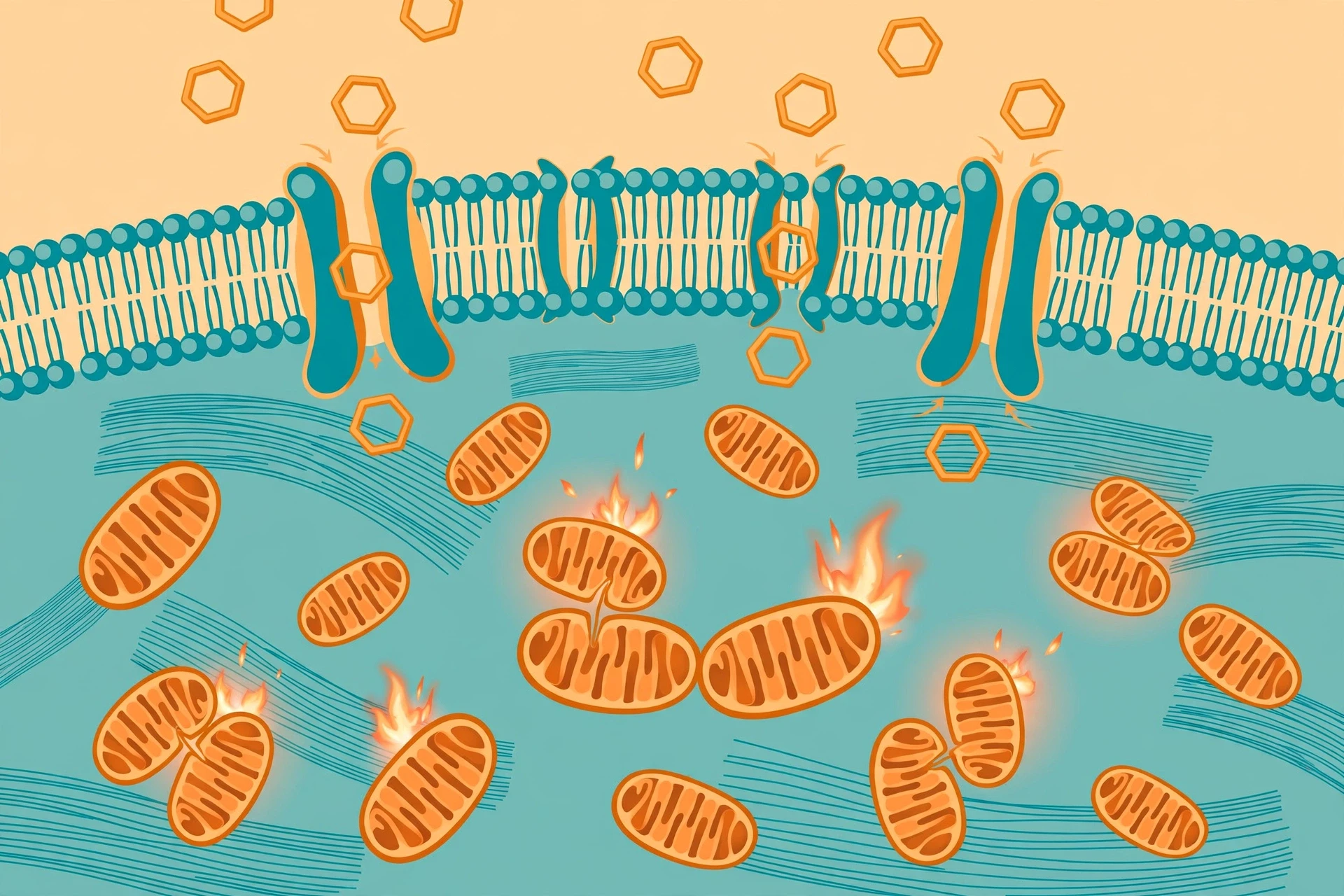
Deep inside every muscle cell sit mitochondria, the small structures that turn fuel and oxygen into usable energy. Endurance training makes more of them, and makes the existing ones work better. The master switch for that build-out is a protein called PGC-1α, which is activated by the energy stress of exercise — the cell senses that its energy stores are draining and responds by building more capacity. Over weeks, a trained muscle ends up with measurably more mitochondria per fibre, which is why the same workload feels easier: the energy is being made by a bigger, more efficient factory.
This is also where the idea of "metabolic fitness" becomes concrete. A muscle with more mitochondria burns fat more readily at a given intensity, spares its limited glycogen stores, and produces less of the metabolic byproducts that make exercise feel hard. The change is not cosmetic. It is the difference between a body that runs out of fuel quickly and one that can keep going, and it is one of the most reliable adaptations exercise produces. More mitochondria, working better, is a quiet but profound part of how exercise changes the body.
5.2 Insulin sensitivity and blood sugar
One of the most useful things exercise does has nothing to do with weight. It makes the body more sensitive to insulin, the hormone that moves glucose from the blood into cells. After a meal, a trained person's muscles take up glucose more readily, so blood sugar rises less and falls faster. Part of this is the extra mitochondria and the extra capillaries. Part of it is more direct: contracting muscle can pull glucose in without insulin at all, by moving glucose transporter proteins called GLUT4 to the cell surface. A single bout of exercise improves glucose uptake for hours afterward, and regular training keeps the improvement going.
The scale of this matters. Type 2 diabetes is, at its core, a disease of insulin resistance, and exercise is one of the most effective tools against it — not as an alternative to medicine, but as a foundation that makes everything else work better. The gut also plays a role in blood sugar through the microbiome, as explained in The Gut Microbiome Explained (and How the Digestive System Works covers the gut's own mechanics), but the muscle's own glucose handling is the larger lever, and it responds to every session. That lever — better glucose uptake after every single session — is one of the most useful ways how exercise changes the body day to day.
5.3 Fat burning and the afterburn
Exercise burns fat, but the way it does so is often misunderstood. During moderate exercise, a substantial share of the fuel comes from fat stores. As intensity rises, the mix shifts toward carbohydrate, because carbohydrate can be burned faster. After the session ends, the body keeps burning slightly more energy than usual while it restores oxygen stores, clears metabolites, repairs tissue, and returns body temperature to normal. This is called excess post-exercise oxygen consumption, or EPOC — the "afterburn".
The afterburn is real, and it is also small. For most sessions it adds only a modest amount to the total energy burned — a few percent of the session itself, not a doubling. High-intensity sessions produce a larger afterburn than gentle ones, but the difference is usually measured in tens of calories — even in the most generous metabolic-chamber study, about 190 calories over fourteen hours after a vigorous 45-minute ride. Anyone selling exercise as a furnace that keeps burning all day is selling a real phenomenon at ten times its actual size. The honest version is better: exercise burns energy while you do it, builds the machinery that burns energy more efficiently, and the afterburn is a small bonus on top. That small bonus is one more part of how exercise changes the body, not the main event.
5.4 Why exercise alone rarely drives large weight loss
Here is a fact that surprises people who start exercising to lose weight: on its own, exercise typically produces only modest weight loss. The reason is arithmetic. A typical workout burns a few hundred calories. The body compensates — appetite rises, spontaneous movement falls, and the energy the body spends at rest can dip slightly. Trials that prescribe exercise without changing diet usually find a few kilograms lost over months, not the transformation people expect.
That is not a reason to skip exercise. It is a reason to understand what exercise is for. Diet drives the scale far more directly. Exercise drives almost everything else: the heart, the muscles, the brain, the bones, the blood sugar, the mood. People who exercise and eat well lose more fat and keep more muscle than people who only diet, and people who exercise are far more likely to keep weight off once it is lost. That combination — diet for the scale, exercise for the composition — is the practical side of how exercise changes the body. The body composition story — more muscle, less fat, same weight — is a better measure of success than the scale alone. That is how exercise changes the body in the long run: not by melting weight away, but by rebuilding what the weight is made of.
6. Muscle as an Endocrine Organ: The Myokine Messengers
6.1 The discovery: IL-6, the muscle messenger
For most of medical history, muscle was treated as a mechanical tissue — a thing that pulls on bones. That changed around the year 2000, when researchers led by Bente Pedersen's group in Copenhagen discovered something unexpected. During prolonged exercise, levels of a signalling molecule called interleukin-6, or IL-6, rose in the blood dramatically — by as much as a hundredfold after a marathon, though in a typical study of prolonged exercise the rise was closer to nineteen-fold. IL-6 was known as an immune molecule, a signal of inflammation. But this IL-6 was not coming from immune cells. It was coming from the muscle fibres themselves.
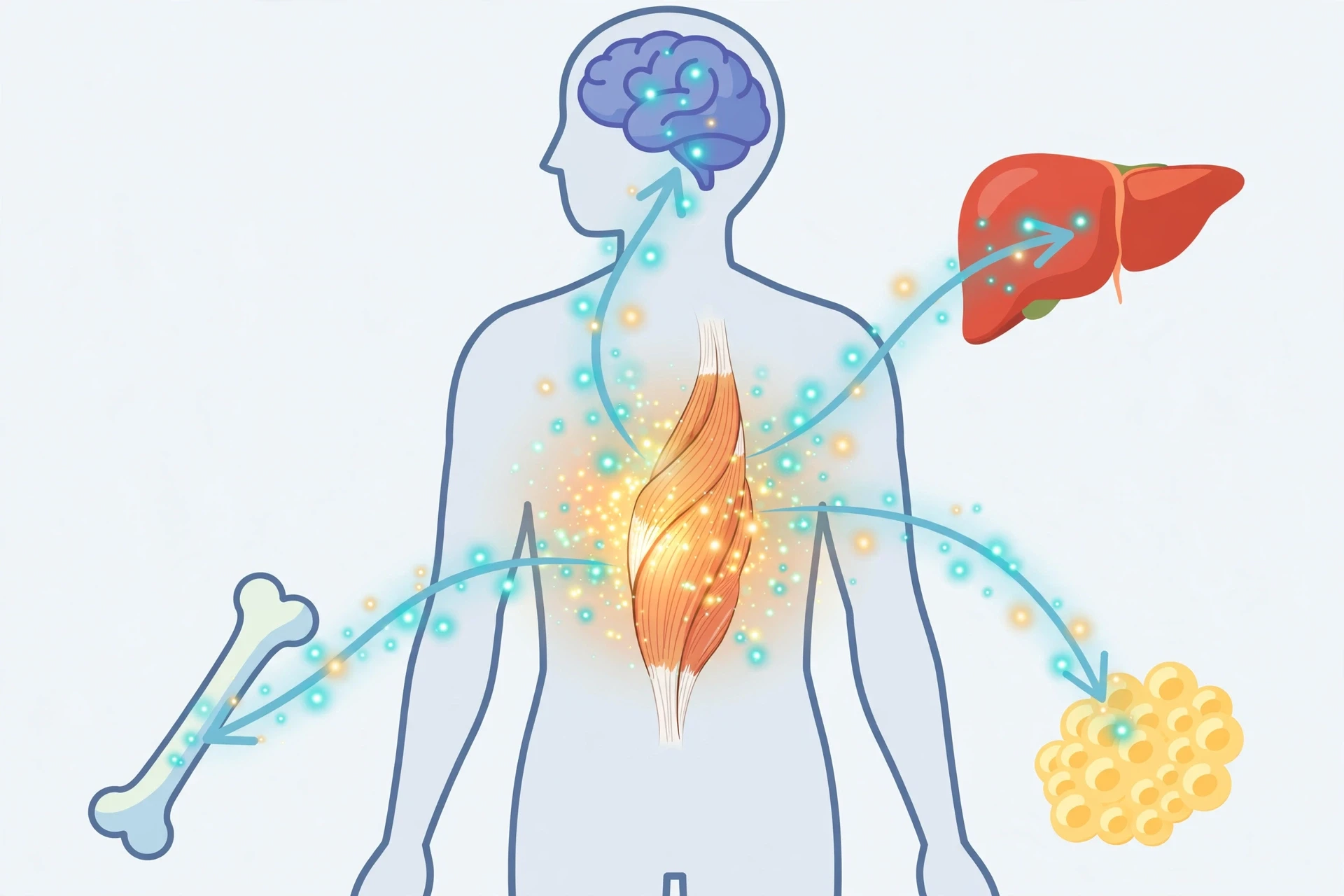
That discovery reframed the whole field. If muscle releases signalling molecules into the blood during exercise, then muscle is not just a mechanical organ. It is an endocrine organ — a gland that talks to the rest of the body. Researchers coined a term for these muscle-made messengers: myokines. Since then, hundreds have been identified, and the list keeps growing. Every workout is, in a sense, a broadcast: the muscles telling the liver, the fat, the bones, and the brain what is happening and what to do about it. That broadcast is the newest chapter in the story of how exercise changes the body.
6.2 Irisin and the fat-browning story
The most famous myokine arrived in 2012, when Bruce Spiegelman's group at Harvard identified a molecule called irisin. It is released when a protein called FNDC5 is cut during muscle contraction, and in mice it did something remarkable: it nudged white fat cells — the kind that store energy — to behave more like brown fat, the kind that burns energy as heat. The finding made headlines around the world, and for good reason: a molecule from muscle that could reprogram fat sounded like a drug waiting to happen.
The human story is more measured. Irisin does rise with exercise in people, and in mice it appears to cross into the brain, where it is linked to higher levels of BDNF, the growth factor covered in the next section. But the fat-browning effect in humans is far weaker and less certain than in mice, and the doses and measurements have been contested. Irisin remains a real and interesting myokine, and a reminder of a pattern that runs through this whole article: the mouse result is the beginning of the story, not the end of it. Irisin shows that how exercise changes the body is still being mapped, and that the mouse version of the story is never the final word.
6.3 The anti-inflammatory flip
IL-6 has a double life that illustrates the same point. In chronic disease, IL-6 circulating at moderately raised levels for months is a marker of inflammation, and it is associated with worse outcomes. But the IL-6 released by muscle during exercise behaves differently: it arrives in a huge, brief pulse, and instead of promoting inflammation, it triggers an anti-inflammatory response. It stimulates the release of IL-1ra and IL-10, molecules that calm inflammation, and it suppresses TNF-alpha, a key promoter of it.
The difference is context. A short, sharp pulse from muscle is a signal. A slow, constant drip from diseased tissue is a symptom. This is one of the mechanisms behind a well-known observation: regular exercisers have lower levels of chronic inflammation than sedentary people, even though each individual workout briefly raises inflammatory signals. The workout is a small, controlled stress that trains the system to calm itself afterward. It is the same logic as the soreness that leads to stronger muscle: a brief disturbance, followed by a better baseline. That pattern — a small stress, then a calmer baseline — runs through every part of how exercise changes the body.
6.4 The myokine map
Step back, and the myokine story becomes a map of the body talking to itself. Muscle-derived IL-6 tells the liver to release glucose and tells fat tissue to break down stored fat. Irisin talks to fat and to the brain. IL-15 supports muscle growth and immune function. Myostatin does the opposite — it is a brake on muscle growth, and exercise lowers it. Brain-derived neurotrophic factor, BDNF, is released by muscle as well as by the brain, and it supports the growth and survival of neurons. Other myokines talk to bone, telling it to build, and to blood vessels, telling them to grow.
No single myokine explains the benefits of exercise. That is the point. The broadcast as a whole is how exercise changes the body beyond the muscles themselves — not one molecule, but the pattern of all of them. The benefits come from that whole broadcast — dozens of signals, released in a pattern that depends on the type, intensity, and duration of the exercise, coordinating a body-wide response. Aerobic exercise favours one profile, resistance training another, and high-intensity intervals a third. The muscle is not just moving the body. It is informing it. That is how exercise changes the body beyond the muscles themselves: through chemistry, not just mechanics.
7. Your Brain on Exercise: BDNF and Memory
7.1 The walking trial that grew a brain region
The most famous experiment in this field began with a simple question: can walking change the physical structure of an older person's brain? In 2011, Kirk Erickson and colleagues at the University of Pittsburgh recruited 120 sedentary older adults, average age around 67, and randomly assigned them to two groups. One group walked on a track, starting at about ten minutes a session and building to forty minutes, three days a week. The other group did stretching and balance exercises for the same amount of time. After one year, MRI scans showed something remarkable: the walkers' hippocampus — the brain region most involved in forming new memories, and one of the first hit by Alzheimer's disease — had grown by about 2 percent. The stretchers' hippocampi had shrunk by about 1.4 percent, which is roughly the normal trajectory of ageing. The authors estimated that a year of walking had effectively turned back the clock on age-related volume loss by one to two years.
The details matter as much as the headline. The walkers' hippocampal growth was correlated with increases in their blood levels of BDNF, the growth factor this section is about, and with better performance on a spatial memory test. But the memory improvement itself was modest — both groups improved on the task over the year, and the difference between them was not large. The brain grew. The memory gain was real but small. That honest balance is worth holding on to, because the headlines that followed the study were considerably more confident than the data. Even with that caution, the trial remains the best evidence that how exercise changes the body includes the brain's physical structure, not just its chemistry.
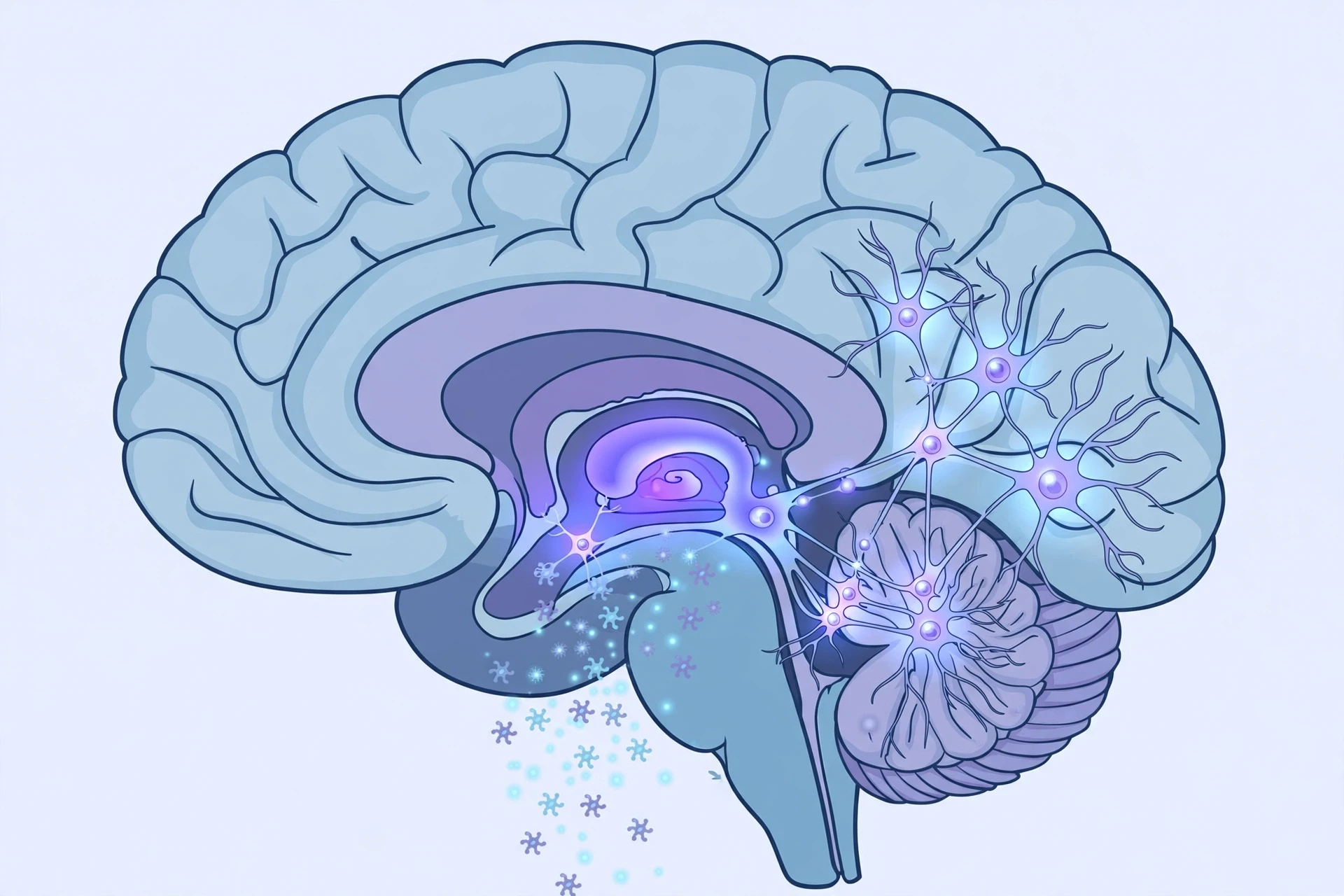
7.2 BDNF: fertiliser for neurons
BDNF — brain-derived neurotrophic factor — is a protein that supports the growth, survival, and strengthening of connections between neurons. It is one of the most important molecules in the story of exercise and the brain. Exercise reliably raises BDNF levels in the blood: a meta-analysis of 35 randomised trials by Gholami and colleagues confirmed that both aerobic exercise and resistance training elevate it, with moderate-to-high intensity exercise being the most effective. A 2025 systematic review found that walking, running, and cycling all raised circulating BDNF in older adults.
The causal evidence comes mostly from animals, and it is striking. In a 2004 study, researchers at UCLA exercised rats for a week, then blocked BDNF in their hippocampi with a molecule that mimics its receptor. The exercised rats that had their BDNF blocked lost the entire learning and memory benefit of the exercise — they performed no better than sedentary rats on a water maze task. The rats that learned fastest and remembered best had the highest BDNF levels. In rats, at least, BDNF is not just correlated with the benefit of exercise. It carries it. How the Nervous System Works explains the wiring BDNF acts on, and Alzheimer's Disease Explained covers what happens when the hippocampus, the region at the centre of this story, begins to fail. BDNF is the molecule most often named when people ask how exercise changes the body in the brain, and the animal evidence for its role is strong.
7.3 Neurogenesis and neuroplasticity — what is proven
The hippocampus is one of the few brain regions where new neurons can form throughout life, a process called neurogenesis. In rodents, exercise reliably increases it: running mice grow thousands of new hippocampal neurons, and those neurons integrate into the circuits involved in learning. In humans, the evidence is thinner. Brain imaging can show volume changes, and blood tests can show BDNF rising, but directly counting new human neurons requires examining brain tissue, which cannot be done in living volunteers. The best human evidence comes from post-mortem studies and from indirect markers, and it is suggestive rather than settled.
The same caution applies to the broader idea of neuroplasticity — the brain's ability to rewire itself. Exercise almost certainly supports it, through BDNF, through better blood flow, through reduced inflammation, and through the simple fact that moving through the world is itself a rich source of sensory input. But the precise chain, from a run to a new synapse to a better memory, is still being mapped in humans. The animal evidence is strong. The human evidence is promising. The gap between the two is where careful writing lives. That gap is also where the honest version of how exercise changes the body in the brain has to live, for now.
7.4 The limits: a walk is not a memory cure
It would be easy to end this section with a slogan — walk your way to a sharper brain — and it would be wrong. Exercise is one of the best-supported tools for protecting the brain as it ages, and the Erickson trial is genuine evidence. But no trial has shown that exercise prevents dementia in an individual, or that a person with memory problems can reverse them by walking. The effects are modest, they accumulate over years, and they work alongside everything else that protects the brain: sleep, blood pressure control, social connection, and not smoking.
That is not a reason to dismiss the brain benefits. It is a reason to value them accurately. A 2 percent larger hippocampus after a year of walking is a small number with a large meaning: the brain, even in the late 60s, is still plastic, still responsive, still capable of growth. The body does not stop adapting because it gets older. It adapts more slowly, and the adaptations matter more. A brain that can still grow in the late 60s is one of the most hopeful facts about how exercise changes the body.
8. Mood, Stress, and Sleep
8.1 What the big reviews actually show
If there is one area where the public story of exercise has run ahead of the evidence, it is mental health. The broad picture is genuinely encouraging: large reviews consistently find that physical activity reduces symptoms of depression, anxiety, and psychological distress. The most comprehensive is the 2023 umbrella review by Ben Singh and colleagues in the British Journal of Sports Medicine, which pooled 97 systematic reviews covering about 1,039 trials and roughly 128,000 participants. Physical activity had medium-sized effects on depression and anxiety compared with usual care, with higher-intensity activity producing bigger improvements, and shorter programmes — twelve weeks or less — showing the largest effects. A 2024 network meta-analysis in the BMJ, pooling 218 trials with more than 14,000 people with depression, found walking, jogging, yoga, and strength training among the most effective types. The evidence behind those numbers is not strong, though: only one of the 218 trials was judged at low risk of bias, and the overall certainty of the evidence was rated low or very low. And a 2022 study in JAMA Psychiatry, following 191,000 adults over time, found that even half the recommended amount of activity was linked to an 18 percent lower risk of depression, and the full amount to 25 percent lower.
Those numbers are real, and they describe a consistent, meaningful benefit. They are also the numbers as reported in studies with real limitations: participants cannot be blinded to whether they are exercising, many trials are small, and the effects vary a lot from person to person. The direction is clear. The exact size is not. That honest uncertainty does not weaken the finding: the direction of how exercise changes the body in mood is consistent across hundreds of trials.
8.2 The "1.5 times better than therapy" myth
One number from the Singh review deserves special attention, because it has been repeated everywhere and it is misleading. The review's press release claimed exercise was "1.5 times more effective than counselling or medication" for depression. That comparison was never actually tested. Singh's team compared exercise against usual care, not against therapy or antidepressants in head-to-head trials, and the "1.5 times" figure came from comparing effect sizes across different meta-analyses — a method that cannot support that conclusion. The paper itself is careful: it notes that 77 of the 97 reviews it pooled were rated critically low in methodological quality, and it calls for more research before any claim about relative effectiveness.
This matters, because the inflated version of the finding does real harm. It suggests to people struggling with depression that they could simply swap their treatment for a run, which is not what the evidence shows. Exercise is a powerful support for mental health, and it can sit alongside treatment. It is not a replacement for it, and no honest reading of the research says it is. Anxiety and Depression Explained covers the conditions themselves in depth, and the exercise evidence belongs next to that picture, not instead of it. Keeping exercise in its proper place — a powerful support, not a substitute — is part of telling the truth about how exercise changes the body in mental health.
8.3 Runner's high: endorphins vs endocannabinoids
The most famous explanation for why exercise lifts mood is also partly wrong. The "runner's high" — that floaty, euphoric feeling after a long run — has been attributed to endorphins for decades. Endorphins are real, they are released during hard exercise, and they do reduce pain. But they cross the blood-brain barrier poorly, which makes them an unlikely explanation for a change in mood that is plainly happening in the brain.
The evidence now points more strongly at a different family of molecules: the endocannabinoids, the body's own cannabis-like compounds. In mice, blocking endocannabinoid signalling abolished the anxiety-reducing and pain-dulling effects of running, while blocking endorphins did not. In humans, a 2021 study found that endocannabinoid levels rose after running and tracked with feelings of euphoria, while endorphin levels did not show the same pattern. The endorphin story is not dead — endorphins still matter for pain and for the body's stress response — but the mood effect looks more like an endocannabinoid story than the textbooks used to say. It is a good example of how exercise science revises itself: the feeling is real, the mechanism was misassigned, and the correction makes the story more interesting, not less. The correction shows how the science of how exercise changes the body revises itself without losing the feeling it set out to explain.
8.4 Cortisol, stress, and sleep
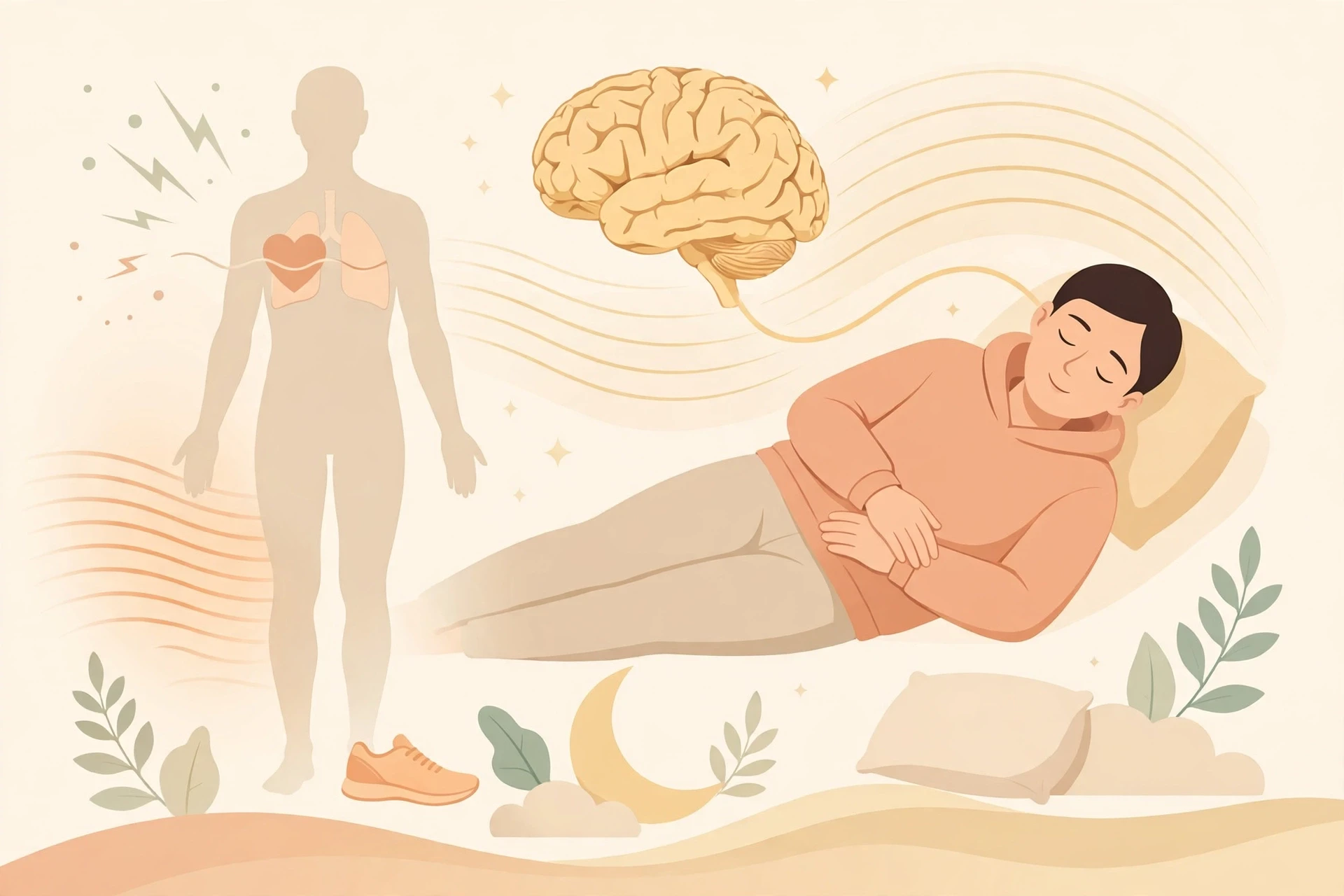
Exercise changes the stress system in two directions at once. During a hard session, cortisol — the main stress hormone — rises, because exercise is a stressor and the body mobilises energy to meet it. Afterward, cortisol falls, often below its starting level, and regular training lowers the system's overall reactivity: the same challenge produces a smaller cortisol spike in a trained person than in an untrained one. That is the same pattern as the soreness that leads to stronger muscle, and the brief inflammation that leads to a calmer baseline. A controlled stress, repeated, teaches the system to recover.
Sleep is where much of the mood benefit probably lives. Being active during the day is one of the most reliable ways to fall asleep faster and sleep more deeply, and good sleep is closely tied to mood the next day. The mechanism is probably a mix: body temperature rising and then falling, the circadian clock being set by daylight and activity, anxiety easing, and the simple tiredness of a body that has worked. The WHO lists better sleep among the benefits of physical activity, and it is one of the least contested claims in the field. A friend of mine once described it plainly, after a month of morning runs: she was not sure she was happier, but she was sure she was sleeping, and the sleeping was doing the rest. Sleep may be the most underrated route by which how exercise changes the body shows up in mood.
9. Your Immune System: The J-Curve
9.1 The J-curve: moderate protects, extreme raises risk
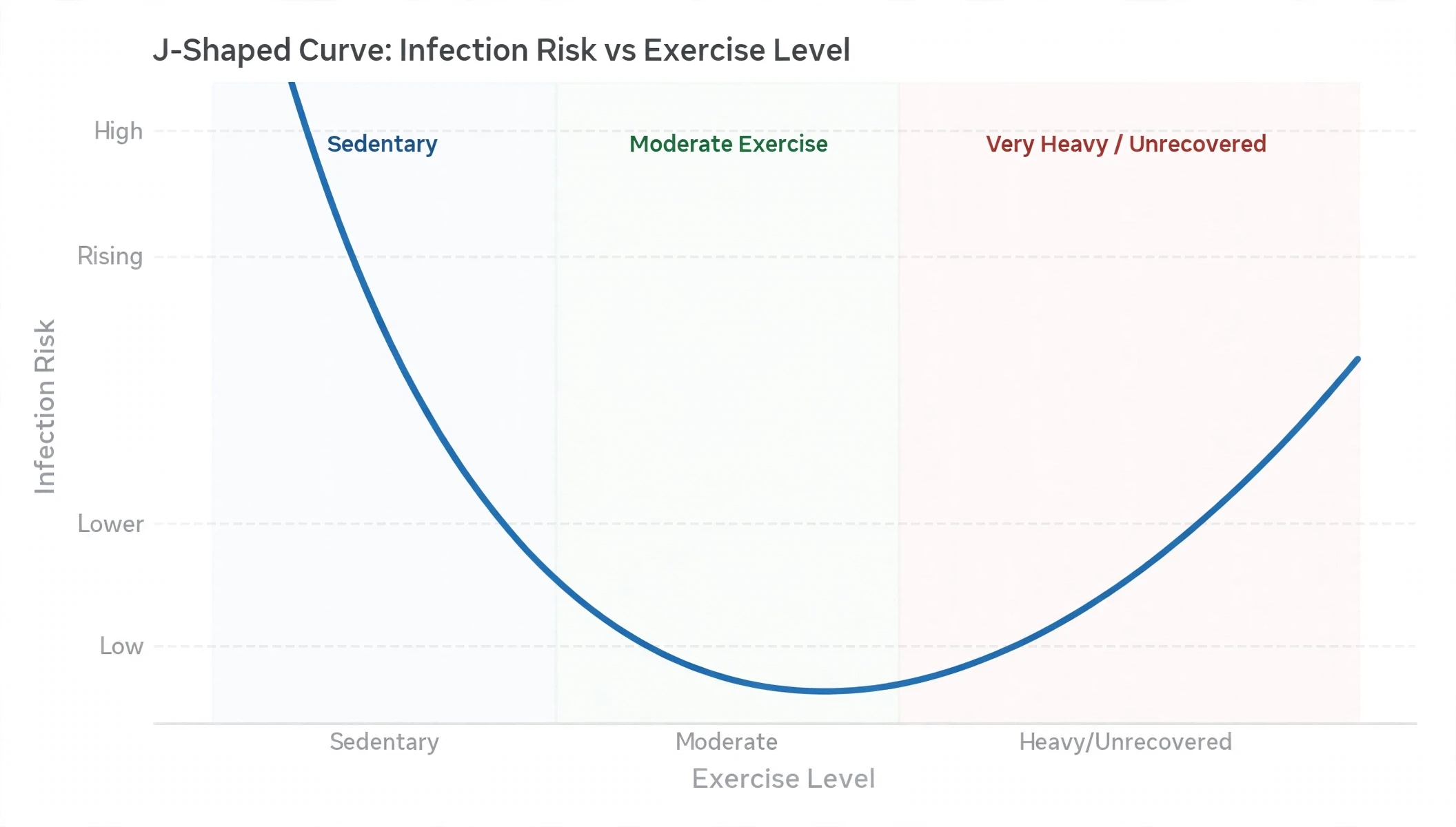
The relationship between exercise and the immune system is shaped like the letter J. That is the finding of David Nieman, an exercise immunologist who in the early 1990s plotted illness risk against training load and found a curve that bent in a way no one had expected. Sedentary people sit on the tall left stroke of the J, with average risk. Moderate, regular exercisers drop into the dip at the bottom, with the lowest risk. Heavy, unrecovered trainers climb up the right stroke — and can end up with a higher risk of upper respiratory infections than people who do nothing at all.
The numbers behind the dip are substantial. In Nieman's cohort studies, the most active tertile had roughly 40 to 45 percent fewer days of upper respiratory illness than the least active. A 2021 meta-analysis of six studies covering more than 550,000 people found that habitual physical activity was associated with a 31 percent lower risk of community-acquired infectious disease. The mechanism is partly the myokine story from section 6 — exercise-derived IL-6 and the anti-inflammatory response that follows it — and partly the simple fact that every bout of activity mobilises immune cells, pushing them out of their storage depots in the spleen, lymph nodes, and bone marrow into the bloodstream, where they patrol for trouble for several hours before settling back. That daily mobilisation is one of the clearest mechanisms behind how exercise changes the body in the immune system.
9.2 The "open window" correction
For years, the standard explanation for the right-hand side of the J was the "open window" theory: after a bout of hard exercise, immune cell counts in the blood drop below their starting level for three to seventy-two hours, and during that window the body was thought to be suppressed and vulnerable to infection. It was a neat story, and it shaped advice to athletes for decades. It was also, it turns out, mostly wrong about what was happening.
In 2018, John Campbell and James Turner published a review that reframed the whole picture. The immune cells were not being destroyed or lost. They were being redeployed — leaving the blood and moving into the lungs, the gut, and other tissues, where they stand guard. The drop in the blood was not a hole in the defences. It was the defences moving to where infections actually arrive. The risk at the top end of the J is still real — heavy training blocks without recovery are associated with more illness in athletes — but the reason is more likely the accumulated load, the poor sleep, the under-fuelling, and the travel that come with heavy training, rather than a few hours of low cell counts after a single hard session. How the Human Immune System Works explains the cells involved, and the exercise story is best read alongside it. The redeployment story is a cleaner explanation of how exercise changes the body after a hard session than the old idea of a suppressed immune system.
9.3 What each bout does
The practical picture is simpler than the theory. Each bout of moderate exercise is a brief mobilisation: immune cells surge into the blood, patrol, and return. Repeated regularly, that mobilisation is associated with a more competent immune system overall — better surveillance, lower chronic inflammation, and fewer sick days. The effect is most visible in older adults, whose immune systems age along with everything else — as section 11 explains, the evidence for a younger immune profile in active older adults is cross-sectional and cannot prove cause.
None of this means exercise makes you invulnerable to colds. It means the same moderate dose that protects the heart and the brain also appears to protect against the common infections that fill waiting rooms every winter. And the same dose-response logic applies: the benefit sits in the middle of the curve, not at either end. How Vaccines Work explains how the immune system's memory is trained, and exercise is, in a small way, part of that same training: a system kept alert by regular, manageable challenges. A system kept alert by regular challenges is, in miniature, how exercise changes the body for the better.
9.4 The numbers, honestly stated
A word of caution belongs here, because the immune numbers are the softest in this article. Most illness data in exercise studies are self-reported symptom counts, not laboratory-confirmed infections. A sore throat after a marathon might be an infection, or it might be irritation from breathing hard in cold air, or an allergy. The J-curve itself is built mostly from observational studies: people who exercise moderately also tend to sleep better, eat better, and smoke less, and any of those could contribute to the fewer sick days. The trials that do exist — including one that deliberately infected volunteers with a cold virus and found that exercising during the illness did not worsen it — are small.
So the honest summary is this: moderate, regular exercise is associated with fewer respiratory infections, the association is consistent across many studies, and there are plausible mechanisms for it. It is not proof that exercise alone prevents colds, and it is not a reason to train through a serious illness. The old "neck rule" — that symptoms above the neck mean light exercise is fine, while symptoms below it mean rest — has no supporting scientific evidence behind it, and a 2022 review argues it should be abandoned as a standalone guide. When in doubt, rest, and ask a clinician. That caution is part of the same picture: how exercise changes the body depends on dose, and rest is part of the dose.
10. Bones and Joints: Load Makes Them Stronger
10.1 Wolff's law and the mechanostat
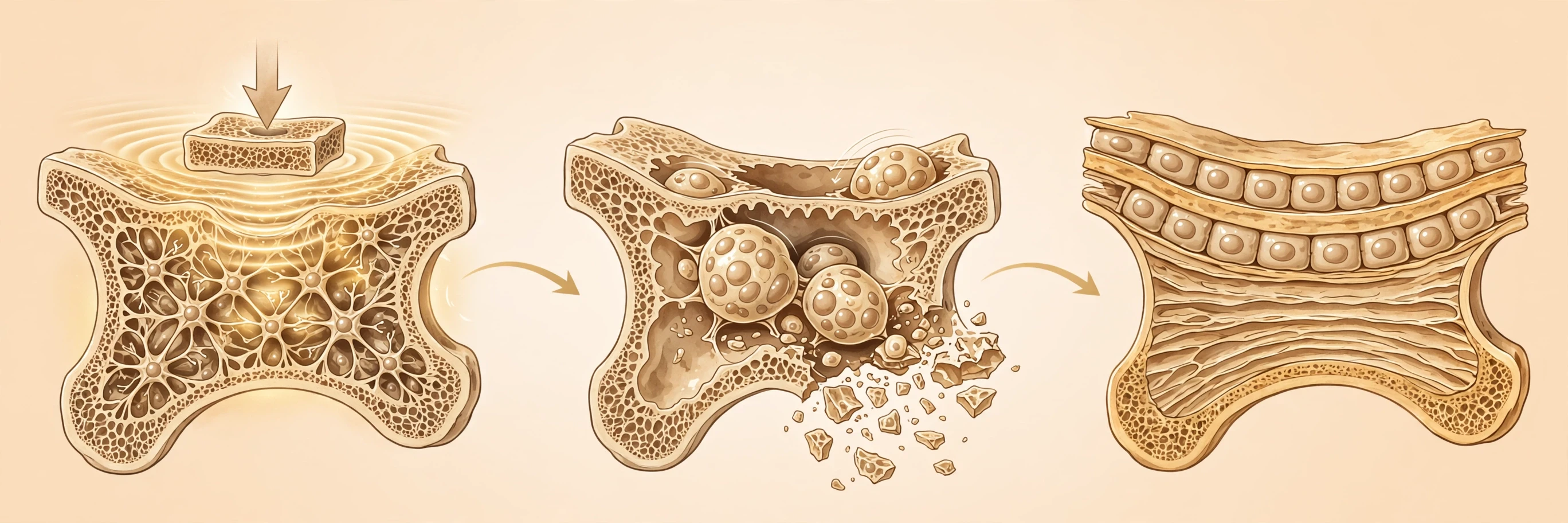
Bone looks solid and finished, but it is alive and constantly rebuilding itself. Two kinds of cells run that economy: osteoblasts, which lay down new bone, and osteoclasts, which dissolve old bone and recycle it. From birth until roughly age thirty, the builders outpace the demolition crew, and you bank bone the way you bank savings. After that, the balance slowly tips the other way. The foreman on that job site is force.
The rule was described by the German anatomist Julius Wolff in 1892: bone adapts its structure to the mechanical loads placed on it. Load a bone more than it is used to, and specialised sensor cells called osteocytes detect the deformation, signal the osteoclasts to clear old bone, and signal the osteoblasts to lay down new bone where the strain was highest. The modern update, Harold Frost's mechanostat theory, adds the crucial detail: bone only remodels in response to strain that is heavy, fast, or novel enough to exceed what it already tolerates. A load the skeleton has already dismissed as background noise does nothing. Only a load the bone has not met before counts, and that threshold is the first rule of how exercise changes the body in the skeleton. Strain, not effort or sweat, is the signal here — that is the skeletal version of how exercise changes the body.
10.2 Osteoblasts vs osteoclasts; peak bone mass
The timeline of bone is the timeline of a bank account. Peak bone mass — the most bone you will ever have — is reached roughly in the mid-20s, a little earlier in women and a little later in men depending on the bone site, and it sets the balance you draw down for the rest of your life. A 10 percent higher peak bone mass is estimated to delay osteoporosis by about thirteen years, which is why loading in youth and young adulthood matters so much: it is the only window in which the account grows quickly.
After thirty, the account slowly drains, and after menopause it drains faster. Women can lose up to a fifth of their bone density in the five to seven years after menopause, as falling estrogen removes one of the main brakes on the osteoclasts. The consequence is fracture, and fracture in older age is serious: a hip fracture after age 65 carries a one-year mortality of roughly 20 to 30 percent, and often ends independent living. None of that is inevitable, and exercise is one of the few tools that acts directly on the bone itself rather than on the risk factors around it. A tool that acts on the bone itself is a direct example of how exercise changes the body where it matters most.
10.3 The LIFTMOR trial: heavy lifting in postmenopausal women
For decades, the advice given to older women with thinning bones was cautious to the point of uselessness: walk, swim, lift light weights for many repetitions, and above all avoid strain. Then came a trial that rewrote the rulebook. In 2018, Watson and colleagues in Australia randomised 101 postmenopausal women with osteopenia or osteoporosis into two groups. One group did eight months of supervised high-intensity resistance and impact training: deadlifts, back squats, and overhead presses at above 85 percent of their one-repetition maximum, five sets of five, twice a week, plus jumping chin-ups with a drop landing. The other group did a home-based low-intensity programme.
Eight months later, the lifting group's lumbar spine bone density had risen by about 3 percent while the control group's had fallen, and their femoral neck density was maintained while the controls lost bone. And the fracture count in the lifting group was zero. Heavy loading did not break these women. It rebuilt them. The trial is the clearest demonstration of Wolff's law in humans, and it is why the current consensus — summarised in the position statement from Exercise and Sports Science Australia — is that exercise for bone must be progressive, high-intensity resistance training combined with impact loading, and that low-intensity programmes are not effective for bone. That dependence on load, not on good intentions, is how exercise changes the body in bone.
10.4 What counts as bone-loading exercise
The practical rule follows from the mechanism. Bone responds to high strain, not to many low strains. A few heavy loads do more than thousands of light ones. Walking generates ground reaction forces of roughly one to one-and-a-fifth times body weight — real forces, but below the strain threshold that stimulates osteoblast activity in most adults, and well below it in postmenopausal women. Running, jumping, and heavy lifting clear the threshold. So do the compound movements that load the spine and hips under compression: squats and deadlifts, done with progressive overload over months.
Bone also remodels slowly. Expect measurable changes on a bone density scan only after six to twelve months of consistent training, and expect the larger benefits — stronger muscles, better balance, fewer falls — to arrive sooner. The falls matter as much as the density: most fractures happen because someone falls, not because a bone spontaneously breaks, and training that improves strength and balance attacks the fracture problem from both sides at once. Strength and balance together are the practical side of how exercise changes the body to prevent fractures.
11. Ageing: What Exercise Preserves
11.1 Sarcopenia: muscle loss with age
Muscle loss with age has a name — sarcopenia — and it is one of the most consequential changes in the ageing body. Researchers often quote a loss of roughly 3 to 8 percent of muscle mass per decade after age 30, accelerating after 60, though the exact figure varies with how it is measured and whom you measure. Strength falls faster than mass, and power — the ability to produce force quickly — falls faster still. The result is not just weakness. It is the slow loss of the things strength makes possible: climbing stairs, carrying groceries, getting up from a chair, catching yourself when you trip.
The mechanism is partly the same as the rest of this article, running in reverse. Fewer signals to build, less protein synthesis, fewer satellite cells answering the call, and a gradual loss of the motor neurons that drive muscle fibres. The good news is that the machinery remains responsive. Older adults who start resistance training gain strength at rates that surprise researchers — sometimes faster, in percentage terms, than younger people, because they are starting from a lower base. The muscle remembers how to respond. It was only waiting for the signal. That memory is why how exercise changes the body does not stop working in old age — it only waits longer between signals.
11.2 Strength, power, balance, falls
If there is one adaptation that matters most in later life, it is not VO2 max or bone density. It is the ability to stay upright and independent. Falls are the leading cause of injury in older adults, and the risk of falling is driven by leg strength, balance, and the power to recover from a stumble. All three respond to training. Programmes that combine strength work with balance practice — standing on one leg, walking heel to toe, rising from a chair without using the hands — reduce fall rates, and they do so in people in their 70s, 80s, and beyond.
I once watched my own grandmother, in her late 70s, start a twice-weekly strength class at her community centre after a fall that had frightened her more than it hurt her. Six months later she was carrying her own shopping bags up the steps she had been avoiding, and the change in her was not just physical. The fear had gone. That is the part of the exercise story that rarely makes it into the physiology textbooks: the confidence that comes back when the body proves, week after week, that it can still be trusted. Confidence is the part of how exercise changes the body that no scan can measure, and it may matter as much as the muscle itself.
11.3 The immune angle, and the limits of the evidence
The ageing immune system also responds to activity, though the evidence here is thinner than the muscle and bone evidence. A 2018 study of long-term active older adults found more youthful immune profiles, including better output from the thymus, the organ that produces new T cells, compared with sedentary people of the same age. The finding is cross-sectional — it compares different people at one moment in time — so it cannot prove that exercise caused the difference. Active older adults differ from inactive ones in many ways. But it fits the pattern of everything else in this article: the systems that are used stay younger than the systems that are not. Use is the rule that ties together every part of how exercise changes the body with age.
11.4 It is never too late — and never too early
The most encouraging finding in the whole field is how late the benefits start. Studies of people who begin exercising in their 60s, 70s, and even 80s find improvements in strength, balance, walking speed, and mood within weeks to months. The body does not have a deadline after which adaptation stops. It adapts more slowly, and the starting point is lower, but the direction is the same. And the earlier the habit starts, the larger the reserve: more muscle banked, more bone banked, a bigger heart, a higher VO2 max to decline from. Exercise is the rare intervention that pays off whether you start at twenty or at seventy. The only bad time to start is never. There is no deadline on how exercise changes the body — only a starting point, whenever you choose it.
12. How Much Exercise Do You Need?
12.1 The WHO 2020 numbers
After eleven sections of mechanism, the practical question is the simplest one: how much? The answer comes from the World Health Organization's 2020 guidelines, and it is refreshingly modest. For adults, the recommendation is 150 to 300 minutes of moderate-intensity aerobic activity per week, or 75 to 150 minutes of vigorous activity, or an equivalent mix of the two — plus muscle-strengthening activity involving the major muscle groups on two or more days a week. Moderate means you breathe harder but can still talk. Vigorous means talking is difficult. The US guidelines from 2018 say the same thing, as do the UK Chief Medical Officers' guidelines from 2019.
One change in the 2020 WHO guidelines matters more than the numbers themselves. The old advice said aerobic activity should come in bouts of at least ten minutes. The new guidelines dropped that: activity of any duration counts, and any amount is better than none. A two-minute walk to the shop counts. Three flights of stairs count. The guideline counts the weekly total, not the shape of the sessions, which is good news for people whose lives do not contain neat hour-long blocks of free time.
All adults should undertake 150-300 min of moderate-intensity, or 75-150 min of vigorous-intensity physical activity, or some equivalent combination of moderate-intensity and vigorous-intensity aerobic physical activity, per week. — Bull et al., World Health Organization 2020 guidelines on physical activity and sedentary behaviour, British Journal of Sports Medicine, 2020
Those numbers are the simplest summary of how exercise changes the body at the level of public health: a weekly total, not a punishment.
12.2 The dose-response curve
The relationship between exercise and longevity is not a straight line. It is a curve that rises steeply at first and then flattens, and the shape of that curve is one of the most useful facts in this article. The best data come from Arem and colleagues, who pooled six large cohort studies covering 661,137 people followed for a median of 14.2 years. Compared with people who reported no leisure-time activity at all, those who did some activity — even less than the recommended minimum — had a 20 percent lower risk of death. Those who met the minimum, one to two times the recommended amount, had a 31 percent lower risk. Two to three times the minimum gave 37 percent. Three to five times gave 39 percent, and beyond that the benefit flattened. There was no excess risk even at ten or more times the minimum. The same pattern held for deaths from cardiovascular disease and from cancer — How Cancer Works explains how the disease itself develops.
Read that curve carefully, because it contains two messages. The first is that the biggest gain comes from the first step: going from nothing to something is worth more than going from something to a lot. The second is that more is better, but only modestly so after the minimum is met — 31 percent at the guideline versus 39 percent at three to five times the guideline. For most people, the rational target is the guideline itself, not the maximum.
Meeting the Guideline minimum by either moderate- or vigorous-intensity activities was associated with nearly the maximum longevity benefit. — Arem et al., Leisure time physical activity and mortality, JAMA Internal Medicine, 2015
That curve — the biggest gain from the first step, then smaller gains after — is the shape of how exercise changes the body over a lifetime of activity.
12.3 The minimum effective dose
The dose-response curve has a practical consequence that the guidelines themselves now state plainly: some physical activity is better than none. A person who walks ten minutes a day is better off than a person who walks none, and a person who does one strength session a week is better off than a person who does none. The body does not have a threshold below which exercise is wasted. Every minute counts, and the first minutes count most.
That is worth saying clearly, because the fitness world often communicates the opposite: that anything less than an hour in the gym, five days a week, is not worth doing. It is worth doing. The research says so, the WHO says so, and the curve proves it. Start where you are, with what you have, and build from there. The body responds to the signal, not to the spectacle. That is the most encouraging fact about how exercise changes the body: the first minutes count the most.
12.4 When more is not better
There is an upper end to the curve, and it deserves honesty. Very high volumes of training without enough recovery can lead to overtraining: persistent fatigue, falling performance, disturbed sleep, frequent illness, and in women, loss of periods and bone loss from low energy availability. These are real risks, and they are the reason the J-curve in section 9 bends upward at the right-hand side. They are also risks that belong mostly to people training at high volume — competitive athletes and the very committed — not to someone doing the WHO minimum.
The more common risk for ordinary people is injury: doing too much, too soon, with poor form. The protection is the same as the prescription: progress gradually, vary the movements, rest between hard sessions, and treat pain that does not fade as information, not as weakness. Exercise is a powerful intervention with a wide safety margin. It is not a contest to see how much punishment the body can absorb. Respecting that margin is part of understanding how exercise changes the body safely.
Age group | Aerobic activity per week | Muscle strengthening | Extra |
|---|---|---|---|
Children and adolescents (5–17) | Average 60 min/day moderate-to-vigorous | As part of the 60 min, at least 3 days/week | More is better; limit recreational screen time |
Adults (18–64) | 150–300 min moderate OR 75–150 min vigorous, or a mix | Major muscle groups, 2+ days/week | Replace sitting with activity of any intensity |
Older adults (65+) | Same as adults: 150–300 min moderate OR 75–150 min vigorous | Major muscle groups, 2+ days/week | Balance and strength work, 3+ days/week, to prevent falls |
Pregnant and postpartum women | At least 150 min moderate per week | Include muscle strengthening | Discuss with a clinician; avoid lying flat late in pregnancy |
13. Seven Misconceptions About Exercise
13.1 "No pain, no gain"
Pain is information, not a score. Muscle burn during a hard set is normal. Joint pain, sharp pain, or pain that lingers for days is a warning. The growth signal is tension, not suffering, and the most productive training is often the kind that leaves you tired but not broken. Athletes who train through pain do not get fitter faster. They get injured, and then they stop training, which is the one thing that reliably makes you less fit. Pain is not the price of how exercise changes the body; it is usually a sign that something has gone wrong.
13.2 "Cardio kills your gains"
There is a real phenomenon behind this one, called the interference effect: very high volumes of endurance training can blunt some strength gains, probably because the two kinds of training send partly opposing molecular signals. But the effect is small, it shows up mainly at high volumes, and it does not apply to the moderate mix most people do. A person who runs three times a week and lifts twice a week will build strength and fitness both. The body is not a zero-sum machine. It can adapt in two directions at once, as long as neither demand is extreme. Two directions at once is the normal way how exercise changes the body — strength and fitness are not rivals.
13.3 "Sweating more means burning more fat"
Sweat is cooling, not fat loss. You sweat to keep your core temperature down, and how much you sweat depends on temperature, humidity, fitness, and genetics — not on how much fat you are burning. The weight you lose in a hot workout is mostly water, and it returns with the next glass you drink. Fat loss is driven by sustained energy balance over weeks, not by how wet your shirt is after one session. Sweat measures cooling, not fat loss, and confusing the two misunderstands how exercise changes the body.
13.4 "Muscle turns to fat when you stop"
Muscle and fat are different tissues, and one cannot turn into the other. What actually happens when someone stops training is two separate processes: the muscle shrinks because the growth signal is gone, and fat often grows because appetite and eating habits stay the same while energy expenditure falls. The result looks like a swap, but it is a coincidence of two changes, not a transformation. Start training again, and the muscle comes back — often faster than the first time, because the extra nuclei from satellite cells may still be there. The nuclei stay, the fat and muscle change separately, and that separation is the truth about how exercise changes the body when you stop and start again.
13.5 "You need to feel sore for it to work"
Covered in section 2.5, and worth repeating because the belief is so stubborn: soreness measures unfamiliarity, not effectiveness. A workout you have adapted to produces little soreness and still produces growth, because the tension signal is still there. Chasing soreness is chasing the weakest of the three growth triggers, and it usually means training so hard that recovery suffers. The better test is progress: more weight, more repetitions, faster times, lower resting heart rate. Progress is the measure that matters, because that is how exercise changes the body whether or not you feel sore.
13.6 "Exercise alone will make you lose weight"
Exercise helps weight management enormously, and on its own it typically produces only modest weight loss. The body compensates for the extra energy burned by eating more and moving less the rest of the day. That is not a failure of exercise. It is a reason to pair it with attention to food, and to judge exercise by what it actually does — heart, muscle, brain, bone, mood — rather than by the number on the scale. People who exercise and watch what they eat lose more fat, keep more muscle, and keep the weight off longer than people who only diet. Judging exercise by the scale alone misses most of how exercise changes the body.
13.7 "Running ruins your knees"
This one has been tested directly, and the answer is the opposite of the myth. Studies comparing runners with non-runners find no higher rates of knee osteoarthritis in recreational runners, and some analyses find lower rates. The knees of runners adapt to the loading the same way bones do — the cartilage and the supporting muscles get stronger. Competitive, very high-mileage runners show a different pattern, with somewhat higher rates, but the ordinary person running a few times a week is not wearing out their knees. They are maintaining them. The thing that ruins knees reliably is not running. It is carrying excess weight while never loading the joint at all. Loading a joint, within reason, is how exercise changes the body for the better — including the knees.
14. Frequently Asked Questions
How does exercise change the body?
Exercise changes the body across nearly every system at once. The heart grows stronger and pumps more blood per beat, muscles grow new fibres and more mitochondria, bones remodel themselves to be denser where they are loaded, the brain grows new connections and produces more BDNF, and the immune system becomes more competent. Those changes are driven by the stress of each workout followed by the recovery that rebuilds the tissue stronger — and they begin with the very first sessions, not after months of training. That whole-body reorganisation is the short answer to how exercise changes the body.
What happens to your muscles when you exercise?
During a workout, your muscles contract against resistance, which creates mechanical tension in the fibres. That tension activates a signalling pathway called mTORC1, which switches on muscle protein synthesis — the building of new muscle protein. Satellite cells donate extra nuclei to the fibres, expanding their capacity to make protein, and the muscle also grows more capillaries and mitochondria. Over days and weeks, if the signal is repeated and you recover, the fibres get thicker and stronger. That cycle of signal and repair is how exercise changes the body in muscle, session by session.
How does exercise help the brain?
Exercise helps the brain in several ways at once. It raises levels of BDNF, a protein that supports the growth and survival of neurons, and in one well-known trial a year of walking grew the hippocampus — the brain's memory centre — by about 2 percent in older adults. It also improves blood flow to the brain, lowers inflammation, and improves sleep, all of which support thinking and memory. The effects are real but modest, and they accumulate over months and years rather than arriving after a single run. Modest, cumulative, and structural — that is how exercise changes the body in the brain.
How much exercise do you need?
The World Health Organization recommends 150 to 300 minutes of moderate aerobic activity each week, or 75 to 150 minutes of vigorous activity, or a mix of the two, plus muscle-strengthening activity on two or more days a week. The biggest health gain comes from the first step: going from nothing to even half the recommended amount is associated with about an 18 percent lower risk of depression and a 20 percent lower risk of death. Any amount counts, and any duration counts — even a few minutes at a time. That is the practical core of how exercise changes the body: the first minutes matter most.
Does exercise really help depression?
Yes, and the evidence is substantial. A 2023 umbrella review pooling 97 reviews and over a thousand trials found that physical activity had medium-sized benefits for depression and anxiety compared with usual care, and a 2024 analysis of 218 trials ranked walking, jogging, yoga, and strength training among the most effective approaches. But exercise is a support for mental health, not a replacement for treatment — and claims that it is "1.5 times better than therapy" are a misreading of the research that no head-to-head trial supports. Exercise supports treatment; it does not replace it, and that distinction is part of how exercise changes the body in depression honestly.
Can exercise make your immune system weaker?
Moderate, regular exercise is associated with fewer respiratory infections, not more — in one study, the most active group lost roughly 40 to 45 percent fewer days to upper respiratory illness than the least active group. Very heavy training without enough recovery can raise infection risk, which is why the relationship is drawn as a J-curve: the lowest risk sits in the middle, at moderate activity. The old idea that hard exercise leaves an "open window" of immune suppression is now understood differently: the immune cells are being redeployed to the lungs and gut, not destroyed. Redeployment, not suppression, is how exercise changes the body after hard training.
Is it true that muscle turns to fat if you stop exercising?
No. Muscle and fat are separate tissues, and one cannot become the other. When someone stops training, the muscle shrinks because the growth signal is gone, while fat often grows because appetite stays the same as the body burns less energy. It looks like a swap, but the two changes only happen at the same time. Start training again, and the muscle usually comes back faster than the first time. Separate tissues, separate changes — that is how exercise changes the body when training stops and starts again.
Sources
UK Chief Medical Officers. (2019). Physical activity guidelines.
Wolff, J. (1892). Das Gesetz der Transformation der Knochen. Berlin: August Hirschwald. (English translation: The Law of Bone Remodelling, Springer-Verlag, 1986.)
OpenStax. (2022). Anatomy and Physiology 2e. Houston: Rice University.