

Educational information only — not medical advice. This article explains what research says about anxiety and depression. It cannot diagnose you or anyone else, and it is not a substitute for care from a qualified health professional. If anxiety or depression is interfering with your life, please talk to a doctor or mental health professional. If you ever feel you might act on thoughts of harming yourself, seek urgent help right away — call your local emergency number or a crisis helpline in your country.
Introduction: The Morning My Heart Would Not Slow Down
I was twenty-six, standing outside a lecture hall with a stack of slides in my hands, when my body staged a small revolt. My heart hammered against my ribs. My mouth went dry. A voice in my head ran through every way the talk could go wrong, in vivid detail, on a loop. Nothing dangerous was happening. I knew the material cold. And still, for ten long minutes, my nervous system behaved as though a predator were circling the building. It was my first real lesson in how anxiety and depression work as physical events, not just feelings.
That morning taught me something no textbook had managed to make real: anxiety is not a character flaw, and it is not "just worrying." It is a physical event. A brain circuit fires, stress hormones surge, the body prepares for danger — and the thinking mind gets dragged along for the ride.
Years later, I sat across from a graduate student I will call Mara. She was brilliant, funny, and exhausted in a way sleep never fixed. She had stopped answering messages, stopped cooking, stopped caring about the research she once loved. "I am not sad, exactly," she told me. "It is more like the volume on everything got turned down. Food tastes like cardboard. Jokes do not land. I know I should care, and I cannot make myself care." That was my first close look at depression from the other side of the desk — not as a list of symptoms in a manual, but as a person watching her own life go quiet.
Anxiety and depression are the two most common mental health conditions on the planet, and they very often arrive together. The World Health Organization describes depression as a common mental disorder marked by persistent sadness and a loss of interest or pleasure, and anxiety disorders as marked by excessive fear and worry that disrupt daily life. Both are real, physical, measurable conditions of the brain and body — not weaknesses, not choices, and not things people can simply snap out of.
This article walks through what science actually knows: what these conditions are, how they differ, why they so often overlap, what happens inside the brain, what raises risk, and which treatments and daily habits have real evidence behind them. Along the way I will share what I have seen in labs, in clinics I have visited, and in my own life — because the science lands differently when you can feel it.
1. What Anxiety and Depression Actually Are
1.1 Anxiety: an alarm that will not switch off
Anxiety starts as something useful. Imagine you are crossing a road and a car swerves toward you. Before you have time to think, your body reacts: heart racing, muscles tensing, attention narrowing to the threat. That is the fight-or-flight response, and it has kept our species alive for a very long time. Anxiety is that same system, switched on at the wrong time, at the wrong volume, or for far too long.
The U.S. National Institute of Mental Health (NIMH) describes anxiety disorders as conditions in which fear and worry become excessive, persistent, and hard to control, interfering with work, school, relationships, and daily life. There are several types — generalized anxiety disorder, panic disorder, social anxiety disorder, and specific phobias among them — but they share a core pattern: the brain's threat-detection system treats ordinary situations as dangerous.
A useful way to picture it is a smoke alarm. A good smoke alarm screams when there is a fire. A faulty one screams when you make toast. People living with anxiety are not imagining the alarm. The alarm is genuinely ringing — loudly, in their chest, in their gut, in their racing thoughts. The problem is calibration, not imagination.
1.2 Depression: when the colour drains out
Depression is often misunderstood as ordinary sadness stretched out. It is not. Sadness is a normal response to loss or disappointment, and it usually lifts as circumstances change. Depression is a persistent state in which mood, energy, sleep, appetite, and the ability to feel pleasure all shift together — and stay shifted for weeks or longer.
The NIMH describes depression as a mood disorder involving persistent sadness, emptiness, or irritability, along with a loss of interest in activities once enjoyed, and physical changes such as disrupted sleep, appetite, and energy. Mayo Clinic's overview of depression lists the same pattern: feelings of sadness or hopelessness most of the day, loss of interest, sleep disturbance, fatigue, trouble concentrating, feelings of worthlessness or guilt, and in some cases thoughts of death or suicide. The key point is the pattern and the persistence. One bad week is not depression. A state that settles in and refuses to lift, that changes how a person eats, sleeps, thinks, and connects — that is the condition doctors are talking about.
I learned this distinction the hard way with Mara. For months I had assumed she was simply stressed by her thesis. Stress was part of it, but stress alone did not explain why she had stopped enjoying the very work that once lit her up. That loss of pleasure has a name in the science — anhedonia — and it is one of the clearest markers that something more than a busy season is going on.
1.3 Normal feelings versus a disorder
Everyone feels anxious before a job interview and low after a bereavement. Those feelings are part of being human. A condition earns the name "disorder" when three things line up: the feelings are intense, they last, and they get in the way of living. A useful question researchers and clinicians ask is simple: is this stopping the person from doing what they need and want to do? If worry keeps someone from leaving the house, if low mood keeps someone from eating or working for weeks, the line has been crossed — and that is exactly when help tends to work best.
2. Two Conditions, One Tangled Knot
2.1 Why anxiety and depression so often arrive together
If anxiety and depression were two separate illnesses, you would expect them to show up separately. They often do not. Large surveys of mental health have found that a large share of people living with depression also live with an anxiety disorder, and the overlap runs the other way too. Clinicians I have spoken with describe this as one of the most reliable patterns in anxiety and depression: the two conditions share risk factors, share brain circuits, and feed each other in a loop.
Anxiety can wear a person down until depression follows. Imagine lying awake every night rehearsing disasters, avoiding friends because social situations feel threatening, and skipping opportunities because the "what ifs" are too loud. After months of that, exhaustion and hopelessness are a natural result. Depression, in turn, can breed anxiety: when nothing feels possible and every task feels enormous, the future itself becomes something to dread.
"Anxiety says something bad might happen. Depression says nothing feels possible or worthwhile. When both speak at once, a person can feel trapped between a feared future and a joyless present — and that is why treating only one half of the pair so often falls short."
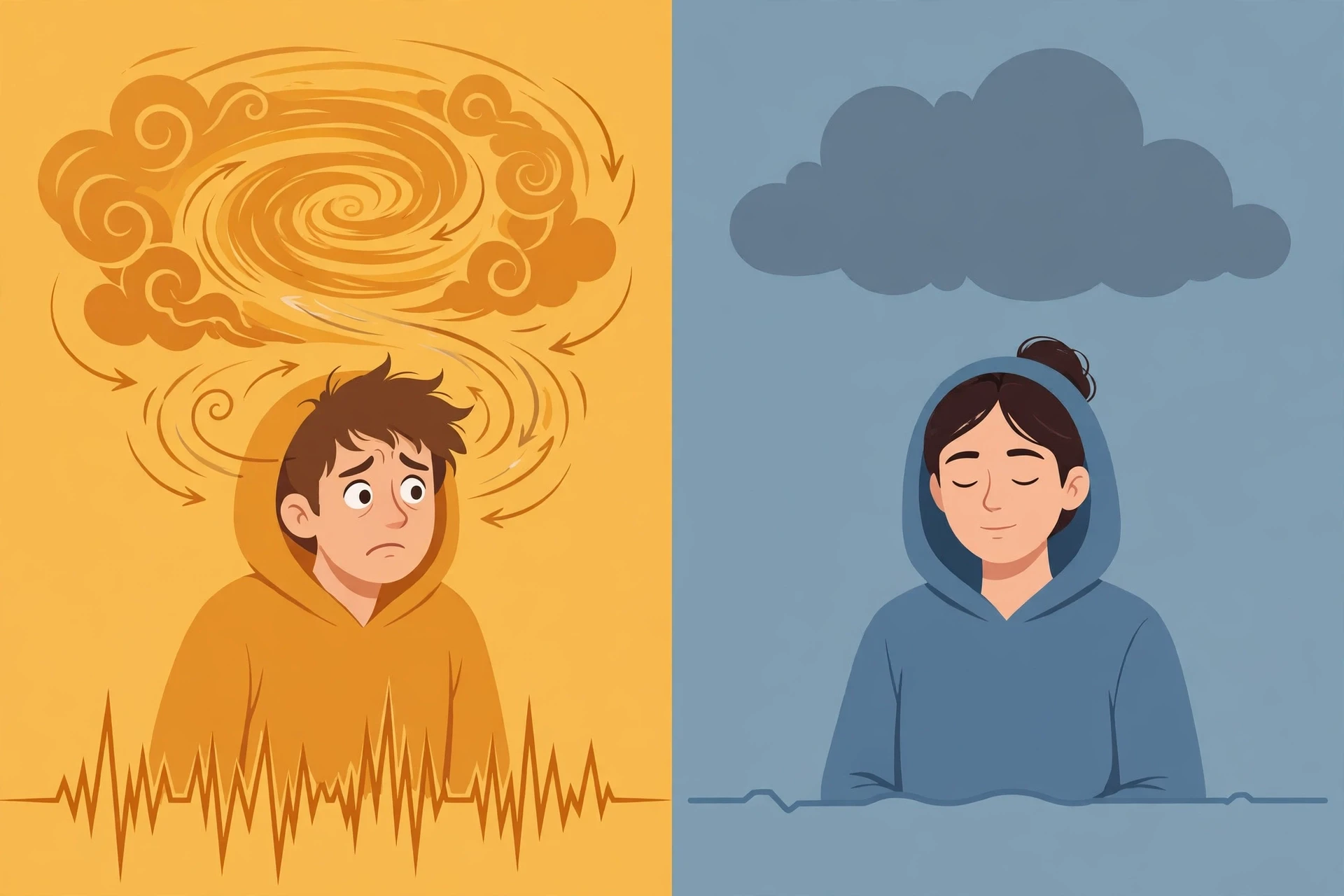
2.2 Anxiety versus depression: a side-by-side look
The two conditions overlap, but they are not the same experience. The table below lays out the typical differences — while remembering that any one person can have a mix of both columns.
Feature | Anxiety (typical pattern) | Depression (typical pattern) |
|---|---|---|
Core feeling | Worry, dread, a sense of threat | Sadness, emptiness, numbness |
Focus of thought | The future — what might go wrong | The past and the self — what went wrong, what is wrong with me |
Energy and arousal | High arousal: restless, on edge, wired | Low energy: slowed down, heavy, exhausted |
Sleep | Trouble falling asleep; mind racing at night | Sleeping too much, too little, or waking very early |
Interest and pleasure | Often intact, but avoided out of fear | Often lost — activities that once brought joy feel flat |
Body symptoms | Racing heart, sweating, shaking, stomach upset | Aches, fatigue, appetite and weight changes |
Behaviour | Avoidance of feared situations | Withdrawal from people and activities |
Typical question in the mind | "What if something goes wrong?" | "What is the point?" |
2.3 The overlap in real life
In practice, the table above is a guide, not a sorting box. A person can wake with a racing heart and a mind full of disaster scenarios, then feel flat and hopeless by afternoon. A person can be exhausted by depression and still lie awake worrying at 3 a.m. That mixed picture is common in anxiety and depression, and it matters for treatment: the most effective plans usually address both the alarm and the flatness, not one alone.
3. Inside the Anxious and Depressed Brain
3.1 The amygdala: the brain's smoke alarm
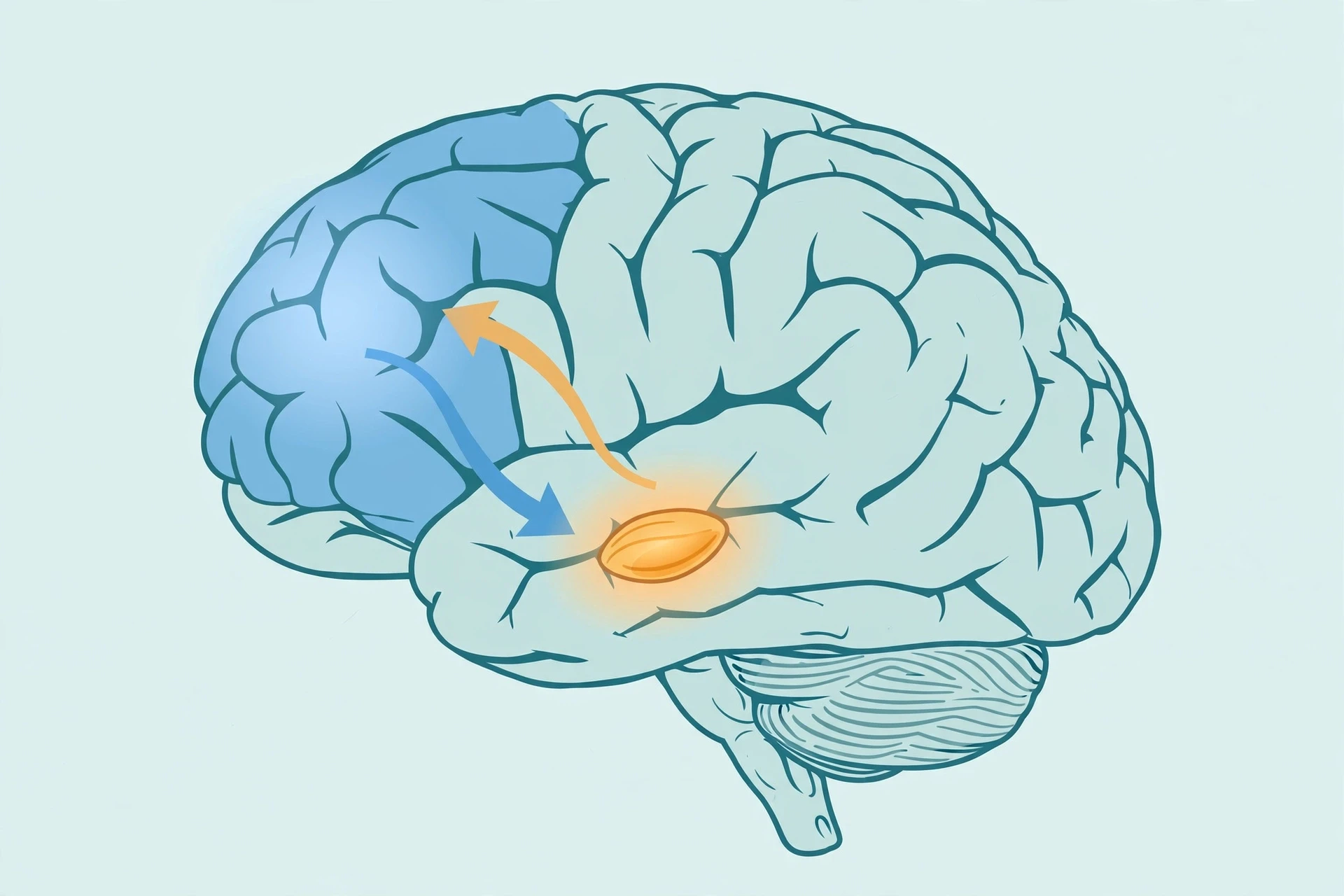
Deep inside the brain sits a small almond-shaped structure called the amygdala. It is part of the limbic system, the brain's emotional core, and one of its jobs is to scan for threat and sound the alarm. When it fires, it sets off a cascade: stress hormones rise, the heart beats faster, breathing quickens, and attention snaps toward danger. In a healthy brain, this system turns on fast and switches off when the danger passes.
In anxiety, research points to an amygdala that is quicker to fire and slower to settle. Brain imaging studies have repeatedly found stronger amygdala responses to threatening faces and situations in people with anxiety disorders. I think of it as a guard dog that barks at the postman, the wind, and its own shadow — not because it is broken in some dramatic way, but because its threshold for "threat" has been set far too low.
3.2 The prefrontal cortex: the brake pedal
If the amygdala is the alarm, the prefrontal cortex — the region just behind the forehead — is the part of the brain that checks the alarm against reality. It is involved in planning, decision-making, and emotion regulation: it can say, in effect, "That was just a loud noise, not a threat. Stand down." In anxiety and depression, this braking system often works less well. The alarm rings, and the brake does not press hard enough, or fast enough.
This is also why concentration suffers. The prefrontal cortex has limited bandwidth. When it is busy wrestling with worry or weighed down by low mood, there is less capacity left for memory, planning, and focus — which is why brain fog is such a common complaint in both conditions, and why people often feel they have become "stupid" when they are, in fact, running an overloaded system.
3.3 Circuits, not single spots
One of the biggest shifts in recent neuroscience is the move from "one brain region, one disorder" to circuits. Mood depends on networks — the amygdala talking to the prefrontal cortex, the hippocampus (involved in memory and context) talking to reward centres, and many other links. A recent large review of the biology of mood disorders describes how whole circuits can become dysregulated: for example, overactivity in the circuit linking the prefrontal cortex and amygdala is tied to anxiety-like behaviour, while reduced function in circuits feeding the brain's reward system is tied to anhedonia, the loss of pleasure seen in depression.
That circuit view explains a lot. It explains why two people with the same diagnosis can feel so different, why symptoms cluster in families of problems rather than single complaints, and why treatments that seem unrelated — talking therapy, exercise, medication, sleep — can all help: they nudge different parts of the same networks. If you want a fuller tour of the structures involved, our guide to human brain anatomy and functions walks through each region in detail.
4. The Stress Hormone Loop: Cortisol and the HPA Axis
4.1 How a short-term rescue becomes a long-term problem
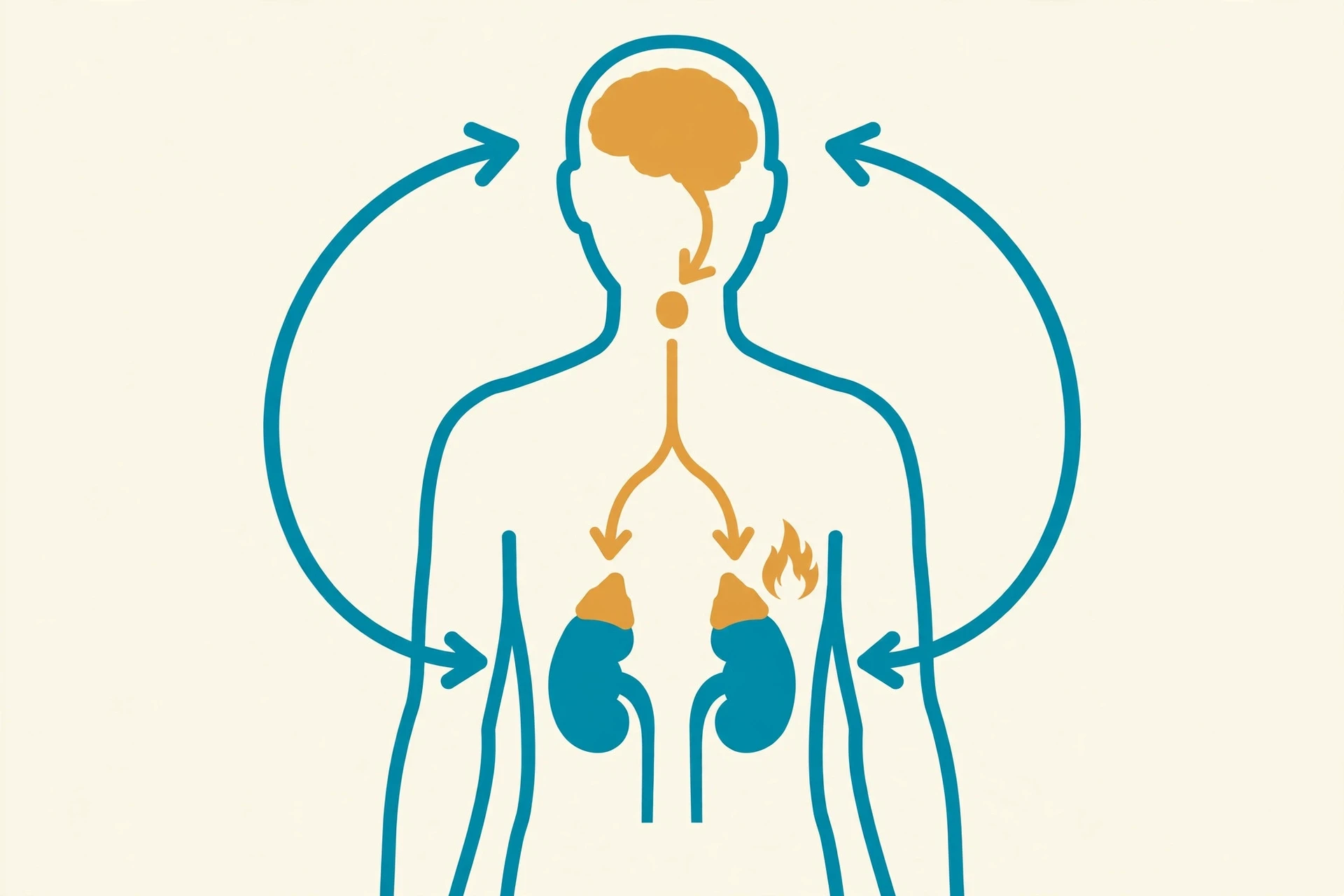
When the amygdala sounds the alarm, it activates a chain called the HPA axis — the hypothalamus, the pituitary gland, and the adrenal glands. The end product is cortisol, the body's main stress hormone. Cortisol is genuinely useful in short bursts: it releases energy, sharpens attention, and helps the body respond to a challenge. Then, in a healthy system, rising cortisol signals the brain to switch the response off. It is a loop with a built-in brake.
Chronic stress breaks that brake. When the alarm keeps firing day after day, the HPA axis can stay switched on, and cortisol stays high for long stretches. High cortisol over time is linked to disrupted sleep, changes in appetite, a weakened immune response, and — of particular interest to researchers — shrinkage of the hippocampus, a brain region central to memory and mood regulation. If you have ever wondered why long periods of stress seem to make your memory worse, this is one of the mechanisms behind it. Our article on high cortisol symptoms covers the body's warning signs in detail.
4.2 Stress is not the whole story
It would be tempting to say that stress causes anxiety and depression, full stop. The science is more careful than that. Stress is a powerful trigger and a maintaining factor, but many people live through heavy stress without developing either condition, and some people develop depression with no obvious trigger at all. Stress loads the system; genes, early life, biology, and circumstance decide how much load the system can carry before it tips. That is why two people can face the same hardship and come out in very different places — and why blaming someone for being "too stressed" misses the point entirely.
5. Brain Chemistry: Messengers, Not a Simple Shortage
5.1 Serotonin, dopamine, GABA, and norepinephrine
You have probably heard that depression is caused by low serotonin, a "chemical imbalance." That idea was once the dominant story, and it is still repeated everywhere. Here is where I have to disagree with a common misconception, because the research has moved on: the simple serotonin-shortage story is incomplete, and in its simplest form, it is wrong.
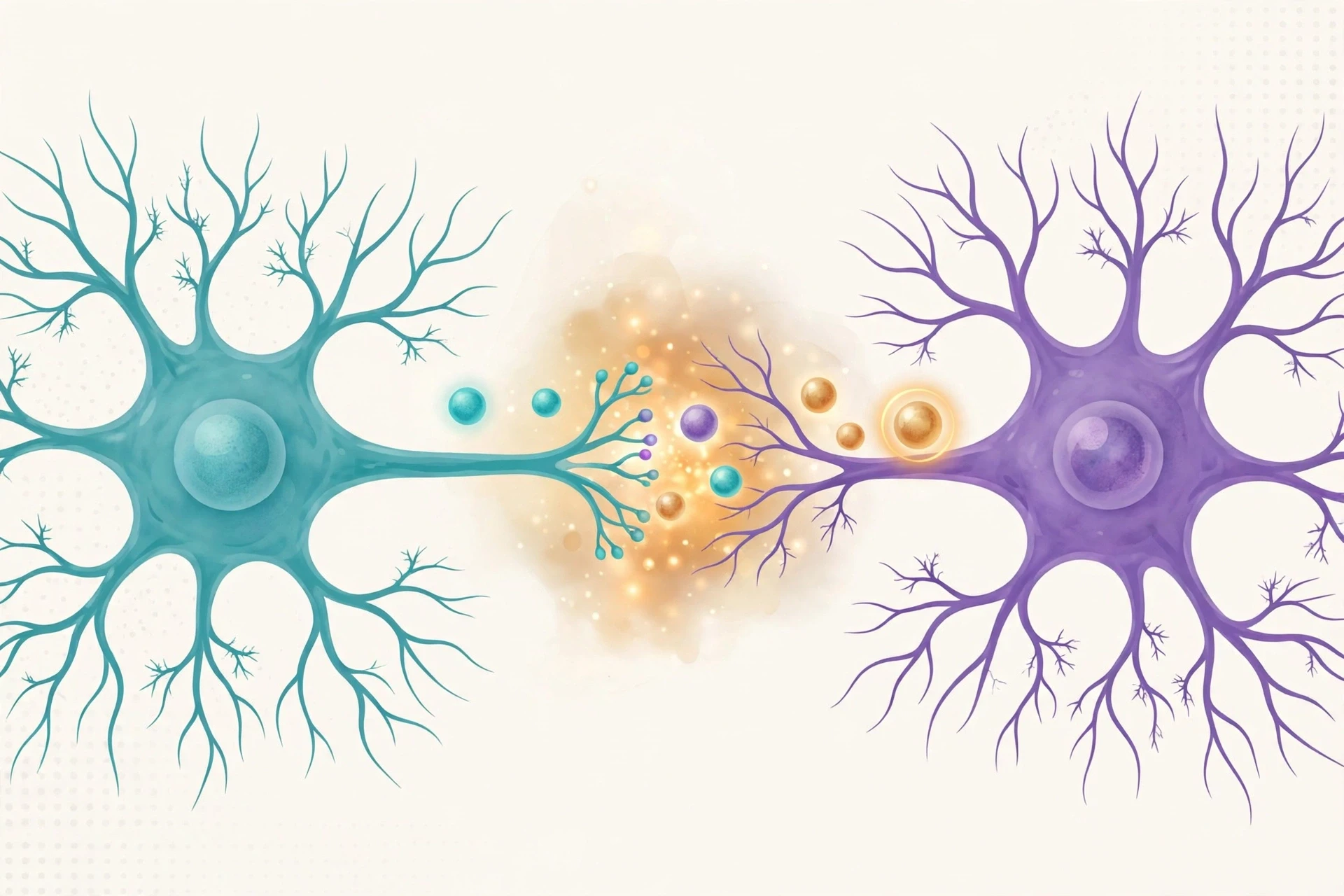
Brain cells communicate using chemical messengers called neurotransmitters. Four matter most in this story:
Serotonin helps regulate mood, sleep, and appetite, and it is made in large amounts in the gut as well as the brain.
Dopamine is central to motivation, reward, and the feeling of pleasure when something goes well.
GABA is the brain's main calming messenger — it quiets overactive circuits.
Norepinephrine (closely related to adrenaline) drives alertness and the fight-or-flight response.
In anxiety and depression, the activity of these systems is disrupted — but "disrupted" is not the same as "one chemical is low." Receptors can become more or less sensitive, transporters can clear messengers too quickly, and whole circuits can fall out of rhythm. That is why a drug that raises serotonin helps some people a great deal, helps others only partly, and does little for others: the underlying circuit problem is not identical in every person.
5.2 What I saw in the lab
Early in my research career, I spent months studying a compound that was supposed to lift mood by boosting one neurotransmitter. The data were messy. Some animals responded beautifully; others barely changed. My colleagues and I argued about it for weeks, and the argument ended the way good arguments in science often do: we realised we had been asking the wrong question. We were treating a network problem as though it were a single-chemical problem. That afternoon changed how I think about mood disorders. The brain is not a soup with one missing ingredient. It is an orchestra, and in depression and anxiety, several sections are playing out of time.
5.3 Inflammation and the immune system
A newer thread in the research connects mood to inflammation — the immune system's response to injury and infection. People with depression, on average, show higher levels of inflammatory markers in the blood, and chronic inflammation can change how neurotransmitters work and how the brain responds to stress. This does not mean depression is "just inflammation" — the relationship runs both ways, and it is stronger in some people than others — but it opens a door: the same habits that lower inflammation, such as regular movement, good sleep, and a balanced diet, also tend to support mood. The boundary between "mental" and "physical" health is far thinner than our language suggests.
6. What Raises the Risk
Risk in anxiety and depression comes from many directions at once — genes, life events, and the body itself — and the balance is different for every person.
6.1 Genes and family history
Anxiety and depression run in families, but not in the simple way that eye colour does. There is no single "anxiety gene" or "depression gene." Instead, research points to many small genetic variations that each nudge vulnerability up or down, adding up across hundreds of genes. Having a close relative with depression raises your own risk, but it does not decide your fate. Genes load the gun, as the old saying in psychiatry goes; environment pulls the trigger. Many people with a strong family history never develop either condition, and many people with no family history do.
6.2 Life events and early experience
Stressful life events — bereavement, job loss, divorce, financial strain, serious illness — are among the strongest triggers, especially for a first episode. Early life matters too: childhood adversity and trauma are linked to a higher risk of both conditions in adulthood, in part because early stress can shape how the stress system calibrates itself for life. Social isolation is a risk factor in its own right. Humans are social animals; long stretches of loneliness change stress hormones, sleep, and even immune function. The flip side is hopeful: strong relationships are among the most reliable protective factors researchers have found.
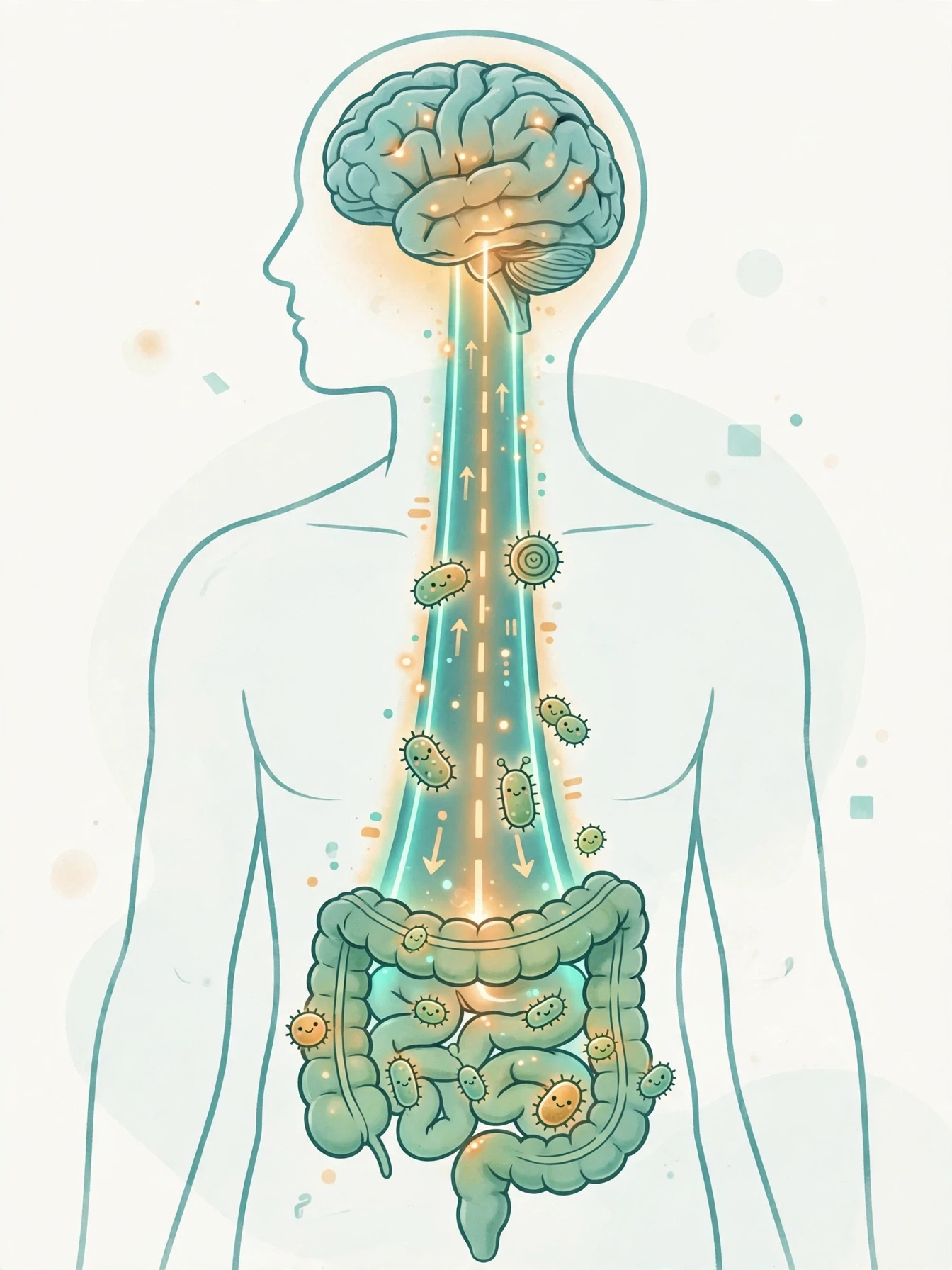
6.3 The body and the brain talk both ways
The gut and the brain are in constant conversation through the vagus nerve, immune signals, and the microbes living in the gut. That gut-brain link helps explain why anxiety so often comes with stomach upset, and why digestive problems and low mood frequently travel together. Our deep dive into the gut-brain connection explains the two-way highway in detail, and our look at the vagus nerve — the body's unsung hero of calm — shows how the calming branch of the nervous system can be strengthened.
Other body factors matter too: thyroid problems, chronic pain, poor sleep, and some medications can mimic or worsen anxiety and depression, which is why a good clinician will check physical health as part of the picture rather than assuming everything is "in the mind." Hormonal shifts — after childbirth, around menopause, or with thyroid change — can also tip a vulnerable system. None of this makes the condition any less real. It makes it more physical, not less.
7. How Anxiety and Depression Show Up in the Body
7.1 Sleep: the first thing to break, the last to heal
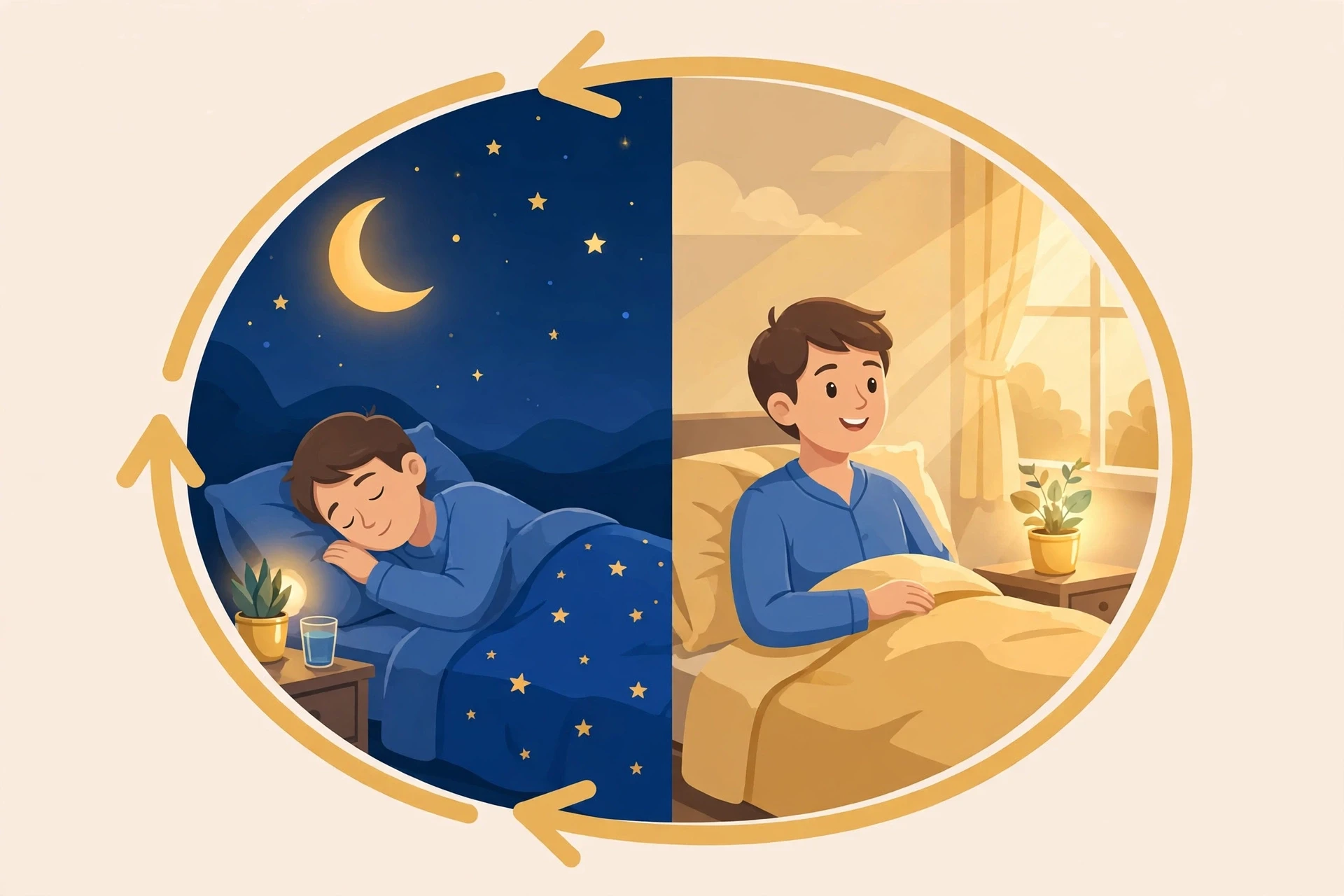
Sleep and mood are locked in a feedback loop. Anxiety makes it hard to fall asleep — the mind replays the day and rehearses tomorrow — while depression can bring early waking, broken sleep, or sleeping far too much. Poor sleep then worsens mood the next day, which worsens sleep the next night. Research consistently finds that insomnia often appears before a first episode of depression, which is why sleep is not a side issue in treatment; it is one of the main levers. Our article on chronic insomnia and the brain goes deeper into that loop.
7.2 Appetite, energy, and pain
Depression commonly changes appetite — some people lose interest in food entirely, others crave carbohydrates and gain weight — and both directions are recognised symptoms. Energy is a second casualty: the fatigue of depression is not ordinary tiredness. People describe it as moving through water, or carrying a weight that nobody else can see. Anxiety has its own physical signature: muscle tension, headaches, a racing heart, shortness of breath, sweating, shaking, and stomach trouble. Unexplained aches and pains are common in anxiety and depression, and they are real pain, not imagined pain — the same brain circuits that process emotion also process pain signals.
7.3 Thinking and memory under strain
Both conditions make thinking harder. Concentration slips, decisions feel enormous, and memory becomes unreliable. I once watched a capable colleague spend twenty minutes trying to write a two-sentence email, then apologise for being "slow." She was not slow. Her prefrontal cortex was running a second, invisible job — managing worry and low mood — and there was little bandwidth left for the email. When mood lifts, thinking usually sharpens again. That recovery is one of the most reassuring facts in this whole field: the fog is a symptom, not a permanent loss of ability.
8. The Brain Can Change: Neuroplasticity and the Latest Research
8.1 New paths through the forest
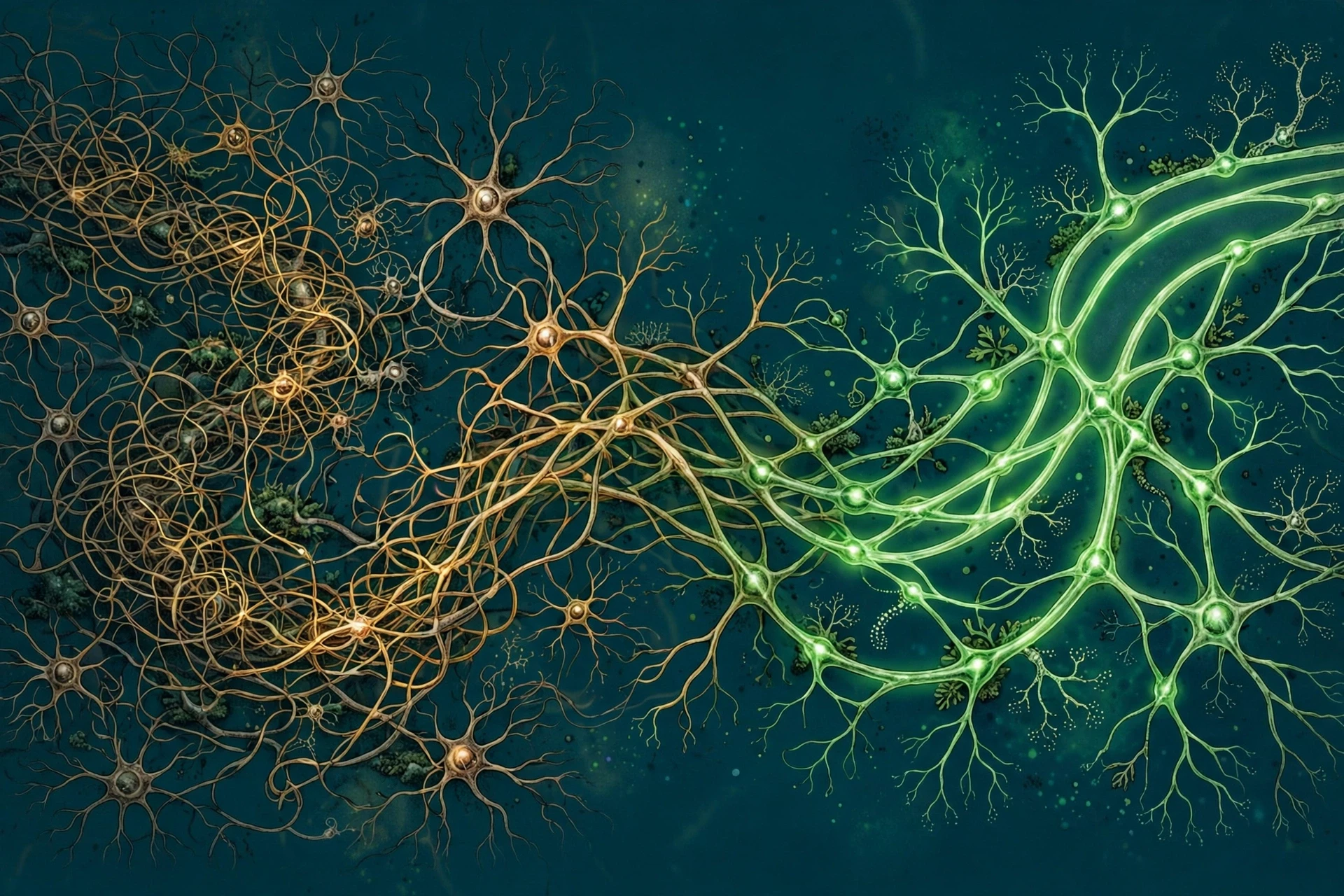
For most of the twentieth century, the adult brain was thought to be largely fixed — you got the wiring you were born with, and that was that. That view has been overturned. The adult brain remains plastic: it can form new connections, strengthen useful circuits, and weaken unhelpful ones, throughout life. Psychologists sometimes describe it with a forest image. A worried thought is a path through the forest. Every time you walk it, the path gets clearer and easier to follow. Therapy, practice, and new experiences cut new paths — and with repetition, the new path becomes the easier one to take. Change is slow, and it is real.
This is why recovery is possible even after years of symptoms. The circuits that learned threat and hopelessness can, with sustained work, learn something else. It is also why quick fixes rarely last: a new path needs many walks before it beats the old one.
8.2 Where the research is heading
The most exciting recent work, in my reading, is the move toward personalised care. A large review published in recent years pulls together how genetics, brain circuits, stress hormones, inflammation, and gut microbes each contribute — and argues that future treatment should match the treatment to the person's biology rather than giving everyone the same first step. Brain-stimulation techniques, faster-acting medications, and digital tools that deliver therapy between sessions are all being studied, and some are already in use for people who have not responded to standard care.
At the same time, researchers are candid about what they do not yet know. No brain scan can diagnose anxiety or depression today. No blood test can predict which treatment will work for a given person. The science is moving from "one size fits all" toward precision — and the honest message for now is that the standard treatments for anxiety and depression help a large share of people, and that when the first approach does not work, there are other approaches worth trying rather than a reason to give up.
9. Treatment: What the Evidence Actually Supports
9.1 Talking therapy: rewiring thought patterns
The best-studied psychological treatment for both conditions is cognitive behavioural therapy, or CBT. Its idea is straightforward: thoughts, feelings, and behaviours feed each other, so changing one changes the others. In CBT, a person learns to notice automatic thoughts ("Everyone at work hates me"), test them against evidence, and try new behaviours — including gradually facing feared situations instead of avoiding them. For anxiety, that gradual facing, called exposure, is often the active ingredient: each time the feared thing happens and nothing terrible follows, the alarm learns a little. For depression, a related approach focuses on restarting meaningful activity, because action often has to come before motivation returns, not the other way round.
Other therapies help too: interpersonal therapy, which focuses on relationships and life changes; acceptance-based approaches, which teach people to carry difficult thoughts more lightly rather than wrestling them; and mindfulness-based programmes. The evidence across these approaches is consistent on one point — a good therapeutic relationship and a structured, practised set of skills matter more than the brand name on the therapy.
9.2 Medication: what it does and what it does not do
Medications for anxiety and depression, most commonly selective serotonin reuptake inhibitors (SSRIs) and serotonin-norepinephrine reuptake inhibitors (SNRIs), work by changing how neurotransmitters are handled in the brain. They are not "happy pills," and they do not change personality. What they do, for many people, is lower the volume of symptoms enough that therapy, sleep, and daily life become workable again.
Three facts matter here. First, they take time — often several weeks — to reach their full effect. Second, finding the right medication and dose can take more than one try, and that is normal, not a failure. Third, stopping suddenly can cause withdrawal-like symptoms, so any change should be made with the prescribing clinician, never alone. Medication decisions belong in a conversation with a qualified professional who knows the person's history — not in an article, and not on a forum.
9.3 What treatment is not
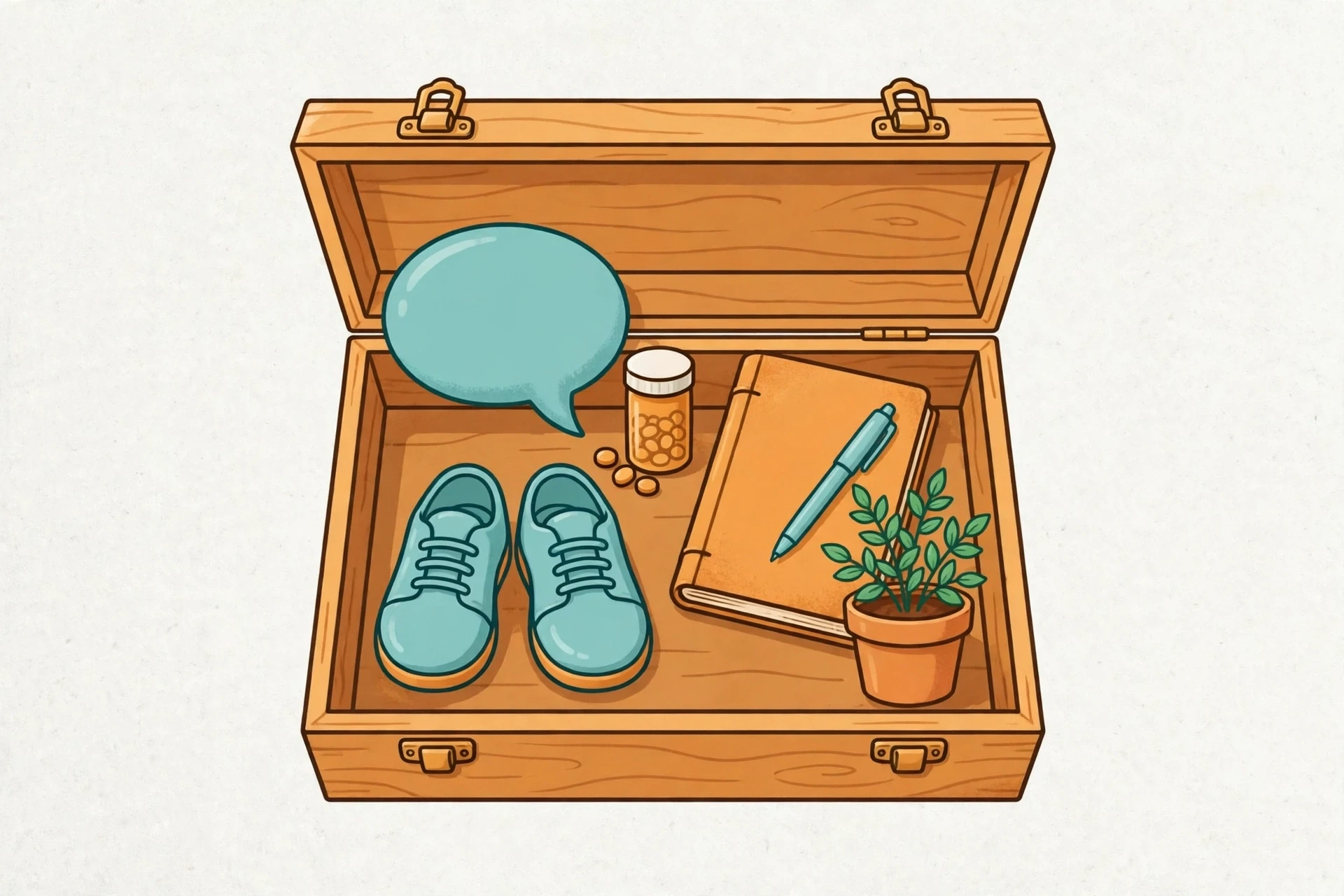
Treatment for anxiety and depression is not a single appointment or a single pill. It is usually a combination — therapy plus, where appropriate, medication, plus sleep, movement, and social connection — adjusted over time. It is also not a sign of weakness. I have heard that worry from more people than I can count, and I always answer the same way: you would not call someone weak for getting physiotherapy after a knee injury. The brain is an organ. When it struggles, getting expert help is the strong, sensible move.
"The most hopeful sentence in mental health research is a short one: these conditions are treatable. Not always quickly, not always on the first try — but treatable, for most people, with the tools we already have."
10. Daily Habits That Genuinely Help
10.1 Movement: the most underrated antidepressant
If exercise came in a pill, it would be prescribed everywhere. Regular physical activity — even a brisk daily walk — is one of the most consistent findings in mood research: it eases anxiety, lifts low mood, improves sleep, and supports the very brain circuits involved in both conditions. It does not need to be intense or athletic. The pattern that helps most is regular, moderate, and enjoyable enough to repeat. A walk with a friend counts twice, because it adds social connection to the movement.
10.2 Sleep, food, and rhythm
The basics sound dull, and they are powerful precisely because they are basic. A regular sleep and wake time steadies the body clock that mood depends on. Regular meals keep blood sugar and energy steadier, which keeps irritability and anxiety lower. Daylight in the morning — even a few minutes by a window or outside — helps set that clock. These habits are not cures for anxiety and depression on their own, and nobody should be told that a salad will fix depression. But they are the ground on which therapy and medication work better, and neglecting them makes everything else harder. The habits that support mood overlap heavily with the habits that support longevity and healthy aging — the body keeps one set of books, not two.
10.3 My own sleep experiment
A few years ago, after a run of late nights finishing a grant, I noticed my own mood sliding: shorter temper, flat mornings, worry that would not switch off at 2 a.m. I decided to treat myself as a small experiment. Same wake time every day, no screens in the last hour before bed, a short walk after lunch, and no caffeine after midday. Nothing dramatic. Within three weeks, the 2 a.m. worry sessions had mostly stopped, and my mornings felt like mine again. I am not claiming a routine cured anything — my slide was mild, and I was lucky. I am saying that I felt, in my own body, how tightly sleep and mood are wired together, and I have never again dismissed "sleep hygiene" as a footnote.
10.4 Connection and small steps
Isolation feeds both conditions, and connection starves them. That does not mean forcing yourself into a crowded party. It means one small, real contact: a phone call, a walk with a neighbour, a shared meal. For depression in particular, small steps beat grand plans. One shower. One short walk. One reply to a message. Each small completed action is evidence to a brain that has concluded nothing is possible — and evidence, repeated, is how that conclusion starts to crack.

11. Common Mistakes and Misconceptions
Myths about anxiety and depression are everywhere, and they do real harm — they keep people from seeking help, and they make those who are struggling feel blamed for their own symptoms.
"It is just a chemical imbalance — take a pill and it is fixed." The chemistry matters, but the picture is far wider: circuits, stress hormones, inflammation, genes, life events, sleep, and relationships all play a part. A pill can help; it rarely does the whole job alone.
"Strong people do not get depressed." Some of the most capable, disciplined people I have known have lived with depression. The condition does not check your résumé. Willpower does not prevent it, and a lack of willpower did not cause it.
"Anxiety means you are overreacting." The alarm is real, and the body symptoms are real. Telling someone to calm down has never once calmed anyone down. What helps is understanding the alarm and practising ways to turn its volume down.
"Therapy is just talking." Good therapy is structured practice: noticing thoughts, testing them, facing fears in small steps, rebuilding routines. Talking is the medium; change is the goal.
"If the first treatment does not work, nothing will." The first approach helps many people, but not everyone. Trying a different therapy, a different medication, or a combination is normal and common — and it is often the step that works.
"Children and older people do not get depressed." They do, and their symptoms can look different — irritability in a teenager, memory complaints or physical aches in an older adult. Depression is not a normal part of growing older, and it should never be taken lightly at any age.
12. When and How to Get Help
12.1 Signs it is time to reach out
Consider talking to a doctor or mental health professional if anxiety and depression symptoms last more than a couple of weeks, keep you from work, school, sleep, or relationships, or if you notice thoughts of harming yourself. You do not need to be certain you have a diagnosis, and you do not need to have hit rock bottom. Clinicians would far rather see someone early, when symptoms are lighter and easier to shift, than late.
12.2 What getting help usually looks like
A first appointment is usually a conversation: how you have been feeling, how long it has been going on, how sleep, appetite, and daily life have changed, and what support you already have. From there, a clinician may suggest therapy, medication, or both, and may check physical health — thyroid function, for example — to rule out medical causes. There is no brain scan to pass or fail. The process is more ordinary, and more human, than most people fear.
12.3 If someone you love is struggling
Listen without fixing, and without judging. Ask how they are, and ask again a week later. Offer practical help — a lift to an appointment, a meal, a walk — rather than advice about attitude. If they talk about harming themselves, take it seriously, stay with them if you can, and help them reach urgent support. You do not need perfect words. Showing up, more than once, matters more than saying the right thing once.
Conclusion: What the Science Leaves Us With
Anxiety and depression are not mysteries, and they are not moral verdicts. They are conditions of a living, learning organ — the brain — shaped by genes, life, stress hormones, chemistry, and circumstance. The alarm can be set too sensitive. The reward system can go quiet. The stress loop can lose its off-switch. And because the brain keeps learning throughout life, those patterns can be changed: by therapy that retrains thought and behaviour, by medication that lowers the volume enough for other work to happen, by sleep, movement, and connection that steady the whole system.
I think back to that morning outside the lecture hall, and to Mara, who eventually got help, returned to her research, and now mentors students of her own. Neither story ended because someone simply tried harder. They changed because the problem was named, understood, and treated — with patience, with support, and with tools that science has tested again and again.
If something in this article sounded familiar — your own mornings, your own 3 a.m. worry, your own flat weeks — take that recognition seriously. It is not a diagnosis, and it is not a verdict. It is information, and information is where recovery starts. Talk to someone. A doctor, a therapist, a trusted friend. The science is clear on one more point: people recover, often, and often more fully than they expected when they were in the middle of it.
Frequently Asked Questions
What is the difference between anxiety and depression?
Anxiety centres on worry and a sense of threat about the future — a racing mind, restlessness, and a body braced for danger. Depression centres on persistent low mood, emptiness, and loss of interest or pleasure, with low energy and slowed thinking. They feel different, but they frequently occur together, share risk factors and brain circuits, and are often treated with overlapping approaches.
Can you have anxiety and depression at the same time?
Yes, and it is common. Many people living with depression also live with an anxiety disorder, and vice versa. Anxiety can wear a person down until depression follows, and depression can make the future feel frightening. When both are present, treatment usually addresses both rather than one alone.
What causes anxiety and depression?
There is rarely one single cause. Research points to a mix of genetic vulnerability, brain circuit and neurotransmitter differences, chronic stress and the HPA axis, inflammation, early life experience, major life events, physical health, and social isolation. Any one person's story is a combination of several of these, in different proportions.
Are anxiety and depression caused by low serotonin?
Not simply. Serotonin is involved, along with dopamine, GABA, and norepinephrine, but the "low serotonin" story on its own is incomplete. The science now points to disrupted brain circuits, receptor sensitivity, stress hormones, and inflammation — a network problem, not a single missing chemical. That is why treatments that target different parts of the system can all help.
What treatments work best for anxiety and depression?
The strongest evidence supports cognitive behavioural therapy (CBT) and related talking therapies, and medications such as SSRIs and SNRIs where appropriate — often in combination. Regular physical activity, steady sleep, and social connection also have real evidence behind them as supports. The best plan is individual, chosen with a qualified clinician, and adjusted if the first approach does not help enough.
Can anxiety and depression be cured?
Many people recover fully, and many more improve a great deal with treatment. Some people have episodes that return and need ongoing care, much like other long-term health conditions. Recovery is usually gradual — weeks to months — and it is built from treatment, daily habits, and support rather than a single event.
When should I seek help for anxiety or depression?
If worry or low mood lasts more than a couple of weeks, interferes with work, school, sleep, or relationships, or includes thoughts of harming yourself, talk to a doctor or mental health professional. You do not need to wait until things feel unbearable. Earlier help tends to work better, and a first appointment is usually just a conversation.
Sources
National Institute of Mental Health — Anxiety Disorders: https://www.nimh.nih.gov/health/topics/anxiety-disorders
National Institute of Mental Health — Depression: https://www.nimh.nih.gov/health/topics/depression
World Health Organization — Depression (fact sheet): https://www.who.int/news-room/fact-sheets/detail/depression
World Health Organization — Anxiety Disorders (fact sheet): https://www.who.int/news-room/fact-sheets/detail/anxiety-disorders
Centers for Disease Control and Prevention — About Mental Health: https://www.cdc.gov/mental-health/about/index.html
MedlinePlus (U.S. National Library of Medicine) — Anxiety: https://medlineplus.gov/anxiety.html
MedlinePlus (U.S. National Library of Medicine) — Depression: https://medlineplus.gov/depression.html
Mayo Clinic — Depression (major depressive disorder), symptoms and causes: https://www.mayoclinic.org/diseases-conditions/depression/symptoms-causes/syc-20356007