

The summer I first felt climate change as something personal, I was standing in a wheat field in late July, notebook in hand, watching a thermometer I did not trust. It read 41 degrees Celsius in the shade, and the air shimmered over the crop rows like water. The farmer beside me — a man who had worked that land for forty years — kicked at a clod of dry earth and said, simply, "This used to be a cool week." He was not quoting a report. He was describing his own memory, and his memory was right. Summers like that one, once rare, had started arriving every few years. That day changed the way I talk about climate change. It stopped being a graph for me and became a field, a farmer, and a thermometer that would not come down.
Climate change is the long-term shift in Earth's temperatures and weather patterns, driven today mainly by human activity. The planet has always changed — ice ages came and went long before people existed — but the change under way now is different in two ways: it is happening far faster than the natural shifts of the past, and its main driver is us. We are adding heat-trapping gases to the air by burning coal, oil, and gas, cutting down forests, and farming in ways that release still more gas. Those gases act like an extra blanket around the planet, and the planet is warming under it.
This article explains the whole story in plain language: what climate change is, what causes it, what it is already doing to weather, oceans, ecosystems, and our health, and what can still be done about it. No jargon without an explanation, no panic without a plan. Just the science, the way I would explain it to a curious friend on a long walk.
1. What Is Climate Change?
Climate change means a lasting change in the average conditions of a place — its temperature, its rainfall, its winds, its seasons — measured over decades, not days. A single hot summer is weather. Thirty summers that keep getting hotter is climate. The distinction matters, because most of the confusion about this topic comes from mixing the two up.
1.1 Weather Is Not Climate
Weather is what you get today: rain on Tuesday, a cold snap in January, a heatwave in August. Climate is what you expect over a lifetime in a place — the pattern that weather keeps returning to. Think of it this way: weather is one hand of cards; climate is the rules of the game. A cold day in winter does not disprove a warming climate, any more than one losing hand proves the game is rigged against you. What matters is the trend across thousands of hands, and that trend is pointing firmly upward.
If you want a feel for how scientists actually track that pattern, the tools of weather forecasting and meteorology — satellites, weather stations, ocean buoys — are the same instruments that feed the long climate record. Weather and climate are two views of the same atmosphere, one short and one long.
1.2 A System, Not a Single Number
When people say "the planet has warmed by about 1.1 degrees Celsius since the late 1800s," that number is a global average, and averages hide the real story. The Arctic has warmed much faster. Land has warmed faster than ocean. Nights have warmed faster than days. A single global number is useful as a headline, but climate change is really a whole system shifting: warmer air holds more water vapour, so rain falls harder when it falls; warmer oceans feed stronger storms; melting ice raises seas and changes currents. Everything is connected, which is why a change in one place ripples into places you would never expect. The living world is one of those connections — how ecosystems move energy and matter through food webs is exactly what a shifting climate disrupts first.
2. The Greenhouse Effect: The Blanket That Keeps Us Alive
Here is the part most people get backwards: the greenhouse effect is not the villain. Without it, Earth would be a frozen rock, about 33 degrees colder on average, and none of us would be here. The problem is not the blanket. The problem is that we keep thickening it.
Sunlight streams in through the atmosphere and warms the ground. The ground then gives off heat as invisible infrared radiation, rising back toward space. Certain gases in the air — carbon dioxide, methane, nitrous oxide, and water vapour — catch some of that rising heat and send part of it back down. That is the greenhouse effect, and it keeps Earth's average temperature around a comfortable 15 degrees Celsius instead of minus 18.
I first saw this made visible in a university lab, years ago, with a simple demonstration I still use when I teach. Two glass jars, two thermometers, one with ordinary air and one with extra carbon dioxide, both under the same heat lamp. Within minutes the carbon dioxide jar was measurably warmer. It was a small effect in a small jar — but the physics in that jar is the same physics running the whole planet. My students that day asked the question everyone asks: if carbon dioxide is only a tiny fraction of the air, how can so little do so much? The answer is that a little goes a long way when the gas is good at catching exactly the kind of heat Earth gives off. A pinch of salt changes a whole pot of soup. Carbon dioxide does the same to the sky.
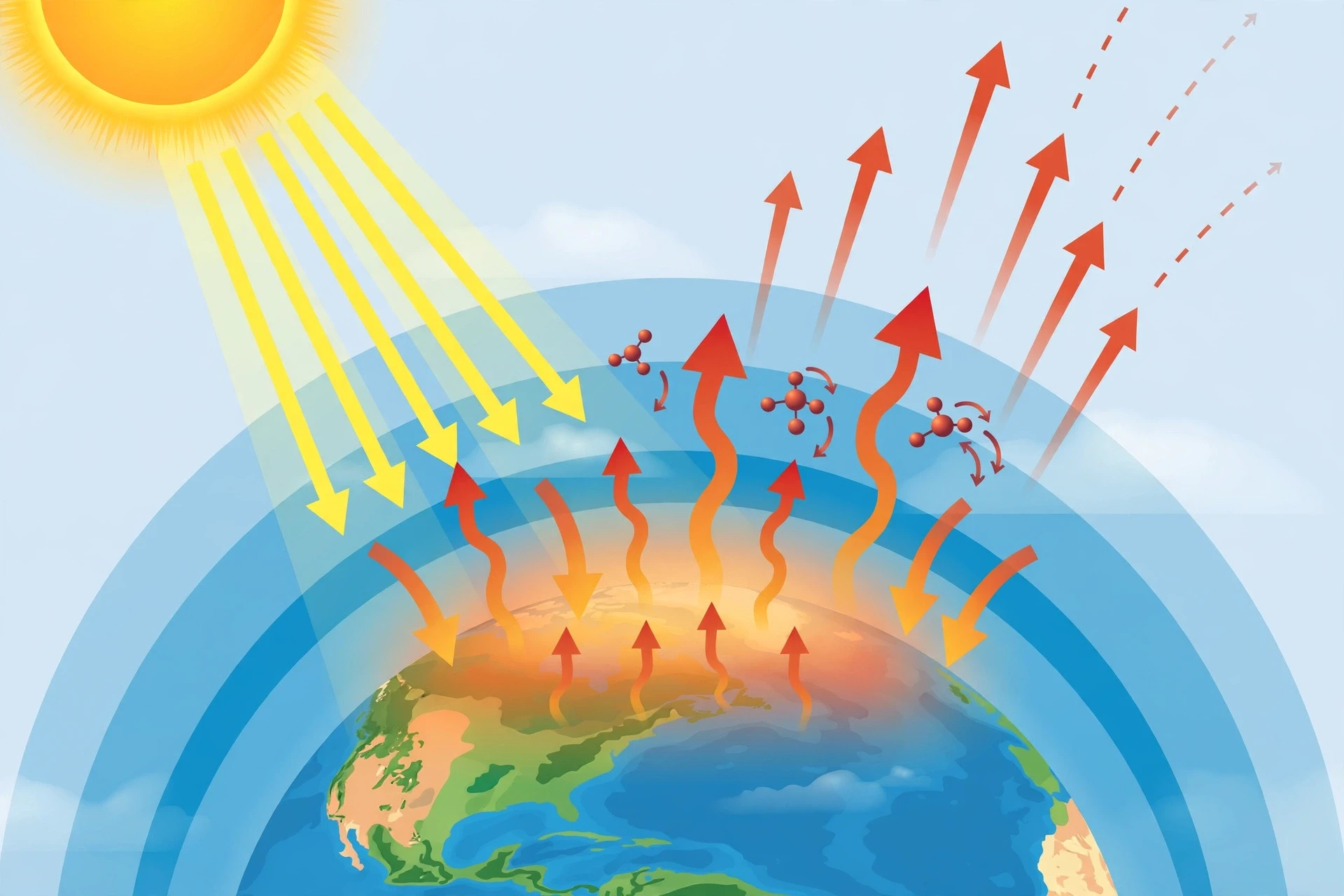
The natural greenhouse effect is a gift. The human-enhanced greenhouse effect is the problem. Since the industrial era began, we have raised carbon dioxide in the air by nearly half, and added large amounts of methane and nitrous oxide besides. The blanket is thicker now, and the planet is holding on to more heat than it used to. NASA explains the mechanism and the human fingerprint in its overview of the causes of climate change.
3. What Is Causing Climate Change?
The short answer is simple, and the world's climate scientists agree on it in unusually plain language: human activity is the dominant cause of the warming observed since the mid-20th century. The IPCC, the Intergovernmental Panel on Climate Change, calls it "unequivocal" that human influence has warmed the atmosphere, ocean, and land. That word — unequivocal — is not one scientists throw around lightly. It means the evidence from thermometers, satellites, ice cores, and ocean sensors all points the same way.
3.1 Burning Fossil Fuels
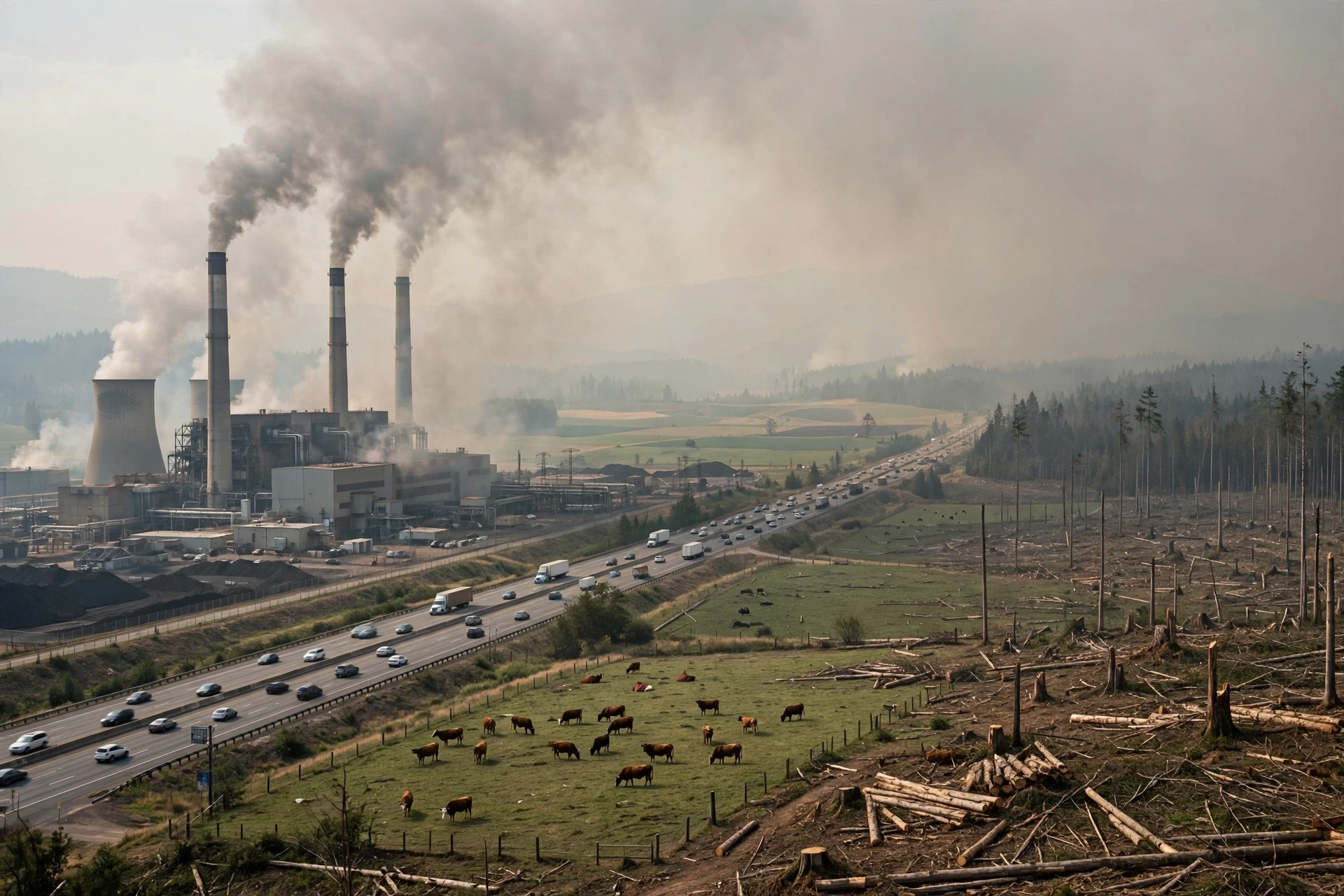
Coal, oil, and natural gas are the remains of ancient plants and sea creatures, buried and compressed over millions of years. Burning them releases the carbon they stored, as carbon dioxide, into the air. We burn them for electricity, for transport, for heating buildings, and for making steel, cement, and chemicals. Every litre of petrol, every tonne of coal, adds a little more carbon dioxide to the blanket.
This is the largest single cause, and it is also the most straightforward to understand: we dug carbon out of the ground and put it into the sky, faster than forests and oceans could take it back. The scale is hard to picture, so picture it this way — every year, humanity moves billions of tonnes of carbon from underground storage into the atmosphere, a transfer that nature took millions of years to build in the other direction.
3.2 Cutting Down Forests
Forests are carbon warehouses. A growing tree pulls carbon dioxide out of the air and locks it into wood, roots, and soil — the process of photosynthesis running at planetary scale. Cut the forest down, or burn it, and that stored carbon goes back into the air. Worse, the forest stops pulling new carbon out. Deforestation is a double blow: it adds gas and removes the machine that cleans it up.
I walked through a recently cleared patch of rainforest once, on a research trip, and the difference from the standing forest a hundred metres away was shocking. Under the canopy it was cool, damp, and loud with insects and birds. On the cleared ground it was hot, silent, and dusty. The forest had been doing quiet climate work — cooling, storing, cycling water — and when it was gone, all of that work stopped at once. The water cycle itself depends on forests returning moisture to the air; clear them, and rainfall patterns shift for hundreds of kilometres around.
3.3 Farming, Livestock, and Industry
Food production adds its own gases. Cattle and sheep release methane as they digest grass. Rice paddies release methane from waterlogged soil. Fertilisers release nitrous oxide. Landfills release methane as waste rots. Cement-making releases carbon dioxide from limestone itself, not just from the fuel used to heat it. None of these is as large as fossil fuels on its own, but together they make up a large share of the total — roughly a fifth to a quarter of emissions, depending on how you count land use. Cutting these emissions means changing how we farm, what we waste, and how we build, not just how we make electricity.
3.4 The Rise in Carbon Dioxide
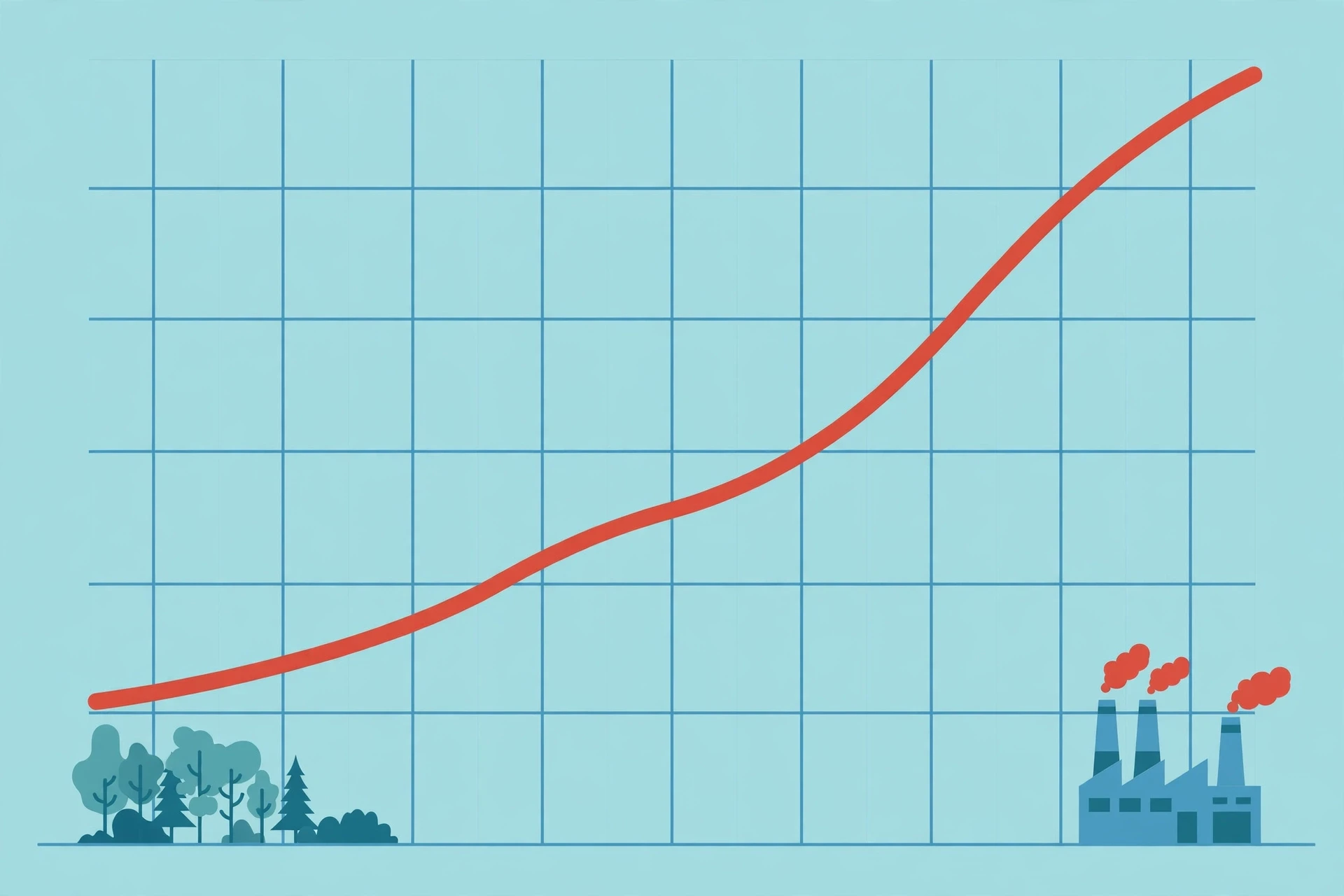
The clearest single record in climate science is the curve of carbon dioxide in the air. Before the industrial era it sat near 280 parts per million. Today it is over 420 parts per million — higher than at any time in at least the last two million years, and rising every year. The curve climbs in a sawtooth pattern: it dips slightly each northern summer as plants grow and absorb carbon, then rises again in winter. But the trend underneath the sawtooth is relentlessly up, and it matches, year for year, the carbon we release by burning fossil fuels. Ice cores drilled from Antarctica let scientists read this record back hundreds of thousands of years, and nothing in that long history looks like the spike of the last two centuries.
3.5 Natural Drivers — The Sun, Volcanoes, and Why They Do Not Explain Today
Earth's climate has changed naturally many times. The Sun's output varies slightly. Volcanoes throw dust and gas into the sky. Earth's orbit wobbles over tens of thousands of years, shifting ice ages in and out. All of that is real, and climate scientists study all of it carefully.
But none of it explains the warming of the last fifty years. The Sun has not grown brighter — satellite measurements show its output has been flat or slightly down while temperatures climbed. Volcanoes cool the planet briefly, not warm it for decades; their eruptions are short, sharp cooling events, and the science of how volcanoes form and erupt shows why their climate effect fades within a few years. And the orbital wobbles move far too slowly to explain a change measured in decades. Most people assume the Sun must be behind it, because the Sun is the obvious suspect — but what we actually see in the data is warming that tracks greenhouse gases, not sunlight. When scientists run climate models with only natural factors, the models cannot reproduce the observed warming. Add human greenhouse gases, and the models match.
4. The Evidence: How We Know the Planet Is Warming
Scepticism is healthy in science — I was trained to distrust any claim until the evidence earned it. So what is the evidence here? It does not rest on one graph or one team. It rests on many independent lines of measurement, all pointing the same way.
First, thermometers. Weather stations around the world, some running for more than a century, show the same warming trend, and satellites measuring the air from above agree. Second, the oceans: they have absorbed more than 90 percent of the extra heat trapped by greenhouse gases, and instruments lowered into the deep sea record that warming directly. Third, ice: glaciers are retreating on nearly every continent, Arctic sea ice is shrinking, and the great ice sheets of Greenland and Antarctica are losing mass. Fourth, the seasons themselves: spring arrives earlier, autumn later, and the growing season has lengthened in many regions. Fifth, sea level: tide gauges and satellites show the seas rising as water warms and expands and as land ice melts into the ocean.
NASA gathers these independent lines of evidence — temperature records, ice loss, sea-level rise, and more — in its overview of the evidence for climate change, and NOAA tracks the same signals in its collection on climate change impacts. No single measurement carries the case. The case is carried by all of them together, and by the fact that they agree.
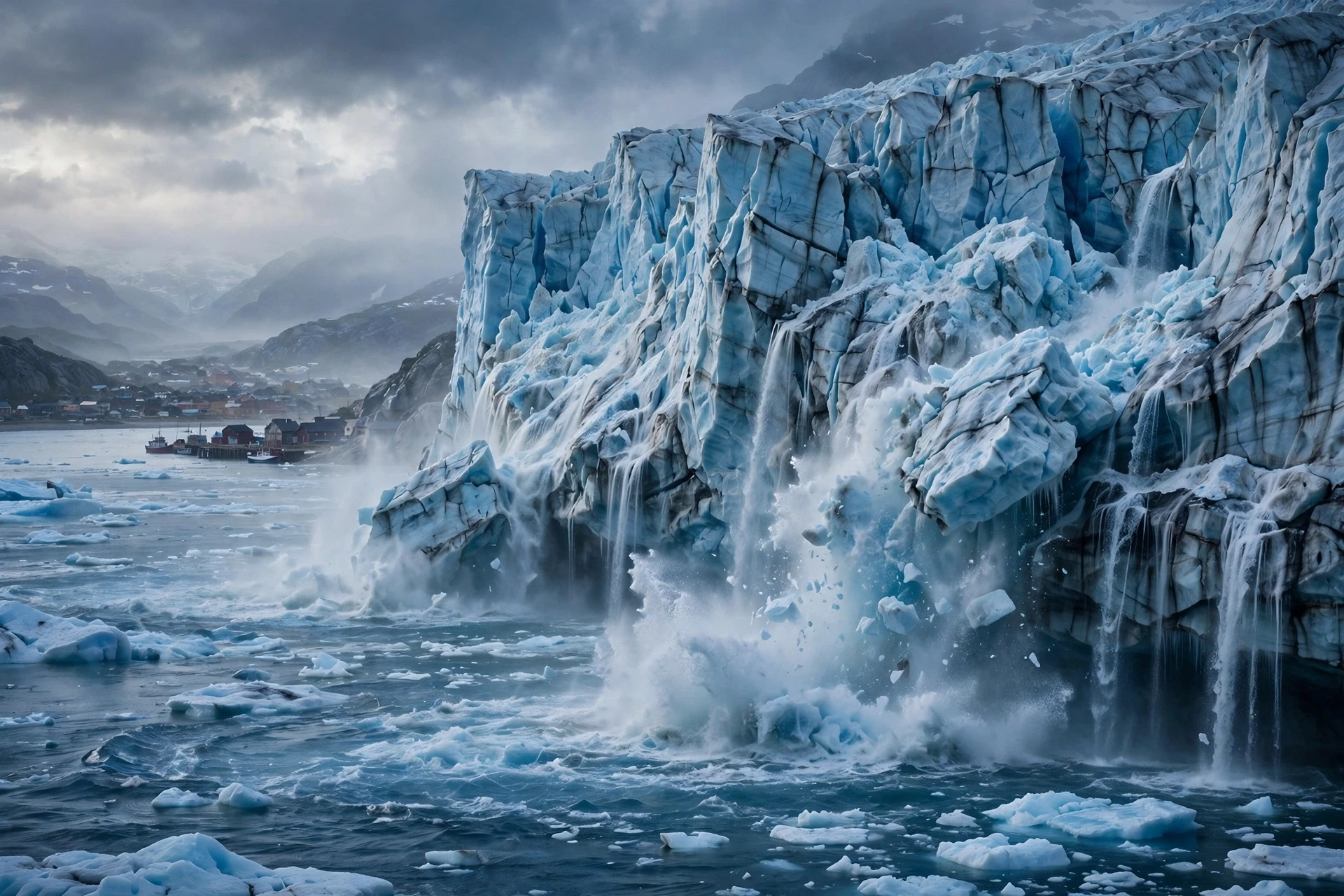
I remember standing on a glacier in the Alps with a guide who pointed to a brass marker set into the rock. "That was the ice edge when I was a boy," he said. The ice was now a long walk away, across bare rock that had been buried for centuries. He did not need a satellite to know the glacier was retreating. He had watched it happen across his own lifetime. Millions of people who live near glaciers, coasts, and coral reefs carry the same kind of first-hand knowledge. The instruments confirm what they have already seen.
5. The Effects of Climate Change
A warming planet does not just get warmer. It gets stranger: wetter in some places, drier in others, stormier where storms already happen, and more extreme almost everywhere. The effects are already visible, and they touch weather, oceans, food, and health.
5.1 Extreme Weather
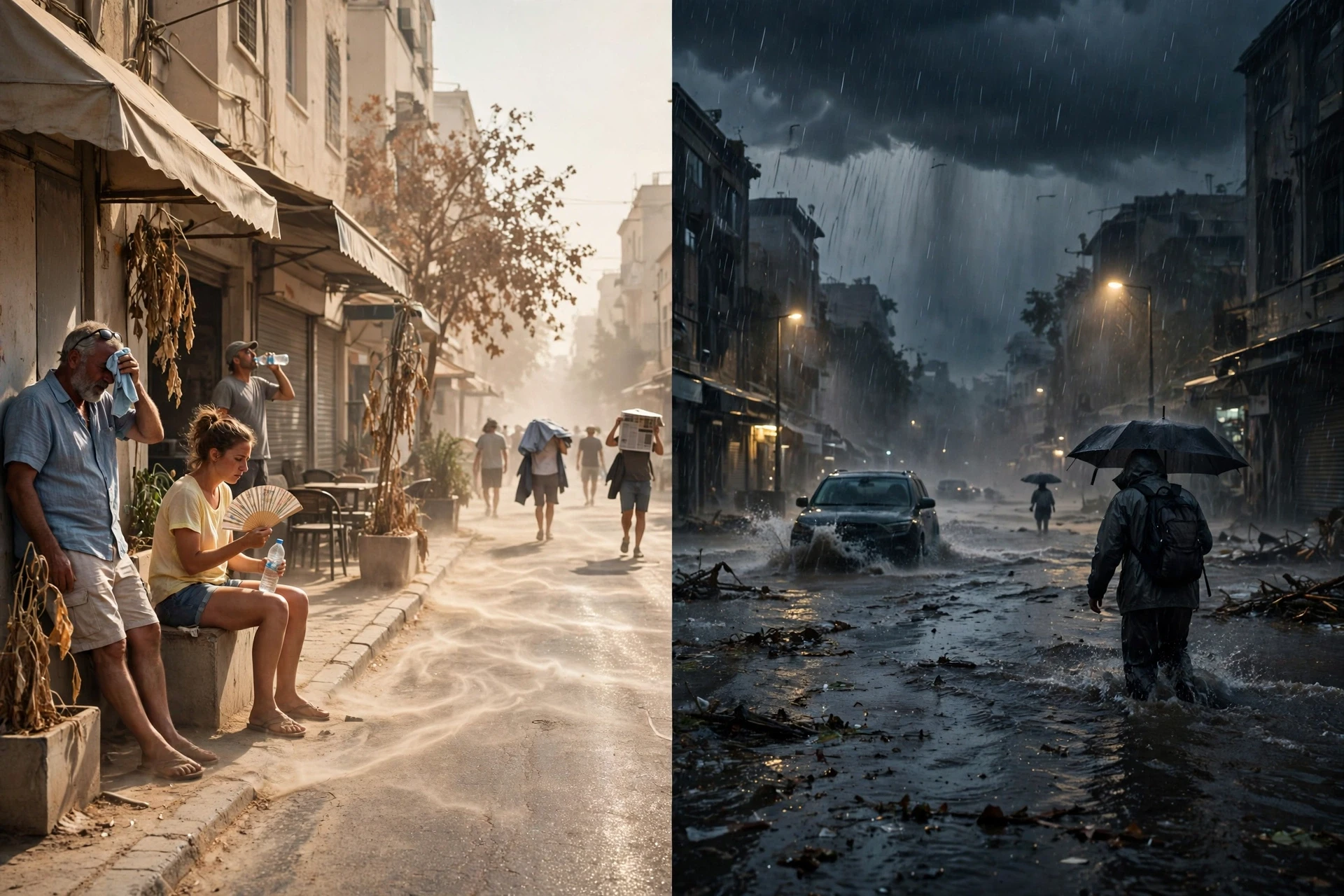
Warmer air holds more water vapour, so when it rains, it can rain much harder. At the same time, warmer air pulls more moisture out of soils, so dry spells can turn into deeper droughts. Heatwaves have become more frequent, longer, and hotter in most land regions. Heavy rainfall events have grown more intense. Tropical cyclones are not necessarily more numerous, but the strongest ones carry more rain and higher storm surges because they draw energy from warmer seas.
Attribution science — the field that asks whether a particular heatwave or flood was made more likely by climate change — has matured fast. For many recent heatwaves, researchers can now show the event would have been extremely unlikely, or far less intense, in a world without human-caused warming. That does not mean every storm is "caused" by climate change. It means the dice are loaded: the same weather patterns now produce worse outcomes than they used to.
5.2 Oceans Under Pressure
The oceans are the quiet heroes of this story, and they are paying for it. They have soaked up most of the extra heat, and they have absorbed a large share of the extra carbon dioxide too — which makes seawater more acidic. Warmer, more acidic water stresses the creatures that build their shells and skeletons from calcium carbonate: corals, shellfish, and the tiny plankton at the base of the marine food web. When water gets too warm, corals expel the algae that feed them and turn ghostly white — coral bleaching — and if the heat lasts, the reef dies. Ocean currents and depth zones shape where that heat goes, and as currents shift, so do the fish, the plankton, and the fisheries that depend on them.
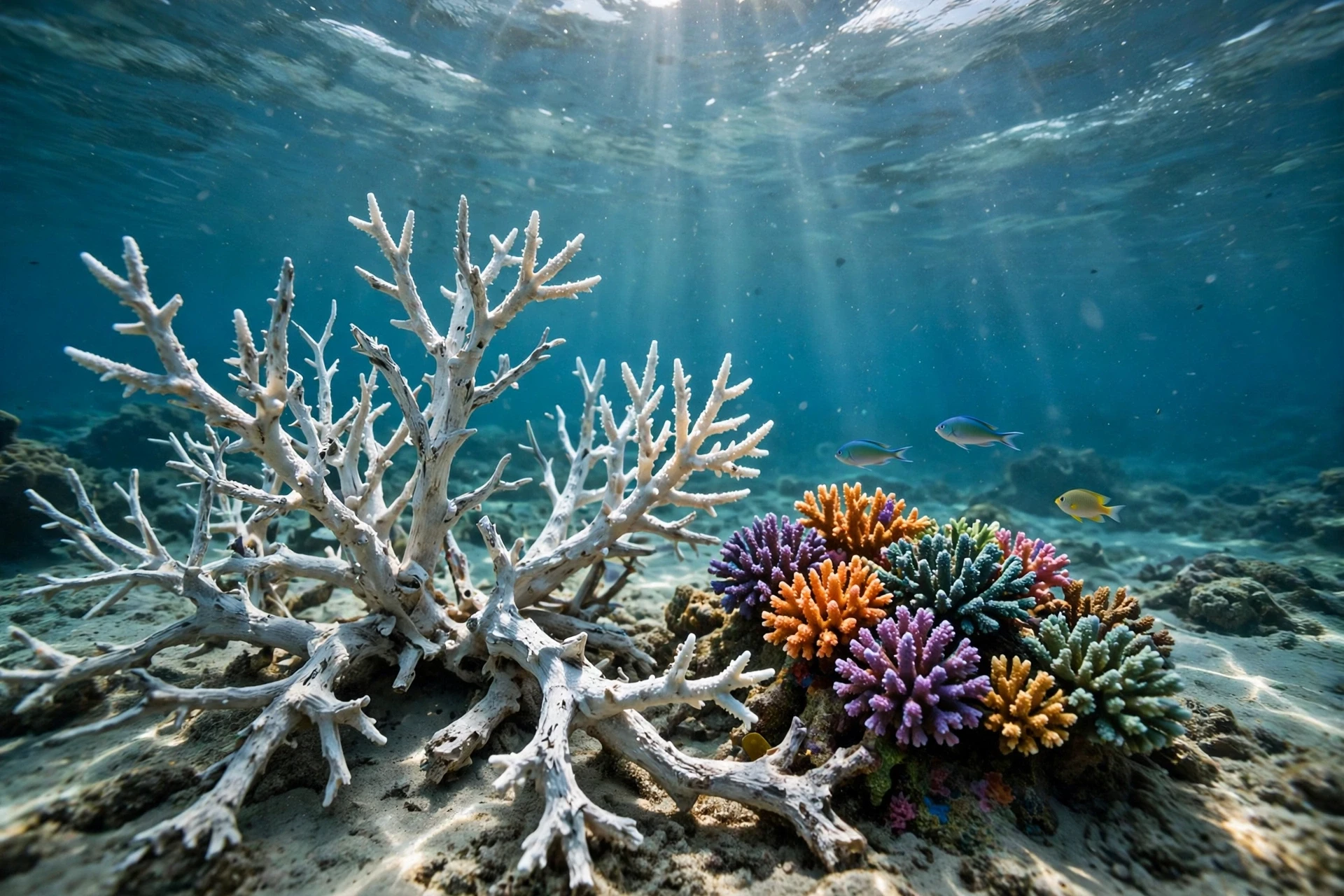
On a dive trip years ago, I swam over a reef I had visited a decade earlier. The first time, it had been a riot of colour — purple fans, orange clownfish, green turtles grazing. The second time, large stretches were pale and silent. A local dive guide, who had spent twenty years on that reef, told me the bleaching had followed a marine heatwave that lasted for weeks. He did not use the word "acidification" or quote any report. He just said the reef had never looked like that before, and he was right to worry. Reefs support about a quarter of all marine species and the livelihoods of hundreds of millions of people. Losing them is not a distant tragedy; it is a food and income crisis in slow motion.
5.3 Ecosystems and Food
On land, the effects run through the same logic: species adapted to a particular climate find their home moving. Plants flower earlier. Birds migrate earlier. Animals shift toward the poles or uphill, and those that cannot move — mountain species, island species — run out of room. The timing of nature is shifting too: flowers may bloom before their pollinators arrive, and chicks may hatch after the insects they eat have peaked. These mismatches are small individually, but they add up across a whole food web. Biodiversity is not just a list of species; it is the web of relationships between them, and a shifting climate tugs at every thread.
Farming feels the same pressure from the other side. Heat stress cuts yields of wheat, maize, and rice in many regions. Droughts dry up irrigation. Floods drown fields. Pests and diseases spread into places that used to be too cold for them. None of this means farming will collapse tomorrow — farmers are adaptable, and crop science keeps improving — but it does mean food will get harder and more expensive to grow in the places that already struggle most.
5.4 Human Health
Heat kills quietly. Heatwaves raise deaths from heart and lung disease, especially among older people, outdoor workers, and those without cooling. Warmer conditions let mosquitoes and ticks spread into new regions, carrying diseases such as dengue and malaria to places that rarely saw them. Wildfire smoke, worsened by hotter, drier conditions, chokes cities hundreds of kilometres from the flames. Floods spread waterborne disease and damage the clinics and water systems people need most. And behind all of it sits a quieter burden: the stress of losing a home to a flood, a harvest to a drought, or a livelihood to a dying reef. Climate change is a health issue, not just an environmental one.
"The Earth is warming, and the cause is not a mystery — but neither is the cure. Every fraction of a degree we avoid matters, because every fraction spares someone, somewhere, a heatwave, a flood, or a failed harvest."
6. Common Misconceptions
A topic this large collects myths the way a net collects driftwood. Three keep coming back, and each one has a clear answer.
"The climate has always changed, so this is natural." True, and beside the point. The climate has changed before — but past changes took thousands of years, driven by orbit, volcanoes, and the slow movement of continents. Today's change is happening in decades, and it tracks greenhouse gases, not those natural drivers. Speed is the difference between a hill and a cliff.
"It was cold last winter, so warming must be a hoax." Weather is not climate. A cold snap in one place in one week says nothing about the global average over decades — just as one cold day in July does not mean summer was cancelled. The trend across the whole planet, across decades, is warming, and local cold weather is part of the normal variation around that trend.
"Scientists disagree." On the details — how fast, how much, exactly where — scientists argue constantly, as they should. That is how science works. On the core finding, that human activity is warming the planet, the agreement across national academies, the IPCC, NASA, and NOAA is overwhelming. Disagreement about the size of the problem is not disagreement about whether it exists.
7. Solutions: Slowing It Down and Living With What Is Here
Here is the good news, and it is real: climate change is not a problem without answers. We know what causes it, which means we know what stops it. The solutions fall into two groups — mitigation, which cuts the causes, and adaptation, which protects people from the effects already under way. We need both, and the table below shows how they differ and where they overlap.
Approach | What it does | Examples | When it pays off |
|---|---|---|---|
Mitigation | Cuts greenhouse gas emissions or removes carbon from the air | Renewable energy, energy efficiency, reforestation, electric transport | Over years and decades, by limiting future warming |
Adaptation | Reduces harm from warming already happening | Sea walls, heatwave warning systems, drought-resistant crops, flood-proof homes | Immediately, by protecting people from today's extremes |
Both together | Protects people now while shrinking the problem later | Planting city trees (shade now, carbon storage later), restoring wetlands (flood buffer and carbon sink) | Now and in the future |
Table 1: Mitigation versus adaptation. Mitigation attacks the cause; adaptation defends against the effects. The strongest strategies do both at once.
7.1 Clean Energy
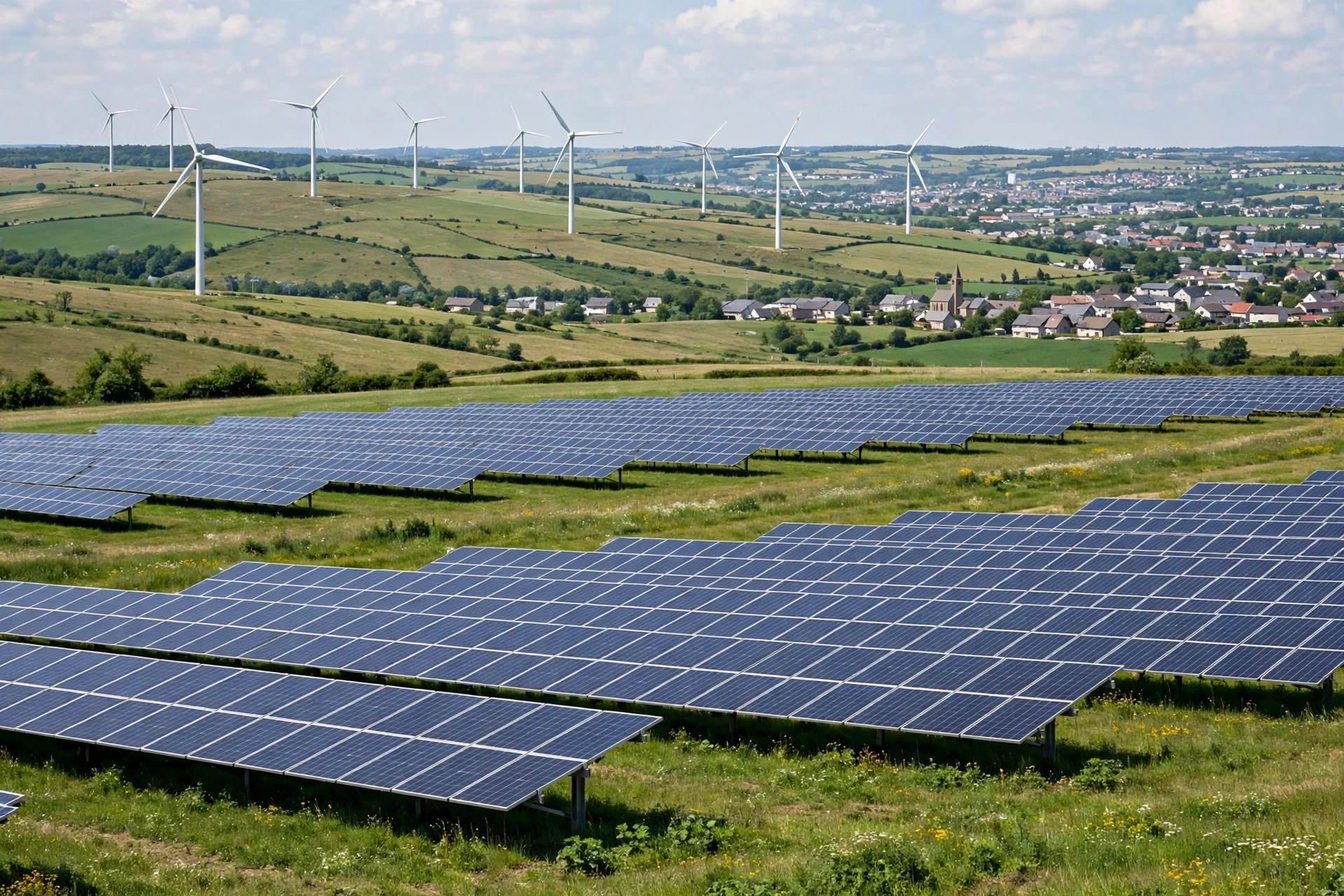
The single biggest lever is replacing fossil fuels with clean energy: solar, wind, hydro, geothermal, and nuclear power, backed by batteries and smarter grids. Solar and wind are now among the cheapest ways to make electricity in many parts of the world — a change that would have seemed unlikely twenty years ago, when they were expensive curiosities. The shift is under way, but it needs to go faster: grids must be modernised, storage must grow, and the last, hardest uses of fossil fuels — in steel, cement, aviation, and shipping — need new solutions.
7.2 Forests and Land
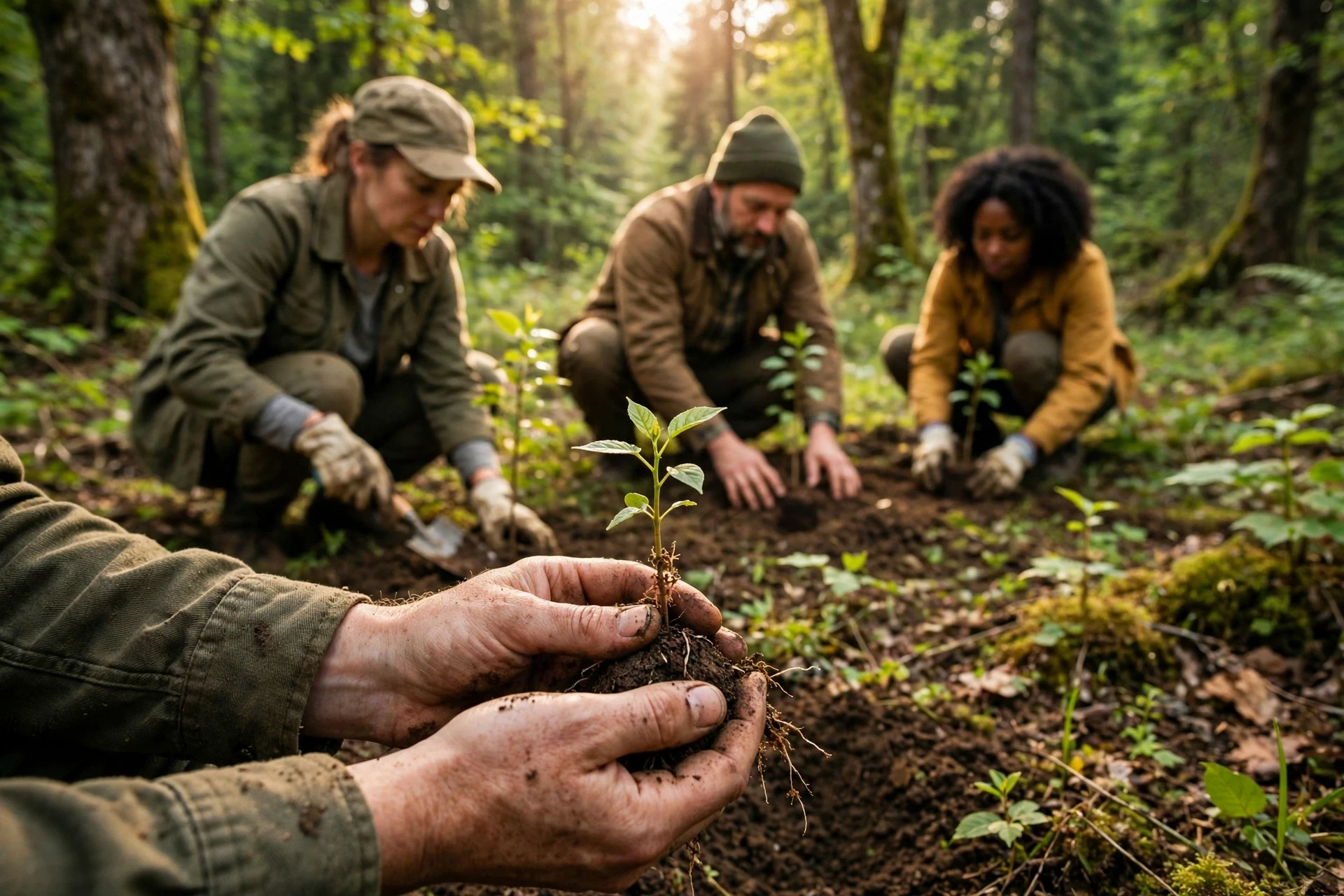
Protecting standing forests, restoring degraded land, and planting trees where they belong all pull carbon out of the air — and they do it with technology that already exists: a seed. Mangroves and wetlands are especially valuable, storing carbon in waterlogged soils for centuries while buffering coasts against storms. Farming can help too: healthier soils hold more carbon, less tillage keeps it there, and cutting food waste avoids the emissions of growing food nobody eats. None of this replaces cutting fossil fuels, but it is a powerful partner.
7.3 Cities, Food, and Industry
Cities can be redesigned for a warmer world: better insulation and efficient heating and cooling cut energy use; public transport, cycling, and walking cut traffic emissions; green roofs and street trees cool neighbourhoods that concrete has turned into ovens. Industry can switch to electric furnaces, green hydrogen, and carbon capture for the hardest processes. Food systems can shift toward less waste, more plant-rich diets, and farming that keeps carbon in the soil. Each of these changes is modest on its own. Together they add up to a large share of the problem.
7.4 Adaptation — Preparing for Change Already Under Way
Some warming is already locked in by past emissions, so even if emissions stopped tomorrow, seas would keep rising and heatwaves would keep coming for a while. Adaptation means facing that honestly: early-warning systems for heatwaves and floods, buildings designed for hotter summers, water systems that cope with drought and deluge, crops bred for heat and dry spells, and coastal defences for the places that cannot move. The countries and communities with the fewest resources face the greatest risks, which is why adaptation funding and fair access to technology matter as much as the engineering.
7.5 What One Person Can Actually Do
Individual action alone will not solve climate change — the problem is too big, and most emissions come from systems, not personal choices. That said, personal choices are far from pointless, and the highest-impact ones are surprisingly practical:
Cut energy waste at home: insulation, efficient appliances, LED lighting, and turning down heating and cooling a degree or two.
Travel lighter: walk, cycle, or take public transport where you can; fly less when a train or a video call will do.
Eat with the climate in mind: waste less food, eat more plant-rich meals, and buy what is in season nearby.
Use your voice: the choices that matter most are made by governments and companies, and they listen to voters, customers, and employees. Asking a workplace to cut its energy use, or a city to plant more trees, multiplies one person's impact many times over.
I changed my own home's heating a few years ago, switching to a heat pump and adding insulation, and I still remember the first winter bill: lower, not higher. It was a small thing, and it did not change the planet. But it changed something in me — the feeling of being a bystander. The science is clear that the biggest changes must come from energy systems and policy. It is also clear that systems change faster when the people inside them start moving first.
8. The Latest Research: What Scientists Are Watching Now
Climate science is not standing still. Three areas are drawing the most attention right now.
Attribution is getting faster and sharper. Within days of a major heatwave or flood, researchers can now estimate how much climate change loaded the dice. That speed matters: it turns abstract trends into concrete answers while the event is still in the news.
Tipping points are under close watch. Some systems — the Greenland and Antarctic ice sheets, the Amazon rainforest, the great ocean currents — may have thresholds beyond which change becomes self-reinforcing and hard to reverse. Researchers still disagree about exactly where those thresholds sit, and that uncertainty is honest: these are complex systems, and the honest answer is that we know the risk is real without knowing its exact edge. The sensible response to that uncertainty is caution, not comfort.
The 1.5-degree question is now a live one. The IPCC's Sixth Assessment Report, summarised in its 2023 Synthesis Report, lays out how close the world is to the warming limits set in the Paris Agreement, and what different emissions paths would mean for the decades ahead. The report's message is blunt but not hopeless: the tools to cut emissions exist, the costs have fallen, and every fraction of a degree avoided spares real harm — but the window for the gentlest paths is closing fast. The IPCC AR6 Synthesis Report is the single best place to read that assessment in the scientists' own words, and NOAA's Climate.gov explains the temperature record itself in its guide to climate change and global temperature.
"We cannot negotiate with physics. But we can work with it — and the same physics that tells us the planet is warming also tells us exactly how to cool it down: stop adding heat-trapping gases, and give the planet a chance to catch its breath."
9. Where This Leaves Us
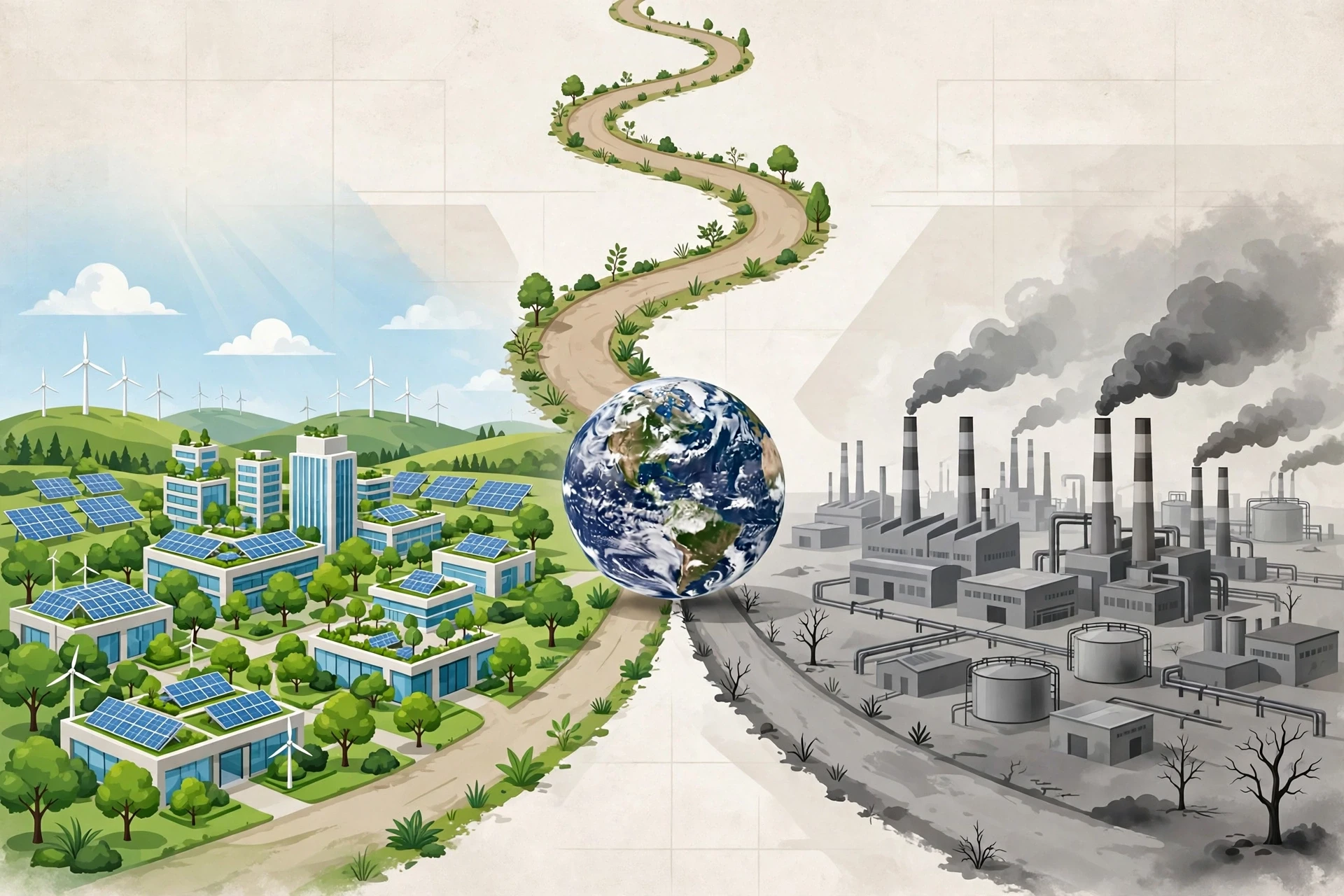
Climate change is the largest problem humanity has ever faced, and also one of the best understood. We know the cause. We know the effects. We know the solutions. What remains is the doing — and the doing is under way, unevenly, in every country on Earth. Solar panels are spreading across rooftops. Wind turbines are turning on hillsides that once held only sheep. Forests are being replanted. Cities are redesigning themselves for heat. None of this is enough yet, and all of it is evidence that enough is possible.
The farmer in that wheat field did not ask me for a lecture on atmospheric chemistry. He asked, in his own way, whether anyone was going to do something about the summers that kept getting hotter. The answer to that question is being written right now — in power grids, in parliaments, in laboratories, and in ordinary homes. The science has done its part. It has told us, clearly and patiently, what is happening and why. What happens next is up to us.
FAQ
What is climate change?
Climate change is a long-term shift in Earth's average temperatures and weather patterns, measured over decades. Today it is driven mainly by human activities — above all burning fossil fuels — that add heat-trapping greenhouse gases to the atmosphere, warming the planet.
What causes climate change?
The main cause is greenhouse gas emissions from human activity: carbon dioxide from burning coal, oil, and gas; methane from livestock, rice farming, and landfills; nitrous oxide from fertilisers; and carbon released by deforestation. Natural factors such as the Sun and volcanoes play only a small role in the current warming.
What are the effects of climate change?
Effects include more frequent and intense heatwaves, heavier rainfall and flooding, longer droughts, rising sea levels, melting glaciers and ice sheets, ocean warming and acidification, coral bleaching, shifting ecosystems, threats to food supplies, and growing risks to human health.
How does climate change affect the oceans?
The oceans have absorbed most of the extra heat trapped by greenhouse gases, and much of the extra carbon dioxide, which makes seawater more acidic. Warmer, more acidic water causes coral bleaching, shifts fish and plankton toward cooler waters, and raises sea levels as water expands and land ice melts.
What is the difference between weather and climate?
Weather is the short-term state of the atmosphere — today's rain, this week's cold snap. Climate is the long-term pattern of weather in a place, averaged over decades. A cold day does not disprove a warming climate, just as one rainy day does not mean a region has a wet climate.
What can we do to stop climate change?
The most effective actions cut greenhouse gas emissions: switching to renewable energy, improving energy efficiency, protecting and restoring forests, reducing food waste, and shifting transport toward walking, cycling, public transport, and electric vehicles. Adaptation — such as heatwave warnings, flood defences, and drought-resistant crops — protects people from warming already under way. Individual choices help, but the biggest changes come from energy systems, industry, and policy.
Sources
NASA Science — Causes of climate change: https://science.nasa.gov/climate-change/causes/
NASA Science — Evidence of climate change: https://science.nasa.gov/climate-change/evidence/
IPCC — Climate Change 2023: AR6 Synthesis Report: https://www.ipcc.ch/report/ar6/syr/
NOAA — Climate change impacts (education resources): https://www.noaa.gov/education/resource-collections/climate/climate-change-impacts
NOAA Climate.gov — Climate change and global temperature: https://www.climate.gov/news-features/understanding-climate/climate-change-global-temperature