

Your digestive system turns a plate of food into the energy, building blocks, and repair materials your body runs on — and it does most of that work without you ever noticing. This is the full journey, from the first bite to the last step, explained the way a scientist who has spent years watching digestion up close would tell it.
1. The Meal That Started Everything
I still remember the lunch that made me want to understand digestion properly. I was sitting in a university canteen years ago, watching a friend eat a sandwich in about ninety seconds flat — barely chewing, talking the whole time — and then complain, twenty minutes later, that his stomach felt like a stone. Nothing about that sandwich was unusual. The speed was the problem, and I did not yet have the words to explain why.
That afternoon I went back to the lab and looked at a sample of saliva under a microscope, something I had done a hundred times before. Only this time I was thinking about my friend. The enzymes in that clear liquid were already at work before food ever reached his stomach. Digestion does not start when food lands in your belly. It starts the moment you smell food, see it, and take the first bite.
The digestive system is the set of organs that takes food and drink, breaks them into pieces small enough to cross into the blood, and throws away what is left. It is a tube about 25 feet long, folded neatly inside you, plus a team of helper organs that never touch food directly yet make the whole process possible. Your body needs nutrients from food to work properly and stay healthy — proteins, fats, carbohydrates, vitamins, minerals, and water — and your digestive system is the only way those nutrients get in.
Most people picture digestion as a stomach doing all the work. That picture is wrong in an interesting way. The stomach is one station on a long production line, and some of the most delicate work happens in places you rarely think about, like the lining of the small intestine, where finger-like folds thinner than a thread decide what enters your blood.
This article follows one meal from start to finish. Along the way, we will meet the organs, the juices, the nerves, and the trillions of microbes that do the job — and we will clear up a few stubborn myths about how digestion really works.
2. What Is the Digestive System?
2.1 The gastrointestinal tract: one long tube
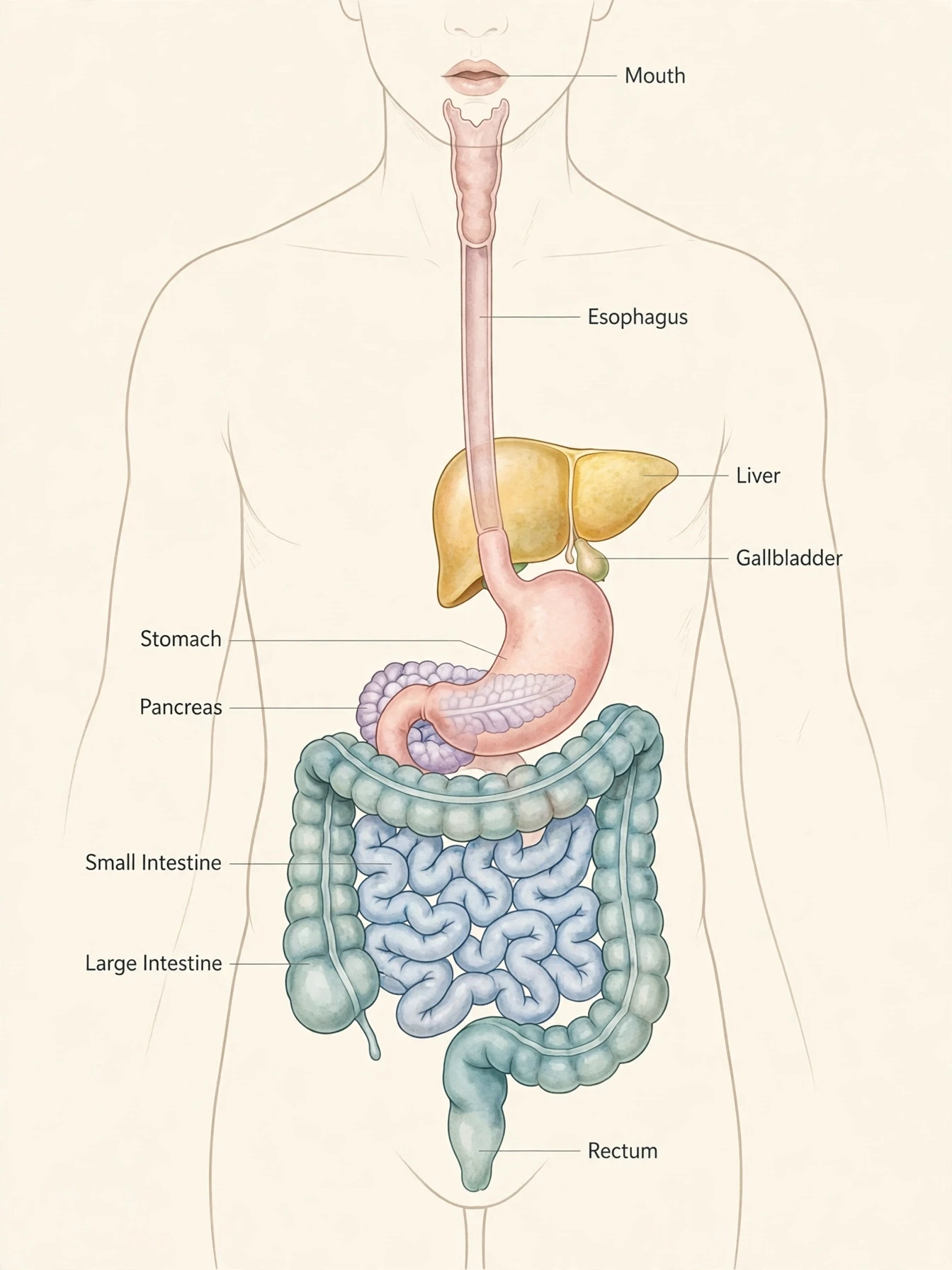
The digestive system is made up of the gastrointestinal tract — also called the GI tract or digestive tract — and the liver, pancreas, and gallbladder. The GI tract is a series of hollow organs joined in a long, twisting tube from the mouth to the anus. The hollow organs that make up the GI tract are the mouth, esophagus, stomach, small intestine, large intestine, and anus. That description comes from the U.S. National Institute of Diabetes and Digestive and Kidney Diseases, which keeps one of the clearest public explanations of the system (NIDDK).
Think of the GI tract as a tunnel running through you. Food inside that tunnel is technically still outside your body — it only becomes part of you when its nutrients cross the gut wall into the blood. That is why the gut wall is so carefully guarded, and why so much of your immune system lives there. If you want the bigger picture of how cells handle what arrives, our guide to cell biology explains what happens once nutrients reach a cell.
2.2 The accessory organs: helpers that never touch food
The liver, pancreas, and gallbladder are called accessory organs because food never passes through them. They send juices into the tract instead. The liver makes bile, a greenish fluid that breaks fat into tiny droplets. The gallbladder stores that bile and releases it when a fatty meal arrives. The pancreas makes enzymes that finish breaking down carbohydrates, proteins, and fats, plus bicarbonate that calms the stomach acid down before it can burn the small intestine.
Bacteria in your GI tract, also called gut flora or the microbiome, help with digestion too. Parts of your nervous and circulatory systems help as well. Working together, nerves, hormones, bacteria, blood, and the organs of your digestive system digest the foods and liquids you eat or drink each day.
Digestion is a relay, not a solo performance. Every organ hands the meal to the next one in better shape than it found it — smaller, softer, and closer to a form the blood can carry.
3. How the Digestive System Works: Six Steps, One Meal
Every meal goes through the same six activities, in the same order:
Ingestion — taking food into the mouth.
Mechanical digestion — physically breaking food into smaller pieces by chewing, churning, and squeezing.
Chemical digestion — using acids and enzymes to split large molecules into small ones.
Propulsion — moving food along the tract, mostly by waves of muscle called peristalsis.
Absorption — moving nutrients and water across the gut wall into the blood.
Elimination — removing undigested material and waste as stool.
Mechanical and chemical digestion work as a pair. Chewing and churning increase the surface area of food, which gives enzymes far more places to attack. A whole almond and a chewed almond contain the same nutrients, but the chewed one gives its nutrients up much faster because its surface area is enormously larger. That simple idea — more surface, faster chemistry — runs through the entire digestive system.
The table below gives the whole journey at a glance. The sections that follow walk through it step by step.
Stage | Main organ | What happens | Key juices or helpers |
|---|---|---|---|
Mouth | Mouth, teeth, tongue | Chewing grinds food; saliva moistens it and starts starch breakdown | Saliva, salivary amylase |
Swallowing | Esophagus | Peristalsis pushes the bolus down to the stomach | Mucus for lubrication |
Stomach | Stomach | Acid and churning turn food into liquid chyme; protein digestion begins | Hydrochloric acid, pepsin |
Small intestine | Duodenum, jejunum, ileum | Most chemical digestion and nearly all nutrient absorption | Bile, pancreatic enzymes, intestinal enzymes |
Large intestine | Colon | Water absorption; microbes ferment fibre and make some vitamins | Gut bacteria, mucus |
Elimination | Rectum, anus | Stool is stored, then expelled | — |
4. It Starts in the Mouth: Chewing Is Chemistry
4.1 Teeth, tongue, and the first enzymes
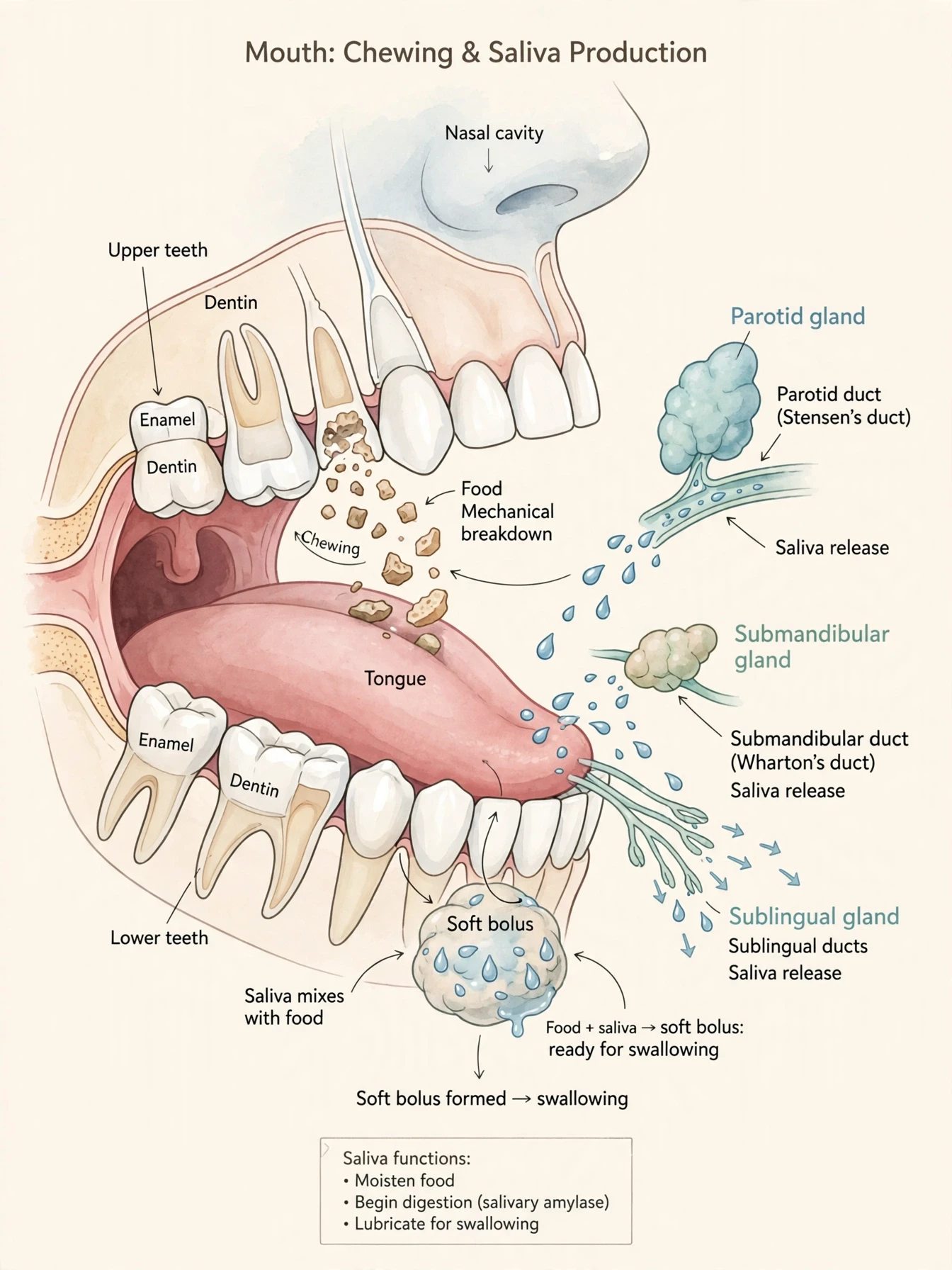
Digestion begins before you put food in your mouth. When you feel hungry, your body sends a message to your brain that it is time to eat. Sights and smells influence your body's readiness for food. Smelling food sends a message to your brain, which then tells the mouth to get ready, and you start to salivate in preparation for a meal.
I learned how powerful that signal is during a lab session where a student held a lemon slice under her nose and watched her mouth water on cue. No food had entered her mouth at all, yet her salivary glands were already working. The brain runs the first step of digestion, not the stomach.
Once food is in, the teeth crush and grind it while saliva provides lubrication and helps food move downward. Saliva contains an enzyme called salivary amylase, which starts breaking large starch molecules into smaller pieces. That is why a plain cracker, chewed slowly, starts to taste faintly sweet — amylase is turning starch into sugar right there on your tongue. The slippery mass of partly broken-down food is called a bolus.
4.2 Why chewing well matters more than people think
My canteen friend from the opening story had the right instinct and the wrong technique. He was hungry, so he ate fast. Fast eating skips the mechanical step, which forces the stomach to work harder and longer on pieces that should have been ground down in the mouth. People who chew slowly often find they feel full sooner, because the brain has time to register the meal — a point worth remembering at any table, and one reason thoughtful healthy meal prep starts with slowing down, not with a new diet.
Chewing also protects the esophagus. A poorly chewed lump of food is harder to swallow and easier to choke on. The tongue's job is easy to overlook: it tastes, it pushes the bolus to the back of the mouth, and it starts the swallow at exactly the right moment.
5. The Esophagus and Peristalsis: A Wave You Cannot Feel
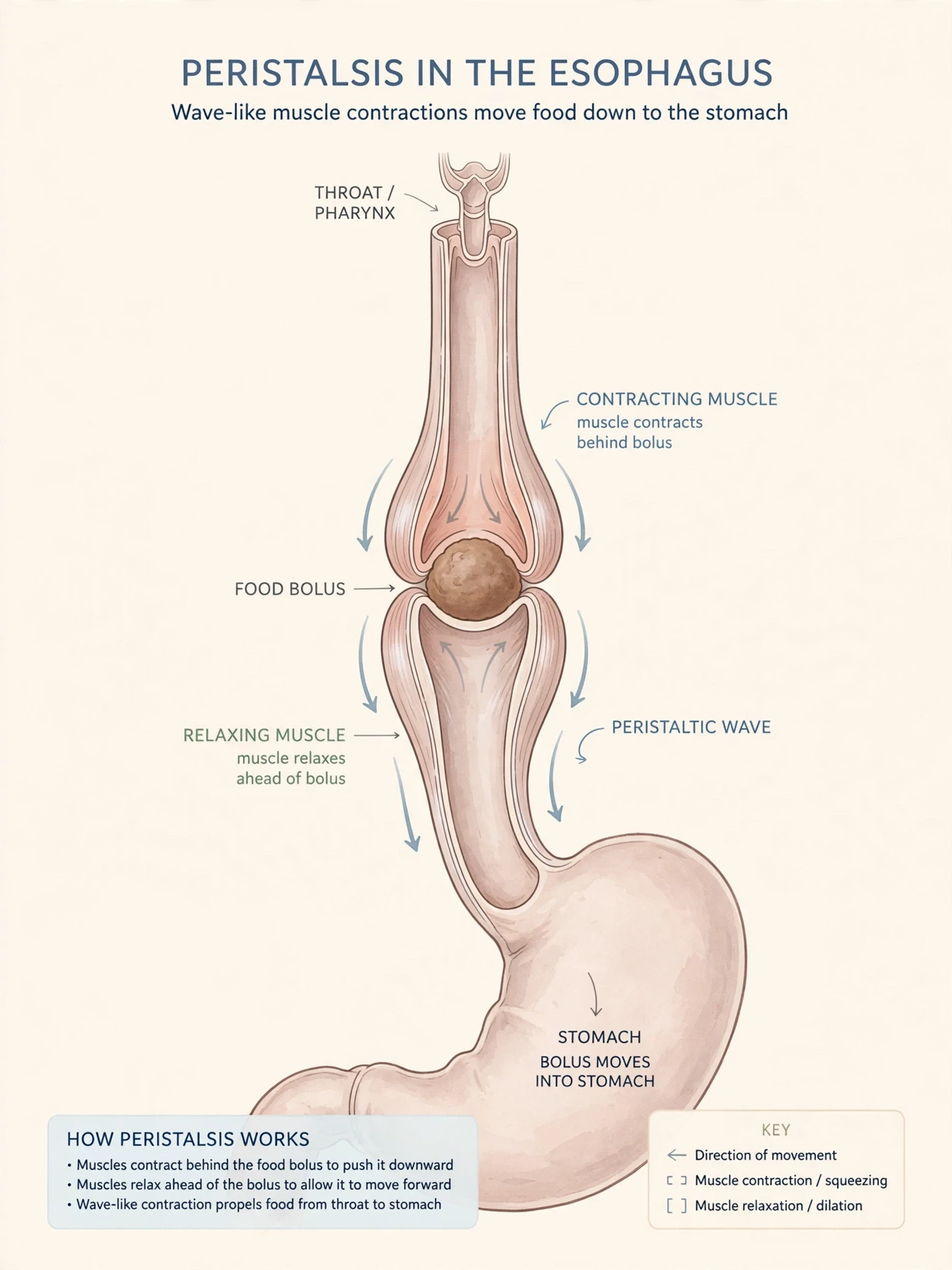
Swallowing is the only part of digestion you consciously control, and only the first half of it. Once the bolus passes the throat, a wave of muscle takes over. Food moves through the GI tract by a process called peristalsis. The large, hollow organs of the GI tract contain a layer of muscle that lets their walls move. The movement pushes food and liquid through the GI tract and mixes the contents within each organ. The muscle behind the food contracts and squeezes the food forward, while the muscle in front of the food relaxes to let the food move.
Here is the part that surprises most people I talk to: peristalsis works against gravity. You can swallow while standing on your head, and the food will still reach your stomach. Astronauts swallow in weightlessness. The wave is strong and one-directional, and it keeps going all the way down the tract, mixing and pushing for hours.
At the bottom of the esophagus sits a ring of muscle called the lower esophageal sphincter. It opens to let food into the stomach and closes to keep acid from washing back up. When it weakens or relaxes at the wrong time, stomach acid flows into the esophagus and causes heartburn — the burning feeling behind the breastbone that so many people know too well.
6. The Stomach: An Acid Bath With a Safety Lining
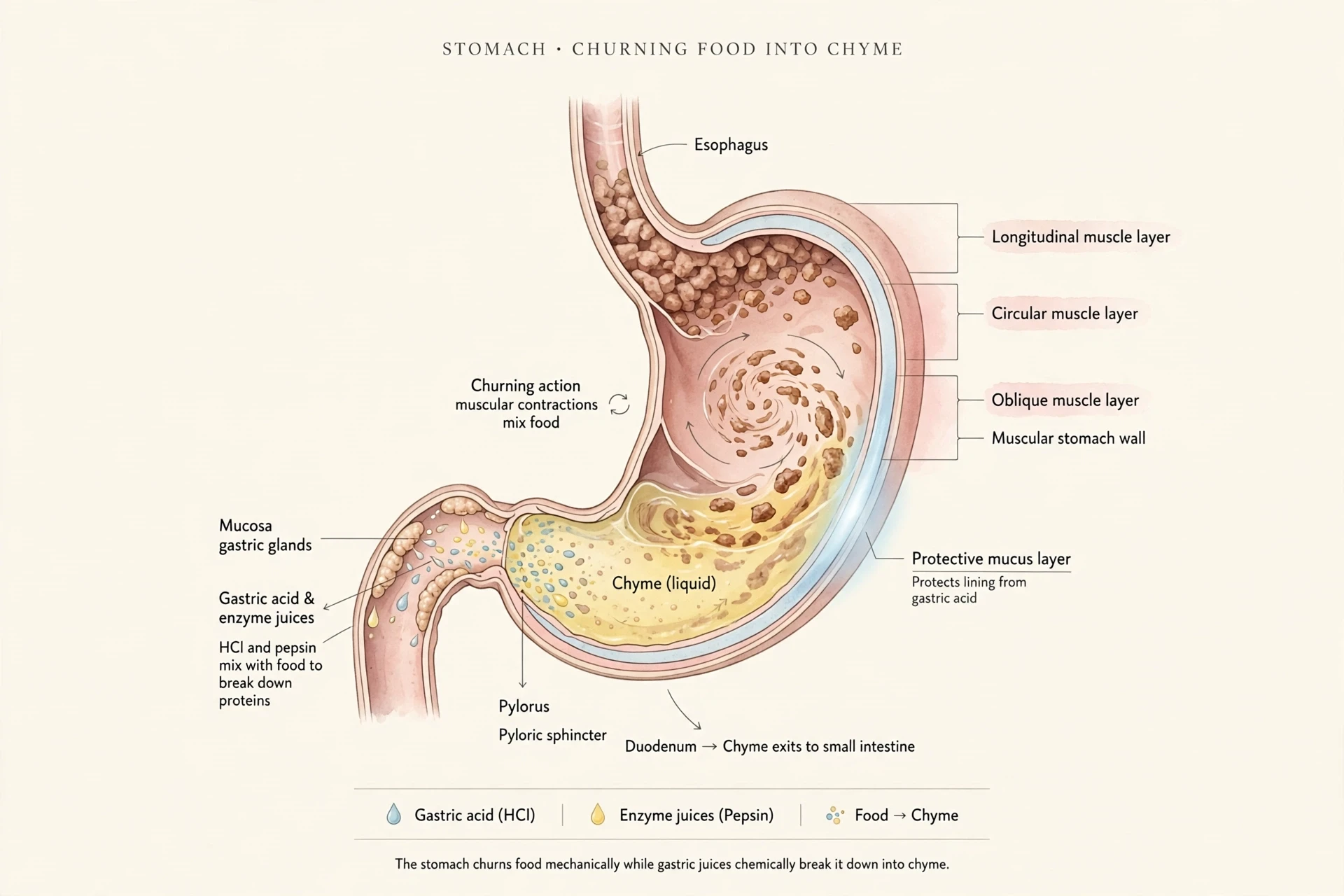
The stomach is a muscular, J-shaped bag that does three jobs at once: it stores food, it churns it, and it starts breaking down protein. Its contents are extremely acidic, with a pH between 1.5 and 2.5 — roughly as acidic as lemon juice or vinegar, and strong enough to kill many microorganisms that arrive with food.
That acid does two things. It unfolds proteins so enzymes can attack them, and it switches on pepsin, the stomach's main protein-cutting enzyme. The stomach wall also secretes mucus, a thick protective layer that keeps the acid from digesting the stomach itself. When that mucus barrier fails, the result can be a stomach ulcer — an open sore in the stomach lining.
A question I used to get from students every single year was: "If stomach acid is that strong, why doesn't it burn a hole through us?" The honest answer is that it sometimes nearly does. The mucus-bicarbonate barrier is rebuilt constantly, and the stomach lining replaces itself every few days. The system is not a solid wall; it is a wall under permanent repair.
The stomach churns its contents into a thick, soupy liquid called chyme, then releases it into the small intestine a little at a time through a valve called the pyloric sphincter. A full meal can take two to four hours to leave the stomach, and fatty meals take longest — fat slows stomach emptying, which is one reason a rich meal keeps you full for hours. The stomach absorbs very little itself; its job is preparation, not delivery.
7. The Small Intestine: Where Food Actually Becomes You
7.1 Three parts, one enormous surface
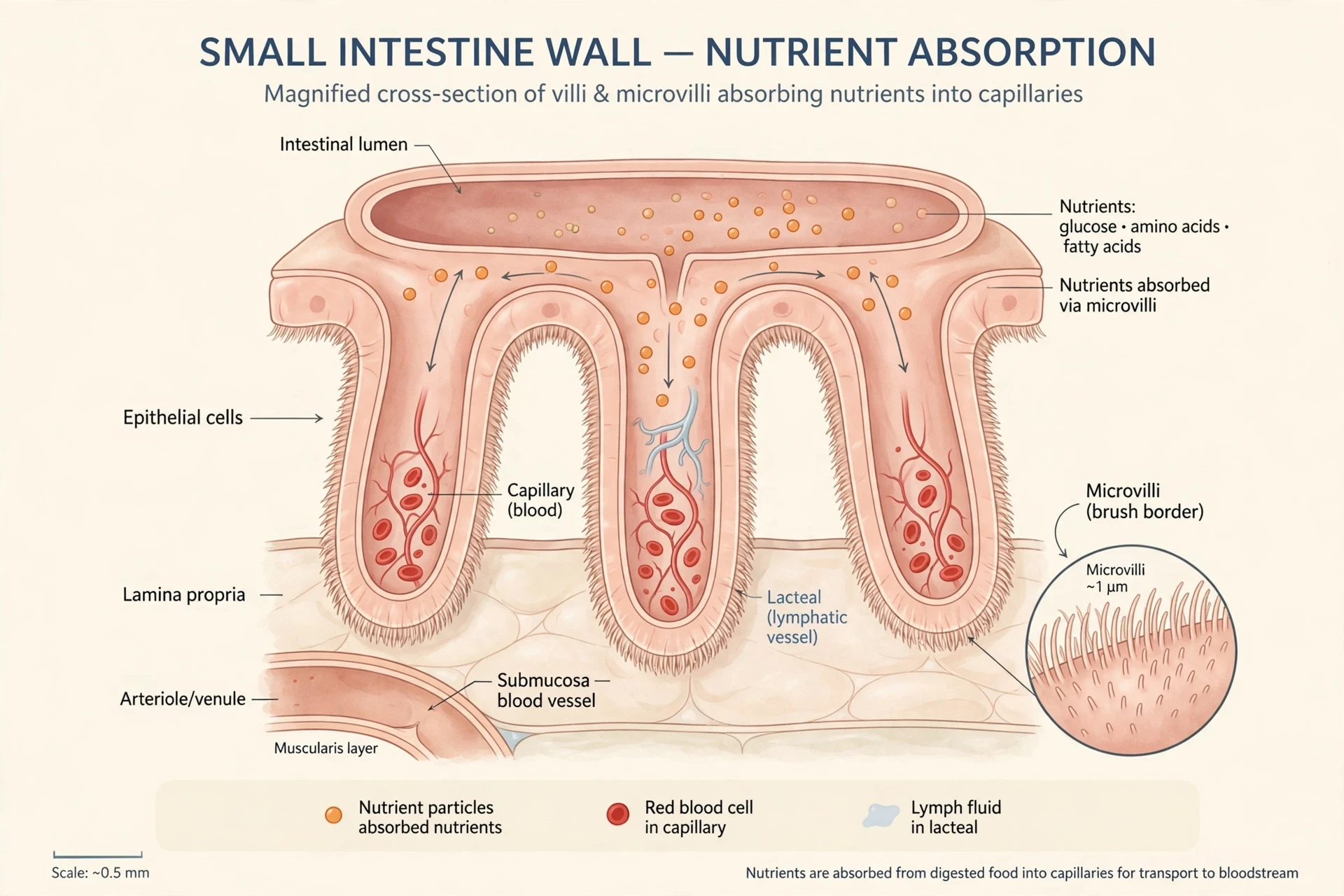
The small intestine is where the real business of digestion happens. It is about 20 feet long in an adult, coiled tightly in the abdomen, and divided into three parts: the duodenum, the jejunum, and the ileum. Food arrives here as acidic chyme, and leaves as a thin residue with almost all of its useful nutrients gone.
The first few inches, the duodenum, are the busiest chemical workshop in the body. Bile from the liver and enzymes from the pancreas arrive here through shared ducts, and the pancreas also releases bicarbonate to neutralize the stomach acid. Without that neutralization, the acid would damage the intestinal wall. The enzymes finish what the mouth and stomach started: pancreatic amylase breaks down starch, lipase breaks down fat, and proteases break down protein into amino acids. When proteins are digested, amino acids are the result, and the body uses those amino acids to build new proteins, repair tissue, and break down food (MedlinePlus).
7.2 Villi: the surface area trick
The inside of the small intestine is not smooth. It is covered in folds, and those folds are covered in villi — tiny finger-like projections — and each villus is covered in even tinier microvilli. This folding multiplies the absorbing surface to roughly the size of a badminton court, packed into a tube you could hold in your arms. OpenStax describes this design in its anatomy and physiology text, and it is worth pausing on: the body solves the problem of absorbing a whole meal through a small space by folding the space itself (OpenStax Anatomy & Physiology).
Each villus holds a tiny blood capillary and a lymph vessel. Sugars and amino acids pass into the blood and travel straight to the liver through the portal vein, which checks and processes them before they reach the rest of the body. Fats take a different route: they are rebuilt into larger packages and travel through the lymph, which is slower. That split explains why a sugary drink raises blood sugar within minutes while a fatty meal takes hours to show its full effect.
I once watched a researcher demonstrate villi under a low-power microscope to a group of schoolchildren, and one child said they looked like a shag carpet. That is still the best description I have heard. A shag carpet absorbs far more than a flat floor, and your small intestine is the most absorbent carpet in the known world.
8. The Liver, Pancreas, and Gallbladder: The Support Team
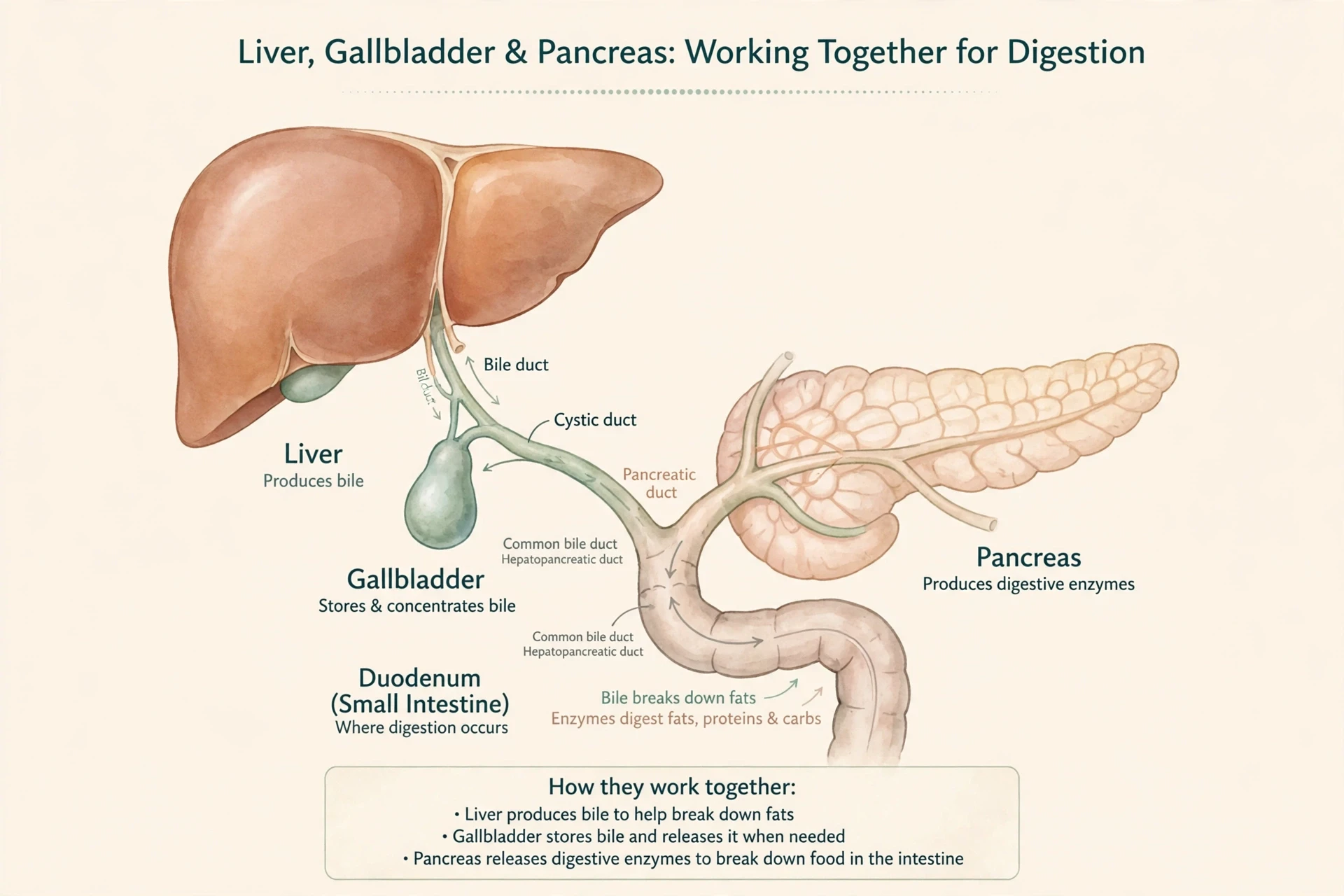
The liver is the largest internal organ, and it does far more than digestion — it processes nutrients, stores glucose as glycogen, makes proteins for blood clotting, and filters the blood coming from the gut. In digestion, its headline job is making bile: about a litre a day. Bile is not an enzyme. It is a detergent. It breaks large fat globules into tiny droplets, giving lipase the surface area it needs to work. Without bile, most dietary fat would pass through undigested.
The gallbladder is a small pear-shaped sac tucked under the liver. It stores bile and concentrates it, then squeezes it into the duodenum when a fatty meal arrives. If you have ever wondered why a very fatty meal can feel heavy hours later, part of the answer is that fat digestion is a slow, bile-dependent process — and it is one of the reasons diet and lifestyle matter so much for liver health, as covered in our guide to fatty liver, diet and lifestyle.
The pancreas is easy to miss and impossible to do without. It makes the enzymes that finish digestion, and it also makes insulin, the hormone that lets cells take up glucose from the blood. The same organ that digests your lunch also controls your blood sugar. When the pancreas is damaged, both jobs suffer at once.
Nutrient | Where digestion finishes | What it becomes | Where it goes |
|---|---|---|---|
Carbohydrates | Small intestine | Glucose and other simple sugars | Blood, then liver |
Proteins | Stomach and small intestine | Amino acids | Blood, then liver |
Fats | Small intestine | Fatty acids and glycerol | Lymph, then blood |
Water and minerals | Small and large intestine | Absorbed as they are | Blood |
Fibre | Large intestine (microbes) | Short-chain fatty acids | Colon cells and blood |
Table: the fate of each nutrient, in brief. The details fill the rest of this article.
9. The Large Intestine and the Microbiome: The Last Stop
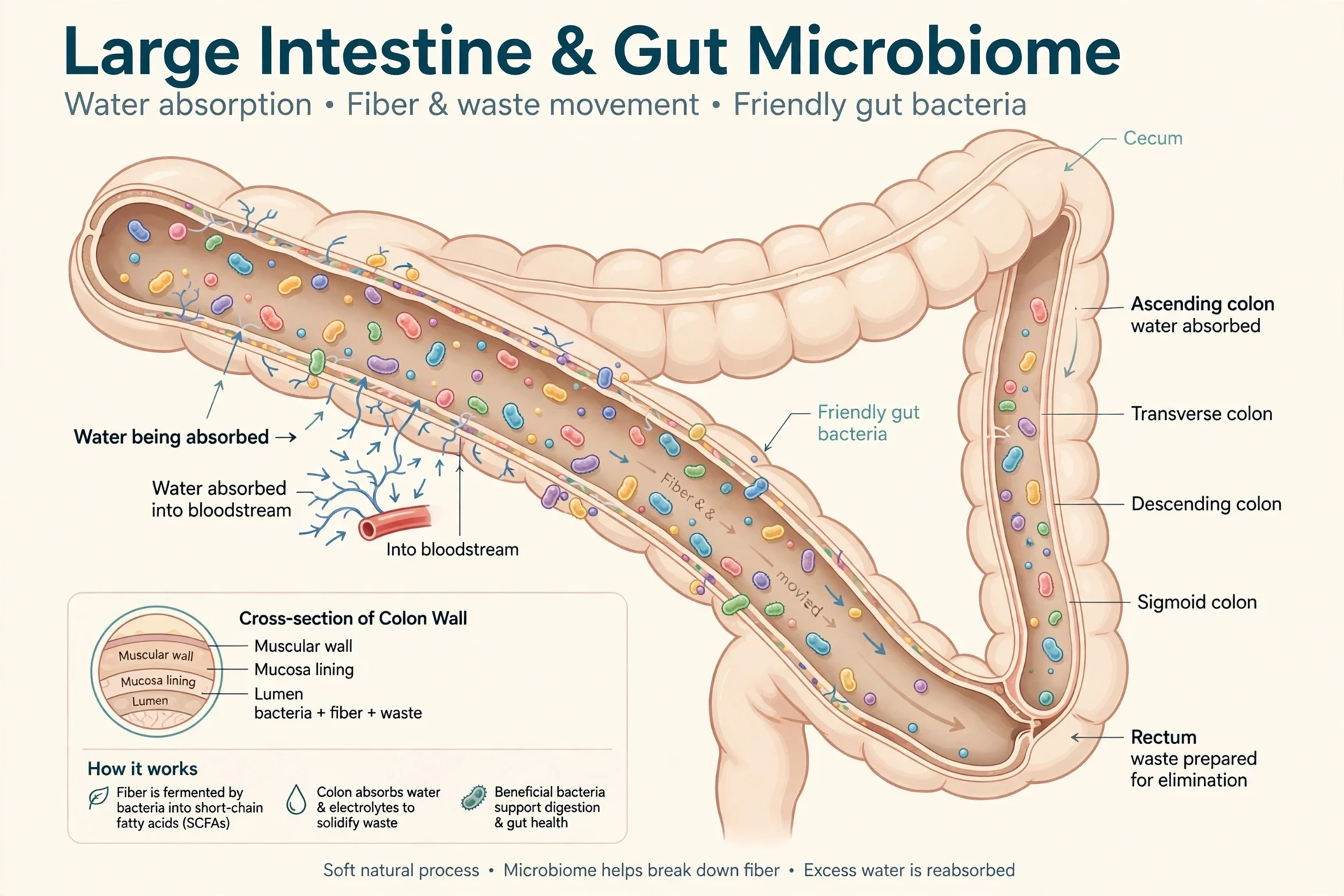
What reaches the large intestine is mostly water, undigested fibre, dead cells, and bacteria. The colon's main job is to absorb water and salts back into the body, which is why the contents get progressively more solid as they travel through it. This is also where your gut microbes earn their keep.
The human gut hosts trillions of bacteria, viruses, and fungi — a community scientists call the microbiome. These microbes ferment fibre that your own enzymes cannot digest, producing short-chain fatty acids that feed the cells lining your colon. They also make some vitamins, including vitamin K and several B vitamins, and they help train your immune system. To understand what these microbes actually are, our explainer on microbiology: bacteria and viruses starts from first principles.
The relationship runs both ways. What you eat shapes which microbes thrive, and the microbes shape how you feel. A diet rich in varied plant fibre feeds a diverse microbiome; a diet of mostly processed food feeds a narrower one. Researchers still disagree on exactly how much of our health the microbiome controls — the field is young, and bold claims run ahead of the evidence — but the broad picture is solid: a diverse gut community is linked to better digestion and a calmer immune system.
What is left after water absorption is stool, stored in the rectum until stretch signals tell the brain it is time to go. The whole journey, from first bite to elimination, typically takes about a day to two days, and the range between healthy people is wide. Speed is not a health score on its own; pain, blood, or a sudden lasting change in pattern is the thing to take to a clinician.
Your gut microbes are not passengers. They are part of the digestive workforce — and like any workforce, they do their best work when they are fed well and kept diverse.
10. Who Is in Charge? Nerves, Hormones, and the Gut-Brain Connection
10.1 The enteric nervous system: a second brain
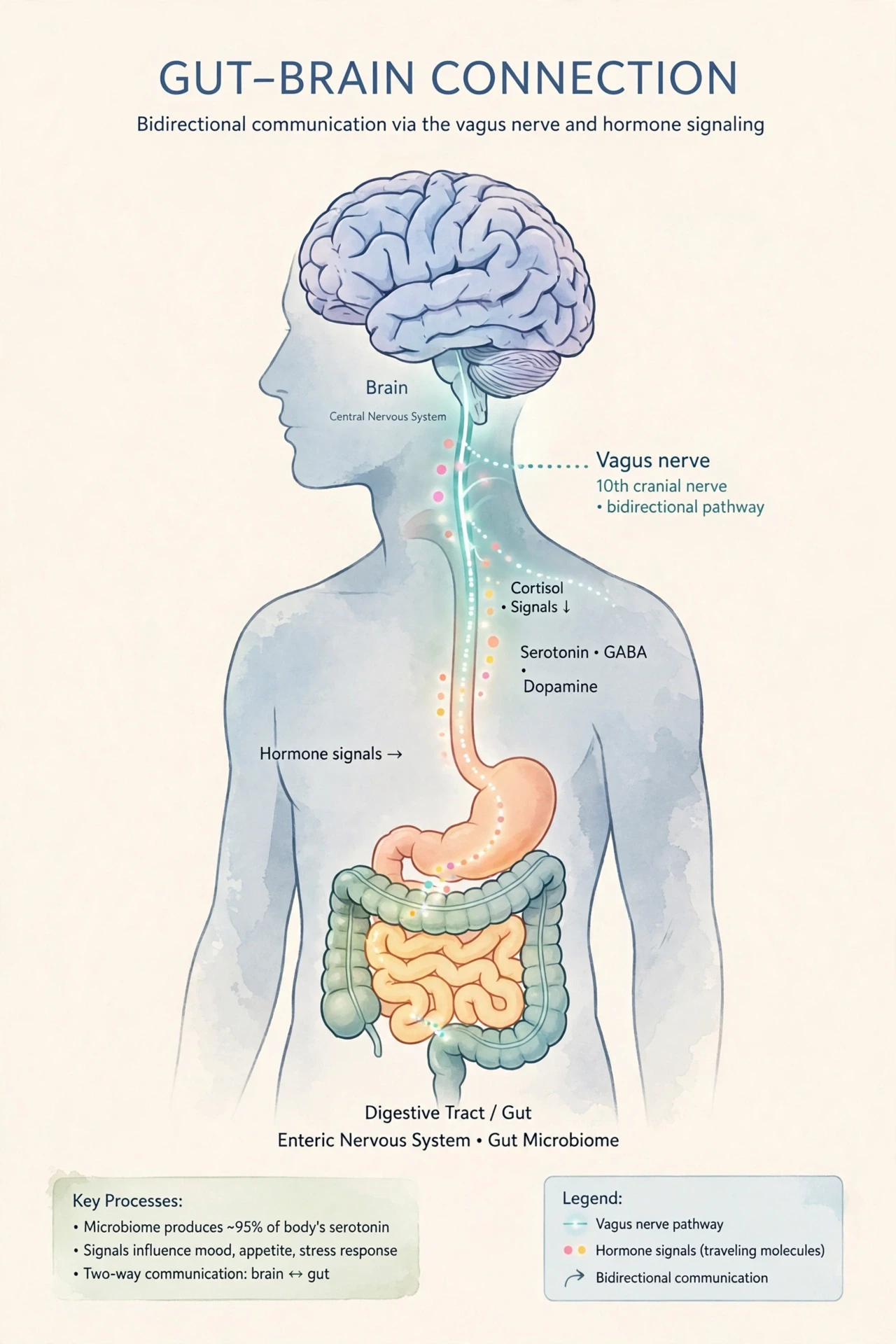
The gut has its own nervous system, the enteric nervous system, with around a hundred million neurons embedded in the gut wall — more than in your spinal cord. It can run the basic program of digestion on its own: sense food, release juices, start peristalsis, and move things along. Scientists sometimes call it the second brain, and the nickname is earned. It does not think in words, but it senses, decides, and acts.
10.2 Hormones that switch digestion on and off
Hormones carry the longer messages. Gastrin tells the stomach to make acid when food arrives. Secretin tells the pancreas to release bicarbonate when acid enters the small intestine. Cholecystokinin tells the gallbladder to release bile and the pancreas to release enzymes, and it also tells the brain you are getting full. Ghrelin, made mostly in the stomach, does the opposite: it rises before meals and tells the brain you are hungry.
10.3 Why stress upsets your stomach
The gut and the brain are connected by the vagus nerve, a long cable that carries signals in both directions. That is why anxiety can make your stomach churn before an exam, and why a gut upset can leave you feeling low. This two-way conversation is the subject of our article on the gut-brain connection, and it is one of the most active areas of research in medicine today.
I have seen this connection in the most ordinary setting: a colleague who could eat anything on holiday but got stomach cramps every Sunday evening before the working week. Same food, same person, different state of mind. Stress hormones change gut movement and acid production, and the gut reports the change straight back to the brain. The digestive system is not just plumbing. It is a conversation.
11. What Happens to Your Food: Macronutrients in Plain Language
Food is mostly three kinds of molecules, and your digestive system handles each one differently. The details matter if you want to understand why some meals keep you full for hours and others leave you hungry in one.
Carbohydrates start breaking down in the mouth, pause in the acid stomach, and finish in the small intestine, where they become simple sugars — mostly glucose — that the blood carries to cells for energy or to the liver for storage. Our guide to understanding macronutrients covers the full picture of carbs, proteins, and fats.
Proteins are unfolded by stomach acid, cut by pepsin, then cut again by pancreatic and intestinal enzymes into amino acids, which the blood carries to the liver and then to tissues for growth and repair.
Fats are the slowest. Bile breaks them into droplets, lipase splits them into fatty acids and glycerol, and those pieces are rebuilt and sent through the lymph before they reach the blood. Fat slows stomach emptying, which is why a fatty meal satisfies for longer.
Water, vitamins, and minerals need little or no digestion; they are absorbed more or less as they are. Vitamins split into two groups: water-soluble ones (like vitamin C and the B vitamins) travel in the blood, and fat-soluble ones (A, D, E, K) travel with the fats and need bile to be absorbed properly.
A common misunderstanding is that digestion ends when food leaves the stomach. In reality, the stomach is the preparation room. Absorption — the moment nutrients actually enter your body — happens almost entirely in the small intestine, hours after the meal began.
12. Common Misconceptions About Digestion
Most people assume digestion is simple: food goes in, the stomach dissolves it, waste comes out. What we actually see in the science is a long, coordinated chain in which the stomach is only one link — and some of the most important work is done by organs that never touch food and microbes that are not even human cells.
"Your stomach does all the digesting." It starts protein digestion and churns food, but most chemical digestion and nearly all absorption happen in the small intestine.
"Acid reflux means you have too much stomach acid." Often the problem is acid in the wrong place — washing up into the esophagus — rather than too much acid overall. Reflux is common and has many causes; persistent symptoms deserve a clinician's look, not a guess.
"You should not drink water with meals because it dilutes stomach acid." There is no good evidence that normal amounts of water with a meal impair digestion. Water helps food move and helps the gut do its work.
"Detox teas and cleanses clean your gut." Your liver and kidneys already handle waste removal, and your gut renews its own lining constantly. Fasting and autophagy are real biological processes, but they are far more subtle than cleanse marketing suggests — see our evidence-based look at fasting and autophagy before believing a label.
"Everyone digests at the same speed." Transit time varies widely between healthy people, and it changes with fibre, fluid, activity, stress, and medication. One person's normal is another person's unusual.
13. How to Keep Your Digestive System Working Well
Nothing here replaces medical advice, and persistent symptoms — blood in stool, unexplained weight loss, pain that keeps coming back — are reasons to see a clinician, not to read another article. With that said, the habits that support digestion are the same habits that support health generally, and the evidence behind them is strong.
Chew slowly and eat without rushing. It gives enzymes time to work and gives your brain time to register fullness.
Eat fibre from varied plant foods. Fibre feeds your gut microbes, adds bulk to stool, and keeps things moving. Aim for a variety of fruits, vegetables, legumes, and whole grains rather than one "superfood."
Drink enough water. The colon absorbs water, and too little fluid is one of the most common reasons for constipation.
Move every day. Walking after a meal helps gut movement in a way that is small, real, and free.
Protect your sleep and stress levels. Both change gut movement and sensitivity through the gut-brain connection.
Be cautious with alcohol and smoking. Both irritate the gut lining and change how the liver and stomach work.
Do not ignore new, lasting changes. A change in bowel habits that lasts more than a few weeks deserves a conversation with a clinician. Cleveland Clinic lists the common conditions that can affect the digestive system — from acid reflux and celiac disease to inflammatory bowel disease — and the symptoms that should prompt a call to a healthcare provider (Cleveland Clinic).
14. What Researchers Are Learning Now
Digestion looks like a solved subject in a textbook, but it is a live research field. Three directions are worth watching.
First, the microbiome. Large studies are mapping how gut bacteria change with diet, antibiotics, and age, and how those changes link to metabolism and immune health. The most honest summary of where this stands is that the links are real and the treatments are still catching up. Faecal microbiota transplants already work for one specific infection — recurrent Clostridioides difficile — and researchers are testing whether similar approaches can help other conditions. Most probiotic products sold today have far weaker evidence than their labels suggest.
Second, the gut-brain axis. Researchers are tracing how microbial products and gut hormones influence mood, appetite, and even sleep. The vagus nerve turns out to carry more traffic than anyone expected, and the gut's own nervous system is being studied as a possible early site of changes linked to neurological disease. This is promising, careful science — not a promise that a yoghurt will fix anxiety.
Third, personalised nutrition. Studies that feed the same meal to hundreds of people find surprisingly different blood-sugar responses, shaped by the microbiome, sleep, and what else was eaten that day. The idea of one perfect diet for everyone is fading. The replacement is not chaos; it is a more careful, individual picture of how food, microbes, and metabolism interact — and it is still being drawn.
15. The Journey, in Short
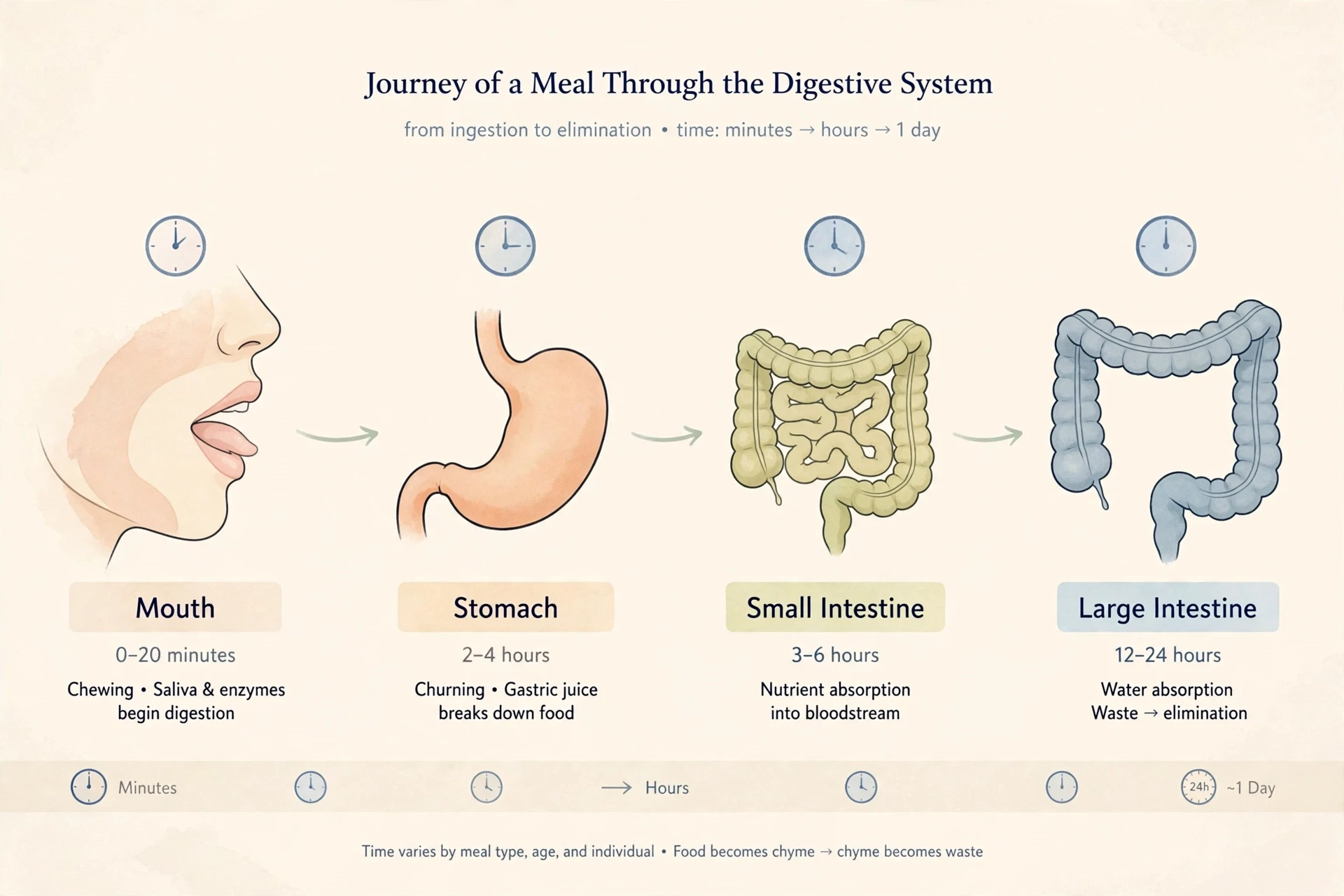
A meal enters your mouth, where teeth and saliva start the work. Peristalsis carries it down the esophagus to the stomach, where acid and churning turn it into chyme. In the small intestine, bile and pancreatic enzymes finish breaking it down, and villi absorb the nutrients into the blood and lymph. In the large intestine, water is reclaimed and microbes ferment what is left. Nerves and hormones run the whole chain, and the brain listens in the entire time.
The digestive system is not a bag of acid. It is a long, folded, carefully guarded production line with its own nervous system, its own hormone signals, and a workforce of trillions of microbes. It turns the outside world — food — into you, every single day, without asking for your attention. The least we can do is chew slowly, eat well, and pay attention when it tells us something is wrong.
Frequently Asked Questions
How long does it take to digest food?
Most meals take roughly a day to two days to travel the full length of the digestive tract, though the range between healthy people is wide. Food spends minutes in the mouth and esophagus, two to four hours in the stomach, several hours in the small intestine, and the longest time — often 10 hours or more — in the large intestine. Fibre, fluid, activity, stress, and medication all change the timing.
What is the main function of the digestive system?
Its main function is to break food and drink into nutrients small enough to absorb into the blood, so the body can use them for energy, growth, and cell repair, and then to remove what is left as waste. The NIDDK puts it plainly: digestion is important because the body needs nutrients from food and drink to work properly and stay healthy.
Which organ does most of the digestion?
The small intestine does most of the digestive system's chemical digestion and nearly all nutrient absorption. The stomach prepares food by churning it with acid and starting protein digestion, but the small intestine — with help from the liver, gallbladder, and pancreas — is where food is finished and absorbed.
What is peristalsis?
Peristalsis is the wave-like contraction of smooth muscle in the walls of the GI tract. The muscle behind food contracts and squeezes it forward, while the muscle ahead relaxes to let it move. It pushes food from the mouth to the anus, works against gravity, and continues for hours after a meal.
Why does stress upset my stomach?
The gut and brain are linked by the vagus nerve and by hormones, in both directions. Stress hormones change gut movement, acid production, and sensitivity, so anxiety can cause cramps, nausea, or urgency. The gut also sends signals back to the brain, which is why gut problems can affect mood.
What foods are best for gut health?
Varied plant fibre — fruits, vegetables, legumes, whole grains, nuts, and seeds — feeds a diverse microbiome, and fermented foods add live microbes. Water and regular movement help too. No single food guarantees gut health, and anyone with persistent digestive symptoms should talk to a clinician rather than relying on a diet trend.
Sources
National Institute of Diabetes and Digestive and Kidney Diseases (NIDDK). "Your Digestive System & How It Works." https://www.niddk.nih.gov/health-information/digestive-diseases/digestive-system-how-it-works
OpenStax, Anatomy and Physiology, Chapter 23: The Digestive System — "Overview of the Digestive System." https://openstax.org/books/anatomy-and-physiology/pages/23-1-overview-of-the-digestive-system
OpenStax, Concepts of Biology, Section 16.2: Digestive System. https://openstax.org/books/concepts-biology/pages/16-2-digestive-system
Cleveland Clinic. "Digestive System: Function, Organs & Anatomy." https://my.clevelandclinic.org/health/body/7041-digestive-system
MedlinePlus (U.S. National Library of Medicine). "Amino acids." https://medlineplus.gov/ency/article/002222.ht