

Introduction
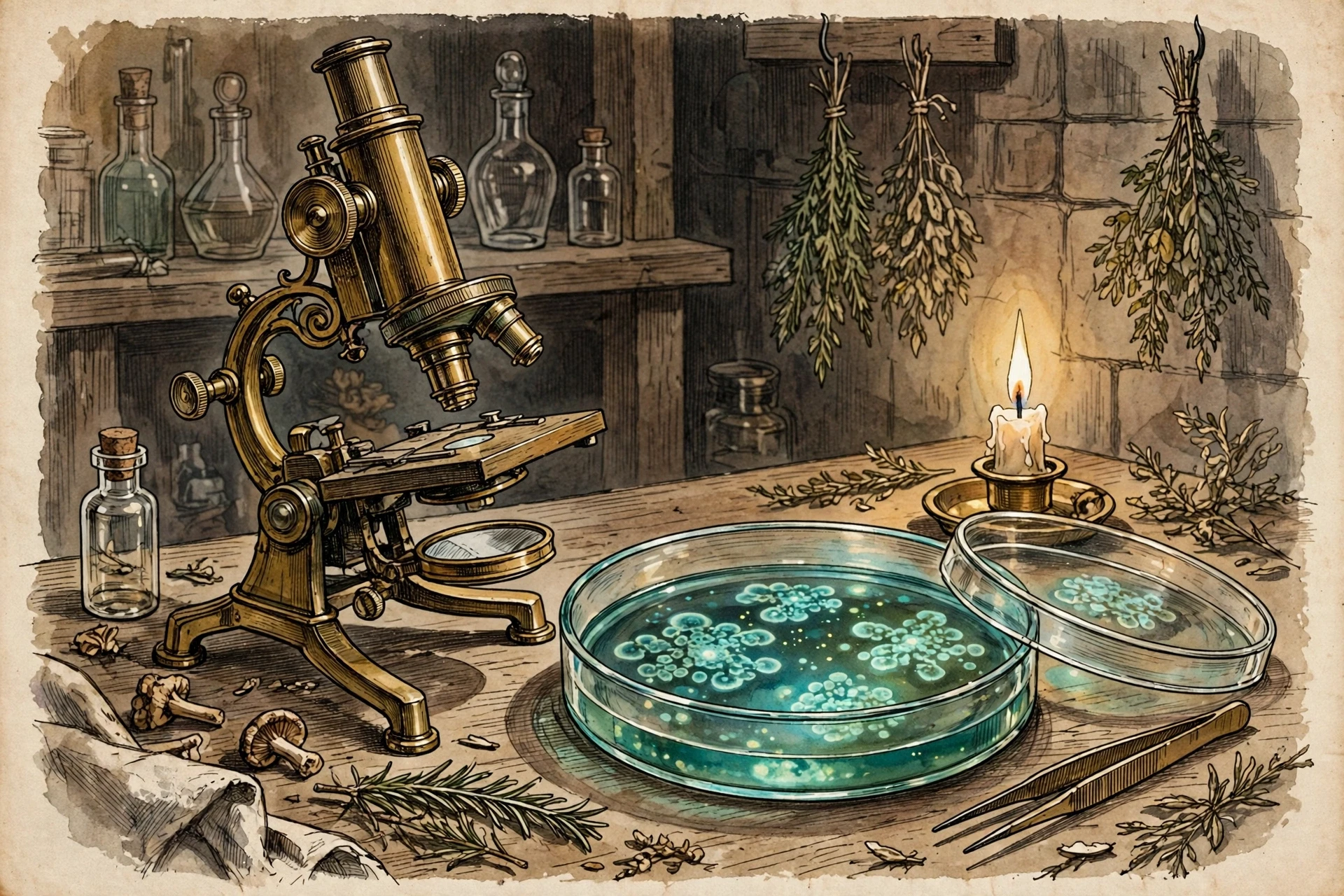
The dish had been left on the bench overnight by mistake, in the teaching lab where I ran my first microbiology class. I found it the next morning, still warm from the incubator, and I remember stopping mid-step because the agar inside it was no longer clear. Overnight, a smear of invisible dust from a student's fingertip had become a city: cream-coloured colonies, each one a pile of millions of cells, arranged in neat, round islands as if someone had planned them. The student who had made the smear stood beside me, horrified that she had ruined an experiment. I told her she had just done the oldest experiment in microbiology — the one that has been repeated, in one form or another, since a Dutch cloth merchant first pointed a handmade lens at a drop of water and saw it wriggle.
That is the scale of the subject. Microbiology is the study of life too small to see, and it turns out that this invisible life runs most of the visible world. The bacteria in your gut help digest your breakfast. The viruses in the oceans kill enough bacteria every day to keep the seas from choking on their own dead. The microbes in the soil feed the plants that feed you. And a handful of the same kinds of organisms can, under the wrong conditions, put a person in hospital. This guide follows both sides of that story: what bacteria and viruses are, how they live and multiply, how they help us, how they hurt us, and what the newest research is revealing about the world inside us and beneath our feet.
You do not need a lab coat to follow it. You only need to accept one strange fact up front: you are never alone. Right now, on your skin, in your mouth, and deep in your gut, trillions of microbes are eating, dividing, competing, and cooperating. They were here billions of years before us, and they will be here long after. Understanding them is understanding the terms of our own existence.
1. What Microbiology Really Studies
1.1 A science of the unseen
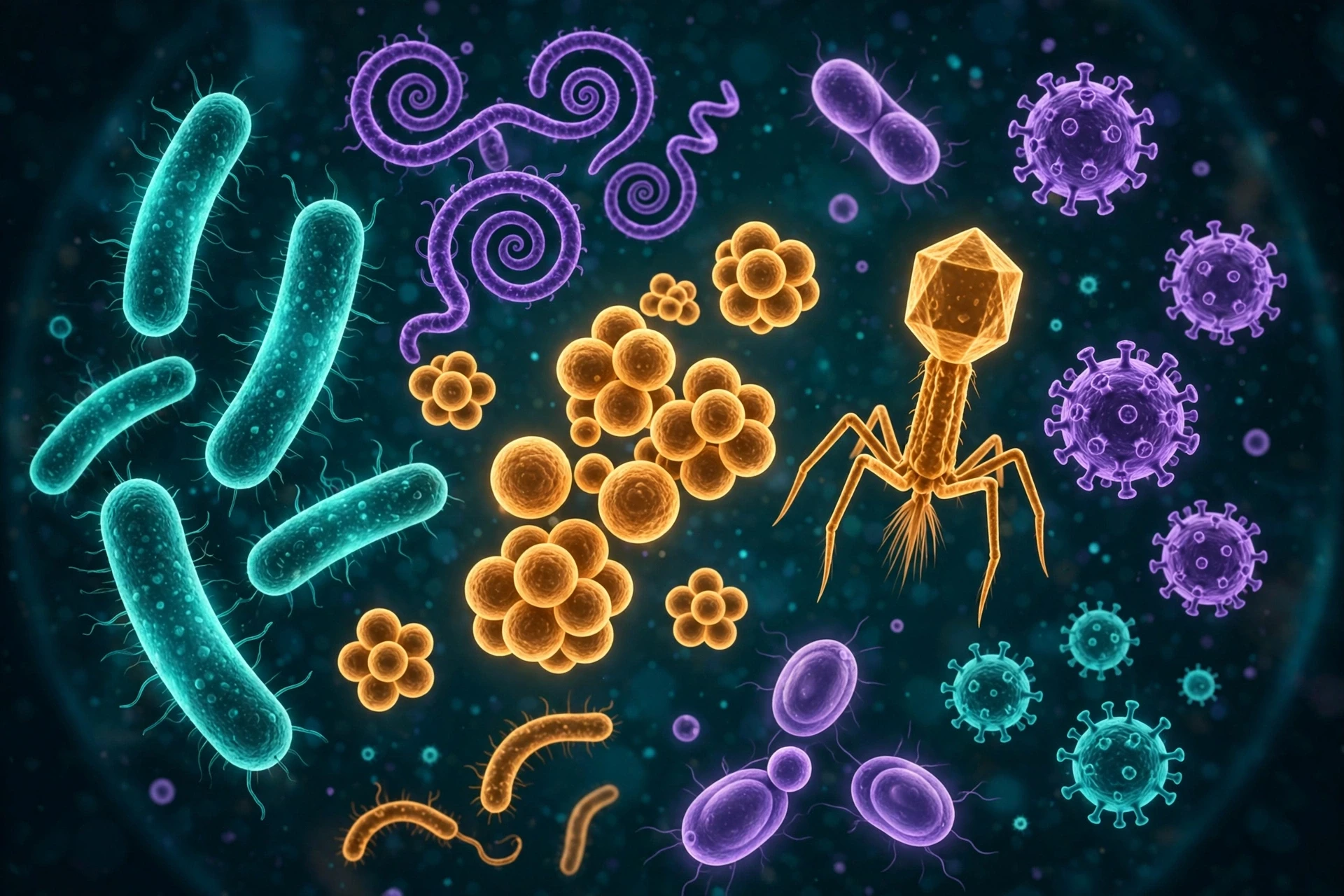
Microbiology is the branch of biology that studies microorganisms: bacteria, archaea, viruses, fungi, protozoa, and microscopic algae. The working definition is simple — if it is too small to see with the naked eye, it belongs to microbiology. A bacterium is typically about one micrometre across, roughly a thousandth of a millimetre. A virus is smaller still, often twenty to four hundred nanometres, which is why viruses were invisible until the electron microscope arrived in the 1930s. A single gram of soil can hold a billion bacteria. A millilitre of seawater can hold ten million viruses.
The field splits into branches by organism and by setting. Bacteriology studies bacteria. Virology studies viruses. Mycology studies fungi. Parasitology studies parasites. Then there are the applied branches that follow microbes into daily life: medical microbiology, food microbiology, environmental microbiology, and industrial microbiology, which puts microbes to work making bread, beer, medicines, and biofuels. A microbiologist in a hospital and a microbiologist in a cheese factory use the same core skills — growing microbes, identifying them, and understanding what they do — and answer very different questions with them.
1.2 Why the small things run the world
It is easy to think of microbes as a footnote to the "real" biology of animals and plants. The numbers say otherwise. Bacteria and archaea have been on Earth for roughly 3.5 to 4 billion years, about three quarters of the planet's history. They invented photosynthesis, they filled the atmosphere with oxygen, and they built the nutrient cycles that every larger organism depends on. The nitrogen in the protein of your muscles passed through bacteria in the soil before it reached a plant, an animal, or you. The carbon cycle, the oxygen you breathe, the decay that returns dead things to the soil — all of it runs on microbial labour.
I learned this the slow way, in a field course where we dug soil samples from a meadow and tried to count what lived in them. We plated the samples, waited, and counted colonies. Then our teacher asked us to estimate what fraction of the microbes in that soil we had actually grown. The honest answer, we learned, was less than one percent. The rest — the vast majority — would not grow on our plates at all. They needed conditions we could not guess, partners we had not provided, or food we had not thought to offer. That gap between what we can grow and what is really there is called the great plate count anomaly, and it is a useful piece of humility: after more than three centuries of microbiology, most microbial life is still known to us only by its DNA.
2. A Short History: From Drops of Water to Germ Theory
2.1 Leeuwenhoek and the animalcules
In the 1670s, Antonie van Leeuwenhoek, a draper from Delft with no university training, ground lenses so fine that a single one could magnify a drop of water several hundred times. What he saw startled him: tiny creatures swimming, darting, and spinning — "animalcules," he called them. He wrote to the Royal Society in London, and his letters were read aloud to men who did not believe him until they built their own lenses and saw the same thing. Leeuwenhoek had opened a door, but nobody knew what lay behind it. For nearly two hundred years, microbes were a curiosity, not a science.
2.2 Pasteur, Koch, and the germ theory
The curiosity became a science in the nineteenth century, and it did so through two stubborn men who disagreed with almost everyone around them. Louis Pasteur, a French chemist, showed that fermentation and decay were caused by living microbes, not by air or by some vague chemical force. His swan-neck flask experiments — broth that stayed sterile because dust settled in the curve of the neck, and turned cloudy the moment the neck was broken — are still the cleanest demonstration I know that life comes from life. Pasteur went on to develop pasteurisation and vaccines for anthrax and rabies, and he did it while the medical establishment still largely believed disease came from bad air.
Robert Koch, a German country doctor, gave the new science its rules. His postulates — a microbe must be found in every case of a disease, isolated and grown in pure culture, shown to cause the disease when introduced into a healthy host, and recovered again from that host — turned suspicion into proof. Using them, Koch identified the bacteria behind anthrax, tuberculosis, and cholera. The cholera work took him to Egypt and India, and it changed public health forever: once people understood that a water supply could carry a microbe, cities began to filter and chlorinate their water, and cholera deaths fell.
2.3 Fleming's dirty dish and the antibiotic age
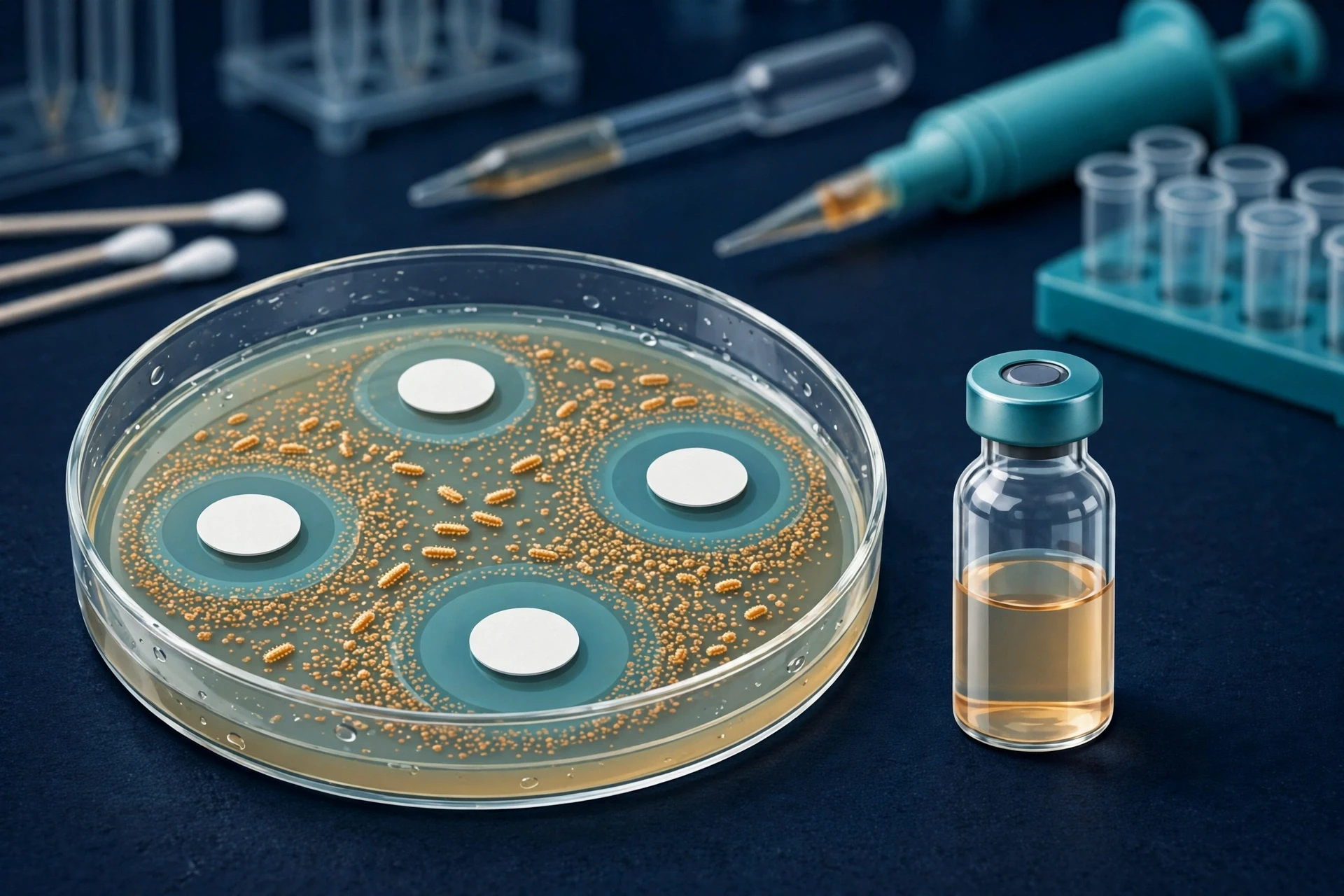
The next great accident happened in 1928, when Alexander Fleming returned from holiday to find that a mould spore had landed on one of his plates of Staphylococcus bacteria and cleared a ring around itself where the bacteria could not grow. Fleming noticed what most of us would have thrown away. The mould was Penicillium, and the substance it made was penicillin. It took another decade, and the work of Florey and Chain at Oxford, to turn that observation into a drug — but by the 1940s, penicillin was saving soldiers' lives, and the antibiotic age had begun. Every one of these stories follows the same shape: someone looked closely at something small, believed what they saw, and refused to accept the easy explanation.
3. Bacteria: The Original Citizens of Earth
3.1 What a bacterium is
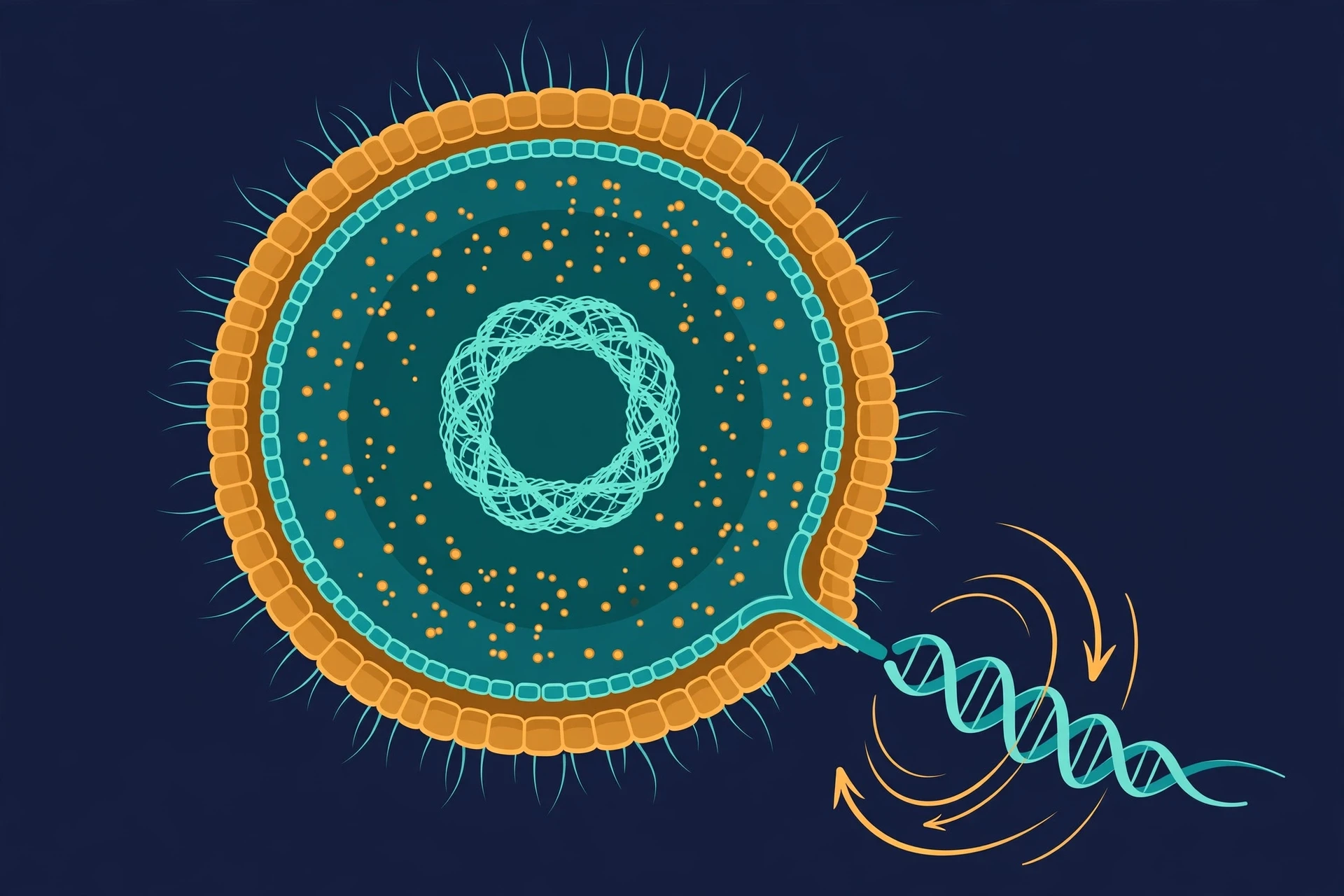
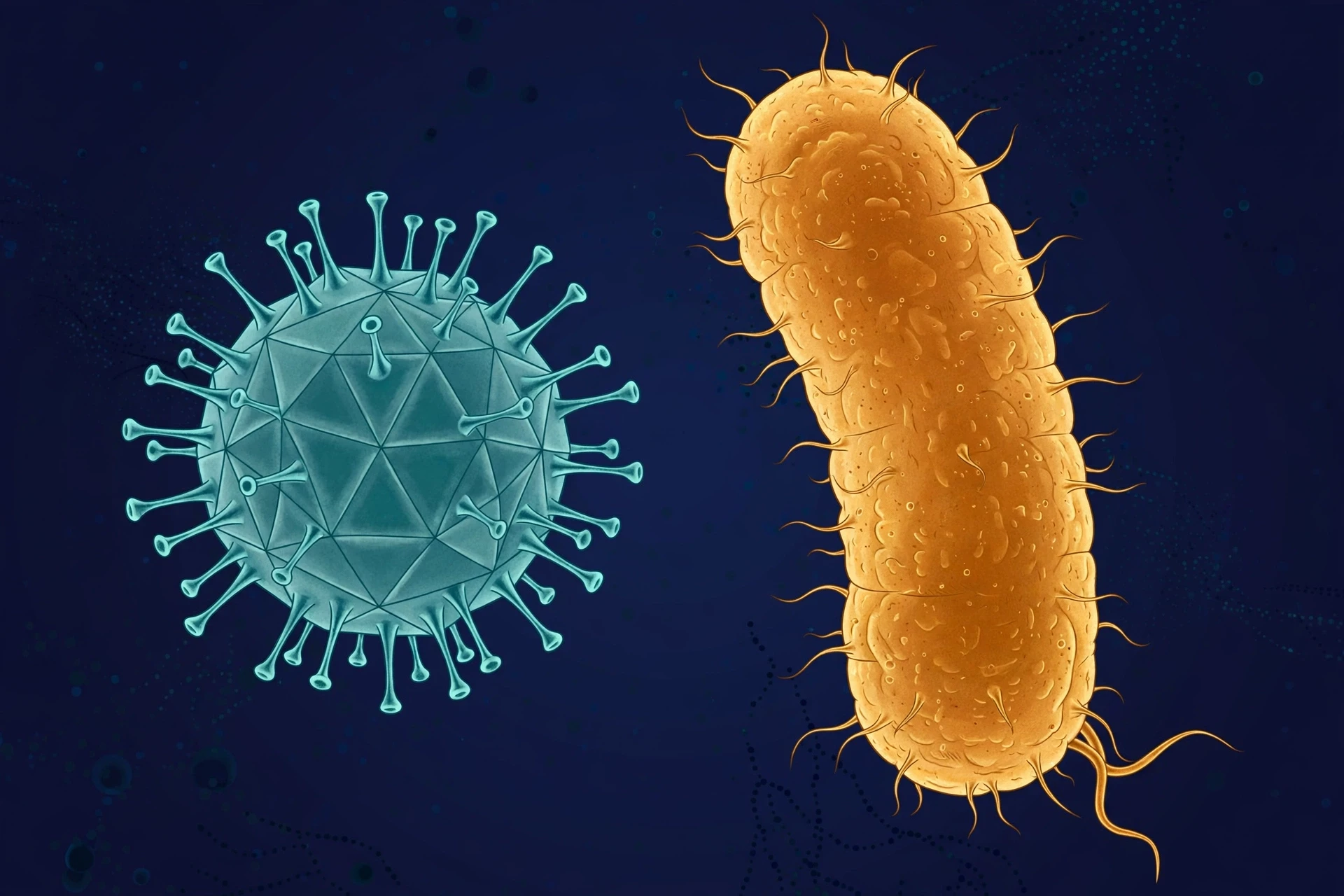
A bacterium is a single cell, and a complete one. Unlike our cells, it has no nucleus: its DNA floats in the cytoplasm as a single circular chromosome, often with smaller rings of DNA called plasmids that can be swapped between cells. It has ribosomes for making proteins, a cell membrane, and in most species a tough cell wall made of a mesh called peptidoglycan. Some bacteria add extra equipment: flagella that spin like propellers, pili that let them stick to surfaces and to each other, and capsules of slime that shield them from attack.
Bacteria come in a handful of shapes, and the shape is often the first clue to an identity. Cocci are spheres, like Staphylococcus, which clusters in grape-like bunches. Bacilli are rods, like Escherichia coli. Spirilla are spirals, like the Treponema that causes syphilis. The shape is not decoration; it affects how the cell moves, how it attaches, and how it survives. A rod can swim efficiently. A sphere can pack tightly into a colony. A spiral can corkscrew through mucus that would stop a rod dead.
3.2 How bacteria eat, grow, and multiply
Bacteria are the most flexible eaters on the planet. Some photosynthesise like plants. Some eat sunlight and chemicals at the same time. Some live on iron, sulphur, or hydrogen gas in places with no light and no oxygen at all. Some need oxygen; some are poisoned by it; some can switch. This flexibility is why bacteria live everywhere: in boiling springs, in Antarctic ice, in the deep ocean, in the soil, and on every surface of your body.
Given food and warmth, bacteria multiply by binary fission — the cell copies its chromosome and splits into two identical daughters. Under ideal conditions, some species divide every twenty minutes. Do the maths and the result is absurd: one cell becomes two, then four, then eight, and after a day the descendants would outweigh the Earth, if food never ran out. Food always runs out, which is why bacterial growth follows a curve with four phases: a lag phase while cells adjust, a log phase of explosive doubling, a stationary phase as food runs low, and a death phase as waste builds up. I have watched that curve on a growth chart more times than I can count, and it still feels like watching a small civilisation rise and fall in a single day.
Bacteria also trade genes. Through conjugation, one cell passes a plasmid to another through a tiny bridge. Through transformation, a cell picks up loose DNA from its surroundings. Through transduction, a virus carries DNA from one bacterium to another. This gene-swapping is the reason antibiotic resistance spreads so fast: a resistance gene that appears in one cell can travel through a whole population, and across species, in a matter of days.
3.3 The Gram stain: a purple divide
In 1884, the Danish physician Hans Christian Gram found that bacteria fall into two groups when stained with crystal violet and iodine, then washed with alcohol. Gram-positive bacteria keep the purple dye because their cell wall is a thick layer of peptidoglycan. Gram-negative bacteria lose it — their peptidoglycan layer is thin, hidden under an outer membrane — and take up the pink counterstain instead. The first time I did a Gram stain myself, I was sure I had done it wrong, because the slide came out a patchwork of purple rods and pink spheres. My supervisor laughed and told me that was exactly right: the patchwork was the point. One simple stain, and you already know something real about the cell wall, about which antibiotics might work, and about what you are dealing with. It is still one of the first tests run in a hospital lab when a serious infection is suspected, more than a century after Gram invented it.
4. Viruses: The Borrowed Living
4.1 What a virus is — and why biologists argue about whether it is alive
A virus is not a cell. It is a parcel: a piece of genetic material, DNA or RNA, wrapped in a protein coat called a capsid. Some viruses add an outer envelope of lipid stolen from a host cell. That is all. A virus has no ribosomes, no metabolism, and no way to make energy or to copy itself. Outside a host cell, it is inert — a crystal-like particle that can sit unchanged for years. Inside a host cell, it is a set of instructions that hijacks the cell's own machinery and turns it into a virus factory.
That split personality is why the question "are viruses alive?" has no clean answer, and why I tell students to be suspicious of anyone who gives one. Most biologists say no: viruses cannot grow, cannot eat, and cannot reproduce without a host, so they fail the usual tests of life. Others point out that viruses evolve, carry genes, and have shaped the evolution of every living thing — including us, since about eight percent of the human genome is made of ancient viral DNA left behind by infections of our ancestors. The honest answer is that viruses sit on the border, and the border is where the interesting questions live. For the structure and life cycles described here, the standard reference is the OpenStax Microbiology textbook, which treats viruses as obligate intracellular parasites — organisms that must live inside a host cell to reproduce.
4.2 How a virus takes over a cell
A viral infection follows a sequence that is almost mechanical in its precision. First, attachment: proteins on the virus surface fit receptors on the host cell like a key in a lock, which is why most viruses infect only particular species, and often only particular cell types. Then entry: the virus slips inside, shedding its coat. Then replication: the host cell's machinery reads the viral genome and builds viral parts. Then assembly: the parts are put together into new virus particles. Then release: the new particles leave, either by budding out gently or by bursting the cell open.
Bacteriophages — viruses that infect bacteria — follow two main strategies, and the difference matters. In the lytic cycle, the virus takes over immediately, builds new copies, and bursts the cell. In the lysogenic cycle, the viral DNA slips quietly into the host's chromosome and is copied along with it, generation after generation, until some signal wakes it and the lytic cycle begins. The cold-sore virus does something similar in people: it hides in nerve cells for years and flares up in times of stress or illness. A person can carry a virus without symptoms and become ill much later, which is one reason viral infections are so hard to predict.
Retroviruses add a twist. They carry RNA, and they bring an enzyme called reverse transcriptase that writes a DNA copy of their genome and inserts it into the host's chromosomes. HIV is a retrovirus, and this trick is part of what makes it so hard to clear: the viral instructions become part of the cell itself. The same trick, turned to good use, is what makes some gene therapies possible — a harmless virus, stripped of its disease-causing parts, can be used to deliver a working gene into a patient's cells.
5. Bacteria vs Viruses: The Comparison That Matters
5.1 Side by side
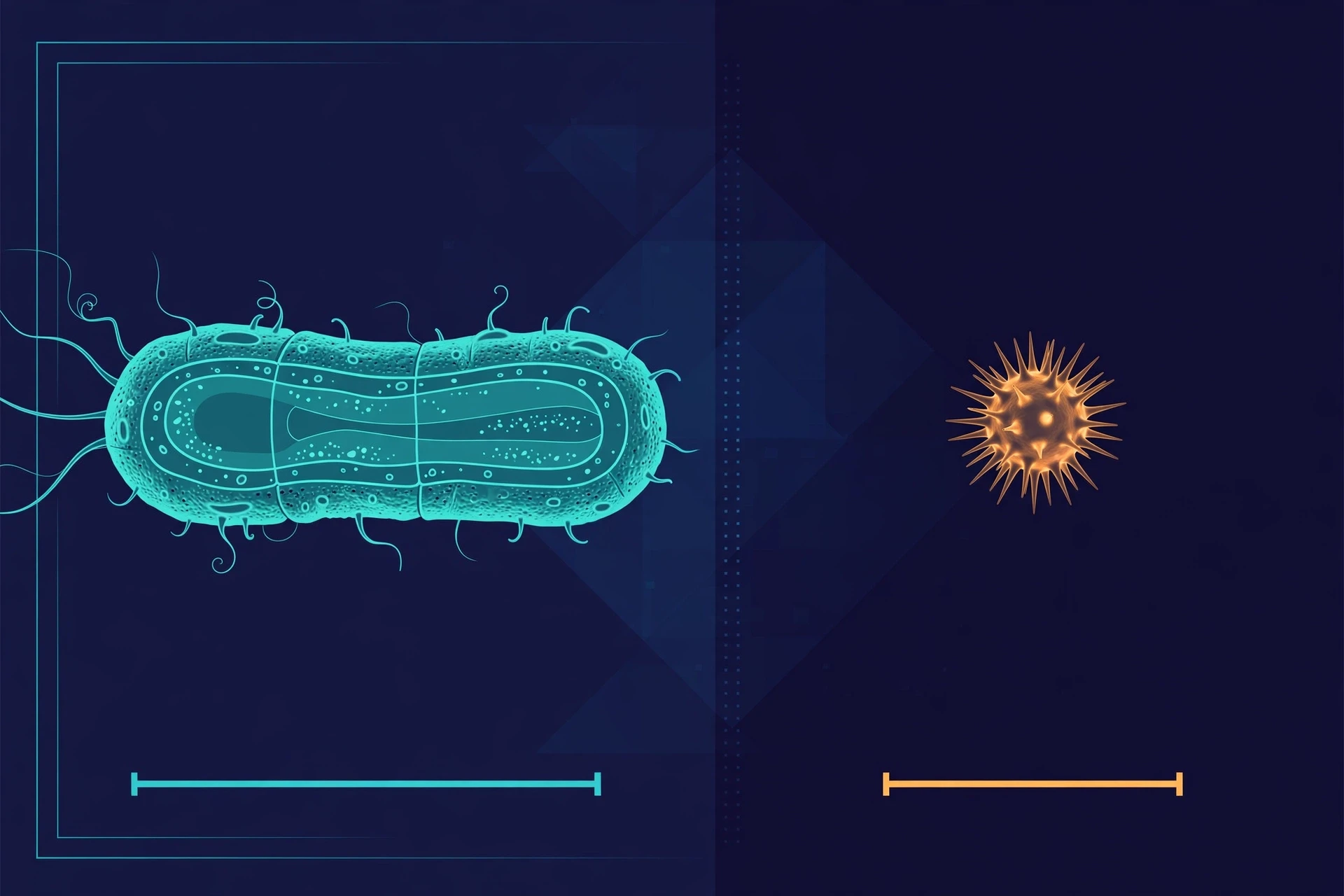
The most common mistake I hear — and I hear it in classrooms, in clinics, and in my own family — is treating bacteria and viruses as two versions of the same thing. They are not. A bacterium is a living cell that can eat, grow, and divide on its own. A virus is a set of instructions that can do nothing at all until it gets inside a living cell. That single difference explains almost everything else: why antibiotics work on one and not the other, why vaccines matter so much for viral disease, and why the two groups need completely different tools to fight them.
Most people assume that because both can make you ill, the same medicine should treat both. What we actually see in the clinic is the opposite: giving an antibiotic for a cold does nothing to the cold, because a cold is caused by a virus, and the antibiotic has no target to hit. What it can do is kill helpful bacteria in your gut, and help resistant bacteria survive. The confusion is understandable — the symptoms overlap, the names blur together — but the biology underneath is entirely different, and the treatment has to follow the biology.
Feature | Bacteria | Viruses |
|---|---|---|
Living cell? | Yes — a complete single cell | No — a particle, not a cell |
Size | Typically 0.5–5 micrometres | Typically 20–400 nanometres |
Structure | Cell wall, membrane, cytoplasm, ribosomes, circular DNA | DNA or RNA in a protein capsid, sometimes with an envelope |
Reproduction | Binary fission, on its own | Only inside a host cell, using the host's machinery |
Metabolism | Has its own — eats, breathes, makes energy | None of its own |
Seen with | Light microscope | Electron microscope |
Examples of disease | Strep throat, tuberculosis, cholera, urinary infections | Flu, common cold, measles, HIV, COVID-19 |
Treated with | Antibiotics (for bacterial infections) | Antivirals for some; vaccines for prevention |
5.2 Why the difference changes the treatment
Antibiotics work because they attack structures that bacteria have and human cells do not: the peptidoglycan cell wall, the bacterial ribosome, or the enzymes bacteria use to copy their DNA. A virus has none of those targets, so an antibiotic has nothing to grab onto. The US Centers for Disease Control and Prevention (CDC) puts it plainly: antibiotics only treat certain infections caused by bacteria, and they do not work on viruses such as those that cause colds and flu. Antivirals, by contrast, are designed to interrupt specific steps of a viral life cycle — blocking entry, blocking the copying of viral genes, or blocking assembly — and they only work against particular viruses.
This is also why diagnosis matters. A sore throat can be viral, in which case antibiotics will not help, or it can be strep throat, caused by the bacterium Streptococcus pyogenes, in which case antibiotics are the right treatment. The two look similar from the outside. Telling them apart takes a test, not a guess — and that test is one of the most useful things microbiology gives to medicine. This guide is educational, not medical advice: if you are ill, the decision about what you have and what will help belongs to a healthcare professional, not to an article.
6. The Microbiome: The Ecosystem Inside You
6.1 You are a habitat
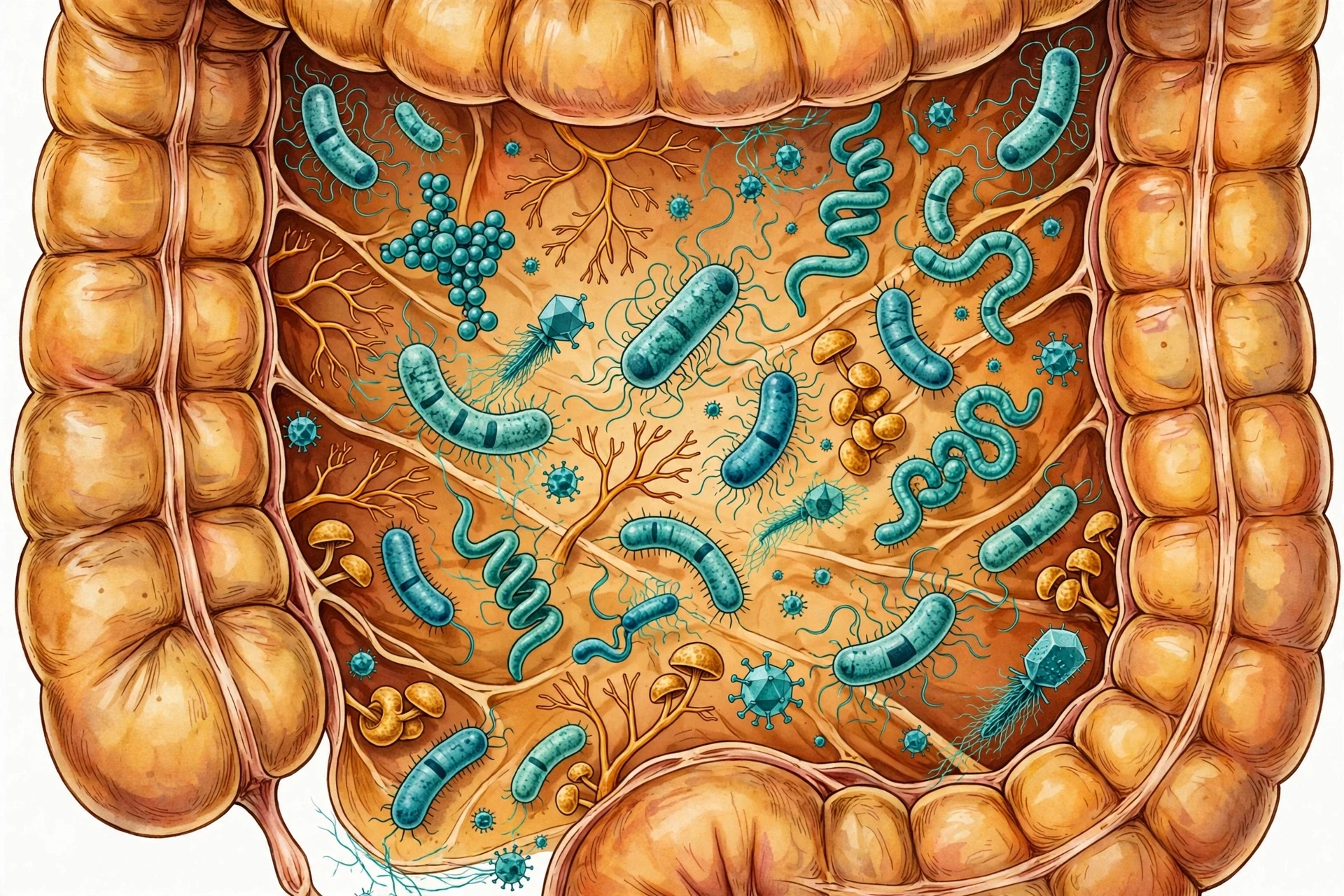
For most of the twentieth century, medicine treated the human body as if it were sterile inside, with microbes only as invaders. That picture is gone. Your body is a habitat, and it is crowded. Trillions of bacteria, along with viruses — mostly bacteriophages that infect bacteria — fungi, and archaea live on your skin, in your mouth, in your gut, and in your lungs. Together with the tissues they inhabit, they form your microbiome. The bacterial species in a typical gut come mainly from four large groups — Bacteroidetes, Firmicutes, Actinobacteria, and Proteobacteria — and the exact mix is as personal as a fingerprint, shaped by birth, diet, illness, and the antibiotics you have taken.
The scale is hard to take in. Older textbooks said bacterial cells in the body outnumber human cells ten to one. Newer estimates put the ratio closer to one to one — still roughly as many bacterial cells as human cells, and the bacteria carry about a hundred times more genes than we do. Your microbiome is, in genetic terms, a second genome, and it does jobs your own genome cannot: it breaks down fibre your enzymes cannot touch, it makes vitamins such as K and some B vitamins, it trains your immune system, and it crowds out invaders by occupying the space and eating the food they would need.
6.2 The gut talks to the brain
The most surprising discovery of the last twenty years is that this inner ecosystem does not stay in the gut. Microbes produce chemicals — short-chain fatty acids from fibre, neurotransmitter-like molecules, and signals that travel through the immune system and the vagus nerve — that reach the brain and influence mood, stress, and behaviour. Researchers call this the gut-brain axis, and it is now one of the busiest areas in all of microbiology. The evidence in people is still young, and anyone who promises that a probiotic will fix anxiety is selling more than the science supports. But the direction of the evidence is clear: the microbes inside you are part of how you feel, not just how you digest. Sciory's guide to the Gut-Brain Connection: How It Relates to Mood follows this thread in detail, and the anatomy of the organ at the other end of the conversation is mapped in Human Brain Anatomy and Functions: A Complete Guide.
I first took the microbiome seriously not in a lab but in a kitchen, watching my grandmother make yoghurt. She heated milk, stirred in a spoonful of yesterday's yoghurt, wrapped the pot in a blanket, and left it overnight. By morning the milk had set, tangy and thick. She had been culturing Lactobacillus for fifty years without ever using the word. The same principle — feeding the microbes you want so they crowd out the ones you do not — now sits at the heart of research into faecal microbiota transplants, which can cure recurrent Clostridioides difficile infection when antibiotics have failed. An old kitchen practice and a cutting-edge hospital treatment, running on the same idea.
6.3 When the ecosystem is disturbed
A healthy microbiome is diverse and stable, like a forest with many species. Antibiotics, a low-fibre diet, illness, and stress can thin that diversity, and a thinned microbiome leaves room for trouble: C. difficile after antibiotics is the classic example, and researchers are now studying links between microbiome disruption and conditions ranging from inflammatory bowel disease to obesity and allergies. The links are real but complicated — a disturbed microbiome can be a cause, a consequence, or both — and the science is still sorting out which is which. What is not in doubt is that the microbes inside us are not passengers. They are part of the crew.
7. When Microbes Turn Against Us: Disease and the Body's Defences
7.1 How infections happen
Only a small fraction of microbes cause disease. Most are harmless, and many are helpful. The ones that do cause disease — pathogens — reach us through a handful of routes: droplets in the air, contaminated food or water, direct contact, insect bites, or a break in the skin. Once inside, a pathogen has to survive the body's defences, find a place to grow, and multiply enough to cause damage, either directly or through the toxins it releases.
Bacteria cause disease in three main ways: by eating host tissue, by releasing toxins — botulinum toxin, the most potent poison known, is made by a bacterium — or by triggering an immune response so strong that the response itself does the damage. Viruses cause disease by taking over cells and destroying them, or by turning the immune system against infected tissue. The symptoms you feel — fever, swelling, tiredness — are often not the microbe's doing at all. They are your immune system fighting back. A fever is your body raising the thermostat to make life harder for the invader; it is a defence, not a failure.
7.2 The immune system answers
The body's defences work in layers. Skin and mucus keep most microbes out. Innate immune cells — macrophages, neutrophils, natural killer cells — attack anything unfamiliar. Then the adaptive immune system learns: B cells make antibodies that tag a specific invader, and T cells kill infected cells. The second time the same microbe appears, the response is faster and stronger, because memory cells remember it. That memory is the entire basis of vaccination: a vaccine shows the immune system a harmless version of a pathogen — or just a piece of it — so the memory is ready before the real thing arrives.
The interplay between microbes and immunity is one of the richest stories in biology, and it is told in full in Sciory's How the Human Immune System Works: Components, Responses, and Defenses. The short version is this: your immune system and your microbiome grew up together, and each one shapes the other. An immune system that never meets microbes does not learn properly; a microbiome that is never checked by immunity can overgrow. Health is the balance between the two.
7.3 A few famous pathogens, in context
Tuberculosis, caused by Mycobacterium tuberculosis, still kills more than a million people a year, mostly where diagnosis and treatment arrive late. Cholera, caused by Vibrio cholerae, spreads through contaminated water and can kill by dehydration within hours — which is why clean water and sanitation are the most powerful anti-cholera measures ever invented. Influenza viruses change their surface proteins from year to year, which is why last year's immunity fades and why the flu vaccine is updated annually. HIV, a retrovirus, attacks the immune system itself, and it took decades of research to turn it from a death sentence into a manageable chronic condition. Each of these stories is also a story about the societies around the disease: who gets clean water, who gets vaccines, who gets diagnosed in time. Microbes do not respect borders, but they exploit inequality with brutal efficiency.
8. Fighting Back: Antibiotics, Vaccines, and the Resistance Problem
8.1 Antibiotics: a miracle with a timer
Penicillin was the first antibiotic, but it was not the last. Streptomycin, tetracycline, and dozens of others followed, each attacking a different part of the bacterial cell. Together they transformed medicine: surgery became safer, childbirth became safer, pneumonia and tuberculosis became treatable, and life expectancy rose. Before antibiotics, a scraped knee could kill. That is not an exaggeration — it is the world our grandparents were born into.
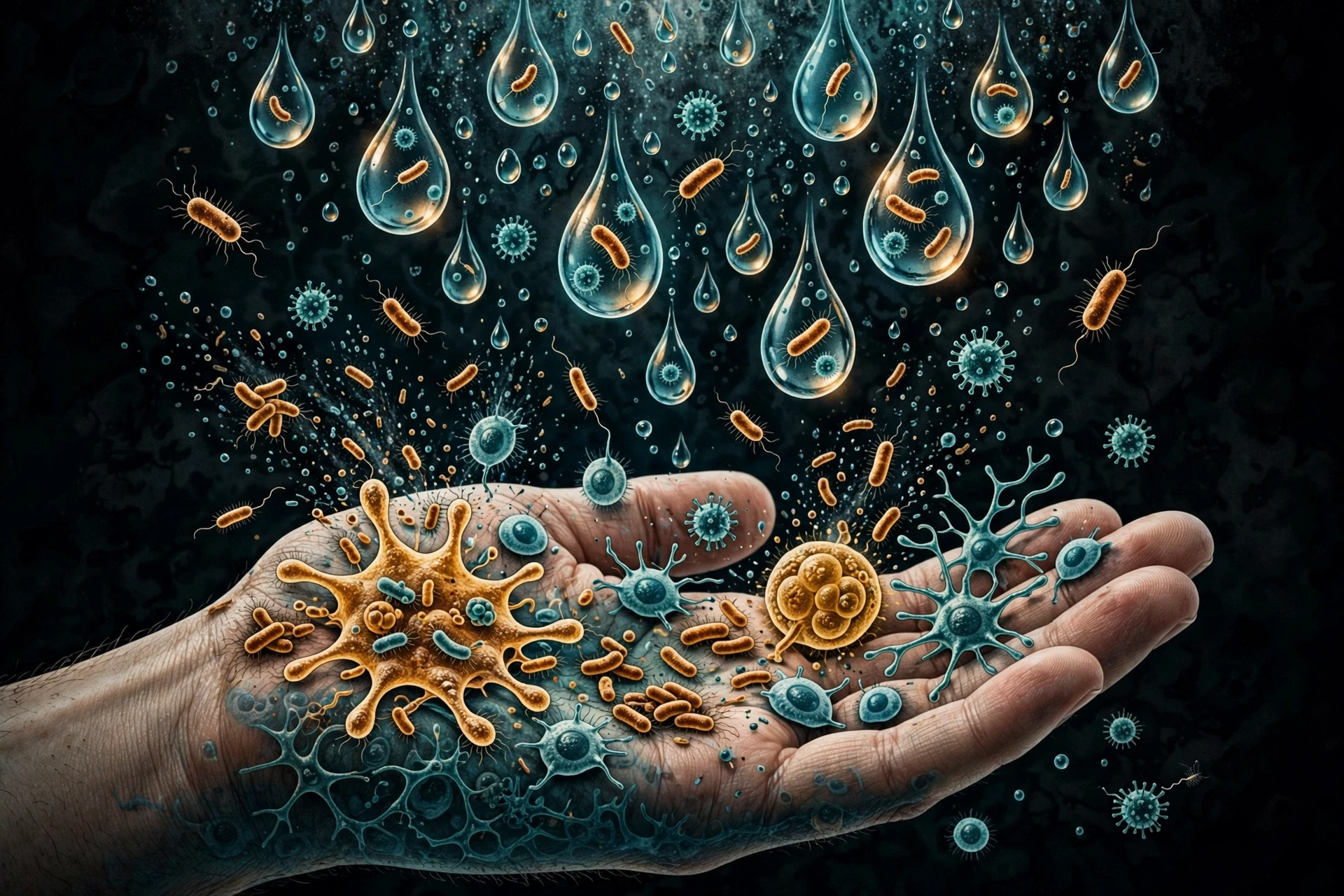
But antibiotics have a weakness built into their success. Every time an antibiotic is used, it kills the susceptible bacteria and leaves the resistant ones alive to multiply. Bacteria also swap resistance genes with each other, as described in section 3.2, so resistance can spread through a population fast. The CDC's guidance is direct: take antibiotics only when you need them, take them exactly as prescribed, never share them, and never save them for later. The CDC also states plainly that antibiotics do not treat infections caused by viruses, including colds, flu, and most sore throats.
8.2 Antimicrobial resistance: the numbers
The World Health Organization (WHO) calls antimicrobial resistance one of the biggest global health threats. Its fact sheet reports that bacterial antimicrobial resistance was associated with more than 4.7 million deaths globally in 2021, and that about one in six laboratory-confirmed bacterial infections worldwide was resistant to antibiotics in 2023. Resistance rose in over forty percent of the pathogen-antibiotic combinations monitored between 2018 and 2023. The pipeline of new antibiotics is thin: few new medicines are being developed to replace the ones that no longer work. This is not a distant problem. It is already changing how doctors treat ordinary infections, and it is why hospitals now run stewardship programmes that check every antibiotic prescription.
"Antimicrobial resistance occurs when bacteria, viruses, fungi and parasites do not respond to antimicrobial medicines. As a result, infections become difficult or impossible to treat, increasing the risk of disease spread, severe illness, disability and death." — World Health Organization
8.3 Vaccines and the new weapons
Vaccines remain the most powerful tool against viral disease, because prevention beats treatment when the treatment options are few. Smallpox, a viral disease that killed hundreds of millions of people, was wiped out by vaccination in 1980 — the first and so far only human disease ever eradicated. Polio is close behind. The COVID-19 vaccines, built on mRNA technology that had been researched for decades, showed how fast a new vaccine platform can move when the science is ready.
And there is a newer idea that turns the enemy into the weapon: phage therapy. Bacteriophages are viruses that kill bacteria, and researchers are now using them to treat infections that no antibiotic can touch. The OpenStax Microbiology textbook describes phage therapy as a potential answer to multidrug-resistant "superbugs," and clinical trials are testing it against infections in lungs, wounds, and the urinary tract. A century after Fleming, we are learning to fight bacteria with viruses — using one kind of microbe against another, exactly as nature has been doing for billions of years.
9. Microbes at Work: Food, Farms, and the Planet
9.1 The oldest biotechnology
Long before anyone knew microbes existed, people were using them. Bread rises because yeast — a single-celled fungus — releases carbon dioxide as it eats sugar. Yoghurt, cheese, kimchi, sauerkraut, and soy sauce are all made by bacteria and fungi transforming raw food into something safer, tastier, and longer-lasting. Fermentation was food preservation before refrigeration, and it is still one of the most reliable ways to keep food safe: the lactic acid bacteria in a ferment make the food too acidic for most pathogens to grow.
Modern industry has scaled the same trick up. Insulin for diabetes is now made by engineered E. coli and yeast carrying the human insulin gene. Many vitamins, enzymes, and food additives are made by microbes in giant fermenters. The gene-editing tool CRISPR began as a bacterial defence system against viruses — bacteria keep a library of viral DNA fragments and use it to recognise and cut invading viruses. Scientists borrowed that library and turned it into the most powerful gene-editing tool ever built. A bacterial immune system, repurposed, is now rewriting medicine. The story of the genetic code that makes all of this possible is told in Sciory's DNA: Structure, Replication, and Role in Heredity.
9.2 Microbes and the planet
Microbes run the Earth's nutrient cycles. Nitrogen-fixing bacteria in the soil and in the root nodules of legumes turn nitrogen gas from the air into forms plants can use; without them, agriculture as we know it would be impossible. Other bacteria return nitrogen to the air, completing the loop. Cyanobacteria — the photosynthetic bacteria that first filled the atmosphere with oxygen more than two billion years ago — still produce a large share of the oxygen in the oceans today. The process they run, photosynthesis, is explained step by step in Sciory's Photosynthesis Explained: Process & Equation.
Microbes also clean up after us. Oil-eating bacteria helped break down the Deepwater Horizon spill. Other microbes are being trained to digest plastic, to pull heavy metals out of contaminated soil, and to turn waste into biogas. This field, bioremediation, is still young, and it has limits — microbes cannot eat every pollutant, and they work slowly — but it is one of the few clean-up technologies that gets better the longer it runs, because the microbes evolve as they work.
9.3 The latest research: what is changing now
Three frontiers are moving fast. First, the microbiome: large sequencing projects are mapping the microbes of the gut, skin, and lungs in health and disease, and the first microbiome-based medicines — live bacterial products and faecal transplants — are reaching patients. Second, phage therapy, described in section 8.3, is moving from last-resort experiments into proper clinical trials. Third, the deep biosphere: researchers drilling into the ocean floor and deep mines keep finding bacteria living kilometres underground, in rock with almost no food, dividing once every thousand years or more. These slow-living microbes change our ideas about where life can exist, and they are one reason scientists think life might exist beneath the surface of Mars.
The biggest shift, though, is in how we see microbes at all. The old story was microbes as germs — enemies to be killed. The new story is microbes as partners, engineers, and neighbours: most of them harmless, many of them essential, a few of them dangerous, and all of them connected to us by an evolutionary history that stretches back billions of years. That history is the same story told from the other side in Sciory's Darwin's Theory of Evolution: Evidence Explained, and the sheer variety of microbial life is part of the diversity mapped in Biodiversity: Definition, Importance, and Ecological Roles. The water that carries microbes through every ecosystem — rivers, rain, oceans, and the water cycle itself — is covered in The Water Cycle: Processes, Impacts & Importance.
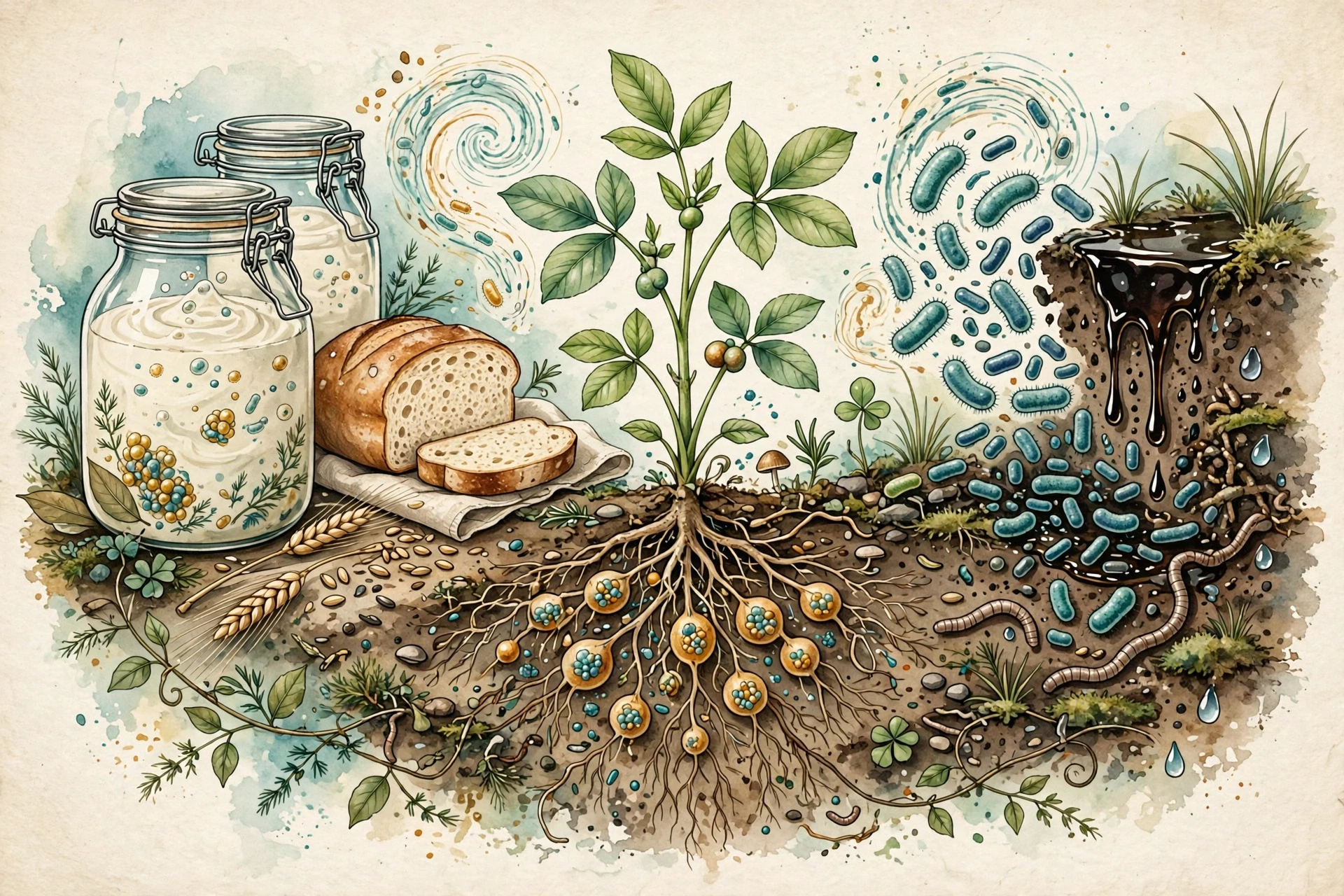
10. Common Misconceptions About Microbiology — Corrected
"All bacteria are germs that make you sick." Most bacteria are harmless, and many are essential. The bacteria in your gut, on your skin, and in the soil outnumber the pathogens by an enormous margin. Fewer than one percent of known bacterial species cause disease in people.
"Antibiotics cure colds and flu." They do not. Colds and flu are caused by viruses, and antibiotics have no target in a virus. The CDC states this directly, and taking antibiotics for a viral infection can cause harm without helping.
"Viruses are alive." Most biologists say no — viruses have no metabolism and cannot reproduce without a host cell. They are best understood as instructions that borrow a living cell, not as living things themselves.
"Germs are everywhere, so hygiene is pointless." The opposite is true. Because microbes are everywhere, the simple measures — washing hands with soap for twenty seconds, covering coughs, staying home when ill — cut transmission dramatically. Hygiene does not need to kill every microbe. It needs to break the chain.
"If you feel better, you can stop your antibiotics." Stopping early can leave the toughest bacteria alive, which is exactly how resistance is selected. The CDC advises taking antibiotics exactly as prescribed and never saving them for later.
"The human body is sterile inside." It is not. Your gut, mouth, skin, and lungs are home to trillions of microbes that digest food, make vitamins, train immunity, and crowd out invaders. You are an ecosystem, not a sterile vessel.
"Microbes are too small to matter to the planet." Microbes run the nitrogen and carbon cycles, produce much of the oxygen in the oceans, and have shaped the atmosphere for billions of years. The visible world runs on invisible labour.
Conclusion: Learning to Live With the Invisible Majority
Microbiology began with a man looking at a drop of water and refusing to believe his eyes were lying. Three centuries later, the picture has only grown stranger and more generous. The microbes we once knew only as the cause of disease turn out to be the organisms that built the air we breathe, the soil that feeds us, the food in our kitchens, and the ecosystem inside our own bodies. Bacteria are complete living cells, flexible and ancient. Viruses are borrowed instructions, simple and ruthless and strangely creative. Together with the rest of the microbial world, they are not a footnote to biology. They are biology's foundation.
The practical lesson is not fear, and it is not complacency. It is respect. Wash your hands, use antibiotics only when they are needed, keep your vaccines up to date, eat fibre that feeds a diverse gut, and remember that the microbes around you are mostly on your side. The invisible majority has been running this planet for nearly four billion years. We are the newcomers. The least we can do is learn how it works.
Frequently Asked Questions
What is microbiology?
Microbiology is the branch of biology that studies microorganisms — bacteria, viruses, fungi, protozoa, and microscopic algae — too small to see with the naked eye. It covers how they live, grow, reproduce, and interact with people, animals, plants, and the environment.
What is the difference between bacteria and viruses?
Bacteria are living single cells that can eat, grow, and divide on their own. Viruses are particles of DNA or RNA in a protein coat that cannot reproduce without infecting a host cell. Bacteria are much larger, can be seen with a light microscope, and are treated with antibiotics; viruses need an electron microscope to be seen and are not affected by antibiotics.
Are viruses alive?
Most biologists say no. Viruses have no metabolism, cannot make energy, and cannot reproduce without a host cell, so they fail the usual tests of life. They do evolve and carry genes, which is why the question is still debated, but they are best described as obligate intracellular parasites — instructions that borrow a living cell.
Do antibiotics work on viruses?
No. Antibiotics attack structures that bacteria have and human cells do not, such as the peptidoglycan cell wall. Viruses have none of these targets. The CDC states that antibiotics do not treat infections caused by viruses such as colds and flu, and taking them unnecessarily can cause side effects and contribute to resistance.
What is the human microbiome?
The human microbiome is the community of trillions of bacteria, viruses, fungi, and archaea living on and inside the body — mainly in the gut, mouth, skin, and lungs — together with the tissues they inhabit. It helps digest food, makes vitamins, trains the immune system, and crowds out pathogens.
How do bacteria reproduce?
Bacteria reproduce by binary fission: the cell copies its circular chromosome and splits into two identical daughter cells. Under ideal conditions some species divide every twenty minutes. Bacteria can also swap genes through conjugation, transformation, and transduction, which is how antibiotic resistance spreads.
What is the lytic cycle vs the lysogenic cycle?
In the lytic cycle, a virus takes over its host cell immediately, builds new virus particles, and bursts the cell to release them. In the lysogenic cycle, the viral DNA joins the host's chromosome and is copied quietly along with it for generations, until a signal triggers the lytic cycle.
What is antimicrobial resistance?
Antimicrobial resistance happens when bacteria, viruses, fungi, or parasites stop responding to the medicines designed to kill them. The WHO reports that bacterial resistance was associated with more than 4.7 million deaths globally in 2021, and that about one in six laboratory-confirmed bacterial infections worldwide was resistant to antibiotics in 2023.
Are all bacteria harmful?
No. Most bacteria are harmless, and many are essential — they digest food in your gut, fix nitrogen in soil, ferment food, and produce oxygen in the oceans. Fewer than one percent of known bacterial species cause disease in people.
How can I reduce the spread of infections?
Wash your hands with soap and water for at least twenty seconds, cover coughs and sneezes, stay home when you are ill, avoid touching your face with unwashed hands, keep vaccinations up to date, and use antibiotics only when a healthcare professional prescribes them, exactly as directed.
Sources / Further Reading
CDC — Healthy Habits: Antibiotic Do's and Don'ts: https://www.cdc.gov/antibiotic-use/about/index.html
WHO — Antimicrobial resistance (fact sheet): https://www.who.int/news-room/fact-sheets/detail/antimicrobial-resistance
OpenStax Microbiology — 6.1 Viruses: https://openstax.org/books/microbiology/pages/6-1-viruses
NIH / PMC — Defining the Microbiome Components (Bacteria, Viruses, Fungi): https://pmc.ncbi.nlm.nih.gov/articles/PMC10061322/
CDC — Antibiotic Use and Antimicrobial Resistance Facts: https://www.cdc.gov/antibiotic-use/data-research/facts-stats/