
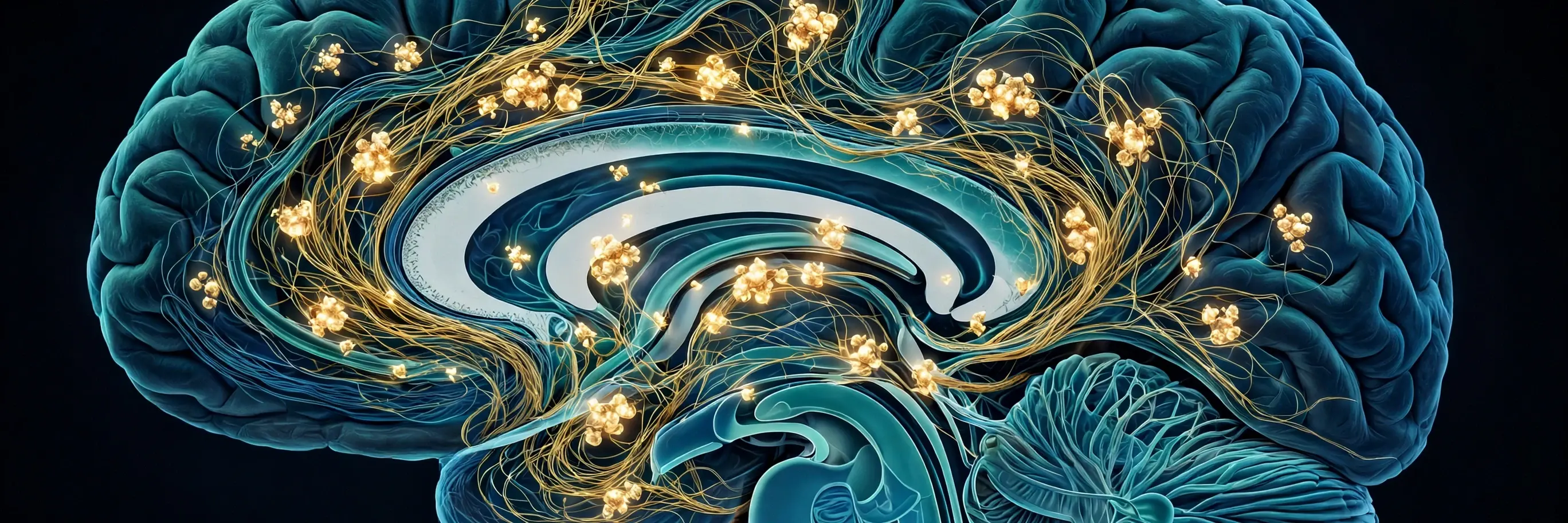
In November 1901, a 51-year-old woman named Auguste Deter walked into a psychiatric hospital in Frankfurt, Germany. She had been changing for eight months. She forgot things she had just been told. She grew suspicious of people she had trusted for years. She lost her way in familiar streets and could not find words she had used all her life. Her husband, Karl, could no longer look after her at home, and he brought her to the hospital for help.
The young doctor who took her case, the first recognised case of Alzheimer's disease, was Alois Alzheimer, then 37 years old. He sat with Auguste Deter, asked her simple questions, and wrote down her answers in careful detail. She could name objects placed in front of her, then forget them moments later. She could repeat a sentence, then lose the thread halfway through. Alzheimer watched her decline over the next five years as her memory, her language, and her sense of where she was all slipped away. She died on 8 April 1906, at the age of 55.
After her death, Alzheimer examined her brain under the microscope. What he found there changed medicine. Around the nerve cells, he saw clumps of protein that did not belong. Inside the cells, he saw fibres twisted into tangles. He described both lesions in a presentation in 1906 and in a paper published in 1907. Four years later, in 1910, the psychiatrist Emil Kraepelin gave the condition a name: Alzheimer's disease.
More than a century has passed since that Frankfurt hospital room, and the two lesions Alzheimer saw are still at the centre of the story. Scientists now know that amyloid plaques and tau tangles begin building up a decade or more before the first symptoms appear. They know that the damage starts in the brain's memory centres, which is why new memories fail first while older ones often survive longer. They have blood tests that can detect the biology of Alzheimer's disease in a living person, and the first drugs that modestly slow its course rather than only easing symptoms.
Yet the deepest questions remain open. The plaques and tangles are real, and they track the damage closely, but whether amyloid starts the whole cascade or is one part of a larger process is still argued in the scientific literature. Genes shape risk, age shapes it more, and a long list of everyday factors — hearing, blood pressure, education, air quality — each add a small share. No single cause explains most cases, and there is still no cure.
This article follows the science from that first case to the present day. It explains what plaques and tangles actually do inside a neuron, why memory is attacked first, who is most at risk and why, and what the numbers behind the disease really mean. The aim is plain: by the end, the reader will understand how Alzheimer's disease works in the brain, what doctors can measure today, and where the honest limits of current knowledge lie.
1. What Is Alzheimer's Disease?
1.1 A disease of the brain, not a normal part of ageing
Alzheimer's disease is a progressive brain disorder. It slowly destroys memory and thinking skills, and in its later stages it takes away the ability to carry out the simplest tasks. The National Institute on Aging puts it this way:
Alzheimer's disease is a brain disorder that slowly destroys memory and thinking skills, and eventually, the ability to carry out the simplest tasks. — National Institute on Aging, Alzheimer's Disease Fact Sheet
That sentence carries two ideas worth holding on to. Alzheimer's disease is progressive: it gets worse over time, as more neurons stop working and die. And it is a disease, not a normal part of growing older. Ageing can slow processing speed and make word-finding harder, but memory itself is relatively spared in normal ageing.
Dementia is the umbrella term for the symptoms — a decline in memory, thinking, behaviour, and the ability to manage daily life. Alzheimer's disease is the disease underneath that umbrella, and it is the most common cause of dementia among older adults. A person can have dementia from other causes, such as vascular disease or Lewy body disease, and a person can carry the brain changes of the disease for years before any dementia appears.
I once sat in on a clinic conversation where a daughter asked whether her mother's forgetfulness was simply old age. The doctor asked what had changed: could her mother still follow a familiar recipe, manage her bills, or find her way home? The questions were about function, not one forgotten name, and that distinction stayed with me. The disease announces itself in lost function, not in one lapse.
1.2 The three core features: plaques, tangles, lost connections
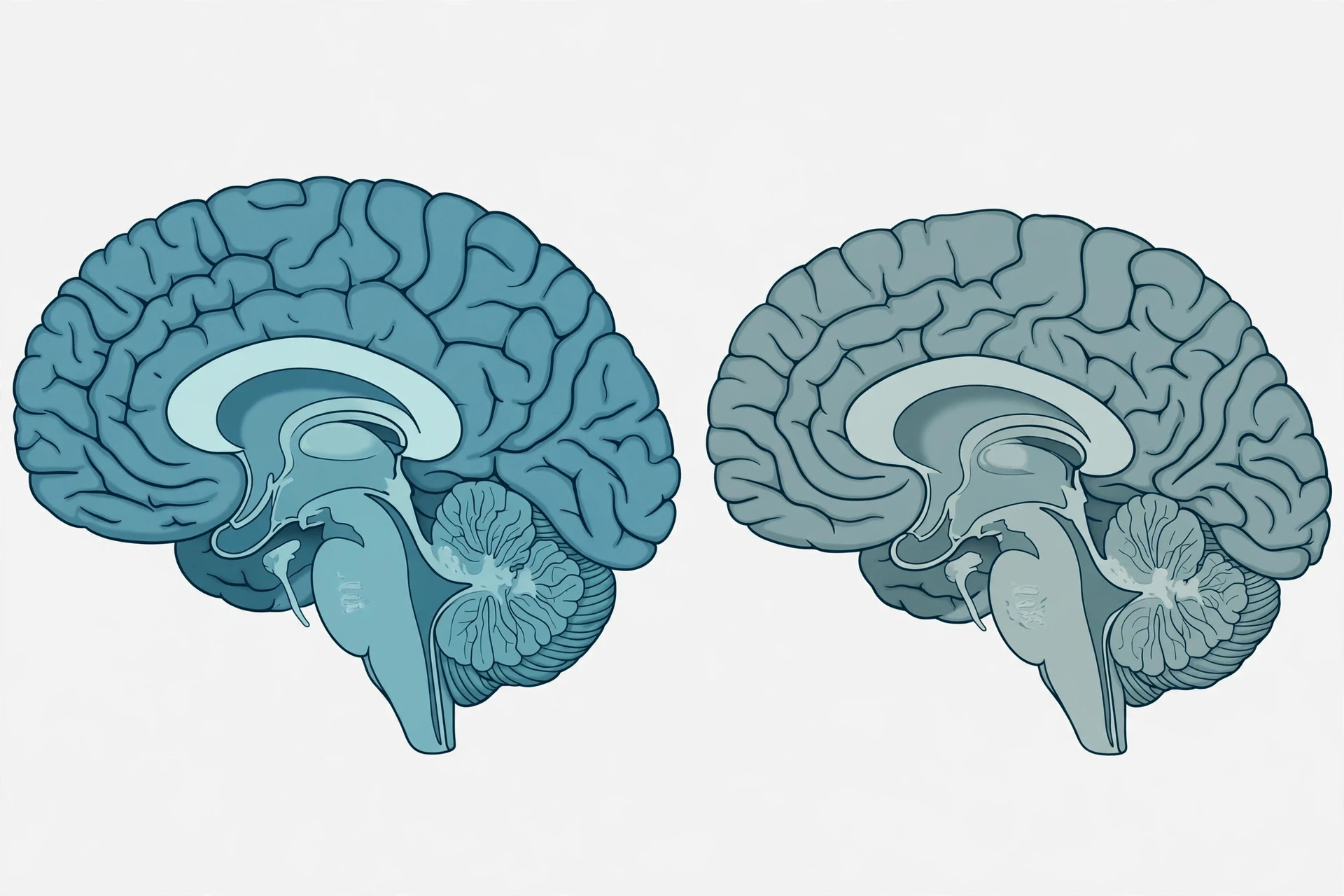
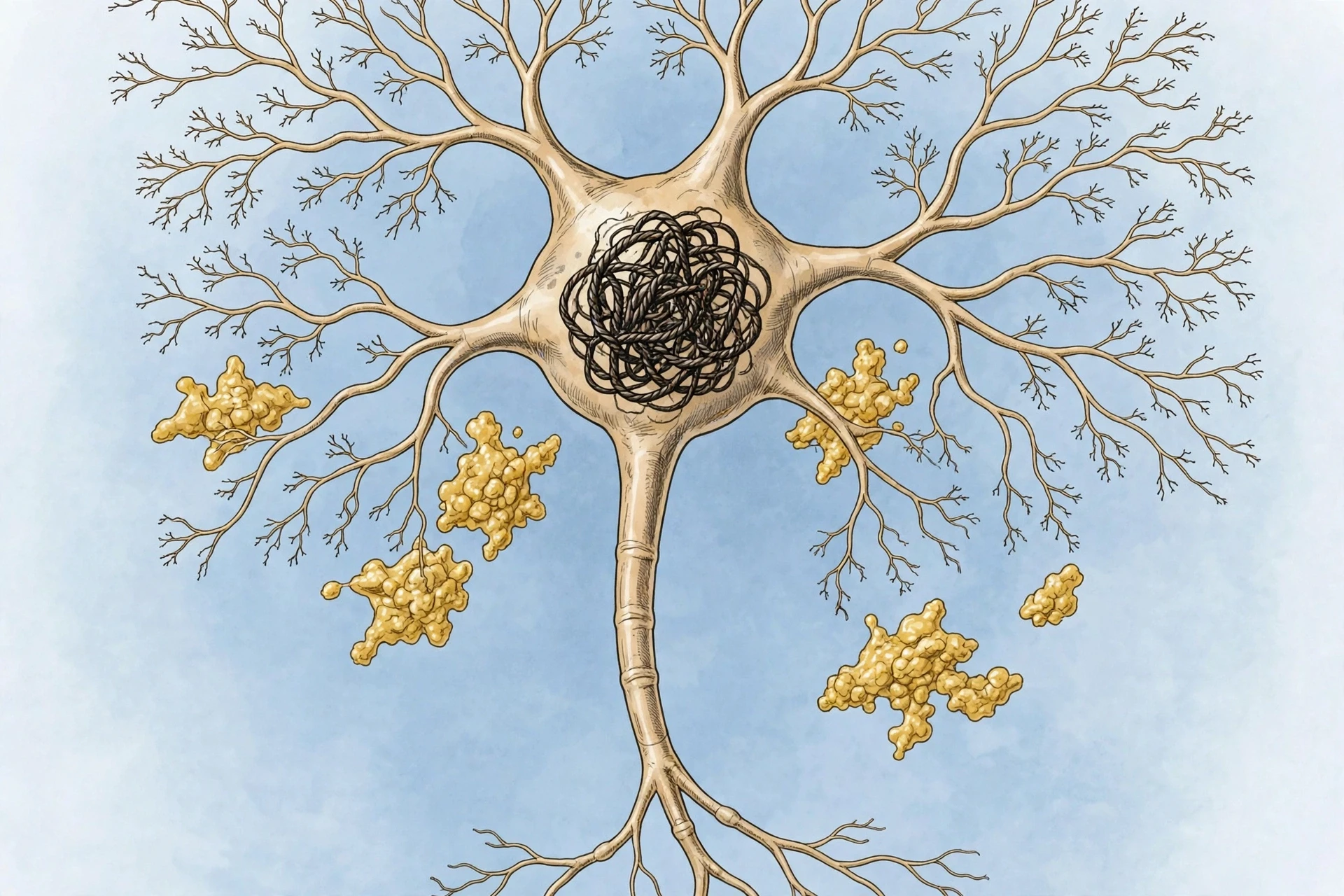
Three features define Alzheimer's disease in the brain. The first is amyloid plaques: clumps of a protein fragment called beta-amyloid that gather in the spaces between nerve cells. The second is neurofibrillary tangles: twisted strands of a protein called tau that form inside nerve cells, where they should never be. The third is the loss of connections between neurons. Neurons stop functioning, lose their links with other neurons, and die.
Each of these three features will get a full section later in this article. For now, a short preview is enough. Plaques sit outside the cell and interfere with the signals passing between neurons. Tangles form inside the cell and wreck the transport system that keeps the neuron alive. Lost connections are the result: when synapses fail and neurons die, whole networks fall silent, and the abilities those networks supported — remembering a conversation, finding a word, recognising a face — fade with them.
Brain changes may begin a decade or more before symptoms appear, while the person still feels well. That long silent period is one reason researchers study biomarkers — measurable signs of the biology that can be detected before symptoms begin.
1.3 Who it affects, in one paragraph
Alzheimer's disease affects millions of people, and the numbers are large enough to be hard to picture: the Alzheimer's Association counts roughly 7.4 million Americans aged 65 and older living with the disease in 2026, and more than 57 million people worldwide were living with dementia in 2021, with Alzheimer's disease accounting for 60 to 70 percent of those cases. Nearly two-thirds of American cases are women, and risk rises steeply with age — about one-third of people age 85 and older are affected. The full numbers are in the next section — and behind every one is a household, a caregiver, and a person whose memories are slipping away.
2. Alzheimer's Disease by the Numbers: How Common Is It?
2.1 The United States in 2026
An estimated 7.4 million Americans age 65 and older are living with Alzheimer's disease in 2026, according to the Alzheimer's Association's 2026 Facts and Figures report, published on 21 April 2026. That is about 1 in 9 people age 65 and older, or 11 percent of that age group, and 74 percent of them are age 75 or older. The 2025 report gave 7.2 million, and several secondary pages have mislabelled that older figure as the 2026 number.
The share rises sharply with age: about 5.2 percent of people age 65 to 74, about 13.8 percent of people age 75 to 84, and about 35.8 percent of people age 85 and older have the disease. Those age-band figures come from a secondary summary of Figure 5 in the 2026 report, and the pattern is consistent across every source: risk roughly doubles every five years after age 65.
The projections point upward: without a medical breakthrough, nearly 13 million Americans by 2050, and 13.8 million by 2060 — a future in which almost every family will know someone living with the disease.
Younger-onset disease is much rarer: about 200,000 Americans under 65 — roughly 110 of every 100,000 people age 30 to 64. Its symptoms are similar, and its genetic links are strongest, a point taken up in Section 5.
2.2 The world
Globally, more than 57 million people were living with dementia in 2021, according to the World Health Organization, with nearly 10 million new cases each year. The projection is 78 million by 2030 and 139 million by 2050, and more than 60 percent live in low- and middle-income countries, where diagnosis and support services are often thinnest.
Alzheimer's disease accounts for 60 to 70 percent of all dementia cases worldwide, making it by far the single largest cause — and most of what the world calls dementia is, in biological terms, the disease or the disease mixed with another cause, such as vascular damage.
2.3 Deaths and survival
Alzheimer's disease is not only a disease of memory. It is a fatal disease. The Alzheimer's Association reports a stark figure:
1 in 3 older adults dies with Alzheimer's or another dementia. It kills more than breast cancer and prostate cancer combined. — Alzheimer's Association, 2026 Facts and Figures
Official death certificates recorded 116,022 deaths from Alzheimer's disease in the United States in 2024. Deaths rose 134 percent between 2000 and 2024, while deaths from heart disease fell. In 2024, the disease was the fifth-leading cause of death among people age 65 and older; the National Institute on Aging calls it the seventh leading cause overall. Both rankings are correct — they use different denominators.
Survival varies widely: people age 65 and older survive an average of 4 to 8 years after diagnosis, yet some live as long as 20 years. At age 70, older Americans living with the disease are twice as likely to die before age 80 as those without it.
2.4 The cost — to families most of all
The financial cost of dementia in the United States is projected to reach 409 billion US dollars in health and long-term care costs in 2026, rising to nearly 1 trillion US dollars by 2050. Medicare and Medicaid are expected to cover 263 billion US dollars, or 64 percent, while out-of-pocket spending is expected to be 103 billion US dollars. The total lifetime cost of care for one person is 405,262 US dollars, in 2024 dollars, and 70 percent is borne by families through unpaid caregiving and out-of-pocket spending.
The human side is carried by caregivers: nearly 13 million Americans provide unpaid care for a family member or friend with dementia, providing more than 19 billion hours of care in 2025, valued at more than 446 billion US dollars. About 83 percent of the help older adults receive comes from unpaid caregivers, about 59 percent report high to very high emotional stress, and about two-thirds of caregivers are women.
Those numbers describe a disease that reshapes whole households — not only the money spent on care, but the hours, the interrupted careers, and the slow grief of watching a parent or partner change.
3. Plaques and Tangles: What Goes Wrong Inside the Brain
3.1 Meet the neuron — and the synapse
To understand Alzheimer's disease, it helps to start with the cell where the damage happens. A neuron is a nerve cell, and the brain holds a vast network of them, each connected to thousands of others. A neuron receives signals through branch-like dendrites, processes them in its cell body, and sends its own signal down a long fibre called an axon to the synapse, a tiny gap where one neuron passes a message to the next.
That message is chemical: the neuron releases neurotransmitters into the synaptic gap, where they bind to receptors on the next neuron and either excite it or quiet it down. Memory, thought, language, and movement all depend on this relay working cleanly, countless times every second. A clear explanation of how signals travel through the nervous system shows how much of the brain's work happens at these junctions, and a tour of the brain's regions and what each one does shows where the memory networks are located.
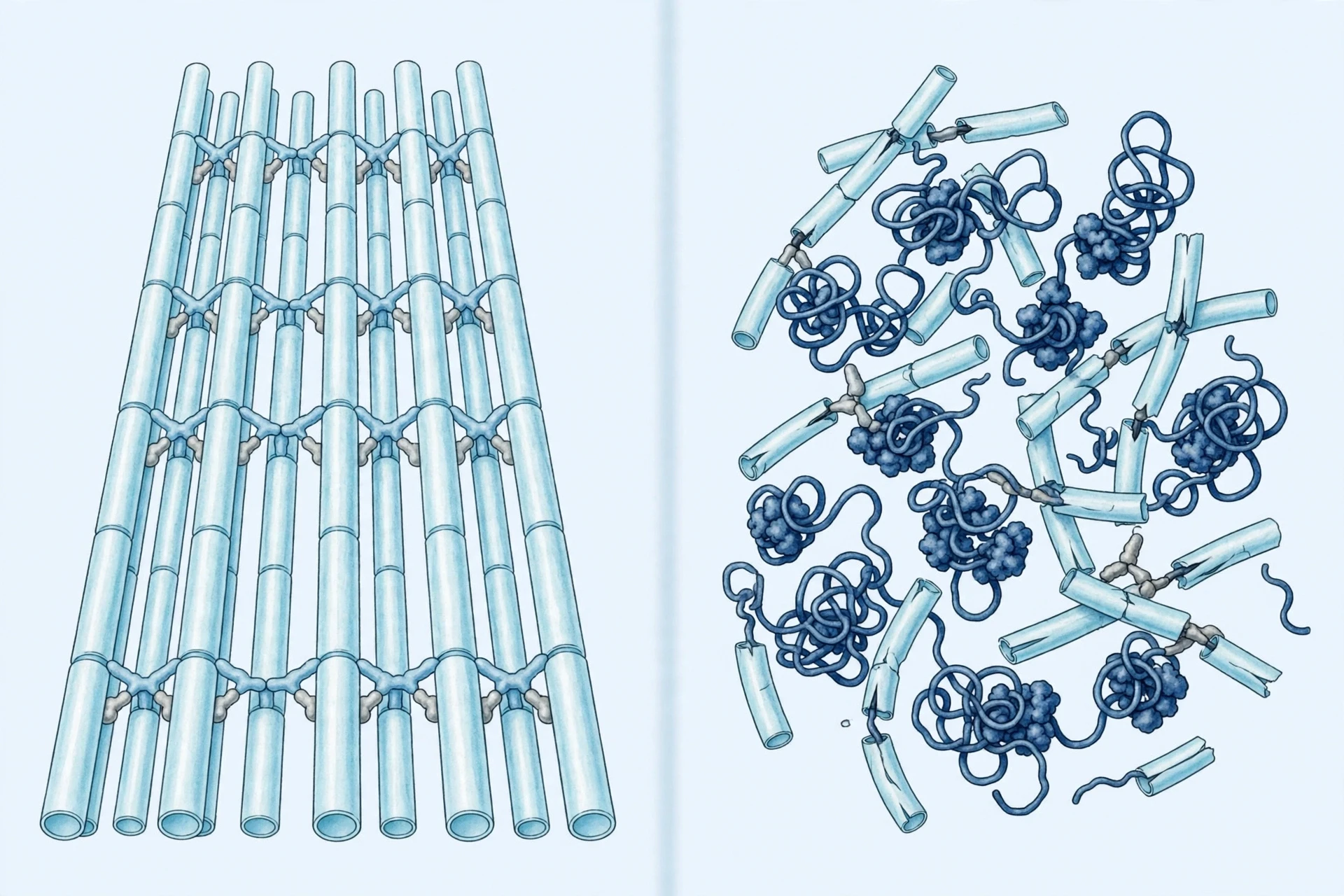
Inside the neuron, thin tubes called microtubules run along the axon like railway tracks, carrying supplies to the synapse and back. A protein called tau holds those tracks in place; when tau fails, the tracks collapse and the synapse starves.
Alzheimer's disease attacks both sides of this system at once: plaques gather outside the neuron and disrupt signals between cells, while tangles form inside and wreck the transport tracks. Synapses fail, neurons lose their connections and die, the brain shrinks, and the abilities supported by the lost networks fade with it.
3.2 Amyloid plaques: sticky clumps between cells
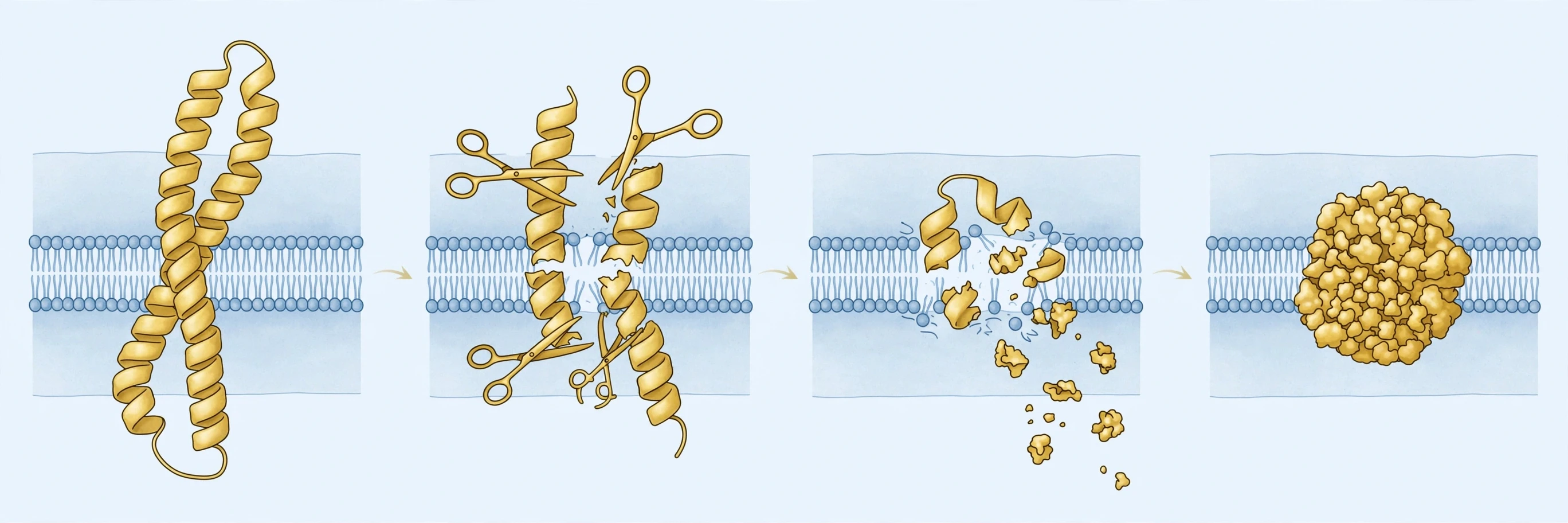
Amyloid plaques begin with the amyloid precursor protein, known as APP, which sits in the membrane of neurons, part sticking out of the cell and part inside. It is a normal protein, cut up by enzymes as part of ordinary cell maintenance — and how it is cut matters enormously.
There are two cutting routes. In one, enzymes cut APP into harmless fragments the cell clears away. In the other, beta-secretase and gamma-secretase cut APP in a different place, producing beta-amyloid, a short chain of 40 or 42 amino acids — and the 42-unit version, Abeta42, is stickier and clumps most readily.
In a healthy brain, beta-amyloid is produced and cleared in balance. In Alzheimer's disease, that balance tips, and the sticky fragments clump together into the dense deposits called amyloid plaques, sitting in the spaces between neurons.
Plaques do more than take up space. They interfere with the chemical signals passing between neurons, trigger inflammation around them, and damage nearby synapses. Researchers also study small soluble clusters of beta-amyloid that form before plaques appear, which can move freely and may disrupt synaptic function directly.
Amyloid plaques begin accumulating years, sometimes more than a decade, before any symptom appears, spreading first through the isocortex, then limbic regions, the basal ganglia and brainstem, and finally the cerebellum. Yet plaque burden alone tracks symptoms poorly: some people carry a heavy load of plaques and show no sign of dementia, while others with a lighter load are severely affected.
3.3 Tau tangles: the scaffolding collapses from inside
If plaques are the disease's most visible feature, tau tangles are its most destructive. Tau is a protein whose normal job is to stabilise microtubules, the railway tracks carrying supplies along the axon. In a healthy neuron, tau binds to microtubules and holds them steady, so transport runs smoothly.
In Alzheimer's disease, tau changes: it becomes hyperphosphorylated — too many phosphate groups attach to it — and lets go of the microtubules. The microtubules fall apart, transport along the axon breaks down, and the synapse starves. The detached tau twists into paired helical filaments, winding into the dense bundles called neurofibrillary tangles inside the neuron.
Tangles are toxic in two ways at once: they remove tau from its useful job, so the transport tracks collapse, and they add a harmful structure inside the cell. As tangles accumulate, the neuron stops functioning, loses its connections, and dies.
Unlike amyloid, tau burden tracks neuron loss and symptoms closely, and many researchers therefore regard tau as the closer correlate of clinical decline, even when amyloid is the earlier event.
3.4 The amyloid cascade hypothesis — and why scientists argue about it
In 1992, John Hardy and Gerald Higgins published a short paper in Science proposing a simple idea: the build-up of beta-amyloid triggers a cascade, setting off tau changes, inflammation, synapse loss, neuron death, and finally dementia. The amyloid cascade hypothesis has dominated research on Alzheimer's disease for more than thirty years.
The case for it rests on three lines of evidence. First, the rare deterministic genes — APP, PSEN1, and PSEN2 — all raise beta-amyloid production or shift it toward the stickier Abeta42 form. Second, people with Down syndrome have three copies of chromosome 21, the chromosome that carries the APP gene, and develop Alzheimer's pathology early. Third, lecanemab and donanemab clear amyloid and modestly slow cognitive decline; if amyloid were irrelevant, clearing it should do nothing at all.
The case against a simple version is also strong. Between 2002 and 2021, many amyloid-targeting drugs failed in clinical trials, and about 30 percent of cognitively normal older adults have substantial amyloid plaques at autopsy — an often-cited approximate figure — so plaques alone do not guarantee dementia. In 2022, a Science investigation also raised image-integrity concerns around influential work on an amyloid oligomer known as Abeta*56.
I remember a conference talk where a researcher showed two brain scans side by side: severe dementia with a modest plaque load, and a cognitively healthy person with a heavy one. The room went quiet. The amyloid cascade is a working hypothesis, not a proven cause. It explains a great deal, and it has produced the first drugs that slow the disease, but it does not explain everything, and the argument over its limits continues.
3.5 The third players: inflammation, microglia, and TREM2
Plaques and tangles do not act alone. Around them gathers the brain's immune system, led by microglia, the brain's resident immune cells. In a healthy brain, microglia patrol the tissue, clearing debris and pruning weak synapses; when plaques appear, they cluster around them, trying to contain and clear the amyloid.
That response is double-edged. Early on, microglia may clear amyloid and protect nearby neurons; later, as plaques persist, they can drive damaging inflammation that harms synapses and neurons. The same cells that protect the brain in one phase may damage it in another.
A gene called TREM2 governs how microglia respond. TREM2 is a receptor on microglia that helps them sense damage and clear debris, and rare variants such as R47H raise the risk of late-onset disease about 2- to 4-fold, comparable to one copy of APOE-e4. That finding ties the immune system directly to risk. Background on how the immune system recognises and clears threats helps explain the general principles, even though microglia work inside the brain.
Researchers are now testing whether calming harmful inflammation, or boosting the helpful side of the microglial response, could slow Alzheimer's disease — approaches still in research, not routine treatment.
3.6 Sleep, clearance, and the glymphatic system
Sleep is an active clearance state for the brain. During slow-wave sleep, the deep non-REM stage, the brain's glymphatic system is most active: cerebrospinal fluid flows more freely, carrying waste products including amyloid-beta and tau out of the brain and into the bloodstream. Poor sleep, in this picture, means poorer clearance, and more amyloid and tau left behind.
A small 2026 randomised crossover trial with 39 participants supports part of that picture: morning plasma amyloid and tau were higher after normal sleep than after sleep deprivation, consistent with greater overnight clearance.
The glymphatic story, though, is contested: a 2024 study by Miao and colleagues, published in Nature Neuroscience, found in mice that brain clearance was reduced, not increased, during sleep and anaesthesia, challenging the idea that sleep enhances brain clearance. The question is not settled: the glymphatic story remains promising but contested, not settled fact.
4. Why Does Alzheimer's Disease Attack Memory First?
4.1 The hippocampus and entorhinal cortex are hit first
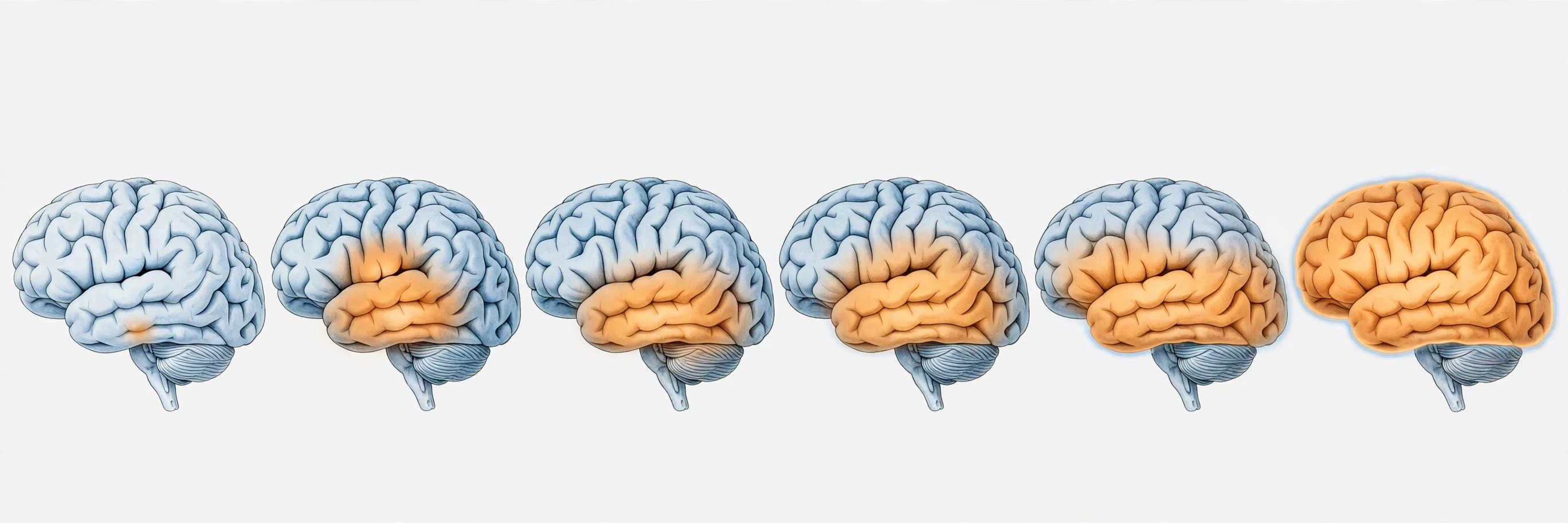
Alzheimer's disease does not damage the whole brain at once. It starts in a small set of structures that are essential for forming new memories: the hippocampus and the entorhinal cortex, deep inside the temporal lobe. The entorhinal cortex acts as a gateway, funnelling information from the rest of the cortex into the hippocampus, and the hippocampus binds that information into a memory that can later be recalled. Damage those two structures, and the ability to form new memories fails first, while older memories, stored elsewhere in the cortex, survive longer.
That pattern explains one of the most familiar features of Alzheimer's disease: a person in the early stages may remember childhood in vivid detail and forget a conversation from ten minutes ago. The old memories were laid down long before the damage began; the new ones were never properly formed, because the hippocampus and entorhinal cortex could no longer do their job. An explanation of how memories are formed shows why those two structures matter so much.
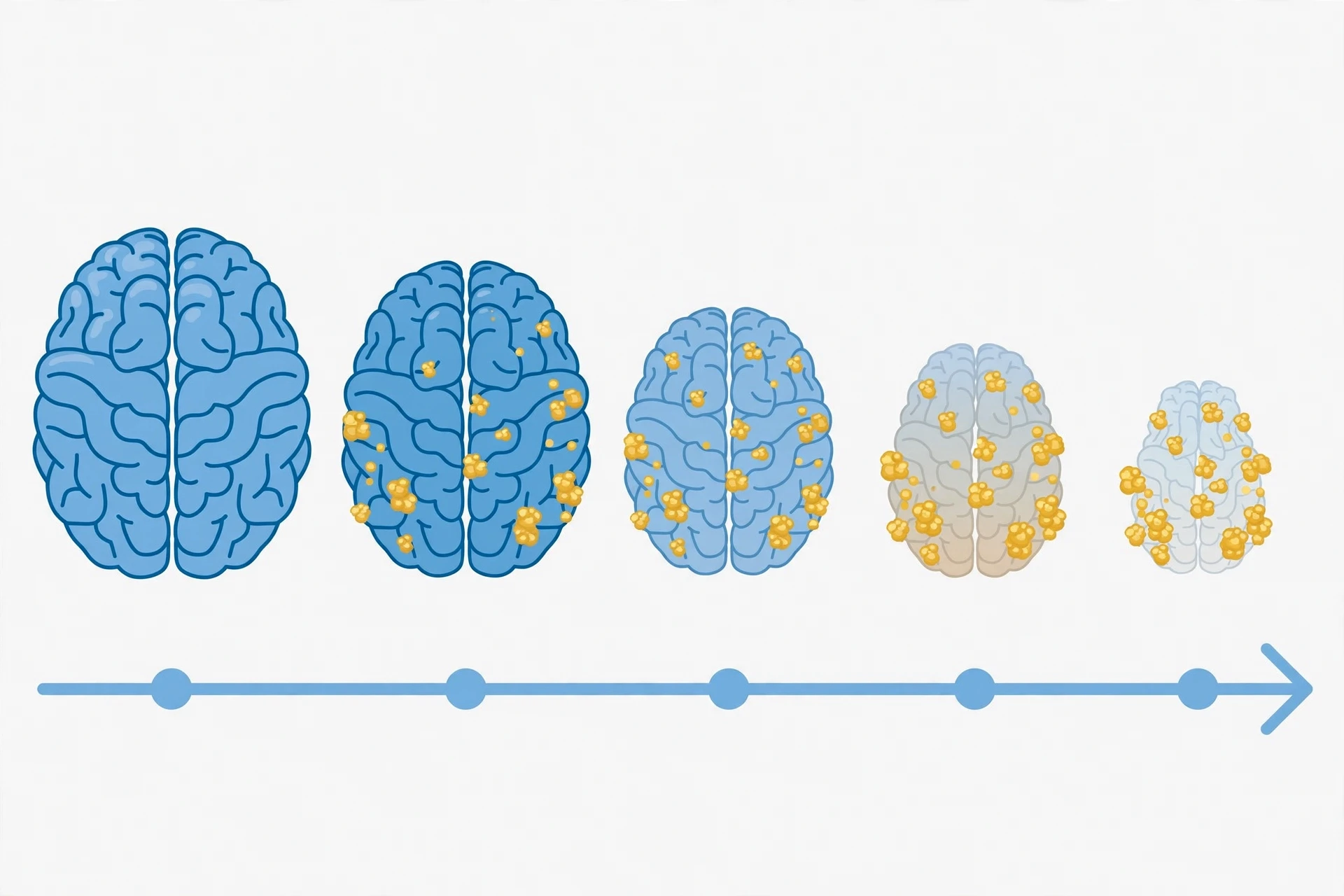
As more neurons die, the damage spreads outward from the memory centres into the limbic system and then into the neocortex, which handles language, reasoning, and perception. By the final stage, damage is widespread and brain tissue has shrunk significantly.
4.2 Braak staging: the slow spread across the brain
In 1991, Heiko and Eva Braak published a staging system for tau tangles that is still used today. Braak staging describes six stages, grouped into three phases. Stages I and II are the transentorhinal phase: tangles are confined to the transentorhinal and entorhinal cortex, the gateway to the hippocampus, and a person may have isolated memory impairment or no symptoms at all. Stages III and IV are the limbic phase: tangles spread into the limbic regions, including the hippocampus and the amygdala, which processes emotion, and memory problems deepen. Stages V and VI are the isocortical phase: tangles spread extensively through the neocortex, ending in the primary motor and sensory areas, and the damage is incompatible with normal cognition.
The Braak map is a map of tau, not of amyloid, which spreads on a different timetable. Tau burden tracks neuron loss and symptoms more closely than plaque burden does, which is why Braak staging remains a central tool for understanding how the disease progresses.
4.3 Why the first symptoms are not always memory
Memory problems are typically one of the first signs of Alzheimer's disease, but they are not always the first sign. First symptoms vary from person to person. For many people, a decline in a non-memory area may signal the very early stages: trouble finding the right word, difficulty judging distances or reading a map, or impaired reasoning and judgement. Movement difficulties and problems with the sense of smell have also been linked to mild cognitive impairment, the stage that can precede dementia.
That variation makes sense once the Braak map is understood. The entorhinal cortex and hippocampus are hit first in most cases, so memory usually fails first, but damage in one region affects the networks connected to it. Language, spatial vision, and judgement can show strain early, and smell is affected because the olfactory system is closely linked to the entorhinal cortex.
The practical point is that the first sign of the disease is a change from a person's own baseline, in whatever area it appears — getting lost on a familiar route, or struggling for common words. The area differs; the pattern, a progressive loss of a previously intact ability, is the same.
5. What Causes Alzheimer's Disease? Genes, Age, and Everything Else
5.1 The honest answer: no single cause is known for most people
For most people living with the disease, no single cause is known. The National Institute on Aging describes it as arising from a combination of age-related brain changes, genetic factors, environmental influences, and lifestyle factors, with the importance of each differing from person to person. That is not a vague answer; it is the accurate one.
A small minority of cases have a clear single-gene cause, described in Section 5.4. For the great majority, Alzheimer's disease is the result of many small influences acting together over decades: the slow accumulation of amyloid and tau, the gradual failure of clearance systems, vascular damage, inflammation, and the wear of ageing itself. No one of those factors alone explains the disease, and no one of them can be removed to guarantee that it will not occur.
That complexity is why research has widened beyond amyloid alone, to genes, immune cells, blood vessels, sleep, and metabolism.
5.2 Age — the greatest known risk factor
Age is the greatest known risk factor for Alzheimer's disease. Risk roughly doubles every five years after age 65, and about one-third of people age 85 and older may have the disease. That steep rise is the single most important fact about who develops Alzheimer's disease, and it shapes everything else in this section: every other risk factor acts on top of the baseline set by age.
Why does ageing matter so much? Clearance systems slow down, so beta-amyloid and tau are removed less efficiently. Blood vessels stiffen and narrow, reducing blood flow. Chronic inflammation rises, mitochondria work less well, and free radicals accumulate. Brain regions shrink slightly even in healthy people, and the reserve that lets the brain compensate for damage gets thinner.
An overview of why ageing affects the body and brain describes those mechanisms in more detail, and it makes the link clear: Alzheimer's disease is not caused by ageing alone — most older people do not develop it — but ageing creates the conditions in which the disease process can take hold. The longer a person lives, the more time amyloid and tau have to accumulate, and the less reserve the brain has to absorb the damage.
5.3 APOE-e4: the risk gene, not a destiny gene
The strongest common genetic risk factor for late-onset disease is a gene called APOE, which codes for apolipoprotein E, a protein that carries cholesterol and other fats in the blood and brain. APOE comes in three common forms: e2, e3, and e4. The e3 form is the most common and is regarded as neutral; e2 lowers risk, and e4 raises it.
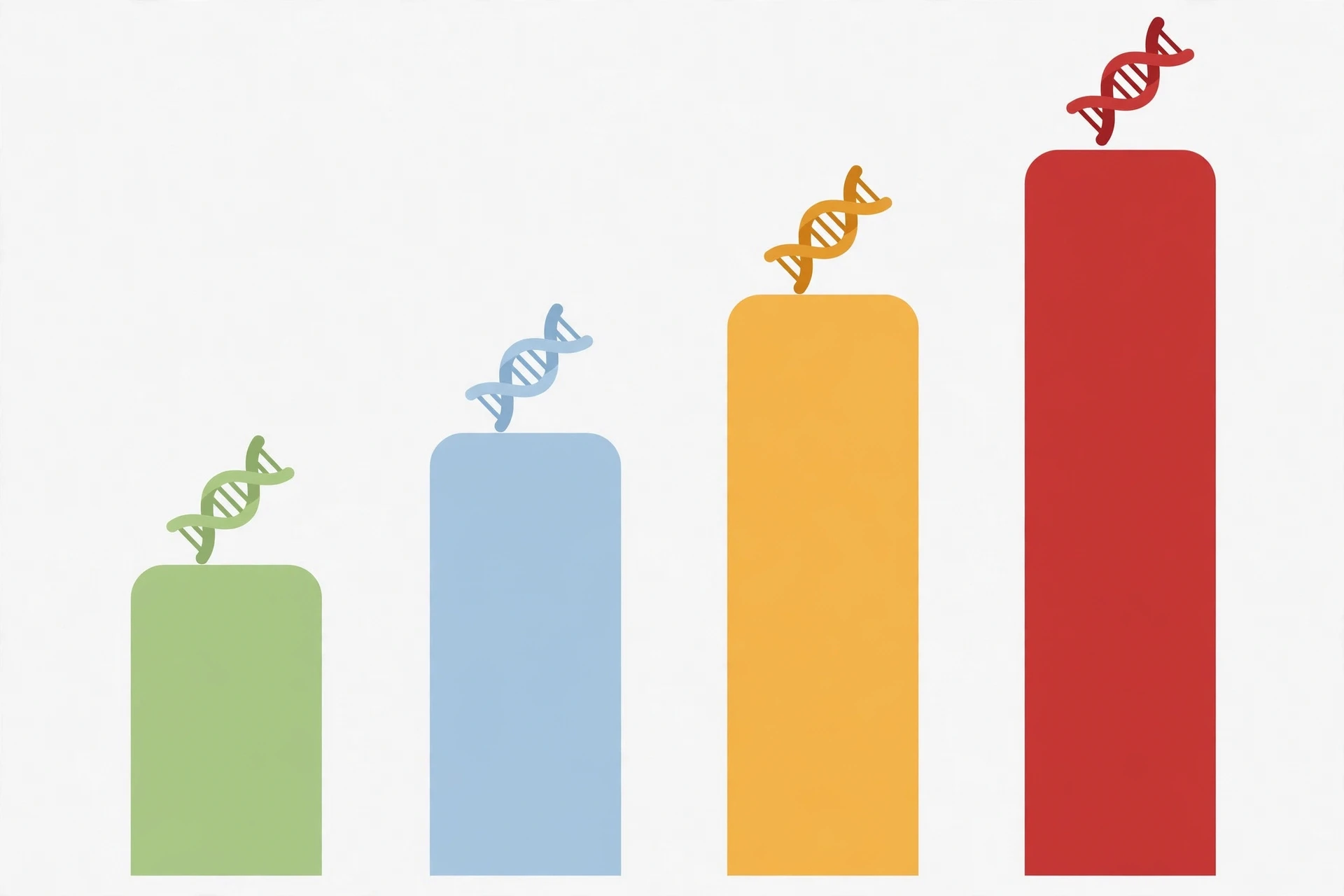
One copy of APOE-e4 raises the risk of Alzheimer's disease 2- to 3-fold, compared with two copies of the common e3 form. Two copies raise it 10- to 15-fold. About 25 percent of the general population carries at least one copy of e4, and about 2 to 3 percent carry two copies. Between 60 and 80 percent of people with Alzheimer's disease carry at least one e4 allele, which is why the gene is so widely discussed.
Those numbers need careful reading. Carrying e4 is a risk factor, not a diagnosis: many carriers never develop dementia, and many people with Alzheimer's disease carry no e4 at all. Family history raises risk by roughly 10 to 30 percent when a first-degree relative has the disease, according to Cleveland Clinic figures, but most cases are not directly inherited.
In 2024, Fortea and colleagues proposed in Nature Medicine that carrying two copies of APOE-e4 should be classified as a distinct genetic form of Alzheimer's disease, reporting that nearly all people with two e4 copies showed abnormal amyloid biomarkers by about age 65. Other researchers, including in a JAMA Neurology editorial response, argued it differs only in the magnitude of risk, not in kind — a question still debated.
5.4 The rare deterministic genes: APP, PSEN1, PSEN2
Only three genes are known to cause Alzheimer's disease outright: APP, PSEN1, and PSEN2. Mutations in these genes are inherited in an autosomal dominant pattern, which means that a person who inherits one faulty copy from a parent will almost certainly develop the disease. Together, they account for less than 5 percent of all Alzheimer's cases. PSEN1 is the most common of the three, accounting for up to about 70 percent of early-onset familial cases. Symptoms typically begin before age 65, often in the 40s or 50s.
The numbers around familial disease can be confusing, because they use different denominators. The less-than-5-percent figure counts all autosomal dominant familial cases as a share of all cases. The Mayo Clinic's less-than-1-percent wording counts deterministic single-gene cases as a share of all cases, using a narrower definition. Both appear in reputable sources and describe the same small group from different angles, concentrated in early-onset familial disease.
Down syndrome is a separate genetic route to the same pathology. People with Down syndrome carry an extra copy of chromosome 21, which carries the APP gene, so too much amyloid precursor protein is produced. Estimates suggest 50 percent or more will develop the disease, with symptoms in their 50s and 60s — powerful evidence for the role of amyloid.
A description of how genes and variants shape human biology explains the difference between a deterministic gene, which nearly guarantees a disease, and a risk gene, which only shifts the odds — the difference between the rare APP, PSEN1, and PSEN2 mutations and the common APOE-e4 variant.
5.5 More than 80 genetic regions
Beyond the three deterministic genes and APOE, scientists know of more than 80 genetic regions associated with Alzheimer's disease. Most of them have small individual effects, and they act together, in combination with age and environment, to shape a person's overall risk. The picture is polygenic: for most people, risk is the sum of many small genetic influences, not the result of a single gene.
That is why no single-gene test predicts whether a person will develop Alzheimer's disease. Testing can identify the rare deterministic mutations, and APOE-e4 status, but neither result is a diagnosis. Genes load the dice; they do not decide the outcome.
6. Who Is Most at Risk? The 14 Modifiable Factors
6.1 The Lancet Commission 2024: what 45% really means
In 2024, the Lancet Commission on dementia prevention, intervention, and care, led by Gill Livingston and colleagues, identified 14 modifiable risk factors for dementia and estimated that, together, they could in theory prevent or delay about 45 percent of dementia cases worldwide.
That 45 percent figure needs careful reading. It is a population-level modelling estimate, based on the population attributable fraction — the share of cases in a whole population attributed to a given factor, assuming the link is causal. It is not a personal promise, and it does not mean 45 percent of cases are preventable in practice. The remaining roughly 55 percent traces to age, genetics, and causes not yet identified.
The 2024 report added two factors to the 12 listed in 2020 — high LDL cholesterol and untreated vision loss — raising the modelled share from about 40 percent to about 45 percent. The message is best read as a public-health finding, not as individual advice: at the level of whole populations, a large share of dementia is linked to factors that can, in principle, be changed.
6.2 The 14 factors across a lifetime
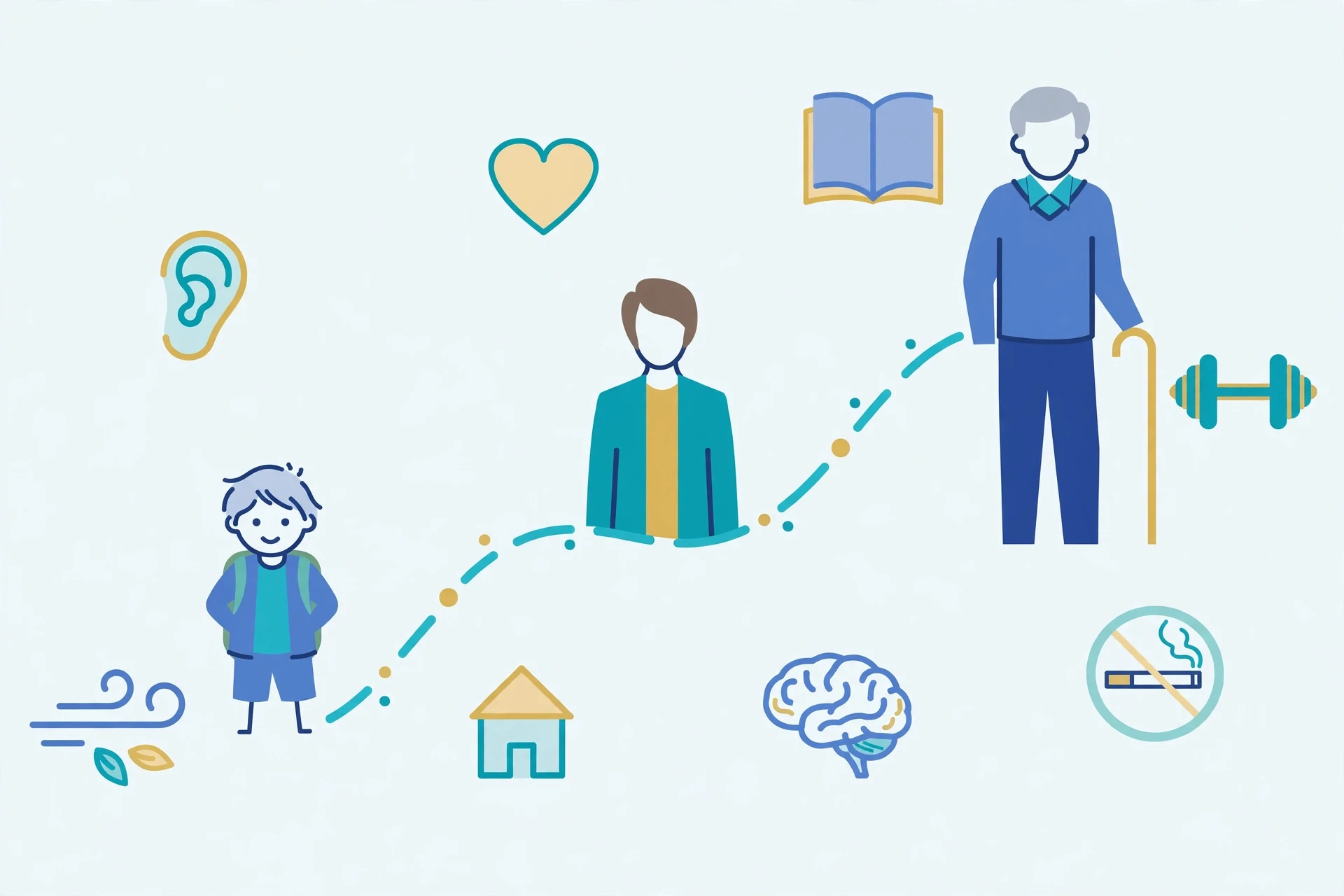
The 14 factors are spread across the life course: one in early life, less education; ten in midlife, hearing loss, high LDL cholesterol, depression, traumatic brain injury, physical inactivity, diabetes, smoking, high blood pressure, obesity, and excessive alcohol use; and three in later life, social isolation, air pollution, and untreated vision loss.
The largest single shares belong to hearing loss, at about 7 percent, and high LDL cholesterol, also at about 7 percent. Less education and social isolation each account for about 5 percent. Each remaining factor accounts for about 1 to 3 percent. Those shares overlap, because a person can carry several factors at once, so they should not simply be added up.
Life stage | Risk factor | Approximate share of dementia cases |
|---|---|---|
Early life | Less education | About 5% |
Midlife | Hearing loss | About 7% |
Midlife | High LDL cholesterol | About 7% |
Midlife | Depression | About 3% |
Midlife | Traumatic brain injury | About 3% |
Midlife | Physical inactivity | About 2% |
Midlife | Diabetes | About 2% |
Midlife | Smoking | About 2% |
Midlife | High blood pressure | About 2% |
Midlife | Obesity | About 1% |
Midlife | Excessive alcohol use | About 1% |
Later life | Social isolation | About 5% |
Later life | Air pollution | About 3% |
Later life | Untreated vision loss | About 2% |
The 45 percent combined figure is a population-level modelling estimate, not a personal promise. The shares in the table are approximate population attributable fractions from the Lancet Commission 2024 report, and they overlap because many people carry more than one factor.
Hearing loss, tied with high LDL cholesterol for the largest share, is also the least obvious: researchers propose several mechanisms, including reduced stimulation of the auditory cortex, greater cognitive load from straining to hear, and social withdrawal. High LDL cholesterol, the other 7-percent factor, is new to the 2024 list.
6.3 Women, and why the gap is not only about living longer
Nearly two-thirds of Americans with the disease are women. Lifetime risk at age 45 is 1 in 5 for women and 1 in 10 for men. Longevity explains much of that gap — women live longer, so more reach the ages at which risk is highest — but not all of it, and researchers are studying what else contributes.
One difference under study is genetic: researchers are studying whether genetic risk, including APOE-e4, differs between women and men. Hormonal differences are also under study, including the effects of oestrogen loss after menopause. A Stanford Medicine article from April 2026 summarises the current evidence: the gap is real, it is partly about lifespan, and the rest is an active area of research rather than a settled answer.
Disparities by race and ethnicity are also large: older Black Americans are about twice as likely, and older Hispanic Americans about one and one-half times as likely, to have Alzheimer's disease or other dementias as older White Americans, reflecting vascular health, education, access to care, and disadvantage across a lifetime.
6.4 Vascular health and the brain
Heart disease, stroke, high blood pressure, diabetes, and obesity are all associated with cognitive decline and with Alzheimer's disease. The link runs through the blood vessels: when small vessels are damaged, blood flow falls and the brain clears waste less well. Vascular damage does not cause plaques and tangles directly, but it lowers the threshold at which they produce symptoms.
Researchers often summarise the theme as "what is good for the heart is good for the brain" — a research theme, not a prescription. Whether reducing vascular risk factors reduces the risk of Alzheimer's disease itself is still being tested in trials, and the evidence so far is promising but not conclusive. Many Lancet factors are vascular, and they cluster together in the same people: the brain and the heart share a blood supply, and what damages one tends, over decades, to damage the other.
7. Early Signs and Stages: From Silent Changes to Severe Dementia
Alzheimer's disease does not arrive all at once. It builds quietly, over years, and the changes it causes in the brain begin long before anyone notices a forgotten name. That long, silent start is one of the hardest things about the condition. Understanding the stages helps explain why two people with the same diagnosis can seem so different, and why the earliest signs are so easy to miss.
7.1 The silent decade
Brain changes may begin a decade or more before symptoms appear. During this silent stage, amyloid plaques and tau tangles are already building up, and connections between neurons are already being lost, while the person still thinks, works, and remembers normally. Scientists call this the preclinical stage: the biology of the disease is present, but there is no visible dementia yet.
That gap exists because the brain has reserves: it can compensate for early damage, rerouting work around injured circuits, until the damage passes a point where compensation no longer works. Biomarkers — measurable signs such as amyloid in spinal fluid or on a PET scan, and phosphorylated tau in blood — can be detected during this silent period. The damage starts in the memory-forming structures, the hippocampus and the entorhinal cortex, and spreads outward as more neurons die and more of the brain begins to shrink.
7.2 Mild cognitive impairment (MCI)
Between normal ageing and dementia sits a stage called mild cognitive impairment, or MCI. A person with MCI has more memory problems than is normal for their age, but the symptoms do not interfere with everyday life. They can still manage money, keep appointments, and live independently — even if remembering a name or a recent conversation takes more effort than it used to.
MCI is not a diagnosis of Alzheimer's disease, and it does not always lead there. Older people with MCI are at greater risk of developing the disease, but the path is not fixed: some people with MCI go on to develop dementia, some stay stable for years, and some revert to normal cognition. That uncertainty is why a diagnosis of MCI is a reason for careful evaluation and follow-up, not a verdict. It is also why doctors look for the underlying cause — MCI can arise from the biology of the disease, but it can also come from other conditions, from medication effects, or from problems such as depression or poor sleep.
I once sat with a neighbour who had been told he had MCI, and what stayed with me was the careful way he described it: he kept a notebook by the phone, wrote down every appointment the moment it was made, and asked his daughter to sit in on medical visits. He was adapting, and the notebook worked.
7.3 The early signs families notice first
Memory problems are typically one of the first signs, and they usually show up in recent memory first: forgetting events or conversations that happened hours or days ago, repeating the same question, or struggling to recall something that was just learned. Older memories often survive much longer, because they were laid down before the damage began.
But memory is not the only early sign, and for some people it is not the first. The first symptoms vary from person to person. For many, a decline in non-memory abilities signals the very early stages: trouble finding the right word, difficulty judging distance or reading a map, impaired reasoning or judgement, or problems with the sense of smell. Families often notice the practical things first — trouble handling money and paying bills, getting lost on a familiar route, or a personality change that is hard to name.
The contrast with normal ageing is useful here. Normal ageing brings slower processing and the occasional word-finding pause, but memory is relatively spared: a person misplaces their keys, then finds them and remembers where they left them. In the early stages of the disease, the pattern is different — the person may forget how to get home from a familiar shop or repeat a story within the same conversation. One lapse proves nothing. A pattern, noticed over weeks and months by people who know the person well, is what prompts an evaluation.
7.4 Mild, moderate, severe — what changes
Doctors and researchers often describe the course of the disease in three broad stages — mild, moderate, and severe — while recognising that real life is messier than any staging system, and that people move through these stages at very different speeds.
In the mild stage, memory loss grows more noticeable. A person may wander and get lost, have trouble handling money and paying bills, repeat questions, and show changes in personality and behaviour. Many people receive their diagnosis in this stage.
In the moderate stage, damage reaches the areas of the brain that control language, reasoning, conscious thought, and sensory processing. Problems recognising family and friends can appear, along with hallucinations, delusions, or paranoia in some people.
In the severe stage, plaques and tangles have spread throughout the brain and brain tissue has shrunk significantly. A person in this stage cannot communicate in the usual way and is completely dependent on others for care.
After a diagnosis at 65 or older, life expectancy averages between four and eight years, though some people live for two decades. Those numbers describe averages, not any one person's future.
7.5 Early-onset Alzheimer's disease
When symptoms begin before age 65, the disease is called early-onset Alzheimer's disease. It is much rarer than the late-onset form, and symptoms typically begin in the 40s or 50s: memory loss, word-finding trouble, difficulty with planning and judgement, and changes in mood and personality.
Early-onset disease is where the genetic link is strongest. The rare deterministic genes — APP, PSEN1, and PSEN2 — cause autosomal dominant familial early-onset disease; mutations in these genes account for less than 5% of all cases of Alzheimer's disease. A person who inherits one of these mutations has a very high likelihood of developing the disease, and often at a younger age. That is a different situation from the common, late-onset form, where genes influence risk but do not determine the outcome.
8. Alzheimer's Disease vs Dementia vs Normal Ageing
Three words get tangled together in everyday conversation — Alzheimer's, dementia, and normal ageing — and separating them is one of the most useful things this article can do.
8.1 Three things people confuse, clearly separated
Dementia describes a set of symptoms rather than one illness: memory, thinking, behaviour and everyday function slipping far enough to disrupt ordinary life. Alzheimer's disease is one specific illness behind those symptoms — a biological process marked by amyloid plaques, tau tangles and failing connections between neurons — and it causes more dementia than any other condition. Dementia can also come from other causes, and the brain changes of Alzheimer's disease can be present for years before dementia itself shows up.
Normal ageing is different from both. Ageing may slow processing speed and bring the odd struggle for a word, but memory itself stays largely intact, and daily life goes on without major disruption. The disease is not a normal part of ageing. It is a disease process that destroys neurons, and it produces a pattern of decline that goes beyond the occasional lapse.
It is not the only cause of dementia. Vascular dementia follows damage to the brain's blood vessels, often after strokes. Lewy body dementia involves abnormal protein deposits called Lewy bodies and brings distinctive features such as visual hallucinations and fluctuating alertness. Frontotemporal dementia affects the frontal and temporal lobes first, and often shows up as changes in personality and language rather than memory. And many older people have mixed dementia — more than one of these processes at work at the same time. Telling them apart matters, because the causes, the course, and the treatments differ, even when the symptoms overlap.
8.2 Conditions that can look like Alzheimer's disease
Not everything that looks like Alzheimer's disease is the disease. A number of other conditions can mimic its symptoms, and some of them are treatable or reversible: stroke, a brain tumour, Parkinson's disease, sleep disturbances, medication side effects, infection, depression, thyroid problems, and vitamin deficiency. Depression in older adults, in particular, can produce poor concentration and memory problems that resemble dementia. Thyroid problems and vitamin deficiency can do the same, and both can be corrected once they are found.
That is why diagnosis requires a full evaluation rather than a single observation. A careful work-up can find a treatable cause, and when the cause is Alzheimer's disease, it can confirm that too — which is the starting point for planning, support, and access to treatment and research.
9. How Doctors Diagnose Alzheimer's Disease Today
Diagnosis has changed more in the last few years than in the previous few decades. The process still starts with a conversation, but it no longer ends there: blood tests, brain scans, and spinal fluid tests can now show the biology of the disease in a living person, years before the damage becomes severe.
9.1 There is no single test
No single test diagnoses Alzheimer's disease on its own. Evaluation usually includes a detailed history — taken with a family member present, since the person being assessed may not remember their own lapses — along with cognitive tests of memory, attention, language, and problem-solving. Blood tests rule out other causes, such as thyroid problems or vitamin deficiency, and brain scans such as CT, MRI, or PET help complete the picture.
The cognitive tests are not pass-or-fail exams: they give a snapshot of how different parts of thinking are working, and repeated over time they show whether abilities are stable or changing. The history matters just as much — when the changes began, how they have progressed, and how they affect daily life.
9.2 The new biological definition (2024)
In 2024, the Alzheimer's Association Workgroup, led by Jack and colleagues, published revised criteria that define Alzheimer's disease as a biological process, not only as a set of symptoms. Under these criteria, the disease begins with Alzheimer's neuropathologic change while a person is still without symptoms. An abnormal Core 1 biomarker alone is sufficient to establish the diagnosis — that includes amyloid PET, the cerebrospinal fluid Abeta42/40 ratio, cerebrospinal fluid p-tau181/Abeta42, cerebrospinal fluid t-tau/Abeta42, or an accurate plasma assay such as p-tau217. Core 2 biomarkers, including tau PET and later biofluid markers, are used for staging and prognosis.
The shift is a large one. Alzheimer's disease is increasingly defined by its biology, not only by its symptoms — a direction shared with other conditions, as explained in How Cancer Works, where diseases are increasingly defined by their biology, not only by symptoms. A person can now be found to have the biology of the disease before dementia appears, which changes how early the conversation about planning and treatment can begin — though a biomarker result is not the same as a prognosis.
9.3 Blood tests: the p-tau217 breakthrough
The most practical change in diagnosis has been the arrival of blood tests. For years, confirming amyloid in the brain meant a PET scan or a spinal tap — both expensive, and the second invasive. A blood test that measures phosphorylated tau, known as p-tau217, changed that calculation.
On 16 May 2025, the US Food and Drug Administration cleared the Lumipulse G pTau217/beta-Amyloid 1-42 Plasma Ratio, made by Fujirebio — the first blood test authorised to aid the diagnosis of Alzheimer's disease. It is for adults 55 and older who already have cognitive symptoms, used in specialty care. In validation, it agreed with amyloid PET or spinal fluid results in 91.7% of positive cases and 97.3% of negative cases. It is an aid to diagnosis, not a screening test and not a stand-alone diagnostic test.
The evidence behind blood testing grew quickly. In a 2024 study in JAMA, Palmqvist and colleagues tested an amyloid probability score based on plasma p-tau217 in 1,213 patients in Sweden. The score had 88–92% diagnostic accuracy in primary and secondary care: primary care doctors working alone reached 61% accuracy and 91% with the blood test; dementia specialists reached 73% alone and 91% with the test. A follow-up study in Nature Medicine in 2025, with 1,767 participants, found that plasma p-tau217 detected Alzheimer's pathology with an area under the curve of 0.93–0.96, with accuracy of 89–91% in secondary care and 85% in primary care — and lower accuracy, 83%, in people age 80 and older.
More blood tests followed, as reported in 2025–2026: the Roche Elecsys pTau181 test was reported cleared in October 2025 as a primary-care rule-out test, and the C2N PrecivityAD2 test and the Roche Elecsys pTau217 test were reported cleared in August 2026, the latter described as the first single-biomarker test cleared for both rule-in and rule-out use. The exact days for these later clearances come from secondary reporting, so this article gives months only. All are for people who already have cognitive symptoms; none is cleared to screen healthy people, and none diagnoses the disease on its own.
9.4 PET scans, spinal fluid, and MRI
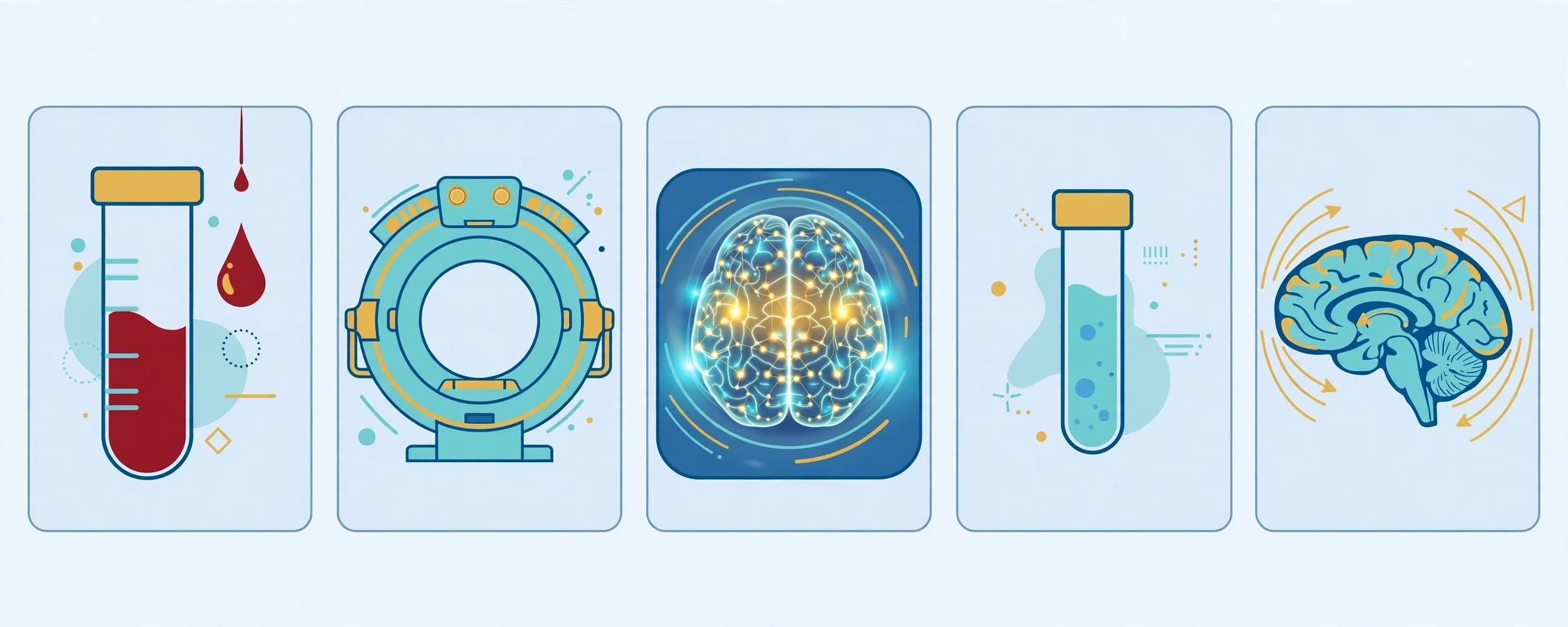
Blood tests do not replace the older tools; they sit alongside them. Amyloid PET and tau PET scans show plaques and tangles in the living brain. Cerebrospinal fluid, collected by spinal tap, measures the Abeta42/40 ratio and phosphorylated tau. MRI shows brain atrophy and provides a baseline scan before anti-amyloid treatment begins, against which later scans are compared to check for side effects.
Each tool answers a slightly different question. PET and spinal fluid confirm the biology; MRI shows the structural damage and rules out other causes such as a tumour or a stroke; cognitive testing shows what the damage means for thinking and daily life. Together, they give a diagnosis far more certain than the clinical judgement of a generation ago — and blood tests are now making that certainty reachable in ordinary clinics, not only in specialist centres.
9.5 Why early diagnosis matters (in general terms)
An earlier diagnosis does not change the biology, but it changes what a family can do with the time they have: plan financial, legal, safety, and living arrangements while the person with the diagnosis can still take part in those decisions, use support services and clinical-trial opportunities, and start treatment earlier, when the new disease-modifying drugs are most likely to help.
10. Treatment Today: What Medicines Can and Cannot Do
Treatment for Alzheimer's disease has changed in the last few years, and the honest way to describe it is this: there are now medicines that can slow the disease modestly in its early stages, and there are older medicines that can ease symptoms for a while. Neither kind cures the disease. Everything that follows should be read against that fact.
10.1 First, the plain truth: there is no cure
There is no cure for Alzheimer's disease. No medicine available today stops the disease, reverses the damage, or restores lost memory. Saying that plainly matters, because the headlines about new drugs can easily give a different impression. The new treatments are a real advance — the first drugs that act on the disease process itself rather than only on its symptoms — but they slow decline only modestly, and only in people at an early stage whose brains show confirmed amyloid.
10.2 The anti-amyloid antibodies: lecanemab and donanemab
Lecanemab, sold as Leqembi, received traditional approval from the US Food and Drug Administration on 6 July 2023, after an earlier accelerated approval in January 2023. Donanemab, sold as Kisunla, received FDA approval on 2 July 2024. Both are monoclonal antibodies given by infusion, for early Alzheimer's disease — mild cognitive impairment or mild dementia — with confirmed amyloid in the brain. Both clear amyloid plaques and slow decline modestly; neither stops or reverses the disease.
The numbers come from two large trials. In CLARITY-AD, lecanemab slowed decline by about 27% over 18 months: on the Clinical Dementia Rating Sum of Boxes scale, scores worsened by 1.21 points on the drug compared with 1.66 points on placebo, a difference of 0.45 points. In TRAILBLAZER-ALZ 2, donanemab slowed decline by about 35% on the Integrated Alzheimer's Disease Rating Scale in the low/medium-tau group over 76 weeks, a difference of 3.25 points. Both effects are modest, and their long-term durability is still uncertain.
Aducanumab belongs to the same story as history rather than as current treatment. It was the first anti-amyloid antibody, given accelerated FDA approval in June 2021 over the opposition of the advisory panel, and Biogen later discontinued it, with 2024 reported as the year in secondary coverage.
10.3 ARIA: the main safety issue, honestly stated
The main safety issue with the anti-amyloid antibodies is a group of changes seen on MRI called amyloid-related imaging abnormalities, or ARIA. Brain swelling, known as ARIA-E, occurred in 12.6% of lecanemab patients and 24.0% of donanemab patients in the pivotal trials. Small bleeds, known as ARIA-H, occurred in 17.3% and 31.4% respectively. Most cases are mild, but some are serious. That is why treatment requires regular MRI monitoring, especially in the early months.
Risk is higher in people who carry the APOE-e4 gene, which is why genetic counselling and testing are discussed before treatment begins. The choice to start one of these drugs is a weighing of a modest, uncertain slowing of decline against a real risk of brain swelling or bleeding, the burden of regular infusions, and regular scans — a decision made with a specialist.
10.4 The older medicines: cholinesterase inhibitors and memantine
Long before the antibodies arrived, there were medicines that ease symptoms. The cholinesterase inhibitors — donepezil, rivastigmine, and galantamine — are used for mild to moderate disease. They work by slowing the breakdown of acetylcholine, a chemical messenger used in learning and memory that is significantly reduced in the disease. Memantine, used for moderate to severe disease and sometimes combined with a cholinesterase inhibitor, acts on glutamate signalling through NMDA receptors, a different part of the brain's chemical messaging.
Both classes ease symptoms modestly and temporarily for some people. They can help with memory, attention, and daily functioning for a period, and then their effect fades as the disease advances. They do not change the underlying disease course: the plaques keep forming, the tangles keep spreading, and the neurons keep dying at the same pace.
10.5 What is being researched now
Research now runs in several directions at once. Tau-targeting drugs aim at the second hallmark lesion, on the reasoning that tau tracks symptoms more closely than amyloid does. TREM2 and microglia immunotherapies, still in preclinical and early clinical work, aim at the brain's immune response. Anti-inflammatory approaches follow the same logic from a different angle. Combination therapy — an anti-amyloid drug plus a tau drug, or a drug plus a microglia-targeting drug — is being tested on the idea that a disease with many moving parts may need more than one intervention. And prevention trials are enrolling people who carry the biomarkers of Alzheimer's disease but have no symptoms yet, asking whether clearing amyloid before symptoms appear changes the outcome in a way that clearing it later does not.
All of this is research, not available treatment. None of these approaches can be prescribed today, and many will fail — that is the normal course of drug development, not a sign that the field has stalled.
11. Seven Misconceptions About Alzheimer's Disease
1. "Alzheimer's is just old age." No. Alzheimer's disease is a disease process, not normal ageing. Ageing brings slower processing and occasional lapses, but memory is relatively spared. The disease destroys neurons through plaques, tangles, and lost connections — a different process entirely, even though age is its greatest known risk factor.
2. "Memory loss always means Alzheimer's." No. Many conditions cause memory problems, and some are treatable: depression, thyroid problems, vitamin deficiency, medication side effects, infection, and sleep disturbance can all look like dementia. Memory loss is a reason for a full evaluation, not a diagnosis in itself.
3. "If my parent had it, I will get it." No. Having a first-degree relative — a parent or sibling — with Alzheimer's disease raises risk by roughly 10–30%, which is a real increase but far from a certainty. Most cases are not directly inherited. Only the rare deterministic genes make the disease near-certain, and they cause under 5% of all cases.
4. "APOE-e4 means you will get Alzheimer's." No. APOE-e4 is a risk factor, not a diagnosis. One copy raises risk 2- to 3-fold and two copies raise it 10- to 15-fold, but most carriers never develop dementia, and plenty of people with the disease carry no e4 copy at all. About 25% of the general population carries at least one copy, and most of them will never develop the disease.
5. "Alzheimer's only affects memory." No. Memory is usually affected first, because the damage starts in the memory-forming structures, but the disease reaches language, judgement, vision and spatial skills, mood, and behaviour — and eventually movement and basic functions such as eating and dressing. A person who can still remember old stories clearly may nonetheless be unable to find the right words or to judge a risky situation.
6. "The new drugs cure Alzheimer's." No. Lecanemab and donanemab modestly slow early decline — about 27% for lecanemab, and about 35% for donanemab in the low/medium-tau group — but they do not stop or reverse the disease. The distinction matters: a drug that buys a modest slowing of decline is valuable, and it is also not a cure.
7. "Nothing can be done." This is the most damaging misconception of all, because it is the one that stops people from seeking help. There is no cure, but diagnosis, planning, support, symptom medicines, and research participation all matter — and the Lancet Commission's finding that about 45% of dementia cases could in theory be prevented or delayed is a population-level modelling estimate, not a personal guarantee. The honest middle is neither false hope nor hopelessness: much can be done, and none of it is a cure.
12. Living With Alzheimer's Disease: Care, Planning, and Support
Behind every statistic about Alzheimer's disease is a household reorganising itself around a person who needs more and more help. This section is general educational information about that reality — about the scale of caregiving, about planning, and about where information can be found. It is not personal advice, and it does not replace a conversation with a clinician, a lawyer, or a social worker.
12.1 The scale of caregiving
Unpaid care is provided by close to 13 million Americans looking after a family member or friend with dementia. In 2025 they gave more than 19 billion hours of care, valued at more than 446 billion US dollars. About 83% of the help older adults receive comes from family, friends, or other unpaid caregivers — not from paid services. Roughly 59% of dementia caregivers describe high to very high emotional stress, and around two-thirds of caregivers are women. Many are in the sandwich generation, caring for a parent with dementia while still raising children or supporting teenagers, and many are older spouses caring for a partner while managing their own health problems.
I remember talking with a woman who had cared for her husband for six years, and what she described was not one crisis but a thousand small adjustments: labels on the cupboards, a lock on the front door, a routine so fixed that a change of plan could undo a whole day. She did not describe herself as heroic — only tired, and glad to keep him at home, where he knew the shape of every room. Her story is one of millions: nearly 13 million people, more than 19 billion hours, and a cost carried mostly by families.
12.2 Planning ahead, in general terms
An early diagnosis of Alzheimer's disease gives families time — time for financial, legal, safety, and living-arrangement planning, and time to build support networks — while the person living with the diagnosis can still join in those choices. That is the framing used by the National Institute on Aging: the conversations that feel hardest to start are the ones that matter most while they can still be shared. Financial planning covers the cost of care, which over a lifetime can reach hundreds of thousands of US dollars. Legal planning covers decisions about who can act on the person's behalf when they no longer can. Safety planning covers driving, wandering, medication, and the home itself. And building a support network — family, friends, community services, respite care — is what makes the rest sustainable, because no one person can carry this alone for years.
12.3 Where families find information
Reliable information is worth seeking from sources maintained by public institutions and patient organisations rather than from anecdotes online. Alzheimers.gov is the US government portal, with a clinical trials finder and caregiver resources. The Alzheimer's Association publishes the annual Facts and Figures report and maintains information for families and caregivers. The National Institute on Aging publishes fact sheets on the disease, its stages, and caregiving. These are information sources, not recommendations — places to start reading, and to bring questions back to a clinician.
13. The Future of Alzheimer's Disease Research
The science of Alzheimer's disease has changed fast in the last few years — the first disease-modifying drugs and the first blood tests have both arrived since 2023 — and the direction of travel is clear even if the destination is not. Blood tests are moving diagnosis earlier and into primary care, where most people first raise their concerns — the Palmqvist studies showed that a blood test could lift a primary care doctor's accuracy from 61% to 91%, a change that, if it holds at scale, would reshape who gets diagnosed and when. Better tau treatments are in development, alongside combination treatments that attack amyloid and tau together, and microglia and TREM2 approaches that try to turn the brain's immune response from harmful to helpful. Prevention trials are testing whether intervening in people who carry the biomarkers but have no symptoms can delay or prevent dementia altogether.
That question sits at the centre of Alzheimer's disease research today, and it connects every thread in this article. The silent decade described in Section 7 is the window in which prevention might work. The blood tests described in Section 9 are the tools that could find the right people for those trials. The microglia and TREM2 work follows from the inflammation story, and the tau drugs follow from the evidence that tau tracks symptoms more closely than amyloid does. Each line of research answers a different part of the same puzzle, and none of them alone is likely to be the whole answer.
The open question that runs through all of this is whether clearing amyloid earlier — before symptoms, before the tangles have spread, before the neurons are lost — changes the outcome in a way that clearing it later cannot. The trials now running may answer it, or they may show that amyloid clearance alone is never enough and that tau, inflammation, and vascular health must be addressed together. The biggest questions are still open, and that is the honest place to end: not with a promise, but with a field that finally has tools that work, however modestly, and a set of questions worth answering.
14. Frequently Asked Questions
What causes Alzheimer's disease?
There is no single known cause for most people. The disease arises from a combination of age-related brain changes, genes, environment, and lifestyle, with the balance differing from person to person. The two hallmark lesions — amyloid plaques between nerve cells and tau tangles inside them — are central, along with the loss of connections between neurons and inflammation driven by the brain's immune cells. Age is the greatest known risk factor, and more than 80 genetic regions are associated with the disease, but only three genes — APP, PSEN1, and PSEN2 — are known to cause it outright, and they account for less than 5% of cases.
What are amyloid plaques and tau tangles?
Amyloid plaques are clumps of beta-amyloid protein that form between nerve cells. They begin when the amyloid precursor protein, APP, is cut into beta-amyloid fragments that stick together and accumulate outside the cells, interfering with communication between neurons. Tau tangles are twisted strands of tau protein inside nerve cells. Tau normally stabilises microtubules, the scaffolding that carries supplies along the neuron; when tau becomes hyperphosphorylated it collapses into tangles, transport fails, and the cell dies.
Why does Alzheimer's affect memory first?
Because the damage starts in the parts of the brain that form memories. In the earliest Braak stages, tau tangles are confined to the transentorhinal and entorhinal cortex, then spread to the limbic regions including the hippocampus — the structures essential for forming new memories. New memories fail first, while older ones survive longer. As the disease spreads to the neocortex, language, reasoning, and judgement are affected too. Some people have non-memory symptoms first, because the first symptoms vary from person to person.
Is Alzheimer's genetic?
Partly — it depends on which form is meant. The rare familial early-onset form is caused by mutations in APP, PSEN1, or PSEN2, inherited in an autosomal dominant pattern; together they explain only a small fraction — under 5% — of all cases. For the common late-onset form, genes influence risk rather than determining it: the strongest common genetic risk factor is APOE-e4, with one copy raising risk 2- to 3-fold and two copies 10- to 15-fold, while APOE-e2 lowers risk. Having a first-degree relative with the disease raises risk by roughly 10–30%. Most cases are not directly inherited, and carrying a risk gene is not a diagnosis.
What are the early signs of Alzheimer's disease?
The early signs are usually problems with recent memory: forgetting events or conversations, repeating questions, and struggling to recall something just learned. Other early signs include trouble finding words, difficulty handling money and paying bills, getting lost on familiar routes, poor judgement, and changes in mood or personality. A single lapse means little on its own; a pattern noticed over weeks and months, especially by family members, is what prompts an evaluation — and some causes of these symptoms are treatable, which is why evaluation matters.
What is the difference between Alzheimer's disease and dementia?
Dementia is a word for symptoms, not for one illness: memory, thinking, behaviour and daily function declining enough to interfere with ordinary life. Alzheimer's disease is the illness behind most of those cases — a biological process of amyloid plaques, tau tangles and lost connections between neurons, responsible for 60–70% of dementia worldwide. Other causes include vascular dementia, Lewy body dementia and frontotemporal dementia, and Alzheimer's brain changes can build up for years before dementia appears. The disease is also not a normal part of ageing.
Is there a cure for Alzheimer's disease?
No. There is no cure for Alzheimer's disease. The newest medicines, lecanemab and donanemab, clear amyloid and modestly slow decline in early disease — about 27% and about 35% slower decline (the donanemab figure is for the low/medium-tau group) in their trials — but they do not stop or reverse the disease. The older medicines, cholinesterase inhibitors and memantine, ease symptoms modestly and temporarily without changing the disease course.
Can Alzheimer's disease be prevented?
There is no proven way to prevent Alzheimer's disease. The Lancet Commission 2024 estimated that about 45% of dementia cases worldwide could in theory be prevented or delayed by addressing 14 modifiable risk factors — spanning education in early life, hearing, cholesterol, mood, injury, activity, diabetes, smoking, blood pressure, weight and alcohol in midlife, and isolation, air pollution and vision loss in later life. That figure is population modelling, assuming the links are causal, not a personal promise. The remaining roughly 55% traces to age, genetics, and causes not yet identified.
Sources
Alzheimer's Association. Alzheimer's Facts and Figures Report (web summary, 2026 figures)
Alzheimer's Association. New Alzheimer's Report on Brain Health (press release, 21 April 2026)
World Health Organization. Dementia (fact sheet, updated 3 July 2026)
Cleveland Clinic. Alzheimer's Disease: Symptoms and Treatment
Explaining "Alzheimer's pathology" and Braak staging. Brain Support Network
UCLA Mary S. Easton Center. Lecanemab, Leqembi, Donanemab, Kisunla, FDA, Alzheimer's drug
Alzheimers.gov (US government portal; clinical trials finder and caregiver resources)