

Introduction: The Smell That Brought a Whole Childhood Back
I was walking through a street market years ago when the smell of fried dough and cardamom hit me out of nowhere. I had not thought about my grandmother's kitchen in a decade. Yet in a single breath, I was nine years old again, standing on a stool, watching her hands shape dough while the radio murmured in the background. I could hear the clink of the plates. I could feel the heat of the stove on my face.
That is what a memory really is. Not a file pulled from a shelf, but a whole world rebuilt in an instant from scattered fragments — a smell, a sound, a feeling — stitched together by a living organ that never stops rewiring itself.
How the brain forms memories is one of the deepest questions in neuroscience, and it turns out the answer is stranger and more beautiful than most people expect. Your brain does not record your life the way a camera records video. It builds memories the way a city builds roads: slowly, piece by piece, strengthening the routes that get used and letting the unused ones fade. Every time you learn a name, practise a skill, or relive a moment, you are physically changing the connections between your brain cells.
In this guide, we will follow a memory from the moment it is born to the moment you recall it years later. We will meet the hippocampus, the small seahorse-shaped structure that binds your experiences together; the amygdala, which stamps emotional moments with extra urgency; and the cortex, the vast outer sheet of the brain where your long-term memories finally settle. We will look at the patient whose tragedy rewrote neuroscience, at the sea slug that revealed how synapses learn, and at the quiet night shift your brain works while you sleep. And we will finish with practical, evidence-based ways to help your own memory work better — because understanding how the brain forms memories is the first step to using it well.
1. What Is a Memory, Really?
A memory is a lasting change in the brain that lets a past experience influence what you do, feel, or know later. That sounds simple. The reality is anything but.
When you remember your first day at school, you are not replaying a recording. You are reactivating a pattern of activity across millions of neurons — the same kind of pattern that was active when the event first happened. The Queensland Brain Institute puts it plainly: memory is the reactivation of a specific group of neurons, formed from lasting changes in the strength of the connections between them. If the connections change, the memory changes. If they weaken, the memory fades.
This is why two people can remember the same wedding completely differently, and why your own memory of an event can shift over the years. Each time you recall something, your brain rebuilds it, and the rebuilding itself can leave a mark. Memories are living things, not museum exhibits.
Most people assume memory works like a video camera — press record, store the footage, press play. What we actually see in the data is something else entirely. A camera stores every pixel the same way, whether it matters or not. Your brain does the opposite. It filters, edits, exaggerates what felt important, and quietly drops the rest. That is not a flaw. It is the design. A brain that remembered everything, in perfect detail, would be paralysed by noise. Forgetting is part of how remembering works, and we will come back to that in Section 8.
1.1 Memory Is Not One Thing
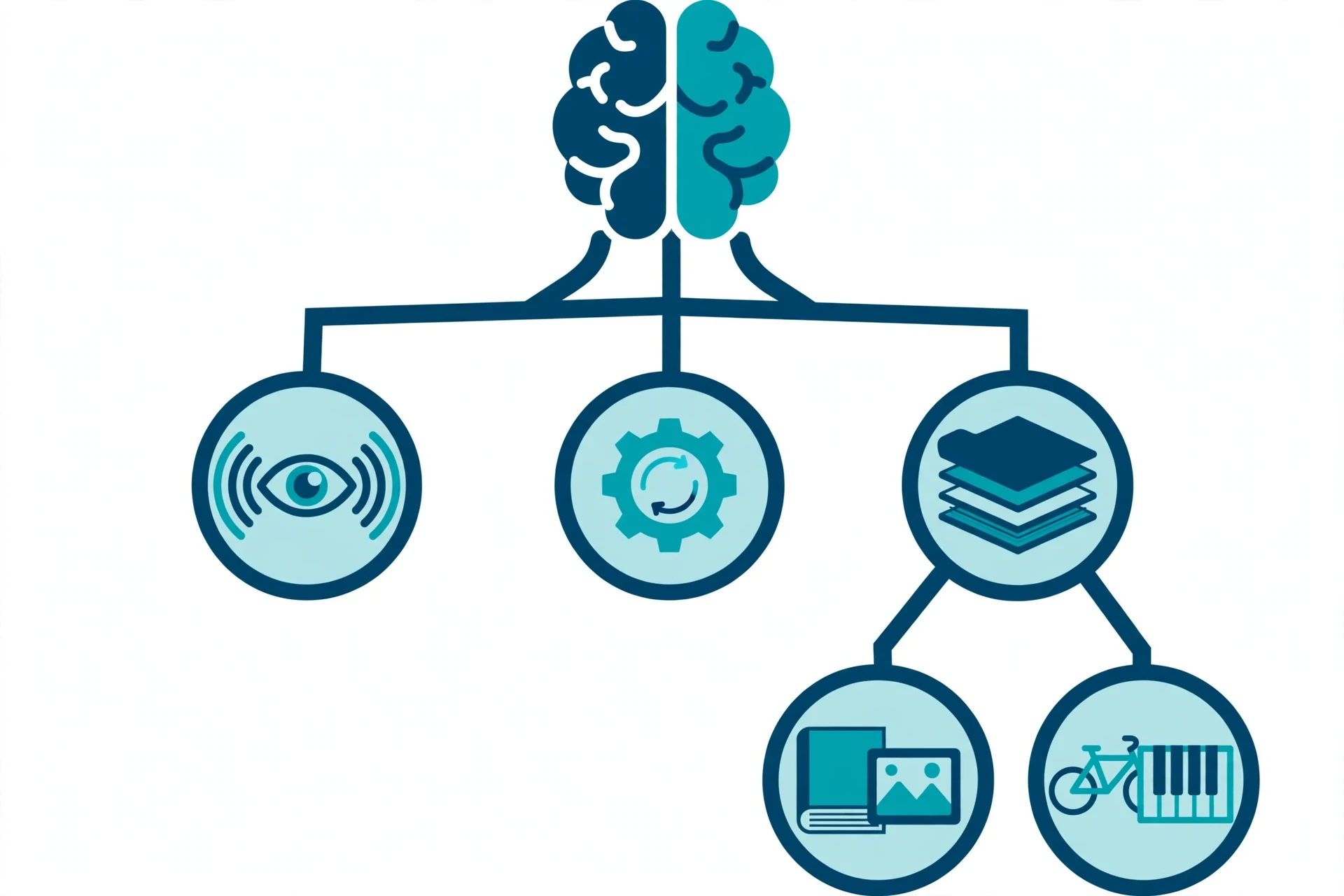
One of the first surprises in memory research was that there is no single "memory system." There are several, running in parallel, each with its own rules and its own brain machinery. You can lose one and keep the others — and that fact, discovered through tragedy, is what cracked the whole field open.
Sensory memory holds the raw echo of what you just saw or heard for a fraction of a second to a few seconds — the afterimage of a bright light, the tail of a spoken sentence.
Short-term and working memory hold a small amount of information for seconds to minutes while you use it — a phone number you are about to dial, the first half of a sentence while you read the second half.
Long-term memory holds information for hours, years, or a lifetime — your childhood address, how to ride a bicycle, the capital of France.
Long-term memory splits again, into memories you can talk about and memories you can only show. You can describe your last birthday (declarative memory). You cannot describe, in words, exactly how you balance on a bicycle — your body just knows (procedural memory). Both are real memories. They simply live in different parts of the brain and follow different rules.
2. The Four Stages of How the Brain Forms Memories
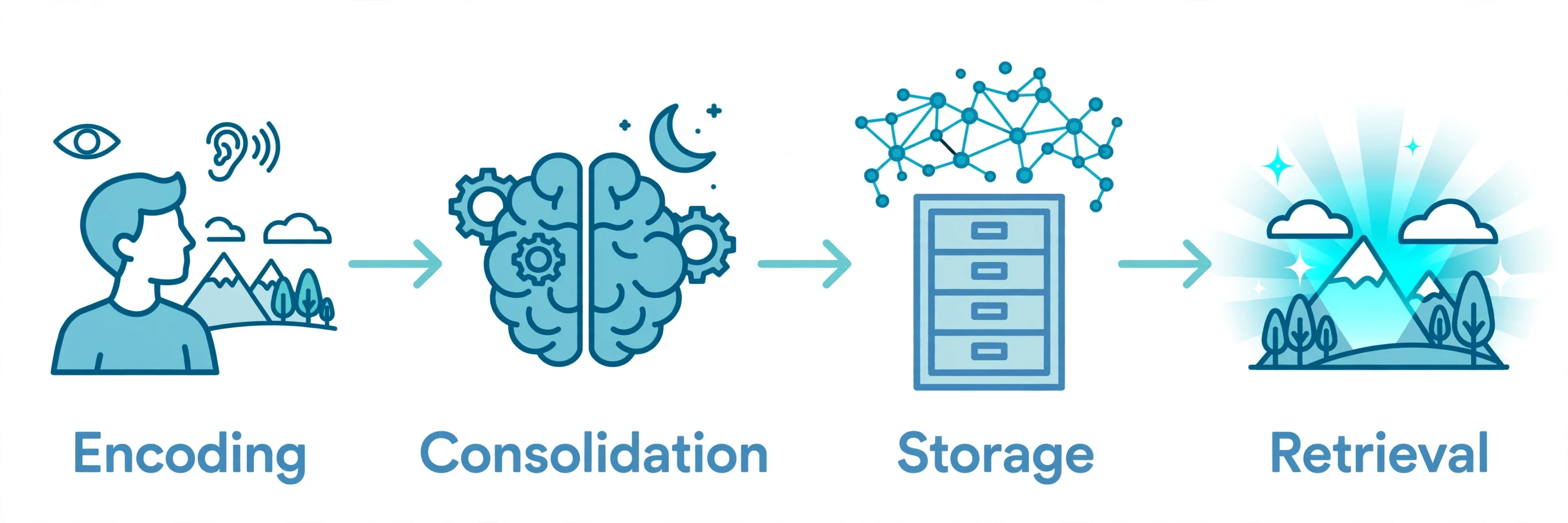
Every lasting memory passes through four stages. Think of it like a book being written: first the author drafts the scene, then an editor revises it overnight, then it goes onto a shelf in the library, and finally someone takes it down to read it again. The four stages are encoding, consolidation, storage, and retrieval — and each one can succeed or fail on its own.
2.1 Encoding: Turning Experience Into a Neural Pattern
Encoding is the moment an experience first enters the memory system. Light hits your eyes, sound waves hit your ears, and your brain converts that flood of sensory input into a pattern of neural activity. But here is the catch: most of what happens to you is never encoded at all.
Your brain is a ruthless gatekeeper. At any given moment, your senses deliver far more information than you could possibly keep. Attention decides what gets through the gate. A face you glance at while thinking about dinner is unlikely to stick. The same face, looked at with full attention while you repeat the name aloud, has a real chance.
Depth of processing matters even more than time spent. In a classic line of research, people who judged whether words fit together in meaning remembered them far better than people who simply counted their vowels. The hippocampus, the brain's memory-binding hub, lights up most when you connect new information to things you already know. Research using brain imaging has shown that the hippocampal formation is most strongly activated when people form associations between items — linking a new name to a familiar face, for instance — rather than when they process items one by one. You can read the original study in the Proceedings of the National Academy of Sciences. (Henke et al., PNAS, 1999)
I learned this the hard way in my early teaching years. I once spent an entire afternoon re-reading a dense chapter the night before a seminar, certain I had absorbed it. The next morning, asked a single question about it, I found nothing — the words had passed through my eyes and left no trace. The following week I tried something different: I closed the book after every section and explained the idea aloud, in my own words, as if teaching a friend. The difference was embarrassing. Attention plus meaning beats passive exposure every single time.
2.2 Consolidation: The Fragile Trace Gets Stabilised
A freshly encoded memory is fragile. For the first minutes and hours after learning, it can be disrupted, overwritten, or lost entirely. Consolidation is the process that stabilises it — first at the level of individual synapses, over minutes to hours, and then at the level of whole brain systems, over days, weeks, and even years.
Synaptic consolidation involves new proteins being made and synapses being physically remodelled. That is why a memory can be vulnerable right after it forms: the molecular work is still in progress. Systems consolidation is slower and grander. Over time, a memory that first depended heavily on the hippocampus becomes less dependent on it, as the cortex takes over more of the work. The memory is gradually woven into the distributed networks of the cortex, where it connects with older knowledge.
This slow handover explains a pattern doctors have seen for over a century. People with hippocampal damage often lose recent memories but keep old ones. The old ones had already finished their move to the cortex. The recent ones had not.
2.3 Storage: Memories Live in Networks, Not Boxes
Once consolidated, a memory is not stored in one place. It is stored as a pattern of strengthened connections spread across many brain regions. The visual parts of a memory live near the visual cortex, the sounds near the auditory cortex, the emotions near the amygdala, and the "what happened, where, and when" is bound together by the hippocampus. When you recall the memory, these scattered pieces fire together again.
That distributed design has a cost and a benefit. The cost is that memories can be distorted: if one piece is missing or wrong, the brain fills it in, sometimes incorrectly. The benefit is resilience. Losing a small patch of cortex rarely erases a whole memory, because the rest of the network can still carry the pattern.
2.4 Retrieval: Finding the Pattern Again
Retrieval is the act of reactivating a stored pattern. A cue — a smell, a song, a question — triggers part of the pattern, and the rest of the network completes it, a process neuroscientists call pattern completion. That is why a single whiff of cardamom could bring my grandmother's kitchen flooding back. The smell was one thread; the hippocampus pulled, and the whole fabric followed.
Retrieval is also practice. Every time you retrieve a memory, you strengthen the connections that carry it. This is the science behind one of the most reliable findings in learning research: testing yourself beats re-reading. Each successful recall is a small act of re-encoding that makes the next recall easier.
3. The Cellular Story: Neurons That Fire Together, Wire Together
Zoom in far enough, and a memory is a physical change in the connections between neurons. Your brain holds roughly 86 billion neurons, and each one connects to thousands of others at junctions called synapses. Learning does not add neurons. It changes how strongly they talk to each other.
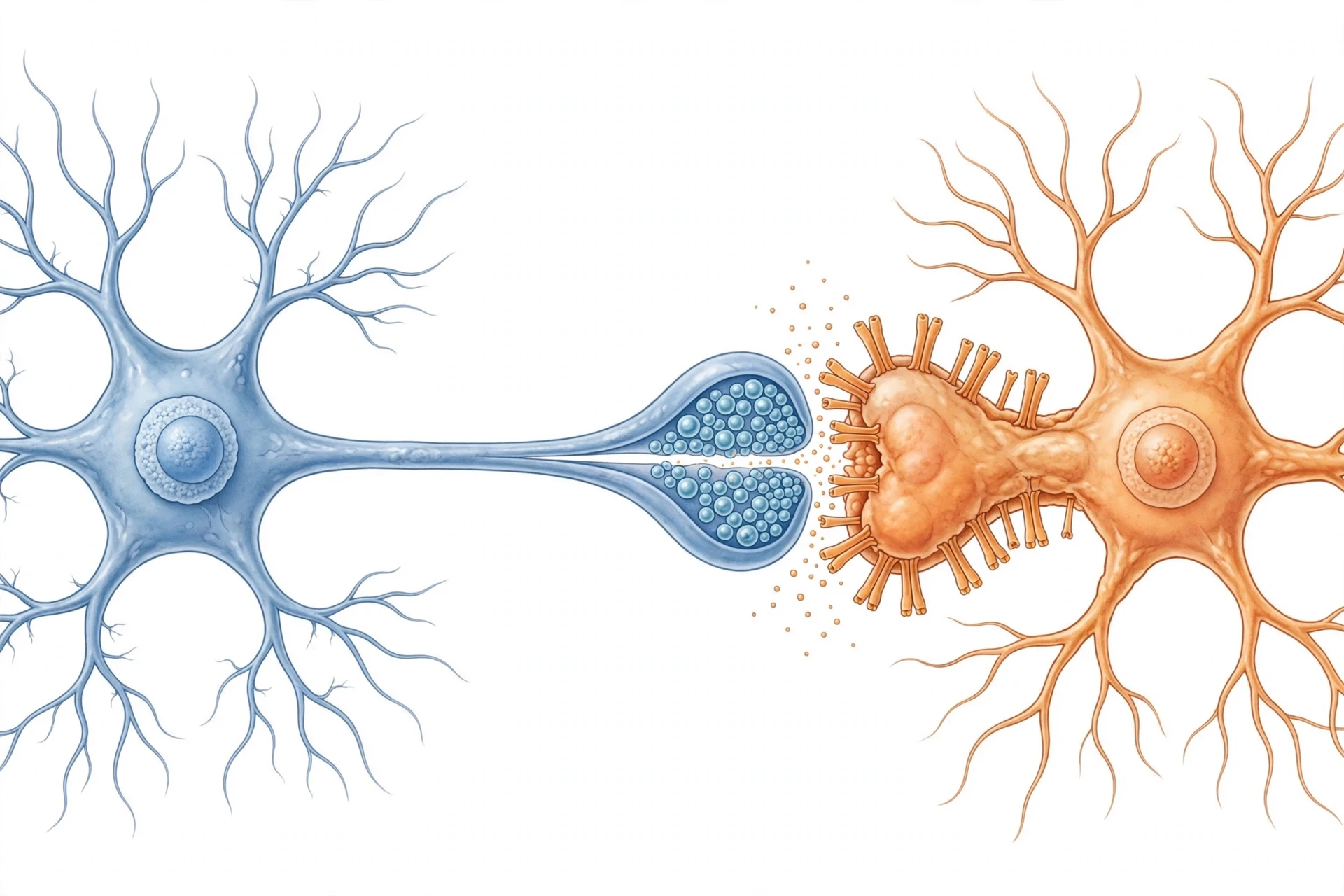
The principle was stated in 1949 by the psychologist Donald Hebb, and it has since become the most quoted sentence in neuroscience: neurons that fire together, wire together. When neuron A repeatedly activates neuron B, the connection between them grows stronger, so that next time A fires, B is more likely to follow. The Queensland Brain Institute explains the mechanism clearly: a connection becomes stronger when neuron A consistently makes neuron B fire, and weaker when it consistently fails to do so. Lasting increases in strength are called long-term potentiation (LTP), and lasting decreases are called long-term depression (LTD). (Queensland Brain Institute: How are memories formed?)
In 1973, Timothy Bliss and Terje Lømo found LTP in action in the hippocampus of rabbits: a brief burst of rapid stimulation produced a lasting increase in synaptic strength that persisted for hours. Half a century later, LTP remains the leading cellular explanation of how learning is written into the brain.
3.1 The Sea Slug That Won a Nobel Prize
The most elegant proof that memories are molecular came from an unlikely animal: Aplysia, a sea slug with a nervous system so simple that researchers could trace a single memory to a single synapse. Eric Kandel and his colleagues showed that when the slug learned to withdraw its gill more strongly after a mild shock, the change was visible at the synapse — more neurotransmitter released, a stronger connection. Short-term memory involved chemical changes at existing synapses. Long-term memory required something more: new proteins, new gene expression, and eventually the growth of entirely new synaptic connections.
I still remember the first time I watched a living synapse change under a microscope in a teaching lab. A thin slice of hippocampus, a stimulating electrode, and a trace on a screen that climbed after a burst of pulses and simply stayed up. It was not a metaphor. It was a physical change, measured in millivolts, sitting there in front of us. That afternoon, the abstract idea that "learning changes the brain" became something I had seen with my own eyes.
Kandel's work earned the Nobel Prize in 2000, and its message is worth carrying with you: a memory is not an idea floating in your mind. It is a structure, built from molecules, that your brain constructs and maintains.
3.2 New Neurons, New Memories?
For most of the twentieth century, textbooks taught that the adult brain never grows new neurons. That turned out to be wrong — at least in the hippocampus, where new neurons can be born throughout life in a process called neurogenesis. Studies in mice have shown that boosting neurogenesis in the hippocampus can improve memory, and in humans, exercise has been linked to a larger hippocampus and better performance on memory tasks. (Queensland Brain Institute)
The details are still being worked out, and researchers disagree about how much adult neurogenesis matters in humans compared with mice. But the broad lesson is encouraging: the memory system is not a fixed machine that only wears down. It remains plastic — capable of growth — across the lifespan.
4. The Brain's Memory Team: Who Does What
No single brain region forms a memory alone. Memory is a team effort, and each player has a distinct job. If you want the full map of the brain's anatomy — lobes, ventricles, the cerebellum, and everything else — our complete guide to human brain anatomy and functions covers it in detail. Here we will focus only on the structures that matter most for memory.
4.1 The Hippocampus: The Binder
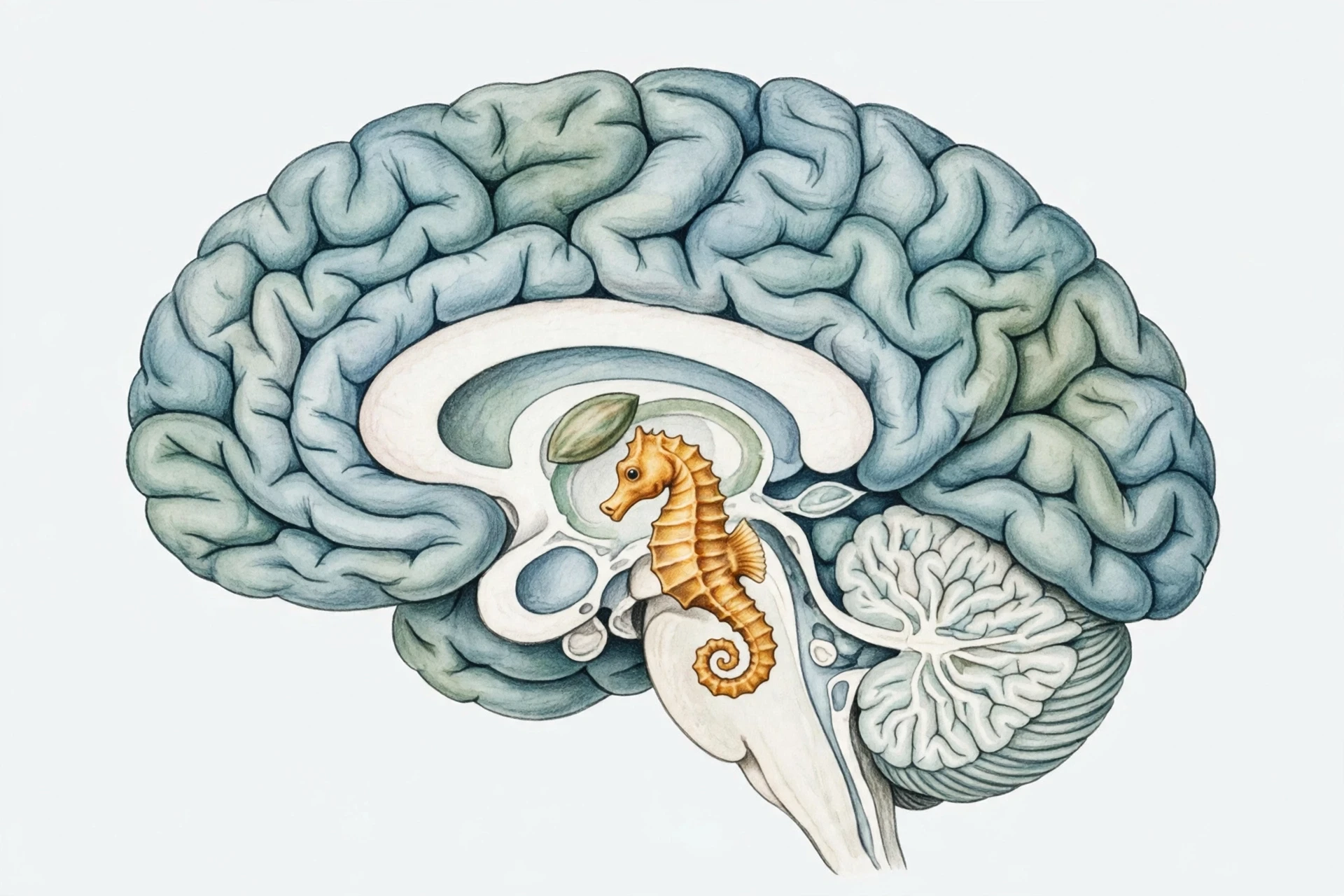
The hippocampus is a curved structure deep in the temporal lobe, shaped — so the anatomists thought — like a seahorse. It is the brain's binding station. When you experience something, the sights, sounds, smells, and thoughts are processed in different parts of the cortex. The hippocampus links them into a single coherent episode: this happened, here, then, with these people.
It also builds the maps and timelines that memories need. Place cells in the hippocampus fire when an animal is in a particular location, and the hippocampus helps you remember not just what happened, but where and in what order. A computational theory of the hippocampus describes its CA3 network as an autoassociation system that can store a whole episode from a single experience and later complete the whole memory from any part of it — which is exactly what happens when one cue brings a whole scene back. (Rolls, Cell and Tissue Research, 2018)
Crucially, the hippocampus is a temporary home. It holds new memories while they are being consolidated, then gradually hands them to the cortex. That is why damage to the hippocampus destroys the ability to form new memories while leaving old ones largely intact — a pattern we will see in the story of patient H.M.
4.2 The Amygdala: The Emotional Highlighter
Sitting just in front of the hippocampus is the amygdala, a small almond-shaped cluster of neurons that processes emotion. When something frightens, delights, or embarrasses you, the amygdala signals the rest of the brain: this matters, keep it. Emotional memories are encoded more strongly, consolidated more thoroughly, and recalled more vividly than neutral ones.
That is why you can probably remember exactly where you were when you heard shocking news, but not what you had for lunch last Tuesday. The amygdala does not store the memory itself. It stamps it, the way a librarian might stamp a book "urgent," and the rest of the memory system treats it accordingly. The same mechanism explains why traumatic memories can be so intrusive — and why a smell or a song can trigger a flood of feeling before you have consciously remembered anything at all.
If stress and anxiety are blurring your memory, it is worth understanding how chronic stress hormones affect the brain — our guide to brain fog causes and ways to improve focus looks at the same problem from the everyday side.
4.3 The Cortex: The Library
The cortex — the wrinkled outer sheet of the brain — is where long-term memories ultimately live. Different kinds of information settle in different cortical neighbourhoods: visual memories near visual areas, word meanings near language areas, the layout of your hometown near spatial areas. The prefrontal cortex, at the front, manages working memory: holding information in mind, juggling it, and deciding what is worth keeping. It is the brain's desk, where the work of thinking happens before anything gets filed away.
4.4 The Cerebellum and Basal Ganglia: The Quiet Keepers
Not all memories need the hippocampus. The skills you learn by doing — riding a bicycle, typing, playing the piano — are stored largely in the cerebellum and basal ganglia. These are procedural memories, and they follow different rules: they form slowly, through repetition, and once formed they are remarkably durable. You can forget the name of your first piano teacher and still play a piece you learned as a child. The fingers remember what the conscious mind has lost.
5. The Many Kinds of Memory
Memory is not a single drawer. It is a whole filing system, and knowing which drawer you are using changes how you should study, practise, and remember. The table below summarises the main systems.
Memory type | What it holds | How long it lasts | Key brain regions |
|---|---|---|---|
Sensory memory | Raw sights, sounds, and touches | Less than a second to a few seconds | Sensory cortices |
Short-term / working memory | Information you are actively using | Seconds to minutes | Prefrontal cortex |
Episodic memory | Personal events: what, where, when | Hours to a lifetime | Hippocampus, then cortex |
Semantic memory | Facts and general knowledge | Years to a lifetime | Temporal and frontal cortex |
Procedural memory | Skills and habits | Years to a lifetime | Cerebellum, basal ganglia |
Emotional memory | The feelings attached to events | Years to a lifetime | Amygdala |
5.1 Short-Term Memory Is Smaller Than You Think
Working memory — the mental scratchpad you use to hold a phone number while you dial it — is famously limited. The classic estimate was about seven items, plus or minus two. More recent research puts the real capacity closer to four items. Either way, it is small, and it is easily overwhelmed. That is why you lose the number when someone interrupts you mid-dial, and why a lecture that dumps ten new facts in a minute leaves most of them behind.
The practical lesson is simple: do not try to hold everything at once. Write things down, chunk information into meaningful groups, and move important items into long-term storage as soon as you can — through meaning, association, and retrieval practice.
5.2 Episodic vs. Semantic: Your Life vs. Your Knowledge
Episodic memory is your autobiography: your tenth birthday, the day you moved house, the argument you had last week. Semantic memory is your encyclopaedia: Paris is the capital of France, water is H₂O, dogs bark. Both are declarative — you can put them into words — but they age differently. Episodic memories are vivid and fragile. Semantic memories are drier and tougher. Over years, many episodic memories slowly turn into semantic ones: you no longer remember the day you learned that Paris is the capital of France, only that you know it. The episode fades; the fact remains.
5.3 Procedural Memory: The Body Remembers
Procedural memory is the odd one out. It is the only major memory system that does not need the hippocampus at all, which is why patient H.M. — who could not form a single new conscious memory — could still learn new motor skills, improving day by day while insisting, honestly, that he had never done the task before. His hands learned what his mind could not remember learning. That split is one of the most striking discoveries in the history of neuroscience, and it is where our story turns to the man himself.
6. The Patient Who Changed Everything: H.M.
In 1953, a 27-year-old man named Henry Molaison — known to science for decades only as "H.M." — underwent brain surgery to treat severe epilepsy. The surgeon removed parts of both temporal lobes, including most of his hippocampus. The seizures improved. But something else happened that no one had predicted.
From that day on, Henry could not form a single new conscious memory. He could remember his childhood, his family, the world before the operation. He could hold a conversation, as long as it stayed in the present moment. But leave the room for five minutes and he would greet you again as a stranger. Every day was a first day.
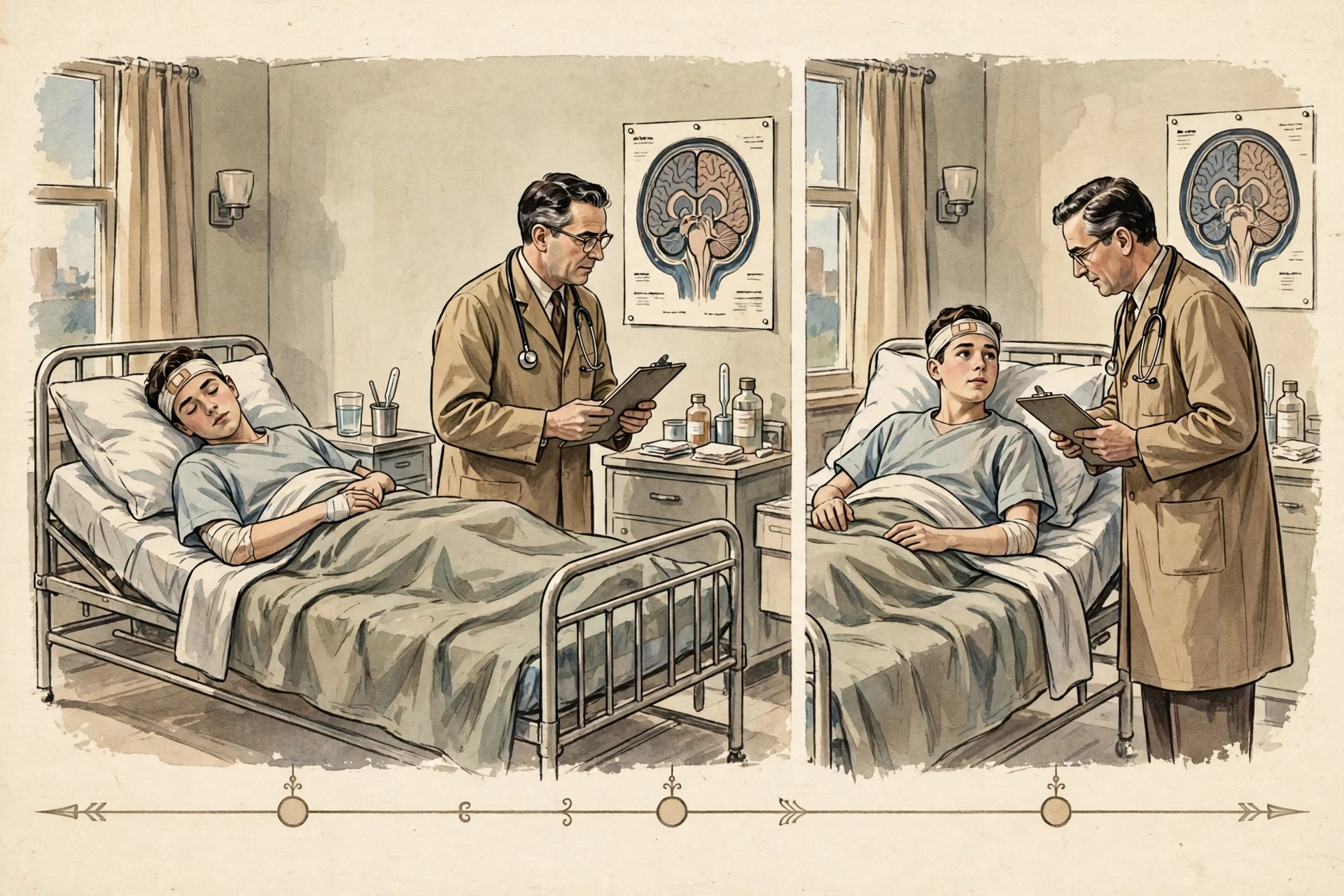
The neuropsychologist Brenda Milner studied Henry for decades, and what she found redrew the map of memory. Henry could learn a mirror-drawing task — tracing a shape while looking only at its reflection — and improve across days, even though each day he insisted he had never seen the task before. His procedural memory worked. His declarative memory did not. Memory was not one thing, and the hippocampus was essential for one kind of memory and irrelevant to another.
Research on hippocampal damage since then has confirmed the pattern. In the patient H.M., bilateral damage to the hippocampus produced an inability to remember recent events, while leaving memories from before the damage and skill memory relatively unimpaired. (Rolls, 2018)
Henry lived until 2008, spending most of his life in a care institution, cheerful and polite, always meeting the world as if for the first time. After his death, his brain was preserved for science, and his full name was finally revealed. He had given, without ever knowing it, the single most important case study in the history of memory research. Every textbook on the subject still begins with him.
I think about Henry whenever I hear someone describe memory as a simple storage system. His case shows how wrong that picture is. A man can lose the ability to record his life and still keep his personality, his humour, his skills, and his old memories. Memory is not the mind. It is one of the mind's systems — a vital one, but not the whole of who we are.
7. Sleep: The Night Shift That Files Your Memories
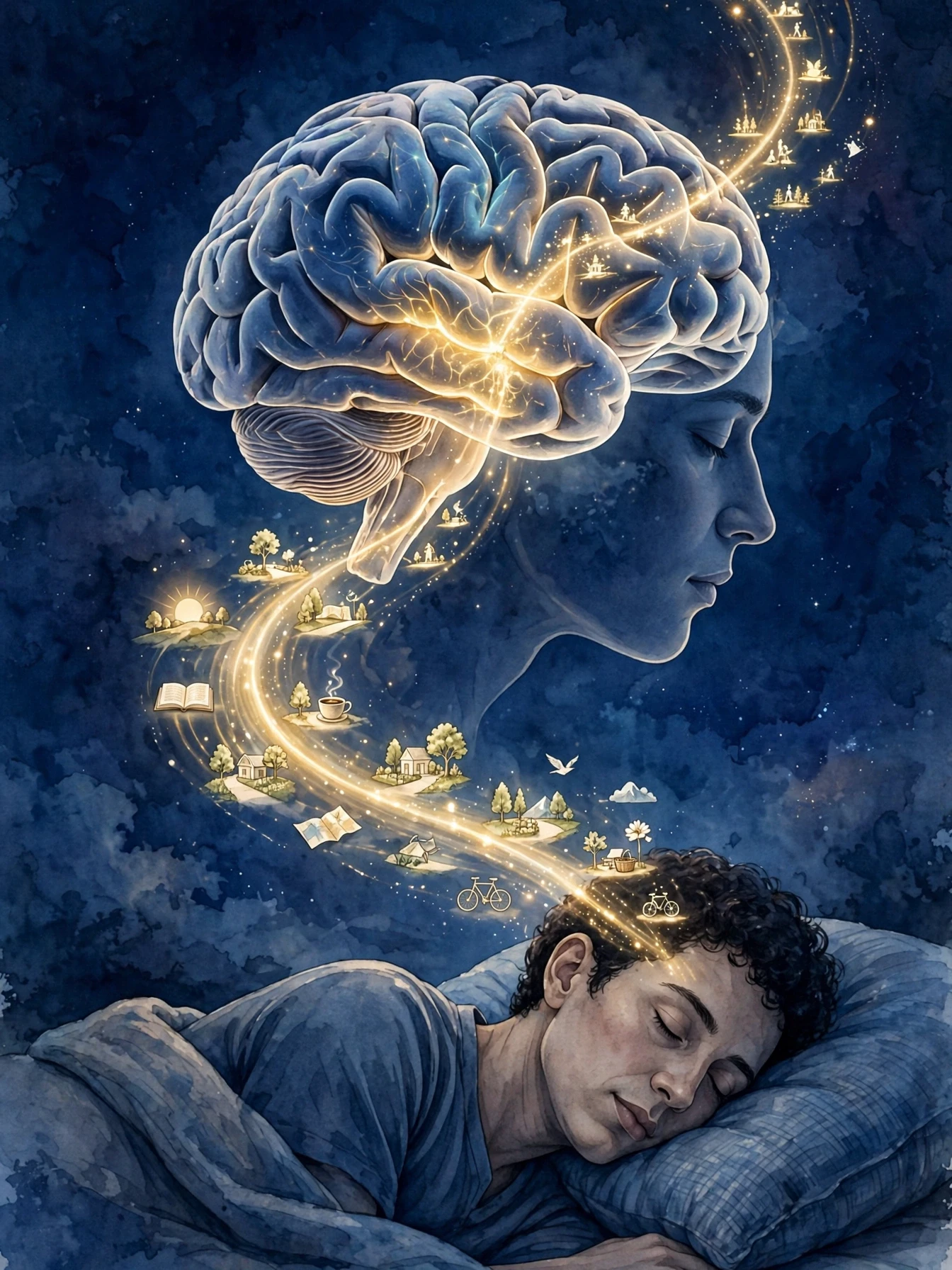
If encoding is writing the draft, sleep is the editing room. During the day you collect experiences; at night, your brain replays them, sorts them, strengthens the useful ones, and quietly discards the noise. Skip sleep, and you skip the edit.
7.1 The Hippocampus Replays the Day
During slow-wave sleep — the deep sleep of the first half of the night — the hippocampus and the cortex hold what researchers describe as a carefully choreographed dialogue. The same hippocampal neurons that were active during an experience become active again during sleep, over and over, in a time-compressed manner, helping to update the cortex about what needs to be stored. The replay happens only during sleep. As the Queensland Brain Institute notes, if you are skimping on sleep, you are not letting your brain consolidate memories. (Queensland Brain Institute)
Different stages of sleep do different jobs. Slow-wave sleep seems especially important for declarative memories — facts and events. REM sleep, the dreaming stage, appears to help with emotional memories and creative connections, weaving new learning into older knowledge. Both matter, which is why a full night, with its natural cycle of stages, beats a short one.
7.2 What Sleep Deprivation Does to Memory
A sleep-deprived person struggles to form memories twice over. First, attention collapses, so encoding is weak — the gate never properly opens. Second, consolidation never gets its night shift, so even what was encoded stays fragile. Students who stay up all night to cram are fighting their own biology: the hours they steal from sleep are the hours their brain needed to file what they studied.
Chronic poor sleep does deeper damage. Persistent insomnia is linked to worse memory, worse mood, and worse health overall — a connection explored in our guide to chronic insomnia and its effects on the brain. Sleep is not a luxury that memory can do without. It is part of the memory system itself.
7.3 Naps, Dreams, and the Filing System
Short naps can help too, especially a 60–90 minute nap that reaches slow-wave sleep. And dreams may be more than entertainment: one leading idea is that dreaming is the brain's way of testing new connections between memories, finding links between today's learning and older knowledge. That is why a problem that defeated you at midnight sometimes solves itself by morning. Your brain kept working while you slept — not by magic, but by replay, reorganisation, and consolidation.
8. Why We Forget
Forgetting feels like failure. It is usually the opposite: a well-designed system clearing space for what matters. But not all forgetting is healthy, and knowing the difference matters.
8.1 The Forgetting Curve
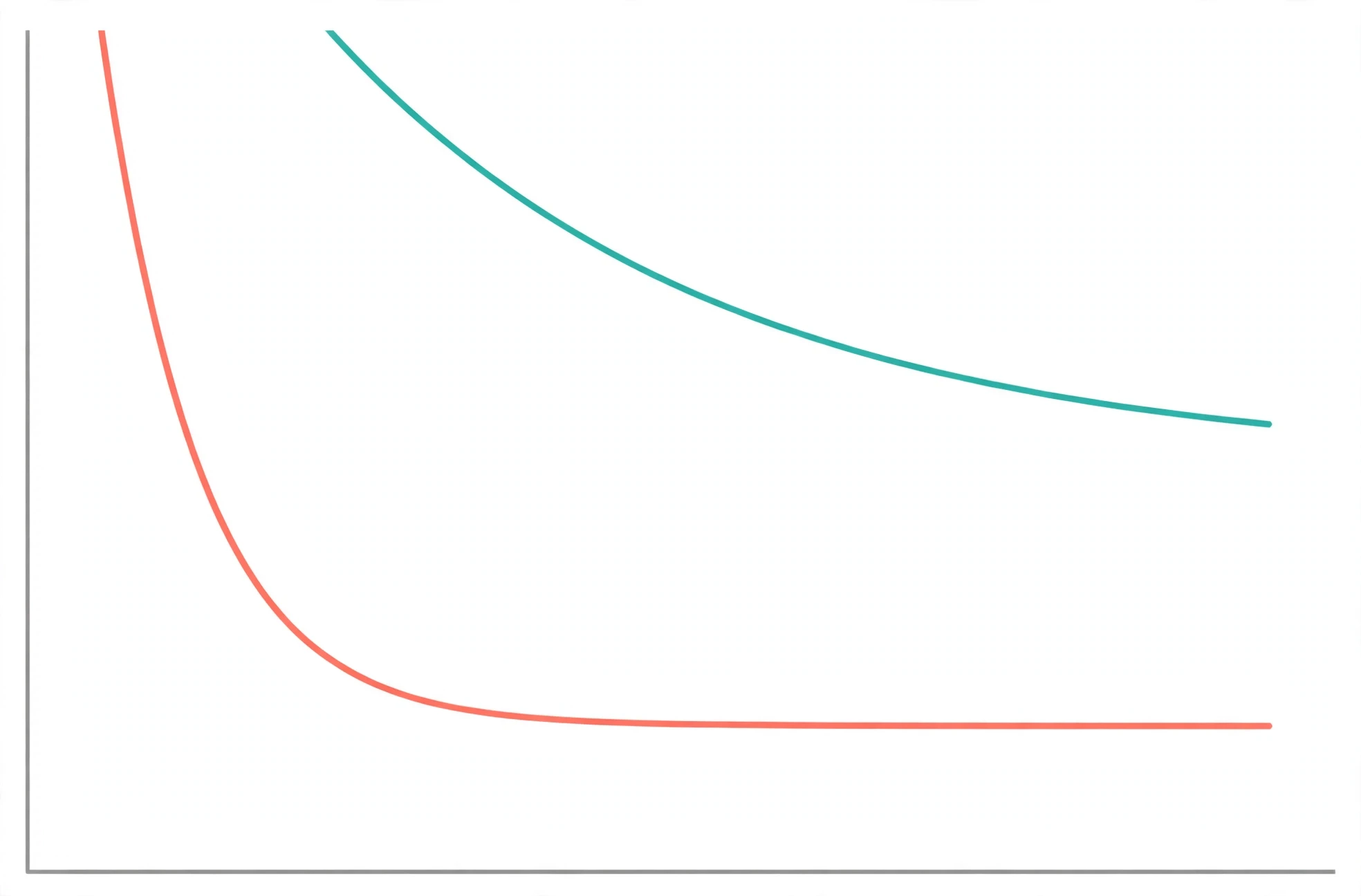
In the 1880s, the German psychologist Hermann Ebbinghaus memorised lists of nonsense syllables and tested himself at intervals, plotting how much he retained. The result — the forgetting curve — is still one of the most replicated findings in psychology. Retention falls steeply in the first hours and days, then levels off. Most of what you will ever forget, you forget quickly.
The curve has a hopeful side. Each time you review, the curve resets higher and flattens. Review after a day, then after a few days, then after a week, and the memory becomes dramatically more durable. This is spaced repetition, and it is the single best-supported study technique in the science of learning. Cramming feels productive because the material is fresh in working memory. Spaced retrieval feels harder — and that difficulty is exactly what makes it work.
8.2 The Seven Sins of Memory
The psychologist Daniel Schacter grouped the ways memory fails into seven "sins," and most of them are features, not bugs:
Transience — memories fade with time unless refreshed.
Absent-mindedness — attention was elsewhere during encoding, so nothing was stored.
Blocking — the memory is there, but you cannot reach it right now (the tip-of-the-tongue feeling).
Misattribution — you remember the fact but attach it to the wrong source.
Suggestibility — a leading question or false detail can reshape the memory itself.
Bias — your current beliefs colour what you recall.
Persistence — unwanted memories, especially traumatic ones, refuse to fade.
Blocking deserves a special mention because everyone has felt it. The name is on the tip of your tongue, you can almost feel its shape, and then — nothing. Research suggests the memory is usually intact; the retrieval route is temporarily jammed. Walking away and thinking about something else often lets it surface on its own. Forcing it rarely helps.
8.3 Normal Forgetting vs. Warning Signs
Some forgetfulness is a normal part of life at any age, and mild forgetfulness becomes more common as we get older. The National Institute on Aging notes that occasional misplaced keys or a forgotten name that comes back later are usually signs of mild, age-related forgetfulness. But serious memory problems — getting lost in familiar places, asking the same questions over and over, struggling to follow recipes or directions — are reasons to talk with a doctor, because they can also be caused by treatable conditions such as depression, thyroid problems, low vitamin B12, medication side effects, or poor sleep. (National Institute on Aging)
Dementia is not a normal part of ageing, even though forgetfulness is. Knowing that distinction — and acting on it early — is one of the most useful things this science can offer.
9. Retrieval: Remembering Is Rebuilding
Here is the part of the story that surprises most people. When you remember something, your brain does not open a file. It rebuilds the experience from fragments — and the rebuilding can change the memory.

9.1 Cues, Context, and the Smell of Cardamom
Retrieval works best when the cues at recall match the cues at encoding. That is why you remember more in the room where you learned something (context-dependent memory), and why the smell of a place can unlock memories that words cannot reach. Smell has a privileged route: olfactory signals pass close to the amygdala and hippocampus before reaching conscious awareness, which is why a scent can trigger a feeling before you know what you are remembering.
The practical trick is to build rich cues at encoding time. Link a new name to a vivid image. Learn in more than one place. Attach the fact to a story. Each extra cue is another thread the hippocampus can pull on later.
9.2 False Memories: When the Rebuild Goes Wrong
The reconstructive nature of memory has a dark side. In famous experiments by Elizabeth Loftus, people who were asked leading questions — "How fast were the cars going when they smashed into each other?" versus "when they hit each other?" — gave different speed estimates and later "remembered" details that were never there, such as broken glass at a crash scene where there was none. Under the right conditions, people can even come to believe in entire events that never happened.
This is not a sign that your memory is broken. It is a sign that your memory works the way all human memory works: by reconstruction, not replay. Eyewitness testimony, childhood memories, and confident recollections can all be sincere and wrong at the same time. The honest response is humility about our own certainty — and care about how we question others, especially children.
9.3 Reconsolidation: Memories Can Be Edited
When a memory is retrieved, it briefly becomes unstable again — a window called reconsolidation, during which the memory can be strengthened, weakened, or updated before it is stored once more. This discovery has opened new possibilities for treating traumatic memories: if a painful memory is recalled in a safe setting, its emotional edge may be softened when it is stored again. The research is young, and the clinical applications are still being tested, but the principle is striking. Remembering is not just reading the past. It is rewriting it, one recall at a time.
10. How to Strengthen Your Memory: What Actually Works
There is no shortage of products promising a sharper memory. Most of them have little evidence behind them. The National Institute on Aging warns explicitly about unproven pills, supplements, and brain-training games that claim to improve memory or prevent dementia, and advises consulting a doctor before spending money on them. (National Institute on Aging) What does have evidence behind it is less glamorous — and far cheaper.
Strategy | What to do | Why it works |
|---|---|---|
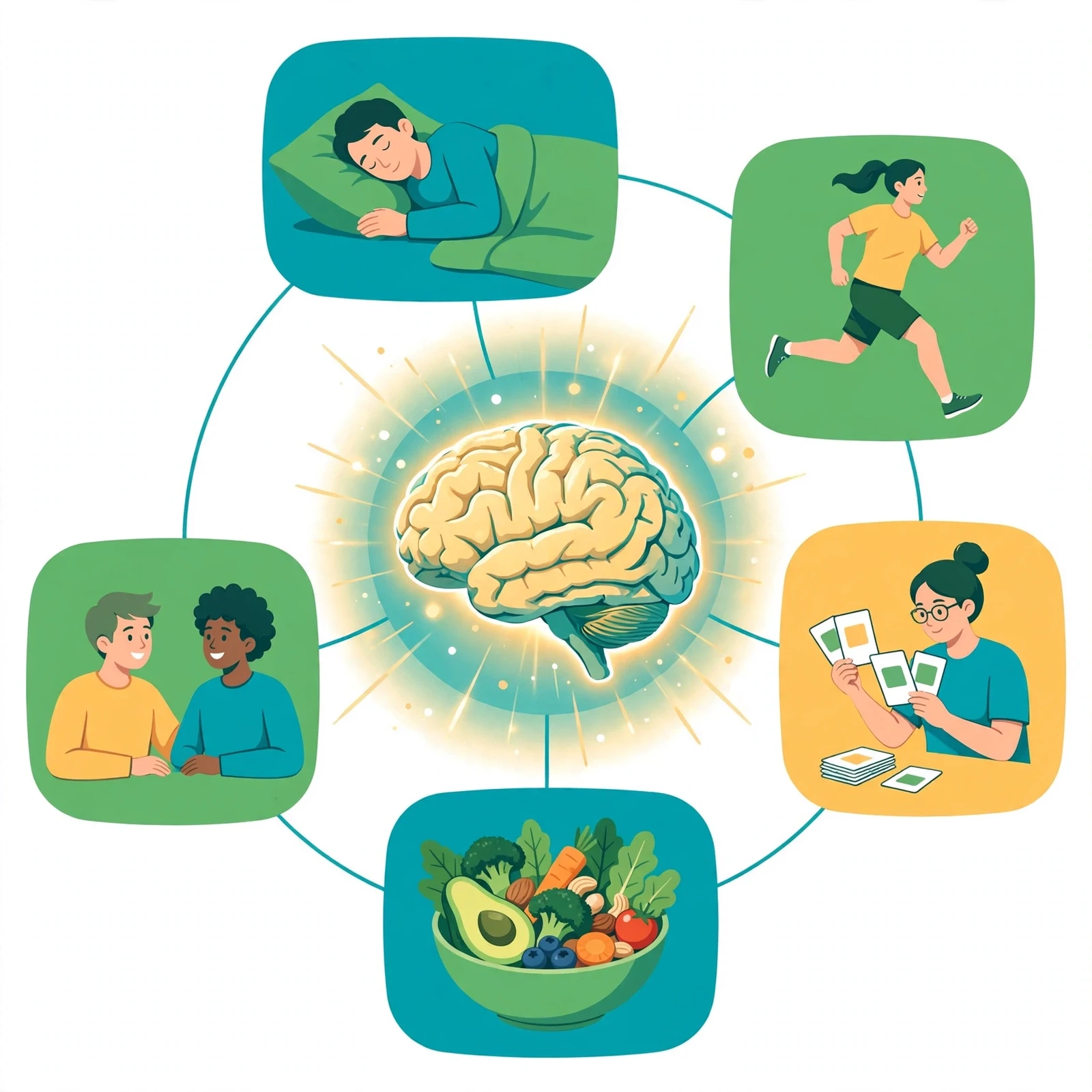
Spaced retrieval | Test yourself after a day, then days, then weeks | Each recall re-encodes and strengthens the trace |
Elaborative encoding | Connect new facts to what you already know | Hippocampus binds associations, not isolated items |
Sleep 7–9 hours | Regular sleep, same schedule, dark cool room | Consolidation and replay happen during sleep |
Aerobic exercise | Brisk walking, running, cycling most days | Linked to larger hippocampus and better recall |
Teach it to someone | Explain the idea aloud in your own words | Forces deep processing and reveals gaps |
Reduce multitasking | One task, full attention, phone away | Encoding fails when attention is divided |
10.1 Study Like Your Brain Wants You To
If you are learning for an exam, the science points in a clear direction. Space your study sessions instead of cramming. Test yourself instead of re-reading. Mix topics instead of drilling one thing for hours. Make the material meaningful — ask why it matters, how it connects to something you already know, where you would use it. The struggle of trying to recall is not a sign that the method is failing. It is the method working.
I use this myself whenever I need to learn a new field. My rule is simple: no re-reading without a blank page first. I close the book, write down everything I can remember, and only then check what I missed. The first attempts are always humbling. The later ones are always better than re-reading ever was.
10.2 Move Your Body, Feed Your Brain
Exercise is one of the most reliable ways to support memory. Aerobic activity has been linked to a larger hippocampus and better performance on memory tasks — and the hippocampus is one of the few brain regions where new neurons can be born in adulthood. (Queensland Brain Institute) You do not need to become an athlete. Regular brisk walking counts.
Diet matters too, though less through any single "brain food" than through overall vascular health: what protects your heart protects your brain, because the brain runs on blood flow. The connection between food, gut, and mind runs deeper than most people realise — our guide to the gut-brain connection and how it relates to mood explores that two-way conversation.
10.3 Sleep Is the Cheapest Memory Drug
If you remember one practical point from this article, make it this one: protect your sleep. Seven to nine hours, on a regular schedule, in a dark, cool room. The consolidation work your brain does overnight cannot be done while you are awake, and no amount of coffee can replace it. If sleep itself is the problem, magnesium and calm-evening routines help some people — our deep dive into magnesium for anxiety and sleep looks at what the evidence actually says.
10.4 Stay Social, Stay Curious
Learning a new skill, volunteering, spending time with friends — the National Institute on Aging lists all of these among its tips for dealing with forgetfulness. They work for a simple reason: social and novel experiences are rich in attention, emotion, and association, the three ingredients encoding loves most. A brain that keeps meeting new things keeps building new connections. Curiosity is not just a personality trait. It is a memory strategy.
11. What Science Still Does Not Know
For all we have learned, the biggest questions about memory are still open. Researchers still disagree about how much of a memory ever becomes fully independent of the hippocampus, about how much adult neurogenesis matters in humans, and about where the line sits between a memory that is stored and one that is merely reconstructed on the spot. Some argue that the brain stores engrams — physical traces of specific memories — in identifiable groups of cells. Others argue that memories are better understood as patterns that only exist when the network is active, like a song that exists only while it is being played.
New tools are narrowing the gaps. Optogenetics lets researchers switch specific memory-related neurons on and off in animals, and in some experiments, reactivating the cells that were active during learning can bring back a memory that seemed lost. Brain imaging is beginning to decode the content of memories from patterns of activity. And studies of sleep replay are revealing, in real time, how the night shift files the day away.
What is already clear is that memory is not a passive recording. It is an active, physical, lifelong construction project — and you are both the builder and the building.
12. Common Misconceptions About Memory
"Memory works like a video recorder." It does not. A recorder stores everything equally and plays it back unchanged. Your brain filters, edits, and rebuilds — and every recall can change the memory. The video-recorder picture is the single most misleading idea about memory, and it causes real harm when it is applied to eyewitness testimony or to arguments about "what really happened."
"You either have a good memory or you don't." Memory is a set of skills, and skills improve with practice. Spaced retrieval, elaboration, sleep, and exercise change measurable outcomes. Natural differences exist, but they are a starting point, not a verdict.
"Forgetting means your memory is failing." Usually it means your memory is working as designed — dropping what was never encoded deeply, or what was never reviewed. The forgetting curve is normal. The warning signs are specific, and they are listed in Section 8.3.
"Brain-training games will fix your memory." The evidence is thin. People get better at the games they practise, and the gains rarely transfer to everyday memory. The activities with the strongest evidence are the least game-like: sleep, exercise, learning real skills, and testing yourself on real material.
"We only use 10 percent of our brains." No. Brain imaging shows that virtually all of the brain is active over the course of a day, and memory uses wide networks across the cortex, hippocampus, amygdala, and cerebellum. The 10-percent claim has no scientific basis, and it has survived only because it flatters us.
Conclusion: You Are What You Remember — and What You Keep Building
A memory begins as a flicker of attention, becomes a pattern of firing neurons, is strengthened at synapses through long-term potentiation, is bound together by the hippocampus, is stamped by the amygdala when it matters, is replayed and filed during sleep, and is finally rebuilt — never simply replayed — when you call it back. That is how the brain forms memories: not in one place, not in one moment, but across a network, over time, through physical change.
The story of Henry Molaison taught us that memory can be lost while the person remains. The sea slug taught us that a memory is a molecule as much as an idea. The sleeping brain taught us that rest is not the opposite of learning — it is part of learning. And the forgetting curve taught us that forgetting is not the enemy of memory. It is the filter that lets the important things stand out.
So the next time a smell pulls a childhood afternoon out of nowhere, pause for a second and appreciate what just happened inside your head. Millions of neurons, strengthened over years, fired together in a pattern laid down long ago — and for a moment, you were nine years old again, standing on a stool in your grandmother's kitchen. That is not a recording. That is a living brain, doing the most human thing it does: remembering.
"Memory is the reactivation of a specific group of neurons, formed from persistent changes in the strength of connections between neurons." — Queensland Brain Institute
Frequently Asked Questions
How does the brain form memories?
The brain forms memories in four stages: encoding turns an experience into a pattern of neural activity; consolidation stabilises that pattern, first at synapses and then across brain systems; storage keeps it as strengthened connections spread across the cortex; and retrieval reactivates the pattern when a cue triggers it. At the cellular level, the key mechanism is long-term potentiation — synapses that are used together grow stronger.
What part of the brain is responsible for memory?
No single part does it alone. The hippocampus binds new experiences together and holds them while they consolidate; the amygdala adds emotional weight; the prefrontal cortex manages working memory; the cortex stores long-term memories; and the cerebellum and basal ganglia store skills and habits. Damage to the hippocampus prevents new conscious memories from forming while leaving old memories and skills largely intact.
How long does it take for a memory to become permanent?
There is no single moment when a memory becomes permanent. Synaptic consolidation takes minutes to hours, while systems consolidation — the gradual transfer from hippocampus to cortex — takes days, weeks, and sometimes years, much of it during sleep. Older memories are generally more stable because they have had more time to consolidate and more chances to be retrieved and strengthened.
Does sleep really help memory?
Yes. During slow-wave sleep, the hippocampus replays the day's experiences to the cortex, strengthening the memories that need keeping. Sleep deprivation harms memory twice: it weakens attention during encoding and removes the consolidation that happens overnight. A full night of sleep after learning improves recall more than the same hours spent studying.
Why do emotional memories feel stronger?
Because the amygdala stamps emotional experiences as important, boosting their encoding and consolidation. That is why you remember where you were during shocking or joyful events in vivid detail, while ordinary days blur together. The same mechanism can make traumatic memories intrusive and hard to shake.
Why do we forget things?
Most forgetting is normal and even useful. Memories fade when they are never encoded deeply, never reviewed, or crowded out by newer information — the pattern described by Ebbinghaus's forgetting curve. Forgetting becomes a concern when it interferes with daily life, such as getting lost in familiar places or repeatedly asking the same questions, in which case a doctor should be consulted.
Can you improve your memory?
Yes, with methods that have real evidence behind them: spaced retrieval (testing yourself at increasing intervals), elaborative encoding (connecting new facts to what you know), 7–9 hours of sleep, regular aerobic exercise, and focused attention during learning. Unproven pills, supplements, and brain-training games have little evidence of benefit.
What is the difference between short-term and long-term memory?
Short-term or working memory holds a small amount of information — roughly four items — for seconds to minutes while you use it, and it depends heavily on the prefrontal cortex. Long-term memory holds information for hours to a lifetime, stored as strengthened connections across the cortex, and it depends on the hippocampus for its initial formation.
Are false memories real?
Yes. Because retrieval rebuilds memories from fragments rather than replaying a recording, memories can be distorted by leading questions, suggestion, or misattribution. Experiments have shown that people can confidently "remember" details — and sometimes whole events — that never happened. Sincere, vivid memories are not always accurate ones.
Does memory get worse with age?
Some mild forgetfulness is a normal part of ageing — taking longer to learn new things or to recall a name that comes back later. But dementia is not a normal part of ageing. Staying physically active, socially engaged, learning new skills, and getting enough sleep are among the steps the National Institute on Aging recommends for supporting memory as we age.
Sources
Queensland Brain Institute, University of Queensland — "How are memories formed?" Synaptic plasticity, LTP and LTD, neuron ensembles, sleep replay, and neurogenesis. https://qbi.uq.edu.au/memory/how-are-memories-formed
Henke, K., Weber, B., Kneifel, S., Wieser, H. G., & Buck, A. — "Human hippocampus associates information in memory." Proceedings of the National Academy of Sciences, 1999. https://pmc.ncbi.nlm.nih.gov/articles/PMC21955/
Rolls, E. T. — "The storage and recall of memories in the hippocampo-cortical system." Cell and Tissue Research, 2018. Includes the case of patient H.M. and the computational theory of hippocampal episodic memory. https://pmc.ncbi.nlm.nih.gov/articles/PMC6132650/
National Institute on Aging (NIH) — "Memory Problems, Forgetfulness, and Aging." Normal age-related forgetfulness, warning signs, causes of memory problems, and tips for dealing with forgetfulness. https://www.nia.nih.gov/health/do-memory-problems-always-mean-alzheimers-disease