
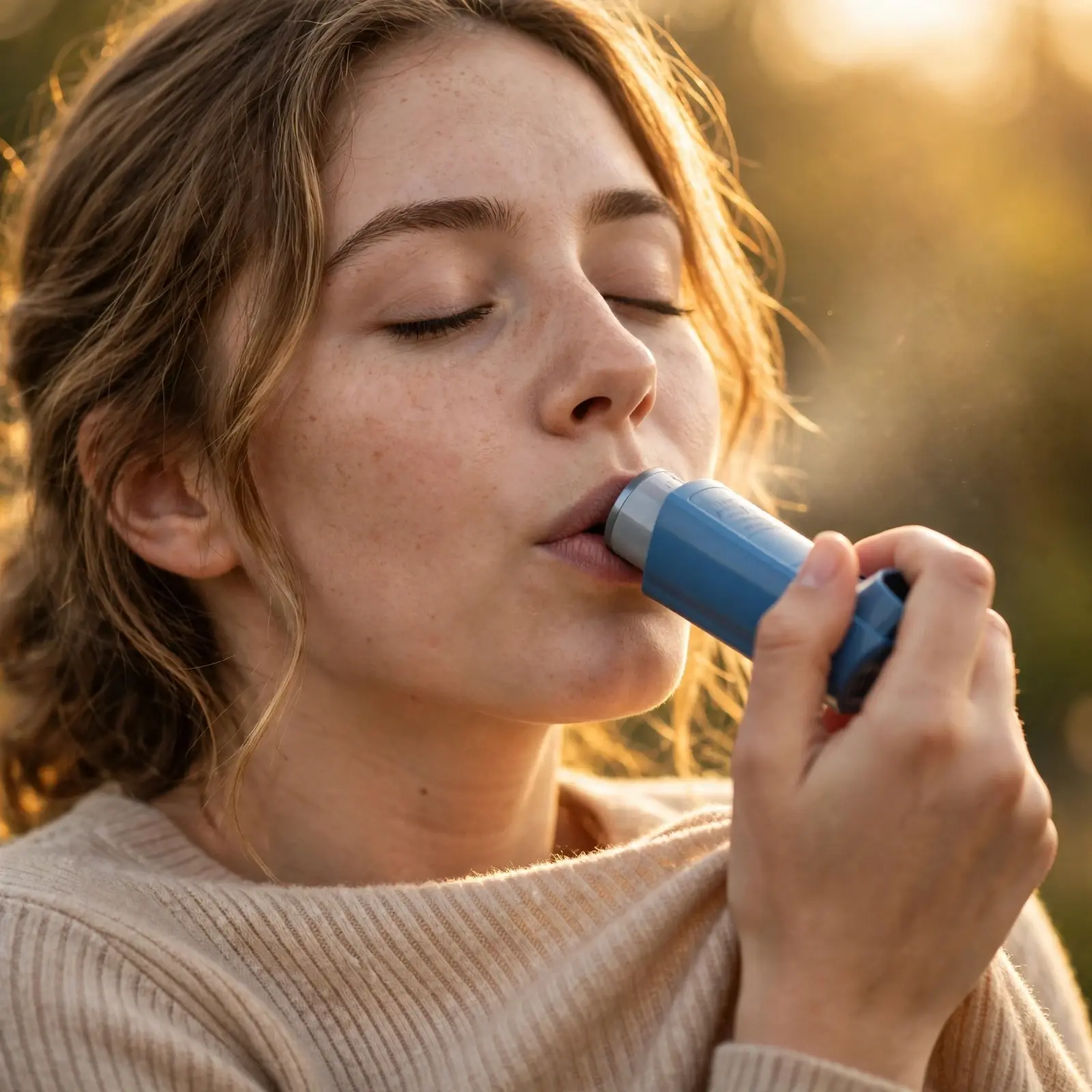
It was past three in the morning when my nephew woke us all up — not with crying, but with a sound I had never heard a child make before. A high, thin whistle on every breath out, like air escaping from a balloon pinched at the neck. He sat bolt upright in bed, shoulders hunched, hands gripping the mattress, working visibly hard for every breath — the classic posture of a child in an asthma attack. His mother did not panic. She reached for the small blue inhaler on the bedside table, shook it, fitted the plastic spacer, and told him to breathe in slowly. Four puffs, a minute of waiting, and the whistle began to fade. By the time the ambulance of worry in my own chest had quieted, he was lying back down, breathing normally, annoyed mostly at being woken up. That is asthma: an airway that can close down in the middle of the night and open again within minutes, if the right medicine reaches it. This article explains why those airways tighten, what is happening inside them while they do, and how the inhalers in that bedside drawer actually work.
Asthma is one of the most common long-term diseases on the planet, and one of the most misunderstood. It affects about 363 million people worldwide — roughly one person in every twenty-two — and it killed an estimated 442,000 people in 2023. In the United States, nearly 28 million people live with it, about 8.4 percent of the population. Yet most people who do not have it imagine it as a mild childhood complaint, a bit of wheezing that a child outgrows. The reality is a chronic inflammatory disease of the airways that can strike at any age, that sends more than a million Americans to emergency departments in a single year, and that — treated properly — can be controlled well enough for its sufferers to run marathons and win Olympic gold medals. The gap between those two pictures is the story of this article: what asthma is, why the airways tighten, what an attack really is, and how modern medicine opened them again.
This article follows that story in order. It starts with the airway itself, then the three-part mechanism that narrows it — inflammation, muscle squeeze, and mucus — then the attack, minute by minute. It covers the different types of the disease, its triggers, its causes, and how doctors diagnose it. The second half is about treatment: the reliever inhalers that open airways fast, the controller inhalers that treat the cause, the biologics for severe disease, and the small plastic spacer that can double the amount of medicine reaching the lungs. It ends with life with the condition — exercise, school, pregnancy, cost — and the myths that still do real harm. The numbers come from the latest releases: the World Health Organization's 2026 fact sheet, the CDC's 2023 data, and the Global Initiative for Asthma's 2026 report. Where the evidence is uncertain, this article says so.
1. What Is Asthma?
1.1 The night it arrives
The classic asthma attack does not arrive in the middle of a busy day. It arrives at night, or in the early hours of the morning, when the body's own rhythms make the airways narrowest. A child wakes coughing — a dry, persistent cough that will not settle. An adult sits up in bed, chest tight, breathing out through a whistle that was not there at bedtime. The cough is often the first sign and sometimes the only one: in cough-variant asthma, cough is the whole disease, with no wheeze at all. That night-time pattern is one of the clues doctors listen for, because it separates asthma from a simple cold. A cold gets better in a week. Asthma comes and goes, worsens at night and during exercise, and returns to the same pattern again and again.
I learned how ordinary that pattern is the year my nephew was diagnosed. His parents had spent months being told it was one cold after another — each one treated, each one returning. It was only when a doctor asked the right questions — does it get worse at night, does running bring it on, does anyone else in the family wheeze — that the pattern snapped into focus. The diagnosis took one spirometry test and a puff of salbutamol to confirm. That is a common story: the condition is often under-diagnosed, particularly in low- and middle-income countries, where the World Health Organization notes that under-diagnosis and under-treatment are a major challenge, and where most asthma deaths occur. The disease hides in plain sight, behind a cough that keeps coming back.
1.2 What asthma actually is
The Global Initiative for Asthma, the international body that writes the guidelines doctors use, defines the disease as a heterogeneous condition, usually characterised by chronic airway inflammation, with a history of respiratory symptoms — wheeze, shortness of breath, chest tightness and cough — that vary over time and in intensity, together with variable expiratory airflow limitation. Three features in that definition matter, and they are the skeleton of this whole article. First, chronic airway inflammation: the airways are inflamed even between attacks, not only during them. Second, airway hyperresponsiveness: the airways overreact, narrowing too easily and too much in response to triggers that would barely bother a healthy lung. Third, variable airflow limitation: the narrowing comes and goes, which is why lung function can look normal between attacks and why the disease is so often missed.
Asthma is a chronic lung disease affecting people of all ages. It is caused by inflammation and muscle tightening around the airways, which makes it harder to breathe. — World Health Organization, Asthma fact sheet
That WHO sentence is worth sitting with, because it contains the whole disease in plain language: inflammation and muscle tightening around the airways. The rest of this article is the detail behind those two phrases — which cells drive the inflammation, which muscles do the tightening, and what the third partner, mucus, adds to the narrowing. But the plain version is the one to hold on to. The disease is not a problem of the lungs failing to take in air. It is a problem of the tubes that carry the air becoming too narrow, too reactive, and too full of mucus to let it through easily.
1.3 How common it is
The numbers are large enough to be hard to picture. About 363 million people were living with asthma in 2023, according to the World Health Organization's fact sheet, citing the Global Burden of Disease Study 2023. That is up from 262 million in the 2019 round of the same study — not because the disease suddenly spread, but because the newer estimates count more cases in more places. The death toll in 2023 was an estimated 442,000 people. In the United States, the CDC's 2023 figures put the number at 27.8 million people with the condition — 23 million adults and 4.8 million children — about 8.4 percent of the population. Women are affected more often than men in adulthood (11.0 percent versus 6.8 percent), while in children the pattern reverses, with boys more often affected than girls. Black non-Hispanic Americans carry the highest burden, at 11.5 percent, against 8.6 percent for White non-Hispanic Americans.
The burden is not only in the headcount. In 2023, 42.3 percent of Americans with the condition — nearly 12 million people — had at least one attack in the previous year. There were just over a million emergency department visits and about 132,000 hospital stays with asthma as the primary diagnosis. The disease cost the US economy an estimated 81.9 billion dollars a year in medical costs, lost workdays and lost school days, by one CDC analysis of 2008–2013 data, published in 2018 (in 2015 dollars). And yet the WHO's blunt summary holds: asthma cannot be cured, but inhaled medication can control symptoms and allow people with the condition to lead a normal, active life. The gap between the burden and the control is largely a gap in treatment reaching people — and in people understanding what the treatment does.
2. Your Airways: The Tubes That Tighten
2.1 From windpipe to alveoli
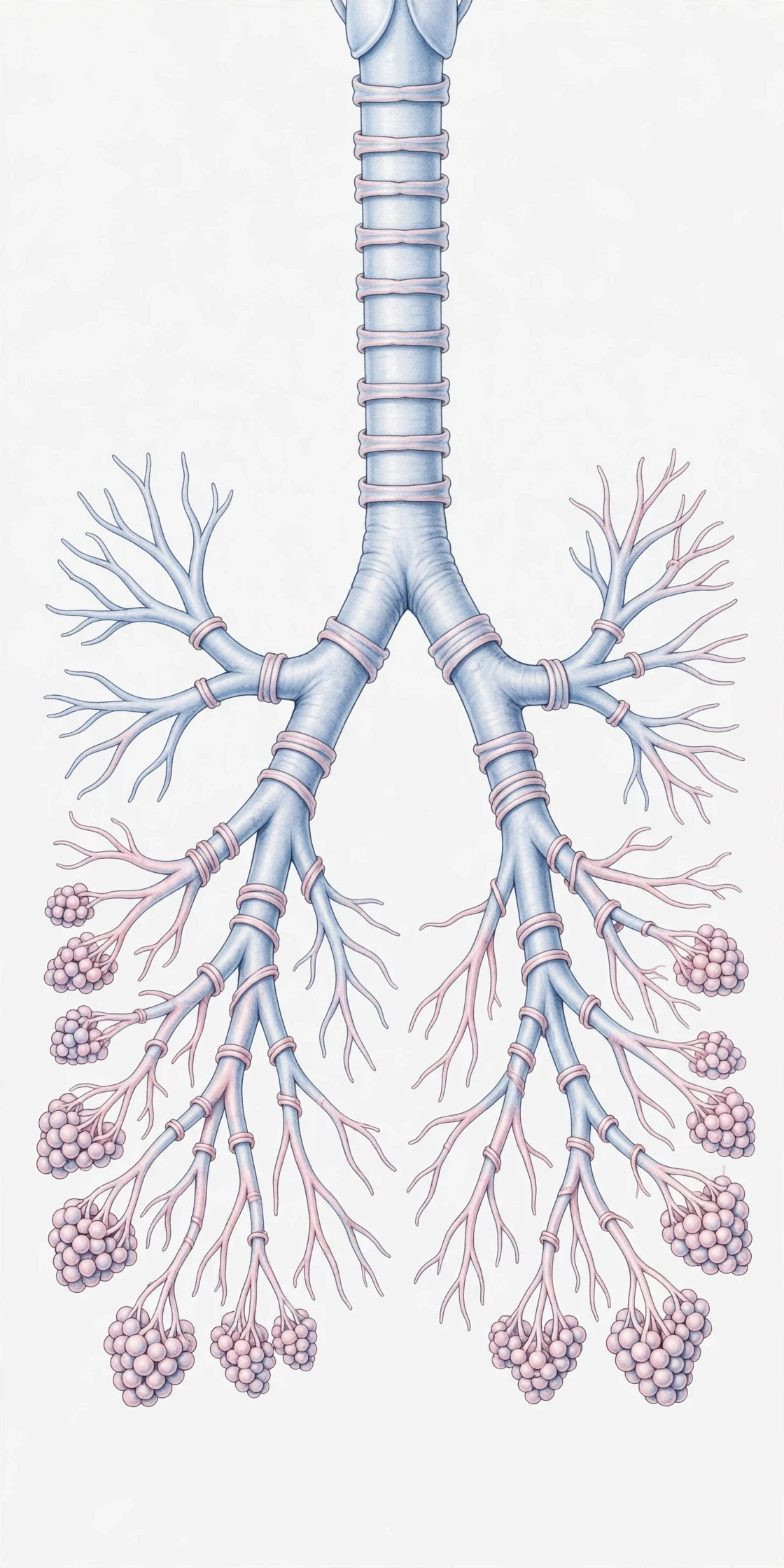
To understand why asthma narrows the airways, it helps to picture the airways themselves. Air enters through the nose or mouth, travels down the windpipe — the trachea — and then branches, again and again, like an upside-down tree. The trachea splits into two main bronchi, one for each lung. Each bronchus splits into smaller bronchi, which split into bronchioles, which end in clusters of tiny air sacs, the alveoli, where oxygen crosses into the blood. With each branching, the tubes get narrower and their walls get thinner. The large airways have rings of cartilage to hold them open; the small ones do not, and rely on the surrounding lung tissue and on a thin layer of smooth muscle wrapped around them.
How the Respiratory System Works explains that anatomy in full, and the asthma story sits directly on top of it. The smooth muscle is the key player. In a healthy airway it is a modest layer, there to adjust the tube's diameter a little as needed. In an asthmatic airway it is thicker, twitchier, and wrapped more tightly — and it is this muscle, contracting, that does most of the narrowing during an attack. The airways are not passive pipes. They are living tubes with muscle in their walls, and in asthma that muscle has a hair trigger.
2.2 What makes an asthmatic airway different
The difference between a healthy airway and an asthmatic one is not visible to the naked eye. It is a difference in behaviour. Blow cold air, a little dust, or a whiff of smoke into a healthy airway and almost nothing happens. Do the same to an asthmatic airway and it can narrow sharply — a property called airway hyperresponsiveness. The airway overreacts because it is already inflamed: its lining is swollen, its nerves are sensitised, and its muscle is primed. A trigger that would be a shrug for one person is a full contraction for another.
This is why asthma is so variable from person to person and from day to day. The same person can run in warm, humid air with no trouble and wheeze badly in cold, dry air. The same trigger can cause a mild cough one week and a serious attack the next, depending on how inflamed the airways already are — after a cold, for instance, when a viral infection has left the lining raw. The variability is not randomness. It is the signature of a system whose threshold for narrowing has been lowered, so that ordinary events cross it.
2.3 The airway wall, layer by layer
Peel the airway wall apart and there are four layers that matter for asthma. On the inside, the epithelium — a single sheet of cells that lines the tube, covered in a thin layer of mucus and swept by tiny hairs, the cilia, that move debris upward and out. Beneath it, the lamina propria, a layer of connective tissue that can swell with fluid during inflammation. Around that, the smooth muscle, the ring of contractile tissue that squeezes the tube. And scattered through the wall, the mucus glands — goblet cells in the lining and submucosal glands below it — that produce the mucus which normally traps dust and germs.
In asthma, every one of those layers changes. The epithelium becomes damaged and leaky, letting irritants reach the nerves and immune cells beneath. The lamina swells and, over years, thickens with scar-like collagen. The smooth muscle grows — more cells and bigger cells — so the same signal produces a stronger squeeze. And the mucus glands multiply, producing more and thicker mucus. Those four changes, layer by layer, are the physical basis of the disease, and the next section follows each of them in turn.
3. Asthma, Inside the Airway: Inflammation, Squeeze, and Mucus
If the airway wall is the stage, the three-part mechanism is the play. Inflammation comes first and drives the rest. The smooth muscle squeeze is the fastest and most dramatic part. And mucus is the slow, sticky third partner that can turn a bad attack into a dangerous one. Understanding the three separately is what makes the treatments make sense: the reliever inhalers fight the squeeze, the controller inhalers fight the inflammation, and almost nothing in the medicine cabinet fights the mucus directly — which is why preventing it matters so much.
3.1 Inflammation — the T2 immune story
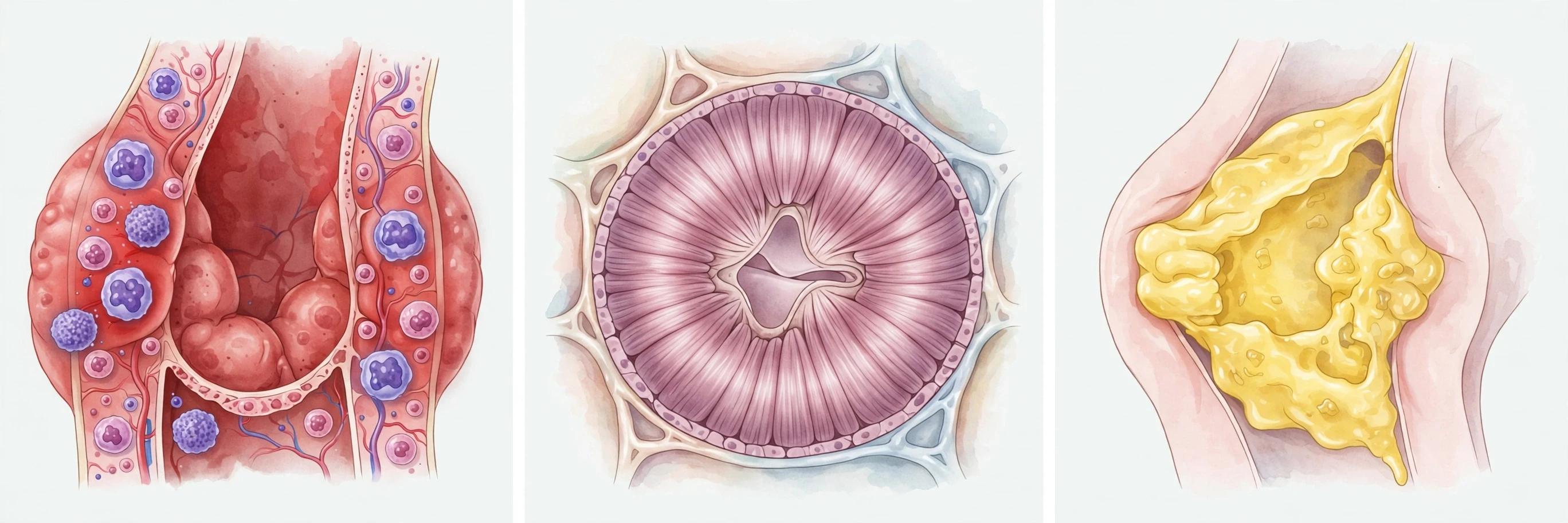
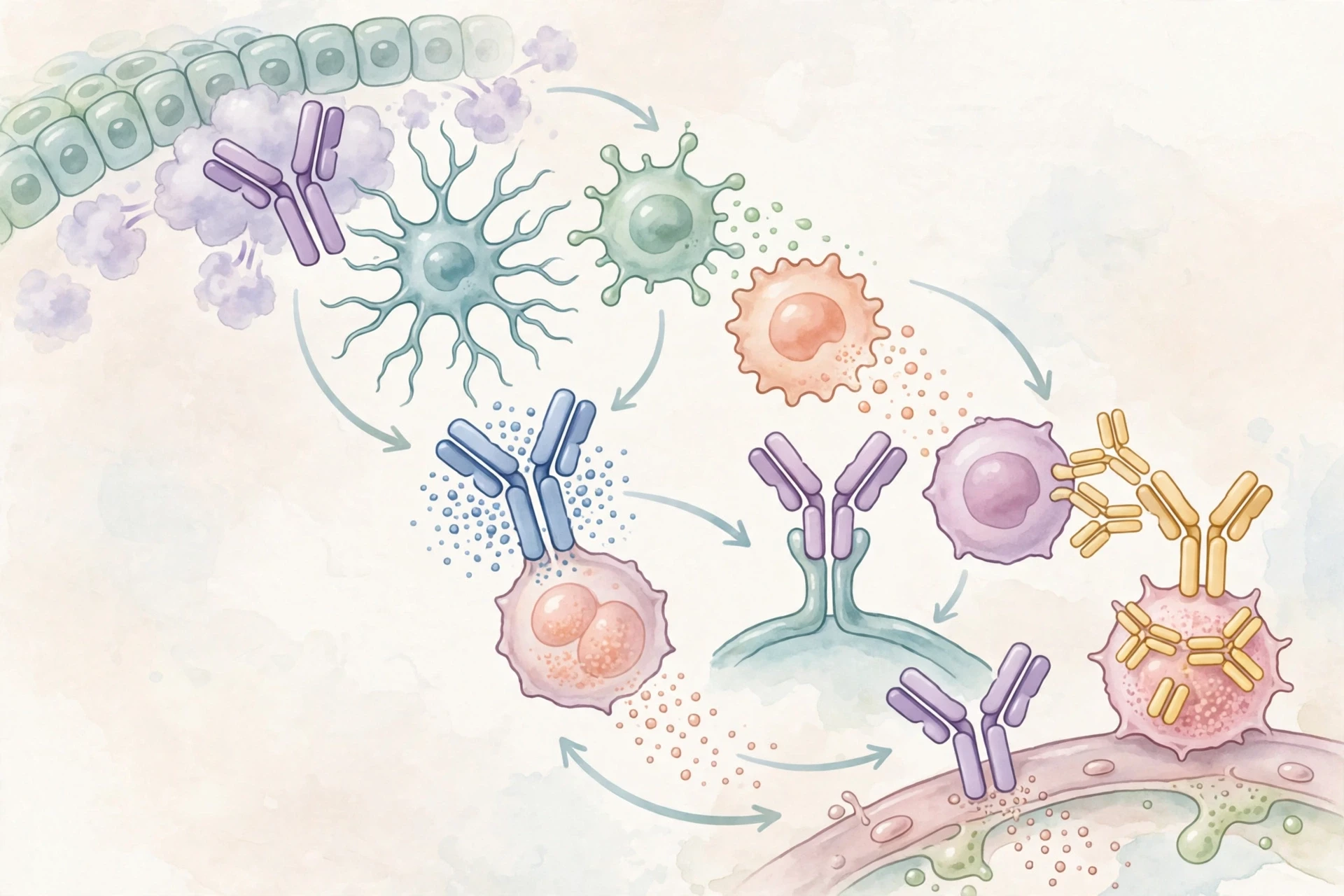
The commonest form of the disease is driven by a particular branch of the immune system, called Type 2 or T2 inflammation. It starts when an allergen — a dust-mite particle, a grain of pollen, a flake of cat dander — drifts down into the lower airways. There, dendritic cells, the immune system's scouts, pick it up and present it to T-helper 2 cells, or Th2 cells. Those cells release three messenger molecules — interleukin-4, interleukin-5 and interleukin-13 — and each of them does a different job. IL-4 tells B cells to make IgE, the antibody that arms mast cells. IL-5 recruits and activates eosinophils, the white blood cells that are the hallmark of allergic inflammation. IL-13 drives mucus production and, over time, the scarring and remodelling of the airway wall.
On the next exposure, the trap is already set. The allergen binds to IgE sitting on the surface of mast cells, and the mast cells burst open — degranulation — releasing histamine, leukotrienes and other mediators in a sudden flood. Histamine irritates the smooth muscle and makes the airway lining swell. Leukotrienes constrict the muscle and increase mucus. Eosinophils, drawn in by IL-5, release their own toxic proteins, including major basic protein, which damages the lining, stimulates more histamine release, and promotes further bronchospasm. It is a cascade: one allergen, a chain of signals, and an airway that ends up swollen, twitchy and full of mucus.
How the Human Immune System Works explains the cells in that cascade — dendritic cells, T cells, B cells, mast cells, eosinophils — and the asthma story is one specific use of that machinery, turned against harmless things. About 50 to 60 percent of cases overall are driven by this T2 pattern, and in the United States the NIH estimates that roughly 60 percent of cases are allergic. The rest — the T2-low form, covered in section 5 — runs on different immune cells and responds less well to the standard steroid inhalers, which is one reason the disease is so hard to treat with a single approach.
3.2 Bronchoconstriction — the smooth muscle squeeze
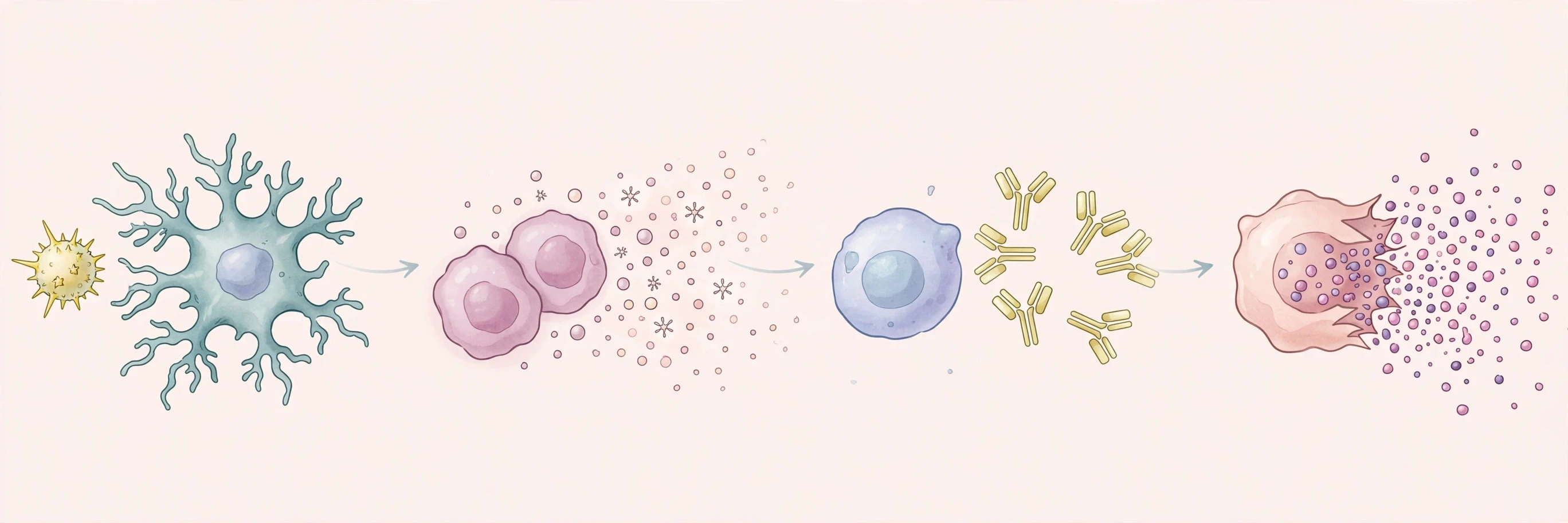
The squeeze itself is the most immediate part of the disease. The smooth muscle wrapped around the airways contracts, and the tube narrows. In a healthy airway the muscle contracts a little and relaxes again. In an asthmatic airway the muscle is thicker — it has grown through both hyperplasia, more cells, and hypertrophy, bigger cells — and it is sensitised, so the same chemical signal produces a stronger contraction. New muscle is preferentially added on the inner side of the wall, closer to the airway lumen, so the same squeeze narrows the tube more. The mediators do the triggering: histamine and leukotrienes from mast cells, acetylcholine from the nerves, and IL-13, which directly sensitises the muscle so that it contracts more forcefully to a given stimulus.
There is a cruel piece of geometry at work here. Airflow through a tube depends on the fourth power of its radius — halve the radius and the flow falls to one-sixteenth. That is why a modest thickening of the wall, a little swelling and a little muscle contraction together can close an airway far more than any one of them would alone. The three parts of the mechanism multiply each other. It is also why the reliever inhaler works so fast: relaxing that muscle, even a little, reopens the tube dramatically, because the same fourth-power law works in reverse.
3.3 Mucus — goblet cells, MUC5AC, and plugs
Mucus is the part of asthma that gets the least attention and causes some of the worst harm. In a healthy airway, a thin layer of mucus traps dust and germs, and the cilia sweep it upward like a slow conveyor belt. In the disease, the goblet cells that make mucus multiply — goblet-cell hyperplasia — and the submucosal glands below the lining grow larger. The result is more mucus, and thicker mucus. The main mucin, the protein that gives mucus its gel-like character, is called MUC5AC, and its production is driven by IL-13 and by the mechanical stress of the airway narrowing itself.
In severe disease the mucus does not just coat the wall. It forms plugs — thick, rubbery casts that fill the small airways completely. Mucus plugs are associated with severe airflow limitation and with death in asthma, and they are one reason a severe attack can resist treatment: a bronchodilator can relax the muscle around a plugged airway, but it cannot clear the plug. The mucus has to be coughed out or reabsorbed, and until it is, that airway stays shut. It is a sobering detail, and it explains why preventing the inflammation that drives mucus production matters more than chasing the mucus after it has formed.
3.4 Remodelling — what years of inflammation build
Left inflamed for years, the airway does not just stay swollen. It rebuilds itself — a process called airway remodelling. The subepithelial layer thickens as myofibroblasts deposit collagen and other matrix proteins, a kind of internal scarring driven by growth factors including TGF-beta, PDGF and IL-13. The smooth muscle grows, as described above. New blood vessels form in the wall. The epithelium stays damaged and leaky. A 2024 review in the European Respiratory Journal put it plainly: airway remodelling is a near-universal feature of the disease, present even in mild asthma, worsening with severity, and associated with a higher risk of attacks, faster lung-function decline and a more chronic course.
Remodelling is the reason asthma is not simply a disease of attacks. The attacks are the visible part. Underneath, the airway is slowly changing shape, and some of those changes do not fully reverse — which is why early, regular anti-inflammatory treatment matters, and why the disease can become harder to control the longer it goes untreated. The good news is that the remodelling is driven by the same inflammation the controller inhalers treat. Control the inflammation, and you slow the rebuilding.
4. What Happens During an Asthma Attack
4.1 The sequence, minute by minute
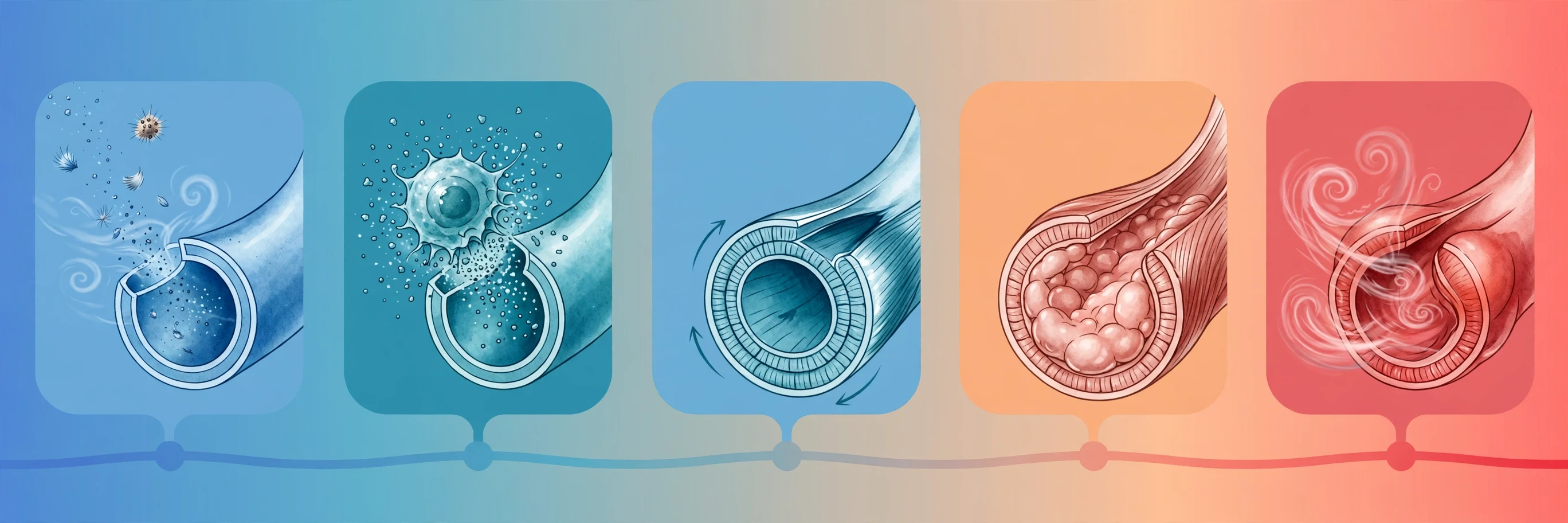
An attack — doctors call it an exacerbation — follows a sequence that is worth knowing, because every step in it is a target for treatment. It starts with a trigger: a virus, an allergen, cold air, smoke. Within minutes, mast cells in the airway wall degranulate, releasing histamine, leukotrienes and prostaglandin D2. The smooth muscle contracts. The lining swells with oedema as blood vessels leak fluid into the wall. The mucus glands pour out mucus. The airway, already narrower than it should be from chronic inflammation, narrows further — sometimes dramatically, sometimes over hours.
The person feels it first as a tightness in the chest, then as breathlessness, then as a cough that will not clear anything. Breathing out becomes harder than breathing in, because the narrowed airways collapse slightly during exhalation, trapping air in the lungs. The chest can feel over-inflated, the shoulders rise with each breath, and speaking in full sentences becomes difficult. In a mild attack, a reliever inhaler reverses the muscle contraction and the person recovers in minutes. In a severe attack, the narrowing does not respond, the mucus plugs hold, and the person needs emergency care.
4.2 Why wheeze sounds the way it does
Wheeze is the sound of air forced through a narrowed tube, and it is almost always heard on breathing out rather than in. During exhalation the pressure inside the chest rises and squeezes the already-narrowed airways further, so the air has to rush through a smaller opening — and rushing air through a small opening whistles, the way wind whistles through a gap in a window. The pitch and loudness of the wheeze roughly track how narrow the airway is, which is why doctors listen to it, but it is a rough guide at best. A very severe attack can be quieter than a moderate one, for a reason that surprises most people.
That reason is the next section's warning, and it is one of the most important facts in this article: in a life-threatening attack, there may be no wheeze at all. Doctors call it a "silent chest". It happens because so little air is moving that there is nothing left to whistle. The absence of wheeze in a person who is struggling to breathe, with blue lips or an inability to speak, does not mean the attack is getting better. It means it is getting worse, and it is a medical emergency.
4.3 When an attack becomes an emergency
A severe attack that does not improve with standard treatment — bronchodilators and corticosteroids — is called status asthmaticus, and it is a life-threatening emergency that can lead to respiratory failure, low oxygen, carbon-dioxide retention and death. The warning signs are specific enough to learn. In acute severe asthma, peak flow falls to 33 to 50 percent of the person's best, the breathing rate rises to 25 or more per minute, the pulse to 110 or more, and the person cannot complete a sentence in one breath. In life-threatening asthma, peak flow falls below 33 percent, oxygen saturation below 92 percent, and there may be a silent chest, blue lips, poor breathing effort, exhaustion or confusion.
I keep those numbers in mind because they are the difference between waiting and calling for help. The rule that every asthma action plan teaches is simple: if the reliever inhaler is not working, if breathing is getting harder rather than easier, if the person cannot speak in full sentences, or if the lips look blue — that is the moment for emergency care, not for another puff and a wait. Most asthma deaths are preventable, and the prevention is usually not a new drug. It is recognising a severe attack early enough.
5. Types of Asthma: Not One Disease
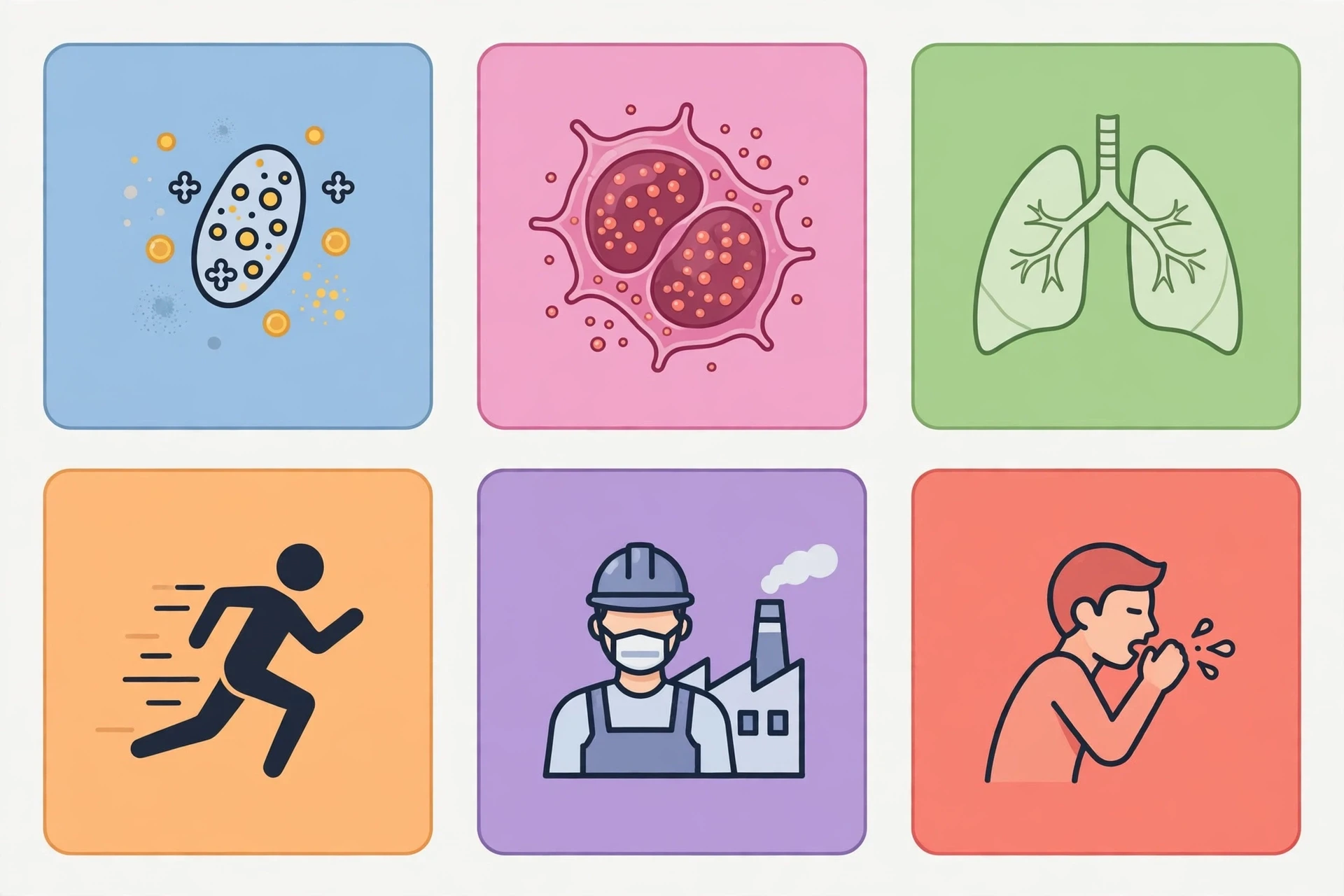
One of the biggest changes in respiratory science in the last twenty years is the realisation that asthma is not one disease. It is a family of related conditions that share the same visible symptoms — wheeze, cough, breathlessness — but run on different immune machinery, start at different ages, and respond to different treatments. That is why two people with the same diagnosis can have very different experiences, and why a treatment that transforms one person's life can do little for another. The word doctors use for these subtypes is phenotypes, and knowing which one a person has is increasingly the key to treating them well.
5.1 Allergic asthma
Allergic asthma is the commonest type, and the one most people picture. It starts in childhood, runs in families with eczema and hay fever, and is triggered by the allergens of everyday life: dust mites, pollen, pet dander, mould. The immune machinery is the T2 cascade from section 3 — IgE, mast cells, eosinophils — and it is the type that responds best to inhaled corticosteroids. In the United States, the NIH estimates that about 60 percent of cases are allergic. It is also the type for which the oldest targeted treatment exists: omalizumab, the anti-IgE biologic, approved in 2003.
5.2 Eosinophilic, non-allergic asthma
Not all T2 disease is allergic. Eosinophilic asthma — driven by the same eosinophils and interleukins, but without the IgE-allergy link — often starts in adulthood, sometimes in people with no history of allergy at all. It tends to be more severe from the outset, with frequent symptoms and severe attacks, and it often resists inhaled steroids, sometimes requiring maintenance oral corticosteroids. It is the type most associated with nasal polyps and with aspirin sensitivity, and it is the type for which the anti-IL-5 biologics — mepolizumab, benralizumab — were designed. A person can have eosinophilic asthma and never have had hay fever in their life.
5.3 T2-low / neutrophilic asthma
The third major group runs on different cells entirely. T2-low disease is typically neutrophilic — driven by neutrophils and by Th1 and Th17 immune responses rather than by eosinophils — and it is more common in older adults, in smokers, and in more severe disease. It responds less well to corticosteroids, which is a serious problem, because steroids are the backbone of asthma treatment. Some people have paucigranulocytic asthma, in which few inflammatory cells of any kind are found in the airways, and the narrowing is driven more by the muscle and the remodelling than by active inflammation. These are the patients for whom the newest biologic, tezepelumab, matters most, because it is the first shown to work across both high and low biomarker levels.
5.4 Exercise-induced bronchoconstriction
Exercise-induced bronchoconstriction is the temporary narrowing of the airways during or after strenuous exercise, and it is far commoner than most people realise: an estimated 5 to 20 percent of the general population experiences it, and up to 90 percent of people with the condition. It can also occur in people who do not have asthma at all. The mechanism is different from allergy — rapid breathing dries and cools the airway lining, which triggers the muscle to contract — and it is the reason cold, dry air is a worse trigger than warm, humid air. In the EIB Landmark Survey, exercise-induced narrowing led 22 percent of children aged 4 to 12 with asthma, and nearly 32 percent of teenagers, to avoid sports altogether. That avoidance is the tragedy of it, because as section 12 explains, regular exercise is one of the best things a person with asthma can do.
5.5 Occupational, cough-variant, and aspirin-exacerbated asthma
Some asthma is caused by the workplace. About 15 percent of adult-onset cases are attributed to occupational exposure — flour dust in bakers, isocyanates in spray painters, latex in healthcare workers, cleaning chemicals, wood dust. There are three forms: sensitiser-induced, where the immune system becomes allergic to a workplace substance; irritant-induced, including reactive airways dysfunction syndrome after a single large chemical exposure; and work-exacerbated asthma, where a pre-existing condition is worsened at work. Cough-variant asthma is a different shape again: cough is the primary, often the only, symptom, with no wheeze or breathlessness, and it accounts for an estimated 25 to 42 percent of chronic-cough cases. About 30 to 40 percent of people with cough-variant disease go on to develop classic asthma. Aspirin-exacerbated respiratory disease is a triad — asthma, chronic sinusitis with nasal polyps, and respiratory reactions to aspirin and other NSAIDs — affecting about 7 percent of adults with the condition and 14 to 15 percent of those with severe disease.
5.6 Severe asthma
Severe asthma affects roughly 3 to 10 percent of patients, and it is defined not by how bad the symptoms feel but by how much treatment is needed to control them: asthma that requires high-dose inhaled corticosteroids plus a second controller, or systemic corticosteroids, to prevent it becoming uncontrolled — or that remains uncontrolled despite that therapy. Before the label is applied, the diagnosis must be confirmed, other conditions addressed, and inhaler technique and adherence checked, because a large share of what looks like severe disease turns out to be difficult-to-treat asthma — the broader group, in which the real problem is missed triggers, poor technique, or medicines not being taken. That distinction matters, because the treatments for the two are very different: one needs a biologic, the other needs a spacer and a conversation.
6. Triggers: What Sets It Off
If the mechanism is the loaded gun, the trigger is the finger on it. Asthma triggers fall into a handful of groups, and most people with the condition can name their own within a few years of diagnosis. Knowing them matters, because avoiding a trigger is often easier than treating the attack it causes — and because the commonest trigger of all is not an allergen at all, but a virus.
6.1 Viruses — the commonest trigger
Viral infection accounts for as many as two-thirds of asthma attacks in children and more than half in adults. The commonest single culprit is rhinovirus — the common-cold virus — detected in up to 76 percent of attacks in wheezing children and up to 83 percent of adults with asthma in cited series. The virus infects the airway lining, damages it, and leaves it raw and twitchy for weeks afterward, which is why a cold that a healthy person shakes off in days can leave a person with asthma wheezing for a month. It is also why the autumn return to school, with its wave of colds, is the worst season of the year for childhood attacks, and why flu vaccination is routinely recommended for people with the condition.
6.2 Allergens
The classic triggers are the ones most people know: dust mites in bedding and carpets, grass and tree pollen in spring and summer, animal fur and dander, moulds in damp rooms. They work through the IgE cascade of section 3, and their effect depends on exposure — which is why dust-mite-proof bedding, keeping pets out of the bedroom, and closing windows on high-pollen days are standard advice. But avoidance has its limits. Nobody can avoid all pollen, and the evidence that allergen avoidance alone controls asthma is weaker than the advice suggests. Avoidance helps. It rarely suffices on its own.
6.3 Smoke, pollution, cold air, weather
Tobacco smoke and air pollution — indoor and outdoor — both increase the risk of developing asthma and worsen existing disease. The World Health Organization puts it bluntly: air pollution is an important risk factor for asthma, causing new cases and making existing disease worse. Cold air is a trigger in its own right, partly because it dries the airway lining, and partly because cold air often comes with the viral infections of winter. Changes in the weather, strong smells, dust, fumes and strong soaps and perfumes are all recognised triggers. A person with asthma lives in a world full of small provocations, and the threshold for reacting to them is set by how inflamed the airways already are.
6.4 Exercise, stress, reflux, NSAIDs
Exercise triggers narrowing through the drying and cooling mechanism of section 5.4, and it is the trigger most often misunderstood — treated as a reason to avoid exercise, when the right response is a warm-up and a plan. Stress and strong emotions are recognised triggers too, as is gastro-oesophageal reflux, and aspirin and other NSAIDs can provoke attacks in the aspirin-sensitive subgroup. Two cautions belong here. First, no reliable percentage exists for stress or reflux as triggers, and this article will not invent one — they are described qualitatively because that is what the evidence supports. Second, stress can trigger symptoms, but it does not cause the underlying disease. The idea that asthma is "just in your head" is one of the myths dismantled in section 13, and it has done real harm: people who believe it delay treatment, and children who believe it learn to be ashamed of a disease that is, measurably, a physical narrowing of real airways. Anxiety and Depression Explained covers the conditions in which stress and breathing genuinely interact, and the asthma evidence belongs next to that picture, not instead of it.
7. Why Some People Get Asthma
Asthma runs in families, starts in early life, and is shaped by the environment a child grows up in. No single cause explains it, and no single gene carries it. The picture that has emerged is of a genetic susceptibility — airways that are born twitchy and prone to allergic inflammation — meeting early-life events that push that susceptibility over the line. Understanding the causes matters less for treatment than for prevention, and more for understanding why the disease is commoner in some places and families than in others.
7.1 Genes and heritability
Twin studies consistently find the condition highly heritable: genetic factors account for roughly 60 to 80 percent of susceptibility, with identical twins about twice as concordant as fraternal twins. But there is no single "asthma gene". Genome-wide studies have implicated many variants, most repeatedly the chromosome 17q21 region, carrying the ORMDL3 and GSDMB genes, which affect how the airway epithelium functions and which are linked again and again to childhood asthma. The genes set the susceptibility. What a person breathes, catches and eats in early life decides whether that susceptibility becomes disease.
7.2 Early life
Events in early life affect the developing lungs and can increase asthma risk: low birth weight, prematurity, exposure to tobacco smoke and other air pollution, and viral respiratory infections. A mother's smoking during pregnancy and her obesity before pregnancy are both associated with a higher risk of wheezing and asthma in her children — in one meta-analysis of 14 studies covering more than 108,000 mother-child pairs, maternal obesity raised the odds of asthma or wheeze by about 31 percent. The lungs develop mostly before birth and in the first years of life, and the airways a child grows up with are, to a large extent, the airways they will have for life. That is why the early years matter so much, and why so much asthma research is now focused on pregnancy and infancy.
7.3 The farm effect
One of the most striking findings in asthma research comes from two groups of people who share genes, religion and a way of life, but live on different kinds of farms. The Amish of Indiana live on single-family dairy farms, and their children are in the barns daily from an early age. The Hutterites of South Dakota share the Amish ancestry but live on large, industrialised, communal farms, with little direct barn exposure. The Amish children have the disease at a rate of about 5 percent. The Hutterite children, at about 20 percent — four times higher. The difference, researchers found, is in the dust: Amish house dust carries nearly seven times more endotoxin — fragments of bacterial cell walls — than Hutterite dust, and Amish dust, but not Hutterite dust, protected mice from experimental allergic asthma. The lesson is not that dirt is good for children. It is that early, diverse microbial exposure trains the immune system not to overreact — the idea behind the hygiene hypothesis, and one of the reasons the microbial world of early life is now a major research frontier. The Gut Microbiome Explained follows the microbial communities that live inside us, and the farm story is the outside version of the same lesson: the immune system learns what to ignore by meeting the microbial world early.
7.4 Obesity, urbanisation
Children and adults who are overweight or obese are at greater risk of the disease, according to the WHO, and obesity makes asthma harder to control — in pregnancy, obesity raised the odds of asthma in the child and of uncontrolled asthma. Urbanisation is also associated with higher asthma prevalence, probably through a combination of lifestyle factors: less microbial exposure, more air pollution, more time indoors, different diets. Two factors often listed in this section need a caution. Caesarean delivery and early antibiotic use have both been studied as possible early-life influences on asthma risk, but no verified quantitative estimate for either was found in the research for this article, and no percentage for them appears here. Describing them as "studied as possible influences" is the honest limit of what the evidence currently supports.
8. How Asthma Is Diagnosed
Diagnosing the condition sounds simple — listen for wheeze, ask about cough — and in practice it is one of the trickier diagnoses in respiratory medicine. The symptoms overlap with a dozen other conditions, lung function can be entirely normal between attacks, and in young children the tests themselves are hard to perform. The diagnosis, when done properly, rests on two things together: a history of characteristic symptoms, and objective evidence that the airflow limitation varies.
8.1 Symptoms + variability
The history is the first half of the diagnosis. Doctors listen for the pattern: wheeze, shortness of breath, chest tightness and cough that vary over time and in intensity, that are worse at night or in the early morning, that are triggered by exercise, cold air, allergens or viral infections, and that improve with a bronchodilator. A family history of asthma, eczema or hay fever adds weight. But symptoms alone are not enough, because the same symptoms can come from other diseases — a foreign body in a child's airway, a heart problem, chronic bronchitis, a vocal-cord problem. That is why the guidelines insist on the second half: objective evidence of variable airflow limitation.
8.2 Spirometry and reversibility
The main test is spirometry: the person breathes out as hard and as fast as they can into a machine, which measures how much air they can expel in one second (FEV1) and how much in total (FVC). In the disease, the key finding is reversibility — the numbers improve after a puff of bronchodilator. The GINA criteria for adults are an increase in FEV1 or FVC of at least 12 percent AND at least 200 millilitres, measured 10 to 15 minutes after 200 to 400 micrograms of salbutamol. Greater confidence comes with a larger response, of 15 percent and 400 millilitres or more. In children, the criterion is an increase of at least 12 percent of the predicted value.
One correction belongs here, because it is a common mistake — including in the early briefing for this article. A reduced FEV1/FVC ratio below 0.70 is NOT the diagnostic criterion for the condition. That 0.70 cut-off is the threshold for COPD, the fixed obstruction of chronic bronchitis and emphysema. Variability and reversibility make the diagnosis, not a fixed ratio — a reduced FEV1/FVC below the lower limit of normal supports obstruction, but the diagnosis rests on the airways opening up again after a bronchodilator. Getting that distinction right matters, because it is the difference between a reversible disease and an irreversible one.
8.3 FeNO, allergy tests, challenge tests
When spirometry is normal — as it often is between attacks — doctors have other tools. FeNO measures the nitric oxide in exhaled breath, a marker of T2 inflammation: a value of more than 50 parts per billion in adults, or more than 35 in children, supports a diagnosis of Type 2 asthma, though a low value does not rule the disease out. Allergy testing — skin-prick tests or blood tests for specific IgE — identifies the allergic triggers and supports an allergic phenotype, though it does not by itself diagnose asthma. Bronchial challenge tests, in which the airways are provoked with methacholine, mannitol or exercise and the fall in FEV1 measured, can confirm hyperresponsiveness when the diagnosis is uncertain — a fall of 20 percent with methacholine, or a fall of more than 10 percent (and more than 200 mL) with exercise, counts as positive.
8.4 Why children under 5 are hard to diagnose
Children under five or six often cannot perform spirometry reliably — the test needs a forceful, coordinated breath that a toddler cannot produce on command. Intermittent viral wheeze is extremely common at that age, and the response to asthma medication may be inconsistent. Peak-flow meters, which measure how fast a child can blow out, are generally usable from around age four, and action plans for under-fives are based on symptoms rather than numbers. The result is that the disease in the youngest children is often diagnosed on the pattern of symptoms over time, and sometimes only in retrospect, when the pattern of recurrent wheeze and response to treatment becomes clear. It is one more way the disease hides — and one more reason the night-time cough that keeps coming back deserves a proper assessment rather than another round of cough syrup.
9. Relievers: The Inhalers That Open Airways Fast
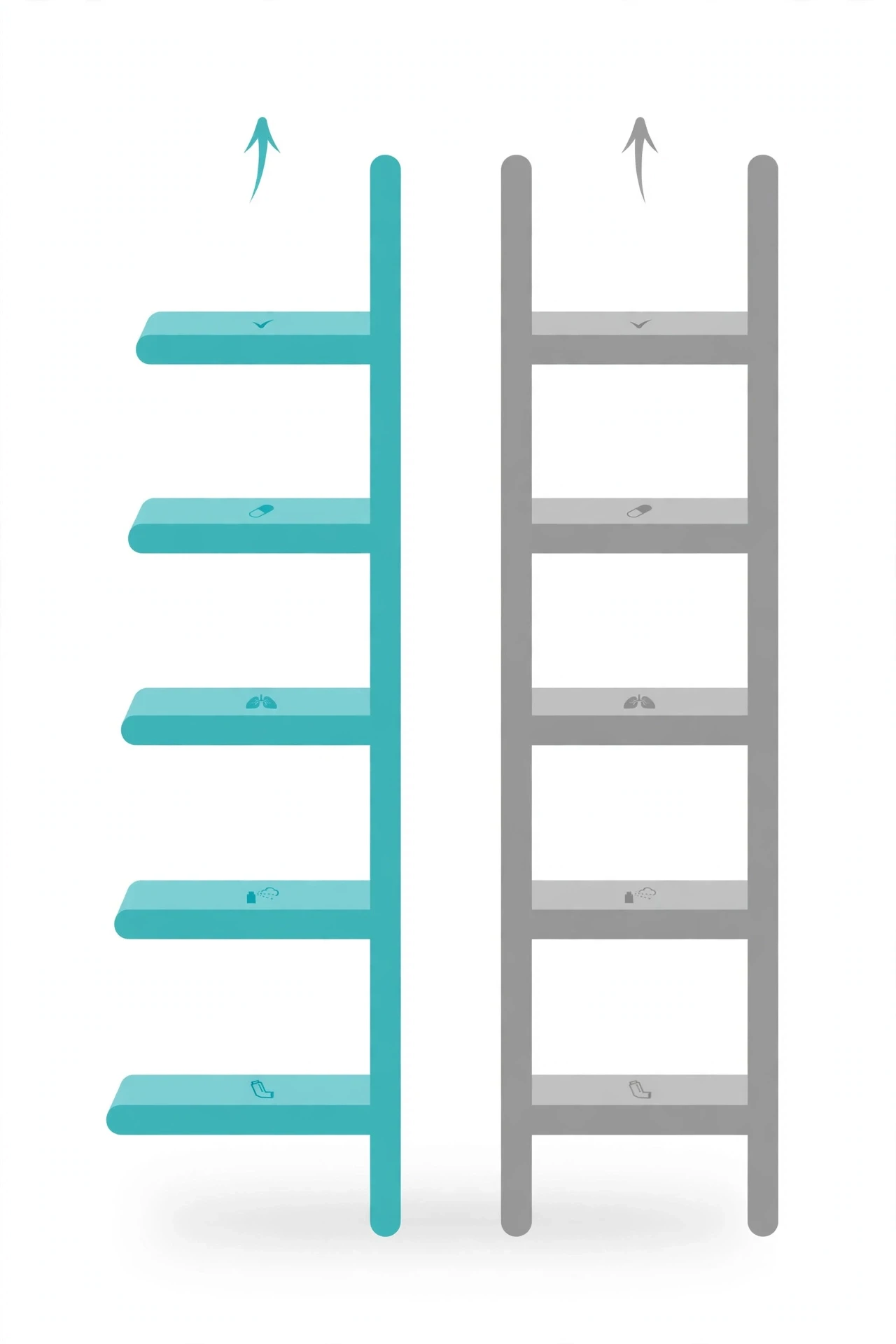
The inhaler is the most recognisable object in the treatment of the disease, and the most misunderstood. There are two fundamentally different kinds, and confusing them is the single most dangerous mistake in the care of the disease. Relievers open the airways fast by relaxing the smooth muscle. Controllers treat the inflammation that makes the airways narrow in the first place. The reliever works in minutes and feels like a rescue. The controller works over weeks and feels like nothing at all — until the day it prevents an attack that would otherwise have happened. The modern history of asthma treatment is the story of learning that the rescue alone is not enough.
9.1 SABA — how it works, and its limits
The classic reliever is the short-acting beta2-agonist, or SABA — salbutamol in most of the world, albuterol in the United States — the blue inhaler that has sat in school bags and bedside drawers for half a century. It works by stimulating beta2 receptors on the airway smooth muscle, which switches on an enzyme, adenylyl cyclase, raising the level of a messenger called cAMP inside the muscle cell, which lowers calcium and lets the muscle relax. The effect begins within minutes and lasts four to six hours. It is, for the muscle squeeze, a superb drug.
Its limit is that it does nothing at all to the inflammation. It relaxes the muscle around an inflamed airway, and the airway opens — but the inflammation that made the muscle twitchy in the first place is still there, still smouldering, still ready to narrow the airway again the next time a trigger arrives. Used occasionally, for a rare attack, that is fine. Used often, it is a warning sign. Needing the reliever more often than usual means the asthma is worsening, and the answer is more anti-inflammatory treatment, not more reliever. The side effects — tremor, a racing heart, low potassium, raised blood sugar — are the price of a drug that stimulates the same receptors elsewhere in the body.
9.2 Why SABA-only stopped being enough
For decades, the standard advice was simple: use the blue inhaler when you wheeze. The problem, understood only slowly, was that this advice left the inflammation untreated. People felt better after each puff, so they used more puffs, while the inflammation underneath quietly worsened — until one day the reliever stopped working, and the attack that followed was severe. The evidence accumulated that SABA-only treatment does not protect against severe attacks, and that regular or frequent SABA use actually increases the risk of them, and of death. In 2019, GINA made the break: SABA-only treatment was no longer recommended for adults, adolescents and children aged 6 to 11. Step 1 of the guidelines became as-needed low-dose ICS-formoterol — a reliever that also delivers an anti-inflammatory — or a low dose of inhaled steroid taken whenever the reliever was taken. It was one of the biggest reversals in modern respiratory medicine, and it took years for practice to catch up.
9.3 ICS-formoterol as the new reliever
The replacement is a combination inhaler: a low dose of inhaled corticosteroid, the anti-inflammatory, paired with formoterol, a long-acting beta2-agonist that, unlike other long-acting bronchodilators, starts working fast enough to be a reliever. In GINA's 2026 guidance, this is Track 1, the preferred strategy at every step: low-dose ICS-formoterol used as both controller and reliever. The alternative, Track 2, uses a SABA or an ICS-SABA combination as the reliever, and is less effective at reducing severe attacks. The logic is elegant: every time the person reaches for relief, they also get a dose of anti-inflammatory treatment, delivered exactly when the airways are flaring. At the higher steps, the same inhaler is used for daily maintenance and for relief — maintenance and reliever therapy, or MART — and meta-analyses show about 30 to 35 percent fewer severe attacks than the old fixed-dose combination plus SABA approach. Only formoterol is suitable as the reliever in this role; the other long-acting bronchodilators — salmeterol, vilanterol, indacaterol — act too slowly and must never be used as relievers.
10. Controllers: The Inhalers That Treat the Cause
If relievers are the fire extinguisher, controllers are the fireproofing. They do not open a narrowed airway in minutes. They reduce the inflammation that makes the airway narrow in the first place, and they do it day by day, over weeks. The distinction is the most important thing a person with asthma can understand about their medicines, because the controller is the inhaler most often skipped — it produces no immediate sensation, and its benefit is invisible until the day it prevents an attack.
10.1 ICS — how steroids calm inflammation
Inhaled corticosteroids are, in the words of the leading review of the field, the most effective controllers of the disease and the only drugs that can effectively suppress the characteristic inflammation in asthmatic airways. They work inside the cell: the steroid diffuses across the cell membrane, binds to a glucocorticoid receptor in the cytoplasm, and travels with it into the nucleus, where it switches off multiple activated inflammatory genes — partly by recruiting an enzyme, HDAC2, that reverses the chemical marks that keep those genes switched on — and switches on anti-inflammatory genes. The result is fewer eosinophils, fewer T-lymphocytes, fewer mast cells and fewer dendritic cells in the airway wall, less hyperresponsiveness, and fewer attacks. A significant reduction in eosinophils is detectable within about six hours of the first dose.
Because the drug is inhaled, it goes directly to the lung, and the dose that reaches the rest of the body is small — a fraction of what an oral steroid would deliver. That is the whole point of the inhaler: local treatment for a local disease. The local side effects are local too: oral thrush and hoarseness, both reduced by rinsing the mouth after use and by using a spacer. The fear of steroids — that they are the same as the anabolic steroids abused by athletes — is a myth taken apart in section 13, and it has kept too many people from the most effective treatment the disease has.
10.2 ICS-LABA combinations; LABA never alone
When inhaled steroids alone are not enough, the standard next step is to add a long-acting beta2-agonist — salmeterol or formoterol — in the same inhaler. The combination improves symptom control and reduces attacks more than the steroid alone. But the long-acting bronchodilator must never be used on its own in the disease: chronic use without a steroid causes the beta2 receptors to downregulate, the drug stops working, and the risk of death rises. That is a hard rule, learned from hard experience, and it is why every combination inhaler pairs the bronchodilator with a steroid in the same device. The two drugs work together — the steroid calms the inflammation, the bronchodilator holds the airway open — and neither should be taken without the other.
10.3 LAMA, LTRA, theophylline
Beyond the steroid combinations, there are three further add-ons. Tiotropium, a long-acting muscarinic antagonist, blocks the acetylcholine receptors that help drive bronchoconstriction; it is the only drug of its class approved for the condition, used as a GINA Step 4–5 add-on in people with a history of attacks, and it improves lung function and control across phenotypes. Montelukast, a leukotriene receptor antagonist, blocks the leukotrienes that constrict airways and increase mucus; it is a once-daily tablet, less effective on lung function than a long-acting bronchodilator or tiotropium as an add-on, and it carries an FDA boxed warning for neuropsychiatric events, including suicidal thinking — a warning that must be mentioned whenever the drug is discussed. Theophylline, an older drug that blocks phosphodiesterase, is now a rarely used alternative at the higher steps, kept in reserve because its therapeutic window is narrow and its side effects are troublesome.
10.4 Biologics for severe asthma
For the small group whose disease stays uncontrolled on high-dose inhaled steroids plus a second controller — Step 5 — there are now targeted biologic drugs: antibodies, given by injection, that block a single molecule in the inflammatory cascade. They are add-on maintenance treatments, chosen by biomarker and phenotype, and they are not rescue treatments for an acute attack.
Biologic | Target | Who gets it | How often |
|---|---|---|---|
Omalizumab (Xolair) | IgE | Moderate-to-severe allergic asthma, age 6+, with perennial aeroallergen sensitisation | Subcutaneous, every 2–4 weeks |
Mepolizumab (Nucala) | IL-5 | Severe eosinophilic asthma (blood eosinophils ≥150 cells/µL) | Subcutaneous, every 4 weeks |
Benralizumab (Fasenra) | IL-5 receptor alpha | Severe eosinophilic asthma; depletes eosinophils | Subcutaneous, every 4 weeks ×3, then every 8 weeks |
Dupilumab (Dupixent) | IL-4 receptor alpha (blocks IL-4 and IL-13) | Eosinophilic or oral-steroid-dependent asthma, age 6+ | Subcutaneous, every 2 weeks |
Tezepelumab (Tezspire) | TSLP (upstream epithelial "alarmin") | Severe asthma, age 12+; works across high and low biomarker levels, including T2-low | Subcutaneous, every 4 weeks |
Omalizumab, approved in 2003, binds IgE and was the first. Mepolizumab (2015) and benralizumab (2017) target the IL-5 pathway that drives eosinophils. Dupilumab (2018) blocks the shared receptor for IL-4 and IL-13. Tezepelumab (2021) blocks TSLP, the epithelial alarm cytokine that sits upstream of the whole T2 cascade — and it is the first biologic shown to work in T2-low disease as well. A seventh, depemokimab, an ultra-long-acting anti-IL-5 antibody given every six months, is now approved; it is noted here as the newest arrival, not as a headline. These drugs have transformed severe asthma for the people who need them — but they are expensive, they are injections, and they are for the few, not the many. For most people with asthma, the inhaler remains the treatment that matters.
10.5 Oral steroids for attacks
When an attack is moderate or severe, guidelines recommend a short course of oral corticosteroids — prednisone or prednisolone — to suppress the inflammation that the inhalers cannot reach fast enough. The guideline ranges are 40 to 50 milligrams a day for five to seven days in adults and adolescents, and 1 to 2 milligrams per kilogram per day, to a maximum of 40 milligrams, for three to five days in children. Those are guideline ranges, not individual prescriptions, and the decision belongs to a clinician. Repeated courses carry cumulative risks — bone thinning, diabetes, weight gain, cataracts — which is one more reason that preventing attacks with a controller inhaler matters more than treating them with steroid tablets. A person who needs oral steroids several times a year is a person whose controller treatment needs reviewing, not a person whose disease is being well managed.
11. How Inhalers Actually Work — and Why Technique Matters
An inhaler is a small piece of engineering with a large problem to solve: getting a drug past the mouth, past the throat, and down into the branching airways, in particles small enough to reach the small tubes and large enough not to be breathed straight out again. The engineering differs between the two main types, and the difference matters, because the commonest reason inhalers fail is not the drug. It is the technique.
11.1 MDI vs DPI mechanics
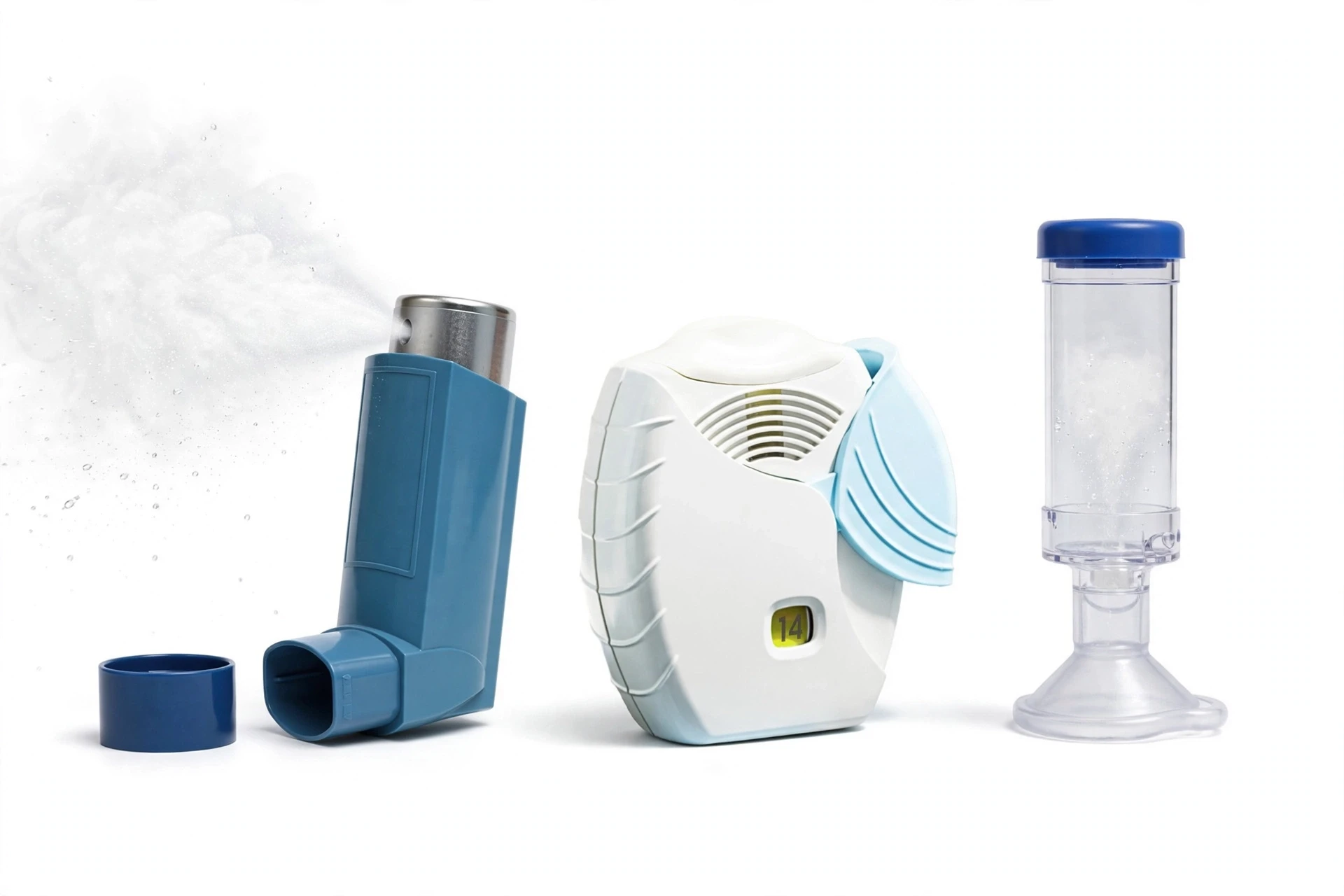
The metered-dose inhaler — the classic puffer — holds the drug dissolved or suspended in a liquefied propellant, a hydrofluoroalkane. Pressing the canister opens a metering valve that releases a fixed dose; the propellant boils and expands as it leaves the canister, shattering the liquid into a fine aerosol mist. The older chlorofluorocarbon propellants were phased out under the Montreal Protocol (agreed in 1987) over the following decades, and the modern propellant does the same job without damaging the ozone layer. The dry-powder inhaler works differently: there is no propellant at all. The patient's own inhalation disperses the powder — drug particles of one to five micrometres, carried on larger lactose particles, stripped off by the turbulent airflow inside the device. That means a dry-powder inhaler needs a fast, deep inhalation to work, and it is not suitable for very young children or for people whose airflow is severely blocked.
The two types demand opposite techniques, and that is where most people go wrong. A metered-dose inhaler needs a slow, gentle inhalation — about 30 litres a minute — starting immediately after the puff, followed by holding the breath for at least four seconds, ideally up to ten. A dry-powder inhaler needs a fast, forceful inhalation. Use the fast technique on a puffer and most of the drug hits the back of the throat. Use the slow technique on a powder inhaler and the powder never disperses. The devices look similar. The techniques are opposites.
11.2 Spacers
A spacer — a valved holding chamber, usually a clear plastic tube — is the simplest and most underused improvement in asthma care. It fits onto the metered-dose inhaler, and the puff goes into the chamber instead of directly into the mouth. The aerosol slows down, the larger particles fall out, and the person breathes the fine mist in at their own pace, without having to coordinate pressing the canister with inhaling. The effect is large: even with perfect technique, a metered-dose inhaler delivers at best about 20 percent of its dose to the lower airways, leaving about 80 percent in the mouth and throat. In one classic radiotracer study, lung deposition rose from 8.7 percent with the inhaler alone to 20.9 percent with a single puff through a spacer, while deposition in the mouth and throat fell from 80.9 percent to 16.5 percent. Spacers also reduce the local steroid side effects — oral thrush and hoarseness — by cutting the amount of drug that lands in the mouth.
Using a spacer device makes it easier to use an aerosol inhaler… A homemade spacer, made from a 500ml plastic bottle, can be as effective as commercially manufactured spacers. — World Health Organization, Asthma fact sheet
That last sentence is one of the most useful facts in asthma care, and it is worth pausing on. In much of the world, a manufactured spacer is unavailable or unaffordable — and in 2023, steroid inhalers were available in public primary healthcare facilities in fewer than half of low- and lower-middle-income countries. A 500-millilitre plastic bottle, cut and fitted to the inhaler, does the same job. It is a piece of medicine that costs nothing, and it doubles the amount of drug reaching the lungs.
11.3 The technique problem
The numbers on inhaler technique are sobering. In the largest study, of more than 3,800 outpatients, about half made at least one error with a dry-powder inhaler and 76 percent with a metered-dose inhaler. A systematic review of more than 54,000 people found that only 31 percent had correct technique overall. In one 300-patient study, 82 percent made at least one error. The commonest mistakes are specific and fixable: with a metered-dose inhaler, poor coordination between pressing and breathing (45 percent), the wrong speed or depth of inhalation (44 percent), and no breath-hold afterward (46 percent); with a dry-powder inhaler, incorrect preparation (29 percent), no full breath out before inhaling (46 percent), and no breath-hold (37 percent). Every one of those errors means less drug in the lungs and more in the mouth — and a person who believes their inhaler is not working when the real problem is the technique.
I think of that 31 percent figure whenever someone says their disease is uncontrolled. Before any drug is changed, before any label of "severe" is applied, the technique should be watched and corrected. It takes two minutes in a clinic, and it is the cheapest and most effective intervention in the whole field. The drug in the inhaler is only as good as the breath that carries it.
11.4 Asthma action plans
The last piece of the technique story is not a device but a document: a written action plan. It divides the person's condition into three zones, based on symptoms or on peak flow as a percentage of their personal best — green, 80 to 100 percent, meaning carry on as usual; yellow, 50 to 79 percent, meaning step up the treatment; red, below 50 percent, meaning seek emergency care. The plan sets out what to do as symptoms worsen and when to get help, and the WHO notes that healthcare providers may give an action plan to help people take greater control of their treatment. It is a simple idea, and the evidence for it is mixed: written action plans clearly reduce acute-care visits in children, but in adults the trials show no clear reduction in emergency visits or hospital admissions. What a plan certainly does is give the person clear instructions for worsening symptoms and a clear line for calling for help. The plan is also the answer to the question every person with asthma asks in the middle of the night — is this bad enough to call for help? The plan has already answered it, in daylight, when thinking was clear.
12. Living With Asthma
The condition is not only a disease of airways. It is a disease of school days missed, of sleep interrupted, of sports avoided, of jobs and pregnancies and budgets. The medical story — the inflammation, the inhalers — is only half of it. The other half is what it is like to live with a condition that can close your airways in the middle of the night and that, treated well, need not limit your life at all.
12.1 Exercise: trigger and treatment
Exercise is the great paradox of the condition. It can trigger narrowing, through the drying and cooling of the airway lining — and yet regular exercise improves fitness and asthma control, and people with the condition are advised to stay active with a plan, rather than avoid exercise. The plan is simple: warm up gradually, use the prescribed reliever before exercise where a clinician has advised it, and choose the conditions — warm, humid air is easier than cold, dry air. Avoiding exercise does not cure asthma; it worsens fitness, and poor fitness makes every breath harder.
The proof that exercise and asthma are compatible sits on the Olympic podium. Swimmer Amy Van Dyken won six Olympic gold medals — four at Atlanta in 1996, two at Sydney in 2000 — after taking up swimming at six on doctors' advice to strengthen her lungs. Marathon runner Paula Radcliffe, diagnosed with exercise-induced asthma as a teenager, competed in four Olympic Games, won the 2005 World Championship marathon and held the women's marathon world record for sixteen years. Jackie Joyner-Kersee won six Olympic medals, three of them gold, in track and field, despite severe asthma. David Beckham managed asthma since childhood and only revealed it publicly after being photographed using an inhaler at the 2009 MLS Cup. The disease is estimated to affect 15 to 30 percent of Olympic athletes, highest in endurance sports. How Exercise Changes the Body follows what regular activity does to the heart, lungs and muscles, and the asthma story is the same body, adapting — with a plan, and with the airways kept open.
12.2 Children, school, pregnancy
For children, it is the most common chronic disease, and its costs are counted in school days — 5.2 million lost a year in the United States, by one CDC analysis — and in sleep, disturbed by night-time coughing, which leaves a child tired and unable to concentrate the next day. For adults, the count is in workdays: 8.7 million lost a year. In pregnancy, the condition needs care rather than fear: it is associated with higher odds of hypertensive disorders, gestational diabetes, restricted fetal growth, preterm birth and caesarean delivery, and obesity adds to those risks — but the message of the guidelines is that control matters for both mother and baby, and management should continue under a clinician's care. Stopping inhalers in pregnancy out of fear of the drug is one of the commoner mistakes, and it is the disease, not the treatment, that carries the risk.
12.3 The cost
The economics of the disease are stark. In the United States, the disease costs an estimated 81.9 billion dollars a year (a 2018 CDC analysis of 2008–2013 data, in 2015 dollars) — 3,266 dollars per person per year in medical costs alone, of which 1,830 dollars is prescriptions — plus 29 billion dollars in mortality costs and 3 billion in lost productivity. The authors of that CDC analysis noted that their figure likely underestimates the total, because people with untreated disease were excluded from it. And the global picture is worse: in 2023, potentially life-saving bronchodilators were available in public primary healthcare facilities in fewer than two-thirds of low- and lower-middle-income countries, and steroid inhalers in fewer than half. Most asthma deaths occur in those countries. The medicines that control the disease exist, they are cheap by the standards of modern medicine, and they do not reach the people who need them. That is not a scientific problem. It is a problem of access.
12.4 Asthma vs COPD
People often confuse asthma with COPD — chronic obstructive pulmonary disease — and the confusion is understandable, since both cause breathlessness and both involve narrowed airways. The differences are fundamental, and a table makes them clear.
Feature | Asthma | COPD |
|---|---|---|
Airflow limitation | Largely reversible — airways open up after a bronchodilator | Largely irreversible — progressive, with lung tissue destruction |
Age of onset | Usually childhood or young adulthood | Usually after 40, often 50–65, after decades of exposure |
Main cause | Genetics, allergy, viral triggers | Smoking — about 85–90% of US cases |
Inflammation type | Usually eosinophilic, IgE-driven | Usually neutrophilic, macrophage-driven |
Steroid response | Good — inhaled steroids are the backbone of treatment | Limited — steroids help less |
Symptoms | Episodic; often normal between attacks; worse at night | Persistent and progressive; chronic cough and sputum |
The two can overlap: asthma–COPD overlap affects an estimated 15 to 20 percent of adults with either condition, often after age 40, and carries worse outcomes than either alone. And one caution belongs here: up to half of people with COPD show some bronchodilator response, so reversibility alone does not perfectly separate the two. The distinction is made on the whole picture — age, history, smoking, inflammation type — not on a single test.
13. Seven Misconceptions About Asthma
13.1 "Asthma is only a childhood disease"
It is not. The disease affects people of all ages, and adult-onset disease exists and is often more persistent than the childhood kind. In the United States in 2023, 23 million adults had the condition against 4.8 million children. The disease can start at any age — in the forties, fifties, even later — and adult-onset asthma rarely remits. The childhood image comes from the fact that asthma is the most common chronic disease of childhood, which is true. It is not the whole truth. Most people with the condition are adults.
13.2 "Inhalers are addictive"
There is no scientific evidence that inhalers are addictive. The medicines in them act locally in the lungs, not on the brain's reward system, and needing a daily inhaler is like needing daily medicine for blood pressure or spectacles for weak eyesight — necessity, not addiction. The confusion comes from dependence in the ordinary sense: a person who needs their inhaler every day does depend on it, in the same way a person with diabetes depends on insulin. That is not addiction. It is treatment.
13.3 "You always outgrow asthma"
Some children seem to outgrow their symptoms — in one Swedish cohort, only about a fifth were in remission by age 19, and by age 28 only 38.2 percent were in remission, with 61.8 percent still having the disease — but symptoms can return in adulthood even after a long remission, and the underlying airway sensitivity persists even in remission. Adult-onset disease rarely remits at all — in one 25-year follow-up, only about 11 percent were no longer asthmatic. Outgrowing it happens. It is not the rule, and it is never a reason to stop treatment without a clinician's say-so.
13.4 "Asthma means you cannot exercise"
Exercise can trigger symptoms, but with control and a plan, most people with the condition can exercise fully — including the Olympic gold medallists of section 12. Avoiding exercise worsens fitness and does not cure asthma; it makes every breath harder and every trigger more likely to cause trouble. The right response to exercise-induced narrowing is a warm-up, a plan, and the prescribed reliever where a clinician has advised it — not the sofa.
13.5 "Steroids in inhalers are like anabolic steroids"
Inhaled corticosteroids are a completely different class of drug from the anabolic steroids abused by athletes. They do not build muscle, they do not have the same chemical structure, and they do not have the same systemic impact. The doses are in micrograms — hundreds of times smaller by weight than milligram oral doses — and they are delivered directly to the lungs. The American Academy of Allergy, Asthma and Immunology puts it plainly: inhaled corticosteroids do not have the same chemical structure or systemic impact as anabolic steroids and do not cause muscle enlargement. The fear of the word "steroid" has kept too many people from the most effective treatment their disease has.
13.6 "The blue reliever inhaler alone is enough"
This was the standard advice for decades, and it is now outdated. SABA-only treatment does not protect against severe attacks, and frequent SABA use increases the risk of them. GINA's 2026 guidance prefers ICS-formoterol as the reliever at every step, because every puff then delivers anti-inflammatory treatment as well as relief. The blue inhaler still has a role — as part of a regimen that also treats the inflammation. On its own, it is a fire extinguisher in a house that is still smouldering.
13.7 "Asthma is just in your head"
It is a real chronic inflammatory disease of the airways, with measurable airflow limitation, inflamed tissue, and muscle that can be seen contracting. Stress and strong emotions can trigger symptoms, but they do not cause the underlying disease — any more than stress causes a broken leg, though it can make the pain worse. The myth has done real harm: people who believe it delay treatment, children who believe it learn to be ashamed of a disease they did nothing to cause, and the delay lets the inflammation remodel the airways while nobody is treating it. The airways are real. The narrowing is real. The treatment is real.
14. Frequently Asked Questions
What causes asthma?
No single cause explains it. Asthma comes from inherited susceptibility — airways that overreact and lean towards allergic inflammation, with heritability of roughly 60 to 80 percent — meeting early-life events that push that susceptibility over the line: premature birth, low birth weight, tobacco smoke, viral infections, and the microbial environment of childhood. There is no single gene and no single trigger. The disease is the interaction of the two.
What happens during an asthma attack?
A trigger sets off mast cells in the airway wall, which release histamine and leukotrienes. The smooth muscle contracts, the lining swells, and mucus flows — and the airway narrows, sometimes sharply. Breathing out becomes harder than breathing in, the chest feels tight, and air forced through the narrowed tube makes the whistling sound called wheeze. A reliever inhaler relaxes the muscle and usually reverses the attack within minutes. If it does not, and breathing keeps getting harder, that is a medical emergency.
How do inhalers work?
There are two kinds, and they do different jobs. Reliever inhalers — the blue SABA inhaler, and now the ICS-formoterol combination — relax the smooth muscle around the airways, opening them within minutes. Controller inhalers — chiefly inhaled corticosteroids — calm the inflammation in the airway wall over weeks, preventing attacks rather than treating them. The reliever is the rescue. The controller is the treatment that makes rescues rare.
What triggers asthma?
The commonest trigger of attacks is a viral infection, usually the common-cold virus, which accounts for as many as two-thirds of attacks in children. Allergens — dust mites, pollen, pet dander, mould — are the classic triggers in allergic asthma. Smoke, air pollution, cold air and weather changes also set attacks off, as do exercise, strong smells, and aspirin in the aspirin-sensitive subgroup. Most people with the condition learn their own triggers within a few years of diagnosis.
Can you outgrow asthma?
Sometimes, but not reliably. One long Swedish follow-up found just a fifth of children free of the disease by 19, and 38.2 percent by 28. Remission is not always permanent — symptoms can come back in adult life, and the airways stay twitchy underneath even when the person feels well. Adult-onset disease rarely remits. Nobody should stop treatment on the assumption that they have outgrown the disease — that decision belongs to a clinician, with lung-function tests to back it.
Is asthma curable?
No. There is no cure, and this article will not pretend otherwise. But the disease can be controlled — often very well — with inhaled medication, and controlled asthma allows a normal, active life, including competitive sport at the highest level. The goal of treatment is not to erase the disease. It is to keep the airways open, the attacks rare, and the life lost to the disease as small as possible.
Can people with asthma exercise?
Yes — and they should. Exercise can trigger narrowing, which is why a warm-up and a plan matter, but regular exercise improves fitness and asthma control, and avoiding it makes everything worse. Olympic athletes with asthma have won gold medals in swimming, running and track and field. The right question is not whether to exercise, but how to exercise with the airways kept open.
Sources
Centers for Disease Control and Prevention. Most Recent Asthma Data (2023).
Centers for Disease Control and Prevention. FastStats — Asthma.
Global Initiative for Asthma. Definition of asthma (via OpenAnesthesia summary).
Airway remodelling in asthma and the epithelium. European Respiratory Journal (2024).
Basic mechanisms of airway structural changes in asthma. European Respiratory Journal (2006).
Th2-High Severe Asthma. International Journal of Molecular Sciences (2025).
Twin studies of asthma heritability. Clinical & Experimental Allergy (review).
Maternal Obesity in Pregnancy and Childhood Asthma. Pediatrics (2014). DOI: 10.1542/peds.2014-0439.
Cough-Variant Asthma review. Journal of Allergy and Clinical Immunology: In Practice (2025).
Maintenance and Reliever Therapy (MART) in paediatric asthma. Journal of Pediatric Pulmonology.
American Academy of Allergy, Asthma & Immunology. Biologics for the Management of Severe Asthma.
Spacer devices for inhaled therapy. ERS Open Research (2018). DOI: 10.1183/23120541.00065-2018.
Centers for Disease Control and Prevention. AsthmaStats — Uncontrolled Asthma.
Exercise-Induced Asthma in Athletes. Journal of Functional Morphology and Kinesiology (2024).
Economic burden of asthma in the United States (81.9 billion dollars). CDC study summary.
Can You Outgrow Asthma? Asthma and Allergy Foundation of America (via Premier Health).
American Academy of Allergy, Asthma & Immunology. Steroid Myths.