
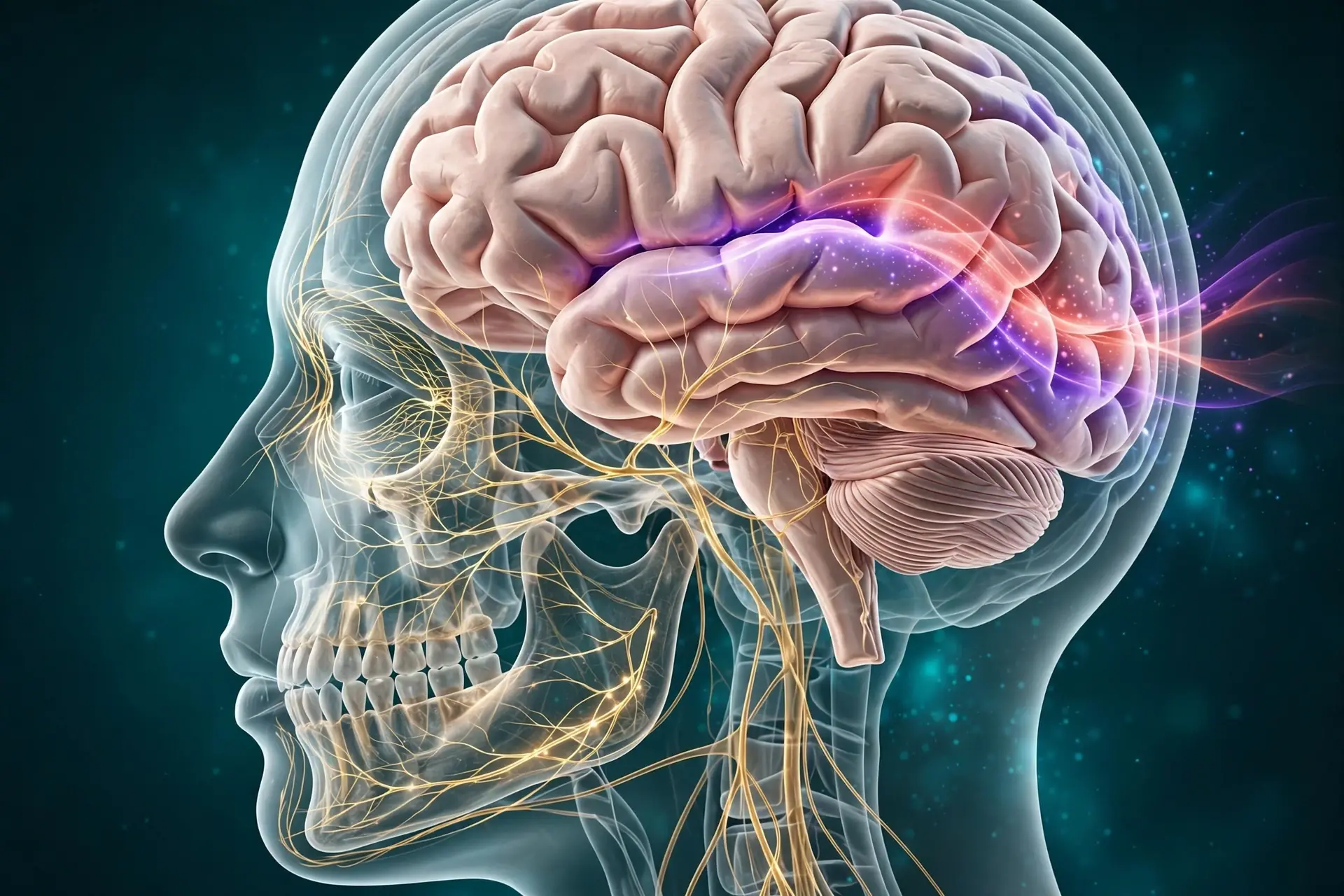
It was an ordinary Tuesday morning. She stood at the kitchen counter buttering toast, the kettle clicking off behind her, sunlight falling across the tiles. Then a small blank patch appeared at the edge of her vision — the first sign of migraine — no bigger than a thumbprint. She blinked. It did not go away. Instead it grew, and as it grew it began to shimmer, throwing off tiny zigzags of light that bent the straight lines of the room. She could still think clearly and still feel the knife in her hand, but the words on the cereal box blurred as though seen through water. Migraine had announced itself, quietly, an hour before the pain arrived.
She tried to ignore it. She finished breakfast, poured the tea, and waited for the strange light show to pass. It did, after about forty minutes. For a few minutes she felt almost normal again. Then the headache came. It started behind one eye as a dull pressure, then sharpened into a pulsing throb that kept time with her heartbeat. Every step made it worse. The smell of toast turned her stomach. Daylight became something she could not bear to look at. By mid-morning she lay in a dark, silent bedroom with a cold cloth over her eyes, waiting for the hours to pass. When the pain eased, she would feel washed out for another day. She had lived the classic sequence: a visual aura, then a one-sided pulsing headache with nausea and a hatred of light and sound, then a long, foggy recovery.
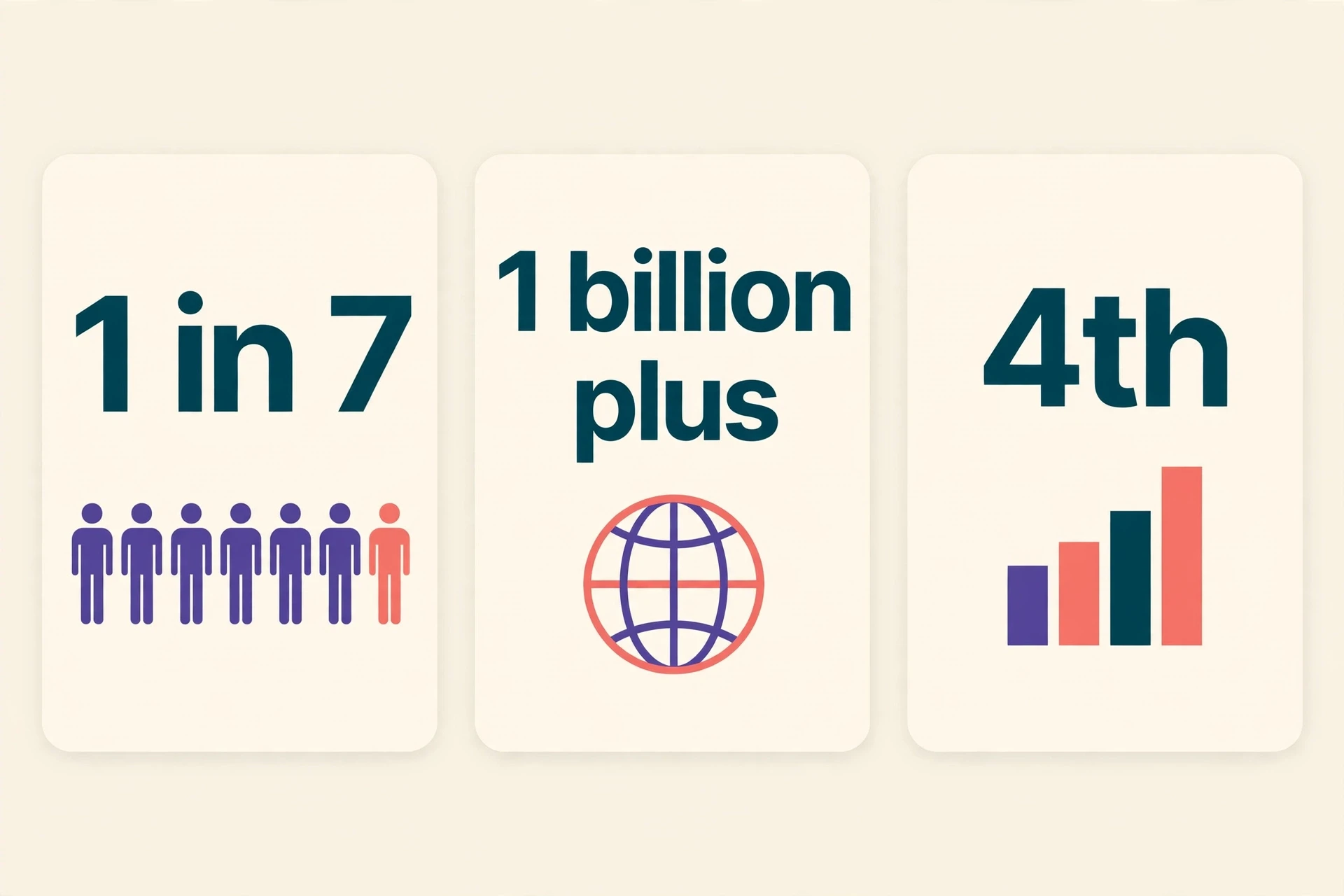
About 1 in 7 people live with this condition — roughly 14 to 15 percent of the world's population, more than 1 billion people, including at least 40 million Americans. The World Health Organization reports that headache disorders affect about 40 percent of the population, or 3.1 billion people in 2021. In the Global Burden of Disease 2021 study, migraine ranked 4th among all ages for years lived with disability, and 2nd among young adults aged 15 to 49. The Global Burden of Disease 2023 study counted 2.9 billion people affected by headache disorders in 2023. These numbers describe a condition that takes far more than most of us realise, because so much of its cost is invisible: cancelled plans, missed workdays, birthdays spent in a dark room.
This article explains why that happens. It is a neurological disorder of a sensitive brain, not simply a bad headache, and the pages that follow explain what that means: the mechanism, the four phases, the genetics, the CGRP story, and the treatments old and new. It also says plainly where the science stops, because the exact cause is still unknown, and that honest uncertainty frames everything that follows. If you live with this condition, or love someone who does, the aim is to leave you understanding your own brain a little better — and knowing which questions to ask a clinician. The nervous system is where the story starts, and a plain explanation of how it works helps everything else fall into place, so the first background worth reading is How the Nervous System Works.
1. What Migraine Really Is: A Neurological Disorder, Not a Headache
1.1 The definition
The condition is a recurrent disorder of the brain that produces attacks of moderate-to-severe headache, usually on one side of the head, with a pulsating quality, lasting from 4 to 72 hours when untreated, and accompanied by nausea, vomiting, or sensitivity to light and sound. That is the core definition in the International Classification of Headache Disorders, third edition, known as ICHD-3, and every word in it matters. Recurrent means it comes back. Usually one-sided and pulsating means the pain has a character of its own, a throb that follows the pulse. And the company it keeps — nausea, light sensitivity, sound sensitivity — is part of the diagnosis, not an optional extra. The WHO describes the condition as one of recurring attacks, often lifelong.
I once watched a colleague try to work through an attack at her desk, and it showed how invisible this condition can be. She looked fine, but she had turned her screen brightness down to almost nothing, flinched at every sound, and kept losing the thread of sentences. She told me later that the worst part was not the pain but the way her thinking went cloudy, as though her brain were running on a weak battery.
1.2 Why "just a headache" is wrong
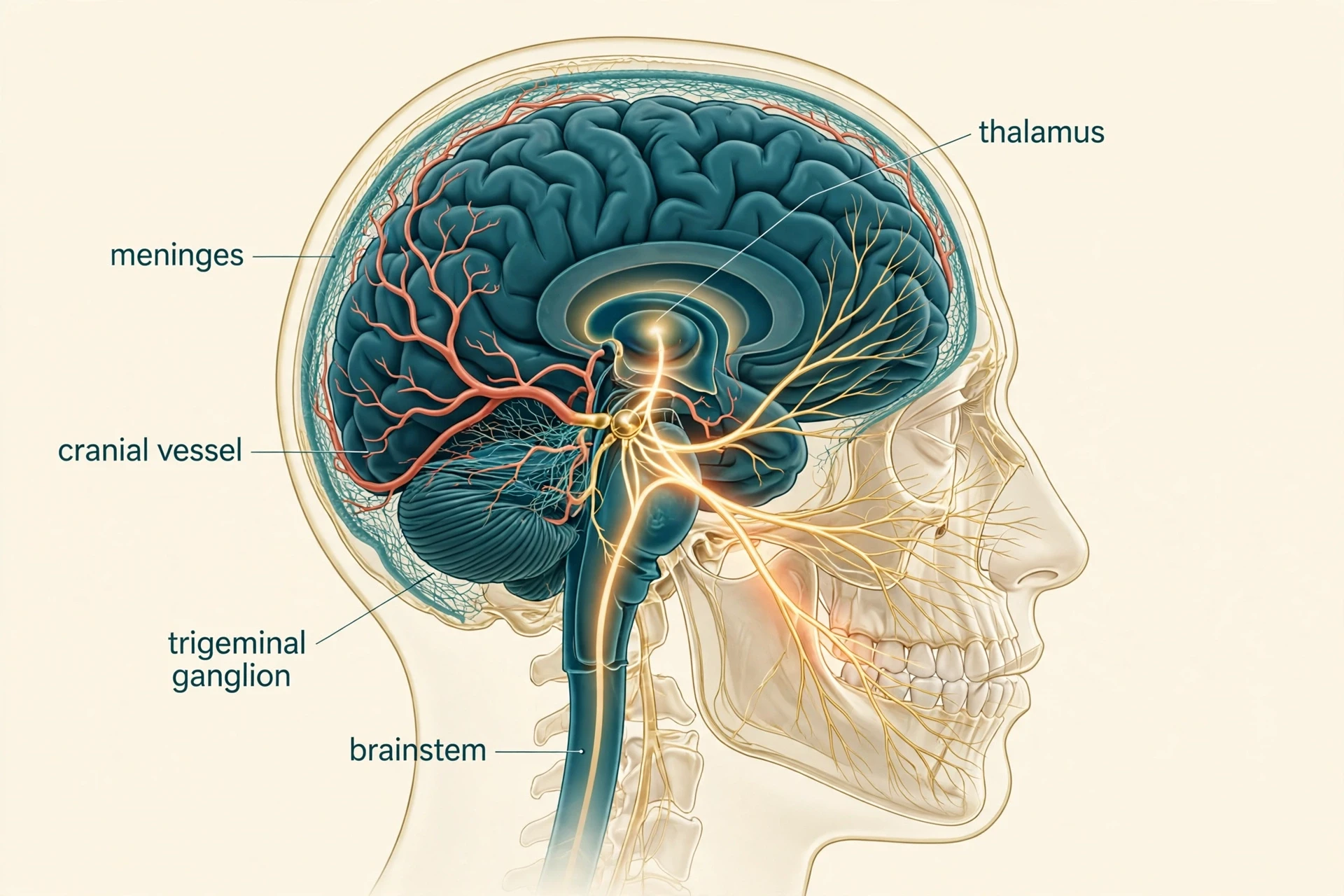
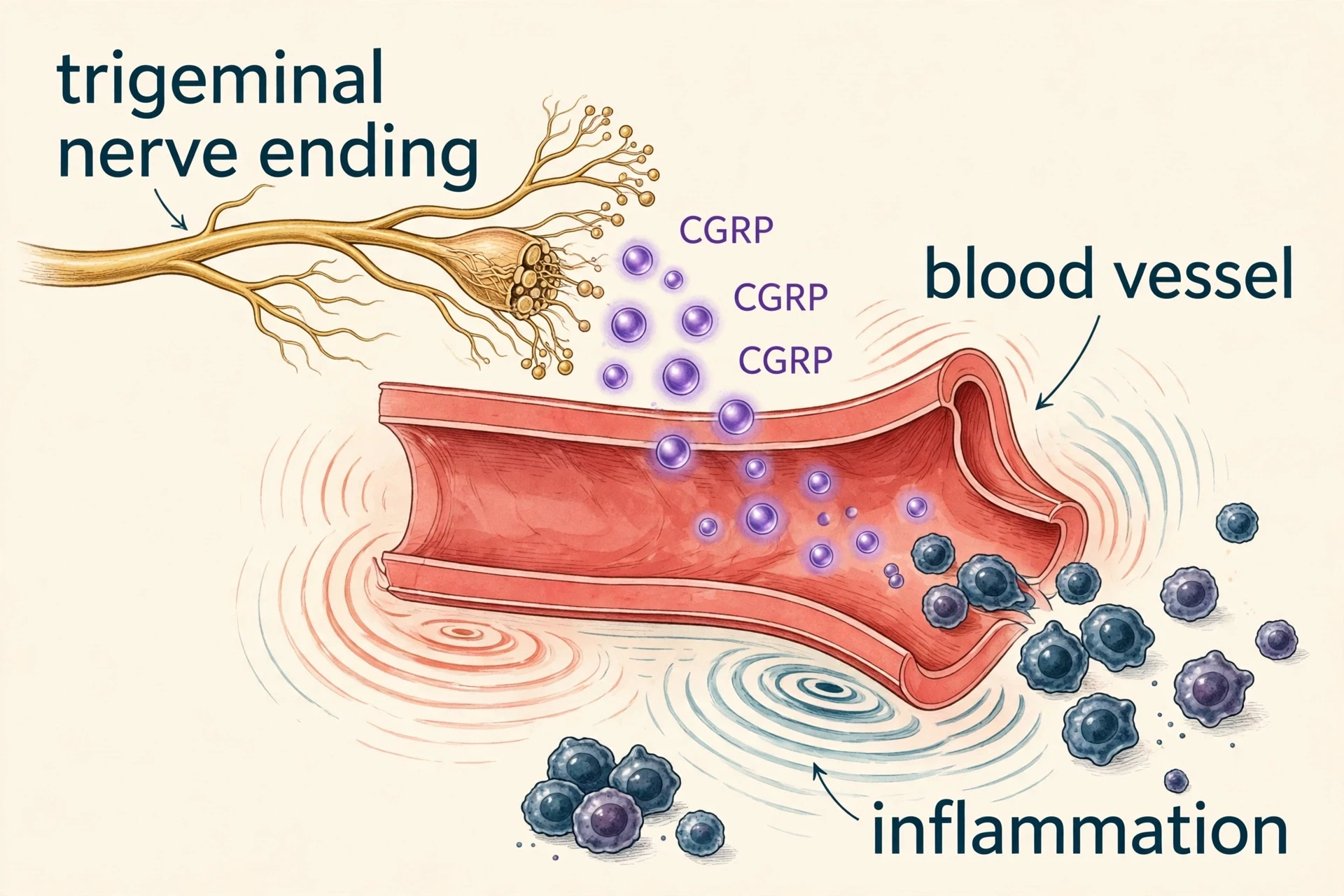
Calling migraine "just a headache" is a category error, like calling a thunderstorm "just rain". The headache is the loudest part of the attack, but only one part. During an attack, sensory processing changes across the board: light hurts, sound hurts, smells can turn nauseating, and ordinary movement makes the pain worse. Mood can shift, thinking slows, the neck stiffens, the stomach churns. All of this happens because the pain does not come from the brain tissue itself, which has no pain receptors of its own, but from the trigeminovascular system — the trigeminal nerve endings wrapped around the meninges and the cranial blood vessels. When those endings activate, they release signalling molecules, including CGRP and substance P, that inflame and sensitise the tissues around them.
1.3 How common it is
The condition affects 14 to 15 percent of the global population — about 1 in 7 people, more than 1 billion people worldwide. The American Migraine Foundation estimates that at least 40 million Americans live with it, and because many people never receive a diagnosis or the treatment they need, the true number is probably higher. In the United States, overall prevalence has stayed fairly steady for about 30 years, ranging from 11.7 to 14.7 percent, with 17.1 to 19.2 percent of women and 5.6 to 7.2 percent of men affected. What has changed is the disability: the share reporting moderate-to-severe disability rose from 22.0 percent in 2005 to 42.4 percent in 2018.
1.4 The exact cause is still unknown
Here is the honest frame for the whole article: the exact cause is still unknown. No single gene, no single chemical, no single structural defect explains it. What researchers have found instead is a mechanism — a chain of events that runs reliably once an attack begins — and risk factors that make some brains more likely to run it: genetics, a lower attack threshold, a more easily provoked trigeminal system, more sensitive sensory filters. That is real knowledge, and it has produced real treatments, but it is not the same as knowing the one root cause. The rest of this guide explains what is known, and marks the edges of that knowledge as it goes.
2. The Scale of the Problem: Who Gets Migraine and What It Costs
2.1 The disability ranking, latest release first
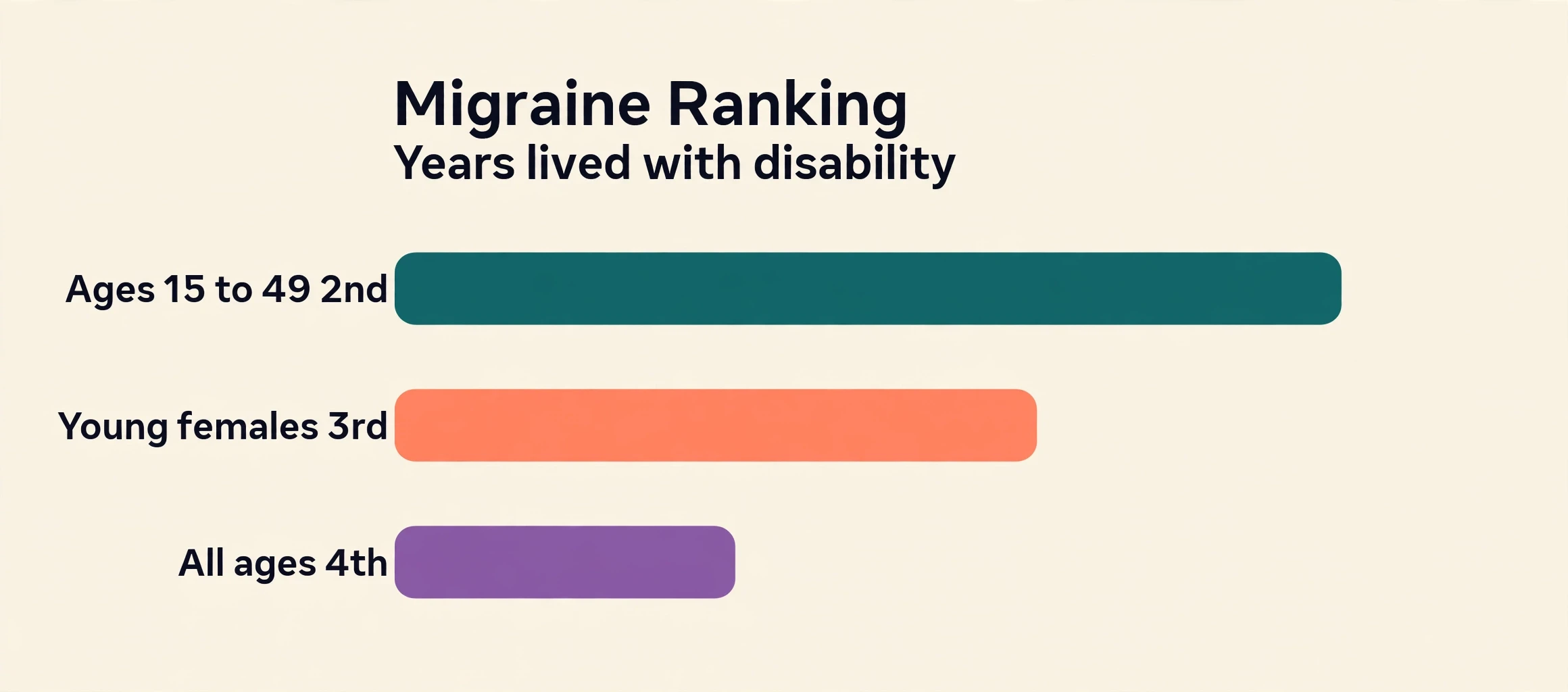
It is one of the largest causes of disability on the planet. Published in The Lancet Neurology in April 2024, the Global Burden of Disease 2021 study ranked it 4th among all ages for years lived with disability, accounting for 4.73 percent of all years lived with disability worldwide. Among young adults aged 15 to 49, it ranked 2nd, at 6.98 percent, behind only low back pain. Among young females it ranked 3rd for disability-adjusted life years. The newest release, the Global Burden of Disease 2023 study published in December 2025, counted 2.9 billion people affected by headache disorders in 2023, with a migraine years-lived-with-disability rate of 487.5 per 100,000 people.
Readers may have seen an older claim: that migraine is the second leading cause of disability worldwide and the first in women under 50. That line comes from the Global Burden of Disease 2019 study, and from a 2018 paper resting on 2016 data. It is superseded. The 2021 rankings above are the latest share-of-disability rankings, and this article uses them for the disability share; the 2023 release, which counted 2.9 billion people with headache disorders, reports migraine eighth among all conditions by years-lived-with-disability rate.
2.2 Women and migraine
The condition affects women about three times as often as men. In the American Migraine Prevalence and Prevention study, one-year prevalence was 17.1 percent in women and 5.6 percent in men, and the 2024 United States systematic review found a similar split. It most often begins at puberty and generally affects people aged 35 to 45 most heavily. A 2025 Global Burden of Disease analysis, analysing data from 41,653 people across 18 countries, found that women spend nearly double the time suffering attacks compared with men. Combined with higher frequency, females carry more than twice the headache burden of males. That finding fits the wider pattern: the condition falls hardest on women in their most productive years.
2.3 Children and adolescents
Migraine is not an adult-only condition. Before puberty, boys and girls experience it at similar rates, and the balance only tips toward girls after puberty. Attacks in children are typically shorter — 2 to 72 hours, against 4 to 72 hours in adults — and more often felt on both sides of the head. Abdominal symptoms are usually more prominent, and some children have recurrent abdominal pain or vomiting as their main symptom, with little head pain. One detail matters: occipital headache, pain at the back of the head, is rare in children and calls for diagnostic caution, because it is more likely to signal a different cause.
2.4 The economic and human cost
The condition costs a great deal, but the two numbers most often quoted come from very different places and must not be mixed. The current estimate comes from the Headache and Migraine Policy Forum report 'The Price of Pain', published in June 2025, which put the annual cost of migraine and headache disorders in the United States at 78 billion US dollars in lost productivity from presenteeism and absenteeism. That is an advocacy-policy report, not a peer-reviewed study, and this article attributes it as such. The peer-reviewed benchmark is older: a 1999 study by Hu and colleagues found the condition cost American employers about 13 billion US dollars a year, close to 8 billion US dollars of it directly from missed workdays, with 112 million bedridden days a year. The two figures describe different years and methods, but tell a consistent story.
2.5 Underdiagnosis
For a condition this common and this disabling, migraine is strikingly under-recognised. Worldwide, only a minority of people with headache disorders are appropriately diagnosed and treated by a healthcare provider, and half are estimated to be self-treating — buying painkillers over the counter and never getting a name for what they have. Self-treatment is understandable, but it can slide into medication overuse, which makes attacks more frequent, and it means the treatments that actually work never reach the people who need them.
"Headache has been underestimated, under-recognized and under-treated throughout the world." — World Health Organization, "Migraine and other headache disorders" fact sheet
3. What Causes Migraine: A Sensitive Brain, Not a Broken One
3.1 The short answer to "What causes migraines?"
What causes migraines? There is no single cause. An attack happens when a genetically sensitive brain with a low threshold tips over: normal brain activity sets off a spreading wave of electrical depolarisation across the cortex, and that wave activates the trigeminal nerve system, which releases CGRP and other signalling molecules around the meninges and cranial blood vessels, producing inflammation, sensitisation, and pain. Genetics loads the dice, the threshold decides how easily an attack starts, and triggers — stress, sleep change, hormonal shifts, skipped meals — supply the final push. That is the short answer. The sections below fill in its three parts: the threshold, the history, and the nerve system at the centre of the pain.
3.2 The brain's threshold
The best modern description comes from a landmark 2017 review by Goadsby and colleagues, which called it a disorder of sensory processing. The affected brain does not simply feel more pain; it processes ordinary sensory information differently. Light is brighter, sound is louder, smells are stronger, and small changes — a night of short sleep, a missed meal, a shift in hormones — register as larger disturbances than they do in other brains. Think of it as a burglar alarm set to go off at a whisper instead of a break-in. The alarm is not broken; it is doing its job at the wrong sensitivity. Between attacks, this heightened responsiveness does not fully switch off, which is why many people describe themselves as generally sensitive to light, noise, and strong smells even on good days.
3.3 The old vascular theory and why it fell
For more than three hundred years, it was explained as a blood-vessel problem. Thomas Willis proposed a vascular theory of headache in 1672, arguing that it came from the dilation of blood vessels. Harold Wolff, working in the laboratory in the late 1930s, revived that idea with careful experiments, and for decades the standard story was simple: vessels constrict, causing the aura, then dilate, causing the headache. It was neat, and it was wrong — or rather, half right in a way that misled everyone. Blood vessels do dilate during an attack, but the dilation is a consequence of nerve activation, not the prime mover. The nerves fire first, release their signalling molecules, and the vessels respond. Edward Liveing had argued as early as 1873 that the disorder was a dysfunction of the brain itself, and William Gowers supported the neural theory in 1888. The modern synthesis is neurovascular: nerves and vessels acting together, with the nerves in the driving seat. That shift made the CGRP drugs possible.
3.4 The trigeminovascular system
The pain is generated by the trigeminovascular system: the trigeminal nerve, the largest cranial nerve, and the network of blood vessels and meninges it supplies. The trigeminal ganglion sits near the base of the brain, and its three branches spread across the face, the eye, and the jaw — which is why the pain so often sits behind one eye or across one side of the forehead. Fine nerve fibres wrap around the meninges and the cranial vessels, and when they activate, they release CGRP and substance P. Those molecules dilate the vessels, make them leaky, recruit immune cells, and sensitise the nerve endings, so that each pulse of blood registers as a throb of pain. The signals travel into the brainstem and then up to the thalamus, the brain's relay station, and from there to the cortex, where pain becomes conscious experience. To follow the geography of that pathway, the clearest background is Human Brain Anatomy and Functions.
The experiment that proved this pathway matters was published by Goadsby and Edvinsson in 1993. Stimulating the trigeminal ganglion raised cerebral blood flow by a mean maximum of 43 percent and released CGRP into the cranial circulation, and sumatriptan or dihydroergotamine cut those responses by about 50 percent. In patients, elevated CGRP during attacks was normalised by sumatriptan as the headache was relieved — in 7 of 8 responding patients.
3.5 Central sensitisation and allodynia
Once an attack has been running for a while, many people notice their skin starts to hurt. Brushing hair becomes painful. A shower feels like needles. A hat feels too tight. This is allodynia — pain from a touch that should not hurt — and it happens because the pain system has become sensitised. The neurons in the brainstem and the thalamus that receive trigeminal signals become more excitable during an attack, so signals that would normally be filtered out as harmless now register as pain. Central sensitisation is also one reason attacks can become more frequent over time: a nervous system repeatedly driven into a sensitised state may learn to enter it more easily, which is one pathway toward chronic migraine. No verified prevalence figure exists for allodynia, so none is given here. The phenomenon is well described in the standard pathophysiology review, and it explains why an attack feels the way it does — not just a headache, but a whole nervous system turned up too loud.
4. What Is CGRP? The Molecule That Changed Migraine Medicine
4.1 What CGRP is
CGRP stands for calcitonin gene-related peptide. It is a neuropeptide made of 37 amino acids, abundant in the fibres of the trigeminal nerve — about half of trigeminal neurons carry it. It is also one of the most potent vasodilators known: a tiny amount released near a blood vessel makes that vessel widen dramatically. But its role is not only about widening vessels. CGRP is a pain-signalling molecule. When trigeminal endings release it, it acts on the vessel wall and on nearby nerve endings, driving inflammation and making the pain fibres more sensitive to the next signal. It works as both a messenger and an amplifier: it carries the news that the nerve has fired, and it turns up the volume on everything that follows. A discovery year is sometimes quoted in popular articles, but no primary paper was verified in the research for this article, so no year is given here.
4.2 The evidence it matters
Two experiments, a decade apart, made CGRP the centre of migraine science. The first was published by Goadsby, Edvinsson and Ekman in 1990. They measured CGRP in blood drawn from the external jugular vein — the vein that drains the brain — during attacks, and found it elevated, while CGRP in blood from the arm was not. When patients took sumatriptan and their attacks were aborted, CGRP levels fell back to normal. The molecule rose with the attack and fell with its relief, exactly the pattern you would expect if it were driving the pain rather than merely accompanying it.
The second experiment was bolder. In 2002, Lassen and colleagues gave intravenous human alpha-CGRP to 12 patients with migraine without aura in a double-blind crossover study, with placebo on a separate day. During the following 11 hours, all 12 patients developed headaches after CGRP, compared with only 1 after placebo. In three patients, the delayed headache after CGRP fulfilled the full diagnostic criteria for migraine without aura; none did after placebo. Infusing the molecule caused the disease — about as close to proof of causation as a single small experiment can get.
4.3 How CGRP drives an attack
Put the pieces together and the attack looks like this. The trigeminal nerve activates, for reasons that vary from person to person and attack to attack. Its endings around the meninges and cranial vessels release CGRP. The vessels dilate and become leaky, letting plasma escape into the surrounding tissue. Mast cells degranulate and release their own inflammatory chemicals. The result is neurogenic inflammation: inflammation driven by nerves rather than by infection or injury. The meningeal pain fibres, bathed in this inflammatory soup, become sensitised, firing more easily and more often. Those signals travel to the brainstem and thalamus, which become sensitised in turn, and the cortex registers a throbbing, one-sided headache with nausea and sensitivity to light and sound.
4.4 The genetics confirm it
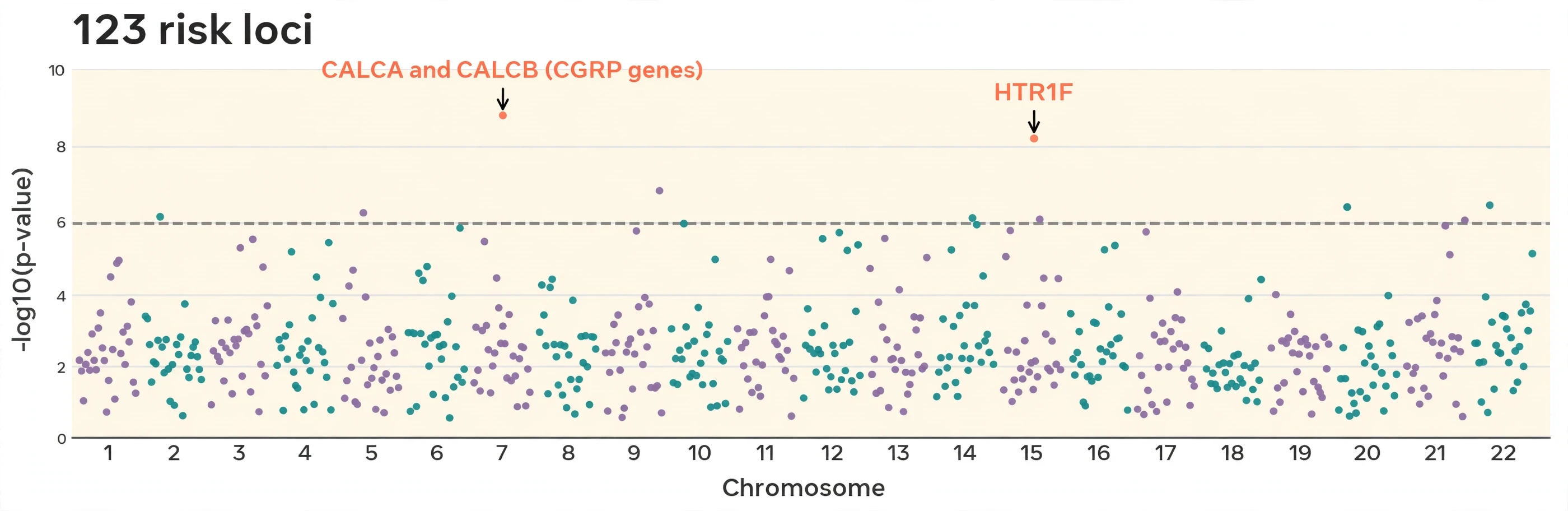
If the CGRP story rested only on blood measurements and one infusion study, it would still be strong. But the genetics confirmed it independently. The 2022 genome-wide association study found that among its 123 risk loci were the genes CALCA and CALCB — the very genes that encode CGRP. The genome was pointing at the same molecule the physiologists had found in the jugular vein. When two entirely different kinds of evidence converge on the same molecule, scientists take notice.
4.5 Why blocking CGRP works without constricting vessels
Here is the conceptual break that made the CGRP drugs different from everything before them. Triptans work partly by constricting cranial blood vessels, so they cannot be used by people with cardiovascular disease, prior stroke or heart attack, or uncontrolled hypertension. CGRP blockers do not constrict vessels. They block the CGRP receptor, or bind the CGRP molecule itself, interrupting the pain signalling without squeezing any artery. That is why they matter so much for people who cannot take triptans: they offer a migraine-specific treatment without the vascular risk. The neurovascular theory pointed to nerve-signalling drugs — and produced better, safer medicines.
5. What Is a Migraine Aura? The Slow Wave Across the Brain
5.1 What an aura is
A migraine aura is a set of transient, fully reversible neurological symptoms that develop gradually, usually before the headache begins. About 25 to 30 percent of people with the condition experience aura, which means most people never have one. An aura is not the headache. It is a separate phase with its own mechanism, timing, and symptoms. By definition, aura symptoms develop gradually over 5 to 60 minutes. They are fully reversible: the vision returns, the tingling fades, the words come back. About 90 percent of auras are visual.
I remember the first time someone described an aura to me in detail. She was an art teacher, and she described a small bright arc near the centre of her vision, like a crescent of broken glass, slowly expanding outward. She knew the headache would follow in about an hour, and she had that hour to get home and lie down. She spoke about it almost fondly, as a warning light on a dashboard — alarming, but useful.
5.2 What it looks and feels like
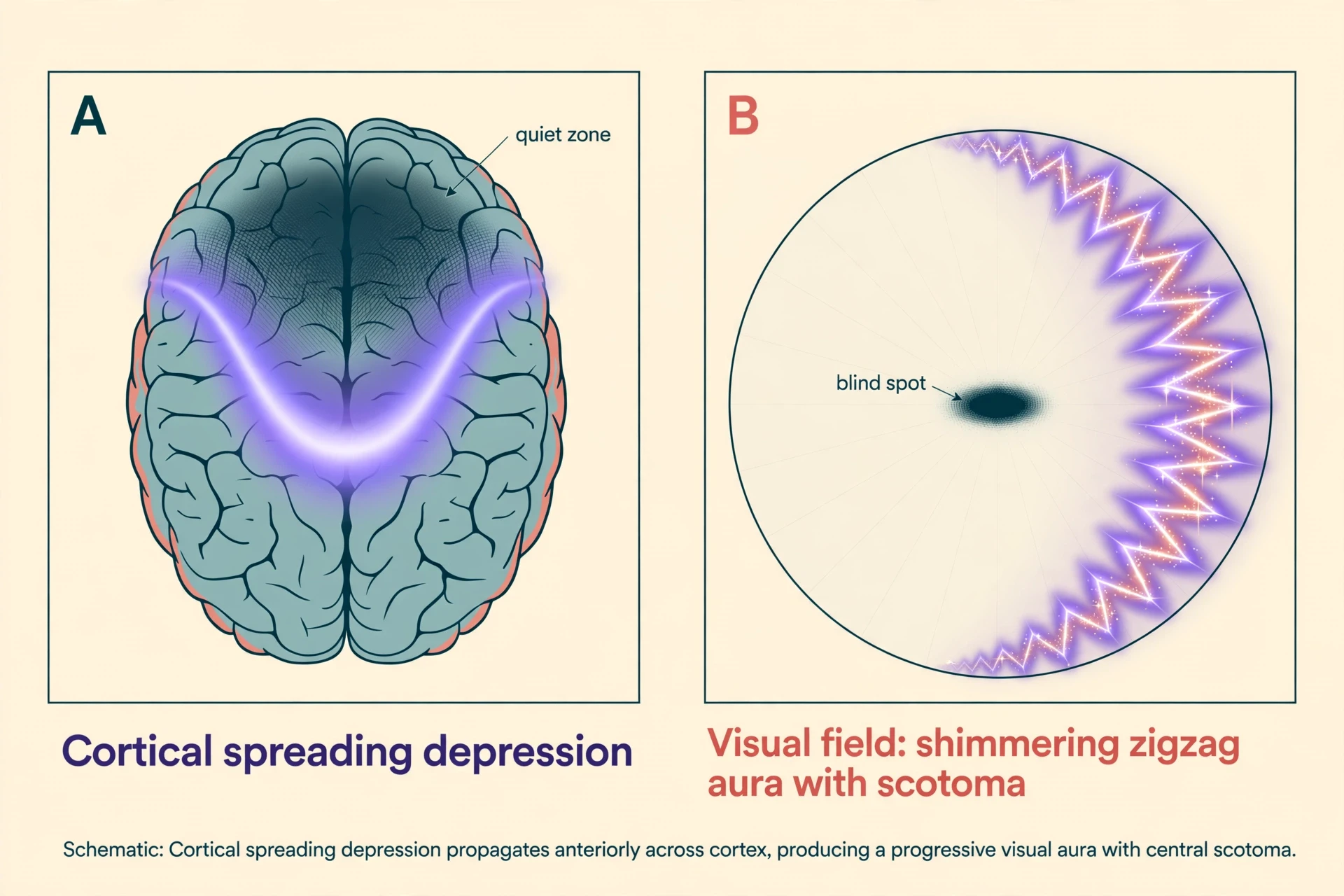
A visual aura usually begins as a small blind spot or a shimmering patch near the centre of vision. It grows outward over minutes, often as a zigzag arc edged with flickering light. Reading becomes difficult because words disappear into the blind patch. Driving becomes dangerous, because a car or a pedestrian can hide inside the blind spot. A sensory aura is different: tingling begins in the fingers and marches slowly up the arm and across the face. A speech aura makes words hard to find, though the person knows what they want to say. All of these symptoms share one feature: they develop gradually and they march.
5.3 Cortical spreading depression
The mechanism behind aura is called cortical spreading depression, usually shortened to CSD. It is a wave of near-complete depolarisation of neurons and glial cells that travels slowly across the cortex at roughly 2 to 5 millimetres per minute. Neurons in the wavefront fire all at once, exhaust themselves, and then go quiet. The wave moves like a slow tide, and as it crosses each region, that region's function is briefly disrupted. Cross the visual cortex, and vision distorts. Cross the somatosensory cortex, and tingling marches across the body. Cross the language areas, and speech falters. CSD was first described by Aristides Leao in 1944, in the cortex of rabbits.
5.4 The proof in humans
The proof came in 2001, in a study still remarkable for its daring. Hadjikhani and colleagues used high-field functional MRI to watch visual aura as it happened in three people, across five attacks. They saw the blood-oxygen signal begin in the extrastriate visual cortex and progress slowly across the occipital cortex at 3.5 millimetres per minute. The wave moved across the brain in exactly the pattern that would produce the expanding zigzag the person was seeing. The sample was tiny — only three subjects — and this article says so honestly.
5.5 Why aura symptoms march
Once you understand cortical spreading depression, the marching quality of aura stops being mysterious. The wave crosses the cortex at a few millimetres per minute, and each patch of cortex it crosses stops working normally for a while. If it starts at the back of the brain, in the visual cortex, you see zigzags first. If it continues forward into the somatosensory cortex, the tingling begins in the hand and spreads. If it reaches the language areas, words start to fail. The order of symptoms is the order of brain geography, and the slowness of the symptoms is the slowness of the wave.
5.6 Aura without headache (silent migraine) and aura that outlasts the headache
Some people experience aura with little or no headache afterwards. The ICHD-3 classification includes a category called typical aura without headache, sometimes called silent migraine. The aura itself is the same, but the headache phase never arrives, or arrives so mildly it barely registers. One secondary summary puts the share at around 4 percent, but that figure comes from a single secondary source. Aura can also occasionally outlast the headache, lingering after the pain has gone.
5.7 Aura and stroke risk
Aura carries one risk that must be discussed honestly and carefully. Migraine with aura is linked to a doubled relative risk of ischaemic stroke — a stroke caused by a blocked blood vessel in the brain. That sounds alarming, and it is a real association, confirmed in meta-analyses. But relative risk is not absolute risk. The absolute risk of stroke remains small in otherwise healthy young non-smoking women, because stroke is rare in that group to begin with. The risk rises further with additional factors: being under 45, smoking, and using combined hormonal contraceptives. In one study of women aged 15 to 49, the odds ratio for stroke was 6.1 when migraine with aura was combined with combined hormonal contraceptive use, and 2.7 for aura without contraceptive use.
6. The Four Phases of a Migraine Attack
6.1 Overview
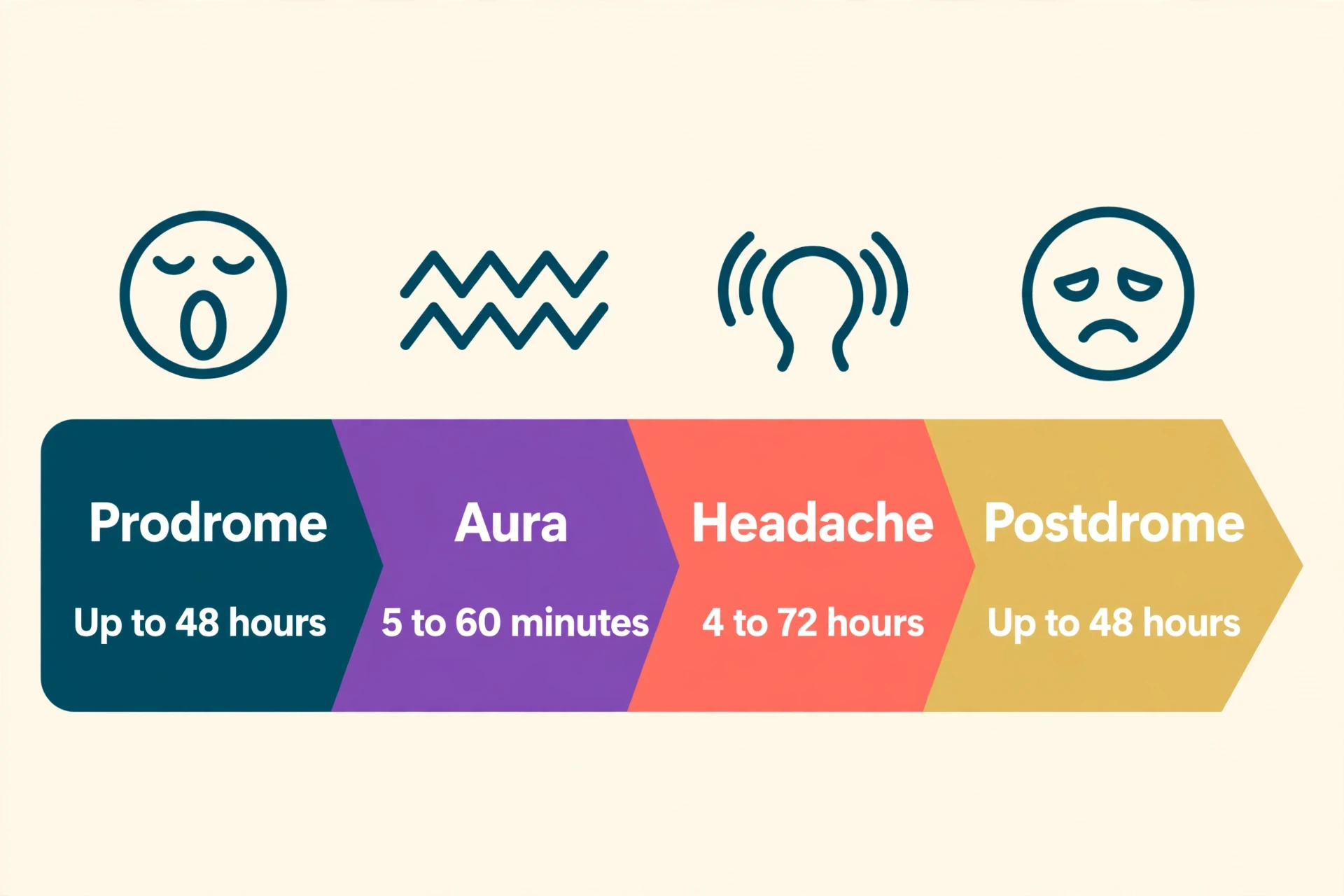
An attack is not a single event but a sequence of four phases: prodrome, aura, headache, and postdrome. Not everyone experiences all four. Many people never have aura. Phases can overlap — the prodrome can still be running when the aura begins. The four-phase model is a map, not a timetable, and real attacks are messier than the diagram.
6.2 Prodrome (up to 48 hours before pain)
The prodrome is the early-warning phase, lasting up to 48 hours before the pain begins — or before the aura, in people who have aura. Its symptoms are easy to miss, because they look like ordinary life: fatigue, difficulty concentrating, a stiff neck, sensitivity to light or sound, nausea, yawning, mood change, food cravings, and increased thirst. Many people notice they are yawning repeatedly or craving a particular food, and only in hindsight recognise those as the first signs of an attack.
6.3 Aura (5–60 minutes)
The aura phase, described in full in the previous section, lasts 5 to 60 minutes by definition, with most auras typically lasting 20 to 60 minutes. The aura develops gradually, marches across the visual field or the body, and then fades, usually as the headache begins. The key point for this section is the timing: aura is a warning, and that hour is the best time to act.
6.4 Headache (4–72 hours)
The headache phase is the longest single phase: 4 to 72 hours untreated in adults, and 2 to 72 hours in children and adolescents. The pain is usually one-sided and pulsating, moderate to severe, and made worse by routine physical activity — walking up stairs, bending over, even turning the head quickly. Nausea is common, vomiting happens in some attacks, and sensitivity to light and sound is so characteristic that it forms part of the diagnostic criteria. The person wants to lie still in a dark, quiet room: movement aggravates the pain, and light and sound add sensory input to an overloaded brain.
6.5 Postdrome (up to 48 hours after pain)
After the pain resolves, the attack is not quite over. The postdrome, often called the migraine hangover, can last up to 48 hours: feeling tired or weary, difficulty concentrating, a stiff neck, and a general sense of being washed out. A paediatric study found 91 percent of children reporting persistent symptoms after attacks, with 82 percent reporting true postdromes. The postdrome is the reason an attack that lasted a day can cost three days of normal life.
Phase | Typical timing | What happens | What it feels like |
|---|---|---|---|
Prodrome | Up to 48 hours before pain | Early warning symptoms: fatigue, yawning, neck stiffness, mood change, food cravings | Tired, foggy, irritable, unusually hungry or thirsty |
Aura | 5–60 minutes | Cortical spreading depression crosses the cortex; visual, sensory or speech symptoms develop gradually | Zigzags, blind spots, tingling marching across hand and face, word-finding trouble |
Headache | 4–72 hours untreated (2–72 hours in children) | Trigeminovascular activation, CGRP release, throbbing pain with nausea and light/sound sensitivity | One-sided pulsing pain, worse with movement, nausea, need for dark and quiet |
Postdrome | Up to 48 hours after pain resolves | Brain recovers; tiredness, concentration difficulty and neck stiffness linger | Washed out, "migraine hangover", slow thinking |
Table 1: The four phases at a glance. Sourced to ICHD-3.
6.6 The interictal brain
Between attacks, the affected brain is not simply a normal brain waiting for the next attack. Research on sensory processing, summarised in the standard 2017 pathophysiology review, indicates that heightened sensory responsiveness persists between attacks. The same brain that over-responds to light, sound, and smell during an attack tends to respond more strongly to those stimuli on good days too. This is a general framing, and no specific figure is given here. The idea matters because it changes how the condition should be thought about: not a series of isolated events, but a continuous trait — a sensitive brain — that periodically tips into attacks.
7. The Types of Migraine: From Common to Rare
7.1 Migraine without aura
Migraine without aura is the most common form, and the form most people mean when they say they have migraine. The ICHD-3 criteria require at least five attacks, each lasting 4 to 72 hours, with the headache showing at least two of four features — one-sided location, pulsating quality, moderate or severe intensity, aggravation by routine physical activity. During the headache there must be at least one of two accompaniments: nausea or vomiting, or both light sensitivity and sound sensitivity. The criteria also require that the attacks are not better explained by another diagnosis.
7.2 Migraine with aura
Migraine with aura is the form in which attacks include aura symptoms, most often visual, that develop gradually over 5 to 60 minutes and are fully reversible. The aura usually comes before the headache, but it can also occur during it. The ICHD-3 classification also includes typical aura without headache — the silent migraine discussed earlier — in which the aura occurs on its own. Aura is experienced by 25 to 30 percent of people with migraine, so migraine with aura is common but not the majority form.
7.3 Episodic versus chronic migraine
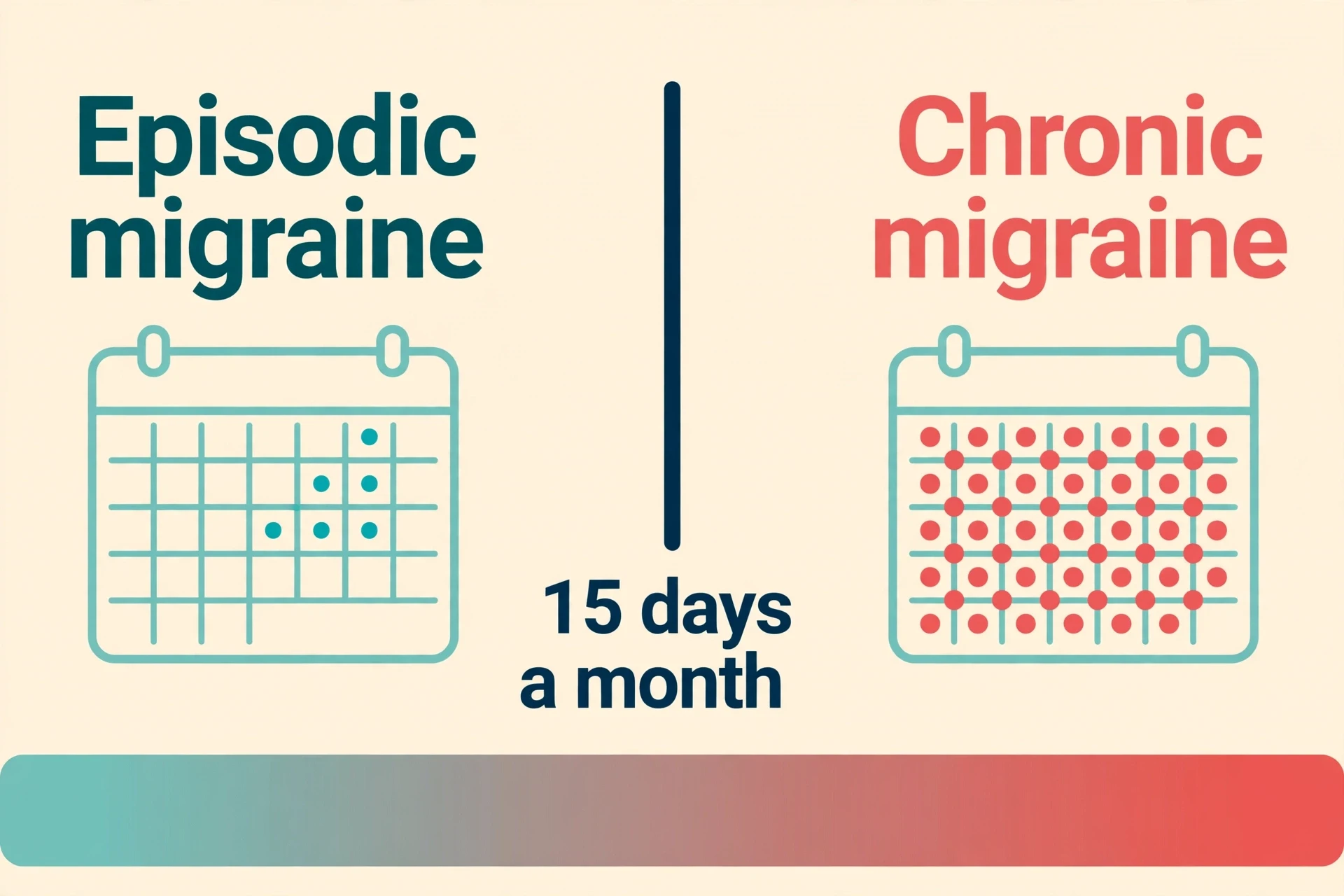
The line between episodic and chronic migraine is drawn by counting days. Episodic migraine means fewer than 15 headache days a month. Chronic migraine means headache on 15 or more days a month for more than 3 months, with migraine features on at least 8 days a month. Chronic migraine affects about 1 to 2 percent of people globally according to widely repeated secondary estimates, while the verified United States figure is 0.91 percent of adults. Around 2.5 to 3 percent cross the line into chronic migraine each year, and around 26 percent revert to episodic within a year or two — though both figures come from secondary summaries, so they should be read as approximate.
7.4 Menstrual migraine
For many women, attacks cluster around menstruation. Menstrual migraine is defined as attacks that cluster on day 1 plus or minus 2 of menstruation in at least 2 of 3 cycles. In one large United States survey, the 2021 National Health and Wellness Survey analysis presented in 2024, about 3 in 10 women with the condition reported menstrual migraine — 31.0 percent overall, and 52.5 percent of premenopausal women with migraine. Population studies using stricter ICHD-aligned windows often place menstrually related migraine in the 18 to 25 percent range. Menstrual attacks tend to be longer, more severe, and more disabling. The fall in oestrogen before menstruation is a recognised trigger window, though not a complete explanation: the oestrogen-withdrawal theory dates to a small 1972 study by Brian Somerville.
7.5 Migraine with brainstem aura
Migraine with brainstem aura, formerly called basilar migraine, is an uncommon form in which the aura includes at least two reversible brainstem symptoms: slurred speech, vertigo, ringing in the ears, reduced hearing, double vision, unsteadiness, or a decreased level of consciousness. Crucially, it involves no motor symptoms and no retinal symptoms — those point to different diagnoses. Brainstem aura can be frightening, but like other auras it is fully reversible, with symptoms developing gradually and resolving completely.
7.6 Hemiplegic migraine
Hemiplegic migraine is a rare and dramatic form of migraine with aura in which the aura includes fully reversible weakness on one side of the body. Its overall prevalence is about 0.01 percent — roughly 1 person in 10,000. In about 10 to 20 percent of patients, it is caused by variants in one of three genes that code for ion transporters: CACNA1A, ATP1A2, and SCN1A. Familial hemiplegic migraine runs in families with an identified gene variant; sporadic hemiplegic migraine occurs without a family history. The weakness can be frightening, and because it mimics a stroke, a first episode always needs urgent medical assessment.
7.7 Status migrainosus
Status migrainosus is a debilitating migraine attack lasting more than 72 hours. It is the same kind of attack as usual, except for its duration and severity, and remissions of up to 12 hours brought on by sleep or medication still count as part of the same attack. An attack that will not stop is exhausting, dehydrating, and frightening, and it is one of the clearest reasons to seek medical care during an attack rather than waiting it out at home.
7.8 Migraine in children
Migraine in children deserves a section of its own, because it looks different from adult migraine and is so often missed. Attacks are shorter, lasting 2 to 72 hours, and the pain is more often on both sides of the head; one-sided pain usually emerges in late adolescence or early adult life. Abdominal symptoms are prominent, and some children have recurrent abdominal pain, nausea, or vomiting as their main symptom, with relatively little head pain. Boys and girls are affected at similar rates before puberty. Children with migraine miss school, miss sport, and miss birthday parties, and are sometimes labelled as anxious or attention-seeking before anyone considers migraine. Recognising it early changes the trajectory.
8. What Triggers a Migraine? Triggers, Thresholds, and Honest Evidence
8.1 The threshold model
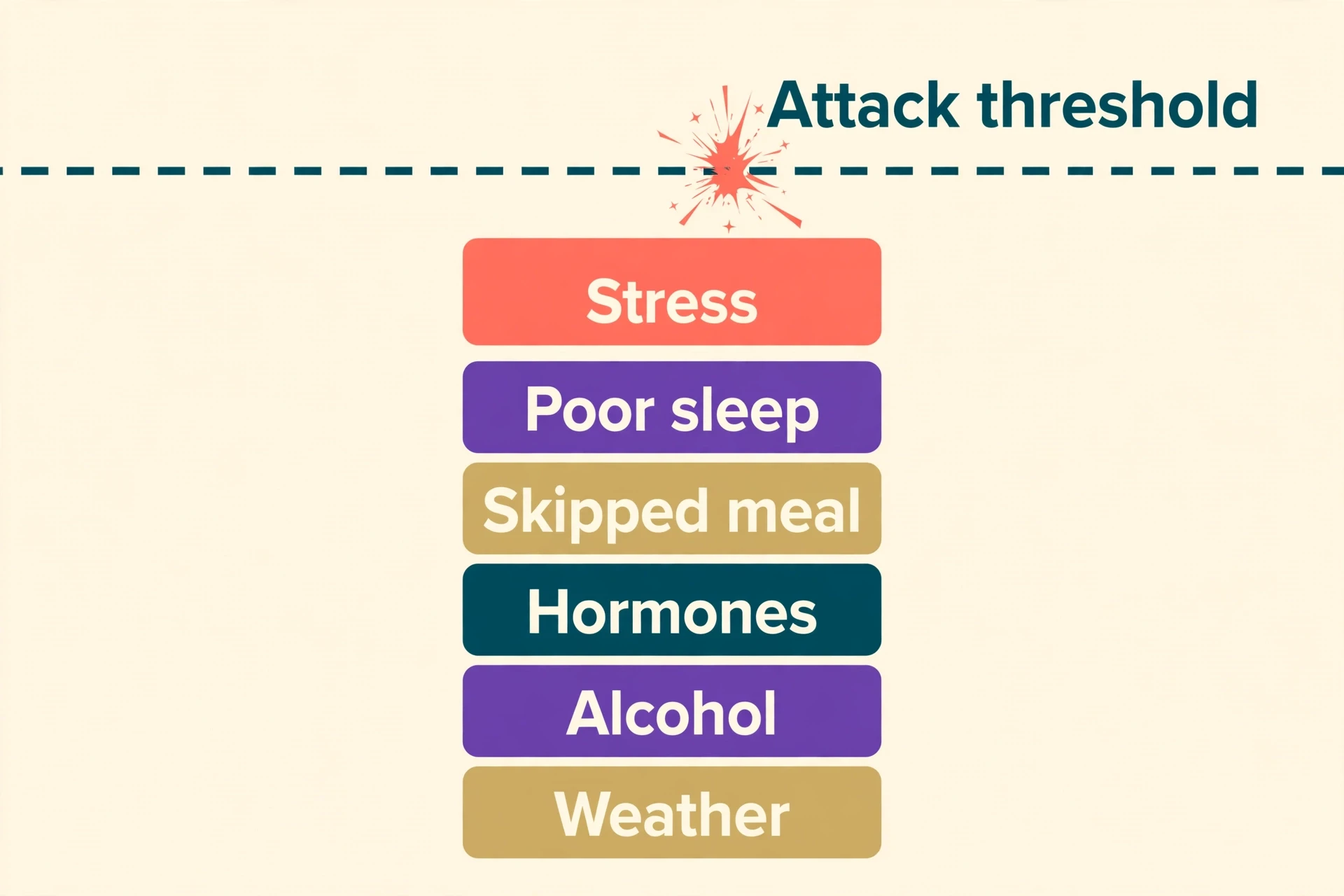
Triggers do not cause attacks. They push a sensitive brain over a threshold it was already close to. On a bad day — short of sleep, skipped lunch, stressed — the same exposure tips the balance and an attack begins. Triggers stack. Each one adds a little load, and the attack starts when the combined load crosses the line. The practical goal is not to eliminate every trigger, which is impossible, but to keep the total load down and the threshold up.
8.2 The most commonly reported triggers
The best summary comes from a systematic review by Peroutka, published in 2014, covering 7,187 people. The most commonly reported precipitating factors were stress at 58 percent, auditory stimuli at 56 percent, fatigue at 43 percent, fasting at 44 percent, hormonal factors at 44 percent, sleep disruption at 43 percent, weather at 39 percent, visual stimuli at 38 percent, olfactory stimuli at 38 percent, and alcohol at 27 percent. These are reports, not proven causes. The auditory figure rests on the smallest sample in the review — only 397 people — so it is the least certain of the ten.
8.3 Stress and the "let-down" attack
One of the strangest patterns in migraine is the let-down attack: the headache arrives not at the peak of stress but as the stress falls. The pattern fits the threshold model well: during stress, the body's stress hormones keep the system braced, and when they fall, the rebound tips the brain over its threshold. Managing the let-down means planning for it — keeping sleep and meals regular even on the first day off.
8.4 Sleep in both directions
Sleep matters in both directions: too little sleep and too much sleep are both reported around attacks. A short night lowers the threshold, and a long lie-in after a short week can trigger an attack just as reliably. The practical implication is regularity rather than quantity alone — going to bed and getting up at roughly the same times, including at weekends, keeps the brain's daily rhythms steady. I used to assume that catching up on sleep at the weekend was pure recovery, and I was wrong in the way many people are wrong about this condition: the body likes routine more than it likes compensation. For a fuller explanation of what regular movement does in the body, the companion article How Exercise Changes the Body sets out the physiology in plain language.
8.5 Skipped meals, fasting and dehydration
Fasting was reported by 44 percent of people in the Peroutka review, and skipped meals are one of the most consistently reported triggers in migraine research. The practical advice is unglamorous and effective: eat regularly, do not skip meals, and drink water through the day.
8.6 Alcohol
Alcohol is one of the most commonly reported dietary triggers in surveys — it was reported by 27 percent of people in the Peroutka review, and about a third of people with migraine name it in retrospective surveys — but prospective diary studies find only a weak or inconsistent link. Alcohol is a genuine trigger for some people, and the diary is the way to find out whether it is one for you.
8.7 Weather and barometric pressure
Weather is one of the most commonly blamed triggers and one of the hardest to prove. But the evidence is mixed. One systematic review of 14 studies found some link between falling pressure and attack frequency, but the picture for severity was unclear and methods varied widely. There is probably something real there, but it is small, inconsistent, and hard to separate from the other things that change when the weather changes.
8.8 Hormonal changes
Hormonal change is one of the most powerful trigger windows, and it explains much of the sex difference in prevalence. The drop in oestrogen before menstruation is a recognised trigger window, and menstrual attacks tend to be longer and more severe. Perimenopause, when oestrogen levels swing unpredictably from month to month, is a volatile period for many women, and some find their attacks worsen for several years before settling after the menopause.
8.9 The evidence caveat, stated plainly
One caveat must be stated plainly: fatigue, food cravings, thirst, neck discomfort, and mood changes may be early migraine symptoms rather than causes. The prodrome produces exactly the symptoms that people most often blame as triggers. A person craves chocolate, then gets an attack, and concludes that chocolate caused it — when the craving was the first sign that the attack had already begun. The practical tool is a headache diary, kept for several weeks, recording sleep, meals, stress, hormones, weather, and attacks together.
9. The Genetics of Migraine: It Runs in Families for a Reason
9.1 Family history
It runs in families. Most people with the condition can name a parent, a sibling, or a grandparent who had it, and the clustering is too strong to be coincidence. The heritability — the share of variation between people that can be attributed to genetic differences — is estimated at 40 to 60 percent. That number comes from twin and family studies, and it means genes matter a great deal, while also leaving a great deal of room for environment, lifestyle, and chance. Heritability is not destiny: it does not mean a child of a parent with migraine will certainly develop it, and it does not mean a person without a family history cannot.
9.2 The 2022 GWAS
The largest peer-reviewed migraine genetics study was published in Nature Genetics in 2022, by Hautakangas and colleagues. It was a genome-wide association study — a GWAS — of 102,084 migraine cases and 771,257 controls, and it identified 123 risk loci, of which 86 were previously unknown. A risk locus is a region of the genome where variation is associated with a higher or lower chance of the condition. That is the genetic architecture of common migraine: not one broken gene, but many small variations adding up.
9.3 Subtype genetics
The 2022 study also asked whether migraine with aura and migraine without aura share the same genetics, and the answer was: mostly, but not entirely. Stratifying the risk loci using 29,679 cases with subtype information, the researchers found three risk variants that seemed specific to migraine with aura — in the genes HMOX2, CACNA1A, and MPPED2 — two that seemed specific to migraine without aura — near SPINK2 and near FECH — and nine that increased susceptibility regardless of subtype. The two main subtypes share most of their genetics but not all of it.
9.4 The missing heritability
There is a gap in the genetics story, and it is worth explaining honestly, because it is often misunderstood. Twin and family studies put heritability at 40 to 60 percent. But the known common variants found by the 2022 study explain only 11.2 percent of the variation, measured as SNP heritability on a liability scale. That gap is called missing heritability, and it does not mean the family studies were wrong. The two numbers measure different things. Family heritability captures everything genetic. SNP heritability captures only the share explained by the common variants that current studies can measure.
9.5 The drug-target discovery
The most satisfying finding of the 2022 study was not the number of loci but what two of them turned out to be. Among the new risk loci were genes encoding recent migraine-specific drug targets: CALCA and CALCB, the genes for CGRP itself, and HTR1F, the gene for the serotonin 1F receptor — the target of the ditan drug lasmiditan. Once again the genome pointed at the treatments that already worked. Here, an unbiased scan of the whole genome, with no prior hypothesis about CGRP, landed on the CGRP genes.
9.6 Monogenic migraine
Most migraine is polygenic, the result of many small genetic effects adding up. But there is a rare monogenic form: hemiplegic migraine, in which a variant in a single gene can cause the disorder. The three genes are CACNA1A, ATP1A2, and SCN1A, found in about 10 to 20 percent of patients with hemiplegic migraine. These genes code for ion channels and transporters, and when they malfunction, neurons become more excitable and more prone to the spreading depolarisation that underlies aura.
9.7 What genetics cannot do yet
For all the progress, genetics cannot yet diagnose migraine. There is no genetic test that tells a person whether they have it, or whether they will develop it, and risk scores built from the 123 loci are research tools, not clinical ones. They cannot predict whether a particular person will have attacks, how often, or how severe they will be. For now the diagnosis remains clinical — based on history and symptoms, not on a blood test or a gene panel. The genetics story is about understanding, not testing, and its value so far has been in revealing drug targets and confirming mechanisms.
10. How Migraine Is Diagnosed (and What It Is Not)
10.1 Diagnosis is clinical
Migraine is diagnosed clinically, from the history — what the person describes, how often attacks happen, what they feel like — measured against the ICHD-3 criteria. There is no blood test for it. No scan diagnoses it. No single examination finding confirms it. A clinician who takes a careful history and applies the criteria can diagnose the condition accurately without any technology at all.
10.2 The diagnostic criteria in plain language
In plain language, the criteria for migraine without aura are: at least five attacks; each attack lasting 4 to 72 hours when untreated; the headache having at least two of four features — one-sided, pulsating, moderate or severe, worse with routine activity; and during the headache, nausea or vomiting, or both light and sound sensitivity. Where aura is present, the criteria add the aura itself: symptoms that develop gradually over 5 to 60 minutes, are fully reversible, and are followed by headache, or occur without headache in the silent form.
10.3 The headache diary
One of the most useful tools in diagnosis is also one of the simplest: a headache diary. Clinicians often ask for several weeks of records — when attacks happened, how long they lasted, what accompanied them, and what treatment was taken and whether it helped. A diary does two jobs at once. First, it turns a vague memory — "I get headaches a lot" — into a pattern a clinician can count and classify: how many days a month, how many with migraine features, whether the 15-day line for chronic migraine has been crossed.
10.4 Red flags — SNOOP4
Most headaches are migraine or tension-type headache, and most need no scan. But some features are red flags — signs that a headache may have a different, sometimes serious, cause, and that care should be sought promptly. Clinicians use the mnemonic SNOOP4: Systemic symptoms or illness, such as fever, night sweats, or weight loss; Neurologic symptoms or signs, such as weakness, numbness, or confusion; Onset that is sudden, a thunderclap headache peaking within a minute, which can signal a vascular emergency; Older age at onset, a new headache after age 50, which is more likely to have a secondary cause; and the four Ps — Pattern change, a headache different from the person's usual pattern; Papilloedema, swelling of the optic disc seen on eye examination; Positional headache, one that changes dramatically with posture; and Pregnancy, a new headache in pregnancy.
10.5 Migraine versus tension-type headache, cluster headache, and sinus headache
Tension-type headache is the commonest headache of all: a pressing or tightening pain, usually on both sides, mild to moderate, without nausea or vomiting, and usually compatible with continuing daily activity. Cluster headache is rarer and more severe: a piercing or burning pain strictly on one side, around one eye, lasting 15 minutes to 3 hours, coming in clusters over weeks, with tearing, a red eye, and a blocked or runny nostril on the same side, and a restlessness that makes the person pace or rock rather than lie still. Sinus headache is the most misleading label of the three: most headaches blamed on the sinuses are actually migraine, because the condition commonly causes facial pressure, nasal congestion, and tearing.
Feature | Migraine | Tension-type headache | Cluster headache |
|---|---|---|---|
Pain quality | Pulsating / throbbing | Pressing / tightening, non-pulsating | Severe, piercing or burning |
Location | Usually one-sided | Usually both sides | Strictly one-sided, around one eye |
Duration | 4–72 hours untreated | 30 minutes to 7 days | 15 minutes to 3 hours, in clusters |
Associated symptoms | Nausea and/or vomiting; photophobia and phonophobia | No nausea or vomiting; mild light or sound sensitivity at most | Tearing, red eye, blocked or runny nostril on the same side; restlessness |
Behaviour during attack | Lies still in a dark, quiet room; routine activity worsens pain | Can usually continue daily activity | Cannot lie still; paces or rocks |
Table 2: Migraine versus look-alikes. Sourced to ICHD-3.
10.6 When imaging is and is not needed
A scan is not needed for a typical, stable migraine that meets the criteria. The American Headache Society's Choosing Wisely recommendation is direct: do not perform neuroimaging studies in patients with stable headaches that meet criteria for migraine. A scan in a person with typical migraine almost never changes the diagnosis or the treatment. Imaging is needed when red flags are present, when the pattern has changed, when the headache is new after age 50, when there are neurological signs, or when the diagnosis is uncertain.
11. Treating a Migraine Attack: From Triptans to Gepants
11.1 The principle
Treating an attack has one guiding principle: treat early, with a plan, and have a plan for the next attack too. Acute treatment and prevention are different jobs. Acute treatment stops an attack that has started, or makes it shorter and milder. Prevention reduces how often attacks happen. Confusing the two is one of the commonest mistakes in care: people take acute medication too often while never receiving prevention. Everything in this section and the next is general educational information, not personal medical advice. No drug doses are given here beyond labelled regimens already published by regulators.
11.2 Triptans
Triptans are the workhorse acute treatment, and they have been since the 1990s. They act as agonists at the serotonin 5-HT1B and 5-HT1D receptors, on blood vessels and nerve endings in the brain. In practical terms, they constrict cranial vessels, block trigeminal signalling, and reduce CGRP release — three actions that together interrupt the attack mechanism described earlier in this article. The first triptan, sumatriptan, was marketed in 1991, approved by the United States Food and Drug Administration in December 1992, and available in the United States in 1993. But triptans cannot be taken by everyone. They are contraindicated in people with cardiovascular disease, including coronary artery disease, after a heart attack or stroke, with uncontrolled hypertension, and in hemiplegic or basilar migraine.
11.3 Gepants
Gepants are small-molecule CGRP receptor blockers, and they are the first acute treatments that work without constricting blood vessels. Ubrogepant was approved by the FDA in December 2019 for acute treatment. Rimegepant followed in February 2020 for acute treatment, and gained an additional prevention indication in June 2021. Atogepant was approved in September 2021 for prevention. Zavegepant, a nasal spray, was approved on 9 March 2023 for acute treatment, as the first CGRP antagonist nasal spray. The absence of vasoconstriction is the key advantage: for people who cannot take triptans because of cardiovascular disease, gepants offer a migraine-specific acute treatment without the vascular risk. The gepants are the direct clinical payoff of the CGRP story told earlier in this article.
11.4 Lasmiditan (ditan)
Lasmiditan, sold as Reyvow, is a serotonin 5-HT1F receptor agonist, and the first of a class called ditans. It was approved by the FDA on 11 October 2019 for the acute treatment of attacks with or without aura in adults. Its importance lies in its selectivity: the 5-HT1F receptor is found on trigeminal nerve endings but not on blood vessels, so lasmiditan quiets trigeminal signalling without constricting vessels. That makes it, like the gepants, an option for people who cannot take triptans. It is not indicated for prevention. It is a controlled substance, and the FDA advised patients not to drive or operate machinery for at least 8 hours after taking it, because it can cause dizziness and sedation.
11.5 Simple analgesics and anti-emetics
Not every attack needs a migraine-specific drug. Simple analgesics — paracetamol, aspirin, and non-steroidal anti-inflammatory drugs — have a role, particularly for milder attacks and for people whose attacks are infrequent. Anti-emetics, drugs that reduce nausea, are useful both for the nausea itself and because nausea can prevent oral medication from being absorbed. The key point, as with triptans, is timing: treatment taken early, when the pain is still mild, works better than the same treatment taken hours later when the attack is fully established. Simple analgesics have their own limits, and the most important is the one covered in the next subsection: taken too often, they make the condition worse rather than better.
11.6 Medication-overuse headache
Medication-overuse headache is the trap that catches many people with migraine, and it is one of the most important concepts in this article. It is defined in ICHD-3 as headache occurring on 15 or more days a month in a person with a pre-existing headache disorder, developing as a result of regular overuse of acute headache medication for more than 3 months. The overuse thresholds are at least 10 days a month for triptans, opioids, ergotamine, or combination analgesics, and at least 15 days a month for paracetamol, aspirin, and non-steroidal anti-inflammatory drugs. It is the most common secondary headache disorder, and it may affect up to 5 percent of some populations, women more than men. The hopeful part is that around 50 percent of patients who appear to have chronic migraine revert to an episodic pattern after the overused medication is withdrawn.
11.7 What does not work
Opioids are not recommended as first-line migraine treatment, and that general guidance is worth stating plainly. They are less effective than migraine-specific treatments for stopping attacks, they carry risks of dependence, and they contribute to medication-overuse headache. The broader lesson is a useful one for any treatment decision: the strongest evidence supports migraine-specific acute treatments taken early, preventive treatment when attacks are frequent, and a plan agreed with a clinician, rather than repeated use of general painkillers that were never designed for this disorder.
"The exact cause of migraine is currently unknown but it is thought to result from the release of pain producing inflammatory substances around the nerves and blood vessels of the head." — World Health Organization, "Migraine and other headache disorders" fact sheet
12. Preventing Migraine: The New Era of CGRP Treatments
12.1 Who needs prevention
Prevention is for people whose attacks are frequent, disabling, or poorly controlled by acute treatment alone. The decision frame is frequency, disability, and the limits of acute treatment: how many days a month are lost to attacks, how much acute medication is being used, whether attacks are breaking through despite early treatment, and whether the person is at risk of medication-overuse headache. What matters is the principle: when attacks are frequent enough to damage work, family life, or wellbeing, or when acute treatment is being used so often that it risks making things worse, prevention should be discussed. Prevention does not mean a cure. It means fewer attacks, milder attacks, and less disability.
12.2 The four monoclonal antibodies
The four monoclonal antibodies against CGRP or its receptor are the most important preventive advance in decades. Erenumab was approved by the FDA on 17 May 2018, the first CGRP-pathway drug and the first medication developed specifically for prevention; it blocks the CGRP receptor and is given as a monthly subcutaneous injection. Fremanezumab followed on 14 September 2018; it binds the CGRP ligand itself and is given monthly or quarterly by subcutaneous injection. Galcanezumab was approved on 27 September 2018; it also binds the ligand and is given monthly by subcutaneous injection after a loading dose. Eptinezumab was approved on 21 February 2020; it binds the ligand and is given as a quarterly intravenous infusion. Erenumab blocks the receptor; the other three bind the ligand.
12.3 The March 2024 shift
In March 2024, the American Headache Society issued a position statement update making CGRP-targeting therapies — the monoclonal antibodies and the preventive gepants — a first-line option for migraine prevention, alongside the older first-line preventives and with no requirement to fail other drugs first. That was a significant shift: previously, patients generally had to try and fail older preventive drugs before the newer drugs were offered. The statement rests on more than a decade of trial and real-world data showing these migraine-specific drugs are effective, well tolerated, and safe over the long term.
12.4 Gepants for prevention
The gepants also have a preventive role. Rimegepant, taken every other day, gained a prevention indication in June 2021, in addition to its acute use. Atogepant, taken daily as an oral tablet, was approved in September 2021 for prevention. These oral CGRP blockers give people a preventive option that does not involve injections or infusions, which matters for those who prefer tablets or cannot manage injectable treatment. They also blur the old line between acute and preventive treatment: the same class of drug, in different dosing schedules, can do both jobs.
12.5 OnabotulinumtoxinA (Botox) for chronic migraine
OnabotulinumtoxinA, known as Botox, is approved for the prevention of headache in adults with chronic migraine — headaches on 15 or more days a month, each lasting more than 4 hours. The FDA approved it in October 2010, based on the PREEMPT programme: two trials, 1,384 adults, 122 centres. The standard regimen is 155 units across 31 injection sites every 12 weeks, with up to 195 units across 39 sites using a follow-the-pain approach. It has not been shown to work for the episodic form, and it is not used for that purpose. Botox works by blocking the release of pain-signalling molecules from nerve endings, including CGRP, which ties it back to the same mechanism that runs through this whole article.
12.6 Older preventives in one paragraph
Before the CGRP era, prevention meant drugs borrowed from other conditions: beta-blockers developed for blood pressure, topiramate developed for epilepsy, amitriptyline developed for depression, and candesartan developed for blood pressure. All of them can reduce attack frequency, and all of them are still used, often effectively. But they were not designed for this condition, and their side effects reflect their original purposes: fatigue and low mood, weight change, tingling, dry mouth, dizziness. Many people stopped them because the side effects were worse than the benefit, or because they worked only partly. The older preventives are not obsolete, but a drug designed for this condition tends to be better tolerated than a drug borrowed from cardiology or psychiatry.
12.7 Non-drug prevention
Drugs are not the whole of prevention. Regular sleep, regular meals, exercise, and stress management all support a higher attack threshold, and the SEEDS-style routine — sleep, exercise, eating, diary, stress — is a useful framework for organising those habits. The evidence for behavioural programmes is honest but modest: they show low-certainty effects on attack frequency, which means they probably help, but the size of the help is uncertain and the studies are not strong enough to promise a specific result. That is not a reason to dismiss them. Regular routines cost little, have no side effects, and support general health as well as attack control, and they make drug prevention work better by keeping the threshold steadier.
13. Living with Migraine: Work, Mood, and Daily Life
13.1 The hidden disability
The hidden disability is the part that does not show up in a pain score. It is the work missed and the work done badly — presenteeism, being at work while too unwell to function. It is the family plans cancelled at short notice, the children's events missed, the social life that shrinks because every invitation carries the risk of an attack. The cost figures in this article's second section are the financial shadow of that human cost.
13.2 Migraine and mental health
The two are closely linked, and the link runs in both directions. The American Migraine Foundation's 2022 Migraine and Mental Health Connection Survey found almost 60 percent of patients reported being diagnosed with an anxiety disorder, 50 percent reported depression, and 25 percent reported post-traumatic stress disorder. Those figures are self-reported diagnoses in a survey, not population prevalence. The Foundation also reports that about 20 percent of people with episodic migraine also have depression or anxiety, and between 30 and 50 percent of people with chronic migraine also have anxiety. The WHO states that anxiety and depression are significantly more common in people with the condition than in healthy individuals. To read more about these conditions in their own right, the companion article Anxiety and Depression Explained sets out what anxiety and depression are and how they are understood. The relationship runs in both directions, and neither direction implies blame.
13.3 Migraine at work and school
At work, the condition creates a particular kind of difficulty: it is episodic, unpredictable, and invisible. A colleague who is fine on Monday and incapacitated on Tuesday can look unreliable, even when they are working harder than anyone to compensate. Disclosure helps when the workplace is supportive, but it carries risk when it is not. At school, children with migraine miss lessons, miss exams, miss sport, and are sometimes thought to be avoiding school. The pattern in childhood mirrors the pattern in adult work: invisible, episodic, and easily misread.
13.4 The gut-brain connection
Nausea and digestive symptoms accompany attacks so often that they form part of the diagnostic criteria, and the connection between the gut and the brain in migraine is an active research area. The gut and the brain communicate constantly, and the microbiome — the microbes living in the gut — is part of that conversation. Whether the microbiome influences the condition, and if so how, is emerging science, not established fact, and this article labels it clearly as such. It may one day produce new treatments, but it has not yet produced a proven therapy. For background on the microbiome itself, the companion article The Gut Microbiome Explained explains what it is and what is known about it.
13.5 Practical daily strategies
Living well with the condition is less about finding a single trick than about building a steady routine and a clear plan. Regular sleep and regular meals keep the threshold steadier. Hydration through the day removes one avoidable load. A headache diary, kept for several weeks, reveals personal patterns that memory misses. An attack plan agreed with a clinician — which treatment to take, when to take it, what to do if it does not work, and when to seek help — turns a frightening attack into a managed one. Together they give a person a sense of agency, a plan for the bad days, and a routine that makes the good days more likely.
I have sat with people who described their headache diary as the first thing that ever made them feel in control. They do not cure migraine, but they give the person living with it a way to meet it on better terms.
13.6 Stigma and misconceptions preview
The most damaging misunderstanding is that it is not serious, and that misunderstanding does real harm: it delays diagnosis, it discourages treatment, and it leaves people with a disabling neurological disorder feeling that they are exaggerating.
14. Migraine Myths, Busted
I disagree, flatly, with the idea that migraine is just a bad headache, and I disagree with it not as a matter of opinion but as a matter of evidence. The myths below are the ones I hear most often, and each one has a verified correction. They are short, because the facts do the work.
14.1 Myth 1: "Migraine is just a bad headache."
Migraine is a neurological disorder with a defined mechanism: cortical spreading depression, trigeminal activation, CGRP release, and central sensitisation. A headache is one symptom of it, and often not the only one that matters. Calling it just a headache is like calling diabetes just a sweet tooth — it mistakes one symptom for the disease.
14.2 Myth 2: "Migraine is caused by stress alone."
Stress is the most commonly reported trigger, at 58 percent, but it is not a cause. Genetics and brain sensitivity set the threshold; stress is one of many loads that can push a sensitive brain across it. Many people with stressful lives never develop the condition, and many people with the condition have attacks on calm days. Stress matters, but it is not the whole story, and blaming stress alone blames the person for their own disorder.
14.3 Myth 3: "Only women get migraine."
Women are affected about three times as often as men, but millions of men and children live with it too, including at least 40 million Americans of both sexes, and children of both sexes before puberty at similar rates. A condition that affects millions of men and children as well as women is not a women's condition. It is a human condition that happens to affect women more often.
14.4 Myth 4: "A migraine always comes with an aura."
Only 25 to 30 percent of people with the condition experience aura. Most people with migraine never see a zigzag in their lives, and their attacks are no less real for it. Aura is a feature of one form of the condition, not a requirement for the diagnosis, and its absence proves nothing.
14.5 Myth 5: "Chocolate (or cheese, or any single food) causes migraine."
Specific-food evidence is limited and low-quality, and much of it confuses prodrome with trigger: the craving for chocolate may be the first symptom of an attack that had already begun, not its cause. Skipped meals matter more than any single ingredient, and a long banned-foods list is less useful than a headache diary kept honestly for several weeks.
14.6 Myth 6: "Scans can diagnose migraine."
Diagnosis is clinical, based on history and the ICHD-3 criteria. Scans are for red flags — a changed pattern, a new headache after 50, neurological signs — not for confirming it. A normal scan does not rule out the condition, and an abnormal scan does not diagnose it. The brain of a person with migraine looks normal on a scan, because the problem is in how it behaves, not in how it is built.
14.7 Myth 7: "There is nothing new for migraine."
The CGRP era has transformed treatment: four monoclonal antibodies since 2018, four gepants since 2019, and the first ditan in 2019. These are drugs designed for this disorder, acting on targets the genetics confirmed. Anyone who was told ten years ago that nothing could be done should ask again, because the answer has changed.
14.8 Myth 8: "Migraine is not a real disability."
The 2021 Global Burden of Disease study ranked it 4th for years lived with disability at all ages and 2nd among young adults aged 15 to 49, and the 2023 release counted 2.9 billion people living with headache disorders. A condition that ranks among the largest causes of disability on the planet, in the working-age population, is a real disability by any honest measure. The only thing unreal about it is the idea that it is not.
Frequently Asked Questions
What causes migraines?
No single cause explains it. The condition runs in families, with heritability of 40 to 60 percent, and the largest genetics study found 123 risk loci. A sensitive brain with a low attack threshold tips over when triggers stack up: a spreading wave of depolarisation crosses the cortex, the trigeminal nerve activates, and CGRP is released around the meninges, driving inflammation and pain. Genes load the dice, and the threshold decides how easily an attack starts. The exact cause remains unknown, but the mechanism is well understood.
What is a migraine aura?
An aura is a short-lived, fully reversible set of neurological symptoms — usually visual — that builds gradually over 5 to 60 minutes before or during an attack. Most auras are visual: shimmering zigzags, blind spots that expand, or a fortification spectrum like jagged fortress walls. Roughly a quarter to a third of people with the condition ever have aura, and about 90 percent of auras are visual. The cause is cortical spreading depression, a slow wave of depolarisation crossing the cortex at about 3.5 millimetres per minute.
What is CGRP?
CGRP, calcitonin gene-related peptide, is a neuropeptide released by the trigeminal nerve during attacks. It dilates blood vessels, makes them leaky, and drives neurogenic inflammation and pain signalling. CGRP rises in the blood draining the brain during attacks and falls when treatment works, and infusing it into volunteers with the condition caused headaches in all 12 patients in one small study. Blocking CGRP or its receptor is the basis of the gepants and the four monoclonal antibody preventives.
What triggers a migraine?
The triggers people report most often are stress, reported by 58 percent of people, auditory stimuli, fatigue, fasting, hormonal factors, sleep disruption, weather, visual and smell stimuli, and alcohol. Triggers stack to cross the brain's threshold, and the same trigger may do nothing on a good day but tip the balance on a bad one. Some apparent triggers, such as food cravings, thirst, or a stiff neck, are actually early prodrome symptoms of an attack that has already begun, not its cause.
How long does a migraine last?
In adults the headache phase lasts 4 to 72 hours without treatment; in children it lasts 2 to 72 hours. The full attack, including the prodrome before the pain and the postdrome after it, can span several days: the prodrome lasts up to 48 hours and the postdrome up to 48 hours. An attack lasting more than 72 hours is called status migrainosus, a debilitating attack that is a reason to seek medical care rather than waiting it out at home.
What is the difference between episodic and chronic migraine?
Episodic migraine is the form with fewer than 15 headache days in a month. Chronic migraine means headaches on 15 or more days each month, for over three months, with at least 8 of those days having migraine features. About 1 to 2 percent of people globally have the chronic form by widely repeated estimates, and 0.91 percent of adults in the United States. The line matters because it determines which preventive treatments are offered and how disability is measured.
Can migraine be cured?
No cure exists, and the condition is usually lifelong. But attacks can be treated and their frequency reduced. Acute treatments such as triptans, gepants, and lasmiditan can stop or shorten attacks, and preventive treatments — including the CGRP antibodies, gepants, Botox for the chronic form, and older preventives — can reduce how often attacks happen. The goal is fewer, milder attacks and less disability, not a permanent fix.
Sources
World Health Organization. "Migraine and other headache disorders" fact sheet, updated 24 October 2025. https://www.who.int/news-room/fact-sheets/detail/headache-disorders
GBD 2021 Nervous System Disorders Collaborators. "Global, regional, and national burden of disorders affecting the nervous system, 1990–2021." The Lancet Neurology, April 2024, volume 23, pages 344–381. https://doi.org/10.1016/S1474-4422(24)00038-3
GBD 2023 Headache Collaborators. "Global, regional, and national burden of headache disorders, 1990–2023." The Lancet Neurology, 2025, volume 24, pages 1005–1015. https://doi.org/10.1016/S1474-4422(25)00402-8
Steiner, Stovner, Jensen, Uluduz and Katsarava. "Migraine is first cause of disability in under 50s: will health politicians now take notice?" The Journal of Headache and Pain, 2018, volume 19, page 17. https://doi.org/10.1186/s10194-018-0846-2
Steiner and Stovner. "Global epidemiology of migraine and its implications for public health and health policy." Nature Reviews Neurology, 2023, volume 19, pages 109–117. https://doi.org/10.1038/s41582-022-00763-1
Steiner et al. "GBD2021: headache disorders and global lost health — a focus on children, and a view forward." The Journal of Headache and Pain, 2024. https://pmc.ncbi.nlm.nih.gov/articles/PMC11145804/
Hautakangas et al. "Genome-wide analysis of 102,084 migraine cases identifies 123 risk loci and subtype-specific risk alleles." Nature Genetics, February 2022, volume 54, pages 152–160. https://doi.org/10.1038/s41588-021-00990-0
Goadsby, Holland, Martins-Oliveira, Hoffmann, Schankin and Akerman. "Pathophysiology of Migraine: A disorder of sensory processing." Physiological Reviews, 2017, volume 97, pages 553–622. https://doi.org/10.1152/physrev.00034.2015
Goadsby and Edvinsson. "The trigeminovascular system and migraine." Annals of Neurology, 1993, volume 33, pages 48–56. https://doi.org/10.1002/ana.410330109
Goadsby, Edvinsson and Ekman. "Vasoactive peptide release in the extracerebral circulation of humans during migraine headache." Annals of Neurology, 1990. https://doi.org/10.1002/ana.410280213
Hadjikhani et al. "Mechanisms of migraine aura revealed by functional MRI in human visual cortex." Proceedings of the National Academy of Sciences, 2001, volume 98, pages 4687–4692. https://doi.org/10.1073/pnas.071582498
Lassen et al. "CGRP may play a causative role in migraine." Cephalalgia, 2002, volume 22, pages 54–61. https://doi.org/10.1046/j.1468-2982.2002.00310.x
International Headache Society. ICHD-3, section 1.1, Migraine without aura. https://ichd-3.org/1-migraine/1-1-migraine-without-aura/
International Headache Society. ICHD-3, section 1.3, Chronic migraine. https://ichd-3.org/1-migraine/1-3-chronic-migraine/
International Headache Society. ICHD-3, section 1.4.1, Status migrainosus. https://ichd-3.org/1-migraine/1-4-complications-of-migraine/1-4-1-status-migrainosus/
American Migraine Foundation. "What Is Migraine?" https://americanmigrainefoundation.org/resource-library/what-is-migraine/
American Migraine Foundation. "Migraine With Aura: Types, Symptoms and Treatments." https://americanmigrainefoundation.org/resource-library/understanding-migraine-aura/
American Migraine Foundation. "Migraine and Mental Health." https://americanmigrainefoundation.org/living-with-migraine/mental-health/
Peroutka. "What Turns on a Migraine? A Systematic Review of Migraine Precipitating Factors." Current Pain and Headache Reports, 2014, volume 18, page 454. https://doi.org/10.1007/s11916-014-0454-z
Marmura. "Triggers, Protectors, and Predictors in Episodic Migraine." Current Pain and Headache Reports, 2018, volume 22, article 81. https://doi.org/10.1007/s11916-018-0734-0
Hu et al. "Burden of migraine in the United States: disability and economic costs." Archives of Internal Medicine, 1999, volume 159, pages 813–818. https://doi.org/10.1001/archinte.159.8.813
Headache and Migraine Policy Forum / Alliance for Headache Disorders Advocacy. "The Price of Pain: The Economic Burden of Migraine on the American Economy." Capitol Hill Policy Forum, June 2025. https://static1.squarespace.com/static/5886319ba5790a66cf05d235/t/68d2ea700fcf6629a166fc73/1758653043293/HMPF_Economic+Burden+of+Migraine+Report.pdf
"Prevalence and burden of migraine in the United States: A systematic review." Headache, May 2024, volume 64, pages 516–532. https://doi.org/10.1111/head.14709
StatPearls. "Hemiplegic Migraine." NCBI Bookshelf, updated 2023. https://www.statpearls.com/articlelibrary/viewarticle/22722/
"Evaluating migraine with typical aura with neuroimaging." Frontiers in Human Neuroscience, 2023. https://www.frontiersin.org/journals/human-neuroscience/articles/10.3389/fnhum.2023.1112790/full
"Pediatric vs. Adult Prodrome and Postdrome." Frontiers in Neurology, 2019. https://www.frontiersin.org/journals/neurology/articles/10.3389/fneur.2019.00199/full
Lasmiditan first approval review. Drugs, 2019. https://doi.org/10.1007/s40265-019-01225-7
US Food and Drug Administration. Zavzpret (zavegepant) approval package, NDA 216386, 9 March 2023. https://www.accessdata.fda.gov/drugsatfda_docs/nda/2023/216386Orig1s000Approv.pdf
DailyMed. Sumatriptan prescribing information, US Food and Drug Administration. https://dailymed.nlm.nih.gov/dailymed/fda/fdaDrugXsl.cfm?setid=32f6d89b-4aea-5396-e054-00144ff88e88&type=display
American Headache Society. "Red Flags in Headache — What if it isn't Migraine." https://americanheadachesociety.org/research/library/red-flags-in-headache-what-if-it-isnt-migraine
Norton Healthcare / American Headache Society. Choosing Wisely: neuroimaging in stable migraine. https://nortonhealthcareprovider.com/news/headache-red-flags/
Charles, Digre, Goadsby, Robbins and Hershey. "Calcitonin gene-related peptide-targeting therapies are a first-line option for the prevention of migraine: An American Headache Society position statement update." Headache, published 11 March 2024. https://doi.org/10.1111/head.14692
Medscape. "FDA Approves Botox for Chronic Migraine." 16 October 2010. https://www.medscape.com/viewarticle/730682
WebMD. "Migraine With Aura." https://www.webmd.com/migraines-headaches/what-is-a-migraine-with-aura
National Geographic. "Why do women get more migraines than men?" 16 January 2026. https://www.nationalgeographic.com/health/article/women-migraines-hormones
Annals, Academy of Medicine Singapore. CGRP-targeted therapies approval table, 2020. https://www.annals.edu.sg/pdf/49VolNo4Apr2020/V49N4p226.pdf
"Medication-overuse headache." Frontiers in Pain Research, 2023. https://www.frontiersin.org/journals/pain-research/articles/10.3389/fpain.2023.1194134/full
Headache Australia. "The History of Headaches and Migraines." https://headacheaustralia.org.au/what-is-headache/history-of-headache/
Champaloux et al. "Use of combined hormonal contraceptives among women with migraines and risk of ischemic stroke." American Journal of Obstetrics and Gynecology, 2017, volume 216, pages 489.e1–489.e7. https://doi.org/10.1016/j.ajog.2016.12.019
Farah et al. "Impact of Barometric Pressure Changes on the Severity, Frequency, and Duration of Migraine Attacks: A Systematic Review of the Literature." Cureus, 2025, volume 17, issue 11, e96821. https://doi.org/10.7759/cureus.96821
Robblee et al. "2025 guideline update to acute treatment of migraine for adults in the emergency department: The American Headache Society evidence assessment of parenteral pharmacotherapies." Headache, published online 1 December 2025. https://doi.org/10.1111/head.70016
Schreiber et al. "Prevalence of migraine in patients with a history of self-reported or physician-diagnosed "sinus" headache." Archives of Internal Medicine, 2004, volume 164, pages 1769–1772. https://doi.org/10.1001/archinte.164.16.1769
Zduńska et al. "Migraine and Alcohol — Is It Really That Harmful?" Nutrients, 2025, volume 17, article 3620. https://doi.org/10.3390/nu17223620