
It was a family birthday party, the kind with too many people in one room and a cake with four candles. The birthday boy stood near the table while everyone gathered round to sing, and then, halfway through the song, he covered his ears with both hands, ducked under the table, and stayed there. He was not being rude. He was not having a tantrum. The singing was simply too much: too many voices at once, too loud, too close, all aimed at him. An hour later the party had moved on without him, and he was perfectly happy on the floor in the next room, lining up his toy cars in a long neat row by colour, turning each one so the wheels pointed the same way. His mother watched him and wondered what she was seeing. Shyness? Stubbornness? Or something about how his brain worked?
That question is the one this article answers. Autism is the most common developmental difference of childhood, and also one of the most misunderstood. It is not a disease, not a tragedy, and not something a child grows out of. It is a different way for a brain to develop — a path that starts before birth, is shaped mostly by genes, and shows up in how a person senses the world, communicates, and finds comfort in patterns. This guide explains what the science actually shows about autism: how common it is, how the autistic brain develops differently, what causes it, how it is diagnosed, what strengths often travel with it, and which myths about it need to be put down for good.
1. What Autism Really Is: A Different Way of Developing, Not a Broken Brain
1.1 The short answer: what "autism" means in one paragraph
Autism — also called autism spectrum disorder — is a neurodevelopmental difference, which means it is about how the brain grows and wires itself from very early in life. It shows up in two core areas: social communication and interaction, and restricted, repetitive patterns of behaviour, interests or activities. An autistic person may find it harder to read other people's intentions, to hold a back-and-forth conversation, or to make friends in the usual way, and may at the same time be deeply drawn to routines, to repeating the same movements or phrases, to narrow and intense interests, and to sensory experiences that other people barely notice. None of that is a defect in character or a failure of effort. It is the outward sign of a brain that processes information differently, and the science of autism is the science of that difference.
1.2 Autism is a spectrum — and what "spectrum" actually means
The word "spectrum" causes more confusion than almost any other word in autism, because people hear it as a straight line running from "a little autistic" to "very autistic", as though autism were a single dial that can be turned up or down. That picture is wrong. Autism is a spectrum in the way a rainbow is a spectrum: many dimensions varying at once. Two autistic people can be strikingly different from each other — one may speak fluently and hold down a demanding job while struggling to keep friendships, another may not speak at all and need support with every part of daily life — and both are autistic in the full sense. The same person can be highly able in one area and need a great deal of help in another. Speech, intelligence, sensory sensitivity, anxiety, and the need for support all vary independently, so there is no single scale that ranks autistic people from mild to severe. When clinicians talk about "the spectrum", they mean this landscape of differences, not a ladder.
"Autism spectrum disorders (ASD) are a diverse group of conditions. They are characterized by some degree of difficulty with social interaction and communication. Other characteristics are atypical patterns of activities and behaviours, such as difficulty with transition from one activity to another, a focus on details and unusual reactions to sensations." — World Health Organization, "Autism" fact sheet
1.3 The two core areas of difference (social communication; restricted and repetitive patterns)
The diagnosis of autism rests on two groups of differences, and both must be present. The first group is social communication and interaction. That covers a wide range of everyday things: the back-and-forth of conversation, sharing an interest with someone else, reading a face or a tone of voice, adjusting behaviour to fit a social situation, and building relationships. Some autistic people find eye contact physically uncomfortable. Some take language literally and miss sarcasm or implied meaning. Some want friends badly and still cannot work out how the unwritten rules of friendship operate. None of this means autistic people do not care about others — very often the opposite is true — but the social machinery most people run on autopilot takes conscious effort for them. The circuits that carry social and sensory information are built differently, and a plain explanation of how those circuits work is the background worth reading first: How the Nervous System Works.
The second group is restricted and repetitive patterns of behaviour, interests or activities. The clinical words sound dry, but the lived reality is familiar to any family: lining up toys rather than playing with them in the usual way, flapping hands or rocking when excited, repeating the same phrase or question, insisting on the same route to school, the same food in the same bowl, the same order of events each morning, and becoming distressed when the routine breaks. Then there are the focused interests — trains, timetables, dinosaurs, flags, the weather — pursued with an intensity that can look obsessive from outside and feel like joy from inside. Sensory differences sit in this group too: an unusual reaction to sound, light, texture, taste or smell, whether too much or too little. A diagnosis needs at least two of these four patterns, alongside the social communication differences.
1.4 The three levels of support, and why they are not a ranking of worth
Since 2013, clinicians have described autism in terms of support needs, in three levels. Level 1 means "requiring support": the person manages many things independently but needs help with social communication and with flexible behaviour. Level 2 means "requiring substantial support": marked difficulties are visible even with support in place. Level 3 means "requiring very substantial support": severe difficulties that affect almost every part of daily life. The levels are rated separately for social communication and for restricted and repetitive behaviours, so a person can be Level 1 in one area and Level 2 in the other.
Two things about these levels matter. First, they describe what a person needs right now, not who they are. Support needs change over a lifetime — with age, with the right help, with a kinder environment — and the level can be re-rated. Second, they are not a ranking of worth, intelligence or humanity. A person at Level 3 is not "more autistic" than a person at Level 1, and a person at Level 1 is not "barely autistic". The levels are a practical tool for deciding what help to offer, and they should not be used as the sole basis for deciding whether someone qualifies for services.
1.5 What autism is not: a disease, a choice, or a single condition
Autism is not a disease. Nothing has gone wrong with a child in the way an infection or an injury goes wrong, and there is nothing to cure — a point this article returns to in full, because it is the single most important misunderstanding about autism. It is also not a choice, not a parenting failure, and not a phase a child will simply outgrow. Autistic children become autistic adults, and autistic adults have always been there, whether or not they had a name for how their minds worked.
Nor is it one single condition with one single cause. Autism is an umbrella term for a group of conditions that share the two core patterns of difference but arise through many different genetic and developmental routes. That is why the experience of autism varies so much from person to person, and why searching for a single cause or a single treatment has repeatedly failed. The rest of this guide follows the evidence where it leads: many genes, many small contributions, and a brain that develops along its own path.
1.6 A note on language: why this article says "autistic person"
Readers will notice that this article says "autistic person" rather than "person with autism". That is a deliberate choice, and it follows what most autistic adults themselves say they prefer. In a survey of 3,470 people connected to autism in the United Kingdom, the term "autistic" was endorsed by 61 percent of autistic adults, while "person with autism" was endorsed by only 28 percent of them — though almost half of professionals preferred the person-first form. A 2023 study in the United States (Taboas et al.) found 87 percent of autistic adults preferred identity-first language. The reasons autistic people give are consistent: autism is not an accessory they carry, like a bag, but part of how they experience the world, and separating it from the person feels like saying the autism is a problem to be peeled away.
Preference is not unanimous, and it varies by culture and language — a Dutch-language study (Buijsman et al., 2023) found the reverse: 68.3 percent of 1,026 Dutch autistic adults preferred person-first wording. This article uses identity-first language as its default, because that is what the majority of autistic adults in English-language surveys ask for, and it notes where person-first language is the convention, as in the formal diagnostic criteria. Above all, the right approach with any individual is to use the words they prefer for themselves. Section 14 comes back to this properly, because the language debate is part of the history of autism itself.
2. The Scale of Autism: How Common It Is, and Why the Number Keeps Rising
2.1 The headline number, latest release first: 1 in 31
In the United States, about 1 in 31 eight-year-old children — 3.2 percent, or 32.2 per 1,000 — were identified with autism in the latest surveillance cycle, covering 2022 and published by the Centers for Disease Control and Prevention in April 2025. That figure is the headline for this article, and it is worth pausing on, because it is higher than the number most people remember. The figure many articles still quote, 1 in 36, is now out of date: it came from the previous surveillance cycle, covering 2020 and published in 2023. The new number is not a rounding error. It is the latest release from the same surveillance system, and this article uses it throughout.
For younger children the picture is similar. Among four-year-olds in the same 2022 cycle, the cumulative incidence of diagnosis or service eligibility by 48 months was 1.7 times as high for children born in 2018 as for children born in 2014 — children are being identified earlier, and more of them are being identified. Around the world, the World Health Organization estimates that in 2021 about 1 in 127 persons had autism. The American figure and the global figure count different things in different ways, which is why they differ, but both point the same way: autism is common, and far more common than the textbooks of a generation ago suggested.
2.2 What "1 in 31" actually counts (8-year-olds, 16 communities, records-based surveillance)
The 1 in 31 figure comes from the CDC's Autism and Developmental Disabilities Monitoring Network, usually shortened to ADDM. The method is not a survey that asks parents whether their child is autistic. It is a records-based surveillance system: trained reviewers in 16 communities across the United States examine health and education records for eight-year-old children, looking for documented behaviours that match the diagnostic criteria for autism, and then count how many children meet the case definition. The 2022 cycle covered 16 sites and identified 32.2 cases per 1,000 eight-year-olds.
That method has strengths and limits, and both matter. The strength is consistency: the same method has been used since 2000, so the trend over time is meaningful. The limit is that the 16 communities are not a representative sample of the whole country — the CDC says so plainly — and the records generally exclude private schools and primary-care providers, which means some children are missed. The figure is best read as a careful estimate from the places studied, not a census of the nation.
2.3 Why the number varies so much by place (1 in 103 to 1 in 19)
One of the most striking findings in the 2025 report is how much the figure varies by place. In Laredo, Texas, prevalence was 9.7 per 1,000 — about 1 in 103. In California, it was 53.1 per 1,000 — about 1 in 19. That is more than a fivefold difference between two parts of the same country in the same year.
The difference does not mean California has five times as much autism as Texas. It mostly reflects how well each community finds and documents autistic children. California has dense services, early screening programmes, and records that capture diagnoses thoroughly. Laredo, a largely Hispanic border community, has fewer services and a longer wait for assessment, and the median age of earliest known diagnosis there was 69.5 months — nearly six years old — against 36 months in California. When a place identifies autism well, the number goes up, because children who would once have been missed are now counted. That is a success of identification, not a failure of health, and it is the first clue to understanding the rising numbers.
2.4 The rise from 1 in 150 to 1 in 31: the full timeline
The trend is worth setting out in full, because the numbers tell the story more clearly than any paragraph. The table below shows the ADDM prevalence for eight-year-olds in each surveillance year since the system began.
Surveillance year | Prevalence (per 1,000 eight-year-olds) | One in every… |
|---|---|---|
2000 | 6.7 | 1 in 150 |
2010 | 14.7 | 1 in 68 |
2016 | 18.5 | 1 in 54 |
2018 | 23.0 | 1 in 44 |
2020 | 27.6 | 1 in 36 |
2022 | 32.2 | 1 in 31 |
In twenty-two years the identified prevalence rose almost fivefold. A number that moved that far, that fast, demands an explanation, and the explanation the CDC itself gives is not the one many people reach for first. It is not a sudden epidemic. It is, mostly, a story about seeing better.
2.5 Why diagnoses are rising: better identification, broader criteria, earlier screening
Five things have changed since 2000, and together they explain most of the rise:
Broader criteria. The definition of autism has widened repeatedly, most of all in 2013, when several separate diagnoses were merged into one spectrum. Children who would once have been given a different label, or no label at all, now meet the criteria for autism.
Routine screening. Paediatricians are now advised to screen for autism at 18 and 24 months, so children are checked as a matter of routine rather than only when a parent raises a concern.
Greater awareness. Parents, teachers and doctors know what to look for, and the signs are recognised earlier and more often.
Earlier diagnosis. The median age of earliest known diagnosis in the 2022 cycle was 47 months — just under four years old — and children born in 2018 were identified 1.7 times as often by 48 months as children born in 2014.
Groups once missed are now counted. Girls, children from minority backgrounds, and children with strong language skills were systematically under-identified in the past, and as identification has improved for them, the total has risen.
Reading this literature over the years, the pattern is clear. The children did not change. The net changed — it got finer, it got wider, and it started being cast earlier. That is the main story of the rising numbers, and it is a reassuring one: a condition that used to be missed is now being seen.
2.6 Could there be a small true rise? What the CDC does and does not rule out
Honesty requires a caveat. Better identification explains most of the rise, and the CDC says so, but the surveillance data cannot prove that the true underlying rate has stayed exactly flat. A small genuine increase cannot be fully ruled out. Researchers have looked hard for one, and the evidence cannot settle whether the true underlying rate has stayed exactly flat. What the evidence does not show is a sudden surge caused by any single new factor in the environment. The rise has been steady, gradual, and closely tracked by changes in how autism is defined and found — the fingerprint of better detection, not of a new cause appearing in the world.
2.7 Autism around the world: the WHO figure of 1 in 127
Outside the United States the numbers look different, and the reason is mostly the same: how hard a country looks. The World Health Organization's fact sheet, updated in September 2025, estimates that in 2021 about 1 in 127 persons worldwide had autism, citing the 2021 Global Burden of Disease study. That figure replaces an older WHO wording of "1 in 100 children", which is now superseded. The WHO is careful to add that reported prevalence varies substantially across studies, that some well-controlled studies have reported figures substantially higher, and that the prevalence of autism in many low- and middle-income countries is simply unknown — not low, unknown, because the surveillance does not exist there yet. A country with no screening and no services will report almost no autism, and that tells you about the country, not about autism.
3. How the Autistic Brain Develops Differently
3.1 The big picture: development takes a different path from the start
Autism is a difference of development, not a difference that arrives later. The autistic brain does not start out typical and then break; it grows along a different trajectory from the earliest months of life, and in many cases from before birth. That is the single most important thing to understand about how the autistic brain develops differently, because it reframes everything else. The differences that show up in a four-year-old — the way they play, the way they listen, the way they react to a noisy room — are the visible end of a developmental path that began when the brain was still being built.
What does "different path" mean in practice? It means that the processes which shape every human brain — the birth of neurons, their migration to the right places, the growth of connections between them, and the pruning back of connections that are not needed — run at a different pace, or with a different balance, in the autistic brain. The result is not a damaged brain. It is a brain organised differently, with strengths and difficulties that follow from that organisation. This section works through what researchers have actually found, and it is careful about what is settled and what is still contested, because autism neuroscience has a history of confident claims that later fell apart.
3.2 Early brain growth: what Courchesne found in 2003
The most famous finding in the neuroscience of autism came from a study published in 2003 by Eric Courchesne and colleagues. They measured the head circumference of 48 children with autism aged two to five, and reconstructed how their heads had grown from birth using medical records. The pattern they found was striking: at birth, head circumference was actually slightly smaller than average, but after birth it grew fast — increasing by 1.67 standard deviations — so that by six to fourteen months the average head circumference sat at the 84th percentile. More than half of the infants with autism, 59 percent, showed an accelerated head-growth trajectory of more than two standard deviations from birth to six-to-fourteen months, compared with 6 percent of healthy infants. Because head size in infancy tracks brain size closely, the finding suggested that the autistic brain grows unusually fast in the first year or two of life, a period of early brain overgrowth.
The finding was exciting because it pointed to a window: if the autistic brain grows differently in the first year, then the differences that define autism might begin there, and the first year might be the time to look for them. It launched a decade of research into early brain growth, and it is still cited in almost every review of autism neuroscience.
3.3 Why early overgrowth is contested, not settled
Here is where the story gets more complicated, and more honest. Later studies did not always find the same thing. Some population studies that followed children from birth found no significant difference in head circumference between toddlers later diagnosed with autism and their peers — one Israeli study, tracking 66 toddlers with four to twelve measurements each in the first two years, found no such pattern. And a 2025 study using brain imaging in the first two months of life found the opposite direction: reduced total brain volume in early infancy was associated with more autistic traits at 18 months.
So where does that leave early overgrowth? It is a real finding, in a real group of children, from a real and careful study — but it is not a universal hallmark of autism, and it is not a biomarker that can be used to diagnose anyone. The most likely picture now is that early overgrowth happens in a subgroup of autistic children, while others follow a different growth pattern entirely. That fits the wider truth about autism: it is not one condition with one brain signature, but a family of developmental paths that share the same outward pattern. Any article that presents early overgrowth as settled fact about all autistic brains is out of date.
3.4 The wiring question: local connections and long-range connections
If the brain is a network, then autism is partly a question of how that network is wired. In 2004, a study by Marcel Just and colleagues scanned autistic adults while they read sentences, and found reduced synchronisation between language areas of the brain — the regions were active, but they were not working together as tightly as in non-autistic readers. A review published the same year proposed a tidy theory to explain it: the autistic brain has too much local connectivity, with neighbouring regions over-connected, and too little long-range connectivity, with distant regions under-connected. The theory was elegant, it was easy to draw, and for years it was repeated as though it were established fact.
The trouble is that the simple version has not held up. When researchers pooled the data — the ABIDE project, with 1,112 resting-state brain scans, and a 2023 analysis of 1,824 people — they found a mixed pattern instead: both weaker and stronger connections, depending on where you look. Weaker links were more common between the cortex and across the hemispheres, but stronger links appeared in some brain hubs. The pattern is real, but it is not the clean split the 2004 theory promised. The honest version of the wiring story is this: connectivity in the autistic brain is organised differently, with a different balance of local and long-range connections, and the exact pattern varies from person to person. That is less tidy than the old slogan, and it is closer to the truth.
3.5 What the big brain-scan datasets actually found
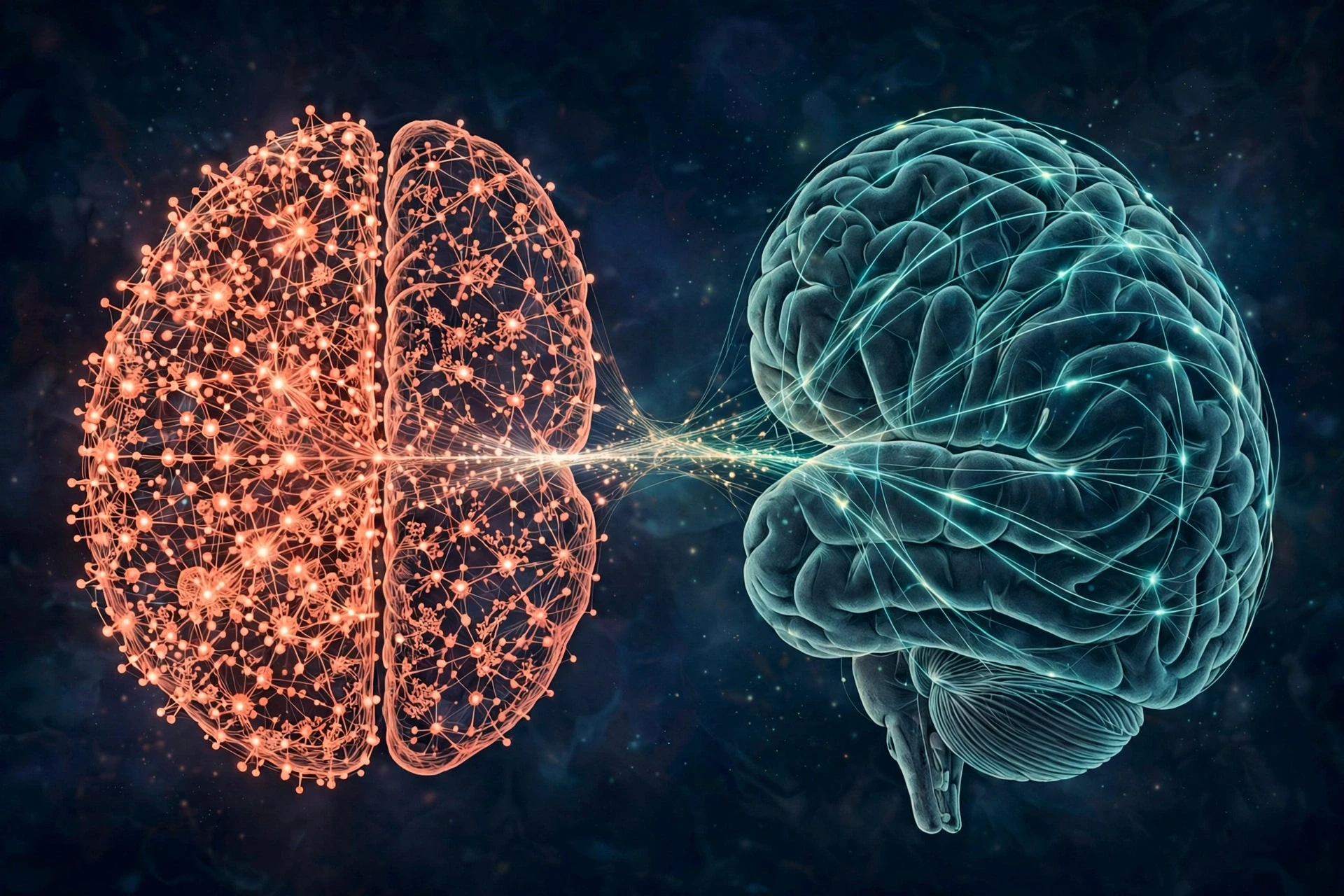
The shift from small studies to big datasets changed autism neuroscience in the same way it changed genetics: it made the findings smaller, messier, and more trustworthy. A single brain-scan study of twenty people can produce a dramatic result that turns out to be noise. A pooled analysis of a thousand people cannot. What the big datasets show, consistently, is that the structural and functional differences in autism are real but modest in size, spread across many brain regions rather than concentrated in one, and different from person to person. No single brain region is "the autism region". No single scan can diagnose autism. The differences are patterns of organisation, not lesions, and they overlap with the normal range of human brain variation — which is one reason brain imaging has not produced a diagnostic test, and is unlikely to do so soon.
3.6 The corpus callosum: the bridge between the hemispheres
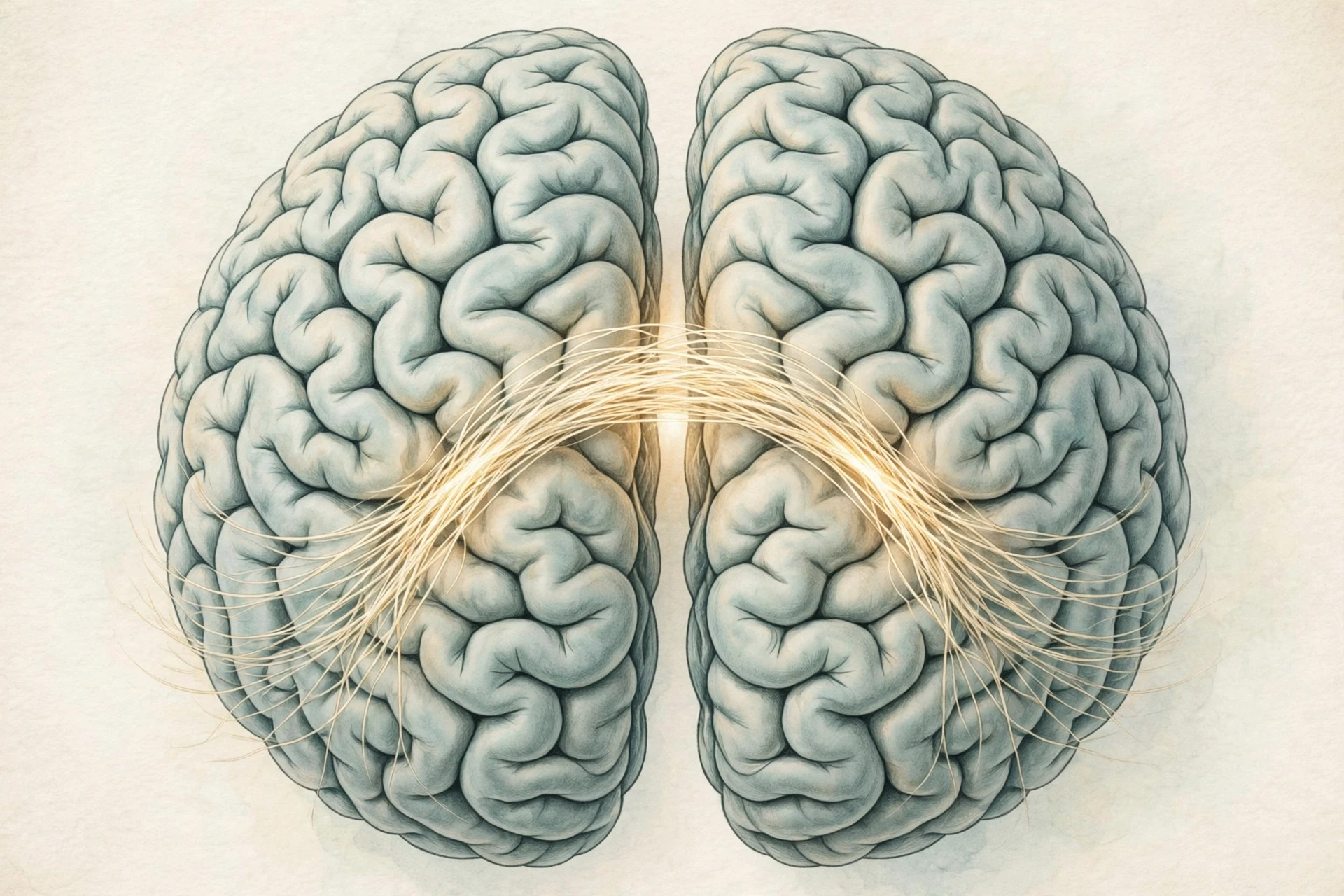
One structural finding has survived the move to bigger datasets better than most. The corpus callosum — the thick band of fibres that joins the brain's two hemispheres and lets them talk to each other — is reduced in area in autistic people, according to a systematic review and meta-analysis by Stanfield and colleagues in 2008, which pooled the structural MRI studies available at the time. The same review found that total brain volume, the cerebral hemispheres, the cerebellum and the caudate nucleus were increased in volume in autism, while the corpus callosum was reduced.
A thinner bridge between the hemispheres fits with the connectivity picture: if the two halves of the brain communicate less efficiently, then tasks that need both halves working together — integrating language with social context, for instance — may be harder, while tasks that live mostly within one region may be easier. It is a plausible link, and it is one of the more replicated findings in the field, but it is still a group-level difference, small in size, and it does not explain autism on its own. Nobody's autism can be read off the size of their corpus callosum.
3.7 The amygdala: emotion, faces and eye contact
The amygdala is a small almond-shaped structure deep in the brain that helps process emotion and social information, including faces. It has been studied intensively in autism, because differences in how autistic people respond to faces and eye contact are among the most visible features of the condition. The findings, like so many in this field, depend on age. Increased amygdala volume has been observed in young children with autism, but the difference does not hold consistently in older autistic people, and the effect depends on IQ as well as age. A 2026 voxel-based morphometry mega-analysis by Rajagopalan and colleagues, covering 3,051 participants across 51 sites and still awaiting peer review, reported lower grey-matter volume in the amygdala and several other regions — the opposite direction from the childhood finding. Until that work is peer-reviewed, the settled claim is the modest one: the amygdala develops differently in autism, and the direction of the difference changes with age. That is not a failure of the science. It is what development looks like: a moving target, not a fixed defect.
3.8 Synapses and pruning: two competing hypotheses
A synapse is the junction where one neuron passes a signal to another, and the human brain starts life with far more synapses than it keeps. During childhood, the brain prunes back the connections it does not use, keeping the ones it does — a process that sculpts the network into its adult shape. Two competing hypotheses propose that pruning goes wrong in autism, and they propose opposite directions. The under-pruning hypothesis says too many synapses are kept, leaving the brain over-connected and noisy. The over-pruning hypothesis, proposed by Thomas and colleagues in 2016, says too many synapses are cut, leaving the brain under-connected in the wrong places. Both are hypotheses, not settled facts, and the evidence is mixed — some studies find too many synapses, others too few, in different brain regions and at different ages. What the debate shows is that the level of synapses is probably one of the places where autism happens. What it does not show, yet, is which direction the error goes, or whether there is a single direction at all.
4. What Causes Autism: Genes First, and Hundreds of Them
4.1 The short answer to "What causes autism?"
What causes autism? The short answer is: mostly genes, plus a collection of smaller prenatal influences, and no single cause at all. Autism is one of the most heritable conditions in medicine — twin studies put the heritability at 64 to 91 percent — and the genetic contribution comes from hundreds of genes, each adding a small amount of risk, rather than from one gene that can be blamed. On top of that genetic foundation, a handful of factors before birth can nudge the likelihood up or down: a parent's age, premature birth, certain medications taken in pregnancy, and infection during pregnancy. What does not cause autism is equally clear, and this article deals with the two biggest non-causes — vaccines and parenting — in full, because the myths about them have done real harm. There is no single cause of autism, and anyone selling one is selling something other than science.
4.2 Twin studies: the 64–91 percent heritability finding, explained properly
The strongest evidence that genes matter in autism comes from twins. Identical twins share all their genes; fraternal twins share about half. If identical twins are more similar than fraternal twins for a trait, genes are involved, and the size of the gap tells you how much. A 2016 meta-analysis by Tick and colleagues pulled together the twin studies that had recruited twins systematically — seven studies met their strict criteria — and found that identical twins were almost perfectly concordant for autism, with a correlation of 0.98, while fraternal twins correlated at 0.53 to 0.67. The resulting heritability estimates ranged from 64 to 91 percent, depending on the assumptions used. That range is the number most often quoted, and it is solid: it has survived re-analysis and it agrees with the large population studies that followed. But a heritability figure is widely misunderstood, and the misunderstanding matters, so the next section takes it apart carefully. The logic of twin studies themselves — what they can and cannot prove about nature and nurture — is explained in Nature vs Nurture Explained.
4.3 What heritability does and does not mean
Heritability is a statistic about a population, not a verdict about a person. It describes how much of the variation between people in a group can be attributed to genetic differences — and it says nothing about how much of any one person's autism is "caused by genes", or about whether anything can be changed.
That distinction is worth sitting with, because it is where most confusion about autism genetics begins. A heritability of 80 percent does not mean that 80 percent of a child's autism comes from their genes and 20 percent from their environment. It means that, in the population studied, 80 percent of the differences between people can be chalked up to genetic differences. A trait can be highly heritable and still depend on the environment — height is the classic example, highly heritable yet strongly affected by nutrition — and a highly heritable condition can still be shaped by support, education and environment. Heritability also depends on the population: in a group where everyone shares the same environment, heritability looks higher, because the only differences left are genetic. None of this weakens the finding. It sharpens it. Genes are the largest single contributor to autism, and they work through development, not through destiny.
4.4 The five-country study: heritability of about 80 percent
Twin studies are powerful but small, and they depend on assumptions about how similar twins' environments are. A different kind of evidence came in 2019, when Bai and colleagues studied more than two million children in Denmark, Finland, Sweden, Israel and Western Australia, using national registers to trace autism through families — parents, siblings, cousins, half-siblings. Because the study covered whole populations rather than volunteers, it avoided many of the biases that can creep into twin research. The result was a median heritability of 80.8 percent across the five countries, with maternal effects — the influence of the mother's body and environment during pregnancy — explaining only 0.4 to 1.6 percent. The twin studies and the population study agree, and that agreement is what makes the genetic story convincing: two very different methods, two very different datasets, the same answer.
4.5 Hundreds of genes, no single "autism gene"
If genes matter so much, which genes? The answer is humbling: hundreds of them, and no single one that explains more than a tiny share of cases. Each of the strongest single genes accounts for about 1 percent of cases or less. That is the pattern of a polygenic condition — a condition built from the combined effect of many small genetic differences, not from a single broken part. The idea that there might be an "autism gene" waiting to be found has been abandoned by the field, and good riddance: it was never a sensible idea for a condition this varied. What researchers find instead is a long list of genes that mostly do two kinds of job: they build and maintain synapses, the junctions between neurons, or they regulate other genes, switching them on and off during brain development. When those genes carry changes, brain development takes a slightly different path. The background on how genes, variants and polygenic risk work is set out in The Human Genome Explained.
4.6 The 102 genes: what the largest exome study found
The clearest map of autism genetics so far comes from Satterstrom and colleagues, who in 2020 published the largest exome sequencing study of autism to date: 35,584 samples, including 11,986 people with autism. Exome sequencing reads the protein-coding parts of the genome — the parts where a single change can break a gene outright. The study identified 102 genes associated with autism at a strict statistical threshold. Most of those genes affect synapses or regulate other genes, and most are switched on early in the development of excitatory and inhibitory neurons — the two kinds of brain cell whose balance shapes how the brain processes information. A newer study, still a preprint at the time of writing, reports 253 genes in a much larger sample — but it has not yet been peer-reviewed, and this article uses the peer-reviewed figure of 102 as the settled count. The table below introduces five of the genes worth knowing by name.
Gene | What it does | What happens when it changes |
|---|---|---|
CHD8 | Regulates other genes during early brain development | Disruptive changes appear in roughly 0.2–0.3 percent of autistic people; linked with larger head size and gut problems |
SHANK3 | Builds the scaffolding of synapses | Found in about 1 percent of autistic people; the main cause of Phelan-McDermid syndrome |
SCN2A | Builds a sodium channel that lets neurons fire | Changes are linked with autism and sometimes with epilepsy or intellectual disability |
NRXN1 | Helps synapses form and stick together | Deletions raise the likelihood of autism and other neurodevelopmental conditions |
FMR1 | Controls the production of proteins at synapses | Its full mutation causes fragile X syndrome, the most common known single-gene cause of autism |
4.7 CHD8, SHANK3 and SCN2A: three genes worth knowing by name
Three genes from that list are worth meeting properly, because they show how different the routes into autism can be. CHD8 is a regulator — a gene that controls other genes — and disruptive changes in it are among the strongest single-gene links to autism, appearing in roughly 0.2 to 0.3 percent of autistic people. Children with a CHD8 change often have a larger head and gut problems alongside autism, which is a reminder that the same gene can affect the brain and the body at once. SHANK3 is a builder: it makes the scaffolding protein that holds a synapse together, and changes in it are found in about 1 percent of autistic people, as well as being the main cause of Phelan-McDermid syndrome. SCN2A is an electrician: it builds a sodium channel that lets neurons fire, and changes in it are linked with autism, epilepsy and intellectual disability. Three genes, three jobs, one shared outcome — a brain that develops differently. Multiply that by a hundred genes and you have the genetic landscape of autism.
4.8 De novo mutations: new changes that appear in the child
Not all genetic risk is inherited. Some of it is new — a change in a gene that appears for the first time in the child, present in neither parent. These are called de novo mutations, and they matter most in families where only one child is autistic. In such families, new coding mutations and new copy-number changes — chunks of DNA deleted or duplicated — together account for about 30 percent of diagnoses, and the share rises to about 45 percent in girls in such families. That last detail fits the female protective effect discussed in Section 8: girls seem to need a larger genetic load to show autism, so when a girl is autistic, a large new mutation is a more likely explanation. De novo changes are also one reason autism can appear in a family with no history of it at all. The parents did nothing wrong, and there was nothing to predict. A new change happened, in one gene, in one child, and the developmental path shifted.
5. What Else Shapes Autism Before Birth
5.1 Genes load the dice; early development rolls them
Genes are the largest contributor to autism, but they are not the whole story. The rest of the story happens before birth, while the brain is being built. A useful way to think about it is that genes load the dice, and early development rolls them: the genetic background sets the odds, and the prenatal environment — the womb, the placenta, the mother's health, the timing of birth — can shift those odds a little in either direction. None of the factors in this section causes autism on its own. Each one is a small nudge, acting alongside genetic risk, and most children exposed to any one of them are not autistic. That is worth saying plainly, because this is the section most likely to be misread as a list of things parents did wrong. It is not. It is a list of small, mostly unavoidable influences on a developing brain.
5.2 Valproate in pregnancy: the clearest prenatal risk factor
The clearest prenatal risk factor known is valproate, a medication used for epilepsy and mood disorders. A large Danish study of more than 655,000 children found that prenatal exposure to valproic acid increased the likelihood of autism, and the association held even after accounting for the mother's epilepsy and other factors. Other anti-seizure medications, such as carbamazepine and lamotrigine, did not show the same association in that study, and the World Health Organization's fact sheet lists both valproate and carbamazepine among medications whose prenatal use appears more often in children with autism. The evidence on carbamazepine is mixed: the Danish study found no association, while the WHO notes it appears more often in children with autism and later studies have found a small association. The finding matters for a practical reason: women who need these medications face a genuine trade-off, and it is a decision for them and their doctor, weighing the risks of the medication against the risks of untreated seizures. That is not a reason for blame, and it is not a common cause.
5.3 Advanced parental age, prematurity and birth complications
Several other factors are associated with a modestly increased likelihood of autism. Older parents — fathers over about forty, mothers over about thirty-five — have a slightly higher chance of having an autistic child, probably because the number of new genetic changes in sperm and eggs rises with age. Very premature birth and low birth weight are also associated with a small increase, as are serious birth complications. Each effect is small, and each acts alongside genetic risk rather than replacing it. A child born very early to older parents is still far more likely not to be autistic than to be autistic. These are risk factors in the statistical sense — things that shift the odds — not causes in the everyday sense of the word.
5.4 Infection, inflammation and the developing brain
Serious infection with fever during pregnancy, and the immune activation that comes with it, is also associated with a modestly increased likelihood of autism, as is congenital rubella infection early in pregnancy. The mechanism is still being worked out, but the leading idea is that the mother's immune response — the inflammation itself, rather than the infection reaching the baby — can influence the developing brain. The evidence comes from both human studies and animal work, and it is one of the reasons researchers pay close attention to the immune system in autism. It also connects to a wider theme: the developing brain is sensitive to its environment, and the environment includes the mother's body. How the prenatal environment interacts with genes without changing the DNA sequence itself is the subject of Epigenetics Explained.
5.5 What the evidence on SSRIs does and does not show
One question comes up often enough to deserve its own section: do antidepressants taken during pregnancy cause autism? The short answer is that the evidence is inconclusive: these medications have not been shown to cause autism. Studies in rodents have found that prenatal exposure to selective serotonin reuptake inhibitors — SSRIs, the most common class of antidepressants — produces autism-like behaviour in offspring. But the human studies are mixed: some find a small association, others find that the association disappears once the mother's depression itself is accounted for, which suggests the underlying condition, not the medication, may be doing the work. For a pregnant person deciding about antidepressants, that uncertainty is genuinely difficult, and it is a conversation to have with a doctor, weighing the real risks of untreated depression against an unproven and probably small risk. The evidence does not support the claim that SSRIs cause autism.
5.6 What does NOT cause autism: parenting, and the "refrigerator mother" error
For decades, the most damaging idea in autism was that parents caused it. Leo Kanner, who first described autism in 1943, initially suggested that cold, distant parenting might contribute. The psychoanalyst Bruno Bettelheim then popularised the phrase "refrigerator mother" — the idea that a child became autistic because their mother was emotionally cold. It was wrong, and it was cruel. Twin and family studies show that parenting style does not cause autism, and no later research has found any parenting effect at all. The idea lingered for years, and it did real harm: it blamed mothers for a condition they had no part in causing, and it diverted attention from the genetics and biology that actually explain autism. The "refrigerator mother" theory is now a case study in how a plausible-sounding idea, repeated by authoritative voices, can survive long after the evidence has demolished it. Parenting does not cause autism. Full stop.
6. How Autism Is Diagnosed — and Why There Is No Blood Test
6.1 Diagnosis is behavioural and developmental, not a scan or a gene test
There is no blood test for autism, no brain scan that can diagnose it, and no gene test that can rule it in or out. Diagnosis is behavioural and developmental: a trained clinician watches how a child plays, communicates and responds to the world, talks to the people who know the child best, and compares what they see with a set of criteria. That surprises many people, who expect a medical condition to come with a medical test. But autism is defined by behaviour and development, not by a single biological marker, and the diagnosis reflects that. Genetic testing can sometimes find a specific cause — a gene change or a chromosomal difference — but it finds one in only a minority of cases, and it does not make or break the diagnosis. The diagnosis rests on the child in front of the clinician, not on a laboratory result.
6.2 The DSM-5-TR criteria in plain language (Criteria A–E)
The current diagnostic manual, the DSM-5-TR, published by the American Psychiatric Association in 2022, sets out five criteria, labelled A to E. All five must be met. In plain language:
Criterion A — social communication. Persistent difficulties in social communication and interaction across multiple contexts, shown by all three of: difficulty with social-emotional reciprocity (the back-and-forth of interaction); difficulty with nonverbal communication (eye contact, gestures, facial expressions); and difficulty developing, maintaining and understanding relationships.
Criterion B — restricted and repetitive patterns. Restricted, repetitive patterns of behaviour, interests or activities, shown by at least two of four: repetitive movements, use of objects or speech; insistence on sameness or inflexible routines; highly restricted, fixated interests; and hyper- or hypo-reactivity to sensory input.
Criterion C — early onset. Symptoms must be present in the early developmental period, even if they only become fully visible later, when social demands exceed the child's capacities.
Criterion D — impairment. The symptoms must cause clinically significant impairment in social, occupational or other important areas of functioning.
Criterion E — not better explained. The difficulties must not be better explained by intellectual disability or global developmental delay — though autism and intellectual disability can, and often do, occur together.
The criteria are written in clinical language, but their shape is straightforward: differences in social communication plus repetitive patterns, starting early, causing real difficulty, and not explained by something else.
6.3 The three levels of support in practice
Alongside the diagnosis, the clinician rates the level of support a person needs, separately for social communication and for restricted and repetitive behaviours. Level 1, "requiring support", covers people who manage much of life independently but struggle with social interaction and flexibility. Level 2, "requiring substantial support", covers people whose difficulties are marked even with support in place. Level 3, "requiring very substantial support", covers people whose difficulties affect almost every part of daily functioning. In practice, the level shapes what help is offered — how much support at school, what services are funded, what accommodations are put in place. But as Section 1 noted, levels describe current needs, not fixed identity, and they should not be used as the only basis for deciding who gets services. A person's needs can change, and the level should be re-rated when they do.
6.4 What an assessment actually involves (interview, observation, ADOS and other tools)
A proper autism assessment takes time, and it involves more than one kind of evidence. The clinician takes a detailed developmental history from parents or carers, covering pregnancy, milestones, language, play, friendships and behaviour. They observe the child directly, often in a structured play session, watching how the child communicates, whether they share attention, how they play with toys, and how they respond to social cues. They use standardised tools, of which the best known is the ADOS — the Autism Diagnostic Observation Schedule — a set of structured activities designed to press gently on social communication and reveal how a child responds. They may also use questionnaires, cognitive testing, and language assessment, and they will usually screen for other conditions, such as hearing problems, that could explain some of the picture. The assessment draws on memory and learning in ways that are themselves worth understanding — see How the Human Brain Forms Memories for how developmental assessment makes use of what we know about memory. A good assessment ends with more than a label: it ends with a profile of strengths and needs, and a plan.
6.5 Screening at 18 and 24 months, and why it matters
Autism can sometimes be detected at 18 months or younger, and by age two a diagnosis by an experienced professional can be considered reliable. This is why the American Academy of Pediatrics recommends that every child be screened for autism at 18 and 24 months, as part of routine developmental surveillance. Screening is not diagnosis: a screening questionnaire flags children who need a fuller assessment, and many children who screen positive turn out not to be autistic. But screening matters because timing matters. The earlier autism is identified, the earlier support can begin, and early support — help with communication, with play, with the skills of daily life — makes a measurable difference to how a child develops. The gap between what is possible at 18 months and what usually happens is the subject of the next section, and it is one of the most fixable problems in autism.
6.6 Why diagnosis so often comes late: the median age of 47 months
If autism can be reliably diagnosed by age two, why is the median age of earliest known diagnosis 47 months — just under four years old? The answer is a mix of system and circumstance. Parents may not recognise the early signs, or may be reassured by well-meaning voices that their child will grow out of it. Paediatricians may not screen routinely, or may take a wait-and-see approach. Assessment services may have waiting lists measured in months or years. And the median hides wide variation: in the 2022 surveillance cycle, the median age of earliest diagnosis was 36 months in California and 69.5 months in Laredo, Texas — a gap of nearly three years between two parts of the same country. A child diagnosed at nearly six has lost years of support that a child diagnosed at three received. Closing that gap is not a matter of new science. It is a matter of making the science we already have reach every child.
6.7 When a diagnosis in adulthood makes sense of a lifetime
Not everyone is diagnosed in childhood. A growing number of adults are receiving an autism diagnosis in their thirties, forties and beyond — often after a lifetime of feeling different without knowing why. For many of them, the diagnosis is a relief: it reframes a history of social confusion, exhaustion, anxiety and failed relationships as the consequence of a different kind of brain, not a personal failing. I once spoke with a woman who had been diagnosed at forty-two, after decades of being treated for anxiety and depression that never quite explained her experience. She told me the diagnosis felt like being handed the instruction manual for her own mind, twenty years late. That is a common story, and it is why adult diagnosis matters: it is never too late for a person to understand themselves. It also matters because autistic adults have support needs too, and a diagnosis is often the key that unlocks them.
7. The Early Signs of Autism: What to Notice, and What Not to Panic About
7.1 The first year: name response, eye contact and gestures
The earliest signs of autism are usually subtle, and they are about social attention rather than about anything dramatic. A baby who does not consistently respond to their name by nine to twelve months. A baby who makes little eye contact, or who looks through people rather than at them. Few or no gestures by twelve months — no pointing, no waving, no reaching out to be picked up. These are not the things a parent notices on their own, because they are absences rather than events: the thing that did not happen, the response that did not come. That is why routine screening matters, and why a parent's unease — "something feels different about my child" — deserves to be taken seriously even when it is hard to put into words.
7.2 The second year: pointing, words and pretend play
In the second year the signs become easier to see. A toddler who does not point to show something interesting by fourteen to eighteen months — pointing to share an experience, not just to ask for something. No single words by sixteen months. No pretend play by eighteen months — no feeding a teddy bear, no pretending a block is a phone. Instead, the child may be intensely interested in objects rather than people: spinning the wheels of a toy car rather than pushing it along, lining things up, staring at a light or a fan. Language may be delayed, or it may develop in an unusual way — echoing phrases heard on television, for instance, rather than using words to communicate. Any one of these signs on its own means very little. Together, in a pattern, they are a reason to ask for an assessment.
The table below sets out the milestones the CDC lists in its "Learn the Signs. Act Early." guidance, and the ages at which a missing milestone should prompt a conversation with a paediatrician — not a diagnosis, but a conversation.
Age | Milestone to look for |
|---|---|
9–12 months | Responds to their name; makes eye contact |
12 months | Uses gestures such as pointing, waving or reaching |
14–18 months | Points to show something interesting |
16 months | Uses single words |
18 months | Engages in pretend play, such as feeding a doll |
24 months | Says at least two words together, like 'More milk' |
Any age | Loss of words or social skills they once had |
7.3 Regression: when skills are lost, and why it needs prompt attention
Some children develop apparently typically for the first year or two, and then lose skills they once had — words they used disappear, eye contact fades, social interest drops away. This is called regression, and it is one of the most frightening experiences a parent can have. It needs prompt attention: a child who loses skills should be assessed quickly, not watched and waited on. Regression does not mean something has gone wrong in the home, and it does not mean a vaccine is responsible — the large studies in Section 13 rule that out decisively. It means the developmental path has shifted, and the child needs support as soon as possible. Most autistic children do not show a clear regression; the signs build gradually. But when regression happens, it is a clear signal to act.
7.4 Signs that look different in toddlers with strong language
Not every autistic toddler has delayed language. Some speak early and speak well, with a large vocabulary and a love of words — and are still autistic. In these children the signs are more often social: the child may talk at people rather than with them, delivering long monologues about a favourite subject without noticing whether anyone is listening. They may struggle with the back-and-forth of conversation, with taking turns, with understanding that other people have thoughts different from their own. They may play alongside other children rather than with them, or follow their own rules in a game and become upset when others do not. Because their language is strong, these children are often missed for longer — their difficulties are put down to shyness, or quirkiness, or being "a bit odd", and the word autism is not raised until school makes the social demands impossible to ignore.
7.5 One missed milestone is not a diagnosis
A single missed milestone is not a diagnosis, and it is not a reason to panic. Children develop at different rates, and a child who says their first word at seventeen months instead of sixteen is almost certainly fine. What matters is the pattern: several signs together, persisting over time, in the areas of social communication and repetitive behaviour. Milestone lists are screening tools, not verdicts. They exist so that parents and clinicians know what to look for, not so that families can diagnose their own children at the kitchen table. If you are reading this section with a growing sense of recognition, that is a reason to talk to a paediatrician — not a reason to conclude anything on your own.
7.6 What to do if you are worried: the next step is a conversation with a paediatrician
If you are worried about a child, the next step is simple: talk to their paediatrician and ask for a developmental screening. You do not need to be sure, and you do not need to have a theory. "I am worried about how my child is developing" is enough. The paediatrician can use a screening tool, refer for a fuller assessment, and — importantly — rule out other explanations, such as a hearing problem. Do not wait to see whether the child grows out of it: early support helps, and waiting costs time that cannot be recovered. This article gives general information only, not individual medical advice; the person to talk to about a specific child is their own doctor.
8. Autism in Girls and Women: The People the Old Picture Missed
8.1 The old 4:1 ratio, and why it is out of date
For decades, the standard line was that autism affects four boys for every one girl. The ratio was repeated in textbooks, in lectures, in news articles, and it shaped the picture of autism in the public mind: a condition of boys. The picture was wrong, and the ratio was the reason. The 4:1 figure described who was being diagnosed, not who was autistic. It was built from clinics and schools that found boys more easily, using criteria written around how autism looks in boys. Girls who were autistic were missed, misdiagnosed, or diagnosed years later — and because they were not counted, the ratio stayed at four to one, which justified looking for autism mainly in boys, which kept the girls uncounted. It was a circle, and it took careful epidemiology to break it.
8.2 The latest numbers: 3.4 to 1 in the United States, closer to 3 to 1 when whole populations are screened
The latest numbers tell a different story. In the CDC's 2022 surveillance cycle, autism was 3.4 times as prevalent among boys as girls — 49.2 per 1,000 boys against 14.3 per 1,000 girls. The ratio has been falling steadily: 4.2 in 2018, 3.8 in 2020, 3.4 in 2022. And when researchers look at whole populations rather than at children who have already been diagnosed, the ratio falls further. A 2017 meta-analysis by Loomes, Hull and Mandy, covering 54 prevalence studies and nearly 14 million participants, found an overall male-to-female odds ratio of 4.20 — but 3.25 in studies that screened whole populations, and 3.32 in high-quality studies. The authors concluded that the true ratio is closer to 3:1, and that girls who meet the criteria are at disproportionate risk of not receiving a clinical diagnosis. The table below compares how the ratio changes depending on how cases are counted.
How cases were counted | Male-to-female ratio |
|---|---|
Overall pooled estimate (Loomes et al. 2017) | 4.20 to 1 |
Studies using pre-existing diagnoses only (Loomes et al. 2017) | 4.56 to 1 |
Whole-population screening (Loomes et al. 2017) | 3.25 to 1 |
High-quality studies (Loomes et al. 2017) | 3.32 to 1 |
CDC ADDM surveillance, 2022 | 3.4 to 1 |
8.3 Why girls get missed: different presentation, not milder autism
Girls are missed not because their autism is milder, but because it looks different. Autistic girls are more likely to have strong language skills and typical intellectual ability, which means they do not stand out in the ways clinicians are trained to notice. Their restricted interests are more likely to be socially acceptable — horses, books, pop stars, a favourite television show — rather than the trains and timetables that flag a boy as autistic in a teacher's mind. They are more likely to play alongside other girls, imitating their behaviour, and more likely to have one intense friendship rather than none. Their difficulties show up less as disruption and more as exhaustion, anxiety and quiet withdrawal — and quiet girls do not get referred for assessment as often as disruptive boys. The result is a systematic blind spot: the girls are there, they are struggling, and nobody is looking at them through the right lens.
8.4 Camouflaging and masking: what it is, and what it costs
Many autistic girls and women learn to camouflage — to hide their autistic traits and imitate non-autistic behaviour so they can fit in. They force eye contact even when it feels uncomfortable. They rehearse conversations in advance and script their replies. They copy the gestures, expressions and small talk of the people around them. They suppress hand-flapping or rocking, and they study social situations the way other people study for an exam. Researchers have given this a name and a measure: Hull and colleagues validated the Camouflaging Autistic Traits Questionnaire in 2019, a 25-item measure covering compensation, masking and assimilation, tested in 354 autistic and 478 non-autistic adults, and found that autistic women scored higher than autistic men on masking and assimilation. A 2026 meta-analysis of 50 studies with 16,895 participants (Greig et al.) found a moderate association between autistic traits and camouflaging (r = 0.34).
Camouflaging works, in the sense that it helps a person pass as non-autistic — and it costs, heavily. The effort is exhausting, and the exhaustion accumulates: anxiety, depression, burnout, and a loss of any sense of who you are underneath the performance. I have heard autistic women describe it as acting in a play that never ends, where everyone else got the script and you are improvising every line. That is not a small price. It is one of the reasons camouflaging is now recognised as a clinical issue in its own right, and one of the reasons the old picture of autism — the disruptive boy in the corner — did so much harm to the girls it never saw.
8.5 The late-diagnosis gap: diagnosed years later, misdiagnosed more often
The consequence of all this is a diagnostic gap measured in years. In one adult clinical sample of autistic people without intellectual or language disability, women received their diagnosis at a mean age of 29.4 years, against 19.8 years for men — a gap of nearly a decade. Almost half the women in that sample, 45.5 percent, had been misdiagnosed first, against 17.9 percent of men — often with anxiety or depression, and, according to earlier studies cited by the authors, sometimes with borderline personality disorder or an eating disorder. Those are not wrong diagnoses in the sense of being invented — the anxiety and depression are usually real — but they are incomplete, because they miss the autism underneath that helps explain them. Diagnosis rates are now rising faster in girls than in boys: between 2011 and 2022, in a large US health-system sample, diagnosis rates rose 305 percent among female children against 185 percent among male children. The gap is closing, but it is closing from a long way behind.
8.6 The female protective effect, explained carefully
One idea that helps explain both the sex ratio and the pattern of diagnosis is the female protective effect. The model proposes that girls need a larger genetic load to show autism than boys do — that the female brain is, in some sense, more resilient to the genetic changes that lead to autism, so a girl needs more of them before the condition appears. The evidence for this is real but indirect: siblings of autistic girls have a higher recurrence risk than siblings of autistic boys, which is what you would expect if the girls who are autistic carry a heavier genetic load, and de novo mutations account for a larger share of diagnoses in girls. But it is a model, not a proven mechanism in any individual, and it should be stated carefully. It does not mean girls are protected from autism. It means the threshold for showing autism appears to be higher in girls, which is part of why so many of them were missed for so long.
9. The Senses, the Social World and the Inner World
9.1 Sensory differences: too much, too little, or both
If there is one experience that most autistic people share, it is that the senses work differently — too much, too little, or both at once, in different senses. Sensory differences are so central to autism that the current diagnostic criteria list them explicitly: hyper- or hypo-reactivity to sensory input is one of the four patterns in Criterion B. A person can be hypersensitive to sound and hyposensitive to pain. They can be overwhelmed by the texture of a label in a shirt and barely notice a burn on their hand. They can crave deep pressure and hate light touch. The senses do not come with a single volume control. Each one has its own setting, and in the autistic brain the settings are different.
No single percentage captures how many autistic people have sensory differences, and this article does not invent one. What can be said is that sensory differences are common, that they affect most autistic people in some form, and that they shape daily life more than almost any other feature of autism — more than the social difficulties that get most of the attention, and more than the repetitive behaviours that are easier to see from outside.
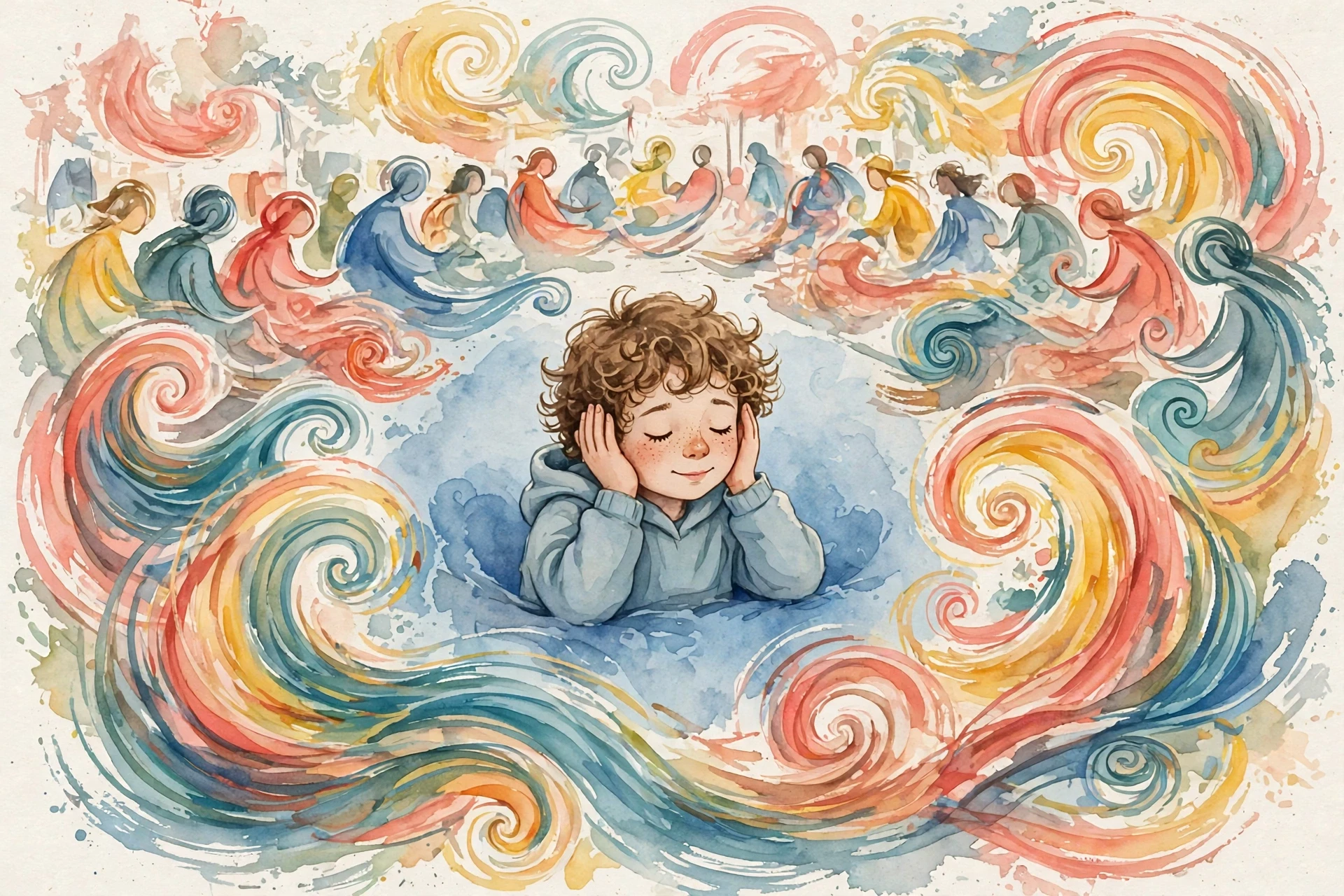
9.2 Why a supermarket can feel like an assault — and a hum can feel like comfort
Take a supermarket. For most people it is a boring errand. For an autistic person it can feel like an assault: fluorescent lights that flicker and hum, music playing over a tannoy, freezers buzzing, trolleys rattling, a dozen conversations at once, the smell of the bakery mixed with cleaning products, strangers brushing past, bright packaging shouting from every shelf. Each input on its own is manageable. Together, with no filter to turn them down, they pile up until the brain cannot process them all — and the result is distress, shutdown, or a meltdown that looks, from outside, like an overreaction to nothing.
Now take the opposite: the same person may find deep comfort in a single repeated sensory experience — the hum of a washing machine, the feel of a smooth stone, the pressure of a weighted blanket, the rhythm of rocking. These are not quirks. They are the same system working in the other direction: when the world gives too much, a single predictable input can be soothing, because it is one thing the brain can control. Understanding sensory differences means understanding both directions at once.
9.3 Social communication: reading faces, sharing attention, keeping a conversation going
Social communication is the area where autism is most visible, and also the area where it is most misunderstood. The difficulties are specific, and they are worth naming one by one. Reading faces: many autistic people find it hard to read facial expressions quickly, especially subtle ones, and some find eye contact physically uncomfortable rather than merely difficult. Sharing attention: the simple act of looking at the same thing as someone else, and knowing that you are both looking at it together — what researchers call joint attention — develops differently in autistic children, and it is one of the earliest signs. Keeping a conversation going: turn-taking, staying on topic, noticing when the other person is bored, knowing how much detail is enough — these are skills most people run without thinking, and they take deliberate effort for many autistic people. None of this is a lack of interest in other people. It is a difference in the machinery of social interaction, and the machinery can be supported, practised and accommodated.
9.4 The double empathy problem: a two-way misunderstanding
For a long time, the social difficulties in autism were described as a one-sided deficit: autistic people cannot understand non-autistic people, and that is the problem. In 2012, the researcher Damian Milton proposed a different frame, which he called the double empathy problem. His idea is simple and it changes the picture completely: communication breakdowns between autistic and non-autistic people are mutual. Autistic people struggle to understand non-autistic people, and non-autistic people struggle to understand autistic people, and the difficulty grows larger the more different the two people are. When two autistic people talk to each other, they often communicate well. When two non-autistic people talk, they communicate well. The trouble arises across the gap — and it belongs to both sides of it.
The "double empathy problem" — in Milton's words, "a disjuncture in reciprocity between two differently disposed social actors which becomes more marked the wider the disjuncture in dispositional perceptions of the lifeworld…" — Damian Milton, "On the ontological status of autism: the 'double empathy problem'", Disability & Society, 2012
This is a framework, not a settled fact, and it is presented here as one. But it has changed how researchers think about autism, because it shifts the responsibility. If the problem is two-way, then the solution is two-way too: it is not only autistic people who need to learn social skills, but non-autistic people who need to learn to meet them halfway.
9.5 Routines, repetition and special interests: why sameness feels safe
Routines, repetition and special interests are often treated as symptoms to be reduced, and that misses what they are for. For many autistic people, sameness is not stubbornness. It is safety. A world that is unpredictable and overwhelming becomes manageable when some of it is fixed: the same breakfast, the same route, the same order of events, the same familiar objects in the same places. Repetitive movements — hand-flapping, rocking, spinning — can be a way of managing excitement or distress, a way of regulating a nervous system that is running too hot. And a special interest — trains, timetables, dinosaurs, the weather, the history of a football club — is not an obsession to be cured. It is a source of joy, of expertise, of identity, and often of calm. The question to ask about a routine or an interest is not "how do we stop it?" but "what is it doing for this person?" Very often the answer is: it is holding them together.

9.6 Predictive coding: a brain that trusts what it senses more than what it expects
One of the most interesting frameworks in autism research today is predictive coding, proposed by Van de Cruys and colleagues in 2014 — and it is a framework, not a proven mechanism, so it is labelled as one. The idea is that the brain is constantly predicting what will happen next, and using those predictions to filter what it senses: when the prediction matches reality, the brain can ignore the sensory input and move on. In the autistic brain, the theory proposes, predictions carry less weight and raw sensory evidence carries more — so the world feels less predictable, more surprising, and more overwhelming, because every detail demands attention instead of being filtered out by expectation. That would explain a great deal: the sensory overload, the distress at unexpected change, the love of routine (which makes the world predictable), and the attention to detail (because the details are not being filtered away). It is an elegant idea, supported by behavioural and imaging work, and it is still being tested. It is not yet proven, and this article does not present it as though it were.
9.7 The intense world theory: a brain turned up too loud
A second hypothesis pulls in a similar direction. The intense world theory, proposed by Henry and Kamila Markram in 2010, suggests that the autistic brain is hyper-functioning at the level of local circuits — hyper-reactive, hyper-plastic, taking in too much and remembering too much — so that the world is experienced as painfully intense, and the person withdraws or shuts down to cope. The social difficulties, on this view, are not a lack of feeling but too much of it: a brain that feels everything too strongly and protects itself by pulling away. The direct biological evidence for the theory comes mainly from rats exposed to valproate before birth, and the authors themselves acknowledge the large leap from a rat brain to human autism. It is a hypothesis with real explanatory power and limited direct evidence, and it should be read that way — as a way of thinking about autism that fits the experience of many autistic people, not as a proven account of what causes it.
9.8 Excitation and inhibition: a leading idea with a live challenge
A third framework concerns the balance between excitation and inhibition in the brain — the push and pull between neurons that activate each other and neurons that quiet each other down. The standard hypothesis says the autistic brain has too little inhibition, or too much excitation, and that this imbalance explains the sensory sensitivity, the seizures that often accompany autism, and the difficulties with filtering information. It is a leading idea, and it has guided a great deal of research. But it has also met a live challenge: a study from the University of California, Berkeley (Antoine and colleagues, 2019), examining four mouse models of autism, found that inhibition did decrease — but the neurons kept a normal firing rate, because excitation fell in step. The shift in balance, in other words, looked like compensation rather than cause: the brain adjusting itself to stay stable, not breaking down. The excitation-inhibition framework remains useful, but it is contested, and the honest account is that the balance is different in autism without anyone yet knowing exactly how, or whether the difference is the cause of the symptoms or the brain's response to them.
10. Conditions That Often Travel With Autism
10.1 Almost everyone has at least one co-occurring condition
Autism rarely travels alone. More than 95 percent of children with autism have at least one co-occurring condition, and more than half have four or more, according to CDC data summarised in a clinical review. That figure surprises people, but it should not: the same genes and the same developmental processes that shape autism also shape other aspects of brain development, so the conditions cluster together. The table below gives the latest pooled figures for the most common companions, and the sections that follow take each one in turn.
Condition | Latest figure | Source |
|---|---|---|
Intellectual disability | 39.6 percent of 8-year-olds with IQ data | CDC ADDM, 2022 |
ADHD | About 28–31 percent | Lai et al. 2019; Medicaid study 2026 |
Anxiety disorders | About 19–20 percent | Lai et al. 2019; Medicaid study 2026 |
Epilepsy | About 1 in 4 | Comorbidity literature |
Sleep problems | 50–80 percent of autistic children | Range across studies |
Gut symptoms | About 49 percent | Global meta-analysis, 2022 |
10.2 Intellectual disability: 39.6 percent of 8-year-olds with IQ data
Intellectual disability — an IQ of 70 or below, alongside difficulties with everyday adaptive skills — is the most common co-occurring condition, and also the one that most changes what support a person needs. In that same 2022 CDC surveillance cycle, 39.6 percent of eight-year-olds with autism and IQ data were classified as having intellectual disability. The figure varies sharply by background: it was present in 52.8 percent of Black children, 50.0 percent of American Indian or Alaska Native children, 43.9 percent of Asian or Pacific Islander children, 38.8 percent of Hispanic children, 32.7 percent of White children and 31.2 percent of multiracial children with autism. Those gaps likely reflect differences in who gets identified early, who gets support, and whose IQ is measured at all — and they are a reminder that the numbers in autism research carry the fingerprints of inequality. It is also worth saying clearly that most autistic people do not have intellectual disability, and that autism and intelligence are separate dimensions: an autistic person can have a very high IQ and still need a great deal of support, and a person with intellectual disability can be autistic without the autism being the reason for the disability.
10.3 ADHD: the most common companion
Attention deficit hyperactivity disorder is the most common companion of autism, affecting about 28 to 31 percent of autistic people. The two conditions share genetic risk, share features — difficulty with attention, with impulse control, with organising behaviour — and share the experience of being misunderstood in school. For years, the diagnostic rules said a person could not be diagnosed with both autism and ADHD at the same time; that rule was dropped in 2013, and the overlap has been recognised properly ever since. A child who is both autistic and has ADHD faces a double challenge: the social and sensory world of autism, plus the attention and regulation difficulties of ADHD. A fuller guide to ADHD is planned as a future Sciory article and will be linked here when it is published.
10.4 Anxiety and depression: common, treatable, and often missed
Anxiety and depression are common in autistic people, and they are often missed, because the signs look different. A meta-analysis by Lai and colleagues in 2019 pooled the rates across studies and found about 20 percent of autistic people had an anxiety disorder and about 11 percent a depressive disorder. A large 2026 study of nearly a million Medicaid beneficiaries with autism found anxiety disorders in 19.3 percent. The numbers are high, and they are probably underestimates: anxiety in an autistic person can look like avoidance, like rigidity, like a meltdown, like a refusal to go to school — and it gets put down to the autism rather than recognised as anxiety in its own right. That matters, because anxiety and depression are treatable, and treating them can transform a person's life even when the autism itself does not change. The background on anxiety and depression in general is set out in Anxiety and Depression Explained.
10.5 Epilepsy: about one in four
About one in four autistic children develop seizures, often starting in early childhood or adolescence, and the risk is higher when intellectual disability is also present. The link makes sense: both autism and epilepsy involve the balance of excitation and inhibition in the brain, and the same genetic changes can produce both. Epilepsy in autism is not always obvious — seizures can be subtle, brief absences or unusual behaviours that are mistaken for something else — and it deserves to be looked for, because it is treatable and because untreated seizures affect learning and development. Any autistic child who has staring spells, sudden losses of awareness, or unexplained episodes of confusion should be assessed for epilepsy.
10.6 Sleep: the 50–80 percent problem
Sleep problems affect roughly 50 to 80 percent of autistic children — a wide range, because studies define sleep problems differently, but high on any definition. The problems take many forms: difficulty falling asleep, waking in the night, waking very early, irregular sleep patterns, and anxiety about bedtime. The causes are tangled: sensory sensitivity to the dark or to bedding, difficulty winding down, anxiety, differences in the body's clock, and the co-occurring conditions that disturb sleep. The consequences are serious, because poor sleep makes everything else harder — attention, mood, behaviour, learning — and because it exhausts the whole family. Sleep is one of the most practical places where support can help, and one of the most neglected: a child who sleeps better often functions better in every other area, and the same is true of their parents.
10.7 Gut and feeding: what the evidence actually shows
Gut problems are common in autism, and the numbers are striking: a 2022 global meta-analysis found gastrointestinal symptoms in 48.67 percent of people with autism, with constipation, diarrhoea and abdominal pain the most common, and autistic children two to four times more likely to have functional gut symptoms than other children. The reasons are probably several at once: restricted diets, sensory sensitivity to food textures, anxiety, differences in gut motility, and the same genetic factors that affect the brain. Nothing in the evidence shows that gut problems cause autism, or that a special diet can treat it. The gut-brain connection is real and worth understanding — see The Gut Microbiome Explained — but the claim that autism can be cured through the gut is not supported, and families who spend money and hope on unproven diets deserve to know that plainly.
11. Strengths of the Autistic Mind
11.1 A strengths section is not a consolation prize
A section on strengths is not a consolation prize, and it is not there to balance out the difficulties. It is there because the strengths are real, they are part of the science, and they are routinely left out of accounts of autism that focus only on what is hard. An honest guide to autism has to include them — not to romanticise the condition, and not to suggest that the strengths cancel out the difficulties, but because a picture of autism without its strengths is as incomplete as a picture without its challenges. The strengths described below are common, not universal. Not every autistic person has them, and having them does not make life easy. But they are real, they are documented, and they matter.
11.2 Pattern recognition and attention to detail
Many autistic people notice patterns and details that other people walk straight past. A changed tile in a mosaic, a wrong note in a familiar song, an error in a spreadsheet that a dozen people have checked, a face in a crowd seen once years ago. This attention to detail is one of the most consistently reported strengths in autism, and it has a plausible basis in how the autistic brain processes information: with less filtering by expectation, the details survive. A study of 144 young adults found that autistic traits, especially attention to detail, predicted a greater capacity for visual working memory — the ability to hold abstract visual information in mind. That is a specific, measured advantage, not a vague compliment.
11.3 Systemizing: the drive to find the rules
Simon Baron-Cohen and colleagues proposed that autistic people have a strong drive to "systemize" — to work out the rules behind how things work, whether the system is a machine, a timetable, a language, a set of numbers, or the natural world. A large 2018 study by Greenberg and colleagues, of 671,606 people including 36,648 autistic people, found that autistic participants scored higher on systemizing on average. That drive explains a great deal about autistic interests: the child who memorises every train timetable is not being obsessive for its own sake, but is finding the system and learning its rules. It also explains why so many autistic adults thrive in work that rewards systemizing — engineering, computing, mathematics, research, quality control — where the ability to see the rules and spot the exception is exactly what the job needs.
11.4 Memory for detail and visual memory
Memory in autism is uneven in a characteristic way. Memory for facts, for details, for routes, for lists, for things seen rather than things heard, can be strong — sometimes strikingly so. Memory for faces, for social information, for the sequence of events in a conversation, can be weaker. That pattern fits the wider picture: the autistic brain is good at storing precise information and less good at storing the social and contextual information that most people remember automatically. It is worth saying that the popular image of the autistic savant — the person who can memorise a phone book or calculate the day of the week for any date — describes a small minority. Most autistic people do not have savant skills. What many do have is a good memory for the things they care about, and that is a strength worth recognising without turning it into a stereotype.
11.5 Honesty, directness and loyalty
Honesty and directness are qualities many autistic people say they value in themselves — and that others value in them. Many autistic people are strikingly honest — sometimes bluntly so, because the social filter that tells most people to soften the truth is thinner — and they tend to be loyal to the people and the principles they care about. They are less likely to play social games, less interested in status and flattery, and more likely to say what they actually think. That directness can cause friction in a world that runs on tact and implication. It can also be refreshing, and it is one of the qualities that autistic people themselves most often name as a strength. An autistic friend will tell you the truth when others will not. That is worth something.
11.6 What the research does NOT show (the 2015 meta-analysis caution)
Honesty about strengths requires a caution. A 2015 meta-analysis of 56 studies tested the popular idea that autistic people are consistently better at local detail and consistently worse at seeing the big picture — and found no consistent advantage for local detail, and no general problem with global processing. The advantage appears in some tasks and not in others, in some people and not in others, and it depends on the details of the test. That does not erase the strengths described above. It means they are real but specific, not a general superpower, and that any article claiming autistic people are universally better at detail is over-claiming. Strengths in autism are common, not universal, and never a trade-off that erases difficulty. Someone can be brilliant at spotting patterns and still struggle to get through a school day. Both things are true at once.
12. Support, School, Work and Daily Life
12.1 Support, not cure: the framing that matters
The framing that matters, for everything in this section, is support, not cure. Autism is a lifelong neurodevelopmental difference, not a disease, and there is no medication that treats autism itself and no intervention that cures it. What exists — and what works — is support: help with communication, with learning, with sensory regulation, with the practical skills of daily life, and with the environments in which autistic people live, learn and work. Support is not a consolation prize for the absence of a cure. It is the main event. A child who gets the right support early can develop communication, independence and confidence that would not have been possible without it. An adult who gets the right accommodations at work can do a job they would otherwise have lost. The question is never "how do we fix this person?" It is always "what does this person need, and how do we provide it?"
12.2 Early support and why timing helps
The earlier support begins, the more it can do — not because the brain is only plastic in childhood, but because communication and social skills build on each other, and a child who learns to communicate early has more to build on later. Early support usually means help with communication (including sign, pictures or devices for children who do not speak), with play, with joint attention, and with the routines of daily life, delivered in a way that follows the child's interests rather than fighting them. It also means supporting the family: parents who understand their child's autism, who know how to communicate with them, and who have respite when they need it, are better able to help their child than parents left to work it out alone. The evidence for early support is good, but it is evidence for support, not for any single programme, and families should be wary of anyone promising a particular therapy will "recover" their child.
12.3 What good support looks like (communication support, sensory accommodations, predictable routines)
Good support is practical, individual, and boring in the best sense — it is about changing the environment, not the person. The things that help most are usually simple:
Communication support: clear, literal instructions; time to process; visual schedules and written information alongside spoken words; alternative communication methods for people who do not speak.
Sensory accommodations: a quiet space to retreat to; noise-cancelling headphones; control over lighting; permission to leave a room that has become overwhelming.
Predictable routines: advance warning of change; visual timetables; the same sequence of events each day, with changes explained in advance.
Sensory breaks: regular breaks from demanding environments, built into the day rather than earned as a reward.
Respect for special interests: using a person's interests as a bridge to learning and connection, not as a behaviour to be extinguished.
Almost none of this is expensive. Most of it is a matter of attention and willingness. And most of it helps everyone, not just autistic people — which is the quiet argument for designing schools and workplaces for the most sensitive people in them.
12.4 School: inclusion, accommodations and the right to learn differently
School is where the difference between autism and the world is most visible, because school is a social, sensory and unpredictable place by design. An autistic child in a mainstream classroom may be coping with noise, with social demands, with transitions between lessons, and with instructions given verbally and quickly — all at once, all day. Inclusion works when the school adapts: a quiet space, a teaching assistant who understands autism, visual timetables, extra time, exams in a separate room, permission to use headphones, and teachers who know that a child who looks away may still be listening. It fails when the child is expected to adapt to the school without help. Autistic children have the right to learn differently, and the right to an education that fits how their minds work. That is not special treatment. It is equal treatment, properly understood.
12.5 Work: what helps autistic adults thrive
Autistic adults who find the right work can be outstanding at it — precise, reliable, honest, and deeply knowledgeable about their subject. The problem is usually not the work itself but everything around it: the interview that tests social performance rather than job skill, the open-plan office with its noise and interruptions, the unwritten rules of office life, the networking and small talk that are treated as part of the job. What helps is straightforward: clear written instructions, a quiet workspace or permission to wear headphones, predictable routines, a manager who says what they mean, and recruitment that tests the actual skills of the job. Employers who make these adjustments often find they have hired some of their best people. Employers who do not, lose them — and then wonder why.
12.6 Families and relationships: the people around the autistic person
Autism affects the whole family, not just the autistic person. Family life with autism can be demanding — the appointments, the advocacy, the worry, the exhaustion — and siblings grow up in a household shaped by autism in ways that can be both hard and enriching. The honest account is that it is demanding, and also that some families describe it as deepening: they learn to communicate differently, to value different things, to see the world through their child's eyes. What families need most is practical: respite, clear information, services that actually arrive, and professionals who listen. And what autistic people need from their families, above all, is what everyone needs: to be accepted as they are, and supported to become who they can be. I have sat with parents who were grieving the child they expected, and I have watched those same parents, a year later, delighting in the child they actually have — not because the autism went away, but because they learned to see it.
13. Autism Myths, Busted
13.1 Myth 1: "Vaccines cause autism." — the four studies that settled it
No myth about autism has done more harm than the claim that vaccines cause it, and no myth has been more thoroughly disproven. Four large studies, covering millions of children, each tested the claim in a different way, and each found no link. The World Health Organization states it plainly: extensive research using a variety of methods over many years has demonstrated that the measles, mumps and rubella vaccine does not cause autism, and the evidence also shows that other childhood vaccines do not increase the risk. The table below lists the four studies.
Study | Children studied | Result in one line |
|---|---|---|
Madsen et al., 2002 (Denmark) | 537,303 children | MMR-vaccinated children had no higher risk of autism; relative risk 0.92 |
Taylor et al., 2014 (meta-analysis) | More than 1.2 million children | Vaccination is not associated with the development of autism |
Jain et al., 2015 (United States) | 95,727 children, including 1,929 with an autistic older sibling | MMR receipt was not associated with increased risk, even in the high-risk group |
Hviid et al., 2019 (Denmark) | 657,461 children, 5 million person-years | Adjusted hazard ratio 0.93; no increased risk in any subgroup or time period |
The Jain study deserves a closer look, because it answers the objection people raise most often: "maybe vaccines are safe for most children, but not for children who are already at risk." Jain and colleagues studied children with an older autistic sibling — the group at highest genetic risk — and found that MMR receipt was not associated with increased autism risk at any age, regardless of older-sibling status. The Hviid study, the largest of the four, followed 657,461 Danish children for more than five million person-years and found an adjusted hazard ratio of 0.93, with no increased risk in any subgroup, including children with a sibling history of autism or other risk factors. An updated meta-analysis by Gildengil and colleagues in 2021 reached the same conclusion again. For how vaccines actually work — what they do to the immune system, and why the training they provide is safe — see How Vaccines Work.
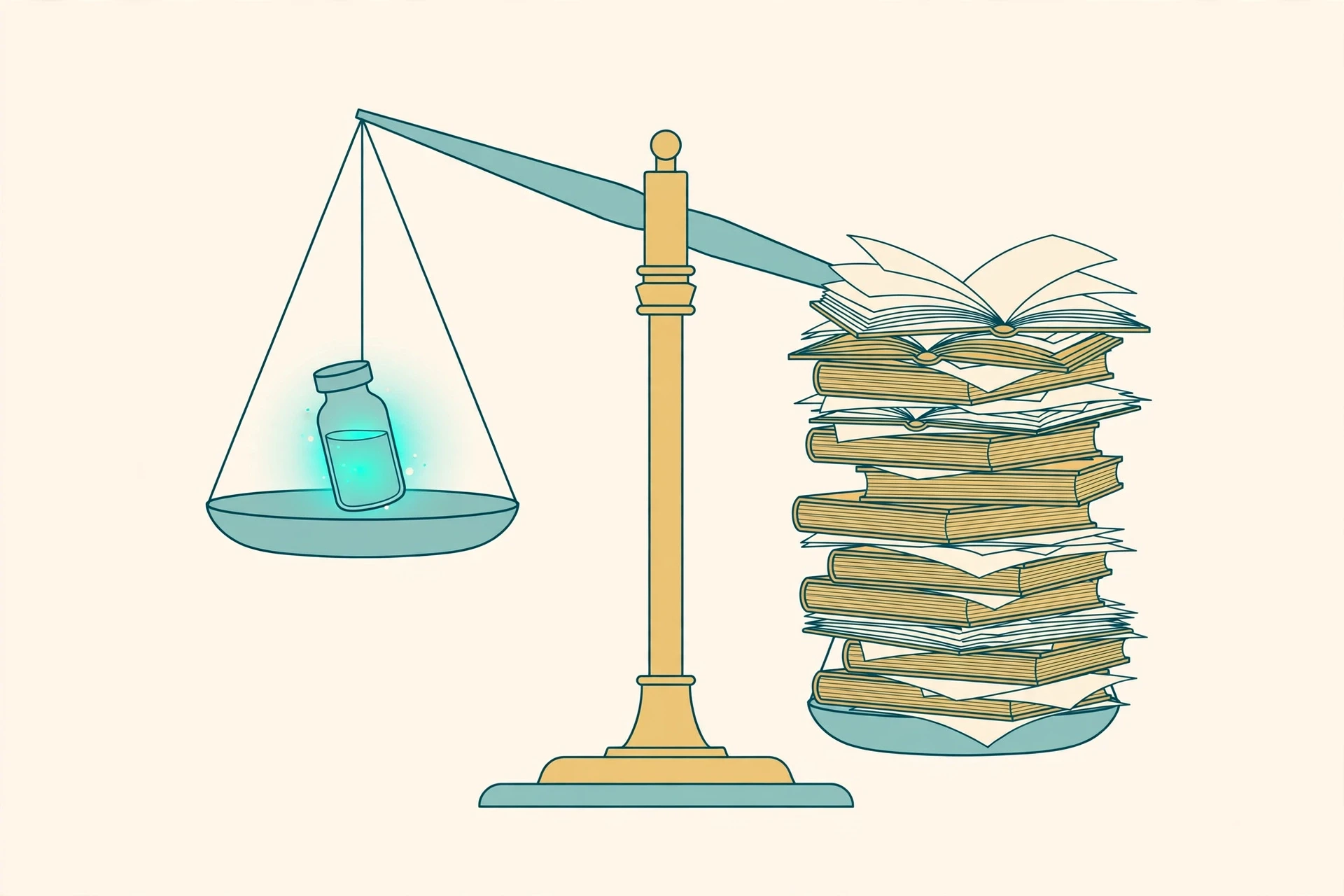
13.2 Where the vaccine myth came from: Wakefield, 1998, and a retracted paper
The myth began with a single paper. In February 1998, Andrew Wakefield and colleagues published a case series of twelve children in The Lancet, suggesting a possible link between the MMR vaccine, bowel disease and developmental regression. The paper itself admitted it did not prove causation. But the press conference that accompanied it did not admit that, and the story spread. What followed is a matter of public record: ten of the twelve co-authors retracted the interpretation in 2004; the UK General Medical Council found serious professional misconduct; The Lancet fully retracted the paper in February 2010; and Wakefield was struck off the medical register. The study was later shown to be not merely wrong but fraudulent. Yet the myth it launched outlived the paper by decades, and it is still repeated today — a reminder that a retraction, however complete, travels more slowly than the claim it retracts, and that fear, once planted, is hard to uproot.
13.3 Myth 2: "Autism is caused by bad parenting."
This myth has already been dealt with in Section 5, but it belongs here too, because it is still believed. The "refrigerator mother" idea — that cold, distant parenting causes autism — was wrong when it was proposed and wrong every year since. Twin studies, family studies and decades of research show that parenting style does not cause autism. Parents do not cause their child's autism by being too cold, too busy, too anxious, or too anything. They can, however, do a great deal to help their child once autism is identified — and blaming them for the condition is not only false, it actively gets in the way of that help.
13.4 Myth 3: "Autistic people lack empathy."
This is one of the most persistent myths about autism, and one of the most hurtful. It rests on a confusion between two different things: the ability to read other people's feelings quickly and automatically, and the capacity to care about other people. Many autistic people find the first hard — reading a face, catching a tone, knowing what someone else is feeling from a glance. That does not mean they do not care. In fact, many autistic people feel other people's emotions intensely — sometimes too intensely — and are distressed by the suffering of others. The double empathy problem in Section 9 explains why the confusion arises: the communication gap runs both ways, and non-autistic people are often just as bad at reading autistic people as autistic people are at reading them. To say autistic people lack empathy is to mistake a difference in how empathy is expressed for an absence of empathy altogether. It is wrong, and it is worth saying so plainly.
13.5 Myth 4: "Autism can be cured."
Autism cannot be cured, because it is not a disease. It is a lifelong difference in how the brain develops, and no drug treats autism itself and no intervention removes it. That does not mean nothing can be done — far from it. Support, accommodations, communication help and skill-building can change a person's life profoundly. But anyone selling a cure — a diet, a supplement, a detox, a therapy that promises to "recover" a child — is selling something the evidence does not support, and often selling it at a high price to families who are desperate for hope. The honest message is better than the false one: autism does not go away, and it does not need to. What a person needs is support to live well as an autistic person, not a promise to stop being one.
13.6 Myth 5: "Autism is a boys-only condition."
Autism is not a boys-only condition, and it never was. Girls and women have always been autistic, in numbers far closer to boys than the old 4:1 ratio suggested. They were missed because the picture of autism was drawn from boys, the criteria were written around boys, and the girls' autism looked different — quieter, better camouflaged, with interests that did not raise alarms. The latest numbers put the ratio at 3.4 to 1 in the United States, and closer to 3 to 1 when whole populations are screened. As Section 8 showed, girls are now being diagnosed faster than boys, and the gap is closing. The myth survives because the old picture survives in the public mind. It is time to update the picture.
13.7 Myth 6: "Autism is caused by too much screen time."
Screens do not cause autism. There is no evidence that watching television, using a tablet, or playing video games causes a child to become autistic, and the claim should not be presented as though a study supports it, because none does. What is true is that screens are predictable, controllable, and socially undemanding, which can make them attractive to a brain that finds the social world overwhelming. The arrow runs the other way: autism shapes screen use, not the reverse. Unlimited screen time is still not a good idea for any child. Blaming screens for autism confuses a coping strategy with a cause, and it distracts from the real work of supporting the child.
13.8 Myth 7: "All autistic people are the same."
If this article has established one thing, it is that autistic people are not all the same. One autistic person may not speak and need round-the-clock support; another may be a university professor who struggles to keep friends; a third may be a child who loves trains and hates the sound of the hoover. They share the two core patterns — social communication differences and restricted, repetitive patterns — and beyond that they differ as much as any group of people differs. The spectrum is not a line from mild to severe. It is a landscape, and every autistic person occupies a different place in it. Any sentence that begins "autistic people are..." and ends with a single trait is almost certainly wrong.
14. The History of Autism: From Kanner to Neurodiversity
14.1 Before Kanner: Bleuler's word and Sukhareva's children
The word "autism" is older than the diagnosis. It was coined by the Swiss psychiatrist Eugen Bleuler in 1911, from the Greek word for self, to describe the withdrawal into an inner world that he observed in schizophrenia. It meant something different then — a symptom of another condition, not a condition in its own right. More importantly, the children themselves were described long before Kanner. In 1926, the Soviet psychiatrist Grunya Sukhareva published detailed descriptions of children with autistic traits — their social difficulties, their repetitive behaviours, their intense interests — almost two decades before Kanner's paper, and her work was largely forgotten in the West. The history of autism, like the history of many ideas, has a longer and more international beginning than the textbooks suggest.
14.2 Kanner 1943: eleven children and a new idea
In 1943, the child psychiatrist Leo Kanner, working at Johns Hopkins University, published a paper describing eleven children — eight boys and three girls — who shared a pattern he had not seen described before: "a powerful desire for aloneness" and "an insistence on sameness". He called it "early infantile autism", and he argued that it was an inborn condition, distinct from childhood schizophrenia, present from the start of life. Kanner's paper is the founding document of autism as a diagnosis, and much of what he observed — the aloneness, the sameness, the insistence on routine — remains at the heart of the diagnosis today. Kanner also, unfortunately, suggested that parenting might contribute, an idea that later grew into the "refrigerator mother" theory. The paper's observations have lasted. Its speculation about parents has not, and should not.
14.3 Asperger 1944, and the problem with the name
A year after Kanner, in Vienna, Hans Asperger described four boys with what he called "autistic psychopathy" — children with social difficulties, intense interests and unusual language, but with strong intellectual ability. His work was little known in the English-speaking world until the British psychiatrist Lorna Wing wrote about it in 1981, and in 1994 the DSM-IV added "Asperger's disorder" as a separate diagnosis. For nearly twenty years, Asperger's syndrome was the label given to autistic people with strong language and intellectual ability. The DSM-5 removed it in 2013, folding it into the single autism spectrum diagnosis. There is a second reason the name has fallen away: archival research has shown that Asperger cooperated with the Nazi regime's race-hygiene policies, including referring children to a clinic where they were killed. Many autistic people and clinicians now avoid the eponym entirely, and the diagnosis it named no longer exists as a separate category.
14.4 DSM-III to DSM-5: from a rare disorder to a spectrum
The diagnostic history of autism is a history of widening. In 1980, the DSM-III first recognised autism as a distinct category — "infantile autism" — and it was considered rare. In 1994, the DSM-IV added Asperger's disorder, childhood disintegrative disorder and pervasive developmental disorder not otherwise specified as separate categories under the umbrella of pervasive developmental disorders. In 2013, the DSM-5 merged them all into one diagnosis, autism spectrum disorder, with the two core domains and the three levels of support. The DSM-5-TR, published in 2022, clarified the wording of the social communication criteria. The ICD-11, the World Health Organization's classification in use from January 2022, also uses autism spectrum disorder, coded 6A02, subdivided by intellectual development and functional language. Each revision widened the definition, and each widening brought more people into the count — which is a large part of why the prevalence numbers in Section 2 rose as they did.
14.5 The neurodiversity movement: Judy Singer and a new frame
The most important shift in how autism is understood did not come from a clinic or a laboratory. It came from autistic people themselves. In the late 1990s, the Australian sociologist Judy Singer coined the term "neurodiversity" — the idea that variations in brain development, including autism, are a natural part of human diversity, like variations in height or handedness, rather than defects to be fixed. The neurodiversity movement that grew from that idea reframes autism: the problem is not the autistic brain, but a world designed for one kind of brain, and the solution is to change the world — to accommodate, include and accept — rather than to change the person. That frame now shapes research, policy and education, and it is the frame this article has used throughout: autism as a difference to be understood and supported, not a disease to be cured.
14.6 Identity-first or person-first: what the surveys say, and why individual choice wins
The language debate that this article flagged in Section 1 belongs here, at the end, because it is part of the history. For decades, professional convention favoured person-first language — "person with autism" — on the grounds that the person comes before the condition. Many autistic adults disagree, and they have said so in surveys: in a UK survey of 3,470 people, 61 percent of autistic adults endorsed "autistic", against 28 percent for "person with autism"; in a 2023 US survey by Taboas and colleagues, 87 percent of autistic adults said they preferred identity-first language. Their argument is that autism is not something they carry but something they are — part of how they experience the world, not a disease attached to them. Professionals, in the same UK survey, preferred person-first language by a large margin, which is why the two forms coexist and why the debate continues. Preference varies by culture: a Dutch-language study (Buijsman et al., 2023) found 68.3 percent of 1,026 Dutch autistic adults preferred person-first wording. The right conclusion is not that one form is correct and the other wrong. It is that individual choice wins: use the words a person prefers for themselves, and when writing for a general audience, follow the preference of the majority of autistic adults — which, in English, is identity-first. This article has done that throughout, and it will keep doing so.
Frequently Asked Questions
What causes autism?
Autism is caused mainly by genetics, with smaller contributions from factors before birth. Twin studies estimate heritability at 64 to 91 percent, and a five-country study of more than two million children put it at about 80 percent. Hundreds of genes contribute to that risk, each adding a small amount, with no single "autism gene". The largest peer-reviewed study identified 102 genes, most of which build synapses or regulate other genes during early brain development. Beyond genetics, prenatal factors such as advanced parental age, premature birth, and exposure to valproate in pregnancy can nudge the likelihood up slightly. Vaccines do not cause autism, and parenting does not cause autism.
Is autism genetic?
Yes, strongly — autism is one of the most heritable conditions in medicine. Heritability estimates from twin studies run from 64 to 91 percent, and a study of more than two million children in five countries estimated it at about 80 percent. But "genetic" does not mean "caused by one gene": hundreds of genes contribute, each with a small effect, and the largest peer-reviewed study identified 102 of them. A sibling of an autistic child has about a 20 percent chance of also being autistic — about 25 percent for a baby brother and 13 percent for a baby sister. Some genetic risk is new, appearing for the first time in the child rather than being inherited from either parent.
How is the autistic brain different?
The autistic brain develops along a different path from the start. Early brain growth is faster than usual in some autistic children, though that finding is contested and applies to a subgroup rather than to everyone. The wiring is organised differently: the simple story of strong local connections and weak long-range ones has not held up, and large brain-scan datasets show a mixed pattern of stronger and weaker connections. The corpus callosum, the bridge between the hemispheres, is reduced in area — one of the more replicated findings. The amygdala develops differently, and the direction of the difference changes with age. At the level of synapses, researchers debate whether pruning keeps too many connections or cuts too many. No single brain difference defines autism, and no scan can diagnose it.
Do vaccines cause autism?
No. Four large studies have tested the claim and found no link: Madsen and colleagues studied 537,303 Danish children and found a relative risk of 0.92; Taylor and colleagues combined studies covering more than 1.2 million children and found no association; Jain and colleagues studied 95,727 American children, including children at high genetic risk, and found no increased risk at any age; and Hviid and colleagues followed 657,461 Danish children and found a hazard ratio of 0.93. The claim began with a 1998 paper about twelve children, which was fully retracted in 2010 after being found fraudulent, and whose author lost his medical licence. The WHO's own fact sheet says extensive research has demonstrated the measles, mumps and rubella vaccine does not cause autism.
What are the early signs of autism?
The early signs are mostly about social attention and communication. In the first year: not responding to their name by nine to twelve months, little eye contact, and few or no gestures by twelve months. In the second year: not pointing to show something interesting by fourteen to eighteen months, no single words by sixteen months, and no pretend play by eighteen months. Some children lose skills they once had, which needs prompt attention. Autism can sometimes be detected at 18 months, and a diagnosis made by an experienced professional at age two can be considered reliable. Screening is recommended at 18 and 24 months, but the median age of earliest diagnosis in the United States is still 47 months. One missed milestone is not a diagnosis — it is a reason to talk to a paediatrician.
Can autism be cured?
No. Autism lasts for life: it is a difference in brain development, not an illness, and no drug treats autism itself and no intervention removes it. Support, accommodations and skill-building can improve daily life a great deal — help with communication, sensory accommodations, predictable routines, and the right support at school and work all make a real difference. Anyone offering a cure — a diet, a supplement, a detox, a therapy promising to "recover" a child — is offering something the evidence does not support. The goal is not to stop a person being autistic. It is to help them live well as an autistic person.
Why are more children being diagnosed with autism?
Mostly because identification has improved. In the United States, identified prevalence rose from 1 in 150 eight-year-olds in 2000 to 1 in 31 in 2022. The definition has broadened, screening is now routine at 18 and 24 months, parents and doctors know what to look for, children are diagnosed earlier, and groups once missed — girls, children from minority backgrounds, children with strong language skills — are now being counted. The CDC attributes most of the rise to these factors. The data cannot exclude a small real increase, but they show no sudden surge caused by any single new factor. The rise is steady and gradual, and it tracks changes in how autism is defined and found.
Sources
Centers for Disease Control and Prevention. Autism prevalence varies across US communities.
Centers for Disease Control and Prevention. Screening for Autism Spectrum Disorder.
World Health Organization. Autism — fact sheet (updated 17 September 2025).
Kanner L. Autistic disturbances of affective contact. Nervous Child, 1943;2:217–250. (Full text.)
Children's Hospital of Philadelphia, Vaccine Education Center. Vaccines and autism.
Gastrointestinal symptoms in autism: a global meta-analysis. Frontiers in Psychiatry, 2022.
Raising Children Network (Australia). DSM-5 and autism diagnosis: the criteria explained.
Undivided. Autism and co-occurring diagnoses: CDC data summary.