

1. The Rain That Burned
Acid rain is rain made corrosive by sulfur dioxide and nitrogen oxides from burning fossil fuels — strong enough to dissolve stone, empty lakes of fish, and thin whole forests.
The first time I watched acid rain do its work, I did not know what I was looking at. I was standing in front of an old stone church on a grey afternoon, rain dripping off the roof, and a caretaker pointed up at a row of carved faces along the wall. The features were soft, as if someone had rubbed them with sandpaper for a hundred years. "They used to have noses," he said, and laughed, but it was not really a joke. The stone was limestone, and the rain that fell on it year after year was not the clean water I had imagined rain to be.
That image stayed with me. Rain is supposed to be the purest water on Earth, the stuff of poems and fresh starts. The idea that rain itself could be corrosive felt wrong, like finding out that sunlight could rot wood. Yet the chemistry is straightforward, and once you see it, you cannot unsee it. Acid rain is one of those problems that sits at the exact meeting point of chemistry and everyday life: gases from a smokestack hundreds of miles away dissolve into a cloud, and months later a fish dies in a lake that has never seen a factory.
I have spent years in laboratories measuring pH, titrating acids, and watching solutions change colour at the exact moment they cross from acid to base. The bench work taught me precision. The field taught me something else: that the numbers on a pH meter are not abstractions. A lake at pH 4.5 is a lake where trout eggs no longer hatch. A forest soil stripped of calcium is a forest that cannot grow straight, strong trees. A marble statue losing its face is a piece of human history dissolving, one raindrop at a time.
This article follows the whole story of acid rain, from the gases that cause it to the chemistry that turns them into acids, from the lakes and forests it damages to the buildings it slowly eats, and finally to the part of the story that surprises most people: acid rain is one of the few large environmental problems that has actually been pushed back, measurably, by deliberate action. The rain is still more acidic than it should be in many places. But the trend lines bend in the right direction, and understanding why they bend is the most useful thing this chemistry has to teach us.
2. What Acid Rain Actually Is
Acid rain is precipitation — rain, snow, fog, sleet, or hail — that is unusually acidic because it contains higher-than-normal amounts of sulfuric acid and nitric acid.
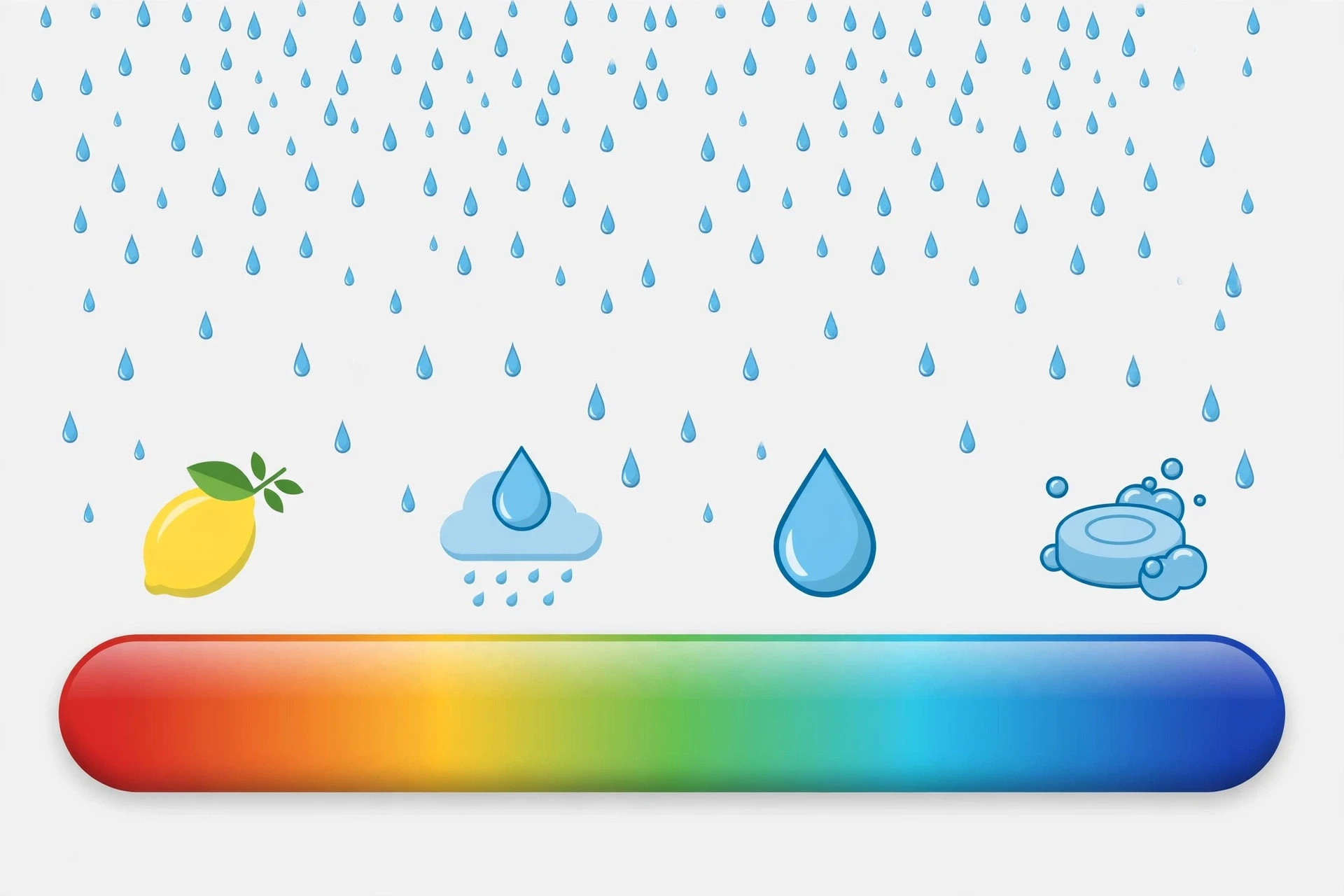
The name is a little misleading, because even perfectly clean rain is slightly acidic. Pure water has a pH of 7, neutral, but rainwater is never pure water. As a raindrop falls through the air it picks up carbon dioxide, and carbon dioxide plus water makes carbonic acid, a weak acid. That is why unpolluted rain measures around pH 5.6, already mildly acidic.
Scientists therefore draw the line at that number. Rain with a pH below 5.6 counts as acid rain. In the most affected regions, rain has been measured at pH 4.0 to 4.5, and in extreme cases far lower. Because the pH scale is logarithmic, that difference is much bigger than it sounds: rain at pH 4 is ten times more acidic than rain at pH 5, and a hundred times more acidic than rain at pH 6. A single point on the scale is a tenfold jump, and acid rain routinely sits one to two points below normal rain. That is the first thing to grasp about this problem. Small numbers on the pH scale hide enormous changes in chemistry.
The term itself is older than most people realise. The English chemist Robert Angus Smith coined the phrase "acid rain" in 1872, after studying the rain falling on the industrial city of Manchester. He noticed that the rain near factories was far more acidic than rain in the countryside, and he connected it to the smoke pouring out of chimneys. Smith was writing during the Industrial Revolution, when coal smoke was a sign of prosperity and nobody had a word for what the smoke did after it left the chimney. He gave the problem its name more than a century before governments started acting on it.
Acid rain also includes dry deposition. That sounds like a contradiction, but it matters. Acidic gases and tiny particles can settle directly onto buildings, trees, and soil without any rain at all, and when the next rain comes, the deposited acids wash off into the soil and water. Roughly half of the acidity that falls on a landscape in some regions arrives this dry way, silently, on days when the sky looks clear. A dry, dusty week can load a forest canopy with acidic particles, and the first storm of the following weekend delivers them all at once.
The crucial fact about acid rain is that it is a transport problem as much as a chemistry problem. The gases that cause it can drift on the wind for hundreds of miles before they turn into acid and fall. A power station in one country can acidify lakes in another. That is why acid rain became one of the first environmental problems that forced countries to negotiate with each other: no nation could fix its own rain alone.
2.1 Why normal rain is already slightly acidic
The carbon dioxide in the air is the reason ordinary rain is never neutral. When carbon dioxide dissolves in water, it forms carbonic acid:
CO2 + H2O → H2CO3
Carbonic acid is a weak acid, which means only a small fraction of its molecules split apart to release hydrogen ions. OpenStax Chemistry defines the terms this way: "A compound that donates a proton to another compound is called a Brønsted-Lowry acid, and a compound that accepts a proton is called a Brønsted-Lowry base." That is why normal rain stops at pH 5.6 instead of plunging lower. The system reaches a balance: the air holds a fairly steady amount of carbon dioxide, the rain holds a fairly steady amount of carbonic acid, and the pH settles near 5.6. It is a gentle, stable acidity, and life in lakes and soils evolved with it over millions of years.
2.2 The two acids that matter
Two strong acids do almost all of the damage in acid rain: sulfuric acid (H2SO4) and nitric acid (HNO3). Unlike carbonic acid, these are strong acids. When they dissolve in water, they release their hydrogen ions readily, and the pH drops sharply. Sulfuric acid comes from sulfur dioxide, and nitric acid comes from nitrogen oxides. Those two gases are the starting materials, and the atmosphere is the reaction vessel.
Sulfuric acid is the heavier contributor in most regions, historically responsible for roughly two-thirds of the acidity in acid rain in the eastern United States, with nitric acid supplying most of the rest. The balance shifts from place to place and over time: as sulfur emissions have fallen faster than nitrogen emissions in many countries, the nitric acid share has grown. That shift matters for policy, because the two acids come from different sources and need different fixes. Sciory's Acids and Bases Explained covers how strong and weak acids differ, and why that matters for pH.
3. What Causes Acid Rain?
The short answer is that acid rain is caused by sulfur dioxide (SO2) and nitrogen oxides (NOx) released into the atmosphere, where they react with water and oxygen to form sulfuric and nitric acids.
3.1 Sulfur dioxide: the coal problem
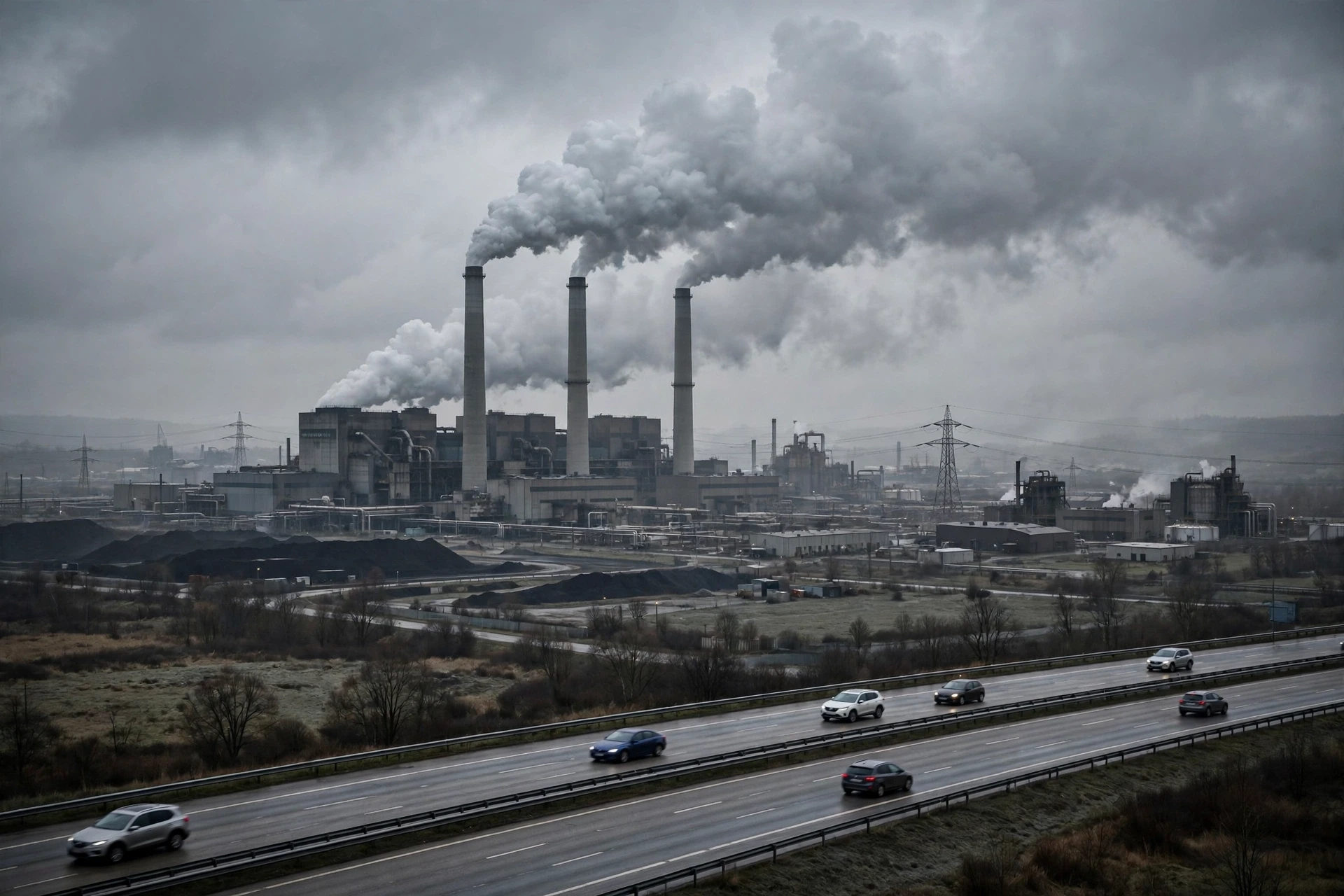
Sulfur dioxide is a sharp-smelling, colourless gas. The largest human source is the burning of fossil fuels, above all coal. Coal contains sulfur locked into its structure, and when coal burns, the sulfur burns too, forming sulfur dioxide. In the United States, about two-thirds of sulfur dioxide emissions have historically come from electric power generation, mostly coal-fired power plants. Metal smelting, oil refining, and other industrial processes add more.
I once stood on a hill overlooking a coal plant at dusk, watching the plume from its stack catch the last light. The plume looked almost beautiful, pale against the darkening sky, and that was the unsettling part. Nothing about it announced itself as dangerous. Sulfur dioxide is invisible in the concentrations that matter, and the damage it causes happens hundreds of miles downwind, days later, in a lake the plant's operators will never see. That distance between cause and effect is the reason acid rain took so long to become a political issue.
Volcanoes are the biggest natural source of sulfur dioxide, and a single large eruption can release more sulfur dioxide in a week than a country emits in a year. Forest fires, hot springs, and the microbial decay of organic matter add smaller amounts. But natural sulfur dioxide has been part of the atmosphere for as long as there have been volcanoes, and ecosystems evolved with it. The problem is the extra load: human activity roughly doubled the amount of sulfur cycling through the atmosphere in the industrial era, and it did so in exactly the regions where the most vulnerable lakes and forests sit.
3.2 Nitrogen oxides: the high-temperature problem
Nitrogen oxides — written NOx, a shorthand for nitric oxide (NO) and nitrogen dioxide (NO2) together — form whenever air gets hot enough for nitrogen and oxygen to react with each other. The air is about 78 percent nitrogen and 21 percent oxygen, and under normal conditions those two gases ignore each other. At the high temperatures inside a car engine, a power plant boiler, or a lightning bolt, they combine:
N2 + O2 → 2NO
Nitric oxide then reacts quickly with oxygen in the air to form nitrogen dioxide, the brownish gas that gives smog its colour:
2NO + O2 → 2NO2
Vehicles are a major source of nitrogen oxides, along with power plants and industrial boilers. Lightning is the main natural source, and it has been making nitrogen oxides for as long as there have been thunderstorms. Microbes in soil release some too. But as with sulfur, the human contribution dominates in populated regions: in the United States, roughly a quarter of nitrogen oxide emissions come from electric power generation, and a large share of the rest comes from transport.
This is also why acid rain and smog are cousins. The same nitrogen dioxide that browns the sky over a city on a hot afternoon is the precursor of the nitric acid that falls on a forest a hundred miles away. Clean-air policies that target one pollutant often help with the other, which is one of the few pieces of good news in this story.
3.3 Natural versus human sources
It is worth being precise here, because a common misunderstanding is that acid rain is entirely a human invention. It is not. Volcanoes, lightning, forest fires, and decaying vegetation have always produced sulfur dioxide and nitrogen oxides, and rain has always been slightly acidic because of carbon dioxide. What human activity did was to raise the concentrations far above the natural background, and to concentrate the emissions in industrial regions where the wind carries them over sensitive landscapes.
The other natural factor is geology. Some landscapes can shrug off acid rain and some cannot. Regions with limestone bedrock have a natural buffer: the calcium carbonate in the rock neutralises acid, the way an antacid settles an upset stomach. Regions built on granite or thin, sandy soils have almost no buffering capacity, and their lakes and forests take the full hit. That is why the worst acid rain damage showed up in specific places — the lakes of Scandinavia and Canada, the forests of Central Europe and the Appalachians — even though the emissions came from industrial centres elsewhere. The map of damage is a map of geology as much as a map of pollution.
4. The Chemistry: From Gas to Acid
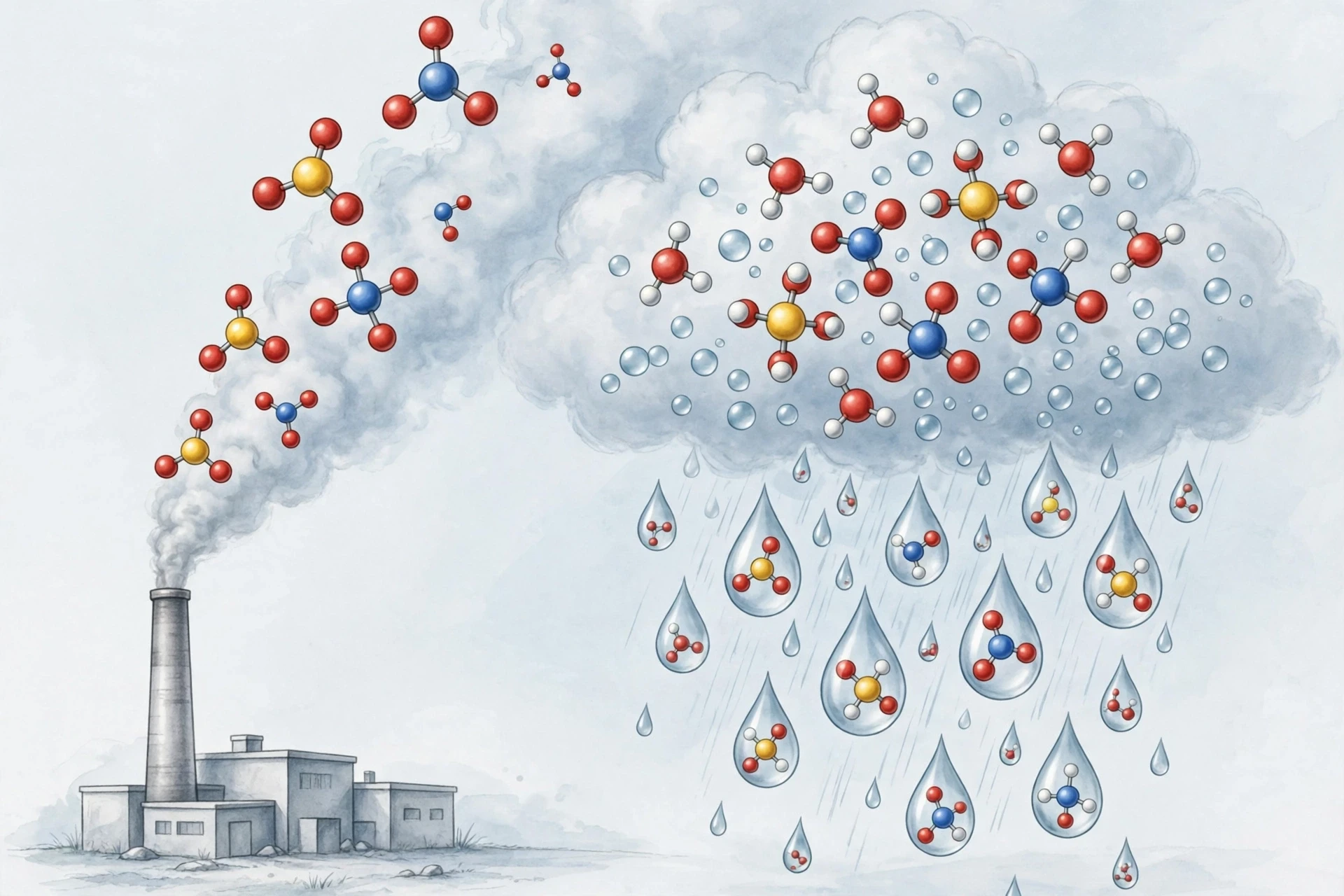
The chemistry of acid rain is a chain of reactions, and each step is simple on its own.
Together they explain how an invisible gas becomes a corrosive liquid. Understanding the chain also explains why the problem takes time to develop — the gases need hours or days in the atmosphere before they become acids — and why the damage falls far downwind of the source.
4.1 The sulfur pathway
Sulfur dioxide dissolves in water to form sulfurous acid:
SO2 + H2O → H2SO3
Sulfurous acid is a weak acid, but it does not stay sulfurous acid for long. Oxygen in the air oxidises it, step by step, into sulfuric acid:
2H2SO3 + O2 → 2H2SO4
Sulfuric acid is a strong acid and a strong dehydrating agent — the same substance used in car batteries and industrial processes, now falling from the sky in dilute form. It dissociates in water to release hydrogen ions, and those hydrogen ions are what the pH scale measures. Sunlight, ozone, and hydrogen peroxide in the atmosphere speed up the oxidation, which is why the conversion happens faster on bright, polluted days.
There is a detail here that chemists find elegant and everyone else finds alarming: the oxidation of sulfur dioxide is catalysed by tiny particles in the air, including soot and metal dust from the very same smokestacks that emit the gas. The pollution helps convert itself into acid. In the laboratory, I have watched similar catalytic steps turn a slow reaction into a fast one with a pinch of the right material, and the atmosphere does the same trick at continental scale.
4.2 The nitrogen pathway
Nitrogen dioxide dissolves in water to form a mixture of nitrous acid and nitric acid:
2NO2 + H2O → HNO2 + HNO3
Nitrous acid is then oxidised by oxygen into more nitric acid, so the overall reaction for the nitrogen pathway is:
2N2 + 5O2 + 2H2O → 4HNO3
Nitric acid is also a strong acid. It dissociates completely in water, releasing hydrogen ions, and it brings something extra with it: nitrate, a nutrient. When nitric acid falls on soil and water, it does not just acidify — it fertilises. That sounds harmless, but excess nitrogen is its own problem, overfeeding algae in lakes and changing which plants grow in a forest. Acid rain delivers acid and fertiliser in the same drop, and ecosystems have to cope with both at once.
4.3 Why the reactions take time
None of this happens instantly. Sulfur dioxide must first dissolve into cloud droplets or onto the surface of airborne particles, and the oxidation steps need time, sunlight, and the right catalysts. That delay is the reason acid rain is a regional problem rather than a local one: by the time the gas has become acid, the wind has carried it far from the smokestack. A city can emit sulfur dioxide all week and receive relatively clean rain, while a forest three hundred miles away receives the acid.
The delay also explains the pattern of dry deposition. Gases and particles that have not yet become acid can settle onto surfaces directly. When rain eventually falls, it washes the accumulated material off leaves, roofs, and soil, delivering a concentrated dose of acid all at once. The first rain after a long dry spell is often the most acidic, because it carries the backlog of an entire dry period.
4.4 What the reactions leave behind
Once sulfuric and nitric acids reach the ground, they do not simply vanish. They react with whatever they touch: soil minerals, rock, plant surfaces, lake water, metal, paint. In soil, the hydrogen ions from the acids displace nutrient ions such as calcium, magnesium, and potassium from soil particles, and the nutrients wash away. In lakes, the acids lower the pH and free aluminium from the soil and sediment. In stone, the acids dissolve calcium carbonate. Each of these reactions is ordinary chemistry — the same acid-base reactions you can run in a school laboratory — playing out across whole landscapes, year after year.
5. What Is the pH of Acid Rain?
The pH scale measures how acidic or alkaline a solution is, on a scale from 0 to 14. A pH of 7 is neutral.
Below 7 is acidic, above 7 is alkaline. The scale is logarithmic, which means each whole-number step represents a tenfold change in hydrogen ion concentration. Rain at pH 4 has ten times the hydrogen ion concentration of rain at pH 5, and a hundred times that of rain at pH 6.
Normal rain, with only carbon dioxide dissolved in it, measures about pH 5.6. The EPA states it plainly: "Normal rain has a pH of about 5.6; it is slightly acidic because carbon dioxide (CO2) dissolves into it forming weak carbonic acid. Acid rain usually has a pH between 4.2 and 4.4." Acid rain is defined as precipitation with a pH below 5.6. In practice, the most acidic rain recorded in the United States has ranged from about pH 4.0 to 4.5, with individual storms measuring as low as pH 2 in extreme cases reported in the literature — comparable to lemon juice or vinegar. Fog can be even more acidic than rain, because fog droplets are smaller and can concentrate more acid; fog in polluted areas has been measured at pH levels well below those of the rain falling in the same place.
The table below puts the numbers in everyday context. Most people have never held a pH meter, but everyone knows what lemon juice tastes like, and the comparison makes the scale concrete. Sciory's What Is the pH Scale? explains the logarithmic scale and how pH is measured.
Substance | Typical pH | What it means |
|---|---|---|
Battery acid | 1.0 | Extremely acidic; corrosive to skin and metal |
Lemon juice | 2.0 | Sharply acidic; close to the lowest pH ever recorded for rain (1.87, Inverpolly Forest, Scotland, 1983) |
Vinegar | 2.5 | Acidic enough to sting a cut |
Acid rain (most affected regions) | 4.0–4.5 | About thirteen to forty times more acidic than normal rain |
Tomato juice | 4.0 | About as acidic as badly affected rain |
Normal rain | 5.6 | Slightly acidic from dissolved carbon dioxide |
Pure water | 7.0 | Neutral |
Seawater | 8.0 | Mildly alkaline |
Baking soda solution | 9.0 | Alkaline; used to neutralise acids |
5.1 How pH is measured in the field
Measuring the pH of rain is not as simple as dipping a strip of paper into a puddle. Rain is collected in special gauges that open only when it rains, so that dust and dry deposition do not contaminate the sample. The water is then measured with a calibrated pH electrode, the same kind of instrument used in laboratories, and the results are recorded along with the amount of rainfall. Monitoring networks — such as the National Atmospheric Deposition Program in the United States — have collected rain samples this way for decades, building the long-term records that show acid rain rising through the twentieth century and falling again after emissions were cut.
5.2 Why a small pH change matters so much
Because the scale is logarithmic, a shift from pH 5.6 to pH 4.6 is not a small change — it is a tenfold increase in acidity. Biological systems are sensitive to exactly this kind of change. Fish eggs fail to hatch below about pH 5. Most freshwater fish cannot survive for long below pH 4.5. The organisms at the base of the food web — the tiny invertebrates and plankton that fish eat — are often more sensitive still. A lake can look clear and beautiful at pH 4.5 and be nearly empty of life, because the water is too acidic for the creatures that should live in it.
The same logic applies to soil. A soil at pH 5 supports a different community of microbes than a soil at pH 4, and the microbes that break down dead leaves and release nutrients slow down or die as acidity rises. Nutrients stay locked in dead leaves instead of returning to the soil, and the forest slowly starves even as its trees still stand. The damage is chemical first, and visible only later.
6. Wet Deposition, Dry Deposition, and Fog
Acid rain arrives in three forms, and each one behaves differently.
Wet deposition is what most people picture: acidic rain, snow, sleet, or hail falling from the sky. Dry deposition is the quiet partner: acidic gases and particles settling directly onto surfaces without rain. Fog is the third form, and it is the most concentrated of all.
6.1 Wet deposition
Wet deposition is the main route by which acid reaches lakes and soils. Rain washes sulfuric and nitric acids out of the atmosphere and delivers them to the ground, where they soak into soil or run off into streams. Snow does the same thing more slowly: acidic snow accumulates all winter, and when it melts in spring, it releases a concentrated pulse of acid into streams and lakes in a few weeks. That spring pulse is called an acid shock, and it can kill fish just as they are spawning. A lake that survived the winter can lose its fish in April, when the snowmelt arrives.
The timing matters as much as the amount. A steady drizzle of mildly acidic rain is less damaging than the same total acid delivered in a single spring melt, because organisms can cope with a slow change and not with a sudden one. The acid shock phenomenon is one of the reasons researchers pay so much attention to snowpack chemistry in mountain regions.
6.2 Dry deposition
Dry deposition accounts for a large share of total acid loading in many regions — in some places, close to half. Sulfur dioxide gas, nitrogen dioxide gas, and tiny sulfate and nitrate particles settle onto leaves, buildings, soil, and water surfaces. They sit there until rain washes them off, or until dew dissolves them. The process is invisible, which is why it took researchers years to realise how important it was. A forest canopy is an efficient collector of dry deposition: every leaf is a surface, and a whole forest has an enormous surface area.
Dry deposition also explains why damage can be severe in places that receive relatively little rain. A dry, dusty region downwind of a power plant can accumulate acidic particles for weeks, and the first rain delivers them in one dose. The total acid load, wet plus dry, is the number that matters, not the rainfall alone.
6.3 Fog and cloud water
Fog droplets are much smaller than raindrops, and they form in the air close to the ground, where pollutant concentrations are highest. As a result, fog water can be far more acidic than rainwater falling in the same place.
"The rain that falls on a forest is not the same water that fell on the forest a century ago. We changed the sky, and the sky changed the forest."
That line is not a quotation from a particular paper; it is the summary I give when someone asks me why acid rain matters. The chemistry is invisible, the damage is slow, and the connection between the two is easy to miss unless you follow the acid from the smokestack to the leaf.
7. How Acid Rain Affects Forests
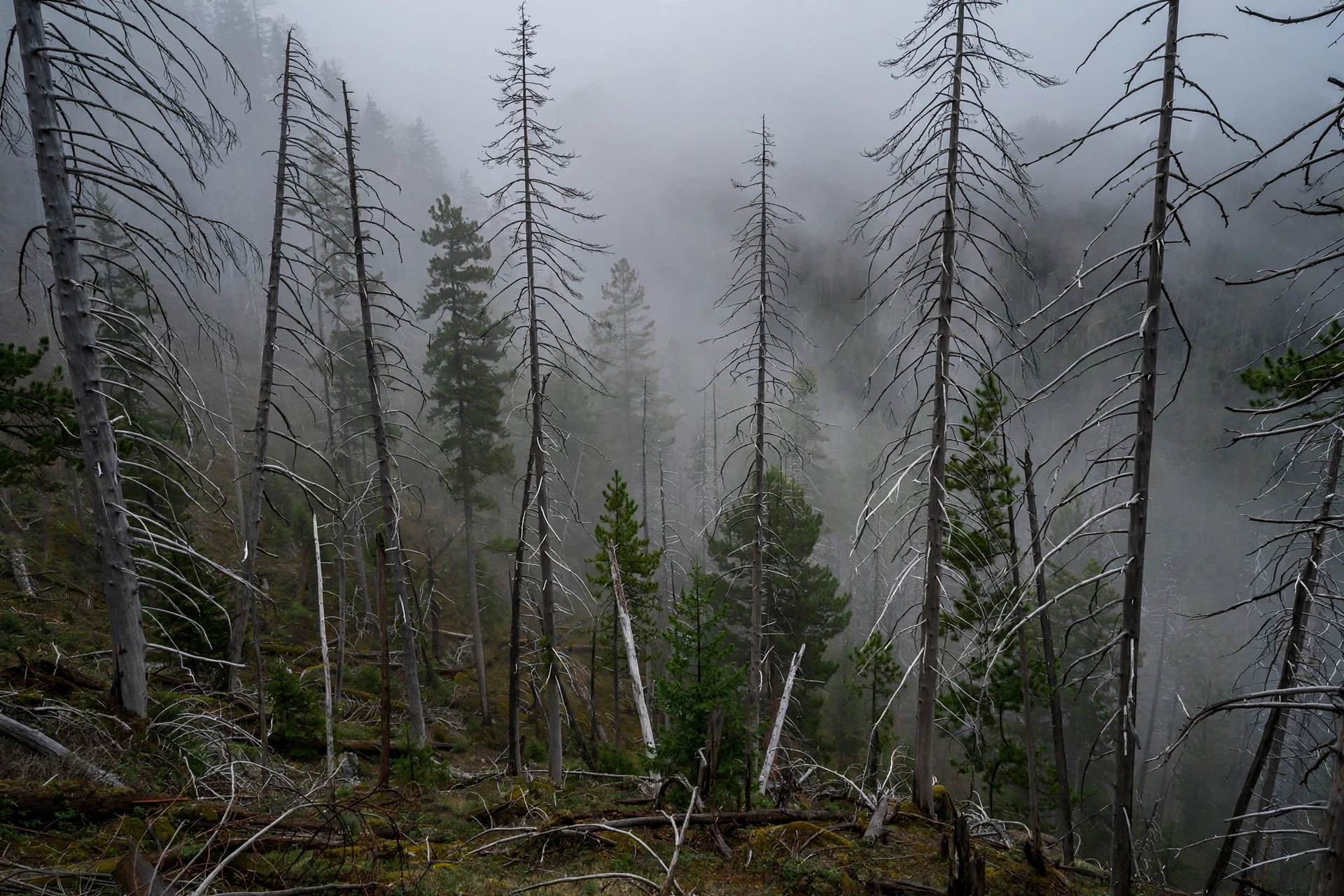
Forests were where the damage of acid rain first became visible to the public, and the images — whole mountainsides of grey, dead spruce — became the symbol of the problem in the 1970s and 1980s. The damage works through several routes at once, and that is what makes it hard to reverse.
7.1 Leaves under attack
Acidic fog and rain damage the waxy cuticle that coats leaves and needles. That coating is the leaf's skin: it keeps water in and keeps nutrients from leaking out. When acid strips it away, the leaf loses water faster and leaks calcium and magnesium, two nutrients the tree needs. The tree becomes more vulnerable to drought, to frost, and to insects and disease. A single acid event does little harm. Decades of them wear the tree down, the way decades of small scratches wear down a varnished table.
High-elevation forests suffer most, because they spend the most time inside clouds and fog, and because their soils are usually thin and poor in buffering minerals. The red spruce forests of the Appalachian Mountains, and the spruce and fir forests of Central Europe, were hit hardest. In Germany in the 1980s, the dying forests became a national crisis, and the German word for it — Waldsterben, forest death — entered the international vocabulary.
7.2 Roots in poisoned soil
The deeper damage happens underground. Acid rain leaches calcium and magnesium out of the soil, and it frees aluminium from soil minerals. Aluminium is normally locked away in harmless forms, but in acidic soil it dissolves into Al3+ ions, which are toxic to plant roots. Aluminium damages root tips, stops roots from growing, and blocks the uptake of water and nutrients. A tree with damaged roots cannot feed itself, even if its leaves look healthy.
I once dug a soil pit in a forest that had been receiving acid rain for decades, and the roots told the story before any instrument did. The fine roots — the ones that do most of the absorbing — were short, stubby, and brown at the tips, instead of long, pale, and branching. The soil itself smelled sour and felt different, less crumbly, more compacted. It was the kind of observation that does not appear in a data table, but it stays with you.
7.3 The slow starvation
Forests damaged by acid rain often do not die suddenly. They grow more slowly, produce fewer seeds, and lose more trees each winter. The canopy thins, light reaches the forest floor, and the mix of species changes: sensitive trees decline, and tougher species take their place. The forest still looks like a forest, but it is a poorer one, storing less carbon, sheltering fewer animals, and recovering more slowly from storms and droughts.
This is also why the damage is hard to attribute to a single cause. A forester looking at a dying spruce sees frost damage, insect attack, and poor growth all at once. Acid rain is rarely the only stress, but it is often the stress that tips the balance — the one that makes the tree too weak to survive the frost or the insects that a healthy tree would shrug off. Researchers call this a predisposing factor, and it is the reason acid rain damage was debated for so long even while the forests were visibly thinning.
8. How Acid Rain Affects Lakes and Rivers
If forests were the visible face of acid rain, lakes were its quietest tragedy.
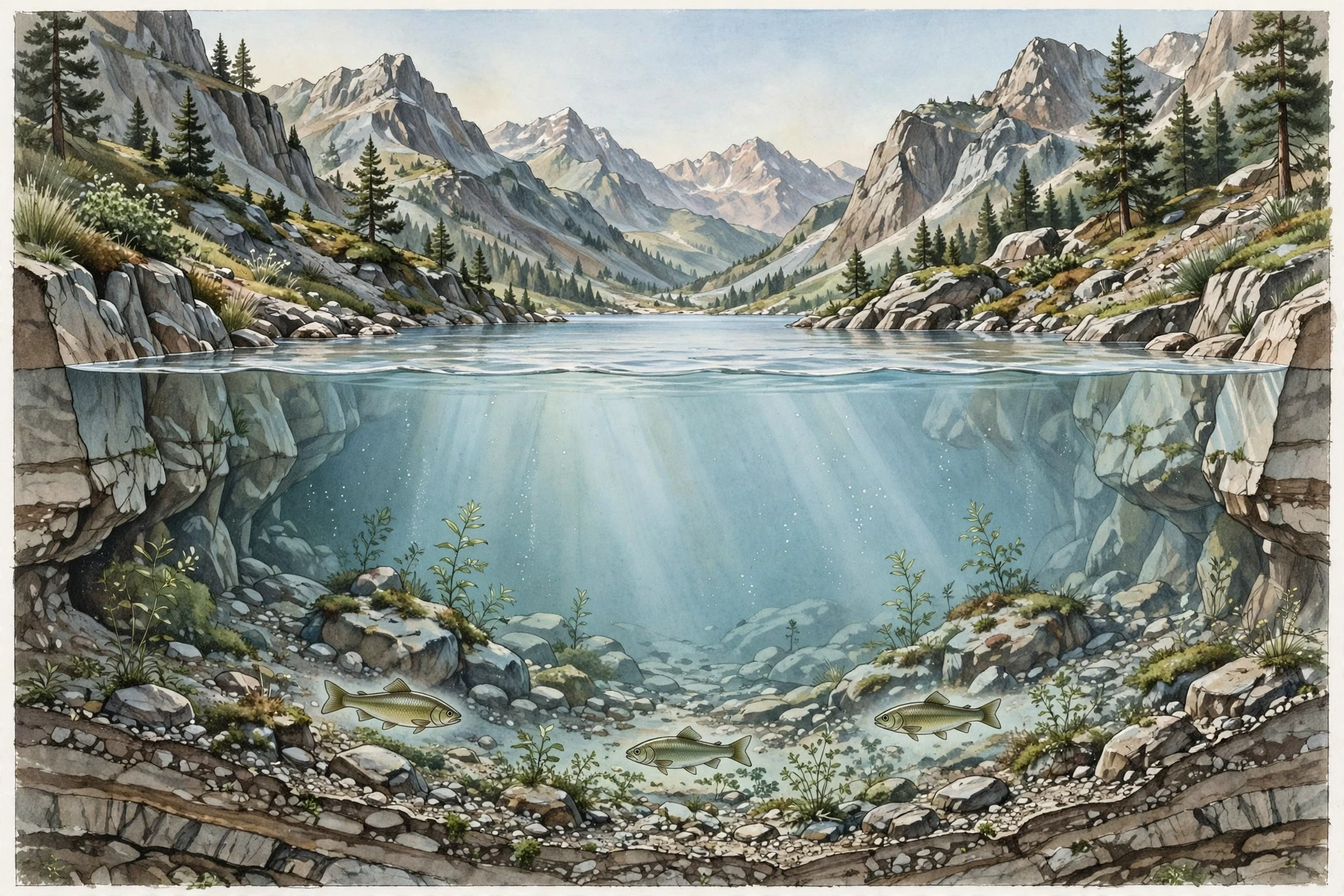
A lake can look pristine — clear water, rocky shores, pine trees reflected in the surface — and be biologically empty. The clarity itself is a symptom: in an acidic lake, the plankton and invertebrates that cloud the water with life are gone, and the water is clear because there is nothing living in it.
8.1 The pH ladder of life
Different organisms tolerate different levels of acidity, and as a lake's pH falls, species drop out one by one. Sensitive mayflies and stoneflies disappear first, then crayfish and snails, then the more tolerant fish. Below pH 5, most fish eggs fail to hatch, and adult fish begin to die. Below pH 4.5, most fish are gone entirely. The lake does not become sterile — a few acid-tolerant species, such as certain mosses and midges, may thrive — but the food web collapses from the bottom up.
The numbers come from decades of field surveys and laboratory studies, and they are consistent enough to be used as a guide. The US Environmental Protection Agency (EPA) summarises the effects on its acid rain pages, noting that as lakes acidify, fish and other aquatic life decline, and that aluminium released from soils is a key part of the mechanism. The EPA's pages on the effects of acid rain are a good starting point for anyone who wants the official account of what the research found.
8.2 Aluminium: the hidden killer
The direct cause of most fish deaths in acidified lakes is not the acid itself but the aluminium it frees. In neutral soil, aluminium sits locked in minerals. As soil pH falls below about 5, aluminium dissolves into the soil water as Al3+ ions, which wash into streams and lakes. Aluminium damages fish gills, coating them with mucus and blocking the exchange of oxygen and salts. A fish in aluminium-rich water suffocates slowly, even in water that looks clear and well oxygenated.
I remember a field trip to a lake in the Adirondacks, in New York State, where the water was so clear you could see the bottom twenty feet down. The beauty was deceptive. The lake's pH was below 5, its fish were gone, and the bottom was coated with a pale film of algae that thrived precisely because nothing grazed on it. The Adirondacks became one of the most studied acid rain regions in the world, because their lakes sit on granite bedrock with almost no buffering capacity, and hundreds of them lost their fish during the peak acid rain decades.
8.3 The spring acid shock
The most dangerous moment for lake life is the spring snowmelt. Acidic snow accumulates all winter, and when it melts, the first meltwater — which carries most of the accumulated acid — flushes into streams and lakes in a concentrated pulse. The pH of a stream can drop by a full point or more in a few days, just as fish are spawning and eggs are hatching. The timing is cruel: the most vulnerable life stage meets the most acidic water of the year.
The acid shock is also a reminder that acid rain is not only about averages. A lake with an average pH of 5.5 can still experience spring pulses at pH 4.5, and those pulses do the killing. Monitoring programs learned to watch the spring melt closely, and some of the most important data in acid rain science comes from those few weeks each year.
9. What Acid Rain Does to Soil
Soil is where acid rain does its most far-reaching work, because soil feeds everything above it.
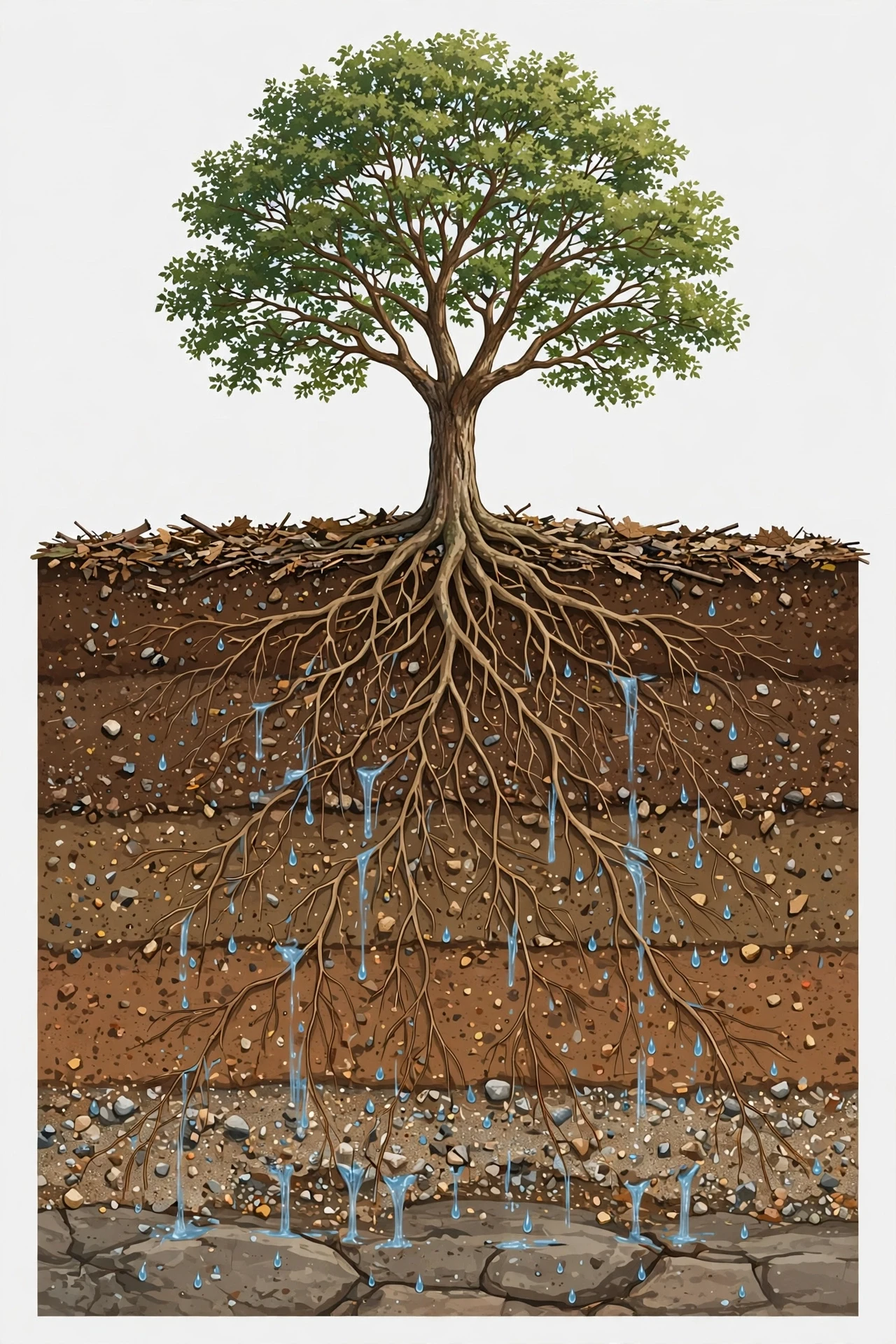
The chemistry is a slow exchange: hydrogen ions from the acid displace nutrient ions from soil particles, and the nutrients wash away in drainage water. Over years and decades, the soil loses calcium, magnesium, and potassium — the elements plants need most — and gains aluminium, which plants cannot use and which poisons their roots.
9.1 Leaching: the slow drain
Soil particles, especially clays and organic matter, hold nutrient ions on their surfaces like a charged sponge. Hydrogen ions from acid rain are small, mobile, and strongly attracted to those same surfaces, so they push the nutrients off, and the nutrients drain away with the rainwater. The soil's ability to hold nutrients — its cation exchange capacity — declines, and each year's rain takes a little more. The process is invisible and gradual, and by the time the effects show up in stunted trees or failing crops, the soil has already lost a large part of its reserves.
The effect is worst in sandy, thin soils with little clay or organic matter, because those soils have little capacity to hold nutrients in the first place. The same soils that are most vulnerable to acid rain are also the soils that can least afford to lose nutrients, which is why the damage concentrates in exactly the regions least able to absorb it.
9.2 Aluminium mobilisation
As soil pH falls below about 5, aluminium begins to dissolve from clay minerals into the soil water. Aluminium ions damage root tips, inhibit cell division in roots, and block the uptake of calcium and magnesium. The tree or crop above ground may look merely stunted, but below ground its root system is being chemically pruned. The plant cannot reach water in dry spells, cannot absorb nutrients efficiently, and becomes vulnerable to every other stress.
The aluminium story is one of the most important discoveries in acid rain science, because it connected two separate observations: the dying forests and the dying lakes. The same aluminium that poisoned tree roots in the soil washed into streams and poisoned fish gills in the lake. One chemical mechanism explained two different kinds of damage, and that kind of unification is what turns a collection of observations into a scientific explanation.
9.3 Microbes and the nitrogen bonus
Acid rain also changes the community of microbes that live in soil. The bacteria and fungi that decompose dead leaves and release nutrients work best in near-neutral soil, and they slow down as acidity rises. Decomposition slows, nutrients stay locked in leaf litter, and the soil becomes poorer even as dead leaves pile up. At the same time, the nitrate delivered by nitric acid acts as a fertiliser, encouraging fast-growing plants that outcompete slower, more specialised species. The result is a shift in the whole plant community, driven by chemistry that no one can see.
The nitrogen side of acid rain is now recognised as a problem in its own right. Excess nitrogen deposition changes grasslands, heathlands, and forests, favouring a few fast-growing species and reducing diversity. The acid and the fertiliser arrive together, and the ecosystem has to cope with both.
9.4 Agricultural soils and liming
Farmers have known about soil acidity for centuries, and the remedy is liming: spreading crushed limestone or calcium carbonate on fields to neutralise acid and restore calcium. Liming works, and it is routine in agriculture. But liming a forest or a whole watershed is a different matter — expensive, logistically difficult, and temporary, since the acid keeps falling. Some lakes have been limed directly, with limestone powder dropped from helicopters, and the pH has recovered quickly. The treatment works, but it has to be repeated, and it treats the symptom rather than the cause. The real fix is to stop the acid at its source, which is the subject of Section 13.
10. How Acid Rain Affects Buildings and Stone
Stone does not complain, which is why the damage acid rain does to buildings went unnoticed for so long.
But limestone and marble — the materials of cathedrals, monuments, and statues — are made of calcium carbonate, and calcium carbonate reacts readily with acids. The chemistry is simple, and the consequences are visible on every old building in a polluted city.
10.1 The chemistry of dissolving stone
When sulfuric acid meets calcium carbonate, the reaction is:
CaCO3 + H2SO4 → CaSO4 + CO2 + H2O
The calcium sulfate that forms is gypsum, which is more soluble in water than the original limestone and washes away in the rain. Each storm removes a thin layer of stone. The same reaction happens with nitric acid, forming calcium nitrate, which is even more soluble. Over decades, carvings lose their sharp edges, inscriptions blur, and statues lose their features — the noses the caretaker pointed out to me on that church wall.
The process is accelerated by dry deposition. Sulfur dioxide gas reacts directly with damp stone surfaces, and the resulting sulfate crusts build up in sheltered spots. When rain finally washes them off, it takes stone with them. The black crusts you see on old buildings in industrial cities are often gypsum crusts, trapping soot and dust, and the stone beneath them is being eaten away.
10.2 Monuments, cathedrals, and the cost of repair
The damage is not only aesthetic. The great cathedrals of Europe, the temples of Asia, the monuments of North America — many of them built of limestone or marble — have all been affected. The Taj Mahal, built of white marble, has faced discolouration and surface damage linked to air pollution, including sulfur dioxide from nearby industry. In Europe, the statues on Cologne Cathedral and the buildings of Athens' Acropolis have needed extensive conservation work. The cost of repairing acid rain damage to buildings runs into billions across the affected countries, and the work is never finished, because the stone keeps dissolving as long as the rain stays acidic.
I have watched conservators at work on a limestone facade, cleaning the black crusts with soft brushes and low-pressure water, and the care they take is extraordinary. Every cleaning removes a little more of the original surface. Conservation is a race against chemistry, and the only way to win it is to clean the air.

10.3 Metals, paint, and modern materials
Acid rain does not stop at stone. It accelerates the corrosion of metals: iron and steel rust faster, bronze and copper develop patinas more quickly, and zinc coatings on galvanised steel dissolve. Bridges, railings, and roofs all age faster in acidic rain. Paint and other coatings degrade more quickly too, and car finishes in heavily affected areas have been damaged by acidic rain and fog. The economic cost of this corrosion is large, though it is spread so widely — a bridge here, a roof there — that it rarely appears in a single headline.
Modern building materials are more resistant than limestone, but they are not immune. Concrete contains calcium compounds that acids can attack, and the steel reinforcement inside concrete can corrode faster when acidic water penetrates cracks. The damage is slow and cumulative, the same pattern as everywhere else in this story: small effects, repeated for decades, adding up to something large.
11. Acid Rain and Human Health
Acid rain itself — the rain falling on your skin — is not a direct health hazard. The EPA puts it plainly: "Walking in acid rain, or even swimming in a lake affected by acid rain, is no more dangerous to humans than walking in normal rain or swimming in non-acidic lakes."
The acids in rain are dilute, and a shower in acid rain will not burn you. The health risks come from the same pollutants that cause acid rain, not from the rain itself, and that distinction is important, because it shapes what the real dangers are.
11.1 The pollutants behind the rain
Sulfur dioxide and nitrogen oxides are respiratory irritants. Sulfur dioxide can trigger asthma attacks and worsen chronic lung disease, and nitrogen dioxide contributes to respiratory illness, especially in children and older people. The fine particles formed when sulfur dioxide and nitrogen oxides convert to sulfates and nitrates in the atmosphere — the same particles that make acid rain — are small enough to lodge deep in the lungs, and long-term exposure is linked to heart and lung disease. The EPA's pages on sulfur dioxide and nitrogen dioxide pollution describe these health effects in detail, and they are the reason air quality standards target these gases directly.
The point is that the health story and the acid rain story share the same villains. Cutting sulfur dioxide and nitrogen oxides improves the rain and improves the air people breathe, at the same time, for the same reason. That is one of the strongest arguments for controlling these pollutants: the benefits arrive through two channels at once.
11.2 Visibility and the view from a mountain
Acid rain's precursor particles also scatter light, reducing visibility. In the eastern United States, the haze from sulfate particles reduced visibility in national parks and wilderness areas for decades, turning clear mountain views into a milky blur. Visitors to the Great Smoky Mountains — named for their natural blue haze — found the haze thickened by pollution, and the view from the summits shortened. As sulfur emissions fell, visibility improved, and the change was visible to anyone who had visited before and after. The improvement in the view was, in a sense, the improvement in the rain made visible.
"Acid rain does not burn your skin. It burns the systems that support you — the forest that holds the soil, the lake that holds the fish, the stone that holds the history."
12. Common Misconceptions About Acid Rain
Acid rain has been in the public eye for half a century, and a few misunderstandings have hardened into folklore. Clearing them up is worth doing, because each one hides a real piece of the science.
12.1 "Acid rain is a thing of the past"
This is the most common misconception, and it is half true. In North America and Europe, sulfur dioxide emissions have fallen dramatically since their peak, and rain is measurably less acidic than it was in the 1970s and 1980s. But acid rain has not disappeared. Nitrogen oxide emissions have fallen more slowly, and in some regions the rain is still acidic enough to damage sensitive lakes and soils. In parts of Asia, where coal use grew rapidly in recent decades, acid rain remains a live and serious problem. The problem has moved and shrunk; it has not vanished.
12.2 "Acid rain burns people and animals"
It does not, at the concentrations found in rain. The acids are dilute, and the pH of even badly affected rain — around 4 — is comparable to tomato juice, which nobody finds corrosive to the skin. The damage to animals comes through their environment: fish die because aluminium damages their gills, not because the water burns them. Birds and mammals are affected indirectly, through the food web and through the loss of habitat. The distinction matters, because it tells you where to look for the damage — in ecosystems, not in emergency rooms.
12.3 "All rain is acid rain"
No. Normal rain is slightly acidic, at pH 5.6, because of carbon dioxide. Acid rain is rain that is more acidic than that, because of sulfuric and nitric acids from pollution. The line at 5.6 is not arbitrary — it is the pH of rain in equilibrium with the carbon dioxide in clean air, and anything below it is extra acidity that the natural system did not produce. Conflating normal rain with acid rain makes the problem sound either trivial or hopeless, and it is neither.
12.4 "Only factories cause acid rain"
Factories and power plants are the largest sources, but vehicles matter too, especially for nitrogen oxides, and natural sources — volcanoes, lightning, forest fires — contribute real amounts. More importantly, the sources are connected to everyday life: the electricity that lights a home, the car that drives a commute, the heating that warms a building. Acid rain is not caused by a few villains in a distant industrial park. It is caused by the energy system that whole societies run on, which is why fixing it required changing that system, not just scolding a few smokestacks.
12.5 "Acid rain and climate change are the same problem"
They are related but distinct, and confusing them causes trouble in both directions. Both involve burning fossil fuels, and both involve gases in the atmosphere. But acid rain is caused by sulfur dioxide and nitrogen oxides, which act over days and across regions, while climate change is driven mainly by carbon dioxide, which acts over decades and across the whole planet. The fixes overlap — burning less fossil fuel helps both — but they are not identical. Cutting sulfur dioxide actually removes a pollutant that slightly cools the planet by reflecting sunlight, so the two problems have to be handled together, with eyes open. The Climate Change article on Sciory explains the greenhouse mechanism in depth, and the Greenhouse Effect article covers the physics that makes carbon dioxide a warming gas rather than an acidifying one.
13. How Can Acid Rain Be Reduced?
Here is the part of the story that surprises people who only remember the grim photographs of dead forests.
Acid rain is one of the few large environmental problems that has been substantially reduced by a combination of technology, law, and international agreement. The rain is not back to normal everywhere, but the improvement is real, measured, and large. Understanding how it happened is the most practical lesson in this whole article.
13.1 Cleaning the smoke: scrubbers and catalysts
The first fix is technological. Flue-gas desulfurization — usually called scrubbing — removes sulfur dioxide from power plant exhaust before it leaves the smokestack. The exhaust gas passes through a spray of limestone slurry, and the sulfur dioxide reacts with the limestone to form calcium sulfite and then calcium sulfate — gypsum — which can be sold for use in plasterboard. A well-run scrubber removes 90 percent or more of the sulfur dioxide from the flue gas. The chemistry is the same acid-base neutralisation that happens in soil, but done deliberately, inside the plant, before the gas ever reaches the sky.
For nitrogen oxides, the main technologies are selective catalytic reduction (SCR) and selective non-catalytic reduction (SNCR), which use ammonia or urea to convert nitrogen oxides into harmless nitrogen gas and water, and low-NOx burners that reduce the formation of nitrogen oxides in the first place by controlling the temperature and the mixing of fuel and air. Cars use catalytic converters, which convert nitrogen oxides into nitrogen and oxygen. Each of these technologies is a piece of applied chemistry, and together they cut the two precursor gases at the source.
I once toured a power plant that had been retrofitted with scrubbers, and the engineer showing me around pointed to the gypsum pile outside — a white mountain of the stuff, waiting to be trucked away. "That used to go up the stack," he said. It was the most concrete image of pollution control I have ever seen: the invisible gas, made visible as a solid, sitting in a pile instead of drifting toward a lake.
13.2 Switching fuels and using less energy
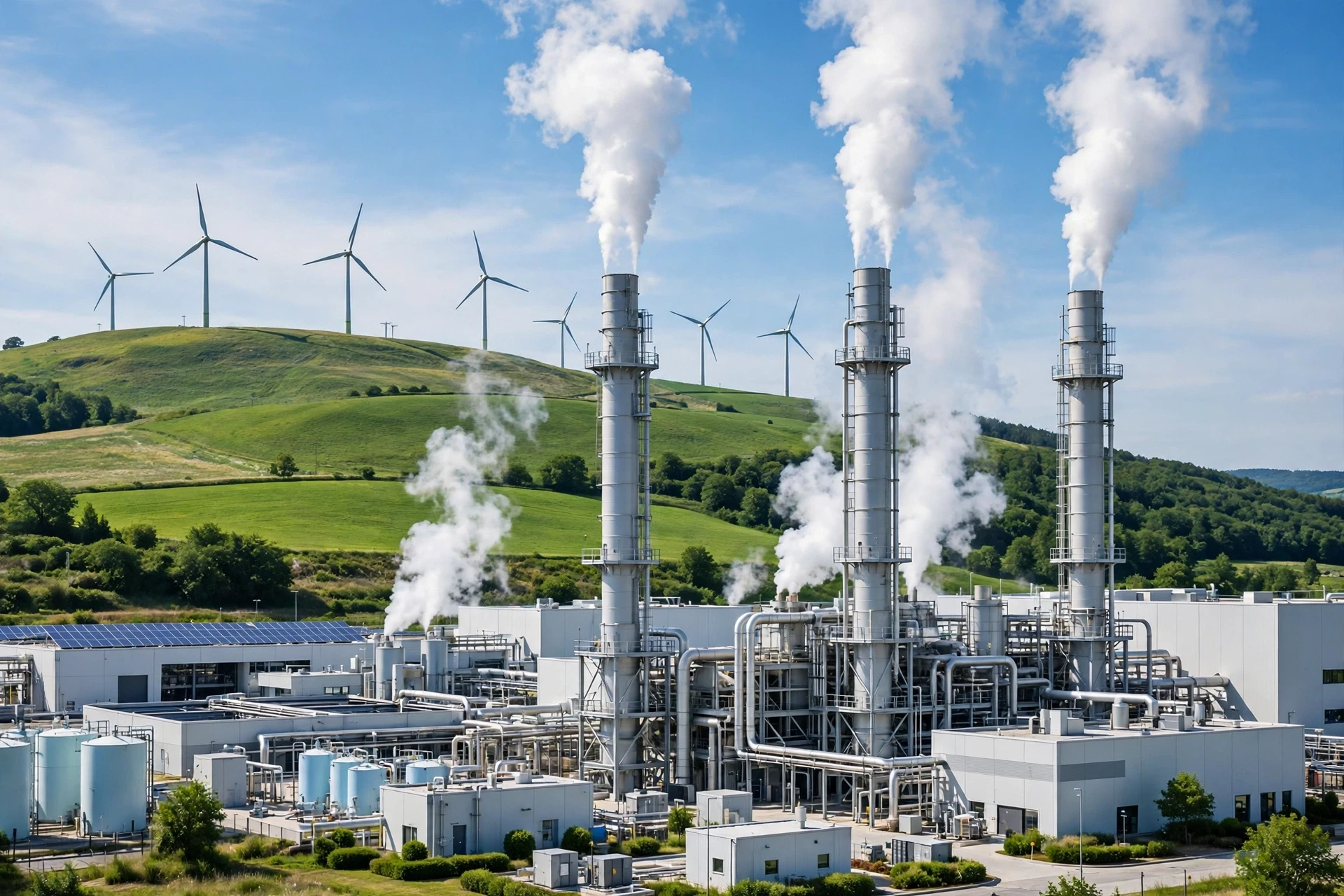
Scrubbers clean the exhaust, but the cleaner fix is to produce less of the gas in the first place. Switching from high-sulfur coal to low-sulfur coal, or from coal to natural gas, cuts sulfur dioxide sharply, because natural gas contains almost no sulfur. Switching to wind, solar, hydroelectric, and nuclear power cuts both sulfur dioxide and nitrogen oxides to near zero at the point of generation. Energy efficiency — better insulation, more efficient motors, less wasted electricity — cuts emissions by cutting the amount of fuel burned at all.
These shifts are also why acid rain and climate policy overlap. Every kilowatt-hour generated without burning fossil fuels is a kilowatt-hour that produces neither sulfur dioxide nor carbon dioxide. The two problems share a root cause in fossil fuel combustion, and many of the solutions serve both. The design principles behind cleaner processes are the subject of Sciory's Green Chemistry Explained: The 12 Principles. The Rainforests article on Sciory describes another side of the same energy story: the forests that absorb carbon and shelter biodiversity are the same forests that acid rain damages, so protecting them from acid is part of protecting them from everything else.
13.3 The laws that worked
Technology alone did not cut acid rain. Law did, by making the technology mandatory and by putting a price on the remaining emissions. The United States passed the Clean Air Act Amendments of 1990, which created the Acid Rain Program — a cap-and-trade system for sulfur dioxide. Power plants were given a declining number of allowances, each permitting one ton of sulfur dioxide, and they could buy and sell allowances among themselves. The total cap fell over time, and emissions fell with it: sulfur dioxide emissions from power plants fell by roughly two-thirds between 1990 and 2010 — from about 15.7 million tons to about 5.2 million tons — at a cost far lower than the industry had predicted.
Europe took a similar path through the Convention on Long-Range Transboundary Air Pollution and its protocols, which committed countries to cutting sulfur and nitrogen emissions in step. The international element was essential, because the pollution crossed borders. The agreements worked because they were built on the science: the monitoring networks showed where the acid was falling, the chemistry showed where it came from, and the treaties divided the cuts accordingly.
The EPA's pages on the Acid Rain Program document the results, and the numbers are striking: sulfur dioxide emissions from the power sector fell by the majority since 1990, nitrogen oxide emissions fell sharply too, and rain pH recovered across the eastern United States. The program became a model for later environmental policy, and it remains the clearest example of a cap-and-trade system achieving its environmental goal.
13.4 What individuals and communities can do
Individual action cannot fix acid rain on its own — the problem is industrial in scale, and it needs industrial solutions. But individuals are part of the energy system, and their choices add up. Using less electricity, choosing cleaner energy where it is available, driving less and driving cleaner vehicles, supporting public transport and energy efficiency — each of these reduces the demand that produces the precursor gases. Supporting the monitoring networks and the laws that control emissions matters too, because the recovery of the rain depended on policies that were defended and renewed over decades.
14. Recovery: What the Rain Looks Like Now
The recovery from acid rain is real, measurable, and incomplete — three facts that belong together, because each one alone gives the wrong impression.
14.1 The numbers
In the eastern United States, sulfate deposition has fallen by more than half since the early 1990s, and rain pH has risen in many places from the low 4s toward 5. Lakes that had lost their fish are seeing them return, and forest soils are slowly regaining calcium. In Europe, sulfur deposition has fallen even more sharply in some regions, and the improvement in rain chemistry is one of the largest environmental changes ever measured on a continental scale. The monitoring networks that tracked the decline are the same ones that tracked the rise, and their records are the evidence that policy worked.
But the recovery is not uniform. Nitrogen deposition has fallen more slowly, and in some regions it has barely fallen at all, because vehicles and agriculture are harder to control than power plants. Some lakes and soils remain acidic, and some forests are still recovering. The rain is better, not fixed. The distinction matters: declaring victory too early would risk losing the policies that produced the improvement.
14.2 Lakes coming back
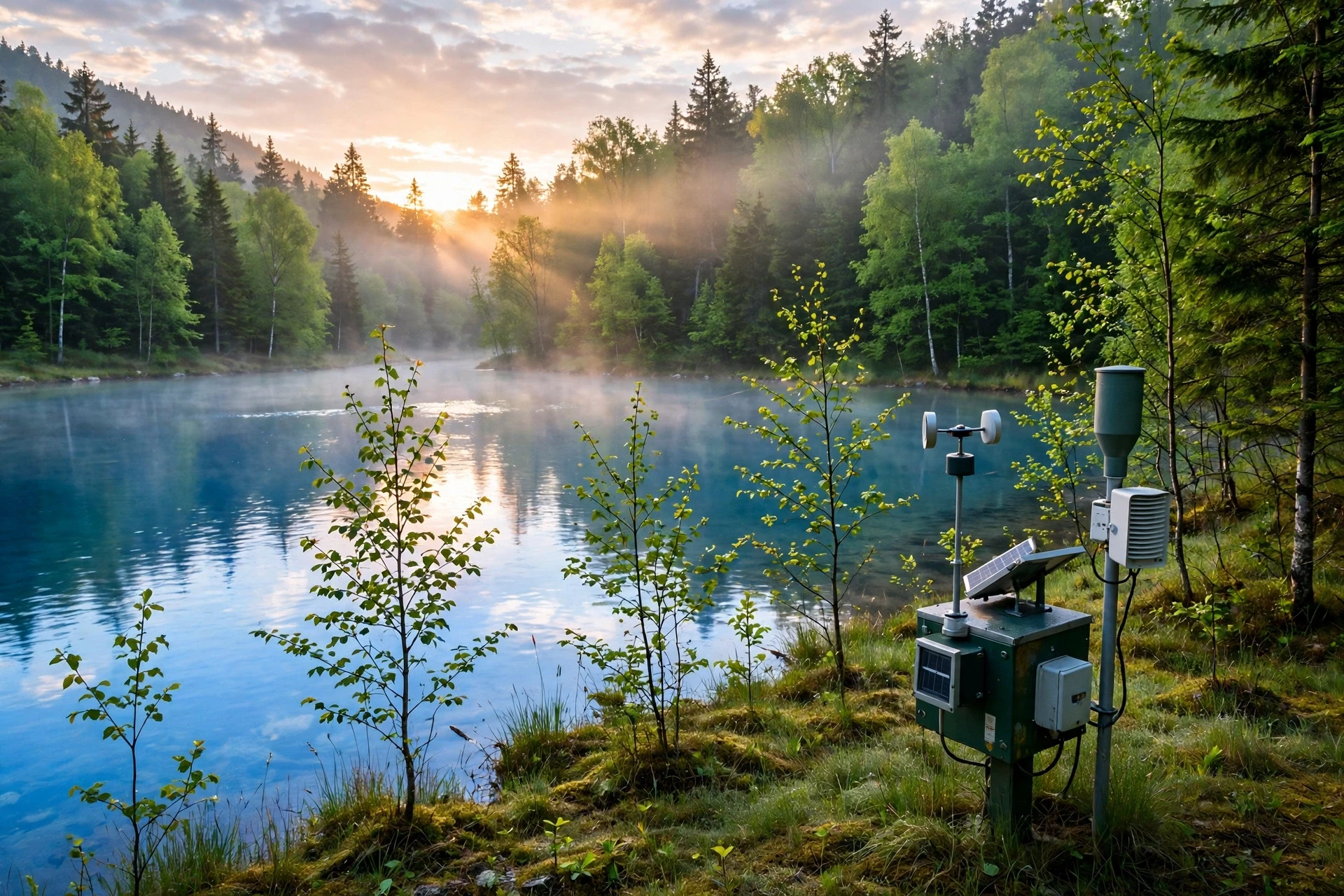
The most hopeful evidence comes from lakes. In the Adirondacks, in Scandinavia, and in parts of Canada, lakes that were fishless in the 1980s now hold fish again. The recovery follows the chemistry: as sulfate deposition falls, lake pH rises, aluminium levels drop, and fish eggs hatch again. The return is slow — a lake that lost its fish over decades does not regain them in a season — but the direction is clear, and it is the direction the chemistry predicts.
14.3 Forests regrowing
Forests are recovering too, though more slowly than lakes. Tree growth rates have improved in many previously damaged regions, and the thinning of canopies has slowed or reversed.
14.4 The unfinished parts
Three things remain unfinished. First, nitrogen oxides: emissions have fallen, but not as fast as sulfur dioxide, and nitrogen deposition now makes up a larger share of the acid load in many regions. Second, Asia: in parts of China and India, coal use and vehicle numbers grew rapidly while Europe and North America were cutting emissions, and acid rain remains a serious problem there, though China has made large cuts in sulfur dioxide in recent years. Third, the interaction with climate change: a warming climate changes rainfall patterns, forest stress, and the chemistry of soils and lakes, and the combined effects are still being studied. Acid rain is no longer the single dominant threat it was in the 1980s, but it is one thread in a larger fabric of environmental change.
"The rain got better because people measured it, understood it, and acted on it. That is not a small thing. It is the whole method of science, applied to the sky."
15. What Acid Rain Teaches Us
I started this article with a statue that had lost its nose, and I want to end with the lesson that statue taught me. Acid rain is a problem that was invisible, slow, distant, and complicated — every quality that makes a problem easy to ignore. It was solved, to the extent that it has been solved, by people who refused to ignore it: chemists who worked out the reactions, field scientists who measured the rain year after year, engineers who built the scrubbers, and lawmakers who turned the science into caps and treaties.
The chemistry itself is not hard. Sulfur dioxide plus water plus oxygen makes sulfuric acid. Nitrogen oxides plus water make nitric acid. Acid plus limestone makes soluble salts that wash away. Acid plus soil takes the nutrients and frees the aluminium. The equations fit on a page. What was hard was connecting them: seeing that a gas from a smokestack becomes an acid in a cloud, that the acid becomes aluminium in the soil, that the aluminium becomes a dead fish in a lake three hundred miles away. That chain of connections is what science is for.
If there is a single idea to carry away from this article, it is that the atmosphere is a chemical reactor, and everything we put into it comes back down somewhere. The rain is not just water. It is the sky's answer to what we burned. When we changed what we burned, and how we burned it, the answer changed too. The rain got less acidic, the lakes got their fish back, and the forests began to grow again. That is not a happy ending — the work is unfinished, and the rain is not yet what it should be — but it is a real one, and it is the best evidence we have that understanding chemistry can change the world, one raindrop at a time. Those acid-base reactions are the reaction types explained in Sciory's Chemical Reactions article.
Frequently Asked Questions
What causes acid rain?
Acid rain is caused by sulfur dioxide (SO2) and nitrogen oxides (NOx) in the atmosphere. These gases come mainly from burning fossil fuels — coal-fired power plants are the largest source of sulfur dioxide, while vehicles, power plants, and industrial boilers supply most nitrogen oxides — with smaller contributions from volcanoes, lightning, and forest fires. In the atmosphere, the gases react with water and oxygen to form sulfuric acid and nitric acid, which fall to the ground in rain, snow, fog, or as dry deposition.
What is the pH of acid rain?
Normal rain has a pH of about 5.6, because dissolved carbon dioxide forms weak carbonic acid. Acid rain is defined as precipitation with a pH below 5.6. In the most affected regions, rain has typically measured pH 4.0 to 4.5 — about thirteen to forty times more acidic than normal rain — and individual storms have measured far lower. Fog can be even more acidic than rain in the same place, because its small droplets concentrate more acid.
How does acid rain affect buildings and lakes?
Acid rain damages buildings by dissolving limestone and marble: sulfuric and nitric acids convert calcium carbonate into soluble sulfates and nitrates that wash away, softening carved details and eroding statues and facades. It also accelerates the corrosion of metals and the decay of paint. In lakes, acid rain lowers the pH and frees aluminium from soils; the aluminium damages fish gills, eggs fail to hatch, and sensitive species die off one by one, leaving lakes that look clear and beautiful but are nearly empty of life.
How can acid rain be reduced?
Acid rain is reduced by cutting sulfur dioxide and nitrogen oxide emissions at their source. The main methods are scrubbers that remove sulfur dioxide from power plant exhaust, catalytic systems that convert nitrogen oxides into harmless nitrogen gas, switching from high-sulfur coal to natural gas or to wind, solar, hydroelectric, and nuclear power, and using energy more efficiently. Laws such as the US Clean Air Act Amendments of 1990 and European transboundary air pollution agreements made these technologies mandatory and cut emissions sharply.
Is acid rain still a problem today?
Yes, though it is smaller than it was in North America and Europe. Sulfur dioxide emissions have fallen by more than half in many regions since the 1990s, and rain pH has recovered measurably, with fish returning to some lakes. But nitrogen oxide emissions have fallen more slowly, some soils and lakes remain acidic, and in parts of Asia acid rain is still a serious problem. The rain is better, not fixed.
Does acid rain harm people directly?
No — the rain itself is not a direct health hazard, because its acids are dilute; rain at pH 4 is about as acidic as tomato juice and does not burn skin. The health risks come from the pollutants that cause acid rain: sulfur dioxide and nitrogen oxides irritate the lungs and worsen asthma, and the fine sulfate and nitrate particles formed in the atmosphere can lodge deep in the lungs. Cutting these pollutants improves both the rain and the air people breathe.
Can acid rain damage be reversed?
Partly, and slowly. Where emissions have fallen, rain has become less acidic, lake pH has risen, aluminium levels have dropped, and fish have returned to some lakes. Forests are regrowing, though more slowly. But soils that lost their calcium and magnesium over decades take decades to rebuild, and some lakes may never fully recover without help such as liming. Prevention — stopping the acid at its source — is far faster and cheaper than repair.
Sources
US Environmental Protection Agency: What Is Acid Rain? — https://www.epa.gov/acidrain/what-acid-rain
US Environmental Protection Agency: Effects of Acid Rain — https://www.epa.gov/acidrain/effects-acid-rain
US Environmental Protection Agency: Acid Rain Program — https://www.epa.gov/acidrain/acid-rain-program
US Environmental Protection Agency: Sulfur Dioxide Pollution — https://www.epa.gov/so2-pollution
US Environmental Protection Agency: Nitrogen Dioxide Pollution — https://www.epa.gov/no2-pollution
Chemistry LibreTexts: The Chemistry of Acid Rain — https://chem.libretexts.org/Bookshelves/General_Chemistry/General_Chemistry_-_An_Atoms_First_Approach_%28Halpern%29/Section_3%3A_Stoichiometry/Chapter_8%3A_Aqueous_Solutions/08%3A_The_Chemistry_of_Acid_Rain
Engineering LibreTexts: Acid Rain — https://eng.libretexts.org/Bookshelves/Environmental_Engineering_%28Sustainability_and_Conservation%29/Book%3A_Introduction_to_Environmental_Science_%28Zehnder_et_al.%29/6%3A_Air_Pollution/6.6%3A_Acid_Rain
OpenStax Chemistry 2e: Brønsted–Lowry Acids and Bases — https://openstax.org/books/chemistry-2e/pages/14-1-bronsted-lowry-acids-and-bases
Climate Change — Sciory — https://www.sciory.com/blog/climate-change-explained
Greenhouse Effect — Sciory — https://www.sciory.com/blog/greenhouse-effect-explained
Rainforests — Sciory — https://www.sciory.com/blog/rainforests-explained
Chemical Reactions — Sciory — https://www.sciory.com/blog/chemical-reactions-types-kinetics-examples
Acids and Bases Explained — Sciory — https://www.sciory.com/blog/acids-and-bases-explained
What Is the pH Scale? — Sciory — https://www.sciory.com/blog/what-is-ph-scale-explained
Green Chemistry Explained: The 12 Principles — https://www.sciory.com/blog/green-chemistry-explained