

Introduction
The first of the chemical reactions I ever ran on purpose was a volcano, and it went wrong in the best possible way. I was nine, standing in a school hall with a papier-mâché mountain, a bottle of vinegar, and far too much baking soda. My teacher had promised a gentle fizz. What we got was a brown foaming eruption that ran down the sides of the volcano, across the table, and onto my sleeve. The hall smelled of vinegar for the rest of the afternoon. I remember standing there, sticky and delighted, thinking a single clear thought: something invisible had just happened, and it had changed everything it touched.
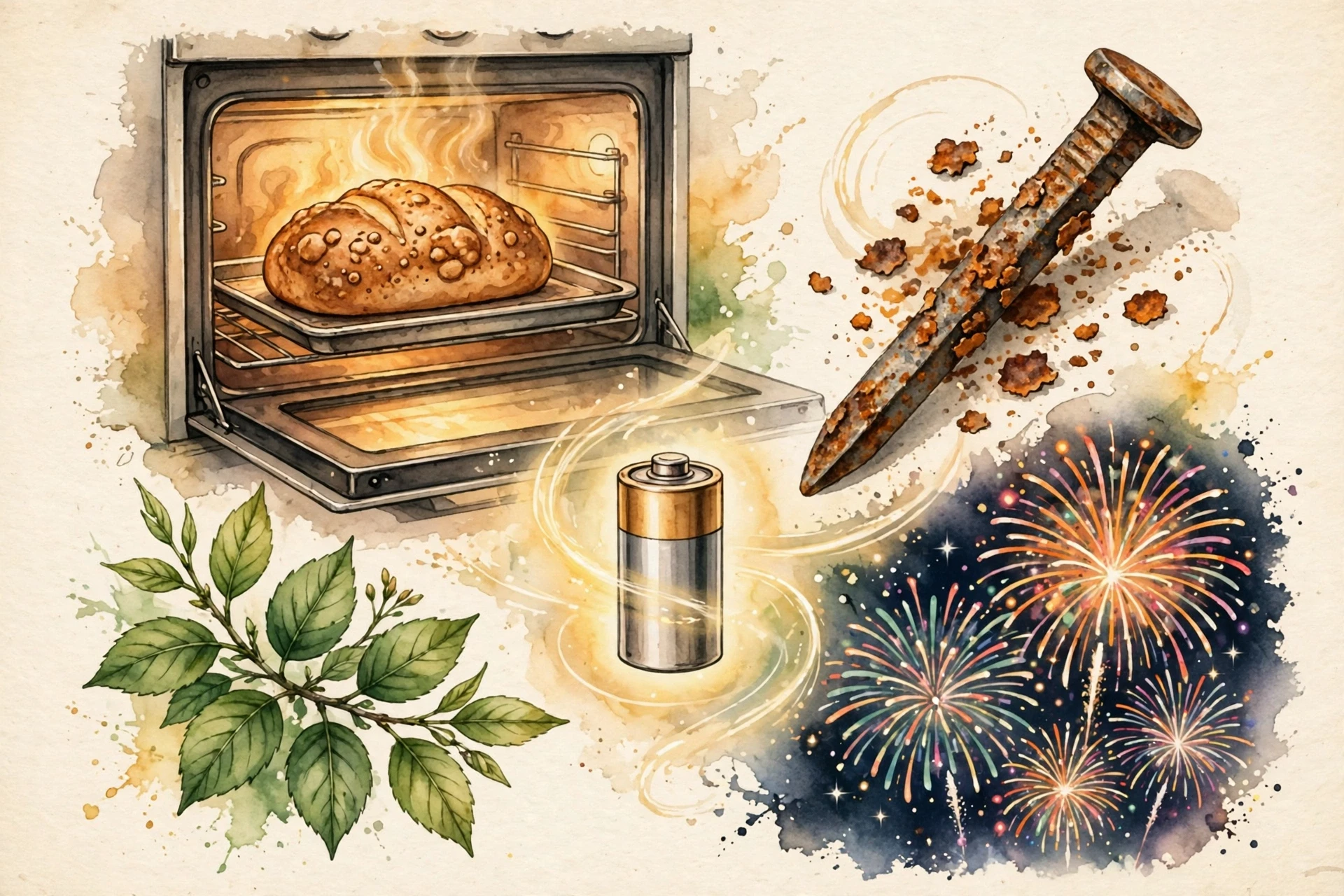
That is what a chemical reaction is. It is not a magic trick, and it is not only something that happens in laboratories behind glass. A chemical reaction is a rearrangement — atoms letting go of old partners and joining new ones, bonds breaking and forming, energy moving in or out. Bread rises because of one. Iron rusts because of another. Your body runs on thousands of them every second, quietly turning food and oxygen into movement, warmth, and thought.
This guide follows chemical reactions from the kitchen table to the industrial plant and into your own cells. It explains the main types of chemical reactions, how chemists write them down, why some race and others crawl, what controls their speed — the subject called reaction kinetics — and where these reactions show up in ordinary life. Along the way there are stories of chemists who got things wrong before they got them right, because that is how this science actually moved forward.
1. What a Chemical Reaction Really Is
1.1 Atoms rearrange — nothing else happens
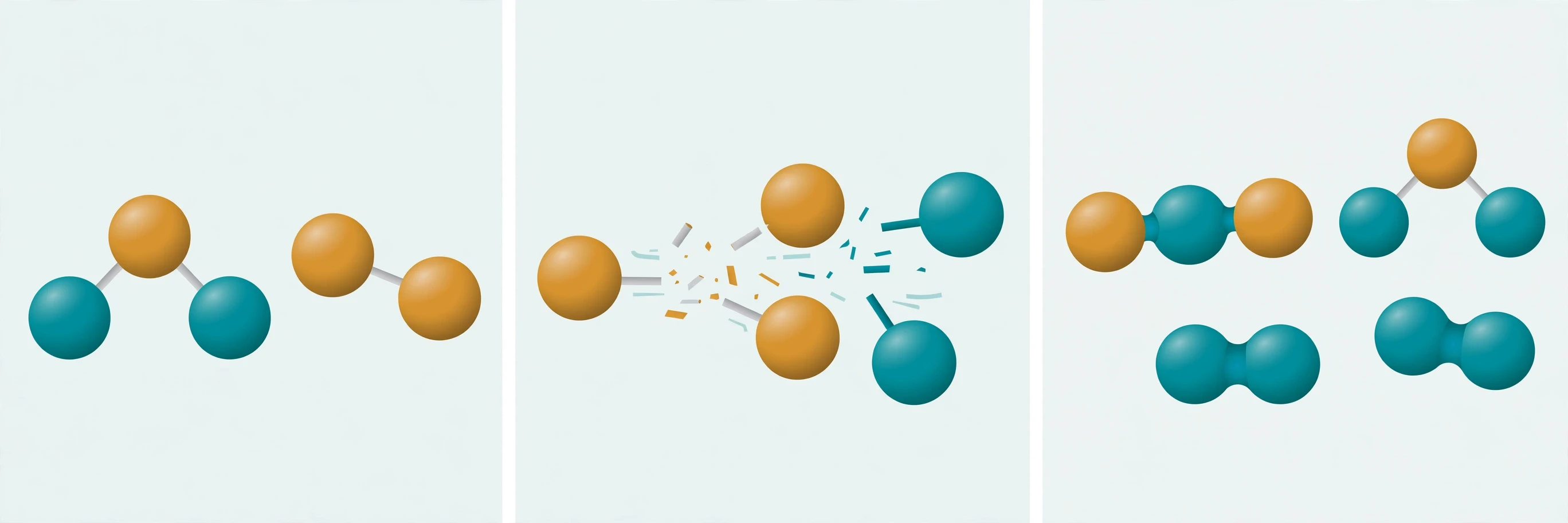
Strip away the glassware and the jargon, and a chemical reaction is one simple event repeated at an enormous scale: atoms rearrange. The atoms themselves do not change into other atoms. A carbon atom stays a carbon atom. What changes is who it is bonded to, and how the atoms are grouped.
Take the volcano from my school hall. Vinegar is mostly acetic acid, and baking soda is sodium bicarbonate. When they meet, their atoms reshuffle into sodium acetate, water, and carbon dioxide gas. The gas is what made the foam. Nothing was created from nothing, and nothing vanished. The atoms that went in came back out, just grouped differently. That rule — atoms are conserved — is the single most useful idea in all of chemistry, and it took humanity centuries to prove it.
A good everyday analogy is a dance where nobody leaves the room. Imagine a hall full of dancers paired off in couples. A chemical reaction is the moment the music changes and everyone swaps partners. The dancers are the same people. The couples are different. Some swaps happen easily, some need a push, and some release a burst of energy as the new pairs settle in. If you keep that picture in mind, most of what follows will feel familiar rather than strange.
1.2 Chemical change versus physical change
Not every change is a chemical reaction, and the difference matters. Melting ice is a physical change: water changes state, but each molecule is still H₂O. Tearing paper is a physical change: the pieces are smaller, but the paper is still paper. Dissolving salt in water is mostly physical: the salt breaks into ions, but no new substance is formed, and you can get the salt back by evaporating the water.
A chemical change makes a new substance with different properties. Burn that paper and you get ash, smoke, carbon dioxide, and water vapour — none of which behave like paper. Cook an egg and the clear white turns solid white because its proteins have unfolded and bonded into a new network; you cannot uncook it. Rust a nail and the shiny grey metal becomes flaky orange-brown iron oxide, which is brittle where iron was strong.
Chemists look for clues that a chemical reaction has happened: a colour change, a gas forming (bubbles or fizz), a solid appearing from clear liquids (a precipitate), a temperature change with no heater or cooler involved, or light being given off. No single clue proves a reaction on its own — ice melting also changes temperature, and mixing paints changes colour without any chemistry — but several clues together are a strong sign.
1.3 Lavoisier and the law that changed chemistry
For most of human history, nobody knew that atoms were conserved. People watched wood burn and saw most of it disappear into smoke and ash, and they reasonably concluded that matter could be destroyed. The French chemist Antoine Lavoisier, working in the late 1700s, thought that conclusion was sloppy. He weighed things — carefully, obsessively, with the best balances of his day — before and after reactions, in sealed containers where nothing could escape.
What he found was that the total mass never changed. Burn something in a sealed vessel and the vessel weighs exactly the same afterwards. The mass had not vanished; it had become gas, and the gas was still inside. That result became the law of conservation of mass, and it turned chemistry from a collection of recipes into a science that could be checked with numbers.
Lavoisier paid a terrible price for his work in other ways: he was executed during the French Revolution in 1794, at the age of fifty, partly because his day job as a tax collector made him a target. His fellow scientist Joseph-Louis Lagrange is said to have remarked that it took only a moment to cut off his head, and a century might not produce another like it. The law survived him. Every balanced chemical equation you will ever see is Lavoisier's idea written down in symbols.
2. How to Read a Chemical Equation
2.1 Reactants, products, and the arrow
Chemists write reactions as equations, and once you know the grammar, they read almost like sentences. On the left of the arrow sit the reactants — the substances you start with. On the right sit the products — the substances you end up with. The arrow means "turns into" or "reacts to form", and it points in the direction the reaction runs.
The most famous equation in chemistry is also one of the simplest:
2H₂ + O₂ → 2H₂O
Two molecules of hydrogen gas react with one molecule of oxygen gas to form two molecules of water. The small numbers written below the symbols — the subscripts — tell you how many atoms of each element are inside one molecule. The big numbers in front — the coefficients — tell you how many molecules take part. Confusing a subscript with a coefficient is the classic beginner's mistake, and it changes the meaning completely: H₂O is water, but H₂O₂ is hydrogen peroxide, the stuff that stings a cut and bleaches hair.
Chemists also add small letters in brackets to show the state of each substance: (s) for solid, (l) for liquid, (g) for gas, and (aq) for dissolved in water. So the reaction of zinc with hydrochloric acid reads:
Zn(s) + 2HCl(aq) → ZnCl₂(aq) + H₂(g)
That little (g) at the end is doing real work in the sentence: it tells you the hydrogen escapes as bubbles, which is exactly what you see in the test tube.
2.2 Balancing an equation — the accounting rule
Because atoms are conserved, a chemical equation must be balanced: the same number of each kind of atom on both sides. An unbalanced equation is not just untidy; it is wrong, because it claims atoms appeared or vanished.
I learned this the hard way in a school laboratory, or rather, I learned what happens when you ignore it. I had set up zinc and hydrochloric acid to make hydrogen, and I had written the equation down without balancing it. My teacher looked at it, looked at the vigorous fizzing in my test tube, and asked me a question I still remember: "If your equation is right, where did the extra hydrogen come from?" It had come from nowhere, of course. My equation was the problem, not the chemistry. Balancing is bookkeeping, and chemistry punishes sloppy books.
Balancing follows a simple routine. Count the atoms of each element on both sides. Adjust the coefficients — never the subscripts — until the counts match. Check again. For the combustion of methane, the gas in a kitchen stove, the unbalanced version is:
CH₄ + O₂ → CO₂ + H₂O
Count: one carbon on each side (good), four hydrogens on the left but two on the right, two oxygens on the left but three on the right. Put a 2 in front of the water to fix the hydrogens, and now the oxygens need a 2 in front of the O₂:
CH₄ + 2O₂ → CO₂ + 2H₂O
One carbon, four hydrogens, four oxygens on each side. Balanced. That equation is the story of a gas flame in four symbols: methane and oxygen become carbon dioxide and water, and the energy that was stored in the chemical bonds comes out as heat and light.
2.3 Why equations matter beyond the exam
It is tempting to treat balancing as a classroom exercise, but it is the tool that lets chemists and engineers do everything else. A balanced equation tells a factory how much raw material to buy and how much product to expect. It tells a doctor how much oxygen a patient needs. It tells an environmental scientist how much carbon dioxide a power station will release for every tonne of fuel it burns. The equation is a recipe with exact quantities, and the quantities are what turn chemistry from description into prediction.
The periodic table is the map that makes these equations readable: it tells you which elements exist, how they tend to bond, and why sodium behaves so differently from iron. If the symbols in an equation ever feel like alphabet soup, the periodic table is the place to go back to.
3. The Main Types of Chemical Reactions
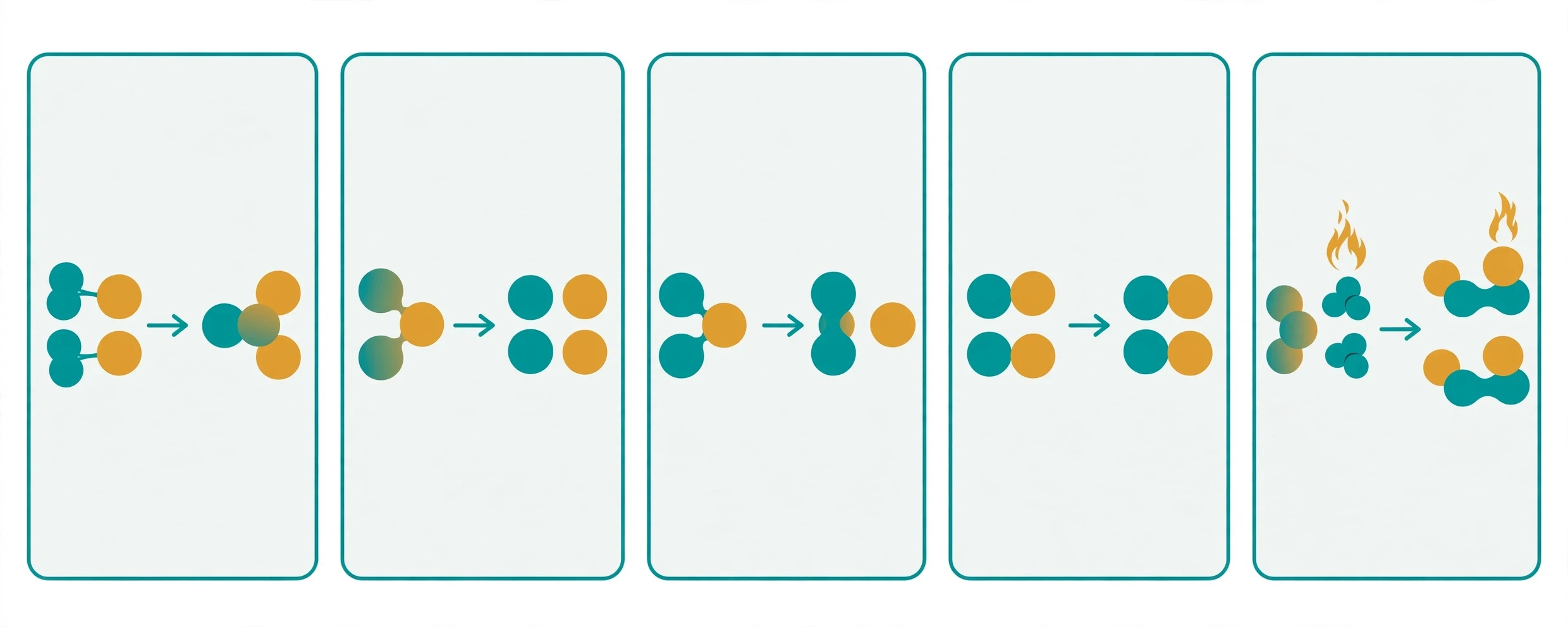
Chemists sort reactions into types the way a librarian sorts books: not because nature files them neatly, but because a pattern lets you predict what will happen next. The most useful sorting for a beginner is by the shape of the change — how the reactants rearrange. OpenStax Chemistry classifies reactions by three driving patterns (precipitation, acid-base, and oxidation-reduction), and the five-pattern scheme below sits alongside that: the two systems describe the same reactions from different angles, and a single reaction can belong to more than one group at once. A combustion reaction, for instance, is also a redox reaction. That overlap is not a flaw in the system. It is a sign that the categories are lenses, not boxes.
3.1 Synthesis (combination): building up
In a synthesis reaction, two or more substances join to make one product: A + B → AB. It is the simplest plot in chemistry — things coming together.
The formation of water from hydrogen and oxygen is a synthesis. So is the rusting of iron, in its first step: iron plus oxygen becomes iron oxide. On an industrial scale, the most consequential synthesis in history is the Haber process, which joins nitrogen from the air with hydrogen to make ammonia (N₂ + 3H₂ → 2NH₃). Ammonia becomes fertiliser, and fertiliser feeds roughly half the people alive today. A reaction pattern that looks trivial on a whiteboard turns out to underpin the world's food supply. I come back to Haber in Section 7, because the story of how that reaction was tamed is one of the great dramas of chemistry.
3.2 Decomposition: breaking apart
Decomposition is synthesis in reverse: one compound splits into two or more simpler substances, AB → A + B. Most decomposition reactions need an energy input — heat, light, or electricity — to get started, because breaking bonds costs energy before new ones can form.
Heat limestone and it decomposes into lime and carbon dioxide (CaCO₃ → CaO + CO₂), a reaction the building industry has used for thousands of years to make cement and mortar. Pass electricity through water and it splits into hydrogen and oxygen, a process called electrolysis. Leave hydrogen peroxide in a sunny cupboard and it slowly breaks down into water and oxygen — which is why the bottle is brown, to keep the light out. The same reaction runs fast in a wound, where enzymes in your tissues act as a catalyst and the oxygen bubbles out as foam. That foam is the fizz you see when peroxide meets a cut.
3.3 Single displacement: one element takes another's place
In a single displacement (or single replacement) reaction, one element pushes another out of a compound: A + BC → AC + B. Whether it happens depends on how reactive the two elements are. A more reactive metal will displace a less reactive one from its compound, but not the other way round.
Drop zinc into copper sulfate solution and the zinc, being more reactive, takes the sulfate's partnership: the blue colour of the solution fades as copper metal appears as a reddish coating. Drop copper into zinc sulfate and nothing happens — copper cannot displace zinc. Chemists arrange metals in an activity series, a ranking of willingness to react, and it predicts these outcomes like a league table predicts a match. The American Chemical Society's lesson on what a chemical reaction is uses a burning candle to make the same point from the other direction: the wax does not vanish, it reacts with oxygen to make carbon dioxide and water vapour.
3.4 Double displacement: partners swap
In a double displacement reaction, two compounds exchange partners: AB + CD → AD + CB. The ions swap places, and the reaction is driven by something leaving the scene — a solid forming, a gas escaping, or water being made.
Mix silver nitrate and sodium chloride solutions and a white solid, silver chloride, drops out of the clear liquid at once. That solid is a precipitate, and the reaction is a precipitation reaction — one of the three patterns OpenStax uses to classify reactions. Your kidneys know this pattern too well: kidney stones form when dissolved calcium and oxalate meet and precipitate as a solid inside the body. The same chemistry that builds coral reefs in the ocean can build a stone in a person, which is a reminder that a reaction type is neutral. What matters is where it happens.
3.5 Combustion: the fast reaction with oxygen
Combustion is a reaction with oxygen that releases energy as heat and light: a fuel plus oxygen becomes carbon dioxide and water (for a hydrocarbon fuel), plus a flame. A candle, a gas stove, a car engine, a forest fire — all combustion. The general shape for a hydrocarbon is:
fuel + O₂ → CO₂ + H₂O + energy
Complete combustion gives carbon dioxide and water. Incomplete combustion, when oxygen is short, gives carbon monoxide and soot as well — and carbon monoxide is the reason a faulty heater in a closed room is dangerous. It binds to haemoglobin in your blood far more strongly than oxygen does, and it does so silently, with no smell.
Combustion is also where chemistry meets the climate. Every tonne of fossil fuel burned releases a predictable mass of carbon dioxide, fixed by the balanced equation. That is why the numbers in climate debates are not guesses: they are bookkeeping, the same bookkeeping Lavoisier started.
3.6 Redox, acid-base, and precipitation: the second way of sorting
Beyond the five patterns above, chemists also sort reactions by what actually moves. In a redox reaction, electrons move from one substance to another: one is oxidised (loses electrons) and one is reduced (gains them). Rusting is redox. So is the chemistry inside a battery, and so is the way your cells extract energy from food. The fundamentals of electricity on Sciory explain how moving electrons become electric current — and a battery is, at heart, a redox reaction held in a box and made to do work.
In an acid-base reaction, a hydrogen ion (H⁺) moves from an acid to a base. Neutralisation — acid plus base gives salt plus water — is the best-known example, and it is the chemistry behind antacids: magnesium hydroxide in milk of magnesia neutralises excess stomach acid. OpenStax notes that only about 1% of acetic acid molecules in vinegar are ionised in water, which is why vinegar tastes sharp but does not burn the way a strong acid would.
Precipitation, covered above, completes the trio. If you can answer three questions about a reaction — do electrons move, does a proton move, does a solid form — you can usually classify it, and classification is the first step toward prediction.
Reaction type | General pattern | Everyday example | What drives it |
|---|---|---|---|
Synthesis (combination) | A + B → AB | Iron rusting; ammonia made in the Haber process | New, more stable bonds form |
Decomposition | AB → A + B | Limestone heated to make lime; hydrogen peroxide breaking down | Heat, light, or electricity supplies energy |
Single displacement | A + BC → AC + B | Zinc displacing copper from copper sulfate | A more reactive element takes the place of a less reactive one |
Double displacement | AB + CD → AD + CB | Silver chloride precipitating from mixed solutions | A solid, gas, or water leaves the mixture |
Combustion | Fuel + O₂ → CO₂ + H₂O + energy | A candle, a gas stove, a car engine | Energy released as strong bonds form in CO₂ and H₂O |
Redox | Electrons move between reactants | Batteries, rusting, respiration in your cells | Electron transfer to a more stable arrangement |
Acid–base (neutralisation) | Acid + base → salt + water | Antacid calming excess stomach acid; vinegar and baking soda | Proton transfer; water forms |
Table 1. The main types of chemical reactions at a glance. One reaction can fit more than one row: combustion is also redox, and a precipitation reaction is also a double displacement.
4. Energy: Exothermic, Endothermic, and the Hill in Between
4.1 Where the energy goes
Every chemical reaction moves energy, because breaking bonds costs energy and forming bonds releases it. Which side wins decides whether the reaction gives out heat or soaks it up. In an exothermic reaction, forming the new bonds releases more energy than breaking the old ones cost, so the surplus escapes as heat, light, or both. Combustion is exothermic. So is rusting, though it releases its heat so slowly you never feel it. So is the setting of concrete, which is why a large concrete pour can stay warm for days.
In an endothermic reaction, the new bonds release less energy than the old ones cost, so the reaction absorbs energy from its surroundings and the surroundings get colder. Dissolving ammonium nitrate in water is endothermic — it is the chemistry inside an instant cold pack. Photosynthesis is the largest endothermic reaction on Earth: plants absorb sunlight to build sugars from carbon dioxide and water, storing solar energy in chemical bonds. When you eat those sugars, your cells run the reverse reaction and release the stored energy again. The energy books balance across the whole cycle, even though the two reactions happen in different organisms, months apart.
4.2 Activation energy: the hill before the valley
Here is a puzzle that catches most students. If a reaction releases energy overall, why does it not start by itself? A mixture of hydrogen and oxygen releases a great deal of energy when it becomes water — yet a balloon full of the two gases can sit quietly on a bench for years. The answer is activation energy: a hump of energy the reactants must climb before they can slide down into the products.
Think of a boulder sitting in a hollow on a hillside, with a deep valley below. The valley is lower than the hollow, so rolling down would release energy. But first the boulder must be pushed up and over the lip of the hollow. Until something gives it that push, it sits there, stable, for as long as you like. A spark is the push for hydrogen and oxygen. A match is the push for a candle. Your body uses enzymes to lower the lip rather than pushing harder, which is the subject of Section 7.
The size of that hill decides a great deal about how a reaction behaves. A low hill means the reaction starts easily and may run away. A high hill means the reaction needs a strong push — heat, a spark, a catalyst — and will wait patiently until it gets one. Gunpowder has a low hill and a deep valley, which is why it is both useful and dangerous. Diamond has a deep valley too — graphite is more stable than diamond — but the hill between them is so high that a diamond ring will not turn into pencil lead on your finger. Kinetics, not thermodynamics, is what keeps your jewellery safe.
A reaction can release energy overall and still refuse to start. The hill in between — the activation energy — is what separates a stable mixture from an explosion, and a diamond from a lump of graphite.
4.3 Energy diagrams and enthalpy
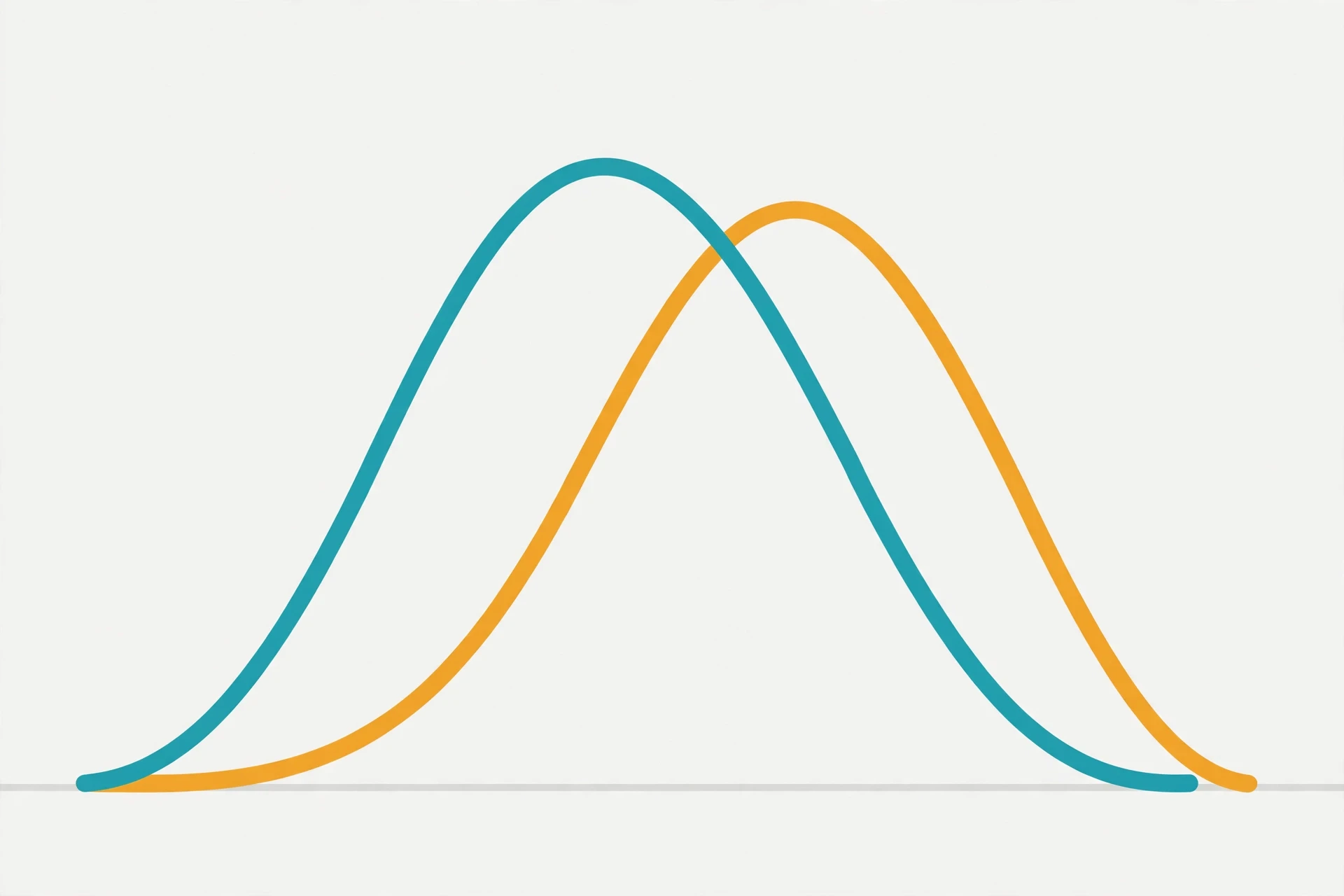
Chemists draw the hill as an energy diagram: energy on the vertical axis, the progress of the reaction on the horizontal. The reactants sit at one level, the products at another, and the hump between them is the activation energy. If the products sit lower than the reactants, the reaction is exothermic and the difference is the energy released. If the products sit higher, it is endothermic and the difference is the energy that must be supplied.
The formal name for the heat change at constant pressure is the enthalpy change, written ΔH. A negative ΔH means heat leaves the system; a positive ΔH means heat enters it. You do not need to memorise the sign convention to follow the idea: downhill on the diagram means heat out, uphill means heat in. What matters is the shape — the hill and the two levels — because that shape explains why some reactions need a spark, why some need steady heating, and why a catalyst can change the speed of a reaction without changing how much energy it releases.
5. Reaction Kinetics: Why Some Reactions Race and Others Crawl
5.1 What "fast" means in chemistry
Chemical kinetics is the study of how fast reactions go — and the range is staggering. An explosion finishes in a fraction of a second. The rusting of a garden gate takes months. The weathering of a limestone statue takes centuries. The conversion of diamond to graphite, left to itself, would take far longer than the age of the universe. Same science, same atoms-and-bonds rules, wildly different speeds.
The reaction rate is usually measured as how quickly a reactant disappears or a product appears: moles per litre per second, for a reaction in solution. For the fizzing of an antacid tablet, you can watch the rate with your eyes. For a reaction in a factory, engineers measure it with sensors and control it with valves, because a reaction that runs too fast can overheat and a reaction that runs too slow loses money.
I once watched a student drop a whole antacid tablet into water and then, impatient, drop in a second one that he had crushed to powder. The crushed one vanished in seconds while the whole one was still fizzing minutes later. He looked betrayed, as if the powder had cheated. It had not cheated. It had simply shown him, in about ten seconds, one of the five factors that control reaction rates — and it is the factor most people forget.
5.2 Collision theory: reactions happen when molecules meet properly
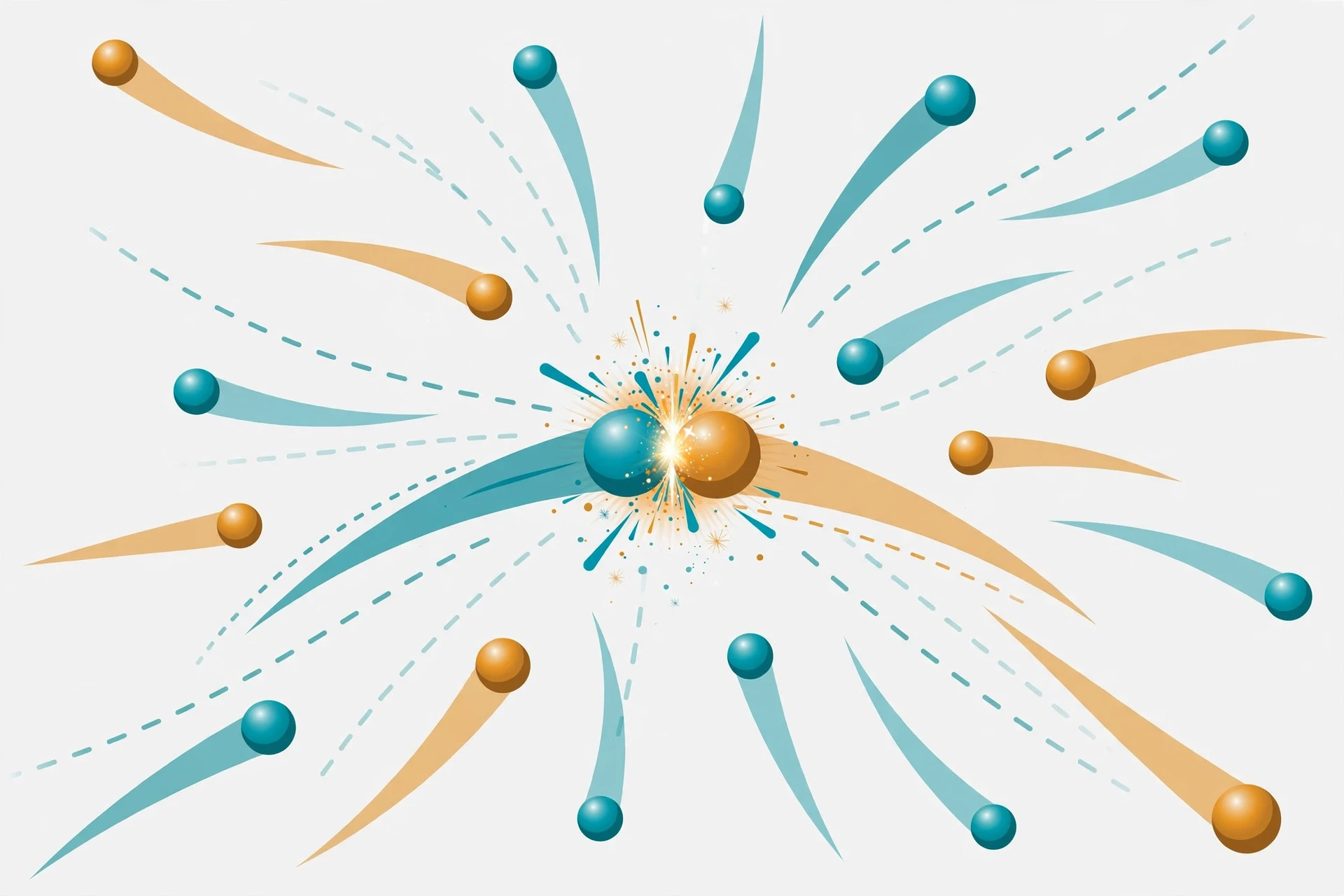
The central idea of kinetics is collision theory, and it is disarmingly simple. For a reaction to happen, reactant particles must collide. Not just any collision counts: the particles must hit with enough energy to climb the activation hill, and they must hit in the right orientation, the right atoms meeting the right atoms. Most collisions fail on one count or the other. They bounce apart unchanged, like two people bumping shoulders in a crowd and walking on.
This explains a lot. Heat a gas and its molecules move faster, collide more often, and collide harder — so more collisions clear the energy bar. Dilute a solution and collisions become rarer, so the reaction slows. Grind a solid to powder and you expose far more surface for collisions to happen on, so the reaction speeds up — which is why the crushed antacid tablet vanished first, and why sawdust burns explosively while a log smoulders.
Collision theory also explains why some reactions are slow even when the energy is favourable. If the molecules must line up in a precise way to react, most collisions will be wrongly aimed, and the reaction will crawl no matter how often the particles meet. Enzymes work, in part, by holding molecules in exactly the right orientation, so that a far larger share of collisions succeed.
5.3 Rate laws and the limits of prediction
For many reactions, the rate follows a rate law: an equation that says how the rate depends on the concentrations of the reactants. A reaction might double in speed when you double one reactant, or quadruple, or not change at all. The exponents in a rate law cannot be guessed from the balanced equation; they have to be measured. That is a humbling fact for beginners and a daily reality for working chemists. The balanced equation tells you the bookkeeping. The rate law tells you the behaviour. They are different kinds of knowledge, and you need both.
There is a deeper limit, too. The rate law describes the overall reaction, but the reaction may proceed through a series of smaller steps — a mechanism — and the slowest step, the rate-determining step, sets the pace for the whole chain. It is like a motorway with one narrow bridge: widening the road everywhere else changes nothing until you widen the bridge. Finding the rate-determining step is detective work, done with careful experiments and, increasingly, with computer models and the rate data collected in resources like the NIST Chemical Kinetics Database, which gathers measured rate constants for thousands of gas-phase reactions.
6. What Controls the Speed: Five Factors
If collision theory is right, then anything that changes how often particles collide, how hard they collide, or how many of them clear the energy hill should change the rate. Chemists group those influences into five factors, and every one of them shows up in ordinary life. The LibreTexts/OpenStax treatment of factors affecting reaction rates lists the same five: the nature of the reactants, their physical state and surface area, temperature, concentration, and the presence of a catalyst.
6.1 Temperature: heat makes molecules hurry
Raise the temperature and molecules move faster, collide more often, and collide with more energy. A larger share of them clears the activation hill. As a rule of thumb, many reactions roughly double in speed for every 10 °C rise in temperature — a rough guide, not a law, but a useful one.
Your kitchen runs on this factor. Food spoils quickly on the counter because the reactions that break it down — driven by microbes and by enzymes in the food itself — run fast at room temperature. The same food lasts days in a fridge because the cold slows those reactions down. It does not stop them; it only buys time. Cooking is the same factor used deliberately: heat speeds the reactions that brown meat, soften vegetables, and kill microbes, all at once.
The other side of the rule is safety. A reaction that is calm at room temperature can run away if it heats itself up, because the heat it releases speeds it further, which releases more heat. Engineers call this thermal runaway, and preventing it is a large part of chemical plant design.
6.2 Concentration and pressure: more particles, more collisions
Increase the concentration of a reactant and collisions become more frequent, so the rate usually rises. The classic demonstration is phosphorus burning far more fiercely in pure oxygen than in air, which is only about a fifth oxygen. The same chemistry, the same temperature — just more oxygen molecules in each lungful of gas, and a much faster reaction.
For gases, raising the pressure has the same effect as raising the concentration, because squeezing the gas packs more molecules into the same space. This is one reason industrial reactions often run in pressurised vessels. It is also why a sealed bag of crisps goes stale more slowly: less oxygen reaches the fats inside, so the oxidation reactions that make them rancid crawl.
6.3 Surface area: only the outside can react
When a solid reacts with a liquid or a gas, the reaction happens at the surface — the inside of the solid cannot meet the other reactant until the outside has reacted away. Grind the solid into powder and you expose far more surface, so the reaction speeds up dramatically. A log smoulders, wood shavings burn briskly, and sawdust can explode. Same wood, same oxygen, same temperature. Only the surface area changed.
This is why medicines are often made as fine powders or small tablets that dissolve quickly, and why a crushed antacid tablet fizzes away in seconds. It is also a serious industrial hazard: fine dusts of flour, sugar, coal, or metal can ignite explosively in air, and factories that handle powders design against exactly that risk.
6.4 The nature of the reactants: some partnerships are eager, others are shy
Some substances are simply more reactive than others, because of their electronic structure — how tightly they hold their electrons and how readily they form new bonds. Sodium reacts with water almost explosively; calcium reacts at a moderate pace; iron barely reacts at all under the same conditions. The periodic table explains the pattern: reactivity trends run across rows and down groups in ways that reflect electron shells, and the alkali metals at the far left are famously eager because they hold one outer electron very loosely.
The state of matter matters too. Reactions between two gases or two dissolved substances are usually fast, because the particles mix freely and collide constantly. Reactions involving a solid are limited to the surface, as above. And the strength of the bonds being broken sets the hill: breaking a strong bond costs more energy, so reactions that must break strong bonds tend to be slow unless a catalyst helps.
6.5 Catalysts: the shortcut (in full in Section 7)
A catalyst speeds a reaction by offering a different route with a lower activation hill, without being used up itself. Because catalysts deserve a section of their own — they run your body, clean your car's exhaust, and make most of the world's fertiliser — they get one next.
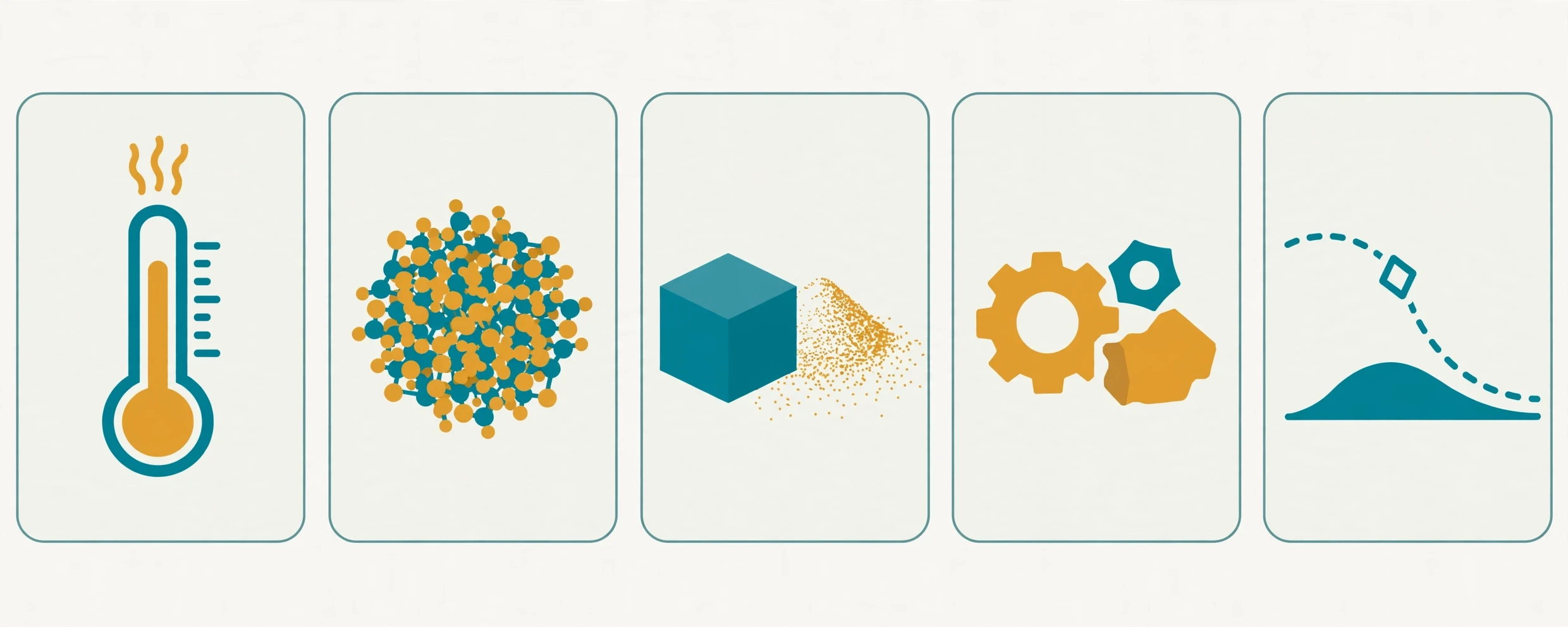
Factor | What changes | Effect on rate | Everyday example |
|---|---|---|---|
Temperature | Molecules move faster and collide harder | Usually faster; often roughly doubles per 10 °C | Food spoils on the counter, keeps in the fridge |
Concentration / pressure | More reactant particles per volume | Usually faster | Phosphorus burns fiercely in pure oxygen |
Surface area | More solid surface exposed to the other reactant | Faster with finer particles | Crushed antacid fizzes faster than a whole tablet |
Nature of reactants | Electron structure and bond strengths differ | Varies widely by substance | Sodium reacts violently with water; iron barely does |
Catalyst | A lower-energy route is offered | Faster, without the catalyst being used up | Enzymes in your cells; catalytic converter in a car |
Light | Photons supply energy to break bonds | Faster for light-sensitive reactions | Photosynthesis; hydrogen peroxide stored in brown bottles |
Table 2. The factors that control how fast a chemical reaction runs, and where you meet each one in daily life.
7. Catalysts and Enzymes: Lowering the Hill
7.1 What a catalyst actually does
A catalyst is a substance that speeds up a reaction without itself being consumed by it. It does this by providing an alternative pathway — a different sequence of steps — with a lower activation energy. The hill gets lower; the valley stays exactly where it was. That last point matters: a catalyst changes how fast a reaction reaches equilibrium, not where the equilibrium lies, and not how much energy the reaction releases. It cannot make an unfavourable reaction favourable. It can only help a favourable reaction get there sooner.
A homely analogy: imagine a mountain pass between two valleys. Without a catalyst, travellers must climb over a high pass. A catalyst is a tunnel through the mountain. The valleys are unchanged, the distance between them is unchanged, but the journey is far easier — and the tunnel is still there afterwards, ready for the next traveller.
Catalysts are everywhere in industry. The catalytic converter in a car's exhaust uses platinum, palladium, and rhodium to turn poisonous carbon monoxide and nitrogen oxides into less harmful gases before they leave the tailpipe. Oil refineries use catalysts to crack large hydrocarbon molecules into petrol and other fuels. Without catalysts, much of modern manufacturing would be slower, hotter, more expensive, and dirtier.
7.2 Enzymes: the catalysts inside you
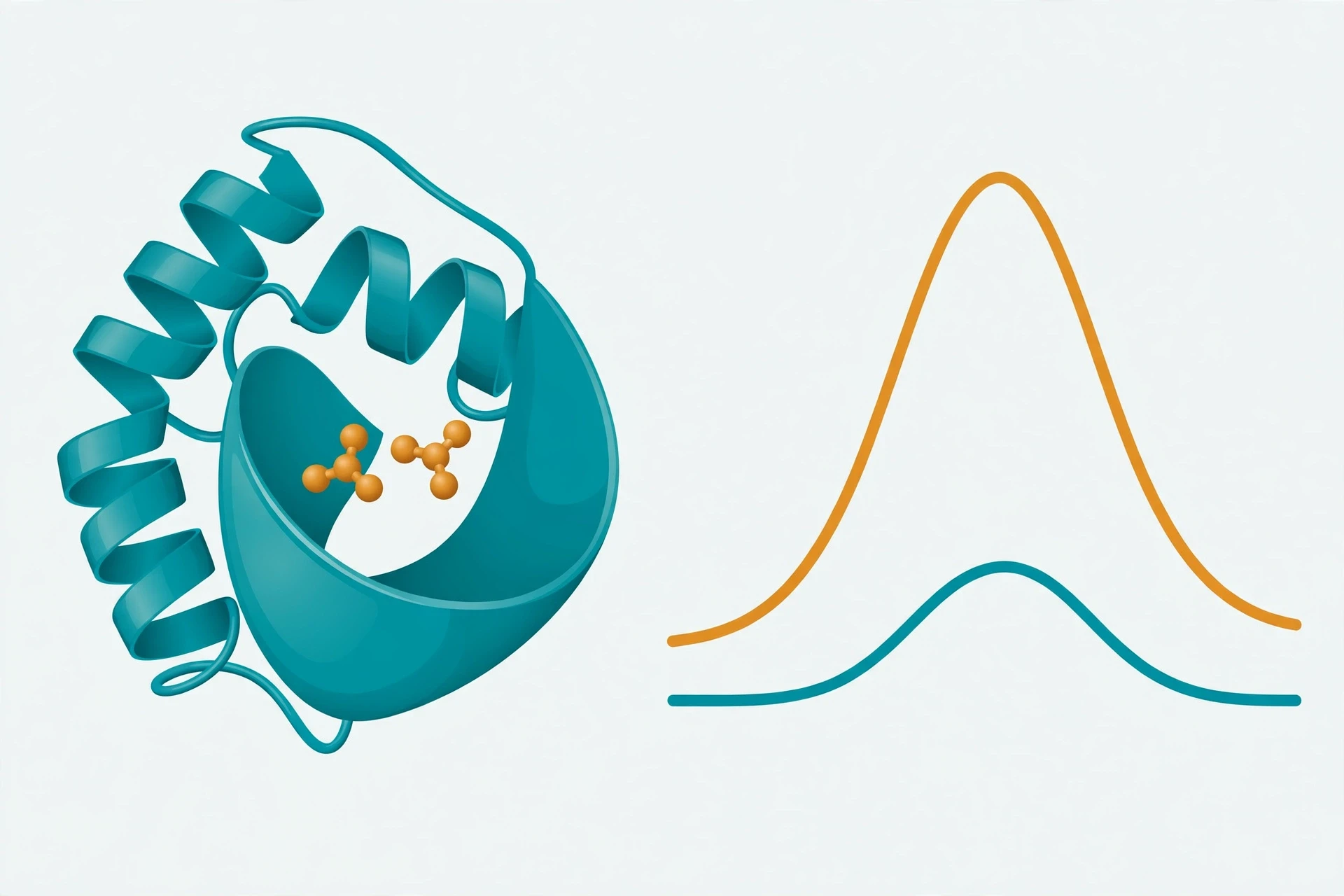
Your body runs on catalysts called enzymes, which are proteins folded into precise shapes that grip specific molecules and hold them in exactly the right orientation to react. Each enzyme is picky: it catalyses one reaction, or a small family of them, and ignores the rest. The enzyme catalase, for instance, breaks down hydrogen peroxide into water and oxygen — the foam you see when peroxide meets a cut is catalase at work, clearing away a substance that would otherwise damage your cells.
Enzymes are astonishingly effective. Some speed their reactions by factors of millions or billions compared with the uncatalysed rate, and they do it at body temperature, in water, without the high pressures and harsh conditions a factory needs. They are also fragile: heat them too far and they unfold — denature — and stop working, which is one reason a high fever is dangerous and why cooking changes the texture of an egg so completely. The chemistry of enzymes is written into the proteins your DNA encodes, so in a real sense your genes are a catalogue of catalysts.
Enzymes do not push reactions harder. They make the path easier — holding molecules in the right shape, at the right angle, so that collisions that would have failed now succeed.
7.3 Haber, Bosch, and the reaction that feeds the world
No story about catalysts is complete without Fritz Haber and Carl Bosch. Around 1909, Haber showed that nitrogen from the air could be made to react with hydrogen to form ammonia — but only at high temperature and pressure, and only with the right catalyst. Nitrogen gas is famously unreactive: its two atoms are joined by a triple bond, one of the strongest in chemistry, and breaking it is the hard part. Bosch, an engineer at BASF, spent years scaling Haber's bench-top result into a working industrial plant, solving problems of pressure vessels, heat, and catalyst poisoning that had defeated everyone before him.
The Haber–Bosch process now makes more than 100 million tonnes of ammonia a year, most of it for fertiliser, and it is estimated that roughly half the nitrogen in your body passed through a Haber–Bosch plant at some point — in the fertiliser that grew the food you ate. It is also a morally complicated story: the same chemistry that feeds people made explosives, and Haber himself directed the use of poison gas in the First World War. Chemistry, like any powerful tool, carries its history with it. The reaction itself is neutral. What people do with it is not.
The process also shows why catalysts matter for the planet. Making ammonia still consumes a large share of the world's energy and natural gas, because the hydrogen comes mostly from methane. Researchers today are working on catalysts that can make ammonia at lower temperatures and pressures, and on hydrogen made from water with renewable electricity. A better catalyst here is not a laboratory curiosity; it is a climate lever.
8. Equilibrium: When Reactions Run Both Ways
8.1 A reaction that never quite finishes
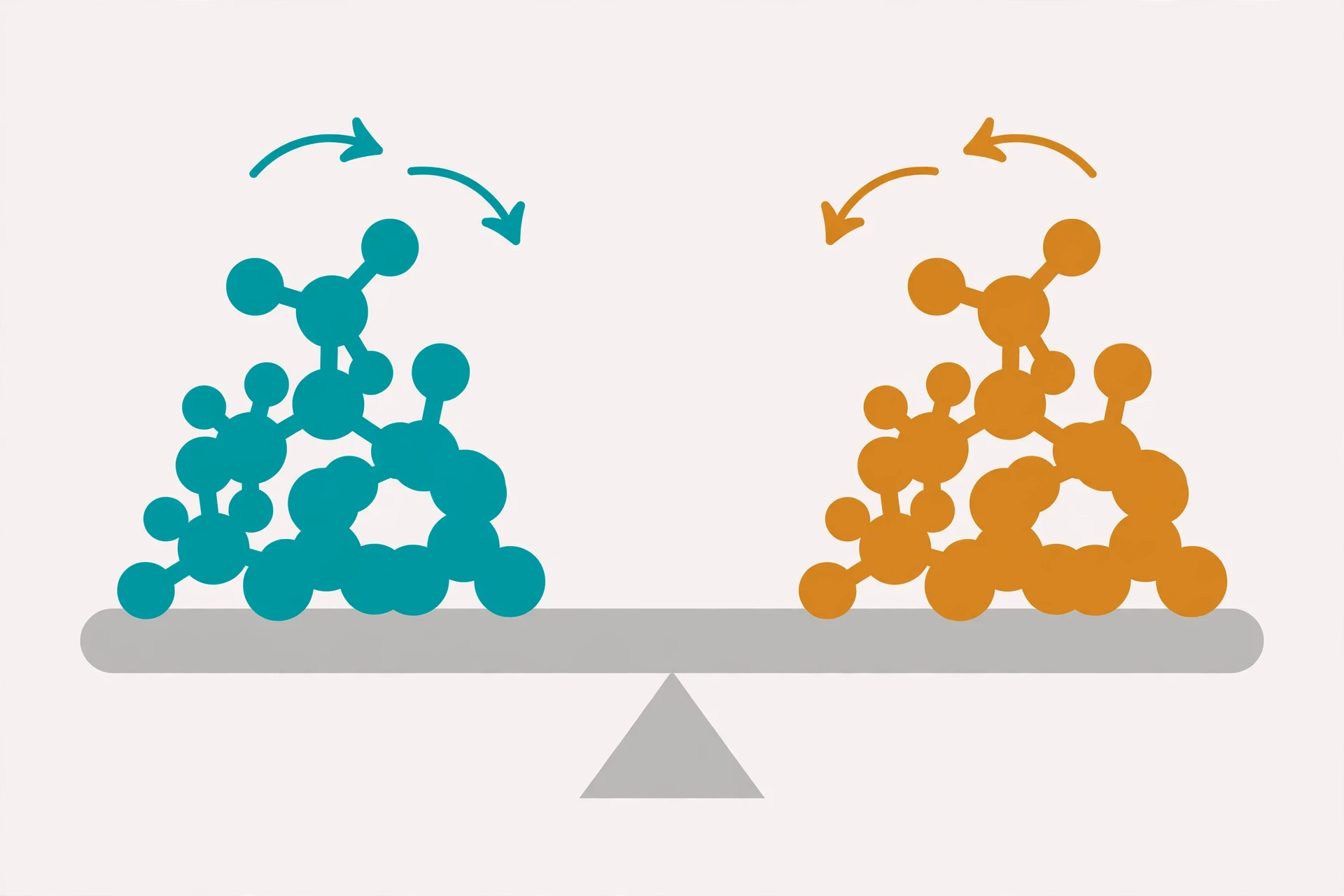
Many reactions do not run to completion. They reach a state called chemical equilibrium, where the forward reaction and the reverse reaction continue at equal rates, so the amounts of reactants and products stop changing — even though, at the molecular level, everything is still moving. It is a busy standstill, like a crowded room where as many people enter through one door as leave through another. The headcount stays the same, but nobody is standing still.
The Haber process is an equilibrium reaction: nitrogen and hydrogen form ammonia, and ammonia breaks back down into nitrogen and hydrogen. In a factory, engineers do not wait for equilibrium to settle on its own terms; they push it. That is the practical meaning of Le Chatelier's principle: if you disturb a system at equilibrium — by changing the concentration, the pressure, or the temperature — the system shifts to counteract the change. Raise the pressure, and the equilibrium shifts toward the side with fewer gas molecules (ammonia, in Haber's case). Remove the ammonia as it forms, and more keeps being made to replace it. Cool the mixture, and the exothermic forward reaction is favoured. Industrial chemistry is, to a large extent, the art of leaning on equilibria until they give you what you want.
8.2 Equilibrium in your body and in the world
Your body is full of equilibria. The oxygen you breathe binds to haemoglobin in your lungs, where oxygen is plentiful, and releases in your tissues, where it is scarce — an equilibrium that shifts with concentration, exactly as Le Chatelier described. The carbon dioxide in your blood sits in equilibrium with bicarbonate, and that balance holds your blood pH in a narrow range. Disturb it — by breathing too fast, for instance — and the shift is felt within seconds.
The oceans hold a larger version of the same story. Carbon dioxide from the air dissolves in seawater and forms carbonic acid, which sits in equilibrium with bicarbonate and carbonate ions. As atmospheric carbon dioxide rises, more dissolves, the equilibrium shifts, and the ocean becomes more acidic — a process called ocean acidification, which makes it harder for corals and shellfish to build their skeletons. The chemistry is the same as in a school test tube. The scale is planetary.
8.3 Why equilibrium is not the same as "stopped"
A common misunderstanding is that equilibrium means nothing is happening. The opposite is true: at equilibrium, both reactions are running, often quickly, and only their rates match. A sealed bottle of fizzy drink is at equilibrium — carbon dioxide leaves the liquid and dissolves back into it at the same rate. Open the bottle, the pressure drops, the equilibrium shifts, and the gas escapes as fizz. Nothing was added or taken away except a change in conditions. That is the power of the idea: small changes in conditions, large changes in outcome.
9. Chemical Reactions in Everyday Life
9.1 In the kitchen: baking, browning, and fermenting
The kitchen is the most accessible chemistry laboratory most people will ever own. Baking soda and an acid — vinegar, lemon juice, buttermilk — release carbon dioxide, and the gas bubbles lift a cake as it bakes. Baking powder does the same job in two stages: it releases some gas when it meets liquid and more when it meets heat, which is why a batter left standing still rises in the oven. Yeast does it biologically, fermenting sugars into carbon dioxide and alcohol, which is why bread dough swells and why beer and wine exist.
Browning is chemistry too. The Maillard reaction, named for the French chemist Louis-Camille Maillard, is a reaction between amino acids and sugars at high heat that creates hundreds of new flavour compounds — the brown crust on bread, the sear on a steak, the smell of roasting coffee. It is not burning, and it is not caramelisation (which involves sugar alone). It is a family of reactions so complex that food scientists still map new pathways through it, and it is the reason boiled meat and roasted meat taste so different when they started as the same cut.
9.2 In the house: rust, cleaning, and soap
Iron rusts when iron, oxygen, and water meet: the iron is oxidised, the oxygen is reduced, and flaky orange-brown iron oxide forms. I learned how patient rust is the winter I left my bicycle outside for three months: the chain I had ridden all summer came back stiff and orange, and no amount of wiping would bring the shine back — the metal itself had changed, and only a new chain would fix it. Rust needs water — dry iron in dry air rusts very slowly — and salt speeds it up by helping electrons move, which is why cars rust faster near the sea and why winter roads, salted against ice, are hard on vehicles. Painting, galvanising (coating iron with zinc), and oiling all work the same way: they keep water and oxygen away from the iron surface, or they give the oxygen a more reactive metal to attack first.
Cleaning is applied chemistry. Soap molecules have a water-loving head and a grease-loving tail, so they surround grease and lift it into water. Bleach oxidises stains and kills microbes. Vinegar, an acid, dissolves limescale — calcium carbonate — by reacting with it to form soluble calcium acetate, water, and carbon dioxide, which is the fizz you see when you descale a kettle. The water cycle on Sciory follows the water that carries all of this chemistry around the planet, from kettle to cloud and back.
9.3 In your body: the reactions that keep you alive
Every second, your cells run thousands of chemical reactions in coordinated sequences called metabolic pathways. Cellular respiration breaks down glucose with oxygen to release energy, carbon dioxide, and water — the reverse, in energy terms, of photosynthesis, which stores energy by building glucose from carbon dioxide and water. Digestion is a series of reactions in which enzymes break large food molecules into smaller ones your body can use. Your liver runs detoxification reactions that make harmful substances easier to excrete. Your immune system uses chemical reactions to destroy invaders, including bursts of reactive oxygen compounds that are lethal to bacteria and carefully contained so they do not damage your own tissues.
None of this is metaphorical. The warmth of your body is the waste heat of exothermic reactions. The energy that moves your muscles comes from a molecule called ATP, whose bonds store energy that is released when they are broken and rebuilt in a controlled cycle. You are, in the most literal sense, a walking set of chemical reactions — thousands of them, balanced, catalysed, and held at equilibrium, running for decades.
9.4 In technology: batteries, fireworks, and medicine
A battery is a redox reaction in a box. In a lithium-ion battery, lithium ions shuttle between two electrodes as the battery charges and discharges, and the movement of electrons through the external circuit is the electric current that powers your phone. Rechargeable batteries work because their reactions are reversible — run the current backwards and the chemistry runs backwards too. The electricity that charges them, and the circuits it flows through, are covered in Sciory's guide to the fundamentals of electricity.
Fireworks are chemistry as theatre: different metal salts give different colours when their electrons are excited by heat and fall back, releasing light — strontium for red, barium for green, copper for blue, sodium for yellow. The same principle, controlled rather than explosive, lights the screen you are reading this on.
Modern medicine is largely applied reaction chemistry. Drugs work by participating in, blocking, or mimicking chemical reactions in the body. Antacids neutralise acid. Aspirin blocks an enzyme that makes the compounds behind pain and inflammation. Antibiotics interfere with the reactions bacteria need to build their cell walls. Designing a drug means designing a molecule that will take part in exactly the right reaction, in exactly the right place, and in no other.
10. The Frontiers: Greener, Faster, Smarter Reactions
10.1 Green chemistry: doing more with less waste
Chemistry has a waste problem. Traditional syntheses often produce more by-product than product, and some of those by-products are toxic. Green chemistry is the effort to design reactions that avoid the waste in the first place: using safer solvents (or none at all), running reactions at lower temperatures, using catalysts instead of harsh reagents, and choosing starting materials that come from renewable sources rather than oil. The goal is not to stop making things, but to make them in ways that do not leave a mess behind.
One of the most-watched frontiers is turning carbon dioxide itself into a raw material — using electricity and catalysts to convert CO₂ into fuels and useful chemicals, rather than releasing it into the air. The chemistry is known in outline; the challenge is a catalyst that is efficient, selective, and cheap enough to run at scale. The NIST Chemical Kinetics Database, which collects measured rate data for gas-phase reactions, is one of the tools researchers use when they test whether a proposed pathway is realistic.
10.2 Better catalysts, designed atom by atom
Catalyst research is moving from trial and error toward design. Single-atom catalysts spread individual metal atoms across a support, so that every atom is available to react — no metal wasted inside a particle where it cannot meet anything. Enzyme engineers reshape natural enzymes, or build new ones, to run reactions that nature never needed: breaking down plastics, for instance, or making pharmaceuticals in a single step where the old route took ten. Computational chemistry now predicts which catalyst surfaces will work before anyone makes them in a lab, and machine-learning models trained on reaction data suggest new combinations to try.
None of this is settled science with a fixed answer. Researchers still disagree about which catalyst designs will scale, which green routes will prove economic, and how fast CO₂ conversion can move from demonstration plants to industry. That disagreement is healthy. It is also a reminder of how the field works: a claim is a starting point, and the data — measured rates, measured yields, measured costs — decides what survives.
10.3 What has not changed
For all the new tools, the core ideas in this article have not moved. Atoms rearrange. Bonds break and form. Energy moves. Rates depend on collisions, temperature, concentration, surface area, and catalysts. Equilibria shift when conditions change. A student meeting these ideas for the first time is learning the same rules that Lavoisier weighed out in the 1700s and that Haber and Bosch industrialised in the 1900s. The instruments are new. The rules are not.
11. Common Misconceptions About Chemical Reactions — Corrected
Most people assume a chemical reaction is something dramatic — a bang, a flash, a cloud of smoke. What the data actually shows is quieter and wider: most reactions are slow, invisible, and constant, and the dramatic ones are the exception. Here are the misunderstandings I meet most often, corrected in plain terms.
"Matter disappears when something burns." It does not. The mass is conserved; it becomes gases and ash. Weigh the whole system in a sealed container and the total never changes. Lavoisier proved this in the 1700s, and it still surprises people.
"A catalyst gets used up." It does not. A catalyst takes part in the reaction and is regenerated by the end, ready to work again. If it were consumed, it would be a reactant, not a catalyst.
"All chemical reactions are fast." They are not. Rusting takes months, the weathering of stone takes centuries, and some reactions in rocks take millions of years. Speed is a property of the reaction and its conditions, not of chemistry in general.
"Adding heat always makes a reaction go faster." Almost always — but heat can also destroy a catalyst, denature an enzyme, or shift an equilibrium the wrong way. In the Haber process, higher temperature speeds the reaction but favours the reverse direction, so engineers must balance the two effects.
"A reaction at equilibrium has stopped." It has not. Forward and reverse reactions continue at equal rates. Equilibrium is a balance of motion, not an absence of it.
"Chemical means artificial, and natural means safe." It does not. Many natural substances are poisonous, and many synthetic ones are life-saving. A substance's safety depends on its chemistry and its dose, not on where it came from.
"Balancing an equation is just exam bookkeeping." It is the accounting that makes chemistry predictive. Factories, doctors, and climate scientists all rely on balanced equations to know how much goes in and how much comes out.
Conclusion
A chemical reaction is a rearrangement of atoms — bonds breaking, bonds forming, energy moving — and it is the most common event in the universe that makes new things. It raises bread and rusts iron. It powers your phone and your body. It built the fertiliser that feeds half the world, and it writes the carbon dioxide numbers in every climate report.
The ideas that let you understand it fit in a short list. Atoms are conserved, so equations must balance. Reactions fall into patterns — synthesis, decomposition, displacement, combustion, redox, acid-base, precipitation — and naming the pattern is the first step to predicting the product. Energy decides whether a reaction gives out heat or takes it in, and the activation hill decides whether it starts at all. Rates depend on collisions, and collisions depend on temperature, concentration, surface area, the nature of the reactants, and catalysts. Equilibria shift when conditions change, and a catalyst can hurry a reaction without changing where it ends.
I still remember the foam running down my sleeve in that school hall. I did not know, at nine, that I was watching atoms swap partners, or that the same kind of rearrangement would one day explain the food on my plate, the rust on my bicycle, and the warmth of my own body. I only knew that something invisible had happened, and that it had changed everything it touched. That feeling has not left me. If this guide has done its job, it will not leave you either — and the next time you see bread rise, a nail rust, or a tablet fizz, you will know what you are looking at: chemistry, happening, as it always has, right in front of you.
Frequently Asked Questions
What is a chemical reaction in simple terms?
A chemical reaction is a process in which atoms rearrange to form new substances. Bonds in the starting substances break, atoms regroup, and new bonds form in the products. The atoms themselves are conserved — none are created or destroyed, only rearranged.
What are the 5 main types of chemical reactions?
The five main types are synthesis (combination), decomposition, single displacement, double displacement, and combustion. Chemists also classify reactions by driving force as redox, acid-base, and precipitation reactions, and one reaction can belong to more than one group — combustion, for example, is also a redox reaction.
What is the difference between a chemical reaction and a physical change?
A chemical reaction creates a new substance with different properties, while a physical change only changes the form or state of a substance. Melting ice is physical — it is still water. Burning paper is chemical — it becomes ash, smoke, and gases that behave nothing like paper.
What is reaction kinetics?
Reaction kinetics is the study of how fast chemical reactions happen and what controls their speed. It covers reaction rates, rate laws, collision theory, activation energy, and the factors that speed reactions up or slow them down, such as temperature, concentration, surface area, and catalysts.
What factors affect the rate of a chemical reaction?
The main factors are temperature, the concentration of the reactants (or pressure, for gases), the surface area of any solid reactants, the chemical nature of the reactants, the presence of a catalyst, and light for light-sensitive reactions. Raising the temperature or concentration, or grinding a solid finer, usually speeds a reaction up.
What is activation energy?
Activation energy is the minimum energy reactant molecules need before they can turn into products. It is the hill the reactants must climb before they can fall into the products. A spark supplies it for a candle flame; a catalyst lowers it so the reaction can start more easily.
What is a catalyst, and is it used up in the reaction?
A catalyst is a substance that speeds up a reaction by offering a lower-energy pathway, without being consumed by the reaction. It is regenerated at the end and can work again. Enzymes are the catalysts inside your body, and catalytic converters use metal catalysts to clean car exhaust.
What is the difference between exothermic and endothermic reactions?
An exothermic reaction releases energy, usually as heat, so its surroundings get warmer — combustion is exothermic. An endothermic reaction absorbs energy from its surroundings, so they get colder — dissolving ammonium nitrate in water for a cold pack is endothermic. Photosynthesis is endothermic; it stores sunlight as chemical energy.
What is chemical equilibrium?
Chemical equilibrium is the state where the forward and reverse reactions run at equal rates, so the amounts of reactants and products stop changing. The reactions have not stopped — molecules keep reacting in both directions. Changing the temperature, pressure, or concentration shifts the equilibrium, as described by Le Chatelier's principle.
What are some everyday examples of chemical reactions?
Baking (baking soda releasing carbon dioxide), browning food (the Maillard reaction), rusting iron, batteries discharging, soap cleaning grease, antacids neutralising stomach acid, fermentation by yeast, fireworks, and the respiration in your cells that turns food and oxygen into energy are all chemical reactions.
Sources / Further Reading
OpenStax Chemistry 2e — Classifying Chemical Reactions: https://openstax.org/books/chemistry-2e/pages/4-2-classifying-chemical-reactions
LibreTexts — Factors Affecting Reaction Rates: https://chem.libretexts.org/Courses/CSU_San_Bernardino/CHEM_2100%3A_General_Chemistry_I_(Mink)/12%3A_Kinetics/12.03%3A_Factors_Affecting_Reaction_Rates
American Chemical Society — What Is a Chemical Reaction? (Middle School Chemistry, Lesson 6.1): https://www.acs.org/middleschoolchemistry/lessonplans/chapter6/lesson1.html
NIST Chemical Kinetics Database: https://kinetics.nist.gov/kinetics/
OpenStax Chemistry 2e — Chemical Reaction Rates: https://openstax.org/books/chemistry-2e/pages/12-1-chemical-reaction-rates