

Introduction
The first time the sky really hit me, I was nineteen, lying on a cold desert floor with a borrowed sleeping bag and no tent between me and the stars. I had spent the day in a lecture hall hearing about the big bang theory, and I thought I understood it. Then the Milky Way rose, thick as spilled sugar, and the size of what I was looking at undid every tidy sentence I had written in my notebook. The light falling on my face had left its stars thousands of years ago. Some of it had been travelling since before there were cities, before there were people, before there was a planet to stand on at all. And that, I realised, was only the shallow end of the story.
This guide is about the deep end. The big bang theory is our best account of the origins of the universe — how everything we can see, from galaxies to the atoms in your body, began in a hot, dense state about 13.8 billion years ago and has been expanding and cooling ever since. It is a story of a universe that was once smaller than an atom, of light trapped in fog for 380,000 years, of the first stars switching on in the dark, and of a present-day expansion that is speeding up for reasons nobody fully understands. It is also a story about how we know any of this, because nobody was there to watch it happen. We know it the way a detective knows a case: from clues left at the scene — the way galaxies move, the heat still glowing in the sky, and the exact recipe of light elements written into old gas clouds.
Every atom in your body was once part of that story. The hydrogen in the water you drink was made in the first minutes. The carbon in your cells was forged in a star that lived and died long before the Sun was born. That is not poetry laid on top of the physics. That is the physics.
1. What the Big Bang Theory Actually Says
The big bang theory is often taught as if it were a single event, a bang, after which everything else followed in a neat line. Real cosmology is messier and far more interesting. The theory is a model of cosmic evolution: a description of how the universe has changed, step by step, from a hot, dense beginning to the cold, structured cosmos we live in today. Its power is not that it explains everything. Its power is that it makes predictions — about what the sky should look like, about what the oldest light should be, about how much hydrogen and helium the universe should contain — and those predictions have, again and again, turned out to be right.
1.1 Not an explosion in space
Most people picture the big bang as a bomb going off in an empty room, with bits flying out from a centre. That picture is wrong in almost every detail, and it causes most of the confusion about the theory. There was no room for the bomb to go off in, because space itself was part of what was expanding. There was no centre, because the expansion happened everywhere at once. A better image is a loaf of raisin bread rising in an oven: the raisins are the galaxies, and as the dough — space itself — expands, every raisin moves away from every other raisin. No raisin sits at the centre of the rise. From any raisin, all the others look as if they are moving away.
I learned how stubborn the explosion picture is when a student once asked me, in front of a full lecture hall, "So where exactly did it explode?" I started to answer with the bread, and she stopped me. "But the bread is in an oven," she said. "What is the universe in?" The honest answer is that the question does not quite make sense. Space is not a thing inside something bigger. Space is the stage, and the stage itself is growing. If that feels strange, it should. Our brains were built to navigate rooms and fields, not to picture the growth of space itself.
1.2 A beginning — or the edge of what we can know
When cosmologists say the universe is about 13.8 billion years old, they mean something specific. Run the expansion backwards, and the universe gets hotter and denser until, at the very start of the model, the mathematics breaks down. That point is often called the singularity, but the word is a warning label as much as a description: it marks where our current physics stops working. The big bang theory describes what happened after that point, from a tiny fraction of a second onward. It does not, by itself, tell us what came "before" — or whether "before" is even a meaningful word when time itself was part of the expansion.
Some physicists think the beginning was preceded by a period called cosmic inflation, a burst of extraordinarily rapid expansion. Others explore ideas in which our universe is one of many, or in which a previous universe contracted and bounced. These are live, serious ideas, and they are also, for now, beyond the reach of direct testing. A good cosmology guide should say that plainly. The big bang theory is the best-tested story we have about the universe we can observe. It is not a claim to know everything.
2. How We Found Out: Hubble and the Expanding Universe
2.1 A universe that was supposed to stand still
In the early 1920s, most astronomers believed the universe was static — a vast, unchanging stage on which stars lived and died, but which itself never grew or shrank. Even Albert Einstein, whose general theory of relativity predicted that the universe should either expand or contract, was so troubled by that prediction that he added a fudge factor to his equations to hold the universe still. He later called that addition his greatest blunder, though the story of that remark is itself tangled. The point stands: the idea of an expanding universe was so strange that even its own mathematics had to fight to be believed.
2.2 Hubble's redshift: the galaxies are running away
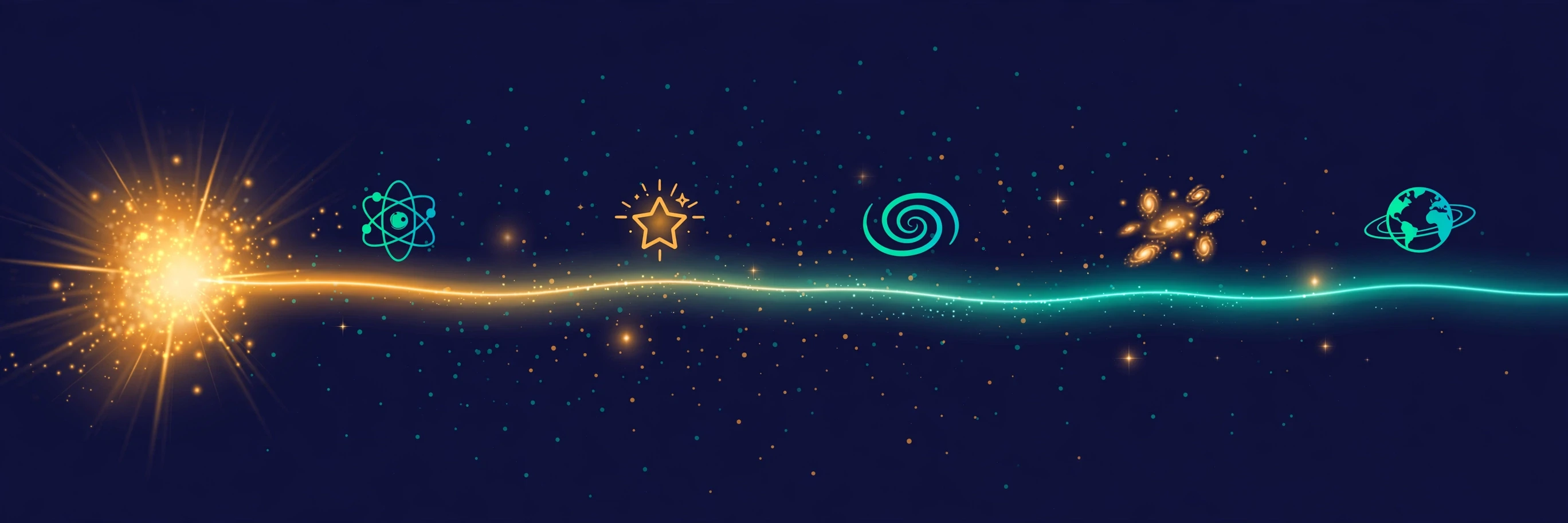
The evidence arrived in 1929, through the work of Edwin Hubble at Mount Wilson Observatory in California. Hubble measured the light from distant galaxies and found that it was stretched toward the red end of the spectrum — redshifted — and that the farther away a galaxy was, the more its light was stretched. The natural reading was startling: the galaxies were moving away from us, and the more distant ones were moving away faster. This is Hubble's law, and it is the first great pillar of the big bang theory.
I still use Hubble's own data in teaching, not because it is the most precise — modern measurements are far better — but because it is honest data. The points scatter. The line through them is wobbly. And yet the trend is unmistakable: distance and speed rise together. That is how science often looks at the moment of discovery. Not a clean proof, but a pattern too strong to be an accident, pointing at something nobody had expected.
The redshift is not galaxies racing through space like cars on a motorway. It is space stretching and stretching the light travelling through it. Imagine drawing waves on a rubber band and then pulling the band: the waves get longer. Light from a distant galaxy is stretched in exactly that way as the space between us and that galaxy grows. NASA's overview of the universe's history lays out this chain of reasoning — inflation, the hot beginning, and the long cooling that followed — in the clearest short form I know, and it is worth reading alongside this guide: NASA's overview of the universe's history.
2.3 Running the film backwards
If galaxies are moving apart now, they must have been closer together in the past. Run the film backwards far enough, and everything we can see was packed into a tiny, hot, dense state. That is the core logic of the big bang theory, and it is disarmingly simple. It does not need exotic mathematics to grasp. It needs only the observation that the universe is expanding, and the willingness to follow that fact to its end.
There is a catch, and it is a serious one. The expansion rate we measure today — the Hubble constant — is not agreed on to the precision cosmologists would like. Measurements from the early universe, from the cosmic microwave background, give one value, around 67 kilometres per second per megaparsec. Measurements from the nearby universe, from supernovae and Cepheid stars, give a higher value, around 73. This disagreement, called the Hubble tension, is one of the liveliest arguments in modern cosmology. It may turn out to be a measurement problem. It may turn out to be new physics. Either way, it is a reminder that the big bang theory is a living science, not a finished monument.
3. The First Moments: Inflation, Fire, and the First Elements
3.1 The Planck era and cosmic inflation
The earliest moments are the hardest to talk about, because the conditions were so extreme that our two great theories of physics — general relativity, which describes gravity and the large, and quantum mechanics, which describes particles and the small — stop agreeing with each other. Cosmologists call the first tiny fraction of a second the Planck era, after the scale at which quantum gravity would matter. We do not have a tested theory of quantum gravity, so what happened in that era is, honestly, unknown.
What follows in the standard story is cosmic inflation. Around 13.8 billion years ago, for a tiny fraction of a second, the universe expanded far faster than the speed of light. That sounds impossible until you remember that it was space itself expanding, not things moving through space. Inflation is not directly observed; it is inferred, because it explains three things about the universe we see: why it looks so flat on the largest scales, why distant regions look so similar in temperature, and where the tiny ripples came from that later grew into galaxies. NASA's account of the universe's history describes inflation as a period when the universe "expanded faster than the speed of light for a fraction of a second" — and notes, with proper caution, that scientists are not sure what came before it or what powered it.
3.2 A soup of quarks and the first nuclei
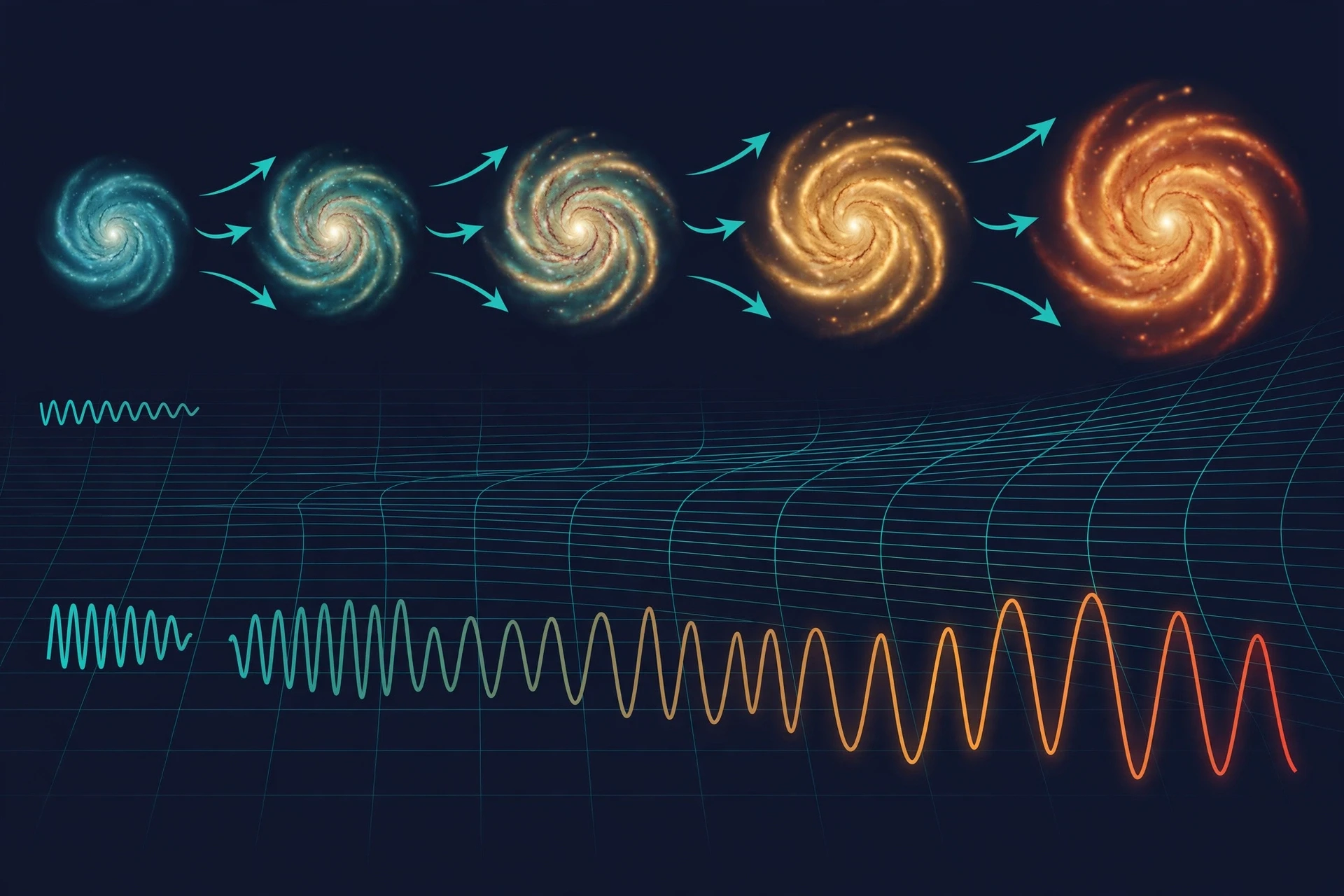
When inflation stopped, its energy turned into matter and light — the hot big bang itself. One second after the beginning, the universe was a soup of light and particles at about 10 billion degrees Celsius, far hotter than the centre of any star. In the minutes that followed, protons and neutrons collided and fused into the lightest elements: mostly hydrogen, with about a quarter helium by mass, and traces of lithium and beryllium. This is Big Bang nucleosynthesis, and it is one of the theory's great triumphs, because the amounts it predicts match what astronomers actually measure in the oldest gas clouds.
That match matters. If the universe had started any other way — if it had always existed, or if it had cooled differently — the recipe of light elements would be different. Instead, the oldest material in the universe carries the exact proportions the hot beginning predicts. The elements that make up the Sun, the Earth, and your body are, in a literal sense, leftovers from the first three minutes. Heavier elements — carbon, oxygen, iron — came later, forged in stars, a story told in Sciory's Periodic Table of Elements: Structure & Trends.
Era | When | What happened |
|---|---|---|
Planck era | Less than 10−43 seconds | Conditions beyond current physics; quantum gravity would be needed to describe it |
Cosmic inflation | About 10−36 to 10−32 seconds | Space expanded enormously in a fraction of a second; ripples were stretched to cosmic size |
Quark-gluon plasma | First millionth of a second | Quarks and gluons moved freely in a hot, dense soup |
Nucleosynthesis | About 3 to 20 minutes | Protons and neutrons fused into hydrogen, helium, and traces of lithium |
Recombination | About 380,000 years | Electrons joined nuclei to form atoms; light was set free |
Dark Ages | 380,000 to about 200 million years | No stars yet; the universe was dark, filled with hydrogen and helium gas |
First stars and galaxies | About 200 million to 1 billion years | Gas clouds collapsed, the first stars ignited, and galaxies began to gather |
4. The Cosmic Microwave Background: The Afterglow We Can Still See
4.1 A fog that would not lift
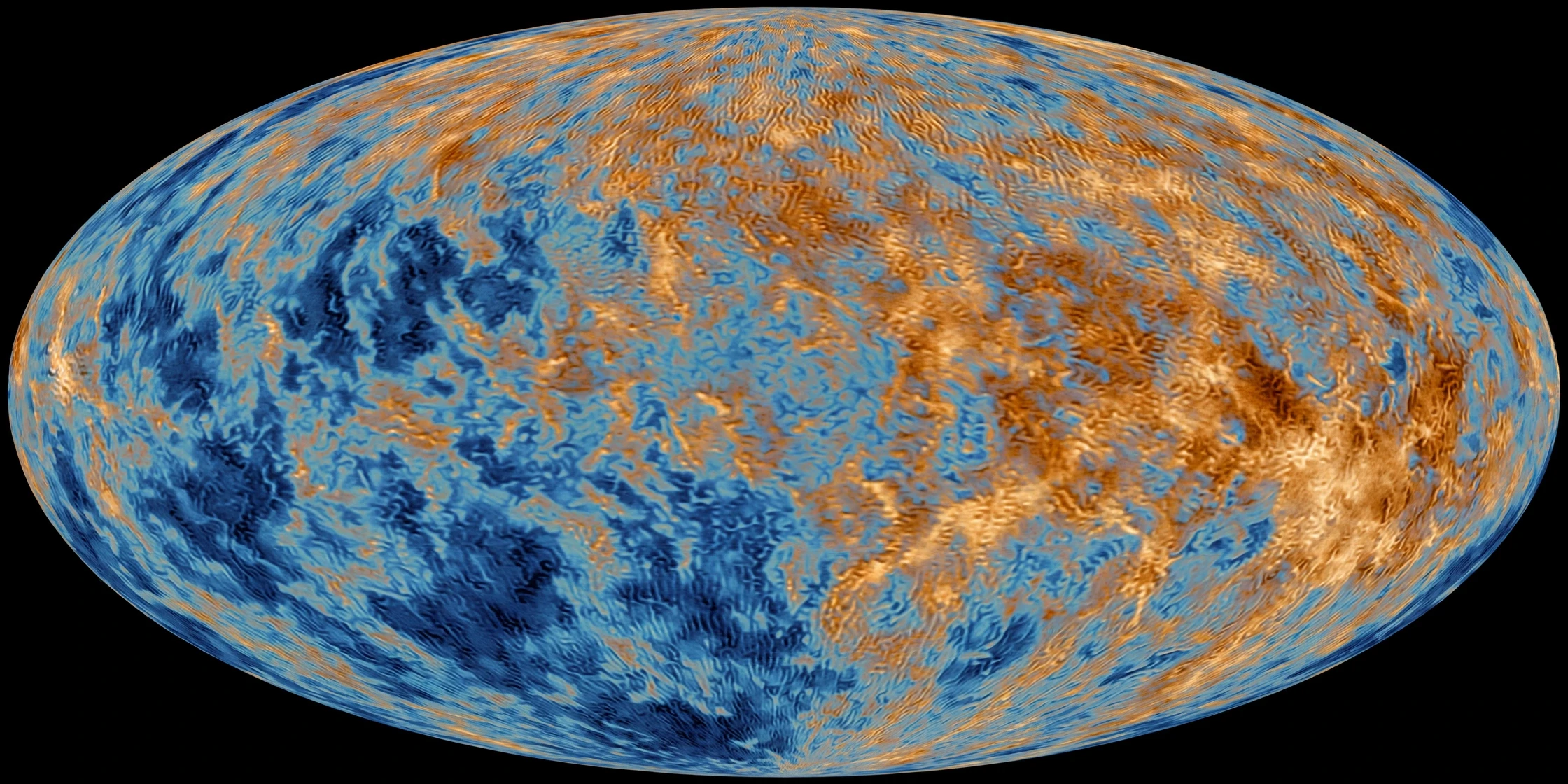
For the first 380,000 years, the universe was opaque. Free electrons scattered light the way fog scatters a headlight, so no photon could travel far without being knocked off course. Then, as the universe cooled to about 3,000 kelvin, electrons settled into orbit around nuclei and formed the first stable atoms of hydrogen and helium. The fog cleared. Light could travel freely for the first time. That light is still travelling, and we can still see it. It is the cosmic microwave background, or CMB — the oldest light in the universe, and the single strongest piece of evidence for the big bang theory.
The story of its discovery is one of my favourites in all of science, because it was an accident, and because it was nearly thrown away. In 1965, Arno Penzias and Robert Wilson, two radio astronomers at Bell Laboratories in New Jersey, were testing a sensitive horn antenna and found a faint hiss they could not get rid of. It came from every direction, day and night, in every season. They checked the equipment, cleaned out pigeon droppings — a detail that has become legend, and it is true — and still the hiss remained. What they were hearing was the cooled afterglow of the hot beginning, stretched by 13.8 billion years of expansion from visible light down to microwaves, now at a temperature of just 2.73 kelvin above absolute zero.
4.2 What the afterglow tells us
The CMB is astonishingly uniform. In every direction, its temperature is the same to about one part in 100,000. That uniformity is itself a clue: it tells us the early universe was smooth, and that the tiny variations in it — the slightly hotter and slightly colder patches — were the seeds of everything that came after. Denser patches pulled in more matter and grew into galaxies and clusters; emptier patches became the great voids between them. OpenStax's Astronomy textbook walks through this discovery step by step, from the prediction of the afterglow in the 1940s to Penzias and Wilson's antenna and the satellite maps that followed: OpenStax Astronomy, The Cosmic Microwave Background.
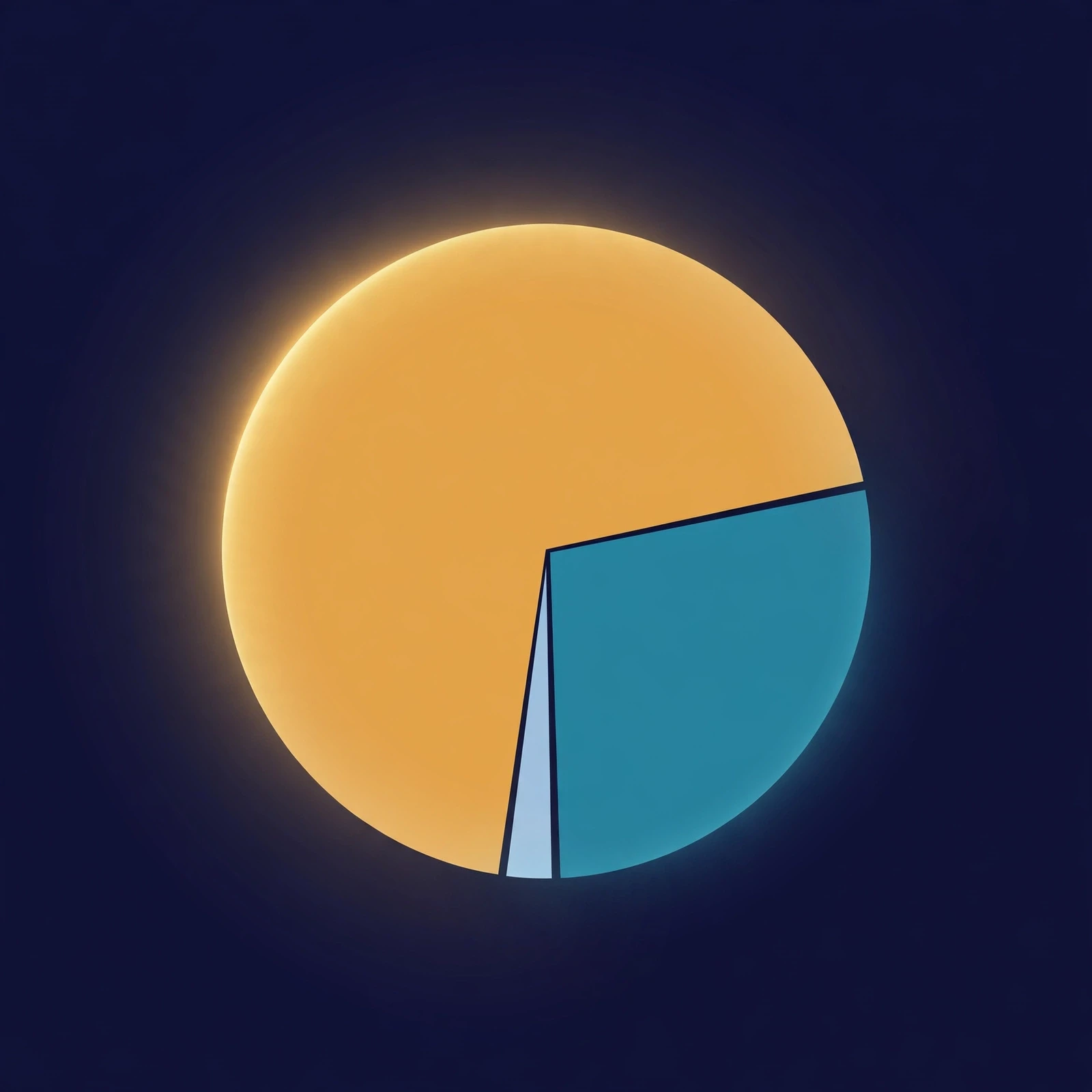
Three satellites mapped the CMB in ever finer detail: COBE in 1989, WMAP in 2001, and Planck, launched by the European Space Agency in 2009. Planck's maps were the sharpest of all, and from them cosmologists read off the universe's recipe and its age. The ESA's summary of Planck's findings is worth the short read: ordinary matter makes up just 4.9% of the universe, dark matter 26.8%, and dark energy 68.3% — and the age of the universe comes out at 13.8 billion years: ESA, Planck science highlights. A NASA account of the final Planck results puts the same numbers in a different light, noting that the early-universe expansion rate Planck measured — 67.4 kilometres per second per megaparsec — sits slightly below the rate measured in the nearby universe, the tension I mentioned earlier: NASA, Planck Maps the Microwave Background.
The cosmic microwave background is the oldest light we can see. It is a photograph of the universe as a baby, taken 380,000 years after the beginning, and it is still hanging in the sky above you tonight.
4.3 Why the CMB settled the argument
Before the CMB was found, there was a serious rival to the big bang theory: the steady state theory, which held that the universe had always existed in roughly the same form, with new matter appearing to fill the gaps as it expanded. The steady state theory was elegant, and it had distinguished supporters. But it predicted no afterglow. The big bang theory predicted one, with a specific temperature. When Penzias and Wilson found the hiss, and when later satellites measured its spectrum and found it matched a cooling fireball almost perfectly, the argument was effectively over. A theory that predicts a glow, and then the glow is found, has earned its keep.
5. The First Atoms, the Dark Ages, and the First Stars
5.1 Recombination: the universe becomes transparent
The moment the fog cleared — recombination — deserves a pause, because it is the boundary between what we can see and what we cannot. Everything before it is hidden from direct view by the opaque early universe. Everything after it is, in principle, visible. Telescopes look back in time by looking out in space, because light takes time to travel. The CMB is the farthest back we can see with light. To learn about earlier times, we have to use other clues: the elements, the expansion, and the mathematics of particle physics, tested in accelerators that recreate tiny pieces of the early universe on Earth.
5.2 Two hundred million years of darkness
After recombination, the universe went dark again — not because light was blocked, but because there was nothing to make it. For roughly 200 million years, the cosmos was a sea of hydrogen and helium gas, with no stars to shine. Astronomers call this the Dark Ages, and it is one of the least observed periods in cosmic history, because there was so little light to observe. In that darkness, gravity went quietly to work. Slightly denser regions pulled in gas, grew denser, and grew hotter, until their centres were hot enough for nuclear fusion to begin. The first stars switched on.
Those first stars were nothing like the Sun. With no heavy elements to cool the gas, the clouds that formed them stayed hot and fragmented less, so the first stars were enormous — tens to hundreds of times the mass of the Sun — and millions of times brighter. They lived fast and died young, exploding as supernovae after only a few million years, and in dying they scattered the first heavy elements into space. Every later star, every planet, every living thing is built from that scattered material. The first generation of stars made the ingredients; later generations assembled them.
5.3 Webb looks back to Cosmic Dawn
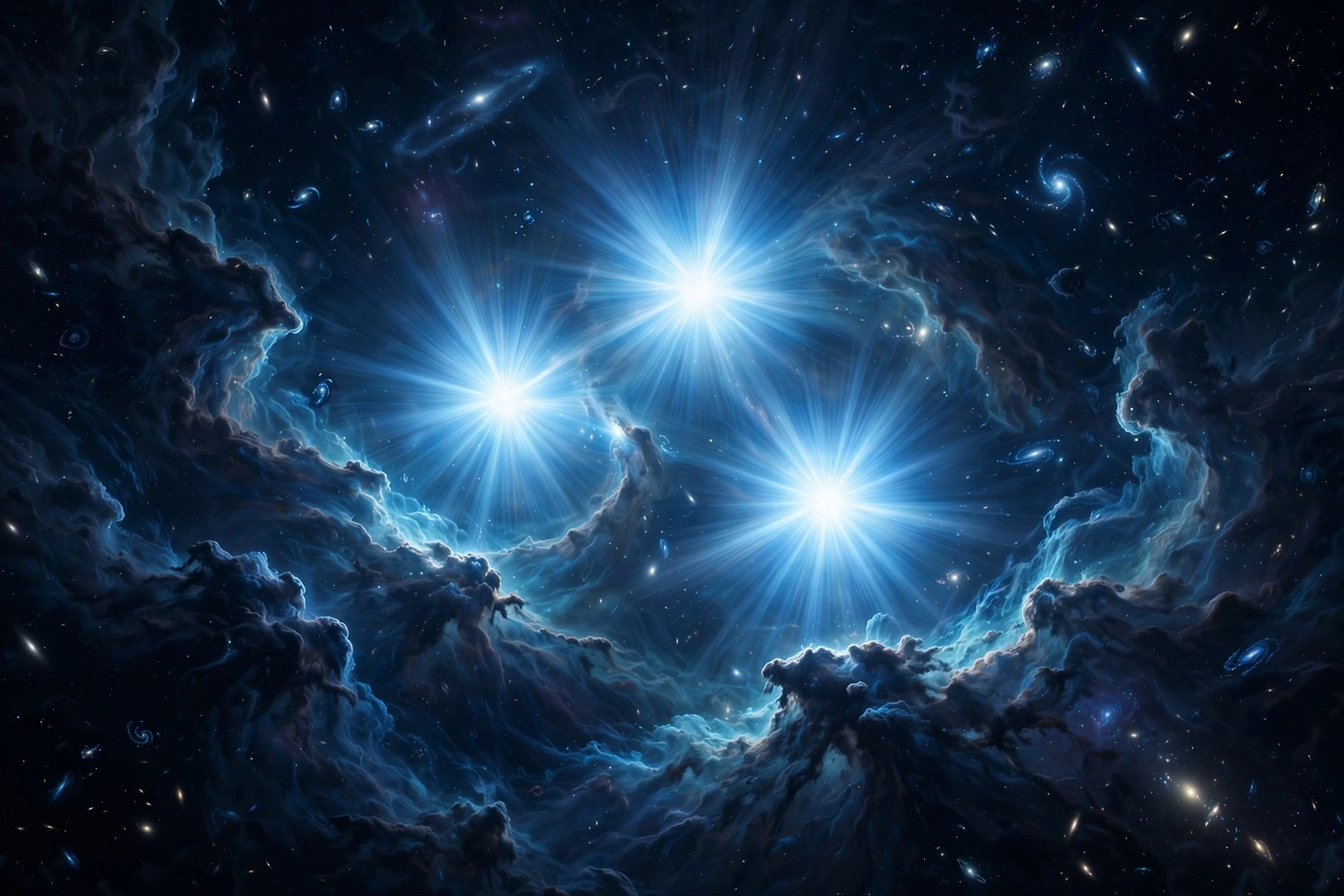
For decades, the first stars and galaxies were beyond our reach — too faint, too distant, and too redshifted into the infrared for our telescopes to see. The James Webb Space Telescope, launched in 2021, was built for exactly that job. Its infrared eyes can see the light of the first galaxies, stretched by cosmic expansion into wavelengths Hubble could not reach. NASA's Webb pages describe this era, called Cosmic Dawn, as the period from about 50 million to one billion years after the big bang, when the first stars and galaxies formed: NASA Webb, Early Universe.
Webb has already found galaxies shining when the universe was only about 280 million years old, and supernovae exploding when it was 730 million years old. It has also found puzzles: some early galaxies look bigger and brighter than the standard models expected, and strange compact objects called "little red dots" appear in large numbers about 600 million years after the beginning and then decline. I stayed up late for Webb's first images, like millions of other people, and I remember the feeling in the room — not triumph, exactly, but a kind of delighted unease. The telescope was working beautifully, and the universe was already refusing to behave exactly as predicted. That is how progress feels.
6. Galaxies, the Cosmic Web, and How We Got Here
6.1 From clumps to clusters
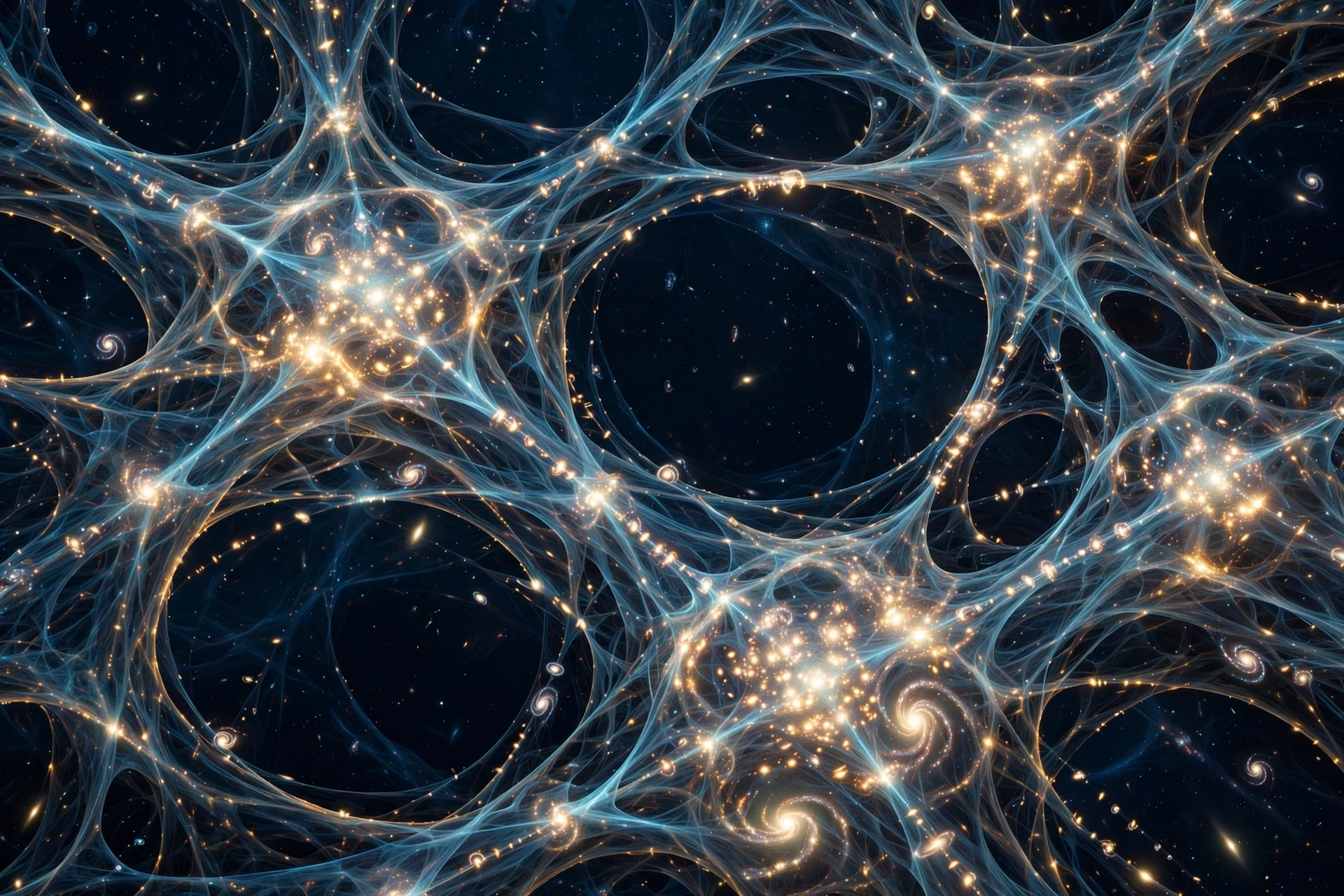
Over billions of years, the small ripples in the CMB grew under gravity into the largest structures in the universe: galaxies, groups of galaxies, clusters, and superclusters, threaded together by filaments of gas and dark matter into a vast network called the cosmic web. If you could step back far enough to see the whole observable universe at once, it would look like foam — dense knots of galaxies joined by filaments, surrounding enormous empty voids. Our Milky Way sits in a modest knot of that foam, in a group of a few dozen galaxies, on the edge of a supercluster called Laniakea.
The scale is hard to hold in mind, so here is an anchor: the observable universe is about 93 billion light-years across. That number is larger than its age — 13.8 billion years — would suggest, because space has been expanding the whole time the light has been travelling. The light from the farthest galaxies we see left them long ago, and the space between us has stretched ever since. We see those galaxies as they were, not as they are. Looking at the night sky is, quite literally, looking at the past.
6.2 We are made of dead stars
The story of the elements is the most personal part of cosmic evolution, and it is the part I return to most often when I teach. The hydrogen in your body is nearly as old as the universe itself, made in the first minutes. The oxygen you are breathing was made in a star. So was the calcium in your bones, the iron in your blood, and the carbon that forms the backbone of every molecule in every cell. Those elements were forged in stellar cores and scattered by supernovae, and they drifted through space for billions of years before gathering into the Sun, the Earth, and eventually you.
That is why the origins of the universe are not a distant, abstract subject. They are your origins. The same physics that made the first helium also made the conditions for chemistry, for planets, and for life. Sciory's Darwin's Theory of Evolution: Evidence Explained picks up the story where cosmology leaves off: how life, once it began, diversified over billions of years on a planet built from recycled stars.
6.3 Black holes and the centres of galaxies
Almost every large galaxy, including our own, hosts a supermassive black hole at its centre — millions or billions of times the mass of the Sun. How those monsters formed, and how early, is one of the sharpest open questions in astronomy. Webb has found black holes that seem too big, too early, for the usual story in which black holes grow slowly by feeding on gas and merging with each other. Some may have formed directly from collapsing gas clouds, skipping the stellar stage altogether. The details are unresolved, but the broad picture is clear: black holes are not a side story in cosmic evolution. They are part of the machinery that shapes galaxies, heating gas, driving winds, and regulating how many stars a galaxy can make. For the story of how black holes themselves work, see Sciory's Black Holes Explained: Formation & Properties.
7. The Dark Side of the Universe: Dark Matter and Dark Energy
7.1 Most of the universe is missing
Here is the strangest fact in modern cosmology: the stuff we are made of — atoms, stars, planets, people — accounts for less than 5% of the universe. The rest is dark. About 27% is dark matter, a form of matter that does not emit or absorb light but reveals itself through gravity. The remaining 68% is dark energy, something even stranger, which seems to be driving the expansion of the universe to speed up. Those numbers come from Planck's measurements of the CMB, and they are the best-measured facts in cosmology — and also the least understood.
Dark matter was first suspected in the 1930s, when Fritz Zwicky noticed that galaxies in clusters were moving too fast to be held together by the gravity of the stars alone. The evidence piled up over decades: stars at the edges of spiral galaxies orbit far faster than the visible matter can explain, and light from distant galaxies is bent by the gravity of mass we cannot see. Dark matter, whatever it is, acts as scaffolding. Galaxies form inside haloes of dark matter, and the cosmic web is, in large part, a dark matter web with glowing galaxies strung along it. What dark matter is made of — a new particle, or something stranger — is unknown. Decades of searches in underground detectors and particle accelerators have not yet found it directly.
7.2 The accelerating universe
For most of the twentieth century, astronomers assumed that the expansion of the universe was slowing down. Gravity, after all, pulls things together, so the expansion that began with the big bang should be decelerating. In 1998, two teams studying distant supernovae found the opposite: the supernovae were fainter than expected, meaning they were farther away than expected, meaning the expansion was speeding up. Something was pushing the universe apart, and it had taken over only in the last few billion years, as matter thinned out with expansion. That something is called dark energy, and its nature is the biggest open question in physics. It may be the energy of empty space itself, the cosmological constant Einstein once added to his equations and then discarded. It may be a new field that changes over time. Or it may be a sign that our theory of gravity needs revising on the largest scales.
The quantum side of this story runs even deeper. The tiny ripples that inflation stretched into galaxies began as quantum fluctuations — the unavoidable jitter of empty space at the smallest scales. That is the link between the smallest physics and the largest structures: the universe we see is, in a sense, quantum mechanics written across the sky. Sciory's Understanding Quantum Mechanics: Principles, Paradoxes, Real-World Applications & 2026 Breakthroughs explores the quantum rules behind that jitter.
7.3 The Hubble tension: a crack in the model
The disagreement over the expansion rate — about 67 from the early universe, about 73 from the nearby universe — has not gone away. If anything, it has sharpened. Webb's measurements have confirmed the nearby-universe value rather than resolving the tension, and the gap now stands at a level that is hard to dismiss as a mistake. I have watched colleagues argue about this at conferences with an energy I have rarely seen for a numbers dispute, and I understand why. If the tension is real, it means the standard model of cosmology, called Lambda-CDM, is missing something. That something might be a new kind of energy in the early universe, a new particle, or a change in how we understand dark energy. The big bang theory would not fall — its evidence is far too strong for that — but it would grow. That is how science works: a good theory does not break under new evidence. It bends, and it gets bigger.
8. The Evidence, Weighed Together
8.1 Four pillars, not one
It is worth stepping back and asking what, exactly, we are standing on. The big bang theory rests on four independent lines of evidence, and their independence is what makes the case so strong. Any one of them could, in principle, have failed. All four point the same way.
The expansion of the universe. Galaxies recede from each other, with speed proportional to distance — Hubble's law, confirmed by a century of observations.
The cosmic microwave background. The afterglow of the hot beginning, predicted before it was found, measured at 2.73 kelvin, with a spectrum that matches a cooling fireball and ripples that match the seeds of galaxies.
The light elements. The amounts of hydrogen, helium, and lithium in the oldest gas match the predictions of nucleosynthesis in the first minutes.
The large-scale structure. The pattern of galaxies, clusters, and voids we see today matches what gravity would build from the ripples in the CMB over 13.8 billion years.
No rival theory explains all four. The steady state theory explained none of them well. That is why cosmologists speak of the big bang theory with confidence — not because it is a guess that caught on, but because it survived tests that could have killed it.
Evidence | What was predicted | What was observed |
|---|---|---|
Galaxy redshift | Distant galaxies should recede faster | Hubble's law, confirmed since 1929 |
Cosmic microwave background | A cooled afterglow, a few kelvin, from all directions | Found in 1965; measured at 2.73 K by COBE, WMAP, and Planck |
Light element abundances | About 75% hydrogen, 25% helium, traces of lithium | Matches measurements in the oldest gas clouds |
Large-scale structure | Galaxies should grow from tiny early ripples | The cosmic web matches CMB ripples grown by gravity |
Universe age | Expansion and CMB should give the same age | About 13.8 billion years, from Planck and from the oldest stars |
8.2 What the theory does not explain
Honesty requires the other side of the ledger. The big bang theory, in its standard form, does not explain what dark matter is, what dark energy is, why there is more matter than antimatter in the universe, or what happened in the Planck era. It does not say what, if anything, came "before" the beginning, and it does not explain why the constants of nature have the values they do. These are not small gaps. They are the biggest questions in science. But they are questions that sit on top of a theory that works, not holes that sink it. The difference matters: a theory with open questions is a living theory. A theory with failed predictions is a dead one. The big bang theory is very much alive.
The electricity that powers our telescopes, our detectors, and the computers that analyse the CMB is governed by the same physics that runs the universe — charge, fields, and light, carrying information across billions of years. The story of how that works is told in Sciory's Fundamentals of Electricity: From Circuits to Electromagnetism.
9. The Future of the Universe
9.1 An expansion that will not stop
If dark energy keeps doing what it is doing, the universe will expand forever, and it will expand faster and faster. Galaxies will drift apart. Stars will burn out, one by one, over trillions of years. The last stars will fade, black holes will slowly evaporate, and the universe will grow cold, dark, and thin — a fate cosmologists call the heat death, though "heat death" is a misleading name for a universe that ends cold and quiet. That is the most likely future on current evidence, but it is not certain. If dark energy changes over time, or if our understanding of gravity is incomplete, other endings are possible: a universe that slows, stops, and collapses back in a Big Crunch, or one torn apart by runaway expansion in a Big Rip. For now, the data favour the long, cold fade.
9.2 What we are still looking for
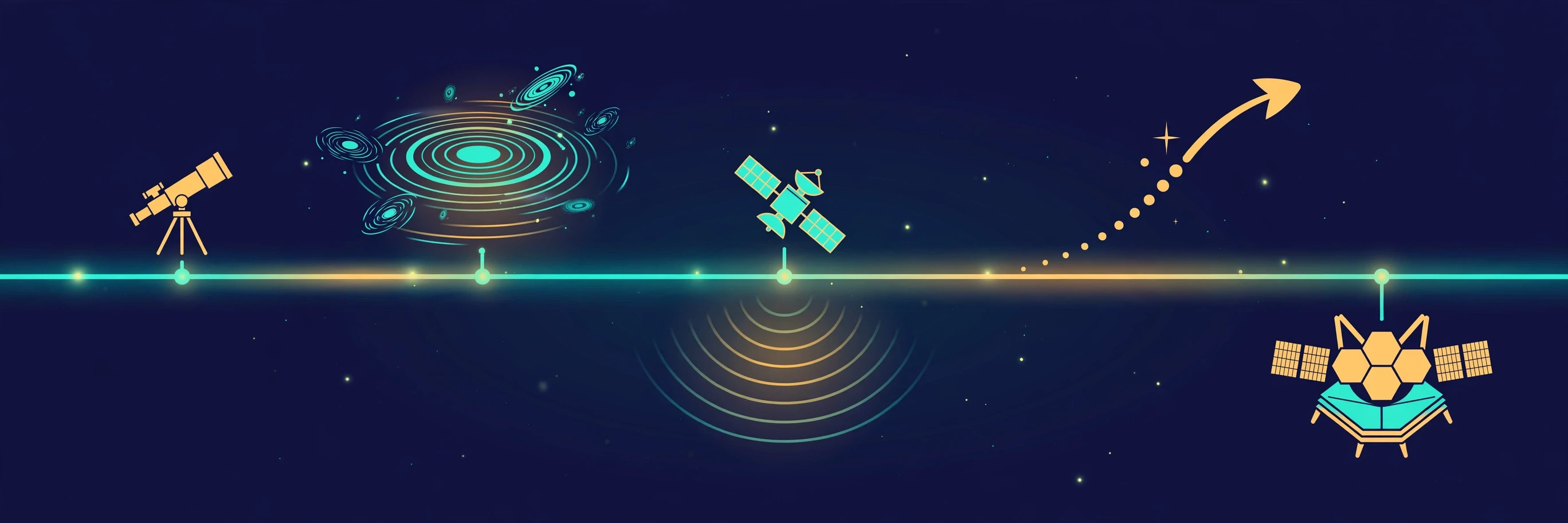
The next decade of cosmology will be shaped by new instruments: the Euclid space telescope mapping dark matter across the sky, the Vera Rubin Observatory photographing the whole southern sky again and again, and Webb continuing to push back the frontier of the first galaxies. Each of them is designed, in part, to attack the open questions — the nature of dark energy, the Hubble tension, the first stars — that this guide has flagged. I expect surprises. Every generation of cosmologists has been surprised by its telescopes, and I see no reason to think ours will be the exception.
10. Common Misconceptions About the Big Bang — Corrected
"The big bang was an explosion." It was not an explosion in space. It was the expansion of space itself, happening everywhere at once, with no centre and no edge to explode from.
"The universe exploded from a single point." The observable universe was once extremely small and dense, but the big bang happened everywhere, not at a point in space. There is no centre of the universe to point at.
"Something exploded out of nothing." The theory does not say the universe came from nothing. It describes the universe from a hot, dense state onward. What, if anything, came before is an open question, not a claim.
"We can see the big bang." We cannot see the beginning itself. The earliest light we can see is the CMB, from 380,000 years after the beginning. Before that, the universe was opaque.
"The big bang theory is just a guess." A scientific theory is not a guess. It is a framework that makes testable predictions — and the big bang theory has passed its tests, from the CMB to the light elements, for sixty years.
"Webb disproved the big bang." It did not. Webb found early galaxies that surprised astronomers, and some of those surprises are already being explained. NASA's Webb pages are clear on this: the telescope is refining the story of the first galaxies, not overturning the big bang.
10.1 The questions that keep cosmologists awake
Three questions, above all, keep the field moving. What is dark matter? What is dark energy? And what happened in the first fraction of a second, before the physics we can test? None of them has an answer yet. All of them have experiments and telescopes aimed at them right now. That is the honest state of the science, and it is also the exciting part. A finished science would have nothing left to discover. Cosmology is not finished.
Conclusion: A Universe With a History
The big bang theory gives the universe something no earlier cosmology could: a history. It began hot and dense, expanded and cooled, made the lightest elements in minutes, freed its first light after 380,000 years, waited through darkness, lit its first stars, built galaxies from ripples, and is now expanding faster than ever, driven by something we cannot yet name. That history is written in the sky — in the redshift of galaxies, in the glow of the microwave background, in the recipe of the elements, and in the web of galaxies overhead.
The next time you look up at the night sky, remember what you are seeing. The light from the stars is old. The light from the galaxies is older. And behind it all, too faint for your eyes but real enough for our instruments, is the light of the beginning itself, still travelling, still arriving, 13.8 billion years after it set out. We are the universe's way of looking back at itself — and, for the first time in cosmic history, of understanding what it sees.
Frequently Asked Questions
What is the big bang theory?
The big bang theory is the leading scientific model of the origins of the universe. It says the universe began in a hot, dense state about 13.8 billion years ago and has been expanding and cooling ever since, forming atoms, stars, galaxies, and the large-scale structure we see today.
How old is the universe?
The universe is about 13.8 billion years old. That age comes mainly from measurements of the cosmic microwave background by the Planck satellite, and it agrees with the ages of the oldest stars.
What is the cosmic microwave background?
The cosmic microwave background is the cooled afterglow of the hot early universe. It was released about 380,000 years after the big bang, when the universe became transparent, and it now fills the sky at a temperature of about 2.73 kelvin.
Did the big bang happen at a single point in space?
No. The big bang happened everywhere at once. The observable universe was once extremely small and dense, but there was no centre and no point in space where it happened — space itself was expanding.
What is cosmic inflation?
Cosmic inflation is a proposed period of extremely rapid expansion in the first fraction of a second, before the hot big bang. It explains why the universe looks flat and uniform on large scales, and where the ripples that became galaxies came from.
What is dark matter?
Dark matter is a form of matter that does not emit or absorb light, but reveals itself through gravity. It makes up about 27% of the universe and provides the scaffolding on which galaxies form. What it is made of is still unknown.
What is dark energy?
Dark energy is the name for whatever is driving the accelerating expansion of the universe. It makes up about 68% of the universe's energy content, and its nature is the biggest open question in physics.
What is the Hubble tension?
The Hubble tension is a disagreement between two ways of measuring the universe's expansion rate. The early universe, measured from the cosmic microwave background, gives about 67 kilometres per second per megaparsec; the nearby universe, measured from supernovae, gives about 73. The gap is unexplained.
Did the James Webb Telescope disprove the big bang?
No. Webb found some early galaxies that were bigger and brighter than expected, which surprised astronomers and is refining models of early galaxy formation. It has not disproved the big bang theory, and NASA's Webb pages describe it as filling in the story of the first galaxies.
What will happen to the universe in the future?
On current evidence, the universe will keep expanding, faster and faster, driven by dark energy. Stars will burn out over trillions of years, and the universe will grow cold, dark, and thin. Other endings are possible if dark energy changes, but the long cold fade is the favoured prediction.
Sources / Further Reading
NASA — The Universe's History: https://science.nasa.gov/universe/overview/
OpenStax Astronomy 2e — The Cosmic Microwave Background: http://openstax.org/books/astronomy-2e/pages/29-4-the-cosmic-microwave-background
NASA — Webb: Early Universe: https://science.nasa.gov/mission/webb/early-universe/
NASA — Planck Maps the Microwave Background: https://science.nasa.gov/image-article/apod-2018-july-22-planck-maps-the-microwave-background/
ESA — Planck Science Highlights: https://www.esa.int/Science_Exploration/Space_Science/Planck/Planck_science_highlights