

The ward was quiet at 2 a.m., the way hospital wards get when the day shift has gone home and the machines do most of the talking. A patient in the bed by the window — I will call her Mara — had been in pain all evening after surgery, and the nurse on duty had given her the evening dose on schedule. An hour later Mara was asleep, breathing easily, her face relaxed for the first time that day. Nothing about that scene was unusual, except for one detail I only learned later: the syringe that evening had contained nothing but salt water.
I was a young researcher then, and I remember standing in that corridor thinking the same thing most people think when they first hear a story like this. Surely she was imagining it. Surely the pain would come roaring back the moment she realised. But the pain did not come back, and the chart showed the same pattern across dozens of patients. Something real had happened inside Mara's body, and the salt water had not caused it — her brain had.
That is the heart of the placebo effect: a real, measurable change in the body that follows a treatment with no active ingredient, driven by what a person expects, what they have learned from past treatments, and the care wrapped around the whole experience. It is not magic, and it is not "all in your head" in the dismissive sense. It is your head doing something your body can feel — releasing its own painkillers, shifting its own chemistry, and changing how signals travel through the nervous system. This article follows that chain from the first strange observations to the brain scans that finally made it visible, and ends with the honest middle ground: what placebos can do, what they cannot, and why the difference matters.
1. What Is the Placebo Effect?
1.1 A simple definition
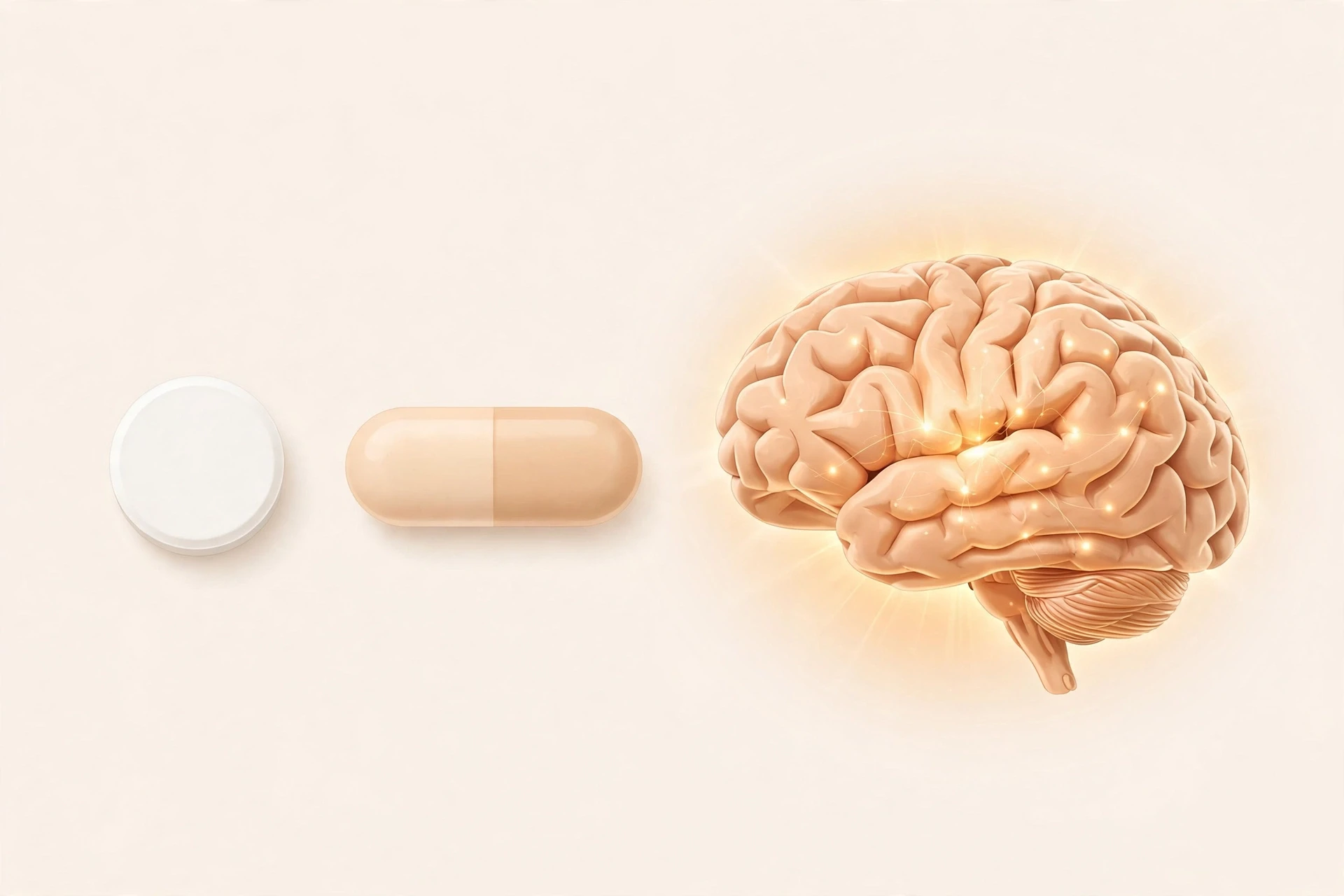
A placebo is an inactive substance or treatment — a sugar pill, a salt-water injection, a sham procedure — that looks, tastes, or feels like a real treatment but contains no active medicine. The placebo effect is the improvement (or, as we will see, the worsening) in a person's condition that follows from receiving it. The key word is follows: the pill itself does nothing, so the change has to come from the person taking it.
Doctors and researchers draw a useful line here. The placebo response is everything that improves in a trial's placebo group, including natural healing, good days and bad days averaging out, and people simply getting better on their own. The placebo effect is the narrower, more interesting slice: the part of that improvement caused by the act of treatment itself — by expectation, learning, and the clinical encounter. Keeping the two apart stops us from giving belief credit for healing that would have happened anyway, and stops us from dismissing belief when it genuinely does the work.
1.2 Why it is not "just in your head"
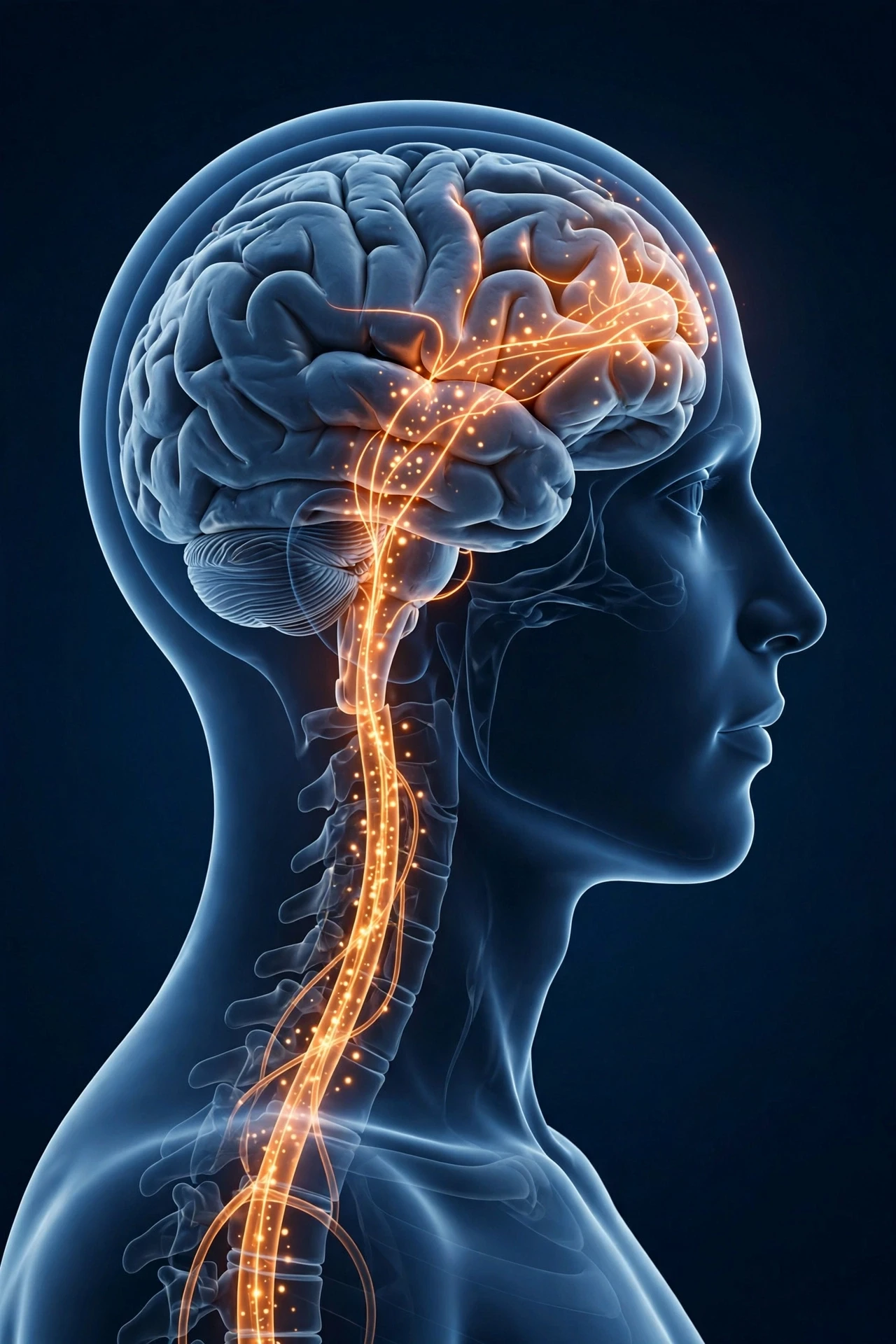
The phrase "just in your head" is doing a lot of unfair work in everyday language. Your head is where pain is processed, where nausea is registered, where stress hormones are ordered into the bloodstream. Saying something happens in the brain is not the same as saying it is imaginary. A headache that eases after a sugar pill is a headache that has genuinely eased; the person can move, sleep, and think again. Brain imaging has caught the process in the act: when people experience placebo pain relief, activity drops in the brain regions that process pain, and the brain's own opioid system switches on. The relief is subjective, yes — but so is pain itself. Nobody would call pain unreal because it is experienced in the brain.
There is a second reason the dismissive version fails. The placebo effect is not a single trick. It is at least three overlapping mechanisms — expectation, conditioning, and the social context of care — and each one reaches the body through a different route. Untangling them is what turned a curiosity into a field of research, and it is where this article spends most of its time.
1.3 The placebo, the treatment, and the ritual
Strip a treatment down to its parts and you find more than a chemical. There is the pill's colour and size, the white coat, the waiting room, the nurse's calm voice, the careful explanation of what will happen next. Each of these is a signal, and the brain is a prediction machine that reads signals for a living. A red pill tends to work better as a stimulant in studies than a blue one; two pills tend to beat one; an injection tends to beat a pill; a treatment described with confidence tends to beat the same treatment described with a shrug. None of that changes the chemistry of the dose. All of it changes what the brain expects the dose to do — and expectation, as the next sections show, is a physical event.
That is also why the placebo effect matters far beyond the curiosity shelf. Every real drug is taken inside the same ritual, so every drug's measured benefit is a mixture of its chemistry and the placebo effect riding alongside it. When a new painkiller is tested, researchers do not ask whether it beats nothing. They ask whether it beats a placebo. That bar exists because belief is strong enough to fake a drug — and strong enough, sometimes, to beat one.
2. A Short History: From Sham Cures to Serious Science
2.1 The word itself
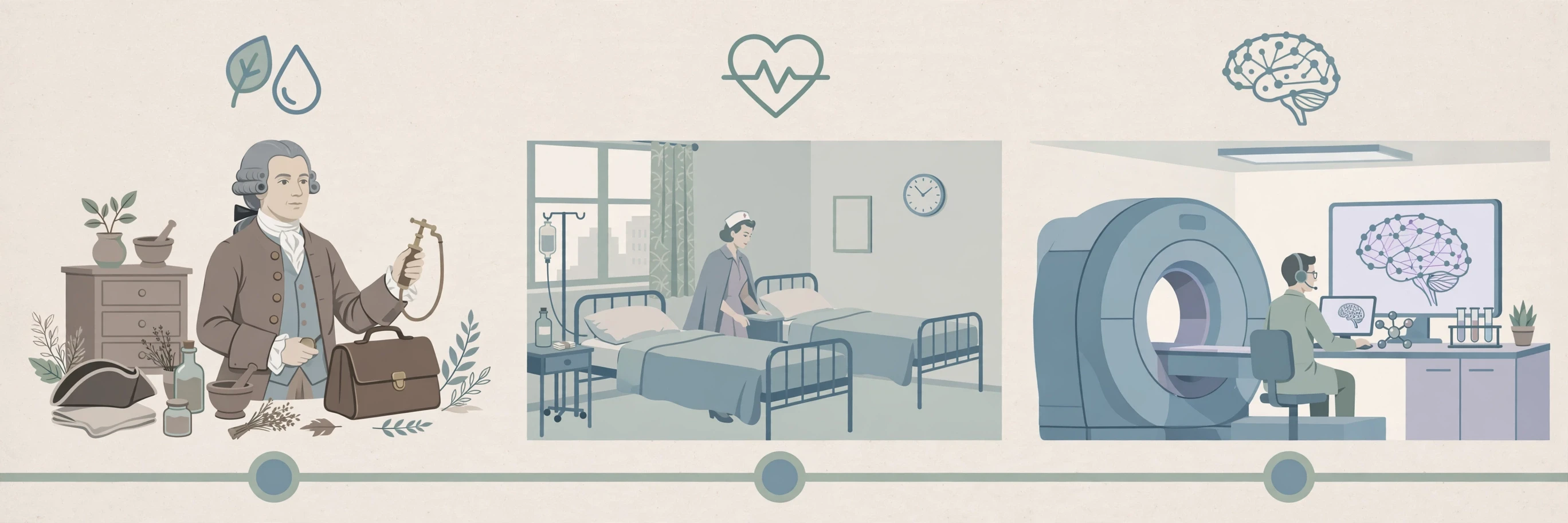
The word placebo comes from Latin — "I shall please" — and it entered medicine in the 1700s as a name for treatments given to please a patient rather than to cure them. For a long time that was the whole story: doctors knew that kind words and impressive-looking remedies could make patients feel better, and they filed the observation under bedside manner rather than science. Some of the most famous "cures" of the era, from magnetic tractors to elaborate tonics, almost certainly worked through the same machinery we now study with scanners — expectation plus ritual, with no active ingredient at all.
The shift from folk observation to research subject came when medicine started testing its treatments properly. Once trials began comparing a drug against an identical-looking dummy, researchers kept noticing something awkward: the dummy group often improved a lot. At first this was treated as noise, an embarrassment to be subtracted away. It took decades before anyone asked the more interesting question — what if the noise is itself a real biological signal?
2.2 Beecher and the wounded soldiers
The turning point most histories cite is a paper published in 1955 by Henry Beecher, an anaesthetist at Harvard. Beecher had served in the Second World War, where morphine sometimes ran short at field hospitals, and he had watched wounded soldiers report real relief after injections of salt water. Back in civilian life, he gathered together fifteen published studies covering more than a thousand patients and argued that roughly a third of them improved on placebo alone.
Beecher's paper, "The Powerful Placebo," did two things at once. It gave the effect a name that stuck, and it gave drug trials a problem they could not ignore: if a third of patients improve on nothing, then any new drug has to beat that, not zero. The paper also became a cautionary tale of its own. Later re-analyses showed Beecher's maths was generous — he had counted every improvement in the placebo groups, including people who would have recovered anyway — and the true figure was smaller. That correction matters, and honest writing about the placebo effect should include it: the effect is real, but the famous "35 per cent" was an overestimate. What survived the correction was the core insight. Belief was not a footnote to medicine. It was a variable.
2.3 From the ward to the scanner
For the next forty years, placebo research stayed mostly in the clinic: pain studies, mostly, because pain is both common and easy to measure by asking. The revolution arrived with brain imaging. In the late 1970s, researchers found that the opioid-blocking drug naloxone could cancel out placebo pain relief — a strong hint that the brain was releasing its own opioids. In the early 2000s, positron-emission tomography (PET) scans made the hint visible: people given a placebo for pain showed activation in the same opioid-rich brain regions that morphine targets. A few years later, similar work showed dopamine release in the brains of Parkinson's patients who believed they had received real treatment, matching the dopamine their missing medication would have supplied.
Each of those findings chipped away at the old idea that the placebo effect was reporting bias — patients politely telling researchers they felt better. You cannot politely release dopamine. The scanners turned a philosophical argument into a biological one, and the field has been mapping the machinery ever since.
3. Expectation: The Brain as a Prediction Machine
3.1 What expectation actually is
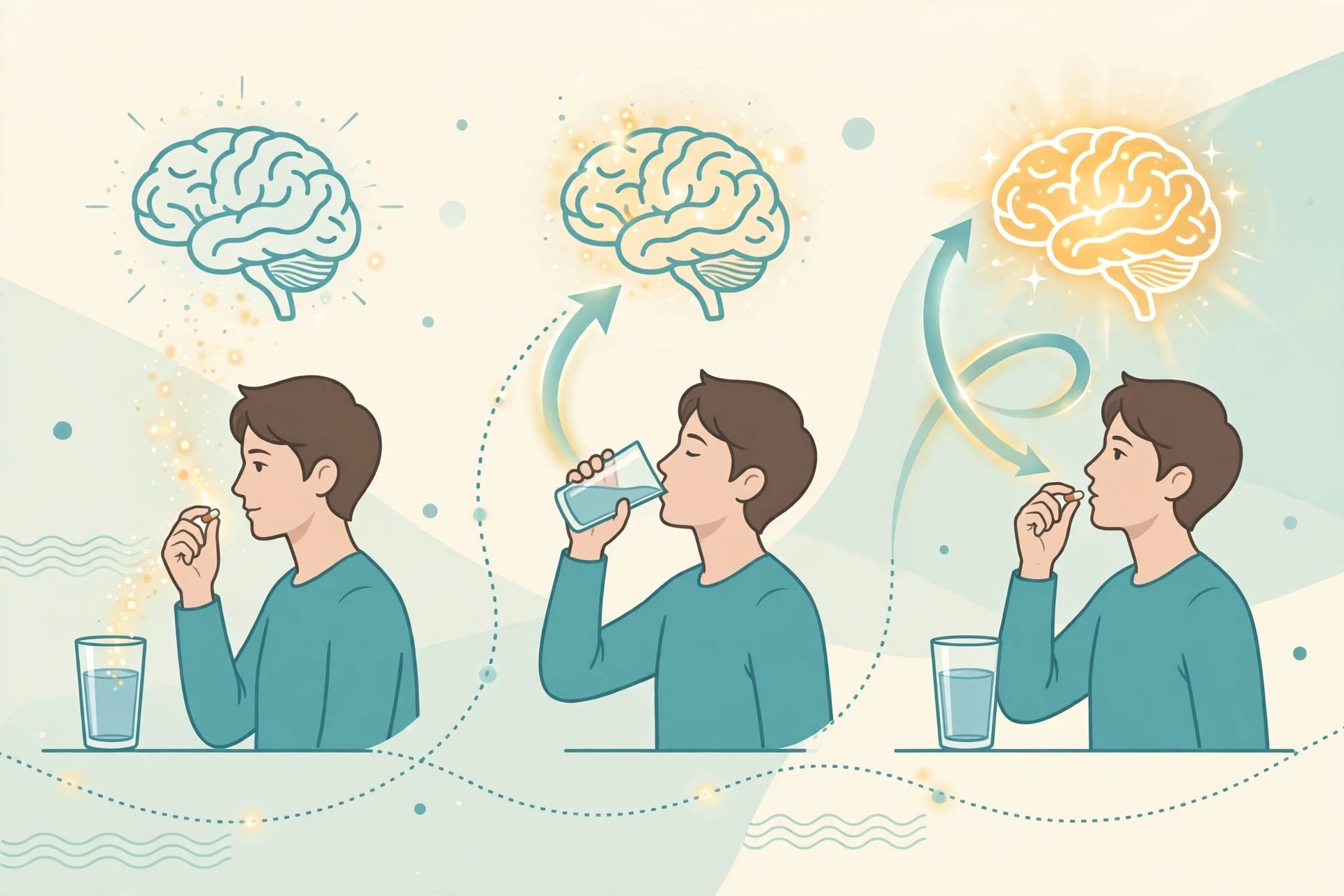
Expectation is not wishful thinking. It is the brain's standard operating procedure. Every second, your brain predicts what will happen next — the weight of the cup you are about to lift, the pain of the needle you can see approaching — and then adjusts when reality disagrees. A treatment is a particularly strong prediction cue: you have been told relief is coming, you have seen the pill, you have felt the care. The brain takes that prediction seriously enough to start preparing the body for it before the drug could possibly act.
That preparation is physical. Expecting pain relief activates the prefrontal cortex, the brain's planning and reasoning centre, which sends signals down to the brainstem regions that control pain. Those regions then release the brain's own opioids and damp down the incoming pain signal before it fully registers. The result is less pain, not just a braver report of the same pain.
3.2 The naloxone test
I still remember the first time a senior colleague walked me through the naloxone experiment, because it was the moment the placebo effect stopped being a story and became a mechanism for me. The logic is beautifully simple. If placebo pain relief works through the brain's own opioids, then blocking opioid receptors should block the relief. Researchers gave volunteers a placebo for pain, watched the relief arrive — and then gave half of them naloxone, a drug that blocks opioid receptors. In the naloxone group, the relief vanished. In the other group, it stayed.
A placebo can be switched off by a drug that blocks opioid receptors. That single fact tells us the relief was never imaginary — it was chemical, made by the brain itself.
The experiment has been repeated with variations many times since, and the pattern holds: block the opioid system, and much of the placebo pain relief goes with it. It is the cleanest proof in the field that expectation reaches down into the body's own pharmacy and opens it.
3.3 How doctors' words move the dial
Expectation is not only built by pills. It is built by sentences. In one well-known series of studies, patients recovering from surgery were given the same painkiller through a drip in two different ways: in one group, a doctor stood at the bedside, explained the drug, and said it was starting now; in the other, the same dose was delivered silently by a computer pump with nobody in the room. The openly given dose worked faster and better. Same drug, same dose, same vein — the only difference was what the patient knew and expected.
The flip side is just as important, and we will return to it in the nocebo section. A warning given carelessly can create the very symptom it describes. The words around a treatment are not decoration. They are part of the dose — which is why careful clinicians choose them as deliberately as they choose the drug.
3.4 Expectation is learned, not chosen
Nobody decides, in the moment, to expect relief. Expectation is built from history: the last time a pill like this helped, the doctor who explained things well, the friend who recovered quickly. It is also built from observation — watching someone else improve after the same treatment can raise your own response, a finding confirmed in studies where volunteers who watched a neighbour get relief from a placebo cream then felt more relief themselves from the same cream.
This is why the placebo effect is stronger for some conditions than others, and stronger in some people than others, without anyone being "gullible." It tracks experience. A person who has taken painkillers for years has a deep library of relief to draw on; a person trying a treatment for the first time has almost none. The brain predicts from its past, and its past is different for everyone.
4. Conditioning: The Body Learns Like Pavlov's Dogs
4.1 A lesson from the laboratory
In the 1970s, psychologist Robert Ader was studying taste aversion in rats — the way animals learn to avoid a flavour linked to feeling ill. His rats were given sweetened water followed by a drug that suppressed their immune system. The plan was simple: the rats would learn to avoid the sweet water. What Ader noticed instead was stranger. Later, when the rats were given the sweet water without the drug, their immune systems were suppressed anyway. The taste alone had become the trigger. The body had learned the association and was now running the response by itself.
That experiment, published with Nicholas Cohen in 1975, became one of the founding studies of psychoneuroimmunology — the science of how the brain and the immune system talk to each other. It also gave placebo research its second great mechanism. If a taste can learn to suppress immunity, then a pill, a needle, or a hospital smell can learn to trigger relief. Conditioning does not need belief or conscious thought. It needs repetition.
4.2 How conditioning works in people
Human conditioning follows the same logic, and it is easy to see in everyday life. My own version of it is embarrassingly ordinary: for years I drank coffee at the same desk every morning, and eventually the smell of coffee alone was enough to make me feel alert before I had taken a sip. The caffeine had trained my brain to associate the smell with the lift, and the brain had started delivering part of the lift in advance. A painkiller works the same way. Swallow the same pill at the same time of day for weeks, and the ritual itself — the glass of water, the small white tablet, the ten minutes of waiting — becomes a cue. Swap in a sugar pill that looks identical, and the brain, faithful to its training, runs the relief response it learned.
This is why the placebo effect can be strong even in people who are sceptical, and even in people who know they are taking a placebo — a point we return to in Section 9. Conditioning lives below conscious belief. You cannot think your way out of a learned response any more than you can think your way out of salivating at the smell of food you love.
4.3 Expectation and conditioning, side by side
Expectation and conditioning are often described as rivals, but in real life they work as a team. Expectation dominates when a treatment is new: you have no history with it, so what you have been told is all you have. Conditioning dominates when a treatment is familiar: your body has a long record of what followed that pill, and it runs the record automatically. A patient who has taken the same migraine drug for five years is mostly running on conditioning; a patient trying a brand-new therapy for the first time is mostly running on expectation. Good trials try to separate them, but good medicine uses both — which is one reason the same drug can work better in the hands of a doctor who explains it well and follows up carefully.
The practical point is simple. The placebo effect is not one thing going wrong in trials. It is two well-understood learning systems — conscious prediction and unconscious association — doing exactly what they evolved to do.
5. The Chemistry: Opioids, Dopamine, and Endocannabinoids
5.1 The brain's own pharmacy
For a long time, the hardest question about the placebo effect was also the simplest: if the pill is inactive, where does the change come from? The answer, built up over forty years of pharmacology and imaging, is that the brain carries its own pharmacy, and belief and learning are among the things that can open it. Three chemical systems carry most of the story.
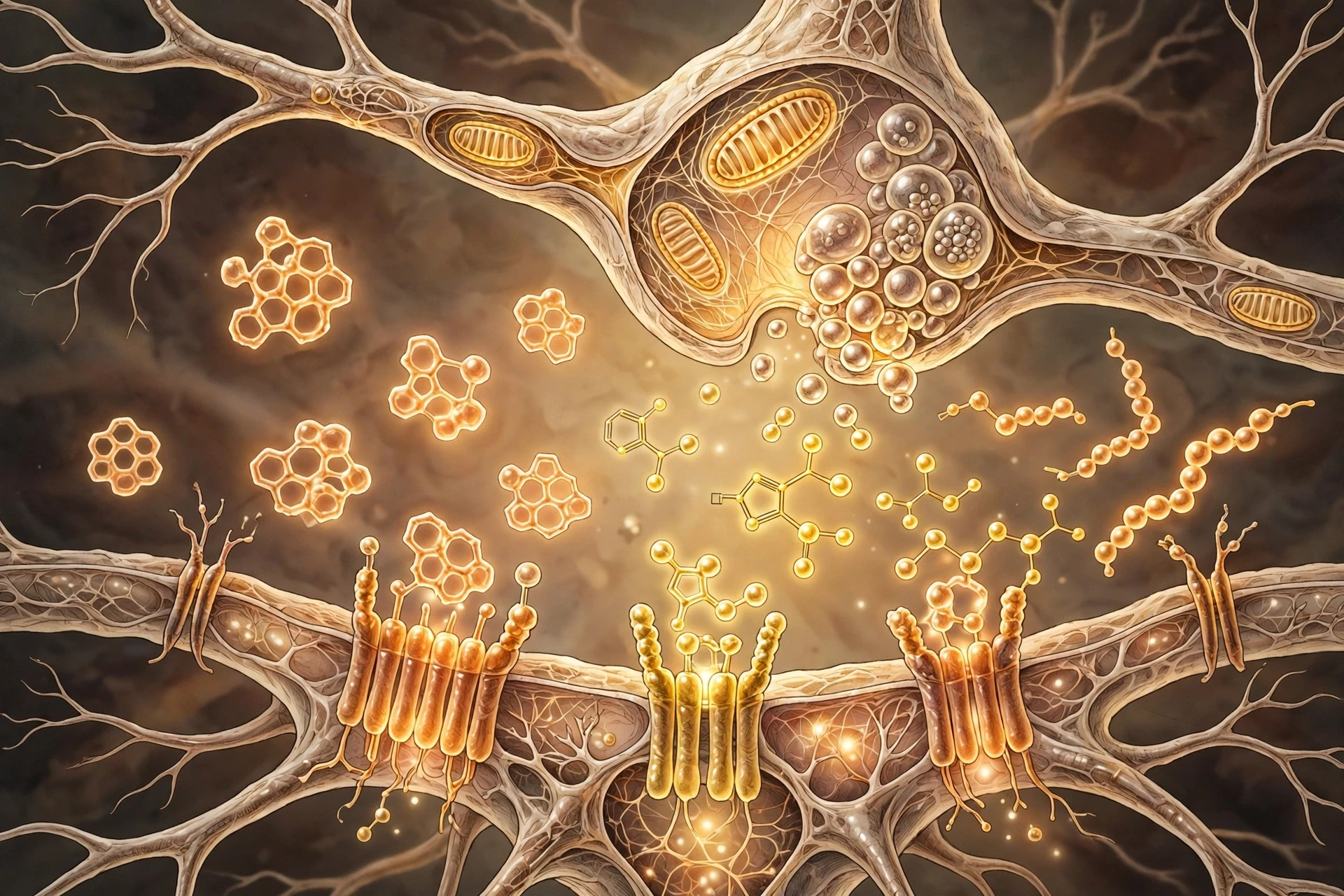
Endogenous opioids are the body's own morphine-like chemicals. They are the system behind placebo pain relief: expectation of relief activates opioid-rich regions such as the periaqueductal grey and the rostral anterior cingulate cortex, and the released opioids damp down pain signals. Block them with naloxone, and the relief fades — the experiment described in Section 3.
Dopamine is the system behind placebo responses in Parkinson's disease and in reward. Parkinson's disease is caused by the loss of dopamine-producing neurons, and in a landmark imaging study, patients who believed they had received an active drug released dopamine in the striatum — the very region their disease had starved — in amounts comparable to a real dose. Dopamine is also released when a placebo is linked to a reward, which helps explain why the effect is stronger when people expect something good and why disappointment can cut it short.
Endocannabinoids are the brain's cannabis-like chemicals, and they are the newest part of the story. Research on placebo pain relief found that when the opioid system was blocked, some placebo relief survived — and that this remaining relief could be blocked in turn by a drug that blocks cannabinoid receptors. The brain, it seems, keeps more than one route to the same destination, and expectation can open either of them.
5.2 Why different conditions respond differently
Once you know the chemistry, a pattern in the evidence starts to make sense. The placebo effect is strongest in conditions where the brain's own chemistry is part of the symptom: pain, nausea, fatigue, low mood, and the motor symptoms of Parkinson's disease. It is weakest — close to absent — in conditions where the disease runs on machinery the brain cannot reach directly, such as shrinking a tumour or clearing an infection. That pattern is not a failure of the effect. It is a clue to how it works. The brain can modulate pain signals, nausea circuits, and stress hormones, because those circuits run through it. It cannot order a tumour to shrink, because no such order exists to give.
That is also why researchers describe the placebo effect as a modulator rather than a cure. It turns the volume of symptoms up or down. It does not remove the source of the volume.
5.3 Stress hormones and the immune system
There is a third route worth knowing about, because it connects the placebo effect to the rest of the body. Expectation and the clinical encounter can lower stress hormones such as cortisol, and cortisol talks directly to the immune system and to the hormone networks of the endocrine system. A calmer patient is not just a happier patient; their immune cells behave measurably differently under lower cortisol. This is a genuine pathway, but it is also the place where the most exaggerated claims about placebos live. Lowering stress can help the body fight better, and it can ease symptoms that stress worsens — but it is not a substitute for treating the disease itself, a line Section 8 draws in detail.
6. The Nocebo Effect: The Dark Twin
6.1 When expectation harms
Every mechanism in this article has a mirror image. If expecting relief can release the brain's own painkillers, expecting harm can switch on its pain amplifiers. That mirror is called the nocebo effect — from the Latin "I shall harm" — and it is the placebo effect running in reverse. Give people an inactive pill and tell them it may cause headaches, and a meaningful share of them will develop headaches. Tell them a treatment may make them nauseous, and nausea appears. The symptoms are real, the suffering is real, and the cause is the same machinery as before, pointed the other way.
I saw the nocebo effect up close in a study briefing years ago, when a colleague presented data from a trial of a perfectly safe dummy cream. Volunteers told to expect itching reported itching at rates that stunned the room — and scratching, redness, and all. Nobody had touched their skin with anything active. A sentence had done it. I remember the silence after that slide, because every researcher in the room was quietly rewriting the warnings they gave their own patients.
6.2 Nocebo in real medicine
The nocebo effect is not a laboratory curiosity. It shows up wherever patients are told what to fear. In trials of statins — cholesterol-lowering drugs with a well-established safety record — patients who knew they were taking a statin reported muscle pain far more often than patients taking the same drug without knowing it, and much of that gap vanished when the drug was given blind. The pain was not invented; it was expected, and expectation recruited the same pain circuits that a real injury would. Similar patterns appear with blood-pressure drugs, with vaccines, and with any treatment whose side-effect leaflet is long and frightening.
This creates a genuine ethical tension for doctors and researchers. Patients have a right to know the risks of a treatment. But the way risks are described changes the risks themselves. A clinician who says "one in ten people gets a headache" is giving the same fact as one who says "nine in ten people have no headache at all" — and the patient's body will respond differently to each version. Framing is not spin. It is a clinical intervention in its own right.
6.3 The same brain, pointed the other way
Brain imaging of nocebo responses shows the mirror image of placebo relief: activity rises in pain-processing regions, and the stress hormone system switches on. Anxiety is the bridge. Expecting harm makes people anxious; anxiety tightens attention onto the body, amplifies every twinge, and lowers the threshold at which a sensation is labelled pain. That is why reassurance is not just kindness in medicine — it is treatment. A calm, clear explanation can lower the nocebo response before it starts, and a rushed or alarming one can create symptoms that no drug then needs to fix.
The lesson of the nocebo effect is the lesson of the whole article in miniature. The brain is not a passive receiver of treatments. It is an active participant, and it votes on every dose it is given.
7. How Scientists Measure It: The Placebo-Controlled Trial
7.1 Why every drug must beat a placebo
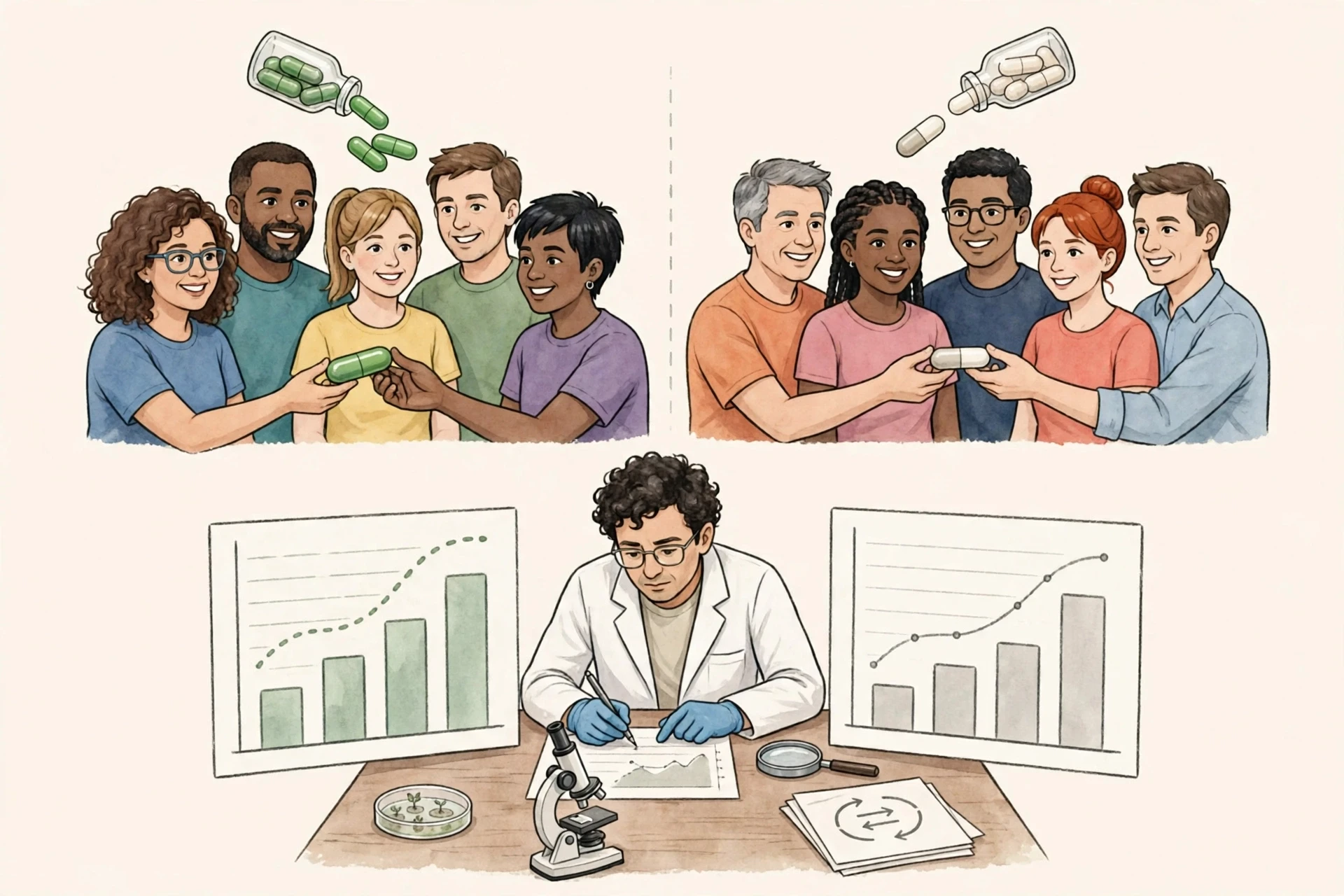
The randomised, placebo-controlled trial is the gold standard of medicine, and the placebo effect is the reason it exists. Volunteers are randomly assigned to receive either the real treatment or an identical-looking placebo, and neither the patients nor (in a double-blind trial) the researchers know who got which until the end. If the real drug beats the placebo, the drug has an effect beyond belief, learning, and ritual. If it does not, then everything the drug appeared to do was something the body could do for itself — and the drug, however impressive its chemistry, has not earned its place.
The US National Center for Complementary and Integrative Health (NCCIH) describes this design plainly: comparing the two groups is what lets researchers tell whether changes in the test group result from the treatment or occur by chance. Without the placebo arm, medicine would be flying blind, approving treatments that work only because people expected them to.
7.2 Placebo, drug, and no treatment — what the comparison shows
A trial with only two arms — drug versus placebo — still leaves a question unanswered: how much of the placebo group's improvement was the placebo effect, and how much was nature? The cleanest answer comes from three-arm trials, which add a group that receives no treatment at all. The gap between the placebo group and the no-treatment group is the closest science gets to measuring the pure placebo effect.
Group | What they receive | What their improvement includes |
|---|---|---|
No treatment | Nothing; just monitored over time | Natural healing and the ups and downs of the condition |
Placebo | An inactive pill or sham procedure | Natural healing, plus expectation, conditioning, and care |
Active drug | The real medicine | Natural healing, plus the placebo effect, plus the drug's chemistry |
Read the table from top to bottom and the logic falls out. Placebo minus no-treatment isolates the effect of belief and ritual. Drug minus placebo isolates the effect of the chemistry alone. That second gap is what a drug has to win, and for some conditions — mild pain, mild depression, irritable bowel symptoms — it is a surprisingly narrow gap, because the placebo effect in those conditions is large.
7.3 The rising placebo response — and what it means
Drug developers have noticed something uncomfortable over the past two decades: placebo responses in trials have been climbing, especially in trials for pain and depression run in the United States. When the placebo group improves more, a drug has to improve even more to beat it, and several promising drugs have failed trials not because they did nothing, but because the placebo arm did so much.
Nobody has a single agreed explanation, and honest writing should say so. Part of it is probably expectation itself: trials now advertise, pay volunteers, and wrap participants in attentive care, all of which raise expectations. Part of it is that trial volunteers are often less severely ill than the patients a drug will eventually treat. And part of it may be that modern life has trained us to expect more from pills. Whatever the mix, the trend is a compliment to the placebo effect and a headache for drug development — and it is why researchers now design trials to reduce the placebo response, by using run-in periods and by training staff to keep their language neutral, so the drug's own effect can be seen clearly.
7.4 The ethics of the control group
Giving a sick person a sugar pill raises an obvious ethical question, and research ethics has a clear answer: placebo controls are acceptable when no proven treatment exists, or when withholding treatment for the length of a trial causes no serious harm — and they are not acceptable when a proven, life-saving treatment would be denied. A trial for a new headache pill can use a placebo arm. A trial for a new cancer drug cannot ask patients to forgo the best existing treatment. The line is drawn by ethics committees, not by researchers, and it is one of the reasons trial design is as much a moral subject as a statistical one.
8. What Placebos Can and Cannot Do: The Honest Middle
8.1 Where the evidence is strongest
Most people assume the placebo effect is either a miracle or a myth. What the data actually shows is something narrower and more interesting: a real, repeatable effect on symptoms the brain helps to generate. The strongest evidence is in:
Pain — the most studied placebo response, with the clearest chemistry (opioids, endocannabinoids) and the largest effects, including after surgery.
Nausea — including the nausea of chemotherapy and of motion, where conditioning is powerful because the body learns the association fast.
Fatigue and low mood — symptoms closely tied to expectation and to the nervous system pathways that carry them.
Parkinson's disease — where placebo-induced dopamine release can measurably improve movement for a time.
Irritable bowel syndrome — where open-label placebo studies have shown genuine symptom improvement, a finding we explore in Section 9.
Notice what these share. They are conditions where the experience of the illness — pain, nausea, tiredness, stiffness — is produced by brain circuits that expectation and learning can reach. Change the circuit's activity, and the experience changes with it.
8.2 Where the evidence stops
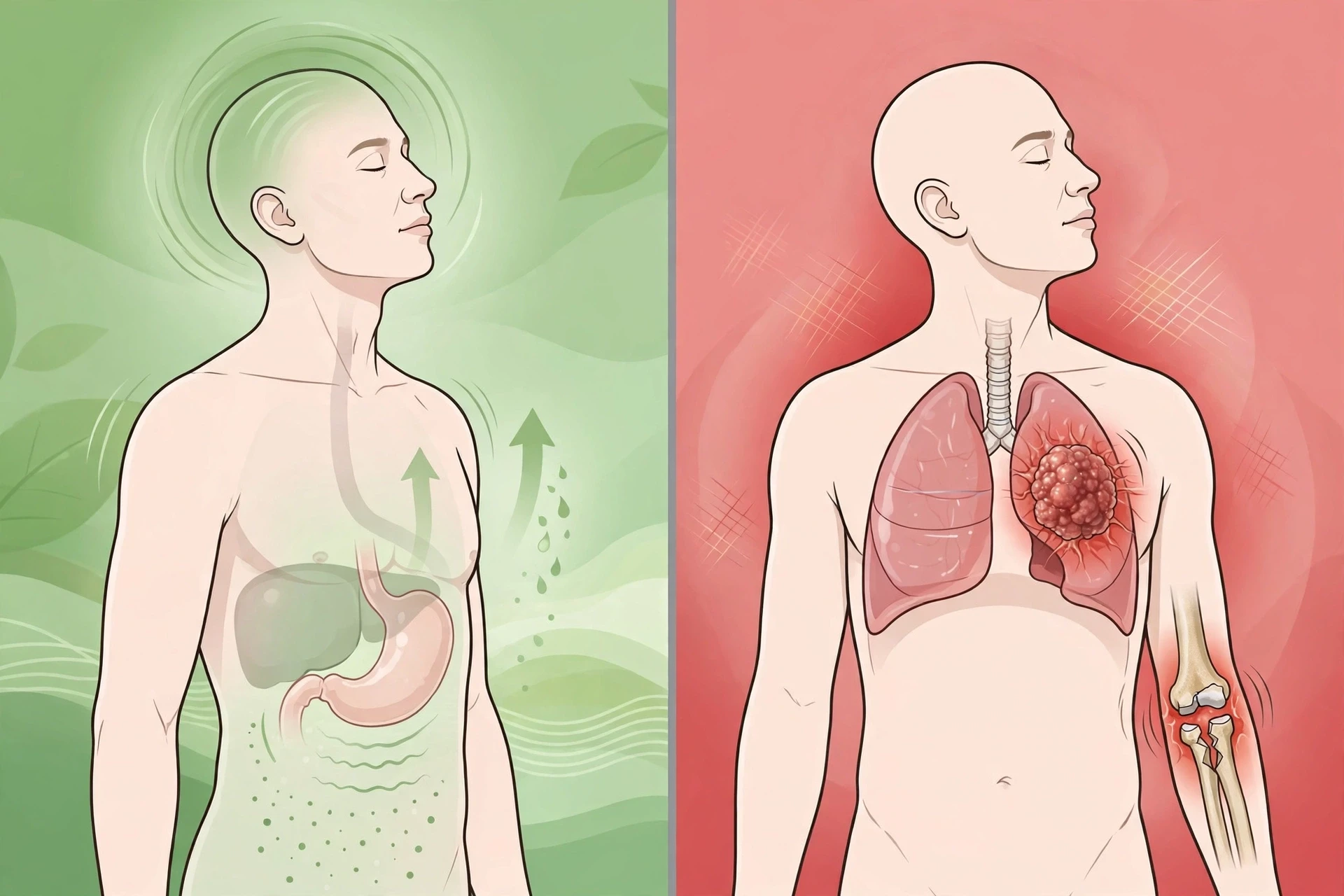
The same honesty requires the other side of the ledger. Placebos do not shrink tumours, kill bacteria, lower cholesterol in any lasting way, or repair damaged tissue. A cancer patient who feels less pain after a placebo is a patient whose pain has genuinely eased — and whose cancer has not changed at all. That distinction is not a technicality. It is the difference between comfort and cure, and blurring it has harmed people who abandoned effective treatment for belief alone.
What placebos can do | What placebos cannot do |
|---|---|
Reduce pain, including after surgery | Shrink tumours or cure cancer |
Ease nausea and motion sickness | Kill bacteria or clear infections |
Improve movement symptoms in Parkinson's for a time | Replace lost dopamine neurons permanently |
Lift mood and reduce fatigue | Treat severe depression alone |
Calm irritable bowel symptoms | Heal ulcers or repair tissue damage |
Lower stress hormones through expectation and care | Stand in for proven medicine |
The table is the article in miniature. The left column is real and worth taking seriously. The right column is the boundary that keeps the left column honest.
8.3 Why the boundary matters for patients
Here is where the storytelling stops and the responsibility starts. A person in pain who is offered a placebo instead of treatment has been failed. A person in pain who is offered a placebo alongside treatment, with honesty about what it is, has been given something extra. The difference is everything, and it is why the most interesting research in the field today is not about tricking patients — it is about telling them the truth and finding that it still works.
9. Open-Label Placebos: When Patients Know — and Still Improve
9.1 The experiment nobody expected to work
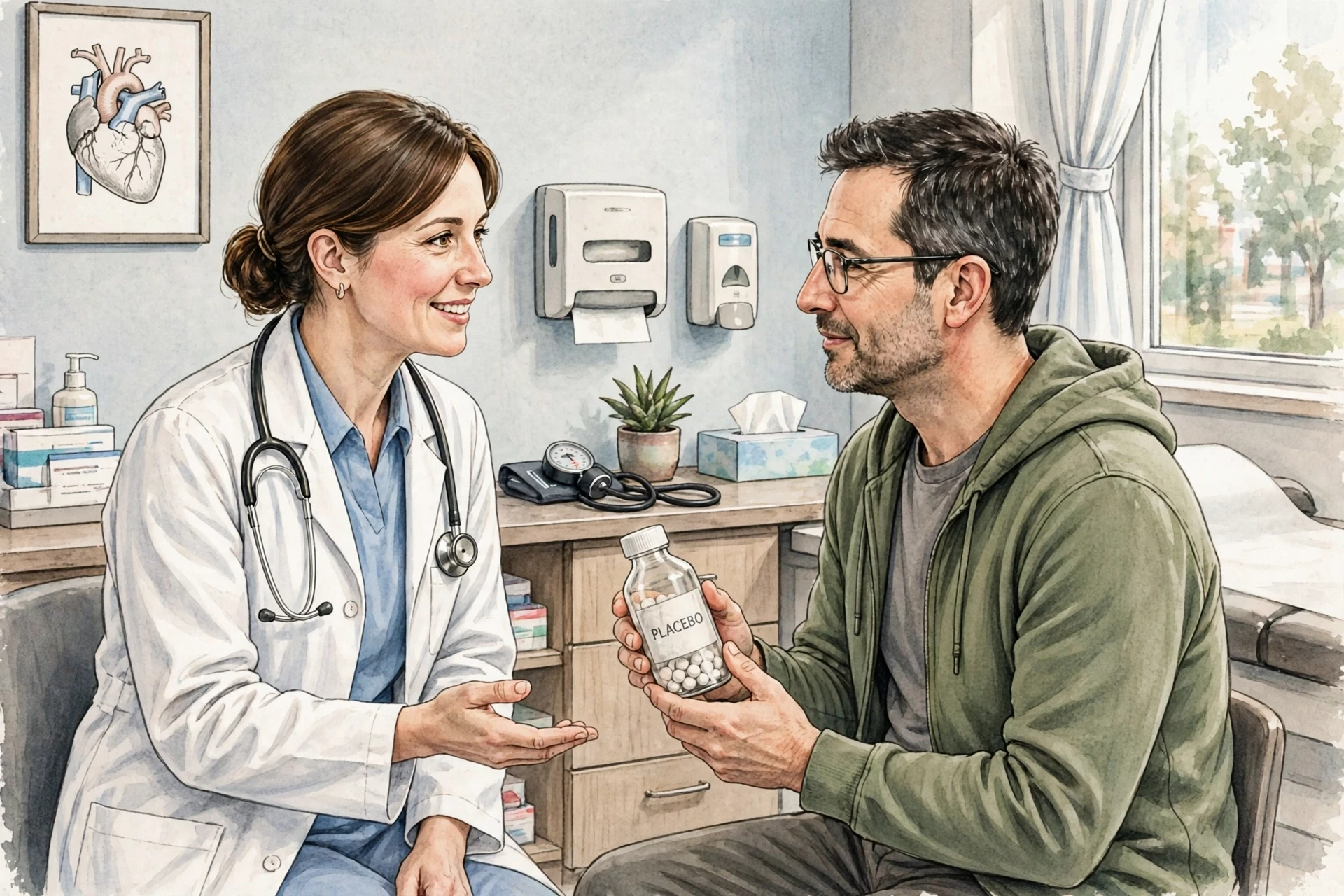
For most of medical history, the placebo effect was assumed to depend on deception: the patient had to believe the pill was real. Then, in 2010, Ted Kaptchuk and his colleagues at Harvard ran a study that broke that assumption. They gave patients with irritable bowel syndrome a pill labelled openly as a placebo — "placebo pills made of an inert substance, like sugar pills" — and told them honestly that placebos had been shown to help through mind-body processes. The patients who took the openly labelled placebo improved significantly more than patients who received no treatment.
Read that again, because it overturns the story most people carry about this effect. No deception. No trick. The bottle said placebo, the researchers said placebo, and the patients improved anyway. Later studies have repeated the pattern in back pain, fatigue, and migraine. The effect is smaller than with a hidden placebo, but it is real — and it is ethically clean in a way the hidden version never was.
9.2 Why honesty still works
Open-label placebos work because the mechanisms in Sections 3 and 4 do not all need belief in the pill. Conditioning does not care what you believe; it runs on the ritual. The clinical encounter does not care what is in the capsule; it runs on attention, explanation, and trust. And expectation can attach to the process rather than the pill: patients can expect that taking a pill mindfully, as part of a caring routine, will help them — and that expectation, aimed at the ritual rather than the chemistry, can still open the brain's pharmacy.
My own view, after years of reading this literature, is that open-label placebo research is the most hopeful corner of the field. It takes the most useful thing about the placebo effect — that care, ritual, and expectation are themselves therapeutic — and separates it from the one thing that made it ethically troubling, which was deception. It points toward a medicine that uses everything that helps, including the parts that are not chemicals.
9.3 The doctor-patient relationship as treatment
Step back far enough and the open-label studies suggest something bigger than a trick for trials. The relationship between a clinician and a patient — the listening, the explanation, the follow-up call — is itself an active ingredient. Researchers who study anxiety and depression have found the same pattern from a different direction: the quality of the therapeutic alliance predicts outcomes across treatments, sometimes more strongly than which treatment was chosen. None of this replaces medicine. All of it is part of medicine, whether we name it or not.
That is a useful way to think about the placebo effect as a whole. It is not a rival to real treatment. It is the part of real treatment that lives in the brain, in learning, and in human contact — the part that works even when the pill is sugar, and works better when the pill is real.
10. Misconceptions About the Placebo Effect
10.1 "It only works on gullible people"
This is the most common misconception, and the evidence answers it plainly. Placebo responses appear in sceptics, in scientists, and in people who know they are taking a placebo. Conditioning does not check your beliefs before it acts, and neither does the dopamine system. What predicts a strong placebo response is not gullibility but experience: a history of relief from similar treatments, a clear explanation, and a clinician you trust. Suggestibility plays a role at the margins, but it is not the engine.
10.2 "It means the illness was never real"
Pain that eases on a placebo was real pain. Nausea that fades was real nausea. The placebo effect changes symptoms; it does not reveal that symptoms were faked. This misconception has done genuine harm, because it teaches people to hear "placebo" as an accusation. It is the opposite: it is evidence that the brain's pain and nausea circuits are powerful, tunable systems — and that tuning them is a legitimate medical goal.
10.3 "A strong placebo response means a drug is useless"
A drug that barely beats a placebo in a trial has still beaten it — and for the individual patient, the drug's chemistry plus the placebo effect together may be far better than either alone. The trial measures the extra benefit of the chemistry. The patient experiences the total benefit, chemistry plus belief plus care. Both numbers are true, and confusing them is how good drugs get dismissed and useless ones get praised.
10.4 "Placebos work for everything"
They do not, and the limits are the point of Section 8. A placebo will not mend a fracture, and anyone selling a placebo as a cure for a serious disease is selling danger. The honest version of the placebo effect is smaller than the mystical version and far more useful: it is a real modulator of symptoms, not a replacement for treatment.
10.5 "Animals and children can't respond, so it must be imagination"
Placebo-like responses have been shown in animals through conditioning — Ader's rats are the classic case — and in children, whose responses are often stronger than adults', partly because their expectations are shaped so directly by the adults around them. A response that appears in a rat, which cannot be talked into anything, is hard to dismiss as politeness.
11. What This Means for You: Using the Science Well
11.1 Five practical takeaways
The research on the placebo effect is not only for trial designers. It changes how an ordinary person can think about their own treatment — and their own brain.
Expectation is part of your treatment. When a doctor prescribes something, ask how it works and what to expect. A clear, confident explanation is not a courtesy; it measurably improves the outcome. Vague dread does the opposite.
Rituals help — so keep the good ones. Taking medicine at the same time, in the same calm way, builds the conditioning that makes the treatment work better. The routine is not superstition. It is training.
Words matter, including your own. Reading a side-effect list at midnight and rehearsing every symptom is a reliable way to experience them. Read the list once, note what to watch for, and then put it away. Your attention is an amplifier; point it carefully.
Sleep and memory consolidate the learning. The associations that drive conditioning are strengthened during sleep, which is one more reason that rest is part of recovery — a link explored in depth in Sciory's guide to how sleep shapes memory and dreams and in the companion article on how the brain forms memories.
Never swap real treatment for belief. The placebo effect is a powerful addition to medicine and a dangerous substitute for it. If a treatment is proven, take it — and let expectation, ritual, and good care add to what it does, not replace it.
11.2 A note on buying placebos
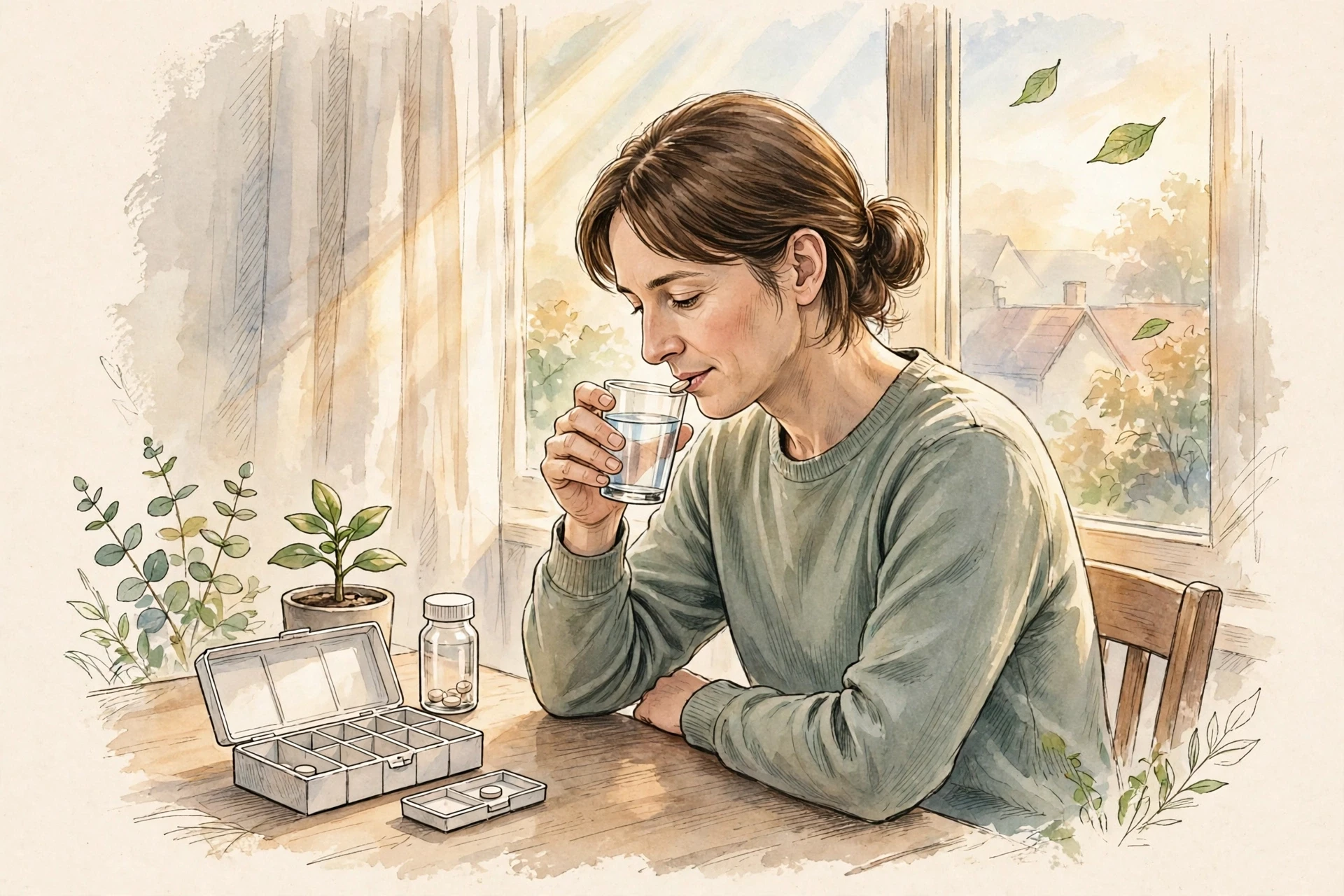
You may have seen "placebo pills" sold online, marketed openly as inert tablets. The open-label research gives them a thin thread of evidence — but a thin thread is not a recommendation. The studies that showed benefits used a specific script, a clinician's explanation, and a clinical context, not a bottle bought alone and taken in silence. If you are considering one, talk to your doctor first, and never use it as a reason to stop a prescribed treatment. The science here is young, and the honest summary is that open-label placebos are promising, not proven, as a home remedy.
11.3 The future of placebo research
The field is moving in three directions at once. Genetic studies are hunting for markers that predict who responds most strongly. Imaging studies are mapping the expectation circuits in finer detail, including the role of the endocannabinoid system. And trial designers are learning to use the placebo effect deliberately — designing the care around a drug to maximise its total benefit, rather than treating belief as contamination to be scrubbed away. The direction of travel is clear: medicine is learning to prescribe the context as carefully as it prescribes the chemical.
12. The Honest Middle
Mara, the patient from the ward at 2 a.m., went home two days later and recovered well. Her salt-water injection did not cure her — surgery and time did that. But her brain, given a signal it trusted, released its own painkillers and gave her a night of sleep instead of a night of pain. That night mattered. Sleep mattered. And the mechanism behind it was not magic, not imagination, and not a trick. It was expectation and learning, running on chemistry that has been in our brains far longer than medicine has.
The placebo effect asks us to hold two ideas at once. The first is that belief changes the body in real, measurable, chemical ways — through opioids, dopamine, and endocannabinoids, through circuits that can be seen on a scanner and switched off with a blocking drug. The second is that belief has limits, and respecting those limits is what keeps the effect honest. It eases symptoms; it does not cure disease. It belongs beside medicine, not instead of it.
That middle ground is less dramatic than either extreme — less dramatic than the miracle stories, less dismissive than the "all in your head" stories — and it is the only version the evidence supports. It is also, I think, the most hopeful version. It says that care, explanation, ritual, and trust are not decorations on medicine. They are medicine, in part, and they always were.
Frequently Asked Questions
What is the placebo effect in simple terms?
The placebo effect is a real improvement in symptoms — such as less pain or less nausea — that happens after taking an inactive treatment, like a sugar pill, because of what the person expects, what their body has learned from past treatments, and the care surrounding the treatment. The pill does nothing chemically; the brain does the work, releasing its own painkillers and other chemicals.
How does the placebo effect actually work?
It works mainly through two mechanisms: expectation, where the brain predicts relief and activates its own opioid and dopamine systems in advance, and conditioning, where the body learns to associate the ritual of treatment with relief after repeated pairings. The clinical encounter — a doctor's explanation, attention, and reassurance — strengthens both.
Can the placebo effect cure diseases?
No. The placebo effect can ease symptoms such as pain, nausea, fatigue, and low mood, but it cannot shrink tumours, clear infections, or repair damaged tissue. It is a modulator of symptoms, not a cure, and it should never replace proven treatment for a serious disease.
What is the nocebo effect?
The nocebo effect is the placebo effect in reverse: expecting harm can create real symptoms, such as headaches or nausea, after an inactive treatment. It works through the same brain circuits, with anxiety amplifying pain signals. The way risks are explained to patients can raise or lower the nocebo response.
Do placebos work if you know you are taking one?
Surprisingly, yes — sometimes. Studies of "open-label placebos," where patients are honestly told they are receiving an inert pill, have shown genuine improvement in conditions such as irritable bowel syndrome and back pain. Conditioning and the clinical encounter do not depend on deception, though the effect is usually smaller than with a hidden placebo.
Why do drug trials need a placebo group?
Because every drug is taken inside the same ritual of expectation, learning, and care, a new drug must prove it does more than that ritual alone. In a randomised, placebo-controlled trial, volunteers receive either the real drug or an identical-looking placebo, and the drug must beat the placebo to show its chemistry adds real benefit.
Sources
National Center for Complementary and Integrative Health (NCCIH), "Placebo Effect" — what a placebo is, how placebo-controlled trials work, and NCCIH-supported research on expectation and open-label placebos. https://www.nccih.nih.gov/health/placebo-effect
American Psychological Association, "The Placebo Effect" — an overview of placebo and nocebo research in psychology. https://www.apa.org/topics/placebo-effect
American Psychological Association, "The Placebo Effect: An Interplay Between Psychology and Physiology" (Monitor on Psychology, 2019) — how expectation and conditioning shape treatment outcomes. https://www.apa.org/monitor/2019/10/placebo-effect
Harvard Health Publishing, "The Power of the Placebo Effect" — a clinician-facing explanation of how belief and the doctor-patient relationship affect outcomes. https://www.harvardhealth.org/mind-and-mood/the-power-of-the-placebo-effect
StatPearls / National Library of Medicine, "Placebo Effect" — a clinical review of placebo mechanisms, including opioid, dopamine, and endocannabinoid pathways. https://www.ncbi.nlm.nih.gov/books/NBK513296/
Nature, "The Placebo Effect" (news feature, 2018) — reporting on modern placebo research, including neuroimaging and open-label studies. https://www.nature.com/articles/d41586-018-05485-3