

1. The Night My Brain Refused to Switch Off
It was 3:17 in the morning, and I was staring at the ceiling. My body felt like wet sand — heavy, useless, done — but my mind was wide awake, replaying a conversation from three days earlier, rehearsing a meeting that had not happened yet, and composing, for no reason at all, a grocery list. I had done everything right that day: I had exercised, skipped the late coffee, put the phone away. And still, sleep would not come.
Then, sometime after four, it did — and I dreamed I was late for an exam in a school I had never attended, wearing shoes that kept changing colour. I woke up laughing at how absurd it was, and then I caught myself wondering: what was my brain actually doing all night? Why did it need to shut me down for eight hours just to run a strange little film festival behind my closed eyes?
That question has followed me through fifteen years of working in science. The more I learned, the stranger sleep became. Sleep looks like doing nothing. It is, in fact, one of the busiest things your body ever does. Your brain does not power down at night. It changes jobs. It files memories, washes itself clean, rehearses threats, repairs tissue, and — yes — stages dreams that feel real enough to make your heart pound.
This article is the science of sleep and dreams, explained the way I wish someone had explained it to me on that sleepless night: why we sleep, what happens in each stage of sleep, what sleep does for the brain and the body, why we dream, what dreams can and cannot tell us, and how to sleep better — with the honest admission, up front, that some of the biggest questions here are still open.
2. What Sleep Actually Is
Sleep is not a single state. It is a recurring, active process in which the brain cycles through distinct stages, each with its own pattern of brain waves, muscle tone, and chemistry. The National Institute of Neurological Disorders and Stroke (NINDS) puts it plainly: sleep is as essential to survival as food and water, and your brain and body stay remarkably active while you sleep. You spend about a third of your life doing it, and that is not a design flaw. It is the design.
Here is the first surprise most people miss. Sleep is not your brain switching off. During some stages of sleep, your brain burns almost as much energy as it does when you are awake and solving a problem. What changes is not the amount of activity but the kind: the brain stops taking in new information from the outside world and turns inward, to work on the information it already has.
I learned this the hard way during a long stretch of lab work years ago, when I treated sleep as a luxury I could postpone. I would stay up to finish an analysis, convinced I was gaining hours. What I actually gained was a slower brain. My error rate crept up, my short-term memory frayed, and a calculation that should have taken twenty minutes took an hour. I was not borrowing time from sleep. I was borrowing it from the next day's thinking.
2.1 Why would evolution keep something so dangerous?
Sleep is, on the face of it, a terrible survival strategy. For six to nine hours a night, you lie still, unaware, unable to run, fight, or notice a predator. Every animal that sleeps pays that price — and nearly every animal does sleep, from fruit flies to whales. When evolution keeps something that costly across hundreds of millions of years, it is not an accident. It is doing something nothing else can do.
That logic is what convinced me, early in my career, that the old idea of sleep as "rest" was wrong. Rest is what you do on a Sunday afternoon. Sleep is maintenance, construction, and rehearsal — work that can only happen when the conscious mind steps aside.
3. The Two Forces That Decide When You Sleep
Your urge to sleep is governed by two separate systems working together, and understanding them explains most of what goes wrong with sleep.
3.1 The circadian rhythm: your internal clock
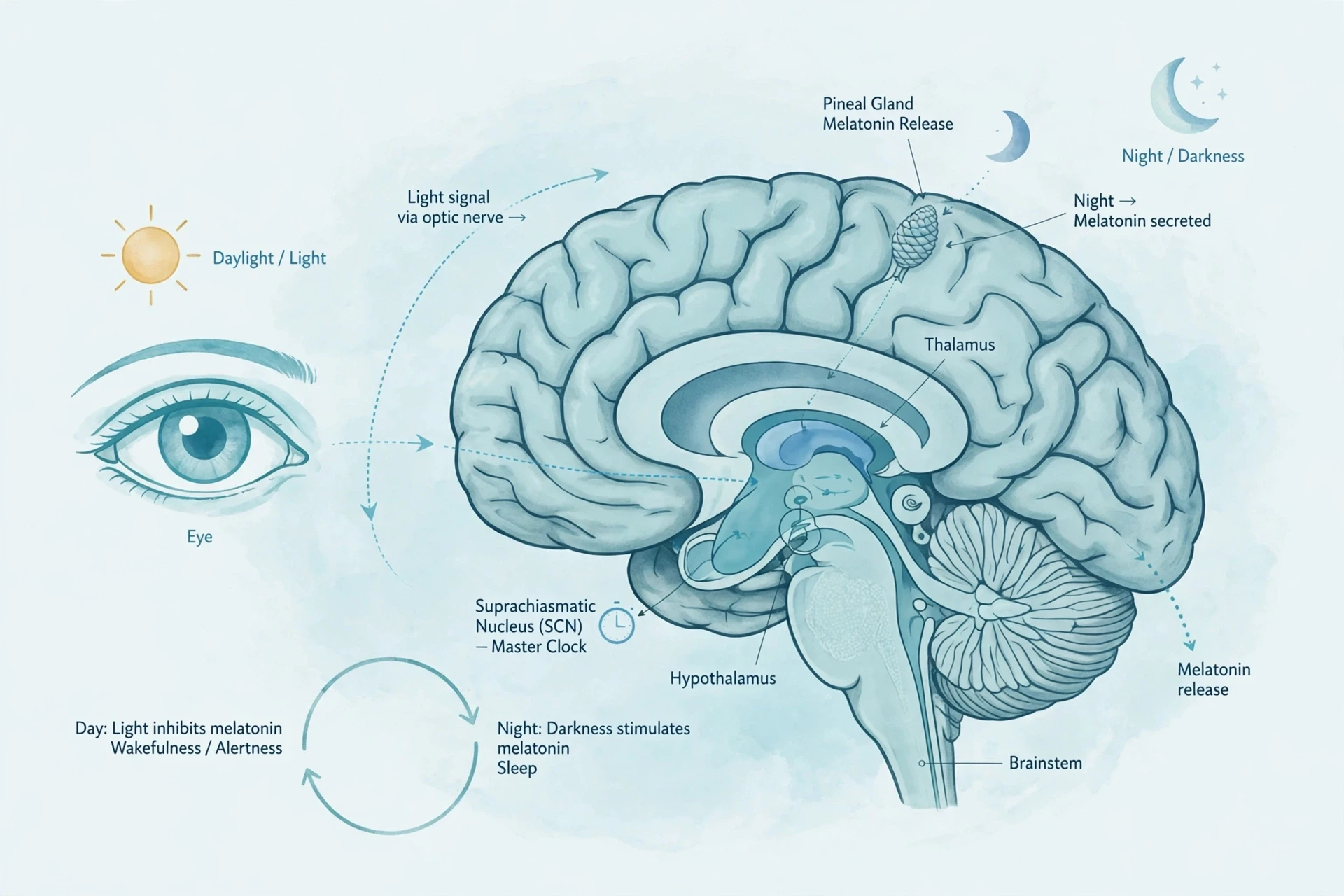
Deep inside your brain, in a peanut-sized structure called the hypothalamus, sits a cluster of a few thousand cells called the suprachiasmatic nucleus, or SCN. This is your master clock. It runs on a roughly 24-hour cycle and tells your body when to feel alert and when to feel drowsy, using light as its main cue. Light hitting your eyes signals the SCN that it is daytime; darkness prompts the pineal gland to release melatonin, the hormone that helps you feel sleepy once the lights go down.
This is why jet lag feels so disorienting and why night-shift workers struggle: the clock and the world disagree. Your body is being told two different times at once. The NINDS explains that people with damage to the SCN sleep erratically through the day because they cannot match their sleep-wake cycle to the light-dark cycle.
I once spent a week in a windowless basement lab, arriving before dawn and leaving after dark, and my sleep fell apart within days. I was getting the same hours in bed, but my clock had lost its anchor. A ten-minute walk in morning daylight fixed more in three days than any supplement I tried. Light is the strongest lever most of us have, and it is free.
3.2 Sleep pressure: the chemical debt that builds all day
The second system is sleep-wake homeostasis — a kind of pressure that builds every hour you are awake. The main signal is a chemical called adenosine, which accumulates in the brain during wakefulness and makes you feel progressively sleepier. Sleep clears it away. Caffeine works by blocking adenosine's action, which is why a late espresso can fool your brain into feeling alert while the debt keeps growing underneath.
Think of it like a sink filling with water. Wakefulness turns the tap on; sleep opens the drain. Stay up too long and the sink overflows — into microsleeps, those two- or three-second blackouts that are terrifying behind the wheel and invisible to the person having them.
3.3 How the two forces work together
The clock says when to sleep. The pressure says how deeply. That is why you can feel wide awake at 2 a.m. after a nap (pressure drained, clock still saying "night"), and why a long lie-in after a late night never quite repays the debt. The two systems must agree. Good sleep habits are mostly about keeping them aligned: regular light, regular times, and no chemical tricks late in the day.
If you want to understand the geography of the brain regions involved, our guide to human brain anatomy walks through the same structures — hypothalamus, thalamus, brainstem — in detail.
4. The Stages of Sleep: A Night in Four Acts
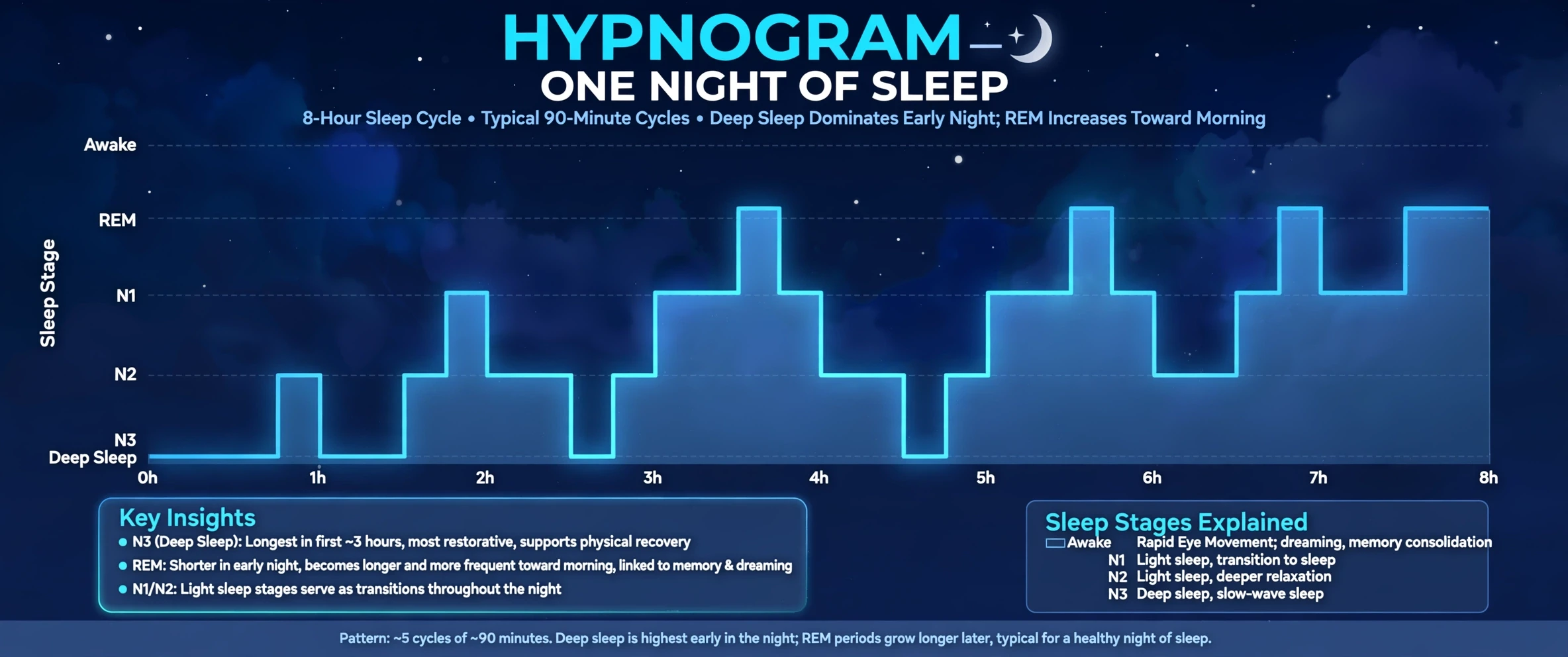
Sleep is not one long descent. It is a cycle you repeat four to six times a night, each cycle lasting roughly 90 minutes, moving through non-REM stages and then REM sleep. As the night goes on, deep sleep shrinks and REM stretches longer — which is why your most vivid dreams tend to arrive in the early morning.
4.1 N1: the doorway
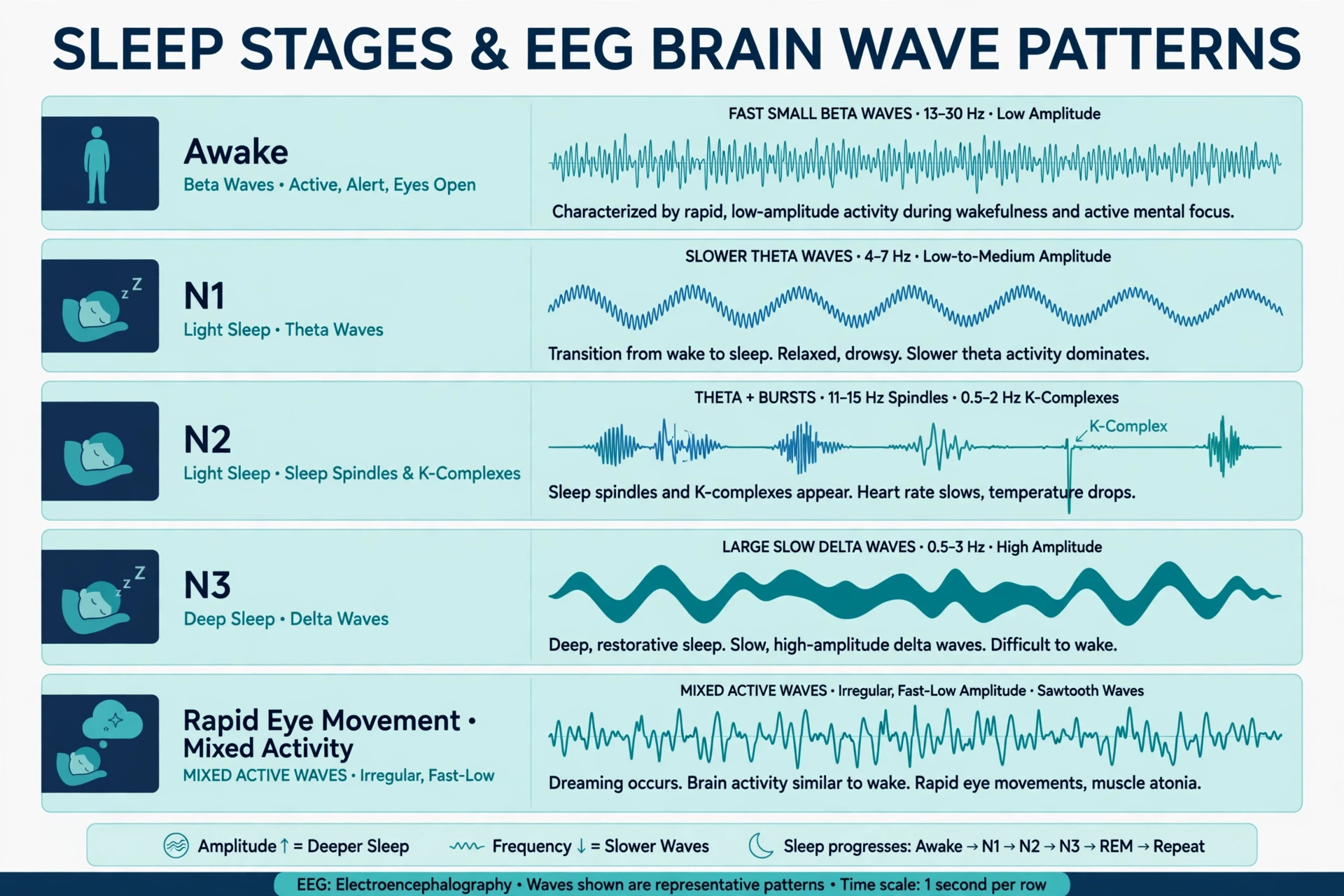
Stage 1 non-REM is the changeover from wakefulness to sleep, lasting only a few minutes. Your heartbeat, breathing, and eye movements slow, muscles relax, and you may feel the odd twitch or the famous falling sensation — a hypnic jerk — that startles you awake. You can still be woken easily, and you may insist you were never asleep at all.
4.2 N2: light sleep, and most of the night
Stage 2 is where you spend more of the night than in any other stage. Breathing and heart rate slow further, body temperature drops, eye movements stop, and the brain produces brief bursts of activity called sleep spindles and K-complexes. These bursts are not noise. Research links sleep spindles to memory consolidation — the brain's way of stabilising what you learned during the day.
4.3 N3: deep sleep, the repair shift
Stage 3, often called slow-wave or deep sleep, is the hardest stage to wake from. Brain waves become slow and large, heart rate and breathing fall to their lowest levels, and muscles are fully relaxed. This stage dominates the first half of the night, and it is when the body does much of its physical repair: tissue growth, muscle recovery, and immune strengthening. Miss deep sleep and you feel it the next day as a particular kind of heaviness that coffee cannot fix.
4.4 REM: the dreaming stage
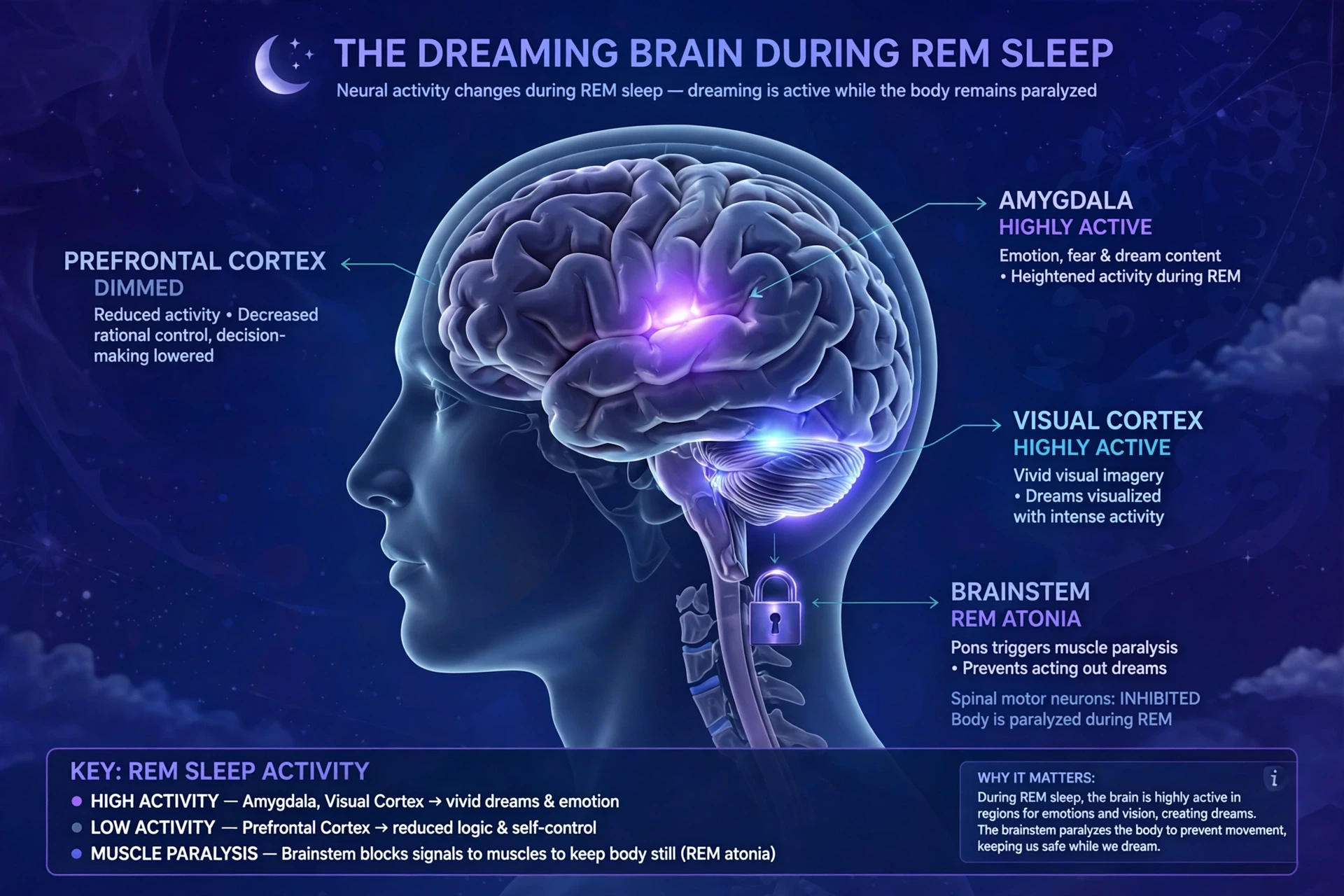
REM sleep — rapid eye movement — first arrives about 90 minutes after you fall asleep. Your eyes dart behind closed lids, breathing becomes fast and irregular, heart rate and blood pressure rise toward waking levels, and brain activity looks strikingly similar to wakefulness. Most vivid dreaming happens here, although dreams can occur in non-REM sleep too. Crucially, your arm and leg muscles become temporarily paralysed, which stops you acting out your dreams. The brainstem sends the signal to relax those muscles — a safety lock that, when it fails, produces the disorder called REM sleep behaviour disorder, in which people physically act out dreams.
Stage | Brain waves | Body | What it is for |
|---|---|---|---|
N1 (light) | Slowing from waking patterns | Muscles relax, occasional twitches | Transition into sleep |
N2 (light) | Sleep spindles, K-complexes | Heart rate and temperature fall | Memory stabilisation; most of the night |
N3 (deep) | Slow delta waves | Slowest heart rate and breathing; hard to wake | Physical repair, immune support, growth |
REM | Mixed, near-waking activity | Rapid eye movements; muscles paralysed | Vivid dreaming; emotional and procedural memory |
4.5 What a bad night actually breaks
A night of short sleep does not just cut the total hours. It distorts the architecture. Alcohol, for instance, can make you fall asleep faster but fragments the second half of the night and suppresses REM. An alarm that cuts your final cycle short steals the longest REM period of the night — the one richest in dreams and emotional processing. That is one reason a six-hour night can feel far worse than its missing two hours would suggest.
5. What Sleep Does for the Brain
If sleep is work, the brain is the main job site. Three functions stand out, and each one is supported by converging evidence from neuroscience.
5.1 Memory: the night shift files the day
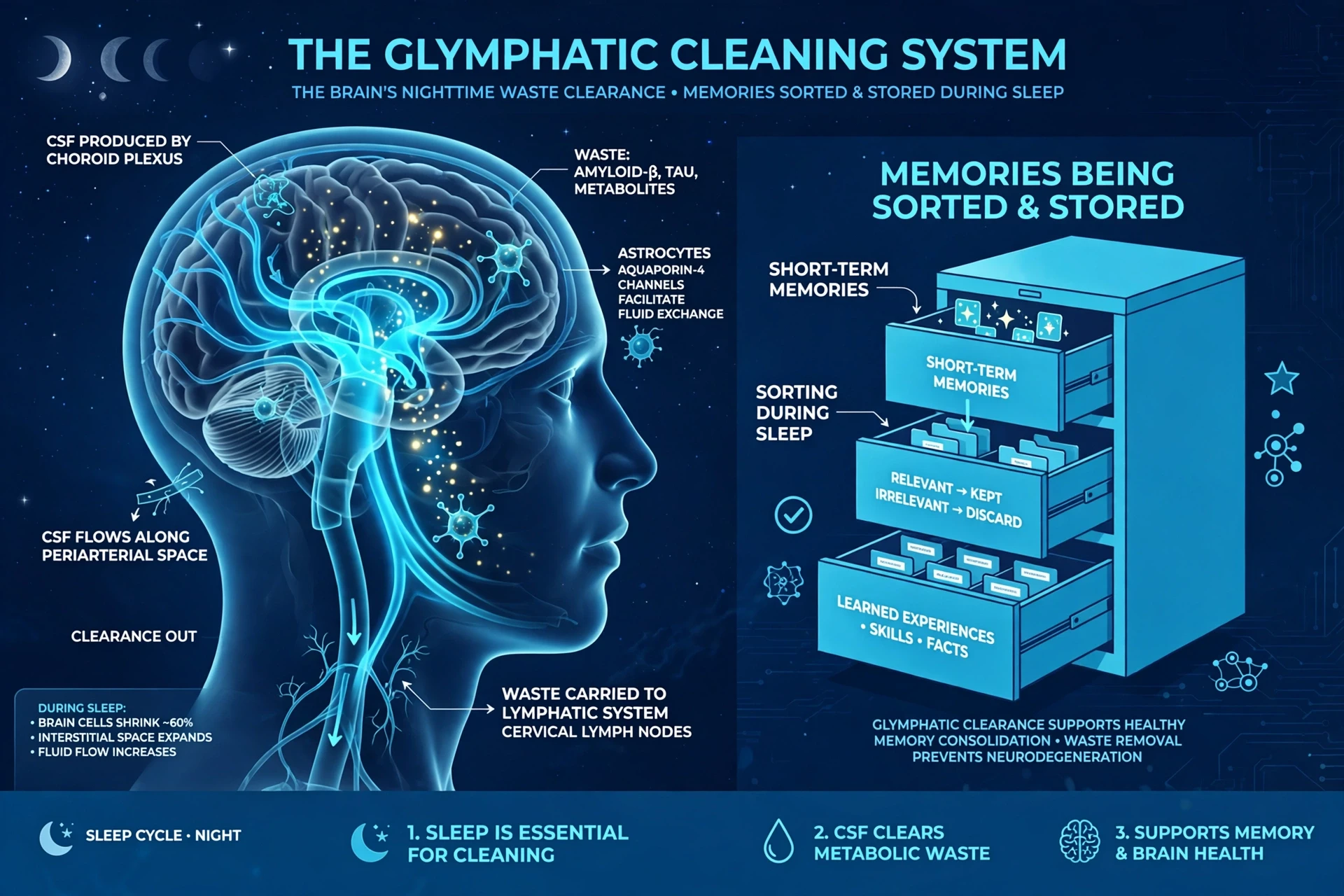
Sleep helps you form and keep memories. During the day you encode experiences; during sleep, the brain replays and consolidates them, moving fragile new memories into more durable storage. Both non-REM and REM sleep contribute: non-REM sleep is especially important for factual and episodic memories, while REM sleep supports procedural memories — how to do things — and emotional memories. The NINDS notes that without sleep, you cannot form or maintain the pathways in your brain that let you learn and create new memories.
I saw this in my own training. The nights I slept after studying, the material was there in the morning, organised in a way it had not been the night before. The nights I crammed until dawn, it evaporated. I used to think that was willpower. It was consolidation.
5.2 Cleaning: the brain washes itself
One of the most striking discoveries of recent sleep science is the glymphatic system — a network that flushes cerebrospinal fluid through the brain during sleep, clearing away metabolic waste products that accumulate while you are awake, including proteins associated with neurodegenerative disease. The NINDS describes sleep as playing a housekeeping role that removes toxins in the brain that build up while you are awake. Deep sleep appears to be when this cleaning runs hardest. It is an elegant image and a humbling one: the brain, the organ that thinks, needs to be rinsed out nightly like any other piece of equipment.
5.3 Emotions: overnight therapy
During REM sleep, the amygdala — the brain's emotion centre — becomes highly active while stress-related neurotransmitters drop to low levels. Researchers describe this as a kind of overnight emotional processing: the brain revisits emotional experiences in a calmer chemical environment, taking some of the sting out of them. This helps explain why a bad day feels more manageable after sleep, and why chronic sleep loss is so tightly linked to irritability, anxiety, and low mood. When stress hormones run high for weeks on end, the whole system strains; if that pattern sounds familiar, our article on high cortisol symptoms explains the stress-hormone side of the story.
5.4 The cost of skipping it
Chronic short sleep is associated with worse attention, slower reaction times, poorer judgment, and a foggy, unfocused feeling that many people mistake for a personality trait. If your thinking feels cloudy most mornings, sleep is one of the first suspects — our article on brain fog covers the other causes and how they interact. The U.S. National Heart, Lung, and Blood Institute (NHLBI) notes that poor sleep raises the risk of heart and respiratory problems and impairs the ability to think clearly and focus.
"For every two hours our brain spends online, taking in new information, our brain needs an hour offline, figuring out what it means." — Robert Stickgold, sleep researcher at Harvard Medical School, as quoted in Live Science's exploration of why we sleep.
6. What Sleep Does for the Body
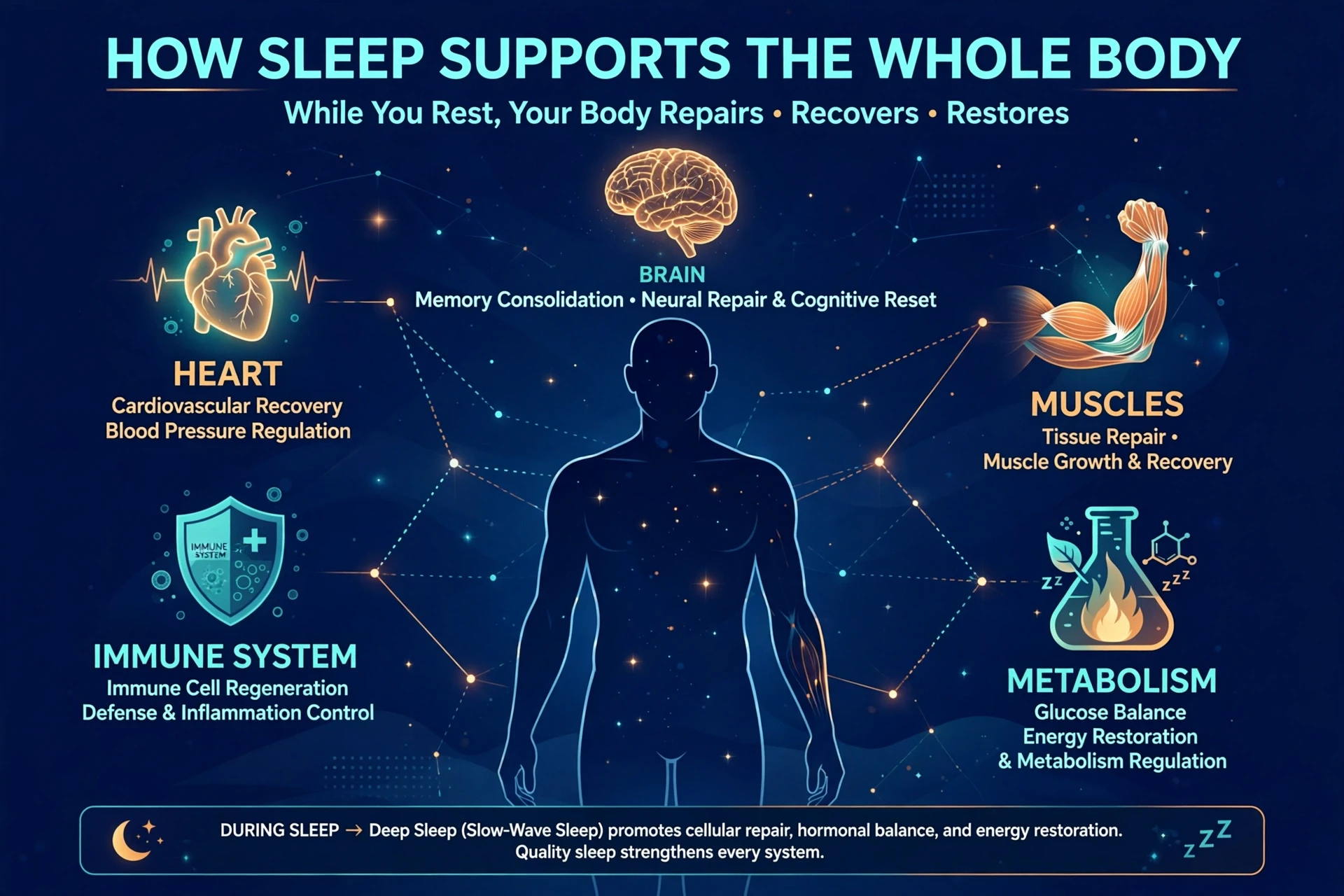
Sleep is not a brain-only event. The NINDS notes that sleep affects almost every tissue and system in the body, from the heart and lungs to metabolism, immune function, mood, and disease resistance.
6.1 The immune system
During sleep, the immune system releases proteins called cytokines, some of which help fight infection and inflammation. Sleep deprivation reduces the production of these protective proteins and weakens the response to vaccines — one study finding, widely reported by sleep researchers, is that people who sleep poorly around vaccination produce fewer antibodies. In plain terms: a good night's sleep is part of your immune system.
6.2 The heart and metabolism
Blood pressure and heart rate fall during sleep, giving the cardiovascular system a nightly rest. Chronic short sleep is linked to higher risks of high blood pressure, cardiovascular disease, diabetes, and obesity, according to the NINDS. Sleep also regulates the hormones that control appetite — leptin and ghrelin — which is one reason short sleepers tend to feel hungrier and crave calorie-dense food the next day.
6.3 Growth and repair
Deep sleep is when the body releases most of its growth hormone, driving tissue repair and muscle recovery. This is why children, who are growing fastest, need the most sleep — and why athletes take sleep as seriously as training. Repair is not a metaphor here. It is measurable chemistry.
Recommended sleep per night | |
|---|---|
Newborns (0–3 months) | 14–17 hours |
Infants (4–12 months) | 12–16 hours (including naps) |
Toddlers (1–2 years) | 11–14 hours (including naps) |
Preschool (3–5 years) | 10–13 hours (including naps) |
School age (6–12 years) | 9–12 hours |
Teenagers (13–17 years) | 8–10 hours |
Adults (18–64 years) | 7–9 hours |
Older adults (65+ years) | 7–8 hours |
The figures above follow the ranges published by the U.S. Centers for Disease Control and Prevention (CDC), which notes that sleep needs change with age and that there is no single magic number that works for everybody.
7. Why We Dream: The Theories
Everyone dreams. You spend about two hours each night dreaming but may not remember most of your dreams, according to the NINDS. Dreaming happens most vividly in REM sleep, when the thalamus sends the cortex images, sounds, and sensations, the amygdala fires on emotion, and the prefrontal cortex — the brain's logical editor — goes relatively quiet. That combination explains the feel of dreams: vivid, emotional, and strangely unbothered by logic.
But why do we dream? Here is where honesty matters. The exact purpose of dreaming is not known. What we have are theories, each supported by some evidence, none proven. Here are the main ones.
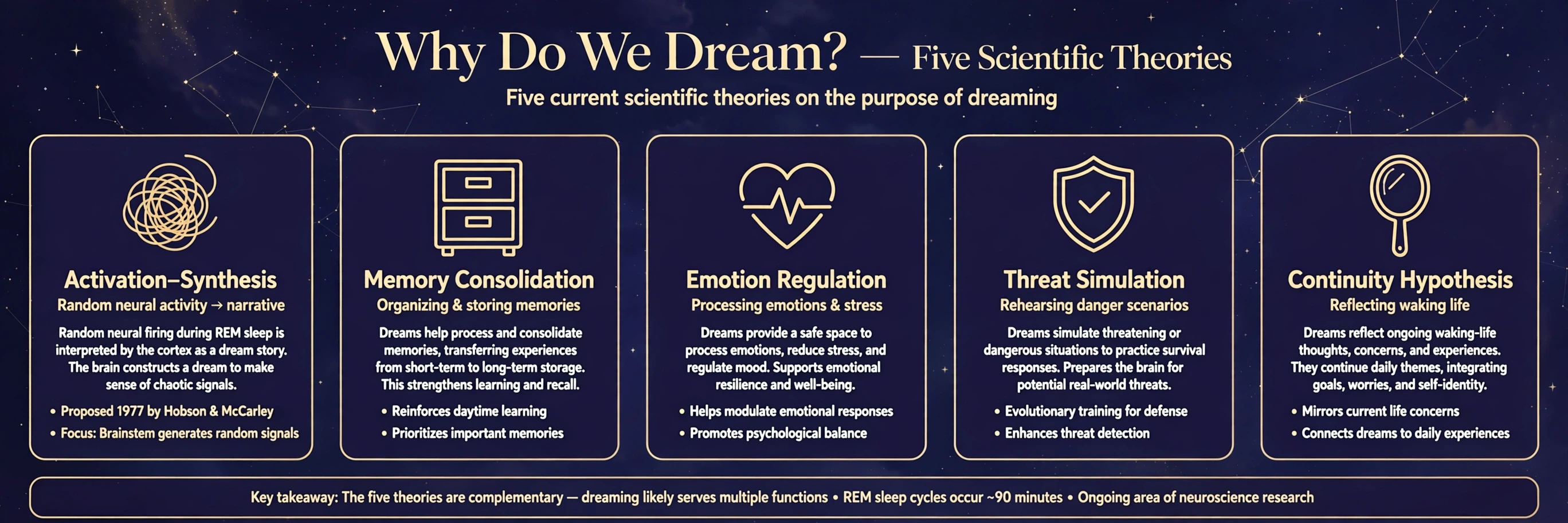
7.1 Activation-synthesis: the brain invents a story
Proposed by J. Allan Hobson and Robert McCarley in 1977, this model holds that dreams begin with random bursts of neural activity from the brainstem during REM sleep. The forebrain then tries to make sense of these signals, stitching them into a narrative. In this view, dreams are not messages. They are the brain's attempt to impose meaning on noise — which is why dream logic feels like a story written by someone who only half-read the plot.
7.2 Memory consolidation: dreams as filing
The information-processing view, going back to Atkinson and Shiffrin in 1968, suggests dreaming is part of sorting and storing the day's experiences. During REM sleep, the brain replays recent events, strengthening some memories and pruning others. The images you see may be memories in the process of being filed or discarded. This fits with evidence that people learning a new skill often dream about it, and that sleep after learning improves performance.
7.3 Emotion regulation: the overnight therapist
This theory holds that dreams help us process emotions and cope with stress. The amygdala and hippocampus are active during REM sleep, and stress neurotransmitters are at lower levels, which may let the brain revisit difficult experiences in a safer chemical state. People under stress are more likely to have frightening dreams — the system working overtime, not broken.
7.4 Threat simulation: rehearsal for danger
Proposed by Antti Revonsuo in 2000, threat simulation theory suggests dreams are a rehearsal space: the brain simulates threatening situations — being chased, falling, failing — so we can practise responses without real risk. It is an appealing idea, and it fits the observation that negative, threatening content is far more common in dreams than positive content. But it is still a theory, and critics note that many dreams contain no threat at all.
7.5 Continuity: dreams replay waking life
The continuity hypothesis, from Calvin Hall in the 1970s, observes that dreams mostly replay elements of waking life, especially emotionally charged ones. Your dreams feature the people, places, and worries of your day because those are the memories most active in the circuits that dream. New parents dream about babies. Students dream about exams. It is not mystical. It is continuity.
7.6 Freud, and what modern science kept
Sigmund Freud famously called dreams "disguised fulfillments of repressed wishes." Most of his specific framework has not survived scientific testing. But one element persists in a weaker form: suppressed or unprocessed emotions can show up in dreams. Modern researchers would phrase it differently — dreams reflect emotional concerns, not hidden prophecies — and that distinction matters, because it leads directly to the biggest misconception about dreams.
8. What Dreams Mean — and What They Do Not
Here is where I disagree with a common belief, plainly: there is no universal dream dictionary. A snake in a dream does not mean the same thing for a herpetologist, a person with a snake phobia, and someone who watched a nature documentary before bed. Dreams draw on personal memory, recent experience, and emotion. A symbol's meaning depends on whose brain produced it.
What dreams can tell you is usually simpler and more useful: what your brain has been working on. Recurring exam dreams during a stressful month point to performance anxiety, not to a hidden prediction. Nightmares after a frightening event point to an emotional memory still being processed. That is information worth listening to — as a weather report on your inner life, not as a fortune.
8.1 Common dreams, explained without mysticism
Being chased: the most common dream theme across cultures. Threat simulation theory reads it as rehearsal; emotion regulation reads it as avoidance of something stressful in waking life. Either way, the useful question is: what am I avoiding?
Falling: often occurs at the sleep-wake boundary, linked to the hypnic jerk and the sudden relaxation of muscles. It is physiology, not prophecy.
Being unprepared (the exam, the speech): classic continuity — the brain replays a real waking worry, usually during periods of evaluation or pressure.
Teeth falling out, losing things, being lost: these appear across many cultures and most plausibly reflect general anxiety and loss of control, not a specific hidden message.
8.2 Nightmares
Nightmares are vivid, frightening dreams that wake you up, most often in the second half of the night when REM is longest. Occasional nightmares are normal, especially during stress, illness, or after a scary film. Frequent nightmares — several times a week, causing daytime distress — are worth discussing with a doctor, as they can accompany anxiety, trauma, or certain medications.
8.3 Lucid dreaming
In a lucid dream, you realise you are dreaming while still asleep. Some people can learn to do this more often with techniques like reality checks during the day and keeping a dream journal. Research on lucid dreaming is real but young, and claims about its benefits — for creativity, nightmare treatment, or skill practice — are promising rather than proven. If you try it, treat it as an experiment, not a superpower.
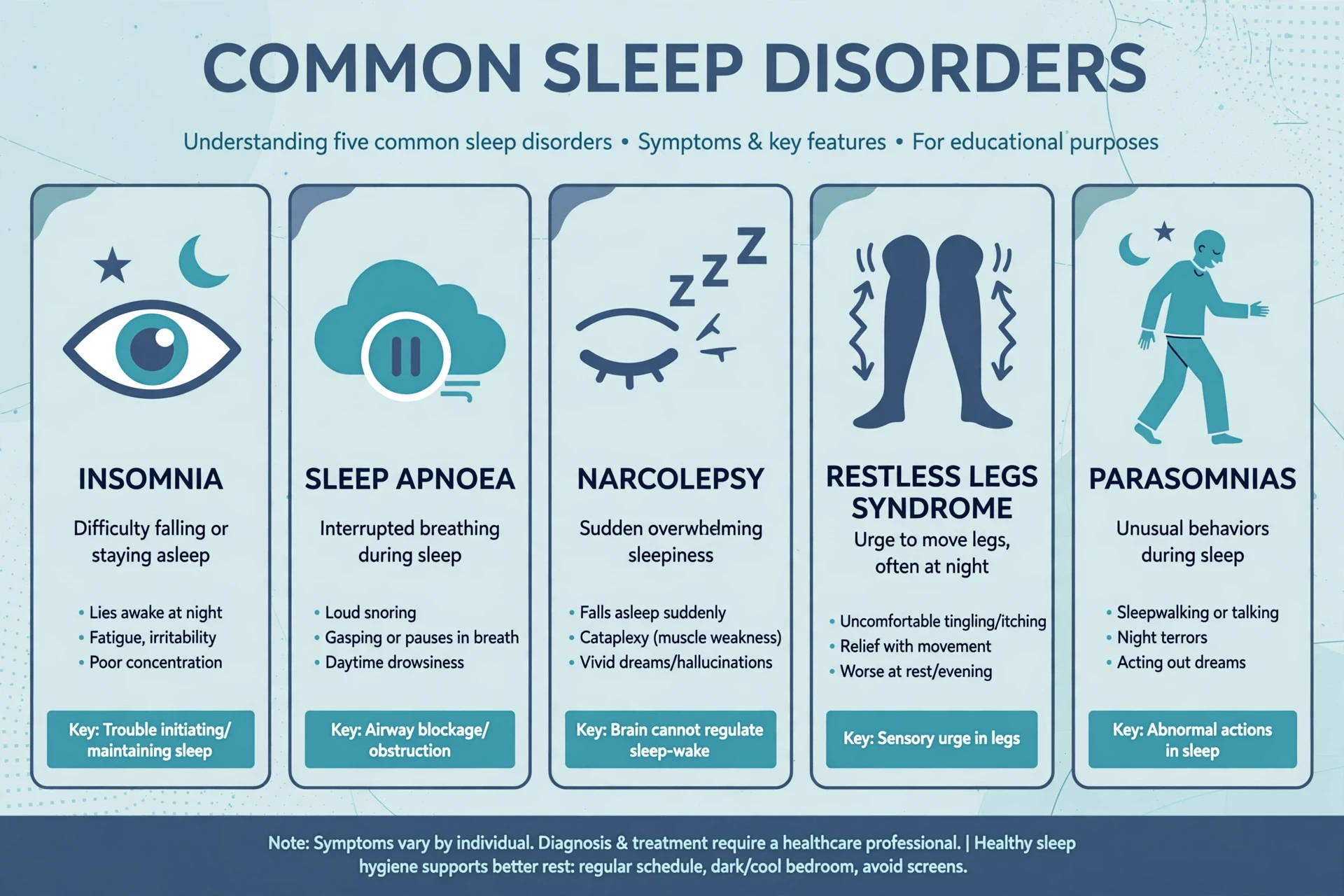
Most sleep problems are common, and most are treatable — but this section is deliberately brief. Sleep disorders are a medical topic, and if a problem persists for weeks, the right step is a doctor, not another article.
Insomnia: difficulty falling asleep or staying asleep, or waking too early, at least three nights a week for three months. It is the most common sleep disorder and often travels with stress, anxiety, or depression. Our full guide to chronic insomnia covers its brain mechanisms and treatment in depth, including cognitive behavioural therapy for insomnia (CBT-I), the first-line treatment.
Sleep apnoea: repeated pauses in breathing during sleep, usually with loud snoring and daytime sleepiness. It strains the heart and is strongly underdiagnosed.
Narcolepsy: a neurological disorder causing overwhelming daytime sleepiness and sudden sleep attacks, sometimes with cataplexy — brief muscle weakness triggered by emotion.
Restless legs syndrome: an irresistible urge to move the legs, worse in the evening, that fragments sleep.
Parasomnias: sleepwalking, sleep talking, and night terrors, mostly in deep sleep and most common in children.
A sleep study (polysomnography) — a night in a sleep lab recording brain waves, breathing, oxygen, and movement — is how specialists diagnose these conditions. The CDC advises talking to a healthcare provider if you regularly have problems sleeping or feel unusually tired during the day.
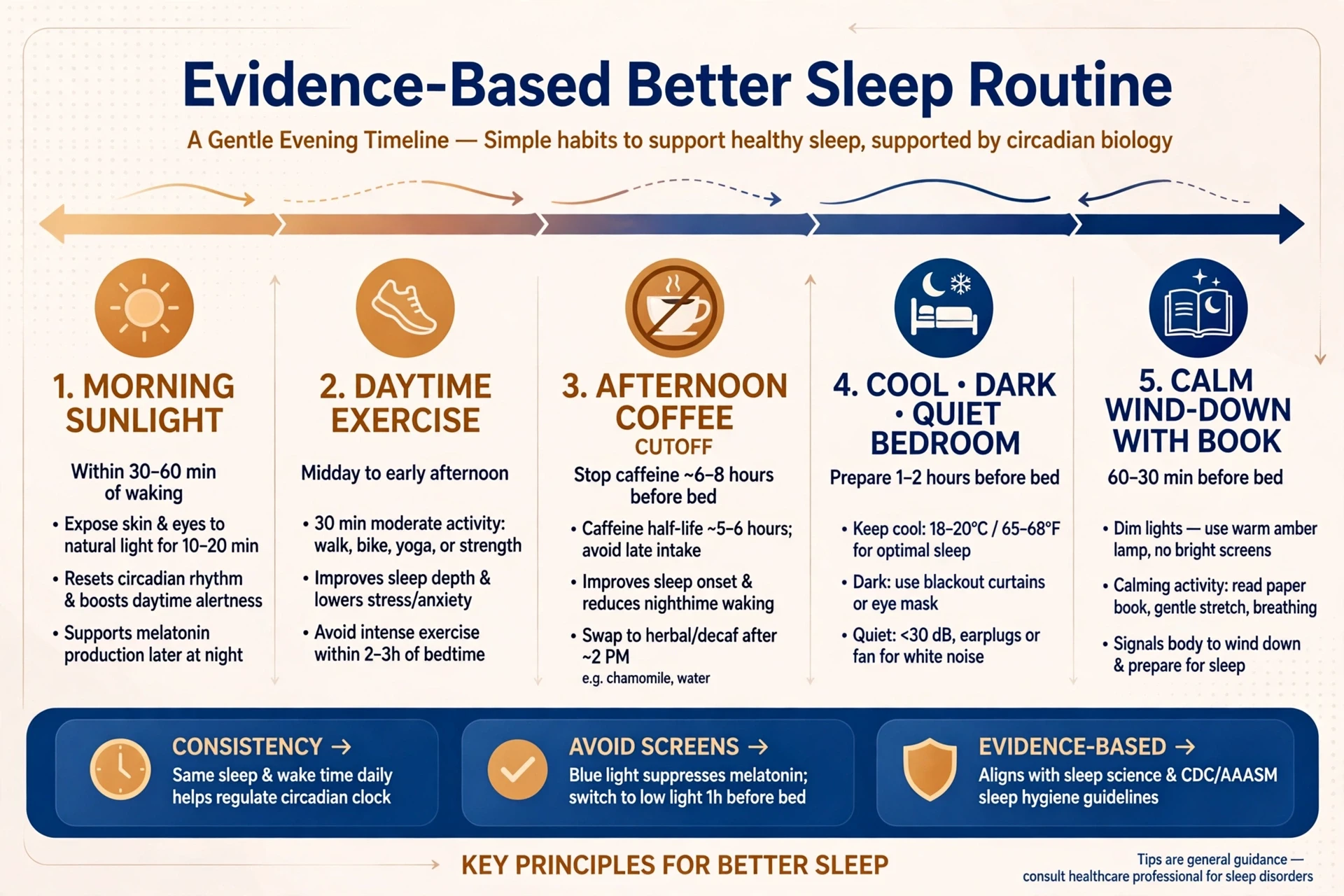
10. How to Sleep Better: What Actually Works
Sleep advice is everywhere, and much of it is folklore. The measures below are the ones with the strongest evidence behind them, and they are the same ones the NINDS and CDC recommend.
10.1 Keep a steady schedule
Go to bed and wake up at the same time every day, including weekends, as far as life allows. Your circadian clock is a creature of habit. A regular schedule is the single most powerful sleep intervention most people never try.
10.2 Get morning light, avoid late light
Bright light in the morning anchors your clock. Dim light in the evening lets melatonin rise. Screens are not uniquely evil — the issue is bright light plus engaging content close to bedtime. The CDC suggests turning off electronic devices at least 30 minutes before bed.
10.3 Cool, dark, quiet
A bedroom around 18–19°C (65–67°F), dark, and quiet works for most people. Your core temperature needs to fall to initiate sleep, and a cool room helps it do that.
10.4 Caffeine, alcohol, and food
Avoid caffeine in the afternoon and evening — its half-life is roughly five to six hours, so a 4 p.m. coffee is still half there at 10 p.m. Alcohol may make you drowsy but fragments sleep and suppresses REM. Avoid large meals close to bedtime.
10.5 Move during the day
Regular exercise, at least 30 minutes most days, improves sleep quality. Vigorous exercise very late in the evening can delay sleep for some people, so earlier is usually better.
10.6 If you cannot sleep, get up
Lying awake in bed trains your brain to associate the bed with wakefulness. If you have been awake for about 20 minutes, get up, do something calm and dimly lit — reading, gentle music — and return when you feel sleepy. This is one of the core techniques of CBT-I.
10.7 Supplements: a short, honest note
Magnesium is often marketed for sleep, and many readers ask about it. The evidence for magnesium supplements improving sleep in people who are not deficient is limited, and it is not a substitute for the habits above. Our detailed look at magnesium for anxiety and sleep covers what the mineral does, who may be deficient, and what the research actually shows.
11. The Latest Research: Sleep Science Is Moving Fast
Three frontiers are worth watching. First, the glymphatic cleaning system — only described in detail in the last decade — is now being studied for its links to Alzheimer's disease, where poor sleep and protein buildup appear to reinforce each other in both directions. Second, researchers are using brain imaging and machine learning to decode dream content from sleeping brains, reconstructing simple visual categories from fMRI patterns — a real result, but still far from reading a dream like a film. Third, large population studies continue to sharpen the dose-response picture: both very short and very long sleep are associated with worse health outcomes, reinforcing that the 7–9 hour range for adults is a sweet spot rather than a minimum to exceed.
My own view, after years of following this field, is that the most important shift is not a single discovery but a change in status: sleep has moved from a lifestyle topic to a pillar of health, alongside diet and exercise. That is a change in how medicine thinks, and it is overdue.
12. Final Thoughts: A Third of Your Life, Well Spent
Sleep is not lost time. It is the time your brain files what you learned, washes away what you no longer need, steadies your emotions, repairs your body, and stages the strange, vivid theatre of dreams. You will spend roughly a third of your life asleep. The science says that third is doing some of the most important work of your life.
So tonight, give it a fair chance. Dim the lights a little earlier. Put the phone down. Let the clock and the pressure agree. And when you wake from a dream about an exam in a school you never attended, smile: your brain was on the night shift, doing its job, in the only way it knows how.
Frequently Asked Questions
Why do we sleep?
We sleep because the brain and body need a regular period offline to consolidate memories, clear metabolic waste, regulate emotions, repair tissue, and restore immune and metabolic function. No single reason explains sleep; it serves many systems at once, which is why losing it affects thinking, mood, health, and immunity together.
How many hours of sleep do adults need?
Most adults need 7–9 hours per night, according to the CDC and the American Academy of Sleep Medicine. Some people genuinely need slightly less or more, but consistently sleeping under seven hours is associated with worse health outcomes.
What are the stages of sleep?
Sleep cycles through four stages: N1 (light transition), N2 (light sleep, most of the night), N3 (deep slow-wave sleep), and REM (rapid eye movement, vivid dreaming). A full cycle lasts about 90 minutes and repeats four to six times a night, with deep sleep early and REM late.
Why do we dream?
The honest answer is that science has not settled this. Leading theories say dreams may help consolidate memories, process emotions, rehearse threats, or simply result from the brain making sense of random neural activity during REM sleep. Several of these may be true at once.
Do dreams mean anything?
Dreams usually reflect your recent experiences, worries, and emotions — what researchers call continuity — but there is no universal dream dictionary. A symbol means different things to different people. Recurring dreams are worth noticing as a signal about stress or unresolved concerns, not as predictions.
Why do I forget my dreams?
Most dreams are forgotten because the brain chemicals needed to form long-term memories are at low levels during REM sleep, and because waking shifts attention immediately to the day. You are more likely to remember a dream if you wake during it or record it immediately.
What causes nightmares?
Nightmares are often triggered by stress, anxiety, illness, frightening media, or certain medications, and they occur most often in the second half of the night when REM sleep is longest. Occasional nightmares are normal; frequent, distressing nightmares are worth discussing with a doctor.
Is it true that we only dream in REM sleep?
No. Dreams occur in all stages of sleep, but they are most vivid, emotional, and memorable in REM sleep. Non-REM dreams tend to be shorter, more thought-like, and less visual.
Can lack of sleep make you sick?
Yes. Short sleep weakens immune responses, reduces vaccine effectiveness, and is associated with higher risks of colds, high blood pressure, diabetes, heart disease, and obesity. Sleep is part of the immune system, not separate from it.
How can I fall asleep faster?
Keep a regular sleep and wake time, get bright light in the morning, avoid caffeine after midday, keep the bedroom cool and dark, and wind down without screens for 30 minutes before bed. If you lie awake for about 20 minutes, get up and do something calm until you feel sleepy, rather than forcing it.
Sources
National Institute of Neurological Disorders and Stroke (NINDS), "Brain Basics: Understanding Sleep" — https://www.ninds.nih.gov/health-information/public-education/brain-basics/brain-basics-understanding-sleep
National Heart, Lung, and Blood Institute (NHLBI), "How Sleep Works" — https://www.nhlbi.nih.gov/health/sleep
U.S. Centers for Disease Control and Prevention (CDC), "About Sleep" — https://www.cdc.gov/sleep/about/index.html
BrainFacts.org (Society for Neuroscience), "In Your Dreams" — https://www.brainfacts.org/thinking-sensing-and-behaving/sleep/2020/in-your-dreams-102620
Live Science, "Why Sleep? Why Dream?" (Robert Stickgold, Harvard Medical School) — https://www.livescience.com/52876-why-do-we-disappear-into-the-unconscious-of-sleep-and-dreams.html