

Educational information only — not medical advice. This article explains the science of heart disease for general readers. It is not a diagnosis, a treatment plan, or a substitute for advice from a qualified healthcare professional. If you have symptoms, a family history of heart disease, or questions about your own risk, please talk with your doctor.
1. The Phone Call That Changed How I Think About Hearts
The call came on a Tuesday evening, just as I was clearing my desk. A friend I had not heard from in months was on the line, and his voice was doing that thing voices do when someone is trying very hard to sound calm. His father, fifty-eight, a man who cycled to work and ate, by all accounts, "pretty well," had collapsed at a family lunch. He was in hospital. The doctors said it was a heart attack, and that the arteries feeding his heart had been narrowing for years — quietly, painlessly, without a single warning his family had recognised.
I have spent more than fifteen years studying how the human body works, and I have stood in laboratories looking at cross-sections of diseased arteries under a microscope. Yet that phone call hit me differently from any textbook. Because the story my friend told me is the story of heart disease itself: not a sudden event, but a slow, silent process that usually starts decades before anyone notices. The heart attack is the ending. The real story begins much earlier, in the lining of an artery, in a blood pressure reading nobody checked, in a habit that seemed harmless at twenty and was still there at fifty.
This article is that story, told properly. What heart disease actually is. How it develops, step by step. What causes it, who is most at risk, and — the part that matters most — what prevention genuinely looks like, beyond the slogans. No scare tactics, no miracle claims. Just the science, in plain language, with the honesty that some of it is still being worked out.
2. What Heart Disease Actually Means
2.1 The heart, in plain language
Your heart is about the size of your fist, and it is the hardest-working muscle you own. It beats around 100,000 times a day, pushing roughly 7,500 litres of blood through about 96,000 kilometres of blood vessels. Think of it as a pump with four rooms and a set of one-way doors. The two upper rooms, the atria, receive blood. The two lower rooms, the ventricles, do the heavy pushing. The doors — four valves — keep blood flowing in one direction, the way a lock on a canal keeps water moving the right way.
The heart muscle itself needs its own blood supply, delivered by the coronary arteries that wrap around its surface like a crown. When those arteries are healthy, blood flows freely and the muscle gets the oxygen it needs. When they are not, everything downstream suffers. That is the core of most heart disease: a problem with the pump, the pipes, the doors, or the electrical wiring that sets the rhythm.
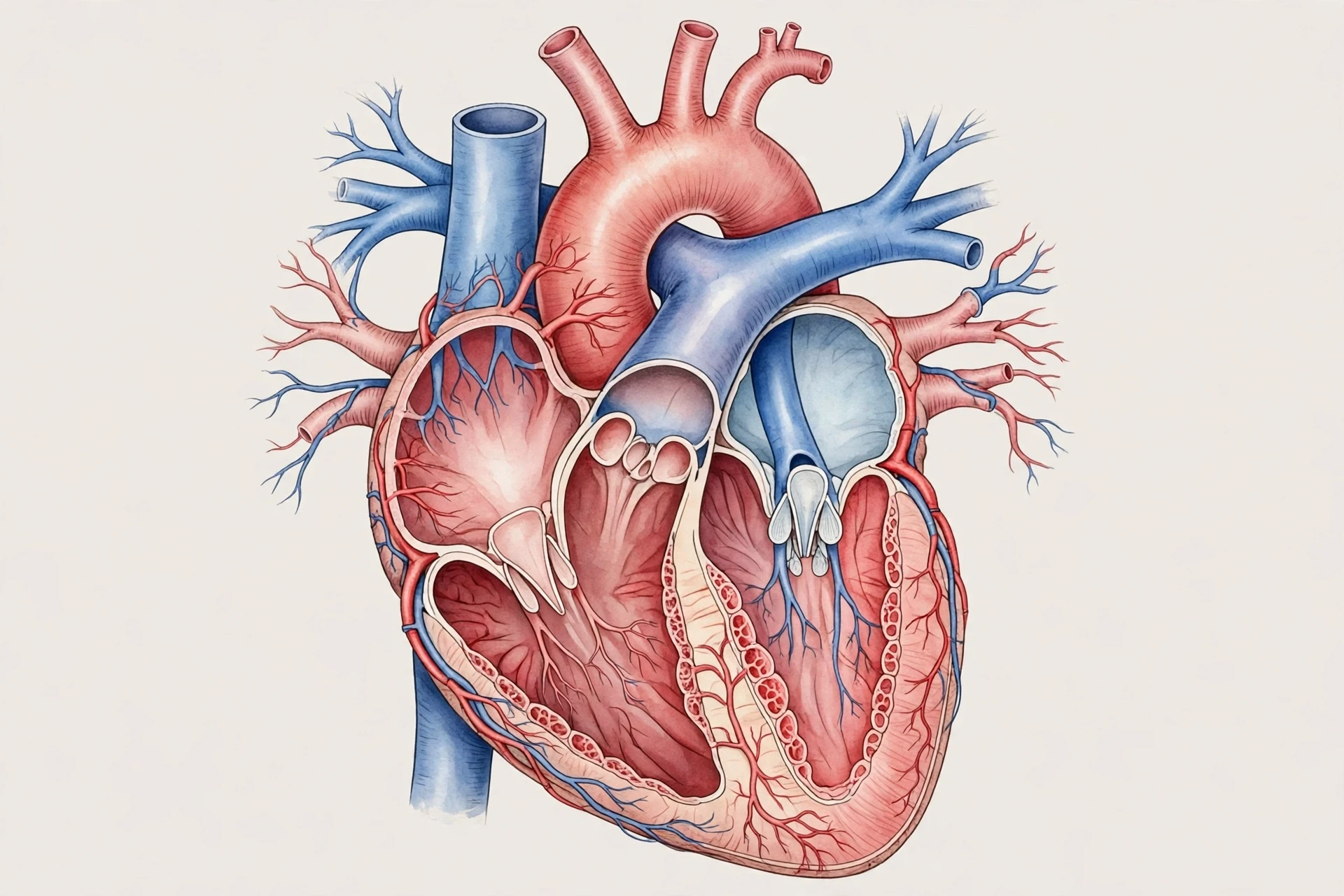
I still remember the first time I held a preserved human heart in an anatomy lab as a young researcher. I had read about it for years, but the weight of it in my hands — dense, muscular, faintly scarred even in a healthy specimen — made the abstraction real. A heart is not a symbol. It is a machine that never gets a day off, and it is only as reliable as the vessels that feed it.
2.2 The main types of heart disease
"Heart disease" is an umbrella term, not a single illness. The National Heart, Lung, and Blood Institute describes it as a general term for conditions that affect the heart's structure and how it works, and the American Heart Association lists the same broad family. The main types are:
Coronary artery disease — the most common type. The coronary arteries narrow or become blocked, starving the heart muscle of oxygen. This is the type behind most heart attacks.
Heart failure — the heart muscle weakens and cannot pump efficiently. Blood backs up, fluid gathers in the lungs and legs, and everyday effort leaves a person breathless.
Arrhythmias — the heart's electrical system misfires, so the beat becomes too fast, too slow, or irregular. Some arrhythmias are harmless. Some can be life-threatening.
Heart valve disease — one or more of the four valves stiffens, leaks, or fails to open fully, forcing the heart to work harder.
Cardiomyopathy — disease of the heart muscle itself, which becomes enlarged, thickened, or stiff, often for reasons that are partly inherited.
Congenital heart defects — structural problems present from birth, ranging from tiny holes between chambers to major malformations.
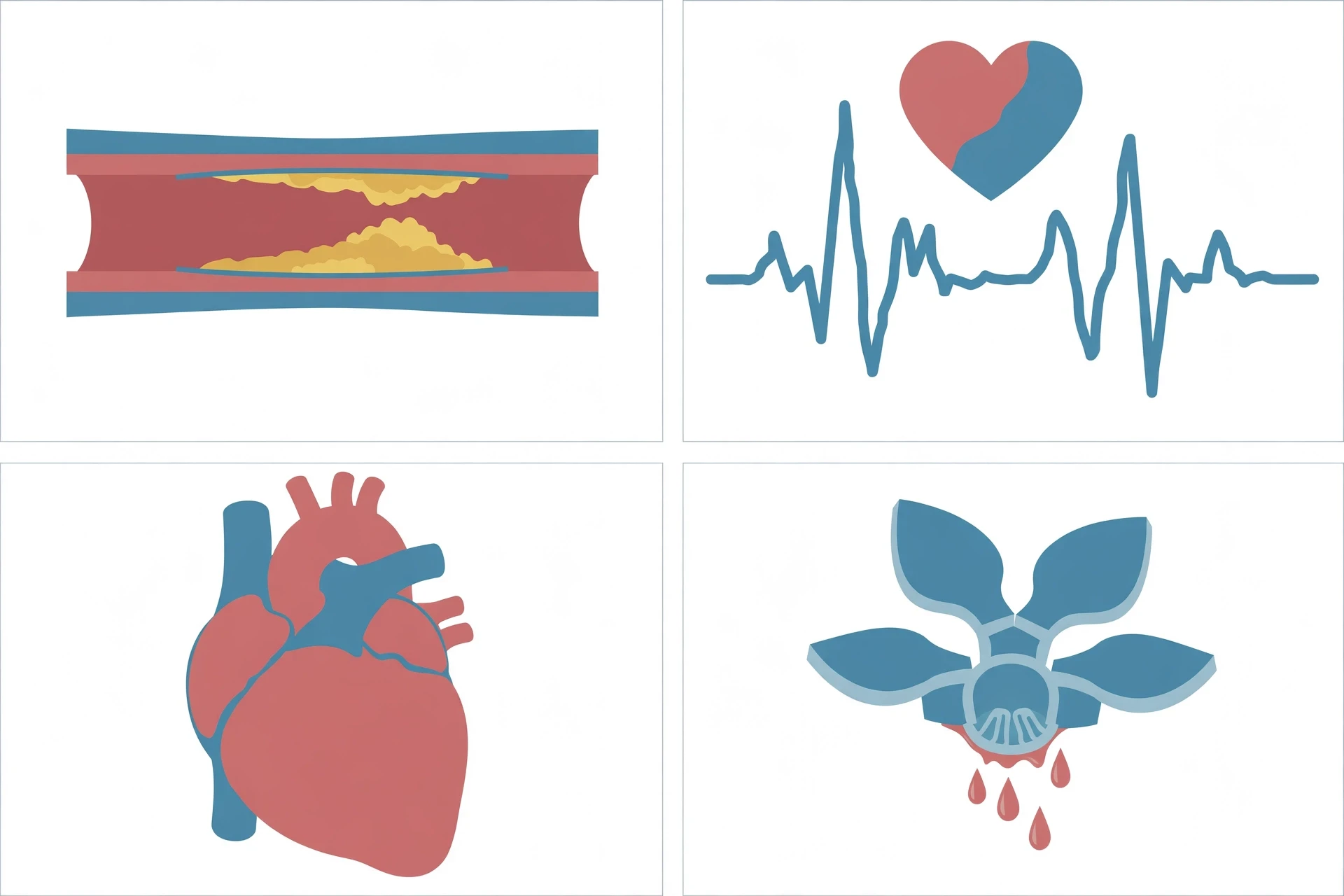
Different types, different treatments — but they share a striking amount of the same ground. The same risk factors that clog a coronary artery also strain a valve and wear out a muscle. That overlap is good news in disguise: preventing one type often helps prevent the others.
3. How Heart Disease Develops: The Slow Buildup
3.1 Atherosclerosis, step by step
If there is one process to understand, it is atherosclerosis — the buildup of plaque inside artery walls. Plaque is a sticky mix of cholesterol, fat, calcium, and cellular debris. It does not appear overnight. It builds the way rust builds on an old pipe: slowly, silently, layer by layer.
Here is how it usually goes:
Damage to the lining. The inner wall of an artery, the endothelium, is a smooth, slippery surface. High blood pressure, smoking, high blood sugar, and inflammation scratch and damage it. A healthy lining repels plaque. A damaged one invites it in.
Cholesterol moves in. LDL cholesterol — the so-called "bad" cholesterol — slips through the damaged lining and settles in the artery wall.
The immune system responds. White blood cells rush in to clean up the cholesterol, but they gorge themselves and become foam cells, swelling the wall further. This is inflammation doing its job badly: a repair crew that makes the damage worse.
The plaque grows and hardens. Over years, the deposit grows, the artery narrows, and the wall stiffens. Blood flow drops. The heart has to push harder.
The rupture. The most dangerous moment is not the slow narrowing. It is when a plaque's thin cap tears open. The body treats the tear like a wound and forms a blood clot to seal it. That clot can block the artery completely in minutes.
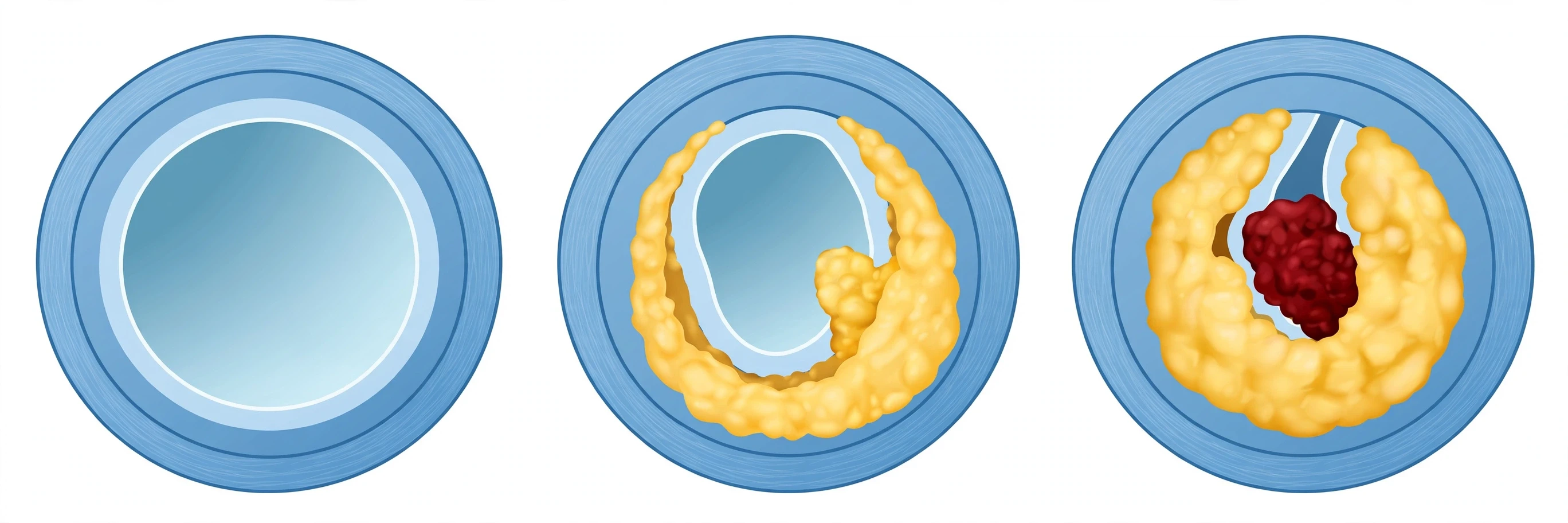
The first time I saw a cross-section of a plaque-filled artery under the microscope, I did not believe how narrow the channel had become. The vessel wall was thick with yellow, waxy deposits, and the opening left for blood was a slit. The person that artery belonged to had walked, worked, and laughed with that slit for years. That is the unsettling truth about heart disease: you can feel perfectly fine while the pipes are closing.
3.2 What a heart attack really is
A heart attack is not the heart stopping. It is a part of the heart muscle dying because its blood supply has been cut off — usually by a clot forming on a ruptured plaque, as described above. Without oxygen, muscle cells begin to die within minutes. The longer the blockage lasts, the more muscle is lost, and dead heart muscle does not grow back.
This is why speed matters so much, and why the warning signs in Section 6 are worth memorising. Treatments that reopen the artery work best in the first hours. Every minute of delay is muscle lost.
A heart attack is not the disease itself. It is the moment a disease that has been building for years finally announces itself — and by then, the damage has a head start.
4. The Causes Behind the Damage
4.1 The four big drivers
Ask a cardiologist what causes most heart disease, and the answer is not one thing. It is a small set of forces that damage artery walls and strain the heart, usually working together. The Mayo Clinic explains that the causes depend on the type of heart disease, but for coronary artery disease — the most common type — atherosclerosis is the central cause, and its risk factors are familiar ones:
High blood pressure. Every heartbeat pushes blood against artery walls. When the pressure stays high, year after year, it wears the lining down like water eroding a riverbank. It is also famously silent: most people with high blood pressure feel nothing at all. Our guide to high blood pressure management explains how it is measured and what the numbers mean.
High cholesterol. Too much LDL cholesterol in the blood means more material available to build plaque. The balance matters as much as the total: HDL cholesterol helps carry cholesterol away, and when HDL is low, the cleanup crew is short-handed. For practical food choices, see our article on foods that lower cholesterol.
Smoking. Tobacco smoke damages the lining of blood vessels directly, raises blood pressure, makes blood more likely to clot, and lowers HDL cholesterol. It is the one risk factor that attacks on every front at once. Secondhand smoke does the same damage at a lower dose.
Diabetes and high blood sugar. Sugar in the blood is corrosive to small vessels over time. People with diabetes develop heart disease earlier and more severely, and often without the classic warning symptoms — a dangerous combination. Blood sugar that runs high for years, even below the diabetes threshold, adds risk, which is why prediabetes and blood sugar prevention matters long before any diagnosis.
These four are the heavyweights. They are also the four that respond most to treatment and lifestyle change, which is the hopeful half of the story.
4.2 Less obvious causes
Not every case traces back to the big four. The Cleveland Clinic lists a wider set of causes that vary by type of heart disease: aging, autoimmune diseases, certain medications such as chemotherapy, gene changes present from birth, infections, kidney disease, and thyroid disease. A few deserve a closer look:
Chronic inflammation. The immune system is meant to protect you, but when it stays switched on — from gum disease, chronic infections, autoimmune conditions, or years of poor diet — it keeps damaging artery walls. Inflammation is one reason an anti-inflammatory diet has become a serious topic in cardiology, not just a wellness trend.
Chronic stress. Stress hormones raise blood pressure and blood sugar and push people toward smoking, overeating, and poor sleep. Stress alone rarely causes heart disease, but stress that never lets up loads the dice.
Poor sleep. Short sleep and untreated sleep apnoea are linked to higher blood pressure, worse blood sugar control, and more inflammation. The heart does much of its repair work at night. Rob it of that time, and the damage accumulates.
Excess alcohol. Heavy drinking raises blood pressure, adds weight, and can directly weaken the heart muscle. Even moderate drinking is now understood to carry more risk than older advice suggested.
5. Risk Factors: What You Can and Cannot Change
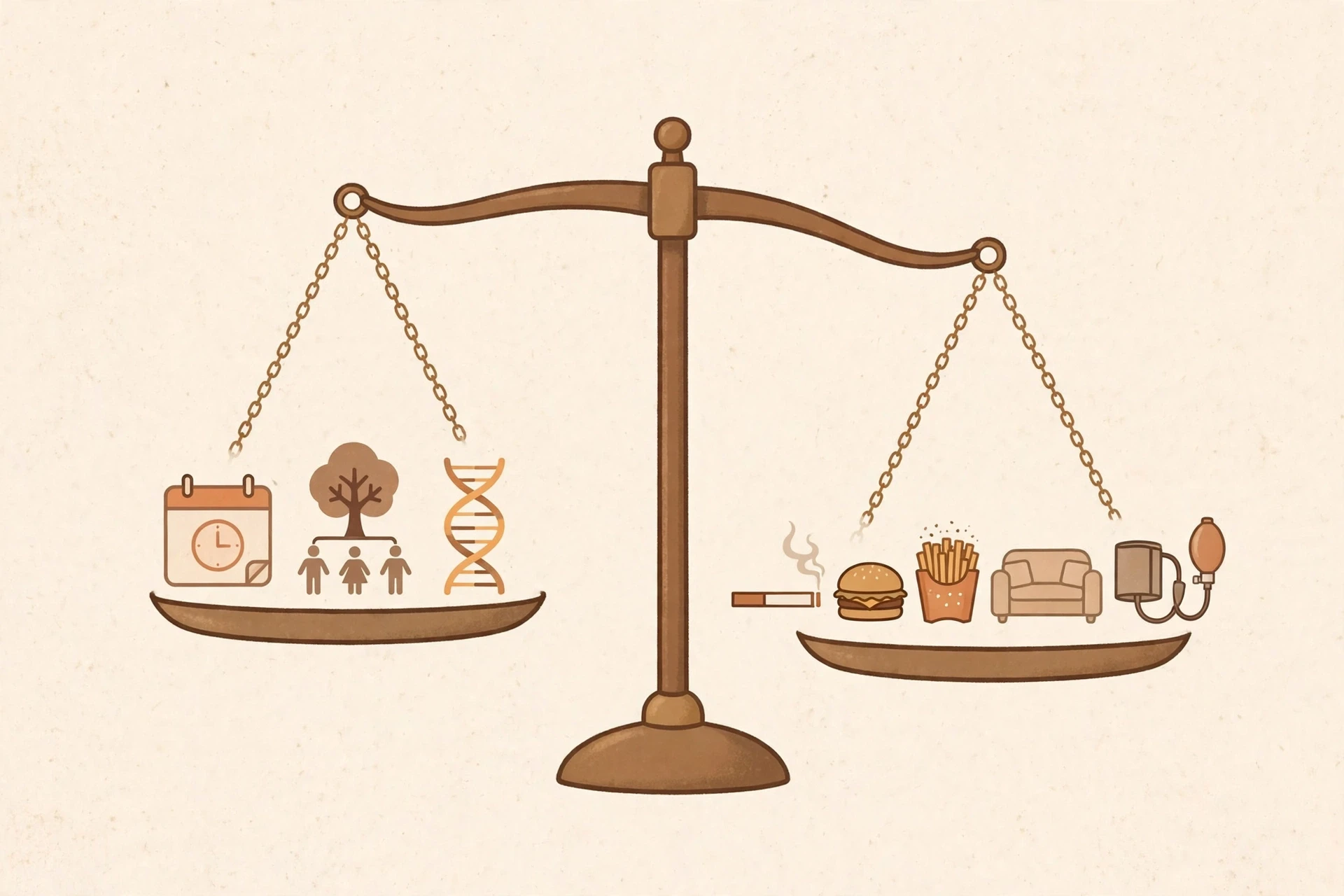
A cause is what damages the heart. A risk factor is anything that makes that damage more likely. The distinction matters, because it tells you where your effort counts. Some risk factors you cannot change. Most of the important ones, you can.
5.1 Factors you cannot change
Age. Risk rises with age for everyone. Arteries stiffen, the heart muscle thickens, and decades of small exposures add up. Men tend to develop heart disease earlier; women's risk rises sharply after menopause.
Sex. Men develop coronary artery disease earlier on average, but women catch up — and women's symptoms are more often missed, partly because they are less likely to have the classic crushing chest pain.
Family history. If a parent or sibling developed heart disease early, your own risk is higher. Genes influence cholesterol levels, blood pressure, and how your body handles fat and sugar.
Ethnicity. Baseline risk differs between populations, shaped by a mix of genetics, environment, and access to care. This is a reason to know your own numbers early, not a reason to give up.
5.2 Factors you can change
This is the long list, and it is the hopeful one:
Smoking and tobacco use — including vaping and secondhand smoke.
High blood pressure — often controllable with diet, activity, weight, and medication when needed.
High LDL cholesterol and low HDL cholesterol.
Diabetes and prediabetes — blood sugar control protects the vessels.
Excess weight, especially around the waist. Fat stored deep in the abdomen, around the organs, is far more dangerous than fat under the skin. Our comparison of visceral fat vs subcutaneous fat explains why the location of fat matters more than the total.
Physical inactivity — a sedentary life weakens the heart the way an unused muscle weakens.
Unhealthy diet — high in salt, saturated fat, trans fat, added sugar, and ultra-processed food.
Excess alcohol.
Chronic stress and poor sleep.
5.3 Modifiable vs. non-modifiable risk factors at a glance
Risk factor | Can you change it? | What it does to the heart | First step |
|---|---|---|---|
Age | No | Arteries stiffen; decades of exposure add up | Start screening earlier, not later |
Family history | No | Inherited cholesterol, blood pressure, and vessel traits | Tell your doctor; test cholesterol early |
Sex | No | Men develop disease earlier; women's risk rises after menopause | Know that symptoms differ in women |
Smoking | Yes | Damages vessel lining, raises clot risk, lowers HDL | Quit — ask your doctor for support |
High blood pressure | Yes | Wears down artery walls; strains the heart | Check it regularly; cut salt |
High LDL cholesterol | Yes | Feeds plaque buildup in artery walls | Diet, activity, medication if needed |
Diabetes / high blood sugar | Yes | Damages small vessels; speeds up plaque | Monitor blood sugar; manage weight |
Excess weight | Yes | Raises pressure, sugar, and cholesterol together | Small, steady weight loss |
Physical inactivity | Yes | Weakens the heart; worsens every other factor | 150 minutes of brisk activity a week |
Unhealthy diet | Yes | Drives cholesterol, pressure, sugar, and weight | More plants, less processed food and salt |
Chronic stress / poor sleep | Yes | Raises pressure and sugar; drives bad habits | Regular sleep; stress routines that work |
5.4 How risk factors stack up
Here is the part most people get wrong. Most people assume risk works like a single cause: one bad habit, one disease. What the data actually show is that risk factors multiply each other. A person with slightly high blood pressure and slightly high cholesterol and a little extra weight is not at "slightly" higher risk — the three together push risk up far more than any one of them alone. It is like three small leaks in the same boat: each one alone is manageable, but together they sink it.
I learned this the uncomfortable way. Years ago, at a community health talk, a man in his forties told me his numbers were "all borderline, so basically fine." His blood pressure was borderline. His cholesterol was borderline. His blood sugar was borderline. He was carrying extra weight and he smoked "only on weekends." Each factor on its own looked mild. Together, they were a serious risk profile hiding behind the word "borderline." Borderline is not safe — it is a warning written in pencil, and it gets darker every year you ignore it.
Risk factors do not add up. They multiply. Three "borderline" numbers together are far more dangerous than one bad number alone.
6. Warning Signs Worth Knowing
Heart disease often develops silently, but it does leave clues — if you know what to look for. The symptoms depend on the type and how far it has progressed. Some people have no symptoms for years. Others notice them only when a serious complication arrives. The Cleveland Clinic lists the common symptoms:
Chest pain, pressure, or discomfort — especially during exertion
Shortness of breath, or breathlessness doing things that used to be easy
Fatigue that feels out of proportion
Dizziness or fainting
Heart palpitations — a pounding, racing, or fluttering heartbeat
Swelling in the legs, ankles, or belly
Nausea, sweating, or pain spreading to the arm, jaw, neck, or back
A heart attack's warning signs deserve special attention, because minutes matter. The classic picture is pressure or squeezing in the centre of the chest that lasts more than a few minutes or comes and goes, pain spreading to one or both arms, the jaw, or the back, and shortness of breath with cold sweats or nausea. Women more often experience subtler signs: unusual fatigue, breathlessness, nausea, or pain in the jaw or upper back without dramatic chest pain. These are easy to dismiss as stress or indigestion. Do not dismiss them.
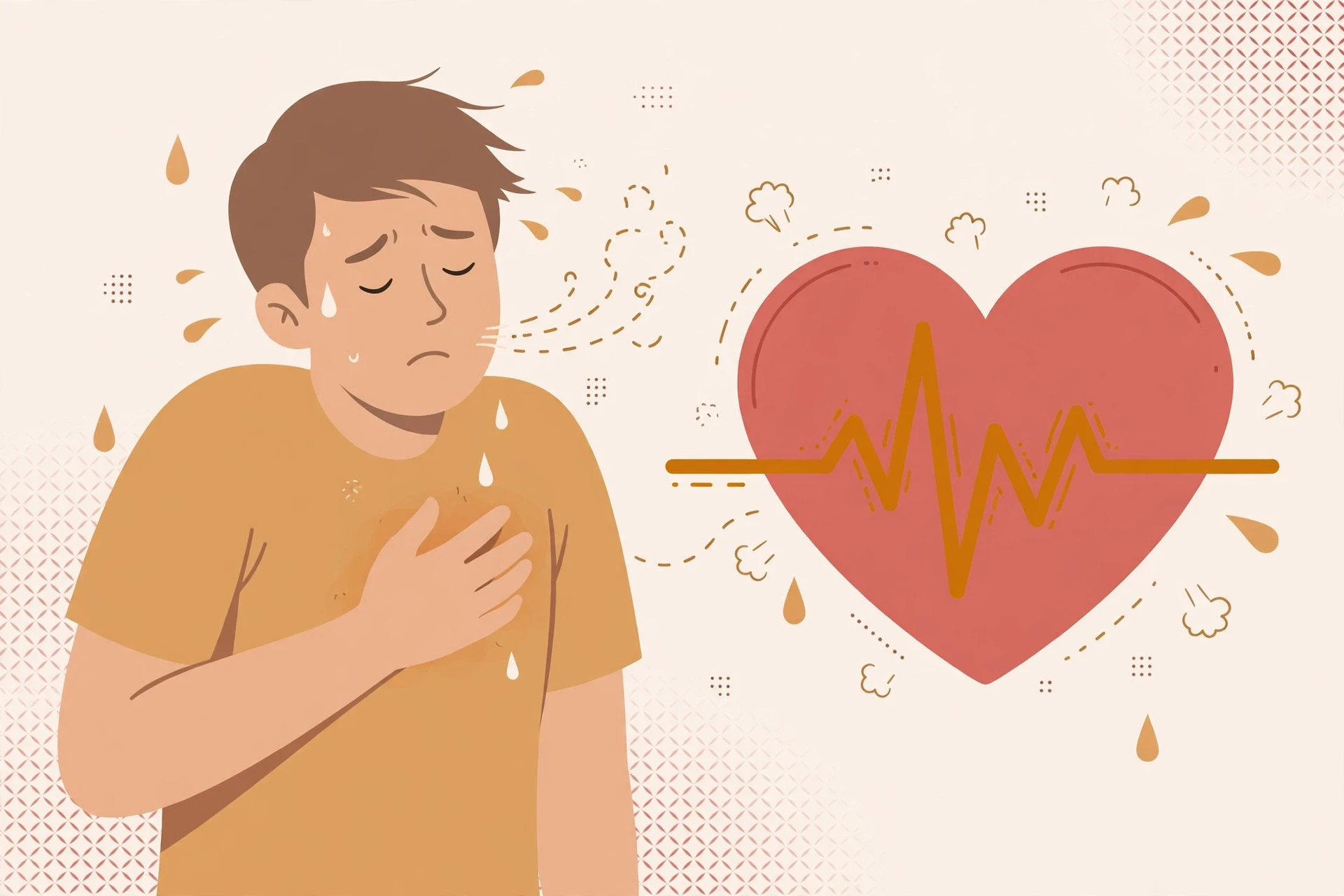
One more thing: heart disease and stroke share the same damaged vessels, so the warning signs of one are a warning about the other. If you want to know what a stroke looks like in its first minutes, read our guide to the warning signs of stroke. Knowing both sets of signs is one of the most practical things a family can do.
If you think you or someone near you is having a heart attack, call emergency services immediately. Do not wait to see if it passes, and do not drive yourself to hospital.
7. Prevention: The Daily Work That Protects Your Heart
Prevention is not a single dramatic act. It is a hundred small decisions, repeated, that keep artery walls smooth and the heart strong. The CDC puts it plainly: by living a healthy lifestyle, you can help keep your blood pressure, cholesterol, and blood sugar normal and lower your risk of heart disease and heart attack. Here is what that looks like in practice.
7.1 Food: eat like your arteries depend on it — because they do
No single food prevents heart disease, and no single food causes it. The pattern is what matters. Decades of research point the same way: diets rich in plants, whole grains, fish, and healthy fats protect the heart, while diets heavy in processed food, salt, sugar, and saturated fat damage it.
Eat more: vegetables, fruit, whole grains, beans and lentils, nuts and seeds, olive oil, and oily fish such as salmon and sardines.
Eat less: processed meats, fried food, sugary drinks, refined grains, and foods high in salt.
Watch the salt. Most salt in modern diets comes from processed food and restaurant meals, not the salt shaker. Cutting back lowers blood pressure for most people.
Choose your fats. Replace butter and fatty meats with olive oil, nuts, and fish more often. This is not about eating less fat — it is about eating better fat.
The Mediterranean and DASH eating patterns are the two most studied heart-protective diets, and both are built on the same simple idea: real food, mostly plants, with healthy fats and very little processing. Our guide to foods that lower cholesterol gives concrete examples, and the anti-inflammatory diet explains how food choices can calm the chronic inflammation that damages arteries.
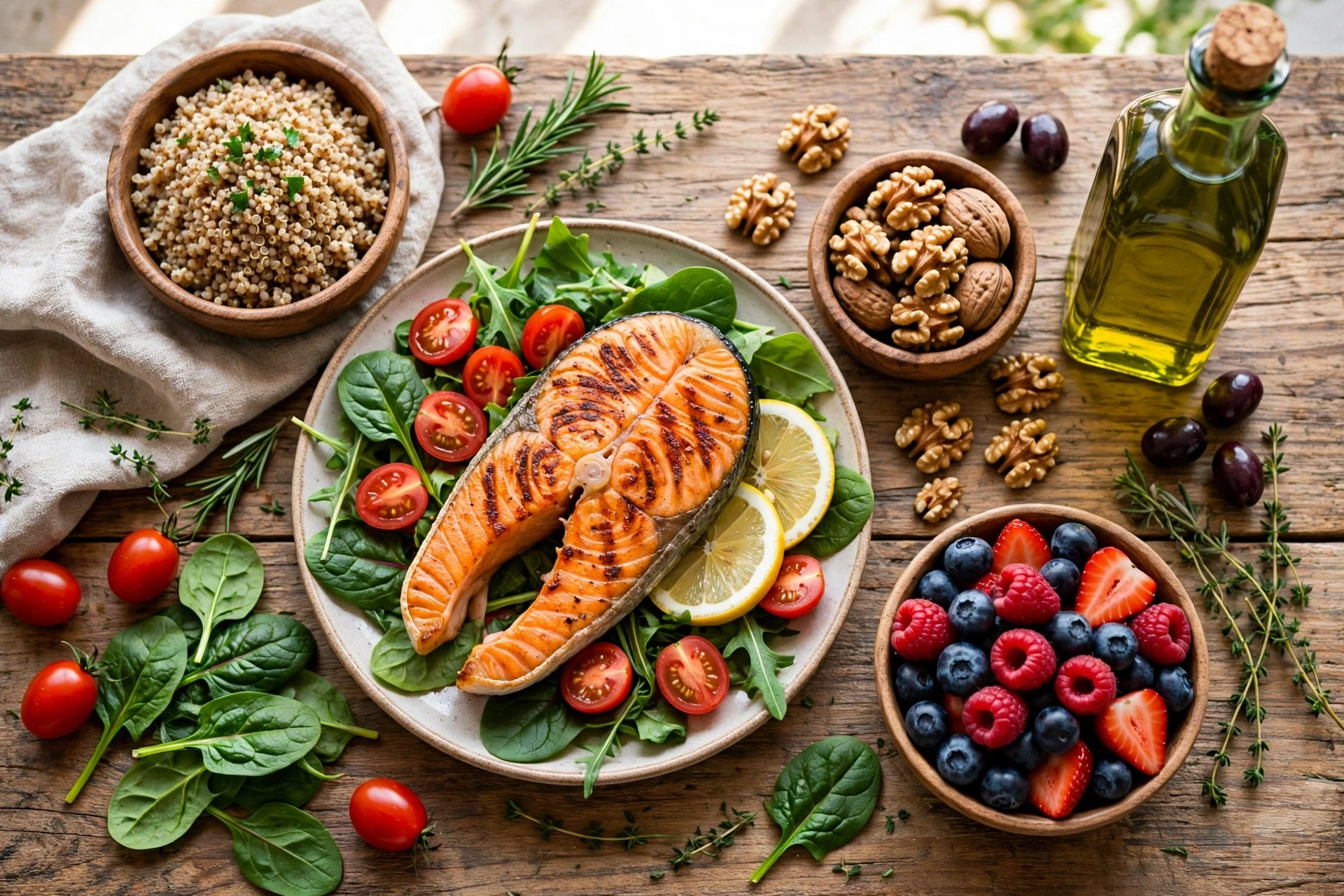
I used to think of diet advice as joyless. Then a colleague of mine — a cardiologist who had spent years telling patients to eat better — started cooking one new heart-healthy recipe a week and bringing it to the lab. The food was genuinely good: grilled fish with lemon, bean stews, salads with walnuts and olive oil. His point, which stayed with me, was that prevention fails when it feels like punishment. It works when it tastes like something you would choose anyway.
7.2 Movement: the cheapest heart medicine there is
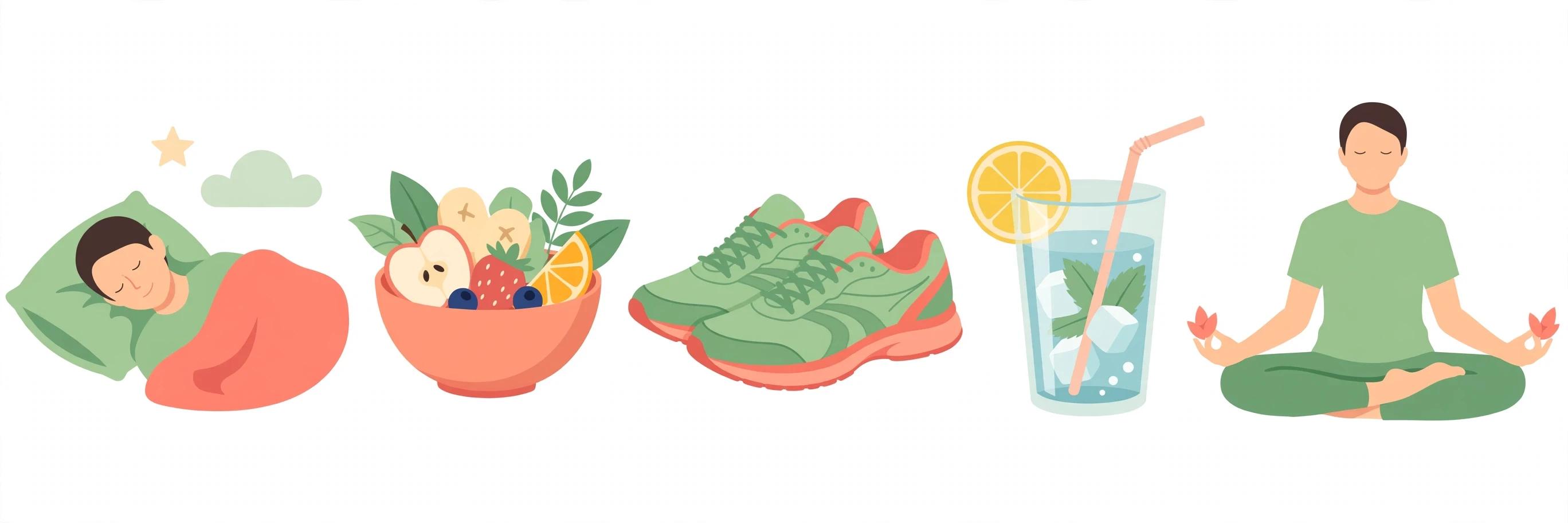
Regular physical activity strengthens the heart muscle, lowers blood pressure, improves cholesterol, helps control blood sugar, and supports a healthy weight. It does all of this at once, which no single pill can match. The general target recommended by public health authorities is at least 150 minutes of moderate-intensity activity a week — brisk walking counts — plus muscle-strengthening activity on two days.
That number sounds large until you break it down: thirty minutes, five days a week. A brisk walk to the shops. Cycling. Swimming. Dancing in the kitchen. The best exercise for your heart is the one you will actually do next week and the week after.

A word of honesty here: starting is the hard part, especially if you have been inactive for years or your knees complain. Start small — ten minutes a day — and build up. If joint pain is the barrier, low-impact options such as swimming, cycling, and walking on soft ground protect the heart without punishing the joints. And if you have existing heart disease, chest pain on exertion, or have been told to limit activity, talk with your doctor before starting a new exercise programme.
7.3 Sleep, stress, and quitting smoking
Sleep. Aim for seven to nine hours. The heart slows, blood pressure dips, and repair work happens overnight. If you snore loudly and wake up exhausted, ask your doctor about sleep apnoea — it is common, treatable, and a real risk factor when ignored.
Stress. You cannot remove stress from life, but you can change how much of it lives in your body. Regular movement, time outdoors, breathing exercises, and protecting real downtime all lower the stress hormones that raise blood pressure and blood sugar. The goal is not a stress-free life. It is a life with recovery built in.
Quitting smoking. If you smoke, quitting is the single most powerful step you can take. The benefits begin within weeks: blood pressure and heart rate settle, and the risk of a heart attack starts falling. It is hard — nicotine is genuinely addictive — so use the help that exists: your doctor, quitlines, nicotine replacement, and support groups. Asking for help is not weakness. It is strategy.
7.4 Know your numbers
You cannot manage what you do not measure. Four numbers tell most of the story:
Blood pressure. The general goal is below 120/80 mmHg for most adults, though your doctor may set a different target for you. Check it at least once a year — more often if it has ever been high. Our guide to high blood pressure management explains the readings in detail.
Cholesterol. A blood test measures total cholesterol, LDL ("bad"), HDL ("good"), and triglycerides. The CDC recommends testing at least once every four to six years for adults, and more often if you have high cholesterol or a family history of it.
Blood sugar. Fasting blood sugar and HbA1c reveal whether diabetes or prediabetes is developing — often years before symptoms appear.
Weight and waist size. Body mass index is a rough guide, but waist circumference tells you more about the dangerous deep belly fat.
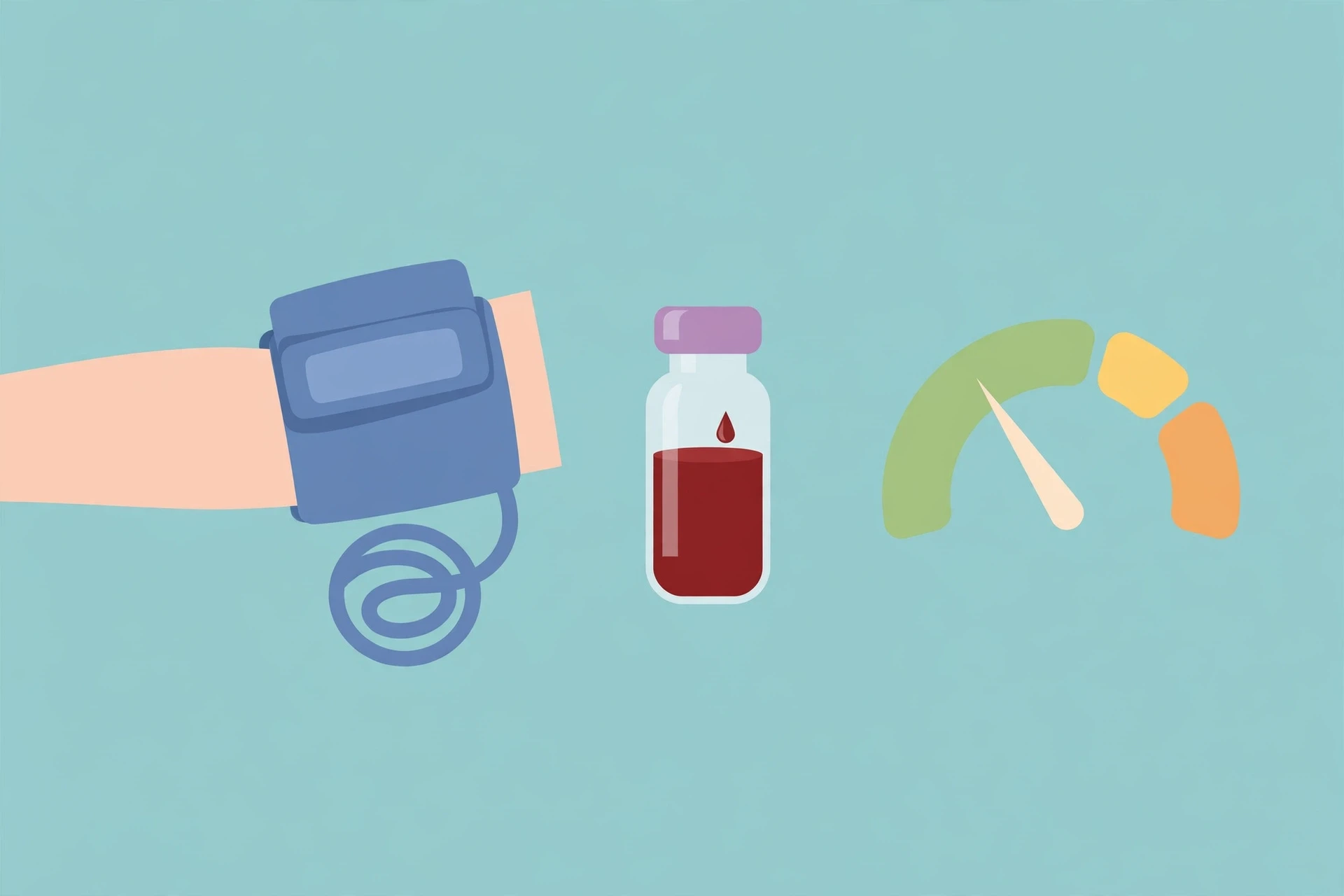
I check my own blood pressure at home now, and I will admit the first reading surprised me. It was higher than I expected — not dangerous, but higher than the number I had been carrying around in my head from a checkup years earlier. That is the quiet lesson of this section: your numbers change over time, and the number in your head is always out of date. Measure them. Write them down. Bring them to your appointments. It is the least dramatic and most useful thing in this whole article.
8. What Modern Research Is Learning
Heart disease research is moving, and some of the newest directions are genuinely exciting — though they deserve honest framing. Researchers are still working out how much of heart disease is driven by chronic inflammation versus cholesterol alone, and new classes of medicines that lower cholesterol dramatically are changing what treatment looks like for people at the highest risk. Imaging is getting better at spotting dangerous plaque before it ruptures, rather than only measuring how narrow an artery has become. And the role of the gut microbiome — the bacteria living in your digestive system — in heart health is an active area of study, with early findings suggesting that what those bacteria do with the food you eat can influence inflammation and cholesterol.
None of this changes the basics. The newest science keeps pointing back to the same foundations: blood pressure, cholesterol, blood sugar, smoking, activity, sleep, and weight. What research is doing is explaining why those foundations matter at a deeper level, and finding better tools for the people whose risk stays high even when they do everything right. If a headline ever promises a single breakthrough that makes lifestyle irrelevant, treat it with suspicion. The heart does not work that way.
9. Common Mistakes and Misconceptions
"Heart disease is only a problem for old men." It affects women too — and women's symptoms are missed more often. It also starts in young adulthood, silently, even when symptoms wait until later.
"I feel fine, so my heart must be fine." Heart disease is famously silent. High blood pressure, high cholesterol, and early plaque cause no symptoms at all. Feeling fine proves nothing.
"It runs in my family, so there is nothing I can do." Family history raises risk, but it does not fix it. Lifestyle changes help people with a family history at least as much as anyone else — arguably more, because they have more risk to reduce.
"One good habit cancels out a bad one." Exercise does not cancel out smoking. A healthy diet does not cancel out untreated high blood pressure. The factors multiply; so does the benefit of fixing each one.
"Heart disease is all about cholesterol." Cholesterol matters enormously, but blood pressure, blood sugar, smoking, and inflammation matter too. Focusing on one number while ignoring the others is a common and costly mistake.
"Prevention starts at fifty." Plaque begins building in young adulthood. The earlier the habits start, the less there is to undo — and it is never too late to start either. Both are true at once.
10. A Heart Worth Looking After
My friend's father survived. He came home from hospital with a stent, a bag of medicines, and a long list of changes to make — and, to his family's credit, he made most of them. He walks every morning now. He knows his blood pressure numbers. He quit smoking after thirty years. When I spoke to him months later, he said something I have not forgotten: "I thought a heart attack would feel like a warning. It felt like an ending. I wish someone had told me the warning was the twenty years before."
That is the whole point of this article. Heart disease is common, it is serious, and it is largely built from causes we understand — high blood pressure, high cholesterol, smoking, diabetes, inactivity, poor diet, stress, and poor sleep, stacked on top of age and family history. A large share of that risk sits in factors you can change, and the changes that matter are not heroic. They are ordinary: food that is mostly plants, movement every day, sleep, not smoking, and knowing your numbers.
Your heart has been beating since before you were born, without a single day off. It will keep going as long as it can. The least we can do is give it a fair chance — and the earlier we start, the more difference it makes. If you take one thing from this article, let it be this: do not wait for a warning. Get your numbers checked, pick one habit to change this week, and keep going. Your future self, sitting at a family lunch twenty years from now, will be glad you did.
For the longer view — how heart health fits into a longer, healthier life overall — see our article on longevity and healthy aging. The heart is where a long life starts.
Frequently Asked Questions
What is the main cause of heart disease?
There is no single main cause. The most common type, coronary artery disease, is caused by atherosclerosis — plaque building up inside the artery walls — and that buildup is driven mainly by high blood pressure, high cholesterol, smoking, and diabetes, often working together. Other types of heart disease have different causes, including inherited conditions, infections, and valve problems.
Can heart disease be prevented?
A large share of it can. Not smoking, staying active, eating a heart-healthy diet, maintaining a healthy weight, limiting alcohol, sleeping well, and keeping blood pressure, cholesterol, and blood sugar under control address most of the modifiable risk. Some risk — age and family history — cannot be removed, but it can be managed with earlier screening and treatment.
What are the early warning signs of heart disease?
Early heart disease often has no symptoms at all, which is why regular checkups matter. When symptoms do appear, they include chest pain or pressure (especially during exertion), shortness of breath, unusual fatigue, dizziness, palpitations, and swelling in the legs or ankles. Sudden chest pressure, pain spreading to the arm or jaw, breathlessness, and cold sweats are emergency signs — call emergency services immediately.
Is heart disease hereditary?
Partly. Having a parent or sibling who developed heart disease early raises your risk, because genes influence cholesterol, blood pressure, and how the body handles fat and sugar. But inherited risk is not destiny: lifestyle changes and, when needed, medication reduce risk in people with a family history just as they do in everyone else. If heart disease runs in your family, tell your doctor and start cholesterol and blood pressure checks earlier.
What foods are best for preventing heart disease?
The pattern matters more than any single food: plenty of vegetables, fruit, whole grains, beans and lentils, nuts, olive oil, and oily fish such as salmon and sardines, with less processed meat, fried food, sugary drinks, and salt. The Mediterranean and DASH eating patterns are the most studied heart-protective diets. Our guide to foods that lower cholesterol has concrete examples.
At what age should I start worrying about heart disease?
Earlier than most people think. Plaque can begin building in young adulthood, so healthy habits matter from your twenties onward. Blood pressure should be checked at least once a year as an adult, and cholesterol tested at least every four to six years — more often if you have risk factors or a family history. It is never too late to start either: the benefits of quitting smoking, moving more, and controlling blood pressure begin within weeks and months at any age.
Sources
National Heart, Lung, and Blood Institute (NHLBI) — What Is Coronary Heart Disease? https://www.nhlbi.nih.gov/health/coronary-heart-disease
Centers for Disease Control and Prevention (CDC) — About Heart Disease. https://www.cdc.gov/heart-disease/about/index.html
Centers for Disease Control and Prevention (CDC) — Preventing Heart Disease. https://www.cdc.gov/heart-disease/prevention/index.html
Mayo Clinic — Heart disease: Symptoms and causes. https://www.mayoclinic.org/diseases-conditions/heart-disease/symptoms-causes/syc-20353118
Cleveland Clinic — Heart Disease: Symptoms & Causes. https://my.clevelandclinic.org/health/diseases/24129-heart-disease
American Heart Association — What Is Cardiovascular Disease? https://www.heart.org/en/health-topics/consumer-healthcare/what-is-cardiovascular-disease