

1. The Classroom That Would Not Sit Still
Picture a classroom on an ordinary Tuesday morning. Thirty children sit at their desks with the same worksheet in front of them. Twenty-nine of them are working, or at least pretending to work. One boy is staring out of the window at a sparrow on a branch. He has been staring for four minutes. His pencil has not moved. His teacher has already said his name twice.
Later, when the worksheets are collected, his is blank except for his name, written twice, once in the wrong place. The teacher writes a note home. The note says he is bright but does not apply himself. His parents read it at the kitchen table and wonder what is wrong with him. He wonders the same thing, and he is eight years old.
I have sat in rooms with families telling versions of this story for years, and the detail that always stays with me is not the blank worksheet. It is the look on the child's face when someone finally explains what is happening inside his head. Relief, mostly. Then anger, sometimes, that nobody explained it sooner. Because the boy at the window is not lazy. He is not stupid. He is not badly behaved. His brain is running a different kind of attention, and once you understand the machinery behind it, almost everything about his behaviour starts to make sense.
This article answers four questions, the same four people type into search engines when they first suspect ADHD might explain something in their life or their child's life. What causes ADHD? Is ADHD genetic? Does sugar cause ADHD? And what does dopamine do in ADHD? The answers are longer than a single sentence and more interesting than a list. They run through twin studies and brain scans, a 1937 accident in a Rhode Island hospital, a meta-analysis that killed a famous myth, and a chemical messenger that turns out to be less about pleasure than about getting started.
Here is the short version, before the detail begins. ADHD — attention-deficit/hyperactivity disorder — is a neurodevelopmental condition, which means it comes from the way the brain develops, not from bad parenting, too much sugar, or too much television. It affects about one child in nine in the United States and about one adult in seventeen. It is one of the most heritable conditions in psychiatry: twin studies put the figure at roughly 70 to 80 percent. It involves the prefrontal cortex, the brain region that plans, organises, and holds back impulses, and two chemical messengers, dopamine and norepinephrine, that tune that region the way a radio tuner finds a station. Sugar does not cause it. The evidence on that point is unusually clear. And the treatments that work best — stimulant medicines and behavioural training — work because they act directly on the same circuits that are underpowered in the first place.
That is the outline. The rest of this article is the evidence, the mechanisms, the myths, and the practical reality of living with a brain that pays attention differently.
1.1 The answer in short: what is ADHD?
ADHD is a persistent pattern of inattention, hyperactivity, and impulsivity that is out of step with a person's age and that interferes with daily life — at school, at work, at home, and in relationships. The key words in that definition are persistent and interfering. Everyone loses their keys, zones out in a boring meeting, or blurts out something they regret. In ADHD, these things happen far more often, across many situations, for months and years, and they cost the person real things: marks, jobs, friendships, self-respect.
It is a condition of regulation, not of ability. Intelligence in ADHD is distributed the same way it is in everyone else. What differs is the brain's ability to direct attention where it is needed, to hold information in mind while using it, to resist an impulse long enough to think, and to keep going at a task whose reward is distant. When the task is urgent, interesting, or new, a person with ADHD can focus with an intensity that surprises everyone, including themselves. When the task is dull, slow, or far from any payoff, focus collapses. That inconsistency is the signature of the condition, and it is also the reason it is so often misunderstood. A child who can play a video game for three hours but cannot finish ten minutes of homework looks, from the outside, like a child who is choosing not to try. The science says something else is going on.
2. What ADHD Actually Is
Start with the name, because the name is misleading in two ways. First, "attention deficit" suggests that people with ADHD cannot pay attention. They can. What they struggle with is regulating attention — aiming it, sustaining it, and switching it when the situation demands. Attention in ADHD is not absent. It is unruly. It is captured too easily by whatever is new, bright, or moving, and it is hard to hold on a target that offers no immediate reward. A better name might have been "attention regulation disorder", and some researchers have argued exactly that, but the old name has stuck.
Second, the name suggests hyperactivity is the core of the condition. It is not, or not for everyone. Many people with ADHD are not visibly hyperactive at all. They are the quiet ones, staring out of windows, losing track of instructions, drifting through the school day without ever causing a disturbance. They are the ones most often missed, and a whole section of this article is devoted to them.
Under the current diagnostic manual, the DSM-5-TR, ADHD is defined by two groups of traits. The first group is inattention: failing to give close attention to details, difficulty sustaining attention, not listening when spoken to directly, failing to follow through on instructions, difficulty organising tasks, avoiding tasks that need sustained mental effort, losing things, being easily distracted, and forgetfulness in daily activities. The second group is hyperactivity and impulsivity: fidgeting, leaving your seat when you are expected to stay, running or climbing in inappropriate situations, being unable to play quietly, being "on the go" as if driven by a motor, talking excessively, blurting out answers, difficulty waiting your turn, and interrupting or intruding on others. A diagnosis requires enough of these traits, present for at least six months, in more than one setting, with symptoms that began before the age of twelve. The full criteria, in plain language, are laid out in section 11.
ADHD is classified as a neurodevelopmental disorder, in the same family as autism. That classification carries a specific meaning: the condition arises from differences in how the brain develops, it begins in childhood, and it shapes the way a person processes information for life. It is not a disease you catch, not a phase a child goes through, and not a label for bad behaviour. Brain imaging studies consistently find differences in the size, connectivity, and activity of brain regions involved in attention and self-control, and those differences are present in childhood and, in many people, persist into adulthood.
One of the most useful things I learned early on, talking to adults who had only just been diagnosed, is that ADHD is best understood as a problem of performance, not of knowledge. Ask a person with ADHD what they should do — finish the report, pay the bill, start the essay — and they will usually tell you, accurately and in detail. They know. The difficulty is in doing it at the right time, in the right order, without getting pulled away. The gap between knowing and doing is where ADHD lives. That gap has a name in the research literature: executive dysfunction. It is the thread that runs through this whole article.
2.1 A name that misleads
The history of the name is worth a short detour, because it explains why the public picture of ADHD is so narrow. The name itself has changed three times since 1968, each change reflecting a better understanding — section 20 tells that story in full. Each renaming brought a clearer picture, and each one left a misunderstanding behind. The 1968 name left the public with the image of the hyperactive boy. The 1980 split left a generation of people believing that "ADD" and "ADHD" were two different conditions. They are not. They are presentations of one condition, and the manual now calls them exactly that: presentations, not separate disorders.
The other misleading idea the name carries is that ADHD is a deficit of attention full stop. It is not. People with ADHD often report the opposite problem: too much attention, paid to the wrong thing, at the wrong time. A person with ADHD can become so absorbed in a task they love that they forget to eat, forget an appointment, and lose track of hours. Researchers call this hyperfocus. It is not in the diagnostic criteria, and it is not a superpower — it is the same regulation problem, pointed in the other direction. When the brain's attention system cannot be steered, it is steered by whatever is most stimulating in the room. Sometimes that is the worksheet. More often it is the sparrow.
3. How Common Is ADHD?
ADHD is one of the most common neurodevelopmental conditions on earth. The exact number depends on who you count, where you count them, and what you count as a case — diagnosed by a clinician, or showing symptoms, or meeting full criteria in a research interview. Those are different things, and the numbers differ accordingly. Keeping them straight matters, because the gap between them is where most arguments about ADHD begin.
Start with the most solid, most recent figure. According to the US Centers for Disease Control and Prevention, using data collected in 2024 from the National Survey of Children's Health, an estimated 7 million American children aged 3 to 17 — 11.7 percent, about one child in nine — have a current ADHD diagnosis. Boys are diagnosed roughly twice as often as girls: 13 percent of boys against 7 percent of girls in the 2022–2023 data. About six in ten of those children have moderate or severe ADHD, not a mild form.
Worldwide, the pooled estimates for children are lower, around 5 to 7 percent. A large 2023 meta-analysis put the figure at 7.6 percent for children aged 3 to 12 and 5.6 percent for adolescents aged 12 to 18. The American figure is higher than the global average, and that difference has been argued over for years. Part of it is real: American clinicians diagnose more readily, American parents seek evaluation more often, and American schools are quicker to refer. Part of it is measurement: the American numbers come from parent surveys asking whether a clinician has ever given the diagnosis, while the global pooled figures come from studies that apply diagnostic criteria directly. Both methods have flaws. Neither suggests ADHD is rare anywhere. In every country where researchers have looked carefully, they have found it.
Adults tell a similar story, with a twist. In the United States, 6.0 percent of adults — about 15.5 million people — report a current ADHD diagnosis, according to CDC survey data collected in late 2023. More than half of those adults were diagnosed as adults, not as children. Globally, a 2021 meta-analysis estimated that 6.76 percent of adults — roughly 366 million people — have ADHD symptoms, while 2.58 percent, about 140 million, have ADHD that has persisted from childhood. The two numbers measure different things: symptoms versus a full, persistent diagnosis. Older pooled estimates of diagnosed adult ADHD, around 2.8 to 3.1 percent, sit between them. The honest summary is that somewhere between one adult in forty and one in fifteen lives with ADHD, depending on how strictly you count, and that the number is rising — not because adult brains have changed, but because adults who were missed as children are finally being recognised.

3.1 Why the numbers keep climbing
Three forces are pushing the numbers up, and none of them is mysterious. First, the diagnostic criteria have widened. In 2013 the manual pushed the age by which symptoms must have appeared from seven to twelve, and lowered the adult symptom threshold from six to five. Both changes were deliberate: they recognised that ADHD looks quieter in adults and that many children, especially girls, are not flagged before the age of seven. Second, awareness has grown enormously. Teachers, parents, and clinicians now know what inattentive ADHD looks like, and adults are seeking assessment in numbers that would have been unimaginable twenty years ago. Third, the stigma has thinned. A diagnosis that once felt like a verdict now feels, to many families, like an explanation.
None of this means ADHD is being invented. The condition has been described, under various names, for more than two centuries. What has changed is our ability to see it. That distinction matters, because the rising numbers are regularly used to argue that ADHD is overdiagnosed. Overdiagnosis does happen — some children are diagnosed who do not meet the criteria, and some adults are diagnosed on the basis of a questionnaire alone. But the best population studies, which apply the criteria carefully rather than counting clinic visits, still find ADHD in roughly one child in twenty worldwide. The gap between that figure and the American 11.7 percent is a question about diagnostic practice, not about whether the condition exists.
There is also a quieter story in the numbers: the treatment gap. In 2022, about 30 percent of American children with current ADHD received neither medication nor behaviour treatment, up from 23 percent in 2016. About 28 percent received both (it was about a third in 2016). Two million children with a diagnosis received no ADHD-specific treatment at all. Whatever one thinks about the rising diagnosis rate, the treatment figures show that recognition and care are not the same thing.
4. What Causes ADHD?
Ask a parent what caused their child's ADHD and you will often hear guilt in the answer. Too much television. Too little discipline. Something eaten, or not eaten, during pregnancy. The science gives a clearer and kinder answer: ADHD is caused mainly by genes, shaped by the way the brain develops, and nudged — sometimes, slightly — by a small number of early-life exposures. No single cause explains it. There is no one gene, no one event, no one parenting choice that produces ADHD.
The most honest metaphor is a recipe with many ingredients. Genes contribute the largest share. Brain development contributes the structure. A handful of environmental factors — being born very early, very low birth weight, severe early deprivation, a serious head injury, heavy exposure to lead — can raise the odds. And a great deal of what people assume causes ADHD contributes nothing at all. Sugar, vaccines, television, and parenting style have all been tested, carefully, and none of them causes ADHD. The evidence for each of those is laid out later in this article, because the myths deserve a proper burial rather than a passing dismissal.
What researchers still do not know is exactly how the ingredients combine in any one person. Two children with the same genetic loading can end up with very different levels of difficulty, depending on the environment they grow up in, the support they receive, and plain chance. Genes load the dice. They do not determine the throw.
It also helps to say plainly what ADHD is not caused by, because the false causes cause real harm. A mother who believes her child's ADHD is her fault for letting him watch too much television will spend her energy on guilt instead of on the things that actually help: structure, routine, sleep, and evidence-based treatment. A father who believes his daughter's ADHD came from sugar will cut out birthday cake and miss the fact that she cannot organise her school bag. Blame is not a treatment. Understanding is.
5. Is ADHD Genetic?
Yes — more than almost any other condition in psychiatry. If there is one fact about ADHD that the research has settled, it is this one. Twin studies, repeated across decades and countries, consistently estimate the heritability of ADHD at roughly 70 to 80 percent. A meta-analysis of 37 twin studies put the mean estimate at 74 percent, with some models reaching 80 percent. That places ADHD among the most heritable conditions studied in medicine — comparable to height, and higher than the heritability of depression or anxiety.
But heritability is one of the most misunderstood numbers in science, so it is worth pausing on what it actually means. Heritability describes variation across a population, not the cause of one person's condition. Saying ADHD is 74 percent heritable does not mean that 74 percent of any individual child's ADHD is caused by their genes and 26 percent by their environment. It means that, in the population studied, about three-quarters of the differences between people in ADHD traits can be traced to genetic differences. In a different environment, the number could be different. Heritability is a property of a population in a place and time, not a fixed property of a disorder.
The twin-study logic is simple and elegant. Identical twins share essentially all their DNA. Fraternal twins share about half, the same as ordinary siblings. If a trait is strongly genetic, identical twins should resemble each other far more than fraternal twins do. For ADHD, they do. When one identical twin has ADHD, the other is far more likely to have it too than when one fraternal twin has it. Family studies point the same way: if one parent has ADHD, the chance that their child also has ADHD is roughly 40 to 50 percent. ADHD runs in families the way height runs in families — visibly, reliably, and without anyone choosing it.
The obvious question is which genes. The answer is humbling: not one, but thousands. ADHD is massively polygenic. Genome-wide association studies, which scan the entire genome of tens of thousands of people, have found risk variants one at a time, each contributing a tiny effect. The first such study to find anything, published in 2019, identified 12 risk regions from 20,183 cases and 35,191 controls. A larger study in 2023 identified 27 regions from 38,691 cases and 186,843 controls, pointing to genes involved in brain development and synaptic function, including FOXP2 and MEF2C. A still larger analysis in 2025 reported 39 regions. The pattern is consistent: more data, more regions, each one small.

That pattern creates a puzzle called missing heritability. Twin studies say genetics explains 70 to 80 percent of the variation in ADHD. But when researchers add up the effects of all the common genetic variants identified so far, they account for only about 14 to 22 percent. The gap is not a contradiction. It is a measurement problem. Most of the genetic influence comes from thousands of variants too small to identify individually at current sample sizes, from rare variants that standard studies miss, and from interactions between genes that simple additive models do not capture. Statistical modelling suggests roughly 7,300 common variants together account for most of the SNP-based heritability. The genes are there. They are just spread very thin.
Two older candidate genes still appear in popular accounts, and they deserve a careful note. DRD4, which codes for a dopamine receptor, and DAT1, which codes for the dopamine transporter — the protein that clears dopamine from the synapse — were among the most studied genes in ADHD research. Both showed associations in early studies, and both make biological sense, since both sit directly in the dopamine system. But their individual effects are small, and neither is necessary or sufficient for ADHD. They are part of the thousands, not the answer on their own.
The practical consequence of all this is worth stating plainly. There is no genetic test that diagnoses ADHD, and no genetic test that reliably predicts it. Polygenic risk scores — numbers that add up thousands of small variants into a single estimate — are becoming more informative as studies grow, but they are research tools, not clinical ones. A high score raises the odds; it does not settle anything about an individual child. Diagnosis remains clinical: a careful history, rating scales, and the criteria in section 11. Genes explain why ADHD runs in families. They do not replace the work of looking at the person in front of you.
5.1 The missing heritability gap
The gap between twin heritability and SNP heritability is sometimes used to argue that the genetics of ADHD has been overstated. That is the wrong conclusion. Twin studies and genome-wide studies measure different things in different ways. Twin studies estimate the total genetic contribution, including rare variants and gene-gene interactions. Genome-wide studies, as currently done, count only common variants, one at a time, additively. The gap is a statement about our tools, not about the biology. As sample sizes have grown — from twenty thousand cases to nearly forty thousand, and now beyond — the number of identified regions has grown with them, and the SNP heritability has crept upward. The trajectory points in one direction: the genetics is real, it is polygenic, and it will take very large studies to map it fully. What will not happen, on any honest reading of the evidence, is the discovery of a single ADHD gene. That gene does not exist.
6. The Environment's Real Role
Genes are the largest ingredient in ADHD, but they are not the only one. A minority of the risk — roughly 20 to 30 percent of the variation — comes from the environment, broadly defined to include everything from the womb to early childhood. The honest picture is that a few environmental factors genuinely raise the odds, several famous ones do not survive careful testing, and the difference between the two groups is a lesson in how science sorts correlation from cause.
The strongest environmental signal is being born early. In Swedish registry data, the odds of ADHD medication use rose steadily with immaturity: about 2.1 times higher for children born at 23 to 28 weeks of gestation, 1.6 times at 29 to 32 weeks, 1.4 times at 33 to 34 weeks, and 1.3 times at 35 to 36 weeks, compared with children born at 39 to 41 weeks. The pattern held even when researchers compared siblings born to the same mother, which rules out most family-level explanations. Low birth weight shows a similar pattern: within pairs of identical twins, the twin who weighed less at birth tended to show more ADHD symptoms. The likely mechanism is straightforward. The brain's attention circuits are still under construction in the final weeks of pregnancy, and being born early interrupts that construction.
Severe early deprivation is another genuine risk. In the English and Romanian Adoptees study, children who spent more than six months in severely depriving institutions developed ADHD at a rate of 29.3 percent by young adulthood, against 3.8 percent in the comparison group. The deprivation-related ADHD was mostly inattentive, and it affected girls as often as boys — a pattern quite different from ordinary ADHD. It is a reminder that the brain's attention systems are shaped by experience as well as by genes, and that extreme early experience can reshape them.
A severe head injury in childhood also raises the odds. In a meta-analysis of 24 studies, 35.5 percent of children who had suffered a severe brain injury met criteria for ADHD more than a year later — over six times the odds of children who had not been injured (odds ratio 6.25). But mild injury and concussion did not significantly raise later ADHD — and children who had a head injury already had more ADHD before the injury than other children, 16.0 percent against 10.8 percent. That last detail matters. ADHD itself raises the risk of injury, because impulsivity and inattention lead to more accidents. The arrow of causation runs both ways, and studies that ignore that end up blaming the injury for what the ADHD caused.
Lead exposure is linked to attention problems, and lead is a genuine neurotoxin with no safe level in children. It is best understood as one of many small risk factors rather than a main cause of ADHD. Heavy prenatal alcohol exposure is different in scale: ADHD occurs in about half of people with fetal alcohol spectrum disorder, roughly ten times the expected rate. But low to moderate prenatal alcohol intake shows no increase in ADHD symptoms, with an odds ratio of 0.94 in the pooled data. The dose matters, and the distinction between heavy exposure and a glass of wine is not a nicety — it is the finding.
Then there is the factor that looks guilty and is not: smoking in pregnancy. In ordinary population studies, children of mothers who smoked during pregnancy have roughly double the risk of ADHD. But when researchers compare siblings — children of the same mother, one exposed to smoking in pregnancy and one not — the association collapses. In Danish data, the hazard ratio fell from 2.01 to 1.07. In Swedish data, it fell from 2.50 to 0.84 for mothers who smoked heavily in pregnancy. The smoking was marking something else about the family — genes, stress, circumstances — rather than causing ADHD itself. Smoking in pregnancy harms babies in many well-proven ways, and nobody should smoke in pregnancy. But the careful studies say it is not why ADHD runs in families. That is an uncomfortable finding for anyone who likes simple stories, and it is exactly the kind of finding that separates a careful science from a moral one.
7. The Brain in ADHD: The Prefrontal Cortex
If you could watch a brain with ADHD at work, the most consistent difference you would see is in the front of the brain, just behind the forehead. That region is the prefrontal cortex, and it is the seat of what psychologists call executive function: the cluster of skills that lets a person plan a task, hold information in mind while using it, resist an impulse, switch between tasks, and regulate emotion. In ADHD, the prefrontal cortex is, on average, smaller in volume, less active during tasks that demand sustained attention, and slower to mature. The differences are averages across groups, not a test for an individual — no brain scan diagnoses ADHD — but they are among the most replicated findings in the field.
The prefrontal cortex is not one thing. It has neighbourhoods, and each one does a different job. The dorsolateral prefrontal cortex, on the outer surface toward the side, handles working memory and cognitive flexibility — holding a phone number in mind while dialling it, or switching from one rule to another when the game changes. The anterior cingulate cortex, tucked into the fold on the inner surface, flags errors and conflicts, and helps redirect attention when something has gone wrong. The orbitofrontal cortex, above the eyes, evaluates rewards and helps suppress impulses that would feel good now and cost later. All three show differences in ADHD, and all three are wired into the same circuits: loops that run from the prefrontal cortex down to the striatum, a cluster of structures deep in the brain that gates movement and motivation, then through the thalamus and back up to the cortex. When those loops run well, attention is steady and behaviour is measured. When they run weakly, attention wanders and impulses escape.
I think of the prefrontal cortex as a conductor. An orchestra can have superb musicians and still produce noise if nobody is conducting — if the strings start before the brass is ready, if the tempo drifts, if no one signals the quiet passage. The conductor does not make the music. The musicians do. But the conductor decides what happens when, and that timing is everything. In ADHD, the musicians are fine. The conductor is underpowered, or late, or easily distracted by a noise from the audience. The result is not silence. It is music that starts and stops, rushes and drags, and sometimes plays a different piece from the one on the stand.
That analogy also explains why people with ADHD can focus brilliantly on things they love. The conductor is not absent. The conductor responds to urgency, novelty, interest, and threat. Give the orchestra a piece it loves, and the conductor shows up. Give it a piece it finds dull, and the conductor wanders off. The variability is the point. ADHD is not a fixed deficit of attention. It is a problem of inconsistent access to it.
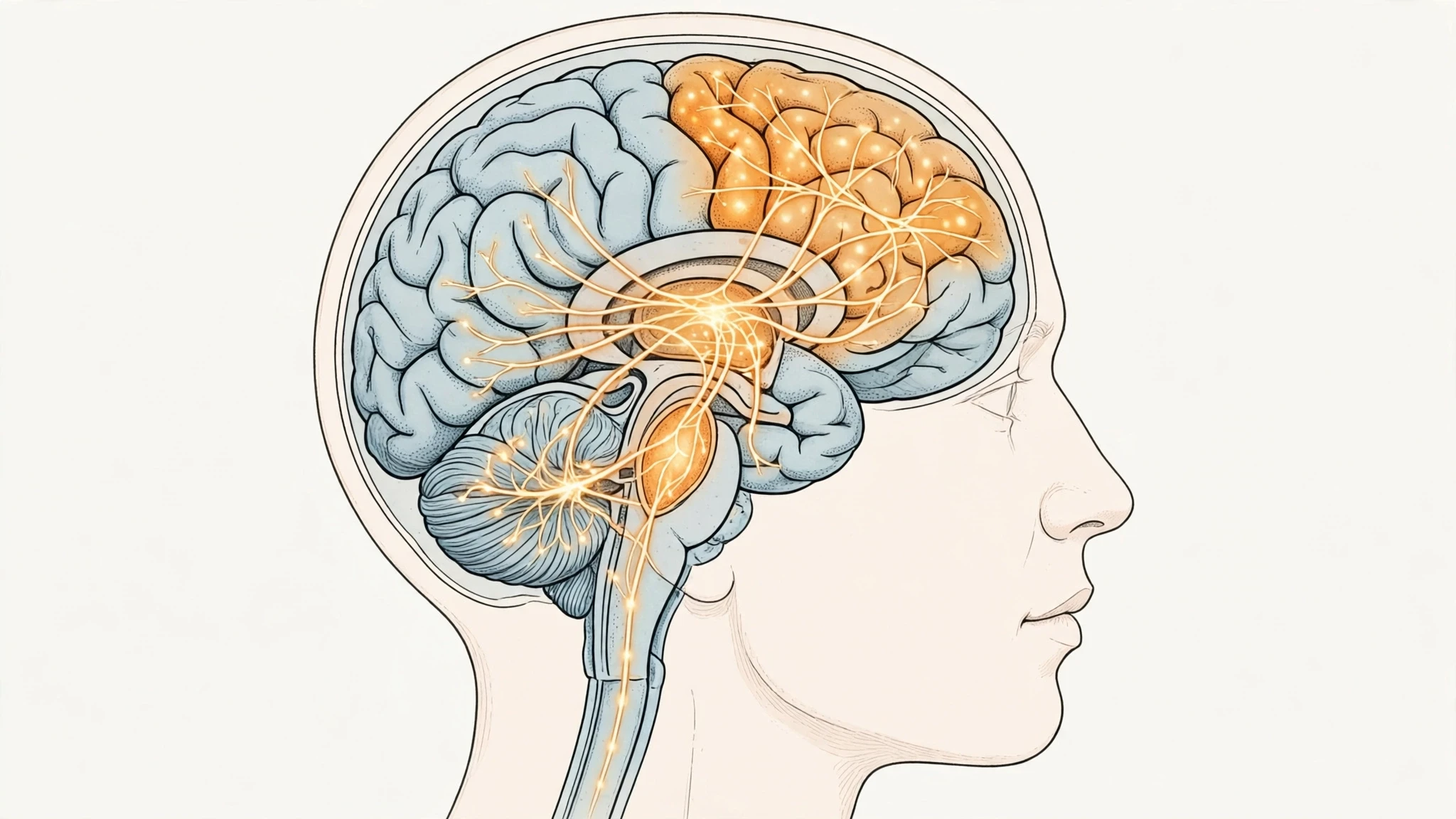
There is also a network story, and it is one of the most interesting developments in ADHD neuroscience. The brain has a "daydreaming" network, the default mode network, which becomes active when the mind wanders, and a set of task networks that become active when attention is directed outward. In most brains, these networks take turns: when one switches on, the other switches off. In ADHD, the handover is sloppy. The daydreaming network fails to switch off properly during tasks, and its activity leaks into moments when attention should be focused. The result is the familiar experience of reading the same paragraph four times, or losing the thread of a conversation mid-sentence. It is not that the person is not trying. It is that a competing network keeps intruding.
7.1 A brain that matures on a different schedule
One of the most famous brain-imaging findings in ADHD comes from a 2007 study at the US National Institute of Mental Health. Philip Shaw and colleagues scanned 223 children with ADHD and 223 matched controls, most of them more than once, and measured the thickness of the cortex — the brain's outer layer — at more than 40,000 points. They found that the sequence of maturation was the same in both groups: the cortex thickened and then thinned in the same order, from the back of the brain toward the front. But the timing was shifted. Half of the cortex reached its peak thickness at an average age of 10.5 years in children with ADHD, against 7.5 years in the comparison group — a lag of about three years. The delay was largest in the prefrontal cortex, reaching about five years in the middle frontal cortex. The only region that matured faster in ADHD was the motor cortex, by about four months. Shaw's conclusion was that ADHD is characterised by a delay in cortical maturation, not a deviation from it: the same brain, on a slower timetable.
That finding has shaped how many people think about ADHD, and it carries a hopeful implication: if the brain is late rather than different, it may catch up. And in some ways it does. Hyperactivity usually eases with age, and some children do outgrow the full diagnosis. But the honest update is that later, larger studies have found the delay smaller and less uniform than the original paper suggested. The three-year figure is an average from one cohort, and averages hide the children whose brains matured on schedule and the children whose differences were not a delay at all. The current view is more cautious: on average, prefrontal maturation runs late in ADHD, the delay is most marked in exactly the regions that support attention and self-control, and the pattern is real but not universal. A 2026 re-analysis of more than 26,000 scans from the ABCD study found that the apparent association between attention problems and cortical thinning disappeared entirely once sex differences were accounted for (O'Connor et al., PNAS 2026). A brain scan cannot date an individual child's brain, and it should never be used to promise parents that their child will simply grow out of it. Some do. Many do not, and the ones who do not still deserve support now, not a promise about later.
8. What Does Dopamine Do in ADHD?
Dopamine is the chemical most people have heard of in connection with ADHD, and it is also the most misunderstood. The popular version goes like this: ADHD is caused by too little dopamine, dopamine is the pleasure chemical, and stimulant medicines work by topping it up. Almost every word of that version is wrong in a way that matters.
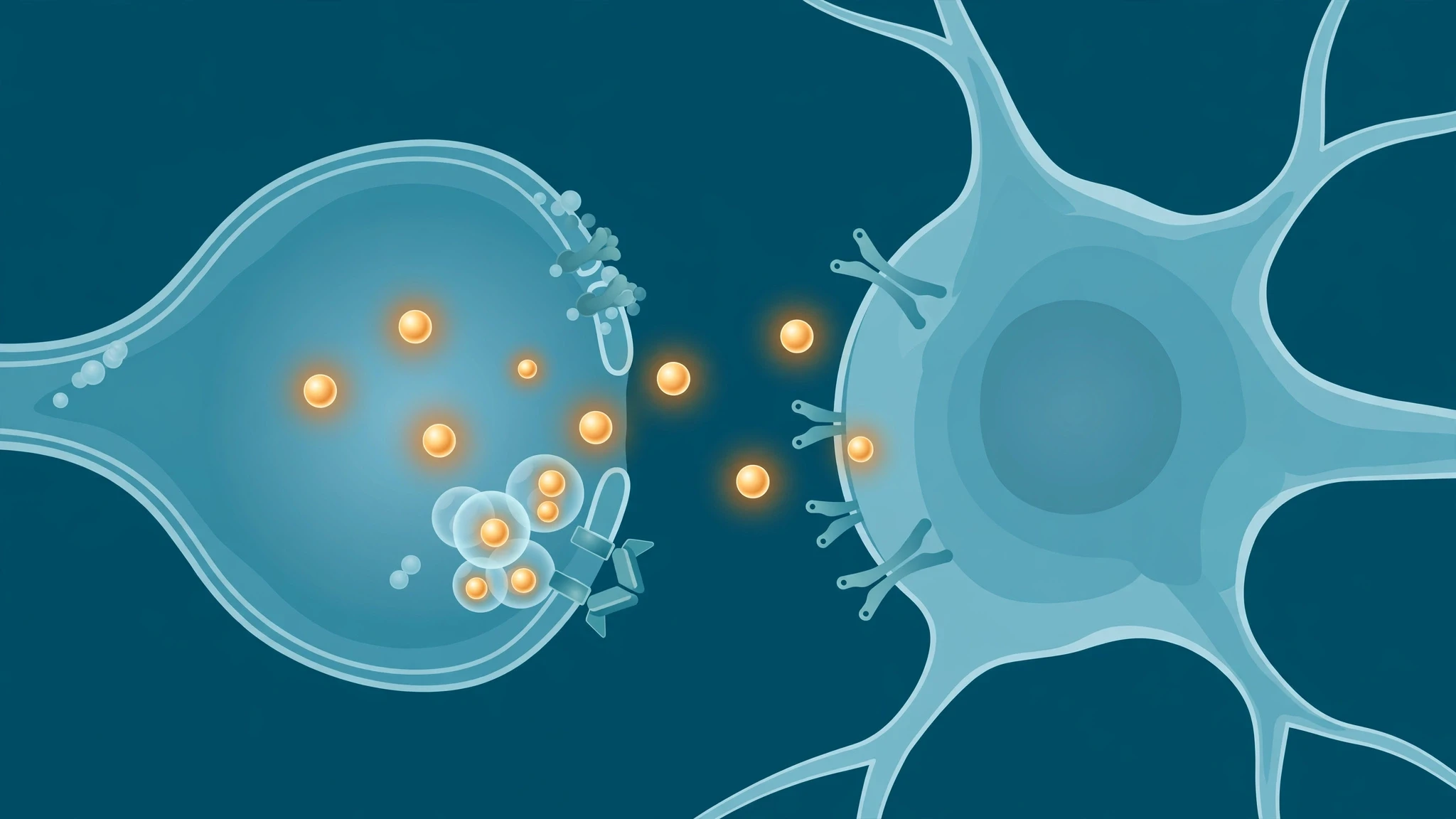
Dopamine is not primarily a pleasure chemical. It is a signal. It marks things as worth paying attention to, worth working for, worth remembering. It fires when something is better than expected, and it dips when something is worse than expected. It is the brain's way of saying "that mattered — do it again" or "that did not matter — move on". In the prefrontal cortex, dopamine does something more specific: it sharpens the signal and quiets the noise. A prefrontal neuron holding a phone number in mind needs dopamine at just the right level to keep that information stable and to suppress distracting inputs. Too little dopamine, and the signal degrades. Too much, and the noise gets amplified along with it. The relationship follows an inverted U: performance is best in the middle, and falls off on either side.
In ADHD, dopamine signalling is disrupted in two circuits that matter most. The first is the mesocortical pathway, which runs from the midbrain to the prefrontal cortex and supports working memory, planning, and attention. The second is the mesolimbic pathway, which runs to the striatum and the nucleus accumbens and supports motivation and reward. Brain imaging studies have found reduced dopamine transporter and receptor availability in these circuits in people with ADHD (Volkow et al. 2009), and separate studies have found reduced dopamine release in response to reward. The practical consequence is a reward system that is less responsive to delayed payoffs. A reward next week is worth much less, in dopamine terms, than the same reward right now. That is why a person with ADHD can work all night on a project due tomorrow and cannot start a project due next month. The deadline is doing the work that dopamine should be doing.
That is also why the most disabling symptom of ADHD, for many adults, is not distractibility. It is the inability to start. They know exactly what they need to do. They can describe it in detail. They want to do it. And they cannot make themselves begin. People with ADHD sometimes call this the "wall of awful" — the invisible barrier between intention and action that grows taller the longer a task is avoided. It looks like laziness from the outside. From the inside, it feels like trying to push a car with the handbrake on. Dopamine is the handbrake. When it is low, the car does not move, however hard you push, however much you want it to.
8.1 Norepinephrine: the filter
If dopamine is the signal, norepinephrine is the filter. Norepinephrine, also called noradrenaline, regulates arousal and alertness, and it helps the brain decide which inputs deserve attention and which can be ignored. It is released by a small structure in the brainstem called the locus coeruleus, which acts like a volume control for the whole cortex. When norepinephrine signalling is strong and well-tuned, the brain amplifies what matters and suppresses what does not. When it is weak, everything competes equally: the ticking clock, the hum of the fridge, the thought about lunch, the teacher's voice. Nothing stands out, so nothing can be followed.
Both chemicals concentrate heavily in the prefrontal cortex, and both follow the same inverted-U rule. Too little of either, and focus collapses. Too much, and the brain becomes jittery, anxious, and just as unable to concentrate. This is why stimulant medicines have a dose window: too little does nothing, the right amount sharpens focus, and too much makes a person wired, irritable, and unable to sleep. It is also why the popular idea of ADHD as a simple "dopamine deficiency" is misleading. The problem is not a single low number. It is a regulation problem across two interacting systems, in a brain region that needs both of them calibrated precisely, and the calibration differs from person to person. That variability is one reason the same medicine at the same dose can work beautifully for one person and badly for another.
9. Executive Function, Up Close
Executive function is the term researchers use for the set of mental skills that the prefrontal cortex runs, and it is worth meeting each skill individually, because "executive dysfunction" is abstract until you see it in a morning.
Working memory is the ability to hold information in mind while using it. It is what lets you remember a set of instructions long enough to carry them out, or hold the beginning of a sentence in mind while you reach its end. In ADHD, working memory is often weaker, and the weakness is specific: it is not that the person cannot remember things, but that the mental workspace is smaller and more easily wiped clean by a distraction. A teacher says, "Open your book to page 47, read the first two paragraphs, and answer questions three and four." A child with ADHD hears the first part, loses the second to a noise in the corridor, and sits with the book open, unsure what to do next. They are not being defiant. The instructions have already fallen out of the workspace.
Inhibition is the ability to stop yourself — to not blurt out the answer, to not grab the toy, to not send the email you will regret. It is the brake pedal of the brain, and in ADHD the brakes are weaker. The result is impulsivity: speaking before thinking, acting before considering consequences, spending money, interrupting, taking risks. In children, impulsivity looks like fidgeting and interrupting. In adults, it looks like quitting a job in a rage, or buying something unaffordable, or saying the thing that ends a friendship. The person usually knows, seconds later, that it was a mistake. Knowing afterwards is not the same as being able to stop beforehand.
Planning and organisation are the ability to break a large task into steps, order them, and carry them out over time. This is where ADHD does its quietest damage. A school project that takes three weeks is, for a person with ADHD, a task with no beginning and no end — just a distant deadline that does not feel real until it is tomorrow. The result is the familiar pattern: nothing for two weeks, then a frantic night, then a poor mark, then shame. The shame is the part people forget. Years of that pattern teach a person that they cannot be trusted with their own plans, and that lesson does more damage than any single failed project.
Time blindness is the name clinicians give to the difficulty people with ADHD have in sensing the passage of time. Ten minutes and an hour can feel the same. A task that will take twenty minutes feels as if it will take forever, so it is never started. A deadline next month feels as if it does not exist. This is not a metaphor. It is a measurable difference in how the ADHD brain estimates duration, and it explains why the most common advice given to people with ADHD — "just manage your time better" — is also the most useless. You cannot manage what you cannot perceive.
Emotional regulation is the last of the executive skills, and the one most often left out of descriptions of ADHD. People with ADHD feel emotions intensely and recover from them slowly. A small frustration becomes a flood. A minor criticism feels like a verdict. Rejection stings with a sharpness that is hard to explain to someone who has not felt it. Researchers sometimes call this rejection sensitive dysphoria, though the term is not a formal diagnosis. Whatever the name, the pattern is real: the same weak braking system that fails to stop an impulse also fails to stop an emotional reaction, and the person is left dealing with the consequences of a feeling that arrived too fast and stayed too long.

9.1 Why boring tasks are the hardest
There is a pattern in ADHD that confuses almost everyone who sees it, including the people who live with it. The same person who cannot file a tax return can spend six hours building a model railway. The same child who cannot finish a worksheet can memorise every statistic about dinosaurs. The explanation is that the ADHD brain runs on interest, novelty, urgency, and challenge — not on importance. Clinicians sometimes describe this as an interest-based nervous system. It is a framing, not a formal diagnosis, but it captures something real: the brain's attention system in ADHD responds to what is stimulating, not to what is important.
That is why the most effective strategies for ADHD do not try to force attention onto boring tasks through willpower. They change the task so that the brain can engage with it: break it into small pieces, add a deadline, make it a game, do it alongside someone else, or tie it to something the person cares about. The task has not become more important. It has become more engaging. And for an ADHD brain, engagement is the only door in.
Hyperfocus belongs here too. When a task is genuinely interesting, a person with ADHD can concentrate with an intensity that looks like a superpower — hours pass, food is forgotten, the world disappears. It is real, and it can produce remarkable work. But it is not a superpower. It is the same steering problem, turned inward: the brain cannot disengage any more than it can engage. Hyperfocus is attention that cannot be steered, and the person who misses dinner, misses sleep, and misses the appointment because they were absorbed in a project knows that it cuts both ways.
10. The Three Presentations
ADHD does not look the same in every person, and the diagnostic manual captures that by describing three presentations. A presentation is a pattern of symptoms, not a separate condition, and a person's presentation can change over time. A hyperactive seven-year-old often becomes an inattentive, restless twenty-five-year-old. The brain does not stay still, and neither does the condition.
The predominantly inattentive presentation is the quiet one. The person struggles to sustain attention, loses things, forgets appointments, drifts off in conversation, and has difficulty organising tasks — but is not obviously hyperactive or impulsive. This is the presentation most common in girls and women, and the one most often missed. A child with this presentation does not disrupt the classroom, so nobody refers them for assessment. They are described as dreamy, or spacey, or "in their own world", and their difficulties are attributed to personality rather than neurology. They are also the people most likely to be diagnosed as adults, after years of quietly struggling.
The predominantly hyperactive-impulsive presentation is the one the public pictures. The person fidgets, cannot stay seated, talks excessively, interrupts, and acts without thinking. This presentation is most common in young children, and it is the one that gets noticed first, because it disturbs other people. It is also the presentation that changes most with age. The running and climbing of childhood becomes the inner restlessness of adulthood: the feeling of being driven by a motor, the inability to sit through a film, the constant need to be doing something with the hands.
The combined presentation is the most common in clinic samples, and it is exactly what it sounds like: enough symptoms of inattention and enough symptoms of hyperactivity and impulsivity to meet both thresholds. It is also the presentation most associated with other difficulties, including oppositional behaviour and learning problems.

What matters more than the label is the pattern underneath. A presentation describes which symptoms are most visible. It does not describe severity, and it does not predict what will help. Two children with the same presentation can need very different support. And the presentations are not boxes a person is locked into. The manual is clear that presentation is assessed on current symptoms, and that it can change. That flexibility is a feature, not a flaw: it reflects the reality that a developing brain changes, and the condition changes with it.
11. How ADHD Is Diagnosed
There is no blood test for ADHD. There is no brain scan, no genetic test, and no questionnaire that can diagnose it on its own. Diagnosis is clinical: a careful history, taken by a trained clinician, measured against the criteria in the DSM-5-TR, and checked against other explanations. That is both the strength and the weakness of the process. Done well, it is thorough and accurate. Done badly — a ten-minute appointment and a checklist — it is not.
The criteria, in plain language, are these. The person must show a persistent pattern of inattention, or hyperactivity and impulsivity, or both, that interferes with functioning or development. For children up to the age of sixteen, that means at least six of the nine symptoms in either group. For adolescents and adults aged seventeen and over, the threshold is five of nine, because symptoms tend to quieten with age. The symptoms must have been present for at least six months, and at a level that is inconsistent with the person's developmental level. Several symptoms must have been present before the age of twelve — not necessarily diagnosed before twelve, but present. The symptoms must appear in two or more settings, such as home and school, or work and home. They must clearly interfere with social, academic, or occupational functioning. And they must not be better explained by another condition.
Requirement | What it means in practice |
|---|---|
Enough symptoms | At least 6 of 9 inattention symptoms, or 6 of 9 hyperactivity-impulsivity symptoms, through age 16; at least 5 of 9 from age 17 onwards |
Long enough | Symptoms present for at least 6 months |
Started early | Several symptoms present before age 12, even if nobody recognised them at the time |
More than one place | Symptoms show up in more than one place — home and school, or work and home |
Real impact | Symptoms clearly interfere with school, work, relationships, or daily life |
Nothing else explains it better | Sleep problems, anxiety, depression, thyroid disorders, hearing or vision problems, and trauma must be considered and ruled out |
The assessment itself usually involves interviews with the person and, for a child, with parents and teachers; rating scales completed by more than one informant; a review of school records and report cards; and a medical history. For adults, the clinician will ask about childhood, because the criteria require symptoms before twelve. Old school reports, stories from family members, and memories of childhood behaviour all become evidence. That is why adult diagnosis can take time, and why it can feel intrusive. The clinician is not doubting the person. They are establishing that the pattern began in childhood, as the definition requires.
Ruling out other explanations is a central part of the assessment, and it is where the skill of the clinician shows. Poor sleep can look like inattention. Anxiety can look like restlessness. Depression can look like poor concentration. A thyroid disorder, a hearing problem, or an undiagnosed vision problem can each mimic ADHD. Trauma can produce hypervigilance that resembles hyperactivity. A good assessment sorts through these possibilities rather than ticking boxes. A bad one does not, and the person ends up with the wrong label and the wrong treatment.
Two cautions belong here. The first is that a questionnaire alone is not a diagnosis. The screening scales used in ADHD assessment are useful tools, and they are widely available online. They are not diagnostic instruments. A high score means "worth assessing", not "you have ADHD". The second is that ADHD is sometimes diagnosed too quickly, and sometimes not at all. Both errors are real. The first happens when a busy clinician relies on a single informant, or when an adult is diagnosed after a brief consultation. The second happens when a girl's quiet inattention is dismissed, or when an adult's difficulties are attributed to laziness or stress. The answer to both errors is the same: a thorough assessment, by someone who knows the criteria and the look-alikes.
11.1 What diagnosis is not
A diagnosis is not a verdict on a person's worth, and it is not an excuse. I have heard both fears from families, and both are understandable. Parents worry that a label will follow their child through school. Adults worry that a diagnosis means they have been broken all along. Neither is true. A diagnosis is a description of how a brain works, and a key to the support that matches it. It does not change who the person is. It changes what the people around them understand, and what help they can ask for. The children and adults I have seen do best after diagnosis are not the ones who use it as an explanation for everything. They are the ones who use it as a starting point: now I know what I am working with, so now I can work with it properly.
12. ADHD in Girls and Women: The Missed Half
For most of the history of ADHD, the picture in the textbooks was a boy. He was seven or eight, he could not sit still, he disrupted the class, and he was referred for assessment. The diagnostic criteria were built around him, the rating scales were validated on him, and the research was conducted on him. Girls with ADHD existed, of course. They were simply not in the picture.
The result is one of the largest diagnostic blind spots in modern psychiatry. In clinic samples, ADHD is diagnosed in boys two to nine times as often as in girls. In population studies, which sample from the community rather than from clinics, the gap is two to three times in childhood, and under two to one in adulthood — about 5.4 percent of men against 3.2 percent of women. The gap between the clinic ratio and the population ratio is the giveaway. It means girls with ADHD are less likely to be referred, less likely to be recognised, and less likely to be diagnosed. A 2020 expert consensus statement on females with ADHD put it bluntly: a large number of girls with ADHD are likely to remain unidentified and untreated.
The reasons are structural, not mysterious. Girls with ADHD are more likely to have the predominantly inattentive presentation: trouble focusing, forgetfulness, disorganisation, daydreaming. Those symptoms are quiet. They do not disrupt a classroom, so they do not trigger a referral. Teachers are less likely to flag them. In one American survey, four in ten teachers said they found ADHD symptoms harder to recognise in girls. Girls are also more likely to mask — to work twice as hard as their peers to achieve the same result, to build elaborate systems of reminders and lists, to hide their difficulties in order to fit in. In a survey submitted to an Australian Senate inquiry into ADHD, 86 percent of more than 570 respondents said they had tried to mask their ADHD at school or work. Masking works, up to a point. It also exhausts the person doing it, and it hides the very symptoms a clinician needs to see.
There is also a bias in how identical behaviour is read. In a well-known vignette study, clinicians were more likely to diagnose ADHD when the same symptoms were described in a boy than in a girl. And when girls do come to clinical attention, they are often given a different label first. Anxiety and depression are the usual ones. In American data, 14 percent of girls were treated with antidepressants before receiving treatment for ADHD, against 5 percent of boys. Treating the anxiety without recognising the ADHD underneath is like treating a cough without noticing the pneumonia. It helps a little, and it misses the point.
The cost of being missed is measured in years. A Swedish population register study found that females were, on average, about four years older than males at their first ADHD diagnosis — 23.5 years against 19.6. Other studies put the average age of diagnosis for women in their thirties or forties, against seven or eight for boys. Those are years of struggling at school, at work, and in relationships without knowing why. Women with ADHD have higher rates of anxiety, depression, eating disorders, and self-harm than men with ADHD — not, the evidence suggests, because female ADHD is inherently more severe, but because it goes unrecognised and untreated for longer.
Hormones add a layer of complexity that research is only beginning to map. Oestrogen influences dopamine signalling, and dopamine signalling is at the heart of ADHD, so it is plausible that ADHD symptoms fluctuate across the menstrual cycle, during pregnancy, and at menopause. A 2026 survey of 600 women with diagnosed ADHD (Osianlis et al., Journal of Psychiatric Research) found that 88.6 percent of premenopausal women not on hormonal therapy reported cycle-linked symptom changes, 97.5 percent perceived worsening at menopause, and 70.4 percent reported worsening after childbirth. These are self-reported perceptions — standard rating scales showed similar severity across hormonal life phases — but the pattern is consistent and large. What can be said with confidence is that the diagnostic system was built on boys, that girls and women have paid the price for that, and that the correction — better recognition, better referral, and assessment that looks for the quiet presentation — is overdue.
13. Adult ADHD
ADHD does not end at eighteen. That was the assumption for most of the twentieth century, and it was wrong. The condition changes with age, but for many people it does not disappear. How many people it persists in depends on how you count, and the counting deserves a careful look, because the numbers are often quoted without their definitions.
In a 2006 meta-analysis, Stephen Faraone and colleagues pooled follow-up studies of children with ADHD. If only people who still met the full diagnostic criteria counted, about 15 percent still had ADHD at the age of 25. If people in partial remission counted — people who still had significant symptoms and impairment but no longer met the full threshold — the figure was about 65 percent. A ten-year follow-up of 110 boys found the same pattern: 65 percent no longer met full criteria, but 78 percent met at least one definition of persistence, including subthreshold symptoms, functional impairment, or still being in treatment. And in the longest careful follow-up, the Multimodal Treatment Study, which assessed 558 children eight times up to an average age of about 25, around 30 percent had a period of full remission at some point — but 60 percent of those saw their ADHD return afterwards. Only 10.8 percent had ADHD at every assessment, yet about 90 percent still had some residual symptoms in young adulthood.
The honest summary is that ADHD usually softens but rarely vanishes. Hyperactivity eases most: the child who could not sit still becomes the adult who feels restless inside, who drums their fingers, who cannot sit through a long meeting without getting up. Inattention and executive dysfunction persist more stubbornly. The adult picture is disorganisation, chronic lateness, missed deadlines, lost objects, unfinished projects, impulsive spending, and relationships strained by forgetfulness and interrupting. It is also, very often, a history of underachievement relative to ability — the bright person whose career never quite matched their intelligence, and who has spent years assuming the problem was character.

There is also a debate about "late-onset" ADHD — adults who seem to develop the condition without any childhood history. The evidence, on balance, says that true late onset is rare. What usually happens is that the symptoms were there in childhood but were mild, masked, or attributed to something else, and only became impairing when adult life removed the scaffolding of school and family structure. A university student who could cope with a timetable imposed by others may fall apart when they must impose their own. A new parent, juggling a baby and a job, may find that coping strategies that worked for years suddenly fail. The symptoms did not appear from nowhere. The demands changed, and the underlying difficulty was revealed. That is why the diagnostic criteria require symptoms before twelve, and why an adult assessment spends so much time on childhood.
The adult diagnosis surge is one of the most visible changes in ADHD in recent years. In the United States, more than half of adults with a current ADHD diagnosis were diagnosed as adults. In Australia, the rate of females dispensed ADHD medication rose five-fold between 2018–19 and 2023–24. Some of that surge is better recognition of people who were missed. Some of it is looser diagnostic practice, including brief online assessments. Both are real, and both deserve to be said in the same breath. The answer is not to doubt adult ADHD, and not to hand out diagnoses lightly. It is to assess adults with the same care as children: a full history, a childhood account, and attention to the look-alikes.
Adult ADHD also carries practical risks that are worth naming plainly. Adults with ADHD are more likely to have accidents, including road accidents, to change jobs frequently, to earn less than their qualifications would predict, and to struggle with money. Those are population findings, not individual destinies, and they are strongly influenced by whether the person is diagnosed and treated. They are also the reason adult diagnosis matters: not as a label, but as access to treatment and to strategies that work.
14. What Travels With ADHD
ADHD rarely travels alone. According to the CDC, nearly 78 percent of American children with ADHD have at least one other co-occurring condition. Almost half have a behaviour or conduct problem. About four in ten have anxiety. Depression, autism, and Tourette syndrome are also common companions. In adults, the pattern continues: roughly three-quarters have at least one additional psychiatric diagnosis. Comorbidity — the presence of more than one condition — is the rule in ADHD, not the exception, and it changes everything about how the condition looks, how it is diagnosed, and how it is treated.
Anxiety is the most common companion, affecting roughly a quarter to a half of people with ADHD depending on age and study method. The two conditions feed each other. Anxiety makes concentration harder, and the repeated failures caused by ADHD make anxiety worse. In children, anxiety can mask ADHD: a quiet, worried child is not the child a teacher refers for assessment. In adults, anxiety is often diagnosed first, and ADHD is found only when the anxiety treatment does not fully work.
Depression affects roughly a fifth to a third of people with ADHD. The link is partly about shared biology — the two conditions share genetic risk factors and disrupted circuits in emotion regulation — and partly about life experience. Years of missed deadlines, failed exams, and social rejection take a toll. Untreated ADHD is a reliable producer of low self-esteem, and low self-esteem is fertile ground for depression.
Oppositional defiant disorder — a persistent pattern of angry, defiant, and argumentative behaviour — affects about half of children with ADHD in clinic samples, though a 2025 meta-analysis of 121 studies put the pooled figure closer to a third (34.7 percent). The difference between the two numbers is a reminder that clinic samples over-represent the most severe cases. Learning disabilities overlap in roughly 30 to 50 percent of cases, and sleep problems are extremely common, affecting up to three-quarters of people with ADHD in some studies. Sleep deserves special attention, because poor sleep worsens every ADHD symptom, and ADHD itself disrupts sleep — a loop that is easy to enter and hard to leave.
Co-occurring condition | Approximate frequency in ADHD | Why it matters |
|---|---|---|
Anxiety disorders | About 25–50% of people with ADHD | Worsens concentration; often diagnosed first, masking the ADHD underneath |
Depression | About 20–30% | Shared biology plus the cumulative effect of repeated failure and rejection |
Oppositional defiant disorder | About a third to a half of children with ADHD | Changes how the condition presents and how families experience it |
Learning disabilities | About 30–50% | Reading, writing, or maths difficulties compound the attention problem |
Autism | About 20–30% of children with ADHD | Shared genetics and overlapping traits; each condition changes how the other should be supported |
Sleep disorders | Up to about 75% report sleep problems | Poor sleep worsens every ADHD symptom, and ADHD disrupts sleep |
The overlap with autism deserves its own paragraph, because it is large and because it was denied for decades. Until 2013, the diagnostic manual forbade diagnosing ADHD and autism together. A child could have one or the other, not both. That rule was wrong, and its removal was one of the most important corrections in the history of either condition. Current estimates put autism in about 20 to 30 percent of children with ADHD, and a meta-analysis of more than fifty studies found ADHD in about 39 percent of autistic people. The two conditions share genetic risk factors, overlapping brain circuits, and similar difficulties with attention and self-regulation — though for different underlying reasons. A person with both needs support that respects both: the structure and predictability that help autism, and the stimulation and flexibility that help ADHD. Getting one right and the other wrong is a common and costly mistake. The companion article Autism Explained: How the Autistic Brain Develops Differently describes the autistic side of this overlap in detail.
The practical point about comorbidity is that treatment must be sequenced, not stacked blindly. A stimulant can worsen anxiety in some people. An antidepressant can help mood but leave attention untouched. Sleep must often be treated before anything else works properly. That is why a good assessment looks for the companions as carefully as it looks for ADHD itself, and why a treatment plan that addresses only one condition so often disappoints. The person in front of the clinician has one brain, not a filing cabinet of separate disorders.
15. Does Sugar Cause ADHD?
If there is one idea about this condition that nearly every parent has heard, it is that sugar makes children hyperactive. Birthday cake, sweets, fizzy drinks — the story goes that sugar sends children bouncing off the walls, and that cutting it out will calm them down. It is a tidy story, and it feels true to anyone who has watched a room full of children after cake. It is also, as a cause of the condition, wrong. The evidence on this point is unusually clear, and it comes from some of the most careful experiments ever run on children's behaviour.
The idea took hold in the 1970s. In 1973, a California allergist named Benjamin Feingold told the American Medical Association that food additives — artificial colours and flavours, and salicylates, the chemicals related to aspirin — caused hyperactivity in children. He proposed a diet free of those substances, and the idea spread fast. Feingold blamed additives, not sugar itself, but over the following decade the blame slid from additives to sweets in general. Parents watched children become wild at birthday parties, where cake and sweets were everywhere, and drew the obvious conclusion. The trouble with the obvious conclusion is that birthday parties are exciting for reasons that have nothing to do with sugar: friends, noise, late bedtimes, and the sheer thrill of the occasion. Nobody has ever run a controlled trial of a birthday party.
The science began with the strongest possible test. In 1994, Mark Wolraich and colleagues at Vanderbilt University took 48 children — 25 preschoolers and 23 school-age children — whose parents described them as sensitive to sugar, and fed them three different diets in turn: one high in sucrose, one sweetened with aspartame, and one with saccharin. Neither the children, their parents, nor the researchers knew which diet was which on any given week. The team measured 39 different aspects of behaviour and cognition: attention, memory, activity levels, aggression, and more. The result was nothing. No measure differed between the diets, even though the sugar intake in the trial was higher than what children normally eat. If sugar caused hyperactivity, this was the study designed to find it. It did not.
A year later, Wolraich's team gathered every study of the question into a single meta-analysis, published in the Journal of the American Medical Association. Sixteen reports, covering 23 double-blind studies, were pooled. The combined result was an effect size effectively at zero: sugar did not change children's behaviour or their performance on cognitive tests. The authors added one honest caveat, which this article will keep: a very small effect, or an effect in a small subgroup of children, could not be completely ruled out. That is the language of careful science. It is not a loophole. It is an admission that no study can prove an absolute negative, and it does not change the conclusion: for the overwhelming majority of children, sugar does not cause hyperactivity, and it does not cause the condition.
The most elegant experiment on the subject did not test sugar at all. It tested belief. In 1994, researchers gave a group of boys aged five to seven a drink sweetened with aspartame — no sugar in it at all — and told half their mothers that the drink was loaded with sugar. The mothers who believed their sons had drunk sugar rated them as substantially more hyperactive than the mothers who knew the truth, and they stayed physically closer to their sons and criticised them more. The children had all drunk the same thing. Only the mothers' expectations differed. The sugar rush, in that experiment, was in the adults' heads.
A later review, published in 2019, looked at sugar and mood rather than hyperactivity. Pooling 31 studies with 1,259 participants, it found that sugar had no positive effect on any aspect of mood, and that within the first hour after eating it, people felt more tired and less alert than after a placebo. Sugar does not wire children up. If anything, it winds them down.
There is one honest complication, and it deserves to be stated plainly. Several recent meta-analyses have found that children who drink a lot of sugar-sweetened beverages show more ADHD-like symptoms. That is an association, not a cause. Children who are impulsive are more likely to reach for a sweet drink, and families under stress may rely more on cheap, sugary food. The arrow could run in either direction, and the studies cannot tell which. What they can tell us is that no experiment has ever shown sugar causing the condition, and the experiments designed to find such an effect have come back empty, repeatedly, for thirty years.
None of this means sugar is harmless. Too much of it damages teeth, adds empty energy, and contributes to poor general health. Children should not live on sweets. But cutting out birthday cake will not treat the condition, and a parent who spends their energy policing sugar is spending it on the wrong target. The things that do help — structure, sleep, exercise, and evidence-based treatment — are covered later in this article.

16. More Myths, Busted
Sugar is only the most famous of the false causes. A whole shelf of myths surrounds this condition, and most of them do real harm, because each one points families toward the wrong target and away from the things that help.
Parenting does not cause it. That claim has been tested directly. In a classic 1979 study, researchers observed mothers interacting with their children before and after the children were given stimulant medication. When the children's behaviour improved on medication, their mothers' behaviour changed too — becoming warmer and less controlling — without any change in the mothers themselves. The children's behaviour was driving the interaction, not the reverse. Parenting shapes how symptoms show up and how much support a child gets, and that matters enormously. But it does not create the condition. The CDC's position is explicit: research does not support the view that the condition is caused by parenting, television, or family chaos.
Screens do not cause it either. Heavy screen use can worsen symptoms, and it can mimic them — a child who spends six hours a day on a tablet will look inattentive in class. But the direction of cause runs both ways, and the stronger arrow points from the condition to the screen. A brain that craves stimulation will seek it on a screen, and a brain that struggles to regulate attention will find it harder to stop. Cutting screen time may help a child sleep better and spend more time on other things. It will not remove the condition.
Vaccines do not cause it. No credible study has ever linked vaccination to the condition, and the evidence base is the same one that has repeatedly cleared vaccines of any role in autism. The companion article How Vaccines Work: Training Your Immune System Without the Disease explains how vaccines train the immune system and why the safety evidence is as strong as it is.
The claim that the condition is not real fails on the same evidence. It is recognised as a disorder by the American Psychiatric Association, the World Health Organization, the CDC, and the National Institute of Mental Health. It has been described, under various names, since 1798, as section 20 shows. A condition that appears in every country where researchers look, that runs in families at 70 to 80 percent heritability, and that shows up on brain scans, is not a fashion. It is a fact about human brains.
The claim that everyone has it a little is half true and wholly misleading. Attention, impulsivity, and restlessness exist on a spectrum, and everyone sits somewhere on it. But a diagnosis is not about having the traits. It is about having them persistently, across settings, from childhood, at a level that interferes with life. Everyone forgets their keys sometimes. Not everyone loses their job over it.
The claim that people with the condition just need more discipline makes the same mistake in a different form. It assumes the problem is effort, and that more effort would fix it. But the problem is regulation, not effort. Telling a person with the condition to try harder is like telling a person with poor eyesight to squint harder. It misunderstands what is broken, and it adds shame to a problem that already produces plenty of it.
The claim that stimulant medicines turn children into zombies deserves a careful answer, because it contains a grain of truth. A dose that is too high, or the wrong drug, can leave a child flat, dull, and unlike themselves. That is a real side effect, and it is a sign that the dose or the drug needs review — not a sign that treatment itself is wrong. At the right dose, the medicine sharpens attention without flattening personality. Parents who report that their child has become a zombie are describing a dosing problem, and the answer is to adjust the dose, not to abandon treatment.
And then there is the claim that the condition is a superpower. The strengths are real: creativity, energy, the ability to notice what others miss, the capacity for total absorption in a subject that fascinates. But strengths do not cancel impairment. A person can be brilliantly creative and still unable to pay a bill on time, and both facts are true at once. Calling the condition a superpower can make the people who struggle with it feel they are failing at their own gift. The honest version is simpler: the condition brings real difficulties and real strengths, and a good life is built by managing the first and using the second.
17. How Stimulants Work
In 1937, a psychiatrist named Charles Bradley was treating children at the Emma Pendleton Bradley Home in Rhode Island. The children had undergone pneumoencephalography — a procedure in which air was injected into the spinal canal to outline the brain on X-ray — and many of them had severe headaches afterwards. Bradley gave them Benzedrine, an amphetamine, because it was known to stimulate the nervous system and he hoped it would ease the headaches. The headaches barely changed. Something else did. Teachers reported that the children were calmer, more focused, and dramatically better at schoolwork. The children themselves noticed the improvement, particularly in arithmetic, and nicknamed the tablets "arithmetic pills".
Bradley published his findings the same year. Thirty children had received the drug. Fifteen of them became distinctly subdued in their emotional responses, and their school performance improved. His report, read today, still carries the surprise of a man who had stumbled onto something he did not expect.
"The most striking change in behavior occurred in the school activities of many of these patients. There appeared a definite 'drive' to accomplish as much as possible." — Charles Bradley, American Journal of Psychiatry, 1937
Bradley's discovery was largely ignored for about 25 years. It took the arrival of methylphenidate — first made in 1944 and sold as Ritalin from the mid-1950s — and the growth of child psychiatry as a field before stimulant treatment became common. Today, stimulants are the first-line medicine for the condition, and the reason they work is now well understood.
The mechanism is straightforward. Methylphenidate blocks the transporters that clear dopamine and norepinephrine from the synapse — the gap between two neurons. With those transporters blocked, more of both chemicals lingers in the gap, and the signal in the prefrontal cortex sharpens. Amphetamines do the same thing and also push more transmitter out of the sending neuron. The effect is not to flood the brain with dopamine. It is to keep the dopamine that is already there around for longer, in the circuits that need it most.
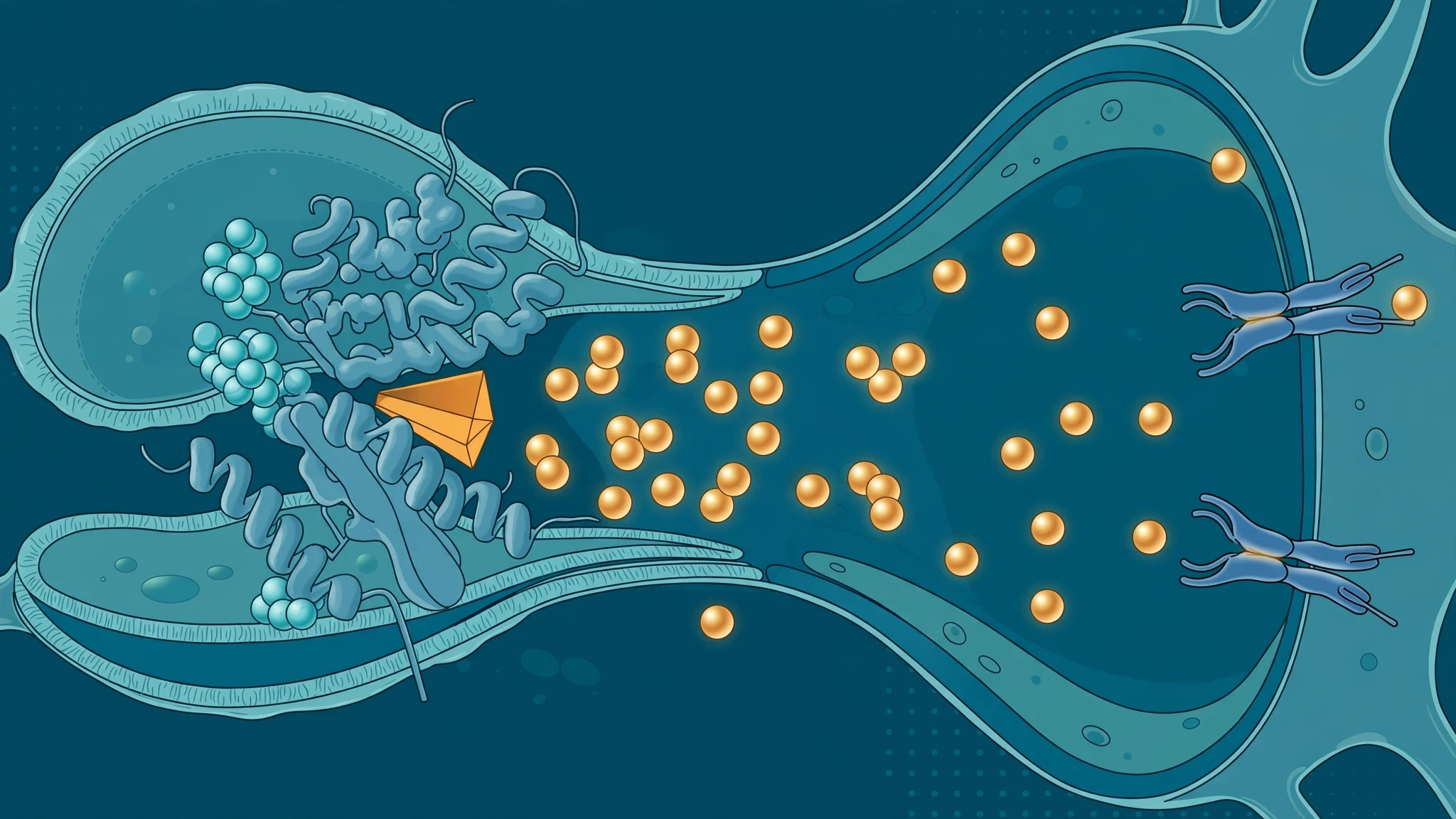
That mechanism also explains the so-called paradoxical calming effect — the fact that a stimulant, a drug that should wire a person up, instead makes a restless child calmer. It is not a paradox. Stimulants stimulate the control circuits, and when the control circuits work better, behaviour becomes calmer. The child is not sedated. The conductor is finally working. In a person without the condition, the same drug can also sharpen attention — which is why a good response to a stimulant does not confirm the diagnosis — though at higher doses it produces the familiar wired, jittery effect. In the condition, the drug brings an underpowered system up toward normal.
The evidence for how well stimulants work is among the strongest in child psychiatry. A network meta-analysis published in 2018 pooled 133 double-blind randomised trials covering 10,068 children and adolescents and 8,131 adults. On clinicians' ratings after about 12 weeks, amphetamines had an effect size of minus 1.02 in children and minus 0.79 in adults, and methylphenidate minus 0.78 in children and minus 0.49 in adults — the minus sign meaning symptoms reduced. Those are large effects by the standards of psychiatric treatment. For most children who try them, stimulants produce a clear improvement, often within an hour or two of a dose once the right dose is found — about seven in ten children respond well. That improvement does not confirm the diagnosis: stimulants sharpen attention in people without ADHD as well, so a good response is not a test for the condition.
What stimulants do not do matters as much as what they do. They do not teach skills. They do not fix sleep, organise a school bag, or repair a friendship. They do not cure the condition, and they work only while they are in the body: short-acting formulations last about four hours, long-acting ones eight to twelve. A child who takes a morning dose will feel it wear off by the afternoon, which is why homework time is often the hardest part of the day. The medicine buys a window of better regulation. What the child does inside that window — the learning, the practice, the habits — is what lasts.
The side effects are real and should be stated plainly. The most common are loss of appetite, difficulty falling asleep, and headaches. Blood pressure rises slightly, by about two to four millimetres of mercury, and heart rate by about three to six beats per minute. Growth can slow slightly on average — in the MTA follow-up, children newly started on stimulants grew about 2 centimetres less in height over three years than children who were not medicated, with no clear evidence of catch-up afterwards. In adulthood, the difference was smaller, averaging about 1.3 centimetres. These effects are monitored at follow-up visits, and they are one reason the dose is adjusted over time rather than set once and forgotten.
There is also the question of misuse. Stimulants are controlled substances, and prescribed tablets are sometimes shared or sold — to students who want to study all night, or to people who want the wired feeling. That is misuse, not treatment, and it carries real risks, including heart strain and dependence. A prescribed dose, taken as directed and monitored by a clinician, is a different thing from a borrowed tablet taken to pull an all-nighter, and the two should never be confused.
18. Non-Stimulant Medicines and Behavioural Treatment
Not everyone can take stimulants, and not everyone responds to them. Some people find the side effects intolerable. Some have anxiety that stimulants worsen, or tics, or a history that makes a controlled substance a poor choice. For those people, there are other medicines, and there is behavioural treatment — and the evidence for both is worth knowing in detail, because the gap between what works and what is sold is wide.
Atomoxetine was the first non-stimulant medicine approved for the condition. It is a selective norepinephrine reuptake inhibitor: it blocks the transporter that clears norepinephrine, but not dopamine, from the synapse. It works more slowly than a stimulant — weeks rather than hours, with the full effect taking up to 24 weeks (usually 8–12 weeks) — and its effect size is smaller, about minus 0.56 in children in the 2018 network meta-analysis. It carries a boxed warning, the strongest warning a medicine label can carry, for suicidal thoughts in children and adolescents. That warning does not mean the drug should never be used. It means the decision should be made carefully, with monitoring, and with the family fully informed.
Guanfacine and clonidine, in their extended-release forms, are alpha-2 agonists. They act on the receptors that norepinephrine uses in the prefrontal cortex, strengthening the signal in the same region stimulants target, but by a different route. Their effect size is moderate — smaller than the stimulants and roughly in line with atomoxetine. Their main side effects are drowsiness and lowered blood pressure, and they must never be stopped suddenly: abrupt withdrawal can cause a rebound rise in blood pressure. Viloxazine, approved in 2021, is a newer non-stimulant with a similar profile and a boxed warning of its own for suicidal thoughts and behaviour. Bupropion and modafinil have weaker evidence behind them; modafinil was not better than placebo in adults in the 2018 meta-analysis, and neither drug is a first choice. The main options, side by side:
Medicine | Class | How it works | Onset | Effect size in children | Key cautions |
|---|---|---|---|---|---|
Methylphenidate | Stimulant | Blocks dopamine and norepinephrine reuptake | Within an hour | −0.78 | Appetite loss, sleep problems, small rises in blood pressure and heart rate |
Amphetamines | Stimulant | Block reuptake and promote transmitter release | Within an hour | −1.02 | Same as methylphenidate, and less well tolerated overall |
Atomoxetine | Non-stimulant | Selective norepinephrine reuptake inhibitor | Weeks; full effect up to 24 weeks | −0.56 | Boxed warning for suicidal thoughts in children and adolescents |
Guanfacine / clonidine (extended-release) | Non-stimulant | Alpha-2 agonists acting on prefrontal receptors | Weeks | Moderate | Drowsiness, lowered blood pressure; never stop suddenly |
Viloxazine (extended-release) | Non-stimulant | Norepinephrine reuptake inhibitor | Weeks | Moderate | Boxed warning for suicidal thoughts and behaviour |
The American Academy of Pediatrics sets out its recommendations by age, and they are worth quoting because they show how treatment is supposed to work in sequence. For children aged four to five, the first line is evidence-based parent training in behaviour management, with behavioural classroom interventions — not medicine. For children aged six to eleven, the recommendation is an approved medicine plus, optimally, parent training and classroom interventions. For adolescents aged twelve to eighteen, it is medicine with the young person's assent, plus, optimally, training and behavioural interventions. The pattern is consistent: medicine where it is appropriate, behavioural support alongside it, and the child's own agreement as they get older.
Behavioural parent training deserves a closer look, because its effects are real and widely misunderstood. A 2023 meta-analysis by Doffer and colleagues (27 studies, 31 interventions) found small-to-moderate effects on the core symptoms, with a standardised mean difference of minus 0.21, and on behaviour problems, minus 0.16 — but larger effects on positive parenting, at 0.60, and on parents' sense of competence, at 0.38. The benefits were still present at follow-up about five months later. An older, unblinded meta-analysis reported much larger effects, around 0.83 (unweighted). The difference is largely blinding: in a separate 2013 analysis of 54 trials, the effect of behavioural interventions fell to 0.02 — effectively zero — when the raters did not know which children had been treated. That is not a reason to dismiss parent training. It is a reason to describe it honestly. Parent training helps mainly by changing the environment and the parent's skills — clearer instructions, consistent routines, rewards that actually work — not by removing the core symptoms. That is a real and valuable effect, and it is not the same as a cure.
Cognitive behavioural therapy is the evidence-based talking treatment for adults with the condition, especially when combined with medication. It teaches the skills the condition makes hard: planning, organising, managing time, and catching the thoughts that lead to procrastination. And school supports are a necessary part of the plan, not an optional extra. In the United States, these take the form of IEPs and 504 plans — formal agreements that a child gets accommodations such as extra time, written instructions, seating near the teacher, and movement breaks. A child who cannot sit still for an hour is not helped by being told to sit still. They are helped by a classroom that fits the brain they have.
There is also a list of things that lack strong evidence, and it is worth printing in full, because families spend a great deal of money on them. Neurofeedback — training the brain by watching its own electrical activity — has not shown reliable benefits beyond placebo in well-controlled trials. Cognitive training, the brain-training games that promise to strengthen working memory, shows small improvements on the trained tasks and little transfer to daily life. Elimination diets help only the small minority of children with a specific food sensitivity. Omega-3 supplements show small effects at best. And sugar restriction, as section 15 showed, does not treat the condition. None of these is dangerous in itself. They are expensive in time, money, and hope — and hope spent on something that does not work is hope not spent on something that does.
18.1 The treatment gap
There is one more number that belongs in any honest account of treatment. Section 3 gave the scale of it: in 2022, three in ten children with a current diagnosis received no ADHD-specific treatment, up from just over two in ten in 2016, and only about 28 percent received both medication and behaviour treatment. Two million children went without any treatment specific to the condition. The gap is not mainly about parents refusing treatment. It is about access: waiting lists, cost, shortages of clinicians, and the simple fact that recognition and care are not the same thing. A diagnosis that leads nowhere is an explanation without a plan, and the plan is the part that changes a life.
19. Living With ADHD: School, Work, and Daily Life
Treatment helps, but it is not the whole story. Most of the day is not spent in a clinic. It is spent at a desk, in a meeting, in a kitchen with a pile of unopened letters. The strategies that work best for this condition do not try to force attention through willpower. They change the environment so the brain can engage: they externalise what working memory cannot hold, they add urgency where the brain cannot generate it, and they make the invisible visible.
The first principle is to externalise working memory. A brain that drops instructions should not be asked to carry them. Lists, calendars, alarms, a launch pad by the front door where keys, wallet, and bag always live, everything in writing — these are not crutches. They are the working memory, moved outside the head where it cannot be wiped clean by a distraction. The companion article on how the human brain forms memories explains why writing things down works: information that is processed actively is encoded far more strongly than information merely held in mind.
The second is body doubling: doing a dull task alongside another person. A study partner, a colleague working quietly at the same table, a family member in the same room. Nobody knows exactly why it works; the leading explanation is that another person's presence supplies the external regulation the brain cannot generate alone. Whatever the mechanism, it is one of the most reliable strategies people with the condition report, and it costs nothing.
The third is to break tasks down until the first step is too small to resist. A three-week project becomes a list of twenty-minute steps, each with a visible tick-box. A tax return becomes five envelopes, opened one at a time. Each step gets its own deadline, not just the project — because a deadline next month does not exist to a brain that cannot feel time passing, while a deadline in twenty minutes does. The companion article on how learning works explains the same principle from the other side: short, spaced, active study sessions beat long, passive ones for every brain, and the gap is largest for brains that struggle to sustain attention.
Sleep is the fourth, and it is the one most often neglected. Poor sleep worsens every symptom of the condition, and the condition itself disrupts sleep — a cycle that is easy to enter and hard to leave. Regular sleep hours, screens off before bed, a cool, dark room: the advice is unglamorous, and it works. The companion article on the science of sleep and dreams explains what sleep does for memory and attention, and why a tired brain is an inattentive one.
Exercise is the fifth. Regular physical activity improves attention and mood, and the effect is not small. Even a short walk before a demanding task can help — in one experiment, twenty minutes of brisk walking improved children's attention and test scores, though the effect is modest and short-lived — and the benefits build with consistency. The companion article on how exercise changes the body describes the mechanisms — including the growth factors that support the brain's attention circuits — in detail.
At school, the strategies are concrete: seating near the teacher, instructions given in writing as well as spoken, assignments broken into chunks, movement breaks built into the day, and a formal plan — an IEP or a 504 plan — so that the support does not depend on one teacher's goodwill. At work, the same logic applies: external deadlines, an accountability partner, a single-tasking environment with one window open and the phone in another room, and calendar blocking that treats focus time as a real appointment. None of this is about lowering expectations. It is about meeting them by a different route.
The family side deserves its own sentence, because it is where the most damage is done and the most good can be done. Blame is not a strategy. A child who is told they are lazy will eventually believe it, and a child who believes it will stop trying. Structure plus warmth is the combination the evidence supports: the same routines, the same expectations, applied calmly and consistently, by adults who understand that the behaviour is a regulation problem, not a character flaw.
And then there are the strengths, which are real and worth naming plainly. Creativity, energy, an eye for what others miss, total absorption in a subject that fascinates, the willingness to take a risk that a more cautious brain would avoid. These are not consolation prizes. They are genuine advantages, and many adults with the condition build careers around them. None of that erases the impairment — section 16 took the 'superpower' version of this claim apart, and the honest version is smaller and better: the condition shapes a mind in ways that are sometimes useful and often costly, and neither half is the whole story. The goal is not to romanticise the condition. It is to build a life that fits the brain that is actually there.
20. A Short History
The condition is not a modern invention. It has been described, under various names, for more than two centuries — and the names it has carried track the history of psychiatry itself.
The first description that looks like the modern condition comes from 1798, when a Scottish physician named Alexander Crichton published an inquiry into mental derangement. He described people with "the incapacity of attending with a necessary degree of constancy to any one object" — a phrase that maps closely onto the modern criterion of difficulty sustaining attention. Crichton noted that the problem could be present from birth, was evident early in life, and generally diminished with age. He had no name for the condition and no treatment for it. He simply observed it, carefully, and wrote it down.
In 1844, a German physician named Heinrich Hoffmann wrote a children's storybook — published the following year — that included a version of it. His "Fidgety Phil" cannot sit still at the dinner table, wriggles and giggles through his father's warnings, and brings the whole meal crashing to the floor. It is a joke, not a case report — but a joke only works if the audience recognises the behaviour, and Hoffmann's readers did.
The first properly clinical description came in 1902, when the British paediatrician George Frederic Still gave three lectures to the Royal College of Physicians in London on "some abnormal psychical conditions in children". He described 20 children — 15 boys and 5 girls — with what he called a "defect of moral control" but without any general impairment of intellect. They were impulsive, inattentive, and unable to learn from consequences, and Still was struck above all by one feature.
"A quite abnormal incapacity for sustained attention. Both parents and school teachers have specially noted this feature in some of my cases as something unusual." — George Frederic Still, Goulstonian Lectures, 1902
Still's language is Victorian, and his concept of "moral control" is not the modern concept of the condition — his cases included behaviours that would be classified differently today. But the core observation, made more than a century ago, is recognisable in any clinic now: children of normal intelligence who cannot sustain attention, cannot inhibit impulses, and cannot learn from the consequences of either.
In 1932, two German physicians, Franz Kramer and Hans Pollnow, described "hyperkinetic disease" in children — the first name that put overactivity at the centre. In 1937, Charles Bradley made his accidental discovery with Benzedrine, described in section 17. Methylphenidate was first synthesised in 1944 and marketed as Ritalin in the mid-1950s, and by the 1960s it was widely prescribed.
The diagnostic manuals then did what manuals do: they renamed the condition as understanding changed. In 1968, the second edition of the American Psychiatric Association's manual called it "Hyperkinetic Reaction of Childhood", a name that captured only the fidgeting child. In 1980, the third edition split it into "Attention Deficit Disorder", with or without hyperactivity, and for the first time the quiet, inattentive child had a name. In 1987, the two were combined into "attention deficit hyperactivity disorder", the name still in use. In 1994, the fourth edition refined the criteria. In 2013, the fifth edition made three changes that mattered: the age by which symptoms must have appeared moved from seven to twelve, the symptom threshold for adults dropped from six to five, and the rule forbidding a joint diagnosis with autism was removed. In 2022, the text revision updated the descriptions without changing the criteria.
Each renaming reflected a better understanding, and each one left a residue of misunderstanding behind — the hyperactive boy, the idea that "ADD" and "ADHD" are different conditions, the belief that the condition ends at eighteen. The history matters because it answers the charge that the condition was invented recently. It was not invented. It was recognised, renamed, and refined — and the children Still described in 1902 would be recognised in any clinic today.
21. The Latest Research
The science of the condition is moving quickly, and the most useful way to end the main body of this article is to say plainly where it stands now and where it is heading.
The current state of the art is summarised in a 2024 review in Nature Reviews Disease Primers, written by Stephen Faraone and colleagues — the most comprehensive account of the condition published to date. It brings together the genetics, the brain imaging, the treatment evidence, and the lifespan picture into a single framework, and its central message is convergence: different lines of evidence, pursued independently for decades, are now pointing at the same circuits, the same chemicals, and the same developmental story.
The genetics continues to expand. The genome-wide studies described in section 5 now run to dozens of risk regions, each contributing a tiny effect, and larger studies under way are expected to extend the list further. Scores that add up thousands of small variants into one number are becoming more informative as studies grow. They remain research tools, not clinical ones. No score today can diagnose the condition, predict it reliably in an individual child, or guide treatment, and none is close to doing so.
The lifespan picture continues to sharpen. The long follow-up of the Multimodal Treatment Study, described in section 13, found the same pattern: remission happens, relapse is common, and most people carry some residual symptoms into young adulthood. The pattern is not one of outgrowing the condition. It is one of a condition that changes shape, eases in some ways, persists in others, and returns when the scaffolding of life is removed.
The adult diagnosis surge continues, on the figures section 13 set out: more than half of American adults with the condition were diagnosed as adults, and in Australia the dispensing rate for women rose sharply over five years. Some of that rise comes from recognising people who were missed; some of it from looser practice, including brief online assessments. Both are real, and the honest response is the same as it has been throughout this article: assess carefully, by the criteria, with attention to childhood history and to the look-alikes.
A 2026 review in the Annals of Child Neurology pulls the global numbers together: 5 to 7 percent of children and 2 to 4 percent of adults worldwide, symptoms persisting in 65 to 75 percent of children, and more than three-quarters of affected children carrying at least one additional psychiatric condition. Those numbers are the current best estimate of the size of the problem, and they are the reason the condition remains one of the most studied in child psychiatry.
Where is the science heading? Three directions look most promising, and all three are early. The first is stratification: using genetics, brain imaging, and careful clinical measurement to predict which children will respond to which treatment, rather than trying medicines one at a time. The second is brain-network modelling: understanding the condition not as a broken part but as a miscommunication between networks — the daydreaming network and the task networks described in section 7 — and designing interventions that target the handover between them. The third is precision in the oldest sense: better measurement of the individual child, over time, in real life, rather than a single snapshot in a clinic. None of these is clinic-ready. None of them will produce a single breakthrough. The next decade is more likely to bring steady, cumulative improvement — better prediction, better matching of treatment to person, fewer children missed and fewer wrongly labelled — than a revolution. That is a modest forecast. It is also, on the evidence, the honest one.
22. Frequently Asked Questions
What causes ADHD?
Genes first, brain development second, and a small number of early-life exposures as a nudge. Twin studies put heritability at roughly 70 to 80 percent, and genome-wide studies have found dozens of small genetic risk variants. Being born very early, very low birth weight, severe early deprivation, and serious head injury can raise the odds. Sugar, vaccines, television, and parenting style do not cause it. There is no single cause and no single gene.
Is ADHD genetic?
Yes. Twin studies put the figure at roughly three-quarters, higher than for depression or anxiety. If one parent has the condition, the chance their child also has it is roughly 40 to 50 percent. But that number is about variation across a population, not about what caused one person's condition, and there is no genetic test that diagnoses it. A diagnosis still rests on a careful history, rating scales, and the criteria in section 11.
Does sugar cause ADHD?
No. A 1994 trial fed children described as sugar-sensitive three different diets — high sucrose, aspartame, and saccharin — and found no difference in any of 39 measures of behaviour and cognition. A 1995 meta-analysis of 23 double-blind studies found an effect size effectively at zero. In a separate experiment, mothers told their sons had drunk sugar rated them as more hyperactive even though every child had drunk a sugar-free drink. The sugar rush is largely in the adults' heads.
What does dopamine do in ADHD?
Dopamine is a signal, not a pleasure chemical: it marks things as worth paying attention to and worth working for. In the condition, dopamine signalling is disrupted in the prefrontal cortex and the reward circuits, so the signal is weaker and noisier than it should be. The practical result is a reward system less responsive to delayed payoffs — which is why starting a task with a distant deadline is often the hardest part, and why stimulant medicines, which keep dopamine in the synapse longer, sharpen attention.
Can adults have ADHD?
Yes. About 6.0 percent of American adults report a current diagnosis, and more than half were diagnosed as adults. Hyperactivity usually eases with age, but problems with attention and self-control often continue in a different shape: inner restlessness, disorganisation, chronic lateness, missed deadlines. True late onset is rare — the symptoms were usually present in childhood but were mild, masked, or put down to something else.
Is ADHD overdiagnosed?
Both overdiagnosis and underdiagnosis happen, and both are real. Some children receive the label without meeting the criteria, and some adults are diagnosed after a brief consultation. But population studies that apply the criteria carefully still find the condition in roughly one child in twenty worldwide, and girls and women are systematically underdiagnosed — females are, on average, about four years older than males at first diagnosis. The answer to both errors is the same: a careful, complete assessment by a clinician who knows the criteria and the look-alikes.
Do children outgrow ADHD?
Some do, most do not entirely. In the longest careful follow-up, about three in ten children had a period of full remission at some point, but six in ten of those saw their symptoms return, and about nine in ten still had some residual symptoms in young adulthood. Hyperactivity eases most. Inattention and problems with planning and self-control are the parts that linger longest. A brain scan cannot promise a parent that their child will simply grow out of it — and the children who do not still deserve support now.
Can ADHD be cured?
No. There is no cure, and anyone selling one should be treated with suspicion. What exists is effective management: stimulant or non-stimulant medicine, behavioural treatment, school and workplace support, and strategies for daily life. With the right combination, most people with the condition live full, successful lives — not because the condition has gone away, but because they have learned to work with the brain they have.
23. Sources
Centers for Disease Control and Prevention. Data on ADHD in Children. https://www.cdc.gov/adhd/data/index.html
Danielson ML, et al. ADHD Prevalence Among U.S. Children and Adolescents in 2022: Diagnosis, Severity, Co-Occurring Conditions, and Treatment. Journal of Clinical Child & Adolescent Psychology. 2024;53(3):343–360. https://doi.org/10.1080/15374416.2024.2335625
Staley BS, et al. Attention-Deficit/Hyperactivity Disorder Diagnosis, Treatment, and Telehealth Use in Adults — National Center for Health Statistics Rapid Surveys System, United States, October–November 2023. MMWR Morbidity and Mortality Weekly Report. 2024;73(40):890–895. https://doi.org/10.15585/mmwr.mm7340a1
Salari N, et al. The global prevalence of ADHD in children and adolescents: a systematic review and meta-analysis. Italian Journal of Pediatrics. 2023;49:48. https://doi.org/10.1186/s13052-023-01456-1
Thomas R, et al. Prevalence of Attention-Deficit/Hyperactivity Disorder: A Systematic Review and Meta-analysis. Pediatrics. 2015;135(4):e994–e1001. https://doi.org/10.1542/peds.2014-3482
Polanczyk G, et al. The Worldwide Prevalence of ADHD: A Systematic Review and Metaregression Analysis. American Journal of Psychiatry. 2007;164(6):942–948. https://doi.org/10.1176/ajp.2007.164.6.942
Song P, et al. The prevalence of adult attention-deficit hyperactivity disorder: A global systematic review and meta-analysis. Journal of Global Health. 2021;11:04009. https://doi.org/10.7189/jogh.11.04009
National Institute of Mental Health. Attention-Deficit/Hyperactivity Disorder (ADHD). https://www.nimh.nih.gov/health/topics/attention-deficit-hyperactivity-disorder-adhd
Faraone SV, Larsson H. Genetics of attention deficit hyperactivity disorder. Molecular Psychiatry. 2019;24(4):562–575. https://doi.org/10.1038/s41380-018-0070-0
Demontis D, et al. Discovery of the first genome-wide significant risk loci for attention deficit/hyperactivity disorder. Nature Genetics. 2019;51(1):63–75. https://doi.org/10.1038/s41588-018-0269-7
Demontis D, et al. Genome-wide analyses of ADHD identify 27 risk loci, refine the genetic architecture and implicate neuronal biology. Nature Genetics. 2023;55(1):198–208. https://doi.org/10.1038/s41588-022-01285-8
Shaw P, et al. Attention-deficit/hyperactivity disorder is characterized by a delay in cortical maturation. Proceedings of the National Academy of Sciences. 2007;104(49):19649–19654. https://doi.org/10.1073/pnas.0707741104
Volkow ND, et al. Evaluating Dopamine Reward Pathway in ADHD: Clinical Implications. JAMA. 2009;302(10):1084–1091. https://doi.org/10.1001/jama.2009.1308
Arnsten AFT. Stress signalling pathways that impair prefrontal cortex structure and function. Nature Reviews Neuroscience. 2009;10(6):410–422. https://doi.org/10.1038/nrn2648
Faraone SV, Biederman J, Mick E. The age-dependent decline of attention deficit hyperactivity disorder: a meta-analysis of follow-up studies. Psychological Medicine. 2006;36(2):159–165. https://doi.org/10.1017/S003329170500471X
Biederman J, et al. How persistent is ADHD? A controlled 10-year follow-up study of boys with ADHD. Psychiatry Research. 2010;177(3):299–304. https://doi.org/10.1016/j.psychres.2009.12.010
Sibley MH, et al. Variable Patterns of Remission From ADHD in the Multimodal Treatment Study of ADHD. American Journal of Psychiatry. 2022;179(2):142–151. https://doi.org/10.1176/appi.ajp.2021.21010032
MTA Cooperative Group. A 14-Month Randomized Clinical Trial of Treatment Strategies for Attention-Deficit/Hyperactivity Disorder. Archives of General Psychiatry. 1999;56(12):1073–1086. https://doi.org/10.1001/archpsyc.56.12.1073
Young S, et al. Females with ADHD: An expert consensus statement taking a lifespan approach providing guidance for the identification and treatment of attention-deficit/hyperactivity disorder in girls and women. BMC Psychiatry. 2020;20:404. https://doi.org/10.1186/s12888-020-02707-9
Bruchmüller K, Margraf J, Schneider S. Is ADHD diagnosed in accord with diagnostic criteria? Overdiagnosis and influence of client gender on diagnosis. Journal of Consulting and Clinical Psychology. 2012;80(1):128–138. https://doi.org/10.1037/a0026582
Wolraich ML, et al. Clinical Practice Guideline for the Diagnosis, Evaluation, and Treatment of Attention-Deficit/Hyperactivity Disorder in Children and Adolescents. Pediatrics. 2019;144(4):e20192528. https://doi.org/10.1542/peds.2019-2528
Cortese S, et al. Comparative efficacy and tolerability of medications for attention-deficit hyperactivity disorder in children, adolescents, and adults: a systematic review and network meta-analysis. The Lancet Psychiatry. 2018;5(9):727–738. https://doi.org/10.1016/S2215-0366(18)30269-4
Swanson JM, et al. Effects of Stimulant Medication on Growth Rates Across 3 Years in the MTA Follow-up. Journal of the American Academy of Child & Adolescent Psychiatry. 2007;46(8):1015–1027. https://doi.org/10.1097/chi.0b013e3180686d7e
Fabiano GA, et al. A meta-analysis of behavioral treatments for attention-deficit/hyperactivity disorder. Clinical Psychology Review. 2009;29(2):129–140. https://doi.org/10.1016/j.cpr.2008.11.001
Doffer D, et al. Sustained improvements by behavioural parent training for children with attention-deficit/hyperactivity disorder: A meta-analytic review of longer-term child and parental outcomes. JCPP Advances. 2023;3(3):e12196. https://doi.org/10.1002/jcv2.12196
Wolraich ML, Wilson DB, White JW. The effect of sugar on behavior or cognition in children: A meta-analysis. JAMA. 1995;274(20):1617–1621. https://doi.org/10.1001/jama.1995.03530200053037
Wolraich ML, et al. Effects of Diets High in Sucrose or Aspartame on The Behavior and Cognitive Performance of Children. New England Journal of Medicine. 1994;330(5):301–307. https://doi.org/10.1056/NEJM199402033300501
Hoover DW, Milich R. Effects of sugar ingestion expectancies on mother-child interactions. Journal of Abnormal Child Psychology. 1994;22(4):501–515. https://doi.org/10.1007/BF02168088
Milich R, Pelham WE. Effects of sugar ingestion on the classroom and playgroup behavior of attention deficit disordered boys. Journal of Consulting and Clinical Psychology. 1986;54(5):714–718. https://doi.org/10.1037/0022-006X.54.5.714
Mantantzis K, et al. Sugar rush or sugar crash? A meta-analysis of carbohydrate effects on mood. Neuroscience & Biobehavioral Reviews. 2019;101:45–67. https://doi.org/10.1016/j.neubiorev.2019.03.016
Faraone SV, et al. The World Federation of ADHD International Consensus Statement: 208 Evidence-based conclusions about the disorder. Neuroscience & Biobehavioral Reviews. 2021;128:789–818. https://doi.org/10.1016/j.neubiorev.2021.01.022
Faraone SV, et al. Attention-deficit/hyperactivity disorder. Nature Reviews Disease Primers. 2024;10:57. https://doi.org/10.1038/s41572-024-00502-4
Jung S, et al. Attention-Deficit/Hyperactivity Disorder: A Comprehensive Review. Annals of Child Neurology. 2026;34(1):32–40. https://doi.org/10.26815/acn.2025.01074
Rong Y, et al. Prevalence of attention-deficit/hyperactivity disorder in individuals with autism spectrum disorder: A meta-analysis. Research in Autism Spectrum Disorders. 2021;88:101759. https://doi.org/10.1016/j.rasd.2021.101759
Lindström K, Lindblad F, Hjern A. Preterm Birth and Attention-Deficit/Hyperactivity Disorder in Schoolchildren. Pediatrics. 2011;127(5):858–865. https://doi.org/10.1542/peds.2010-1279
Sonuga-Barke EJS, et al. Child-to-adult neurodevelopmental and mental health trajectories after early life deprivation: the young adult follow-up of the longitudinal English and Romanian Adoptees study. The Lancet. 2017;389(10078):1539–1548. https://doi.org/10.1016/S0140-6736(17)30045-4
Cunningham CE, Barkley RA. The Effects of Methylphenidate on the Mother-Child Interactions of Hyperactive Children. Archives of General Psychiatry. 1979;36(9):1035–1039. https://doi.org/10.1001/archpsyc.1979.01780020091010
Bradley C. The Behavior of Children Receiving Benzedrine. American Journal of Psychiatry. 1937;94(3):577–585. https://doi.org/10.1176/ajp.94.3.577
Strohl MP. Bradley's Benzedrine Studies on Children with Behavioral Disorders. Yale Journal of Biology and Medicine. 2011;84(1):27–33. https://pmc.ncbi.nlm.nih.gov/articles/PMC3064242/
Lange KW, et al. The history of attention deficit hyperactivity disorder. Attention Deficit and Hyperactivity Disorders. 2010;2(4):241–255. https://pmc.ncbi.nlm.nih.gov/articles/PMC3000907/
American Academy of Pediatrics — HealthyChildren.org. Causes of ADHD. https://www.healthychildren.org/English/health-issues/conditions/adhd/Pages/Causes-of-ADHD.aspx
CHADD — Children and Adults with Attention-Deficit/Hyperactivity Disorder. https://chadd.org/
MedlinePlus. Attention Deficit Hyperactivity Disorder. https://medlineplus.gov/attentiondeficithyperactivitydisorder.html
American Psychiatric Association. Diagnostic and Statistical Manual of Mental Disorders, Fifth Edition, Text Revision (DSM-5-TR). https://www.psychiatry.org/psychiatrists/practice/dsm
World Health Organization. International Classification of Diseases, 11th Revision (ICD-11). https://icd.who.int/browse11/l-m/en
Osianlis C, et al. ADHD in females: Survey findings on symptoms across hormonal life stages. Journal of Psychiatric Research. 2026;193:208–215. https://doi.org/10.1016/j.jpsychires.2025.11.035
Farsad-Naeimi A, et al. Sugar consumption, sugar sweetened beverages and Attention Deficit Hyperactivity Disorder: A systematic review and meta-analysis. Complementary Therapies in Medicine. 2020;53:102512. https://doi.org/10.1016/j.ctim.2020.102512
O'Connor C, et al. Attention problems and cortical maturation in a large longitudinal sample of youths: The importance of accounting for sex differences. Proceedings of the National Academy of Sciences. 2026;123(21). https://doi.org/10.1073/pnas.2605729123
Kennedy M, et al. Early severe institutional deprivation is associated with a persistent variant of adult attention-deficit/hyperactivity disorder: clinical presentation, developmental continuities and life circumstances in the English and Romanian Adoptees study. Journal of Child Psychology and Psychiatry. 2016;57(10):1113–1125. https://doi.org/10.1111/jcpp.12576
van der Laan CM, et al. Genome-wide association meta-analysis of childhood ADHD symptoms and diagnosis identifies new loci and potential effector genes. Nature Genetics. 2025;57(10):2427–2435. https://doi.org/10.1038/s41588-025-02295-y
Australian Institute of Health and Welfare. ADHD medications dispensed over time. Mental health prescriptions. 2025. https://pp.aihw.gov.au/mental-health/topic-areas/community-based-services/mental-health-prescriptions/adhd-medications-dispensed-overtime
Asarnow RF, et al. Association of Attention-Deficit/Hyperactivity Disorder Diagnoses With Pediatric Traumatic Brain Injury. JAMA Pediatrics. 2021;175(10):1009. https://doi.org/10.1001/jamapediatrics.2021.2033
Obel C, et al. The risk of attention deficit hyperactivity disorder in children exposed to maternal smoking during pregnancy – a re-examination using a sibling design. Journal of Child Psychology and Psychiatry. 2016;57(4):532–537. https://doi.org/10.1111/jcpp.12478
San Martin Porter E, et al. Low–moderate prenatal alcohol exposure and offspring attention-deficit hyperactivity disorder (ADHD): systematic review and meta-analysis. Archives of Gynecology and Obstetrics. 2019;300(2):269–277. https://doi.org/10.1007/s00404-019-05204-x
Njardvik U, et al. Psychiatric comorbidity in children and adolescents with ADHD: A systematic review and meta-analysis. Clinical Psychology Review. 2025;118:102571. https://doi.org/10.1016/j.cpr.2025.102571
Popova S, et al. Comorbid Mental Disorders in Fetal Alcohol Spectrum Disorders: A Systematic Review. Journal of Developmental & Behavioral Pediatrics. 2017;38:283–291. https://doi.org/10.1097/DBP.0000000000000440
Knouse LE, et al. Meta-analysis of cognitive–behavioral treatments for adult ADHD. Journal of Consulting and Clinical Psychology. 2017;85:737–750. https://doi.org/10.1037/ccp0000216
Pontifex MB, et al. Exercise Improves Behavioral, Neurocognitive, and Scholastic Performance in Children with Attention-Deficit/Hyperactivity Disorder. The Journal of Pediatrics. 2013;162:543–551. https://doi.org/10.1016/j.jpeds.2012.08.036
Kessler RC, et al. The Prevalence and Correlates of Adult ADHD in the United States: Results From the National Comorbidity Survey Replication. American Journal of Psychiatry. 2006;163:716–723. https://doi.org/10.1176/ajp.2006.163.4.716
Skoglund C, et al. Familial confounding of the association between maternal smoking during pregnancy and ADHD in offspring. Journal of Child Psychology and Psychiatry. 2014;55(1):61–68. https://doi.org/10.1111/jcpp.12124
Sonuga-Barke EJS, et al. Nonpharmacological Interventions for ADHD: Systematic Review and Meta-Analyses of Randomized Trials of Dietary and Psychological Treatments. American Journal of Psychiatry. 2013;170:275–289. https://doi.org/10.1176/appi.ajp.2012.12070991
Pettersson E, et al. Birth weight as an independent predictor of ADHD symptoms: a within-twin pair analysis. Journal of Child Psychology and Psychiatry. 2015;56(4):453–459. https://doi.org/10.1111/jcpp.12299