

I still remember the night before my first big university exam. I had spent six hours rereading the same chapter, highlighting nearly every line in yellow, and I walked into the exam hall feeling ready. Then I read the first question, and my mind went blank. The words were familiar. The answers were not. I had mistaken recognition for knowledge, and that mistake cost me a grade — and taught me the first real lesson about how learning works.
That night is not unusual. Most of us were never taught how learning works — and that gap is exactly why so many smart people study hard and still forget. We were taught subjects, not the system that turns a first encounter with an idea into knowledge we can still use a month later. We reread, we highlight, we cram, and we feel productive while doing it. The feeling is real. The learning often is not.
This article explains how learning works as a system, not as a set of study tips — the full picture of how learning works, from first encounter to lasting knowledge. You will see what changes inside the brain when something is truly learned, why effortful recall beats rereading, why mixing topics helps, why sleep is part of studying rather than a break from it, and how to build a weekly routine that puts the evidence to work. The science of how learning works here comes from decades of cognitive psychology — from the testing effect to desirable difficulties — and from researchers who tested these ideas in real classrooms, not only in laboratories.
1. How Learning Works: The System Behind Lasting Knowledge
1.1 Learning is a change, not a feeling
Ask a psychologist what learning is, and the answer is refreshingly plain: learning is a relatively lasting change in knowledge or behaviour that comes from experience. Notice the word lasting. A fact you can repeat five minutes after reading it, then lose by tomorrow, was never fully learned. It was held, briefly, and then let go.
That distinction matters for how learning works, because so much of what we call studying produces only short-term familiarity. Reading a page again feels easier the second time. The sentences flow. Your brain nods along. But fluency is not mastery. Fluency tells you that you have seen this before. Mastery tells you that you can produce it, explain it, and use it when the page is gone.
I learned this the hard way in a laboratory methods course. I could follow every step of a protocol while the manual was open in front of me. The moment my supervisor asked me to describe the next step from memory, I froze. I had learned to follow instructions. I had not learned the method — and that gap is a perfect miniature of how learning works. The difference between those two things is the difference between exposure and learning, and it is the gap this whole article is about.
1.2 The brain rewires itself when you learn
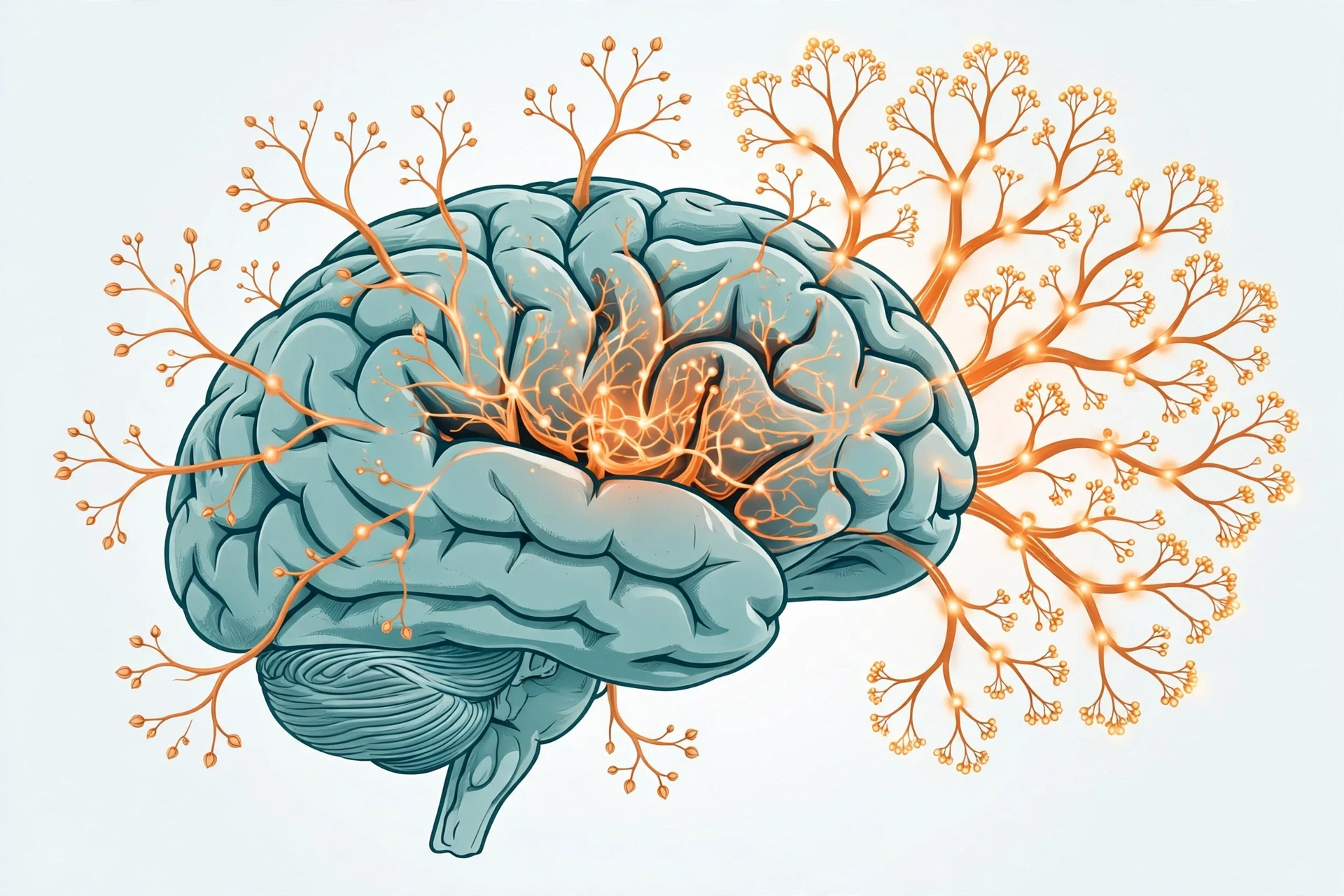
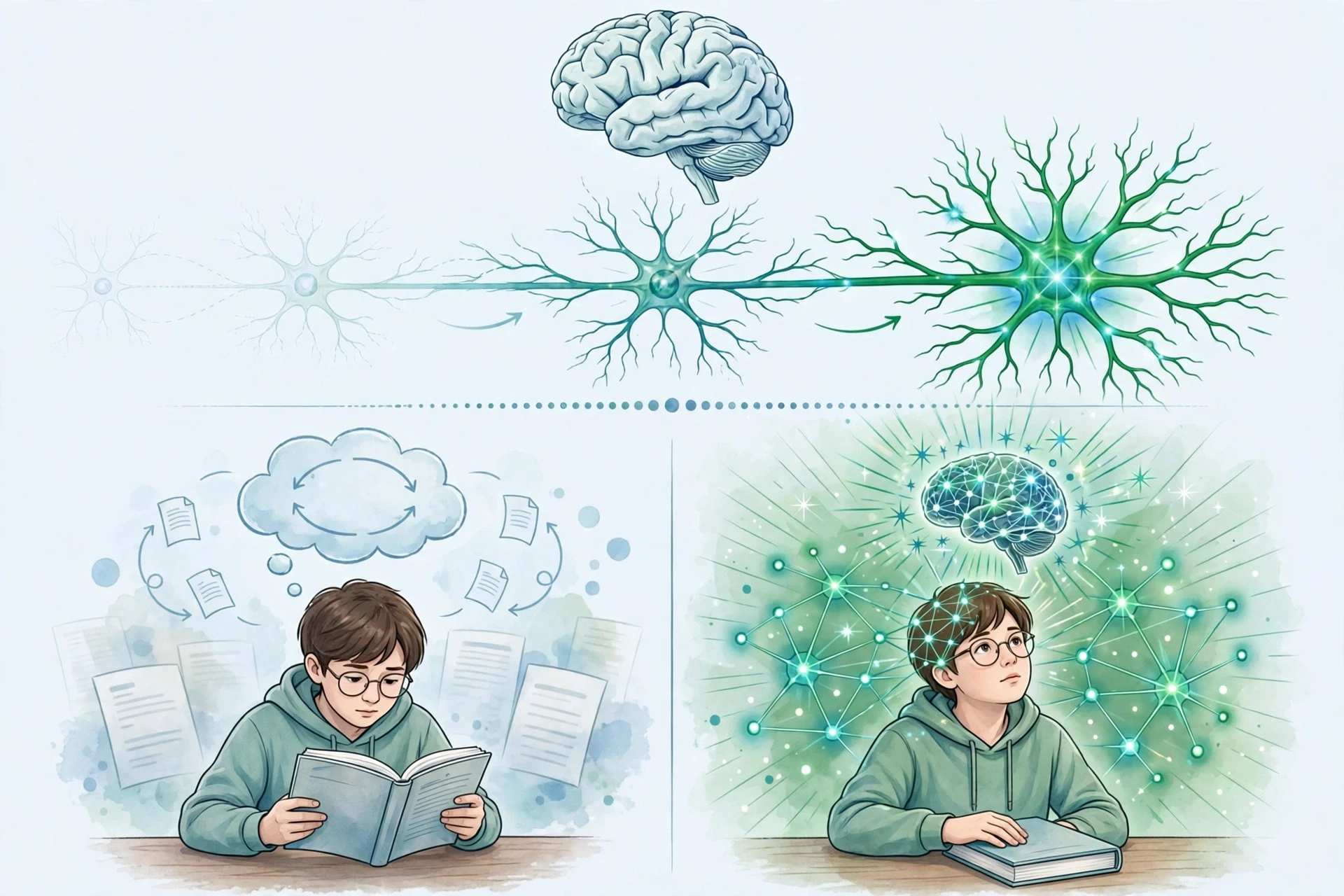
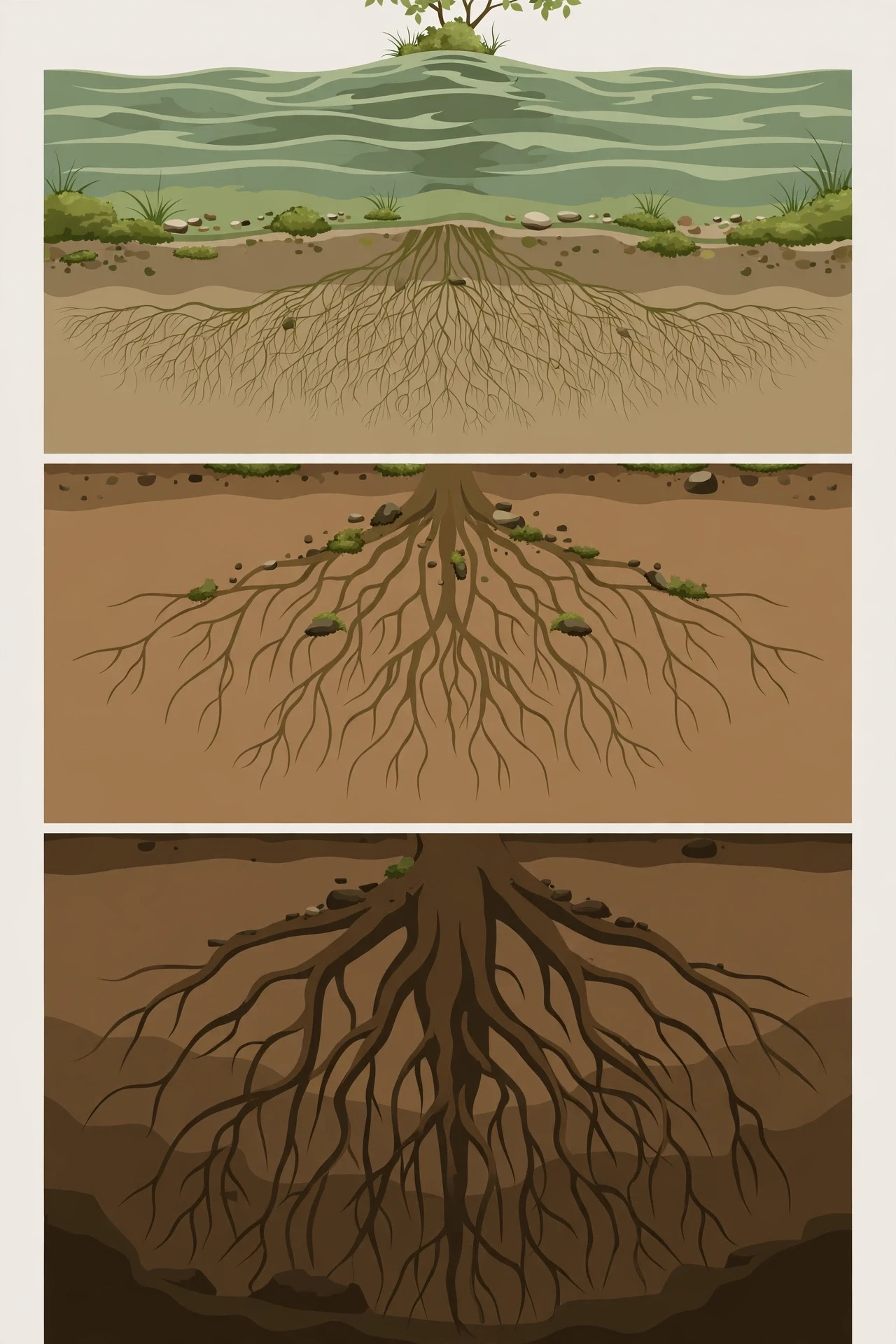
Underneath every lasting lesson is a physical change. When you learn, connections between neurons strengthen, weaken, or form anew — a property called neuroplasticity. Think of a path through a field of tall grass. The first time you walk it, the grass springs back behind you. Walk it again and again, and the path becomes clear, packed down, easy to follow. A single walk does not make a path. Repeated, effortful use does.
That is why understanding how learning works cannot be separated from practice. A new idea starts as a fragile pattern of activity across many brain regions. Each time you recall it, connect it to something else, or use it to solve a problem, that pattern gets a little more stable. The brain is not a filing cabinet where facts sit untouched once stored. It is a living network that keeps what gets used and prunes what does not.
One of my favourite demonstrations of this came from watching a colleague learn to play the piano as an adult. In the first weeks, every note demanded her full attention. Her shoulders tensed. She counted aloud. Months later, the same piece flowed while she talked about her day. Nothing about her hands had changed. The circuits that controlled them had. Learning had moved the skill from effortful control to fluent, automatic execution — the same journey every student, athlete, and language learner is on.
1.3 Why the system needs effort
Here is the uncomfortable truth at the heart of how learning works — and once you see it, you cannot unsee it: the strategies that feel easiest are often the least effective, and the strategies that feel hardest are often the best. Rereading feels smooth. Highlighting feels active. Watching a lecture at double speed feels efficient. Yet study after study finds that these low-effort methods produce weak, short-lived learning.
The reason is simple once you see the system. Learning requires the brain to do work — to retrieve, to connect, to discriminate, to explain. When the material is right in front of you, your brain does not need to work. It can coast on recognition. When you close the book and try to recall, your brain has to rebuild the idea from its own resources, and that rebuilding is exactly what strengthens it.
This is not an argument for making learning miserable. Effort that is well aimed — a quiz, a hard question, a mixed practice set — builds durable knowledge. Effort that is wasted — copying notes you do not understand, rereading for the fifth time — does not. The rest of this article is about telling those two kinds of effort apart, and choosing the first — which is the practical core of how learning works.
2. Encoding Depth: Why Meaning Beats Repetition
2.1 Shallow processing and deep processing
In the 1970s, psychologists Fergus Craik and Robert Lockhart proposed that how deeply you process information decides how well you remember it. Shallow processing looks at surface features: the shape of a word, whether it rhymes, how it sounds. Deep processing looks at meaning: what the idea connects to, why it matters, how it differs from a similar idea.
The classic demonstration is striking. People who are asked whether a word is printed in capital letters remember it poorly. People asked whether the word fits into a sentence remember it far better — even though both groups saw the word for the same amount of time. Time on task was identical. Depth was not. That finding reshaped researchers' picture of how learning works: it is not how long you study, but how you study.
I saw this in my own teaching. Students who copied definitions word for word from a textbook struggled on exam questions that asked them to apply the definition. Students who rewrote the definition in their own words, added an example from their own life, and argued with it a little — they were the ones who could use it. The first group had processed the surface. The second group had processed the meaning.
2.2 Elaboration: connecting the new to the known
Elaboration is deep processing in action. It means deliberately connecting a new idea to things you already know, asking how it works, why it is true, and where it might fail. When you elaborate, you give the new idea more hooks to hang on — and hooks are a big part of how learning works. A fact with one hook is easy to lose. A fact with ten hooks — an example, a contrast, a question, a personal memory — is far harder to drop.
Try it with a simple idea. Suppose you are learning that the hippocampus helps form new memories. A shallow learner repeats the sentence. A deep learner asks: what happens when the hippocampus is damaged? What does that tell us about the difference between forming a memory and keeping one? How does this connect to sleep, which I already know helps memory? Each question adds a connection, and each connection makes the original fact easier to find later.
For a fuller tour of the brain structures involved, Sciory's guide to How the Human Brain Forms Memories walks through the hippocampus and its partners in detail. This article stays focused on the learning system that uses those structures, rather than repeating the anatomy.
2.3 The generation effect: answers you build stick better
There is a close cousin of elaboration called the generation effect. Information you generate yourself — an answer you work out, a summary you write from memory, a diagram you draw without looking — is remembered better than information you simply read. The act of generating forces your brain to search, select, and organise, and that work leaves a stronger trace.
I once watched a student transform her revision by making this one change. Instead of copying her lecture notes into neater lecture notes, she closed the notebook and tried to write the week's key ideas from memory on a blank page. The first attempt was messy and full of gaps. Those gaps were the point. Each gap showed her exactly what she did not know, and each attempt to fill it made the next attempt stronger. Within three weeks, her blank-page summaries were nearly complete — and so was her understanding.
3. Retrieval Practice: The Testing Effect
3.1 What Roediger and Karpicke discovered
If there is one finding every student should know about how learning works, it is the testing effect. In a landmark 2006 study, Henry Roediger and Jeffrey Karpicke asked university students to study prose passages. Some students restudied the passage several times. Others studied it once and then took practice tests on it. Five minutes later, the restudiers were ahead. A week later, the test-takers were far ahead — they remembered far more of the passage than the students who had simply reread it.
The result feels backwards, because a test feels like a measurement, not a learning event. But retrieval practice — actively pulling information from memory — changes the memory itself. Each successful recall makes the next recall easier. Each failed recall, followed by checking the correct answer, also helps, because the effort of searching primes the brain to absorb the feedback. A review of this research in CBE—Life Sciences Education summarises how learning works through testing clearly: repeated retrieval, with feedback, enhances long-term learning beyond rote memory, and the benefit grows with delay. You can read that review in full at the PMC article on test-enhanced learning.
The American Psychological Association puts the same advice in plain language in its guide to six research-tested ways to study better: study methods that involve remembering information more than once are ideal, because each time a memory is recovered, it becomes more accessible in the future.
3.2 Why rereading feels so convincing
Rereading is the most popular study strategy in the world, and also one of the weakest. Why do we keep doing it? Because it produces a powerful illusion. As you reread, the material feels familiar, and your brain mistakes that familiarity for knowledge. Psychologists call this the fluency illusion. The text flows easily, so you assume you know it. But fluency comes from the page, not from you. Remove the page, and the fluency vanishes.
I fell for this illusion for years. Before exams, I would read my notes until they felt smooth and familiar, then stop, confident I was ready. The exam asked me to produce answers without my notes, and the smoothness was gone. I had practised recognising. The exam required recalling. Those are different skills, and only one of them had been trained.
"Testing is usually viewed as a way of assessing how much students know, but it is seldom seen as a way of enhancing learning. Yet the evidence says it is both."
3.3 How to practise retrieval
Retrieval practice does not require a formal exam. It requires closing the book and asking your brain to produce something. Here are the forms that work best:
Free recall: after reading a section, close the book and write down everything you can remember, in your own words.
Flashcards with a twist: do not flip the card the moment you hesitate. Struggle for a few seconds first — that struggle is part of the learning.
Practice questions: answer questions before checking the answers, even if you get some wrong. Wrong answers followed by feedback still teach.
Teach it: explain the idea aloud to a friend, a pet, or an empty room. The places where your explanation stalls are the places you need to revisit.
Past papers under exam conditions: timed, closed-book, no notes. This is retrieval practice in its most faithful form.
A practical rule: spend at least half your study time retrieving, not reviewing. If you study for an hour, aim for thirty minutes of trying to recall, explain, and solve — and thirty minutes of reading, checking, and filling gaps. That ratio feels hard at first. It gets easier as the pathways strengthen, and the results show up where they count: days and weeks later, when it matters.
4. Desirable Difficulties: Why Struggle Helps
4.1 The Bjorks' counterintuitive idea
Robert and Elizabeth Bjork, who run the Learning and Forgetting Lab at the University of California, Los Angeles, gave a name to the pattern running through this article: desirable difficulties. Some difficulties slow learning down in the short term and improve it in the long term. Retrieval practice is one. Spacing study over time is another. Mixing topics is a third. All three feel harder than the easy alternative — and all three produce stronger, longer-lasting knowledge.
The key word is desirable. Not every difficulty helps. A confusing textbook, a noisy room, or a task far beyond your current level will only frustrate you. A desirable difficulty is a challenge you can meet with effort: a question you can almost answer, a problem that needs two steps instead of one, a topic you return to after a gap that makes recall effortful but possible. The Bjork lab's own Learning and Forgetting Lab pages describe this research programme and its classroom implications in detail.
I think of desirable difficulties the way a coach thinks about training. Lifting a weight that is too light does nothing. Lifting a weight that is far too heavy injures you. The weight that is just heavy enough to demand real effort — that is the one that builds strength. Learning works the same way. The brain, like a muscle, adapts to the demands placed on it.
4.2 Storage strength vs. retrieval strength
The Bjorks draw a useful distinction between two kinds of strength. Storage strength is how well something is embedded in long-term memory — it grows slowly and is rarely lost. Retrieval strength is how easily you can access it right now — it rises and falls quickly. Cramming boosts retrieval strength fast: the material feels available because you just saw it. But it adds little storage strength, so the feeling fades within days.
Desirable difficulties work by trading a little retrieval strength now for a lot of storage strength later. When you wait a day before testing yourself, recall is harder — retrieval strength has dropped. The effort of pulling the idea back up builds storage strength. When you mix topics, each switch forces you to reload the right approach, and that reloading builds storage strength too. How learning works, at this level, is a story of short-term struggle buying long-term durability — and that trade is the heart of how learning works.
4.3 When difficulty stops being desirable
A difficulty is only desirable if it is surmountable. If you cannot recall anything at all, the gap is too wide, and retrieval practice becomes guessing. If you are interleaving topics you have never studied, the mixing only confuses. The remedy is to build a base first: study a topic until you can recall its core ideas with effort, then introduce the difficulty. Start with a short delay, then lengthen it. Start with two topics, then add a third.
Students sometimes hear about desirable difficulties and conclude that suffering is the point. It is not. The point is effortful, successful retrieval. If your practice feels impossible, make it easier — shorter gaps, clearer cues, worked examples first — and then make it harder again as you improve. The difficulty should grow with you.

5. Interleaving: Mixing It Up on Purpose
5.1 Blocked practice vs. interleaved practice
Most of us study in blocks: an hour on one topic, then an hour on the next, then an hour on the third. Psychologists call this blocked practice. It feels orderly. It also feels effective, because each block flows smoothly — you are in the groove of one kind of problem, and each answer comes a little faster than the last.
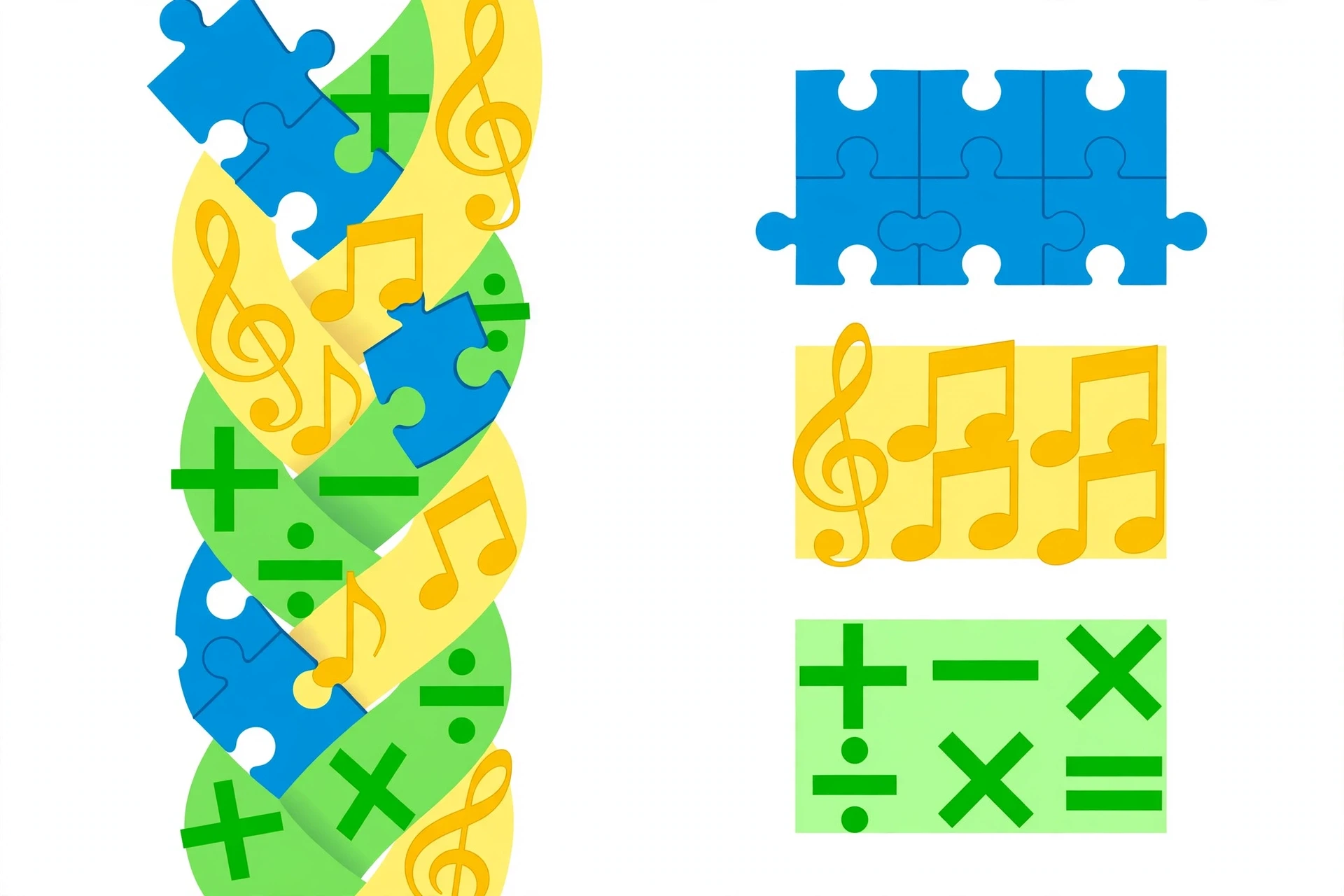
Interleaving turns that order upside down. Instead of finishing one topic before starting the next, you mix them: a few problems of type A, then a few of type B, then a few of type C, then back to A. The session feels messier. You have to keep switching gears. And on a test a week later, interleaved learners usually do better — often much better.
The classic demonstration of how learning works through interleaving used painting styles. Students learned to identify twelve artists' work. One group studied the artists in blocks — six paintings by one artist, then six by the next. The other group saw the same paintings interleaved. On a later test with new paintings, the interleaved group was significantly better at telling the artists apart. Mixing had forced them to notice what made each style different, instead of simply getting used to one style at a time.
5.2 Why mixing works
Interleaving helps for two reasons. First, it forces discrimination. When problems of different types appear side by side, you cannot just repeat the last method you used. You have to ask: what kind of problem is this? Which approach fits? That question — choosing the strategy, not just executing it — is exactly what exams test, and blocked practice never trains it.
Second, interleaving naturally introduces spacing. When you return to topic A after working on B and C, some time has passed, and recall takes effort. That effort, as we have seen, builds storage strength. Interleaving is spacing with a bonus: it also trains you to tell similar ideas apart.
The APA's Study Smart guide makes the same point: mixing tasks and topics is a better bet than blocking, because the mixing forces you to notice and process the similarities and differences among the things you are trying to learn.
5.3 How to interleave without chaos
Interleaving is not random jumping. It works best with a little structure:
Learn the basics first. Study each topic on its own until you can do its core problems with effort. Then start mixing.
Mix similar topics. Interleaving helps most when the topics are easy to confuse — two similar formulas, two similar artists, two similar historical periods. Mixing distant topics helps less.
Use short sets. Three problems of A, three of B, three of C, then repeat. Keep the sets short enough that switching stays frequent.
Expect it to feel worse. Interleaved practice feels slower and more error-prone during the session. That feeling is misleading. Judge it by the delayed test, not by the session.
A word of honesty: the research on interleaving has had mixed results in some settings, and it helps some kinds of material more than others. If two subjects overlap too closely, mixing can interfere. The evidence is strongest for skills where telling similar cases apart matters — maths problem types, language categories, medical diagnosis, art styles. For pure memorisation of unrelated facts, spacing and retrieval matter more than interleaving. Use mixing where discrimination is the skill being tested.
6. Elaboration, Sleep, and the Rest of the System
6.1 Elaboration: building a web, not a list
Learning sticks when new knowledge joins a web of old knowledge — a central part of how learning works. Elaboration is the process of weaving that web. Ask why, ask how, ask what if, ask how this differs from that. Each question adds a thread, and a fact with many threads is a fact you can find from many directions.
A useful elaboration habit is self-explanation: as you study, explain each step to yourself in your own words. Why does this step follow from the last one? What would happen if this condition changed? Research on self-explanation shows that students who explain as they go learn more deeply than students who read the same material silently — even when both groups spend the same time. The explanation forces the brain to organise, and organisation is a form of learning.
Another powerful form of elaboration is concrete examples. Abstract ideas are slippery. An example gives them something to hold onto. When you learn a principle, find two examples: one from the textbook, one from your own life. The second example matters more, because it ties the principle to knowledge you already own.
6.2 Sleep: the night shift of learning
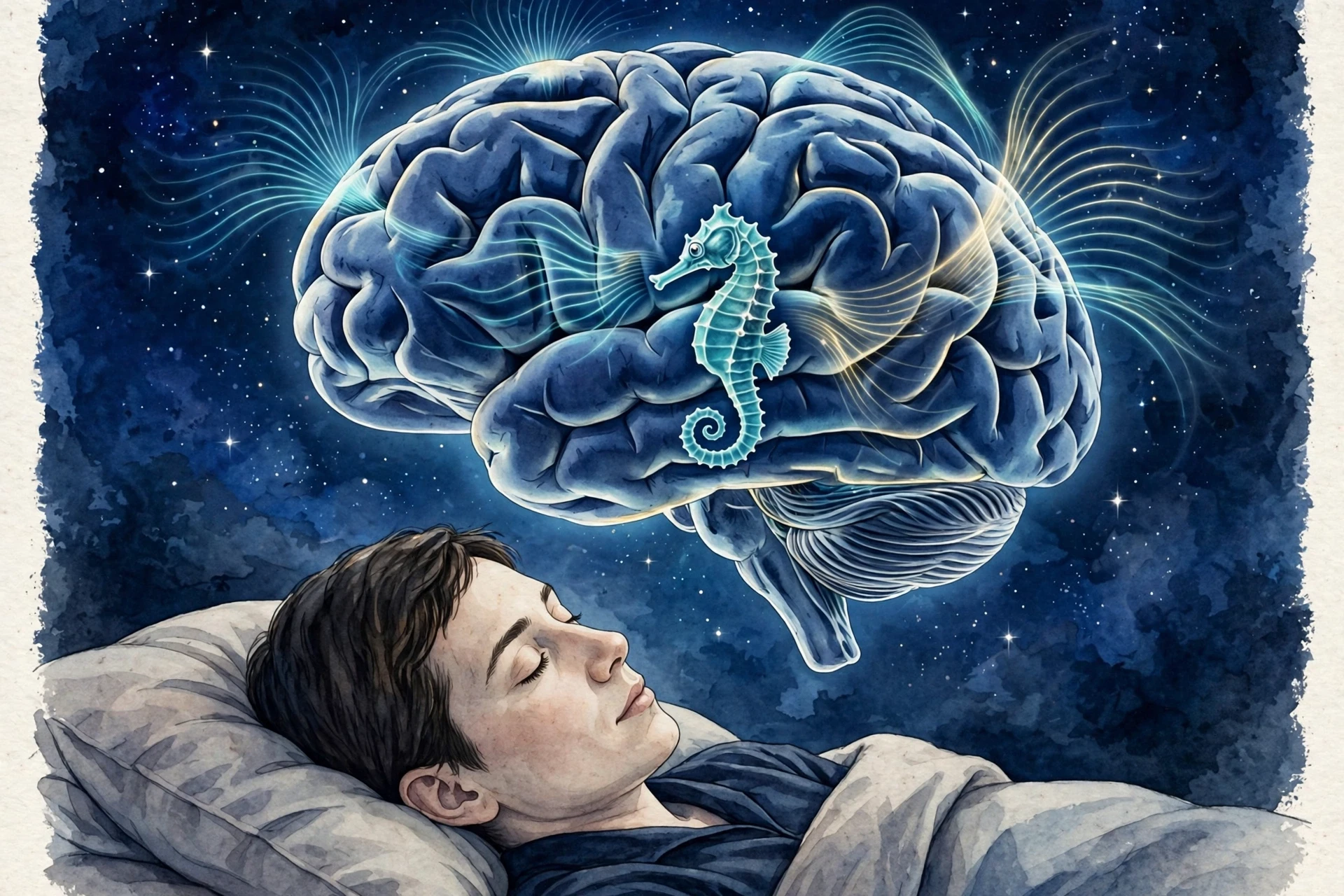
Sleep is not a pause in learning. It is part of the system. During sleep — particularly during deep sleep and dreaming sleep — the brain replays the day's experiences, strengthens useful connections, and transfers fragile new memories into more stable, long-term storage. This is consolidation, and it is one of the reasons an all-nighter is such a poor bargain: you trade the very process that would have made the studying stick.
I learned this lesson during a research project that required me to learn a complex statistical method in a week. The first night, I stayed up until 3 a.m. reading. The next morning, I could barely follow my own notes. The second night, I stopped at 10 p.m., slept eight hours, and reviewed for an hour in the morning. The method clicked. Nothing about the material had changed. My brain had simply been given the night shift to do its work.
Sciory's guide to the Science of Sleep and Dreams explains the sleep stages and the dreaming brain in depth. The learning point is practical: study, then sleep, then test yourself in the morning. That sequence — learn, sleep, retrieve — uses consolidation instead of fighting it. And when sleep itself is broken, learning suffers in ways that feel like a personal failing but are really a tired brain. If focus and mental clarity are a struggle, Sciory's article on Brain Fog: Causes and Ways to Improve Focus is a useful companion read.
Note the boundary here, kept deliberately: this article does not re-explain how memories form or why they fade. The companion article on forgetting in this series covers the fading side, including the Ebbinghaus curve, in full. What matters here is the system point: sleep is a learning tool, not a reward for finishing.
6.3 Attention, feedback, and the conditions that help
No learning system works without attention, and attention is a core part of how learning works. You cannot encode what you never attended to, and attention is a limited resource. Short, focused study blocks — twenty-five to fifty minutes, with a real break between them — beat long, drifting sessions. Put the phone in another room. The research on attention and multitasking is clear that switching between a textbook and a feed costs far more than it feels like it does.
Feedback is the other condition that matters. Retrieval practice without feedback can cement a wrong answer. Always check your answers, and when you get one wrong, study the correct answer right away, then test yourself again a little later. Feedback turns an error into a learning event instead of a habit.
Finally, a note on the body. Learning is a physical process, and the brain that learns is the same brain that needs sleep, movement, and food. A short walk after studying, a regular sleep schedule, and a study space you associate with focus all help — not as magic, but as conditions that let the system run well. The Scientific Method article on Sciory is a good reminder of why this matters: good learning, like good science, is a method, not a mood.
7. How Learning Works Across Different Kinds of Knowledge
7.1 Facts, skills, and understanding are not the same job
How learning works depends on what is being learned — the system adapts to the kind of knowledge at stake. Facts, skills, and understanding follow different rules, and a strategy that works for one can fail for another.
Facts — names, dates, definitions — respond best to retrieval practice and spacing. Flashcards, self-quizzing, and repeated recall over days are the core tools.
Skills — playing an instrument, solving equations, speaking a language — respond best to deliberate practice: short, focused repetitions with feedback, gradually increasing in difficulty.
Understanding — why a system behaves the way it does — responds best to elaboration, self-explanation, and applying the idea to new problems.
Most real learning mixes all three. Learning a language means memorising vocabulary (facts), practising pronunciation (skill), and grasping grammar (understanding). A good study plan uses different tools for each part, rather than treating every topic as if it were a list of facts to reread.
7.2 Transfer: the real test of learning
The hardest part of how learning works is transfer — using what you learned in one setting in a different setting. A student can solve a problem in the textbook chapter where it was taught, then fail the same problem on an exam where it appears without a label. That is a transfer failure, and it is common.
Transfer improves when practice varies. Solve the same kind of problem with different numbers, different wording, and different contexts. Explain the idea to different audiences. Apply it to a case you have never seen. Each variation forces your brain to separate the deep structure of the idea from its surface details, and that separation is what makes the idea portable.
I once taught a concept using the same example every time, and my students aced every question that used that example. Then I changed the example, and their scores collapsed. They had learned the example, not the concept. From that day on, I taught every important idea with at least three different examples, and I tested it with a fourth. It was slower. It worked.
7.3 What the latest research adds
The science of how learning works is still moving, and new studies keep refining the picture of how learning works. Recent work has refined, rather than overturned, the classic findings. Researchers are now asking finer questions: how much feedback is best, and when? Does interleaving help beginners or only learners with some base knowledge? How do individual differences — prior knowledge, working-memory capacity, motivation — change which strategy works best?
One consistent theme is that prior knowledge matters enormously. The more you already know about a topic, the easier it is to elaborate, to notice differences between similar cases, and to benefit from interleaving. That is why the first pass through a new subject feels slow and the second pass feels fast: you are not just learning new facts, you are building the web that future facts will hang on. Beginners benefit most from clear explanations, worked examples, and guided retrieval. As knowledge grows, the desirable difficulties can grow with it.
Another theme is honesty about limits. No single strategy works for everyone, every time. Retrieval practice is robust across ages and subjects, but its size varies. Interleaving helps some materials more than others. Sleep consolidation is real, but it cannot rescue material that was never encoded in the first place. The system is reliable, not magical — and that is good news, because a reliable system can be used on purpose.
8. Common Misconceptions About How Learning Works
Most people assume that learning is mostly about input — hours spent, pages read, lectures attended. What the data actually show is that learning is mostly about what the brain does with the input. That gap between assumption and evidence produces a set of stubborn myths.
8.1 Myth: "I learn best by rereading and highlighting"
Rereading and highlighting feel productive because they are fluent and familiar. But fluency is not learning. Highlighting can help if it is followed by retrieval — cover the highlighted passage and try to explain it — but highlighting alone adds little. If your notes are a rainbow of colour and your recall is blank, the highlighter was doing the work, not you.
8.2 Myth: "Learning styles decide everything"
The idea that people are visual, auditory, or kinaesthetic learners, and should only be taught in their preferred style, is enormously popular — and the evidence for it is weak. People do have preferences, and a good diagram can help anyone. But matching teaching to a supposed style does not reliably improve learning. What improves learning is the strategy, not the style: retrieval, elaboration, spacing, and mixing help visual and verbal learners alike. A diagram is a useful tool, not a destiny. For the brain structures that all of this relies on, Sciory's Human Brain Anatomy and Functions guide is a clear starting point.
8.3 Myth: "Cramming works if you are smart enough"
Cramming works for one thing: an immediate test. The Roediger and Karpicke results showed exactly that — restudiers won at five minutes and lost at one week. If the goal is to pass tomorrow and forget by next month, cramming is efficient. If the goal is to know something in a month, a year, or a career, cramming is a trap. Intelligence does not change this pattern; it only changes how much you can cram.
8.4 Myth: "Mistakes mean you are not learning"
Mistakes feel like failure, so students avoid them. But in learning, a mistake followed by feedback is one of the most useful events there is. It shows you the gap, it primes you to notice the correct answer, and it makes the corrected version more memorable than a version you never got wrong. The students who learn fastest are often the ones who test themselves earliest, get things wrong, and fix them — not the ones who wait until they feel ready.
"The students who learn fastest are often the ones who test themselves earliest, get things wrong, and fix them — not the ones who wait until they feel ready."
8.5 Myth: "More hours always means more learning"
Hours matter, but how those hours are spent matters more. Three hours of rereading can teach less than one hour of retrieval, interleaving, and self-explanation. This is not a licence to study less — durable learning still takes real time, spread over days. It is a warning against measuring learning by the clock. Count what you can recall, explain, and do, not what you sat through.
Strategy | What it feels like | What the evidence shows | Best for |
|---|---|---|---|
Rereading | Easy, fluent, familiar | Weak long-term retention | First exposure only |
Highlighting | Active, organised | Little benefit alone | Marking what to retrieve later |
Retrieval practice | Hard, sometimes frustrating | Strong, lasting gains | Facts, concepts, procedures |
Interleaving | Messy, slower in session | Better discrimination and transfer | Similar problem types |
Elaboration | Slow, thoughtful | Deeper understanding | Concepts and principles |
Sleep after study | Like doing nothing | Consolidates new learning | Everything, every night |

9. Building Your Own Learning System
9.1 A weekly plan that uses how learning works
Knowing how learning works is only useful if it changes what you do on Monday morning. Here is a simple weekly system that puts the whole article into practice. It assumes you are studying a subject over several weeks, with an exam or a real use at the end.
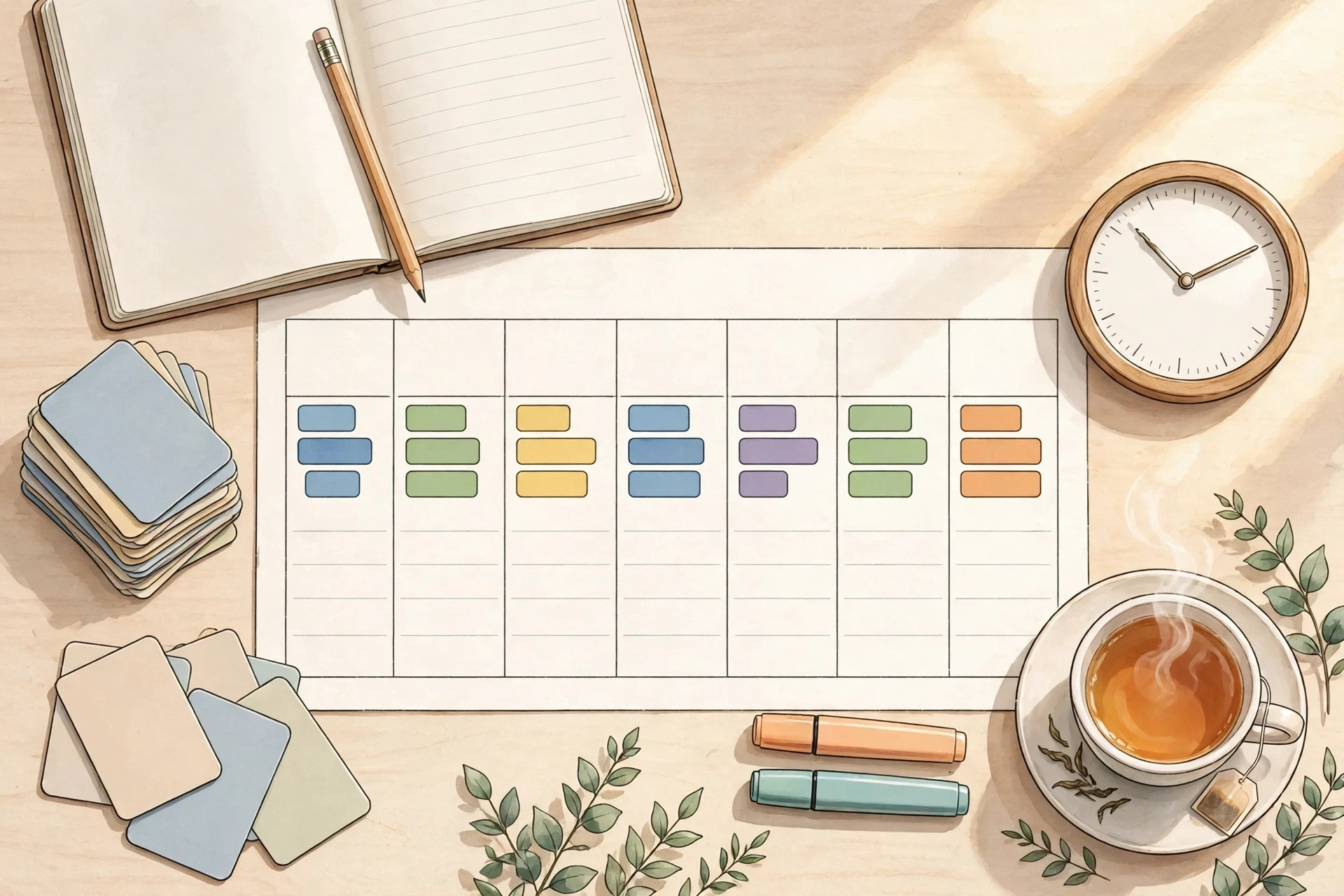
Day 1 — Learn: read or watch the new material once, slowly. Take sparse notes in your own words. End by writing, from memory, the three most important ideas.
Day 2 — Retrieve: close everything and test yourself on Day 1. Flashcards, free recall, practice questions. Check your answers, study the gaps, and test again.
Day 3 — Mix and elaborate: study a second topic, then interleave the two. Explain each idea aloud. Find a new example for each one.
Day 5 — Retrieve again: test yourself on both topics, with a longer delay. This session will feel harder. That is the point.
Day 7 — Apply: solve new problems, teach the material to someone, or write a one-page summary from memory. If you can teach it, you know it.
Sleep every night in between. The plan is deliberately light on rereading and heavy on retrieval, mixing, and sleep — because that is what the evidence supports.
9.2 A daily study session in 50 minutes
A single session can follow the same logic in miniature:
Five minutes — recall yesterday. Before opening anything new, write down what you remember from the last session.
Twenty minutes — learn something new. Read, watch, or listen, with full attention. Take brief notes.
Fifteen minutes — retrieve. Close the book. Quiz yourself. Explain the new idea aloud. Do a few practice problems.
Ten minutes — check and fix. Open the book, check your answers, fill the gaps, and note what to test again tomorrow.
That last step matters. Retrieval without feedback can cement errors, so always close the loop. And if you are studying under stress, be kind to yourself about it: stress and low mood change how the brain learns, and the science of that is covered in Sciory's article on Anxiety and Depression Explained. A system that ignores how you feel will not survive contact with a hard week.
9.3 Tracking what actually works for you
Keep a simple log for two weeks: what you studied, which strategy you used, and how you scored on a delayed test a few days later. You do not need a spreadsheet. A notebook page will do. The log does two things. First, it shows you which strategies work for you, in your subjects, with your brain. Second, it protects you from the fluency illusion: the numbers will tell you the truth about what stuck, even when your feelings disagree.
I kept such a log during a year of learning a new research method, and it changed my habits more than any book did. Rereading scored well on the day and badly a week later. Retrieval scored badly on the day and well a week later. Once I saw that pattern in my own numbers, I never trusted the day's feeling again. That is the most useful thing I can tell you about how learning works: trust the delayed test, not the feeling in the moment. If you remember one sentence about how learning works, make it that one.
10. The Science, Summed Up
Learning is a system with moving parts, and each part has a job — that is the short version of how learning works. Encoding depth decides how strong the first trace is. Retrieval practice strengthens it. Desirable difficulties trade short-term ease for long-term durability. Interleaving trains you to choose the right approach, not just repeat the last one. Elaboration weaves new ideas into old knowledge. Sleep consolidates what the day built. Attention and feedback keep the whole machine honest.
None of this requires talent, a special brain, or a perfect routine. It requires a change in what you do with your study time: less rereading, more recalling; less blocking, more mixing; less cramming, more sleeping. The science of how learning works is unusually practical. It does not ask you to study harder in the vague sense. It asks you to study differently, in specific ways, and then it rewards you with knowledge that is still there when you need it.
The night before my exam, years ago, I reread until the words felt smooth, and I walked in confident. I know now what I would do differently. I would close the book after the first read, test myself, get things wrong, check the answers, mix the topics, sleep, and test myself again. It would feel harder. It would feel slower. And a week later, I would still know the material. That is the whole lesson, and it is one any learner can use starting today.
Frequently Asked Questions
How does learning work in the brain?
Learning works by changing connections between neurons. When you practise retrieving, connecting, or using an idea, the connections involved get stronger, so the idea becomes easier to recall and use later. Repeated, effortful use builds durable pathways; passive exposure alone leaves a fragile trace that fades quickly.
What is the most effective way to learn?
The most effective approach, across decades of research, combines retrieval practice with spacing, interleaving, and elaboration, plus sleep. Test yourself often, mix similar topics, explain ideas in your own words, and sleep after studying. No single trick beats the system as a whole, and the combination matters more than any one part.
Why is testing yourself better than rereading?
Testing yourself forces your brain to rebuild an idea from memory, and that rebuilding strengthens it. Rereading only produces recognition — the material feels familiar because it is in front of you. On a delayed test a week later, students who practised retrieval remember far more than students who only restudied, as Roediger and Karpicke showed in 2006.
Does cramming ever work?
Cramming works for an immediate test, because it boosts short-term retrieval strength. It fails for lasting knowledge, because it adds little long-term storage strength. If you need to remember something beyond tomorrow, spread your study over days and test yourself repeatedly instead.
How does sleep help learning?
During sleep, the brain replays the day's experiences and consolidates fragile new memories into more stable long-term storage. Studying and then sleeping, followed by a morning retrieval test, uses that process instead of fighting it. An all-nighter skips consolidation and leaves the learning weaker.
Is interleaving better than studying one topic at a time?
For material where telling similar cases apart matters — maths problem types, language categories, diagnosis, art styles — interleaving usually beats blocked practice on a delayed test, because it trains you to choose the right approach. Learn the basics of each topic first, then mix them in short sets, and expect the session to feel harder than blocking.
Sources
American Psychological Association. Six research-tested ways to study better. https://www.apa.org/ed/precollege/psychology-teacher-network/introductory-psychology/study-better
American Psychological Association. Study smart. https://www.apa.org/gradpsych/2011/11/study-smart
American Psychological Association. Learning and memory. https://www.apa.org/topics/learning-memory
American Psychological Association. The science of learning. https://www.apa.org/education-career/guide/science-learning
Bjork Learning and Forgetting Lab, University of California, Los Angeles. https://bjorklab.psych.ucla.edu/
McDaniel, M. A., et al. Test-enhanced learning: the potential for testing to promote greater learning in undergraduate science courses. CBE—Life Sciences Education, 2015. https://pmc.ncbi.nlm.nih.gov/articles/PMC4477741/
Roediger, H. L., & Karpicke, J. D. Test-enhanced learning: taking memory tests improves long-term retention. Psychological Science, 2006. (Summarised and discussed in the PMC review above.)