

The elevator doors slid open on the fourteenth floor, and I stepped in, turned around, and faced the doors — the way everyone does. Then I noticed it. Every other person in that elevator was facing the back wall. Six strangers, standing shoulder to shoulder, staring at blank metal as if it were the most natural thing in the world. My hand hovered over the button panel. I knew the doors were behind me. I knew these people were playing a trick, or following one. And still, for a full three seconds, my body wanted to turn around and join them.
I laughed it off, faced the doors, and rode down in silence. But the feeling stayed with me all day: a small, physical tug, as if some part of my brain had already voted to go along with the group before my conscious mind had a chance to object. That tug is the subject of this article. It is one of the most studied forces in all of psychology, and it has decided elections, fuelled disasters, and shaped almost every ordinary day you have ever lived.
Why do people follow the crowd? The short answer is that the crowd is not just outside us. It is wired into us. Humans survived by staying with the group, reading the group, and rarely straying from it. The long answer — the one this article works through — involves a line-judgment test from the 1950s, a fake electric-shock machine in a Yale basement, the brain's alarm system for social rejection, and a series of modern replications that show the old findings were not a fluke of a more obedient age. Conformity psychology is the science of that tug: why it exists, when it helps, when it harms, and how to keep it from doing your thinking for you.
1. What Conformity Really Means
1.1 A definition without the jargon
Conformity is a change in what you believe or how you behave so that it matches the people around you. That is all it is. It can be as small as laughing at a joke you did not find funny, or as large as denying what your own eyes plainly show you. Psychologists usually divide it into two kinds, and the difference matters, because each kind is driven by a different need.
Normative influence is conforming to be liked and accepted. You go along because you do not want to be mocked, excluded, or seen as difficult. The group does not have to convince you; it only has to make standing apart feel costly.
Informational influence is conforming because you believe the group knows something you do not. You go along because the evidence is unclear, and other people look like a good source of information. A crowd running in one direction is, after all, often running away from something real.
Most real-life conformity is a blend of the two. You laugh at the joke partly to fit in and partly because, if everyone else finds it funny, you wonder whether you missed something. The blend is what makes the force so hard to spot in yourself.
1.2 Conformity is not weakness
Most people assume conformity is a flaw — something weak-willed people do and strong-minded people rise above. What the data actually shows is different. Conformity is a normal feature of a social brain, and it is often useful. A child who copies the adults around her learns language, manners, and safety rules without having to test every danger herself. A newcomer who watches how colleagues behave in a meeting learns the norms of the workplace in an afternoon. A traveller in a foreign city who follows the crowd across the street is borrowing local knowledge.
The trouble starts when the shortcut replaces the thinking. Following the crowd works well when the crowd is right and the stakes are low. It fails badly when the crowd is wrong, the stakes are high, and nobody is willing to say so. The rest of this article is about where that line sits.

1.3 How common is it, really?
If you asked a room of people whether they follow the crowd, most would say no. They would describe themselves as independent thinkers. Then you could run a simple test — the kind described in Section 2 — and watch a large share of the same room give an answer they know is wrong, simply because everyone else gave it first.
That gap between what we believe about ourselves and what we do under group pressure is one of the most reliable findings in psychology. It has been repeated in many countries, with many kinds of tasks, and with adults, teenagers, and children. The exact numbers shift with the setup, but the pattern does not: put a person in a group that is confidently wrong, and a striking number of people will go along.
2. The Line Experiment That Shocked Psychology
2.1 Solomon Asch and a very simple question
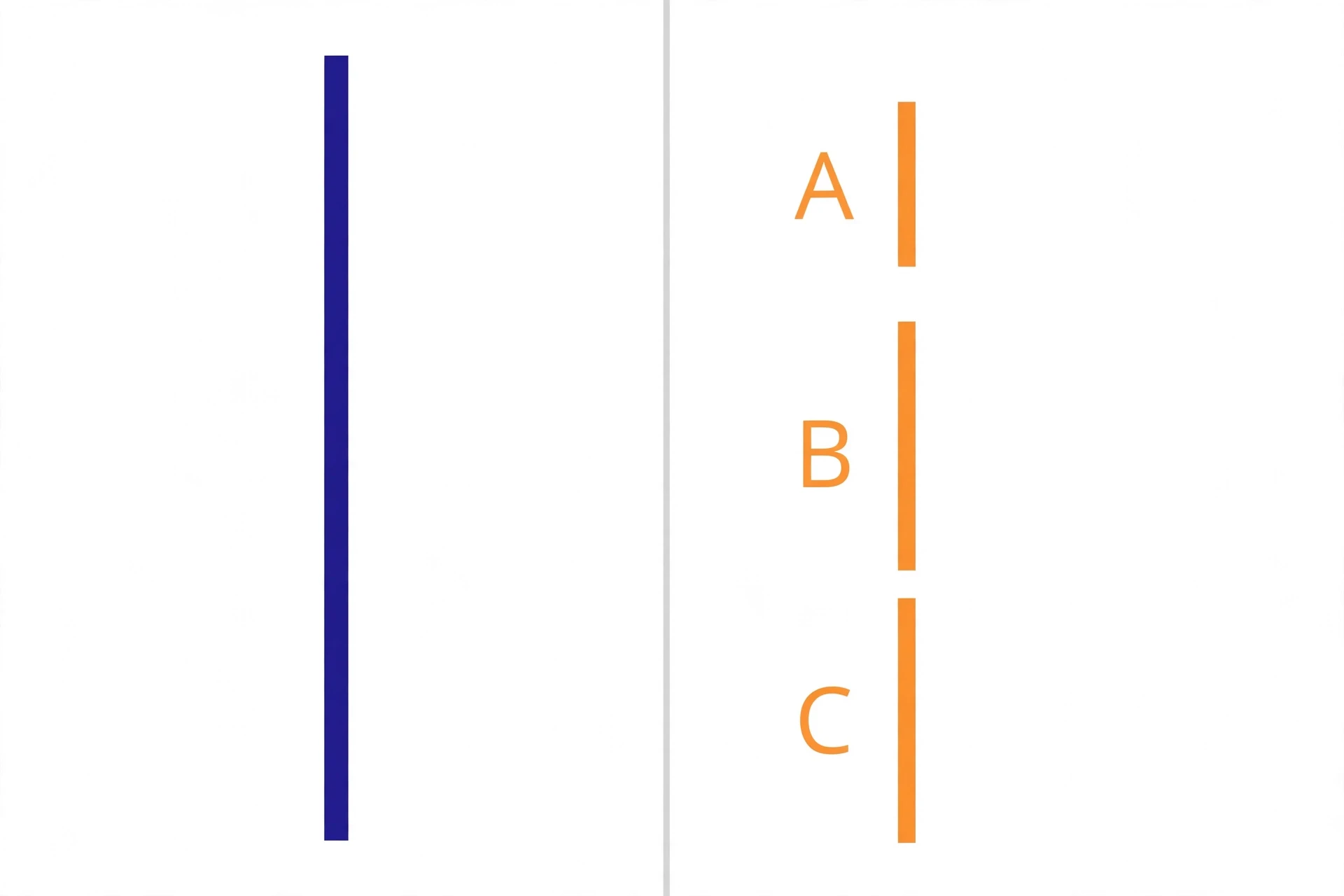
In the early 1950s, the psychologist Solomon Asch designed an experiment so simple that it almost sounds like a joke. He invited male college students to take part in what they were told was a test of visual perception. Each participant sat in a room with seven other people and was shown two cards. One card had a single line on it. The other had three lines of different lengths, labelled A, B, and C. The task was to say out loud which of the three lines matched the first one.
The catch was that the other seven people were not participants at all. They were confederates — actors working for Asch — and they had been told to give the same wrong answer on most rounds. The real participant always answered near the end of the row, so by the time his turn came, he had heard six or seven confident voices give an answer that was plainly, visibly wrong.
I ran a version of this exercise in a teaching session years ago, with paper cards and a room full of students who had no idea what was coming. The real participant — a sharp, confident young woman who had been answering everything quickly — went quiet on the first rigged round. She looked at the cards, looked at the row of faces, and said the wrong answer in a voice that was barely a whisper. Afterwards she told me she had felt her face go hot and her thoughts go strangely blank, as if her brain had stopped trusting her own eyes. She was not confused about the lines. She was caught between two certainties: what she saw, and what the room said.
2.2 The numbers that made the experiment famous
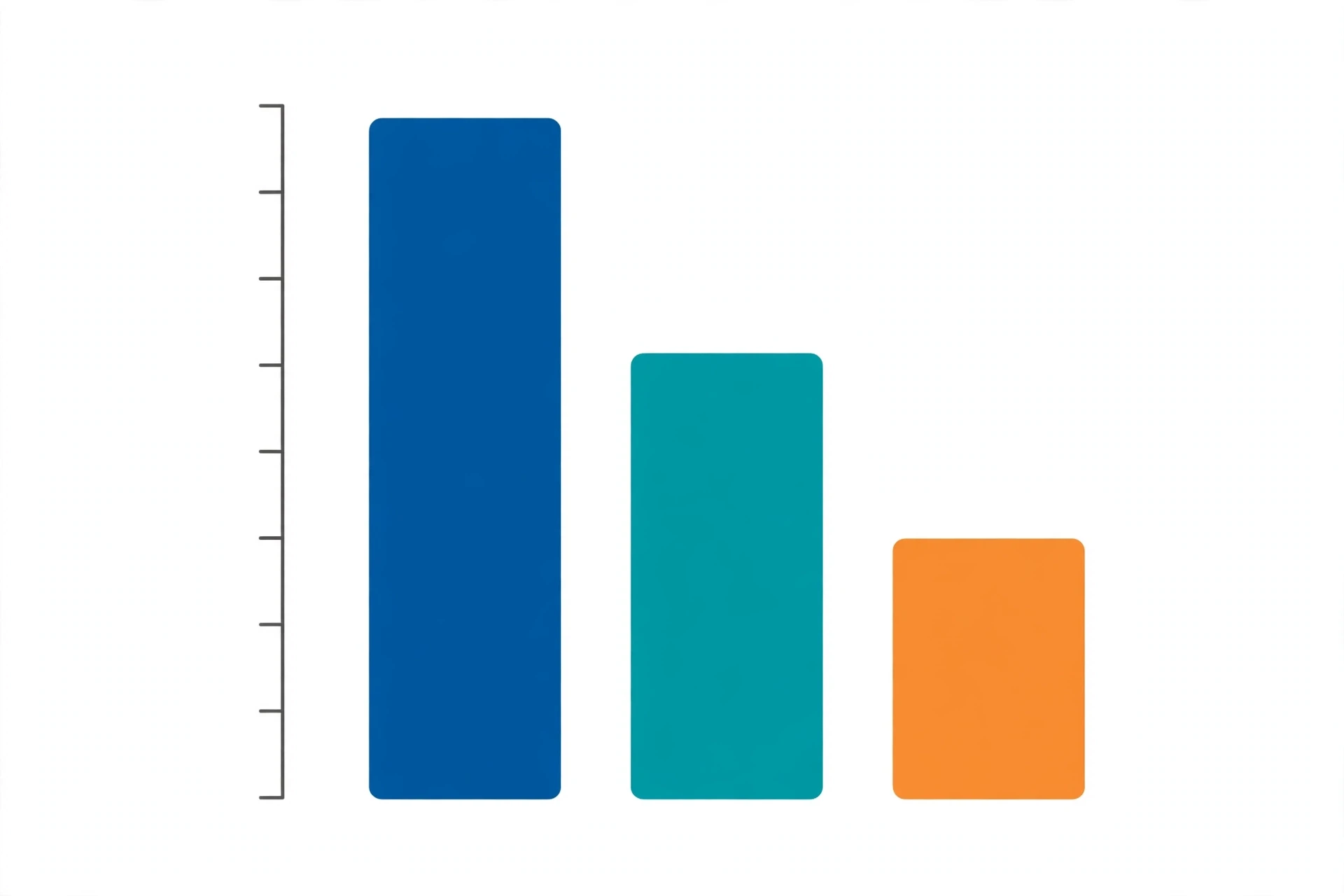
Asch ran the test with 123 participants. The results, published in the mid-1950s, became some of the most quoted numbers in psychology:
About 76% of participants conformed at least once, giving a wrong answer they knew was wrong on one or more of the rigged rounds.
On the rigged rounds, participants gave the wrong, conforming answer on roughly 37% of trials overall.
About 25% of participants never conformed at all, holding their ground on every round.
A small minority — around 5% — conformed on every single rigged round.
Read those numbers carefully, because they are often misquoted. Asch did not find that people always conform. He found that most people conform sometimes, even when the truth is staring them in the face, and that a solid minority never does. The power of the experiment is not that everyone caved. It is that the task was so easy that nobody should have caved at all — and three out of four still did, at least once.
2.3 What made people cave — and what set them free
Asch did not stop at the headline result. He changed the setup, one detail at a time, to find out what turned the pressure up and what turned it down. The variations are as revealing as the original:
Group size. Conformity rose as the group grew from one to three confederates, then levelled off. Three unanimous voices were nearly as powerful as seven.
Unanimity. The single most powerful factor was whether the group agreed completely. When just one confederate gave the correct answer — breaking the unanimous front — conformity collapsed to a fraction of its earlier level. One ally changed everything.
Public versus private. When participants wrote their answers down privately instead of saying them aloud, conformity dropped sharply. Much of the pressure was about being seen to disagree, not about doubting what they saw.
Task difficulty. When the lines were made harder to judge, conformity rose. Uncertainty is fuel for informational influence: when you are unsure, the group looks like evidence.
That second finding — the power of a single dissenter — stayed with me longer than any other result in the field. It tells us that conformity is not mainly about weak character. It is about the social cost of standing alone. Give a person one companion in dissent, and the cost drops, and the truth comes back into the room.
"The capacity to be alone with your own judgment, while a room full of people disagrees with you, is not a personality trait. It is a skill — and like any skill, it gets stronger with practice."
2.4 Why the lines mattered more than they look
It is tempting to dismiss the Asch experiment as a parlour trick. The lines were obvious; the stakes were nothing. But that is exactly the point. If social pressure can bend a judgment this simple and this low-stakes, imagine what it can do when the question is complex, the evidence is murky, and the group is your team, your family, or your country. The line test was a laboratory magnifier: it made a force visible in miniature that operates at full size everywhere else.
3. Two Reasons We Follow: Normative and Informational Influence
3.1 The need to belong
Normative influence runs on a simple human need: the need to be accepted. Exclusion hurts, and the brain treats it as a genuine threat — the same threat system involved in anxiety and depression, where social fear can take over daily life. Studies of social rejection have found that being left out activates some of the same brain regions involved in physical pain. That is not a metaphor the brain invented for poetry — it is a signal from an organ that evolved in groups, where exile could mean death. When a group makes clear, even silently, that disagreement will cost you your place, the pressure to conform is not abstract. It is felt in the body.
This is why conformity spikes in adolescence, why new employees copy the office culture within days, and why people laugh at jokes in groups that they would not find funny alone. The group is not arguing with you. It is offering you membership at the price of agreement, and the price usually looks cheap until you count what you paid.
3.2 The need to be right
Informational influence runs on a different need: the need to be correct when you cannot tell what is correct. In a dark room with a single point of light, the light appears to move — an effect called the autokinetic effect — and the psychologist Muzafer Sherif showed in the 1930s that people placed in that room alone gave wildly different estimates, but people placed in groups quickly converged on a shared answer. With no clear evidence of their own, they used each other as evidence.
You do the same thing every day. You pick the busy restaurant over the empty one, because a crowd looks like a review. You check which way other drivers are going when a road is flooded. You glance at the faces around you when a strange noise sounds in a theatre. None of this is foolish. Other people are often the best information available. The danger is that a crowd can be confidently wrong, and confidence is contagious. A group that agrees loudly looks like a group that knows something, even when all it knows is that everyone else agrees.

3.3 Normative versus informational influence at a glance
The table below puts the two forces side by side. Keep it in mind as you read the rest of the article — almost every example that follows is one of these two, or a blend of them.
Feature | Normative influence | Informational influence |
|---|---|---|
Driven by | The need to be liked and accepted | The need to be right when unsure |
Key question in your head | "Will they reject me if I disagree?" | "Do they know something I don't?" |
Strongest when | Your answer is public; the group matters to you | The task is unclear or difficult |
Weakens when | You answer privately; you have one ally | You have clear, reliable evidence of your own |
Everyday example | Clapping along at a concert you didn't enjoy | Following a crowd out of a building during an alarm |
Classic experiment | Asch's line test (public answers) | Sherif's moving-light study (ambiguous stimulus) |
4. Obedience: When the Crowd Wears a White Coat
4.1 Stanley Milgram and the shock machine
If Asch showed that we follow our peers, Stanley Milgram showed that we follow authority — further than almost anyone would have predicted. In the early 1960s, Milgram, then a psychologist at Yale University, recruited ordinary adults from the local community for what they were told was a study of learning and memory. Each volunteer was assigned the role of "teacher" and told to test a "learner" — an actor in the next room — on word pairs, giving an electric shock for every wrong answer. The shocks rose in 15-volt steps, from a mild 15 volts to a marked 450 volts, with labels on the switches that grew increasingly alarming.
The learner was not actually being shocked. The cries, the protests, the complaints of heart trouble, and finally the silence were all scripted. The only real question was how far the teacher would go when the experimenter, calm and authoritative in a grey lab coat, said: "Please continue."
Before the study, Milgram asked psychiatrists and students to predict the outcome. Most guessed that only a tiny fraction — perhaps one or two percent — would go all the way to 450 volts. The actual result was about 65%: two out of three participants continued to the maximum voltage, past the point where the learner had stopped responding altogether.

4.2 Why ordinary people obeyed
The participants were not sadists and not monsters. Many were visibly distressed — sweating, trembling, laughing nervously, protesting out loud — and still they continued. That combination, distress plus obedience, is the heart of the finding. Milgram's participants were caught between two forces: their own conscience, which told them to stop, and the situation, which told them the experimenter was responsible.
Milgram called this the agentic state: the person stops seeing themselves as the author of their actions and starts seeing themselves as an agent carrying out someone else's orders. The lab coat, the university setting, the calm instructions, and the step-by-step escalation all helped. Each shock was only 15 volts more than the last, so no single step felt like the moment to refuse. By the time the learner was screaming, the teacher had already agreed, in small increments, to go further than they ever would have agreed to at the start.
I once watched a junior colleague in a laboratory meeting agree to a procedure he plainly thought was unsafe, because the senior researcher had already said it was fine and the rest of the room had nodded. Nothing about the scene resembled a shock machine. Everything about the psychology was the same: the authority figure absorbed the responsibility, the group absorbed the doubt, and the individual was left with the uneasy feeling that objecting would be rude. He told me later that he had rehearsed the objection three times in his head and never said it. That is the Milgram effect in ordinary clothes.
4.3 What the variations revealed
Like Asch, Milgram varied his setup, and the variations map the boundaries of obedience:
Distance from the victim. When the learner was in the same room, obedience fell. When the teacher had to physically hold the learner's hand to the shock plate, it fell further, to about 30%.
Distance from the authority. When the experimenter gave instructions by telephone instead of in person, obedience dropped sharply.
Two experimenters who disagreed. When one authority figure told the participant to continue and another told them to stop, obedience collapsed to almost nothing. Authority, like a crowd, loses its power when it stops speaking with one voice.
A disobedient peer. When another "teacher" refused to go on, obedience fell dramatically. One dissenter, again, changed everything.
The pattern is consistent with Asch: the situation is powerful, but it is not destiny. Small changes in the situation — a visible victim, a divided authority, a single ally — give conscience room to act.
4.4 The ethics debate that never ended
Milgram's study is now one of the most argued-about experiments in psychology, and the argument is about ethics as much as science. Participants were deceived about the true purpose of the study, they were led to believe they had harmed another person, and many left the laboratory deeply distressed. Milgram debriefed them afterwards, explained the deception, and followed up with questionnaires suggesting most were glad to have taken part. Critics reply that the stress was real and the consent was not informed, because nobody can consent to an experience they do not understand.
Modern ethics rules would not permit Milgram's study in its original form. University review boards now require informed consent, the right to withdraw at any time, and a careful weighing of harm against knowledge gained. That is progress. But the ethics debate also hides a quieter question: if the study cannot be repeated, how do we know the finding still holds? The next section takes that question seriously, because researchers have found careful ways to answer it.
5. What Happens in the Brain When the Group Disagrees
5.1 The alarm system
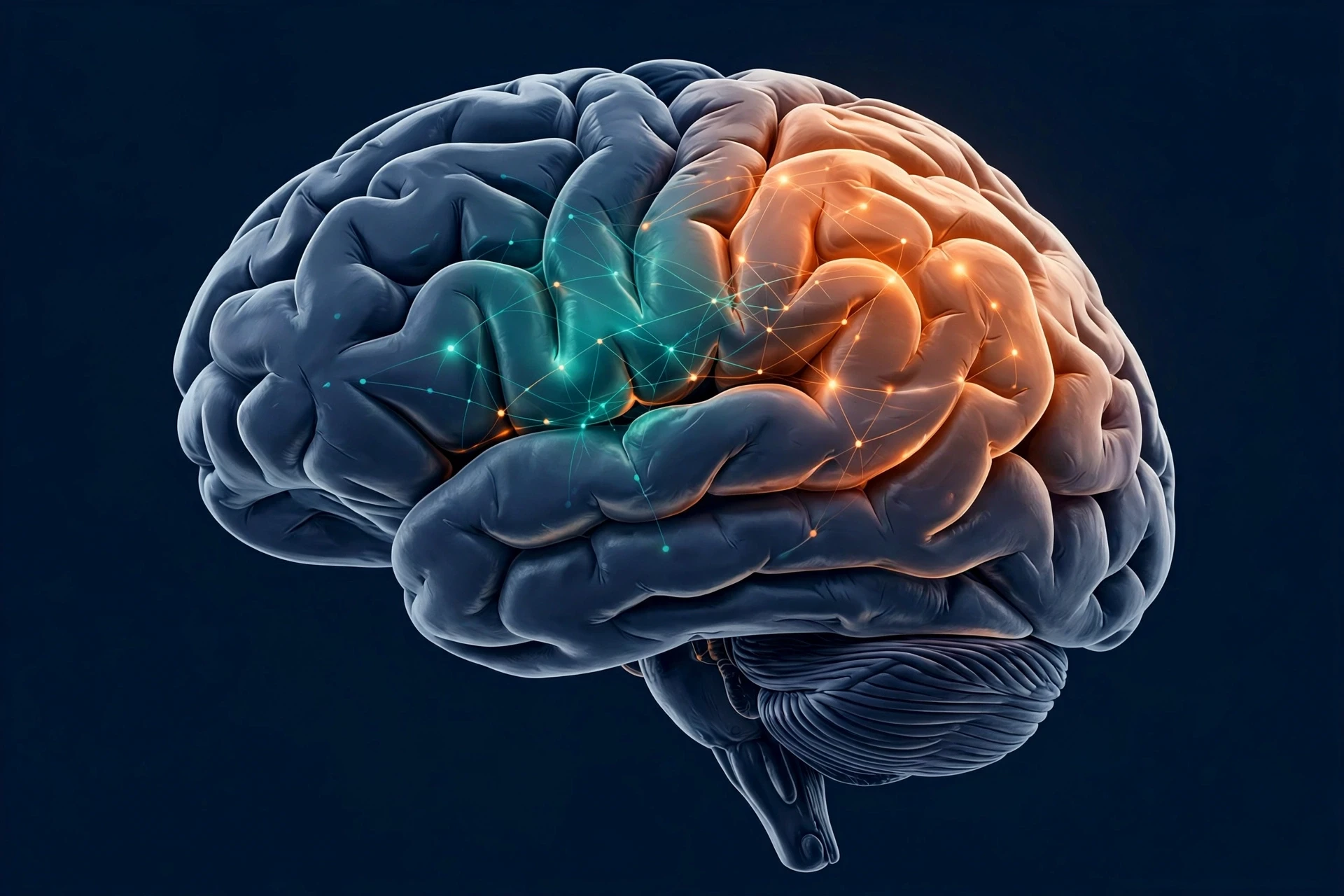
For decades, conformity was studied as a purely social phenomenon — something that happened between people. Brain imaging has added a layer underneath. When researchers put people in a scanner and showed them a group disagreeing with their judgment, the disagreement registered in regions linked to conflict detection and emotional salience, including parts of the medial prefrontal cortex and the anterior cingulate. In plain terms, being the odd one out sets off an alarm. The brain treats social disagreement as something that needs resolving, and conforming is one fast way to quiet it.
The same research shows that the reward system responds when your view matches the group. How the brain builds those signals depends on the circuits mapped in how the nervous system works, from sensory input to the prefrontal regions that weigh social information. Agreement feels good in a literal, measurable sense. This helps explain why conformity often happens before conscious deliberation: the brain is already nudging you toward the group's answer while you are still deciding what you think.
None of this means the brain forces you to conform. It means the tug you feel in a disagreeing room has a physical basis. You are not imagining the discomfort, and you are not weak for feeling it — and what reaches your conscious awareness in that moment is only part of what your brain is processing, as explored in what consciousness is. The discomfort is information — a signal that your social standing may be at stake — and like any signal, it can be noticed without being obeyed.
5.2 Why teenagers conform more — and why that makes sense
Conformity peaks in early adolescence, and the brain data helps explain why. The teenage brain is unusually sensitive to social evaluation, and peer approval carries extra weight during the years when young people are separating from their families and building their place among peers. The structures behind that sensitivity are laid out in human brain anatomy and functions. A teenager who copies friends' clothes, slang, or opinions is not being shallow. They are doing the developmental work of belonging, with a brain that registers peer judgment more intensely than an adult brain does.
That sensitivity is also why adolescence is the age of both the fiercest conformity and the fiercest rebellion. Social experiences in these years also shape what we remember about ourselves, a process explored in how the human brain forms memories. The same alarm system that pushes a teenager to follow the group can push them to reject one group in favour of another. The need underneath is the same: to be part of something that sees them and accepts them.
6. Groupthink: When Smart Groups Make Dumb Decisions
6.1 Irving Janis and the illusion of agreement
In the 1970s, the psychologist Irving Janis gave a name to a pattern he saw in famous policy disasters: groupthink. It happens when a tight-knit group values harmony more than accuracy, and the desire for consensus quietly shuts down critical thinking. Members censor their own doubts, assume silence means agreement, and dismiss outsiders who raise awkward questions. The group feels confident precisely because nobody is challenging it.
Janis pointed to the Bay of Pigs invasion of 1961, when President Kennedy's advisers approved a plan that most of them privately doubted, and to the decision-making behind the space shuttle Challenger disaster, where engineers' warnings about cold-weather risks were softened and set aside in a meeting culture that prized agreement and schedule. In both cases, the people involved were intelligent, experienced, and well-intentioned. The failure was not in the individuals. It was in the room.
6.2 The warning signs
Groupthink has a recognisable set of symptoms, and they are worth learning, because they show up in offices, classrooms, and committees far more often than in history books:
The illusion of invulnerability. The group believes it cannot fail, so it stops weighing risks.
Self-censorship. Members hold back doubts to avoid spoiling the mood.
The illusion of unanimity. Silence is read as agreement, so dissent seems to have vanished.
Mindguards. Some members take it upon themselves to shield the group from unwelcome information.
Stereotyping outsiders. Critics are dismissed as ignorant or hostile rather than answered.
If you have ever sat in a meeting where a bad idea sailed through because nobody wanted to be the one to object, you have watched groupthink in miniature. The antidote is not louder arguing. It is structure: assigning someone the role of devil's advocate, asking the leader to speak last, inviting outside opinions, and voting in private before discussing in public. Each of these is a way of breaking unanimity before unanimity breaks the decision.

7. Modern Replications: Do the Old Findings Still Hold?
7.1 Asch, repeated around the world
One fair question about Asch is whether his results were a product of 1950s America — a more conformist era. Researchers have repeated the line test many times since, in many countries, and the broad pattern survives. A well-known meta-analysis by Rod Bond and Peter Smith, covering over a hundred studies, found that conformity in Asch-style experiments remained substantial across decades, though it varied with culture: it tended to be higher in collectivist cultures, where group harmony is prized, and lower in individualist ones. The effect is not a museum piece. It is a living feature of human psychology.
7.2 Milgram, repeated with care
Milgram's study could not be repeated in its original form, but a psychologist named Jerry Burger found a careful way to test the core finding in 2006. Burger stopped the procedure at 150 volts — the point where the learner first demands to be released — and used that as the measure. In Milgram's original study, about 79% of participants went past 150 volts; in Burger's replication, about 70% did. The numbers are not identical, but the message is: most people still went on, even when the learner was begging to stop.
More recently, researchers have used virtual reality and other methods to study obedience without the deception and distress of the original. The results keep pointing the same way. Authority, uniforms, and institutional settings still move people further than they expect to be moved.
7.3 The limits the textbooks sometimes skip
Honesty requires saying what the classic studies do not prove. Asch's participants were mostly male American students in the 1950s. Milgram's were mostly men from one American city. Both studies used situations designed to maximise pressure. And both findings describe what people do on average, not what any individual will do. About a quarter of Asch's participants never conformed. About a third of Milgram's refused to go to the maximum. The situation is powerful, but it is not a puppet master — and the people who resisted are as much a part of the science as the people who complied.
8. Conformity in the Age of the Feed
8.1 The crowd is now in your pocket
Asch needed a room full of actors. Today, the group follows you everywhere. Social media platforms show you, in real time, how many people liked, shared, and agreed — and the numbers are always visible before you form your own opinion. A post with ten thousand likes arrives pre-approved by a crowd you cannot see. A comment section full of outrage tells you, before you have read the article, how you are supposed to feel about it.
The mechanisms are the same ones Asch and Milgram mapped, running at a larger scale and a faster speed. Normative influence: the fear of being ratioed, mocked, or unfollowed for an unpopular opinion. Informational influence: treating likes and shares as evidence about what is true. Groupthink: feeds that show you mostly people who already agree with you, creating an illusion of unanimity far wider than reality. The science of conformity did not become outdated when the crowd went digital. It became more relevant.
8.2 Algorithms as confederates
There is one new twist worth naming. In Asch's room, the confederates were people. Online, the "group" you see is partly curated by software that shows you the most engaging content — and outrage, certainty, and consensus are engaging. That means the crowd you perceive may be louder and more unanimous than the real population. Psychologists call the wider pattern pluralistic ignorance: everyone privately doubts the consensus, but each person believes everyone else believes it, so nobody speaks. A feed can manufacture that state at scale.
The defence is the same as it was in 1955, though it takes more effort now: seek out the private answer before the public one. Read the article before the comments. Form your view before checking the likes. And remember that the loudest voices in a thread are not a representative sample of anything except the thread.

9. Common Misconceptions About Conformity
9.1 "Only weak people conform"
This is the most common misunderstanding, and the data contradicts it. In Asch's study, the people who conformed were ordinary students, and many of them were distressed by what they were doing. Conformity tracked the situation — group size, unanimity, public answers — far more than it tracked personality. Strong-willed people conform too, especially when the group is unanimous and the answer is public.
9.2 "Conformity is always bad"
Conformity keeps societies running. Queues, traffic rules, polite greetings, scientific consensus, and public health measures all depend on people going along with shared norms. The question is never whether to conform, but when. A good rule is to ask two questions: is the group right, and does it matter? If the group is right and the stakes are low, conforming is simply efficient. If the group may be wrong and the stakes are high, that is when independence earns its keep.
9.3 "I would never do what Milgram's participants did"
Most of Milgram's participants would have said the same thing before the experiment. That is the point. We judge our future behaviour from the calm of armchair reflection, but the experiment happens in a room, under pressure, in small steps, with an authority figure watching. The honest lesson of Milgram is not that other people are obedient. It is that you cannot know how obedient you are until the situation tests you — so it is worth deciding, in advance, where your lines are.
9.4 "Social media made us conformist"
Social media amplified conformity; it did not invent it. Asch's participants were conforming in 1951, decades before the first smartphone. What the feed changed is the speed, the scale, and the visibility of the crowd — not the wiring underneath. Blaming the phone alone misses the older, deeper story, and it lets us off the hook for the conforming we do face to face.
10. How to Think for Yourself — Without Becoming Contrarian
10.1 Practical tools that actually work
Independence is not a personality trait you either have or lack. It is a set of habits, and the research points to several that help:
Write your answer down before the group speaks. Private commitment is a powerful anchor. In meetings, jot down your view before discussion begins.
Find one ally. Asch's dissenter finding is practical advice: if you disagree, say so early, and look for the other person who agrees. Two voices break unanimity.
Ask for the evidence, not the consensus. "How many people agree?" is the wrong question. "What is the evidence?" is the right one.
Separate the messenger from the message. A lab coat, a title, or a confident tone is not evidence. Ask what the authority figure knows that you do not.
Slow the small steps — and protect the overnight consolidation that turns social learning into lasting knowledge, a process described in the science of sleep and dreams. Milgram's escalation worked because each step was tiny. When you notice yourself agreeing in increments, pause and ask where the path leads.
Invite dissent on purpose. If you lead a group, ask someone to argue the other side, and speak last yourself. The best decisions come from rooms where disagreement is safe.
10.2 The goal is not to never conform
A few years ago, I caught myself doing the opposite of conforming: disagreeing with a colleague's proposal in a meeting simply because everyone else liked it. I had mistaken independence for opposition, and my objection was weaker for it. The point of understanding conformity is not to become the person who always disagrees. It is to become the person who knows why they agree — or disagree — and can say so out loud.

The Crowd Will Always Be There. Your Judgment Can Be Too.
The elevator story I began with ended well: I faced the doors, rode down, and nothing happened. But I think about those six strangers facing the wall more often than the moment deserves, because they captured something true about being human. We are built to read the room, to follow the group, and to fear standing apart. That wiring kept our ancestors alive, and it still helps us navigate a complicated world.
Asch showed us that the wiring can override our own eyes. Milgram showed us that it can override our conscience. The brain research shows us that the pressure is felt, not imagined. And the modern replications show us that none of this was a quirk of the past — the crowd is still with us, now in our pockets, in our feeds, and in every meeting room we enter.
The hopeful part of the science is the part people quote least. One dissenter breaks the spell. A private answer holds its ground. A divided authority loses its grip. A group that invites disagreement makes better decisions than a group that demands agreement. The power of the situation is real, but situations are made of people — and you are one of them. The next time the room turns one way and your judgment points the other, remember the line test, remember the single ally, and trust what you can see with your own eyes. The crowd will always be there. Your judgment can be too.
Frequently Asked Questions
Why do people follow the crowd?
People follow the crowd for two main reasons: to be accepted by the group (normative influence) and because they believe the group knows something they do not (informational influence). Both drives are normal features of a social brain, and both can be useful — the crowd is often right. Problems arise when the group is wrong, the stakes are high, and nobody is willing to say so.
What is conformity in psychology?
Conformity in psychology is a change in a person's beliefs or behaviour to match the people around them. It is studied through classic experiments such as Solomon Asch's line-judgment test, in which about 76% of participants gave at least one wrong answer to match a unanimous group, and Stanley Milgram's obedience study, in which about 65% of participants followed an authority figure's instructions to the maximum.
What did the Asch conformity experiment prove?
The Asch experiment proved that social pressure can change people's judgments even when the correct answer is obvious. On rigged rounds, participants conformed on about 37% of trials. It also showed that conformity collapses when just one other person breaks the unanimous front — a single dissenter gives others permission to trust their own eyes.
What did the Milgram experiment show about obedience?
Milgram's experiment showed that ordinary people will obey an authority figure far further than they — or outside observers — expect. About 65% of participants continued giving what they believed were electric shocks up to the maximum of 450 volts when instructed to do so. The study also showed that obedience drops when the victim is closer, the authority is further away, or another person disobeys.
Is conformity good or bad?
Conformity is neither good nor bad on its own. It is a shortcut that helps societies coordinate — queues, traffic rules, and shared norms all depend on it. It becomes harmful when it replaces independent thinking on important decisions, suppresses dissent in groups (groupthink), or leads people to act against their own values. The skill is knowing when to follow and when to stand apart.
How can I resist peer pressure and think for myself?
Write down your view before the group discusses it, so you have a private anchor. Find one ally — a single dissenter dramatically weakens group pressure. Ask for evidence rather than counting heads, separate the authority figure's status from their argument, and slow down when you notice yourself agreeing in small steps. If you lead a group, invite dissent and speak last.
Sources
American Psychological Association — Conformity and social psychology: https://www.apa.org/topics/social-psychology/conformity
Simply Psychology — Asch Conformity Experiment: https://www.simplypsychology.org/asch-conformity.html
Simply Psychology — Milgram Experiment: Summary, Results, and Ethics: https://www.simplypsychology.org/milgram.html
Psychology Today — Conformity: https://www.psychologytoday.com/us/basics/conformity
National Institute of Mental Health — Health Topics: https://www.nimh.nih.gov/health/topics
Washington State University, OpenText Introductory Psychology — Conformity, Compliance, and Obedience (content verified via search-index extract; direct curl returned 403 bot block): https://opentext.wsu.edu/psych105/chapter/11-5-conformity-compliance-obedience/