

1. The Moment It Starts — And Why It Feels Like Lightning
She was not the loudest person in the room. That is the first thing I remember about the evening I watched a friend fall in love, or at least begin to. We were at a crowded bookshop talk, the kind where chairs scrape and coffee goes cold, and he spent the whole hour angled toward a stranger two rows ahead, listening to her questions more closely than to the speaker. On the walk home he said, almost embarrassed, "I think I just met someone." He could not explain why. She had asked a good question. She had laughed at the same joke he had. That was all. Yet something in him had already decided she mattered.
Most of us have a version of that story. A glance across a train carriage. A conversation that runs two hours past closing time. A colleague whose emails you suddenly read twice. The question that follows is the one this article tries to answer: why do we fall in love — not in poetry, but in psychology and brain science? What actually happens in the minutes, weeks and months after that first spark, and why does it feel so different from simply liking someone?
The short answer is that love is not one thing. It is a bundle of systems that evolved for different jobs: a fast attraction system that grabs attention, a bonding system that keeps two people close, and a long-term attachment system that turns a spark into a shared life. Each system uses different brain regions, different chemicals and different kinds of learning. When they fire together, the result feels like fate. When they fire out of step, the result feels like confusion, longing or heartbreak.
I have spent years reading brain-imaging studies, sitting through lectures on attachment, and arguing with colleagues about what a single chemical can and cannot explain. The picture that has held up best is less romantic than a song lyric and more interesting than a slogan. Love is a motivation system. It pushes us to seek one person, to pay attention to them above everyone else, and to build a life around them. That push can be measured. In brain scanners, in hormone samples, in the small choices people make day after day, love leaves a trace.
This article follows that trace. We will look at what happens in the brain when someone falls in love, what dopamine, oxytocin and serotonin actually do — and what they do not do — how three ingredients combine into different kinds of love, why we are drawn to people we see often and people like us, how love changes over time, and what to do with all of this if you are trying to understand your own heart. Along the way we will correct a few popular myths, because the myths are part of why love feels so confusing. If you have ever asked yourself why do we fall in love with one person and not another, or why a feeling that strong can fade, or why it can hurt so much when it ends, the science has real answers. They are not always tidy. They are worth knowing.
2. What Do We Mean When We Say "Love"?
2.1 Love is a verb, a state and a system
Ask ten people to define love and you will get ten different answers, and that is part of the problem for science. A psychologist cannot put "love" in a test tube. Researchers have to break it into pieces they can measure: how much time you want to spend with someone, how much you think about them, how distressed you are when you are apart, how willing you are to sacrifice for them, and how your body responds when you see their face.
That is why scientists often talk about three overlapping systems rather than one feeling. The first is lust, the drive toward physical closeness. The second is attraction, the focused, euphoric, slightly obsessive pull toward one particular person. The third is attachment, the calm, deep bond that makes you feel safe with someone over years. They can run together or apart. You can feel lust without attachment, attraction without commitment, and attachment without the early fireworks. Understanding which system is active explains a lot of otherwise baffling behaviour — including why do we fall in love so fast with someone we barely know, and why that fast feeling is not the same as a lasting bond.
2.2 Love is not just an emotion
Here is a distinction that changed how I think about the whole topic. Emotions like joy or anger come and go in minutes. Love, in the form researchers study most, behaves more like a drive — like hunger or thirst. It has a goal, it focuses attention, it changes what you notice and what you remember, and it persists until the goal is met or blocked. That is why a person in love can seem distracted, energised and single-minded all at once. The regions involved are mapped in Human Brain Anatomy and Functions: A Complete Guide, which explains how the reward and emotion circuits fit together. Their brain is not just feeling something. It is pursuing something.
"Romantic love is primarily a motivation system, rather than an emotion. It is a drive to pursue a preferred mate, and it shares deep roots with the reward systems of other mammals."
That framing comes from the brain-imaging work we will look at next, and it matters because it reframes the question. Instead of asking "what feeling is love?", we can ask "what is love for, and how does the brain carry it out?" The answers turn out to be practical, testable and, in places, surprising.
2.3 The three questions this article answers
What happens in the brain in the first weeks of falling in love?
What do the famous chemicals — dopamine, oxytocin, serotonin — actually do?
Why do we fall in love with particular people, and why do some loves last while others fade?
Keep those three questions in mind. Every section below answers one of them, and the final sections bring them together into advice you can actually use.
3. The Brain in Love: What the Scanners Show
3.1 Helen Fisher and the people who could not stop thinking about someone
In the early 2000s, anthropologist Helen Fisher and her colleagues did something simple and brave: they put people who were intensely in love into a brain scanner and showed them photographs of their beloved. The volunteers — 17 young adults in one well-known study — had been in love for an average of about seven months. They reported thinking about their partner for most of the day. They were not acting. They were, by their own account, consumed.
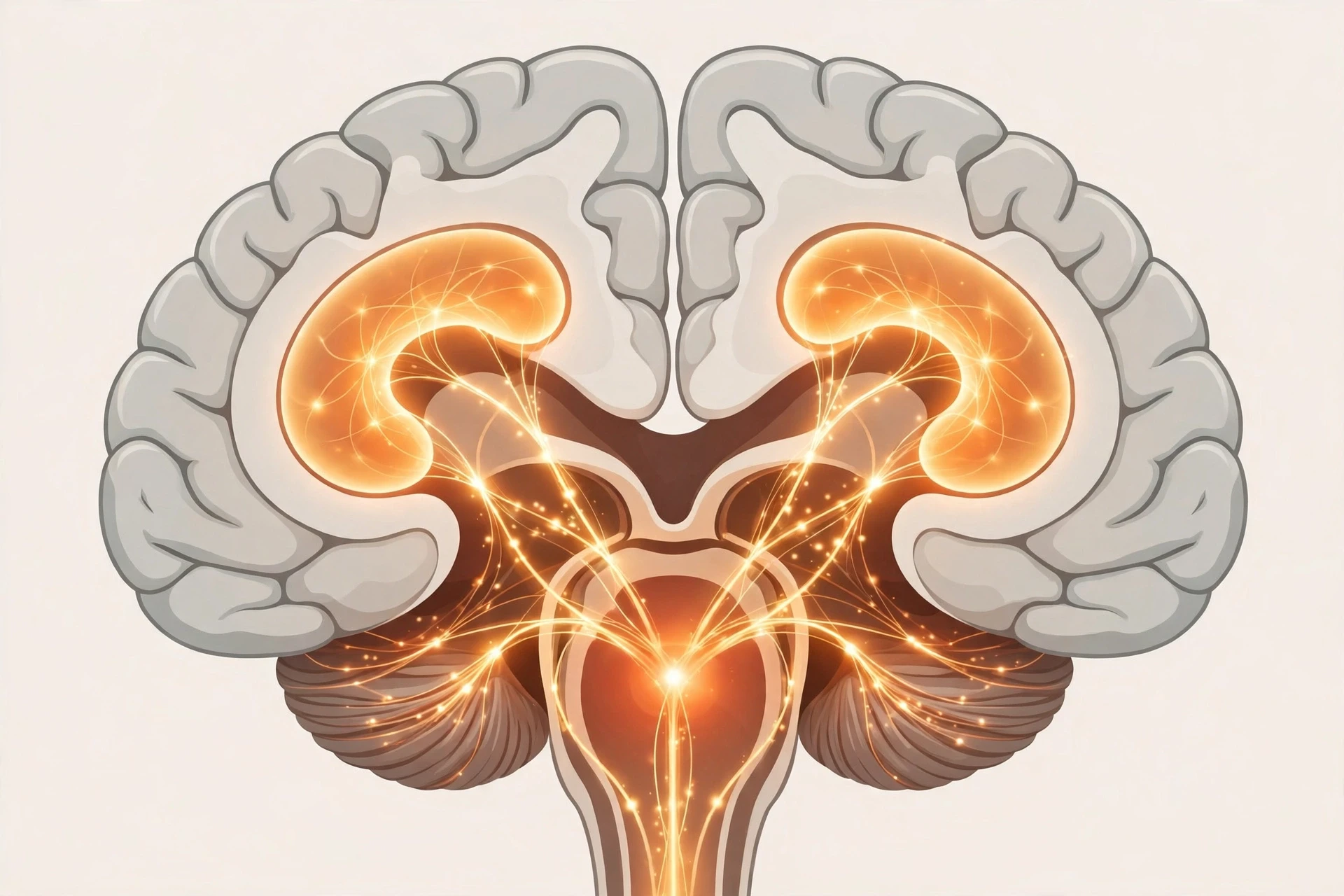
The researchers compared brain activity while the volunteers looked at a photo of their beloved with activity while they looked at a photo of a familiar acquaintance. The difference was striking. Two dopamine-rich regions lit up specifically for the beloved: the ventral tegmental area (VTA), a small cluster of cells deep in the midbrain, and the right caudate nucleus, part of the brain's reward and motivation circuitry. Those are the same regions that respond to food, money and other rewards — but here they responded to a face. The team concluded that romantic love draws heavily on dopaminergic reward pathways, and that love is best understood as a motivation system, not a single emotion. You can read the original study on PubMed: Romantic love: an fMRI study of a neural mechanism for mate choice.
I remember reading that paper for the first time and feeling two things at once: excitement, because the result was so clean, and caution, because a bright spot on a scan is not a full explanation. A scanner shows where blood flows. It does not show what a person feels, and it does not prove that one region causes love. Fisher and her colleagues were careful about that, and so should we be. Still, the pattern has been repeated in later studies, including work with couples who had been married for more than twenty years and still reported intense love. In those long-term couples, the VTA and caudate were still active when they saw their partner's face — alongside regions linked to attachment and calm. Early love and long love share a core circuit, but long love adds quieter, steadier regions to the picture.
3.2 The VTA and caudate: the brain's "go get it" circuit
Think of the VTA as a small factory that makes dopamine and sends it out along pathways to other parts of the brain. Think of the caudate as a kind of reward detector: it helps you notice that something good is coming, learn what predicted it, and stay focused on getting it. Together they form part of the brain's reward system, the circuitry that helps animals — including us — pursue food, water, safety and mates.
When that circuit fires for a person, three things happen that match the experience of new love. First, attention narrows. You notice that person in a crowd. You remember small details about them. Second, motivation rises. You want to see them again, you plan around them, you put in effort that would feel exhausting for anyone else. Third, the experience feels rewarding in itself. A text back feels like a small win. A shared laugh feels disproportionately good. That is not an accident. It is the reward system doing the job it evolved to do: making the pursuit of a valued goal feel worth the energy.
3.3 What the scanners do not show
A brain scan is a map, not a mind. It cannot tell you whether someone's love is wise, kind or likely to last. It cannot tell you whether two people are compatible. And it cannot capture the parts of love that live outside the brain: shared jokes, a history of showing up, the way someone makes tea exactly how you like it. The scanner studies are valuable because they show that love is embodied — it has a biology, not just a story. They are limited because biology is only one layer of the story.
That limit is worth holding on to, because the rest of this article moves between layers: brain, chemistry, psychology, behaviour and culture. No single layer explains why do we fall in love. Together, they start to.
4. The Chemistry of Love: Dopamine, Oxytocin, Serotonin — And the Myths
If you have read a single popular article about love and the brain, you have met dopamine. It is usually introduced as "the love chemical" or "the pleasure chemical." Both labels are wrong in ways that matter, and correcting them is one of the most useful things this article can do.
4.1 Dopamine: anticipation, not pleasure
Dopamine is often described as the brain's reward chemical, as if it were a happiness juice that floods in when something good happens. The research tells a subtler story. Dopamine is most active when we anticipate a reward, when we are motivated to pursue it, and when we learn what predicts it. It is the chemical of "go and get it," not simply "this feels nice."
That fits new love perfectly. The early weeks are full of anticipation: waiting for a reply, planning the next meeting, wondering whether the feeling is mutual. Each small sign — a returned message, a held glance — acts like a clue that the reward is near, and the reward system responds. This also explains why uncertainty can feel so addictive in early romance. When a reward is predictable, the brain settles. When it is uncertain, the brain stays alert, scanning for the next clue. That alertness can feel thrilling. It can also feel exhausting, and it is one reason why the early stage of love can look a lot like anxiety.
I once watched a colleague check his phone every few minutes during a lab meeting, then light up when a single message arrived. He laughed at himself, but the pattern was familiar to anyone who has been newly in love. The message itself was ordinary — a joke about lunch. The anticipation around it was not. Dopamine helps explain the gap between the ordinary message and the outsized feeling, but it does not explain the whole feeling. For that we need the other chemicals, and the psychology around them.
4.2 Oxytocin: bonding, touch and trust — with limits
Oxytocin is often called "the love hormone" or "the cuddle hormone." It is released during touch, hugging, childbirth and breastfeeding, and it plays a role in social bonding in many mammals. In humans, oxytocin is linked to trust, generosity and feeling close to others — and to the calm that comes from being held by someone safe.
That is real, and it is also easy to overstate. Oxytocin does not create love on its own. It does not make a stranger into a soulmate, and it does not fix a relationship that is otherwise unkind or unsafe. What it seems to do is amplify social signals: it makes the familiar feel safer and the trusted feel closer. In a good relationship, that amplification helps a bond deepen. In a bad one, it can make leaving harder, because the moments of closeness feel so soothing. The hormone is not a moral judge. It is a bonding signal, and bonding can happen to the wrong person as well as the right one.
Physical closeness matters here in a very ordinary way. Hormones are messengers, and how they are released and regulated is explained in How the Endocrine System Works: Hormones Explained. Holding hands, hugging, sitting close on a sofa — these small acts of touch are not just romantic decoration. They are part of how the bonding system learns that this person is safe. That is one reason why long-distance love is hard even when the feelings are strong: the bonding system gets fewer of the signals it uses to feel secure. Couples who manage distance well usually replace touch with other bonding signals — long calls, shared routines, small daily check-ins — and that is not a coincidence. They are feeding the same system through a different channel.
4.3 Serotonin: why early love can feel like obsession
Here is one of the strangest findings in the science of love, and one of my favourites to teach. In the early stage of intense romantic love, levels of serotonin — a chemical messenger involved in mood, sleep and impulse control — appear to drop. In one well-known comparison, people who had recently fallen in love had serotonin levels similar to people with obsessive-compulsive disorder. That does not mean love is a disorder. It means the two states share a feature: intrusive, repetitive thoughts that are hard to switch off.
If you have ever found yourself replaying a conversation word for word, checking a photo, or thinking about someone when you meant to be working, you have felt this. The serotonin drop is one candidate explanation for why early love can feel obsessive. The brain's usual "let it go" signal is quieter, so thoughts about the beloved loop more easily. As love matures, serotonin levels tend to return to normal, and the looping softens. That softening is often mistaken for falling out of love. It is usually the opposite: the obsessive stage is giving way to a calmer, more stable attachment.
4.4 The myth-busting table
The table below puts the popular claims next to what the evidence actually supports. Keep it in mind whenever a headline promises a single chemical explanation for love.
Popular claim | What the evidence actually supports |
|---|---|
Dopamine is the "love chemical" | Dopamine supports motivation, anticipation and reward learning. It helps explain pursuit and focus, not love as a whole. |
Oxytocin makes you fall in love | Oxytocin supports bonding and trust in safe relationships. It amplifies closeness; it does not create love by itself. |
Love is just a chemical rush | Chemistry is one layer. Psychology, shared history, values and choices shape whether love grows or fades. |
Serotonin drops mean love is unhealthy | Lower serotonin in early love is linked to intrusive thoughts. It usually normalises as attachment deepens. |
Men and women fall in love differently in the brain | Core reward regions activate in both sexes. Differences are small and overlap far more than they differ. |
The American Psychological Association's overview of love and relationships is a good starting point for readers who want the mainstream view without the hype: Love — American Psychological Association. The APA also covers how love, attachment and health connect in its Monitor on Psychology: The science of love.
4.5 Why the myths are so sticky
Myths about love chemicals survive because they are simple, and because they feel true. When you are in love, you do feel flooded. Something is happening in your body. A single chemical gives that flood a name, and a name feels like an explanation. The trouble is that a name is not a mechanism. Saying "it is dopamine" tells you almost nothing about what to do next — whether to trust the feeling, how to build on it, or when to be cautious.
The honest version is less catchy and more useful. Love involves several chemicals, several brain regions, and several psychological processes, all changing over time. That complexity is not a flaw in the science. It is the science. And it leaves room for something the myths erase: choice. Chemistry can start a fire. It cannot decide whether you tend it.
That brings us back to the central question — why do we fall in love? — and the next layer of the answer.
5. Sternberg's Triangle: Three Ingredients, Eight Kinds of Love
5.1 Intimacy, passion and commitment
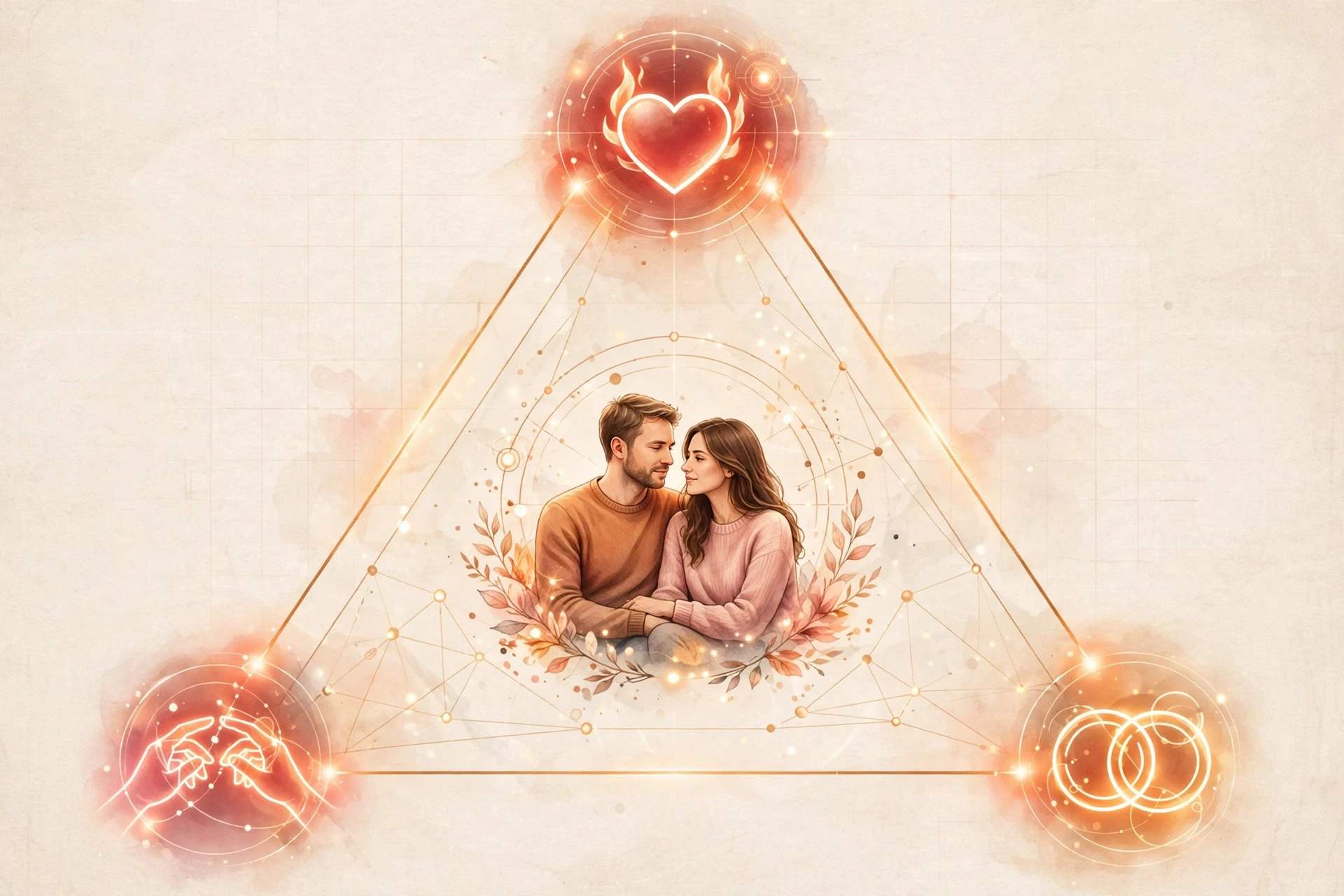
If the brain tells us how love works, psychologist Robert Sternberg's triangular theory tells us what love is made of. Sternberg, now at Cornell University, proposed that love has three components: intimacy — closeness, connectedness and bondedness; passion — romance, physical attraction and desire; and commitment — the decision to love someone and to maintain that love over time. Each component can be high or low, and different combinations produce different kinds of love. Cornell's own account of Sternberg's theory explains the combinations clearly: Robert Sternberg and the Triangular Theory of Love — Cornell Human Ecology.
The triangle is a metaphor, not a piece of geometry. Sternberg never claimed that real love forms a perfect equilateral triangle. The point is that love is not all-or-nothing. A relationship can be high in one ingredient and low in another, and that imbalance explains a lot of everyday experience.
5.2 The eight combinations
Nonlove: none of the three — the absence of love, as with a casual acquaintance.
Liking: intimacy only — the warm closeness of a good friendship.
Infatuated love: passion only — intense, fast, and often short-lived.
Empty love: commitment only — a decision without closeness or desire, as in some long-stale marriages or arranged unions that never warmed.
Romantic love: intimacy plus passion, without commitment — the classic early romance.
Companionate love: intimacy plus commitment, without passion — the deep friendship of many long marriages.
Fatuous love: passion plus commitment, without intimacy — a whirlwind commitment built before the couple really knows each other.
Consummate love: all three — intimacy, passion and commitment together. Sternberg called this complete love, and noted that it is hard to reach and harder to maintain.
That list is useful because it gives couples a language for what is missing. A couple who says "we love each other but the spark is gone" may be describing companionate love — strong on intimacy and commitment, low on passion. A couple who says "the chemistry is amazing but I do not feel known" may be describing fatuous or infatuated love. Naming the missing ingredient does not fix a relationship by itself, but it turns a vague feeling of wrongness into a specific question: what would it take to build more intimacy, or more passion, or a clearer commitment?
5.3 Why the triangle changes over time
Sternberg's model also explains why love feels different at different stages. Passion tends to rise fast and fade first, unless a couple actively renews it. Intimacy grows more slowly, through shared experience and honest conversation. Commitment is a decision that can be made quickly — "I choose you" — and then has to be remade daily in small ways. A relationship that starts as romantic love can grow into consummate love if intimacy and commitment catch up with passion. It can also slide into companionate love if passion fades and no one notices, or into empty love if intimacy fades too.
I think of the triangle as a diagnostic tool, not a test to pass. No couple sits at consummate love all the time. Real relationships move around the triangle with seasons, stress, children, illness and work. The couples who last are not the ones who never leave consummate love. They are the ones who notice when they have drifted, and who know which corner needs attention.
5.4 A note on culture and the triangle
Sternberg developed his theory in the United States, and the way the three ingredients are valued varies across cultures. Some cultures emphasise commitment and family duty first, with intimacy and passion expected to grow later. Others emphasise passion and personal choice first, with commitment following. Neither order is more "real." The triangle is a map of ingredients, not a recipe with one correct order. That matters for readers from different backgrounds: if your experience of love began with a family decision rather than a spark, the science still applies — the ingredients are the same, even if they arrived in a different sequence.
That brings us back to the central question — why do we fall in love? — and the next layer of the answer.
6. Why This Person? Proximity, Familiarity and the Mere-Exposure Effect
6.1 The most powerful predictor is embarrassingly ordinary
If you ask people why they fell in love with their partner, they will tell you about qualities: kind, funny, smart, beautiful. If you ask researchers, they will tell you something less flattering and more true: the single strongest predictor of who you fall in love with is who you meet. Again and again. Psychologists call this proximity — physical nearness and, more precisely, functional distance, or how often your paths cross.
The classic evidence comes from the Westgate studies at MIT in 1950. Leon Festinger and his colleagues studied married student couples living in apartment blocks. Because flats were assigned more or less at random, the researchers could ask a clean question: did people become friends with those who lived nearest? The answer was yes, dramatically so. Most friendships formed between people living within a few doors of each other, and the rate fell sharply with distance. The same pattern has been found in offices, classrooms, dormitories and neighbourhoods ever since. We fall in love with people we see, because we cannot fall in love with people we never meet.
That is why the question "why do we fall in love with this person?" has a humbling answer at its core. Part of it is who they are. Part of it is that they were there — in your building, your class, your workplace, your friend group, your daily commute. The modern version of proximity is the algorithm: dating apps, social media and shared online spaces create a new kind of functional distance, putting some people in your path every day and others never at all. The mechanism is old. The meeting place is new.
6.2 The mere-exposure effect: familiarity breeds liking
Proximity works partly through a principle called the mere-exposure effect, first described by psychologist Robert Zajonc in 1968. The more often we are exposed to something — a song, a face, a person — the more we tend to like it, even without consciously remembering the exposures. Zajonc argued that familiarity feels safe, because we know what to expect, and safety feels good.
A neat demonstration came from Moreland and Beach in 1992. Four women of similar appearance attended a university class a different number of times, without interacting with anyone. At the end of term, students rated the woman who had attended most often as the most familiar, the most similar to themselves, and the most attractive — even though they had never spoken to her. Repeated, neutral exposure had done the work. The effect is not unlimited: if the first encounters are negative, repeated exposure can deepen dislike rather than liking, and liking tends to level off after many exposures. But for neutral or mildly pleasant first meetings, familiarity is a quiet, powerful force.
Think about your own life. The colleague you barely noticed in week one can seem warmer by week six, simply because you have passed each other in the corridor, shared a lift, and heard their laugh from the next desk. That is not shallowness. It is your brain learning that this person is predictable and safe, and rewarding that learning with liking. The open textbook Introduction to Psychology from SUNY covers proximity, familiarity and similarity together in a clear, free chapter: Attraction and Love — Introduction to Psychology (SUNY).
6.3 Functional distance in daily life
Proximity is not just about kilometres. It is about how often two lives intersect. Two people who live on opposite sides of a city but take the same train, use the same gym and drink coffee in the same café may have a smaller functional distance than two neighbours who keep opposite hours. Architects and office designers know this: shared stairwells, communal kitchens and open spaces create the accidental encounters from which relationships grow.
That has a practical implication. If you want to meet someone, the most effective strategy is often not to search harder but to show up more — in places where the kind of person you hope to meet also shows up, repeatedly. Join the running club, the evening class, the volunteer rota. Go to the same place at the same time. Let familiarity do its slow work. It is less dramatic than a chance encounter in a film, and far more reliable.

That brings us back to the central question — why do we fall in love? — and the next layer of the answer.
7. Similarity: Why "Opposites Attract" Is Mostly Wrong
7.1 Birds of a feather
"Opposites attract" is a great line for a song. It is a poor description of how attraction actually works. Decades of research find that we are drawn to people who are similar to us — in attitudes, values, interests, background, education and even physical attractiveness. Psychologists call this the similarity-attraction effect, and it is one of the most reliable findings in social psychology.
The reason is straightforward. Similar people are easier to understand, easier to agree with, and more likely to validate our view of the world. Conversation flows. Disagreements are smaller. The future feels more predictable. A partner who shares your values on money, family, religion or politics removes a whole category of friction before it starts. That does not mean partners must be identical — in fact, small differences can be interesting and complementary — but the core of the relationship usually rests on shared ground.
In one classic line of research, Donn Byrne's "bogus stranger" studies in the 1970s showed that the proportion of attitudes a stranger supposedly shared with a participant directly predicted how much the participant liked them. The more agreement, the more liking, in a strikingly straight line. Later research has confirmed the pattern in real couples: partners tend to be similar on the things that matter most to them, and couples who are more similar tend to report higher satisfaction, at least on average.
7.2 The matching hypothesis and the limits of similarity
A related idea is the matching hypothesis: people tend to pair up with others who are roughly similar in physical attractiveness and social desirability. That sounds harsh, and it is often misunderstood. It does not mean that attractive people only date attractive people, or that anyone is "out of your league" in a fixed way. It means that, in practice, people tend to choose partners whose overall desirability — a mix of looks, kindness, humour, status and warmth — is roughly comparable to their own. The matching is about the whole package, not a single trait.
There is a kinder way to read this research. Similarity is not about finding a copy of yourself. It is about finding someone whose way of living fits yours. Do you both recharge by going out, or by staying in? Do you both want children, or neither? Do you both find the same things funny? Those fits matter more than sharing a favourite band, though sharing a favourite band does not hurt. When I talk to couples who have lasted, they rarely describe a perfect match on paper. They describe a fit in daily life: the same rhythm, the same jokes, the same willingness to compromise on the small things.
7.3 What about differences?
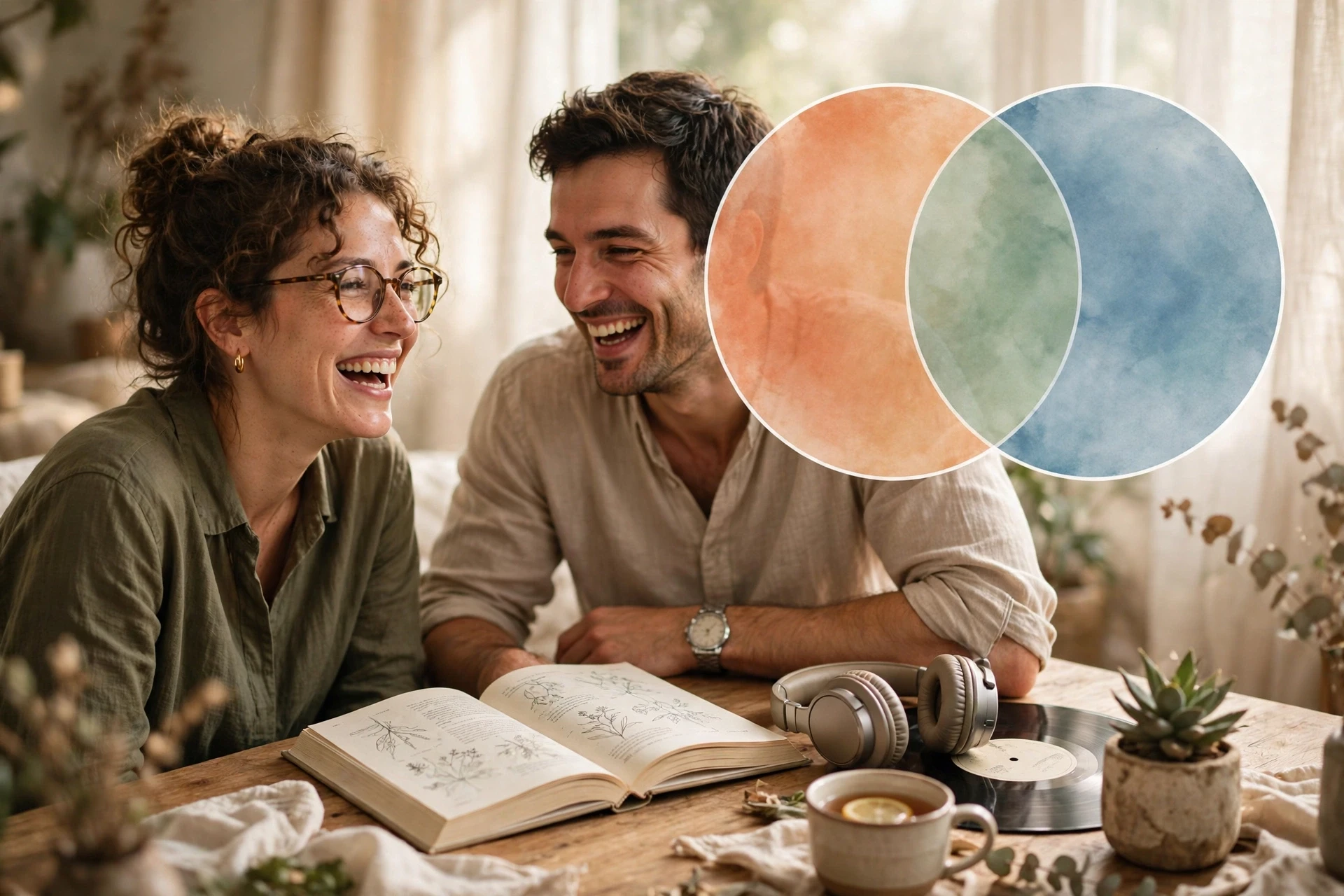
Differences can attract, but usually in a specific way: we are drawn to people who have qualities we value and lack, if those qualities complement rather than clash with our core values. An organised person may love a spontaneous partner who brings lightness, as long as the spontaneity does not become chaos. An introvert may love an extrovert who opens doors socially, as long as the extrovert respects the need for quiet. The difference works when it is a strength you admire, not a value you oppose. When the difference is about a core value — honesty, fidelity, how to raise children — it rarely becomes charming with time. It usually becomes the argument you have every year.
That brings us back to the central question — why do we fall in love? — and the next layer of the answer.
8. Attachment: The Bond That Decides Whether Love Lasts
8.1 From spark to safety
Attraction gets a relationship started. Attachment decides whether it survives. Attachment is the deep, calm bond that makes you feel safe with someone — the sense that they will be there when you need them, that you can be yourself with them, and that the relationship is a secure base from which to face the world.
The idea comes from John Bowlby and Mary Ainsworth, who studied how infants bond with caregivers, and was later extended to adult romantic relationships. Adults, like children, vary in how secure they feel in close relationships. Some feel basically safe: they trust easily, ask for help when they need it, and give their partner space without panic. Others feel anxious: they worry about being abandoned, seek frequent reassurance, and read too much into a delayed reply. Still others feel avoidant: they value independence, pull back when things get close, and find it hard to depend on anyone.
These are tendencies, not life sentences. Attachment styles are shaped by early experience, by later relationships, and by the partner you are with. A secure partner can help an anxious person feel safer over time. A patient, consistent partner can help an avoidant person learn that closeness does not mean losing themselves. The research is clear on one hopeful point: attachment can change, slowly, through repeated experiences of being reliably cared for.
8.2 How attachment shapes falling in love
Attachment shapes who we fall for and how we fall. Anxiously attached people may fall fast and hard, mistaking intensity for intimacy, and then worry constantly about losing the person. Avoidantly attached people may feel a spark and then pull away just as it deepens, because closeness triggers discomfort. Securely attached people tend to fall at a steadier pace, checking whether the other person is kind, consistent and trustworthy before committing fully.
None of this means that an anxious or avoidant person cannot love well. It means that knowing your own pattern is useful information. If you know you tend to fall fast and then panic, you can slow down deliberately: wait before making big decisions, talk to a friend, notice whether the fear is about this person or about an old pattern. If you know you tend to pull away, you can name that pull when it happens, instead of inventing a reason to leave. Self-knowledge does not remove the feeling. It gives you a choice about what to do with it.
That choice matters for the question at the heart of this article. Why do we fall in love with people who are not good for us? Sometimes the answer is attachment: we are drawn to what feels familiar, even when familiar means unpredictable or distant, because our nervous system learned early that love looks like that. Recognising the pattern is the first step to choosing differently — not by force, but by noticing, over time, that a calm, consistent person can feel strange at first and wonderful later.
8.3 The gut, the brain and the body in love
Love is not only in the head. The body keeps score too. Stress hormones, sleep, appetite and even digestion shift when we fall in love or when love is threatened. The gut and the brain talk to each other constantly through the vagus nerve and through chemical messengers, and that conversation shapes mood in ways we are only beginning to understand. Sciory's guide to that connection is worth reading alongside this article: Gut-Brain Connection: How It Relates to Mood. It explains how the gut microbiome and the brain influence each other, and why a churning stomach before a first date is not just a metaphor.
Sleep matters here too. The early stage of love often disrupts sleep — you stay up late talking, you wake early thinking — and poor sleep makes emotional regulation harder, which makes the ups and downs of new love feel bigger. The science of sleep and memory is covered in depth in Science of Sleep and Dreams Explained and in How the Human Brain Forms Memories, both of which explain why the brain consolidates emotional memories during sleep, and why a well-rested brain makes better relationship decisions than an exhausted one.
That brings us back to the central question — why do we fall in love? — and the next layer of the answer.
9. How Love Changes Over Time: From Fireworks to a Steady Flame
9.1 The first year: intensity, idealisation and learning
The first months of love are often the most intense and the least accurate. New lovers tend to idealise each other, focusing on strengths and overlooking flaws. That idealisation is not a lie. It is partly a feature: seeing the best in someone helps a bond form before you know everything about them. The risk is mistaking idealisation for knowledge. You do not know a person after three wonderful weeks. You know a promising beginning.
During this stage, the brain's reward system is at its most active, serotonin is low, and thoughts loop. That combination feels like certainty — "I have never felt like this before" — and it can lead to fast decisions: moving in, getting engaged, making promises that a calmer brain might have waited to make. Some of those fast decisions work out beautifully. Others do not, and the difference is rarely how intense the feeling was. It is whether the couple also built the slower ingredients: honest conversation, shared values, and the willingness to see each other clearly.
I remember a friend who proposed after six weeks, convinced he had found the one. The marriage lasted eleven months. He told me later, without bitterness, "I was in love with who I thought she was. I never gave myself time to meet who she actually is." That is not a failure of love. It is a failure of timing — mistaking the first chapter for the whole book.
9.2 The second stage: attachment deepens, passion settles
If a relationship survives the first year or two, something quieter usually happens. The obsessive thinking softens. Serotonin normalises. Oxytocin and the attachment system become more important than the dopamine-driven pursuit. The couple starts to build a shared life: routines, inside jokes, a way of handling stress together. This stage can feel less exciting than the first, and some people mistake that calm for boredom or falling out of love. In fact, it is often the most important transition in a relationship: from attraction to attachment, from wanting someone to being with someone.
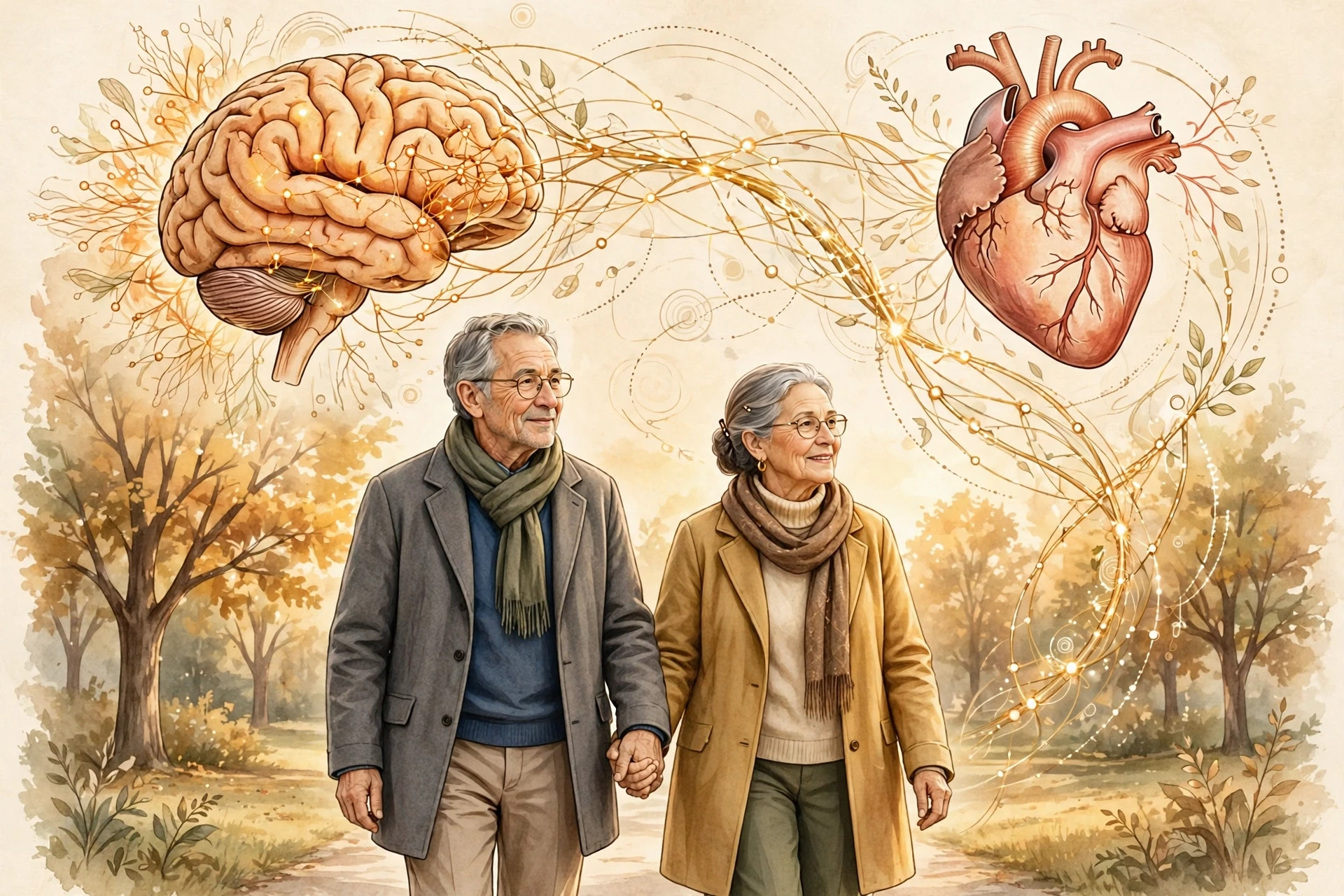
Long-term brain-imaging studies support this shift. Couples married for decades who still report intense love show activity in the VTA and caudate — the early-love regions — but also in regions linked to attachment, calm and friendship. The fire has not gone out. It has changed form, from a blaze to a hearth. That metaphor is not just poetic. A blaze needs constant fuel and attention. A hearth gives steady warmth and can be tended with small, regular acts: a kind word, a shared meal, a hand held without a reason.
9.3 What keeps long love alive
Researchers who study long-lasting couples find a consistent pattern, and it is refreshingly ordinary. Happy long-term couples are not free of conflict. They handle conflict better. They turn toward each other in small moments — responding to a comment, a sigh, a bid for attention — far more often than they turn away. They maintain a ratio of positive to negative interactions that keeps the relationship in credit, even when times are hard. They keep curiosity alive: they ask questions, they notice changes, they do not assume they already know everything about their partner.
That research points to a practical truth. Lasting love is less about finding the right person once, and more about choosing the right person repeatedly, in small ways, over years. The brain supports that choice: every shared positive experience strengthens the association between your partner and reward, safety and calm. Every repaired argument teaches the attachment system that conflict does not mean abandonment. Love, in this view, is not a state you fall into and then maintain by luck. It is a practice you build, one ordinary day at a time.

That brings us back to the central question — why do we fall in love? — and the next layer of the answer.
10. When Love Hurts: Heartbreak, Rejection and the Brain
10.1 Rejection activates the same circuits as physical pain
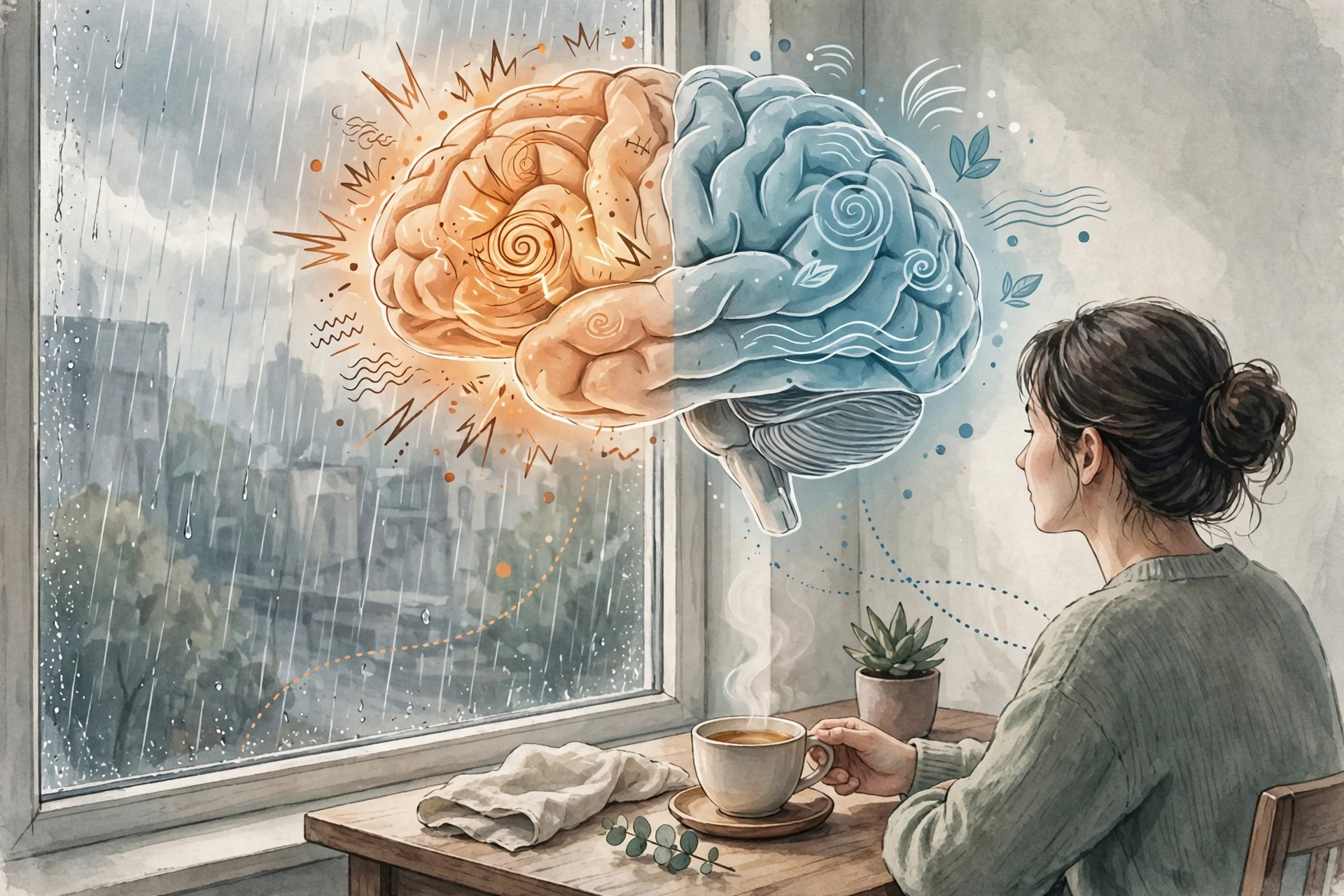
Falling in love can end, and when it does, the pain is real in a literal, neurological sense. Brain-imaging studies of people who have recently been rejected in love show activity in regions linked to physical pain, as well as in the reward regions that once fired for the beloved. The brain is, in effect, still pursuing a reward that is no longer available, and the mismatch hurts.
That is why heartbreak can feel physical: a tight chest, a loss of appetite, trouble sleeping, a heaviness that does not lift with distraction. It is not "just in your head." It is in your body, your sleep, your stress hormones and your immune system. Chronic stress after a breakup can raise cortisol, disrupt sleep and lower mood, and the links between stress, mood and health are covered in Sciory's guides to High Cortisol Symptoms: Signs of Chronic Stress and Anxiety and Depression Explained: What the Science Says. If heartbreak is affecting your sleep, appetite or ability to work for more than a few weeks, that is not weakness. It is a sign to seek support — from friends, family, or a professional.
10.2 Why we cannot simply "get over it"
The reward system does not switch off on command. After a breakup, the brain still expects the beloved: it still looks for their name, still reaches for the phone, still imagines their reply. Each reminder can trigger a small surge of craving, followed by the pain of absence. That cycle is similar, in a limited way, to what happens in addiction — not because love is an addiction, but because both involve a reward system that has learned to expect something and must now unlearn it.
Unlearning takes time, and it takes new learning. The brain needs repeated experiences that the old reward is gone and that new rewards — friendship, work, exercise, new routines — are available. That is why the advice to "stay busy" is only partly right. Busyness helps if it creates new, rewarding experiences. It does not help if it is just a way to avoid feeling anything. Grief needs to be felt, named and processed, not outrun. The most helpful approach, in both research and clinical practice, is a mix: allow the sadness, keep a routine, stay connected to other people, and give the brain time to rewire.
"Heartbreak is not a sign that love was a mistake. It is a sign that the attachment system did its job — it bonded you to someone who mattered — and now it must learn to let go."
10.3 When love becomes unhealthy
Most love, even painful love, is not a disorder. But love can become unhealthy when it involves control, fear, jealousy that restricts freedom, or repeated harm. The brain's bonding system can attach to a person who is unsafe, and the calm that comes from reconciliation after a fight can feel like love, even when the pattern is damaging. If you feel afraid of your partner, if you are changing who you are to avoid their anger, or if you feel trapped, those are not signs of passionate love. They are signs to seek help. The National Institute of Mental Health provides reliable information on anxiety and related conditions here: Anxiety Disorders — National Institute of Mental Health. A trusted clinician, a helpline or a support service in your country can help you think clearly about what is happening and what your options are.
That brings us back to the central question — why do we fall in love? — and the next layer of the answer.
11. Misconceptions: What Most People Get Wrong About Love
11.1 Myth 1: Love at first sight means you have found "the one"
Attraction at first sight is real. You can feel a strong pull toward a stranger in seconds, based on appearance, voice, movement and a hundred unconscious cues. What you cannot do in seconds is know whether that person is kind, honest, compatible or safe. Love at first sight is better described as attraction at first sight — a promising opening, not a verdict. Couples who report love at first sight often describe, on closer questioning, a fast attraction followed by a slower process of getting to know each other. The sight started it. The knowing sustained it.
11.2 Myth 2: If it is true love, it should be easy
This myth does real damage. It tells couples that conflict, boredom or doubt means they chose the wrong person, when in fact those experiences are normal in every long relationship. True love is not the absence of difficulty. It is the willingness to face difficulty together, to repair after a rupture, and to keep choosing each other when the feeling is quieter than it was. A relationship that is easy all the time is usually a relationship that has not yet been tested.
11.3 Myth 3: There is one soulmate for each person
The soulmate idea is comforting: somewhere, one perfect person is waiting, and once you find them, everything will fall into place. The research does not support it. People can form deep, lasting love with more than one person over a lifetime, and the idea that there is only one right person can make people leave good relationships in search of a perfect one that does not exist, or stay in bad ones because they believe they have already found "the one" and must not let go. A healthier belief, supported by research on relationship mindsets, is that love grows through effort and shared experience — that a good relationship is built, not just found.
11.4 Myth 4: Chemistry is everything
Chemistry matters. Without attraction, a relationship can feel like a friendship, and that is a real and valid concern. But chemistry alone is a poor predictor of lasting happiness. Couples with intense early chemistry and no shared values, no trust and no communication skills often struggle, while couples with moderate chemistry and strong friendship, respect and shared goals often thrive. Chemistry gets you in the door. Character, compatibility and care keep you in the room.
11.5 Myth 5: Love fades because the feeling dies
Love does change, as we saw in Section 9, but change is not the same as death. The intense, obsessive feeling of early love usually softens. That softening is normal, and it makes room for a deeper, calmer love. Couples who understand this transition are less likely to panic when the fireworks fade. Couples who do not understand it may chase the early feeling with a new person, only to find the same transition waiting for them there too. The feeling does not die. It grows up.
That brings us back to the central question — why do we fall in love? — and the next layer of the answer.
12. What This Science Means for Your Own Life
12.1 If you are falling in love now
Slow down just enough to see clearly. Enjoy the intensity — it is one of life's great experiences — and also ask the slower questions. Is this person kind when no one is watching? Do they keep small promises? Do you feel more like yourself with them, or less? Do your values align on the things that matter most? The brain's reward system will answer "yes, yes, yes" to almost anything in the early weeks. Your calmer judgement, your friends and your own history can help you check whether that yes is wise.
12.2 If you are in a long relationship
Pay attention to the triangle. Which corner needs tending — intimacy, passion or commitment? Intimacy grows through honest conversation and shared experience: a walk without phones, a question you have not asked before, a memory revisited together. Passion grows through novelty, touch and play: a new place, a dance, a deliberate date, a small surprise. Commitment grows through the daily decision to turn toward each other, to repair quickly after a disagreement, and to keep the future you are building in view. You do not need to fix all three at once. Pick one, tend it for a month, and notice what changes.
12.3 If you are looking for love
Show up where the people you hope to meet show up, repeatedly. Be open to the ordinary: the colleague, the classmate, the neighbour, the friend of a friend. Let familiarity work. Be honest about your values, and look for them in the other person, not just for a spark. And remember that the spark is a beginning, not a guarantee. The best predictor of a good relationship is not how fast you fell, but how well you treat each other when the falling slows.
12.4 If you are healing from heartbreak
Be patient with your brain. It is unlearning a reward, and unlearning takes time. Keep a routine, sleep as well as you can, stay connected to people who care about you, and avoid the places and habits that keep reopening the wound — at least for a while. If the pain is not easing after several weeks, or if it is affecting your health, work or safety, seek professional support. Healing is not a sign that the love was not real. It is a sign that you are learning to live without it, and that learning is itself a form of growth.
That brings us back to the central question — why do we fall in love? — and the next layer of the answer.
13. The Latest Research: What Scientists Are Still Learning
Love research is moving fast, and the picture is getting more nuanced every year. Three directions are worth watching.
First, long-term love is getting more attention. Early studies focused on people who had just fallen in love, because their feelings were intense and easy to measure. Newer studies follow couples over years, and they are finding that long-term intense love is real, measurable and distinct from both early love and from companionate friendship. The brain regions involved overlap with early love but also include areas linked to attachment and calm, suggesting that lasting love is not a faded version of new love but a different, richer state.
Second, researchers are learning more about individual differences. Why do some people fall fast and others slow? Why do some people stay in love for decades while others move from one intense relationship to the next? Genetics, early attachment, personality and life experience all play a role, and the Kinsey Institute's ongoing research on relationships and sexuality is one place where that work is gathered: Kinsey Institute — Research. The answer is unlikely to be a single gene or a single childhood event. It is likely to be a pattern, built over a lifetime, that shapes how readily we bond and how we handle closeness.
Third, technology is changing how we meet, and researchers are racing to understand the effects. Dating apps increase the number of people we can meet, but they also change how we choose: more options can mean more comparison, more superficial judgements, and a sense that someone better is one swipe away. Early evidence suggests that app-based dating can work well for people who use it intentionally — who meet in person quickly, who look for shared values, and who do not treat dating as endless shopping. It works less well when it becomes a habit of collecting matches without ever meeting. The science is still young here, and honest researchers will tell you that. What we know about proximity, similarity and attachment still applies online. The meeting place has changed. The psychology has not.
One more caution from the lab. I have seen headlines claim that scientists have found "the love gene," "the exact brain region for soulmates," or a pill that will make someone fall in love. None of those claims has held up. Love is too complex, too distributed across brain, body and culture, to be reduced to a single switch. Be sceptical of any headline that promises one. The real science is slower, messier and far more interesting than the headline.
What Love Leaves Us With
Why do we fall in love? We fall in love because our brains are built to notice, pursue and bond with particular people — people we meet often, people like us, people who make us feel safe and seen. We fall in love because reward circuits fire, because bonding chemicals soften us, because our thoughts loop around a person who matters, and because three ingredients — intimacy, passion and commitment — combine in a way that feels, for a while, like destiny. And we stay in love, when we do, because we tend the bond: we turn toward each other, we repair, we share a life, and we choose, again and again, to keep going.
That answer is less magical than "fate" and more hopeful than "chemistry." It says that love is not something that happens to you, fully formed, or something you can control completely. It is something you participate in — with your brain, your body, your history and your choices. The spark matters. What you do with the spark matters more.
If you take one idea from this article, let it be this: love is a motivation system that can be understood, and understanding it does not make it smaller. It makes it more navigable. You can recognise the early rush for what it is, tend the triangle when it drifts, and know the difference between a feeling that will pass and a bond that is worth building. That knowledge will not tell you whom to love. It will help you love the person you choose with clearer eyes and a steadier heart.
Frequently Asked Questions
Why do we fall in love with one person and not another?
Why do we fall in love with one person and not another? The short answer is a mix of proximity, similarity, timing and biology. We are most likely to fall for people we meet often, people who share our values and interests, and people we encounter when we are open to a relationship. Brain reward circuits then focus attention on that person, and bonding systems deepen the connection if the relationship is kind and consistent. No single trait explains the choice — it is the combination, and the timing, that matters.
Is love at first sight real?
Attraction at first sight is real, but love at first sight is better described as a strong first attraction. You can feel an instant pull based on appearance, voice and manner, but you cannot know in seconds whether someone is compatible, trustworthy or kind. Couples who report love at first sight usually describe a fast spark followed by a slower process of getting to know each other. The spark can be real. The love is built afterwards.
What happens in the brain when you fall in love?
When you fall in love, dopamine-rich reward regions — the ventral tegmental area and the caudate nucleus — activate when you see or think about your beloved. Dopamine supports motivation and anticipation, oxytocin supports bonding and trust, and serotonin levels often drop in the early stage, which is linked to intrusive, looping thoughts about the person. As love matures, the reward regions stay active in long-term couples, alongside regions linked to attachment and calm.
Why do we fall in love so fast?
Why do we fall in love so fast? We fall fast because the brain's reward and motivation systems can focus quickly on a person who feels rewarding, familiar and similar to us. Early love is also fuelled by uncertainty and anticipation, which keep the reward system alert, and by lower serotonin, which makes thoughts about the person loop. Fast falling is normal, but it is not a reliable guide to long-term compatibility — that takes time, shared experience and honest conversation to judge.
Does dopamine cause love?
No. Dopamine does not cause love, and it is not a "love chemical." Dopamine supports motivation, anticipation and reward learning, which helps explain why we pursue a person we are attracted to and why their messages and attention feel rewarding. Love also involves oxytocin, serotonin, attachment, psychology, shared history and choice. Reducing love to one chemical misses most of what love is.
Why does love fade, and can it come back?
Love often feels like it fades because the intense, obsessive stage of early love naturally softens as serotonin normalises and attachment deepens. That softening is normal, not a sign that love has died. Passion can be renewed through novelty, touch, shared experiences and deliberate attention, and intimacy can be renewed through honest conversation and shared time. Couples who notice which part of Sternberg's triangle has drifted — intimacy, passion or commitment — and tend that corner often find the feeling returns in a calmer, deeper form.
Why does heartbreak hurt so much?
Heartbreak hurts so much because rejection activates brain regions linked to physical pain, as well as the reward regions that once fired for the beloved. The brain keeps expecting the person, and the mismatch between expectation and absence is painful. Stress hormones rise, sleep and appetite are disrupted, and mood drops. Healing takes time because the brain must unlearn a reward and build new routines and connections. If the pain persists for weeks and affects health or work, seek support from friends, family or a professional.
Can you fall in love more than once?
Yes. People can fall in love more than once, and can form deep, lasting love with more than one person over a lifetime. The idea of a single soulmate is not supported by research. Each relationship is different, shaped by timing, compatibility and the effort both people put in. Falling in love again after loss or a breakup is normal, and it does not diminish the love that came before it.
Sources
American Psychological Association. Love. https://www.apa.org/topics/relationships/love
American Psychological Association. The science of love. Monitor on Psychology, 2019. https://www.apa.org/monitor/2019/03/cover-love
Fisher, H., Aron, A., & Brown, L. L. Romantic love: an fMRI study of a neural mechanism for mate choice. Journal of Comparative Neurology, 2005. https://pubmed.ncbi.nlm.nih.gov/16255001/
Cornell University, College of Human Ecology. Robert Sternberg and the Triangular Theory of Love. https://hdtoday.human.cornell.edu/tag/emotion/
Introduction to Psychology (SUNY). Attraction and Love. https://psychology.pressbooks.sunycreate.cloud/chapter/prosocial-behavior/
Kinsey Institute, Indiana University. Research. https://kinseyinstitute.org/research/
National Institute of Mental Health. Anxiety Disorders. https://www.nimh.nih.gov/health/topics/anxiety-disorders