

Introduction: The Text That Changed Everything
Maya stared at her phone for eleven minutes. Her partner, Daniel, had read her message — the two small ticks had turned blue — and then nothing. No reply. No typing dots. Just silence, stretching out like a held breath.
She knew, logically, that he was probably in a meeting. She had seen his calendar. She had even told herself that morning that she would not do this again. And yet her chest tightened, her thoughts raced, and by minute twelve she was drafting a second message, then a third, then deleting all of them. When Daniel finally replied — "Sorry! In a meeting, call you at six" — the relief flooded through her so fast it left her shaky. Then came the embarrassment. Why did a delayed text feel like a small emergency?
Across town, in a different apartment, a different story was playing out. Tom's girlfriend had asked him a simple question over dinner: "Do you ever worry about us?" He had laughed it off, changed the subject, and felt a strange irritation rising in his chest. He loved her. He knew he loved her. So why did a gentle question about feelings make him want to leave the room?
These two people have never met, but their nervous systems are running the same old software. The patterns that govern how we love, argue, cling, withdraw, and trust were largely written in the first years of life — in thousands of small moments between a baby and the people who cared for it. Psychologists call these patterns attachment styles, and they are among the most useful ideas psychology has ever produced for understanding adult relationships.
This is not a label to stick on yourself or your partner. Attachment styles are tendencies, not diagnoses. They describe the strategies we learned, as children, for getting our needs met — and the strategies we still reach for, often without thinking, when closeness feels risky. The good news, and the reason this science matters, is that these patterns are not fixed. They can shift, soften, and be relearned. But first, we need to understand where they come from.
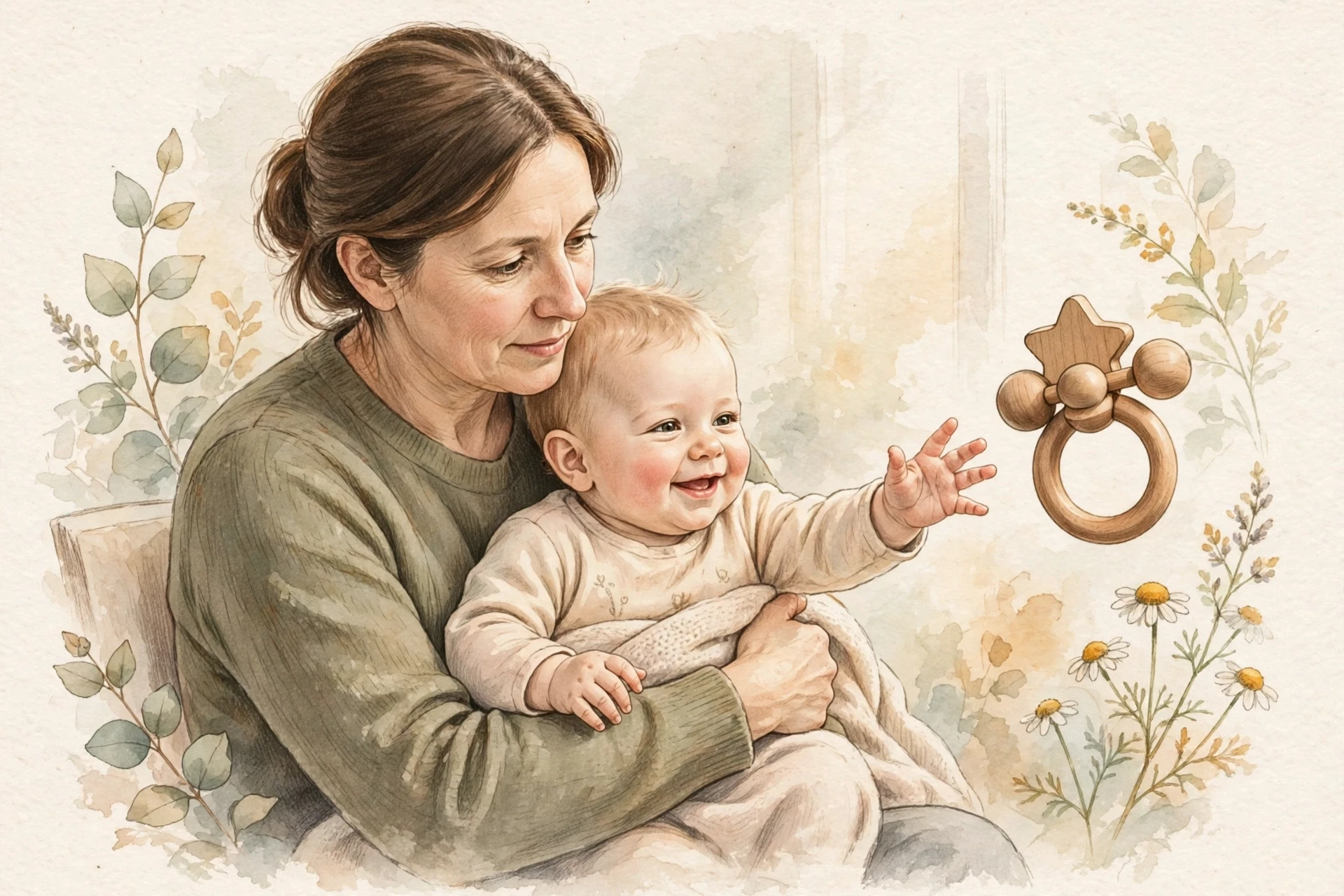
1. What Are Attachment Styles?
1.1 A definition that actually helps
An attachment style is a characteristic way of relating to the people we depend on. It shapes how much closeness feels comfortable, how we respond when a relationship is threatened, and what we expect from the people we love. In babies, it shows up in how a child reacts when a caregiver leaves the room and returns. In adults, it shows up in how we handle conflict, how much reassurance we need, and whether we lean in or pull away when things get hard.
Think of it like a default setting on a thermostat. The setting was calibrated early, when our brains were learning what to expect from other people. If comfort usually arrived when we cried, the thermostat learned that other people are reliable. If comfort was unpredictable, the thermostat learned to stay on high alert. If comfort rarely came at all, it learned to stop asking. None of these settings is a flaw. Each was, at the time, a sensible adaptation to the world the child actually lived in.
1.2 Attachment is not the same as love
Here is a point worth pausing on, because it confuses almost everyone at first. Attachment is not the same thing as love. A child can love a caregiver deeply and still develop an insecure attachment pattern, because attachment is about something more specific: whether the child learned that distress brings comfort, reliably and predictably. Love is the feeling. Attachment is the expectation — the quiet, learned prediction about what happens next when you need someone.
The same distinction applies to adults. Two people can love each other fiercely and still struggle, because one expects reassurance to arrive and the other expects closeness to cost them their freedom. Their love is real. Their attachment patterns are simply pulling in opposite directions.
1.3 Why this topic exploded
Attachment theory has been around since the 1950s, but in recent years it has moved from textbooks into everyday conversation. Social media is full of people naming their style — anxious, avoidant, secure — the way an earlier generation named their star sign. That popularity is a mixed blessing. On one hand, millions of people now have a language for patterns they could feel but could not name. On the other, the language is often used too rigidly, as if a person is "an avoidant" the way they are left-handed. I have watched this happen in conversations with friends: someone reads one article and suddenly their entire relationship history is explained by a single word. The science is richer than that, and more forgiving.
The real story of attachment styles is not a sorting hat. Most of what people argue about online — whether attachment styles are real, whether they can change — comes from treating a useful framework as a fixed identity. It is a story about how the brain learns to predict other people, how those predictions can be wrong in new situations, and how new experiences can rewrite them.
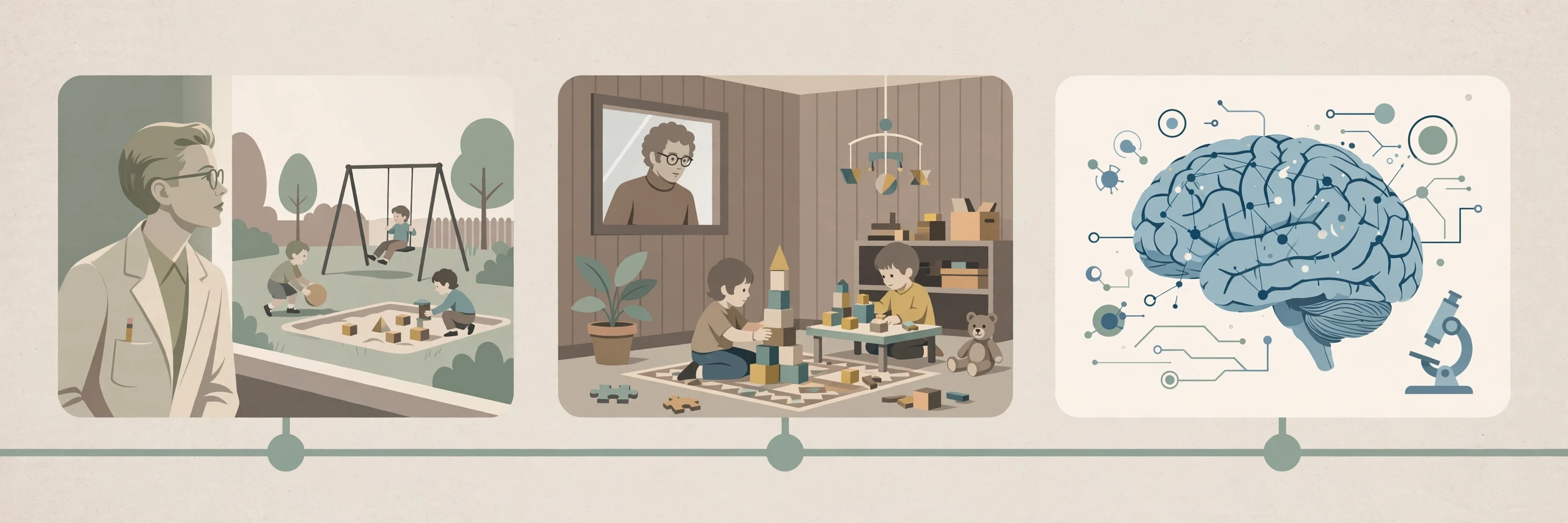
2. Where the Idea Came From: Bowlby and the Children Who Waited
2.1 John Bowlby and a radical question
In the 1940s and 1950s, the British psychiatrist John Bowlby was working with children who had been separated from their parents — evacuees during the war, children in hospitals and orphanages. The dominant thinking of the time said that a baby bonds with its mother mainly because she feeds it. Bowlby watched children who were fed, clothed, and kept warm, yet who were clearly suffering in a deeper way. They rocked themselves. They stopped crying — not because they were content, but because crying had stopped working. Something else was going on.
Bowlby proposed a radical idea: attachment is a biological need, as basic as hunger. Just as a baby is born with reflexes for sucking and grasping, it is born with a drive to stay close to a caregiver. This drive evolved because, for most of human history, a baby alone was a baby in danger. Staying close was survival. Bowlby argued that children build an "internal working model" — a mental map of how relationships work — from their earliest experiences of care. That map then guides them, quietly, for years.
I remember the first time I read Bowlby's case notes in a university library, years ago, and how uncomfortable they made me. He described children who had learned not to cry, and a whole profession that had called that "adjustment." He was saying the opposite: the silence was the wound. It was one of those moments when a scientific idea rearranges how you see ordinary life. I started noticing, in the weeks that followed, how many adults I knew had learned the same lesson — not to ask, not to need, not to make a fuss — and were still paying for it decades later.
2.2 Mary Ainsworth and the Strange Situation
If Bowlby gave attachment theory its big idea, Mary Ainsworth gave it its evidence. Ainsworth, a Canadian-American developmental psychologist, spent years observing mothers and babies in Uganda and then in Baltimore, watching in fine detail how caregivers responded to their infants' signals. Then, in the 1970s, she designed one of the most famous experiments in psychology: the Strange Situation.
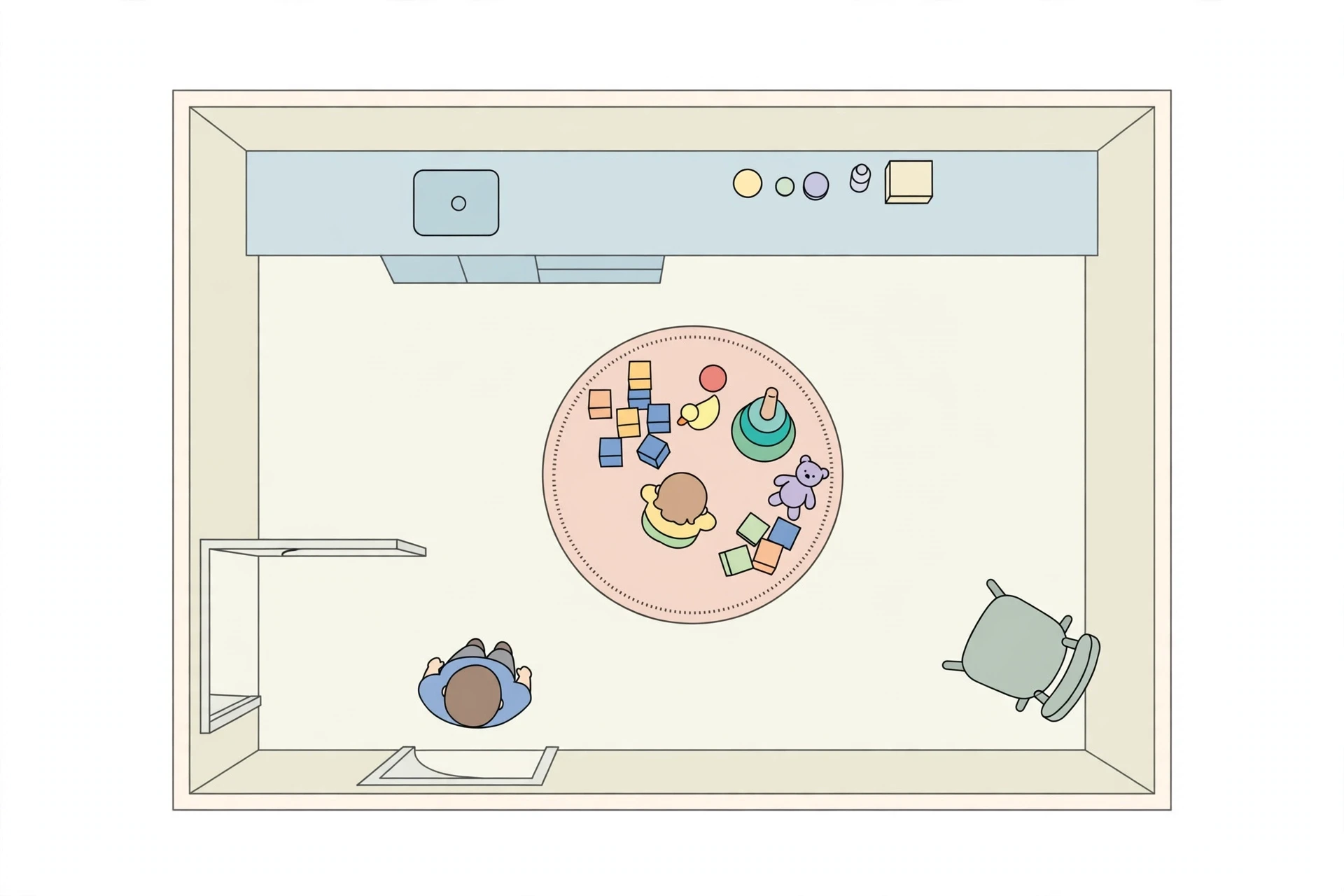
The setup was simple and, by modern standards, deliberately stressful. A mother and her one-year-old enter a playroom. A stranger comes in. The mother leaves — briefly. She returns. She leaves again. She returns again. The whole thing takes about twenty minutes, and researchers watch how the baby behaves at each step, especially at the reunions. The question was not whether the baby cried when the mother left — most did. The question was what happened when she came back.
Ainsworth and her colleagues found three clear patterns, and those early patterns became the foundation for everything we now know about attachment styles, and a fourth was added later by other researchers. Roughly half to two-thirds of the babies — the figure most often quoted is around 50–60% — were secure: they were upset when the mother left, but they sought her out on her return, were comforted, and then went back to playing. The rest showed insecure patterns: some were intensely distressed and hard to soothe even when the mother returned; others seemed to ignore the mother entirely, as if her return did not matter. That "ignoring" turned out to be misleading — their heart rates told a different story. Inside, they were stressed. They had simply learned to hide it.
2.3 From babies to grown-ups
For two decades, attachment was a theory about children. Then, in the late 1980s, researchers Cindy Hazan and Phillip Shaver asked a bold question: could the same patterns describe adult romantic relationships? They published a short questionnaire in a newspaper and received hundreds of responses. The results were striking. Adults described themselves in ways that echoed the infant patterns — some comfortable with closeness, some worried about abandonment, some uncomfortable with intimacy. The proportions were similar, too: a majority secure, the rest split among the insecure patterns.
That study launched a whole field, and the study of attachment styles in adults has grown steadily ever since. Researchers have since found that attachment patterns show up not only in romantic relationships, but in friendships, in how people relate to their therapists, and even in how they relate to their workplaces and to God. The attachment system, it turns out, is not a childhood phase. It is a lifelong system for managing closeness and threat.
"The attachment system is a lifelong system for managing closeness and threat — not a childhood phase we outgrow, but a lens we keep looking through."
3. The Strange Situation, Step by Step
3.1 What the experiment actually looked like
It helps to picture the Strange Situation concretely, because the details explain why the results were so convincing. The playroom had toys scattered on the floor, two chairs, and a one-way mirror. The procedure ran in eight short episodes:
The mother and baby enter and explore together.
A stranger enters, talks to the mother, then approaches the baby.
The mother leaves; the stranger stays with the baby.
The mother returns, the stranger leaves.
The mother leaves again; the baby is alone.
The stranger returns.
The mother returns for the final reunion.
The researchers were watching, above all, for the baby's behaviour at the reunions. A baby who runs to the mother, is held, calms down, and then returns to play is showing something important: it has learned that distress brings comfort. A baby who clings and cannot be soothed, or who turns away as if the mother is not there, has learned something different.
3.2 What the heart rate revealed
One of the most telling findings came not from behaviour but from physiology. The babies who seemed to ignore their mothers — the "avoidant" group — had elevated heart rates during separation. Their bodies were in a stress response. They had learned a strategy: do not show the need, because showing it has not helped before. I find this one of the most moving findings in all of psychology. It is a reminder that the quietest person in the room is not always the calmest one. Sometimes silence is a strategy, not a state.
This is also why the popular idea that avoidant people "do not care" misses the mark so badly. The evidence points the other way. The attachment system is active; it is just being managed by suppression rather than expression. Understanding that changes how you respond to someone who goes quiet during conflict. You are not dealing with indifference. You are dealing with a nervous system that learned, long ago, that needing someone out loud was not safe.
3.3 The limits of the Strange Situation
No experiment is perfect, and the Strange Situation has real limits. It was designed in a particular cultural context, and what counts as "normal" infant behaviour varies across cultures. In some societies, babies are rarely separated from caregivers, so the procedure itself is unfamiliar. The categories, too, are simplifications: real babies fall along a spectrum, and a child's pattern can look different with different caregivers. These cautions matter, because they apply even more strongly to adult versions of the theory. Keep them in mind as we move to the four adult styles — they are useful maps, and maps are not the territory.
4. The Four Attachment Styles in Adults
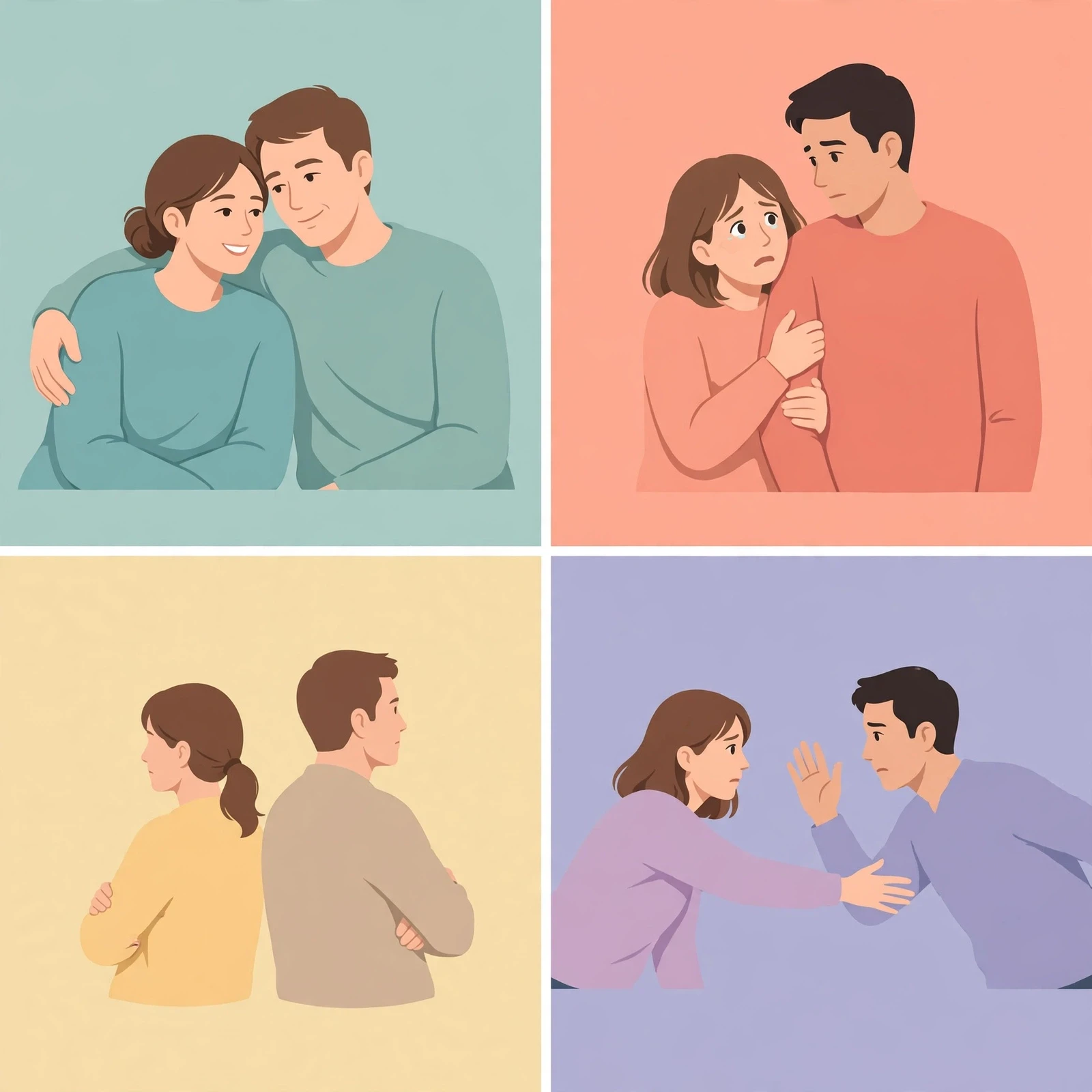
In the 1990s, researchers Kim Bartholomew and Leonard Horowitz organised adult attachment into four categories, based on two simple questions a person carries around inside: Am I worthy of love and care? and Are other people reliable and safe? The answers — positive or negative — to those two questions produce four combinations. The model is elegant, and it has held up well in research, but remember what it is: a way of organising attachment styles as tendencies, not a set of boxes people live inside permanently.
Style | View of self | View of others | Typical pattern in relationships | Approximate share of adults |
|---|---|---|---|---|
Secure | Positive — "I am worthy of care" | Positive — "Others are generally reliable" | Comfortable with closeness and independence; seeks support when needed; recovers from conflict | ~50–60% |
Anxious (preoccupied) | Negative — "I may not be enough" | Positive — "Others are needed, but may leave" | Craves closeness; worries about abandonment; needs frequent reassurance; hypervigilant to distance | ~15–20% |
Avoidant (dismissive) | Positive — "I am fine on my own" | Negative — "Others are unreliable or intrusive" | Values independence; uncomfortable with deep closeness; withdraws under stress; downplays need | ~20–25% |
Fearful-avoidant (disorganised) | Negative — "I am not safe or worthy" | Negative — "Others are frightening or unpredictable" | Wants closeness and fears it at once; unpredictable swings between approach and withdrawal | ~5–10% |
Table 1: The four adult attachment styles in the Bartholomew and Horowitz model. Percentages are approximate — studies vary by sample and by measurement method, and many people fall between categories. Treat the numbers as a rough map of the population, not a precise census.
4.1 Secure attachment: the steady base
Securely attached adults are comfortable with intimacy and comfortable being alone. They tend to trust their partners, communicate needs directly, and recover from arguments without the relationship feeling like it is on the edge of collapse. When a partner is late or distant, they may feel annoyed — but they usually check the facts before concluding the worst.
A friend of mine, Sara, once described her marriage this way: "When we fight, I still like him. I am angry, but I am not afraid." That sentence has stayed with me, because it captures the heart of secure attachment. Conflict is a problem to solve, not a threat to the bond itself. Securely attached people are not perfect partners. They argue, they get things wrong, they can be selfish. What sets them apart is a kind of emotional shock absorber: the belief, built from experience, that closeness survives difficulty.
Research consistently links secure attachment with higher relationship satisfaction, better conflict resolution, and more effective support-seeking. Securely attached people are also more likely to seek help when they are struggling — including professional help — which connects directly to how people cope with anxiety and depression. Asking for help, it turns out, is itself an attachment behaviour.
4.2 Anxious attachment: the radar that never switches off
Anxiously attached adults crave closeness and worry about losing it. They tend to monitor their partner's mood closely, read a delayed reply as a warning sign, and need frequent reassurance that the relationship is safe. This is Maya from the introduction — not needy in some character-flaw sense, but running a threat-detection system that was calibrated in an environment where affection was unpredictable. When love sometimes came and sometimes did not, the sensible strategy was to watch for it constantly.
The anxious pattern has real strengths that rarely get mentioned. Anxiously attached people are often deeply attentive partners. They notice small shifts in mood. They invest heavily in the relationship. The difficulty comes when the monitoring system misfires — when a partner's ordinary tiredness is read as rejection, and reassurance-seeking itself creates the very distance the person fears. That loop — worry, seek reassurance, feel briefly better, worry again — can exhaust both people.
It is worth saying plainly: anxiety in relationships is not a character defect. It is a learned alarm, and alarms can be recalibrated. The same vigilance that makes an anxiously attached person exhausting to live with can, with understanding and practice, become genuine attentiveness.
4.3 Avoidant attachment: the art of not needing
Avoidantly attached adults prize independence and self-reliance. They tend to feel uncomfortable with deep emotional closeness, prefer to handle problems alone, and pull back when a partner seeks more intimacy. Under stress, their instinct is to create space — to work late, to go quiet, to insist that everything is fine.
This is Tom from the introduction. His withdrawal at the dinner table was not indifference. It was a strategy learned long ago: when needing someone did not reliably help, the safest move was to stop needing — or at least to stop showing it. Remember the babies in the Strange Situation whose heart rates were racing while their faces stayed blank. The adult version looks like a person who says "I'm fine" while their body is anything but.
Avoidant attachment is often misunderstood as coldness, and that misunderstanding does real damage. Avoidantly attached people do feel deeply; they have simply learned to process feelings privately. They can be loyal, funny, generous partners — and they can also leave the people who love them feeling shut out. The work, for them, is not learning to feel, but learning that letting someone in does not mean losing themselves.
4.4 Fearful-avoidant attachment: wanting and fearing at once
The fourth style, sometimes called fearful-avoidant or disorganised, is the most complex — and the least discussed. These are people who want closeness and fear it at the same time. They may approach a partner warmly, then pull away suddenly when the relationship deepens. They may crave reassurance and then distrust it when it arrives. Their inner model says, in effect: "I need you, and you might hurt me."
This pattern is more often linked to early experiences that were frightening or chaotic — where the same person who was supposed to provide safety was also a source of fear. It is the style most associated with difficulty regulating emotions, and the one where professional support, such as therapy, tends to make the biggest difference. If you recognise yourself here, that recognition is not a sentence. It is information — and it is the kind of information that good therapy is designed to work with.
A crucial point about all four styles: most researchers now agree that attachment is better understood as two dimensions — anxiety (how much you worry about abandonment) and avoidance (how uncomfortable you are with closeness) — than as four neat boxes. You can be low on both (secure), high on one, or high on both. The four styles are simply the corners of that map. Most people live somewhere in between, and where they sit can shift depending on the relationship, the stress level, and the stage of life.
5. How Attachment Styles Form: The Internal Working Model
5.1 Thousands of small moments
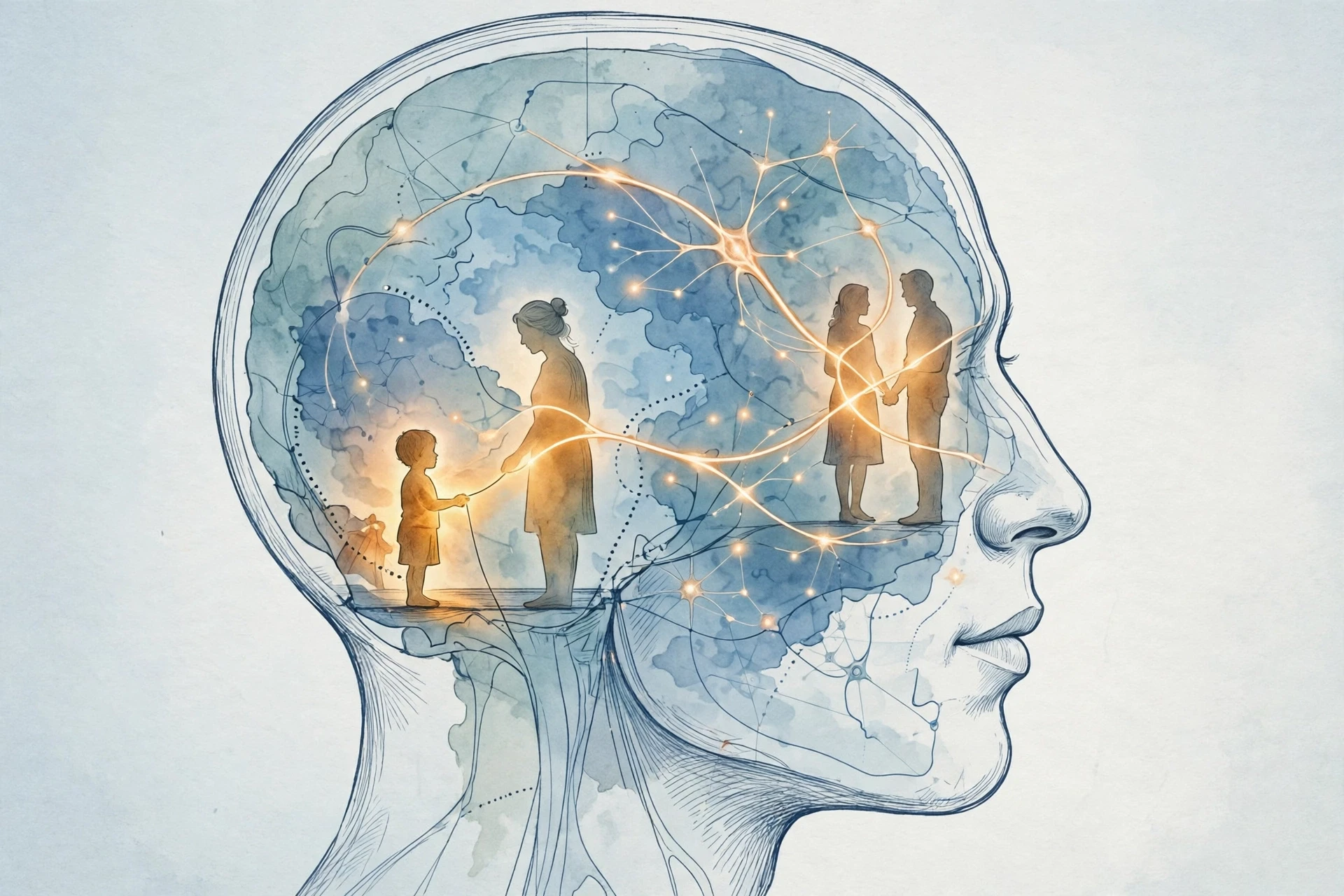
Attachment styles are not formed by one big event. They are formed by thousands of small ones: a cry answered or unanswered, a scraped knee met with comfort or dismissal, a question met with attention or irritation. Bowlby called the result an "internal working model" — a mental blueprint of how relationships work. The model has two parts: a model of the self ("Am I worthy of help?") and a model of others ("Will help come when I ask?").
I like to think of the internal working model as a map drawn in childhood and carried into every new relationship. Like any map, it is useful — it helped you navigate your first world. Like any map, it can be out of date. A map drawn in a house where affection was conditional will keep steering you even in a relationship where affection is freely given. You will keep checking for the cliffs that are no longer there.
5.2 Sensitivity, not perfection
The research on what builds secure attachment is reassuring for parents — and for anyone who worries they have already done damage. The key factor is not perfect parenting. It is "good enough" responsiveness: noticing the child's signals much of the time, and repairing the misses. Psychologists call this "rupture and repair." Every parent gets it wrong sometimes. What matters is what happens next: the apology, the return, the reconnection. In fact, the repair itself teaches the child something precious — that relationships can break and be mended.
This is why the guilt many parents carry about attachment is usually misplaced. A secure base is not built by never failing. It is built by failing and coming back. The same principle, interestingly, applies to adult relationships: couples who repair well after arguments often end up stronger than couples who never argue at all.
5.3 Temperament, culture, and chance
Attachment is not only about parenting. Children bring their own temperaments into the world — some babies are easily soothed, others are intense and hard to settle — and those temperaments shape how caregivers respond. Culture matters too: in some societies, babies are carried almost constantly and rarely separated from caregivers; in others, independence is encouraged early. Economic stress, illness, and family disruption all play a role. The internal working model is a joint product of the child, the caregiver, and the world around them.
That complexity is a mercy. It means no single person, and no single mistake, determines a child's attachment style. It also means that when we talk about adult attachment, we should resist the temptation to blame parents for everything. Attachment patterns are an explanation, not an accusation.
5.4 The stability question
How stable are attachment styles? The honest answer is: moderately stable, and less stable than people assume. Longitudinal studies that follow children into adulthood find real continuity — early security predicts later security more often than chance — but the correlation is far from perfect. Life intervenes. A secure child can become insecure after loss or trauma. An insecure child can become secure through a steady friendship, a good marriage, or therapy. Researchers sometimes call this "earned security": security that was not given in childhood but built later, through experience.
That finding should change how we talk about attachment styles in general. They are not a life sentence. They are a starting point — and starting points, by definition, are places you can move away from.
6. Attachment Styles and the Brain
6.1 The threat system and the safety system
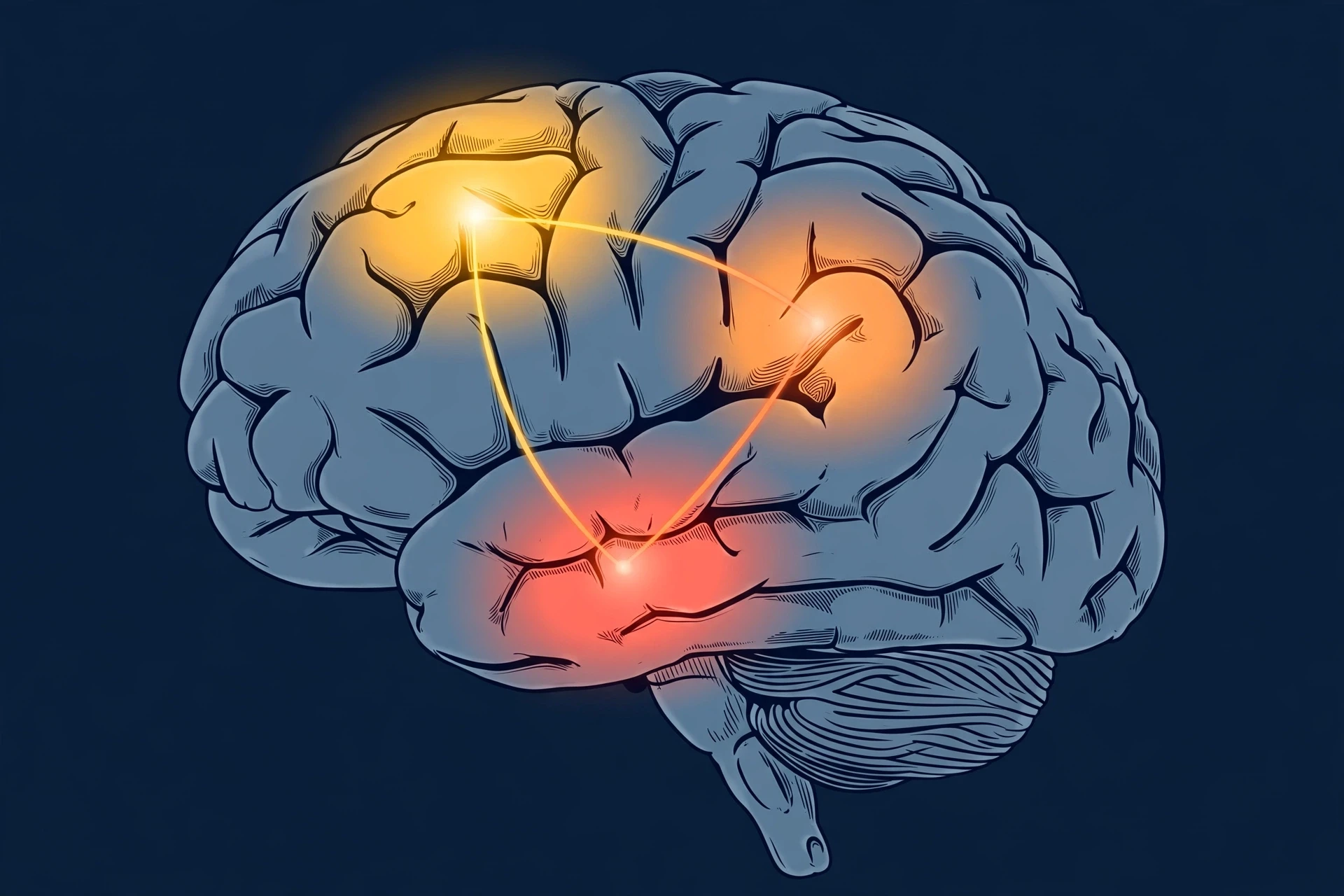
Attachment is not just a psychological idea. It lives in the brain and the body. When we feel threatened in a relationship — a partner goes quiet, a text goes unanswered — the amygdala, the brain's threat detector, fires. Stress hormones, including cortisol, rise. Heart rate climbs. The body prepares for danger, even though the "danger" is a delayed reply. For someone with an anxious attachment style, this alarm fires easily and loudly — one reason attachment styles feel so physical, not just mental. For someone avoidant, the alarm fires too — but the response is suppression, a kind of emotional holding of breath.
The other side of the system is the safety response. Warm contact with a trusted person releases oxytocin, a hormone involved in bonding, and activates the brain's reward circuits. Securely attached people tend to show a more balanced version of this system: their alarms fire when there is a real threat, and they settle when comfort arrives. This is one reason attachment and stress are so closely linked — chronic relationship stress keeps the threat system switched on, which is why prolonged insecurity in relationships can affect sleep, immunity, and mood. Readers who want the fuller picture of stress hormones can find it in Sciory's guide to high cortisol symptoms, and the brain regions involved are covered in our human brain anatomy guide.
6.2 What brain imaging has found
Brain-imaging studies of adults with different attachment patterns have found real differences, though they are subtle and should not be overstated. Anxiously attached people tend to show stronger amygdala responses to social threat — a partner's angry face, a sign of rejection. Avoidantly attached people tend to show reduced activation in regions involved in processing emotional closeness, consistent with a strategy of tuning feelings out. Securely attached people tend to show more balanced activation, including stronger engagement of the prefrontal cortex, the region involved in regulating emotion and thinking through a situation before reacting.
These findings are best read as correlations, not destiny. Brain patterns reflect a history of experiences, and they change as experiences change. The same research that shows differences between styles also shows that new, secure experiences — a steady relationship, a good therapeutic alliance — are associated with shifts in how the brain responds to social signals. The brain, like the attachment system itself, stays open to revision longer than we once believed.
6.3 The gut, sleep, and the body that remembers
Attachment does not live only in the brain. The body keeps its own records. People in insecure, high-conflict relationships report worse sleep, more frequent illness, and higher levels of inflammation in some studies. The connection runs both ways: poor sleep makes emotional regulation harder, which makes attachment patterns flare up, which makes sleep worse. This is where attachment science meets the rest of the body — the gut-brain connection, which shapes mood through the vagus nerve and the microbiome, and the sleep systems described in Sciory's guide to the science of sleep and dreams. A person trying to change an attachment pattern while chronically sleep-deprived is fighting with one hand tied behind their back. Rest is not a luxury in this work. It is part of the method.
7. Can Attachment Styles Change? The Science Says Yes
7.1 Earned security
This is the question that matters most to readers, and the research gives a hopeful answer. Yes, attachment styles can change. The term researchers use is "earned security" — security built in adulthood, often through a long, stable relationship with a secure partner, or through therapy. Studies that track people over years find that a meaningful minority shift toward security, especially after positive relationship experiences. The shift is usually gradual, not sudden. It looks less like a conversion and more like a slow recalibration: the alarm fires a little less often, the repair after a fight comes a little faster, the need to check the phone eases.
I once spoke with a therapist who described her work with a client this way: "We are not changing his personality. We are giving his nervous system new evidence." That phrase has stayed with me, because it captures the mechanism. Change does not come from deciding to be secure. It comes from accumulating experiences that contradict the old map — experiences of being comforted, of surviving a disagreement, of being wanted after a bad day. Each one is a small piece of counter-evidence. Enough of them, and the map gets redrawn.
7.2 What actually helps
The research and clinical literature point to several things that genuinely help people move toward security. None of them is a quick fix, and that is worth saying out loud in a culture that sells quick fixes for everything.
A secure relationship. The most powerful engine of change is a relationship with a securely attached partner — or a secure friendship — that provides steady, predictable care over time. The partner's calm becomes, gradually, a model for your own.
Therapy, especially attachment-informed therapy. Approaches such as emotionally focused therapy for couples, and individual therapies that work explicitly with attachment patterns, have good evidence behind them. A therapist can function as a temporary secure base — a safe relationship in which old patterns can be noticed and practised differently.
Noticing the pattern in real time. The moment you can say, "This is my anxious pattern talking, not the facts," you have created a small gap between stimulus and response. That gap is where choice lives. Journaling, mindfulness, and simple self-monitoring all help widen it.
Repair practice. Deliberately practising repair after conflict — returning to the conversation, naming what happened, apologising where it is due — teaches the nervous system that rupture is not the end. Couples who get good at repair often describe their relationship as stronger after a hard period, not weaker.
Body-level work. Because attachment lives in the body as well as the mind, sleep, exercise, and stress reduction are not side issues. A regulated body makes a regulated response far more likely.
7.3 What does not help
A few things that look helpful but are not: taking an online quiz and treating the result as a verdict on your attachment styles and treating the result as a diagnosis; using your style as an excuse ("I am avoidant, so I cannot talk about feelings"); or using your partner's style as a weapon in an argument. Labels are tools. The moment a label stops helping you understand and starts helping you avoid responsibility, it has outlived its use. The same goes for the flood of social-media content that sorts people into types with confident certainty. The science is more modest than the memes — and more hopeful, because it leaves room for change.
"Change does not come from deciding to be secure. It comes from accumulating experiences that contradict the old map — each one a small piece of counter-evidence."

There is no honest timeline. Some people notice shifts within months of a good relationship or good therapy; for others it takes years. The research suggests that change is more likely when the new experiences are consistent and sustained — a single kind partner for a month is less powerful than a steady one for two years. That sounds discouraging, but it is actually the opposite: it means the system is learning from evidence, and evidence accumulates. Every repaired argument, every time comfort arrives when it is needed, every night you fall asleep next to someone who stayed — these are data points. The nervous system is always counting.
8. Attachment Styles in Everyday Life
8.1 Arguments: the same fight, four ways
Ask four couples to describe their last argument and you will hear four different stories — often about the same kind of event. The securely attached couple describes a disagreement that got heated, then got resolved. The anxious partner describes a partner who "went cold" and the panic that followed. The avoidant partner describes a partner who "would not let it go" and the pressure that built. The fearful-avoidant partner describes wanting to talk and wanting to run, in the same hour.
The practical lesson is simple and hard: during conflict, try to name the pattern before blaming the person. "I am feeling anxious because I do not know where we stand" lands differently from "You always ignore me." "I need twenty minutes to calm down, and I will come back" lands differently from silence. These are not tricks. They are translations — ways of saying what the attachment system is doing in language the other person can actually hear.
8.2 Parenting: passing it on, and interrupting the pass
Attachment patterns tend to pass from one generation to the next — not through genes alone, but through behaviour. A parent's own attachment style shapes how they respond to their child, and the child builds their model from those responses. But the chain is not unbreakable. Research on "earned-secure" parents — adults who had difficult childhoods but developed secure patterns later — finds that their children are often securely attached. The cycle can be interrupted, and it is interrupted by the same things that build security in adults: reflection, support, and repair.
For new parents reading this, the takeaway is gentle rather than alarming. You do not need to be perfect. You need to be present much of the time, and willing to repair when you are not. That is a far more forgiving standard than the one most parents set for themselves.
8.3 Work, friendship, and the rest of life
Attachment styles show up far beyond romance. At work, an anxiously attached person may over-check with their manager; an avoidantly attached person may refuse to ask for help until a project is in trouble. In friendships, secure attachment looks like being able to say "I was hurt by that" without fearing the friendship will end. Even our relationship with ourselves follows the pattern: people with secure attachment tend to be kinder to themselves when they fail, while insecure patterns often bring a harsh inner critic.
The memory systems that store these patterns are the same ones that store the rest of our lives — how the brain builds and keeps memories is covered in Sciory's guide to how the human brain forms memories. That is another reason the patterns feel so deep: they are not stored as ideas. They are stored as expectations, wired into the same systems that remember everything else.

9. Common Misconceptions About Attachment Styles
9.1 "Your style is fixed for life"
This is the most common misunderstanding, and the most harmful. Attachment styles show moderate stability, not permanence. Longitudinal research finds real change across the lifespan, in both directions. A style is a tendency shaped by experience, and new experiences keep shaping it. Anyone who tells you that you are "an anxious person" forever is selling certainty the science does not support.
9.2 "Secure people never struggle in relationships"
Secure attachment does not mean a perfect relationship. Securely attached people argue, feel jealous, and get things wrong. The difference is in recovery: they tend to repair faster, communicate more directly, and hold onto the belief that the relationship can survive difficulty. Security is not the absence of conflict. It is the presence of repair.
9.3 "Avoidant people don't care"
As the Strange Situation's heart-rate data showed, avoidant behaviour is usually a strategy for managing strong feelings, not evidence that feelings are absent. Dismissing an avoidant partner as cold misses what is actually happening — a nervous system that learned to suppress need — and it makes the pattern worse, because the person feels misunderstood on top of everything else.
9.4 "Anxious people are just needy"
Need is not a flaw; it is the attachment system doing its job. Anxiously attached people are often described as "too much," but their vigilance usually developed in an environment where attention was genuinely unpredictable. The question is not how to need less, but how to get needs met in ways that work for both people.
9.5 "A quiz can diagnose your style"
Online quizzes can be a useful starting point for reflection, but they are not diagnostic tools. Attachment is best measured by validated questionnaires such as the Experiences in Close Relationships scale, or by interviews conducted by trained researchers — and even those capture tendencies, not fixed identities. A ten-question quiz on social media is a conversation starter, not a verdict. If attachment patterns are causing real distress, a qualified therapist can help far more than any quiz.
9.6 "Attachment explains everything about a relationship"
Attachment styles explain a lot, but not everything. Compatibility, values, life circumstances, mental health, and plain chance all matter. Attachment is one lens among several. When it becomes the only lens — when every disagreement is read as "your avoidance" or "my anxiety" — it stops being useful and starts being a story that traps both people. The best use of this science is as a flashlight, not a cage.

10. Conclusion: The Map Can Be Redrawn
Maya, from the opening of this article, did something small and brave a few months after the text-message incident. She told Daniel what had happened — not as an accusation, but as information. "When you go quiet, my brain tells me I have done something wrong. I know that is not true. I just wanted you to know what is happening in there." Daniel listened. He started sending a quick "in a meeting, love you" when he could. The alarm did not vanish overnight. But it got quieter. Tom, for his part, started saying one sentence at dinner when he felt the urge to withdraw: "I need a minute, but I am not leaving." His partner learned to trust the minute. The room stopped feeling like a place to escape from.
Neither of them changed who they are. They changed what they do with what they learned as children. That is the heart of attachment science, and the reason it has endured for seventy years. We are shaped by our earliest bonds — deeply, measurably, and sometimes painfully. We are not finished by them.
Attachment styles are tendencies, not diagnoses. Attachment styles are maps drawn in childhood, carried into adult life, and — with new evidence, steady relationships, and sometimes good therapy — redrawn. The baby who learned to reach out, the child who learned to hide need, the adult who checks their phone too often or goes quiet at dinner: all of them are running old software on hardware that is still, remarkably, open to updates. The past explains the pattern. It does not get the final word.
Frequently Asked Questions
What are the four attachment styles?
The four adult attachment styles are secure, anxious (preoccupied), avoidant (dismissive), and fearful-avoidant (disorganised). They come from the Bartholomew and Horowitz model, which sorts people by their view of themselves and their view of others. Secure means positive views of both; anxious means a negative view of the self and a positive view of others; avoidant means the reverse; fearful-avoidant means negative views of both. Most researchers now treat these as corners of a map defined by two dimensions — anxiety and avoidance — rather than rigid boxes.
What percentage of people are securely attached?
Roughly 50–60% of adults are securely attached, according to the most commonly cited estimates from attachment research. Around 15–20% are anxiously attached, about 20–25% are avoidantly attached, and roughly 5–10% are fearful-avoidant. These figures vary by study, sample, and measurement method, and many people fall between categories, so treat them as approximate.
Can attachment styles change?
Yes. Research on "earned security" shows that people can move toward secure attachment in adulthood, most often through a long, stable relationship with a secure partner or through therapy. Change is usually gradual — a slow recalibration as the nervous system accumulates new evidence that comfort is reliable and conflict can be repaired. It is not quick, and it is not guaranteed, but it is well documented.
How do I know my attachment style?
Validated questionnaires such as the Experiences in Close Relationships (ECR) scale are the most widely used research tools, and attachment-informed therapists can help you explore your patterns in depth. Online quizzes can be a useful starting point for reflection, but they are not diagnostic. A more practical test is to notice your own reactions: do you worry about abandonment, pull away from closeness, or swing between the two? The pattern in your reactions, across relationships, is more informative than any single quiz score.
Are attachment styles a diagnosis?
No. Attachment styles are tendencies — learned patterns for managing closeness and threat — not medical diagnoses. They are not listed as disorders, and having an insecure style does not mean you have a mental illness. They can, however, interact with mental health: insecure attachment is associated with higher rates of anxiety and depression, and working on attachment patterns often helps those conditions too. If relationship patterns are causing real distress, a qualified mental-health professional can help.
Is attachment theory still accepted by scientists?
Yes. Attachment theory remains one of the most influential and well-supported frameworks in developmental and relationship psychology, with decades of research behind it. At the same time, scientists continue to refine it: modern research favours dimensional models over strict categories, emphasises cultural variation, and acknowledges that attachment is one influence among many on relationships. The core ideas — that early bonds shape expectations, and that those expectations can change — have held up well.
Sources
American Psychological Association — Attachment: what it is and why it matters. https://www.apa.org/topics/parenting/attachment
American Psychological Association — How attachment styles affect adult relationships (APA Monitor, 2019). https://www.apa.org/monitor/2019/04/attachment
National Institute of Mental Health — Anxiety Disorders. https://www.nimh.nih.gov/health/topics/anxiety-disorders
National Center for Biotechnology Information — Attachment Theory (StatPearls). https://www.ncbi.nlm.nih.gov/books/NBK537102/
Encyclopedia on Early Childhood Development — Attachment Theory. https://www.childencyclopedia.com/attachment/according-experts/attachment-theory
Simply Psychology — Attachment Theory. https://www.simplypsychology.org/attachment.html