

1. The Drug That Stopped Working
Antibiotic resistance is the story of a miracle that is quietly wearing out — and the first sign of trouble usually arrives in an ordinary hospital room, with an ordinary infection, and a drug that should have worked. It is a story about evolution, medicine and human habit, and it is still being written.
I once stood outside an isolation room while a surgical team discussed a patient whose wound infection would not respond to anything in the pharmacy. The patient had come in for a routine hip replacement, the kind of operation performed thousands of times a day around the world. The surgery had gone well. The infection had not. One antibiotic after another had been tried, and each one had failed, because the bacterium in that wound carried resistance genes against all of them. The team was not panicking. They were doing what doctors now do more and more often: working through a short list of last-resort drugs, hoping one of them would still work, and talking about the operation in the tone people use for weather they cannot change. The patient recovered in the end, after weeks in hospital and a drug so toxic it had to be given under close monitoring. But the episode stayed with me, because nothing about it had been exotic. A routine operation, a common bacterium, and a medicine cabinet that was nearly empty.
That is what antibiotic resistance looks like up close. It is not a single dramatic event. It is a slow, grinding erosion of the drugs that made modern medicine possible. Antibiotics underpin almost everything a hospital does: surgery, cancer chemotherapy, organ transplants, childbirth, the treatment of premature babies. Every one of those procedures depends on the assumption that if bacteria get in, a drug can kill them. When that assumption fails, medicine does not collapse overnight. It becomes slower, riskier, and more expensive — and some patients, the unlucky ones, run out of options entirely.
The numbers behind antibiotic resistance are stark. The most comprehensive study ever done, published in The Lancet in 2022, estimated that bacterial antibiotic resistance was directly responsible for about 1.27 million deaths worldwide in 2019, and played a part in nearly five million deaths in total. That made drug-resistant bacteria a bigger killer in that year than HIV/AIDS or malaria. In the United States alone, the CDC's 2026 Antimicrobial Resistance Threats Report estimates that drug-resistant bacteria and fungi cause more than 9.3 million infections and more than 39,000 deaths every year — 9.7 million infections and about 50,800 deaths when Clostridioides difficile is included. And a widely cited review commissioned by the British government projected that, if nothing changes, resistant infections could kill ten million people a year by 2050 — more than cancer killed in 2016, when the review was published. That last figure is a projection, not a measurement, and projections can be wrong. But the direction of travel is not in doubt. The drugs are losing ground, and the bacteria are gaining it.
This article follows that story from the beginning: what antibiotic resistance actually is, how bacteria achieve it, who the worst offenders are, how our own habits made antibiotic resistance worse, and what still works — including a few ideas that would have sounded like science fiction a decade ago. The honest answer, up front, is that there is no single fix. But antibiotic resistance is not hopeless either. Bacteria are formidable opponents, but they are not unbeatable, and understanding how they fight back is the first step in fighting back better.
2. What Is Antibiotic Resistance, Really?
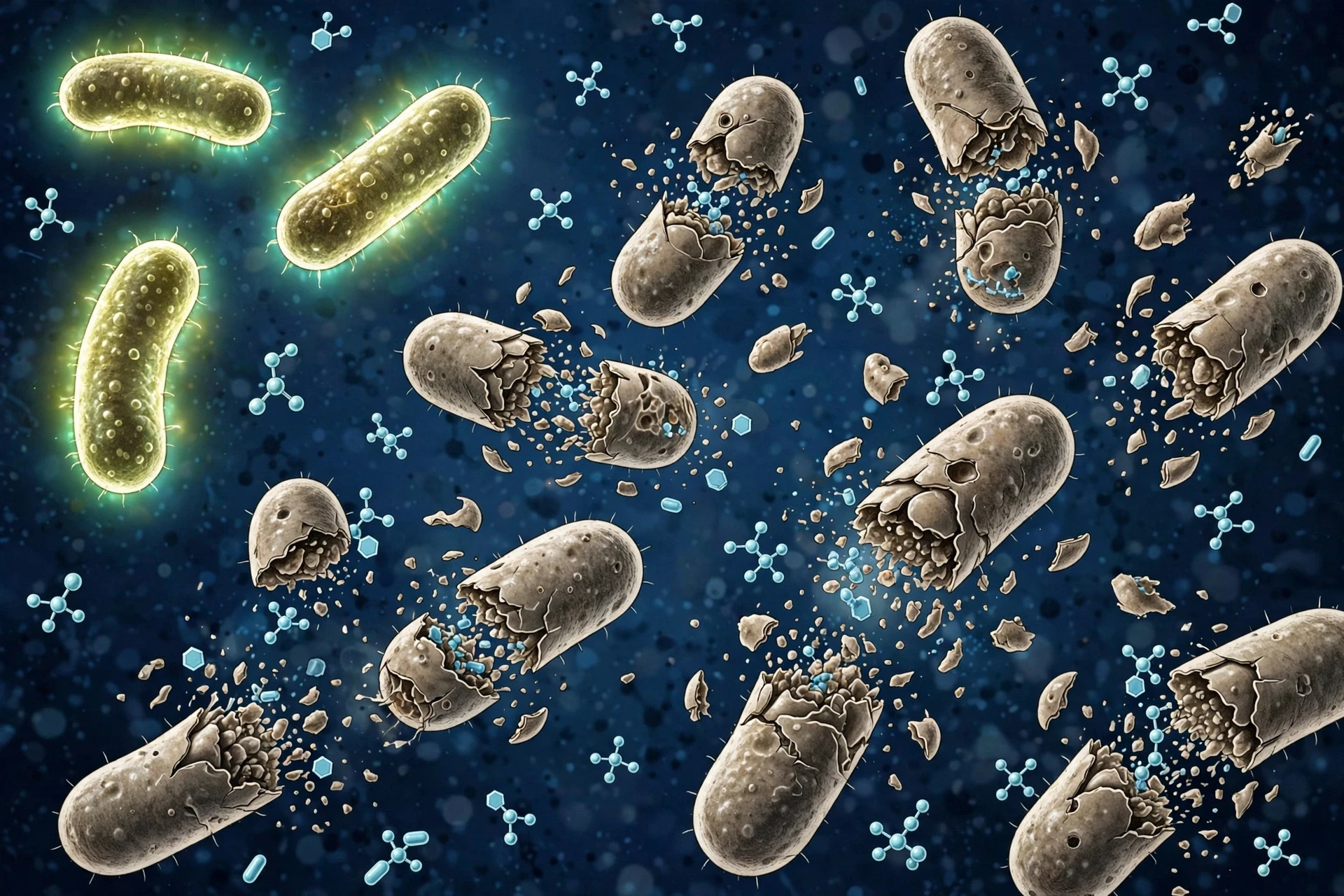
Antibiotic resistance is the ability of a bacterium to survive and multiply in the presence of an antibiotic that would normally stop it or kill it — and the most common misunderstanding about it is also the most important one to correct first.
Your body does not become resistant to antibiotics. Bacteria do. Resistance is a property of the germ, not the person carrying it. When someone says "I am resistant to penicillin," they usually mean one of two different things: either they are allergic to penicillin, which is an immune reaction and has nothing to do with resistance, or they were once infected by a bacterium that happened to be resistant. The drug did not stop working on them. It stopped working on that particular strain of that particular bacterium. That distinction matters, because it changes where the blame sits and what the fix looks like. You cannot become resistant by taking too many antibiotics, but the bacteria living on and in you can — and they can pass what they learn to other bacteria, including ones that make you sick later.
An antibiotic is a chemical that kills bacteria or stops them growing, usually by attacking something bacteria have and human cells do not, or by attacking a bacterial process in a way human cells can tolerate. Penicillin, the first antibiotic discovered from a natural source, attacks the bacterial cell wall. Others attack the machinery that builds proteins, or the enzymes that copy DNA, or the pathways that make folate. The details differ, but the principle is the same: find a difference between a bacterial cell and a human cell, and exploit it. That is also the principle's weakness. Bacteria reproduce fast — a single Escherichia coli cell can become billions in a day under ideal laboratory conditions — and every reproduction is a chance for a copying error. Given enough bacteria and enough time, some of those errors will blunt the drug's attack. And once a bacterium survives, it passes its trick to its descendants.
Antibiotic resistance comes in two broad kinds, and keeping them apart helps explain why some drugs never worked and others stopped working. Intrinsic resistance is built into a species by its anatomy or biology, so the drug never worked against it in the first place. The bacterium that causes tuberculosis, for example, has a waxy, almost waterproof outer coat that many antibiotics simply cannot cross. Acquired antibiotic resistance is different: the bacterium was susceptible, then gained the ability to resist, either by a mutation in its own DNA or by picking up resistance genes from another bacterium. Acquired resistance is the kind that spreads, and it is the kind this article is mostly about.
When a bacterium resists several unrelated antibiotics at once, it is called multidrug-resistant, and such organisms are often called superbugs. The word is journalistic shorthand, not a scientific category — there is no official list of superbugs, though the WHO does publish a priority list of the most threatening drug-resistant bacteria — but it captures something real. A superbug is not necessarily more vicious than its susceptible cousins. It does not need to be. Its danger lies in the fact that the usual treatments fail, so an infection that would once have been a routine prescription becomes a hospital stay, a last-resort drug, or, in the worst cases, an infection with no effective treatment at all.
There is one more distinction worth making early, because the words get mixed up constantly. Antibiotic resistance is resistance to antibiotics, drugs that kill bacteria. Antimicrobial resistance is the wider term: it covers resistance to drugs against bacteria, viruses, fungi and parasites. This article is about bacteria, so "antibiotic resistance" is the right term throughout. The wider problem is bigger, but antibiotic resistance — the bacterial part of it — is the part that kills the most people.
Microbiology Explained: Bacteria, Viruses, and How Microbes Shape Life covers the world these bacteria live in — including a first look at resistance — and this article is the deep dive that follows from it.
3. How Antibiotics Kill Bacteria
Before you can understand how bacteria fight back, you need to see what they are fighting against — because every resistance trick in the next section is aimed at one specific part of an antibiotic's attack, and knowing those targets is the key to understanding every defence that follows.
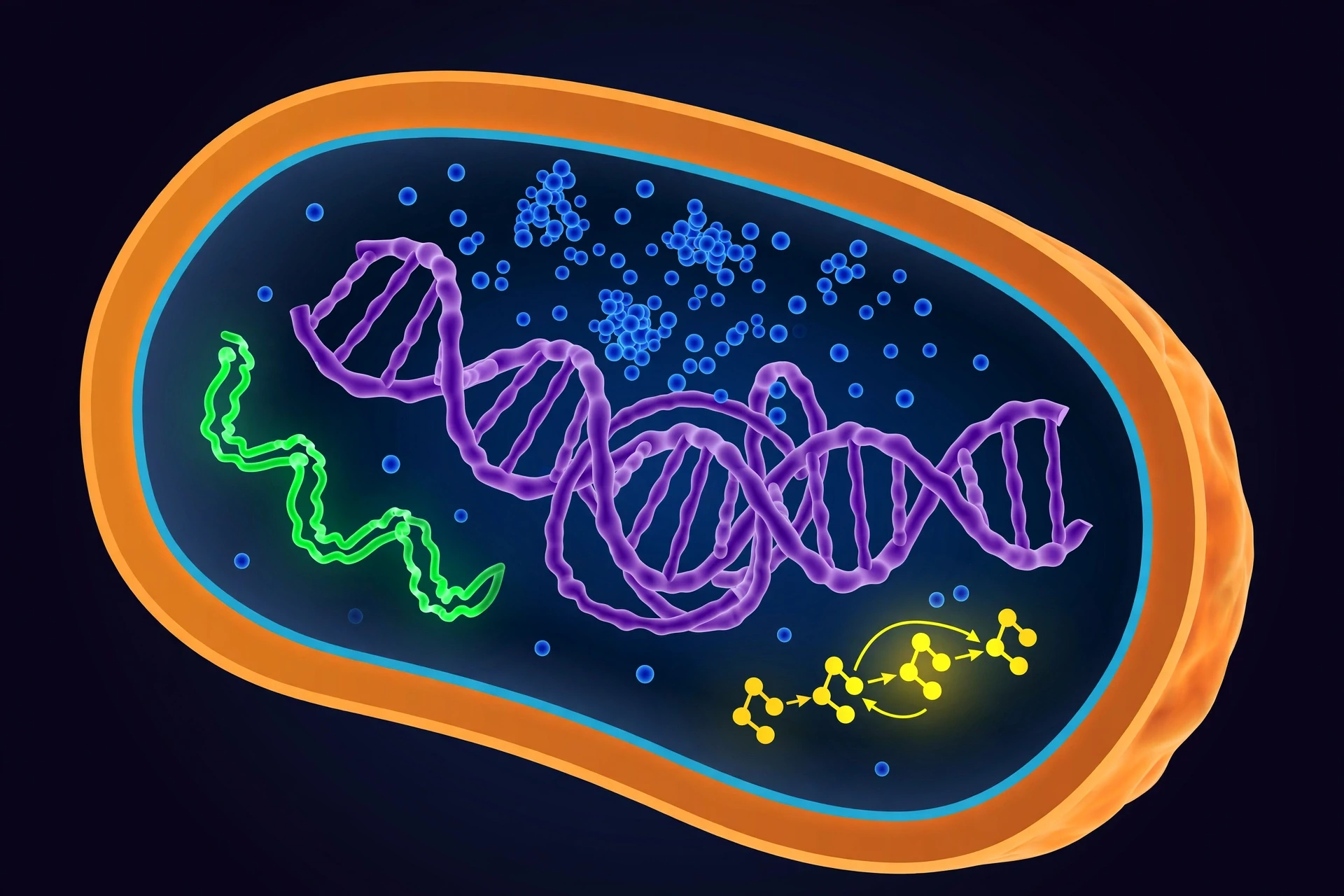
An antibiotic works by finding a target in the bacterial cell and breaking it. The targets are the parts of a bacterium that keep it alive and let it multiply, and they fall into five main groups. Think of a bacterium as a small factory: it has walls, assembly lines, a copying machine for its instruction manual, and a supply chain for raw materials. Each class of antibiotic sabotages a different part of that factory.
The first target is the cell wall. Penicillins and cephalosporins — the beta-lactam antibiotics — block the enzymes that build and repair the wall. A bacterium without a working wall cannot hold its shape; water rushes in, and the cell bursts. Human cells have no cell wall, which is why these drugs can be given safely to people. The second target is protein synthesis. Antibiotics such as tetracyclines, macrolides and aminoglycosides jam the ribosome, the machine that reads genetic instructions and builds proteins. Without new proteins, the bacterium cannot grow or repair itself. The third target is DNA itself: fluoroquinolones such as ciprofloxacin block the enzymes that untangle DNA when it is copied, so the bacterium cannot reproduce. The fourth is RNA synthesis, attacked by drugs such as rifampicin. The fifth is the folate pathway, the supply chain for one of the raw materials of DNA — the target of trimethoprim and the sulfonamides. A few antibiotics attack the cell membrane itself — the polymyxins, including colistin, a last-resort drug for resistant Gram-negative bacteria.
This is why antibiotics are selective, and why they are not poisons in the ordinary sense. A good antibiotic is a key that fits a bacterial lock and no human one. But the lock is made of molecules, and molecules can change. A single mutation in the gene for a target protein can alter its shape just enough that the drug no longer fits. A new enzyme can appear that chews the drug up before it reaches the target. A pump can be installed in the cell membrane that throws the drug back out as fast as it comes in. Every one of those changes is a small, local, chemical event. What makes them dangerous is that they are heritable, and that bacteria share them.
It is worth pausing on one point, because it explains so much of what follows: antibiotics do not, in the main, create antibiotic resistance. They reveal it. In any large population of bacteria, a few cells will already carry a mutation or a gene that blunts a drug's effect, purely by chance. Before the drug arrives, those cells are unremarkable — they may even grow slightly more slowly than their neighbours, because resistance often comes with a cost. When the drug arrives, the susceptible majority dies, and the resistant minority inherits the territory. The antibiotic did not teach the bacteria anything. It ran an experiment in which only the resistant cells survived, and then it handed them the whole petri dish. That is natural selection, running at bacterial speed, and it is the engine of antibiotic resistance.
Natural Selection Explained: How Evolution Really Works tells the story of that engine in general — how selection works on any population that reproduces with variation. Antibiotic resistance is that story playing out in fast-forward, in hospitals, farms and sewers, every single day.
4. The Five Ways Bacteria Fight Back
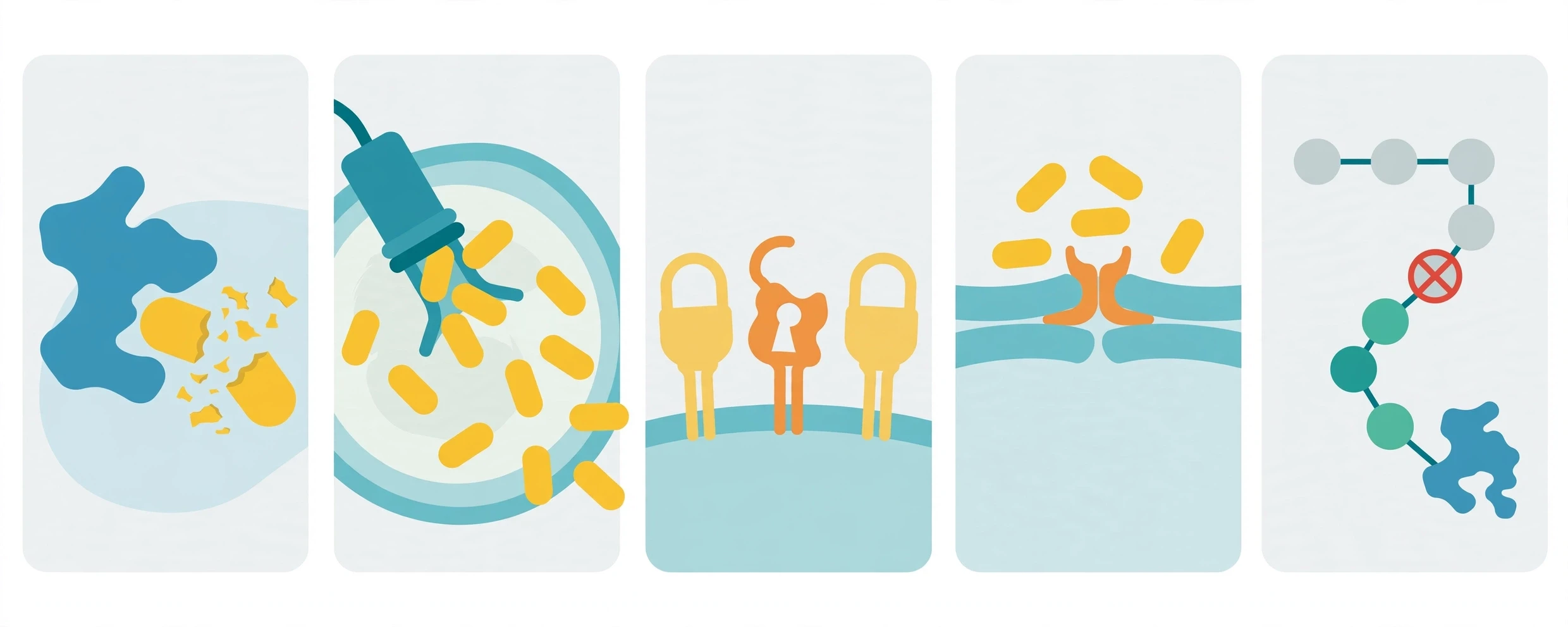
However a bacterium becomes resistant, the resistance works through one of five mechanisms — five different answers to the same problem: how to keep living when a drug is trying to kill you. Each mechanism is a different kind of engineering, and each one has shaped the drugs doctors can still use.
The first mechanism is to destroy the weapon. Many bacteria produce enzymes that chemically chop up an antibiotic before it can act, like molecular scissors snipping the drug into harmless fragments. The most famous of these are the beta-lactamases, enzymes that break the beta-lactam ring at the heart of penicillins and cephalosporins. Once that ring is broken, the drug loses its antibacterial activity entirely. Some beta-lactamases are narrow, attacking only a few drugs; others, the extended-spectrum beta-lactamases, or ESBLs, chew through penicillins and most cephalosporins at once (though not the carbapenems). The most worrying, the carbapenemases, destroy even the carbapenems — the powerful, last-resort beta-lactams that doctors keep in reserve for the hardest infections. A bacterium carrying a carbapenemase gene can be resistant to nearly every beta-lactam ever made.
The second mechanism is to pump the drug out. Some bacteria build efflux pumps — tiny protein machines embedded in the cell membrane that eject the drug as fast as it seeps in, so it never reaches a lethal concentration inside. Efflux pumps drive tetracycline resistance and macrolide resistance, and some pumps are generalists, throwing out several unrelated drugs at once. A bacterium with a good efflux pump is like a house with a sump pump running constantly: the water keeps coming in, but it never gets deep enough to do damage.
The third mechanism is to change the lock. Antibiotics work by binding a specific target — a piece of the bacterial machinery. Mutate that target slightly and the drug no longer fits, like a key in a re-cut lock. The classic example is MRSA, methicillin-resistant Staphylococcus aureus. Ordinary S. aureus builds its cell wall using four penicillin-binding proteins (PBP1–4), which methicillin binds and shuts down. MRSA carries a gene called mecA, which produces an extra protein, PBP2a, that binds methicillin so weakly the drug effectively cannot stop it — so the bacterium keeps building its wall, and the drug passes through without effect. One gene, one changed lock, and a whole class of antibiotics becomes useless.
The fourth mechanism is to bar the door. Bacteria can thicken their outer walls, or shut the entry channels — the porin proteins — that drugs use to get inside. Gram-negative bacteria, which have an outer membrane on top of their cell wall, are particularly good at this. Changes in porin channels cut the entry of beta-lactams — as in Pseudomonas aeruginosa resistance to the carbapenem imipenem — and can slow other drugs. The drug is still lethal in principle; it simply never arrives.
The fifth mechanism is to find another way around. Some bacteria alter their own metabolic pathways so they no longer need the process the drug blocks. The classic case is trimethoprim resistance: the drug blocks the folate pathway, but some bacteria acquire an alternative version of the enzyme (encoded by dfr genes) that trimethoprim cannot block, so the folate pathway keeps running. And then there is the biofilm — not a mechanism in a single cell, but a strategy of the crowd. Bacteria growing in a biofilm, a slimy communal mat on a surface, are shielded by the matrix around them and by the fact that the cells deep inside grow slowly, making them less vulnerable to drugs that attack actively dividing cells. Biofilms on catheters, ventilators and implants are among the hardest infections in medicine to clear, and antibiotic resistance is only part of the reason.
Here is the honest comparison of the five mechanisms of antibiotic resistance, because they are not equally common, and not equally hard to beat:
Mechanism | How it works | Classic example | How doctors fight back |
|---|---|---|---|
Destroy the drug | Enzymes chop up the antibiotic before it acts | Beta-lactamases against penicillin; carbapenemases against carbapenems | Pair the antibiotic with an enzyme blocker, such as clavulanic acid |
Pump the drug out | Efflux pumps eject the drug as fast as it enters | Tetracycline and macrolide resistance | Drugs the pump cannot recognise, or combination therapy |
Change the target | A mutation alters the drug's binding site so it no longer fits | MRSA's PBP2a protein; rifampicin-resistant tuberculosis | Switch to a drug with a different target |
Bar the door | Thickened walls or closed porin channels keep the drug out | Pseudomonas aeruginosa and imipenem | Combine drugs, or use drugs that enter by another route |
Find another route | An alternative metabolic pathway bypasses the blocked step — or a biofilm shields the whole colony | Trimethoprim resistance; biofilms on medical devices | Combination therapy; removing the infected device |
Biofilms are not a mechanism of a single cell but a strategy of the crowd; they are listed in the table because they achieve the same result — the drug cannot reach its target.
Notice what the table implies. Every mechanism has a counter-move, and doctors use them all — but every counter-move is itself a drug, and bacteria can learn to beat that too. The pairing of amoxicillin with clavulanic acid, an enzyme blocker, restored penicillin's power against many beta-lactamase producers. Then bacteria evolved beta-lactamases that clavulanic acid cannot block. Medicine advances one step, bacteria advance one step, and the race has been running for eighty years. That is why the long-term answer cannot be new drugs alone. New drugs help, and the world needs more of them. But the race itself has to slow down, and slowing it down means using the drugs we already have far more carefully than we do.
5. Mutation: The Lucky Typo
A mutation is a copying error in a bacterium's DNA — a single changed letter that, by chance, blunts a drug's attack. Most mutations do nothing, but in a population of billions, the rare useful one appears again and again, and antibiotics then select for it.
The first way antibiotic resistance appears is also the oldest: a copying error. Bacteria reproduce by copying their DNA, and the copying is fast and sloppy by human standards. A single bacterium dividing every twenty minutes can produce billions of descendants in a day, and every division is a fresh chance for a typo — a single letter changed, added or deleted in a gene. Most typos do nothing, or they harm the cell that carries them. Once in a while, a typo changes something useful: the shape of a drug's target, the strength of a pump, the leakiness of a wall. That cell has just become resistant, and it has no idea that it has. It is simply a bacterium with a slightly different protein, dividing like all the others.
The maths of this is what makes antibiotic resistance inevitable rather than merely possible. A bacterial infection can contain billions of cells. The mutation rate for any given gene is roughly one change in a hundred million copies — rare for a single cell, but in a population of billions, the rare event happens many times over. If the antibiotic is present, the susceptible cells die and the mutant survives. If it is not present, the mutant may be slightly worse off than its neighbours, because resistance often carries a cost — a pump that wastes energy, a changed enzyme that works a little more slowly. That cost is why resistance sometimes fades when a drug stops being used. But bacteria have a way of dealing with the cost too: given time, further mutations can compensate for it, locking the resistance in place even when the drug is gone.
I first saw this process with my own eyes in a teaching laboratory, years ago, watching a petri dish that had been spread with bacteria and a small disc of antibiotic placed in the middle. The drug diffused outwards, killing the bacteria around the disc and leaving a clear ring — the zone of inhibition, the standard test of whether a drug works. But inside the clear ring, a handful of tiny colonies were growing. Each one was the descendant of a single cell that had carried, by chance, a mutation that let it survive. The lecturer pointed at them and said, simply, "That is evolution, and you are watching it happen in real time." It was a small moment, but it has stayed with me, because it made an abstract idea visible. Resistance is not a decision bacteria make. It is a numbers game, and the numbers are always on their side.
Mutation is the slow road to antibiotic resistance, in one sense: it depends on chance, and a single mutation usually protects against a single drug. But it is also the road that starts every other road. A mutation that changes a target protein can later be copied onto a plasmid and shared. A mutation that weakens a wall can make it easier for a bacterium to survive long enough to pick up a resistance gene from a neighbour. And in tuberculosis, mutation is the whole story: Mycobacterium tuberculosis does not trade genes with other bacteria the way most species do, so its resistance comes almost entirely from mutations, one drug at a time. That is why drug-resistant tuberculosis takes months to treat and why the treatment has to use several drugs at once — so that no single mutation can save the bacterium.
The practical lesson of mutation is a simple one, and it is the reason doctors insist on the right drug at the right dose. A dose too low to kill the bacteria does not merely fail — it creates exactly the conditions in which a partially resistant mutant survives and multiplies. Fleming saw this in 1945, and his warning is worth quoting in full, because it is as true now as it was then:
"Then there is the danger that the ignorant man may easily underdose himself and by exposing his microbes to non-lethal quantities of the drug make them resistant."
He was talking about penicillin, and about a man buying it in a shop and taking too little. Eighty years later, the same thing happens in hospitals, in farms, and in homes all over the world — not out of ignorance, usually, but out of habit, cost, or the simple difficulty of getting the dose exactly right. The bacteria do not care about the reason. They only care about the concentration.
6. Gene Transfer: Bacteria Trade Their Secrets
If mutation is the slow road to antibiotic resistance, gene transfer is the expressway — and it is the reason antibiotic resistance spreads far faster than mutation alone could ever explain. Bacteria trade resistance genes directly, between cells and between species, and the trade never stops.
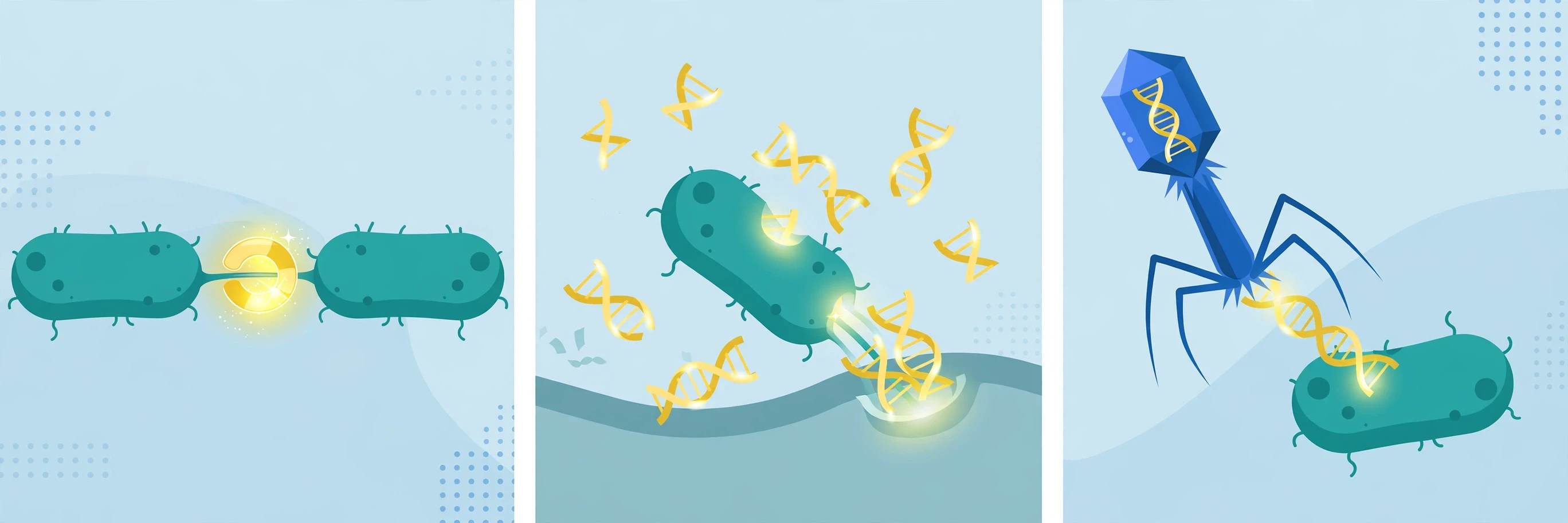
Bacteria do not wait for lucky mutations. They trade resistance genes directly, passing small loops of DNA called plasmids between cells the way children trade cards. A gut bacterium can hand a resistance gene to an entirely different species it happens to bump into, and that species can hand it on again. The trade happens in three ways, and each one is worth knowing by name, because they are the machinery of the whole crisis.
Conjugation is the most important of the three. Two bacteria join together, and a plasmid carrying resistance genes is copied across from one to the other. It is the main route by which resistance spreads in the gut and in hospitals, and it works across species barriers that would stop almost any other kind of inheritance. A plasmid can carry several resistance genes at once — one for penicillin, one for tetracycline, one for a sulfonamide — so a single act of conjugation can turn a susceptible bacterium into a multidrug-resistant one. Some plasmids also carry the genes for their own transfer, which means they spread themselves. A bacterium that receives one becomes a donor in turn.
Transformation is simpler and stranger: a bacterium picks up loose DNA from its environment — fragments released when other bacteria die and break apart — and incorporates it into its own genome. Several species, including the ones that cause gonorrhoea and meningitis, are naturally competent for transformation, meaning they actively take up DNA from their surroundings. If that DNA contains a resistance gene, the transformed bacterium becomes resistant. It is the bacterial equivalent of finding a useful tool lying on the ground and picking it up.
Transduction is the most indirect route. A bacteriophage — a virus that infects bacteria — accidentally packages a piece of bacterial DNA instead of its own, and carries it into the next cell it infects. If that piece contained a resistance gene, the new cell becomes resistant. Phages are everywhere: in soil, in water, in the gut. They move genes between bacteria constantly, and nobody can predict exactly which genes they will move next.
What makes gene transfer so dangerous is that it separates the origin of antibiotic resistance from its spread. Mutation creates resistance; gene transfer spreads it. A resistance gene that first appears by chance in one bacterium in one hospital can, through conjugation, reach a different species in a different country within a few years. The gene for the NDM-1 carbapenemase, which destroys nearly all beta-lactam antibiotics, was first identified in 2008 in a patient who had been treated in India. Within a few years it had been reported in 40 countries across most continents, carried by plasmids moving between species of gut bacteria — and it has since been found on every inhabited continent. No mutation could travel that fast. Only trade can.
This is also why antibiotic resistance is a single global problem rather than many local ones. A farm in one country, a hospital in another, a traveller's gut: the plasmids move through all of them. Resistance genes have been found in the guts of people who have never taken antibiotics, and in bacteria isolated from permafrost thousands of years old — proof that the genes themselves are ancient, part of the natural chemical warfare between microbes that has been going on for billions of years. What is new is not the genes. What is new is the scale and speed of their movement, driven by the sheer volume of antibiotics humans now pour into the world.
Genetics Explained: How Inheritance, Mutations, and Gene Expression Work explains the machinery behind all of this — how genes are copied, how plasmids work, and how a single changed letter in DNA can change a protein. Resistance is genetics in action, at the speed of bacterial life.
7. Natural Selection in Fast-Forward
Put mutation and gene transfer together, add antibiotics, and you have the fastest evolutionary experiment ever run on Earth — and humans are the ones running it, mostly without meaning to. Selection needs only variation, inheritance and a difference in survival, and bacteria have all three in abundance.
Natural selection needs three things: variation, inheritance, and differences in survival. Bacteria have all three in abundance. Variation comes from mutation and from the constant traffic in genes. Inheritance is built in: a bacterium passes its DNA, plasmids included, to its daughters. And differences in survival are exactly what an antibiotic creates. Spray a population of bacteria with a drug, and you have just run a selection experiment: the susceptible die, the resistant live, and the next generation is descended entirely from the survivors. Do that every day, in every hospital and farm and household on the planet, and the result is not surprising. It is inevitable.
What makes bacteria special as evolutionary subjects is their speed. A human generation takes decades. In ideal laboratory conditions a bacterium such as E. coli can divide every twenty minutes. Inside the body growth is usually much slower, but even at a few generations a day a bacterial population runs through dozens of rounds of mutation and selection during a single course of antibiotics — and in the lab, hundreds. That is why antibiotic resistance can appear within years, or even months, of a new drug's introduction. Penicillin was first used widely in the early 1940s. By 1942, penicillin-resistant Staphylococcus aureus had been reported. Methicillin was introduced in 1959 to beat penicillin-resistant staph. The first MRSA was reported in 1961, two years later. Ceftaroline, a newer drug designed to kill MRSA, was approved in 2010; resistant strains were reported the following year — and resistant strains had even been found in hospital collections dating back to 1998, before the drug existed, because the mutations that blunt ceftaroline were already circulating. The pattern repeats so reliably that microbiologists treat it as a law: introduce a new antibiotic, and resistance will follow. The only question is how fast.
There is a second, subtler effect, and it is the one that makes antibiotic resistance hardest to reverse. When a bacterium gains resistance, it often pays a cost — the pump burns energy, the changed enzyme works more slowly, the thickened wall slows growth. In a world without antibiotics, the resistant bacterium should lose to its faster-growing susceptible cousins, and resistance should fade. Sometimes it does. But bacteria are not passive about the cost. Given time, they accumulate compensating mutations — small tweaks elsewhere in the genome that restore the lost fitness while keeping the resistance. Once that happens, the resistance is locked in, and stopping the drug no longer removes it. This is why some resistance persists for years after a drug falls out of use, and why simply banning an antibiotic is rarely enough to bring it back.
The selection pressure is not only in hospitals. It is everywhere antibiotics are used, and everywhere they end up afterwards. Antibiotics are excreted, largely unchanged, in urine and manure. They wash into rivers and soil. They linger at low concentrations in wastewater, in farm runoff, in the sludge of sewage treatment plants. At those low concentrations they do not kill bacteria — they select for the ones that can tolerate them. A river downstream of a drug factory or a hospital can become a training ground for resistance, a place where bacteria are exposed to just enough drug to favour the resistant mutants and just little enough to let them survive. Studies have found resistance genes in rivers, in soil, in the guts of wild animals that have never seen a hospital. The selection experiment is running in the environment too, all the time, and nobody is in charge of it.
This is the sense in which antibiotic resistance is an evolutionary problem before it is a medical one. The drugs are chemicals; the bacteria are populations; the dynamic between them is selection. You cannot win a race against evolution by running faster, because evolution has no finish line. You can only change the conditions of the race — use the drugs less often, use them more precisely, and give the bacteria fewer chances to practise. That is the logic behind everything in the second half of this article.
8. Fleming and the Mould That Changed the World
Every story about antibiotic resistance begins in the same place: a cluttered laboratory in London, an untidy bench, and a scientist who had just come back from holiday to find his experiment ruined. What happened next changed medicine forever — and the man at the centre of it saw the danger coming before anyone else did.
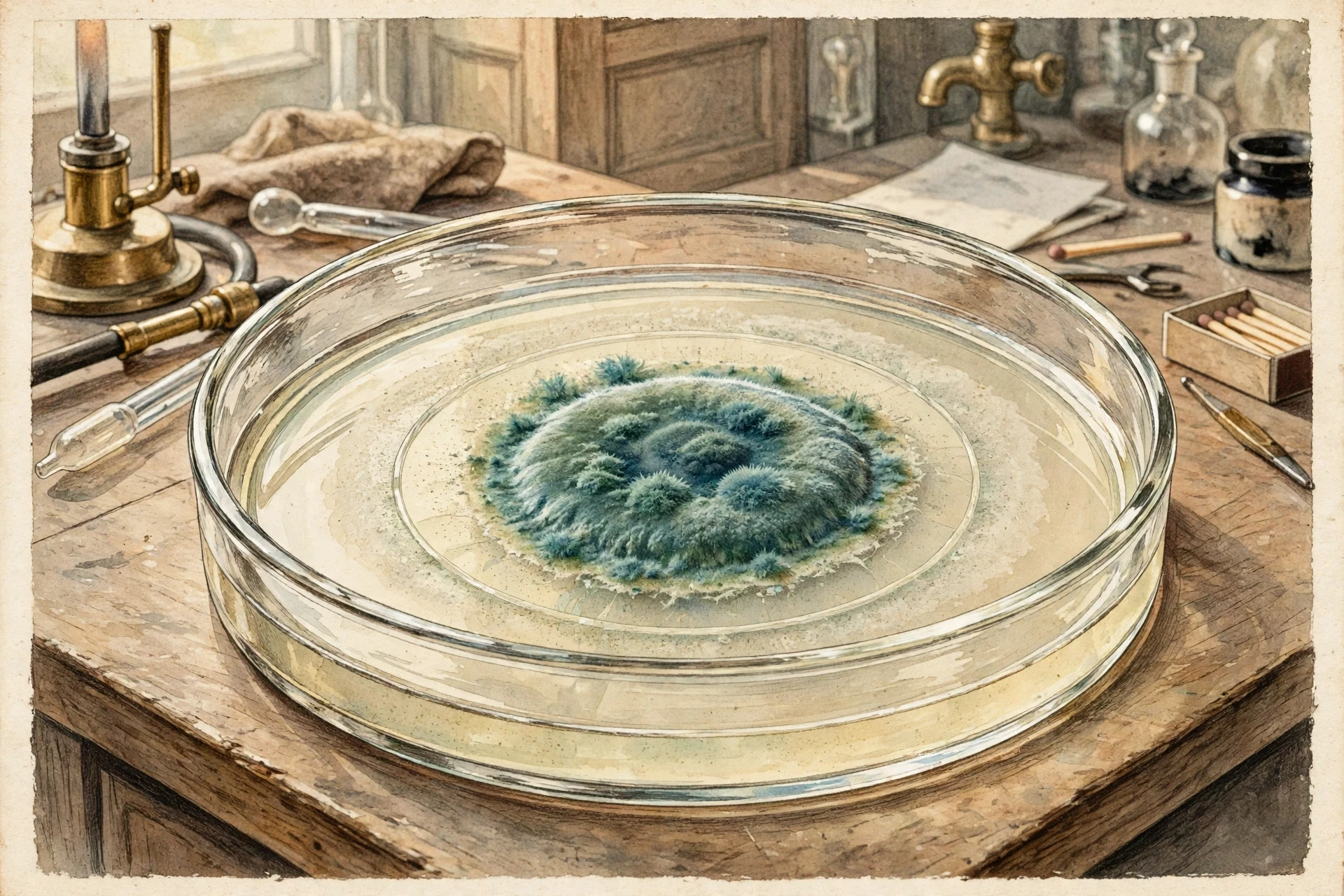
In September 1928, Alexander Fleming returned to St Mary's Hospital Medical School after a summer break and found that a mould spore had drifted onto one of his petri dishes of Staphylococcus aureus — the bacterium that causes boils, wound infections and blood poisoning. The dish was a mess, contaminated, fit only for the sink. But Fleming noticed something odd. Around the patch of mould, the bacteria had been killed. The mould, a Penicillium species, was producing something that destroyed the bacteria around it. Most scientists would have thrown the dish away and started again. Fleming did something else: he grew the mould, tested what it made, and found that its juice could kill a range of disease-causing bacteria while leaving human cells unharmed. He called the substance penicillin, after the mould, and published his findings in 1929.
Then, almost nothing happened. For a decade, penicillin remained a laboratory curiosity. Fleming could not purify it or produce it in quantity, and the world moved on. It took a second team, at Oxford — Howard Florey, Ernst Chain and their colleagues — to turn the mould's juice into a medicine. Working in the late 1930s and early 1940s, with the Second World War under way, they developed methods to grow, extract and purify penicillin, and in 1941 they treated their first patient: a policeman named Albert Alexander, who had developed a severe facial infection after being injured in a German air raid on Southampton in November 1940. (The familiar story that he scratched his face on a rose thorn is a myth — his family confirmed the wound came from the Blitz.) The drug worked dramatically — until it ran out. There was not enough penicillin to finish the treatment, the infection returned, and Alexander died. It was a tragedy and a proof of concept at the same time: the drug worked, and the world needed far more of it. Within a few years, American pharmaceutical companies were producing penicillin on an industrial scale, and the age of antibiotics had begun.
Fleming, Florey and Chain shared the Nobel Prize in Physiology or Medicine in 1945. Fleming's Nobel lecture, delivered on 11 December 1945, is remembered less for the story of the discovery than for its ending — a warning that has become one of the most quoted passages in the history of medicine. He told his audience that penicillin would soon be available to anyone, and that careless use would breed resistance. His words, in full:
"It is not difficult to make microbes resistant to penicillin in the laboratory by exposing them to concentrations not sufficient to kill them, and the same thing has occasionally happened in the body. The time may come when penicillin can be bought by anyone in the shops. Then there is the danger that the ignorant man may easily underdose himself and by exposing his microbes to non-lethal quantities of the drug make them resistant."
He was right about everything except the timeline. It did not take decades for his warning about antibiotic resistance to come true. Penicillin-resistant staph appeared within a few years of the drug's widespread use, and the pattern has repeated with every antibiotic since. Fleming had seen, in his own laboratory, how easy it was to train bacteria to survive penicillin: expose them to a dose too small to kill them, and the survivors would be resistant. He understood, before anyone else, that the drug's power was also its vulnerability — that the same property that made penicillin a miracle, its ability to kill bacteria, would select for the bacteria it could not kill.
There is a small, human detail in the Fleming story that I think about whenever someone calls the discovery an accident. Fleming's laboratory was famously untidy, and he was famously careless about tidying his cultures away before holidays. The mould spore arrived because a dish was left out. Fleming himself supposed it had blown in through an open window, though the spores more likely drifted up from a mycologist's laboratory on the floor below. But Fleming had spent years studying exactly the kind of thing he saw in that dish — the way one microbe can kill another — and he recognised the significance of the clear zone around the mould because he knew what to look for. Serendipity favours the prepared mind, as the saying goes. It also favours the untidy laboratory. The lesson is not that accidents make discoveries. It is that a trained observer, looking at a ruined experiment, can see a revolution where anyone else would see a mess.
9. The Superbugs: Meet the Worst Offenders
If antibiotic resistance is the problem, superbugs are its faces — the specific bacteria that doctors fear most, because they combine resistance with the ability to cause serious disease. The World Health Organization keeps a list of them, and it is worth reading, because it shows where the danger is concentrated.
The WHO first published its Bacterial Priority Pathogens List in 2017, and updated it in May 2024. The list ranks 24 antibiotic-resistant bacteria by how dangerous they are, using criteria that include how many people they kill, how easily they spread, how hard they are to treat, and whether any new drugs are coming. The 2024 update kept the same three tiers — critical, high and medium — and the top of the list barely changed, which is itself a warning: seven years of effort, and the same bacteria are still winning.
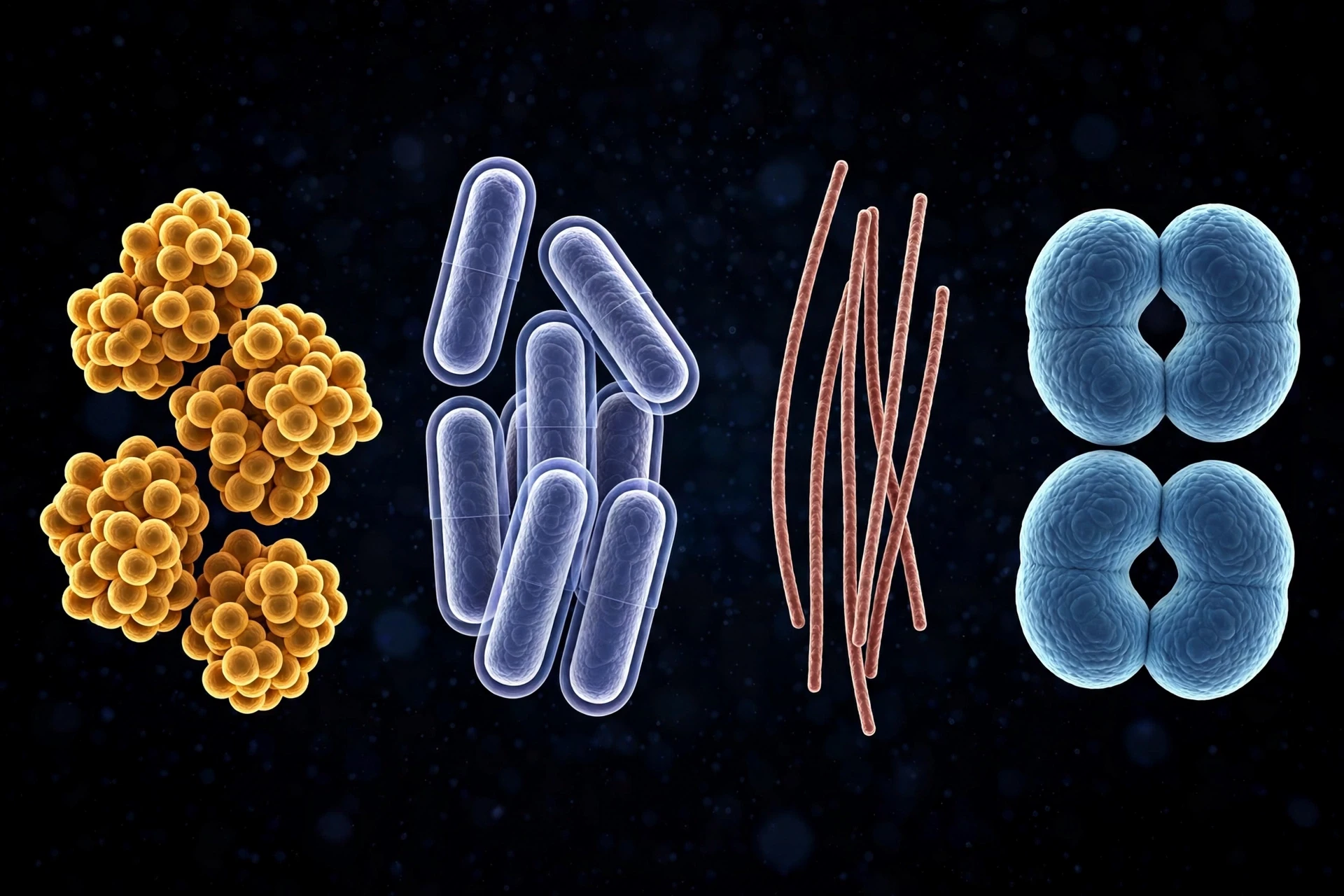
The critical tier, the highest, contains four entries: carbapenem-resistant Acinetobacter baumannii, a tough hospital bacterium that survives on surfaces for weeks and causes pneumonia and wound infections in intensive care; carbapenem-resistant Enterobacterales; third-generation cephalosporin-resistant Enterobacterales — the family that includes E. coli and Klebsiella pneumoniae, the bacteria behind urinary infections, bloodstream infections and much of hospital-acquired disease; and rifampicin-resistant Mycobacterium tuberculosis, the drug-resistant form of TB, which is in the critical tier because it kills so many people and takes so long to treat. The single highest-ranked pathogen on the whole list is carbapenem-resistant Klebsiella pneumoniae.
The high tier includes the names most people have heard. MRSA, methicillin-resistant Staphylococcus aureus, the hospital and community superbug that causes skin infections, pneumonia and bloodstream infections. Vancomycin-resistant Enterococcus faecium, a gut bacterium that has become a major problem in hospitals. Carbapenem-resistant Pseudomonas aeruginosa, which was downgraded from critical to high in 2024 — the only piece of good news on the list, and a small one. Fluoroquinolone-resistant Salmonella Typhi, the cause of typhoid fever, and fluoroquinolone-resistant Shigella, which causes dysentery. And Neisseria gonorrhoeae, the bacterium behind gonorrhoea, which has steadily defeated one antibiotic after another — penicillin, tetracyclines and fluoroquinolones — and is now treated with a single high dose of ceftriaxone, the last reliably effective drug, with resistant strains spreading.
Here is what those names mean in human numbers:
Superbug | Where it strikes | What we know |
|---|---|---|
MRSA (methicillin-resistant Staphylococcus aureus) | Hospitals and the community; skin, wounds, bloodstream, lungs | About 323,700 hospital cases and 10,600 deaths in the United States in 2017 (CDC); more than 100,000 deaths attributable worldwide in 2019 (Lancet) — the single deadliest form of resistance |
Carbapenem-resistant Acinetobacter baumannii | Intensive care; pneumonia, wounds, bloodstream | WHO critical priority; about 8,500 hospital cases and 700 deaths in the US in 2017; survives for weeks on dry surfaces |
Carbapenem-resistant Enterobacterales (including Klebsiella pneumoniae and E. coli) | Urinary tract, bloodstream, abdomen; hospitals and the community | WHO critical priority; carbapenem-resistant K. pneumoniae is the top-ranked pathogen on the WHO 2024 list |
Drug-resistant tuberculosis (MDR/RR-TB) | Lungs; worldwide, concentrated in India, Russia, Indonesia, China and the Philippines | About 400,000 new cases in 2023 (WHO), about 150,000 deaths; fewer than half of cases are diagnosed and treated |
Drug-resistant gonorrhoea (Neisseria gonorrhoeae) | Sexually transmitted; worldwide | Has defeated penicillin, tetracyclines and fluoroquinolones; now treated with a single high dose of ceftriaxone, and resistant strains are spreading |
Clostridioides difficile | Gut; follows antibiotic treatment that wipes out normal gut bacteria | About 223,900 hospital cases and 12,800 deaths in the US in 2017 (CDC) — an infection caused by antibiotics themselves |
Two of those rows deserve a closer look, because they show the two different shapes the crisis takes. MRSA is the classic hospital superbug that escaped into the community. It was first found in hospitals in 1961, and for decades it was a problem of wards and operating theatres. Then, around the turn of the century, a new variant called USA300 began spreading among healthy people outside hospitals — in gyms, in prisons, in schools, in families. It caused boils and skin infections in people with no hospital contact at all. MRSA had learned to live in the community, and it has never gone back.
Clostridioides difficile, usually shortened to C. diff, is a different kind of story. It is not resistant in the usual sense — the growing bacterium is killed by several antibiotics, though its spores survive in the environment for months. The problem is that antibiotics wipe out the normal gut bacteria that keep C. diff in check, and once the competition is gone, C. diff grows out of control, producing toxins that cause severe diarrhoea and damage to the colon. It is, in a real sense, an infection caused by antibiotics themselves. The CDC estimated about 223,900 hospital cases and 12,800 deaths in the United States in 2017. The treatment, paradoxically, can involve giving the patient someone else's gut bacteria — a faecal microbiota transplant — to restore the community that the antibiotics destroyed.
Drug-resistant tuberculosis is the slow disaster. TB is treated with a combination of drugs taken for months, and when the treatment is interrupted or the drugs are used alone, resistant strains emerge. Multidrug-resistant TB — resistant to the two most powerful first-line drugs, isoniazid and rifampicin — affected about 400,000 people in 2023, and caused about 150,000 deaths. Fewer than half of those cases are diagnosed and put on treatment, and the treatment itself takes months, costs far more than ordinary TB treatment, and carries worse side effects. The good news is real: since 2022, the WHO has recommended six-month, all-oral regimens for most patients, replacing the old two-year courses that included painful injections. But the bad news is also real. In some countries, a fifth of new TB patients already carry rifampicin-resistant strains.
The WHO list is a map of where medicine is losing to antibiotic resistance. It is also, read properly, a map of where to fight. The bacteria at the top are almost all Gram-negative — the group with the extra outer membrane that makes them hardest to attack — and almost all of them are hospital bacteria, which means infection control in hospitals matters as much as any new drug. That is a hopeful observation, in a grim list: some of the most effective weapons against these bacteria are not drugs at all. They are handwashing, isolation, clean water and careful prescribing.
10. How We Made It Worse: Overuse in People
Bacteria evolved antibiotic resistance on their own, over billions of years. Humans made antibiotic resistance a crisis — and the single largest driver is the way we use antibiotics in people, especially the way we use them when they are not needed at all.
The clearest number in the whole field comes from the CDC: at least 28 percent of the antibiotics prescribed in outpatient settings in the United States are considered unnecessary. That figure comes from a 2021 study in Clinical Infectious Diseases, and it means that more than one in four antibiotic prescriptions outside hospitals serves no medical purpose. Most of those unnecessary prescriptions are for respiratory infections — colds, flu, bronchitis, sore throats — that are caused by viruses, against which antibiotics do nothing at all. An antibiotic cannot kill a virus. It can only kill the bacteria living in the patient, including the harmless ones, and in doing so it runs a selection experiment on them.
Why does it happen? The reasons are human, and they are easy to understand. A patient with a miserable cold wants something, and a doctor who has ten minutes and a waiting room full of people finds it easier to write a prescription than to spend the time explaining why one is not needed. Some patients insist. Some doctors worry about missing a bacterial infection that is hiding behind a viral one. In many countries, antibiotics can be bought without a prescription at all, and people self-medicate — taking a leftover course from a previous illness, or sharing antibiotics with a family member, at the wrong dose and for the wrong duration. Every one of those uses is a selection experiment, and the bacteria are keeping score.
I remember a doctor telling me, years ago, that the hardest part of his job was not diagnosing illness but disappointing patients — telling a mother that her child's earache would get better on its own, or telling a man with a cold that the best treatment was rest and fluids. He said the prescription pad was sometimes the easiest way to end a difficult conversation. He was not lazy and he was not careless. He was a good doctor working in a system that rewards action over patience, and the cost of that action was invisible: a few more resistant bacteria, a little more selection pressure, a problem that would show up in someone else's ward months later. That is the tragedy of antibiotic overuse. The benefit of an unnecessary prescription goes to the person in the room. The cost is spread across everyone else, invisibly, and it arrives later.
The good news is that this is also the most fixable part of antibiotic resistance, and the numbers prove it. Outpatient settings account for roughly 85 to 95 percent of all antibiotic use in people. That means the doctor's office, the clinic and the pharmacy counter are where the battle is mostly fought — not the intensive care unit. Stewardship programmes that give doctors feedback on their prescribing, that provide rapid tests to distinguish bacterial from viral infections, and that set clear rules for when antibiotics are warranted, have reduced unnecessary prescribing substantially in the hospitals and clinics that have adopted them. The Netherlands and the Scandinavian countries use far fewer antibiotics per person than the United States — the Netherlands about 9 defined daily doses per 1,000 people per day and Sweden about 9, against about 22 in the US (2022-23 figures) — and their resistance rates are lower. The UK, by contrast, uses only slightly less than the US, about 20 doses per 1,000 people per day. The difference is not genetics and it is not luck. It is policy, culture and habit.
There is also a diagnostic problem at the heart of all this. When a patient arrives with a fever, the doctor usually cannot tell immediately whether the cause is bacterial or viral, and the test results take a day or two. The safe choice, in the moment, is to prescribe. New rapid diagnostics — tests that can identify a pathogen and its resistance profile in hours rather than days — are changing that calculation, and they may turn out to be as important as any new drug. A doctor who knows the answer does not have to guess, and a doctor who does not have to guess does not have to prescribe just in case.
Human Evolution Explained: From Ancient Ancestors to Modern Humans follows the long story of how our species changed over millions of years. Antibiotic resistance is the same process, compressed into decades, and the selective force this time is us.
11. The Farm Connection: Antibiotics in Animals
If the clinic is where most human antibiotic use happens, the farm is where most antibiotic use happens, full stop — and the two are connected in ways that took the world a long time to admit. Most of the antibiotics sold in the United States go to food-producing animals, not to people.
About two-thirds of the medically important antibiotics sold in the United States go to food-producing animals, not to people. The figure comes from analyses of Food and Drug Administration sales data by groups such as the Natural Resources Defense Council, and it has held steady for years: in 2023, about 6.1 million kilograms of medically important antibiotics were sold for use in livestock in the United States, and the great majority of the medically important share went to cattle and swine — roughly 44 percent to swine and 41 percent to cattle. Most of that use is not to treat sick animals. It is to prevent disease in crowded conditions, and, until recently, to promote growth.
The growth-promotion story is the part that surprises people most. From the 1950s onwards, farmers discovered that adding low doses of antibiotics to animal feed made livestock grow faster. Nobody fully understands why — it seems to change the gut bacteria in ways that let animals extract more nutrition from their feed — but the practice became routine, and by the turn of the century, enormous quantities of antibiotics were being fed to healthy animals every day, at low doses, for months at a time. Low doses, long duration, huge populations: that is precisely the recipe for selecting resistant bacteria. It is Fleming's warning, applied to millions of animals at once.
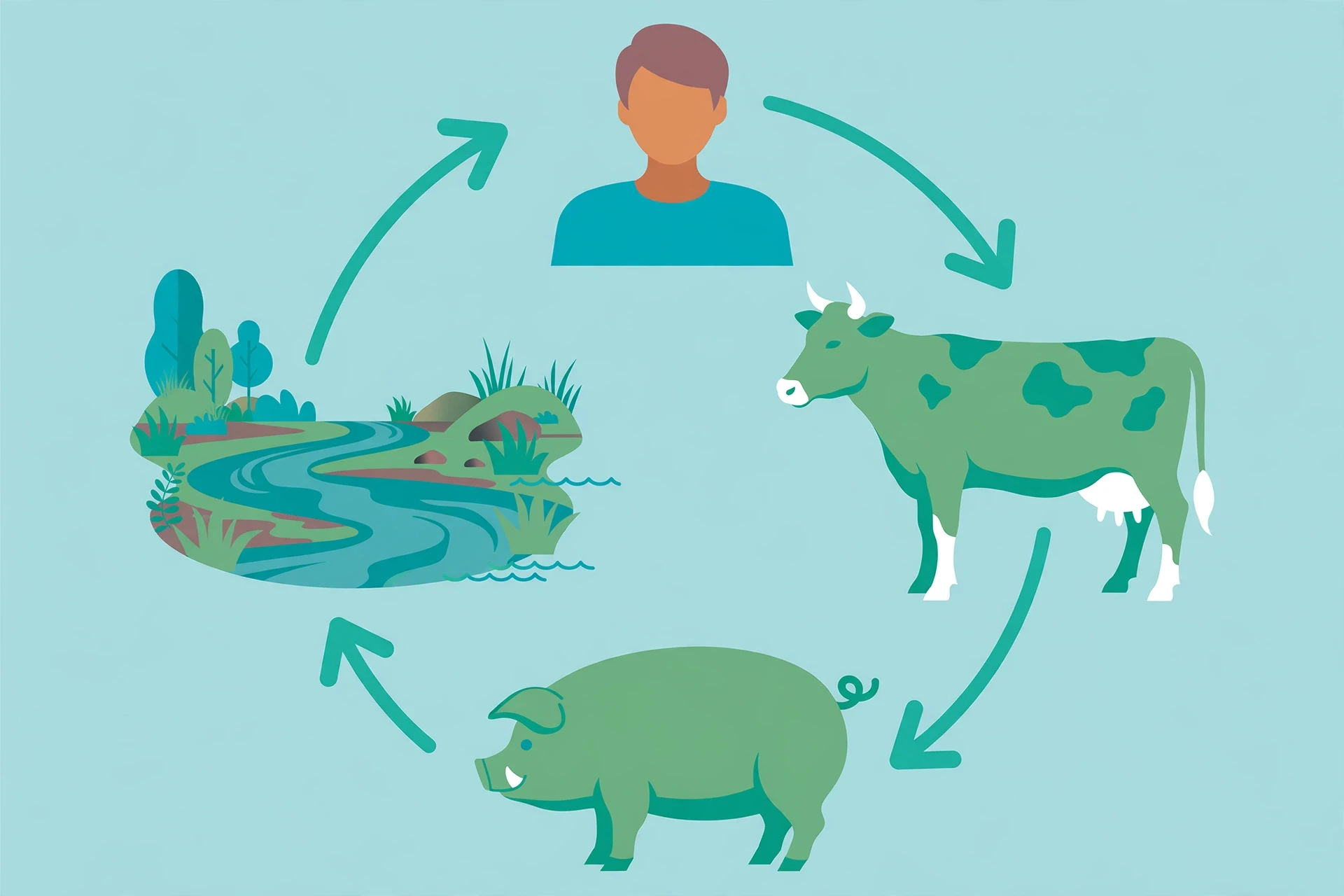
The resistant bacteria that emerge on farms do not stay on farms. They travel in meat, in manure spread on fields, in runoff into rivers, and in the farmers and workers who handle the animals. Studies have repeatedly found the same resistance genes in bacteria from farm animals and in bacteria from people living nearby. The mcr-1 gene, which confers resistance to colistin — a last-resort antibiotic for humans — was first found in E. coli from pigs in China in 2015, carried on a plasmid that could move between bacteria. Within a year it had been found in animals and people on several continents. Colistin had been used for decades as a growth promoter in livestock in some countries, and the selection pressure had done its work.
This is the One Health idea, and it is now the framework that the WHO, the FAO and the World Organisation for Animal Health all use: human health, animal health and environmental health are not three separate problems. They are one problem, because the bacteria move freely between them, and so do the resistance genes. An antibiotic used on a pig is an antibiotic used on the world, in a real and measurable sense. The good news is that the One Health framing has led to real change in the fight against antibiotic resistance. The European Union banned antibiotics for growth promotion in 2006. The United States ended growth-promotion use of medically important antibiotics in 2017. Sales for livestock in the United States have fallen about 37 percent from their 2015 peak. And the Netherlands, which cut veterinary antibiotic use by almost 70% between 2009 and 2019, saw resistance fall in its farm animals without any collapse in production. The lesson is the same as in human medicine: the drugs can be used far more carefully than they are, and the world does not fall apart when they are.
12. The Cost of Losing: What Resistance Does to Medicine
So far this article has been about bacteria and genes. This section is about what happens when the drugs stop working — and the answer is that modern medicine becomes a different, smaller thing than it is today. Surgery, cancer treatment, transplants and childbirth all rest on the assumption that infections can be cured.
Start with the operations. Almost every surgical procedure depends on antibiotics to prevent infection, and the riskier the operation, the more it depends. A hip replacement, a heart bypass, a caesarean section, a transplant: all of them involve opening the body and introducing the possibility of infection, and all of them are performed on the assumption that an infection, if it occurs, can be treated. If that assumption fails, the calculus changes. Surgeons operate less boldly. Procedures are delayed or declined for the patients who need them most — the elderly, the immunocompromised, the already ill. Antibiotic prophylaxis cuts the relative risk of infection after joint replacement by about 81% — without it, the risk is roughly five times higher. A US modelling study estimated that a 30% fall in the efficacy of antibiotic prophylaxis would cause about 120,000 extra surgical-site and chemotherapy-related infections and about 6,300 deaths a year, and its authors warned some procedures could become 'virtually impossible'.
Then there is cancer. Chemotherapy works by killing fast-dividing cells, and it cannot distinguish between a cancer cell and a white blood cell. Patients on chemotherapy are profoundly vulnerable to infection, and antibiotics are what keep them alive through treatment. The same is true of organ transplants, where the drugs that prevent rejection also suppress the immune system. Modern oncology and transplant medicine are, in a very real sense, built on top of antibiotics. Take the foundation away, and the building does not stand.
Childbirth is the third example, and the one that brings the point home most sharply. Before antibiotics, infection after childbirth — puerperal fever — was one of the leading causes of maternal death. Antibiotics cut that risk to a fraction of what it was. In a world without effective antibiotics, giving birth becomes dangerous again, in exactly the way it was a century ago. The same is true of the simplest things: a scraped knee, a urinary infection, a tooth abscess. These are nuisances today because they are treatable. They were killers before antibiotics, and they will be killers again if the drugs fail.
The human cost is already measurable. The Lancet study of 2019 estimated 1.27 million deaths directly attributable to bacterial antibiotic resistance, and nearly five million deaths in which resistance played a part. To put that in context: in that year, antibiotic resistance killed more people than HIV/AIDS, which killed about 860,000, and more than malaria, which killed about 640,000. It is already one of the leading causes of death in the world, and it is the only one of the leading causes that is getting worse by a mechanism we fully understand and can partly control.
The economic cost is harder to measure, and the most quoted figure is also the most uncertain. The O'Neill Review, commissioned by the British government and published in May 2016, projected that if resistance continues unchecked, it could kill ten million people a year by 2050 and cost the world economy a cumulative one hundred trillion dollars in lost output by 2050. Those numbers are projections, built on assumptions, and they have been criticised as too high, too low, and too precise all at once. Treat them as a warning, not a forecast. What is not in doubt is the direction: resistant infections already cost more to treat than susceptible ones, because they mean longer hospital stays, more expensive drugs, and more complications. In the United States, treating one MDR-TB patient cost on average about 134,000 dollars, against about 17,000 dollars for drug-susceptible TB; the CDC puts a single drug-resistant case at 20,000 to 500,000 dollars. Globally the drug regimens alone cost roughly 200-600 dollars for drug-resistant TB versus about 50 dollars for first-line treatment. Older MDR-TB regimens took 20-26 months against 6-9 months for ordinary TB, though newer six-month all-oral regimens are now shortening that gap. Multiply that by hundreds of thousands of cases, and the bill becomes a public health problem in its own right.
There is a final cost, and it is the hardest to put a number on: the cost of fear. Doctors who have watched a patient die of an untreatable infection carry that memory into every decision they make afterwards. They prescribe more broadly, more aggressively, more defensively — and that, in turn, creates more selection pressure. It is a vicious circle, and breaking it is as much a matter of confidence as of chemistry. The world needs new drugs, but it also needs doctors who trust that the drugs they have will work, and patients who trust that a prescription withheld is a decision made in their interest, not a cost-saving measure.
13. Should You Finish the Course?
There is one piece of advice about antibiotics that almost everyone has heard, and it is currently being rewritten — which is why this section exists, and why it is the most important one in the article for a reader who takes antibiotics.
The advice is: always finish the course. Take every pill, even if you feel better, because stopping early lets the surviving bacteria develop resistance. It is the rule your doctor gave you, the rule your parents gave you, and the rule printed on the leaflet in the box. It is also, according to a growing body of evidence, not always true — and in some cases it may be exactly backwards.
In 2017, a team led by Martin Llewelyn published an analysis in the BMJ with a deliberately provocative title: "The antibiotic course has had its day." Their argument was simple. The idea that stopping antibiotics early causes antibiotic resistance was never based on good evidence. It was a piece of received wisdom, passed down from Fleming's warning about underdosing, and it had hardened into dogma without anyone testing it properly. When the evidence was examined, the picture looked different. For many common infections, shorter courses work just as well as longer ones, and longer courses expose the patient — and their gut bacteria — to more selection pressure, not less. Their conclusion was blunt:
"Patients are put at unnecessary risk from antibiotic resistance when treatment is given for longer than necessary, not when it is stopped early."
That is a genuine expert quotation, from a peer-reviewed paper, and it is worth sitting with for a moment, because it reverses the rule most of us grew up with. The danger, Llewelyn and his colleagues argued, is not stopping early. The danger is taking antibiotics for longer than needed.
Does that mean you should stop taking your antibiotics when you feel better? No. And this is the part where the honest answer gets complicated, because the truth is that the right duration depends on the infection, and only the prescriber knows which one you have. For some infections, the evidence now supports shorter courses: five days for community-acquired pneumonia, for example — the American College of Physicians recommended a minimum of five days in 2021, extending treatment only if the patient has not reached clinical stability. For others, the old rule still holds completely. Tuberculosis must be treated for months, and stopping early is one of the main ways drug-resistant TB is created. Some infections do worse with short courses: acute otitis media in children under two is one. In a trial of children aged 6-23 months, 34% of those given five days of amoxicillin-clavulanate had clinical failure — worsening or incomplete resolution of symptoms and signs — compared with 16% given ten days (that is, 66% versus 84% without failure). The point is not that the old rule was wrong everywhere. The point is that it was never a universal law, and treating it as one has caused harm.
So what should a reader actually do? The honest, practical answer is this: take antibiotics exactly as prescribed, for exactly as long as prescribed, and if you want to stop early because you feel better, ask the prescriber first. Do not decide the duration yourself. The prescriber's job is to weigh the evidence for your particular infection, and the evidence is now nuanced enough that the answer genuinely differs from case to case. What you should never do is save leftover antibiotics for later, share them with someone else, or take antibiotics someone else was prescribed. Those are the behaviours that create underdosing and drive antibiotic resistance — Fleming's original warning — and they are unambiguously harmful. The same goes for taking antibiotics for a cold or flu, which are viral: the drug does nothing for the illness, and it runs a selection experiment on your gut bacteria for free.
There is a broader lesson here about antibiotic resistance, and it is one of the themes of this whole article. Simple rules are comforting, and medicine is full of them, but biology is not simple, and the rules have to keep up with the evidence. The "finish the course" rule was well-intentioned, it was based on a real insight, and it is now being refined — not abandoned, but refined — by people who looked at the data instead of repeating the slogan. That is how science is supposed to work.
14. What Actually Works: Stewardship and Prevention
If the first half of this article was about how antibiotic resistance arose, this half is about what works — and the most important thing to understand is that the most effective weapons against antibiotic resistance are not new drugs. They are old habits, applied rigorously.
Antibiotic stewardship is the name for the coordinated effort to use antibiotics well: the right drug, for the right infection, at the right dose, for the right duration, and no drug at all when one is not needed. Stewardship programmes in hospitals have been studied extensively, and they work. They cut unnecessary prescribing, they shorten hospital stays, and they slow the rise of antibiotic resistance — without making patients worse. The core tools are unglamorous: a pharmacist reviewing prescriptions, a microbiologist advising on which drug matches the bacteria actually found, a computer system that flags a prescription that does not fit the guidelines, and a regular report to each doctor showing how their prescribing compares with their colleagues'. None of it is dramatic. All of it works, and the hospitals that do it well have measurably lower resistance rates than the hospitals that do not.
Prevention is the other half, and it is even less glamorous. Vaccines prevent infections, and every infection prevented is an antibiotic course not taken. The pneumococcal conjugate vaccine, given to children, cut antibiotic-resistant pneumococcal infections sharply in the countries that adopted it. The typhoid conjugate vaccine is doing the same for drug-resistant typhoid. Sanitation and clean water prevent the diarrhoeal diseases that drive antibiotic use in much of the world. Hand hygiene in hospitals — the simple act of washing hands between patients — is one of the most powerful infection-control measures ever studied, and it costs almost nothing. The bacteria that cause hospital infections travel mostly on hands, on equipment and on surfaces, and interrupting that journey is worth more than any new drug.
There are also things that individual readers can do, and they are worth listing plainly, because antibiotic resistance can feel so large that personal action seems pointless. It is not.
Do not ask for antibiotics for a cold, flu or other viral illness, and do not take them if they are offered for one. If you are unsure whether an infection is bacterial, ask what test would tell the difference.
Take antibiotics exactly as prescribed, and ask the prescriber if you want to stop early. Never share antibiotics, never save leftovers, and never take someone else's prescription.
Keep your vaccinations up to date, including the flu vaccine and the pneumococcal vaccine where recommended. Every infection prevented is an antibiotic course avoided.
Wash your hands, especially after using the toilet, before eating, and after handling raw meat. Hand hygiene is the single most effective infection-control measure most people can practise.
Handle and cook food safely, and wash raw vegetables. Resistant bacteria from farms reach people through food, and good kitchen hygiene interrupts that route.
If you are admitted to hospital, ask whether the staff have washed their hands. It is your right, and it is one of the most effective questions a patient can ask.
None of these actions will solve the problem on its own. Together, practised by millions of people, they change the conditions of the race — and changing the conditions of the race is the only strategy that has ever worked against evolution.
15. The Search for New Weapons
New drugs matter, and the world needs more of them — but the honest story of the antibiotic pipeline is a story of economics as much as of science, and the most exciting new weapons are not antibiotics at all.
The pipeline problem is simple to state and hard to solve. Developing a new antibiotic is a costly, years-long undertaking, but a new antibiotic is deliberately used as little as possible — held in reserve for the cases where nothing else works. That makes it a terrible commercial product: a company spends a fortune developing a drug, and then the world asks doctors not to prescribe it. Several antibiotic companies have gone bankrupt in recent years, even after bringing a new drug to market. The market, left to itself, does not produce antibiotics, because antibiotics are the one product whose value depends on not being used. Governments have begun to respond with new models — paying for the drug itself rather than for each dose sold, funding development directly, and offering prizes — but the pipeline is still thin. Ninety antibacterial products were in clinical development worldwide as of early 2025, according to the WHO — down from 97 in 2023 — and only 15 of them qualify as innovative.
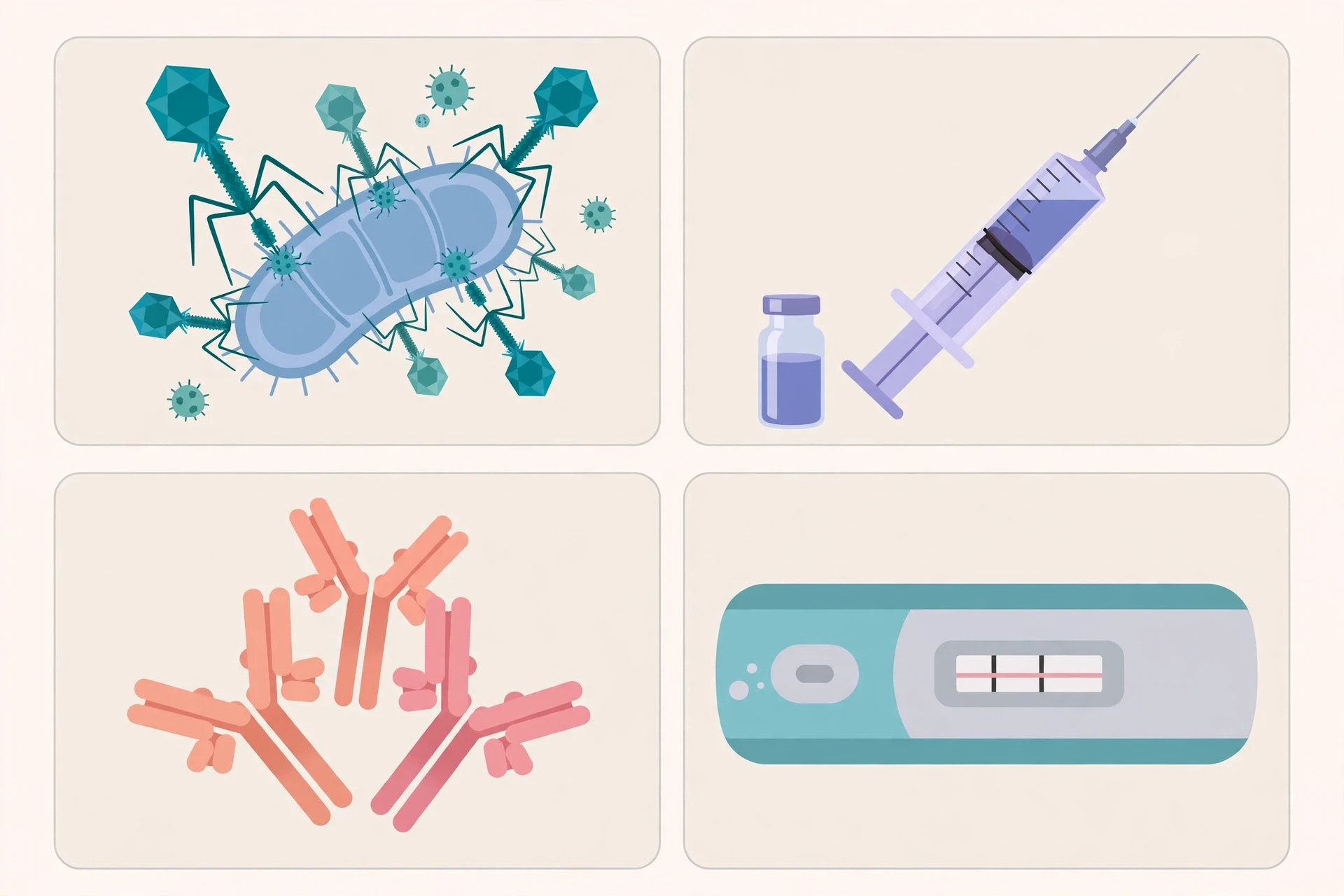
That is why so much excitement now surrounds ideas that are not antibiotics at all. The most striking is phage therapy: the use of bacteriophages — viruses that infect bacteria and only bacteria — to treat infections that antibiotics cannot. Phages are the natural predators of bacteria, and they have been killing them for billions of years. A phage attaches to a bacterium, injects its DNA, and turns the cell into a factory for new phages until the cell bursts. They are exquisitely specific — a phage that kills one strain of Acinetobacter will ignore everything else, including the patient's own cells and their gut bacteria. And they evolve alongside their prey, which means a bacterium that becomes resistant to one phage can often be killed by another.
The case that brought phage therapy to the world's attention was a man named Tom Patterson, a 69-year-old professor at the University of California, San Diego, who in November 2015 contracted a multidrug-resistant Acinetobacter baumannii infection while travelling in Egypt. By early 2016 he was in a coma, in intensive care, and his doctors had run out of antibiotics. His wife, Steffanie Strathdee, an infectious disease epidemiologist, found researchers who could supply phages — four from Texas A&M University and more from the US Navy — and obtained emergency approval from the Food and Drug Administration to use them. The phage cocktail was started on 15 March 2016. Four days later, Patterson woke from his coma. He was discharged on 12 August 2016, and he recovered. It was the first time a patient in the United States with a systemic infection had been treated with intravenously administered phages, and it was, by any measure, a rescue.
Phage therapy is still experimental. It is not a product you can buy, and it is not available outside specialist centres and emergency approvals. But it is advancing fast: clinical trials are under way, phage banks are being built, and the regulatory path is being worked out. The honest assessment is that phages are a real, promising, unproven weapon — not a miracle cure, and not a replacement for antibiotics, but a genuine addition to the arsenal.
The other new weapons are less dramatic but just as real. Vaccines against the worst offenders are in development, including vaccines against Klebsiella, Pseudomonas and drug-resistant Staphylococcus. Antibodies — laboratory-made proteins that neutralise a bacterium or its toxins — are already in use for some infections (bezlotoxumab, for example, prevents recurrent C. difficile infection) and in trials for others. Antivirulence drugs, which disarm bacteria rather than killing them, aim to make an infection harmless without creating the selection pressure that drives resistance. And CRISPR-based approaches, which use the gene-editing system to target resistance genes themselves, are being tested in the laboratory — a story that belongs to the same technology that this series covered in the CRISPR article.
CRISPR Gene Editing Explained: How It Works and What It Can Do tells that story in full, including the ethical questions that come with it. The idea of using CRISPR against resistance is still at the laboratory stage, and it should be reported as such. But the principle is sound, and the research is real.
The thread that runs through all of this is that the future of the fight against antibiotic resistance is not a single drug. It is a toolkit: better stewardship of the drugs we have, better diagnostics to guide their use, vaccines and hygiene to prevent infections, and new kinds of weapons — phages, antibodies, antivirulence drugs — that attack bacteria in ways they have not evolved to resist. None of these is a miracle. Together, they are a strategy.
16. What We Still Don't Know
For all that is known about antibiotic resistance, the gaps in our knowledge are large, and honesty about them is part of the story. We do not know how much resistance there really is, how to pay for new drugs, how much comes from the environment, or how to predict what comes next.
The first gap is the simplest: we do not know how much antibiotic resistance there is. The Lancet study that estimated 1.27 million deaths in 2019 was built on data from 204 countries, but the data were thin in exactly the places where the burden is heaviest. Many low-income countries have little or no surveillance of resistant infections, because they lack the laboratories to identify bacteria and test them against drugs. The global numbers are therefore estimates, built on models, and the models are only as good as the data that feed them. The true toll is uncertain — the models rest on thin data in the places where the burden is heaviest — and many experts think the published figure understates it, though the estimates carry wide uncertainty in both directions. The WHO's global surveillance system, GLASS, is expanding — 141 countries and territories are now enrolled and 104 shared resistance data in the latest round — but data completeness is still only about 54%, and coverage is weakest exactly where the burden is heaviest.
The second gap is economic. The world knows how to develop new antibiotics; what it does not know is how to pay for them. The market failure described in the previous section has no settled solution. Subscription models, in which a government pays a fixed fee for access to a drug regardless of how much is used, are being tried in the United Kingdom and Sweden, and the United States has debated a similar law, the PASTEUR Act, for years without passing it. Whether these models will produce a sustainable pipeline is unknown, and the clock is running: every year without new drugs is a year in which the existing ones wear out further.
The third gap is environmental. We know that antibiotics and resistance genes are present in rivers, soil and sewage, and we know that low concentrations of antibiotics select for antibiotic resistance. What we do not know is how much of the resistance in human infections comes from the environment, as opposed to from hospitals and farms. The environment is the largest reservoir of resistance genes on the planet — most of them ancient, most of them in bacteria that never cause disease — and the traffic between that reservoir and human pathogens is poorly mapped. A resistance gene that appears in a hospital strain may have originated in a soil bacterium a thousand miles away, and nobody can trace the route.
The fourth gap is predictive. We cannot reliably predict which bacterium will become resistant to which drug next, or how fast. Antibiotic resistance is evolution, and evolution is not a straight line. Sometimes a drug lasts for decades before resistance appears; sometimes it lasts for months. Sometimes resistance carries a cost that keeps it rare; sometimes compensating mutations erase the cost within a few generations. Researchers are building models that try to forecast resistance, using genomic surveillance and machine learning, and the early results are promising. But prediction is still the weakest part of the field, and it matters, because the whole strategy of stewardship depends on knowing where the next threat will come from.
The final gap is the most human one. We do not fully know how to change behaviour at scale. The science of stewardship is clear: prescribe less, prescribe better, prevent more infections. The practice of it runs into habits, incentives, fears and cultures that vary from country to country and from clinic to clinic. A doctor who knows the evidence may still prescribe, because the patient in front of them is suffering and the risk of not prescribing feels larger than the risk of prescribing. A farmer who knows the evidence may still use antibiotics, because the alternative is losing animals. Changing those decisions requires more than information. It requires systems that make the right choice the easy choice — rapid tests that give an answer in minutes, guidelines that are simple enough to follow under pressure, and feedback that shows people the consequences of their choices. That work is under way, and it is as important as any laboratory research.
None of these gaps is a reason for despair. They are a reason for urgency. The antibiotic resistance crisis is unusual among global problems in that the science is clear, the solutions are known, and the main obstacle is coordination — getting the world's hospitals, farms, governments and patients to act together on what they already know. That is a hard problem. It is also a solvable one.
17. Putting It All Together
Antibiotic resistance is, at its heart, a story about a trade-off that nobody chose and everybody shares. Antibiotics are the most consequential medicines ever discovered — and the reason they are failing is the same reason they work: they kill bacteria, and killing creates selection.
The reason they are failing is not that they were badly made or badly used in some narrow sense. A drug that kills bacteria is also a drug that selects for the ones it cannot kill, and that selection has been running, uninterrupted, for eighty years. The miracle and the problem are the same thing.
The pieces of the story fit together like this. Bacteria mutate, and occasionally a mutation blunts a drug. Bacteria trade genes, and a resistance gene that appears once can spread across species and continents. Antibiotics select for the resistant minority, every time they are used, in hospitals, in farms, in rivers. Humans accelerated the process by using antibiotics widely, often unnecessarily, in people and in animals, and by doing so at doses and durations that gave bacteria exactly the conditions they needed to adapt. The result is a world in which a routine infection can become untreatable, in which surgery and chemotherapy and childbirth are all more dangerous than they need to be, and in which more than a million people a year already die from infections that used to be curable.
But the story does not end there, because the same logic that explains the problem also points to the solution. If antibiotic resistance is driven by selection pressure, then reducing selection pressure slows antibiotic resistance. If resistance spreads through gene transfer, then infection control and hygiene slow its spread. If the pipeline is thin because the economics are broken, then new ways of paying for drugs can fix it. And if the most effective weapons are stewardship, diagnostics, vaccines and prevention, then the fight is not only a matter for laboratories and pharmaceutical companies. It is a matter for doctors, farmers, policymakers and patients — for everyone who has ever taken an antibiotic, prescribed one, or asked for one.
Fleming's warning, delivered in 1945, is the thread that runs through the whole story. He saw, before anyone else, that the drug's power contained the seeds of its own failure, and he said so plainly, in a lecture that anyone could understand. The world took eighty years to listen properly. It is listening now — in stewardship programmes, in One Health policies, in phage therapy trials, in the WHO's priority list, in the simple act of a doctor explaining to a patient why a cold does not need an antibiotic. Whether that listening comes in time is the open question of this century. The bacteria are not waiting. Neither should we.
The Origin of Life Explained: How Life Began on Earth is where this series began — with chemistry becoming biology, four billion years ago. Antibiotic resistance is what that biology does when it is given a challenge: it adapts, it trades, it survives. Understanding that is the first step. Acting on it is the second.
Frequently Asked Questions
How do bacteria become resistant to antibiotics?
Antibiotic resistance appears in two ways. First, by mutation: a copying error in a bacterium's DNA changes a drug's target, strengthens a pump, or thickens a wall, and the resistant cell survives when the drug kills its neighbours. Second, by gene transfer: bacteria pass resistance genes to each other through conjugation, transformation or transduction, often on plasmids that carry several resistance genes at once. Once a bacterium is resistant, antibiotics select for it — the drug kills the susceptible majority and leaves the resistant minority to multiply, and that is antibiotic resistance in action.
What causes antibiotic resistance?
The ultimate cause is natural selection: antibiotics kill susceptible bacteria and leave resistant ones, so antibiotic resistance spreads. The human contribution is overuse and misuse — prescribing antibiotics for viral infections, using them at the wrong dose or for the wrong duration, and using them in large quantities in livestock. Low concentrations of antibiotics in the environment, from wastewater and farm runoff, also select for resistance. Resistance genes themselves are ancient and occur naturally; what humans changed is the speed and scale of their spread.
What is a superbug?
A superbug is a bacterium that is resistant to several antibiotics at once, so that the usual treatments fail. The word is journalistic shorthand, not a scientific category. The best-known examples are MRSA (methicillin-resistant Staphylococcus aureus), carbapenem-resistant Acinetobacter baumannii and Klebsiella pneumoniae, vancomycin-resistant enterococci, drug-resistant tuberculosis and drug-resistant gonorrhoea. A superbug is not necessarily more aggressive than its susceptible cousins — its danger is that it is harder to treat.
Should you finish a course of antibiotics?
The traditional advice — always finish the course — is being revised. A 2017 BMJ analysis argued that the rule was never well supported by evidence, and that for many infections shorter courses work just as well while causing less selection pressure. But the right duration depends on the infection: tuberculosis, for example, must be treated for months, and stopping early creates drug-resistant TB. The safe answer is to take antibiotics exactly as prescribed, and to ask the prescriber before stopping early. Never save leftovers, share antibiotics, or take someone else's prescription.
Can antibiotic resistance be reversed?
Sometimes, but not reliably. Antibiotic resistance often carries a cost — a pump that wastes energy, a changed enzyme that works more slowly — so when a drug stops being used, susceptible bacteria can outcompete resistant ones and resistance can fade. But bacteria often accumulate compensating mutations that erase the cost, locking the resistance in place. Some resistance has persisted for years after the drug fell out of use. Reducing antibiotic use slows resistance; it does not guarantee that a lost drug will come back.
Are superbugs contagious?
Yes, in the same way that ordinary bacteria are contagious. Superbugs spread from person to person through contact, through contaminated surfaces and equipment, and through food and water. MRSA spreads in hospitals, gyms, schools and households. Drug-resistant tuberculosis spreads through the air, like ordinary TB. The best defences are the same ones that stop any infection: hand hygiene, clean surfaces, isolation of infected patients, and safe food handling.
What is the difference between antibiotic resistance and antimicrobial resistance?
Antibiotic resistance is resistance to antibiotics — drugs that kill bacteria. Antimicrobial resistance is the wider term, covering resistance to drugs against bacteria, viruses, fungi and parasites. This article is about bacteria, so antibiotic resistance is the right term. The wider problem is bigger, but the bacterial part of it is the part that kills the most people — about 1.27 million deaths directly attributable in 2019, according to the Lancet study.
Sources
Centers for Disease Control and Prevention — Antibiotic Use in the United States: Facts and Stats
World Health Organization — WHO Bacterial Priority Pathogens List, 2024
Nobel Prize — Alexander Fleming, Nobel Lecture, 11 December 1945
Llewelyn, M. J. et al. — The antibiotic course has had its day, BMJ (2017)
Microbiology Explained: Bacteria, Viruses, and How Microbes Shape Life
Genetics Explained: How Inheritance, Mutations, and Gene Expression Work
Human Evolution Explained: From Ancient Ancestors to Modern Humans
CRISPR Gene Editing Explained: How It Works and What It Can Do