

Introduction: The Free Sample That Cost Me Twenty Dollars
I went to a farmers market one Saturday morning for a bunch of herbs. That was the whole plan: herbs, in and out. Ten minutes later I was standing at a cheese stall with a tiny cube of smoked cheddar on a toothpick in my hand, nodding along while the vendor told me about the farm, the aging room, the awards. The sample was free. The cheese was very good. And somehow, by the time I walked away, I was carrying a wedge that cost twenty dollars and a small jar of chutney I had never intended to buy.
Nothing about the exchange had been forced. Nobody had raised their voice or made a threat. I had simply said yes — several times, in small steps — to a person who had been generous, friendly, and confident. On the walk home, carrying my expensive cheese, I found myself laughing at myself. I study this stuff. I know the research. And still, the sample worked.
That Saturday is a good place to start, because it captures what the psychology of persuasion actually is. Persuasion is not a magic trick and it is not mind control. It is the study of how one person changes another person's mind or behaviour — through words, gestures, timing, and the design of a situation. The psychology of persuasion asks a narrower, sharper question: why do we say yes when we meant to say no, and why do some requests feel almost impossible to refuse?
The answer, worked out over decades of experiments, is both reassuring and unsettling. We say yes for good reasons most of the time. Our brains run on shortcuts — quick rules of thumb that usually serve us well. If an expert recommends something, it is probably sound. If everyone else is doing it, it is probably safe. If someone did us a favour, returning it is probably fair. These shortcuts save time and mental energy in a world that throws thousands of decisions at us every day. The trouble starts when someone learns how to trigger those shortcuts on purpose, in situations where the shortcut does not apply.
This article is about the science of that process. At its centre is the work of Robert Cialdini, a social psychologist at Arizona State University who spent three years going undercover — training as a used-car salesman, a fundraiser, a telemarketer — to learn how professional persuaders actually work, and then spent decades testing what he found in controlled experiments. His book Influence: The Psychology of Persuasion, first published in 1984 and expanded in 2021, identified six principles, then a seventh: reciprocity, commitment and consistency, social proof, authority, liking, scarcity, and unity. This is the psychology of persuasion at its most practical: seven levers, each backed by experiments, each with an honest use and a manipulative one.
We will take each principle in turn — the experiment behind it, the mental shortcut it rides on, what it looks like in everyday life, and how to defend yourself against it. We will also look at the bigger picture: how the principles combine, where persuasion ends and manipulation begins, and how to build resistance without becoming suspicious of every kind person you meet. The goal is not to make you immune to influence. That is neither possible nor desirable — influence is how parents teach children, how doctors get patients to take medicine, how friends talk each other into better choices. The goal is to notice influence while it is happening, so the yes you give is one you actually mean.

1. What Is Persuasion, Really?
1.1 A definition that actually helps
Persuasion is an attempt to change what someone thinks, feels, or does, through communication rather than force. That definition matters because it draws a line. A locked door forces you to stay out. A persuasive argument gives you reasons to stay out — and leaves the choice, at least in principle, with you. The psychology of persuasion studies everything between those two poles: the honest argument, the well-timed nudge, the flattering compliment, the "only three left" warning, and all the grey areas in between.
Psychologists usually split influence into two broad kinds. The first is attitude change: changing what someone believes, so their behaviour follows. A doctor who explains, clearly and patiently, why a vaccine is safe is trying to change a belief. The second is compliance: getting someone to agree to a specific request, even if their deeper beliefs have not changed. The charity caller who asks for a small monthly donation is after compliance. The two overlap constantly — a changed attitude makes compliance easier, and a small act of compliance can slowly shift an attitude — but keeping the distinction in mind helps you see what is actually happening in any given encounter.
There is a third category worth naming, because people confuse it with persuasion all the time: coercion. Coercion removes choice — through threats, punishment, or deception so complete that no real choice exists. Persuasion, even aggressive persuasion, preserves the appearance of choice, and usually the reality of it too. That is precisely why it is so powerful, and so hard to spot. The person being persuaded feels free. Often they are free. The influence works by changing what feels like the natural, reasonable thing to do.
1.2 Two routes to yes: thinking hard and thinking fast
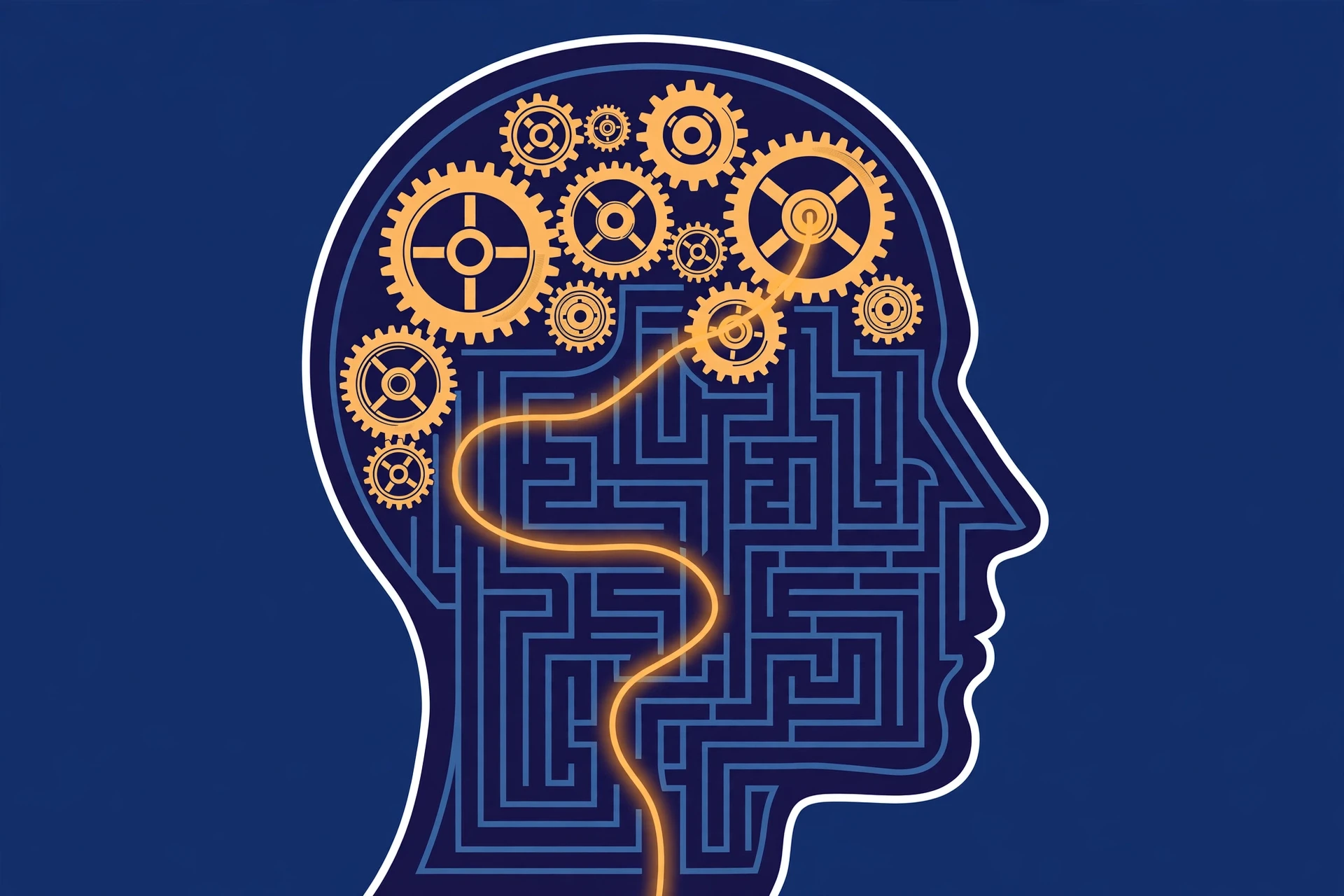
One of the most useful frameworks in the psychology of persuasion is the elaboration likelihood model, developed by psychologists Richard Petty and John Cacioppo. It says there are two routes by which a message can change your mind. The central route is the careful one: you listen to the arguments, weigh the evidence, think about the counterarguments, and change your mind because the case is strong. Attitudes formed this way tend to last, and they tend to predict behaviour.
The peripheral route is the fast one: you are swayed by cues around the message rather than the message itself — the speaker's confidence, their title, the number of people who agree, the attractiveness of the presentation, the feeling that time is running out. Attitudes formed this way are weaker and more temporary, but they are also far more common, because thinking carefully about everything is impossible. You cannot run a full evidence review on every product, every request, every headline, every stranger's pitch. So most of the time, you take the peripheral route — and most of the time, it works out fine.
Cialdini's principles live mostly on the peripheral route. They are cues, not arguments. A free sample does not prove the cheese is worth twenty dollars. A white coat does not prove the advice is correct. A crowd does not prove the restaurant is good. Each cue is a piece of evidence of a kind — but a weak kind, and one that can be faked. The psychology of persuasion is, in large part, the study of what happens when these cues are real, when they are staged, and how to tell the difference in the moment.
1.3 Why shortcuts exist at all
It is tempting to read all of this as a story about human weakness — as if the brain were badly designed and clever people exploit its flaws. That reading misses the point, and it makes the science harder to use. The shortcuts exist because they are efficient. Human beings make an enormous number of decisions every day, from what to eat to whom to trust, and most of them have to be made quickly, with incomplete information. A brain that stopped to deliberate over every choice would never get anything done. So evolution gave us heuristics: fast rules that are right most of the time. Trust experts. Copy the group. Repay favours. Stay consistent. Like people who are like you. Want what is rare. Stick with your own group.
2. The Mind's Shortcuts: Why We Say Yes Without Thinking
2.1 Click, whirr
Cialdini's favourite image for the psychology of persuasion comes from animal behaviour. Many animals run on fixed action patterns: a specific trigger sets off a whole sequence of behaviour, automatically. A mother turkey, for example, will care for anything that makes the "cheep-cheep" sound of a chick — even a stuffed polecat that makes the sound, and even a real chick that does not, which she may attack. The trigger is a single feature, and the response is the whole tape playing through.
In the psychology of persuasion, Cialdini called the human version "click, whirr." A cue clicks, and a tape plays: we respond with a ready-made pattern of thinking and acting, without stopping to check whether the pattern fits this particular situation. A title clicks, and we defer. A gift clicks, and we feel obliged. A crowd clicks, and we follow. The tapes are useful — they let us navigate a complex social world without thinking every interaction through from scratch — but they can be triggered by the wrong cue, or by a cue someone has planted deliberately.
The most honest way to think about the psychology of persuasion is as a catalogue of these tapes: which cues trigger them, why they evolved, what they are good for, and how they can be counterfeited. That is what the next seven sections do, one principle at a time.
2.2 The cost of deciding
Every decision costs mental energy, and the brain is a thrifty organ. Psychologists who study decision-making have shown again and again that people conserve effort by leaning on the easiest available cue — especially when they are tired, rushed, distracted, or facing a decision they do not care much about. This is one reason persuasion works best at the checkout, at the end of a long day, or in the middle of a busy street. The persuader does not need to beat your arguments. They only need to arrive when your arguments are tired.
This is also why the same request can land completely differently depending on context. A stranger asking for a donation on a quiet morning, when you have time to think, meets a different brain from the same stranger asking at the end of a long day, when you are carrying bags and thinking about dinner. The request has not changed. Your capacity to evaluate it has. Good persuaders know this instinctively; good defenders of their own attention know it too, and they build habits around it — never deciding on the spot, sleeping on big purchases, asking for the details in writing. We will come back to those defences in Section 13. For now, the point is simple: the psychology of persuasion is not only about the persuader's skill. It is about the listener's state. The same mind that resists beautifully at 9 a.m. can say yes to almost anything at 9 p.m.
2.3 A note on the evidence
Before we get to the principles, a word about how much to trust them. The psychology of persuasion rests on a large body of research — hundreds of experiments and field studies across many countries — and the broad patterns are well supported: people do repay favours, follow the crowd, defer to authority, and value scarce things more. At the same time, the size of these effects varies a great deal from one situation to another, and a few of the most famous individual studies have been questioned or have replicated weakly. Treat each principle as a real tendency, not a guaranteed lever — and treat anyone who promises you a guaranteed lever with suspicion.
3. The Man Who Went Undercover: Robert Cialdini's Research
3.1 Three years inside the persuasion business
In the late 1970s, Robert Cialdini was a young experimental social psychologist with a puzzle. The laboratory experiments on influence were elegant, but the people who persuaded for a living — salespeople, fundraisers, advertisers, recruiters — seemed to know things the laboratory had not yet captured. So Cialdini did something unusual for an academic: he went undercover. Over three years, he enrolled in training programmes for used-car sales, direct sales, telemarketing, fundraising, and advertising, taking notes on the tactics he was taught and watching which ones actually worked on real customers. He kept his identity as a researcher hidden from the people training him, a choice that would raise ethical questions today, but one that gave him a rare view of persuasion as it is practised rather than as it is theorised.
What struck him was not the variety of tactics. It was the lack of it. There were thousands of different scripts, pitches, and tricks — but underneath them, the same few psychological principles kept appearing. A car salesman who let you take the car home for the weekend, a charity that sent you free address labels, a waiter who gave you an extra mint: different tactics, same principle. Cialdini's insight was to sort the tactics by the principle underneath, and then test each principle in the laboratory to see whether it really caused people to say yes. The result was Influence, published in 1984, and the six principles that made it famous.
3.2 From six principles to seven
For more than thirty years, the model had six principles. Then, in Pre-Suasion (2016) and the expanded edition of Influence (2021), Cialdini added a seventh: unity. The difference between liking and unity is worth getting right, because the two are often confused. Liking is about people you find pleasant, similar, or attractive. Unity is about people you consider part of the same "we" — the same family, team, community, or identity. You can like a stranger. Unity says something stronger: this person is one of us, and what is good for us is good for me. The psychology of persuasion treats unity as the most powerful of the principles in some situations, because shared identity can override even self-interest.
Cialdini is now a Regents' Professor Emeritus of Psychology and Marketing at Arizona State University, and his books have sold millions of copies in dozens of languages. The Arizona State University news report on the 40th anniversary of Influence describes how the principles grew out of both his undercover fieldwork and more than 240 peer-reviewed articles. In an APA interview on the power of persuasion, Cialdini himself stresses the same point this article keeps returning to: small changes in how a request is made can produce large differences in whether people say yes, because they harness powerful psychological motivations that are already inside us.
3.3 How to read the principles
Each of the next seven sections follows the same pattern: the principle in one line, the mental shortcut behind it, the classic experiment, what it looks like in everyday life, and how to defend yourself. Read them as a toolkit for noticing, not as a manual for manipulating. Cialdini's own position, repeated throughout his work, is that the principles should be used ethically — to help people make choices they would endorse on reflection — and that understanding them is the best defence against their misuse. The Cialdini Institute's summary of the seven principles makes the same distinction: the principles are deep psychological tendencies, validated across cultures, and they can be learned, measured, and applied ethically.
"Small changes in the way we communicate can produce big differences, because those changes harness powerful psychological motivations inside us."
4. Reciprocity: The Obligation to Give Back
4.1 The principle
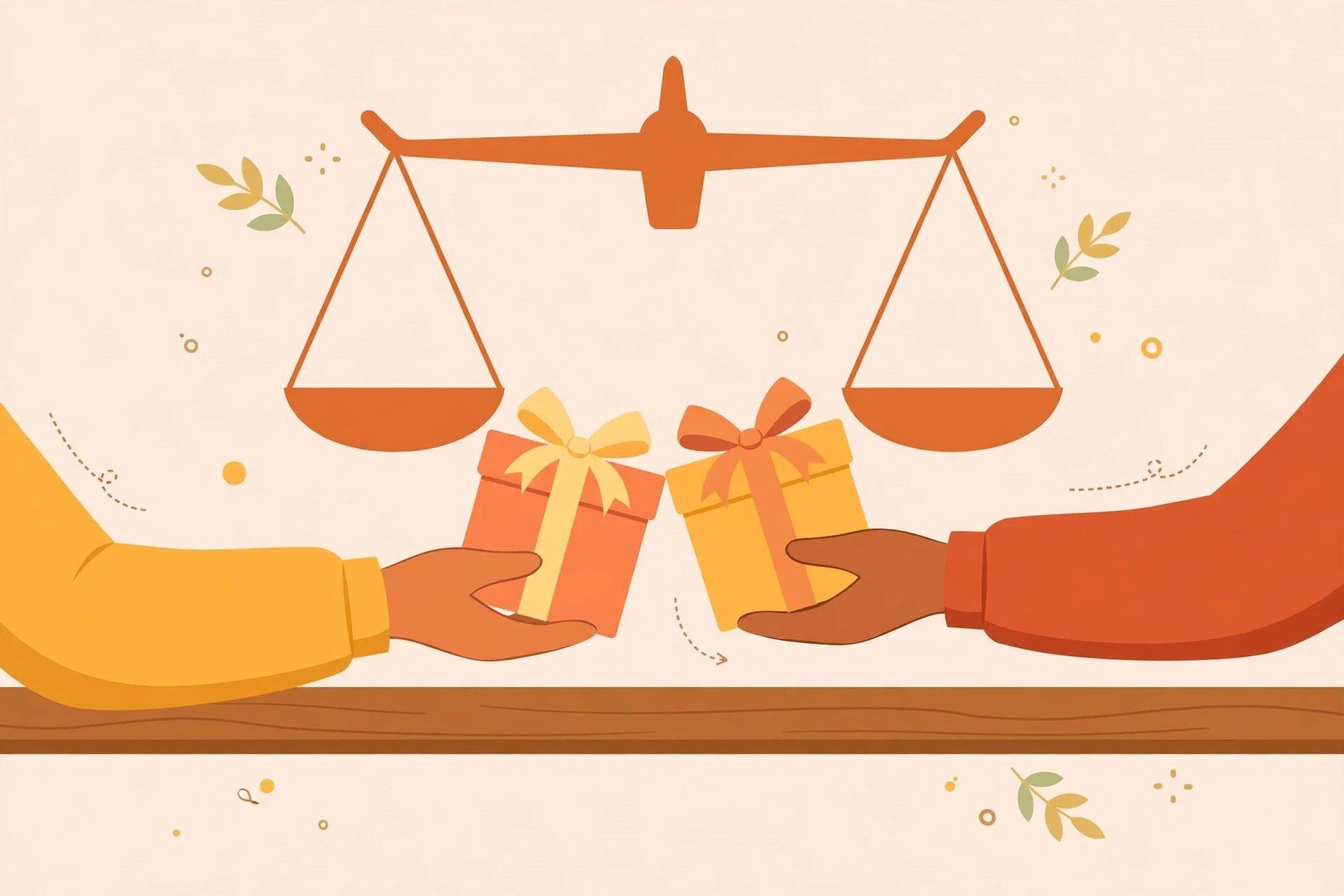
Reciprocity: we feel obliged to repay what others give us — even when we did not ask for it, even when we did not want it, and even when the gift is small. This is the psychology of persuasion at its most human. The rule is so deeply wired into social life that every known culture teaches it: if someone does you a favour, you owe them one back. It holds friendships together, builds trust between strangers, and keeps societies running. It also sells a great deal of cheese.
The shortcut behind reciprocity is simple: a gift is evidence of goodwill, and goodwill should be returned. Most of the time, that reading is correct. The problem is that the feeling of obligation does not wait for you to check whether the goodwill was genuine. It arrives first, and it arrives even when the "gift" was a sales tactic.
4.2 The experiment: a free soda
One of the cleanest demonstrations comes from a 1971 study by Dennis Regan. Participants thought they were taking part in an art-appreciation study with another participant, who was actually working with the researcher. During a break, this supposed fellow participant left the room and came back either with two cans of soda — one for himself, one for the participant — or with nothing. Later, the same person asked the participant to buy raffle tickets for a good cause. The participants who had received the unsolicited soda bought significantly more raffle tickets than those who had received nothing. A free drink, worth very little, had created a debt that the participant repaid with real money.
What makes the study striking is that the participants did not especially like the person who gave them the soda. In a variation of the experiment, the soda-giver was made to seem rude and unpleasant — and people still bought more tickets from him than from someone who had given them nothing. Liking did not matter. The gift itself did the work. That is the signature of a true shortcut in the psychology of persuasion: it fires even when the surrounding evidence points the other way.
4.3 Reciprocity in everyday life
Once you start looking for reciprocity, you see it everywhere. Free samples in supermarkets. Free trials that ask for your card details first. The extra mint a waiter leaves with the bill — researchers have found that a small, unexpected gift can increase tips noticeably. The charity that sends you free address labels, greeting cards, or a small gift in the post before asking for a donation: the labels cost the charity pennies, and they raise donations far beyond their cost. The colleague who brings you coffee unasked on the morning they need you to cover their shift. None of these are necessarily sinister. Many are genuine kindness. The point is that the feeling they create — I owe this person something — is real whether the kindness was genuine or strategic, and it nudges you toward yes before you have weighed the request itself.
4.4 The door-in-the-face technique
Reciprocity has a clever cousin called the door-in-the-face technique, and it works by turning a concession into a gift. The persuader starts with a large request they expect you to refuse — "Would you volunteer two hours a week for a year?" — and when you say no, they retreat to a much smaller request: "Well, would you give just one afternoon?" The smaller request now feels like a concession, and the rule of reciprocity says concessions should be repaid with concessions. You feel you should meet them halfway.
Experiments have shown that people agree to the smaller request far more often after refusing the larger one than if the smaller request had been made on its own. The retreat is the gift. What makes the technique so hard to spot is that it feels like good negotiation — the other side gave ground, so giving ground yourself seems only fair. The defence is to judge the second request on its own merits: would I agree to this if it had been the first thing they asked? If the answer is no, the concession has done its work on you, not the request.
4.5 How to defend yourself
The defence against reciprocity is not to stop accepting kindness. It is to separate the gift from the request. When someone gives you something and then asks for something, pause and ask yourself two questions. First, was this a genuine favour or a sales device? A free sample at a market stall is a device; a neighbour fixing your tap is a favour, even if it later creates an obligation you are happy to honour. Second, would I agree to this request if the gift had never happened? If the answer is no, say so — and say it warmly. "That was kind of you, and I appreciate it. I am still going to pass on the offer." Cialdini's own advice is to mentally redefine a manipulative gift as what it is: a compliance device, not a favour owed. Once you name it, its power drops sharply.
5. Commitment and Consistency: The Small Yes That Grows
5.1 The principle
Commitment and consistency: once we take a stand, say something, or do something, we feel pressure to behave in ways that match it. We want to be seen — by others and by ourselves — as consistent people. Changing our minds feels like weakness; sticking to a position feels like integrity. The psychology of persuasion uses this desire for consistency as a lever: get a small, easy agreement first, and the larger agreement follows more naturally, because refusing it would feel inconsistent with what you have already said or done.
The shortcut behind it is identity. A commitment is not just an action; it is a statement about who you are. "I am the kind of person who cares about this cause" is a belief that, once spoken or acted on, starts to steer future behaviour. We would rather change our behaviour than change our self-image.
5.2 The experiment: the small sign in the window
The classic demonstration is the 1966 study by Jonathan Freedman and Scott Fraser. Researchers went door to door in a California neighbourhood and asked homeowners to display a small, unobtrusive sign in their window reading "Be a safe driver." Almost everyone agreed — it was a small, easy, public-spirited request. Two weeks later, a different researcher visited the same homes and asked for something much bigger: permission to put a large, ugly billboard reading "Drive Carefully" on their front lawn, a sign so big it would block much of the house. Among the homeowners who had agreed to the small sign first, more than three quarters agreed to the billboard. Among homeowners who were asked about the billboard cold, with no small sign first, only about one in six agreed.
The small sign had changed something. The homeowners had taken a public stand — small, voluntary, visible — as people who care about safe driving. Saying no to the billboard would have felt inconsistent with that stand. The researchers called it the foot-in-the-door technique: get a foot in the door with a small request, and the door opens wider for the next one. The technique works best when the first step is voluntary, active, and public — the three qualities that make a commitment feel like it truly belongs to you.
5.3 Commitment in everyday life
Foot-in-the-door is the logic behind a surprising amount of modern life. The app that asks you to sign up for a free account before it shows you the premium plan. The fitness programme that asks you to commit to one workout a week, then three. The charity that asks you to sign a petition before it asks you for money — signing the petition was a small, public stand, and the donation now feels like the consistent next step. The "streak" in a language or fitness app is commitment engineered into software: each day you keep the streak, you are a person who does this every day, and breaking the streak would feel like breaking a promise to yourself. These designs are not all bad. A streak that helps you exercise is a good use of the principle. A streak that keeps you scrolling when you meant to stop is the same principle, pointed at a different goal.
The same logic runs in the other direction through a technique called low-balling. A car dealer agrees to a price, you commit to the deal, and then — after you have mentally bought the car — a "mistake" is discovered and the price goes up. Experiments show that many people accept the higher price rather than walk away, because walking away now feels inconsistent with the commitment they have already made. The commitment, not the price, is doing the persuading.

5.4 Why public and written commitments stick
Commitments are strongest when they are active, public, and written down. Saying something out loud, writing it down, or telling other people about it makes it part of your identity in a way that a private thought never does. That is why weight-loss programmes ask you to announce your goal, why study groups ask you to state your plan, and why a salesperson asks you to fill in the form yourself rather than doing it for you. The act of writing makes the commitment yours.
This is also why the psychology of persuasion pays so much attention to the moment of agreement. A nod, a signature, a checkbox ticked — each is a small commitment, and each makes the next step easier. The defence is to treat small agreements with the same care as large ones, because that is how the persuader treats them. Before you say yes to the small thing, ask yourself: would I be comfortable if this led somewhere bigger? If the answer is no, it is easier to decline the small step than to fight the staircase later.
5.5 How to defend yourself
When you feel the pull of consistency — I already said I would, so I have to — stop and ask whether the commitment still serves you. Consistency is a virtue when it keeps you honest and reliable. It becomes a trap when it keeps you doing something you would not choose fresh today. A useful question, borrowed from decision research, is: "If I had never made that first commitment, would I choose this now?" If the answer is no, you are allowed to change your mind. Changing your mind in light of new information is not inconsistency. It is learning. The person who never changes their mind is not consistent. They are stuck.
6. Social Proof: When in Doubt, Copy the Crowd
6.1 The principle
Social proof: when we are unsure what to do, we look at what other people are doing — and we treat their behaviour as evidence about what is correct. If a restaurant is full, the food is probably good. If a queue is long, the thing at the end of it is probably worth waiting for. If everyone in the room is laughing, the joke was probably funny. The psychology of persuasion treats social proof as one of the strongest levers, because it answers the question we ask most often in uncertain moments: what are people like me doing?
The shortcut is straightforward: the crowd's behaviour is a cheap, fast source of information. Most of the time, the crowd is right — or right enough. The danger is that the crowd can be wrong, staged, or simply copied from itself. A queue can be manufactured. A review can be bought. A trend can be a bubble. Social proof tells you what others did, not why they did it, and the why is often less impressive than the number.
This principle overlaps with conformity — the wider subject of following group norms — and the two are often taught together. The difference is one of emphasis. Conformity is the broad human tendency to align with a group. Social proof is the specific persuasive mechanism: uncertainty makes us treat other people's choices as information, and that information changes what we choose. Keep the boundary in mind and you will see both ideas more clearly.
6.2 The experiment: hotel towels and the power of "most guests"
One of the best field experiments on social proof was run in hotels by Robert Cialdini and his colleagues, including Noah Goldstein and Vladas Griskevicius. Hotels had long placed cards in bathrooms asking guests to reuse their towels to save water and energy, usually with an environmental appeal: "Help save the environment." The researchers tested a different card, which said that most guests in that hotel did reuse their towels — and in the strongest version, that most guests in that very room had reused theirs. The social-proof card outperformed the environmental appeal by a clear margin. Guests were more persuaded by what other guests did than by a good reason to do it.
The study matters for two reasons. First, it was a real field experiment, not a laboratory game: real guests, real towels, real behaviour. Second, it showed that the most persuasive version of social proof is the most specific one. "Most people" is persuasive. "Most people like you, in a situation like this one" is more persuasive still. That is why testimonials now come with names, photos, and details — "Sarah from Manchester, mother of two" — and why "bestseller" is less convincing than "the most popular choice among first-time buyers." Similarity is the amplifier. We copy people we see as like us.
6.3 Social proof in everyday life
Social proof is the engine of the modern internet. Star ratings, review counts, "2,000 people bought this," "trending now," the laugh track on a sitcom, the crowded restaurant with a queue out the door while the empty one next door looks suspicious — all of it is social proof, working or being worked. A product with 4.8 stars and 12,000 reviews feels safer than a product with 5 stars and 3 reviews, even though the second one has the higher rating. The number of reviewers is itself a signal. So is the queue. So is the crowd.
There is a darker side, and it is worth naming directly: social proof can backfire, and it can be weaponised. Researchers have found that telling people that many others behave badly — "most people litter here," "most students drink heavily" — can increase the bad behaviour, because it makes the behaviour seem normal. The message meant to discourage the act ends up advertising it. This is called the boomerang effect, and it is a good reminder that the psychology of persuasion is not a set of tricks with guaranteed outcomes. It is a set of tendencies that interact with context, and context can flip the result.

6.4 How to defend yourself
The defence against social proof, in the psychology of persuasion, is to ask what the crowd actually knows. A long queue outside a restaurant tells you that many people wanted to eat there — it does not tell you whether the food is good, whether those people did any research, or whether the queue was created by a slow kitchen. A product with thousands of reviews tells you it sold well; it does not tell you whether those reviews are genuine. Two questions cut through most of it: "Do these people know something I don't?" and "Are they like me in the ways that matter for this decision?" If the crowd is copying the crowd — as in a viral trend, a panic, or a bubble — then the number of followers is evidence of nothing but the number of followers. In those moments, the most persuasive thing you can do is step out of the stream and look at the evidence directly.
7. Authority: The White Coat Effect
7.1 The principle
Authority: we defer to people we see as experts, and to the symbols of expertise — titles, uniforms, credentials, confident language. If a doctor says it, it carries weight. If a professor says it, it carries weight. If someone in a uniform says it, it carries weight. The psychology of persuasion treats authority as a shortcut for a real problem: we cannot verify everything ourselves, so we outsource verification to people who (we hope) have done the work. Most of the time, that is sensible. A patient who ignored their doctor's advice on every point would be worse off, not better.
The shortcut fires on symbols as well as substance. A title, a white coat, a stethoscope around the neck, a confident tone, a wall of certificates — each of these can trigger deference even when the expertise behind it is irrelevant to the question at hand. An actor in a white coat selling toothpaste is the classic example: the coat is a costume, but the cue is real, and it works.
7.2 The experiment: Milgram and obedience
The most famous study in this area is Stanley Milgram's obedience experiments of the early 1960s. Participants were told they were taking part in a study of learning, and were instructed by a man in a grey lab coat — the "experimenter" — to give electric shocks to another person (an actor, who was not actually being shocked) each time that person gave a wrong answer, increasing the voltage with each mistake. The actor protested, then screamed, then fell silent. The experimenter, calmly, said things like "Please continue" and "The experiment requires that you continue." A large proportion of participants — about two thirds in the best-known version — went all the way to the highest voltage, despite visible distress.
Milgram's study is often described as a study of obedience, and it is. For the psychology of persuasion, its lesson is about authority: a person in a position of legitimate authority, in a legitimate-seeming setting, can move ordinary people to do things they would never do on their own. The lab coat, the university setting, the calm, confident instructions — all of it was authority, working as a cue.
The study has been debated ever since, and the debate matters. Later analyses have argued that participants were influenced not only by obedience but by trust in the scientific process, by the belief that the experimenter would take responsibility, and by the step-by-step escalation of the shocks. Some researchers have questioned how many participants truly believed the situation was real. None of that erases the core finding, but it sharpens it: authority works best when it is combined with a legitimate setting, a gradual escalation, and a transfer of responsibility — "I am just following instructions." That combination is exactly what a good defence needs to break apart.
7.3 Authority in everyday life
Authority surrounds us in quieter forms than Milgram's laboratory. The financial adviser with the framed certificates. The influencer who interviews a doctor on camera and inherits the doctor's credibility. The job title in an email signature. The "Dr." before a name on a product endorsement — even when the doctorate is in an unrelated field. The confident speaker who uses technical language smoothly, whether or not the technical language means anything. Each of these is a symbol, and symbols are cheap to display and expensive to verify.
That is why the psychology of persuasion distinguishes between real authority and borrowed authority. Real authority is expertise that is relevant, verifiable, and earned: a cardiologist talking about hearts, a structural engineer talking about bridges. Borrowed authority is a symbol worn by someone who does not have the underlying expertise, or expertise in the wrong domain. A celebrity endorsing a health product has borrowed authority. A Nobel laureate in physics giving medical advice has borrowed authority. The white coat is the same in both cases. The knowledge behind it is not.
7.4 How to defend yourself
The defence against authority is a single, stubborn question: "Is this person an expert in this subject?" A title is not a subject. A uniform is not a subject. Confidence is not a subject. Ask what the person actually knows, how they know it, and whether anyone independent agrees with them. Check credentials where the stakes are high — a medical decision, a financial commitment, a legal choice — and be especially careful when authority is combined with urgency, because the two cues together ("the expert says you must decide now") are designed to stop you checking. A genuine expert will not mind being checked. A borrowed one will.
"Authority works best when it is combined with a legitimate setting, a gradual escalation, and a transfer of responsibility. A good defence breaks that combination apart."

8. Liking: We Say Yes to People We Like
8.1 The principle
Liking: we are more likely to say yes to people we like — and we like people who are similar to us, who compliment us, who cooperate with us, and who are physically attractive. This is the warmest of the principles, and in some ways the most honest. Liking is not a trick. It is a real human bond, and it is one of the main reasons social life works at all. The psychology of persuasion includes it because the bond can be built deliberately, quickly, and for the purpose of getting a yes.
The shortcut is emotional: if I like this person, they probably mean well, and saying yes to them is probably safe. That reasoning is often correct. It becomes a problem when the liking is manufactured — when similarity is staged, compliments are scripted, and warmth is a sales technique rather than a feeling.
8.2 The experiment: a shared birthday
A neat demonstration comes from a 2004 study by Jerry Burger and his colleagues. Participants were asked to take part in a study, and the researcher mentioned — casually, in conversation — that they shared the participant's birthday, or a first name, or a fingerprint type. That tiny, incidental similarity made participants significantly more likely to agree to a later request from the same person. The similarity was trivial. It had nothing to do with the request. But it created a small spark of liking — this person is like me — and the spark did the persuading.
The effect is small in any single study, and it is easy to overstate. What matters is the pattern across many studies: similarity, even trivial similarity, increases liking, and liking increases compliance. Sales training has absorbed this lesson thoroughly. The salesperson who notices your football team, your hometown, your watch, your accent, and finds something in common is not making conversation. They are building liking, one shared detail at a time.
8.3 Liking in everyday life
Liking is the principle behind the friendly salesperson, the warm host, the influencer who feels like a friend, and the colleague who always remembers your coffee order. It is also behind the compliment that arrives just before the ask: "You have great taste — you would love this one." The compliment is often genuine. Genuine compliments are also persuasive. That is the uncomfortable truth about liking: the same behaviour can be both sincere and strategic, and the person on the receiving end usually cannot tell which it is.
Physical attractiveness plays a role here too, and the research on it is consistent: attractive people are, on average, rated as more trustworthy, more competent, and more persuasive, even when attractiveness has nothing to do with the matter at hand. Psychologists call this the halo effect — one positive quality (looks, warmth, a nice voice) casts a glow over everything else. The halo is not a flaw in the people who fall for it. It is a fast, automatic judgement, and it fires before deliberate thought gets a chance to correct it.

8.4 How to defend yourself
The defence against liking is to separate the person from the proposal. When you find yourself warming to someone who is about to ask you for something, pause and ask: "Would I agree to this if it came from someone I did not like?" If the answer is no, the liking is doing the work, not the proposal. That does not mean you should distrust every friendly person — most friendly people are simply friendly. It means you should make the decision about the request, not about the relationship. A good test is time: liking built in five minutes of conversation is a thin basis for a decision that will last for years. If the offer is real, it will still be there tomorrow, when the warmth has cooled and the proposal can be judged on its own.
9. Scarcity: Wanting What We Cannot Have
9.1 The principle
Scarcity: we value things more when they are rare, or when they might soon become unavailable. The psychology of persuasion treats scarcity as a double lever: it makes the thing seem more valuable, and it makes us afraid of losing the chance to have it. "Only three left." "Offer ends tonight." "Last chance." Each of these phrases does two jobs at once — it raises the perceived value and it creates urgency — and the combination is hard to resist.
The shortcut behind scarcity is a reasonable one: in the natural world, rare things often are valuable, and opportunities that disappear often do not come back. The problem is that scarcity can be manufactured. A shop can stock three items at a time. A website can show a countdown timer that resets. A seller can invent a deadline. The feeling of urgency is real. The scarcity behind it may not be.
9.2 The experiment: cookies from a nearly empty jar
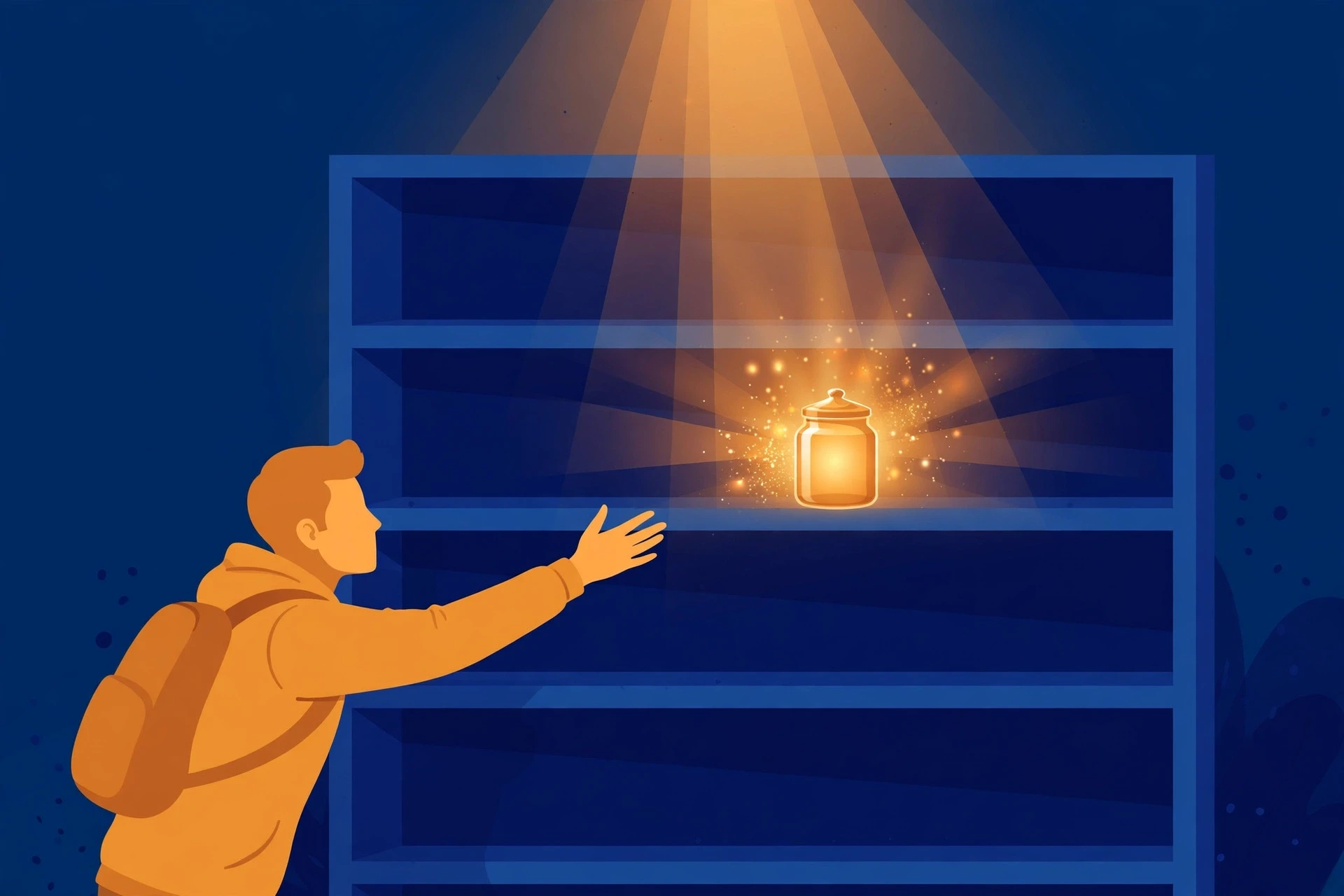
The classic study is Stephen Worchel's cookie experiment of 1975. Participants were asked to taste and rate chocolate-chip cookies. Some were given cookies from a jar that was full; others were given the same cookies from a jar that contained only a few. The participants who tasted cookies from the nearly empty jar rated them as more desirable, more valuable, and better-tasting — even though the cookies were identical. Scarcity had changed the experience of the thing itself, not just the desire for it.
A second part of the study made the point even sharper. When participants were told that the cookies were scarce because demand was high — many people wanted them — the cookies were rated higher still. But when they were told the cookies were scarce because of an accident — a mistake in supply — the effect was weaker. Scarcity caused by popularity is more persuasive than scarcity caused by chance. That is why sellers say "selling fast" rather than "we ordered too few." The first story implies value. The second implies a mistake.
9.3 Scarcity in everyday life
Scarcity is the language of modern selling: limited editions, flash sales, countdown timers, "only 2 rooms left at this price," "17 people are looking at this right now." Some of these are true. Some are not. Some are true in a narrow sense — there really are only two rooms left at that price, because the hotel set the price for two rooms — and misleading in the sense that matters. The feeling they are designed to create is the same in every case: decide now, or lose it.
Scarcity also works through a psychological mechanism called reactance: when a freedom is threatened — when something we could have is about to be taken away — we want it more, precisely because it is being taken away. Tell a teenager they cannot have something, and it becomes the most desirable thing in the world. Tell an adult that an offer expires at midnight, and the offer becomes harder to refuse at 11:47 p.m. Reactance is not irrational. It is a defence of freedom, firing at the wrong target.
I have felt reactance in myself in the most ordinary settings. A flight-booking site once told me "only 1 seat left at this price" and I booked within a minute, without checking other airlines, without thinking about whether the flight time suited me. The seat was probably real. The price was probably real. But the decision was made by the timer, not by me. When I checked the same route the next day, the price was the same. The scarcity had been real for that seat, at that moment — and still, the decision would have been better made slowly.
9.4 How to defend yourself
The defence against scarcity is time. Scarcity works by removing time — by making you feel that deliberation itself is the risk. The counter-move is to give yourself time anyway. Ask: "If this were freely available, would I still want it, at this price, right now?" If the answer is no, you want the scarcity, not the thing. For big decisions, impose a waiting rule on yourself: no purchase above a certain amount without sleeping on it, no commitment without reading the terms. Genuine scarcity will survive a night's sleep. Manufactured scarcity is designed not to — and that is exactly how you can tell the difference.
10. Unity: The Seventh Principle — "One of Us"
10.1 The principle
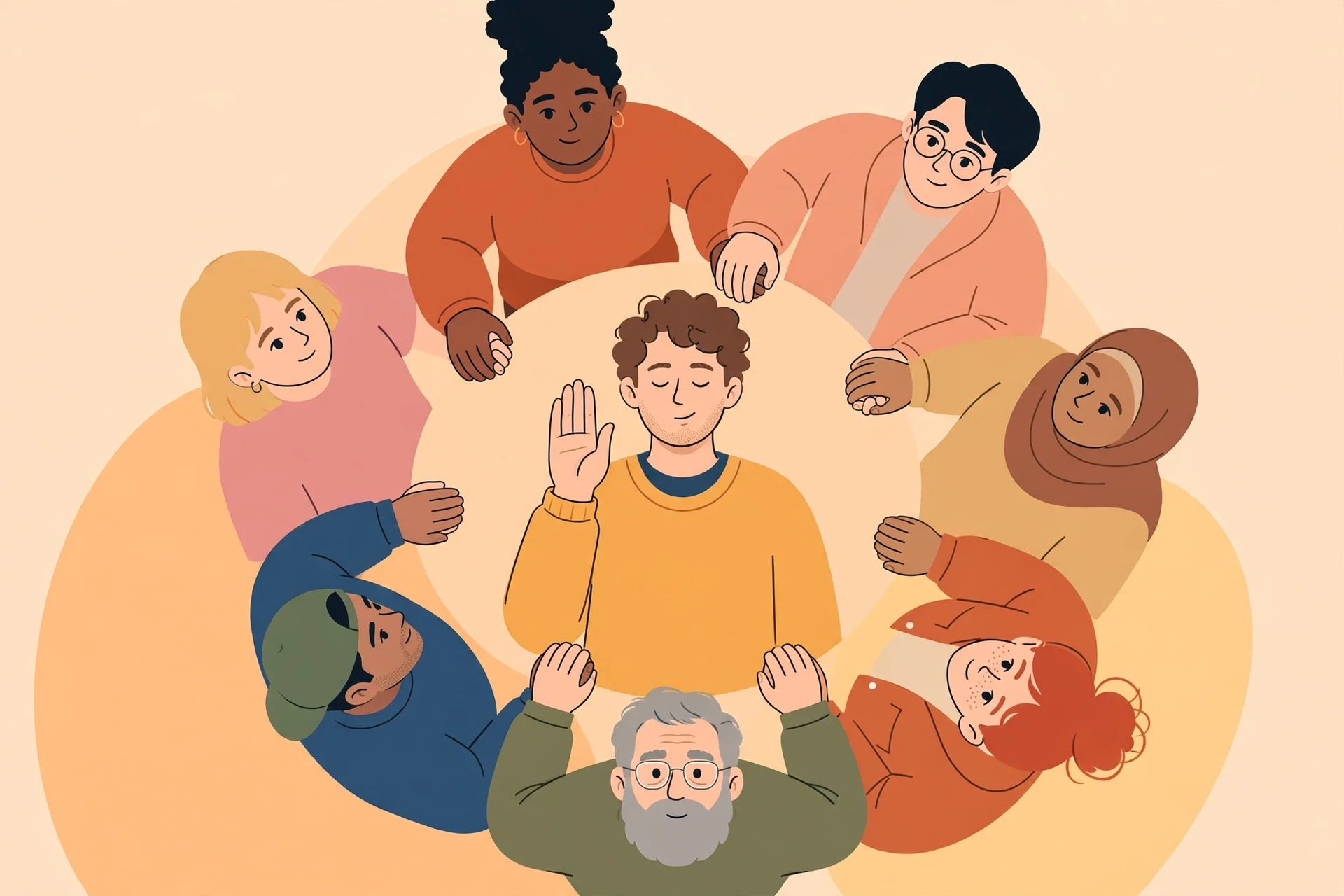
Unity: we are most influenced by people we see as part of the same "we" — the same family, team, community, faith, or identity. Liking says "I enjoy this person." Unity says something deeper: "This person is one of us." That shared identity changes the calculation. Helping someone in your own group does not feel like a cost. It feels like helping yourself, because the boundary between self and group has blurred. The psychology of persuasion treats unity as the newest and in some ways the most powerful principle, because identity can override even careful reasoning.
The shortcut behind unity is belonging. Human beings are group animals. For most of our history, survival depended on the group — on sharing food, warning of danger, caring for each other's children. The brain still treats group membership as a matter of safety. A request from inside the group is heard differently from the same request from outside it. It arrives already trusted.
10.2 Unity in everyday life
Unity is the principle behind alumni fundraising ("fellow graduates"), team merchandise, family businesses that ask you to "support the family," political campaigns that speak in the language of "us" and "them," and the charity appeal that shows you a child from your own town rather than a stranger from far away. It is also behind the small, deliberate cues that create a sense of shared identity in an instant: using "we" instead of "you," mentioning a shared hometown, a shared school, a shared experience. The cue can be as small as a pronoun. The effect is not small.
One of the clearest demonstrations of unity comes not from a single experiment but from a pattern across many: people give more, cooperate more, and trust more readily when they believe the other person shares a meaningful identity with them — even when that identity was created minutes earlier, by something as arbitrary as being assigned to the same team in a game. Psychologists call this the minimal group effect, and it is one of the most reliable findings in social psychology: give people a shared label, and they start favouring their own group. The label does not need to mean anything. The feeling of "us" does the rest.
10.3 The power and the danger of "we"
In the psychology of persuasion, unity is also the principle with the sharpest edge. The same feeling that makes a community generous to its own members can make it suspicious of outsiders. The same "we" that builds a team can be used to divide a room. Persuaders who work with unity often do so by drawing the circle carefully: they decide who is inside, and the people inside feel the pull to agree, to contribute, to stay loyal. That is why political persuasion leans so heavily on identity, and why the language of belonging — "real fans," "true supporters," "our kind of people" — should always make you pause. The question to ask is not whether you belong. It is whether belonging is being used to make a decision for you.
10.4 How to defend yourself
The defence against unity is to widen the circle in your mind. When a request arrives wrapped in shared identity — "as a fellow graduate," "as one of us," "as a member of this community" — notice the wrapping and look at the request underneath. Would you agree if it came from someone outside the group? If the answer is no, the identity is doing the persuading. That does not mean shared identity is a bad reason to help. Helping your own community is a good thing, and loyalty is a real value. It means the identity should be one reason among others, not a substitute for thinking. The strongest form of belonging is the kind that survives a careful look at the request — because you chose it, not because it chose for you.
11. How the Principles Combine: Pre-Suasion and the Power of the Moment Before
11.1 The moment before the message
Cialdini's second book, Pre-Suasion (2016), asks a question the first book left open: what happens in the moment before a message is delivered? His answer is that the moment before matters enormously. What a person is paying attention to just before they hear a request shapes how they hear it. Show someone a picture of a runner before asking them to buy running shoes, and they are more receptive. Ask someone to think about a time they helped a stranger, and they are more likely to help now. The attention you bring to a message is part of the message.
The psychology of persuasion calls this priming: an earlier cue makes certain thoughts, feelings, or associations more available, and those available thoughts colour what comes next. Priming is not magic. It is a small nudge to attention, and its effects are usually modest and short-lived. But in a world designed around attention — feeds, headlines, advertisements, shop layouts — small nudges accumulate. The shop that plays French music sells more French wine. The website that shows you a smiling family before the donation button gets more donations. The person who asks "How are you feeling today?" before making a request gets a warmer hearing than the person who opens with the request itself.
11.2 The contrast principle
Another amplifier that runs through all seven principles is the contrast principle: we judge things not in absolute terms but relative to what came just before. A $200 jacket looks cheap after a $1,000 suit, and expensive after a $40 shirt. A moderate request looks small after an outrageous one — which is why the door-in-the-face technique works — and large after a tiny one. Estate agents know this: they show you the overpriced house first, so the fairly priced one looks like a bargain. The contrast is doing the persuading, not the house.
11.3 When several principles fire at once
The most effective persuasion rarely uses one principle alone. It stacks them. Think back to the cheese stall from the introduction: a free sample (reciprocity), a friendly vendor who found something in common with me (liking), a confident expert who knew the farm and the awards (authority), a crowd of happy customers (social proof), and a limited batch that would sell out by noon (scarcity). Five principles, one stall, ten minutes. No single one of them would have sold me a twenty-dollar wedge of cheese. Together, they made saying yes feel like the obvious thing to do.
That stacking is the real lesson of the psychology of persuasion. A single cue is easy to notice and resist. Five cues, arriving together while you are relaxed, happy, and slightly hungry, are much harder. The defence is not to analyse every cue — that would take all day. It is to notice the stack: when a situation feels unusually smooth, when every signal points the same way, when the yes is forming before you have thought about the question, that is the moment to slow down. The smoothness is itself a signal. It means the situation was designed.
Principle | The shortcut | Classic evidence | Everyday example | Best defence |
|---|---|---|---|---|
Reciprocity | Repay what you receive | Regan (1971): a free soda raised raffle-ticket sales | Free samples, free trials, unexpected gifts | Judge the request as if the gift never happened |
Commitment & consistency | Act in line with what you already said or did | Freedman & Fraser (1966): a small sign led to a big billboard | Petitions, streaks, free accounts before premium | Ask if you would choose this fresh today |
Social proof | If others do it, it is probably right | Hotel towel study: "most guests reuse" beat the green appeal | Star ratings, queues, "trending now" | Ask what the crowd actually knows |
Authority | Defer to experts and their symbols | Milgram (1960s): a lab coat moved people to obey | White coats, titles, confident experts | Check expertise in this subject, not just the title |
Liking | Say yes to people you like | Burger et al. (2004): a shared birthday raised compliance | Friendly salespeople, compliments, influencers | Judge the proposal, not the person |
Scarcity | Rare things are valuable | Worchel et al. (1975): cookies from a near-empty jar rated better | "Only 3 left," countdown timers, limited editions | Give yourself time; sleep on big decisions |
Unity | Help those who are "one of us" | Minimal group studies: a shared label creates favouritism | Alumni appeals, team identity, "we" language | Ask if you would agree from outside the group |
Table 1: The seven principles of persuasion at a glance. Each principle rides on a mental shortcut that usually serves us well — and each has a simple, practical defence.
12. Persuasion or Manipulation? Where the Line Is
12.1 The honest test
Every principle in this article can be used honestly or dishonestly. A doctor who uses authority to help a patient take life-saving medicine is persuading. A salesperson who invents a fake deadline to pressure a customer is manipulating. The difference is not in the technique. It is in the intent, the honesty, and the outcome. The psychology of persuasion draws the line in three places, and the three together make a practical test you can apply to any influence attempt, including your own.
First, honesty: is the cue real? A genuine expert, a real crowd, a true scarcity, a sincere compliment — these are honest cues, and using them is fair. A fake review, a borrowed white coat, a countdown timer that resets, a compliment read from a script — these are counterfeit cues, and using them is manipulation, whatever the persuader's intentions.
Second, transparency: would the persuader be comfortable if you knew what they were doing? An honest persuader can explain their approach openly. A manipulator relies on you not noticing. If a technique only works while it is hidden, that is information about the technique.
Third, the other person's interests: would the person, on reflection, with full information and time to think, endorse the decision? A doctor's persuasion passes this test. A pressure sale fails it. The test is not whether the person is happy in the moment — the cheese buyer is happy in the moment — but whether they would still be happy tomorrow, knowing everything.
12.2 Why manipulation backfires
Manipulation is not only unethical. It is often bad strategy. Research on trust and relationships consistently shows that people who discover they were manipulated react more negatively than people who were simply told no. The relationship is damaged, the reputation spreads, and the next request — however honest — meets a closed door. This is one reason Cialdini has spent his career arguing for ethical influence: the principles work best, over the long term, when they are used honestly, because honest influence builds the trust that makes future influence possible. A business that uses real scarcity, real social proof, and real expertise keeps its customers. A business that fakes them loses them the moment the fakery is found out.
There is a related point for everyday life. Most of us persuade other people every day — a parent persuading a child to eat vegetables, a friend persuading a friend to apply for a job, a colleague persuading a team to try a new approach. The honest test applies to us too. Are we giving real reasons, or only cues? Would we be comfortable explaining our approach? Would the other person thank us tomorrow? If the answer to all three is yes, we are persuading. If not, we are doing something else, and we should stop and think about why.
12.3 Persuasion in the places that matter
The stakes of the psychology of persuasion are highest where the decisions matter most: health, money, politics, and safety. A health claim backed by borrowed authority can delay real treatment. A financial product sold through scarcity and social proof can cost a family its savings. A political message built on unity and fear can move a whole community. That is why the science matters beyond the cheese stall. The same principles that sell cheese also sell medicines, mortgages, and movements — and the defences are the same in every case: slow down, check the cue, ask who benefits, and decide on the evidence rather than the feeling.
13. How to Spot Persuasion — and Resist It Without Becoming Cynical
13.1 The pause is the whole defence
If this article had to be reduced to one piece of advice, it would be this: pause. Almost every technique in the psychology of persuasion works by compressing time — by making you decide before you have thought. The free sample is offered while you are hungry. The deadline expires at midnight. The salesperson asks for the signature while the pen is already in your hand. The pause breaks the pattern. It gives the central route — the careful, evidence-weighing part of your mind — time to catch up with the peripheral cues that have already fired.
A pause does not need to be long. Ten seconds is often enough. "Let me think about that." "I will get back to you tomorrow." "Can you send me the details in writing?" Each of these is a small act of resistance, and each of them is socially acceptable. You do not need to accuse anyone of manipulation. You only need time.
13.2 Inoculation: the vaccine idea
One of the most promising ideas in the psychology of persuasion for building resistance is inoculation theory, first proposed by psychologist William McGuire in the 1960s. The idea is borrowed from medicine: just as a weakened dose of a virus trains the immune system to fight the real thing, a weakened dose of a persuasive argument — presented alongside its refutation — trains the mind to resist the full-strength version later. If you have already heard a weak version of a misleading claim, and heard why it is wrong, you are less likely to be swayed when you meet the strong version.
Inoculation works best when it is specific. Warning people in general that "advertisers try to manipulate you" does little. Showing them a specific technique — the fake countdown timer, the invented scarcity, the cherry-picked testimonial — and explaining how it works, does a great deal. That is one reason articles like this one matter: reading about the principles is itself a form of inoculation. You have now met all seven, in weakened form, with their defences attached. The next time you meet one in the wild, it will look familiar — and familiar things are easier to resist.
13.3 A practical resistance toolkit
Beyond the pause and inoculation, a few habits make a large difference. Use them together and they reinforce each other.
Sleep on big decisions. Set a personal rule: no purchase, commitment, or agreement above a threshold you choose — say, the cost of a weekly shop — without a night's sleep. Scarcity and urgency cannot survive a night.
Ask for it in writing. A genuine offer survives being written down. A pressure tactic often does not. Asking for the terms, the price, and the deadline in writing gives you something to check, and it signals to the persuader that you are paying attention.
Name the principle. When you feel the pull, name it silently: "That is reciprocity." "That is scarcity." "That is social proof." Naming a feeling reduces its power, because it moves the experience from automatic reaction to deliberate thought. This is the same mechanism that helps people manage anxiety and depression — noticing a pattern is the first step to choosing a different response.
Check the cue, not the feeling. Feelings are information, not verdicts. A feeling of obligation tells you that reciprocity fired. It does not tell you whether the gift was genuine. A feeling of urgency tells you that scarcity fired. It does not tell you whether the deadline is real. Ask about the cue: is the expert real, is the crowd real, is the scarcity real?
Decide your values in advance. The strongest defence is a decision made before the persuader arrives. Know what you will and will not spend money on, what causes you support, what you will agree to on the spot and what you never will. A pre-commitment — a decision about your decisions — is the commitment principle working for you instead of against you. It connects directly to how habits form: the small, repeated choices you make in advance shape the big choices you make under pressure.
Protect your attention when you are tired. Persuasion works best on a tired, rushed, or distracted brain. Do not make important decisions at the end of a long day, in a noisy shop, or while scrolling late at night. The same request will meet a different mind in the morning — and the morning mind is the one you should trust. Sleep, as the science of sleep and dreams shows, is not a luxury in this work. It is part of the method.
13.4 Resistance without cynicism
There is a risk in learning all of this, and it deserves a direct answer: does knowing about persuasion make you suspicious of everyone? It can, if you let it. The antidote is to remember what the science actually says. Most influence is honest. Most people who give you a compliment mean it. Most experts know what they are talking about. Most crowds are right. The principles describe tendencies, not conspiracies, and the goal of learning them is not to see manipulation everywhere. It is to see it clearly where it exists, and to enjoy the honest kind without fear.
14. Common Misconceptions About Persuasion
14.1 "Persuasion is mind control"
It is not. In the psychology of persuasion, the point is often missed: persuasion changes the odds of a yes; it does not remove the choice. The most powerful techniques in the psychology of persuasion move agreement rates by meaningful but modest amounts — from, say, one person in six to three in four in the billboard study — and they work best when the person is uncertain, distracted, or rushed. A person with strong beliefs, time to think, and good information is hard to persuade against their judgement. That is why the defences in this article work: they restore time, information, and clarity, and those three things are the natural enemies of manipulation.
14.2 "Only weak or stupid people are persuaded"
This is the most flattering misconception in the article, and the most dangerous, because believing it makes you more vulnerable. The shortcuts exist in every human brain, including the brains of scientists who study them. I have been persuaded by a free sample, a friendly bookseller, and a countdown timer, and I know the research. Intelligence does not remove the shortcuts. It only helps you notice them after they fire — and even then, only if you are paying attention. The people most at risk are not the least intelligent. They are the most confident that they are immune.
14.3 "Cialdini's principles are sales tricks"
They are not, or not only. The principles were discovered by watching salespeople, but they describe general human psychology, and they operate in parenting, teaching, medicine, friendship, and public health. A nurse who uses social proof to encourage vaccination — "most parents in this clinic choose to vaccinate" — is using the same principle as a marketer, for a different end. The principles are neutral tools. The ethics live in how they are used, and the science is clearest when we keep the tool and the use separate.
14.4 "If I know the trick, I am immune"
Knowing helps, and it is the best single protection we have. It is not immunity. The cues fire automatically, below conscious awareness, and they fire even when you know they are there. The defence is not knowledge alone. It is knowledge plus habits: the pause, the sleep-on-it rule, the written terms, the pre-commitment. Knowledge tells you what to watch for. Habits do the watching when you are tired, which is exactly when you need them most. That is why how habits form matters here too: a resistance habit, practised until it is automatic, protects you in the moments when deliberate thought is unavailable.
14.5 "Scarcity means something is valuable"
Scarcity means something is scarce. Value is a separate question, and the two are confused so often that the confusion has a name in economics: the scarcity heuristic. A limited edition of a mediocre product is still mediocre. A countdown timer on a bad deal is still a bad deal. The question is always the same: would I want this if it were freely available? If the answer depends on the scarcity, the scarcity is the product.
14.6 "Social proof means the crowd is right"
The crowd is often right, and often wrong, and the difference is whether the crowd members decided independently. A crowd of people who each did their own research is powerful evidence. A crowd of people who are all copying each other is evidence of nothing but copying. Financial bubbles, panics, and viral falsehoods are all social proof in action — thousands of people, each looking at the others, none of them checking the evidence. The psychology of persuasion is clear on this point: social proof is only as good as the independence of the people providing it.
15. Conclusion: Saying Yes on Purpose
Let me return to the cheese stall, because the story has an ending worth telling. A few weeks after the twenty-dollar wedge, I went back to the same market. The same vendor was there, with the same samples, the same warmth, the same stories about the farm. I took a sample. It was still very good. I asked about the price, thought about what I actually needed, and bought a smaller wedge — half the size, half the price — and I enjoyed every bit of it. The vendor smiled. I smiled. Nobody had been manipulated, because this time I had noticed the machinery and made the decision myself.
That is the real promise of the psychology of persuasion. Not immunity, and not suspicion, but authorship: the ability to say yes on purpose, and no on purpose, and to know which one you are doing. The seven principles — reciprocity, commitment and consistency, social proof, authority, liking, scarcity, and unity — are not secrets to be feared. They are patterns to be recognised, in others and in yourself. They explain why a free sample works, why a small signature leads to a large commitment, why a crowd pulls you along, why a white coat commands respect, why a friendly face opens a door, why a deadline hurries you, and why "one of us" is the most persuasive phrase in the language.
You will meet all seven again this week — in a shop, in an inbox, in a meeting, on a screen. When you do, you will have something you did not have before you started reading: a name for each one, an experiment behind it, and a defence against it. The pause, the question, the night's sleep, the written terms — these are small acts, and they are enough. The shortcuts will keep firing. They are part of being human. What changes is who is in charge when they do. The psychology of persuasion, understood well, hands that charge back to you — so that the next yes you give is one you chose, for reasons you would still endorse tomorrow.
Frequently Asked Questions
What is the psychology of persuasion?
The psychology of persuasion is the scientific study of how people change each other's minds and behaviour through communication — the mental shortcuts, social cues, and situational factors that make us more or less likely to say yes. Its best-known framework is Robert Cialdini's seven principles: reciprocity, commitment and consistency, social proof, authority, liking, scarcity, and unity. The field draws on experiments in social psychology to explain both honest persuasion and manipulation, and to test defences against unwanted influence.
What are Cialdini's 7 principles of persuasion?
Cialdini's seven principles are reciprocity (repay what you receive), commitment and consistency (act in line with what you have already said or done), social proof (copy others when unsure), authority (defer to experts and their symbols), liking (say yes to people you like), scarcity (value what is rare or disappearing), and unity (favour those who are "one of us"). The first six appeared in Influence: The Psychology of Persuasion (1984); unity was added in Pre-Suasion (2016) and the expanded edition of Influence (2021).
What is the psychology of persuasion in simple terms?
In simple terms, the psychology of persuasion explains why we say yes. Our brains use fast shortcuts — trust experts, copy the crowd, repay favours, stay consistent, like similar people, want rare things, stick with our group — because thinking carefully about every decision would take too long. Persuaders, honest and dishonest alike, trigger those shortcuts. Understanding the shortcuts lets you notice when one has fired and decide whether the yes it produces is one you actually mean.
Is persuasion the same as manipulation?
No. Persuasion uses honest cues and real reasons, and the person being persuaded would endorse the decision on reflection, with full information and time to think. Manipulation uses counterfeit cues — fake scarcity, invented reviews, borrowed authority, hidden pressure — and relies on the person not noticing. The test has three parts: is the cue real, would the persuader be comfortable explaining the technique, and would the person still agree tomorrow knowing everything? If any answer is no, it is manipulation, not persuasion.
How can I resist persuasion techniques?
The strongest defence is a pause: never decide on the spot when you feel rushed, flattered, or pressured. Sleep on big decisions, ask for the terms in writing, and name the principle silently when you feel it working — "that is scarcity" or "that is reciprocity." Decide your values and spending rules in advance, so the decision is made before the persuader arrives. And protect your attention when you are tired, because persuasion works best on a tired brain. These habits, practised until they are automatic, protect you in exactly the moments when deliberate thought is hardest.
Why do we say yes when we mean no?
We say yes when we mean no because our brains run on shortcuts that fire before deliberate thought catches up. A gift creates obligation, a small commitment creates pressure to stay consistent, a crowd creates the feeling that agreement is correct, an expert's title creates deference, a friendly face creates trust, a deadline creates urgency, and a shared identity creates loyalty. Each shortcut is useful on its own. When several fire at once — while we are tired, rushed, or distracted — the yes can form before we have weighed the question. The pause is what gives the careful part of the mind time to catch up.
Sources
American Psychological Association — The power of persuasion, with Robert Cialdini, PhD (Speaking of Psychology). https://www.apa.org/news/podcasts/speaking-of-psychology/persuasion
American Psychological Association — Social influence. https://www.apa.org/topics/social-influence
American Psychological Association — Social Psychology: Social Cognition and Social Influence (TOPSS unit plan, 2024). https://www.apa.org/ed/precollege/topss/lessons/social-psychology.pdf
Arizona State University, W. P. Carey School of Business — Cialdini's continuing influence: The next 40 years of persuasion. http://news.wpcarey.asu.edu/20241017-cialdinis-continuing-influence-next-40-years-persuasion
Cialdini Institute — Robert Cialdini's 7 Principles of Persuasion, Explained. https://cialdini.com/principles
Simply Psychology — Milgram Experiment: Obedience to Authority. https://www.simplypsychology.org/milgram.html