

I was seven years old, standing in my grandmother's garden in January, when I asked the question that starts this article: why do we have seasons? The air was sharp enough to sting, the shadows were long even at noon, and my grandmother was wrapping the rose bushes in burlap as if she were tucking children into bed. "Why is it cold now," I asked, "when the Sun is right there?" She looked up at the pale winter Sun, thought for a moment, and said, "Because the Earth is leaning away from it, love. It leans back again in summer." I did not know it then, but she had given me the correct answer in a single sentence — and a better answer than most adults I have asked since.
Years later, I asked the same question to a room full of university students on the first day of an introductory astronomy course. I expected the tilt. What I got, from more than half the room, was the distance theory: winter happens because Earth is farther from the Sun, summer because it is closer. It is a sensible guess. It is also wrong — and wrong in a way that is easy to prove, once you know where to look. That wrong guess is the reason this article exists. Why do we have seasons? The short answer is the one my grandmother gave me: Earth leans. The long answer — the one that explains solstices, the midnight sun, why the tropics barely notice the seasons, and why the hottest days of summer arrive weeks after the longest day — is worth the walk.
Seasons are the most familiar rhythm in human life, and one of the least understood. They decide when farmers plant, when birds fly thousands of miles, when bears sleep, and when the first crocus breaks through the snow. They shaped the first calendars, the first festivals, and the first stone monuments. They are written into our bodies: the light that reaches your eyes in the morning helps set the clock that tells you when to sleep. And yet the mechanism behind them is a single, elegant piece of geometry — a planet spinning on a tilted axis as it circles a star.
This article follows that geometry from the beginning. We will start with the tilt itself, see how it turns a round trip around the Sun into four seasons, and test the distance idea against the evidence until it falls apart. We will stand at the solstices and the equinoxes, travel to the tropics where the seasons nearly vanish, and on to the poles, where the Sun does not set for months — and then does not rise for months. We will look at how life answers the seasons, and how people learned to read them long before anyone knew what a planet was. Every claim here rests on measurements you can check yourself: the length of a shadow at noon, the time of sunset, the date the Sun rises exactly in the east.
1. Why Do We Have Seasons? The Short Answer
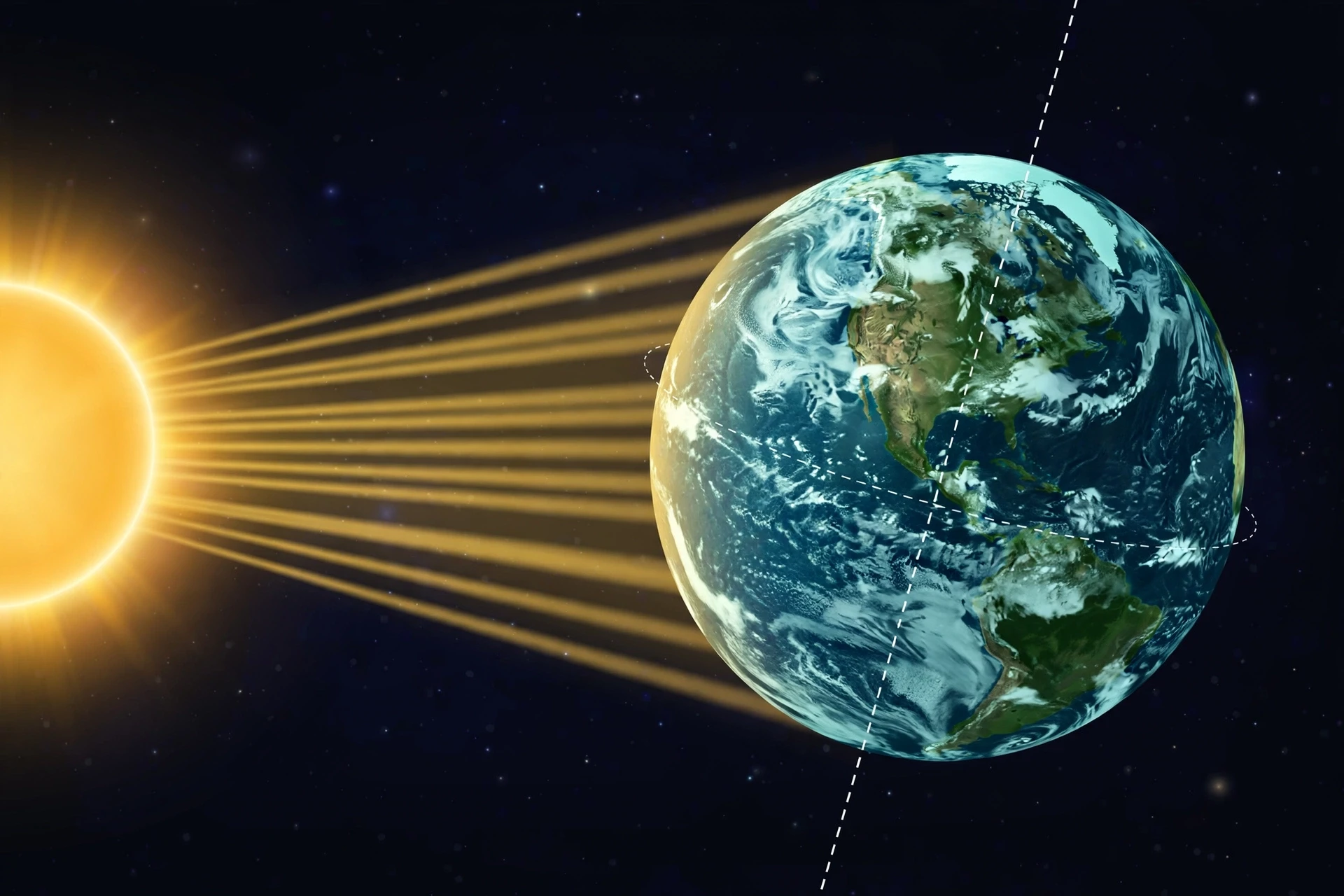
We have seasons because Earth's axis is tilted by about 23.5 degrees relative to its orbit around the Sun, and that tilt always points in the same direction in space. As Earth travels around the Sun over the course of a year, the tilt leans first one hemisphere toward the Sun and then the other. The hemisphere leaning toward the Sun gets more direct sunlight and longer days, so it warms up: summer. The hemisphere leaning away gets slanting sunlight and shorter days, so it cools down: winter. Six months later, the situation reverses.
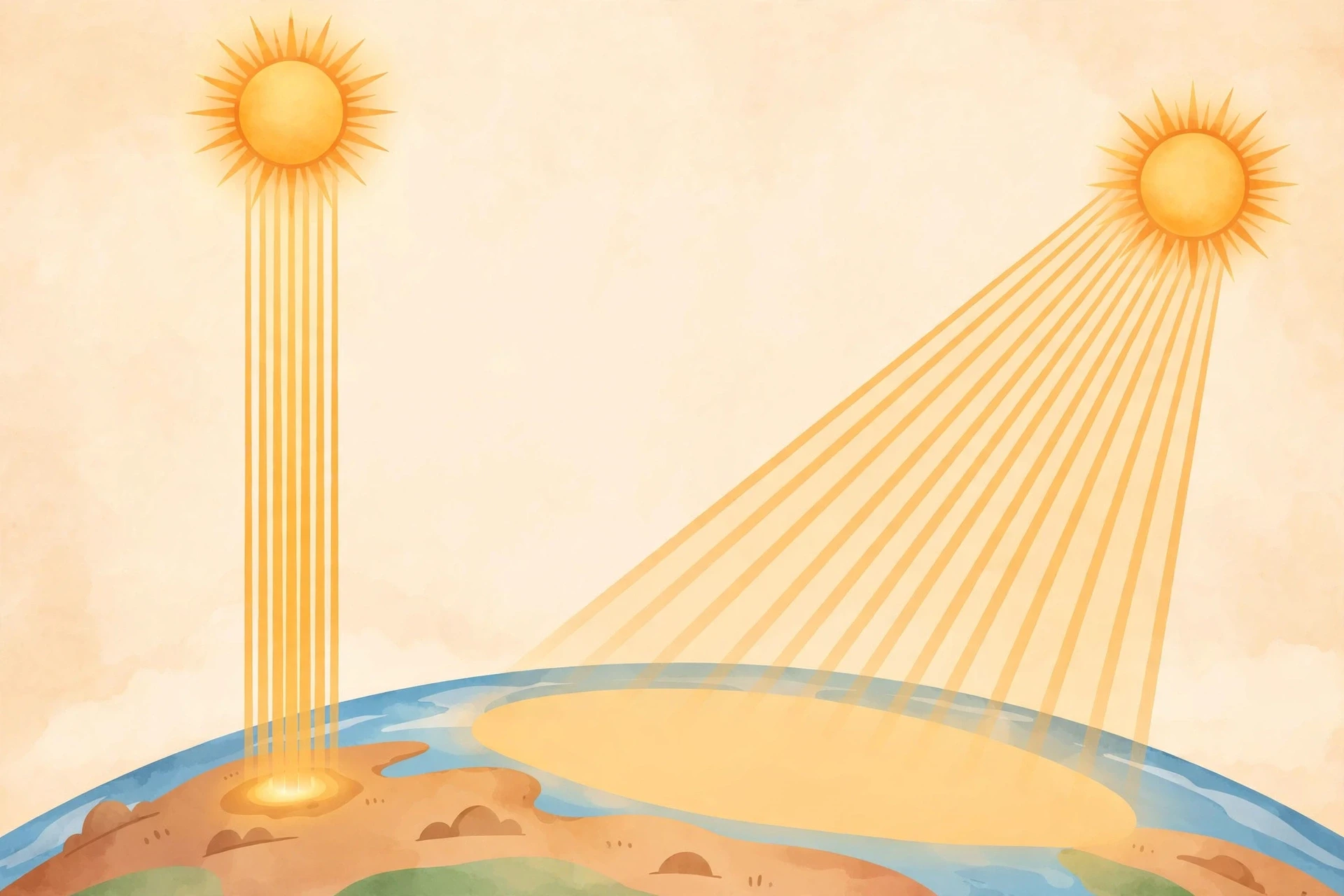
That is the whole mechanism, and everything else in this article is detail, evidence, and consequence. The tilt does two things at once, and both matter. First, it changes the angle at which sunlight strikes the ground. Sunlight arriving straight down concentrates its energy on a small patch; sunlight arriving at a slant spreads the same energy over a larger patch, so each square metre receives less. Second, the tilt changes how long the Sun stays above the horizon. In summer, days are long and nights are short; in winter, the reverse. More direct light plus more hours of light adds up to a warmer season. Slanting light plus fewer hours adds up to a colder one.
Two facts make the picture complete. One: the tilt never changes direction during the year. Earth's axis points toward the same patch of sky — near the star Polaris — all year round, like the handle of a gyroscope that refuses to wobble. If the axis swung around to keep pointing at the Sun, there would be no seasons at all. Two: the seasons are opposite in the two hemispheres. When it is summer in New York, it is winter in Sydney, and when London is shivering through January, Cape Town is at the beach. That single fact kills the distance theory on its own, as we will see in section 5, because distance from the Sun is the same for the whole planet at any given moment. If distance caused the seasons, both hemispheres would have summer at the same time. They never do.
The numbers behind the tilt are worth knowing. Earth's axial tilt is 23.44 degrees, usually rounded to 23.5. It is not fixed forever: over a cycle of about 41,000 years it wobbles slowly between about 22.1 and 24.5 degrees, one of the slow orbital rhythms known as Milankovitch cycles that help drive ice ages over geological time. NASA's Earth Observatory explains how these cycles shape climate over tens of thousands of years. For any human lifetime, though, the tilt is effectively constant — and it is the tilt, more than anything else, that writes the year.
"The seasons are the most familiar rhythm in human life, and one of the least understood — yet the mechanism behind them is a single, elegant piece of geometry."
2. What Axial Tilt Actually Means
Imagine Earth as a spinning top, or better, as a globe on a desk stand. The rod running through the globe from pole to pole is the axis — the line Earth spins around once every 24 hours. Now imagine the flat disc of Earth's orbit around the Sun, a tabletop stretching out in every direction. If Earth stood straight up, its axis would be at 90 degrees to that tabletop, perfectly vertical. It does not. It leans 23.5 degrees off vertical, the way a spinning top leans as it whirls. The North Pole tips toward one side of the orbit and the South Pole tips toward the other.
The tilt is not a small detail. Lean a globe 23.5 degrees and you can see it clearly with the naked eye: one pole juts toward you, the other hides behind the curve of the planet. And because the axis keeps pointing the same way in space all year — the same way a compass needle keeps pointing north as you walk around a room — the lean changes which hemisphere faces the Sun as Earth moves around its orbit. In June, the North Pole leans toward the Sun. In December, it leans away. In March and September, it leans neither toward nor away, and the two hemispheres get equal light.
2.1 Where the tilt came from
Nobody watched the tilt happen, but the leading explanation is a violent one. Early in the solar system's history, about 4.5 billion years ago, Earth was struck by a Mars-sized body — the same giant impact that is thought to have formed the Moon. A blow like that would have knocked the young planet sideways, setting its axis at an angle, and the planet has kept that lean ever since because there is nothing in space to straighten it. The evidence is circumstantial but strong: the Moon's composition, the tilt itself, and the fact that other planets show the scars of similar battering. Mars, for instance, is tilted 25.2 degrees — close to Earth's — and it has seasons too. Uranus is the extreme case, tipped over on its side at 98 degrees, so each of its poles spends decades in sunlight and then decades in darkness. If you want to know what seasons look like when the tilt goes wrong, look at Uranus.
You can read more about the Sun itself, the engine that makes all of this possible, in our guide to How the Sun Works — and about Earth's place in the wider family of planets in Our Solar System.
2.2 The tilt you can measure in your own garden
I first measured the tilt myself not in a laboratory but in a school playground, with a stick, a piece of chalk, and a class of twelve-year-olds. We planted a vertical stick in the ground and marked the tip of its shadow at noon on two days: once in June, once in December. In June, the noon shadow was short — the Sun stood high, almost overhead, and the stick's shadow barely reached past its own base. In December, the noon shadow stretched long across the playground, twice the height of the stick. The stick had not moved. The ground had not moved. Only the Sun's height in the sky had changed, and that change is the tilt made visible.
You can do the same measurement. At noon on the summer solstice, the Sun's height above the horizon at your latitude is roughly 90 degrees minus your latitude plus 23.5. At the winter solstice, it is 90 minus your latitude minus 23.5. In New York, at about 41 degrees north, the midday Sun climbs to about 72 degrees in June and only about 26 degrees in December. That 47-degree swing — twice the tilt — is the whole story of the seasons, written in shadow. The tilt is not an abstraction from a textbook. It is the reason your shadow is long in January and short in July.
3. How the Tilt Creates the Seasons
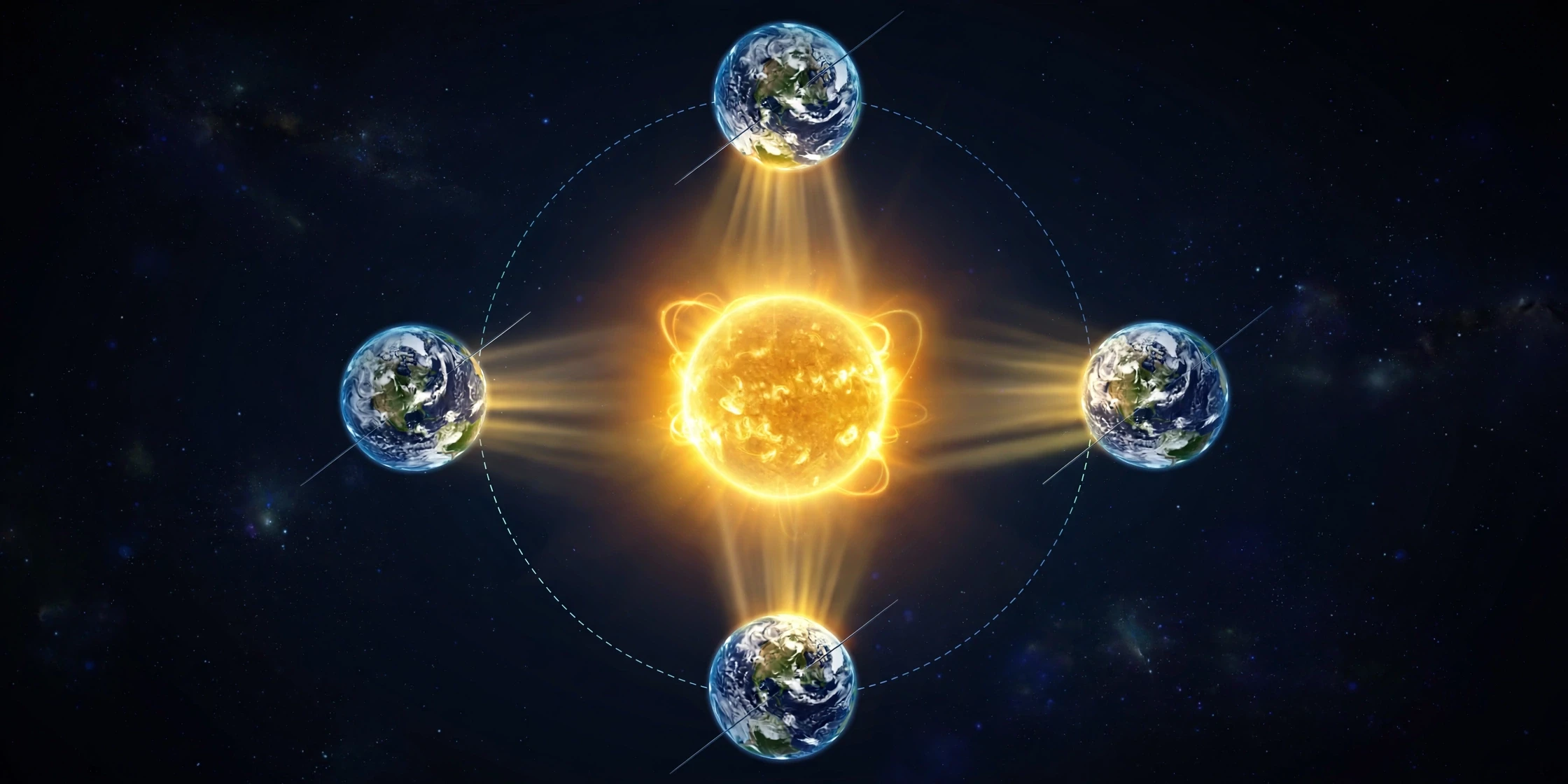
To see why do we have seasons, picture Earth at four points in its orbit — and keep one rule in mind: the axis always points the same way. Imagine you are looking down on the solar system from above the Sun's north pole. Earth travels counterclockwise around the Sun, and its tilted axis stays fixed in direction, like a compass needle glued in place while the planet circles.
In June, Earth is on one side of its orbit and the North Pole leans toward the Sun. The Northern Hemisphere gets summer: sunlight strikes it nearly straight down, days are long, and the Sun climbs high in the sky at noon. The Southern Hemisphere, leaning away, gets winter at the same time. In December, Earth has travelled to the opposite side of its orbit. The axis still points the same way in space — but now, because Earth has moved to the other side of the Sun, the North Pole leans away from the Sun and the South Pole leans toward it. Summer and winter trade places. In March and September, Earth is at the two points between these extremes, and the axis leans sideways relative to the Sun: neither pole tips toward or away, both hemispheres get roughly equal light, and the seasons are in transition — spring in one hemisphere, autumn in the other.
This is why the seasons are not just "warm" and "cold" but a cycle with four distinct phases, and why the cycle takes exactly one year: one year is the time it takes Earth to complete one orbit and return the tilt to the same orientation relative to the Sun. The tilt is the cause; the orbit is the clock.
3.1 The two levers: angle and day length
The tilt drives the seasons through two levers that work together, and it helps to separate them because each is easy to test.
The first lever is the angle of sunlight. Think of a torch shining on a wall. Hold the torch straight in front of the wall and the light makes a small, bright circle. Now tilt the torch so the beam hits the wall at a slant: the same light spreads into a long, dim ellipse. The total light leaving the torch has not changed, but the light per square centimetre has dropped, because it is spread over a bigger area. Sunlight works the same way. In summer, the Sun is high and its rays strike the ground nearly straight down, concentrating energy. In winter, the Sun is low and its rays arrive at a slant, spreading the same energy thin. At mid-latitudes, the difference is large: a patch of ground in winter can receive less than half the solar energy per square metre that it receives in summer, even before you count the shorter days.
The second lever is day length. When your hemisphere leans toward the Sun, the Sun rises earlier, sets later, and spends more hours above the horizon. More hours of sunshine mean more total energy delivered each day, even if the Sun's brightness never changes. When your hemisphere leans away, the days shrink and the nights stretch, and the Sun has fewer hours to do its warming work. At 40 degrees north latitude — roughly New York, Madrid, or Beijing — the longest day of the year lasts about 15 hours and the shortest about 9. At the Arctic Circle, the swing is total: 24 hours of daylight at the summer solstice, 24 hours of darkness at the winter solstice.
Together, the two levers multiply. High Sun plus long day gives summer its heat; low Sun plus short day gives winter its cold. Either lever alone would produce a mild seasonal change. Together, they produce the dramatic swing between a July afternoon and a January morning.
3.2 Why the temperature lags behind the Sun
Here is a puzzle that catches almost everyone. The longest day of the year — the June solstice — is when the Northern Hemisphere receives the most solar energy in a single day. So why is the hottest weather usually in late July or August, weeks after the solstice? And why is the coldest weather in late January or February, weeks after the shortest day?
The answer is thermal inertia, and you have felt it yourself if you have ever turned a stove on under a pot of water. The water does not boil the instant the burner reaches full heat; it warms slowly, soaking up energy, and it keeps simmering for a while after the burner is turned down. Earth works the same way. Land and especially oceans absorb heat through the spring and early summer and release it slowly through the autumn. The temperature of a place at any moment is not a snapshot of today's sunshine; it is the running balance of weeks of sunshine minus weeks of heat loss. So the peak temperature arrives after the peak sunshine, and the coldest weather arrives after the weakest sunshine. Meteorologists call this the seasonal lag, and it is why the hottest days lag the solstice by a month or more — and why swimming in the sea in September often feels warmer than in June, even though the days are shorter.
4. Solstices and Equinoxes: The Four Turning Points
The year has four turning points, and they are the skeleton of the seasons. Two solstices and two equinoxes divide the orbit into four quarters, and each one marks a moment when the geometry of sunlight changes direction. Ancient peoples tracked these dates with stone and shadow long before anyone knew why they happened; modern astronomers can predict them to the minute. The dates shift by a day or so from year to year because our calendar year of 365 days does not divide evenly into Earth's orbital period of 365.25 days, but the pattern never changes.
Event | Typical date | What happens | Northern Hemisphere | Southern Hemisphere |
|---|---|---|---|---|
March equinox | March 20 | Sun crosses the equator heading north; day and night nearly equal worldwide | Spring begins | Autumn begins |
June solstice | June 21 | Sun reaches its northernmost point, over the Tropic of Cancer; longest day in the north | Summer begins | Winter begins |
September equinox | September 22 | Sun crosses the equator heading south; day and night nearly equal worldwide | Autumn begins | Spring begins |
December solstice | December 21 | Sun reaches its southernmost point, over the Tropic of Capricorn; shortest day in the north | Winter begins | Summer begins |
4.1 The solstices: the Sun stands still
The word solstice comes from the Latin solstitium — the Sun standing still. That is exactly what it looks like. For a few days around each solstice, the Sun's noon height barely changes; it climbs to its highest (or lowest) point and seems to pause before turning back. At the June solstice, the Sun stands directly overhead at noon on the Tropic of Cancer, 23.5 degrees north of the equator — the farthest north the Sun ever gets. Everywhere north of the equator, that is the longest day of the year and the Sun's highest noon. North of the Arctic Circle, the Sun does not set at all. At the December solstice, the mirror image: the Sun stands overhead at the Tropic of Capricorn, 23.5 degrees south, the Southern Hemisphere has its longest day, and the Antarctic Circle gets its midnight sun while the Arctic sinks into polar night.
I once watched a June solstice sunrise from a hill in the north of England with a group of amateur astronomers, and the feeling was older than science. The Sun rose at its farthest-north point on the horizon, exactly where it had risen the year before, and where people had watched it rise for thousands of years. We had apps that could predict the moment to the second, but the experience was the same one our ancestors had: a reliable, repeating signal in a changing world. That reliability is what made the solstices the anchors of the first calendars.
4.2 The equinoxes: the great equalisers
The equinoxes are the two days when the Sun crosses the celestial equator, and the tilt leans neither toward nor away from the Sun. On those days, the Sun rises due east and sets due west everywhere on Earth, and day and night are nearly equal — about 12 hours each. The word comes from the Latin for "equal night". Nearly equal, not exactly: on the equinox, daytime is actually a few minutes longer than night-time everywhere, because the Sun is a disc rather than a point and because the atmosphere bends sunlight around the curve of the Earth, lifting the Sun into view a few minutes before it has geometrically risen and keeping it visible a few minutes after it has set.
The equinoxes are also the days when the geometry is easiest to see. Stand outside at noon on the equinox and your shadow points due north (in the Northern Hemisphere) and its length tells you your latitude directly: the Sun's noon height is exactly 90 degrees minus your latitude. Ancient surveyors used exactly this trick to measure the size of the Earth. If you want to understand how the seasons work, the equinox is the cleanest laboratory there is — the one day of the year when the tilt steps aside and the Sun treats both hemispheres identically.
4.3 Astronomical seasons versus meteorological seasons
A detail worth knowing: there are two different ways of defining the seasons, and they disagree by about three weeks. Astronomers define the seasons by the solstices and equinoxes, so summer in the Northern Hemisphere runs from the June solstice to the September equinox. Meteorologists, who care about temperature patterns rather than astronomy, define the seasons by the calendar months: summer is June, July, and August; winter is December, January, and February. The meteorological system is tidier for comparing climate records, and it matches the seasonal lag — the fact that the warmest weather comes after the solstice. Neither definition is wrong; they measure different things. When a weather forecast says "summer starts on June 1st", it is using the meteorological calendar. When an astronomer says summer starts on June 21st, they are marking the solstice. The seasons themselves do not care which calendar you use.
5. Why Distance From the Sun Does Not Cause the Seasons
This is the misconception that matters most when people ask why do we have seasons, because it is so reasonable and so widely believed. It goes like this: Earth's orbit is an ellipse, so Earth is sometimes closer to the Sun and sometimes farther away; closer means warmer, farther means colder; therefore summer is when Earth is nearest the Sun. Every step of that reasoning sounds right. Every step is wrong in a way that the facts demolish.
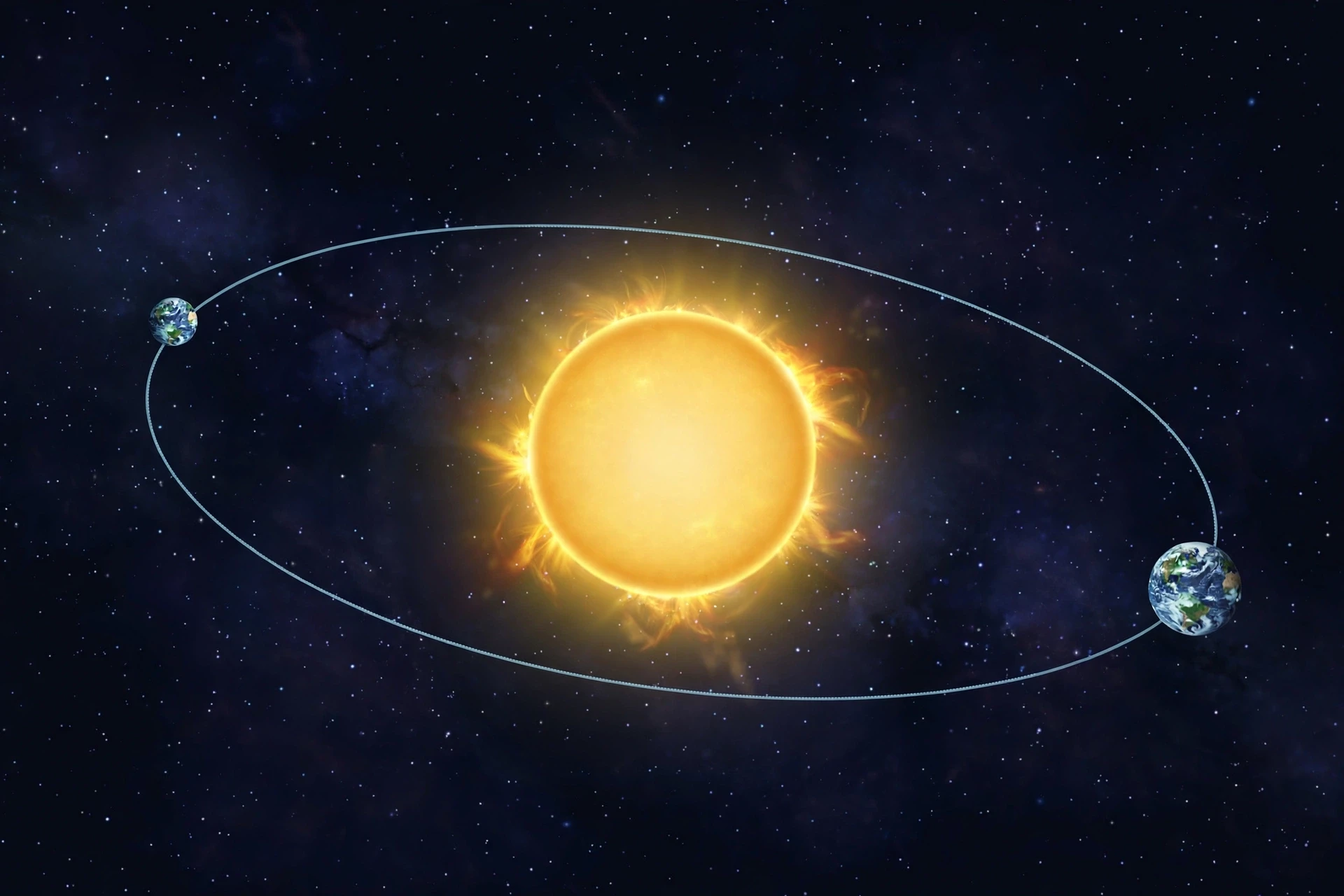
Most people assume the seasons come from distance, but what we actually see in the data is the opposite of what the distance theory predicts. Earth is closest to the Sun — at perihelion, about 147.1 million kilometres — in early January, in the middle of the Northern Hemisphere's winter. It is farthest from the Sun — at aphelion, about 152.1 million kilometres — in early July, in the middle of northern summer. The Northern Hemisphere is at its coldest when Earth is nearest the Sun and at its warmest when Earth is farthest away. If distance were the cause, January would be summer and July would be winter. They are not, and that alone ends the argument.
The distance theory also fails on a second, simpler test. Distance is the same for the whole planet at any moment. If distance caused the seasons, the Northern and Southern Hemispheres would have summer at the same time. They never do: when it is January in New York, people in Sydney are at the beach. A cause that acts on the whole planet at once cannot produce opposite effects in the two hemispheres. Only the tilt can do that, because the tilt is directional: it points one hemisphere toward the Sun while it points the other away.
5.1 How big is the distance effect, really?
The distance theory is not wrong about the direction of the physics — closer to a heat source does mean more heat. It is wrong about the size. Earth's orbit is very nearly circular: the difference between perihelion and aphelion is only about 3.3 percent of the average distance. Because sunlight weakens with the square of the distance, that 3.3 percent change in distance produces about a 7 percent change in the amount of solar energy reaching Earth. Seven percent sounds like a lot, but compare it with the tilt's effect: at mid-latitudes, the tilt changes the energy received per square metre by a factor of two or more between summer and winter, and it changes day length by hours. The distance effect is a whisper next to the tilt's shout.
The 7 percent does leave a fingerprint, though, and it is a fascinating one. Because Earth is closest to the Sun in January, the Southern Hemisphere's summer (December to February) gets slightly more solar energy than the Northern Hemisphere's summer does. And because Earth moves faster when it is closer to the Sun — Kepler's second law, the same law that governs every orbit — the Northern Hemisphere's winter is a few days shorter than its summer. Northern winter lasts about 89 days; northern summer lasts about 93.6 days. The distance effect is real. It is simply not the cause of the seasons. NASA's overview of Earth's orbit and climate cycles describes how these small orbital variations add up over thousands of years to help drive ice ages — a slow, geological effect, not the yearly rhythm we live by.
5.2 A classroom test that settles it
The best proof I know does not need a telescope or a satellite. It needs a globe and a lamp, in a darkened room. Put the lamp in the middle of the room — that is the Sun. Hold the globe tilted, with the North Pole leaning toward the lamp, and walk slowly around the lamp, keeping the tilt pointing the same way the whole time. Watch the light on the globe. On one side of the room, the Northern Hemisphere is brightly lit and the Southern Hemisphere is dim; on the opposite side, the pattern reverses. The globe never moved closer to or farther from the lamp in any meaningful way — you walked a circle, not an ellipse — yet the seasons appeared and reversed exactly as they do in real life. I have run this demonstration with schoolchildren, and the moment the pattern clicks, you can see it on their faces: the tilt, not the distance, is doing the work. If you have a globe at home, try it tonight. It takes five minutes, and it will settle the question for you more firmly than any diagram.
6. The Sun's Angle and the Length of the Day
Sections 3 and 4 described the tilt's two levers in outline. This section looks at them closely, because they explain not only why summer is warm but why the seasons feel so different from place to place — and why the same season feels different in Miami than it does in Montreal.
Start with the angle. The Sun's energy arrives at Earth as a stream of parallel rays. When those rays hit the ground straight on, they deliver their full energy to a small area. When they hit at a slant, the same stream of rays is smeared across a larger area, so every square metre gets less. There is a second effect too: slanting rays travel through more atmosphere before they reach the ground, and the atmosphere absorbs and scatters some of their energy along the way. In winter, sunlight crosses a longer column of air, losing more energy before it arrives; in summer, it takes the short, direct route. Both effects push in the same direction, and both are consequences of the Sun sitting lower in the winter sky.
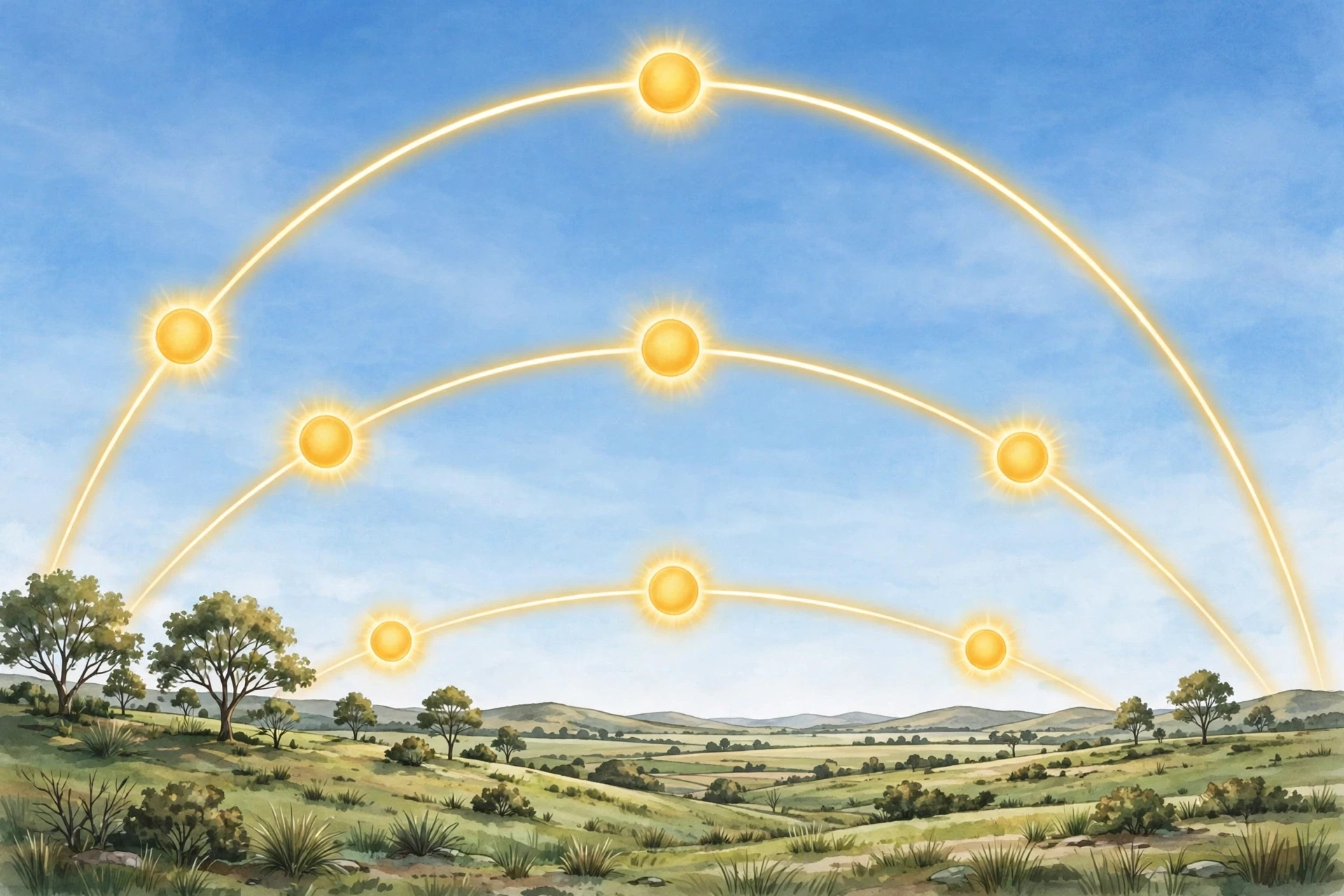
Then there is the day length, which is pure geometry. When your hemisphere leans toward the Sun, the Sun's daily path across the sky is a long, high arc: it rises early in the north-east, climbs high at noon, and sets late in the north-west. When your hemisphere leans away, the path is a short, low arc: the Sun rises late in the south-east, barely climbs, and sets early in the south-west. The difference grows with latitude. On the equator, day length is almost exactly 12 hours all year, and the seasons barely register. At 60 degrees north — Oslo, Helsinki, Anchorage — the longest day stretches to about 18.5 hours and the shortest shrinks to about 5.5. At the poles, the swing is absolute: six months of daylight, six months of night.
6.1 The numbers at your latitude
The table below shows how day length changes between the solstices at different latitudes. The numbers are approximate and refer to the Northern Hemisphere; the Southern Hemisphere mirrors them, six months out of phase.
Latitude | Example place | Longest day (June solstice) | Shortest day (December solstice) | Difference |
|---|---|---|---|---|
0° (equator) | Quito, Ecuador | ~12 hours | ~12 hours | ~0 minutes |
23.5° N | Havana, Cuba | ~13.5 hours | ~10.5 hours | ~3 hours |
40° N | New York, USA | ~15 hours | ~9 hours | ~6 hours |
51° N | London, UK | ~16.5 hours | ~8 hours | ~8.5 hours |
60° N | Oslo, Norway | ~18.5 hours | ~5.5 hours | ~13 hours |
66.5° N (Arctic Circle) | Tromsø, Norway | 24 hours | 0 hours | 24 hours |
Read that table from top to bottom and the pattern is unmistakable: the farther you live from the equator, the more extreme the swing between summer and winter days. That is why the seasons are a gentle nudge near the equator and a dramatic transformation near the poles — and why a summer evening in London feels endless while a winter afternoon in the same city is over before you have finished lunch.
6.2 Why winter Sun feels weak even at noon
There is a small everyday observation that captures the angle effect perfectly. Stand in a sunny spot on a clear January day at noon and hold your hand up to the Sun. Then do the same thing on a clear July day at noon. The July Sun feels fierce on your skin; the January Sun feels thin and pale, even though it is the same Sun and the sky is equally clear. What changed is the angle: in January, the sunlight reaching your hand has travelled through far more air, and it is striking your skin at a slant rather than straight on. The same physics explains why snow can survive on a north-facing slope for weeks after it has melted from a south-facing one, and why a greenhouse works: the glass lets the high summer Sun in and traps the warmth, while the low winter Sun barely gets a look in. If you want a single experiment that proves the tilt matters, the feeling of noon sunshine in January versus July is it — and you do not need any equipment at all.
"In January, the sunlight reaching your hand has travelled through far more air, and it strikes at a slant rather than straight on. The same Sun, the same clear sky — a completely different feeling."
7. Seasons in the Tropics: Where Summer Never Ends — and Never Quite Arrives
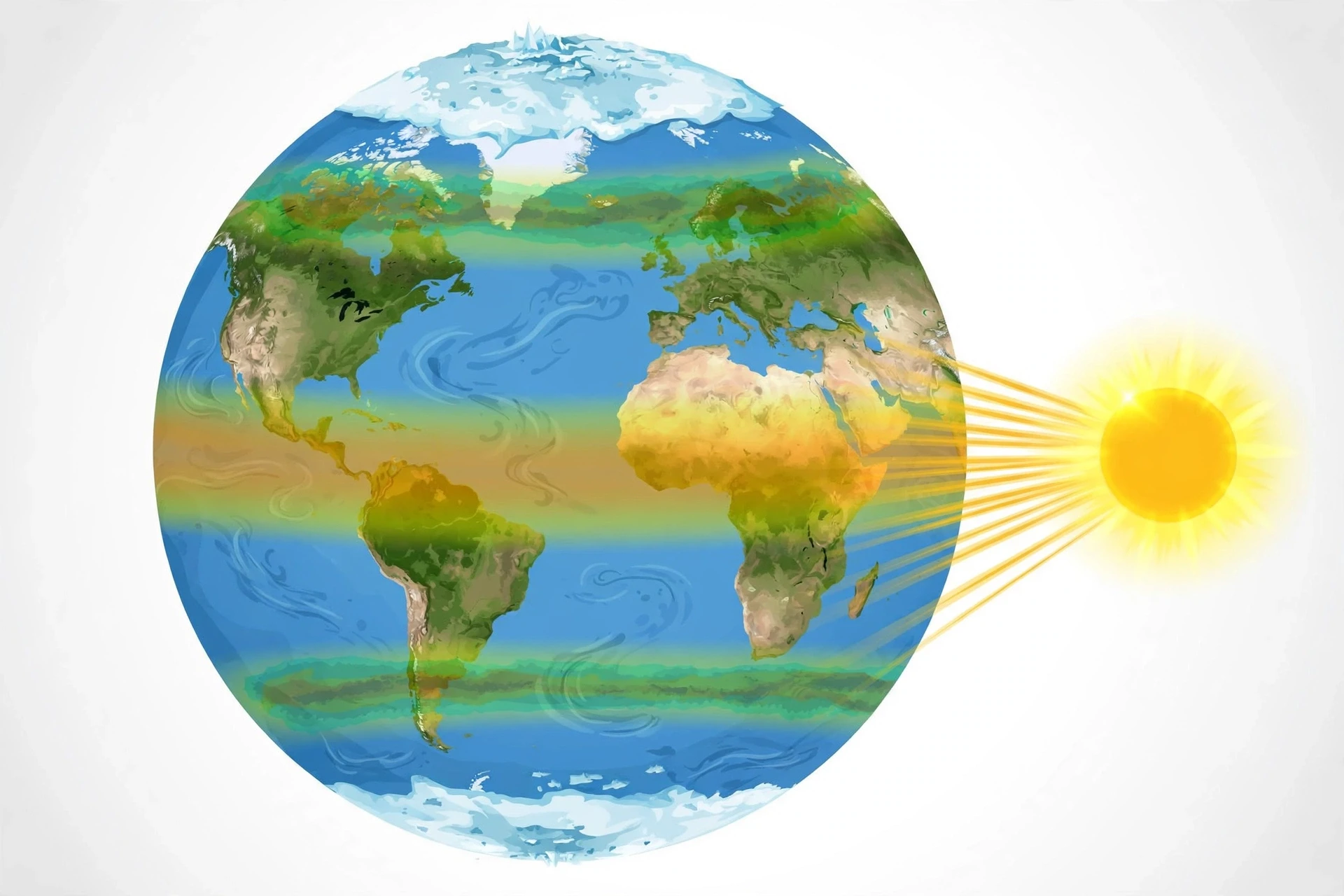
The tilt explains why do we have seasons in the temperate zones — but what happens near the equator, where the tilt barely changes anything? The answer is one of the most interesting parts of the whole story: the tropics have seasons, but they are not the four seasons of the temperate zones. They are a different system, driven not by temperature but by rain.
Between the Tropic of Cancer (23.5 degrees north) and the Tropic of Capricorn (23.5 degrees south), the Sun passes directly overhead at least once a year — twice a year on the equator itself. Day length stays close to 12 hours all year, and the Sun's noon height never drops very low. The temperature, as a result, barely changes from month to month. In Singapore, on the equator, the average temperature in the "coldest" month differs from the "warmest" month by only about one degree. There is no winter to speak of, and no summer either, in the temperate sense. It is warm all year, and the year is divided instead into wet and dry seasons.
7.1 The rains that follow the Sun
The tropical wet and dry seasons are driven by a great band of rising air and thunderstorms called the Intertropical Convergence Zone, or ITCZ — a belt of clouds and rain that circles the globe near the equator. As the Sun's overhead point migrates north and south with the seasons, the ITCZ migrates with it, dragging the rains along. When the ITCZ sits over a region, the rainy season arrives: heavy afternoon downpours, swollen rivers, and explosive growth. When it moves away, the dry season follows: clear skies, dusty air, and waiting.
This is the rhythm that governs life for billions of people. In India, the summer monsoon — the arrival of the rains as the ITCZ moves north — is one of the most important weather events on the planet, watering the crops that feed more than a billion people and filling rivers that run through an entire subcontinent. In the Sahel, the band of Africa just south of the Sahara, a single rainy season of three or four months decides whether the year's harvest succeeds or fails. In the Amazon, the difference between wet and dry seasons decides when rivers flood the forest floor and when fish swim among the trees. These are seasons, just as surely as spring and autumn are — but they are measured in rainfall, not temperature.
7.2 Two summers, no winter
There is another tropical oddity worth knowing. Because the Sun passes overhead twice a year in the tropics, many tropical places have two peaks of solar energy per year rather than one — a small "double summer" with a slight dip between the two overhead passages. In Quito, on the equator, the Sun is directly overhead around the March and September equinoxes, and the strongest sunshine arrives in those months rather than in June or December. The effect on temperature is small — the air is warm all year — but it is a clean demonstration that the seasons are a matter of geometry, not of a calendar. The calendar's four seasons are a temperate-zone invention. The tropics never agreed to them.
That does not mean the tropics are immune to the tilt. The tilt is what moves the Sun's overhead point north and south in the first place, and it is what drags the rain belt with it. The tropics feel the tilt as a shift in the rains rather than a shift in the temperature. It is the same cause, wearing different clothes — and it is a good reminder that "the seasons" are not one thing. They are the local expression of a global geometry, and the local expression depends on where you stand.
8. Seasons at the Poles: Midnight Sun and Polar Night
If the tropics are where the seasons nearly vanish, the poles are where they become absolute. North of the Arctic Circle (66.5 degrees north) and south of the Antarctic Circle (66.5 degrees south), the tilt produces something no temperate-zone resident has ever experienced: days when the Sun never sets, and days when it never rises.
The geometry is simple once you see it. At the June solstice, the North Pole leans 23.5 degrees toward the Sun, and the Sun's rays reach 23.5 degrees past the pole — all the way to the Arctic Circle. Everywhere inside that circle, the Sun stays above the horizon for the full 24 hours. At the North Pole itself, the Sun circles the sky for six straight months, never setting from the March equinox to the September equinox, spiralling slowly upward to a maximum height of 23.5 degrees at the solstice and then spiralling back down. Then, for the next six months, it does not rise at all. The South Pole mirrors this exactly, six months out of phase.
8.1 Living under the midnight sun
I spent a June week in northern Norway once, above the Arctic Circle, and the midnight sun undid every habit I had about time. At midnight, the Sun sat low over the fjord, golden and unhurried, and the sky was bright enough to read by. Children were playing outside at one in the morning. I kept checking my watch, convinced it had stopped. My body did not know when to sleep, because the signal it uses to know — darkness — had simply not arrived. I slept with the curtains drawn tight and still woke at three in the morning, certain it was mid-afternoon. The locals laughed; they had learned long ago to live by the clock rather than the sky, and to tape blackout blinds over every window.
That disorientation is not a curiosity — it is biology. Human sleep is governed by a circadian rhythm that expects darkness at night, and the midnight sun disrupts it. Polar researchers, oil workers, and Arctic residents all report the same pattern: in the bright months, sleep gets shorter and lighter; in the dark months, the lack of light brings its own problems, including the low mood and sluggishness that clinicians call seasonal affective disorder. The seasons at the poles are not just a spectacle. They are a physiological challenge, and the people who live there have built their lives — their windows, their work schedules, their festivals — around managing it.
8.2 Polar night and the long twilight
The polar night is the mirror image, and it is stranger than most people imagine. At the North Pole, the Sun sets at the September equinox and does not rise again until the March equinox — six months of darkness. But it is not six months of pitch black. For much of that time, the Sun sits just below the horizon, and its light scatters through the atmosphere as a long, slow twilight: blue at noon, with a band of pink or orange along the southern horizon where the Sun is hiding. At midwinter, the darkness is total for a few weeks, and the sky belongs to the stars and the aurora — the northern lights, rippling green and violet overhead, brighter and more frequent than anywhere else on Earth because the darkness is so long and so complete.
The aurora is a fitting symbol of the polar seasons: a phenomenon that exists because of the Sun, made visible only by the darkness the tilt creates. And the polar night has its own quiet ecology. Animals that stay through it — the Arctic fox, the polar bear, the ptarmigan — survive on fat reserves, thick fur, and a metabolism slowed to a crawl. The plants wait under the snow, dormant, holding their energy until the light returns. When it does, the return is explosive: the Arctic summer is short, sometimes only a few weeks of real warmth, but it is furiously productive, with flowers blooming, insects swarming, and migratory birds arriving in their millions to raise their young in the endless daylight. The poles compress the whole drama of the seasons into two extremes — and in doing so, they show the mechanism more clearly than anywhere else on Earth.

9. How Seasons Shape Life on Earth
The seasons are an astronomical fact, but the question of why do we have seasons has a biological answer too: almost every living thing on Earth has evolved to answer the yearly cycle, because the cycle is the most reliable signal in nature. The tilt has been the same for millions of years, and evolution has built its clocks around it. The result is a planet that breathes in time with the orbit: growing in spring, fruiting in summer, shedding in autumn, sleeping in winter — and then doing it all again.
The mechanism life uses to track the seasons is, in most cases, day length. Plants and animals do not carry calendars; they measure the length of the night. A process called photoperiodism lets organisms sense how long the dark lasts and trigger the right behaviour at the right time: a tree drops its leaves when the nights grow long, a flower blooms when they grow short, a bird begins its migration when the days shrink past a threshold. The signal is precise because the tilt is precise, and it works even when the weather is unseasonably warm or cold — a warm week in February does not fool a tree into leafing out, because the tree is listening to the light, not the temperature.
9.1 Migration, hibernation, and the great journeys
The most spectacular answer to the seasons is migration. The Arctic tern flies from its Arctic breeding grounds to the Antarctic and back every year — a round trip of more than 70,000 kilometres — chasing the summer from pole to pole so that it effectively lives in two summers and never experiences a winter. Monarch butterflies travel thousands of kilometres from North America to a handful of mountain forests in Mexico, where millions of them cluster on the trees through the winter. Wildebeest cross the Serengeti in herds of more than a million, following the rains that follow the Sun. Each of these journeys is a solution to the same problem: the tilt makes one place uninhabitable for part of the year, so the animal moves to where the season is better.
Hibernation is the opposite solution: instead of moving, stay and shut down. Bears, ground squirrels, and bats slow their hearts, drop their body temperatures, and live off stored fat through the months when food is scarce. A hibernating Arctic ground squirrel can let its body temperature fall below freezing — the coldest body temperature ever recorded in a mammal — and wake up unharmed in spring. Plants have their own version: seeds that wait in the soil for years, buds wrapped in protective scales, bulbs storing energy underground. All of these are bets placed on the reliability of the seasons: winter will end, spring will come, and the tilt guarantees it.
9.2 The green wave and the carbon breath
The seasons are so powerful that they show up in the atmosphere itself. Every spring, as the vast forests of the Northern Hemisphere leaf out and begin photosynthesis, they pull carbon dioxide out of the air — and every autumn, as leaves fall and decay, they release it back. The result is a yearly rise and fall in atmospheric carbon dioxide of about 6 parts per million, a slow breathing of the whole planet that scientists have measured continuously since the late 1950s at the Mauna Loa Observatory in Hawaii. The pattern is so regular that it looks like a heartbeat on a graph: a sawtooth wave, rising through the northern winter, falling through the northern summer, year after year. The Southern Hemisphere has less land and fewer forests, so its breath is quieter — another way the two hemispheres differ, and another reminder that the seasons are a planetary event, not a local one.
I find that measurement quietly moving. A single graph, drawn from air samples taken on a volcano in the middle of the Pacific, shows the whole Earth inhaling and exhaling with the seasons. It is one of the most beautiful datasets in science, and it exists only because the tilt makes the northern forests grow and sleep on a schedule.
9.3 When the seasons shift
The seasonal clock is reliable, but it is not immune to change. As the climate warms, spring is arriving earlier in many places: flowers bloom days or weeks ahead of their historical dates, birds migrate earlier, and insects emerge before the birds that eat them have arrived — a mismatch that ecologists call phenological asynchrony. The tilt has not changed; the temperature has. The result is a growing gap between the light-based calendar that organisms evolved to follow and the temperature-based reality they now face. A caterpillar that hatches on the old schedule may find its food plant already past its best, and a bird that migrates on the old schedule may arrive after the caterpillars have gone. The seasons themselves are not disappearing, but their timing is drifting, and the web of life that depends on that timing is being stretched. The National Weather Service's seasons pages explain the astronomical basis of the seasons clearly, and the climate record shows how the lived experience of those seasons is changing year by year.

10. How Humans Learned to Read the Seasons
Long before anyone knew why do we have seasons, people knew the seasons mattered — and they built some of the most enduring monuments in history to track them. The first calendars were not written on paper. They were written in stone, in the alignment of standing stones with the rising Sun, and in the careful watching of shadows. The reason was survival: plant too early and the frost kills the crop; plant too late and the harvest fails before the winter. Knowing the date of the solstice was not astronomy for its own sake. It was the difference between eating and starving.
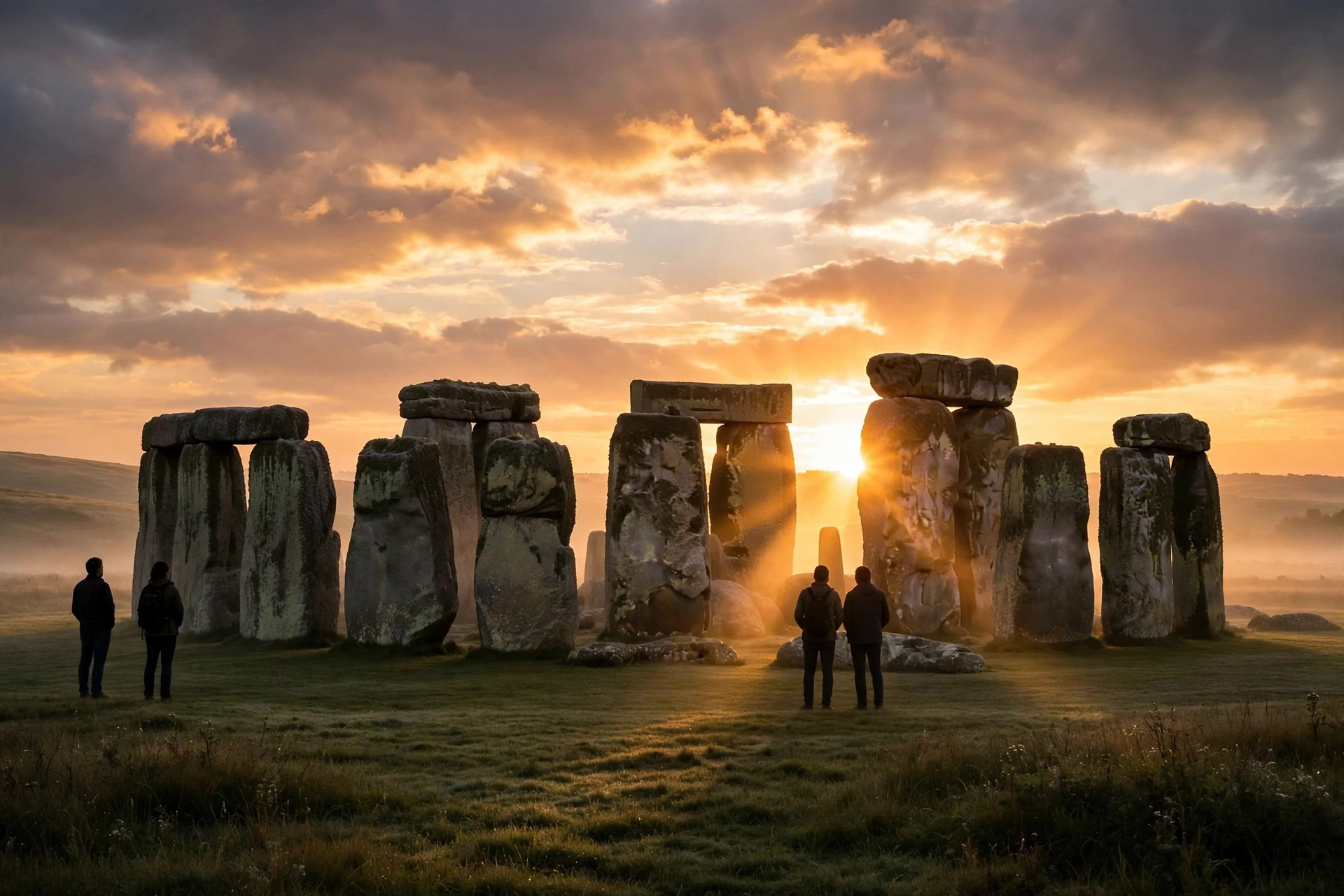
Stonehenge, on Salisbury Plain in England, is the most famous example. Its great stones are aligned so that on the summer solstice, the Sun rises directly over the Heel Stone and shines down the central axis of the monument; on the winter solstice, it sets in the opposite alignment. The people who built it, more than 4,000 years ago, had no telescopes and no written mathematics, but they had patience: they watched the Sun rise for years, marked where it rose at its extremes, and built a machine of stone to remember. Newgrange, in Ireland, is older still — built around 3200 BCE, older than the pyramids — and its passage tomb is aligned so that at dawn on the winter solstice, a shaft of sunlight travels down a long corridor and lights the inner chamber for a few minutes. People still gather there every December to watch it happen.
10.1 Festivals written by the Sun
The festivals that still mark our year are, in many cases, seasonal festivals wearing new clothes. The winter solstice was celebrated across the ancient world as the turning point — the longest night, after which the light begins to return — and its echoes survive in Christmas lights, in the candles of Hanukkah, and in the Yule log. The spring equinox is the root of Easter's timing, which is fixed to the first Sunday after the first full Moon after the equinox, and of Nowruz, the Persian New Year, celebrated on the equinox itself for more than 3,000 years. Harvest festivals at the autumn equinox — from the Chinese Mid-Autumn Festival, timed to the full Moon nearest the equinox, to the harvest suppers of rural England — mark the gathering of the year's food before the dark months. We think of these as cultural traditions, and they are. But they began as astronomy: a way of keeping time by the sky, because the sky was the only clock that never broke.
10.2 From stone circles to satellites
Today we track the seasons with atomic clocks and satellites, and the solstice is a number in an ephemeris rather than a stone on a hill. But the need has not changed, and in some ways it has grown. Farmers still plant by the seasons, now guided by satellite forecasts and soil sensors. Energy grids plan for the surge in demand on dark winter evenings and the flood of solar power on long summer days. Public health officials watch the flu season arrive with the cold months. And the dates themselves remain the same anchors they always were: the June solstice is still the longest day, the December solstice is still the shortest, and the equinoxes still divide the year in half. The tools have changed. The sky has not.
The Moon, too, has its own cycle that people tracked alongside the seasons — if you want to see how lunar timekeeping works, our guide to Moon Phases explains the monthly rhythm that sits inside the yearly one. The Sun sets the year; the Moon sets the month; and together they built the calendars every civilisation has used.
11. Common Misconceptions About the Seasons
Even after the answer to why do we have seasons is clear, a few stubborn ideas keep coming back. They are worth clearing up one by one, because each of them hides a real misunderstanding about how the Earth and Sun work together.
"Summer is when Earth is closest to the Sun." Wrong, and backwards: Earth is closest in early January and farthest in early July. The tilt, not the distance, decides the seasons. The distance effect is only about 7 percent, while the tilt's effect is measured in multiples.
"The seasons are caused by the Sun getting hotter and colder." The Sun's energy output is essentially constant over the year. What changes is how that energy is delivered to your part of Earth: the angle it strikes at, and how many hours a day it shines. The Sun does not turn up and down. Earth turns toward and away.
"It is summer everywhere at the same time." No. The seasons are opposite in the two hemispheres, because the tilt points one hemisphere toward the Sun while it points the other away. Christmas in Australia is a summer holiday, with barbecues on the beach; Christmas in Canada is a winter one, with snow on the ground.
"Day and night are exactly equal on the equinox." Nearly, but not exactly. Because the Sun is a disc and the atmosphere bends its light, daytime runs a few minutes longer than night-time on the equinox everywhere on Earth. The equal day and night is an idealisation, not a measurement.
"The equinox is the same day everywhere." The equinox is a single moment in time — the instant the Sun crosses the celestial equator — but it falls on different calendar dates in different time zones. An equinox that happens at 3 a.m. in London happens at 10 p.m. the previous evening in New York.
"Winter is cold because the Sun is weaker in winter." The Sun is not weaker. The same sunlight is spread thinner by the low angle, filtered through more atmosphere, and given fewer hours to work. Winter cold is a delivery problem, not a supply problem.
"There are four seasons everywhere." The four-season pattern is a temperate-zone pattern. The tropics have wet and dry seasons instead, and the poles have a single long day and a single long night, with brief, furious transitions between them. The tilt is universal; the seasons it produces are local.
The seasons are, in the end, a story about a lean. A planet that spins upright would have no seasons at all: every day would be like the equinox, every place would keep the same climate all year, and the year would have no chapters. Earth leans, and because it leans, the year has a shape — a shape that life has learned to read, that farmers plant by, that birds fly thousands of miles to follow, and that our ancestors carved into stone. The next time you notice your shadow stretching long in January or shrinking to nothing in July, you are watching the mechanism at work. The tilt is not somewhere far away in space. It is in your garden, on your street, in the length of your afternoon. My grandmother was right: the Earth leans away in winter, and it leans back in summer. Everything else is detail.
Frequently Asked Questions
Why do we have seasons?
We have seasons because Earth's axis is tilted about 23.5 degrees and always points the same way in space. As Earth orbits the Sun, the tilt leans first one hemisphere toward the Sun and then the other. The hemisphere leaning toward the Sun gets more direct light and longer days, so it warms into summer; the hemisphere leaning away gets slanting light and shorter days, so it cools into winter.
Is summer caused by Earth being closer to the Sun?
No — and this is the most common wrong answer to why do we have seasons. Earth is actually closest to the Sun in early January, during the Northern Hemisphere's winter, and farthest in early July, during northern summer. The difference in distance changes the solar energy reaching Earth by only about 7 percent. The tilt changes it by far more, and it also reverses between hemispheres, which distance cannot explain.
Why are the seasons opposite in the Northern and Southern Hemispheres?
Because the tilt is directional. When the North Pole leans toward the Sun, the South Pole leans away, so the Northern Hemisphere has summer while the Southern Hemisphere has winter. Six months later, Earth is on the opposite side of its orbit and the lean reverses. The two hemispheres always experience opposite seasons.
What is the difference between a solstice and an equinox?
A solstice is the moment when the Sun reaches its farthest point north or south in the sky — the longest day of the year (June solstice) or the shortest (December solstice) in the Northern Hemisphere. An equinox is the moment when the Sun crosses the equator, day and night are nearly equal worldwide, and neither hemisphere is tilted toward the Sun.
Why don't the tropics have four seasons?
Near the equator, the Sun stays high in the sky all year and day length barely changes, so temperatures stay warm and steady. Instead of four temperature-based seasons, tropical regions divide the year into wet and dry seasons, driven by the seasonal migration of the rain belt called the Intertropical Convergence Zone, which follows the Sun's overhead point north and south.
What causes the midnight sun and the polar night?
The tilt is the direct answer to why do we have seasons at the poles. North of the Arctic Circle, the North Pole's lean toward the Sun in summer keeps the Sun above the horizon for 24 hours a day, and its lean away in winter keeps the Sun below the horizon for 24 hours a day. At the poles themselves, this stretches to six months of daylight followed by six months of darkness.
Why is the hottest weather weeks after the longest day?
Because land and oceans absorb heat slowly and release it slowly — a delay called seasonal lag. The longest day delivers the most solar energy, but temperatures keep rising for weeks afterward as the ground and sea soak up that energy. That is why late July and August are usually hotter than late June, and why the coldest weather arrives in late January or February, weeks after the shortest day.