

The Morning I Tried to Do Everything at Once
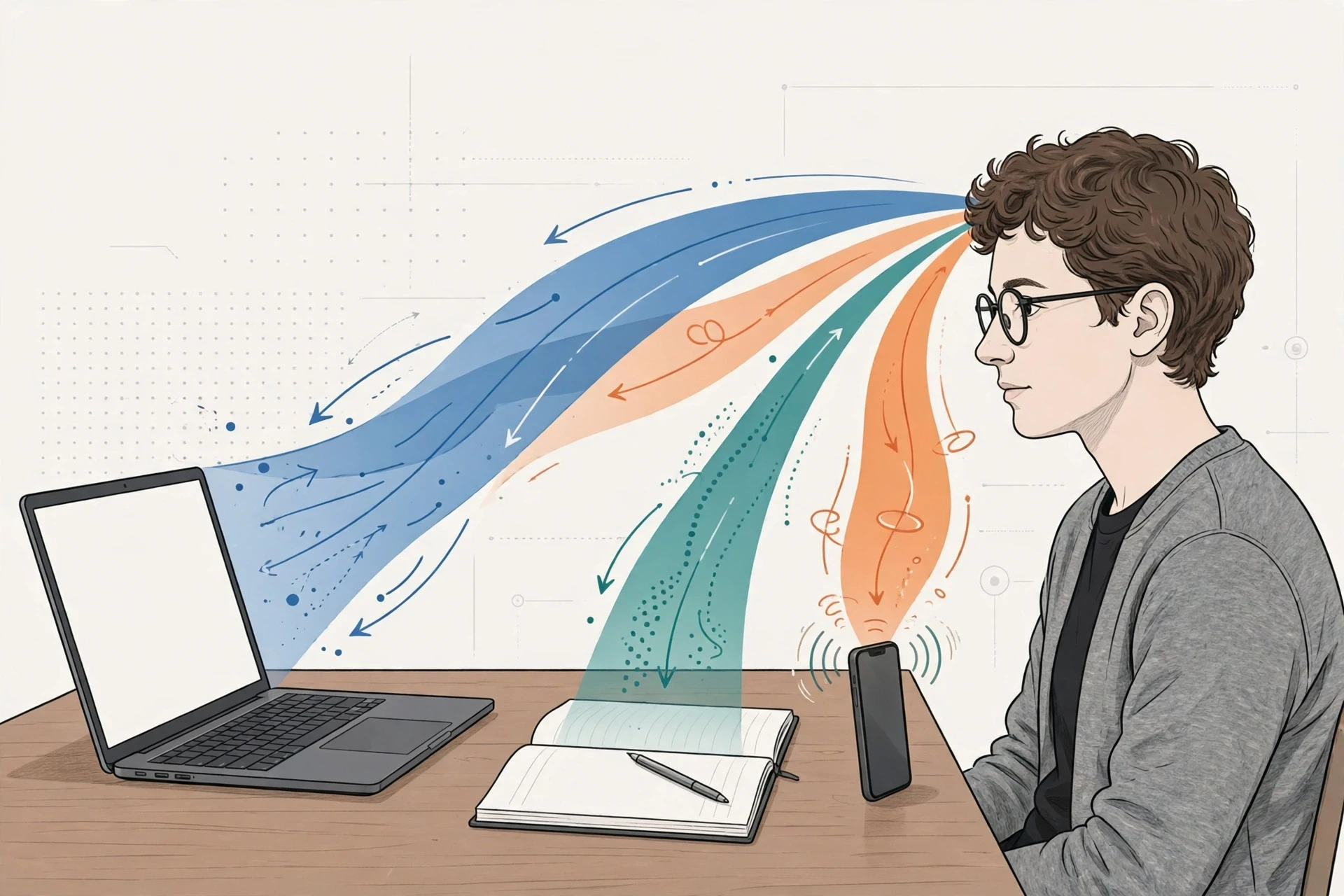
It was a Tuesday, and I had a plan. I would answer emails while listening to a recorded lecture, with a pot of coffee on the stove and a draft article open on the screen beside me. Four things, one morning, zero wasted minutes. That was the theory, anyway.
By nine o'clock, the coffee had boiled over, I had sent an email to the wrong person, and I could not tell you a single thing the lecturer had said. The draft had gained exactly one sentence — a sentence I later deleted because it made no sense. I had been busy for two hours and had almost nothing to show for it. If that sounds familiar, you already know the question at the heart of this article: can humans multitask, or have we all been fooling ourselves?
Most of us live as though the answer is yes. We write reports during video calls, scroll through messages while a friend talks, and check the news while dinner cooks. We wear busyness like a badge. The science, though, tells a very different story — one that starts with a simple fact about how the brain is built. Your brain is not a computer with eight cores running in parallel. It is more like a single spotlight in a dark theatre: brilliant wherever it points, and blind everywhere else.
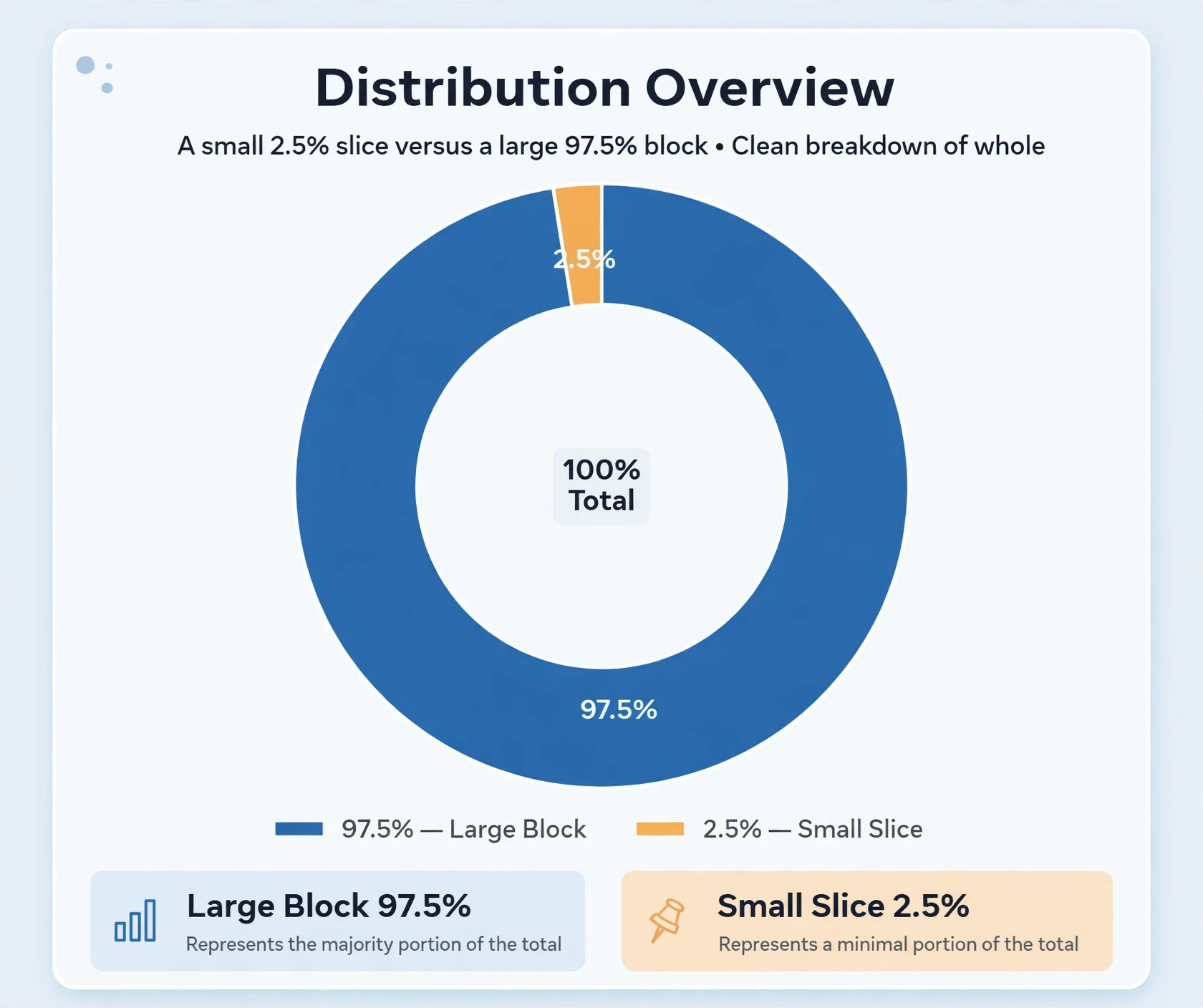
This article is about that spotlight. We will look at what really happens in your brain when you try to do two things at once, why switching between tasks carries a hidden tax, why your working memory can hold only a handful of items, and why a tiny fraction of people — about 2.5 percent — really can juggle demanding tasks while the rest of us only think we can. Along the way, we will meet a gorilla that half of all observers failed to see, a driving simulator that humbled confident phone users, and the three attention networks that quietly run your mental life.
One boundary is worth stating up front. If your mind often feels cloudy, slow, or hard to start, that experience has its own name and its own causes, and Sciory already covers it in Brain Fog: Causes and Ways to Improve Focus. This article is not about that fog. It is about the machinery underneath — how attention works when it is functioning normally, and why even a healthy brain cannot truly split itself in two.
1. Can Humans Multitask? What the Word Really Means
1.1 Two very different things share one word
Ask a room full of people whether they can multitask, and most hands go up. Ask them what they mean, and the answers split in two. Some people mean doing two things at the same time — typing while talking, for instance. Others mean jumping back and forth between tasks all day. Psychologists treat these as different phenomena, and the distinction matters, because the brain handles them very differently.
True simultaneous multitasking — performing two attention-demanding tasks at the exact same moment — is something the brain almost never does. What we usually do instead is task switching: focusing on one thing, dropping it, picking up another, and returning to the first a moment later. The switch feels instant. It is not. Each change forces the brain through two quiet steps: letting go of the old task's rules and loading the new one's. Researchers call these steps "goal shifting" and "rule activation," and they take real time — sometimes just a few tenths of a second, sometimes much more.
1.2 The one exception that proves the rule
There is a narrow exception. When one of the two activities is so practised that it runs almost on autopilot, the brain can pair it with something demanding. Walking while talking is the classic example. The walking is handled by well-worn circuits that need little conscious supervision, leaving the spotlight free for the conversation. The same logic explains why an experienced driver can listen to the radio, and why a skilled pianist can play a familiar piece while chatting. But notice what these examples share: one task is automatic. The moment both tasks need real thought — writing an email while following a complex argument, for instance — the pairing collapses.
I learned this the unglamorous way. Years ago, I tried to proofread a manuscript while half-listening to a colleague explain a new protocol over the phone. I caught neither the typos nor the protocol. My colleague had to repeat the whole explanation the next day, and the manuscript went out with two errors I still remember. The tasks were not hard. The combination was.
1.3 Why the question matters beyond the office
This is not only a productivity question. Attention is the gateway to everything else the mind does. You cannot remember what you never attended to, learn what you never focused on, or notice a hazard you never saw. A clear picture of how attention works, then, is useful everywhere: in the classroom, on the road, in the clinic, and at the kitchen table. The rest of this article builds that picture, piece by piece.
2. The Switch Tax: Why Changing Tasks Costs So Much
2.1 The experiment that started it all
In the mid-1990s, psychologists Robert Rogers and Stephen Monsell ran a deceptively simple experiment. Volunteers switched between two easy tasks — say, sorting numbers or naming colours — sometimes repeating the same task, sometimes changing. Even when the switches were completely predictable, happening every two or four trials like clockwork, people were slower on switch trials than on repeat trials. Giving them extra time to prepare shrank the cost but never erased it. Part of the delay came from setting up the new task in advance; the rest came from the old task's settings lingering in the system, like a radio station bleeding into the next one on the dial.
Later work by Joshua Rubinstein, Jeffrey Evans, and David Meyer at the University of Michigan made the pattern sharper. As tasks grew more complex, the switch cost grew with them. Switching to an unfamiliar task cost more than switching to a familiar one. And the costs were not trivial in aggregate: even brief mental blocks from shifting between tasks can cost as much as 40 percent of someone's productive time, according to the American Psychological Association's summary of the research. That figure is worth pausing over. Four-tenths of a working day, lost not to laziness or distraction, but to the mechanics of switching itself. You can read the APA's full account of the switching-cost research on the APA website.
2.2 What a switch actually costs you
The price of a switch is paid in three currencies:
Time. Every switch adds a delay — small per switch, large across a day of hundreds of switches.
Errors. People make more mistakes on switch trials than on repeat trials, and the mistakes cluster right after the change, when the old rules are still half-loaded.
Mental residue. When you leave a task unfinished, part of your mind stays with it. Researchers call this "attention residue": the previous task keeps occupying a corner of working memory, so the new task starts with less room than it deserves.
I see the residue effect every time I sit down to write after a morning of email. The first ten minutes feel like wading through mud — not because writing is hard, but because half my mind is still composing replies to messages I have already sent. The email is finished. My brain has not finished it.
2.3 The switching trap in everyday life
Consider a typical knowledge worker's day: a report, a chat window, a meeting, a spreadsheet, a phone call, back to the report. Each return to the report demands a re-read of the last paragraph, a search for the lost thread, a rebuilding of context. None of that shows up on a timesheet, which is why multitasking feels productive. The activity is real; the progress is an illusion. Studies of office workers have found that people switch tasks every few minutes on average, often without noticing they are doing it — and that after an interruption, it can take many minutes to fully return to the original task.
3. The Bottleneck in Your Head: Working Memory Holds About Four Things
3.1 The mental notepad with four lines
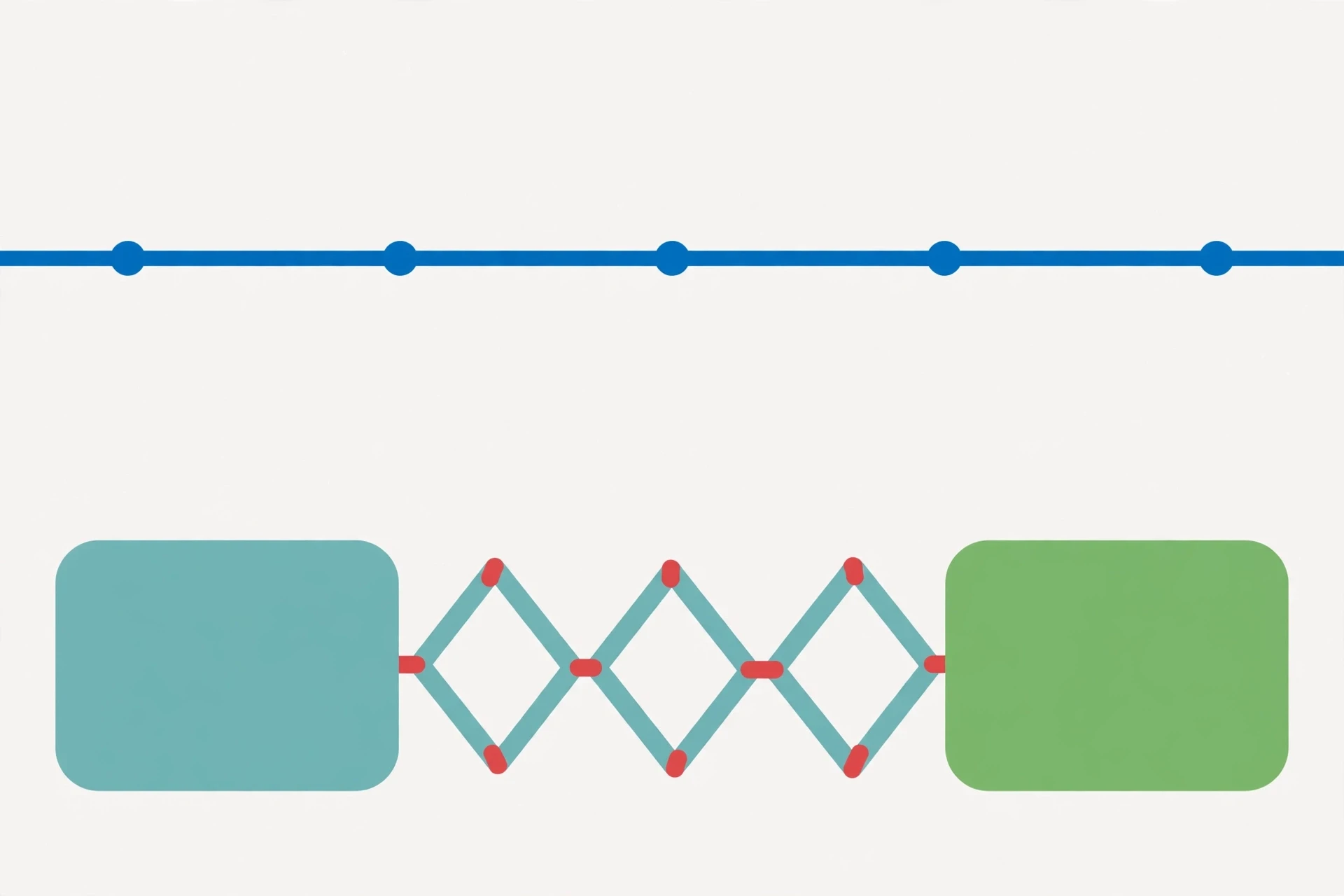
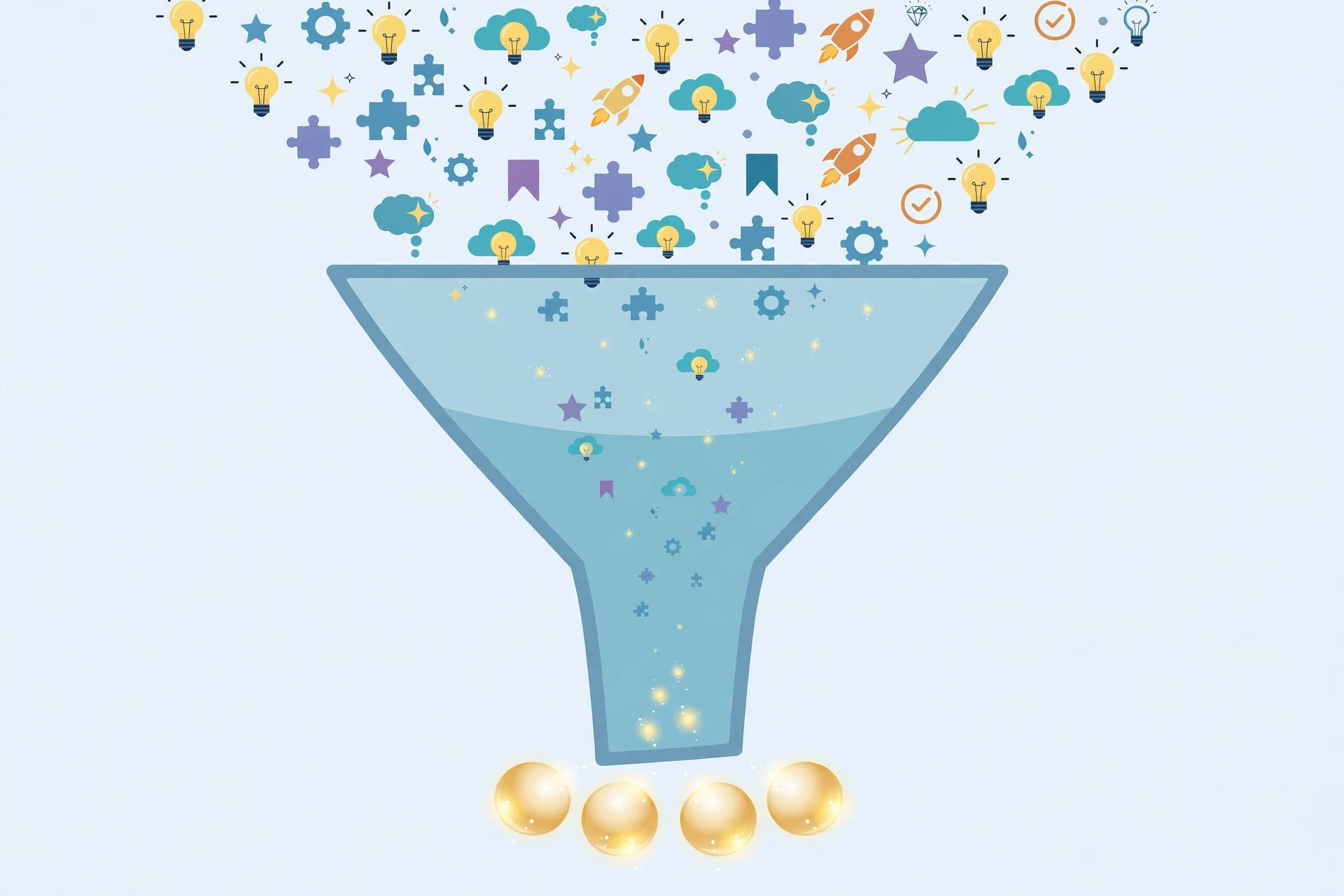
If attention is a spotlight, working memory is the small notepad the spotlight illuminates. It is the system that holds information in mind while you use it — the phone number you repeat to yourself as you cross the room, the three points you want to make before your colleague finishes speaking, the running total in your head at the supermarket. For decades, textbooks said this notepad held about seven items. More careful research has revised the number down: when items cannot be grouped into chunks, the realistic limit is closer to three or four.
Four items. That is the width of the doorway through which all conscious thought must pass. Everything you do that requires thinking — following an argument, solving a problem, writing a sentence — runs through that narrow channel. When you try to multitask, you are asking two tasks to share four slots. Each gets two. Each starves.
3.2 Chunking: the brain's one clever workaround
The brain does have a trick for beating the limit: chunking. A chess master does not remember thirty-two individual pieces; she remembers a handful of familiar patterns. A phone number becomes three chunks instead of ten digits. A familiar recipe is one chunk, not twelve steps. Chunking works because long-term memory supplies ready-made bundles, and each bundle counts as a single item in working memory. This is why experts seem to multitask better than beginners in their own domain: their chunks are bigger, so they need fewer slots. But the trick has a ceiling. Even the largest chunks still pass through the same narrow doorway, one at a time.
3.3 What the bottleneck means for your daily life
The bottleneck explains several everyday frustrations at once. It explains why you walk into a room and forget why you went there: a new thought evicted the old one from a slot. It explains why a phone call destroys your train of thought mid-sentence: the caller's words took the slots your sentence was using. And it explains why reading while the television is on feels so unproductive: the dialogue keeps barging into the same small workspace your reading needs.
There is a useful analogy here, one I use with students. Imagine a kitchen with a single small counter. You can lay out the ingredients for one dish comfortably. Try to prepare two dishes on that counter at once and you spend more time moving bowls around than cooking. The counter is not a flaw in the kitchen; it is the kitchen. Working memory is not a flaw in the brain; it is the design. The way to cook well is not to wish for a bigger counter but to cook one dish at a time.
4. Three Networks, One Spotlight: How Attention Works
4.1 The map drawn by Michael Posner
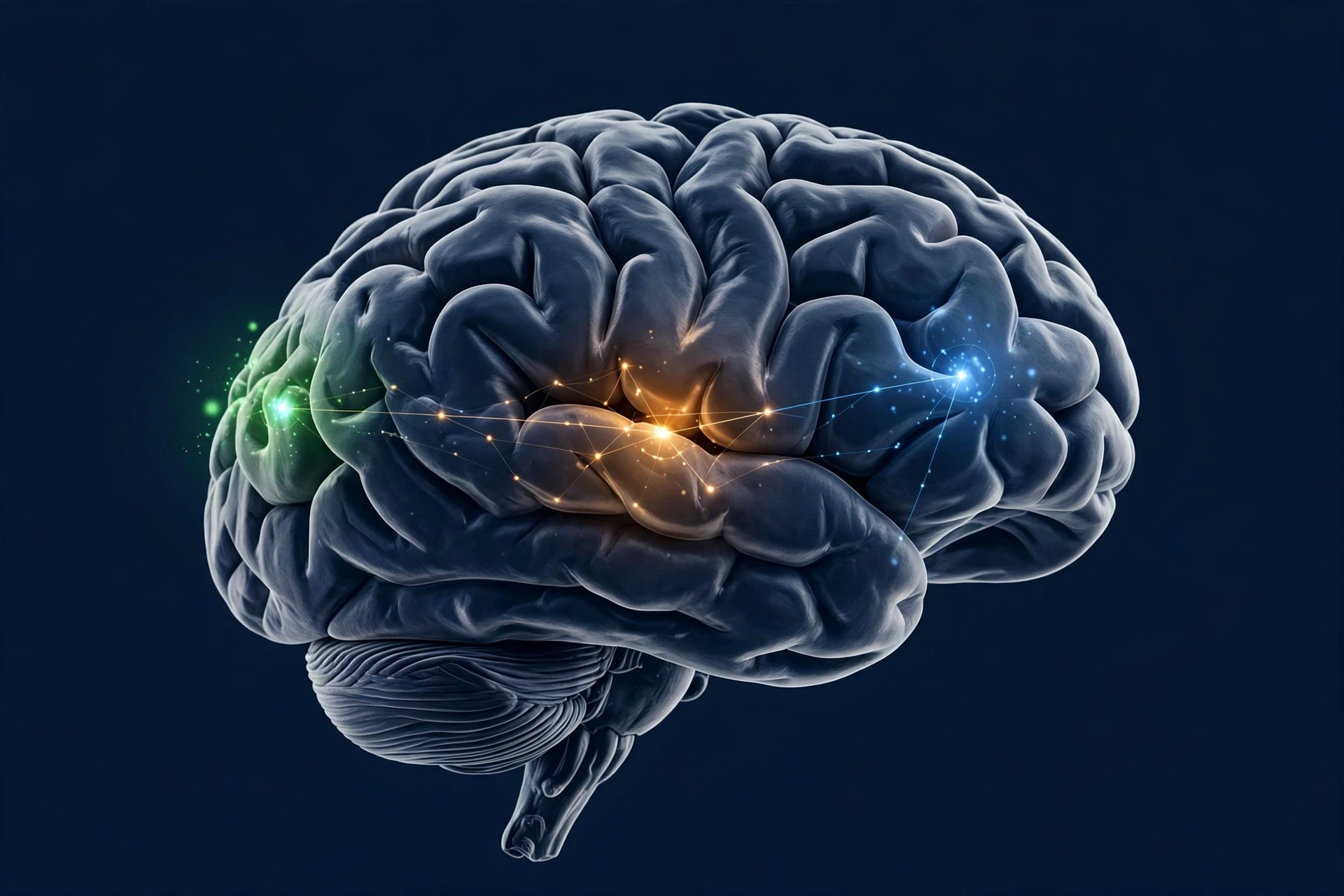
In the late twentieth century, psychologist Michael Posner proposed that attention is not one thing but three cooperating networks, each with its own job and its own brain circuitry. The model has been refined by decades of brain imaging, and it remains the clearest map of the territory. Understanding the three networks explains why multitasking fails in three different ways at once.
4.2 The alerting network: staying awake to the world
The alerting network keeps you vigilant — ready to respond, awake to incoming signals. It runs on the brain chemical norepinephrine and leans on structures in the brainstem and the right frontal cortex. Think of it as the watchman. It does not decide what to notice; it keeps the gates open so noticing is possible. Sleep deprivation, which damages alertness first, is one reason a tired brain multitasks so badly: the watchman is half asleep. The link between sleep and attention runs deep, and if you want the full story of what sleep does for the brain, Sciory's Science of Sleep and Dreams Explained walks through it in detail.
4.3 The orienting network: pointing the spotlight
The orienting network moves the spotlight — choosing where to look, what to listen to, which stream of information to follow. It involves the parietal cortex and the eye-movement systems, and it is the network that fails most visibly during multitasking. When you glance from your laptop to your phone and back, that is the orienting network being yanked around. Each yank takes time, and each yank means something else goes unexamined. The orienting network can only point at one place at a time. There is no wide-angle setting.
4.4 The executive network: the boss in the prefrontal cortex
The executive network, centred in the anterior cingulate cortex and the prefrontal cortex, resolves conflict: it decides which of several competing demands wins, suppresses the losers, and keeps you on task when distractions beckon. This is the network that does the heavy lifting of task switching — unloading one set of rules, loading another — and it is the network that tires first under load. When researchers talk about "executive control," they are talking about this system. It is also the system most associated with the prefrontal cortex, the brain region that makes planning, self-control, and focused work possible. For a guided tour of the organ that houses all three networks, see Human Brain Anatomy and Functions: A Complete Guide.
"Attention is the gateway to everything else the mind does. You cannot remember what you never attended to, learn what you never focused on, or notice a hazard you never saw."
4.5 Why three networks mean no true multitasking
Here is the point that ties the map together. Each network is a single, limited channel. Alerting can be ready or not. Orienting can point here or there. The executive can load this rule set or that one. None of them has a second lane. So when two tasks both need the orienting network, or both need the executive, they queue — and the queue is what you experience as the switch cost, the error, the lost thread. The brain does not run two spotlights. It runs one, and moves it very fast, and charges you for every move.
5. The Gorilla You Never Saw: Inattentional Blindness
5.1 A basketball game, a gorilla, and half an audience
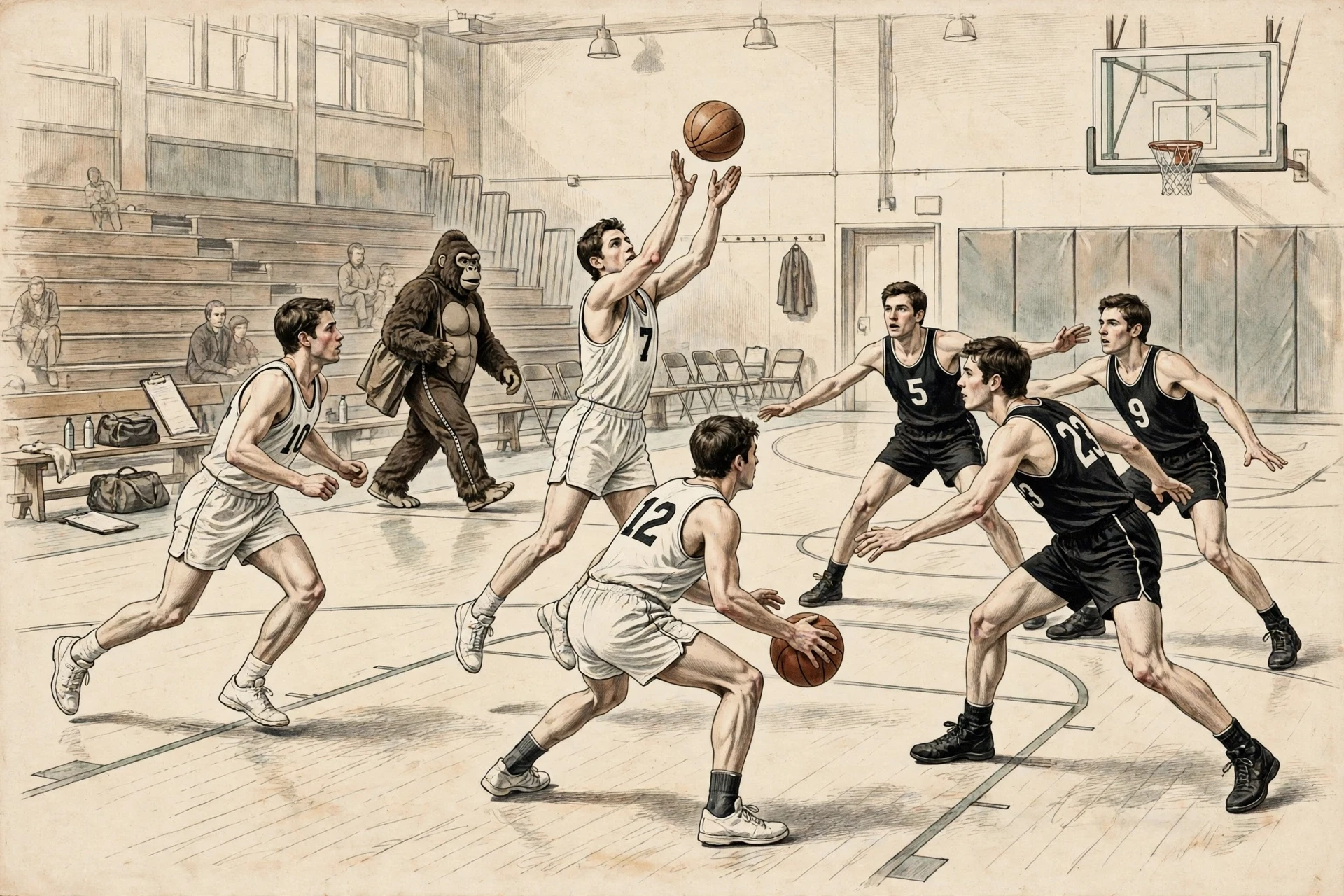
In 1999, psychologists Daniel Simons and Christopher Chabris filmed a short video: two teams of three players, one in white shirts and one in black, passing basketballs around a small court. Volunteers were asked to count the passes made by one team. Halfway through, a person in a full gorilla suit walked into the middle of the game, stopped, faced the camera, thumped her chest for several seconds, and walked off.
About half of the observers never saw the gorilla at all. Not a glimpse, not a suspicion — nothing. When the video was replayed without the counting task, they saw it instantly and were stunned that they had missed it. The effect has a name: inattentional blindness, the failure to perceive something fully visible when attention is engaged elsewhere. You can find the original study, "Gorillas in our midst," in the journal Perception (doi.org/10.1068/p281059).
5.2 Why the gorilla matters for multitasking
The gorilla experiment is the cleanest demonstration ever made of a simple truth: attention is not a camera recording everything in front of you. It is a filter, and what it filters out never reaches your conscious mind. The counting task was not even hard — yet it was enough to erase a gorilla. Now imagine the counting task replaced by a phone conversation, and the gorilla replaced by a braking car, a pedestrian, or a child's question. The mechanism is identical. Inattentional blindness has since been replicated in dozens of settings, including a striking study in which expert radiologists, searching CT scans for lung nodules, missed a small image of a gorilla planted in the scan — 83 percent of them.
5.3 Looking without seeing
One detail from the gorilla research unsettles me more than any other. Eye-tracking studies showed that some observers looked directly at the gorilla — their eyes were pointed right at it — and still did not see it. The visual information reached the eyes and even the early visual cortex, but without attention it never became a conscious experience. Seeing, in other words, is not a passive recording. It is an active construction, and attention is the builder. When the builder is busy elsewhere, the building does not happen.
I think about that every time someone tells me they can "keep an eye on" two things at once. Eyes, yes. Seeing, no.
6. The 2.5 Percent: Supertaskers Are Real — and Almost Certainly Not You
6.1 The driving simulator that found them
In 2010, psychologists Jason Watson and David Strayer at the University of Utah put 200 volunteers through a driving simulator. Each person drove alone, and then drove again while doing a demanding memory-and-maths task over a hands-free phone. Almost everyone's performance dropped — slower braking, worse lane control, forgotten words. But five people, exactly 2.5 percent of the sample, showed no measurable decline on any measure. The researchers called them supertaskers. Their study, "Supertaskers: Profiles in extraordinary multitasking ability," appeared in Psychonomic Bulletin & Review (doi.org/10.3758/PBR.17.4.479).
Five people out of two hundred. That is one in forty. And the supertaskers were not people who coasted: in the single-task conditions they already scored near the top on every measure. Later brain-imaging work suggested their advantage may come from more efficient use of the executive attention network — less effort spent switching, more capacity left over. The finding has held up, but with honest caveats: five people is a small group, the tasks were specific, and nobody knows yet how far the ability carries over to an open-plan office or a family kitchen.
6.2 The confidence trap
Here is the twist that makes the supertasker story sting. In a follow-up study, researchers found that the people who multitasked the most — and rated their own multitasking ability the highest — were, on average, the worst at it. Heavy media multitaskers performed worse on tests of task-switching and were more easily distracted by irrelevant information. Confidence, in this domain, points the wrong way. The more certain you are that you can multitask, the more likely the evidence says you cannot.
Most people assume that feeling busy and capable means the brain is handling the load. What the data actually show is the opposite: the feeling of fluent multitasking is often the feeling of attention switching so quickly that the gaps go unnoticed. The switches are real. The awareness of them is not.
7. Why Your Brain Loves the Illusion
7.1 Novelty feels like progress
If multitasking is so costly, why does it feel so good? Part of the answer is novelty. Every switch delivers a small burst of something new — a fresh message, a different tab, a new voice — and the brain's reward circuitry responds to novelty. The switch itself becomes mildly rewarding, which trains the habit. You are not being rewarded for getting work done. You are being rewarded for changing tasks.
7.2 The phone in your pocket is a switch machine
Modern phones are engineered to produce switches. Notifications arrive unpredictably, which makes them hard to ignore: the brain treats an unpredictable signal as potentially important, and the orienting network swings toward it before the executive network can veto the move. Each glance at a phone is a task switch, complete with its tax. A day of a hundred glances is a day of a hundred small taxes, each invisible, each real. The phone does not need to steal hours from you. Stealing seconds, a hundred times a day, is enough.
7.3 Busyness as a social signal
There is also a social reason the myth survives. In many workplaces, visible busyness reads as dedication. Replying instantly, juggling five threads, always being "on" — these behaviours signal commitment, even when they destroy the deep work they are meant to serve. The culture rewards the appearance of multitasking and never audits its cost, because the cost is paid in errors and half-finished thoughts that are easy to blame on something else.
8. When Multitasking Turns Dangerous
8.1 The road is where the science becomes a matter of life and death
No setting makes the cost of multitasking clearer than driving. A driver travelling at highway speed covers the length of a football field in about five seconds. A glance at a phone that lasts five seconds is a football field travelled blind. The U.S. Centers for Disease Control and Prevention reports that nine people in the United States are killed every day in crashes reported to involve a distracted driver, and more than 3,100 were killed in 2019 alone. The CDC's plain advice is worth quoting directly: do not multi-task while driving. Their full overview is available on the CDC website.
The driving research also destroyed one of the most popular excuses. Hands-free phones are not meaningfully safer than hand-held ones, because the danger is cognitive, not manual. It is not the hand leaving the wheel that hurts you; it is the mind leaving the road. In simulator studies, drivers on hands-free calls missed traffic signals, braked later, and in some comparisons performed as badly as drivers at the legal alcohol limit. The impairment comes from the conversation occupying the same executive and orienting networks the driving needs.
8.2 Beyond the road: surgery, aviation, and the classroom
The same principle applies wherever attention is safety-critical. Air-traffic control, surgery, and aviation all treat divided attention as a hazard to be engineered away, not a skill to be trained. Cockpits have "sterile" periods during takeoff and landing when non-essential conversation is banned. Operating theatres limit interruptions during critical steps. These professions learned the hard way what the laboratory shows cleanly: the brain has one spotlight, and the stakes decide how much the flicker costs.
The classroom is a quieter version of the same story. Students who take notes on laptops while checking messages learn less than students who take notes by hand or on a closed device — not because laptops are bad, but because the switching fragments encoding. Memory researchers have shown again and again that what is encoded while attention is divided is encoded weakly, and weakly encoded memories are the first to fade. The mechanics of how memories form in the first place are covered in Sciory's How the Human Brain Forms Memories, and the same bottleneck that limits attention limits what gets stored.

9. Single-Tasking Versus Multitasking: The Comparison
The evidence is easier to hold in mind as a direct comparison. The table below summarises what the research reviewed in this article shows for the two strategies across the dimensions that matter most.
Dimension | Multitasking (rapid switching) | Single-tasking (deep focus) |
|---|---|---|
Speed | Feels fast; total time is longer because of switch costs | Feels slower at first; finishes sooner overall |
Errors | More errors, clustered right after each switch | Fewer errors; mistakes are easier to catch |
Memory | Weak encoding; details fade quickly | Stronger encoding; better recall later |
Stress | Higher: the executive network works overtime | Lower: one rule set loaded at a time |
Quality of work | Shallower; ideas stay at the surface | Deeper; connections and insights emerge |
What it feels like | Busy, productive, in demand | Quiet, sometimes boring — then satisfying |
Who it suits | Pairing one automatic task with one thinking task | Any task that needs real thought |
The last row is the honest exception. Multitasking is not always wrong. Folding laundry while listening to a podcast works because folding is automatic. Walking while talking works for the same reason. The rule is simple: pair a thinking task with an automatic one, never with another thinking task. Everything else in the table follows from that one rule.
10. Misconceptions About Multitasking
10.1 "Some people are just naturally good at it"
Almost no one is. Only about 2.5 percent of people show no cost in laboratory tests, and even they pay a price on harder tasks. The people most confident in their multitasking are, on average, the worst at it. Natural talent at multitasking is mostly a story we tell about ourselves.
10.2 "Young people are better at it because they grew up with phones"
Growing up with phones makes people switch more often, not switch better. Heavy media multitaskers — who skew young — perform worse on task-switching tests and are more distractible, not less. Practice at switching trains the habit of switching; it does not widen the bottleneck.
10.3 "Women are better multitaskers than men"
This claim appears often and has almost no support. Laboratory studies find small or no sex differences in task-switching costs, and the differences that do appear are inconsistent across studies. What differs is not ability but expectation: women are more often expected to juggle, so they juggle more — and pay the same price as anyone else.
10.4 "Multitasking is fine as long as the tasks are easy"
Easy tasks still cost something to switch between, and easy tasks are exactly the ones we combine most recklessly — a simple email plus a simple call plus a simple form. Each switch is cheap; a day of cheap switches is expensive. The APA's summary puts the possible total cost as high as 40 percent of productive time, and that figure comes from ordinary tasks, not hard ones.
10.5 "I can train myself to multitask"
You can train yourself to switch faster, and you can automate one of the tasks through practice until it needs less attention. Both help. But neither creates a second spotlight. Brain training programs that promise multitasking ability have not shown that the gains transfer to real-world dual-task performance. What training reliably improves is single-task focus — the ability to hold the spotlight still.
10.6 "If I feel productive, I am productive"
Feeling productive and being productive part company under multitasking. The busyness feels like progress because something is always happening. But output — finished work, correct work, remembered work — is the measure that matters, and on that measure, switchers lose. I keep a simple rule for myself: if I cannot name what I finished in the last hour, I was switching, not working.
11. How to Work With Your Brain, Not Against It
Knowing the science is useful only if it changes the day. The strategies below are the ones with the best support in the attention literature, and they share one idea: stop fighting the bottleneck and start designing around it.
11.1 Batch the small stuff
Answer emails in two or three dedicated blocks rather than all day. Each block pays one switch cost instead of dozens. The same logic applies to messages, calls, and admin: group similar tasks together so the executive network loads one rule set and keeps it.
11.2 Give hard work a protected window
Choose one demanding task, set a timer for 25 to 50 minutes, and do only that. Phone in another room, notifications off, one tab open. This is not a trick; it is the direct application of everything in this article. The first few minutes will feel uncomfortable — that is the executive network protesting the absence of novelty. It passes.
11.3 Make the switch visible
Before switching tasks, write down exactly where you stopped: the next sentence, the open question, the number you were holding in mind. A written breadcrumb cuts the cost of returning, because the working-memory slots you emptied do not have to be refilled from scratch. This one habit has saved my writing more times than any app ever has.
11.4 Design your environment before you need willpower
Willpower is the executive network, and it is the same limited resource multitasking drains. So do not rely on it. Put the phone in a drawer. Close the extra tabs. Work in a room without a television. Every distraction you remove in advance is a switch you never have to resist.
11.5 Treat sleep as attention maintenance
Sleep restores the alerting network and consolidates what the day's attention encoded. A short night does not just make you tired; it narrows the spotlight and raises the switch cost. The connection runs both ways: poor attention during the day makes sleep harder at night, and poor sleep makes attention harder the next day. Breaking that loop starts with protecting sleep, and the evidence for how sleep shapes memory and mood is laid out in Sciory's coverage of chronic insomnia and the brain. One caution: persistent, severe attention problems that interfere with daily life are a different matter from ordinary multitasking struggles. Attention difficulties can be a feature of conditions such as ADHD, and the National Institute of Mental Health explains what ADHD is — and is not — on the NIMH website. If focus problems are persistent and impairing, a clinician, not a blog article, is the right next step.
11.6 Single-task on purpose, once a day
Pick one ordinary activity — a meal, a walk, a conversation — and do only that, with the phone away. It sounds trivial. It is a workout for the orienting network, and like any workout, the benefit compounds. People who practise single-tasking report the same thing my students report after a week of it: the world gets quieter, and the work gets better.

12. What the Latest Research Is Adding
The science of attention has not stood still. Three recent directions are worth knowing about, because they refine the picture rather than overturning it.
First, brain-imaging studies of supertaskers have begun to map why the rare few differ. Early findings point to more efficient recruitment of the anterior cingulate and prefrontal regions during dual tasks — the executive network working less hard for the same result. The difference looks like efficiency, not extra capacity: their spotlight does not widen, it moves more cheaply.
Second, researchers are studying "attention residue" more precisely. Sophie Leroy's work showed that people who switch from an unfinished task to a new one perform worse on the new task than people who switch from a finished one — and that the residue shrinks when the unfinished task is given a clear stopping point. The practical lesson is the breadcrumb habit from Section 11: a small plan for resuming a task frees the mind to leave it.
Third, the field is paying closer attention to individual differences and to the long-term effects of heavy media multitasking. The early Stanford finding — that heavy media multitaskers are worse at filtering irrelevant information — has been replicated, qualified, and debated, but the broad pattern holds: the more you train your brain to switch, the more it switches, and the harder sustained focus becomes. Researchers still disagree about how much of this is cause and how much is self-selection — people who struggle to focus may simply be drawn to switching. That uncertainty is honest, and it matters: it means the remedy is not panic about phones but deliberate practice of the opposite skill.
"The brain does not run two spotlights. It runs one, and moves it very fast, and charges you for every move."
13. The Bottom Line
So, can humans multitask? For two demanding tasks at once, the answer is no — not you, not me, and not 97.5 percent of the population. What we call multitasking is rapid task-switching, and the switching carries a tax in time, errors, and memory that can reach 40 percent of productive time. Working memory holds about four items. Attention runs through three single-channel networks. A gorilla can walk through your field of vision unnoticed while you count passes. The exceptions are narrow and honest: pair a thinking task with an automatic one, and the brain manages fine; be one of the rare supertaskers, and you beat the odds on laboratory tasks.
The good news is that the fix is not a new app or a better brain. It is a change of strategy: one task at a time, protected windows for hard work, batched small tasks, written breadcrumbs, and sleep treated as part of the job. The spotlight cannot widen. But it can be pointed — deliberately, and at one thing at a time. That is not a limitation to mourn. It is the design that makes deep work possible at all.
Frequently Asked Questions
Can humans multitask?
No, not in the way the word suggests. For two attention-demanding tasks, the brain does not process them in parallel; it switches rapidly between them, paying a cost in time and errors at every switch. Only about 2.5 percent of people — "supertaskers" — show no measurable cost in laboratory tests, and even they were tested on specific tasks.
Why is multitasking bad for productivity?
Because every switch between tasks forces the brain to unload one set of rules and load another, a process that takes time and invites errors. The American Psychological Association's summary of the research notes that these brief mental blocks can cost as much as 40 percent of someone's productive time. On top of that, unfinished tasks leave "attention residue" that keeps occupying working memory after you have moved on.
Is multitasking a myth?
The idea that the brain runs two demanding tasks simultaneously is a myth; what actually happens is rapid task-switching. The exception is pairing one demanding task with one highly practised, automatic task — such as walking while talking — which works because the automatic task needs almost no attention.
How many things can working memory hold at once?
About three to four items, when they cannot be grouped into larger chunks. Chunking — bundling information into familiar patterns from long-term memory — lets each slot hold more, which is why experts seem to juggle more in their own field. The underlying limit of roughly four slots does not change.
Can you train yourself to multitask better?
You can get faster at switching and you can automate one task through practice, but no training has been shown to create true parallel processing for two demanding tasks. What training reliably improves is sustained single-task focus — the ability to keep the spotlight still, which is the skill that actually raises output.
Is listening to music while studying multitasking?
It depends on the music and the studying. Familiar, lyric-free music is close to an automatic background task for many people and interferes little. Music with lyrics, or a podcast, competes for the same verbal working-memory slots the studying needs, and that is genuine multitasking — with the usual cost. If the material is hard, silence wins.
Why do I feel productive when I multitask?
Because switching delivers novelty, which the brain finds mildly rewarding, and because something is always happening. The feeling tracks activity, not output. Finished, correct, remembered work is the measure that matters, and on that measure task-switchers consistently score lower than single-taskers.
Sources
American Psychological Association. "Multitasking: Switching costs." https://www.apa.org/topics/research/multitasking
Centers for Disease Control and Prevention. "Distracted Driving." https://www.cdc.gov/distracted-driving/about/index.html
National Institute of Mental Health. "Attention-Deficit/Hyperactivity Disorder (ADHD)." https://www.nimh.nih.gov/health/topics/attention-deficit-hyperactivity-disorder-adhd
Watson, J. M., & Strayer, D. L. (2010). "Supertaskers: Profiles in extraordinary multitasking ability." Psychonomic Bulletin & Review, 17(4), 479–485. https://doi.org/10.3758/PBR.17.4.479
Simons, D. J., & Chabris, C. F. (1999). "Gorillas in our midst: Sustained inattentional blindness for dynamic events." Perception, 28(9), 1059–1074. https://doi.org/10.1068/p281059
Rubinstein, J. S., Meyer, D. E., & Evans, J. E. (2001). "Executive Control of Cognitive Processes in Task Switching." Journal of Experimental Psychology: Human Perception and Performance, 27(4), 763–797.
Rogers, R. D., & Monsell, S. (1995). "Costs of a predictable switch between simple cognitive tasks." Journal of Experimental Psychology: General, 124(2), 207–231.
Posner, M. I., & Petersen, S. E. (1990). "The attention system of the human brain." Annual Review of Neuroscience, 13, 25–42.
Cowan, N. (2001). "The magical number 4 in short-term memory." Behavioral and Brain Sciences, 24(1), 87–114.
Leroy, S. (2009). "Why is it so hard to do my work? The challenge of attention residue when switching between work tasks." Organizational Behavior and Human Decision Processes, 109(2), 168–181.