

Introduction: The Room Full of People
I was standing in a packed conference hall once, coffee in hand, surrounded by hundreds of colleagues I liked and respected, when a strange feeling crept over me. Nobody had been unkind. Nobody had ignored me. Yet I felt completely alone, as if a sheet of glass stood between me and everyone else in the room. I smiled, I nodded, I asked about people's research — and all the while a quiet voice kept asking: does anyone here actually know me?
That moment stayed with me for years, because it did not match the story I had told myself about loneliness. I had assumed loneliness belonged to empty houses and silent phones. I had assumed it was a problem of being physically alone. The science of loneliness tells a different story, and it is far more interesting — and far more hopeful — than the one I carried into that hall.
Why do we feel lonely when we are not alone? That question sits at the heart of this article. Loneliness is not a headcount. It is a signal, a perception, and a biological state all at once. It is the gap between the connection we have and the connection we need. And when that gap stays open for months or years, it reaches into the brain, the immune system, the heart, and even how long we live.
This is not an article about depression, though the two can travel together and we will draw that line carefully. Loneliness is a perceived social deficit — the feeling that our social needs are not being met — while depression is a mood disorder with its own diagnostic criteria and treatments. You can be lonely without being depressed, and depressed without being lonely. Confusing the two helps nobody. If you want the full picture of mood disorders, our companion article Anxiety and Depression Explained: What the Science Says covers that ground in depth.
Here, we stay with loneliness itself: what it is, why evolution built it into us, what it does inside the brain and body, who it touches most, why modern life makes it worse, and — most importantly — what research actually shows helps. The answers are more practical than you might expect, and they start with a surprise: loneliness behaves less like a character flaw and more like hunger.

1. What Loneliness Really Is
1.1 A definition that changes everything
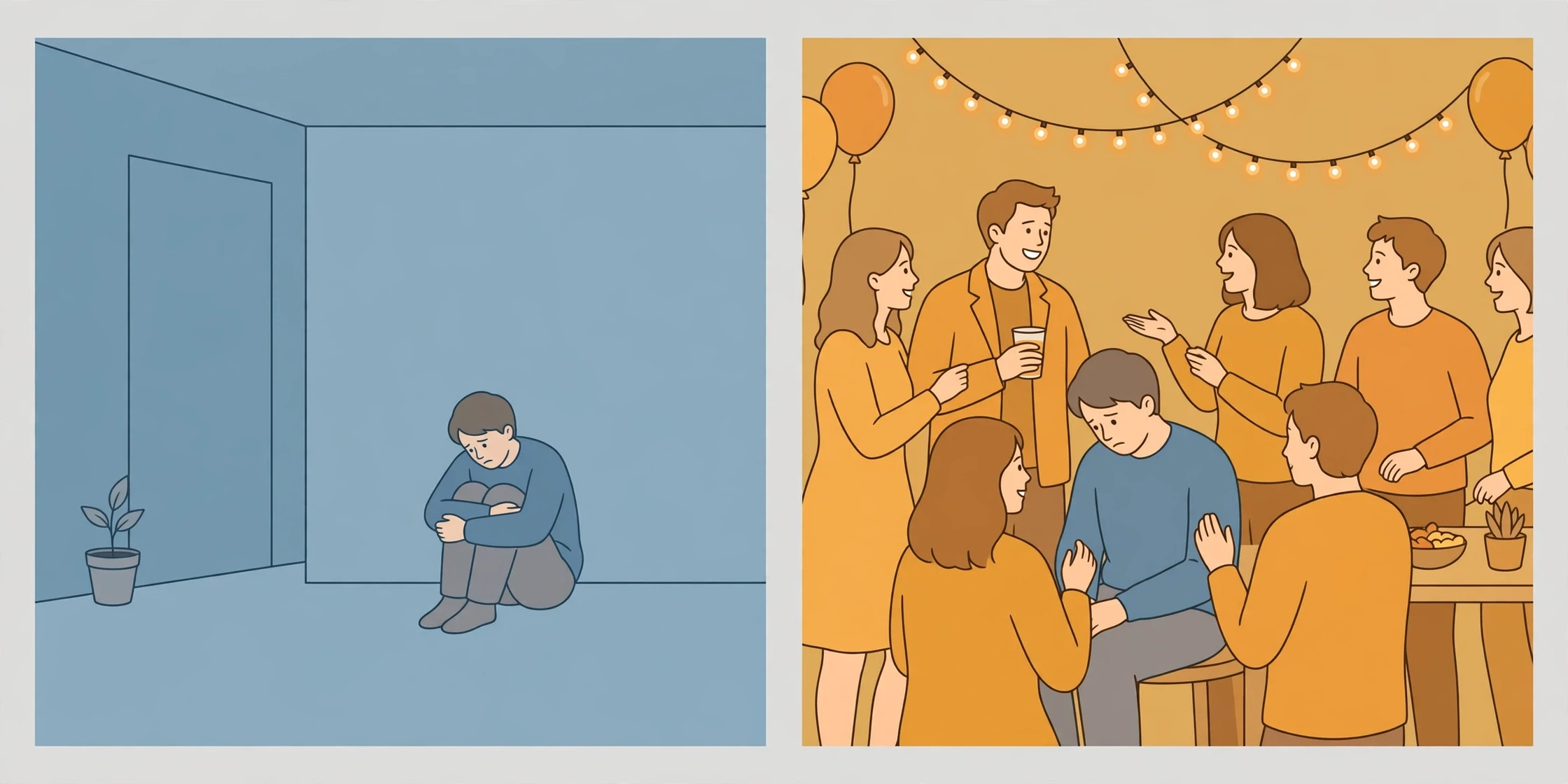
Ask ten people what loneliness means and you will get ten different answers. Psychologists, after decades of argument, have settled on something precise. Loneliness is the distressing feeling that arises when there is a mismatch between the social relationships we want and the ones we actually have. Notice what is missing from that definition: there is no mention of being alone.
That mismatch can take three forms. Emotional loneliness is the absence of a close, intimate bond — someone who knows you properly. Social loneliness is the absence of a wider circle — friends, colleagues, a community to belong to. Existential loneliness, the hardest to name, is the sense that nobody fully shares your inner world, even when people are kind to you. Most lonely people I have spoken to describe a blend of all three, in shifting proportions.
The science of loneliness begins with this distinction because it explains the paradox in our title. A person living alone in a cabin can feel deeply connected through letters, calls, and a handful of close friends. A person at a wedding, a party, or a family dinner can feel profoundly lonely. The feeling tracks the quality of connection, not the quantity of company.
1.2 Loneliness, isolation, and solitude are three different things
These three words get tangled in everyday speech, and untangling them matters. Social isolation is objective: how many contacts you have, how often you see people, whether you live alone. Loneliness is subjective: how you feel about those contacts. Solitude is chosen aloneness — and it can be restorative, creative, even joyful.
I learned this distinction the hard way during a long field season early in my career. I spent weeks working mostly alone, and I expected to feel lonely. I did not. I had one long phone call a week with a close friend, and that single thread of real connection was enough. Years later, in a busy city, with a calendar full of meetings, I felt lonelier than I ever had in that quiet field station. The difference was never the number of people around me. It was whether anyone was truly present with me.
"Loneliness is not the absence of people. It is the absence of being known."
Researchers measure loneliness with tools like the UCLA Loneliness Scale, a questionnaire developed at the University of California, Los Angeles, that asks about feelings of being left out, lacking companionship, and feeling isolated from others. It does not count your friends. It asks how your social life feels from the inside. That design choice is the whole point: loneliness lives in perception, and perception is where the science has to start.
1.3 How common is it?
Loneliness is far more common than most of us admit, partly because admitting it feels like confessing a personal failure. It is not. In the United States, the Surgeon General's advisory of 2023 reported that approximately half of U.S. adults had experienced measurable levels of loneliness even before the COVID-19 pandemic. Globally, the World Health Organization's Commission on Social Connection reported in 2025 that about one in six people worldwide — roughly 16 percent — experienced loneliness, with higher rates among young people and in low-income countries. The Commission linked loneliness and social isolation to an estimated 871,000 deaths each year.
Those numbers carry a quiet message: if you feel lonely, you are not the exception. You are part of a very large, very normal human experience — one that our species has been having for as long as we have lived in groups. The shame around loneliness is one of its cruelest features, because shame keeps people from doing the very thing that would help: reaching out.
2. Why Evolution Gave Us Loneliness: The Hunger Analogy
2.1 John Cacioppo and the alarm idea
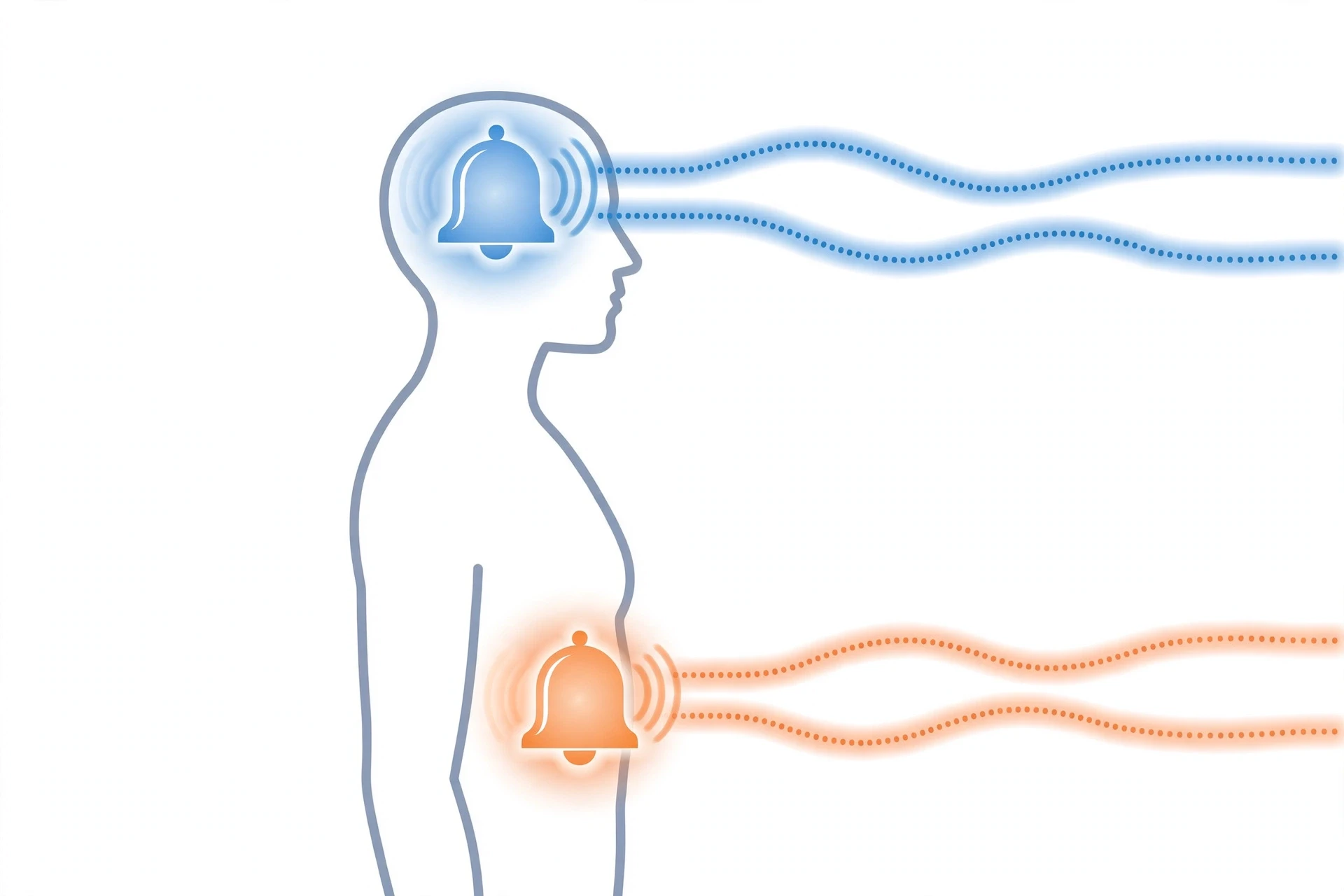
The late psychologist John Cacioppo, who spent much of his career at the University of Chicago studying loneliness, proposed an idea that reshaped the field. Loneliness, he argued, is an evolved signal — an alarm, like hunger or thirst — that tells us a basic need is going unmet and pushes us to fix it. Hunger does not mean your body is broken. It means you need food. Thirst does not mean you are weak. It means you need water. Loneliness, in Cacioppo's framing, means you need connection, and it motivates you to seek it.
That framing matters because it removes the moral judgment. For most of human history, being cut off from the group was genuinely dangerous. Our ancestors survived by cooperating: sharing food, watching for predators, raising children together. A lone human on the savanna was a vulnerable human. So natural selection equipped us with a painful signal that fires when our social bonds weaken, just as it equipped us with pain that fires when we touch something hot. The signal is supposed to hurt. Pain is what makes an alarm work.
2.2 What the alarm is trying to do
When loneliness fires, it does several things at once. It makes social cues feel more salient — we notice faces, tones of voice, and slights more keenly. It raises our vigilance, scanning the social environment for threats and opportunities alike. And it motivates behaviour: we reach out, we join, we repair a frayed relationship. In the short term, this is a beautifully designed system.
The trouble starts when the alarm keeps ringing and nothing changes. A smoke alarm that never switches off does not make a house safer; it makes the people inside exhausted and jumpy. Chronic loneliness works the same way. The vigilance that was meant to help us reconnect starts to work against us, and that is where the science of loneliness gets both darker and more useful.
2.3 A personal note on alarms
I think about this every time I catch myself misreading a friendly message as cold, or assuming a colleague's short reply means they are angry with me. The first time I noticed the pattern in myself, I was embarrassed. Then I read Cacioppo's work, and the embarrassment faded into something closer to relief. My brain was not being irrational. It was running an ancient program: when connection feels scarce, treat ambiguous signals as threats until proven otherwise. The program made sense on the savanna. In an office full of email, it misfires — and knowing that it misfires is the first step toward correcting it.
That is the promise of understanding loneliness as an alarm. Alarms can be listened to without being obeyed blindly. Hunger can be answered with a meal rather than a binge. Loneliness can be answered with a real conversation rather than a frantic scroll through a feed full of strangers.
3. The Brain on Loneliness: Why Rejection Physically Hurts
3.1 Social pain and physical pain share circuitry
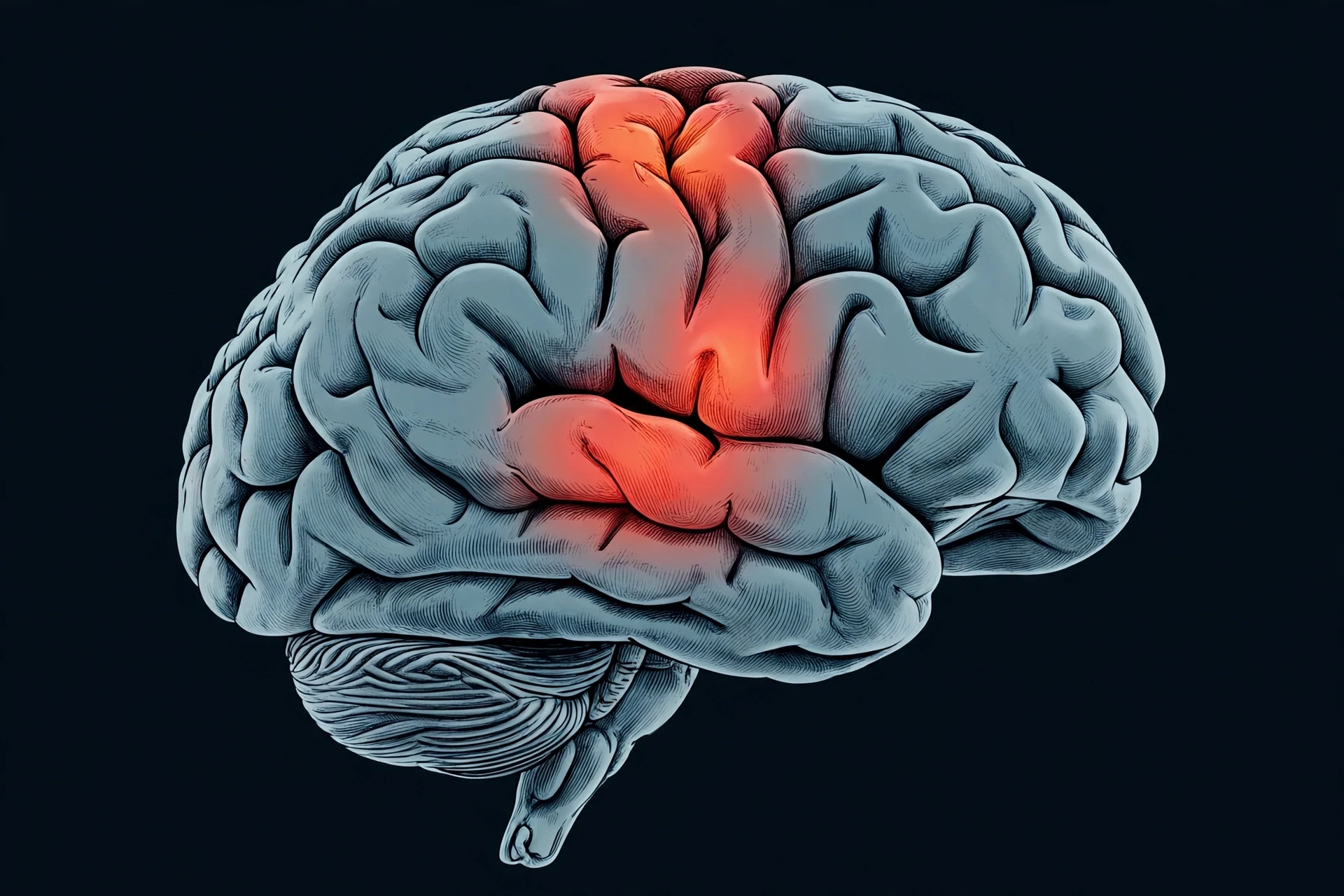
"Rejection hurts" is something we say casually. The science of loneliness suggests we should say it literally. In a landmark 2003 brain-imaging study, Naomi Eisenberger and her colleagues at UCLA placed volunteers in a scanner and had them play a virtual ball-tossing game called Cyberball with two other supposed players. Partway through, the other players stopped throwing the ball to the volunteer. The exclusion was artificial, brief, and obviously a game — and yet the volunteers' brains reacted as if something genuinely painful had happened.
Activity rose in the dorsal anterior cingulate cortex, a region involved in the distressing, emotional component of physical pain. The more distressed people reported feeling, the more active that region was. A second region, the right ventral prefrontal cortex, also lit up, and its activity was linked to less distress — as if it were working to regulate the pain. You can read the original study on PubMed: Eisenberger, Lieberman, and Williams, "Does Rejection Hurt? An fMRI Study of Social Exclusion," published in Science in 2003.
This finding has been replicated and extended many times since. The overlap is not total — social pain is not identical to a stubbed toe — but it is real, and it explains a great deal. It explains why a snub can ruin a whole day, why a breakup can feel like a physical ache in the chest, and why being left out of a group chat can sting out of all proportion to the event. The brain treats damage to our social bonds as damage to the self, because for most of our evolutionary history, it was.
3.2 The lonely brain becomes a watchful brain
Lonely people do not just feel worse; they perceive the social world differently. Research in the science of loneliness has repeatedly found that chronic loneliness is linked to heightened attention to social threats — angry faces, rejecting tones, ambiguous expressions — and a tendency to interpret neutral signals negatively. The lonely brain, in other words, becomes a watchful brain.
I once watched this play out in a research meeting, though I did not understand it at the time. A colleague who had recently moved to a new city, far from her friends, reacted to a mild, constructive comment about her work as if it were a harsh attack. The rest of us were baffled. She was not being oversensitive in some character sense. Her alarm system was turned up high, and it was reading threat into noise. Once she built a local circle of friends, the same kind of comment rolled off her easily. Nothing about the comments had changed. Her brain's threat setting had.
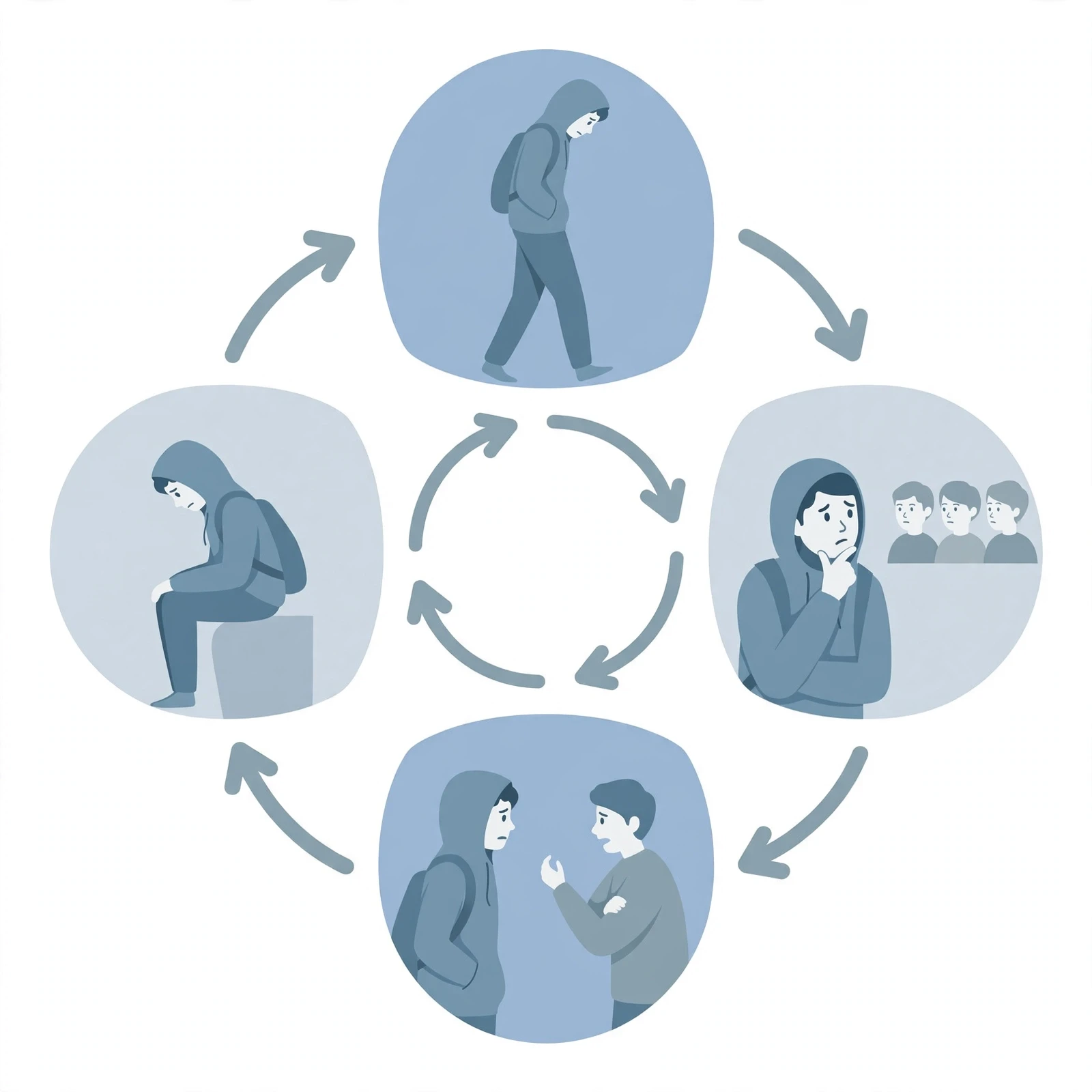
This vigilance creates a cruel feedback loop, and it is the central mechanism of chronic loneliness. Feeling lonely makes us warier. Wariness makes us withdraw, or behave in ways that push people away — shorter answers, less eye contact, a reluctance to invite or be invited. Others read that as coldness and pull back in turn. The loneliness deepens. The loop tightens.
3.3 Stress hormones and the body under siege
The brain does not keep its alarm to itself. Loneliness activates the body's stress systems, including the release of cortisol, the primary stress hormone. In the short term, cortisol is useful — it mobilises energy and sharpens attention. When loneliness is chronic, cortisol stays elevated, and that changes things across the body. Sleep becomes lighter and more fragmented. Blood pressure creeps up. The immune system shifts toward inflammation and away from fighting viruses effectively.
This is where loneliness connects with the wider story of stress and health on Sciory. Our article on High Cortisol Symptoms: Signs of Chronic Stress explains what sustained cortisol elevation looks like day to day — fatigue, poor sleep, weight changes, frequent colds — and many of those symptoms overlap with what lonely people report. The gut is involved too: stress alters the gut microbiome and gut-brain signalling, a two-way street explored in our article on the Gut-Brain Connection: How It Relates to Mood. Loneliness is not "all in your head." It is in your head, your gut, your blood, and your sleep.
4. Loneliness and the Body: The Health Evidence
4.1 The numbers that changed the conversation
For years, loneliness was treated as a soft topic — sad, but not medical. Two large meta-analyses by Julianne Holt-Lunstad and colleagues changed that. Pooling data from many studies, Holt-Lunstad's team found that social isolation was associated with about a 29 percent higher risk of early death, loneliness with about a 26 percent higher risk, and living alone with about a 32 percent higher risk. Those figures put weak social ties in the same league as well-known risk factors such as smoking and obesity. The original 2010 meta-analysis appeared in PLOS Medicine, and the 2015 update in Perspectives on Psychological Science.
The U.S. Surgeon General's advisory of 2023 added more detail: lacking social connection is associated with a 29 percent increased risk of heart disease, a 32 percent increased risk of stroke, and a 50 percent increased risk of developing dementia in older adults. Lacking connection, the advisory noted, increases the risk of premature death by more than 60 percent. These are associations from observational research, not proof that loneliness alone causes each outcome — people who are lonely may also exercise less, sleep worse, or delay medical care — but the pattern is consistent across countries, age groups, and study designs, and it survives adjustment for many of those other factors.
The World Health Organization's 2025 report added a global scale to the picture: about one in six people worldwide experience loneliness, and loneliness and social isolation together are linked to an estimated 871,000 deaths a year. Loneliness was also linked to higher risks of depression, anxiety, heart disease, stroke, and diabetes. You can read the WHO's summary of the report on its news pages, and the U.S. Surgeon General's advisory on the Department of Health and Human Services site.
4.2 How loneliness reaches the heart, brain, and immune system
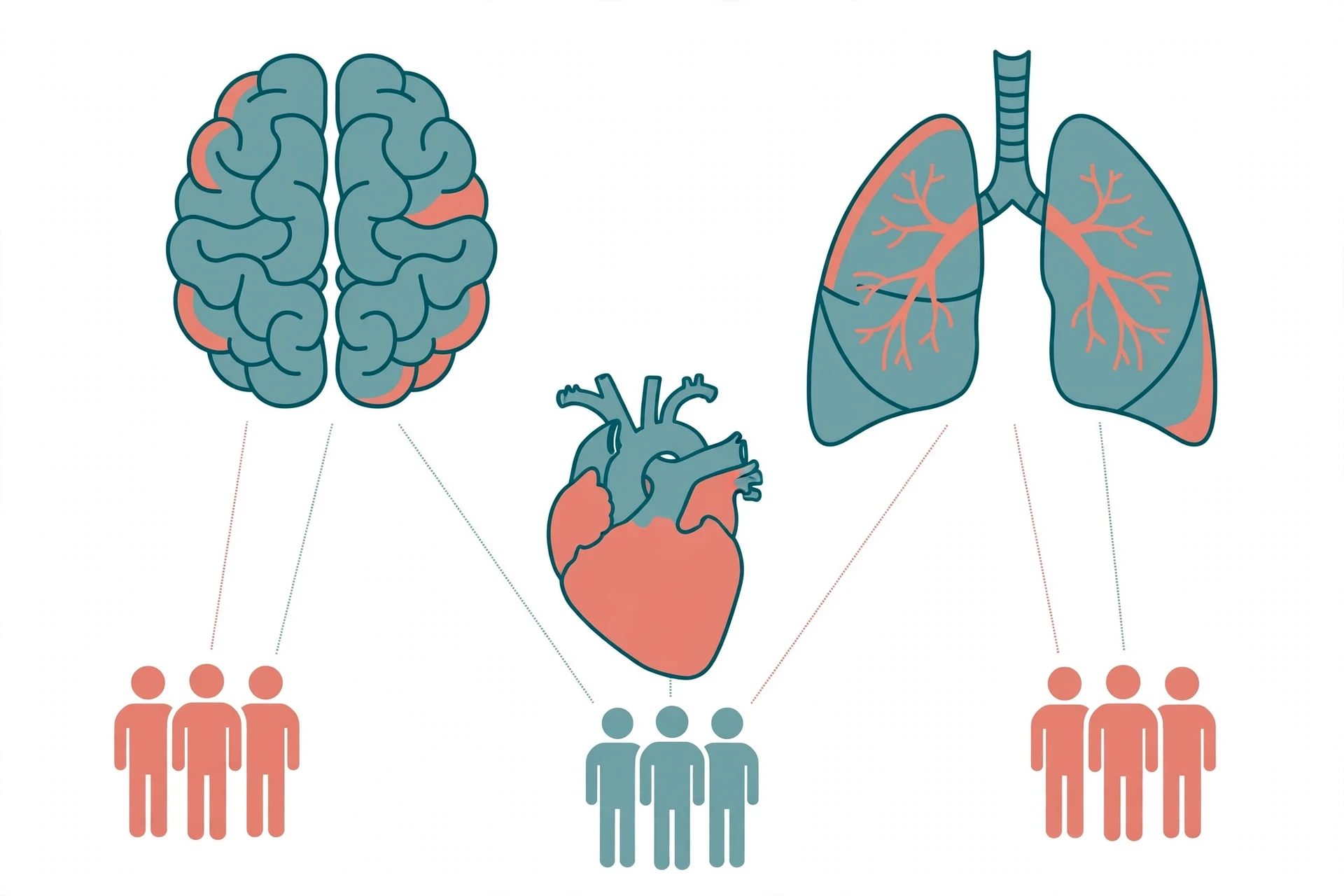
The pathways are now fairly well mapped, and the science of loneliness describes them as a cascade rather than a single cause.
Stress and inflammation. Chronic loneliness keeps the stress response switched on. Inflammatory markers rise, blood vessels stiffen, and blood pressure stays higher than it should.
Sleep disruption. Lonely people tend to sleep less well — more awakenings, less deep sleep — and poor sleep itself raises the risk of heart disease, diabetes, and depression. Our article on the Science of Sleep and Dreams Explained covers why deep sleep matters so much, and our piece on Chronic Insomnia: Effects on the Brain & Health traces what happens when sleep breaks down over months.
Immune changes. Research on loneliness and immunity has found a pattern sometimes called the conserved transcriptional response to adversity: genes involved in inflammation turn up, while genes involved in antiviral defence turn down. Lonely people, in other words, may be biologically primed for the wrong kind of threat.
Behavioural pathways. Loneliness is linked to less physical activity, poorer diet, more smoking and drinking, and slower uptake of medical care. Each of these is a risk factor in its own right, and together they amplify the direct biological effects.
Cognitive decline. The dementia link is striking: social engagement appears to build cognitive reserve, the brain's buffer against damage. Less engagement means less reserve, and less reserve means symptoms appear sooner.
4.3 A note on what the numbers do and do not prove
Honesty matters here. No ethical study can randomly assign people to years of loneliness, so the evidence is observational: researchers follow large groups over time and compare outcomes. That design can be confounded — perhaps poor health causes loneliness as much as loneliness causes poor health, and the truth is that both directions operate. The honest summary is this: loneliness is a strong, consistent marker of worse health, the biological pathways are plausible and partly demonstrated, and the association holds after accounting for many other factors. That is enough to treat loneliness as a public-health issue. It is not enough to claim that any single lonely person will develop a specific disease. Risk is not destiny, and that distinction matters for everything that follows.
5. The Loneliness Loop: Why It Feeds Itself
5.1 The cycle, step by step
If loneliness were only a feeling, it would fade when circumstances changed. The reason it persists is that it rewires how we behave. Cacioppo and his colleagues described a self-reinforcing loop that runs roughly like this:
Perceived isolation triggers the alarm — a sense of being on the outside.
Hypervigilance follows: we scan for social threats and read ambiguous signals negatively.
Defensive behaviour kicks in: we withdraw, keep conversations shallow, or test people before trusting them.
Others pull back, reading our defensiveness as disinterest or coldness.
Isolation deepens, confirming the original fear — and the loop starts again.
Each step feels reasonable from the inside. Withdrawing from people who might reject you feels like self-protection. Keeping conversations shallow feels like prudence. But the loop's output is the opposite of protection: it manufactures the very rejection it fears.
5.2 Why willpower alone rarely breaks the loop
Most people assume the cure for loneliness is simply to "get out more." The loop explains why that advice so often fails. A lonely person who forces themselves into a crowded event while their threat system is on high alert may have a miserable time, interpret neutral moments as slights, leave early, and conclude that socialising does not work for them. The problem was not the event. It was the state they arrived in.
Breaking the loop usually requires changing the state first, or changing the kind of contact. A small, low-stakes, repeated interaction — the same barista, the same walking group, the same volunteer shift — gives the threat system time to learn that these particular people are safe. Familiarity is the antidote to vigilance. That is a theme we will return to in the practical section, because it is one of the most robust findings in the whole field.
5.3 Loneliness across the lifespan
Loneliness is not one age group's problem. Research finds a U-shaped pattern in many countries: loneliness is high among young adults, dips in middle age, and rises again in later life — though the reasons differ at each stage.
Young adults face transitions: leaving home, starting work, forming an identity, and doing much of it through screens that offer connection without intimacy. Older adults face bereavement, retirement, reduced mobility, and the slow thinning of a lifelong circle. Middle-aged adults are often buffered by work, family, and routine — until a divorce, a move, or a job loss removes the buffer all at once.
I have seen each version up close. A graduate student I mentored, brilliant and surrounded by classmates, told me she had not had a real conversation in weeks — only logistics, only small talk. An older neighbour, widowed after fifty years of marriage, told me the hardest part was not the silence but the fact that nobody asked him how he was, properly, any more. Different lives, different losses, the same signal firing.
6. Who Feels Lonely — and Why Modern Life Makes It Worse
6.1 The usual suspects, and some surprises
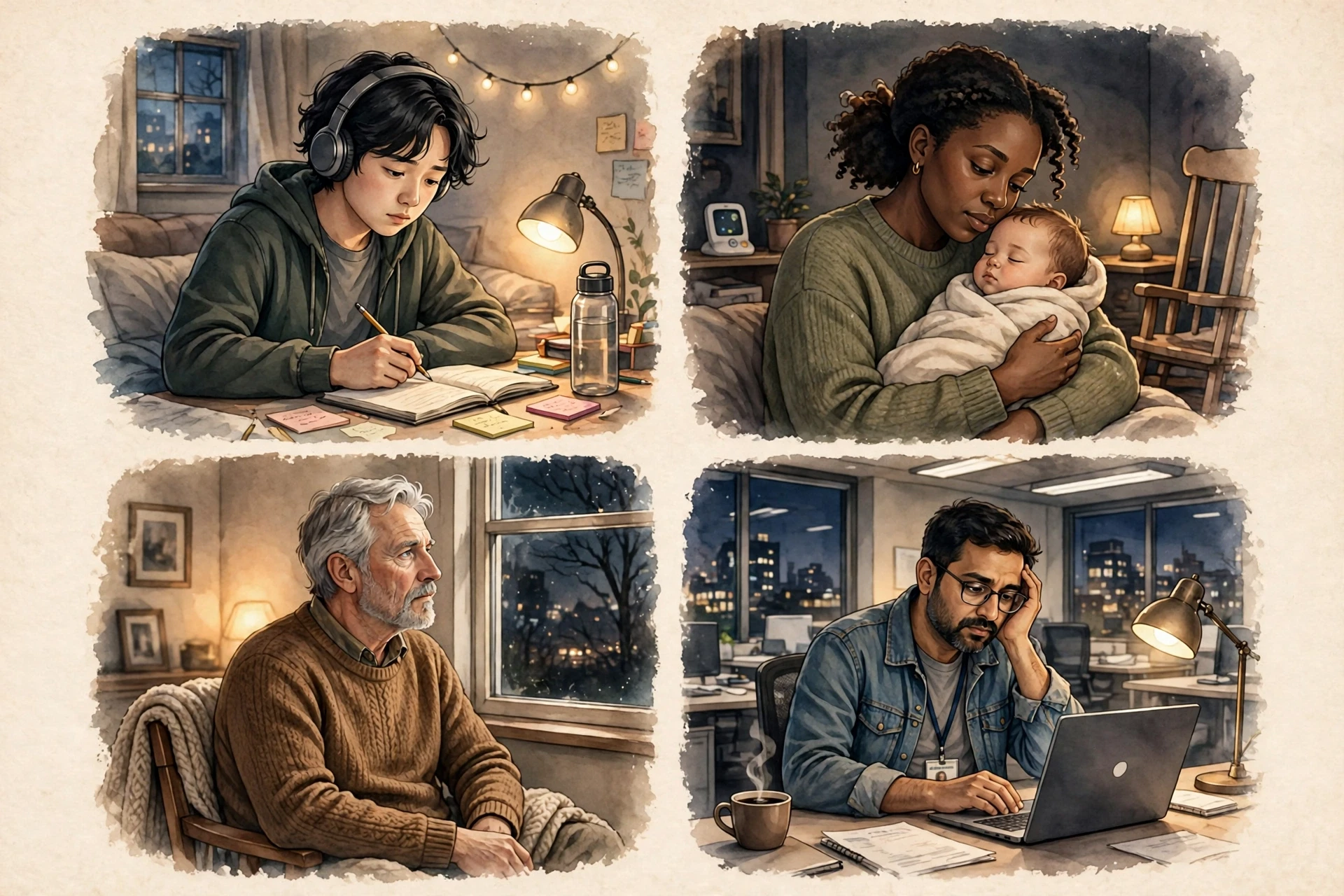
Some risk factors for loneliness are obvious. Living alone, being widowed or divorced, having a disability, moving to a new place, and working long or irregular hours all raise the odds. But the science of loneliness also highlights less obvious ones:
Life transitions. Starting university, becoming a parent, retiring, emigrating — any transition that strips away a familiar social role can leave a gap before a new one forms.
Poor health. Chronic illness, hearing loss, and mobility problems make socialising harder, and the loneliness that follows can worsen health in turn.
Caregiving. Caring for a sick relative is one of the loneliest roles there is: constant company, almost no companionship.
Being different in a homogeneous group. The only person of your background, age, or outlook in a workplace or town often feels the gap most sharply.
High achievement in an isolating field. I have met researchers, founders, and artists who described their success as lonely precisely because few people around them understood what their days actually involved.
None of these is a personal failing. They are situations, and situations can be changed more easily than character can.
6.2 Screens, social media, and the connection that is not
It is tempting to blame phones for loneliness, and the truth is more tangled than the headlines suggest. Social media can help lonely people find community — support groups, old friends, people who share a rare interest. It can also make loneliness worse, and the difference lies in how it is used.
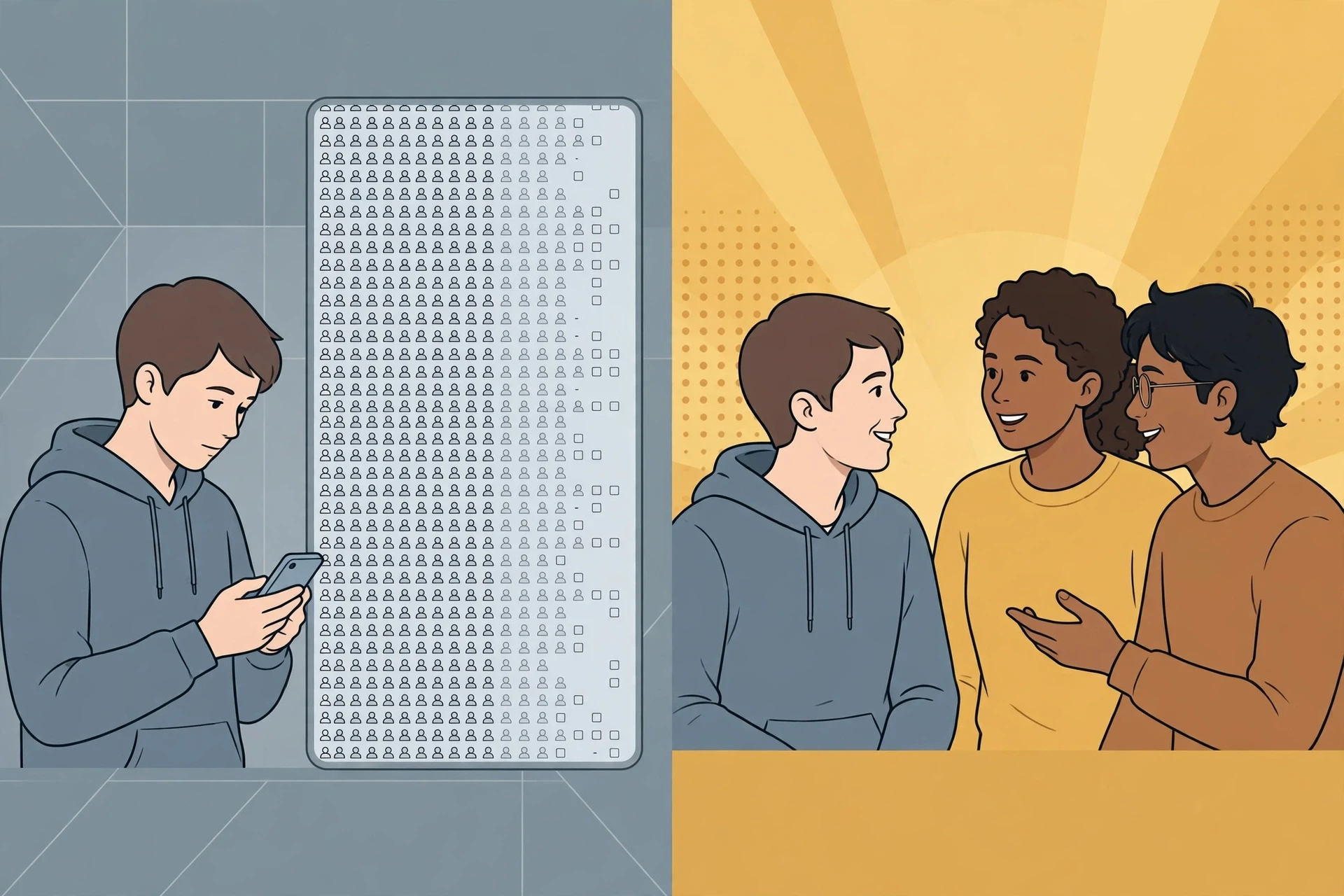
Passive scrolling — watching other people's highlight reels without interacting — is consistently linked to worse feelings of connection. Active use — messaging a friend, commenting with genuine interest, arranging to meet — is linked to better outcomes. The problem is that the platforms are designed to reward the passive kind. A feed never ends. A conversation does. The science of loneliness is clear on one point: digital contact is not a substitute for the real thing, but it can be a bridge to it. A video call with a close friend beats a hundred likes from strangers. A message that says "let's meet on Thursday" beats an hour of scrolling.
I have a small rule I now follow, and I offer it only as a personal habit, not a prescription: if I have been scrolling for more than ten minutes without talking to anyone, I stop and send one real message to one real person. It is a tiny intervention. It works far more often than it should.
6.3 The decline of third places
Sociologists use the term "third places" for the informal gathering spots that are neither home nor work: cafes, libraries, parks, community halls, sports clubs, places of worship. These are the settings where weak ties form — the acquaintances who, research shows, matter far more than we think. A friendly chat with a neighbour, a regular table at a cafe, a familiar face at the gym: these small, repeated contacts build a sense of belonging that no single close friendship can replace.
Many third places have thinned out in recent decades. Commutes are longer, work is more remote, high streets have emptied, and free public space is scarcer. The result is a world with more private comfort and less casual contact. We have more ways to reach anyone, and fewer places to bump into someone. That trade-off sits at the centre of the modern loneliness story, and it is why the solutions that work tend to be stubbornly local and stubbornly ordinary: a regular place, a regular time, regular people.
6.4 Loneliness versus depression: drawing the line
This boundary deserves its own section, because getting it wrong causes real harm. Loneliness is a perceived social deficit. Depression is a mood disorder characterised by persistent low mood or loss of interest, plus symptoms such as changes in sleep, appetite, energy, and concentration, lasting at least two weeks. The two overlap — lonely people are more than twice as likely to develop depression, according to the Surgeon General's advisory — but they are not the same thing, and they do not always respond to the same help.
The practical difference is this: loneliness usually eases when meaningful connection returns. Depression often does not, even when connection improves, and it may need professional treatment — therapy, medication, or both. If low mood, hopelessness, or loss of interest persist for weeks, or if you have thoughts of harming yourself, that is beyond the scope of this article and beyond the scope of willpower. Please reach out to a clinician, a crisis line in your country, or a trusted person right away. The U.S. National Institute of Mental Health's pages on depression describe the symptoms and treatments clearly, and our companion article Anxiety and Depression Explained: What the Science Says covers the science in full.
Feature | Loneliness | Depression |
|---|---|---|
Core experience | Perceived gap between wanted and actual connection | Persistent low mood or loss of interest and pleasure |
Key question | "Do I feel known and included?" | "Do I feel low, empty, or numb most days?" |
Duration | Can be brief or chronic; often tracks social circumstances | At least two weeks of persistent symptoms by definition |
What usually helps first | Meaningful social connection, belonging, shared activity | Professional treatment: therapy, medication, or both |
Can they co-exist? | Yes — loneliness raises the risk of depression, and depression can deepen loneliness | Yes — the two often travel together and each makes the other harder |
When to seek help | When loneliness is persistent and distressing, or you feel stuck | When symptoms persist for weeks, interfere with life, or include thoughts of self-harm — seek help promptly |
Table 1: Loneliness and depression overlap, but they are different. The distinction guides what help to seek first.
7. What Actually Helps: The Evidence on Reconnection
7.1 Start small, repeat often
The most consistent finding in intervention research is also the least dramatic: small, regular, low-stakes contact works better than grand gestures. Joining one group that meets weekly beats attending five different events once. Seeing the same faces repeatedly lets the threat system learn safety, and it lets acquaintances become friends — a process that research on friendship formation suggests takes many hours of shared time, often fifty or more before someone counts as a friend.
Good starting points, all supported by the logic of the loneliness loop:
A regular group with a shared task. A choir, a sports team, a volunteer shift, a class, a walking group. The task gives you something to talk about besides yourself, which lowers the pressure enormously.
A third place of your own. A library, a cafe, a park bench at the same time each week. Familiarity builds weak ties, and weak ties build belonging.
One honest conversation a week. Not ten shallow ones. One conversation where you say something real and listen properly in return.
Helping someone else. Volunteering is one of the most reliable loneliness interventions in the literature, partly because it reverses the role: you become the person who is needed, not the person who is asking.
7.2 Quality beats quantity — every time
Here is a finding that surprises almost everyone: the number of friends you have predicts loneliness far less well than the quality of your closest relationships. One or two people who truly know you can protect against loneliness more effectively than dozens of acquaintances. The science of loneliness keeps returning to this point, because it runs against the way social media trains us to count.
That is good news. It means the goal is not to become popular. It is to deepen one or two connections that already exist, or to build one new one slowly. A weekly call with a sibling, a monthly dinner with an old friend, a standing coffee with a neighbour — these modest rituals carry more weight than a thousand contacts.

7.3 Talk about it — and expect it to feel awkward
Loneliness carries stigma, and stigma keeps it hidden. Yet research on self-disclosure shows something encouraging: when people admit they feel lonely, others usually respond with warmth, not judgment — and often with relief, because they felt the same way and were afraid to say so. The first honest sentence is the hardest and the most powerful.
Expect the first attempts to feel awkward. Awkwardness is not evidence of failure; it is evidence that you are doing something unfamiliar. The lonely brain will interpret every pause as rejection. Knowing that in advance — naming it as the alarm misfiring — makes it easier to stay in the conversation long enough for the real signal to come through.
7.4 What helps at the level of a community
Loneliness is not only a personal problem, and personal effort alone cannot fix a world with fewer third places and longer commutes. The Surgeon General's advisory laid out six pillars for a national strategy: strengthening social infrastructure (parks, libraries, community spaces), enacting pro-connection public policies, mobilising the health sector to assess and address loneliness, reforming digital environments, deepening research, and cultivating a culture of connection. The WHO's 2025 report made a similar case globally, calling for social connection to be treated as a pillar of health alongside physical and mental health.
What does that mean in practice? Employers can design work so people actually meet. Towns can fund libraries and community centres. Health services can ask about loneliness the way they ask about smoking. Schools can teach social skills the way they teach reading. None of this is glamorous. All of it is evidence-based. And all of it starts with taking loneliness seriously as a health issue, not a private embarrassment.
8. Misconceptions About Loneliness
Most people assume loneliness means being alone, being unpopular, or being weak. What the data actually shows is different on all three counts, and the science of loneliness is at its most useful when it corrects these ideas.
"Lonely people are alone." False. Loneliness is about perceived connection. Married people, parents, popular students, and busy professionals all report loneliness at high rates. Crowds do not cure it; being known does.
"Loneliness is a personal failure." False. It is an evolved alarm, like hunger, firing in a world that makes connection harder than it used to be. Blaming yourself for loneliness is like blaming yourself for feeling hungry.
"Introverts are lonely and extroverts are not." False. Introverts often need less social contact and feel fine with it; extroverts can feel desperately lonely in a crowd. What matters is whether your social needs — whatever their size — are met.
"More friends will fix it." Usually false. More shallow contacts rarely help. Deeper contact with one or two people usually does. Quality, not quantity, is the active ingredient.
"Loneliness only affects old people." False. Young adults report some of the highest rates of loneliness in many surveys, and the WHO's 2025 report found the highest rates among teenagers and young adults.
"Talking about loneliness makes it worse." False. Naming it usually brings relief, and it often unlocks the same confession from the other person. Silence is what keeps the loop running.
"Technology caused loneliness, so quitting technology will cure it." Too simple. Technology used passively can worsen loneliness, but used actively — to arrange meetings, keep in touch, find community — it can help. The question is never "phone or no phone." It is "does this use lead to a real conversation?"
"The opposite of loneliness is not popularity. It is being known — by one person, properly, over time."
9. The Science of Loneliness: What We Still Do Not Know
Good science names its gaps, and the science of loneliness has several. We still do not fully understand why some people are more vulnerable to chronic loneliness than others, though genetics, early attachment experiences, personality, and life circumstances all play a part. We do not yet know which interventions work best for whom — group activities help many people, but not everyone, and one-to-one befriending schemes show mixed results. We do not know how much of the health risk is directly caused by loneliness and how much runs through behaviour and other factors. And we are still learning how to measure loneliness well across cultures, since the experience and the words for it differ around the world.
I find these gaps reassuring rather than discouraging. They mean the field is alive, honest, and still learning — and they mean that the advice in this article should be read as the best current evidence, not as a final verdict. If a strategy does not work for you, that is data, not failure. Try a different kind of connection, a different setting, or a different pace.
10. Conclusion: The Alarm Is an Invitation
Loneliness is not a verdict on your worth. It is a signal from a brain that evolved to keep you connected, firing in a world that often makes connection hard to find. The science of loneliness shows that the signal is real, physical, and consequential — it changes the brain, the stress system, sleep, immunity, and long-term health. It also shows that the signal can be answered, usually not with a grand transformation but with small, repeated, ordinary acts: a regular group, a familiar place, one honest conversation, a hand offered to someone else.
I still think about that conference hall, and about the quiet feeling of being behind glass. What I know now, and did not know then, is that the glass was partly my own alarm system — vigilance turned up too high, reading threat into neutral faces. The way through was not to wait for the feeling to pass, or to collect more acquaintances. It was to find one person, and then another, with whom I could be properly known. That is the invitation loneliness carries. It is an uncomfortable invitation, and it is worth accepting.
If you feel lonely today, you are not broken, and you are not alone in feeling it — about one in six people worldwide share the experience, and about half of American adults have felt it measurably. The alarm is ringing because connection matters to you. Listen to it. Answer it with one small step, repeated next week, and the week after. The evidence says that is how belonging is rebuilt: not all at once, but one conversation at a time.
FAQ
What is the science of loneliness?
The science of loneliness is the study of loneliness as a biological and psychological signal: a perceived gap between the social connection we need and the connection we have. Research shows it activates brain regions involved in physical pain, raises stress hormones, disrupts sleep, and is linked to higher risks of heart disease, stroke, dementia, and early death. It treats loneliness as an evolved alarm, like hunger, rather than a personal failing.
Why do we feel lonely in a crowd?
We feel lonely in a crowd because loneliness tracks perceived connection, not headcount. You can be surrounded by people and still feel unknown, unheard, or excluded. The science of loneliness defines it as a mismatch between wanted and actual relationships, so a room full of strangers — or even acquaintances — does not meet the need for being genuinely known.
Is loneliness the same as depression?
No. Loneliness is a perceived social deficit; depression is a mood disorder with persistent low mood or loss of interest plus other symptoms lasting at least two weeks. They often co-exist and each raises the risk of the other, but loneliness usually eases when meaningful connection returns, while depression often needs professional treatment. If low mood persists for weeks, seek help from a clinician.
Is loneliness bad for your health?
Yes, according to large bodies of research. Holt-Lunstad's meta-analyses found loneliness was associated with about a 26 percent higher risk of early death, and social isolation with about a 29 percent. The U.S. Surgeon General's advisory linked lacking connection to higher risks of heart disease, stroke, and dementia. The WHO's 2025 report linked loneliness and isolation to an estimated 871,000 deaths a year. These are associations from observational studies, and the pathways include stress, inflammation, poor sleep, and behaviour — but the pattern is consistent and substantial.
Why does rejection hurt so much?
Because the brain processes social pain with some of the same circuitry as physical pain. In Eisenberger's 2003 Cyberball study, social exclusion activated the dorsal anterior cingulate cortex, a region involved in the distress of physical pain, and the more distress people felt, the more active it was. Evolution co-opted the pain system to guard our social bonds, since losing the group once meant losing survival itself.
What actually helps loneliness?
Small, regular, low-stakes contact helps most: a weekly group with a shared task, a familiar third place, one honest conversation a week, and volunteering. Quality matters far more than quantity — one or two deep relationships protect against loneliness better than dozens of shallow contacts. Talking about loneliness openly also helps, and if loneliness is persistent or paired with lasting low mood, professional support is a sensible next step.
Can you be lonely and still have lots of friends?
Yes. Many lonely people have large social networks. What predicts loneliness is the quality of connection — feeling known, understood, and included — not the number of contacts. If your friendships stay at the level of small talk and logistics, you can feel lonely among friends you genuinely like.
Sources
U.S. Department of Health and Human Services — New Surgeon General Advisory Raises Alarm about the Devastating Impact of the Epidemic of Loneliness and Isolation in the United States (2023): https://www.hhs.gov/about/news/2023/05/03/new-surgeon-general-advisory-raises-alarm-about-devastating-impact-epidemic-loneliness-isolation-united-states.html
World Health Organization — Social connection linked to improved health and reduced risk of early death (30 June 2025): https://www.who.int/news/item/30-06-2025-social-connection-linked-to-improved-heath-and-reduced-risk-of-early-death
Holt-Lunstad, J., Smith, T. B., Baker, M., Harris, T., & Stephenson, D. — Loneliness and Social Isolation as Risk Factors for Mortality: A Meta-Analytic Review, Perspectives on Psychological Science (2015), and Holt-Lunstad et al., Social Relationships and Mortality Risk: A Meta-analytic Review, PLOS Medicine (2010): https://journals.plos.org/plosmedicine/article?id=10.1371/journal.pmed.1000316
Eisenberger, N. I., Lieberman, M. D., & Williams, K. D. — Does Rejection Hurt? An fMRI Study of Social Exclusion, Science (2003): https://pubmed.ncbi.nlm.nih.gov/14551436/
Centers for Disease Control and Prevention — About Social Connectedness: https://www.cdc.gov/social-connectedness/about/index.html
National Institute of Mental Health — Depression: https://www.nimh.nih.gov/health/topics/depression