

1. The Night Shift You Never Notice
The first time I really thought about how kidneys work, I was standing in a teaching lab late in the evening, holding a beaker of pale yellow fluid up to the light. A student had just asked the question that stops every physiology teacher in their tracks: "Where does the yellow come from?" It was such a simple question. The answer took us the rest of the evening — and it took me years of lab work before I felt I truly understood it.
Your kidneys are on duty right now, while you read this sentence. They are filtering your blood, deciding what to keep and what to throw away, adjusting your blood pressure, and quietly manufacturing hormones. They do all of this without a single signal reaching your conscious mind. You never feel a nephron fire. You never notice the moment your blood pressure is corrected. The only time most people think about their kidneys is when something goes wrong — a stone, an infection, a blood test with a number circled in red.
That silence is exactly why the kidneys deserve a proper introduction. This is the story of how two fist-sized organs process around 180 litres of fluid every single day, turn most of it back into blood, and send the rest out as urine — and why that quiet, relentless work keeps every other system in your body alive.
2. What the Kidneys Are — and Where They Hide
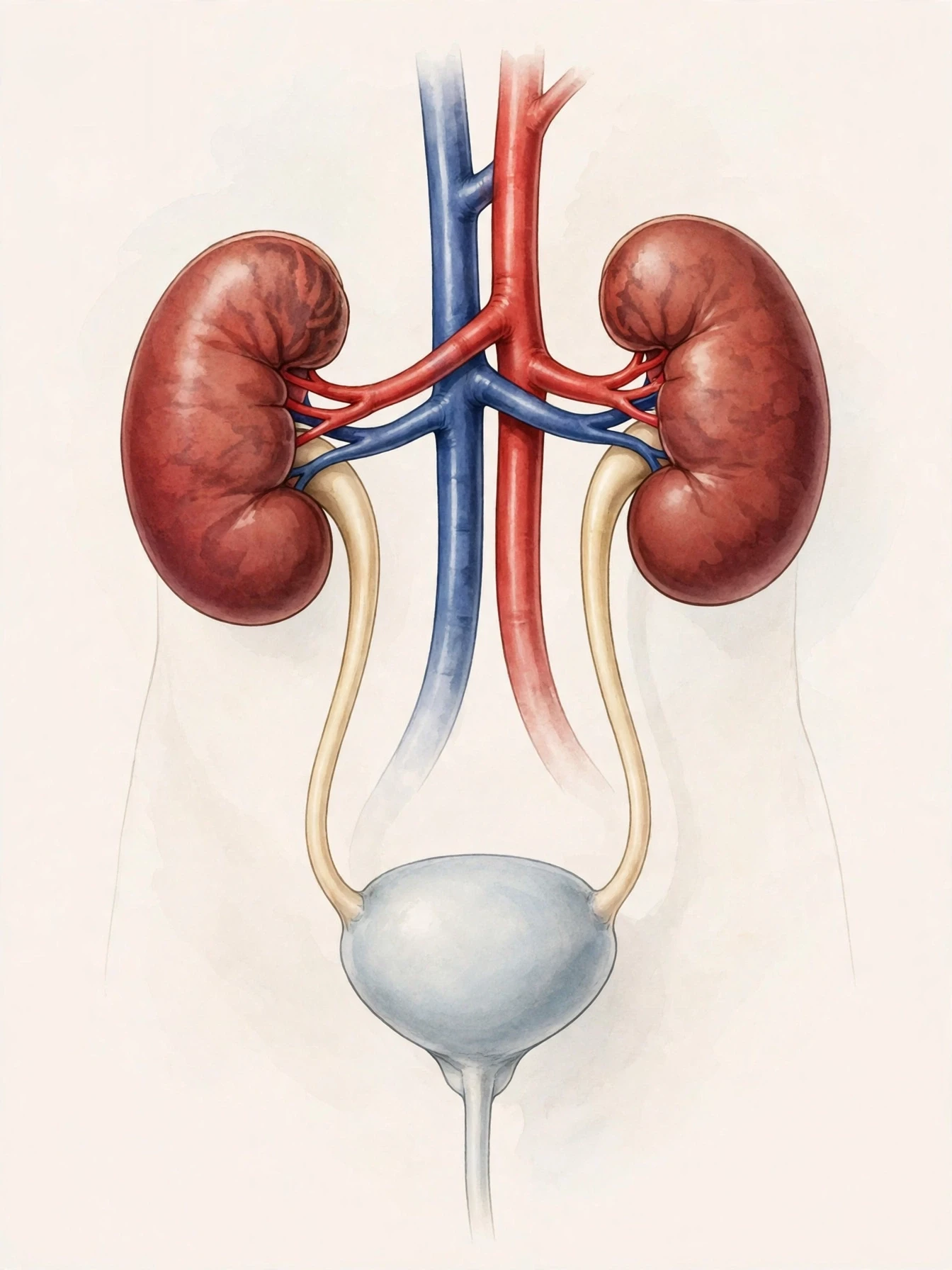
Each kidney is about the size of your fist, roughly 10 to 12 centimetres long, and shaped — famously — like a kidney bean. They sit just below your rib cage, tucked against the muscles of your lower back, one on either side of your spine. Your right kidney sits a little lower than your left, because your liver takes up room on that side. A tough fibrous capsule wraps each one, and a cushion of fat holds it in place, like packing foam around a delicate instrument.
Most people picture their kidneys much lower than they actually are. I have lost count of the students who pointed at their hips when I asked them to show me where their kidneys sit. The kidneys live high, under the ribs, protected by the lower rib cage itself. That matters when pain shows up: a dull ache in the flank, just below the ribs at the back, is far more likely to be kidney trouble than pain down near the waistband.
Blood reaches each kidney through a renal artery, a wide vessel branching straight off the aorta, the body's main highway. At rest, the renal arteries deliver a little over a litre of blood to your kidneys every minute — roughly a fifth to a quarter of everything your heart pumps. That is an enormous share for two organs that together weigh less than half a percent of your body. The filtered blood leaves through the renal vein and flows back toward the heart. The Cleveland Clinic describes this arrangement in plain terms on its kidney anatomy page, and it is worth pausing on: your kidneys receive more blood per gram of tissue than almost any other organ, because filtering is their entire reason for existing.
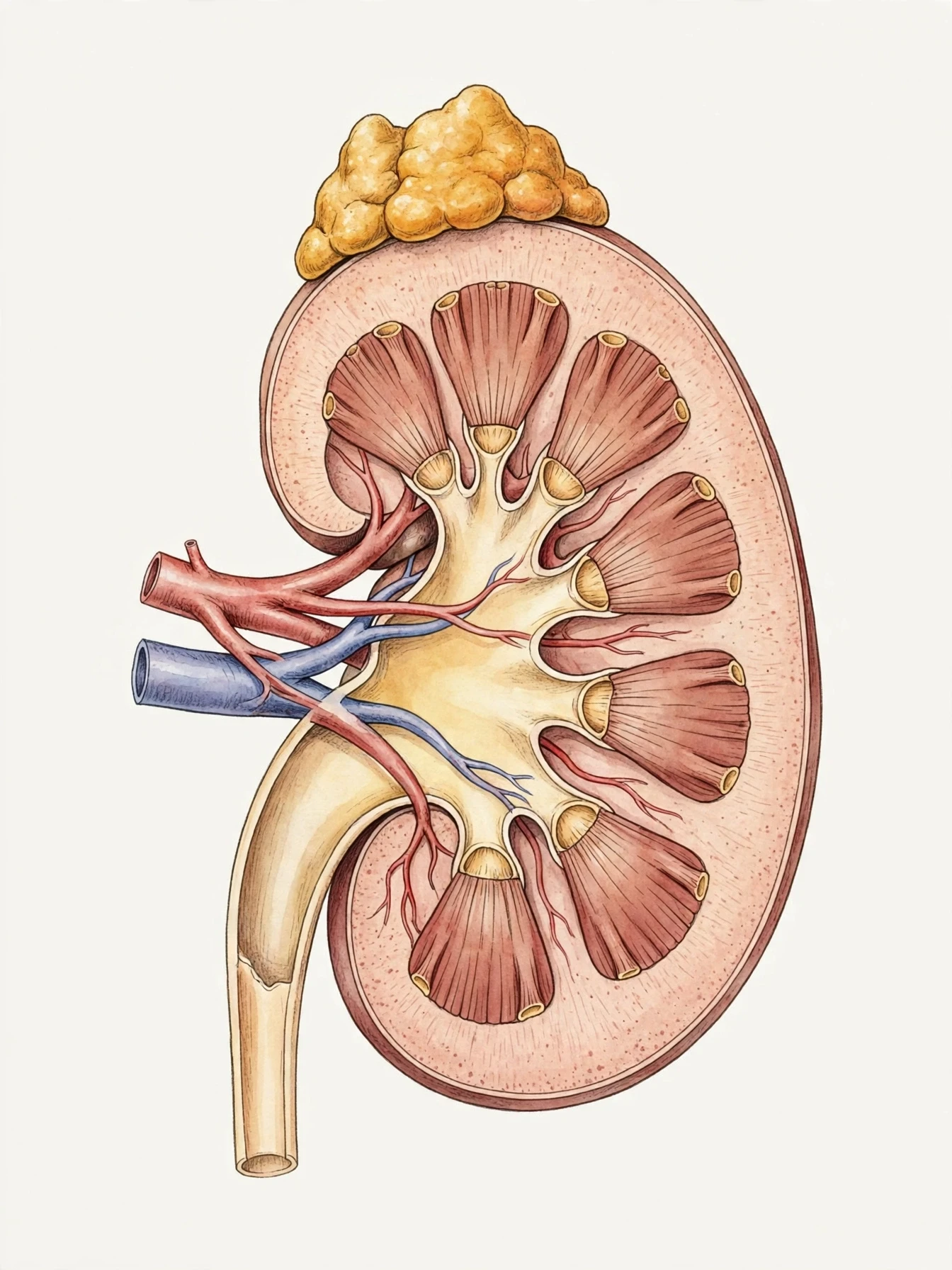
Cut a kidney open and you find two distinct zones. The outer layer, the renal cortex, is grainy and pale — grainy because it is packed with the tiny filtering units we are about to meet. The inner region, the renal medulla, is darker and striped, arranged into cone-shaped bundles called pyramids. Urine collects from the pyramids into cup-shaped tubes, the calyces, and drains into a funnel called the renal pelvis. From there, a single tube — the ureter — carries it away. Sitting on top of each kidney, like a small cap, is an adrenal gland. It belongs to a different system entirely, the endocrine system, and makes stress hormones such as cortisol. It is a neighbour, not a part of the kidney itself, and confusing the two is one of the most common slips I see in textbooks for beginners.
3. The Urinary System: A Four-Part Map
The kidneys get the headlines, but they are only the first stop in a four-part system. The full urinary system — sometimes called the renal system or urinary tract — has a simple job description: make urine, move it, store it, and release it at a sensible moment. Each part handles one step.
Kidneys (two): filter the blood and make urine.
Ureters (two): narrow muscular tubes, each about 25 to 30 centimetres long, that carry urine from the kidneys down to the bladder.
Bladder (one): a stretchy muscular sac that stores urine until you decide to empty it.
Urethra (one): the tube that carries urine out of the body.
The ureters deserve more respect than they get. They do not let urine dribble down by gravity. Their walls contain smooth muscle that squeezes in waves — peristalsis, the same kind of motion that moves food through your gut — pushing small spurts of urine downward every few seconds. I once watched this on an ultrasound screen during a teaching session, those little rhythmic pulses, and it changed how I thought about the system. Nothing here is passive. Every step is pushed, squeezed, or pumped.
The bladder is equally active. Empty, it is small and collapsed. Full, it can hold roughly 400 to 600 millilitres — about a pint — and its walls stretch like a balloon. Nerves in the bladder wall sense that stretch and report to the brain. That report is the urge to go. Two sphincter muscles guard the exit: one you cannot control, one you can. When you decide the moment is right, the bladder muscle tightens, the sphincters relax, and urine flows out through the urethra.
Before we go deeper, a word about scale. Each kidney contains around one million nephrons. Two million filters, each one a microscopic tube with its own blood supply, working in parallel. When I first saw a nephron under a microscope as a student, I expected something simple — a sieve, maybe. What I saw looked more like a tiny, tangled factory. That is the next section, and it is where the real story of how kidneys work begins.
4. The Nephron: How Kidneys Work at the Microscopic Level
If the kidney is a water treatment plant, the nephron is a single treatment line — and the plant runs about a million of them at once. Each nephron is a microscopic tube, roughly 3 centimetres long if you could straighten it out, wrapped in a net of capillaries. Blood flows in one end; urine trickles out the other. Everything the kidney does — every gram of salt saved, every drop of water reclaimed — happens inside these tubes.
A nephron has two main regions. The renal corpuscle is where filtration starts: a ball of capillaries called the glomerulus, cupped inside a hollow sac called Bowman's capsule. The renal tubule is the long winding tube that follows: first the proximal convoluted tubule, then a hairpin bend called the loop of Henle, then the distal convoluted tubule, and finally the collecting duct, which several nephrons share. Cells lining the tubule do the fine work — they are studded with pumps and channels that move substances in and out with remarkable precision. Our guide to cell biology — organelles and their functions explains the cellular machinery that makes this possible: mitochondria powering the pumps, membranes studded with transport proteins, all working in cells no wider than a hair.
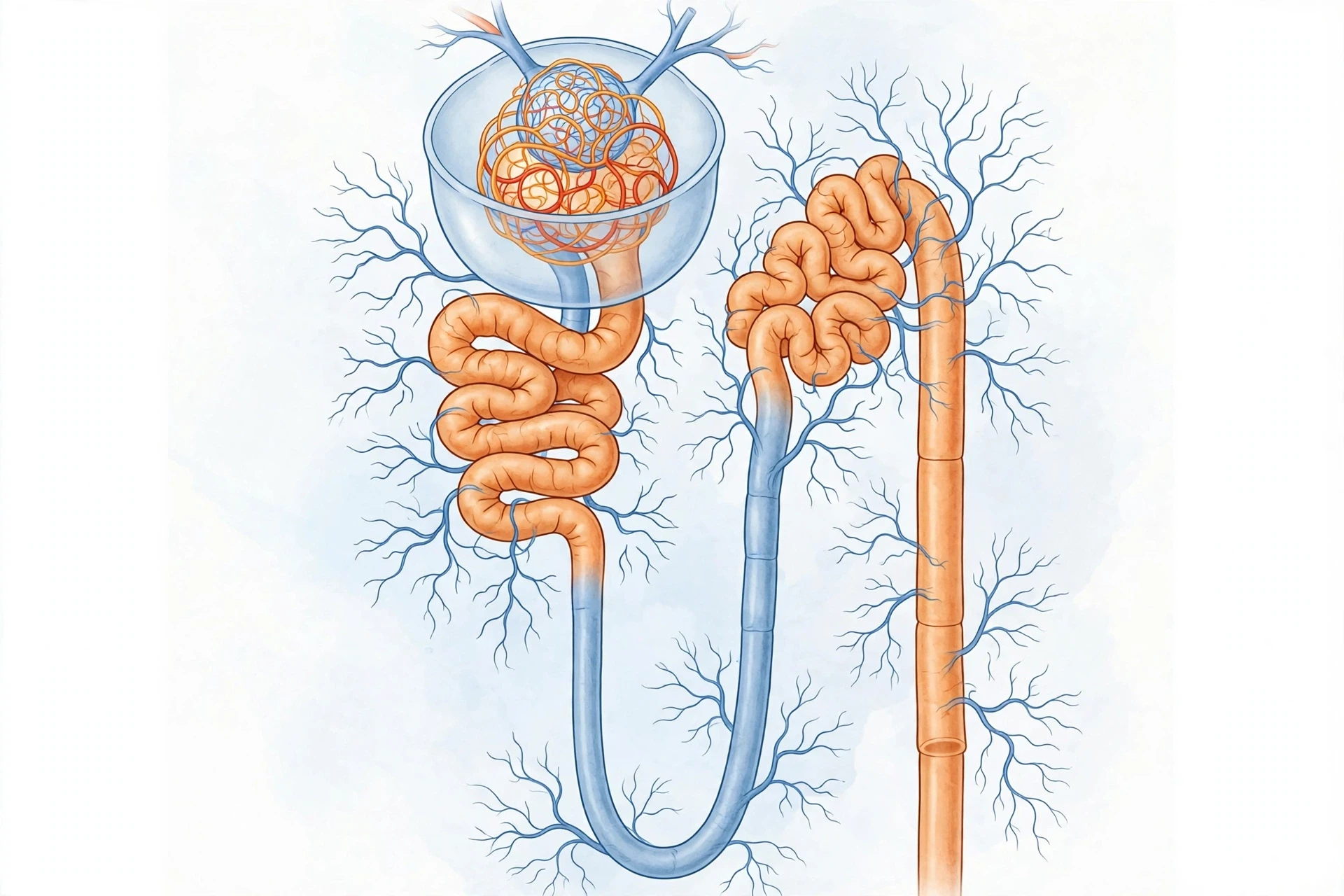
Urine is made in three overlapping steps: filtration, reabsorption, and secretion. The order matters, and the logic is almost comically wasteful at first glance — the kidney filters far too much, then spends most of its energy putting most of it back. That apparent waste is the whole genius of the design. Filter generously, then choose carefully.
4.1 Glomerular Filtration — The First, Rough Sieve
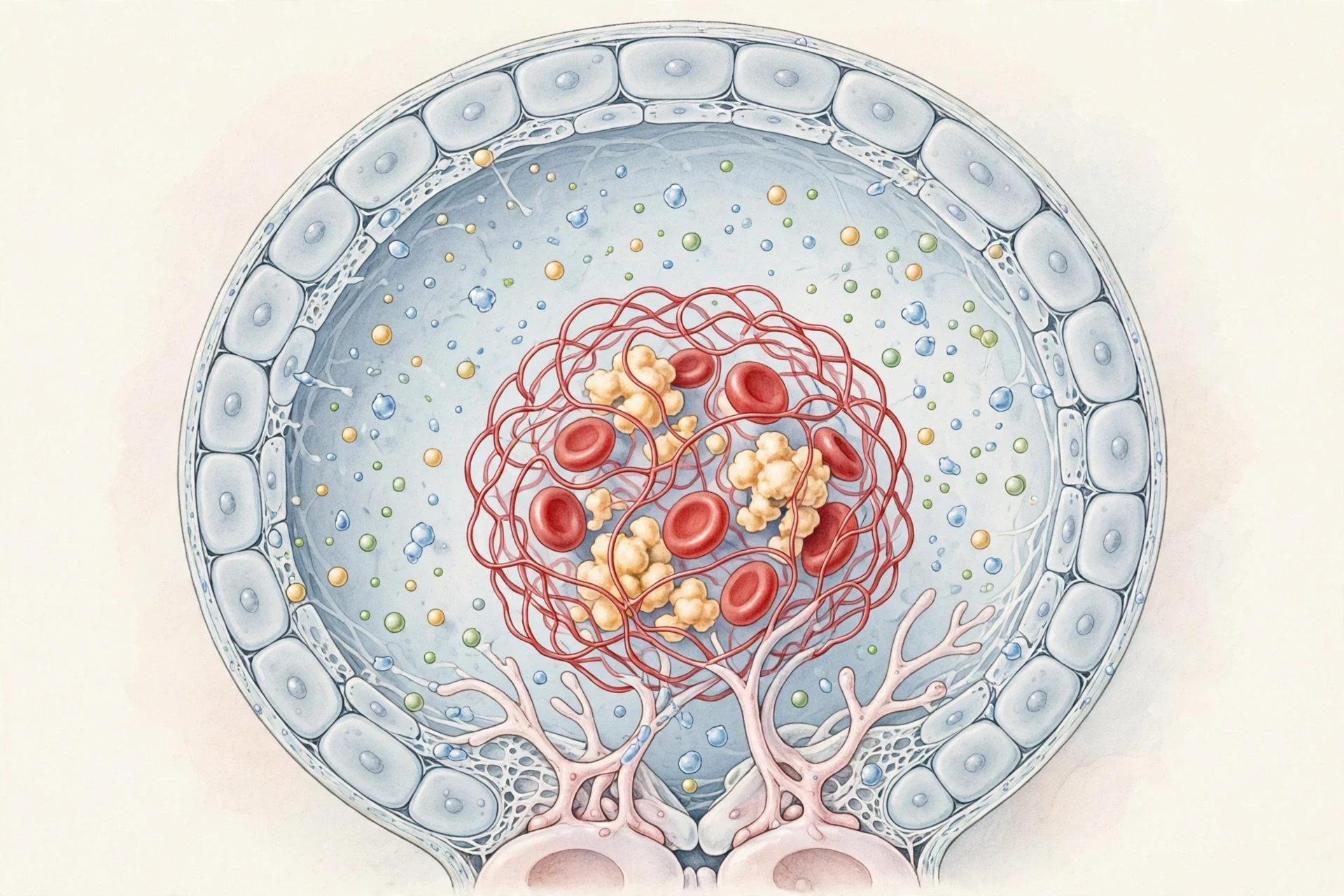
Blood arrives at the glomerulus under unusually high pressure. The vessel bringing blood in, the afferent arteriole, is wider than the vessel taking it away, the efferent arteriole. That mismatch builds pressure inside the capillary tuft — like pressing your thumb partway over a garden hose. The pressure forces water and small dissolved substances out through the capillary walls and into Bowman's capsule. This filtered fluid is called the filtrate.
The filter itself is a three-layer barrier: the capillary wall with its tiny pores, a basement membrane, and the slit-like gaps between the capsule's specialised cells, the podocytes. Together they act as a size and charge screen. Water, salts, glucose, amino acids, urea, and other small molecules pass through freely. Red blood cells are far too large. Most proteins are too large — and the few that slip through are caught and reclaimed downstream. In a healthy kidney, urine contains essentially no blood cells and almost no protein. When protein or blood does appear in urine, it is often the first clue that the filter itself is damaged, which is why a simple urine dipstick test can say so much.
The scale of this step is hard to overstate. The glomeruli filter around 180 litres of fluid every day — roughly 125 millilitres every minute. That is more than thirty times your total blood volume, filtered and filtered again. Your kidneys do not filter your blood once. They filter it dozens of times a day, and the blood you have right now will pass through them hundreds of times before the week is out. The National Institute of Diabetes and Digestive and Kidney Diseases (NIDDK) gives a clear plain-language account of this process in its guide to how the urinary tract works.
4.2 Reabsorption — Taking the Good Stuff Back
Here is the catch: that 180 litres of filtrate is full of things you need. All of your blood glucose is in there. So are most of your amino acids, vitamins, and salts. If the kidney simply threw the filtrate away, you would lose your entire blood volume's worth of water and nutrients in hours. So the tubule takes almost everything back.
Reabsorption begins in the proximal convoluted tubule, the segment just after Bowman's capsule, and this is where the bulk of the work happens. Specialised pumps in the tubule walls burn energy to move sodium back into the blood, and water and glucose follow. In fact, under normal conditions essentially all of the filtered glucose is reclaimed here — which is why glucose in the urine is a warning sign, not a normal finding. About two-thirds of the filtered water and salt are reabsorbed in this first stretch alone.
I remember the moment this clicked for me as a student. I had been picturing the kidney as a drain — stuff goes in, waste comes out. A lecturer sketched the numbers on the board: 180 litres filtered, 1.5 litres out. "The kidney," she said, "is not a drain. It is a recycling plant that happens to have a drain attached." That single sentence reorganised the whole subject for me. The kidney's real skill is not throwing things away. It is knowing what to keep.
4.3 Secretion and the Loop of Henle — Fine-Tuning the Mixture
Reabsorption is not the whole story. The tubule also secretes substances — actively pumping extra wastes, excess ions such as potassium and hydrogen, and traces of drugs from the blood into the filtrate. Secretion is how the kidney clears things the first filter missed, and it is one reason many medicines are cleared from the body through urine.
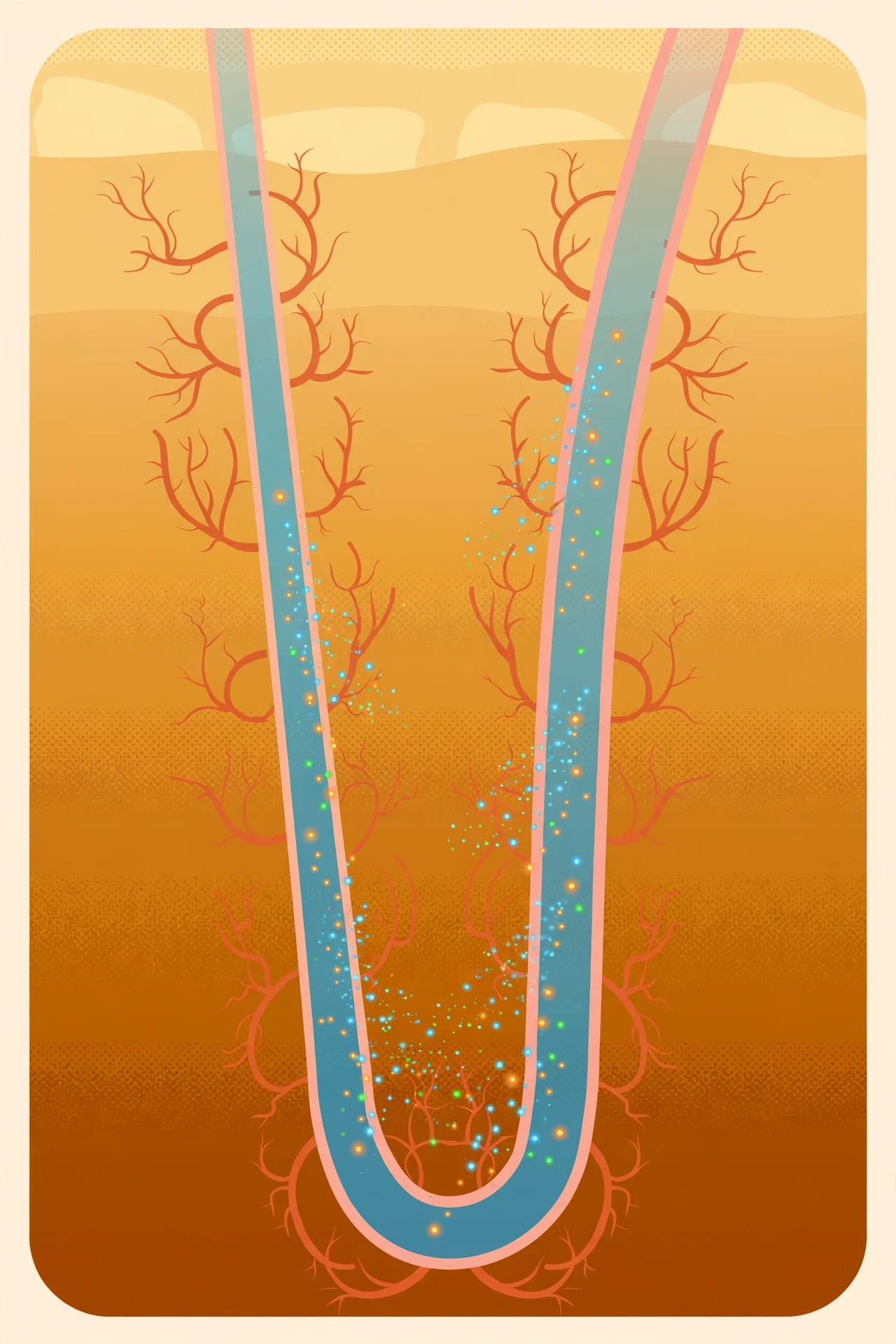
Then comes the most elegant piece of plumbing in the human body: the loop of Henle. This hairpin-shaped segment dives down into the salty depths of the medulla and climbs back up. As filtrate flows down one side and up the other, salt is pumped out into the surrounding tissue, building a gradient — very salty deep in the medulla, much less salty near the cortex. That gradient is a tool. When the collecting duct later passes through the salty medulla, water is drawn out of the urine by osmosis, concentrating it. The deeper the duct goes, the more water leaves, and the more concentrated the urine becomes.
This is how you can produce a small volume of dark, concentrated urine after a long hike with no water, and a large volume of pale urine after drinking a litre of water. The loop of Henle is the reason your kidneys can save water when you need it and dump it when you do not. Desert animals take this further — some produce urine far more concentrated than ours — but the principle is identical. A hormone called antidiuretic hormone (ADH), released by the brain when the blood gets too salty or blood volume drops, controls the final step: it inserts water channels into the collecting duct walls, letting water flow back into the blood. Less ADH, more water lost. More ADH, more water saved. Alcohol suppresses ADH, which is why a night of drinking sends you to the bathroom far more often than the volume of drink alone would explain.
5. From Filtrate to Urine: The Journey Out
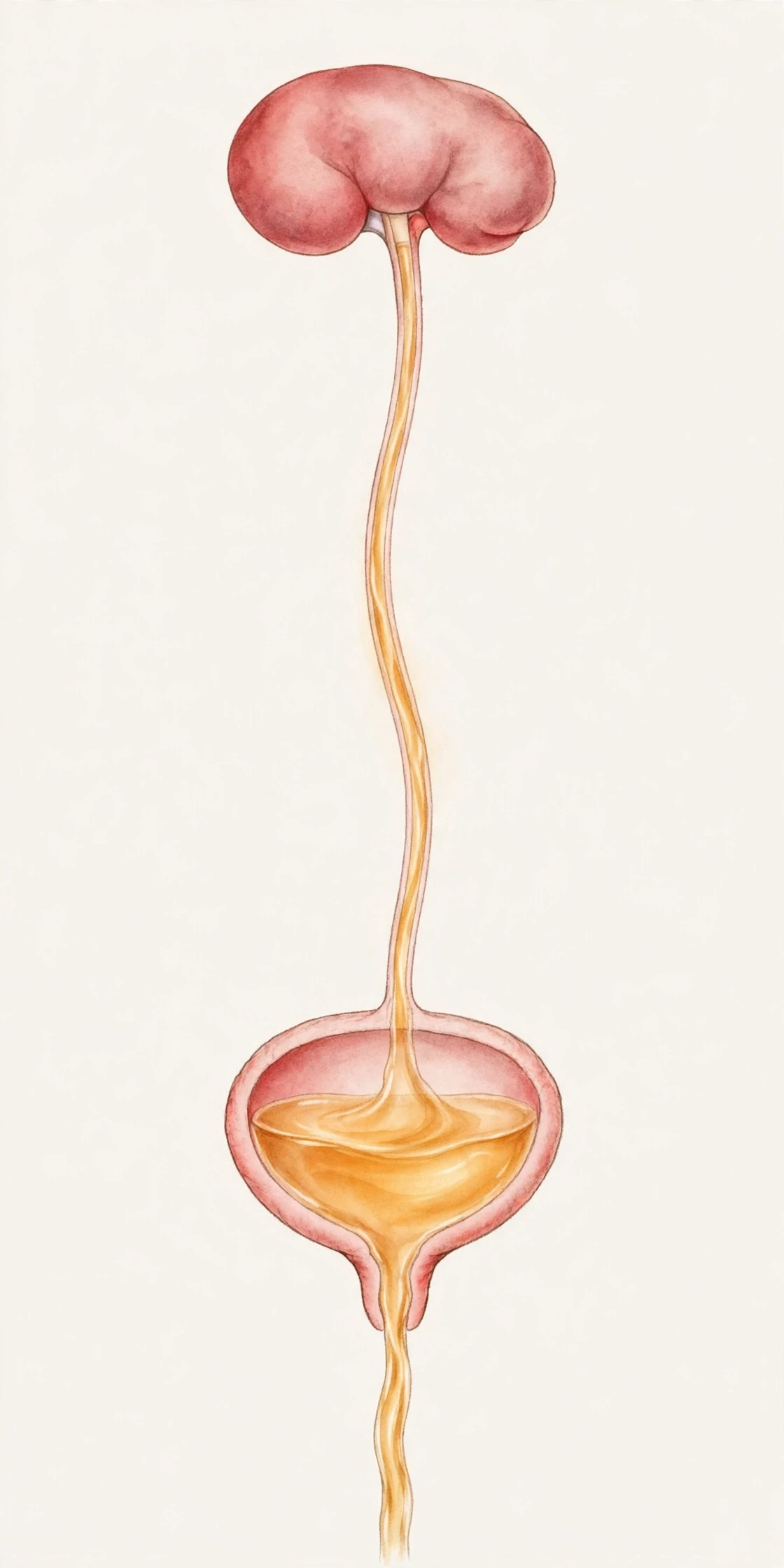
By the time the filtrate reaches the collecting duct, it has become urine in everything but name. What is left is mostly water, urea — the nitrogen waste left over when the body breaks down protein — plus excess salts, creatinine from muscle activity, and traces of other wastes. The collecting ducts from many nephrons merge, drain into the calyces, and funnel into the renal pelvis. From there, the ureters take over.
Urine's colour comes mainly from urochrome, a pigment produced when old red blood cells are broken down. Its yellow deepens when you are dehydrated, because the same amount of pigment is dissolved in less water — which is why the colour of your urine is a rough, honest gauge of hydration. That student in my lab, the one who asked where the yellow comes from, had stumbled onto the same pigment question that puzzled physiologists for decades: the colour is a byproduct, but it tells a story about everything upstream.
The bladder stores urine until a convenient moment. When you choose to release it, the bladder's muscular wall contracts, the sphincters relax, and urine leaves through the urethra. A healthy adult passes roughly 1 to 2 litres of urine a day, in several trips — a number that swings widely with fluid intake, temperature, exercise, and salt.
It is worth saying plainly how much water the body moves through this system. The water you drink becomes part of your blood, is filtered by the glomeruli, is mostly reclaimed by the tubules, and a fraction leaves as urine — a continuous loop that ties drinking, sweating, breathing, and urinating into a single balance sheet. Our explainer on the water cycle follows water through the planet; the kidneys run the same kind of cycle inside the body, on a timescale of hours instead of centuries.
6. More Than a Filter: The Kidneys as Hormone Factories
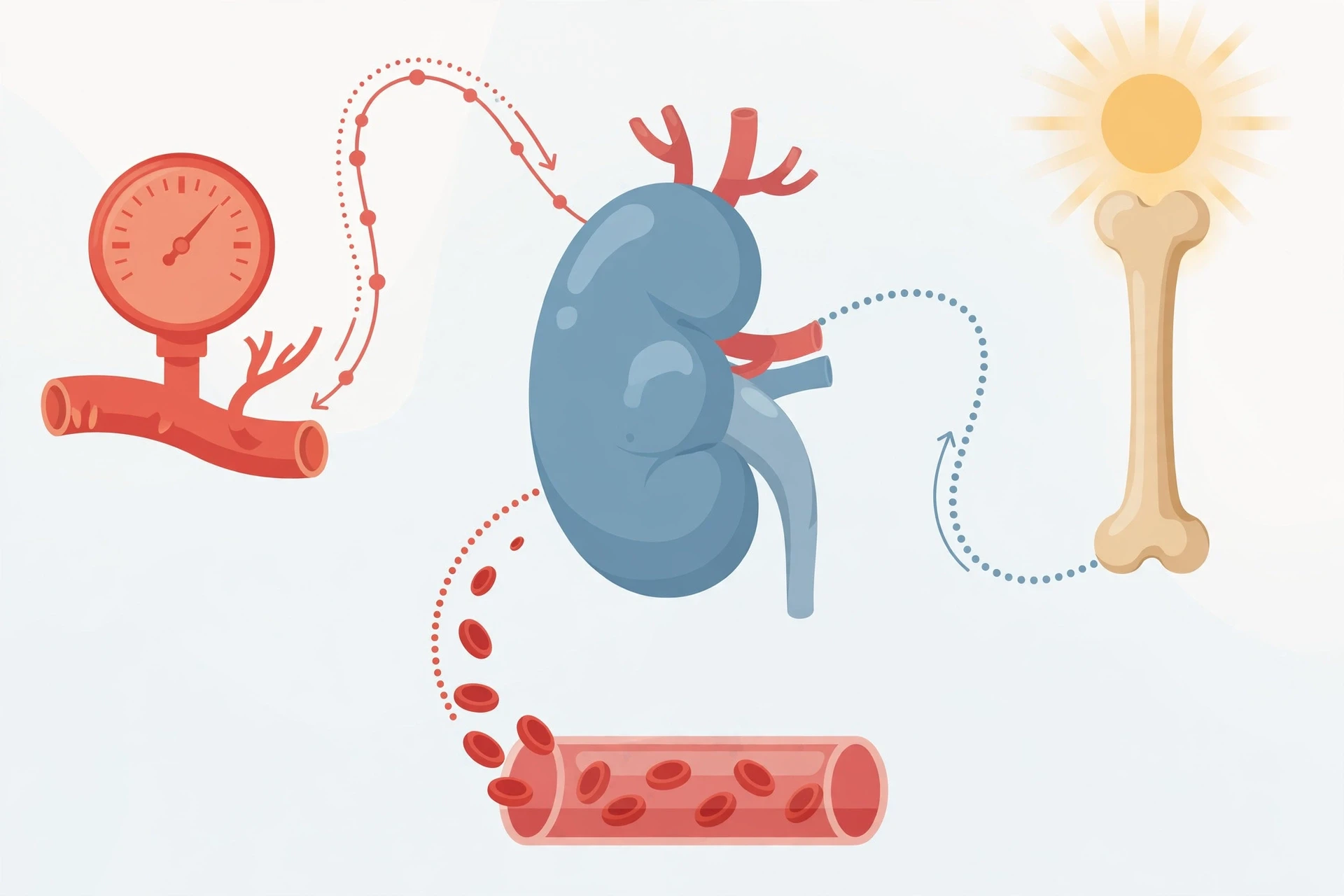
Ask most people what the kidneys do and they will say "filter blood." That answer is true, and it is also barely half the story. The kidneys are endocrine organs — they make and release hormones that reach every corner of the body. Three of those jobs matter most.
Blood pressure control. When blood pressure falls, or when salt levels drop, specialised cells near the glomerulus release an enzyme called renin. Renin sets off a chain reaction — the renin-angiotensin system — that tightens blood vessels and tells the adrenal glands to release aldosterone, a hormone that makes the kidneys hold on to salt and water. More salt and water in the blood means more volume, and more volume pushes blood pressure back up. It is a thermostat, but for pressure instead of temperature. This is also why kidney disease and high blood pressure feed each other so cruelly: damaged kidneys raise blood pressure, and high blood pressure damages kidneys further. If you want the practical side of breaking that cycle, our guide to managing high blood pressure covers the steps that matter most.
Red blood cell production. When oxygen levels in the blood fall, the kidneys release erythropoietin, or EPO. EPO travels to the bone marrow and orders it to make more red blood cells. More red cells carry more oxygen — the reason people living at high altitude gradually develop higher red cell counts, and the reason kidney failure often brings anaemia and fatigue. The kidneys are the body's oxygen accountants, and when they stop counting, the whole body runs short.
Vitamin D activation. The vitamin D you get from sunlight and food is not yet usable. It must be activated in two steps — first in the liver, then in the kidneys. Only the kidney-activated form, calcitriol, lets your gut absorb calcium properly and keeps your bones strong. When kidneys fail, vitamin D activation falters, calcium absorption drops, and bones weaken over time. Our article on vitamin D deficiency — symptoms and treatment explains this chain in more detail.
There is a fourth job, quieter but just as vital: acid-base balance. Your body's chemistry runs within a narrow pH window, and the kidneys are the long-term guardians of that window. They excrete excess hydrogen ions and reclaim bicarbonate, the body's main buffer. The lungs handle the minute-to-minute swings; the kidneys handle the days and weeks. When the kidneys cannot keep up, the blood drifts acidic, and everything from muscle to bone pays the price.
The kidneys do not simply clean the blood. They read it — its pressure, its salt, its oxygen, its acidity — and then they answer, with hormones, with water, with salt. Filtration is the job you can see. Regulation is the job that keeps you alive.
7. A Day in the Life of Your Kidneys — By the Numbers
Numbers make the kidneys' workload real. The table below follows a typical healthy adult through a single day. These are rounded, general figures — textbooks and sources such as InformedHealth.org and the LibreTexts physiology guides agree on the scale, and the exact numbers vary from person to person with body size, diet, and activity.
What is measured | Typical amount per day | What it means |
|---|---|---|
Blood delivered to the kidneys | About 1,700 litres | Your whole blood volume passes through the kidneys hundreds of times a day |
Fluid filtered by the glomeruli | About 180 litres | Roughly 125 millilitres every minute, around the clock |
Fluid reabsorbed by the tubules | About 178–179 litres | More than 99% of the filtrate is reclaimed — the recycling plant at work |
Urine produced | About 1–2 litres | What is left after reabsorption: water, urea, salts and other wastes |
Urea removed | About 20–30 grams | The main nitrogen waste from breaking down protein |
Nephrons at work | About 2 million | Roughly 1 million per kidney, each filtering in parallel |
Look at the second and third rows together and the kidney's real character shows itself. It filters 180 litres and hands back 178. The organ is not defined by what it throws away. It is defined by what it refuses to lose.
8. When Kidneys Struggle
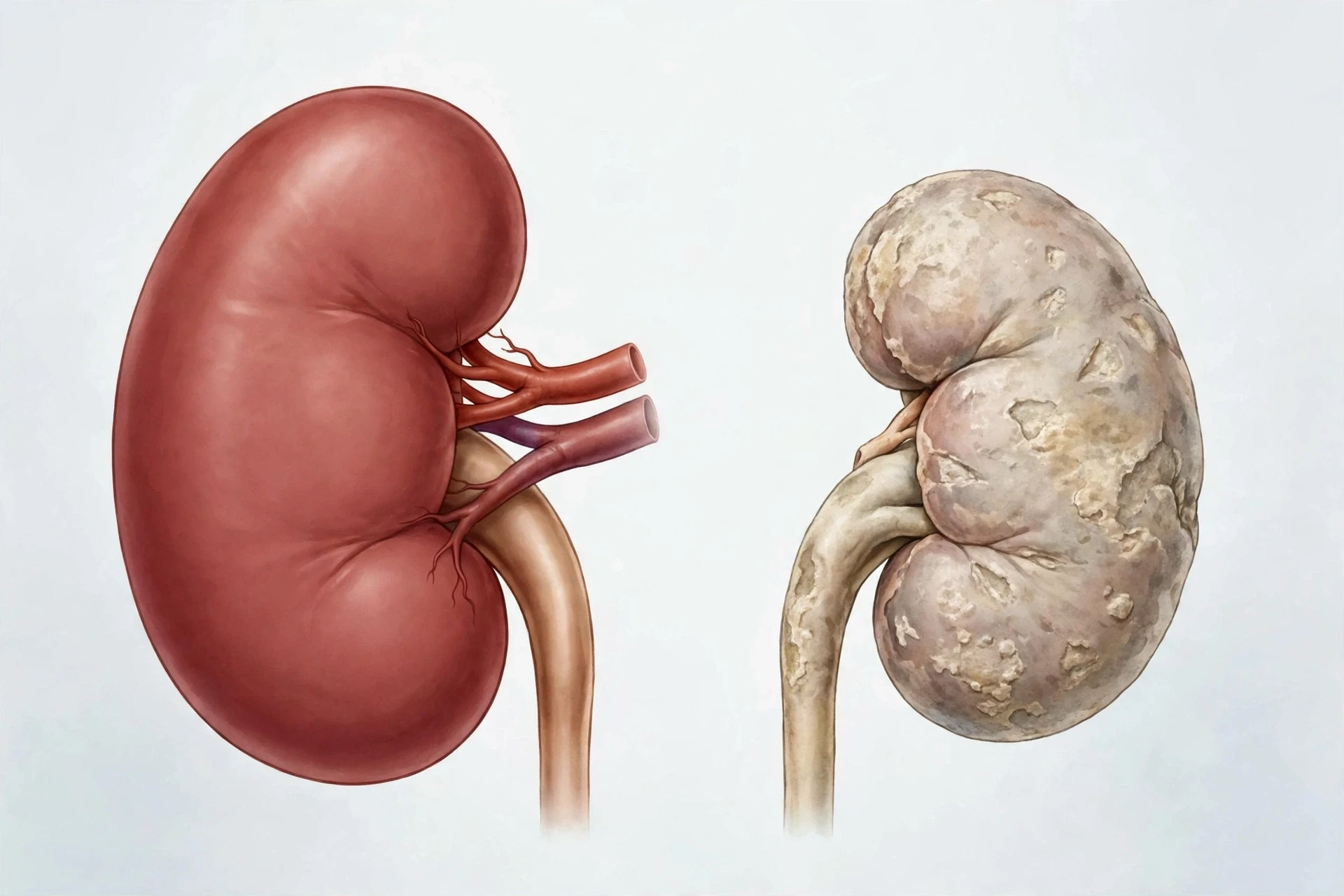
Kidney disease is famously quiet. The kidneys have enormous reserve capacity — you can lose a large share of kidney function before any symptom appears — and that silence is what makes the condition dangerous. Chronic kidney disease (CKD) is usually graded by the glomerular filtration rate, or GFR, a measure of how much blood the kidneys filter each minute. A healthy young adult's GFR sits around 90 to 120 millilitres per minute. As kidney function declines, the number falls, and the body's chemistry slowly drifts: waste accumulates, fluid builds up, blood pressure rises, red blood cell production falters, and bones weaken.
The two leading causes are diabetes and high blood pressure, and they damage the kidneys in different ways. In diabetes, years of high blood sugar injure the delicate glomerular filter itself — the tiny vessels thicken and leak, letting protein slip into the urine. In hypertension, the relentless pressure scars the small vessels feeding the nephrons. Either way, nephrons die, and the survivors work harder to compensate, which wears them out faster. It is a slow spiral, and it is the reason blood sugar control matters far beyond the numbers on a glucose meter. Our guide to prediabetes and blood sugar prevention covers the early steps that protect the kidneys years before any symptom appears.
Other threats are more sudden. Kidney stones form when minerals in the urine crystallise — calcium, oxalate, or uric acid — into hard deposits that can block the ureter and cause the severe, wave-like flank pain that sends people to emergency departments. Urinary tract infections can climb from the bladder to the kidney, causing fever and back pain; the immune system is the body's defence in that fight, and a kidney infection is one of the situations where it needs medical help rather than time alone. Acute kidney injury can follow severe dehydration, a sudden drop in blood pressure, or certain medicines, and it can be reversible if caught early. Some people are born with only one kidney, or donate one — and the remaining kidney grows and compensates, handling the full workload on its own. You can live a normal life with one kidney, provided it is looked after.
Sign or function | Healthy kidneys | Struggling kidneys |
|---|---|---|
Protein in urine | Essentially none | Protein leaks through the damaged filter — often the earliest warning |
Fluid balance | Swelling-free; steady weight | Fluid builds up — swollen ankles, puffy eyes, breathlessness |
Blood pressure | Normal range | Often rises; high pressure also damages the kidneys further |
Red blood cells | Normal energy, normal colour | Anaemia, fatigue, pale skin as erythropoietin falls |
Waste clearance | Urea and creatinine cleared | Wastes accumulate — nausea, itching, metallic taste, poor appetite |
Bone health | Vitamin D activated, bones strong | Weakening bones as vitamin D activation fails |
The warning signs are easy to miss or to blame on something else: tiredness that will not lift, swollen feet at the end of the day, needing to urinate more often at night, foamy urine, or blood pressure that creeps up for no clear reason. None of these proves kidney disease on its own. All of them are worth a simple blood and urine test, which is how kidney trouble is usually found — not by symptoms, but by numbers. The NIDDK's overview of kidney disease explains the stages, the tests, and the options in clear language, and the National Kidney Foundation's page on how your kidneys work is a useful starting point for anyone newly diagnosed.
9. Common Misconceptions
Most people assume the kidneys are simple filters — passive sieves that catch dirt. What we actually see in the physiology is something far busier: an organ that filters, reclaims, secretes, senses, and signals, all at once. That gap between the simple picture and the real one breeds a handful of stubborn myths.
"Drinking gallons of water cleanses your kidneys." Water does not scrub the kidneys, and forcing far more water than you need does not make them work better. The kidneys handle what you drink with remarkable precision — they excrete the excess and keep the rest. Drinking steadily through the day is sensible; drowning yourself in water is not, and in extreme cases overhydration can dangerously dilute the blood's sodium. Thirst, pale-yellow urine, and steady intake are better guides than any fixed number of litres.
"Kidney pain is always low back pain." Kidney pain typically sits high, in the flank just below the ribs, not in the lower back where most muscle strains live. Low back pain is common and usually muscular. Flank pain with fever, or pain that comes in waves with nausea, points in a different direction and deserves attention sooner.
"Only old people get kidney disease." Kidney disease skews older, but diabetes and high blood pressure are damaging kidneys in younger adults too, and some kidney conditions begin in childhood. The slow, silent nature of the disease means it can build for years at any age. A routine blood test in your thirties can catch what symptoms would not reveal until your fifties.
"Cranberry juice cures urinary infections." Cranberry products may make it slightly harder for some bacteria to stick to the bladder wall, but they do not cure an established infection — and they certainly do not cure a kidney infection, which needs antibiotics and medical care. Home remedies have their place in prevention habits, not in treating an infection that has reached the kidney.
"If my urine is clear, my kidneys are fine." Urine colour reflects hydration, not kidney health. Kidneys can be badly damaged while urine looks perfectly normal, and urine can look alarming — dark, cloudy, or red — for harmless reasons such as beetroot, dehydration, or a medicine. What matters is the pattern over time, and the numbers on blood and urine tests.
10. Keeping Your Kidneys Healthy
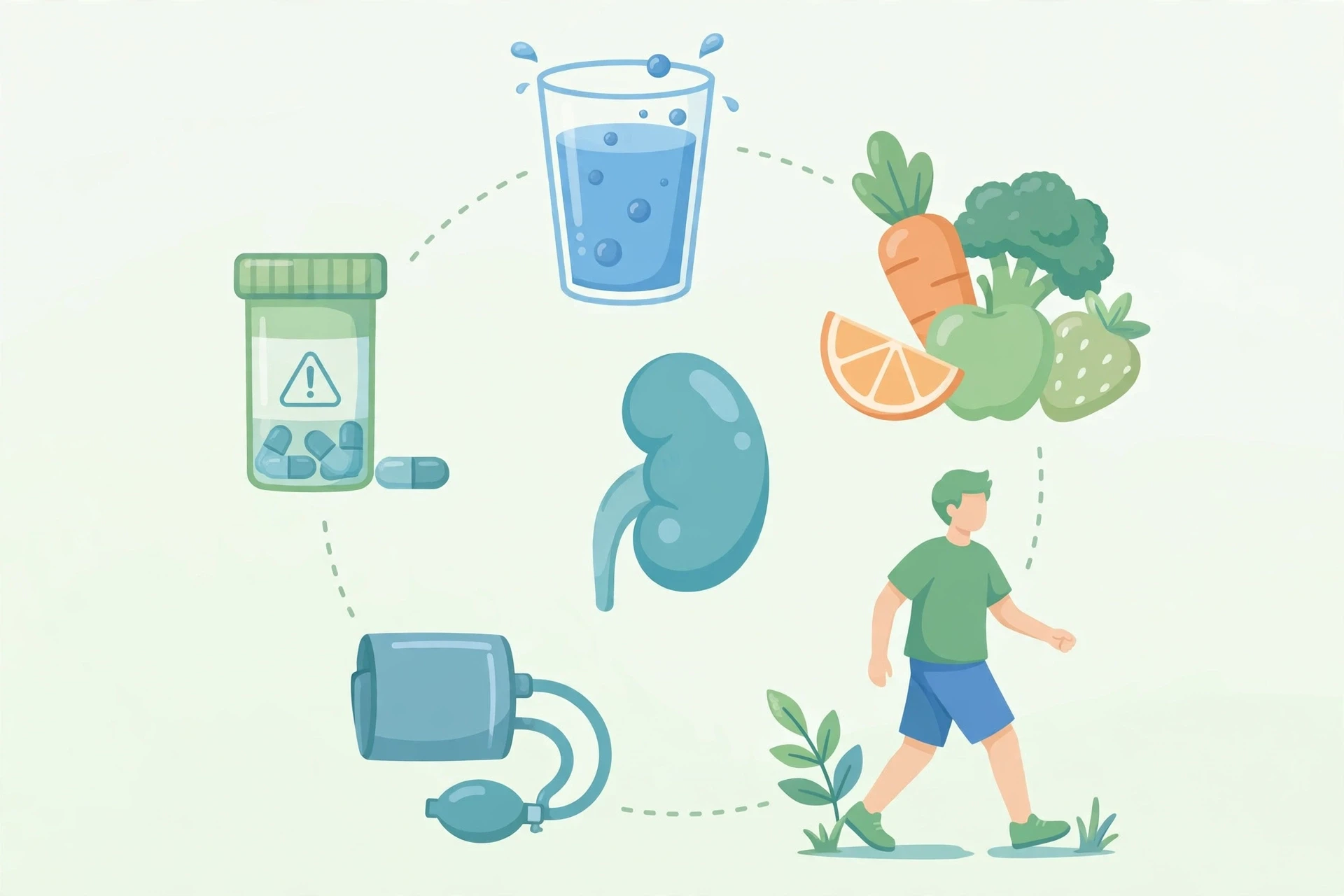
The honest news is that most kidney protection is unglamorous. There is no single superfood, no detox tea, no gadget. What protects kidneys is the same steady, boring list that protects the heart and the blood vessels — because, in the end, kidney health is blood-vessel health. I have watched patients overhaul their diets in search of a miracle and ignore the blood pressure reading that mattered most. The kidneys do not care about miracles. They care about pressure, sugar, salt, and time.
Keep blood pressure in range. This is the single most powerful kidney-protective step for most people. Check it regularly, and treat it if it is high.
Keep blood sugar steady. If you have diabetes or prediabetes, steady glucose control slows damage to the glomerular filter more than any other single measure.
Drink when you are thirsty. For most healthy adults, thirst and pale-yellow urine are reliable guides. People who form stones may be advised to drink more.
Go easy on salt. Excess sodium raises blood pressure and makes the kidneys hold on to water. Cooking at home and reading labels does more than most supplements.
Be careful with painkillers. Common anti-inflammatory medicines such as ibuprofen can reduce blood flow to the kidneys, especially when you are dehydrated or already have kidney disease. Use the lowest dose for the shortest time, and ask a pharmacist or doctor if you take them often.
Do not smoke. Smoking damages the blood vessels that feed the kidneys, just as it damages the vessels everywhere else.
Move regularly. Walking, cycling, swimming — anything that keeps weight, blood pressure, and blood sugar in healthier ranges is kidney care, even if it never feels like it.
Get tested if you are at risk. A simple blood test for creatinine and a urine test for protein are cheap, quick, and can catch trouble years before symptoms.
11. Latest Research
Kidney science is moving quickly, and the most exciting work is happening where engineering meets biology. Researchers are developing implantable bioartificial kidneys — devices that combine a synthetic filter with living kidney cells grown in the laboratory — aiming to free people from dialysis machines. The idea is not new, but the engineering has improved enough that early human studies are now a realistic prospect rather than a distant dream. Wearable and portable dialysis devices are also advancing, shrinking a treatment that once tied people to a clinic for hours into something closer to daily life.
Transplantation research is moving on two fronts. Scientists are working to grow kidney tissue from a patient's own cells, and to make animal organs — most notably pig kidneys — safe for human transplant by editing out the genes that trigger rejection. Early cases have shown that such transplants can function, though the long-term results are still being gathered, and researchers are candid that many questions remain.
Diagnosis is changing too. New blood and urine biomarkers can spot kidney damage earlier than the traditional creatinine test, which only rises after a large share of function is already lost. The goal is to catch kidney disease when it is still reversible, not after the damage is done. And drug research keeps delivering: newer medicines originally developed for diabetes and heart failure are now showing real kidney-protective effects, giving doctors tools they did not have a decade ago.
The kidneys spent a century being treated as plumbing. The research now treats them as what they are: a sensing, signalling, hormone-making organ whose failure echoes through the entire body. That shift in thinking is why the next decade of kidney medicine looks more hopeful than the last.
12. Conclusion
Your kidneys filter your blood hundreds of times a day, reclaim almost everything they filter, fine-tune your water and salt, set your blood pressure, order the production of your red blood cells, activate your vitamin D, and guard the acidity of your blood — all in silence, all without asking for your attention. They are the night shift of the body: invisible when they work, impossible to ignore when they stop.
The best response to that quiet labour is equally quiet and steady. Know your blood pressure. Know your blood sugar. Drink when you are thirsty, go easy on salt, be careful with painkillers, and get a simple kidney test if you are at risk. The kidneys will not send you a thank-you note. They will simply keep doing what they have done since before you were born — filtering, reclaiming, balancing — one nephron at a time, one million at a time, every minute of every day.
Frequently Asked Questions
How do kidneys filter blood?
Blood enters each kidney through the renal artery and reaches the glomerulus, a ball of capillaries inside Bowman's capsule. Pressure forces water and small dissolved substances out of the blood into the capsule, while blood cells and large proteins stay behind. The filtered fluid then travels through the tubule, where useful substances are reabsorbed and extra wastes are secreted, leaving urine.
What is a nephron and what does it do?
A nephron is the kidney's microscopic working unit — a tiny tube with its own blood supply. Each kidney contains around one million nephrons. A nephron filters blood in its glomerulus, reclaims water, glucose, salts and other useful substances along its tubule, and secretes extra wastes, producing urine while keeping the blood's chemistry balanced.
How much blood do the kidneys filter each day?
The kidneys receive roughly 1,700 litres of blood per day and filter about 180 litres of fluid through the glomeruli. More than 99 percent of that filtered fluid is reabsorbed, leaving roughly 1 to 2 litres of urine per day.
What happens if your kidneys stop working?
When kidneys fail, wastes and fluid build up in the blood, blood pressure rises, red blood cell production falls, and bones weaken. Early kidney disease often has no symptoms, so it is usually found through blood and urine tests. Treatment focuses on slowing the damage, and advanced kidney failure is treated with dialysis or a kidney transplant.
How can I keep my kidneys healthy?
Keep blood pressure and blood sugar in healthy ranges, drink when thirsty, limit salt, stay active, avoid smoking, use anti-inflammatory painkillers sparingly, and ask for a blood and urine kidney test if you have diabetes, high blood pressure, or a family history of kidney disease.
Can you live with one kidney?
Yes. Many people are born with one kidney, and others donate one. The remaining kidney grows larger and takes over the full workload. People with one kidney can live normal, healthy lives, but they should protect that kidney — staying hydrated, keeping blood pressure in range, and avoiding medicines that can harm the kidneys.
Why is my urine sometimes dark yellow?
Urine colour mostly reflects how concentrated it is. The yellow pigment, urochrome, comes from the breakdown of old red blood cells. When you drink less water, the same amount of pigment is dissolved in less fluid, so the colour deepens. Very dark urine, red urine, or urine that stays foamy is worth mentioning to a doctor, especially if it persists.
Sources
National Institute of Diabetes and Digestive and Kidney Diseases (NIDDK) — The Urinary Tract & How It Works: https://www.niddk.nih.gov/health-information/urologic-diseases/urinary-tract-how-it-works
National Institute of Diabetes and Digestive and Kidney Diseases (NIDDK) — Kidney Disease: https://www.niddk.nih.gov/health-information/kidney-disease
National Kidney Foundation — How Your Kidneys Work: https://www.kidney.org/kidney-topics/kidney-function
Cleveland Clinic — Kidneys: Location, Anatomy, Function & Health: https://my.clevelandclinic.org/health/body/21824-kidney
MedlinePlus (U.S. National Library of Medicine) — Kidney Diseases: https://medlineplus.gov/kidneydiseases.html
InformedHealth.org / NCBI Bookshelf — In brief: How does the urinary system work?: https://www.ncbi.nlm.nih.gov/books/NBK279384/