

The bottle on the shelf looked completely ordinary. It was the brown plastic bottle of hydrogen peroxide from a first-aid kit, the kind almost every home keeps somewhere, and it had been sitting there for months doing nothing at all. Then a teacher tipped a spoonful of a dark powder into it, and the bottle erupted. Foam shot upward in a thick column, the bottle grew warm in my hand, and the whole class leaned back at once. Nothing had been heated. Nothing had been lit. A pinch of powder had turned a quiet liquid into a small volcano, and the powder itself, the teacher insisted, was still there at the end, unchanged.
That moment is the best introduction to how catalysts work that I have ever seen, and it has stayed with me for years. A catalyst is a substance that makes a chemical reaction go faster without being used up in the process. The powder in that demonstration was manganese dioxide, and the liquid was hydrogen peroxide breaking down into water and oxygen. Left alone, hydrogen peroxide decomposes so slowly that a bottle can sit on a shelf for a year and barely change. With the powder present, the same reaction finishes in seconds. The catalyst did not add energy. It did not become part of the product. It simply opened a faster route, and then it was ready to do the same thing again.
Catalysts are everywhere once you know to look for them. They clean the exhaust from your car, they make the fertilizer that grows much of the world's food, they turn crude oil into petrol, and they run nearly every chemical reaction inside your body. The enzymes that digest your lunch, copy your DNA, and let a plant turn sunlight into sugar are catalysts, built by evolution over billions of years. Industry spends enormous sums on them because a good catalyst can mean the difference between a reaction that is too slow and expensive to bother with and one that runs all day, every day, in a factory the size of a small town.
This article explains how catalysts work, step by step: what activation energy is and why it holds reactions back, how a catalyst lowers that barrier, the three main kinds of catalysts, how enzymes do the same job inside living things, and what catalysts cannot do. The science is precise, but the core idea is simple enough to hold in one sentence. A catalyst does not push a reaction harder. It shows the reaction an easier way through.
1. The Reaction That Would Not Hurry
Every chemistry student meets hydrogen peroxide early, and it is a strange chemical to meet first, because it looks so harmless. It is clear, it smells faintly sharp, and it fizzes gently on a cut. What you are watching in that fizz is hydrogen peroxide breaking apart into water and oxygen gas. The reaction is real, it is always happening, and it is absurdly slow. A bottle left in a dark cupboard loses only a tiny fraction of its strength over a year. The molecules are ready to react, in the sense that water and oxygen are far more stable than hydrogen peroxide, but almost none of them actually do it in any given second.
I first saw the fast version of this reaction in a school laboratory, in the demonstration I described above, and I remember the confusion more than the foam. My first thought was that the powder must be burning, or reacting violently with the liquid, and that it would be gone when the foam settled. It was not. The teacher poured the leftover liquid through filter paper, and there was the dark powder again, sitting on the paper, ready to be used a second time. That was the moment the idea landed: something can take part in a reaction, change how fast it goes, and come out the other side unchanged.
The same pattern shows up in the kitchen, though it is easier to miss there. Bread dough rises because yeast produces enzymes that break sugars down and release carbon dioxide. Pineapple juice will stop jelly from setting, because an enzyme in fresh pineapple, bromelain, chops up the gelatin proteins before they can form a gel. Canned pineapple does not do this, because the heat of canning destroys the enzyme. I learned that one the hard way, standing in front of a bowl of pineapple jelly that stayed stubbornly liquid overnight while the rest of the dessert set perfectly. The jelly had not been made wrong. An invisible catalyst had been quietly cutting the structure apart faster than it could form.
These everyday examples point to the same question, and it is the question this whole article answers. If the products of a reaction are more stable than the starting materials, why does the reaction not simply happen at once? What is holding it back, and how does a catalyst remove the obstacle? The answer begins with a hill that every reacting molecule has to climb.
2. What a Catalyst Actually Is
A catalyst is a substance that increases the rate of a chemical reaction without itself being consumed by the reaction. That definition is worth reading twice, because each part of it matters. The catalyst increases the rate: the reaction goes faster. It is not consumed: at the end, the catalyst is still there, in the same chemical form it started in, and it can be used again. And it does not change the reaction itself in the sense of changing what the products are or how much energy the reaction releases. It changes only the speed.
That last point surprises most people. A catalyst cannot make a reaction happen that is impossible on energy grounds. If a reaction would need energy put in and never gives it back, no catalyst will rescue it. A catalyst can only speed up a reaction that is already possible, just slow. Think of it as the difference between a road and a destination. The destination does not move. The road gets shorter, or smoother, or both.
Chemists write a catalyst in a chemical equation by placing it above the reaction arrow, rather than on either side of it. The equation for the decomposition of hydrogen peroxide, for example, is written with manganese dioxide above the arrow, to show that it takes part without being a reactant or a product. This is a useful convention to know when reading textbooks, because it tells you at a glance which substance is doing the speeding up and which substances are actually being transformed.
There is a common misunderstanding here, and it is worth correcting early. Most people assume that a catalyst works by adding energy to the reaction, like turning up the heat under a pot. What actually happens is the opposite in spirit: a catalyst lowers the amount of energy the reaction needs. It does not push harder. It lowers the bar. The difference matters, because it explains why catalysts are so valuable in industry. Heating a reaction costs fuel and money, and it can cause unwanted side reactions. A catalyst lets the same reaction run at a lower temperature, more gently, and more selectively, which is cheaper and cleaner.
Another misunderstanding is that catalysts are rare or exotic. They are not. Platinum, nickel, iron, and a handful of other metals do much of the industrial work. Acids and bases act as catalysts in countless reactions. And enzymes, the protein catalysts inside every living cell, are the most numerous and most sophisticated catalysts on Earth. Your body contains thousands of different enzymes, each one tuned to a single job, and without them the chemistry of life would run so slowly that you would not be alive to read about it.
To see why a catalyst can have such a large effect, we need to look at the barrier every reaction has to cross. That barrier has a name: activation energy.
3. How Do Catalysts Work? The Activation Energy Barrier
3.1 What activation energy is
Chemical reactions do not happen just because the starting materials are in the same place. Molecules have to collide, and they have to collide hard enough, and in the right orientation, for old bonds to break and new bonds to form. The minimum energy a collision needs to succeed is called the activation energy, and it is the single most important idea in this article.
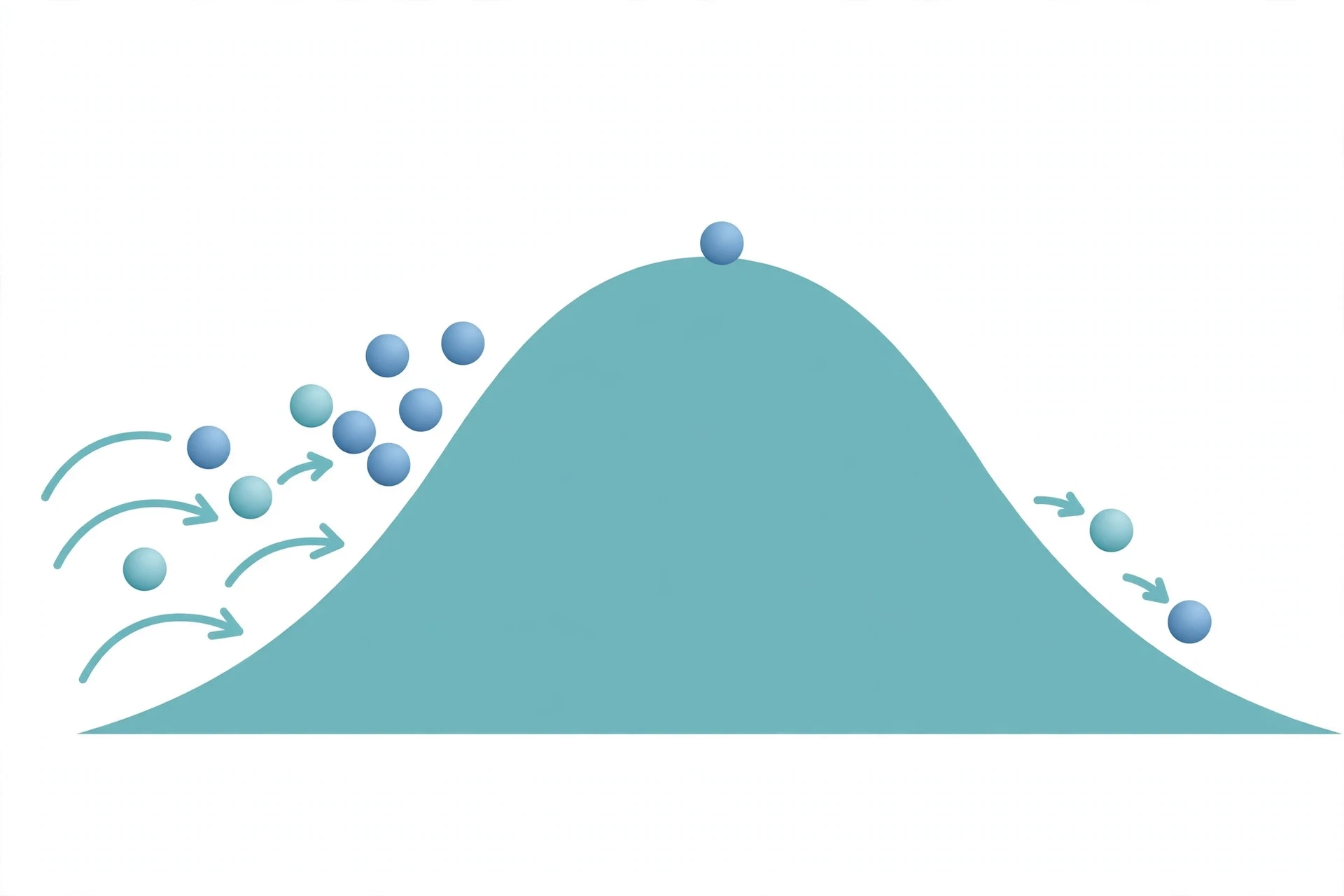
A useful way to picture it is a ball sitting in a valley with a hill in front of it. The valley on the far side of the hill is lower, so the ball would end up with less energy if it got there, but it cannot roll there on its own. It has to be pushed up and over the hill first. The height of the hill is the activation energy. The difference in height between the two valleys is the energy the reaction releases or absorbs, and that difference does not change when a catalyst is added. Only the hill gets lower.
Temperature fits into this picture neatly. Heating a mixture gives more molecules enough energy to get over the hill, which is why reactions usually go faster when they are hot. But heating is a blunt tool. It speeds up every reaction in the mixture, including the ones you do not want, and it costs energy. A catalyst is a precise tool. It lowers the hill for one particular reaction, leaving the others alone.
3.2 Why some reactions are slow even when they should be fast
Hydrogen peroxide decomposing into water and oxygen releases energy, yet a bottle of it sits quietly on a shelf. The reason is that its activation energy is high. The oxygen-oxygen bond in a peroxide molecule has to be broken before the more stable products can form, and breaking that bond takes a large push. At room temperature, only a tiny fraction of the molecules are moving fast enough to deliver that push when they collide. The rest bounce off each other unchanged, over and over, for months.
This is a general rule of chemistry, and it explains a lot about the world. Diamond is not the most stable form of carbon; graphite is. A diamond should, in principle, turn into graphite, but the activation energy for rearranging its crystal is so high that the change takes longer than the age of the Earth at room temperature. Your body is full of molecules that are thermodynamically ready to react with oxygen, yet you do not burst into flame, because the activation energies are high and enzymes control exactly which reactions happen and when. Life itself depends on activation energy barriers. Without them, every possible reaction would happen at once, and the careful order of biochemistry would collapse into chaos.
3.3 The shortcut a catalyst provides
Here is the heart of how catalysts work. A catalyst provides a different route from reactants to products, a route with a lower activation energy. It does this by taking part in the reaction itself, in a series of steps, and then being regenerated at the end. The catalyst does not simply stand beside the reaction and watch. It gets involved, forms temporary bonds with the reactants, helps them rearrange, and then lets go, restored to its original form.
Think of a mountain pass. Two towns are separated by a high ridge, and the road over the ridge is steep and slow. A tunnel through the mountain does not move either town, and it does not change the distance between them as the crow flies, but it lets traffic pass far more quickly. A catalyst is the tunnel. The reactants still start in the same place and end in the same place, but the path between them is easier, so far more molecules complete the journey in a given second.
The size of the effect can be startling. Lowering the activation energy by a modest amount can multiply the reaction rate many times over, because the fraction of molecules with enough energy to react grows steeply as the barrier falls. A catalyst that cuts the barrier in half does not double the rate; it can increase it by orders of magnitude. This is why a pinch of manganese dioxide can turn a year-long trickle into a seconds-long fountain.
A catalyst does not add energy to a reaction and it does not change the products. It offers a different path with a lower activation energy, and the reaction takes it.
4. The Energy Diagram: Seeing the Shortcut
4.1 Reading a reaction profile
Chemists draw the idea of activation energy as a graph called a reaction profile, or energy diagram. The horizontal axis shows the progress of the reaction, from reactants on the left to products on the right. The vertical axis shows energy. The curve rises from the reactants up to a peak, then falls down to the products. That peak is the transition state, the highest-energy arrangement the molecules pass through on their way from reactants to products, and the height of the peak above the reactants is the activation energy.
For an exothermic reaction, one that releases energy, the products sit lower on the graph than the reactants. The reaction gives out energy overall, but the molecules still have to climb the peak first. For an endothermic reaction, the products sit higher, and the reaction absorbs energy overall, but there is still a peak to climb. In both cases, the peak is the obstacle.
4.2 One reaction, two curves
Draw the same reaction twice, once without a catalyst and once with it, and the difference is immediately visible. The uncatalyzed curve rises to a tall peak. The catalyzed curve rises to a much lower peak, or to a series of smaller peaks, like a staircase instead of a cliff. The starting point and the ending point are identical on both curves. The reactants have the same energy, the products have the same energy, and the energy released or absorbed is the same. Only the highest point between them has changed.
That picture also shows why a catalyst speeds up the forward and the reverse reaction by the same amount. The barrier is lower from both sides. The peak is lower whether you climb it from the left or from the right, so both directions go faster. This has a consequence that surprises many students: a catalyst cannot change the position of equilibrium. It gets the reaction to equilibrium faster, but the final balance between reactants and products is exactly the same as it would have been without the catalyst. A catalyst is a matter of speed, never of destination.
4.3 What the lower peak means for molecules
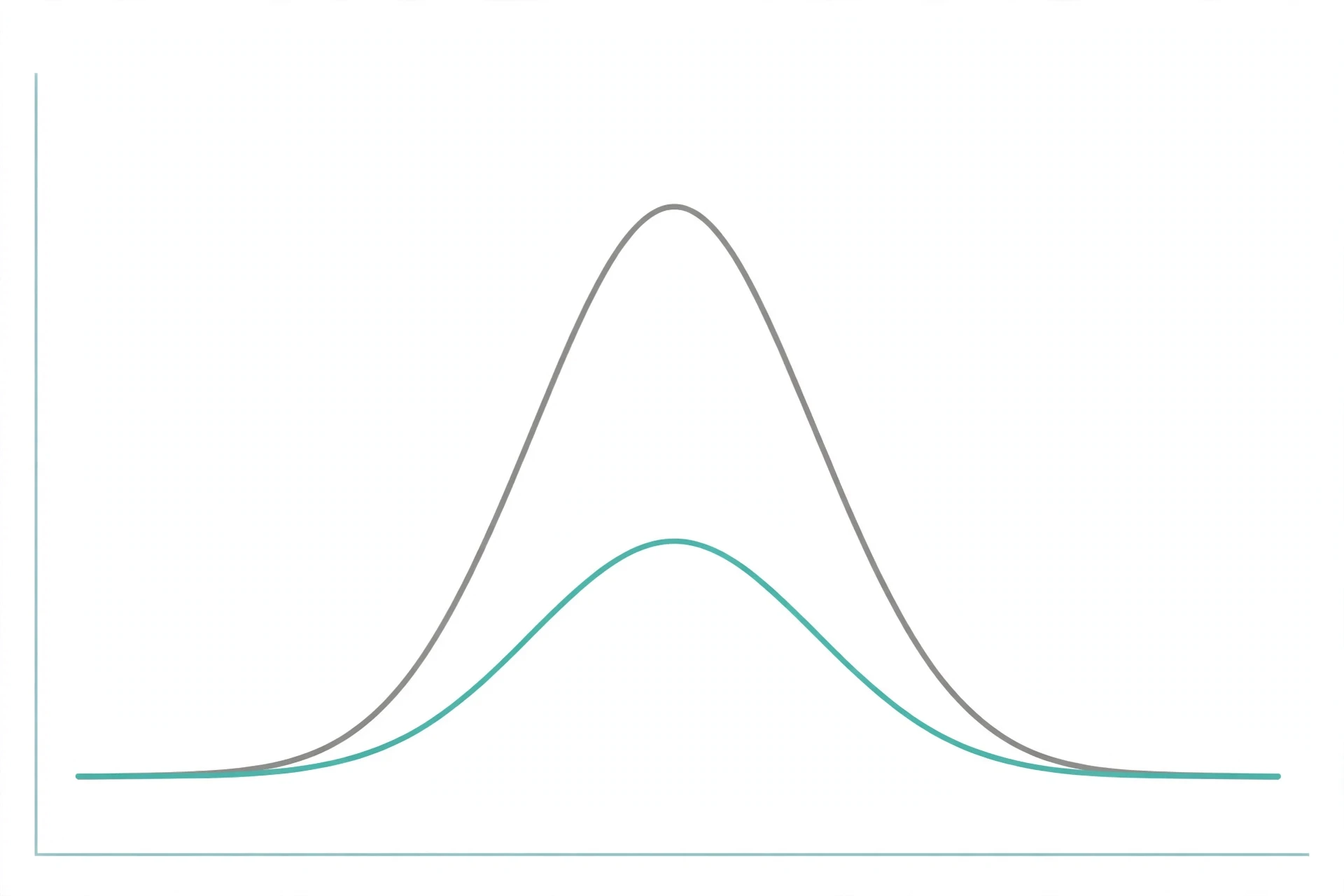
At any temperature, the energies of molecules in a mixture are spread out. Most have middling energy, a few have very little, and a few have a lot. Only the molecules in the high-energy tail of that spread can clear the activation barrier. When a catalyst lowers the barrier, the tail of the distribution that can get over it grows dramatically. If the barrier falls by a small amount, the number of molecules able to cross it can rise several-fold. This is the mathematical reason a catalyst can turn a reaction that takes hours into one that takes seconds.
There is a second effect, and it matters just as much. A catalyst often lines the reactants up in the right orientation. Molecules do not only need enough energy; they need to meet in the right geometry. A catalyst surface or an enzyme's active site can hold two molecules in exactly the position where their bonds can rearrange, so that collisions which would have been wasted become productive. The catalyst is doing two jobs at once: lowering the energy needed, and arranging the meeting.
5. How Catalysts Work in Steps: The Reaction Mechanism
5.1 The catalyst takes part, then comes back
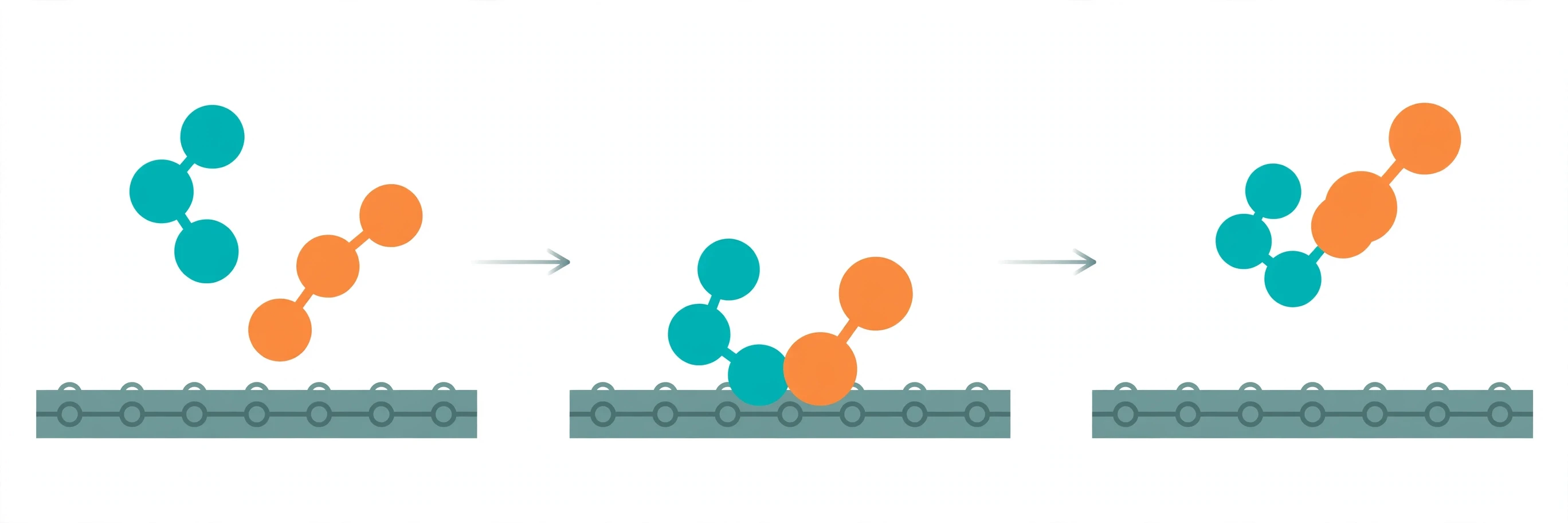
A catalyst is not a bystander. It participates in the reaction, and that participation is what lets it lower the barrier. The usual pattern has three stages. First, the catalyst binds to one or more reactant molecules, forming a temporary intermediate. Second, the bound reactants rearrange, breaking old bonds and forming new ones, with less energy needed than the uncatalyzed route would require. Third, the products are released and the catalyst is regenerated in its original form, ready to start again.
The key word is temporary. The catalyst forms bonds with the reactants, but those bonds are meant to be broken. If the catalyst bound too tightly, it would never let go, and the reaction would stop after one cycle. If it bound too weakly, it would never hold the reactants long enough to help. A good catalyst binds just strongly enough to do the job and weakly enough to release the products and start over. Chemists call this balance the Goldilocks principle of catalysis, and finding it is much of the art of designing new catalysts.
5.2 A worked example: hydrogen peroxide and manganese dioxide
The demonstration from the opening of this article is a good example to follow step by step. Hydrogen peroxide, H2O2, decomposes into water and oxygen. On its own, the reaction needs a large push to break the oxygen-oxygen bond. With manganese dioxide, MnO2, present, the peroxide molecules adsorb onto the surface of the solid powder. The surface weakens the oxygen-oxygen bond, the molecule splits, and oxygen gas is released while the manganese dioxide surface returns to its original state. The powder is not used up, because each active site on its surface can run the same cycle again and again.
I once watched a student try to repeat this demonstration with a much larger pinch of powder, expecting a proportionally larger fountain, and get a result that was only slightly faster. The reason is that the reaction can only go as fast as the available catalyst surface allows. Once every active site is busy, adding more powder adds sites that sit idle. Catalysts speed reactions up, but they do not remove every limit. The supply of reactants, the temperature, and the number of active sites all set their own ceilings.
5.3 Intermediates and the new route
The catalyzed route is almost always a different sequence of steps from the uncatalyzed route, with its own intermediates. An intermediate is a species that is formed in one step and consumed in a later step, so it never appears in the overall equation. The catalyst itself behaves a little like an intermediate in this sense: it is consumed in an early step and regenerated in a later one, so the net equation shows no trace of it.
This is why a catalyzed energy diagram often shows two or more smaller peaks instead of one large one. Each step of the new mechanism has its own barrier, and each barrier is lower than the original. The molecules climb a staircase rather than a wall. The highest step of the staircase still sets the overall speed, but it is far lower than the wall it replaces. OpenStax Chemistry explains this mechanism picture clearly, showing how a catalyst provides an alternative pathway with a lower activation energy and why the catalyst is regenerated rather than consumed.
5.4 Rates, turnover, and how chemists measure a good catalyst
Chemists judge a catalyst by a few practical measures. Turnover number counts how many reaction cycles one catalyst unit can run before it stops working. Turnover frequency counts how many cycles it runs per second. A good industrial catalyst may run millions of cycles, and it may run them fast enough to process tonnes of material a day. Selectivity measures whether the catalyst makes the desired product rather than unwanted side products. A catalyst that is fast but sloppy is often worse than one that is slower and clean, because separating unwanted products costs money and creates waste.
These measures explain why catalyst research is such a large and well-funded field. A small improvement in selectivity or lifetime can save an industrial plant a fortune, and a new catalyst can make a previously uneconomical process, such as making fuel from waste or pulling carbon dioxide out of the air, suddenly practical. Chemistry LibreTexts gives a clear account of the three major classes of catalysts and how each one lowers activation energy without being consumed.
6. Three Kinds of Catalysts
Catalysts come in three main kinds, and the difference between them is simple: whether the catalyst is in the same phase as the reactants or a different one, and whether it is a living molecule or not. The three kinds are homogeneous catalysts, heterogeneous catalysts, and enzymes. They all lower activation energy in the same basic way, but they do it in different places and they suit different jobs.
6.1 Homogeneous catalysts: mixed in with the reactants
A homogeneous catalyst is in the same phase as the reactants, usually dissolved in the same liquid. Because the catalyst and the reactants are mixed together at the molecular level, they meet easily and the reaction can be fast and selective. The drawback is separation. When the reaction is finished, the catalyst is still dissolved in the product mixture, and getting it back out can be difficult and expensive.
Acids and bases are the most common homogeneous catalysts. A small amount of acid can catalyze the hydrolysis of an ester, for example, by protonating the molecule and making it easier for water to attack. The acid is regenerated at the end of the cycle. Many industrial processes use dissolved metal complexes as homogeneous catalysts, particularly where fine control over which product forms matters, such as in making pharmaceuticals. The catalyst can be tuned, atom by atom, to favour one product over another, which is hard to do with a solid surface.
6.2 Heterogeneous catalysts: a surface that does the work
A heterogeneous catalyst is in a different phase from the reactants, most often a solid while the reactants are gases or liquids. The reaction happens on the surface of the solid. Reactant molecules stick to the surface, a process called adsorption, and the surface weakens their bonds and holds them in the right orientation to react. The products then leave the surface, a process called desorption, and the surface is free for the next molecules.
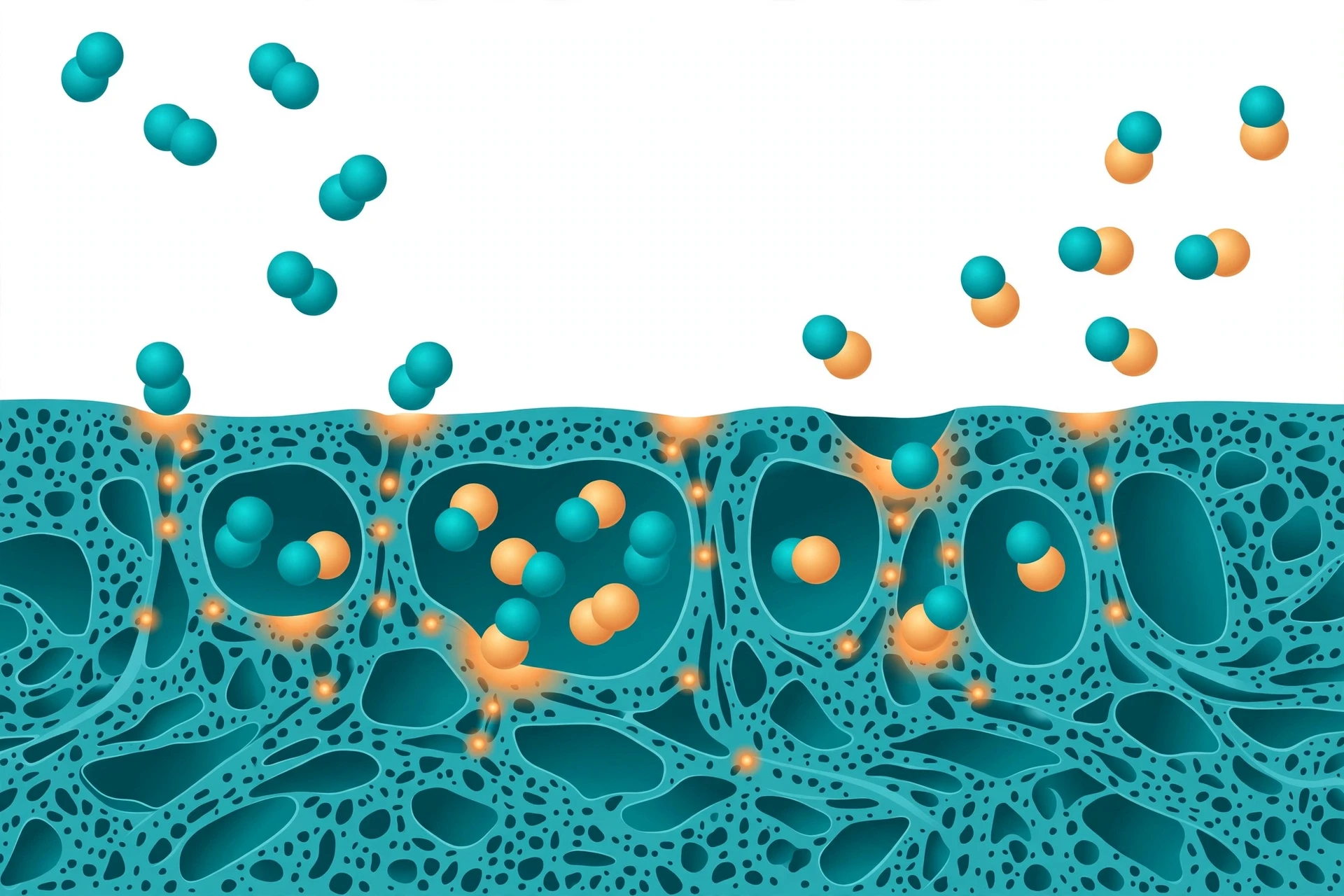
Heterogeneous catalysts dominate industry, for one practical reason: they are easy to separate. A solid catalyst can be held in a reactor while gases flow over it, and the products flow out without the catalyst. The catalyst can run for months, be regenerated, and be reused. Catalytic converters, the Haber process for making ammonia, and the cracking of crude oil all rely on heterogeneous catalysts.
The surface itself matters enormously. A flat sheet of platinum is a poor catalyst compared with the same amount of platinum spread as tiny particles over a porous support, because the particles expose far more surface area. This is why industrial catalysts often look like grey pellets or honeycombs coated in a fine dust: the shape is designed to pack the maximum active surface into the smallest volume. A rough, high-area surface gives the reactants many more places to land and react.
6.3 Enzymes: catalysts made by life
Enzymes are the third kind, and they are in a class of their own. An enzyme is a protein catalyst made by a living cell, and enzymes are the most selective and most efficient catalysts known. Each enzyme usually catalyzes one specific reaction, or a small family of closely related reactions, and it does so at body temperature, in water, at near-neutral pH, under conditions where an industrial catalyst would barely function.
The comparison below summarizes the three kinds. It is worth studying, because it shows that there is no single best catalyst. The right choice depends on the job: speed, selectivity, ease of separation, and operating conditions all pull in different directions.
Type | Phase relative to reactants | Typical examples | Main strength | Main drawback |
|---|---|---|---|---|
Homogeneous | Same phase, usually dissolved in liquid | Acids, bases, dissolved metal complexes | Fast, highly selective, easy to tune | Hard to separate from products and reuse |
Heterogeneous | Different phase, usually a solid | Platinum, nickel, iron, zeolites | Easy to separate and reuse, robust | Less selective, needs high surface area |
Enzyme | Usually dissolved in water inside cells | Amylase, catalase, DNA polymerase | Extremely selective, works at mild conditions | Fragile, denatured by heat and extreme pH |
6.4 Why the categories matter
The three categories are not just textbook labels. They shape how a process is built. A pharmaceutical factory making a complex drug molecule may use a homogeneous catalyst because it needs the product to be exactly one mirror-image form and no other. A refinery processing thousands of tonnes of oil a day will use a heterogeneous catalyst because it can run continuously and the catalyst can be recovered. A brewery uses enzymes because yeast has already solved the problem of turning sugar into alcohol at room temperature, and no industrial catalyst can match that elegance.
Sometimes the categories blur. Chemists now anchor homogeneous catalysts onto solid supports to get the best of both worlds, and they engineer enzymes to survive in industrial reactors. The boundaries are useful for learning, but the real world is more inventive than the textbook.
7. Enzymes: Nature's Catalysts
7.1 What enzymes are
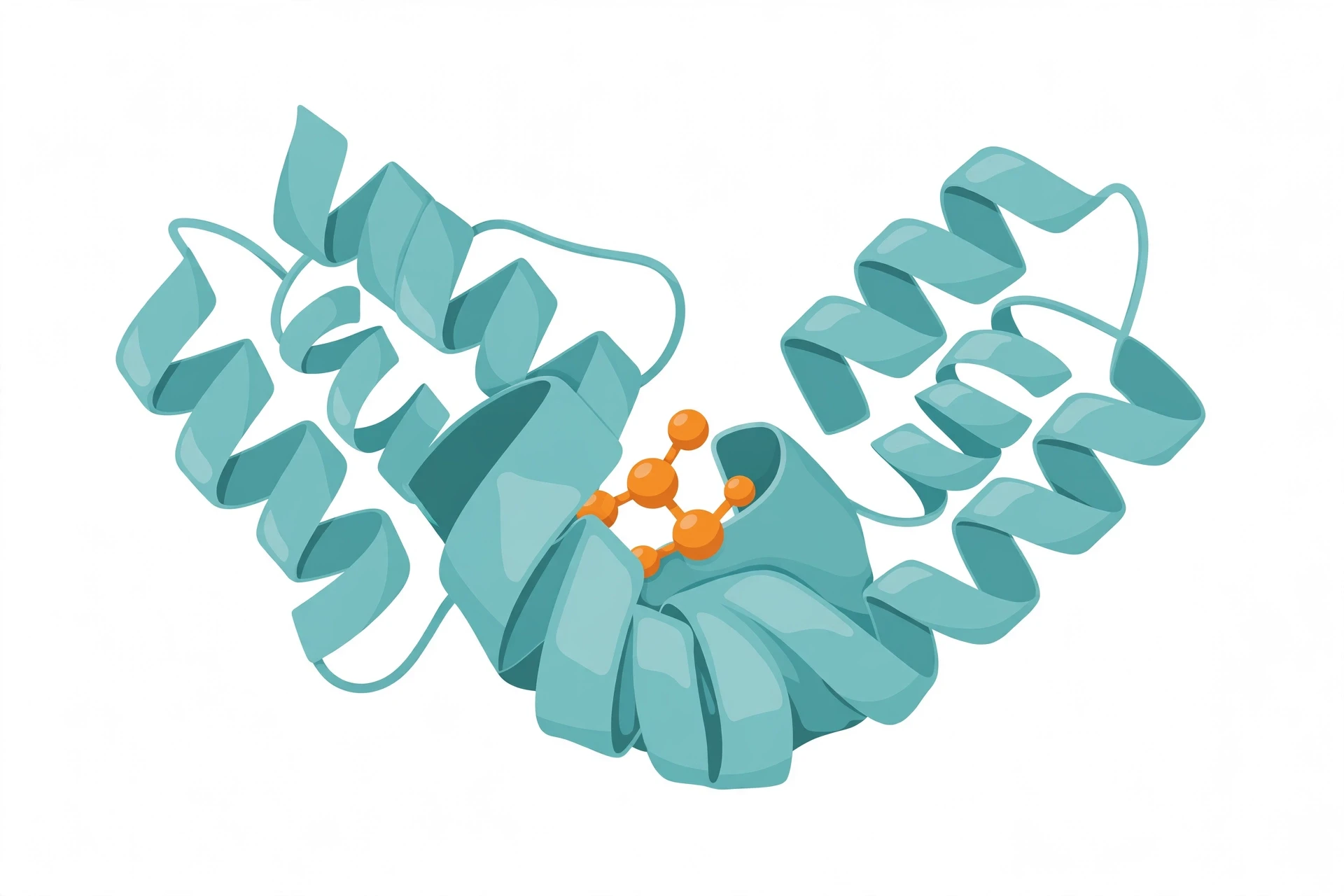
Enzymes are proteins, long chains of amino acids folded into precise three-dimensional shapes, and that shape is the secret of their power. Each enzyme has a pocket on its surface called the active site, shaped to fit one particular reactant molecule, called the substrate, the way a lock fits a key. When the substrate settles into the active site, the enzyme holds it in exactly the right orientation, strains its bonds, and brings the reacting groups together, so the reaction that would take hours or years on its own happens in milliseconds.
The numbers are hard to believe until you see them. The enzyme catalase, which breaks down hydrogen peroxide in your cells, can process millions of peroxide molecules per second per enzyme molecule. Without catalase, the same reaction in water at body temperature is so slow that it is effectively irrelevant. The enzyme orotidine decarboxylase, involved in making one of the building blocks of DNA and RNA, is reported to speed up its reaction by an enormous factor, one of the largest rate enhancements known for any enzyme. Life runs on these accelerations. Without enzymes, the chemistry of a cell would be a slow soup of molecules that never got anything done.
7.2 The lock and key, and the induced fit
The first model of how enzymes work was the lock-and-key model, proposed in the late nineteenth century. The substrate was the key, the active site was the lock, and only the right key would fit. The picture is simple and it captures the most important fact about enzymes: their selectivity. An enzyme that breaks down lactose will not touch sucrose, even though the two sugars are similar, because the shapes do not match.
The modern picture is more subtle. The induced-fit model says that the enzyme is not a rigid lock. When the substrate binds, the enzyme changes shape slightly, closing around it, the way a glove moulds itself to a hand. This flexing strains the substrate's bonds and positions the reacting atoms precisely, which is part of how the activation energy is lowered. The enzyme is not a passive surface. It is a machine that grips its substrate and bends it toward the transition state.
I think of the difference this way. A heterogeneous catalyst is like a workbench: a flat, hard surface where molecules can be held and worked on. An enzyme is like a skilled pair of hands: it picks up the piece, turns it to exactly the right angle, applies pressure in exactly the right place, and then lets go. Both do the same job, but the hands are far more precise.
7.3 What do enzymes do in the body?
Enzymes do almost everything chemical in a living body. Amylase in your saliva starts breaking down starch the moment you chew. Pepsin and trypsin break proteins into amino acids in your stomach and intestines. DNA polymerase copies your genome every time a cell divides, and it does so with an error rate so low that it seems almost miraculous. ATP synthase, a rotating molecular motor in your mitochondria, makes the energy currency of the cell. Rubisco, the enzyme that captures carbon dioxide in photosynthesis, is thought to be the most abundant protein on Earth, because every plant, alga, and cyanobacterium needs it to build sugars from air and sunlight.
The connection to photosynthesis is worth pausing on. Photosynthesis is often described as a plant using sunlight to make sugar, and that is true, but the light reactions are only the beginning. The carbon-fixing steps that actually build the sugar are a chain of enzyme-catalyzed reactions, and Rubisco is the enzyme that performs the first and hardest step. Without it, there would be no sugar, no plant growth, and no food chain. You can read the full story of that process in Sciory's article on photosynthesis, where the chemistry of light, water, and carbon dioxide comes together.
Enzymes also explain why your body is so sensitive to temperature and acidity. An enzyme's shape depends on delicate bonds within the protein, and heat or extreme pH can unfold it, a process called denaturation. A denatured enzyme loses its active site, and with it, its catalytic power. This is why a high fever is dangerous, why stomach acid has to be kept away from most of the body, and why cooking changes food: heat denatures the enzymes and proteins in the food, changing its texture and flavour.
8. What Do Enzymes Do? Control, Regulation, and Inhibition
8.1 Enzymes are controlled, not just fast
Speed alone would be dangerous in a cell. If every enzyme ran at full speed all the time, the cell would burn through its resources and make products it did not need. So enzymes are regulated. Cells turn them on and off, speed them up and slow them down, in response to signals. This control is one of the most important things enzymes do, and it is what separates a living system from a chemical factory.
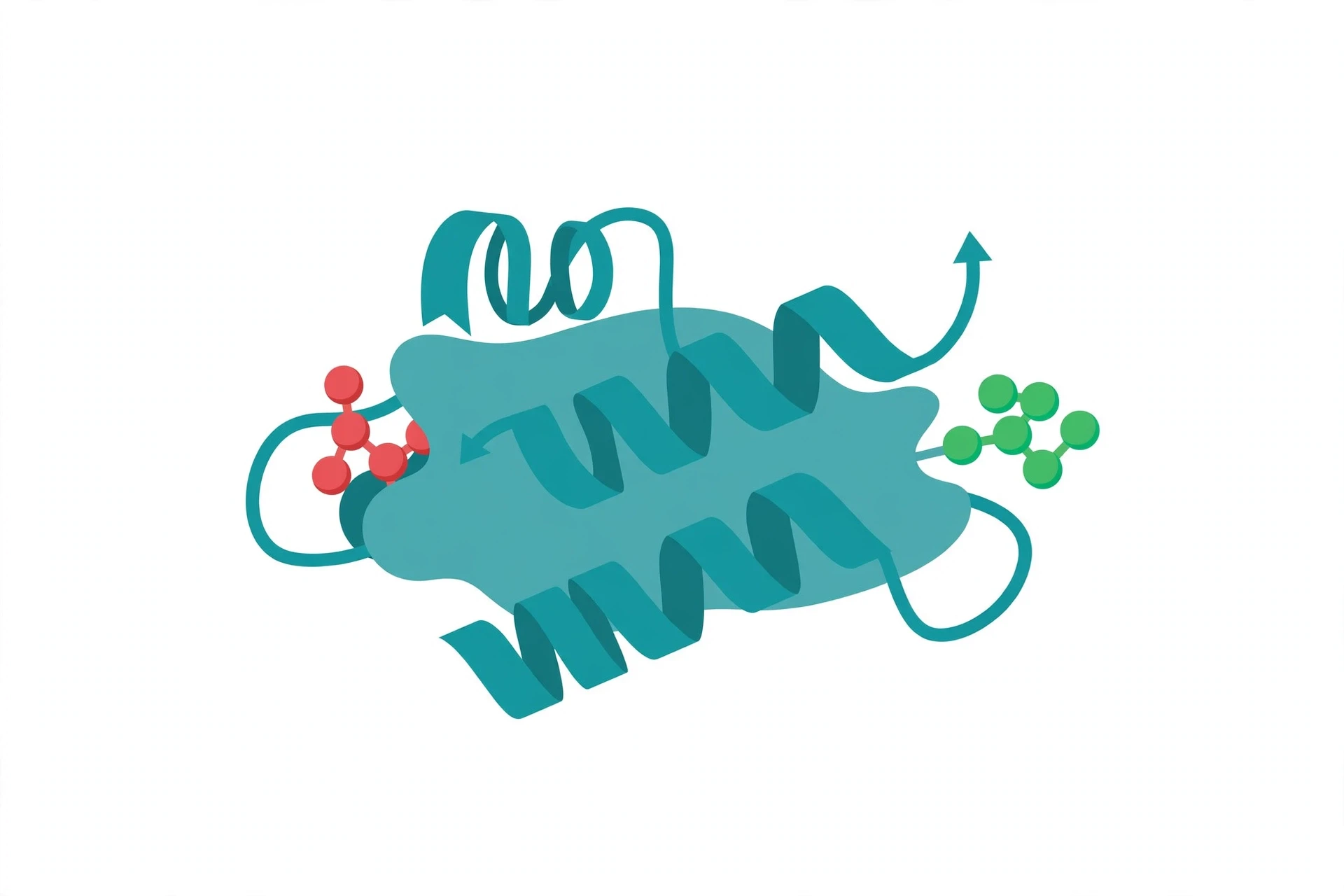
Some enzymes are controlled by other molecules binding to a site away from the active site, called an allosteric site. Binding there changes the enzyme's shape and either activates it or shuts it down. Other enzymes are controlled by being made in an inactive form and then switched on by cutting off a piece of the protein, which is how digestive enzymes are kept safely inactive until they reach the gut. Still others are controlled by the cell simply making more or less of them, turning genes on or off as conditions change.
8.2 Inhibitors: when something blocks the catalyst
A molecule that slows down or stops an enzyme is called an inhibitor, and inhibitors are among the most useful chemicals in medicine. Some inhibitors compete with the substrate for the active site. Others bind elsewhere and change the enzyme's shape so it cannot work. Some bind permanently and destroy the enzyme, which is how certain poisons work.
Many medicines are enzyme inhibitors by design. Statins lower cholesterol by inhibiting an enzyme in the liver that makes cholesterol. Penicillin kills bacteria by blocking the enzymes they use to build their cell walls. Aspirin works by inhibiting enzymes that make the signalling molecules involved in pain and inflammation. The same principle explains why some substances are poisonous: cyanide blocks an enzyme in the respiratory chain, and organophosphate pesticides block an enzyme that clears a neurotransmitter, with lethal consequences. Understanding enzyme inhibition is therefore not just academic. It is the basis of much of modern pharmacology.
The same idea applies to industrial catalysts. A substance that sticks to a catalyst's active sites and will not let go is called a catalyst poison. Sulfur compounds poison the platinum in catalytic converters, and lead once poisoned them so badly that leaded petrol had to be phased out before converters could work at all. Protecting a catalyst from poisons is a major part of running an industrial plant.
8.3 Cofactors and coenzymes
Many enzymes cannot work alone. They need helper molecules called cofactors, which are often metal ions such as zinc, magnesium, or iron, or organic molecules called coenzymes, many of which are derived from vitamins. The cofactor sits in or near the active site and takes part in the chemistry, for example by carrying electrons or by holding a metal atom that the reaction needs.
This is one reason vitamins matter. If your diet lacks a vitamin that your body turns into a coenzyme, the enzymes that depend on it slow down, and the effects can be serious. Scurvy, the disease that once crippled sailors on long voyages, is caused by a lack of vitamin C, which is needed by enzymes that build collagen. Beriberi comes from a lack of thiamine, a coenzyme for enzymes that process carbohydrates. The symptoms of vitamin deficiency are, at root, the symptoms of enzymes that cannot do their jobs.
8.4 The cell as a catalyzed system
Step back, and the picture of a cell that emerges is a system of thousands of enzyme-catalyzed reactions, each one regulated, each one feeding into the next, all running at body temperature in water. Nothing about that system is possible without catalysts. The reactions are too slow, the conditions too mild, and the selectivity requirements too strict. Life is, in a very real sense, catalysis organized into a self-sustaining network.
This is why enzymes fascinate chemists who design industrial catalysts. An enzyme achieves at 37 degrees Celsius, in water, what a factory often needs hundreds of degrees and high pressure to do. If chemists could routinely build catalysts with enzyme-like selectivity and mild operating conditions, whole industries would become cleaner and cheaper. That goal drives a large part of modern catalyst research, and it is the subject of the final sections of this article. The organisation of enzymes into pathways inside cells is part of the larger story of cell biology, where organelles provide the compartments that keep these reactions in the right place at the right time.
Enzymes do not just speed reactions up. They decide which reactions happen, when they happen, and how fast, and that control is what makes a cell alive rather than merely chemical.
9. Catalysts in Everyday Life
9.1 The catalytic converter in your car
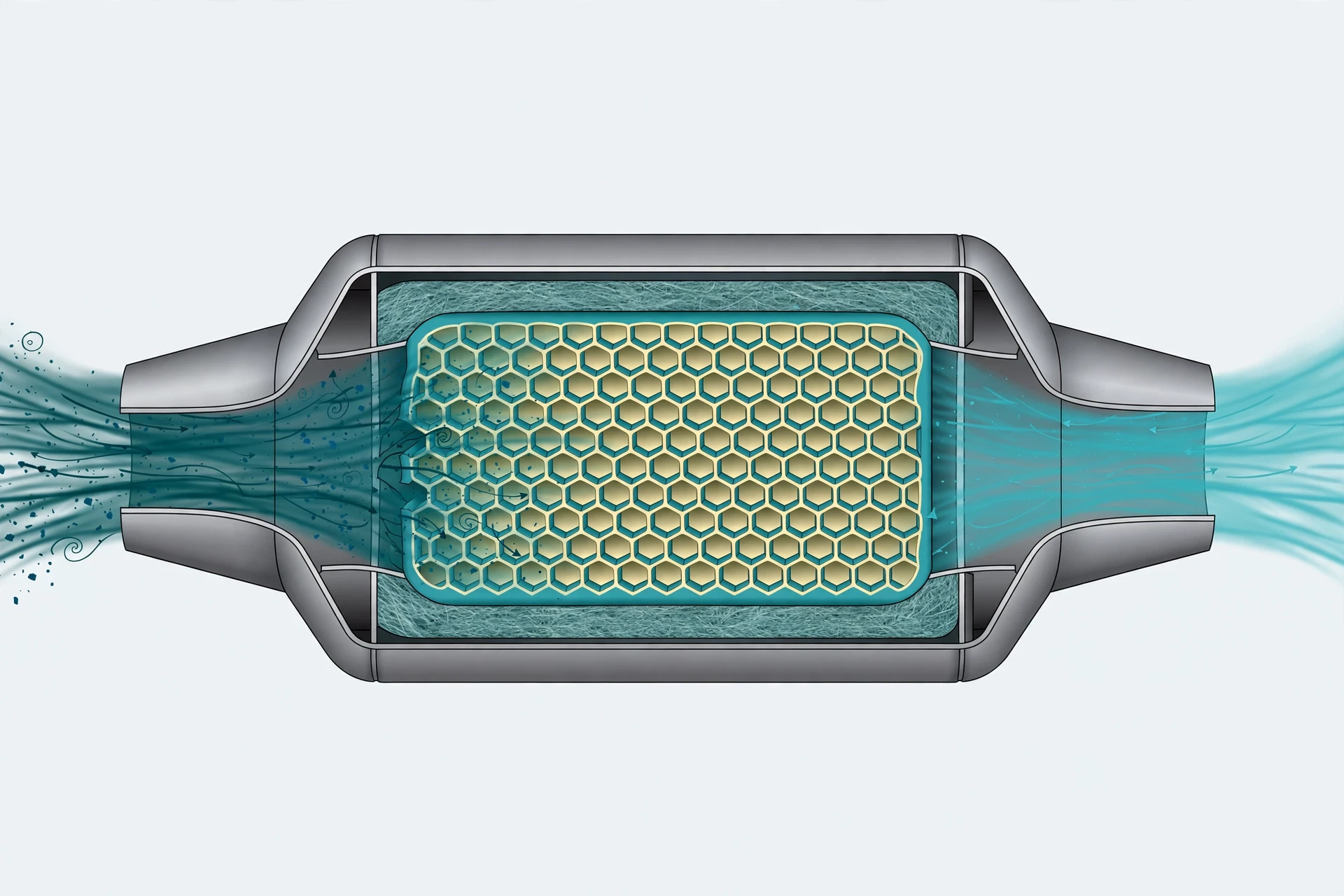
The most familiar catalyst in most people's lives is one they never see. Inside the exhaust system of a petrol or diesel car sits a ceramic honeycomb coated with tiny particles of platinum, palladium, and rhodium. Exhaust gases flow through it, and on the metal surfaces three harmful pollutants are converted into harmless ones: carbon monoxide becomes carbon dioxide, unburned hydrocarbons become carbon dioxide and water, and nitrogen oxides become nitrogen gas. Without the converter, a car would pour far more pollution into the air.
I learned how much depends on that small device when an old car of mine failed an emissions test. The car ran fine, it sounded fine, and the problem was invisible. The mechanic pointed to the converter, explained that its catalyst surface had degraded, and replaced it. The car passed the next test easily. The engine had not changed. The fuel had not changed. Only the catalyst had been restored, and the exhaust chemistry changed with it.
Catalytic converters also illustrate a limit of catalysts. They only work once they are hot, which is why a car's exhaust is dirtiest in the first minutes after a cold start, before the converter has warmed up. Engineers have spent years trying to make converters that light off at lower temperatures, because those first cold minutes matter a great deal for city air quality.
9.2 Food, drink, and cleaning
Catalysts shape much of what you eat and drink. Yeast enzymes make bread rise and beer ferment. Lactase tablets, taken by people who cannot digest lactose, supply the enzyme their gut does not make in enough quantity, letting them digest milk. Meat tenderizer is powdered papain, an enzyme from papaya that breaks down tough protein fibres. Biological washing powder contains enzymes, proteases that cut protein stains and lipases that break down fats, which is why it cleans well in cool water where ordinary detergent struggles.
Even the fizz in a soft drink owes something to catalysis in its history, because the carbon dioxide used to carbonate drinks is often a byproduct of industrial processes that rely on catalysts. The point is not to list every example. It is that catalysts are not confined to laboratories and factories. They are woven into ordinary life, usually invisibly, doing jobs that would be slow, expensive, or impossible without them.
9.3 Catalysts in the home and the environment
Catalytic chemistry also helps clean up pollution. Catalytic converters are one example. Another is the catalytic treatment of industrial exhaust, where catalysts break down volatile organic compounds before they reach the air. Wastewater treatment plants use biological catalysts, the enzymes of whole communities of microbes, to break down organic waste. And in the atmosphere itself, naturally occurring particles can catalyze reactions that affect ozone and air quality, for better and for worse. The chlorine-driven destruction of stratospheric ozone, for example, is a catalytic cycle: a single chlorine atom can destroy many ozone molecules, because it is regenerated at the end of each cycle. That is catalysis working against us, and it is a reminder that the same principle can help or harm depending on the reaction.
10. Catalysts in Industry: Making the Modern World
10.1 The Haber process and fertilizer
The single most important industrial catalytic process in history is the Haber process, which makes ammonia from nitrogen and hydrogen. Ammonia is the starting point for most nitrogen fertilizers, and those fertilizers support the food production that feeds a large share of humanity. The reaction, nitrogen plus hydrogen forming ammonia, is possible but desperately slow without help, and the nitrogen molecule's triple bond is one of the strongest bonds in chemistry.
The Haber process uses an iron-based catalyst, high pressure, and moderately high temperature. The catalyst adsorbs nitrogen molecules onto its surface and weakens the triple bond so that hydrogen can attack it. Without the catalyst, the process would not be practical at any temperature a factory could afford. The process was developed in the early twentieth century, and it remains one of the largest-scale chemical processes on Earth. It is also energy-hungry, which is why chemists are still searching for catalysts that can fix nitrogen under milder conditions, the way the enzyme nitrogenase does in soil bacteria at room temperature.
10.2 The contact process and sulfuric acid
Sulfuric acid is the most produced industrial chemical in the world, and it is made by the contact process, which also depends on a catalyst. Sulfur dioxide is oxidized to sulfur trioxide over a vanadium oxide catalyst, and the trioxide is then absorbed to make the acid. Sulfuric acid goes into fertilizers, batteries, detergents, and the processing of metals and ores. The catalyst makes the oxidation fast enough to run at a temperature where the equilibrium still favours the product, a balance that took years of careful engineering to get right.
10.3 Cracking, reforming, and fuels
Crude oil is a mixture of long hydrocarbon chains, and the most valuable products, such as petrol, are shorter chains. Catalytic cracking uses zeolite catalysts, crystalline materials full of tiny pores, to break long chains into shorter ones. The pores are sized so that only molecules of the right shape can enter and react, which gives the process a selectivity that simple heating cannot match. Reforming uses platinum catalysts to rearrange hydrocarbon molecules into higher-octane forms. Without these catalytic processes, modern transport fuel would be far scarcer and more expensive.
10.4 Metathesis and the Nobel Prize
One of the most elegant catalytic reactions is olefin metathesis, in which carbon-carbon double bonds are broken and reformed to swap the ends of two molecules, like cutting two ropes and retying them in a different combination. The reaction is catalyzed by metal complexes, and it has transformed the making of pharmaceuticals, plastics, and specialty chemicals, because it builds complex molecules in fewer steps and with less waste. The developers of the reaction received the Nobel Prize in Chemistry in 2005, a recognition of how much a good catalyst can change what chemistry is possible. The Nobel Prize summary for 2005 records the award for the development of the metathesis method in organic synthesis.
A second Nobel Prize, in 2021, honoured the development of asymmetric organocatalysis, in which small organic molecules act as catalysts to build other molecules in one mirror-image form rather than the other. Many drugs work only in one mirror-image form, so a catalyst that controls handedness is enormously valuable. The Nobel Prize summary for 2021 describes the award for the development of this method. Both prizes tell the same story: catalysis is not a side topic in chemistry. It is one of the main ways the field advances.
11. What Catalysts Cannot Do
11.1 They cannot change equilibrium
The most common misconception about catalysts is that they can change how much product a reaction makes. They cannot. A catalyst speeds up the forward and the reverse reaction equally, because it lowers the barrier from both sides. The reaction reaches equilibrium faster, but the equilibrium position, the final balance of reactants and products, is unchanged. If a reaction at equilibrium is 90 percent products and 10 percent reactants, adding a catalyst will still leave it at 90 and 10. It will simply get there sooner.
This matters in industry, because it means a catalyst cannot rescue a reaction whose equilibrium is unfavourable. The Haber process is a good example. The equilibrium for making ammonia favours the product at low temperature, but the reaction is too slow at low temperature, even with a catalyst. At high temperature, the reaction is fast, but the equilibrium shifts back toward the reactants. Engineers have to compromise, running the process at a temperature where the rate is acceptable and the equilibrium is still useful, and at high pressure to push the equilibrium toward ammonia. The catalyst solves the speed problem. It does not solve the equilibrium problem. That has to be solved with temperature, pressure, and clever engineering.
11.2 They cannot make an impossible reaction possible
A catalyst cannot change the thermodynamics of a reaction. If a reaction requires a net input of energy and gives nothing back, a catalyst will not make it run on its own. Water does not split into hydrogen and oxygen by itself, no matter what catalyst you add, because the reaction needs energy put in. A catalyst can make the splitting happen faster once energy is supplied, by electricity or light, but it cannot supply the energy itself. This is a point that matters for anyone reading claims about new energy technologies. A catalyst can improve efficiency. It cannot create energy.
11.3 They cannot change the products
A catalyst does not decide what the products of a reaction are, in the sense of changing the overall chemistry. It can influence which of several possible products forms fastest, which is selectivity, and that is often the most valuable thing a catalyst does. But it cannot turn a reaction into a different reaction. The reactants and the possible products are fixed by the chemistry. The catalyst chooses among the available paths; it does not invent new destinations.
Most people assume a catalyst is a kind of magic powder that makes anything happen. What a close look at how catalysts work actually shows is more modest and more interesting. A catalyst is a precise tool that lowers one barrier, for one reaction, by offering a better route. Its power comes from its specificity, not from any general magic.
12. Catalyst Poisoning, Deactivation, and Green Chemistry
12.1 When catalysts stop working
Catalysts are not immortal. In industry, they gradually lose activity, and understanding why is a major part of catalyst science. The main causes are poisoning, where a substance binds strongly to the active sites and blocks them; sintering, where high temperatures cause small catalyst particles to clump together and lose surface area; and coking, where carbon deposits coat the surface. Each of these has a remedy. Poisoned catalysts can sometimes be regenerated by burning off the poison or washing it away. Sintering is prevented by supporting the catalyst on a stable material. Coking is managed by periodically burning the carbon off in air.
Enzymes have their own version of this problem. They are denatured by heat, extreme pH, and some chemicals, and they can be permanently damaged by inhibitors. The body handles this by constantly making fresh enzymes and breaking down old ones. A factory cannot do that as easily, which is one reason industrial catalysts are designed to be tough rather than delicate.
12.2 Green chemistry and better catalysts
Catalysts are central to green chemistry, the effort to make chemical manufacturing cleaner and less wasteful. A good catalyst reduces the energy a process needs, because the reaction can run at a lower temperature. It reduces waste, because a selective catalyst makes the desired product instead of a mixture that has to be separated and discarded. And it can replace toxic reagents with safer ones, because the catalyst does the work that a harsh chemical used to do.
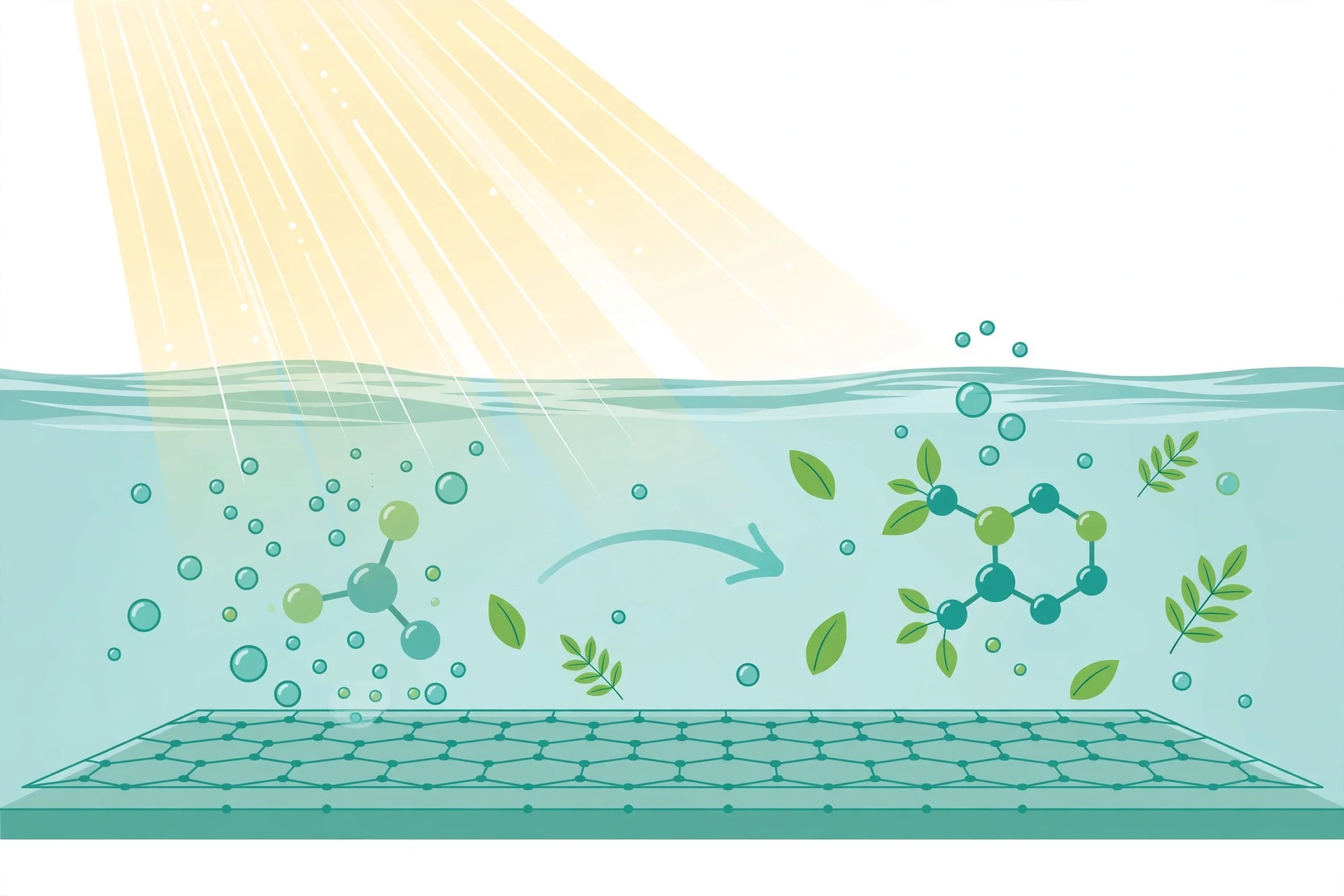
One of the goals of green chemistry is to use catalysts that are abundant and non-toxic, such as iron, rather than rare and expensive metals such as platinum and palladium. Another is to design catalysts that work in water instead of organic solvents, the way enzymes do. A third is to build catalysts that can use sunlight to drive reactions, which brings us to one of the most active areas of current research.
The American Chemical Society's page on catalysis describes how catalysts have shaped the modern chemical industry and why they remain central to making manufacturing cleaner and more efficient.
12.3 Catalysts and the environment
The environmental story of catalysts is mostly positive, but it has a complication. The metals used in many catalysts, particularly platinum, palladium, and rhodium, are rare, expensive, and mined in ways that damage the environment. Recycling them from spent catalytic converters and industrial catalysts is therefore important, and a large recycling industry exists for exactly this reason. Researchers are also working to replace precious metals with abundant ones, and to design catalysts that use less metal by spreading it more thinly over better supports.
There is also the question of what happens when a catalyst leaves the factory. Nanoparticle catalysts, which are increasingly common, need to be handled carefully so that they do not escape into the environment. The field takes this seriously, because a technology that cleans up one problem should not create another.
13. How Scientists Design New Catalysts
13.1 From trial and error to design
For most of history, finding a catalyst was trial and error. Chemists tried a substance, watched what happened, and kept the ones that worked. The Haber process catalyst was found this way, after testing thousands of materials. Modern catalyst design is more systematic. Chemists use theory to predict which surfaces will bind reactants with the right strength, and they use spectroscopy to watch reactions happening on a catalyst surface in real time, atom by atom. That atomic-level picture of how catalysts work is what turns catalyst hunting from guesswork into design.
One of the most useful ideas in modern catalyst design is the volcano plot, a graph that relates how strongly a catalyst binds a reactant to how fast the reaction goes. Bind too weakly, and the reactants never stick long enough to react. Bind too strongly, and the products never leave. The fastest catalysts sit at the top of the volcano, where the binding is just right. This is the same Goldilocks balance described earlier, now expressed as a quantitative guide for choosing materials.
13.2 Single atoms, photocatalysts, and enzymes by design
Three frontiers show where the field is heading. The first is single-atom catalysis, where individual metal atoms are anchored on a support, so that every atom is an active site and no metal is wasted. The second is photocatalysis, where a catalyst uses light to drive a reaction, which could one day let sunlight split water into hydrogen fuel or turn carbon dioxide back into useful chemicals. The third is designed enzymes, where scientists engineer proteins to catalyze reactions that no natural enzyme performs, opening the way to cleaner routes for making drugs and materials.
The US Department of Energy's explainer on catalysts gives a clear overview of why catalysts matter for energy, from fuel cells to carbon capture, and how researchers are working to make them better. The Royal Society of Chemistry's catalysis resources are a useful starting point for teachers and students who want to explore the topic further.
13.3 What the future holds
The search for better catalysts is, at root, a search for control: control over which bonds break, which products form, and how much energy a process needs. Every improvement in a catalyst ripples outward into cheaper medicines, cleaner air, better fertilizers, and new sources of energy. The field is moving toward catalysts that are more selective, more durable, made from abundant materials, and able to work under mild conditions, closer to the way enzymes work.
I have spent enough time watching reactions that refused to hurry to have a real respect for the substances that change the rules. A catalyst does not shout. It does not add heat or force. It quietly offers a better path, and the molecules take it. That quiet efficiency is why catalysts sit at the centre of chemistry, of industry, and of life itself.
Frequently Asked Questions
How do catalysts work?
Catalysts work by providing an alternative reaction pathway with a lower activation energy. The catalyst takes part in the reaction, forming temporary bonds with the reactants and helping them rearrange, and is then regenerated unchanged at the end. Because the energy barrier is lower, far more molecules can cross it in a given second, so the reaction goes faster. The catalyst does not change the reactants, the products, or the energy released or absorbed.
What is activation energy?
Activation energy is the minimum energy that colliding molecules need for a reaction to happen. It is the height of the energy barrier between reactants and products. Even reactions that release energy overall have an activation energy, because old bonds must be broken before new ones can form. Temperature raises the fraction of molecules with enough energy to clear the barrier, while a catalyst lowers the barrier itself.
What do enzymes do?
Enzymes are protein catalysts made by living cells. They speed up the chemical reactions of life, often by enormous factors, by binding a specific substrate in an active site, holding it in the right orientation, and lowering the activation energy. They also control metabolism, because cells regulate enzymes to decide which reactions happen, when, and how fast. Without enzymes, the reactions of life would run far too slowly to sustain a living organism.
Are catalysts used up in a reaction?
No. A catalyst is not consumed by the reaction it speeds up. It takes part in intermediate steps and is regenerated at the end of each cycle, so one catalyst molecule or active site can run the same reaction many times. In practice, catalysts do eventually lose activity through poisoning, fouling, or damage, but that is deactivation, not consumption by the reaction itself.
Does a catalyst change the equilibrium of a reaction?
No. A catalyst speeds up the forward and reverse reactions by the same amount, because it lowers the activation energy from both sides. The reaction reaches equilibrium faster, but the final balance between reactants and products is exactly the same as it would be without the catalyst. To change equilibrium, you need to change temperature, pressure, or concentration.
What is the difference between a catalyst and an enzyme?
An enzyme is a type of catalyst, specifically a protein catalyst made by a living organism. All enzymes are catalysts, but not all catalysts are enzymes. Industrial catalysts are usually metals, metal oxides, acids, or bases, and they are often more robust but less selective than enzymes. Enzymes are extremely selective and work under mild conditions in water, but they are fragile and easily damaged by heat or extreme pH.
Can a catalyst make any reaction happen?
No. A catalyst can only speed up a reaction that is already possible on energy grounds. It cannot make a reaction happen that needs a net input of energy without that energy being supplied, and it cannot change the products of a reaction or the energy the reaction releases or absorbs. A catalyst changes the speed of a reaction, never its destination.